






Abstract
The COVID-19 pandemic has disproportionately affected students in segregated Black and Latine communities, highlighting the need for equitable workload and resources for teachers to support these students effectively. Analyzing the 2020–2021 National Teacher and Principal Survey data and guided by a critical quantitative framework, we found that teachers in predominantly Black and Latine schools had heavier workloads and were given less adequate resources than their counterparts in predominantly White schools, especially when they were teaching hybrid. We also found that teachers with hybrid instruction in predominantly Black and Latine schools who received more adequate resources were less likely to be dissatisfied and express their intention to leave teaching. Policy and leadership implications in times of crisis are discussed.
Keywords
The COVID-19 pandemic illuminated the structural inequity between affluent schools with majority White students and high-poverty schools that serve predominantly Black and Latine students (Grooms & Childs, 2021; Supovitz et al., 2024). When the pandemic started in spring 2020, well-resourced schools quickly adapted to remote learning (Wang et al., 2021) while underresourced schools spent time trying to secure instructional technology for teachers and students’ access to technology and the internet and checking on students and their families (Grooms & Childs, 2021; Kaden, 2020; Manning & Jeon, 2020; Supovitz et al., 2024; Touloukian et al., 2024). During the 2020–2021 school year, many well-resourced schools returned to in-person instruction while many underresourced schools with a majority Black and Latine student population continued either remote or hybrid instruction (Camp & Zamarro, 2022; Haderlein et al., 2021; Kaufman & Diliberti, 2021).
Because of the empirical evidence of greater impacts of the COVID-19 pandemic in majority Black and Latine communities through family illness, job loss, and exacerbated food and housing insecurity (Parolin, 2021; Wang et al., 2021) and persistent racial inequities in educational opportunities affecting segregated schools with predominantly Black and Latine students (Reardon et al., 2019; Sosina & Weathers, 2019), teachers in these schools play a critical role in supporting these students. Therefore, it is important for policymakers and school leaders to understand whether these teachers are given reasonable workloads and sufficient resources equitably, compared to their counterparts in predominantly White schools, to inform future policy and leadership actions to provide equitable support. Understanding the state of inequitable workload and resources by instructional mode is especially important because hybrid and remote instruction is frequently used in times of crisis (e.g., hurricanes, tornadoes, wildfires, earthquakes, flooding, and school shootings)—the natural and human-made disasters we are facing more frequently than in the past, unfortunately.
Previous qualitative studies of teachers during the COVID-19 pandemic have documented teachers’ greater responsibilities to provide access to the internet and computers during remote instruction (Grooms & Childs, 2021; Kaden, 2020; Manning & Jeon, 2020; Supovitz et al., 2024) and to support students affected by widening economic disparities and racial violence (Touloukian et al., 2024). Studies also documented increased teachers’ workload in hybrid instruction with inadequate support (LaTronica-Herb & Karalis Noel, 2023), which led to burnout and attrition (Kipp et al., 2023; LaTronica-Herb & Karalis Noel, 2023). However, no previous research has examined the level of inequity in teacher workload and resources by different instructional modes during the pandemic and how they are associated with teachers’ job dissatisfaction and intention to leave in segregated Black and Latine schools or any other majority non-White schools.
Guided by a critical quantitative framework (Garcia et al., 2018; Stage, 2007; Tabron & Thomas, 2023), we used nationally representative, restricted-use data on full-time teachers in public noncharter elementary and secondary schools from the 2020–2021 National Teacher and Principal Survey (NTPS) to address the following questions:
Research Question 1: How do the workload and resource adequacy during the COVID-19 pandemic reported by teachers in predominantly Black and Latine schools compare with those of teachers in predominantly White schools in three modes of instruction—remote, hybrid, and in person?
Research Question 2: Which aspects of teachers’ workload and resource adequacy in predominantly Black and Latine schools are associated with their job dissatisfaction and intention to leave teaching in the contexts of different instructional modes?
This study focuses on two structural aspects of teachers’ working conditions—workload and resources—instead of other aspects, such as leadership support, teacher empowerment, collegiality, and safety (Merrill, 2021), because these areas were directly impacted by pandemic-era social inequities. Teachers in predominantly Black and Latine schools faced increased workloads due to the demands of remote or hybrid instruction (Camp & Zamarro, 2022; Haderlein et al., 2021; Kaufman & Diliberti, 2021) and their effort to support students with chronic absenteeism, financial instability, or housing insecurity (Grooms & Childs, 2021; Manning & Jeon, 2020; Supovitz et al., 2024). Furthermore, these educators required greater resources to mitigate disparities in technology access and support from families who disproportionately suffered from the health (Bogan et al., 2022; Centers for Disease Control and Prevention, 2021; Khanijahani, 2021) and economic (Broady et al., 2024; Federal Reserve, 2023) consequences of the COVID-19 pandemic.
Background
Critical Quantitative Framework
A critical quantitative framework focuses on the structural inequities and racial and other hegemonic hierarchies that shape the realities and lived experiences of marginalized racial groups (Frisby, 2024; Garcia et al., 2018; Gillborn et al., 2018; Sablan, 2019; Stage, 2007; Stage & Wells, 2014; Tabron & Thomas, 2023). Grounded in critical race theory (Ladson-Billing & Tate, 1995), the goals of critical quantitative research in education are to (a) systematically reveal the nature of inequity as experienced by marginalized individuals by paying attention to their social and structural contexts (Stage, 2007; Stage & Wells, 2014); (b) challenge the deficit lens that undervalues marginalized groups’ experiences that is common in traditional quantitative “gap-gazing” research, such as achievement gaps (Gutiérrez, 2008; Young et al., 2018); and (c) critically approach the models, measures, and analyses to better describe the experiences of those who have been overlooked and underrepresented to inform subgroup-focused and context-specific policy and leadership practice instead of simply using aggregated data with race and poverty as control variables (Sablan, 2019; Stage, 2007; Stage & Wells, 2014).
A critical quantitative framework is theoretically grounded (Sablan, 2019), and previous studies used this framework to study minoritized groups of teachers who are not adequately represented in traditional policy research (Brantlinger et al., 2024; Frank et al., 2021; Grooms et al., 2021). Gillborn et al. (2018) explained that although quantitative methods cannot capture the nuances of social processes that shape and legitimate racial inequity, a critical quantitative framework allows the researchers to reveal the structural barriers and inequities that shape the experience of marginalized individuals and groups using large-scale data with an aim of social transformation toward equity (see also Baez, 2007; Frisby, 2024).
Using nationally representative teacher survey data, the current study capitalizes on this promise to reveal teachers’ experiences in predominantly Black and Latine schools regarding their workload and resources in the unique yet critical policy context of the various instructional modes used during the COVID-19 pandemic. Although not all teachers may be considered “marginalized” in terms of their racial/ethnic demographics (see Table 1 in the Results section), all of these teachers are serving a large group of marginalized students in racially segregated Black and Latine schools in the communities that were severely affected by the COVID-19 pandemic, and their workload or resources during the COVID-19 pandemic have not been systematically examined using large-scale survey data.
Descriptive Statistics of Teachers in Black and Latine Schools and White Schools a in Elementary and Secondary Schools
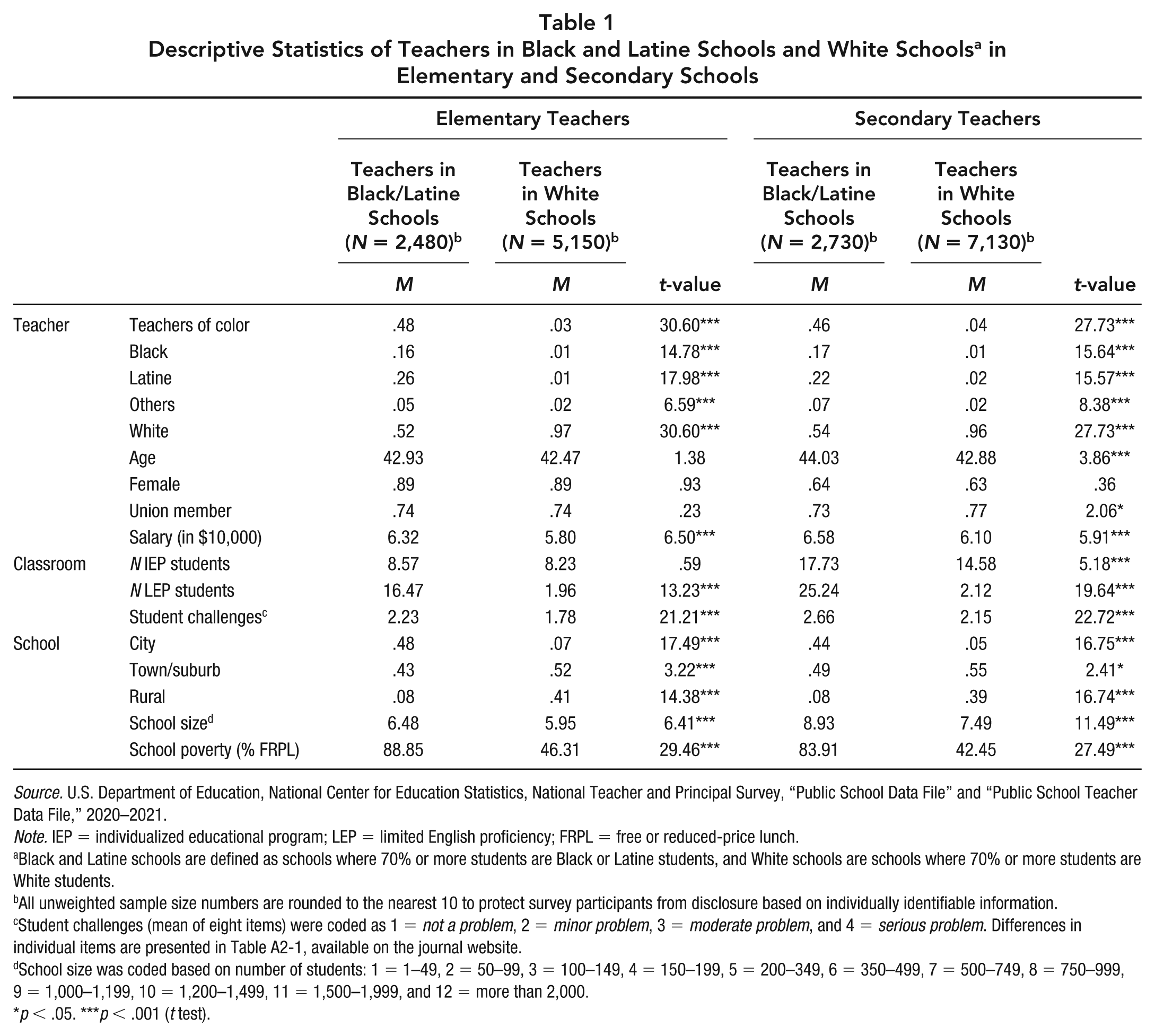
Source. U.S. Department of Education, National Center for Education Statistics, National Teacher and Principal Survey, “Public School Data File” and “Public School Teacher Data File,” 2020–2021.
Note. IEP = individualized educational program; LEP = limited English proficiency; FRPL = free or reduced-price lunch.
Black and Latine schools are defined as schools where 70% or more students are Black or Latine students, and White schools are schools where 70% or more students are White students.
All unweighted sample size numbers are rounded to the nearest 10 to protect survey participants from disclosure based on individually identifiable information.
Student challenges (mean of eight items) were coded as 1 = not a problem, 2 = minor problem, 3 = moderate problem, and 4 = serious problem. Differences in individual items are presented in Table A2-1, available on the journal website.
School size was coded based on number of students: 1 = 1–49, 2 = 50–99, 3 = 100–149, 4 = 150–199, 5 = 200–349, 6 = 350–499, 7 = 500–749, 8 = 750–999, 9 = 1,000–1,199, 10 = 1,200–1,499, 11 = 1,500–1,999, and 12 = more than 2,000.
p < .05. ***p < .001 (t test).
As a team of three education policy researchers of East Asian descent—originally from Japan and China and having received research training in the United States—our lived experiences as Asian and Asian American scholars are central to our research. These identities inform our focus on systemic equity within the teaching profession and drive our commitment to fostering equitable support for educators. Recognizing that quantitative research is never neutral, we acknowledge that our analytic decisions and instrument designs are inherently influenced by our collective experiences and interpretive lenses.
Social Inequity, Teachers’ Work, and Instructional Mode During the COVID-19 Pandemic
Teachers’ work is inherently shaped by broader social and economic inequities impacting marginalized communities (Grooms & Childs, 2021; Kozol, 2012, 2024; Mirra & Rogers, 2020; Supovitz et al., 2024; Touloukian et al., 2024). Touloukian et al. (2024) explained, based on their mixed methods study of K–12 teachers across the United States, that teachers who were practicing culturally responsive teaching struggled to develop relationships with students during remote and hybrid instruction while facing increased surveillance of “politicized” topics.
Other qualitative studies also reported heavier workloads of teachers who drove around the community to deliver learning materials, books, computers, and Wi-Fi hot spots to students in underresourced communities (Kaden, 2020; Manning & Jeon, 2020). Challenges with remote instruction, student disengagement, and classroom management after return fueled stress and disenfranchisement, ultimately driving teacher resignations in some cases (Kipp et al., 2023). Furthermore, a synthesis of 49 studies by LaTronica-Herb and Karalis Noel (2023) found that heavy hybrid workloads, shifting instructional policies, and a lack of administrative and community support significantly contributed to teachers’ burnout and intent to leave the profession. These teacher experiences were also confirmed through principal interviews conducted by Grooms and Childs (2021) and Supovitz et al. (2024).
During the 2020–2021 school year, following the nationwide school closure in spring 2020, district and school leaders across the country needed to make a policy decision on the instructional mode that was safe for students and staff (Camp & Zamarro, 2022). Bartlett (2022) explained that teachers delivering hybrid instruction, especially those who were teaching in-person and remote students simultaneously, experienced the greatest challenges, managing multiple devices and engaging both online and in-person students at the same time, which compromised the academic learning opportunities and socioemotional support for their students.
In resource-stricken predominantly Black and Latine schools, this challenge is likely magnified by limited access to or capacity of instructional technology given to teachers due to district funding inequity (Sosina & Weathers, 2019), students’ limited or unstable technology and internet access in low-income households (Haderlein et al., 2021), and meeting greater socioemotional needs due to the further health and economic hardships in predominantly Black and Latine communities created by the COVID-19 pandemic (Grooms & Childs, 2021; Supovitz et al., 2024). Therefore, it is important to examine how teachers’ workload and resource adequacy vary among the teachers teaching remote, hybrid, and in-person instruction in predominantly Black and Latine schools and how they compare with those of teachers in predominantly White schools to understand the extent of disparities.
Teachers’ Workload and Resources and Teacher Outcomes
Given evidence that teachers in majority non-White schools experienced higher levels of pandemic-era job dissatisfaction (Redding & Nguyen, 2024) and attrition (Bastian & Fuller, 2023), it is essential to investigate how inequitable workloads and resource gaps drive these outcomes in Black and Latine schools. Prior studies have consistently documented systemic disparities in working conditions, finding that majority Black and Latine schools have larger class sizes, fewer resources, and less supportive leadership than predominantly White schools (Johnson et al., 2012; Loeb et al., 2005). During the pandemic, Kraft et al. (2021) further identified more negative working conditions (a composite of professional development, communication, recognition, collaboration, and professional expectation) in schools serving primarily students of color. However, none of these studies examined how these disparities differ across instructional modes.
The only quantitative study to consider instructional mode in relation to teachers’ working conditions during COVID-19 was conducted by Kwon et al. (2022), focusing on early childhood teachers serving children ages 0 to 5. Kwon et al. examined three aspects of working conditions—physical job demands, skill discretion, and decision authority—using a national survey and found no differences in these conditions by instructional mode (i.e., school closure, in person, or online). No previous quantitative study examined elementary- or secondary-level teachers’ workloads and resources in various instructional modes in predominantly Black and Latine schools or other majority non-White schools during the COVID-19 pandemic.
Previous research has consistently demonstrated significant links between teacher working conditions and outcomes such as job satisfaction, sense of success, and student achievement (Johnson et al., 2012; Kraft et al., 2021; Loeb et al., 2005; Redding & Nguyen, 2024). For example, Redding and Nguyen (2024) used the Schools and Staffing Survey and the NTPS from 2004 to 2021 and found that teachers are more satisfied when they perceive administrators to be supportive and encouraging, colleagues to be cooperative, and adequate materials received. Kraft et al. (2021) also found that the decline in teachers’ sense of success when teachers taught remotely during spring 2020 was less dramatic when teachers perceived positive working conditions overall. However, these studies treat school demographics as control variables rather than exploring how these relationships uniquely manifest in majority non-White schools or vary across different instructional modes during the COVID-19 pandemic.
Guided by a critical quantitative framework, our study examined disparities in teacher workload (instructional hours, total work hours, and class sizes) and resource adequacy (spring 2020 and the 2020–2021 academic year) across remote, hybrid, and in-person contexts. We further analyzed the aspects of workload and resource adequacy associated with teacher job dissatisfaction and intention to leave teaching among teachers of predominantly Black and Latine schools separately for remote and hybrid instruction—two instructional modes used by 83% of elementary school teachers and 94% of secondary school teachers in predominantly Black and Latine schools during the 2020–2021 school year, as we present in the following. The findings will inform the future directions for targeted policy and leadership interventions to promote an equitable distribution of teachers’ workload and resources.
Methods
Data and Measures
We analyzed data from the 2020–2021 NTPS, a nationally representative survey of teachers and principals in the United States sponsored by the National Center for Education Statistics (NCES) and collected by the Census Bureau (Petraglia et al., 2023). The current study used data from approximately 31,000 teachers in noncharter public elementary and secondary schools who were working full-time between October 2020 and August 2021. 1
To examine disparities by school racial diversity, we created two groups of teachers: those in predominantly Black and Latine schools (70% or more students are Black or Latine) and those in predominantly White schools (70% or more students are White). To maximize statistical power, we used a 70% threshold to define predominantly Black and Latine schools rather than 80%. An 80% cutoff would have significantly reduced the sample size for multivariate analysis (e.g., from 2,730 to 1,900 secondary teachers), notably leaving only 90 secondary teachers teaching “in person” in predominantly Black and Latine schools compared to 160 at the 70% level (see Table A3-2, available on the journal website). Given that 70% represents a predominant majority, this decision ensures sufficient sample sizes for disaggregated analysis by instructional mode.
According to the Common Core Data in 2021 (NCES, 2021), of the 99,310 public schools in the United States, 33.1% (n = 32,839) were “minority-majority” schools with at least 70% non-White students. Within this group, predominantly Black and Latine schools comprise 73.8% of all minority-majority schools and 24.4% (n = 24,223) of all U.S. schools. Our decision to focus on teachers of predominantly Black and Latine schools compared to separate analyses of predominantly Black schools and predominantly Latine schools was made to ensure sufficient sample sizes to examine the degree of inequality.
These subsamples include 2,480 elementary teachers (8.0%) and 2,730 secondary teachers (8.8%) in predominantly Black and Latine schools and 5,150 elementary teachers (16.6%) and 7,130 secondary teachers (23.0%) in predominantly White schools (the numbers are round up to the nearest 10). All survey measures, variables, reliability indices for composite variables, and coding used in this study are described in Table A1 (available on the journal website).
The second research question includes two outcome variables. For job dissatisfaction, we generated a factor score based on teachers’ agreement to five related survey items (Cronbach’s α = .78, McDonald’s ω = .79). 2 The items include statements such as “The stress and disappointments involved in teaching at this school aren’t really worth it” and “I don’t seem to have as much enthusiasm now as I did when I began teaching.” For the intention to leave, we generated a binary outcome in which 1 indicates teachers who definitely plan to leave as soon as they can or remain in teaching until a more desirable job opportunity arises and 0 indicates otherwise.
Data Analysis
For the first research question, we conducted a series of t tests to show the differences in teachers’ workload and resource adequacy by instructional mode as reported by teachers in predominantly Black and Latine schools and predominantly White schools instead of controlling for school characteristics that coexist with school racial diversity, such as poverty. This approach is consistent with previous research that has descriptively documented COVID-19 disparities between subgroups (Diliberti et al., 2021; Haderlein et al., 2021) and is supported by the importance of identifying inequity through descriptive analyses (Loeb et al., 2017).
Focusing on teachers in predominantly Black and Latine schools for the second research question, we used multiple regression for job dissatisfaction and multiple logistic regressions for intention to leave. We focused on the subsample of teachers in predominantly Black and Latine schools to allow unique relationships between all independent and control variables and dependent variables. 3 Considering the importance of instructional mode in influencing teachers’ workload and necessary resources (Bartlett, 2022; Kaufman & Diliberti, 2021), we conducted these regression analyses separately for remote and hybrid instructions in addition to the overall model including all modes. We also conducted the analyses separately for elementary and secondary schools to identify differential patterns of disparities and relationships with job dissatisfaction and intention to leave.
Each regression model included five teacher controls (salary, age, teacher race/ethnicity, gender, and union membership), three classroom controls (number of students with an individualized education program [IEP], number of students with limited English proficiency [LEP], and a composite of student challenges), and two school controls (school size and location).
The models for individual i are as follows:

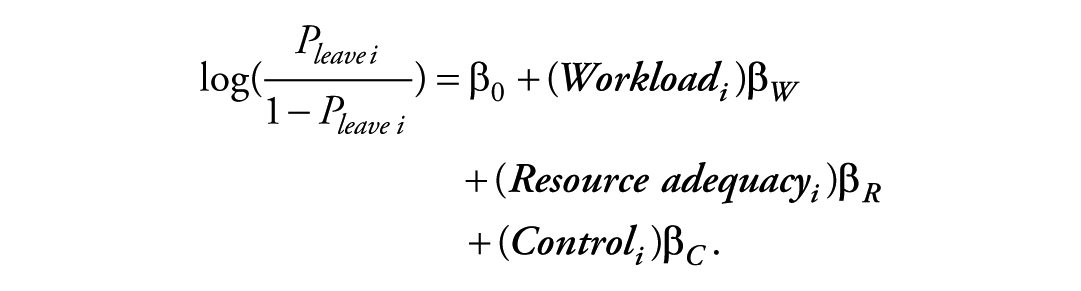
Vectors are shown in bold. The vectors in parentheses (e.g.,
For all data analyses, we used the svyset command and svy: prefix on Stata SE. We applied the final weight (TFNLWGT) to represent the target survey population and the Jackknife replication with the 200 replicate weights (TREPWT1–200) to calculate accurate and robust standard errors. 4
Results
Comparison of Contexts Between Black and Latine Schools and White Schools
Following the importance of understanding the contexts emphasized in a critical quantitative framework, Table 1 details teacher, classroom, and school characteristics, highlighting key differences between predominantly Black and Latine schools (hereafter, “Black and Latine schools”) and predominantly White schools (hereafter, “White schools”) separately for elementary and secondary school teachers.
Teachers in Black and Latine schools differ significantly from those in White schools, most notably in racial composition; nearly half (46%–48%) are teachers of color compared to just 3% to 4% in White schools. Although these teachers earn higher salaries, this likely reflects the higher cost of living in their predominantly urban settings (44%–48%) relative to White schools (5%–7%). Crucially, teachers in Black and Latine schools manage heavier instructional demands, serving significantly more LEP students (up to 25 vs. 2) and slightly more IEP students in secondary schools while navigating greater student challenges, such as absenteeism and poor health (for comparisons of individual items on student challenges, see Table A2-1, available on the journal website). Black and Latine schools are significantly larger and serve a higher proportion of students in poverty—over 80% qualify for free or reduced-price lunch compared to under 50% in White schools—highlighting distinct work environments. 5
During the 2020–2021 academic year, instructional modes also differed sharply as shown in Figure 1: Only 16.8% of elementary and 5.8% of secondary teachers in Black and Latine schools taught in person compared to 43.9% and 25.0%, respectively, in White schools, while approximately one-third (28.9% and 29.7%, respectively) taught fully remotely—figures far exceeding those in White schools (10.0% and 8.4%, respectively). While a majority of secondary teachers across all types navigated the challenges of hybrid instruction (Bartlett, 2022), the disproportionate reliance on remote and hybrid modes in Black and Latine schools aligns with previous findings (Camp & Zamarro, 2022; Haderlein et al., 2021; Kaufman & Diliberti, 2021).
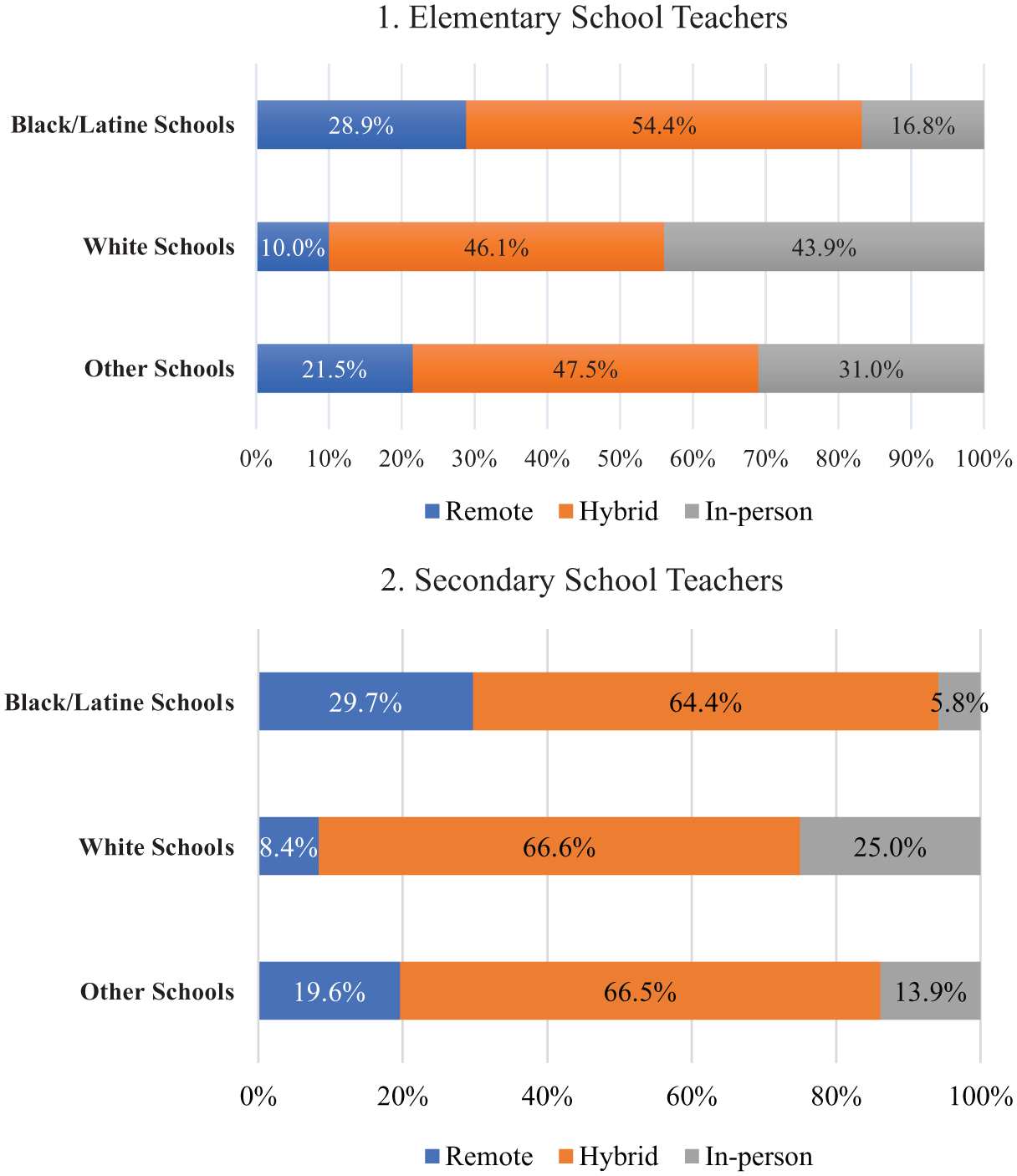
Instructional modes of teachers in Black and Latine schools, White Schools, and other schools in the 2020–2021 school year.
Racial Disparities in Teacher Workload and Resource Adequacy by Instructional Mode
Figures 2 and 3 present the disparities between Black and Latine schools and White schools separately for elementary and secondary school teachers in workload (instructional hours per week, total work hours per week, and class size) and resource adequacy (during the COVID onset in spring 2020 and during the fall 2020–spring 2021 school year) in three instructional modes—remote, hybrid, and in person. Figures 2 and 3 show that the degree of disparities in teacher workload and resource adequacy differs by instructional mode (for the t-values, sample sizes, and significance levels, see Tables A3-1 and A3-2, available on the journal website). 6
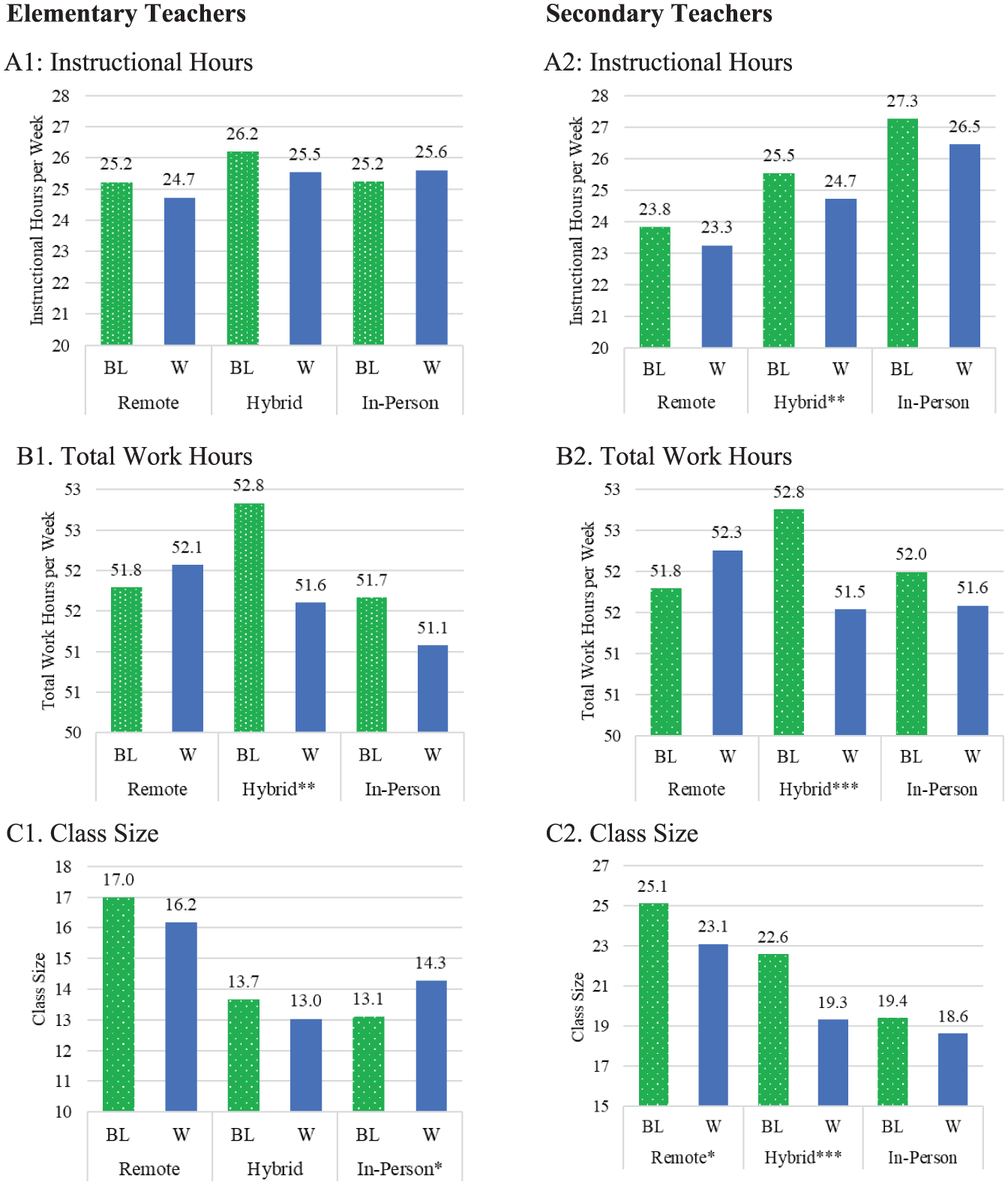
Disparities in teachers’ workload by instructional mode: Black and Latine schools versus White schools.
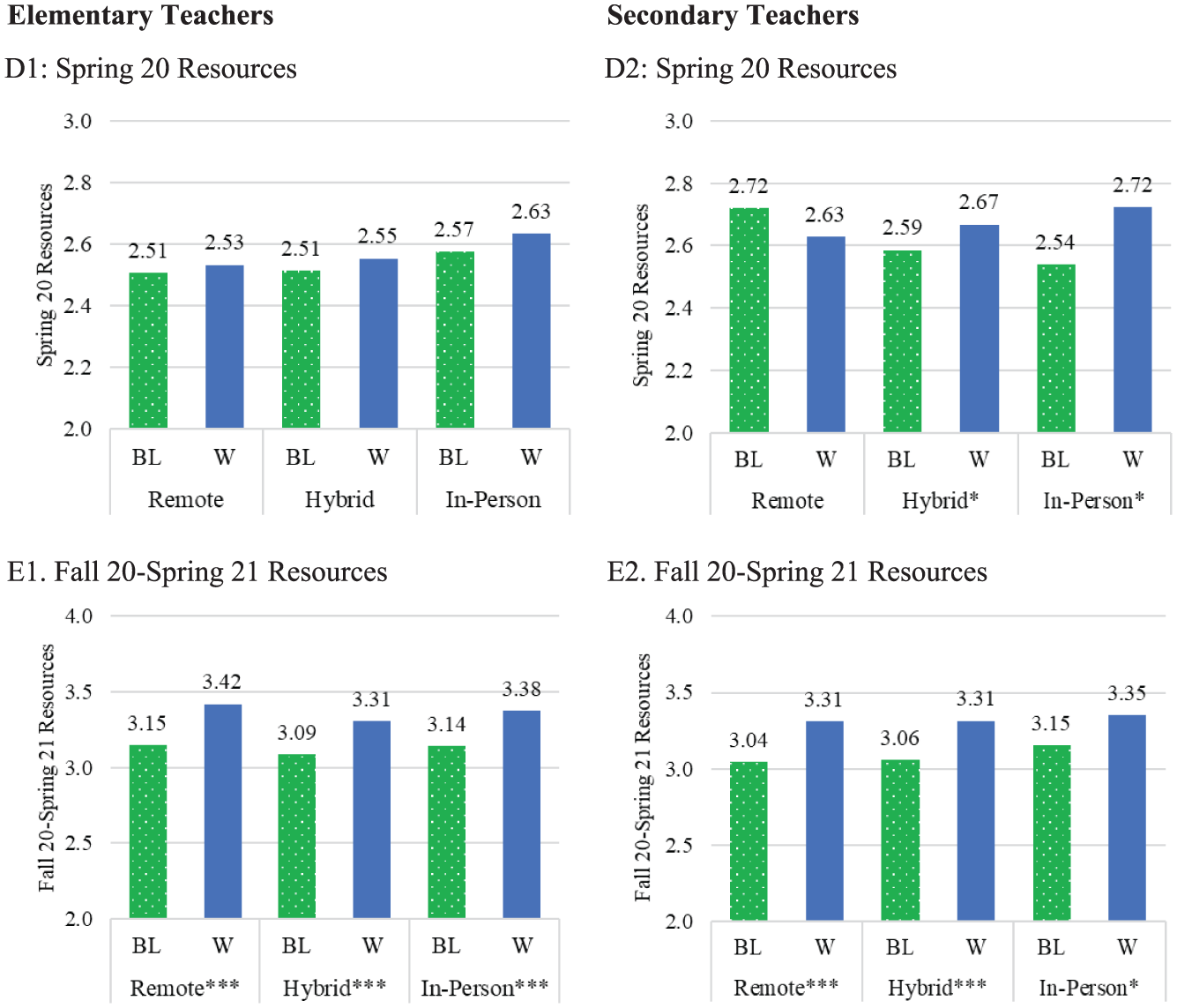
Disparities in resource adequacy by instructional mode: Black and Latine schools versus White schools.
Across all three workload indicators, teachers in hybrid mode at Black and Latine schools reported more instructional hours, total work hours, and larger classes than those in White schools. These differences were statistically significant for secondary teachers, who averaged 25.5 instructional hours, 52.8 total work hours, and 23 students per class, compared to 24.7 hours, 51.5 hours, and 19 students in White schools. Among elementary teachers, a statistically significant gap also existed for total work hours: 52.8 hours per week in Black and Latine schools versus 51.6 hours in White schools.
Although these statistically significant differences for hybrid teachers may appear small, the cumulative impact of instructional hours (25.5 vs. 24.7), total workload, and class size is substantial. For secondary teachers, the weekly difference of 48 minutes (0.8 hours) translates into an entire extra period with 23 additional students. This creates significantly greater demands for preparation and grading, particularly when compounded by higher numbers of IEP and LEP students and those facing multiple challenges (see Table 1).
The only exception to the trend of heavier workloads in Black and Latine schools was found among elementary teachers teaching in person, where White schools had slightly larger classes (13 vs. 14 students). This likely reflects higher demand for in-person learning in predominantly White communities, contrasted with greater health safety concerns in Black and Latine schools, especially for parents of younger children less able to practice social distancing.
Figure 3 illustrates teacher-perceived resource adequacy across two periods in spring 2020 and the subsequent 2020–2021 school year. Resource adequacy was examined separately because the types of resources needed by teachers are likely different due to the instructional mode. In addition, focusing on teachers’ perception of resource adequacy is more important than measuring the actual level of resources given to teachers because teachers know best what resources are needed to support their own students in each context of remote, hybrid, and in-person teaching.
Based on a scale ranging from 1 = strongly disagree to 4 = strongly agree for both measures of resource adequacy, we can see a different pattern of disparities between spring 2020 and fall 2020–spring 2021. For the spring 2020 resources, although secondary school teachers in Black and Latine schools teaching hybrid and in person reported less adequate resources than their counterparts in White schools, there were no statistically significant differences among elementary school teachers. Secondary teachers in Black and Latine schools teaching hybrid and in person were significantly less likely to agree that “I had the support and resources I needed to be effective as a teacher at this school” in spring 2020, with mean differences of .08 (hybrid) and .18 (in person).
By the 2020–2021 school year, however, systemic disparities became apparent across both elementary and secondary levels. Regardless of instructional mode, teachers in Black and Latine schools were significantly less likely to report that necessary materials—such as textbooks and supplies—were available as needed, with mean differences ranging from .20 to .27. In summary, these findings underscore a structural inequity during the pandemic such that teachers in Black and Latine schools, particularly those in hybrid settings, faced persistent disadvantages in both workload and resource access.
Relationships Between Teachers’ Workload, Resources, and Their Dissatisfaction and Intention to Leave in Black and Latine Schools
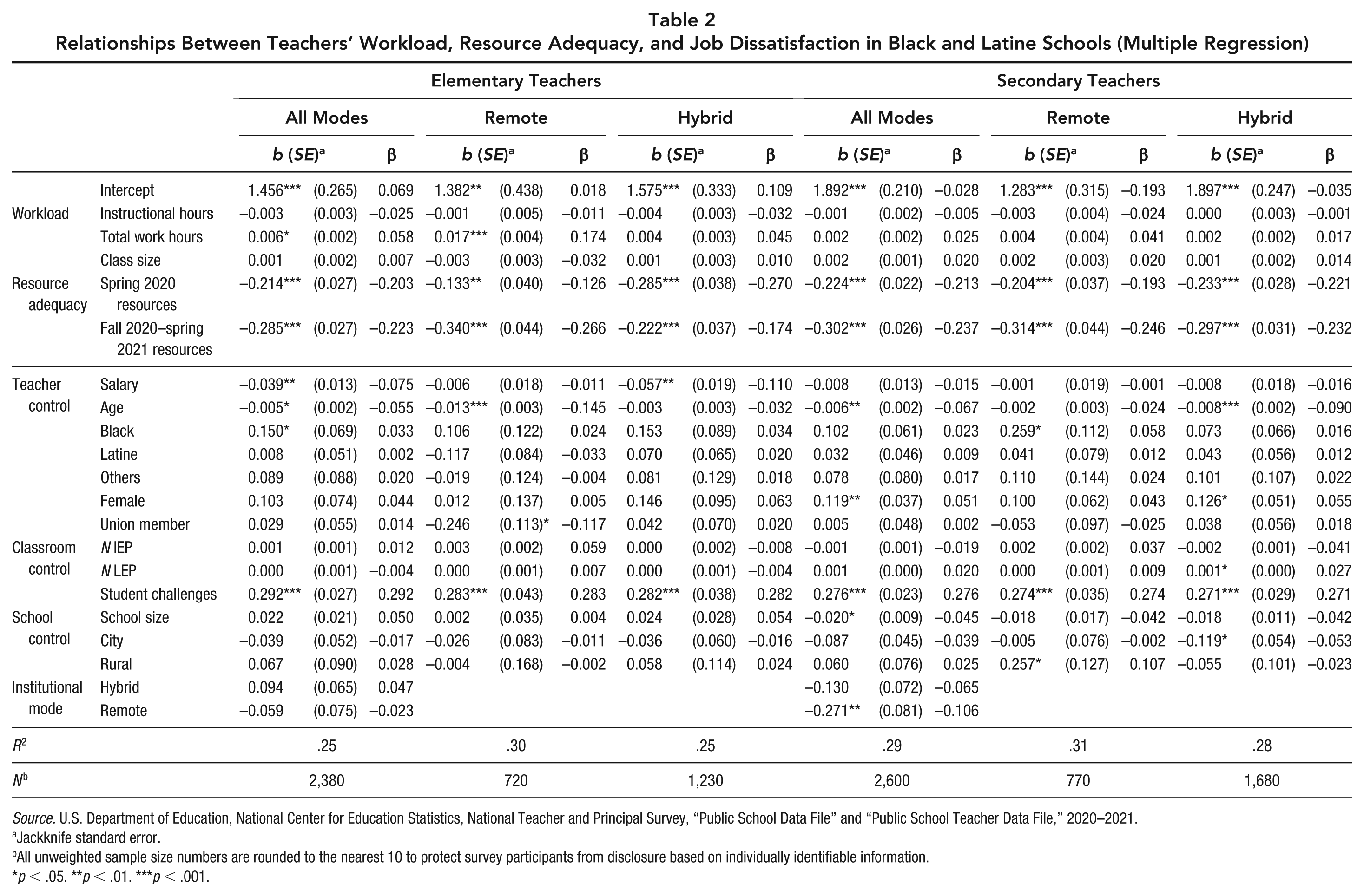
To examine how teacher workload and resource adequacy are associated with job dissatisfaction and intention to leave teaching among teachers in Black and Latine schools, we conducted multiple regression and multiple logistic regression by school level and instructional mode, as shown in Table 2. After controlling for teacher, classroom, and school background characteristics, we can see a consistent finding with statistically significant relationships between resource adequacy and lower job dissatisfaction. Among the three measures of teacher workload, the total work hours were significantly associated with greater job dissatisfaction among elementary school teachers teaching remotely but not among secondary school teachers. 7
Relationships Between Teachers’ Workload, Resource Adequacy, and Job Dissatisfaction in Black and Latine Schools (Multiple Regression)
Source. U.S. Department of Education, National Center for Education Statistics, National Teacher and Principal Survey, “Public School Data File” and “Public School Teacher Data File,” 2020–2021.
Jackknife standard error.
All unweighted sample size numbers are rounded to the nearest 10 to protect survey participants from disclosure based on individually identifiable information.
p < .05. **p < .01. ***p < .001.
Elementary and secondary teachers in Black and Latine schools who reported greater resource adequacy were less dissatisfied with their jobs than those who reported receiving less adequate resources regardless of the instructional mode. With a 1 unit increase in resource adequacy in spring 2020 and fall 2020–spring 2021, teachers’ job dissatisfaction decreased across remote and hybrid instruction in the ranges of 0.13 SD to 0.29 SD among elementary school teachers and 0.22 SD to 0.34 SD among secondary school teachers. Both spring 2020 and fall 2020–spring 2021 resource adequacy have larger beta coefficients than any other variables in the model except for student challenges. Across these models, the independent and control variables explained 25% to 31% of the total variation in job dissatisfaction.
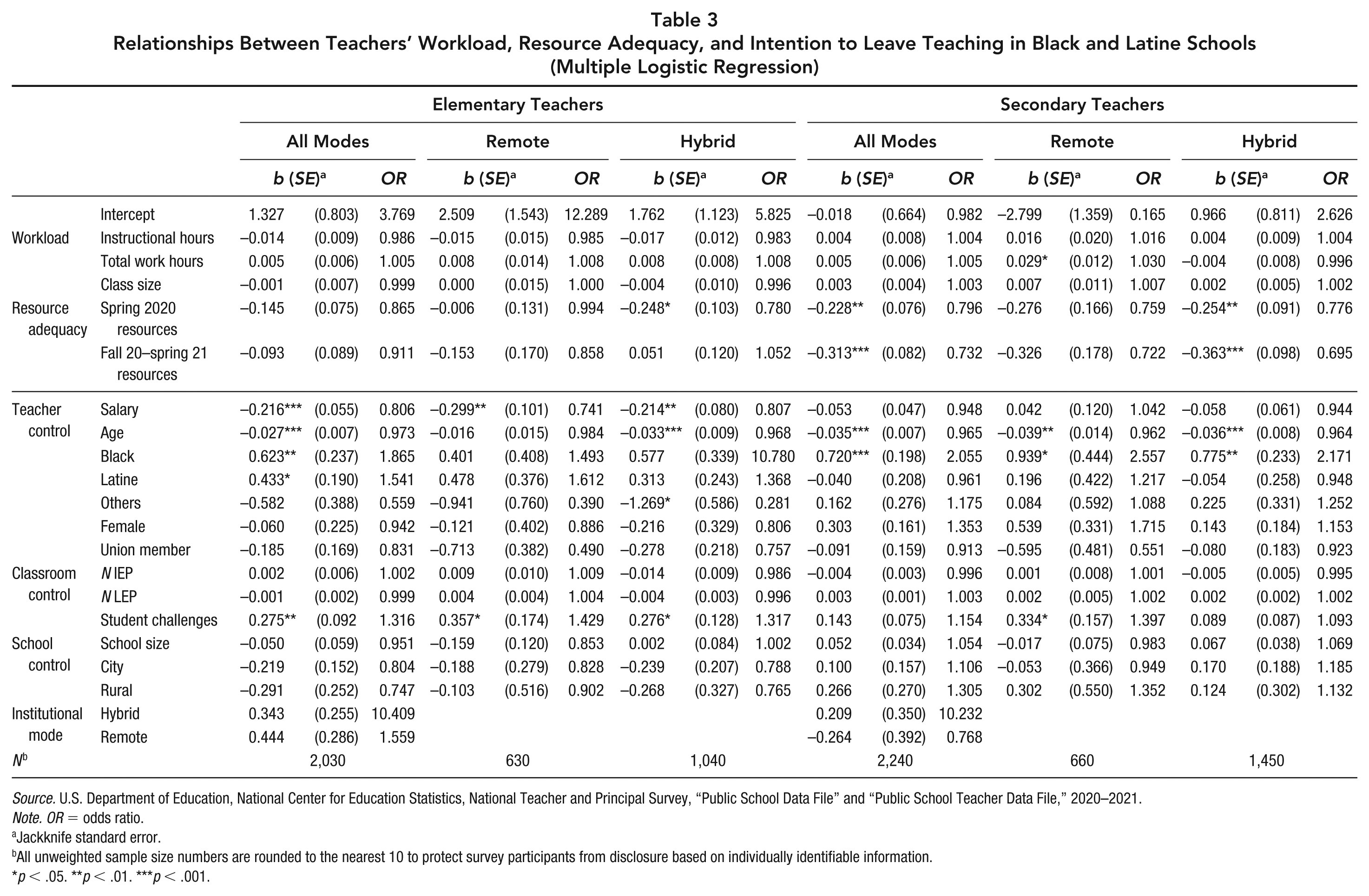
Table 3 presents the results of a multiple logistic regression with the dichotomous dependent variable of teachers’ intention to leave teaching. In these models, we see some differences in the relationships between elementary and secondary teachers as well as between remote and hybrid teaching. Elementary school teachers teaching hybrid who reported more adequate resources in spring 2020 were less likely to indicate their intention to leave teaching. With a 1 unit increase in resource adequacy, the odds of expressing an intention to leave decrease by 22.0%. Among elementary school teachers teaching remotely, resource adequacy was not significantly associated with their intention to leave teaching.
Relationships Between Teachers’ Workload, Resource Adequacy, and Intention to Leave Teaching in Black and Latine Schools (Multiple Logistic Regression)
Source. U.S. Department of Education, National Center for Education Statistics, National Teacher and Principal Survey, “Public School Data File” and “Public School Teacher Data File,” 2020–2021.
Note. OR = odds ratio.
Jackknife standard error.
All unweighted sample size numbers are rounded to the nearest 10 to protect survey participants from disclosure based on individually identifiable information.
p < .05. **p < .01. ***p < .001.
For secondary school teachers teaching hybrid, both spring 2020 and fall 2020–spring 2021 resource adequacy were significantly associated with a lower likelihood of intention to leave. With a 1 unit increase in resource adequacy in spring 2020 and fall 2020–spring 2021, the odds of teachers expressing their intention to leave decrease by 22.4% and 30.5%, respectively. It is also important to note that student challenges were not significantly associated with secondary teachers’ intention to leave when teaching hybrid, underscoring the critical importance of adequate resources. Among the secondary teachers teaching remotely, total work hours were significantly associated with their intention to leave. With a 1-hour increase in total work hours, the odds of teachers expressing their intention to leave increase by 3.0%.
With statistically significant results on student challenges, we further explored interaction effects between student challenges and workload or resource adequacy. The results showed that the negative relationship between resource adequacy in spring 2020 and job dissatisfaction was stronger when teachers reported more student challenges in hybrid instruction, but not in remote instruction, in both elementary and secondary schools. However, there was no statistically significant interaction regarding teachers’ intention to leave. These findings indicate the greater importance of resources for teachers’ job satisfaction, especially when teachers with hybrid instruction are experiencing major challenges among students, including absenteeism, unpreparedness to learn, and poor health.
In summary, we observed major disparities in both teachers’ workload and resource adequacy between Black and Latine schools and White schools, which were especially prominent among those who were teaching hybrid. We also found that when teachers in Black and Latine schools are given adequate resources to support their students in hybrid classrooms, they are less likely to report job-related dissatisfaction and consider leaving teaching. These findings have important policy and leadership implications during times of crisis when schools need to decide on instructional mode.
Discussion and Conclusion
Using a critical quantitative framework (Sablan, 2019; Stage, 2007; Stage & Wells, 2014), this study first examined disparities in teachers’ workload and resources between Black and Latine schools and White schools, followed by an analysis of the aspects of workload and resources associated with job dissatisfaction and intention to leave teaching in Black and Latine schools.
Consistent with previous findings (Camp & Zamarro, 2022), teachers in Black and Latine schools were less likely than those in White schools to teach in person. Given existing disparities in technology access (Haderlein et al., 2021) and the challenges of remote/hybrid teaching (Bartlett, 2022; Kaufman & Diliberti, 2021), many teachers in Black and Latine schools faced greater responsibility to support students’ learning and well-being. Teachers in Black and Latine schools require equitable support, yet our data showed that secondary school teachers in Black and Latine schools were given heavier instructional and total workload, larger class sizes, and less adequate resources than their White school counterparts, especially when teaching hybrid. Elementary teachers in Black and Latine schools teaching hybrid also worked more total hours, and all of them reported less adequate resources than their White school counterparts. These findings reflect long-standing structural inequities in working conditions that predate the COVID-19 pandemic (Johnson et al., 2012; Loeb et al., 2005).
The greater workload disparities at the secondary level than at the elementary level may reflect a greater need for hybrid instruction to accommodate students’ varying technology and safety needs across multiple regions. This may also explain the different findings from the study by Kwon et al. (2022), which focused on early childhood educators and did not examine hybrid instruction or schools in segregated neighborhoods.
Our results, showing a statistically significant negative association between resource adequacy and job dissatisfaction among both elementary and secondary teachers in Black and Latine schools, emphasize the critical need for resources. Teachers with adequate resources were significantly less likely to be dissatisfied, and this relationship held across those teaching remote and hybrid instruction. Furthermore, elementary and secondary teachers teaching hybrid in Black and Latine schools who had adequate resources were less likely to express an intention to leave teaching.
These relationships are likely mediated by instructional quality, which affects their sense of success as instructors (Kraft et al., 2021). When teachers are teaching remote or hybrid in Black and Latine schools, they must address multiple challenges before students are ready to learn, including alleviating food insecurity (Grooms & Childs, 2021; Supovitz et al., 2024), ensuring online and material access to students (Kaden, 2020; Manning & Jeon, 2020), ensuring student engagement with no or limited adult supervision at home (Kipp et al., 2023), and developing a classroom community in practicing culturally responsive teaching (Touloukian et al., 2024). With these heavy responsibilities, a lack of necessary resources to teach them would only increase the difficulty in delivering quality instruction, possibly leading to dissatisfaction and intention to leave.
Before discussing implications for future policy and leadership, it is important to point out the study limitations. First, small sample sizes prevented disaggregating teachers between predominantly Black versus predominantly Latine schools, although future research with larger samples could reveal distinct differences in workload and resources. Second, although we analyzed all teachers in these settings, future work should employ an intersectional lens on teacher race and gender (Covarrubias et al., 2018; Covarrubias & Velez, 2013) to determine whether internal inequities exist for Black and Latine teachers across various identities. Finally, because this study relies on observational data rather than a randomized experimental design, findings should be interpreted as associations rather than causal relationships.
Despite these limitations, this study revealed important findings with implications for future policy and leadership. As we are facing more frequent natural and human-made disasters, including hurricanes, tornadoes, wildfires, earthquakes, flooding, and school shootings, that necessitate hybrid and remote schooling, educational policymakers and district and school leaders need to consider the equity implications of their decisions for teachers. It is critically important for district and school administrators of predominantly Black and Latine schools to first become aware of the workload and resource disparities experienced by teachers teaching hybrid and carefully consider if hybrid instruction is necessary. District and school administrators may tend to use hybrid instruction because it can accommodate students’ various instructional needs without changing the teacher assignments. It is crucial to consider other options, if possible, such as dividing the classes into remote and in-person modes taught by two separate groups of teachers.
If the district and school administrators decide to assign hybrid instruction to teachers in predominantly Black and Latine schools, it is critical to ensure that all teachers in these schools receive essential resources, including textbooks and supplies. These schools suffer from teacher shortages in in-demand areas, including general elementary education, special education, mathematics, English language arts, and English as a second language or bilingual education (NCES, n.d.). Our additional analysis further showed the greater importance of resources in hybrid classrooms with student challenges such as absenteeism, unpreparedness to learn, and poor health. Disparities in essential resources create a vicious cycle of higher teacher attrition and shortages, resulting in heavier workloads and continuous revolving doors in predominantly Black and Latine schools. Without providing equitable access to essential resources for delivering quality instruction, teacher recruitment or retention efforts in these schools are unlikely to succeed.
Beyond these essential resources, it is also important to identify what specific resources are needed for teachers teaching hybrid in Black and Latine schools through a prompt needs assessment of teachers during a crisis. The types of additional resources needed would vary across schools or even classrooms because of the student demographics and their unique academic and socioemotional needs in times of crisis, as shown by various challenges identified in previous qualitative studies (Kaden, 2020; Kipp et al., 2023; LaTronica-Herb & Karalis Noel, 2023; Manning & Jeon, 2020; Touloukian et al., 2024). Teachers who work closely with students can communicate the necessary support to administrators through a needs assessment. A prompt redistribution of available district-level resources, including disaster relief education funds, to teachers teaching hybrid in predominantly Black and Latine schools can narrow resource disparities.
Still, the challenge remains as districts with large Black and Latine student populations have historically suffered from resource inequity (Sosina & Weathers, 2019). From a macro-perspective, a significantly greater proportion of teachers work in predominantly White schools than predominantly Black and Latine schools. Based on our nationally representative samples, 39.6% of all teachers work in predominantly White schools, and 16.8% of teachers work in predominantly Black and Latine schools. Furthermore, the teachers teaching hybrid in Black and Latine schools during the COVID-19 pandemic accounted for only about 10% of the total teacher population across elementary and secondary schools. Because this is the population of teachers who suffered the most from inequitable workloads and resources and faced the greatest challenges in supporting students, reallocating resources from the state level to these teachers through districts may not require a major reduction in resources for other teachers, especially when additional disaster relief funding is available. Equity-focused policy and leadership supporting the teachers serving marginalized students will go a long way toward ensuring that they are fully supported so they can, in turn, support their students who are disproportionately affected during times of crisis.
In summary, this study capitalized on the strengths of quantitative methods, using large databases to systematically reveal the structural inequity that shapes teachers’ experiences in predominantly Black and Latino schools (Gillborn et al., 2018). By revealing the system-level inequity in teachers’ workload and resources in the contexts of hybrid and online instruction, the current study challenges the deficit-based narratives implied in gap-gazing data (Gutiérrez, 2008; Young et al., 2018), such as those focused on gaps in teacher attrition rates or job satisfaction. Future quantitative research on teachers’ working conditions should move beyond gap-gazing research and rather focus on the policy and organizational conditions that create inequitable supports to teachers in predominantly Black and Latino schools and other minority-majority schools in racially segregated communities.
Future secondary analyses of large databases can leverage a critical quantitative framework to develop measures of inequity across various aspects of teachers’ work in racially segregated schools and offer policy directions for equalizing the organizational support for teachers in these schools. Developing composite indices of structural inequity in teachers’ working conditions that can be compared across districts or states is another promising direction. By exploring system-level factors associated with the extent of structural inequity in teachers’ working conditions, these insights can guide future policies and leadership actions to achieve equitable organizational support for teachers.
Supplemental Material
sj-docx-1-edr-10.3102_0013189X261457389 – Supplemental material for Identifying Structural Inequity During COVID-19: Teachers’ Workload and Resources by Instructional Mode
Supplemental material, sj-docx-1-edr-10.3102_0013189X261457389 for Identifying Structural Inequity During COVID-19: Teachers’ Workload and Resources by Instructional Mode by Motoko Akiba, Xiaonan Jiang and Sakiko Ikoma in Educational Researcher
Footnotes

Notes
Authors
References
Supplementary Material
Please find the following supplemental material available below.
For Open Access articles published under a Creative Commons License, all supplemental material carries the same license as the article it is associated with.
For non-Open Access articles published, all supplemental material carries a non-exclusive license, and permission requests for re-use of supplemental material or any part of supplemental material shall be sent directly to the copyright owner as specified in the copyright notice associated with the article.
