






Abstract
This study examined changes in kindergarten redshirting and retention practices in Delaware since the COVID-19 pandemic. Using student-level data from fall 2010 to fall 2023, we found that redshirting rates spiked dramatically in fall 2021, with the largest relative increases among historically underrepresented groups including Black, Hispanic, and low-income students. Retention showed a long-term declining trend that was disrupted only in 2021, when rates returned to pre-pandemic levels. These patterns suggest both practices operated as parallel strategies for securing more typical kindergarten experiences. These demographic shifts have important implications for classroom composition and instructional planning in post-pandemic elementary education.
Keywords
Kindergarten redshirting and grade retention both serve as mechanisms for giving young children “the gift of time” (Graue & DiPerna, 2000) to mature academically and socially. However, these practices differ fundamentally in their decision-making processes, subgroup-level participation, implementation, and, likely, the socioemotional and cognitive impacts on those children who enter kindergarten either again, as in the case of retention, or for the first time but one year older, as in the case of redshirting. Redshirting refers to a family’s voluntary (ex ante) decision to delay a child’s school entry by one year—often motivated by concerns about relative school readiness—whereas retention is a school-led negotiation (ex post decision) with parents to hold a child back after a first year of kindergarten due to perceived academic or developmental lag (Albanesi, 2019; Range et al., 2011). Beyond the timing of these decisions, the costs of these practices are also borne differently by participants: redshirting typically requires private resources (e.g., affording another year of preschool), whereas retention leverages public schooling at no extra out-of-pocket cost (Albanesi, 2019; Dhuey et al., 2019). Despite these differences, both practices generally rest on similar judgments about a child’s readiness relative to peers and may require some degree of collaboration between families and schools, depending on the policy context. Such an overlap remains understudied because the two have typically been treated in isolation in existing research (Range et al., 2011).
The COVID-19 pandemic dramatically altered both practices by changing how parents critically evaluate their children’s school readiness and the appropriateness of educational settings for their children (Baum & Jacob, 2024; Gilbert et al., 2020). Early evidence suggests a substantial change in public school attendance, including increased homeschooling and absenteeism throughout the pandemic, driven by shifting parental preferences in light of safety concerns and challenges of virtual instruction (Dee, 2023, 2024). Concurrently, states relaxed retention policies as standardized tests were suspended and districts grappled with learning loss (Wright, 2021), and many districts offered voluntary retention as a “do-over” following the largely virtual 2020–2021 school year (Schwartz & Diliberti, 2021). This environment represents a unique setting for examining how families and schools navigate these closely related but distinct kindergarten entry or retention pathways under extreme uncertainty and risk.
Situating the Study
Our study examines kindergarten redshirting and retention in Delaware before and during the COVID-19 pandemic. Although a descriptive study, it is motivated by the potential educational and social consequences of these practices. Because neither redshirting nor retention is randomly assigned but instead reflects child-, family-, and school-level selection mechanisms (d’Haultfoeuille, 2010; Fortner & Jenkins, 2017), the strongest causal evidence comes from regression-discontinuity (RD) analyses of changes in compulsory school age cutoffs and mandatory test-based retention policies. RD studies of delayed entry show benefits for some subgroups (e.g., White students) but harms for others (e.g., children of color; Cook & Kang, 2020; Jenkins & Fortner, 2025). RD methods applied to third-grade retention policies find modest learning gains through middle school (Hwang & Koedel, 2025). However, extrapolating these findings to kindergarten is speculative, and less rigorous estimates for kindergarten repetition using propensity score matching are mixed for test score outcomes (Raffaele Mendez et al., 2015; Vandecandelaere et al., 2015), with more consistent evidence showing retention negatively affects self-esteem, motivation, and engagement (Mollett, 2018; Xia & Kirby, 2009). Mechanically, both practices increase children’s risks of dropping out of school because they reach the legal minimum dropout age sooner in their educational career (Cook & Kang, 2016), but more causal research into the effects of kindergarten retention and redshirting is needed.
In Delaware, compulsory schooling begins when children become eligible for kindergarten in the year that they turn five by August 31, but families may request a one-year delay in kindergarten attendance if “in the best interest of the child” (14 Del. C. § 2702). (As state law requires approval from local authorities, we are not aware of state-level information on requests and approvals. Nor do we know how many children may have attended a private school for one year and entered kindergarten again through the public school system.) In contrast, kindergarten promotion and retention are governed primarily by district-level promotion policies rather than a state-mandated kindergarten promotion rule (14 Del. C. § 230), and retention typically arises from educator judgments about a child’s progress and readiness, with required parent notification and avenues for review under local procedures (e.g., Smyrna School District Board of Education, 2024).
Thus, redshirting and retention share a common goal, allowing children extra time to develop before first grade, but differ in when they originate and who typically participates. Specifically, redshirting depends on parents’ ex ante assessments about readiness or maturity (Albanesi, 2019), advantaging those with preschool access and/or social capital (Bassok & Reardon, 2013; Dhuey et al., 2019). Retention relies on ex post evaluations of kindergarten performance by teachers and administrators, and families with limited access to high-quality preschool or other ex ante readiness signals often learn about gaps only after struggles emerge in kindergarten (Winsler et al., 2012). In sum, differences in the timing of the decision result in compositional differences between the redshirting (more advantaged) and retention (more disadvantaged) populations.
Independent of timing, the mechanisms shaping redshirting and retention decisions also differ, corresponding on average to different populations and, importantly, demonstrating significant selection into these practices. Redshirting involves high costs because families must pay for an additional year of preschool or have a parent stay home instead of working, and there is evidence that some parents redshirt to gain a competitive edge over peers rather than to address an actual delay (Albanesi, 2019). For these reasons, redshirting is typically associated with economic advantage (Bassok & Reardon, 2013; Dhuey et al., 2019). In contrast, retention decisions can also be informed by teachers’ underlying prejudices and parents’ abilities to leverage social capital to negotiate school policies, thereby disproportionately affecting marginalized students (Dhuey et al., 2019; LiCalsi et al., 2019; van den Bergh et al., 2010). In sum, retention is often predicated on end-of-year evaluations and structural inequities, both giving rise to an increased risk of retention for traditionally disadvantaged students (Dhuey et al., 2019; Xia & Kirby, 2009), whereas redshirting is generally associated with privilege (Bassok & Reardon, 2013; Dhuey et al., 2019).
Despite these differences, some common factors predict both retention and redshirting. First, age is a common contributing factor, as both redshirting and retention are disproportionately common among students who are young for their grade, such as those born in the summer months just before the age-eligibility cutoff (Dhuey et al., 2019). Both practices are also more common for boys and students with disabilities (SWD), with the former believed to develop slower than girls and thus expected to benefit more from additional time (Bassok & Reardon, 2013; Xia & Kirby, 2009) and the latter developing atypically compared with the general education population and similarly expected to benefit from additional time (Fortner & Jenkins, 2017; Xia & Kirby, 2009). By third grade, the proportion of students in a cohort who are one year older is similar across subgroups due to similar rates of redshirting among more advantaged students and retention among less advantaged students (Dhuey et al., 2019).
School Enrollment and the COVID-19 Pandemic
The COVID-19 pandemic upended both redshirting and retention pathways. Public school enrollment fell by over 1.1 million nationally in fall 2020, largely concentrated in the early grades. Declines exceeded increases in private school enrollment or registered homeschooling, suggesting increases in unregistered homeschooling, truancy, and redshirting (Dee, 2023). Early evidence also shows demographic variation in school enrollment shifts: non-White enrollment declined more in in-person districts, reflecting heightened health concerns among communities of color (Baum & Jacob, 2024; Gilbert et al., 2020; Mackey et al., 2021).
Meanwhile, states suspended standardized tests—and thus test-based retention mandates—in spring 2020, and many relaxed or waived retention policies through at least 2021 (Wright, 2021). The latter choice may also have been in reaction to increased recognition of structural discrimination against minoritized students inherent to retention decisions (Davis, 2021), giving rise to more equitable policies and educator norms that reduced overall retention rates, especially for minoritized subgroups (Jones, 2021; Ladson-Billings, 2021). Conversely, many districts offered voluntary retention in fall 2021 as a “do-over” following the largely virtual 2020–2021 school year (Schwartz & Diliberti, 2021). In Delaware, only 13% of students experienced a fully in-person 2020–2021 school year (Delaware Department of Education, 2024). Universal, five-day in-person instruction did not officially resume statewide until fall 2021 (Delaware Department of Education, 2021), meaning students went roughly 17 months without a consistent, traditional classroom experience. Thus, where previously these practices represented significant selection and potential bias on the part of schools, the pandemic provides an opportunity to examine the practices together to understand how patterns of enrollment may have shifted across demographic groups, including those not historically represented in either pathway.
To best depict these pathways and how the pandemic may have altered those participating in each, we provide a conceptual framework in Figure 1, where each kindergarten cohort is shown as the combination of three inflows of students: on-time entrants, students repeating kindergarten from the prior cohort, and age-eligible children whose entry was delayed and who enroll a year later. Changes in retention reallocate students between kindergarten and first grade across adjacent years by moving children from the on-time pathway into the repeater pathway, whereas changes in redshirting reallocate students across adjacent kindergarten cohorts by moving age-eligible children out of one cohort and into the next. As a result, even with a stable underlying population of age-eligible children, pandemic-era disruptions can change both cohort size and the share of older students in a given kindergarten cohort.
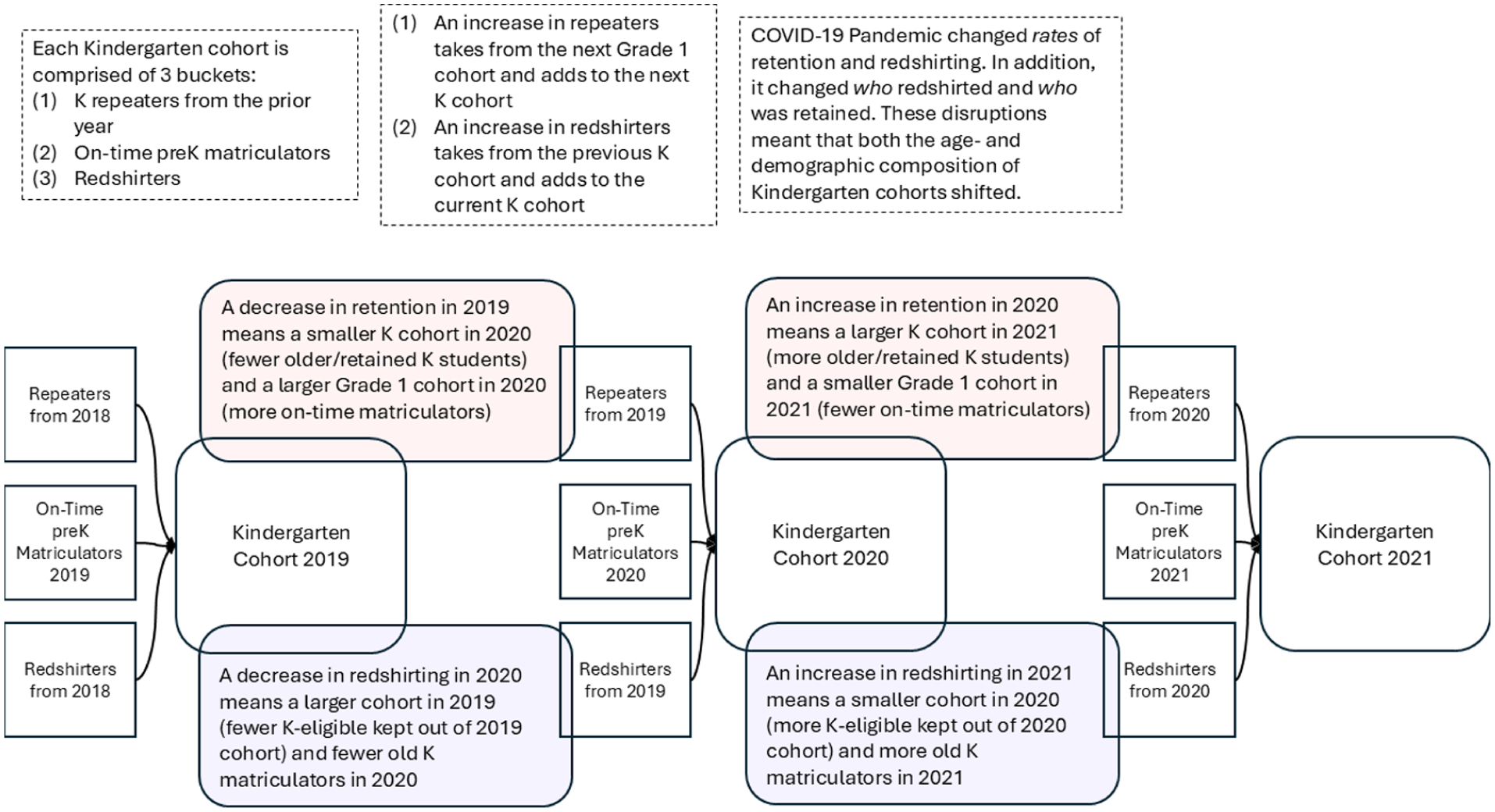
Conceptual framework for pathways into kindergarten cohorts before and during the pandemic.
Taken together, the COVID-19 pandemic’s influence on increased student redshirting rates is a predictable outcome, as children were placed in alternative learning environments as a placeholder to avoid virtual kindergarten or virus exposure and as a developmental strategy given the pandemic’s influence on educational quality (Dee, 2023). These factors may give rise to increased inequality among the redshirting population, favoring those families with resources to find alternative schooling environments. At the same time, COVID-19 disproportionately harmed minoritized families (Mackey et al., 2021), making the school safety decision a pronounced choice for non-White families specifically (Gilbert et al., 2020), potentially increasing the redshirting rate for groups not traditionally likely to do so. Therefore, potential compositional changes to redshirting are not ex ante obvious. Similarly, redshirting changes the composition of the student body and may increase school readiness on average (Elder & Lubotsky, 2009; Schanzenbach & Larson, 2017), all else constant, which could reduce retention rates. At the same time, retention policies changed both to encourage voluntary retention and to reduce retention rates for minoritized groups, resulting in countervailing influences on the retention rate and its compositional analogue.
Only by studying both practices together can researchers determine whether the same child-, family-, and school-level factors drive ex ante and ex post decisions. Given dynamics to redshirting and retention brought about by the pandemic and coinciding policy changes, it is unclear whether higher redshirting rates would attenuate or amplify retention among those who remain. In this article, we bring these two literatures into conversation by asking these two descriptive questions:
Research Question 1: How has the prevalence of redshirting and retention changed since the COVID-19 pandemic?
Research Question 2: Have the demographic characteristics of redshirted and retained students changed?
Data
We received student-level data from the Delaware Department of Education for all public school kindergarten students from 2009–2010 through 2023–2024; however, we cannot distinguish retained students from redshirted students in 2009–2010, so our analytic sample consists of the 2010–2011 through 2023–2024 cohorts (N = 139,956). Delaware has a diverse student population that is relatively similar to national demographics, except for a higher proportion of Black students and a lower proportion of Hispanic/Latino students (National Center for Education Statistics, 2024), which may be due to Delaware treating Hispanic/Latino identity as a mutually-exclusive race. The sample was 29% Black, 18% Hispanic/Latino, 43% White, 10% other race (0.5% American Indian or Alaska Native, 4% Asian or Pacific Islander, and 5% multiracial; these subgroups were too small to conduct subgroup-level analyses), 40% low income (based on direct certification), and 9% SWD (for annual demographics, see Supplementary Table 1, available on the journal website). Delaware uses August 31 as its kindergarten age-eligibility cutoff (14 Del. C. § 2702); therefore, we classified a student as redshirted if they were at least 6 on August 31 of the year they first started kindergarten. We classified a student as retained (i.e., a repeater) if we observed them in kindergarten for a second year.
Methods
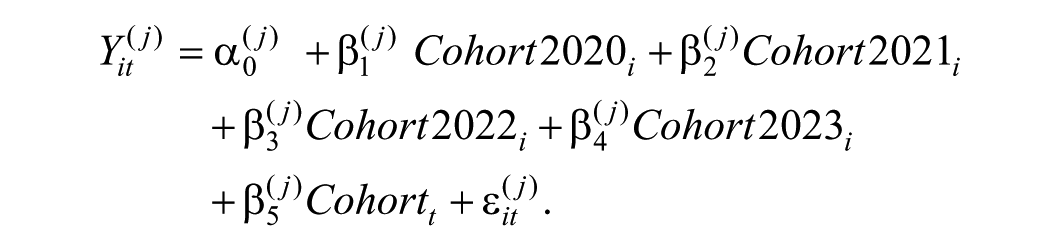
Because our research questions are descriptive, we use quantitative descriptive methods to answer them. To test whether demographic rates for redshirting and retention changed during the COVID-19 pandemic (RQ1), we estimated linear regression models with binary outcome
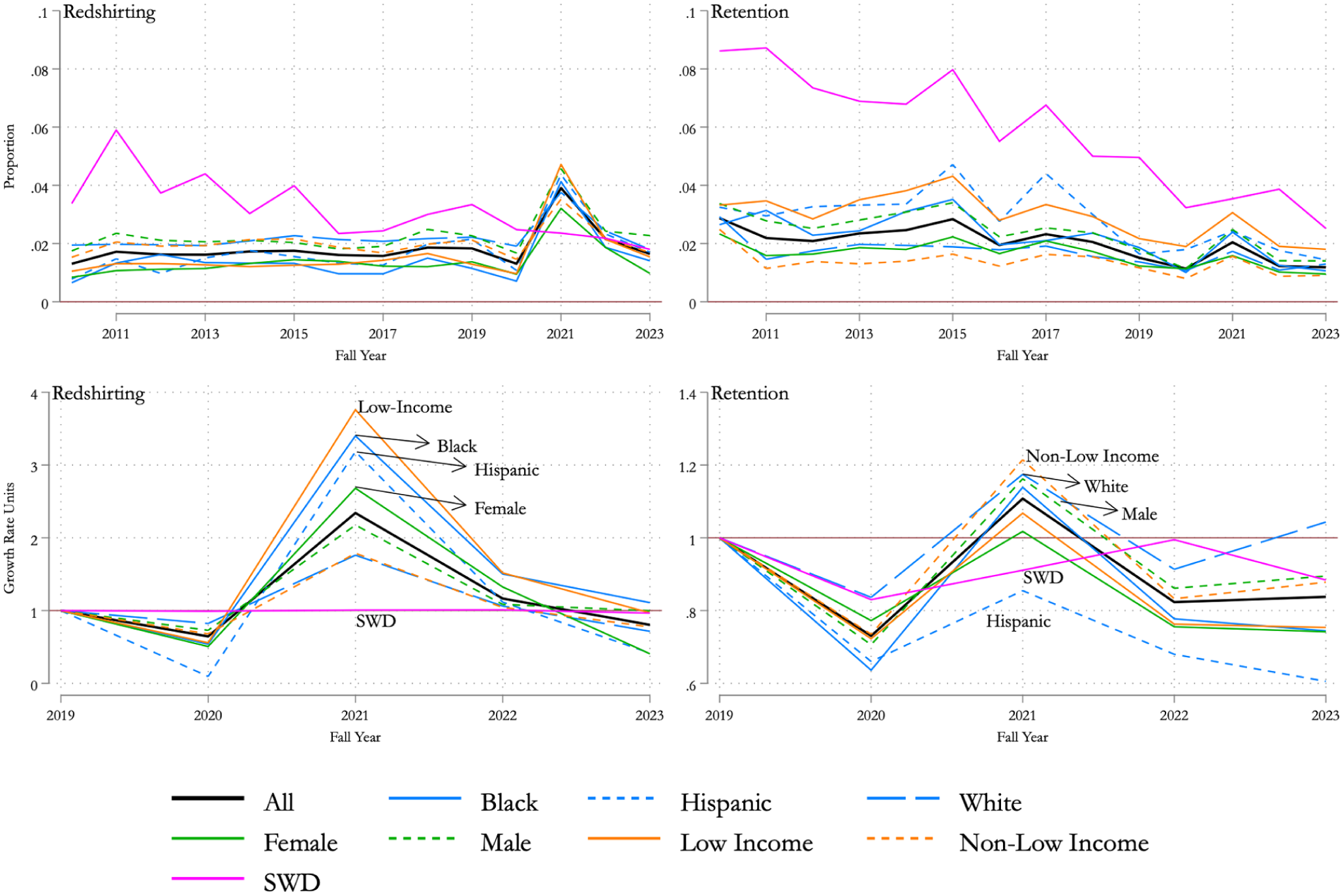
Annual rates of redshirting and retention from fall 2010 to fall 2023 and growth rates relative to pre-pandemic prevalence.
Our main variables of interest are
Results
Pre-pandemic Redshirting
Pre-pandemic, the average redshirting rate in Delaware was 1.5%, though this varied by subgroup, ranging from 1.0% to 1.2% for Black, Hispanic, female, and low-income students to 1.8% to 2.0% for male, White, and non-low-income students to as high as 4.4% for SWD. The average rate is considerably lower than national estimates of approximately 4% (Bassok & Reardon, 2013; Huang, 2015), likely because of the starting school age law in Delaware. Redshirting was increasing over time: there was a small but statistically significant positive linear trend for the full sample, Hispanics, and females (Table 1; Figure 2, top left).
Post-pandemic Changes in Prevalence of Redshirting, Including by Subgroup, Controlling for Time Trends
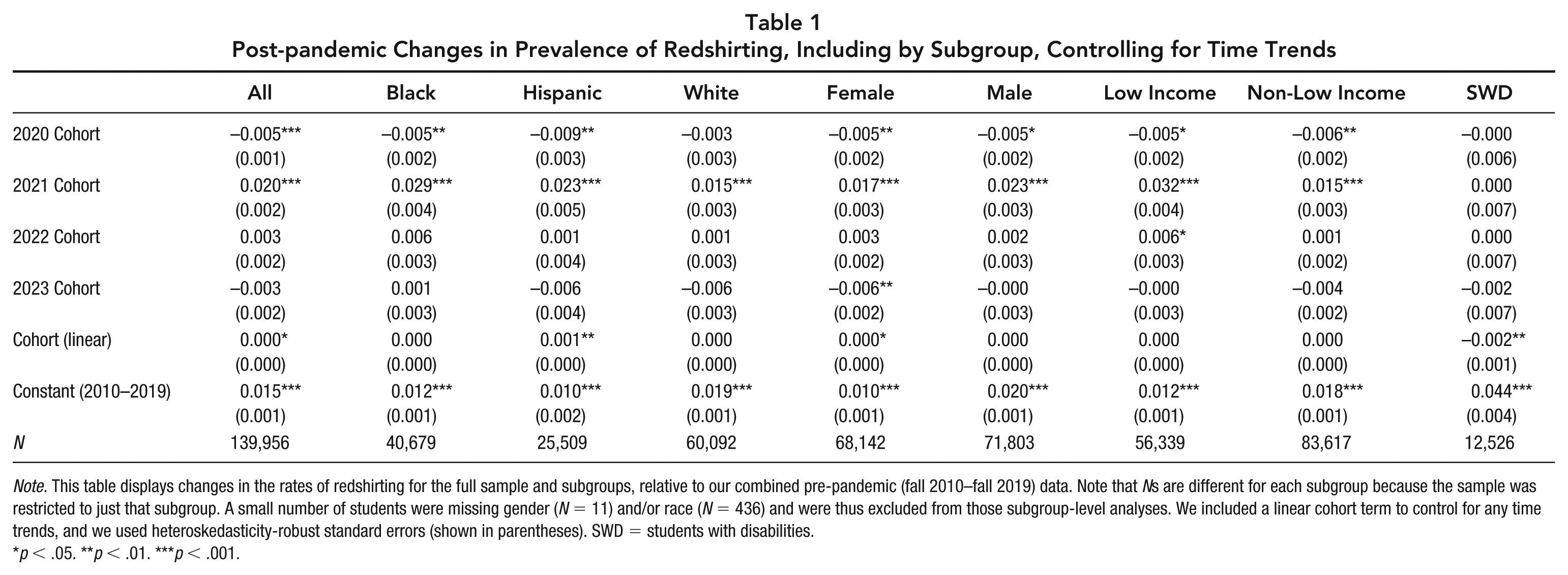
Note. This table displays changes in the rates of redshirting for the full sample and subgroups, relative to our combined pre-pandemic (fall 2010–fall 2019) data. Note that Ns are different for each subgroup because the sample was restricted to just that subgroup. A small number of students were missing gender (N = 11) and/or race (N = 436) and were thus excluded from those subgroup-level analyses. We included a linear cohort term to control for any time trends, and we used heteroskedasticity-robust standard errors (shown in parentheses). SWD = students with disabilities.
p < .05. **p < .01. ***p < .001.
Post-pandemic Redshirting
Our regression results (Table 1) provide statistical tests of rate change relative to pre-pandemic rates, controlling for linear time trends. In fall 2020, redshirting dipped slightly—by roughly half a percentage point (pp)—for nearly all student subgroups before peaking in fall 2021. The overall redshirting rate jumped by 2 pp (p < .001) to 3.5%, a 133% increase. By 2022 and into 2023, rates had essentially fallen back toward the long-run averages, erasing much of the pandemic-era spike and returning to pre-COVID-19 levels.
Although every demographic group except SWD saw some uptick in redshirting in 2021 (all significant at p < .001), the magnitude varied considerably. Notably, groups that historically redshirted at lower rates saw the largest relative increases (Figure 2, bottom left). Black students’ redshirting rose by 2.9 pp, or 242%, much more so than White students, who increased by 1.5 pp, or 79% (
In 2021, long-term patterns of overrepresentation and underrepresentation reversed course (Table 2). SWD had by far the highest redshirting rate pre-pandemic; they were overrepresented at 18% of redshirters but 9% of the student population. In 2021, they had the lowest redshirting rate of any group, representing just 6% of redshirters. Black students were somewhat underrepresented pre-pandemic (21% of redshirters, 29% of population), and White students were somewhat overrepresented (55% of redshirters, 44% of population), but they were both proportionally represented in 2021. Low-income students were also underrepresented prepandemic, at 34% of redshirters but 43% of the population; the proportion of students identified as low income declined over time to 32% in 2021, yet they were somewhat overrepresented at 39% of redshirters. Males were the only subgroup to remain overrepresented, at 65% of redshirters pre-pandemic and 60% in 2021.
Demographic Composition of Sample Compared With Demographic Composition of Redshirters/Repeaters
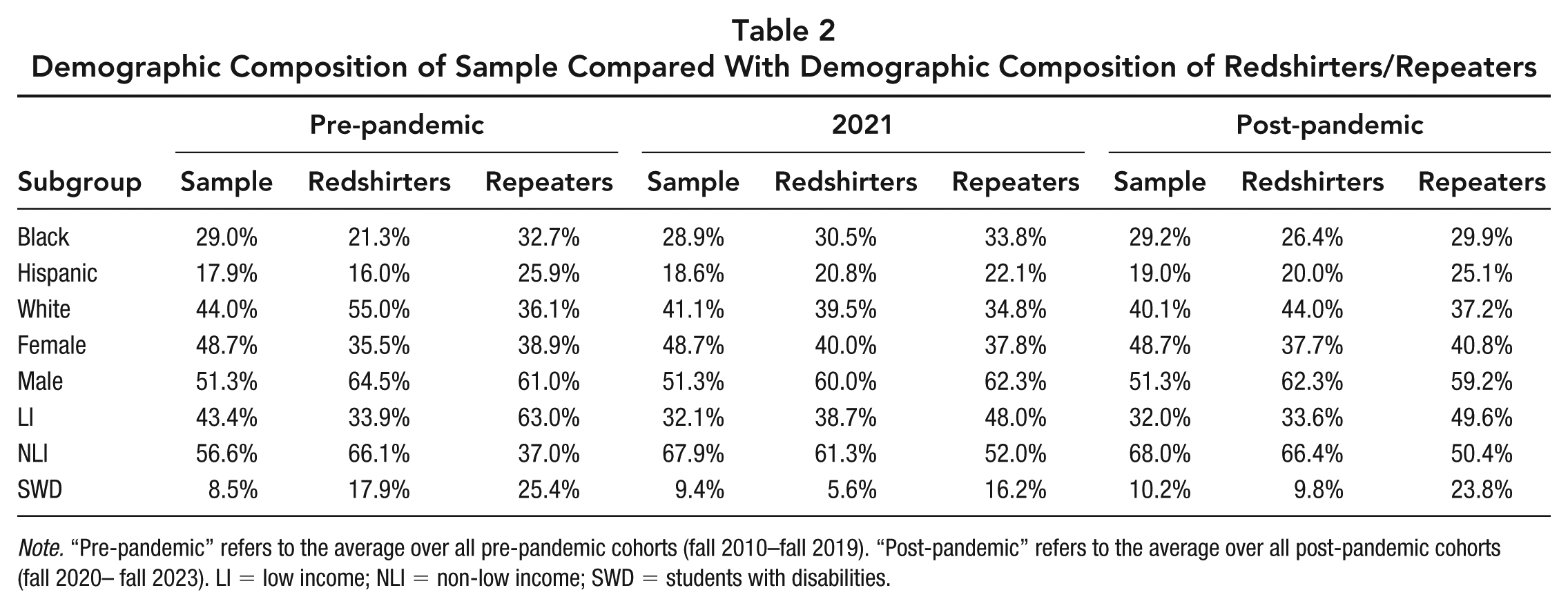
Note. “Pre-pandemic” refers to the average over all pre-pandemic cohorts (fall 2010–fall 2019). “Post-pandemic” refers to the average over all post-pandemic cohorts (fall 2020– fall 2023). LI = low income; NLI = non-low income; SWD = students with disabilities.
By 2022, most subgroups were statistically indistinguishable from their baseline rates (p > .05), representing a return to normal redshirting behavior after the immediate pandemic response in 2020 (when parents made the decision to hold their children out) and 2021. Only low-income students increased redshirting by 0.6 pp (50% increase, p < .05) in 2022 relative to their pre-pandemic rate, albeit significantly less than in 2021 (
Pre-pandemic Retention
Historically, there was more subgroup-level variation in retention than in redshirting. The overall average retention rate pre-pandemic was 2.6%, though this was lower among females (2.0%) and two of the subgroups with high redshirting rates: non-low income (1.7%) and White (2.2%). Some of the subgroups with the lowest redshirting rates had some of the highest retention rates: Black (2.9%), Hispanic (3.5%), and low income (3.6%). Males (3.2%) and SWD (8.6%) had high retention rates in addition to high redshirting rates. However, there was a long-term downward trend for all except Hispanic and female students (p < .05; Table 3; Figure 2, top right). Given the decline in retention rates over time, our model-based estimates are informative for identifying pandemic-era changes in retention relative to baseline levels and trends.
Post-pandemic Changes in Prevalence of Retention, Including by Subgroup, Controlling for Time Trends
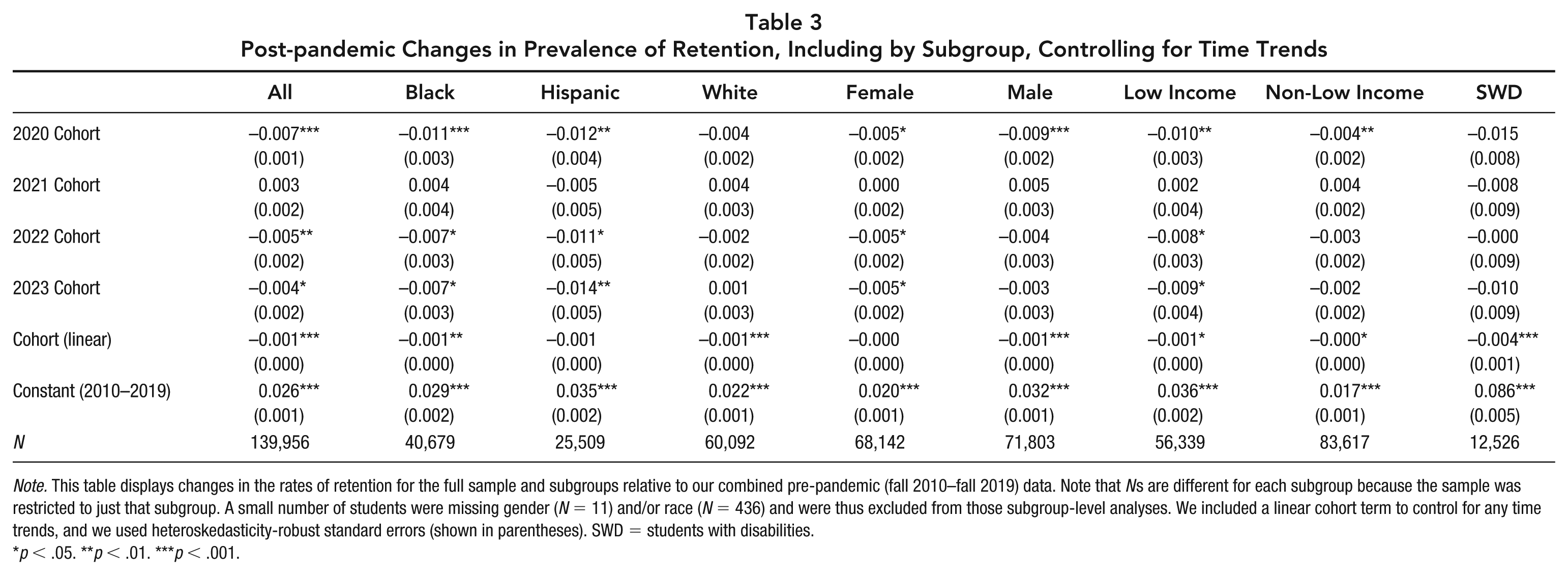
Note. This table displays changes in the rates of retention for the full sample and subgroups relative to our combined pre-pandemic (fall 2010–fall 2019) data. Note that Ns are different for each subgroup because the sample was restricted to just that subgroup. A small number of students were missing gender (N = 11) and/or race (N = 436) and were thus excluded from those subgroup-level analyses. We included a linear cohort term to control for any time trends, and we used heteroskedasticity-robust standard errors (shown in parentheses). SWD = students with disabilities.
p < .05. **p < .01. ***p < .001.
Post-pandemic Retention
In fall 2020, retention fell by 0.7 pp (p < .001), or 27% overall, and even more so for the subgroups with the highest retention and lowest redshirting pre-pandemic (p < .01 for all): low income (–1.0 pp, 28%), Black (–1.1 pp, 38%), and Hispanic (–1.2 pp, 34%). Mechanically, if the 2021 redshirting spike “pulled out” potential repeaters from the 2020 cohort, we would expect a larger, in absolute terms, negative coefficient for repeaters in 2021 relative to 2020 and pre-pandemic years. That is, we would expect to have fewer repeaters in the 2021 cohort because those most at risk of retention by virtue of age and school readiness factors typically associated with redshirting would not have attended school in 2020 and therefore could not have been retained in 2021. Instead, we see retention returning to pre-pandemic levels rather than continuing to decline; indeed, 2021 retention was significantly higher than in 2020 (
This pause in declining retention rates for 2021 suggests another mechanism: that families may have opted for a “do-over” of kindergarten in 2021, driven by virtual-year dissatisfaction (Wright, 2021). Further evidence for this hypothesis comes from the continued decline in post-pandemic retention rates for the 2022 (–0.5 pp, p < .01) and 2023 (–0.4 pp, p < .05) cohorts, which suggests a long, meaningful secular decline in retention rates, above and beyond the pre-pandemic downward trend, disrupted by the pandemic in 2021. Like 2020, the 2021 retention rate was significantly higher than in 2022 and 2023 (
Subgroup results also lend credibility to this framing, that is, that redshirting and repeating operated as parallel strategies to provide an additional year of “normal” kindergarten instruction rather than one simply displacing the other. For example, Black and low-income children—two groups with historically low redshirting rates—saw the largest redshirting increases in 2021. Those same groups also experienced the steepest secular retention declines in 2020 (Black: –1.1 pp, p < .001; low-income: –1.0 pp, p < .01) and again in 2022 (Black: –0.7 pp, p < .05; low-income: –0.8 pp, p < .05), yet in 2021, their retention rates returned to baseline and were not statistically significantly different from pre-pandemic levels.
Despite consistent declines in retention for some marginalized subgroups, several remained overrepresented post-pandemic (Table 2). Hispanic students represented 18% of the population and 26% of repeaters pre-pandemic, and this stayed consistent post-pandemic, when they represented 19% of the population and 25% of repeaters. SWD were similar, going from 9% of the population and 25% of repeaters pre-pandemic to 10% of the population and 24% of repeaters. However, in fall 2021, SWD only made up 16% of repeaters; although still overrepresented, this further supports the idea that students were retained in 2021 who may not have been retained under other circumstances, whether because of pandemic-related learning challenges or parents opting into a year of “normal” kindergarten after the largely virtual 2020–2021 school year. Although the proportion of students identified as low income declined from 43% pre-pandemic to 32% post-pandemic, they remained overrepresented, going from 63% of repeaters to 50%. As with redshirting, males were overrepresented pre-pandemic (61%) and post-pandemic (60%).
Age Distribution Tests
We also investigated whether the age distribution of redshirters and retained students shifted. Figure 3 shows an increase in redshirting in the 2021 cohort across the age distribution (supplementary Table 2, available on the journal website, shows this rate is statistically significant for each age bin), but no such corresponding decrease in retention, and instead an age-targeted (i.e., younger students being retained less compared with pre-pandemic rates) retention drop in 2020, 2022, and 2023. This contrasts sharply from pre-pandemic patterns, as both practices were most common among the youngest students in each cohort.
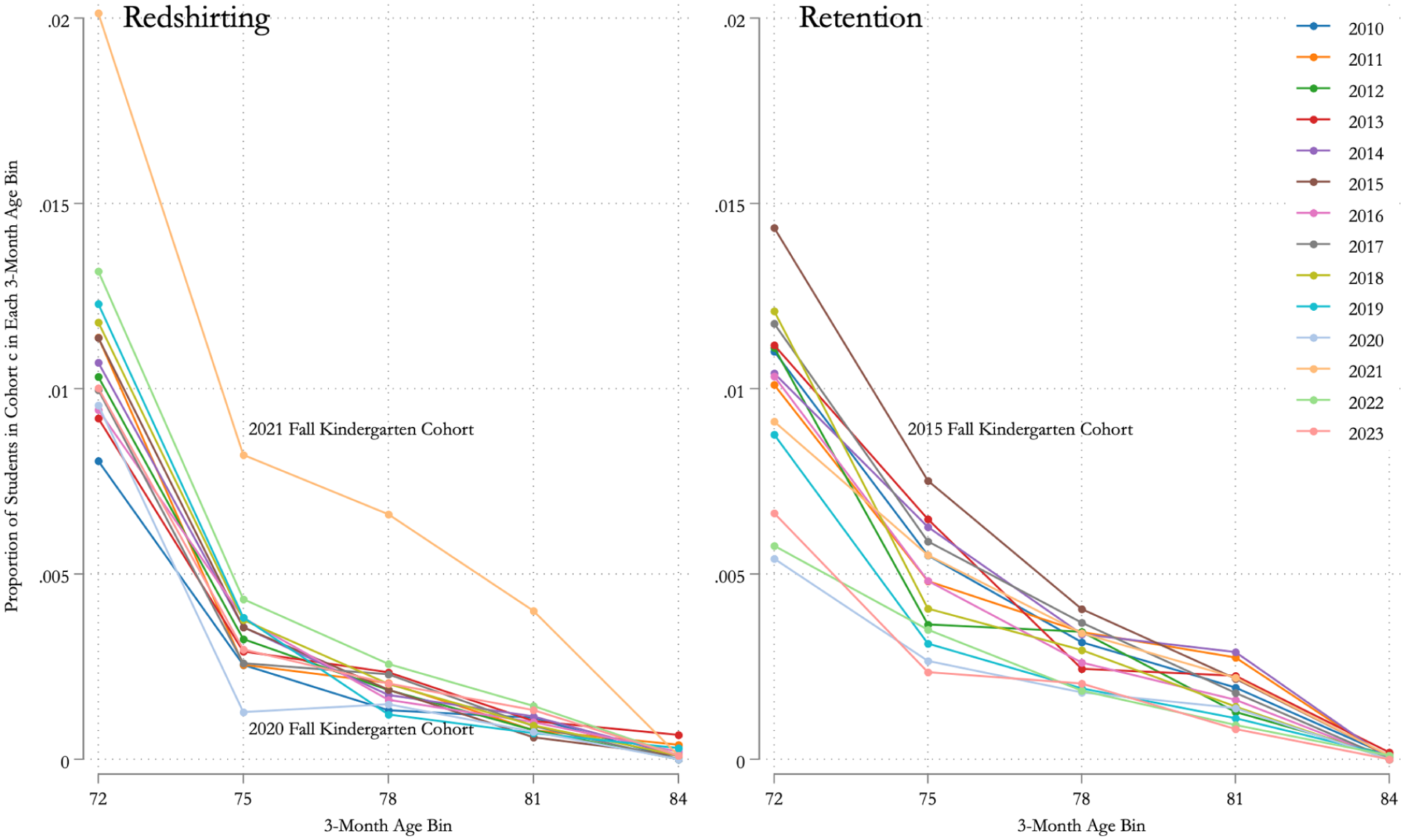
Proportion of students entering kindergarten in each 3-month age bin from 72-74 months to 84+ months, from fall 2010 to fall 2023.
Robustness Tests
To test for robustness, we tested whether including a quadratic term for cohort would improve our models. For our redshirting models, we failed to reject the null hypothesis that a quadratic term fit our data better compared with the linear cohort model using a likelihood ratio test; however, we did reject the null hypothesis for the retention models. The overall result for the retention models is consistent with our main findings—we find that retention increased in fall 2021 by 0.8 pp (p < .05) compared with 0.3 pp (p > .05) in the linear cohort model. Furthermore, we find some subgroup differences, but largely, the results are consistent across models. The quadratic model results are provided in supplementary Tables 3 and 4, available on the journal website.
Discussion
Our study brought together two largely disparate literatures in education—kindergarten redshirting and retention—to investigate how the pandemic shifted the prevalence and demographics in Delaware of those engaged in these processes. Perhaps the most notable finding is that redshirting drastically increased in fall 2021, especially among subgroups historically less likely to redshirt. This finding aligned with other studies that found that Black and low-income families had the highest levels of disenrollment during the pandemic (Musaddiq et al., 2022).
Although redshirting and retention are theoretically linked via compositional effects—removing would-be repeaters from one year should mechanically lower the repeater pool the next—we did not find evidence of this during the 2020–2021 school year. Importantly, any shift in the classroom composition—either through retention or redshirting—could require changes to instruction, pacing, or support provided to students, even as our results suggest a return to baseline in these two practices. Further exacerbating the issue is that preschool and childcare enrollment also declined during the pandemic (Cascio, 2021; Weisenfeld, 2021), suggesting that students who were redshirted in fall 2020 may have been less likely to attend an additional year of preschool. Because preschool attendance (i.e., an additional year of education) may drive increased academic benefits (Elder & Lubotsky, 2009), there is potential that redshirted children in the 2021 cohort entered school with fewer skills compared with demographically comparable redshirters in previous cohorts. Coupled with the return to pre-pandemic retention rates in that cohort, it is likely that significant shifts in cohort academic readiness occurred, resulting in a wider distribution of skills and requiring different curriculum pacing and instructional techniques. However, the converse is also possible: Children that were redshirted during the pandemic year may have been more likely to attend preschool or have in-person educational experiences (e.g., private kindergarten) compared with those who entered public kindergarten on time.
Future research could explore how shifts in demographic groups, ages, and school entry skills during the pandemic years were related to students’ short- and longer-term academic and socioemotional outcomes and whether teacher instructional practices or cohort composition mediated the relations and widened or lessened achievement gaps (Kaufman & Diliberti, 2021). Furthermore, identifying whether redshirting may have helped or hindered students under changing contexts and student demographics is important, particularly given previous findings that older students, especially those who were retained (Jimerson et al., 2002), are more likely to drop out due to reaching the minimum dropout age sooner (Cook & Kang, 2016). Continuing to study these pathways for kindergarten entry and enrollment in the future is necessary to understand if the return to baseline levels we observe in our data continue even as other issues, such as attendance, have yet to return to pre-pandemic levels (Dee, 2024; Swiderski et al., 2026). Additionally, future research could examine how different modes of schooling (e.g., in-person compared with remote) may cause parents to select into redshirting or retention.
Outside of extreme times, such as the pandemic, additional investigation of how retention and redshirting are linked is warranted. We find persistent declines in retention over time for marginalized groups historically most likely to be retained, likely as a result of relaxation of retention policies (Wright, 2021) and potentially, increased attention to systemic inequities (Ladson-Billings, 2021). Yet as fewer students are retained and there is a return to pre-pandemic redshirting rates, classroom compositions will continue to shift. These shifts, which operate outside of the pandemic, could require permanent alterations in instructional approaches and may also influence peer dynamics throughout elementary school and beyond (Cascio & Schanzenbach, 2016; Elder & Lubotsky, 2009).
Our study, although novel, is limited by its restriction to the state of Delaware, which has a relatively small cohort size and a unique political context. Delaware is one of the few states where kindergarten attendance is compulsory, which likely affects parents’ kindergarten entry decisions. Although it is possible to receive a waiver in order to redshirt (14 Del. C. § 2702), differences in education and social capital may affect parents’ abilities to navigate school district policies (LiCalsi et al., 2019). Lastly, it should be noted that this study is descriptive in nature; thus, no causal conclusions can be made regarding the impact of the pandemic on redshirting or retention behaviors.
Supplemental Material
sj-docx-1-edr-10.3102_0013189X261457605 – Supplemental material for Holding Out or Holding Back? Shifts in Kindergarten Redshirting and Retention Since the COVID-19 Pandemic
Supplemental material, sj-docx-1-edr-10.3102_0013189X261457605 for Holding Out or Holding Back? Shifts in Kindergarten Redshirting and Retention Since the COVID-19 Pandemic by Rachel Fidel, Kenneth Shores and Anamarie A. Whitaker in Educational Researcher
Footnotes

Notes
Authors
RACHEL FIDEL, PhD, is a postdoctoral associate in early childhood policy and research at the National Institute for Early Education Research, 536 George St, New Brunswick, NJ 08901;
KENNETH SHORES, PhD, is an associate professor at the University of Delaware, School of Education, 201B Willard Hall Education Building, 16 W. Main St, Newark, DE 19716;
ANAMARIE A. WHITAKER, PhD, is an associate professor of early care and education policy at the University of Delaware in the Department of Human Development and Family Sciences, 212 Alison Hall, 240 Academy St, Newark, DE 19716;
References
Supplementary Material
Please find the following supplemental material available below.
For Open Access articles published under a Creative Commons License, all supplemental material carries the same license as the article it is associated with.
For non-Open Access articles published, all supplemental material carries a non-exclusive license, and permission requests for re-use of supplemental material or any part of supplemental material shall be sent directly to the copyright owner as specified in the copyright notice associated with the article.
