






Abstract
We study changes in postsecondary student performance during and after the COVID-19 pandemic using administrative data on all 2015–2022 high school graduates in North Carolina who enrolled in an in-state public institution. Successful course completion rates increased briefly at 4-year institutions at the start of the pandemic, but at both 2- and 4-year institutions, success rates and credit earning decreased for later cohorts. These declines have persisted for certain groups, including students from underrepresented racial and ethnic groups, economically disadvantaged and academically weaker students, as well as female students. The findings point to ongoing academic challenges faced by vulnerable college student populations in the postpandemic period.
Introduction
The COVID-19 pandemic was one of the most broadly disruptive events in recent educational history, with school closures and online instruction starting in the spring of 2020 and continuing in many settings through much of 2020–2021 (Jack et al. 2023). While there is growing evidence of large and persistent negative academic impacts for elementary and secondary students that have also widened the preexisting achievement gaps by socioeconomic status (e.g., Jack et al., 2023; Kuhfeld et al., 2022; Lewis & Kuhfeld, 2023), the pandemic’s longer-term impact on postsecondary students’ academic performance is less clear (Polikof et al., 2023). Our study aims to fill this gap by documenting descriptive trends in academic performance at 2- and 4-year institutions using comprehensive data from the state of North Carolina on cohorts of students who graduated from high school before, during, and after the pandemic.
Using linked administrative records on high school graduates from the classes of 2015 through 2022 who enrolled immediately in a public 2- or 4-year institution, we examine how first-year credit attainment and persistence changed for different groups of students during and after the COVID-19 pandemic relative to prepandemic trends. We find that overall successful course completion rates increased briefly at 4-year institutions at the start of the pandemic, which is consistent with these institutions implementing flexible grading policies during this period. However, success rates and credit earning dipped considerably below prepandemic levels starting in the fall of 2021 and have not recovered to their baseline levels for students from underrepresented racial and ethnic groups, economically disadvantaged and academically weaker students, and females. A decline in successful course completion and credit earning was observed as early as the Spring 2020 semester at 2-year institutions, where the downward trends persisted for the later cohorts and were more pronounced for the same subgroups of students as at 4-year institutions. Our findings for students from underrepresented racial and ethnic groups and economically disadvantaged and academically underprepared students point to concerning trends toward widening prepandemic gaps in academic achievement at the postsecondary level. We also provide evidence that some students at 4-year institutions may have used the summer semesters to recover credits they failed to earn during the preceding academic year, which emphasizes the importance of providing high-quality course options during the summer.
Background
Given the importance of postsecondary education to today’s economy (Strohl et al., 2024) and concerns over the relatively low completion rates of students who enroll in postsecondary education (National Center for Education Statistics, 2022), policymakers and practitioners have given substantial attention to college students’ persistence and course performance (Braxton et al., 2013). Over the past decade, approximately three-quarters of students who started postsecondary education returned the following year, although the results were very different by sector, with persistence rates of approximately 87% for students in public 4-year institutions and rates of around 62% for students in 2-year institutions (National Student Clearinghouse, 2025). Studies have found overall lower persistence rates for males, Black students, Hispanic students, and Native American students (Ross et al., 2012). Persistence in and completion of college are substantially driven by students’ success in their college courses, including the number of credits that they have earned (Adelman, 2006; Attewell & Monaghan, 2016; Clovis & Chang, 2021).
There are multiple mechanisms through which the pandemic could have impacted students’ postsecondary persistence and number of earned credits, depending on where they were in their educational career in the spring of 2020. A growing body of research is highlighting the amount of learning loss that occurred in K–12 during the pandemic (Betthäuser et al., 2023; Hanushek & Strauss, 2025). As one research study found, “U.S. students experienced an historic decline in test scores during the pandemic period . . . with declines large enough to overturn the gradual but clear progress of the last two to three decades” (Jack & Oster, 2023, p. 61). Research has shown that high school absences increased during the pandemic and academic performance declined, particularly for students of color and economically disadvantaged students (Dee, 2024; Fuller et al., 2025). The pandemic closures also changed the composition of high school students’ peers and imposed greater constraints on parents, both of which likely exacerbated existing socioeconomic inequalities (Agostinelli et al., 2022).
Lack of reliable internet access and more time spent in remote instruction are associated with more pronounced learning losses in school districts serving high proportions of students from lower-income families or underrepresented racial and ethnic groups, although these factors do not account fully for the observed disparities (Fahle et al., 2025). Health disparities across families likely also contributed to inequalities in the educational impacts of the pandemic: Underrepresented racial and ethnic groups were at higher risk of contracting COVID-19 or developing severe disease (Hooper et al., 2020; Magesh et al., 2021), and mental health problems increased more within households with lower income or from underrepresented racial and ethnic groups (Parenteau et al., 2023). There is also evidence that Black adolescents experienced increased racial discrimination during the period of racial unrest that occurred in 2020 simultaneously with the COVID-19 pandemic (Del Toro & Wang, 2023).
Districts switching to remote instruction likely had negative impacts on middle and high school students’ academic preparedness, with disproportionately larger learning losses for economically disadvantaged students and students from underrepresented racial and ethnic groups (Goldhaber et al., 2023; Jack et al., 2023). Beyond negative test score gains, the literature has documented declines in children’s connection to and engagement in school (Lyu & Wehby, 2023; Maiya et al., 2021).
Experiencing COVID-19 in high school could also have changed students’ postsecondary enrollment choices and may therefore have changed the composition of students attending college. There is evidence to suggest that drops in 4-year enrollment occurred primarily among White and Asian students, students whose parents have a bachelor’s degree, and students with the highest grade point average (Howell et al., 2021). The potential for changing student composition indicates that any analyses of postsecondary performance should account for students’ background characteristics.
For students who were enrolled in postsecondary education at the peak of the pandemic, academic performance might have been affected by the extent to which they were more or less able to learn effectively online. There is extensive evidence on online learning in higher education, some of which shows negative impacts for students taking online courses (Bettinger et al., 2017), while other studies show positive impacts (Means et al., 2013). Altindag et al. (2025) uncovered evidence that performance in online college classes tends to be worse, but the gap has shrunk somewhat since 2020. Students’ success in online courses could also depend on the extent to which they had good internet access or a setting that allowed for a quiet space for studying (Day et al., 2021).
There were also changes in postsecondary grading policies and practices during the pandemic (Day et al., 2021) that affected students’ grades and successful completion of college courses. More liberal pass-fail policies could have increased students’ successful completion rates, particularly during the first few semesters after the start of the pandemic. In the case of North Carolina, the Community College System issued a guidance at the start of the pandemic for colleges to add grading options of WE (Withdraw Emergency) and IE (Incomplete Emergency); while following system-wide guidance, the public 4-year institutions in the state introduced flexible grading policies in 2020 that allowed students to convert letter grades to some variation of “Pass” or “Satisfactory.”
Nonacademic factors have also played an important role during this period. Relatively high prevalence of COVID-19 infections and mental health problems among college students (e.g., Hu et al., 2022) are likely to have impacted their academic performance. A survey administered to undergraduate students at Arizona State University in the spring of 2020 documents substantial decreases in wages and hours for working students as well as reductions in family income (Aucejo et al., 2020), and Rodríguez-Planas (2022b) found similar trends in a survey of Queens College students administered a few months after the start of the pandemic. Pell Grant recipients in the Rodríguez-Planas study sample were most likely to experience food and shelter insecurity. Inadequate internet access may have also played a role in the negative impacts of the pandemic on some college students (Jaggars et al., 2021; Katz et al., 2025).
Our study complements the literature documenting the COVID-19 pandemic’s immediate disruptions to postsecondary students’ academic progress. Offering early evidence from a sample of Virginia Community College System students, Bird et al. (2022) documented increases of 2.7 percentage points in course withdrawals and 1.3 percentage point higher failure rates in the spring of 2020 associated with the switch to online instruction, and Bulman and Fairlie (2022) documented a similar decrease of around 3 percentage points in community college successful completion rates in California driven by an increase in withdrawals. Howell et al. (2022) found that for students in the 2019 high school graduating cohort, the pandemic did not seem to affect persistence rates at 4-year institutions in the United States, and persistence actually increased for Black, Hispanic, and Native Hawaiian students. This is in contrast to 2-year institutions where persistence declined for all subgroups, especially for Hispanic, White, and Asian students. Persistence rates for students from the high school class of 2020 decreased by 2.6 percentage points in the 4-year public sector; the decrease in persistence was smaller for community college students, likely because the study sample includes a large share of older students whose persistence rates increased during the pandemic (Howell et al., 2022).
More recent data from two Canadian universities suggests that average grade point average (GPA) increased during the pandemic and remains higher as of the Spring 2023 semester in the humanities and social sciences but is comparable to its prepandemic levels or slightly lower in business, engineering, and the health sciences (Kuperman et al., 2026). In the United States, Westrick et al. (2024) found that first-year GPA increased for the high school classes of 2020 and 2021 at private more selective institutions and to a lower extent at selective public institutions but generally did not change or decreased slightly at less selective institutions. Using data from France, Dagorn and Moulin (2025) showed a continuous drop in reenrollment rates for first-year university students, from a 16% decrease in 2020 to a 29% decrease in 2021 and a 32% decrease in 2022.
Our study contributes to the literature by providing novel evidence on the longer-term shifts in U.S. college students’ academic performance concurrent with the COVID-19 pandemic and extending beyond the semesters immediately following its onset. Unlike other studies that focus on a single institution, the trends we uncover are representative of a wide range of postsecondary institutions serving students from a variety of backgrounds. This allows us to document heterogeneities in the postpandemic recovery rates of different groups of students, and these results enhance our understanding of the ways in which already existing gaps in educational achievement have widened since the pandemic.
Data and Methods
Setting
Our study is based on administrative data from public 2- and 4-year institutions in the state of North Carolina. The University of North Carolina (UNC) System includes 16 four-year institutions and enrolls around 190,000 new and continuing undergraduate students in a given year. The institutions in the System include five historically Black colleges and universities, and across the System, underrepresented racial and ethnic groups account for slightly over a third of the total undergraduate student body. More than 80% of students are from North Carolina, with close to one-third of students receiving Pell Grants. The North Carolina Community College System (NCCCS) consists of 58 community colleges that serve all 100 counties in the state and enrolls over 250,000 curriculum students each year, with around 40% of students being from underrepresented racial and ethnic groups. North Carolina residents account for 98% of the community college student population. Of North Carolina residents who enroll in any college immediately after completing high school, around 80% attend a public in-state institution (Tippet & Kahn, 2018).
Data Source
Our NCCCS and UNC System data are at the course level and include the number of attempted and earned credits and the final letter grade for each course, including grades that indicate withdrawal from the class. 1 Unique student identifiers allow us to link the postsecondary transcript data to student-level records from the North Carolina Department of Public Instruction (NCDPI), which oversees the state’s public schools serving children in prekindergarten through 12th grade. These data provide information about each student’s high school graduation year, the school they graduated from, weighted cumulative GPA, demographic characteristics, economically disadvantaged status (as determined by NCDPI), English language learner status, and disability status. We use weighted high school GPA as a measure of baseline achievement because standardized test scores are not available for all cohorts due to the pandemic. 2 We use the term “underrepresented racial and ethnic groups” (URE) to refer to students who identify as non-White, non-Asian, or Hispanic of any race.
We aggregate the college transcript data to the student-by-semester level. We exclude courses for which the number of attempted credits is zero or missing, developmental education (remedial) courses, and courses whose grading scale is designated as “audit,” “transfer,” or “not graded.” The Online Appendix to the article shows trends in developmental education coursetaking at 2-year institutions, which, concurrently with the pandemic, was impacted by a program specific to North Carolina community colleges called RISE (Reinforced Instruction for Student Excellence), which placed more students in college-credit-bearing math and English courses instead of developmental education courses; this program was implemented between 2019 and 2020 but was paused in 2021. The letter grade, number of attempted credits, and number of quality points (numeric grade times attempted credits) are provided for each course.
Sample
Our focus in this article is on first-year academic performance for students who enroll in a public institution in their state immediately after completing high school, so we restrict the sample accordingly. We keep only observations for the fall and spring semesters following the student’s high school graduation date. For analyses of summer coursetaking, we look at the summer following the first year of college. These sample restrictions exclude, for example, summer bridge programs that take place before the first fall, observations for students who take a gap year after high school or who enroll in an institution outside the UNC and NCCC Systems, dual course credits earned during high school, and any observations after the first year of college. Because we link the college transcript data to the students’ NCDPI records, our analyses also exclude students who did not attend a public high school in North Carolina. Restricting the analyses to first-year students allows us to analyze trends in academic performance independently from persistence in previous years. Excluding students who did not enroll immediately after high school ensures that each cohort was exposed to a similar extent to the COVID-19 pandemic during high school and college.
The sample includes four cohorts of students whose high school experience and first year in college could not have been impacted by COVID-19 (2015–2018) and four cohorts that may have been impacted to various degrees (2019–2022). Our final estimation sample includes 210,008 unique students at 4-year institutions and 192,793 community college students. Table 1 shows descriptive statistics for the last pre-COVID-19 cohort and each of the four cohorts that attended college during or after the pandemic.
Sample Descriptive Statistics.
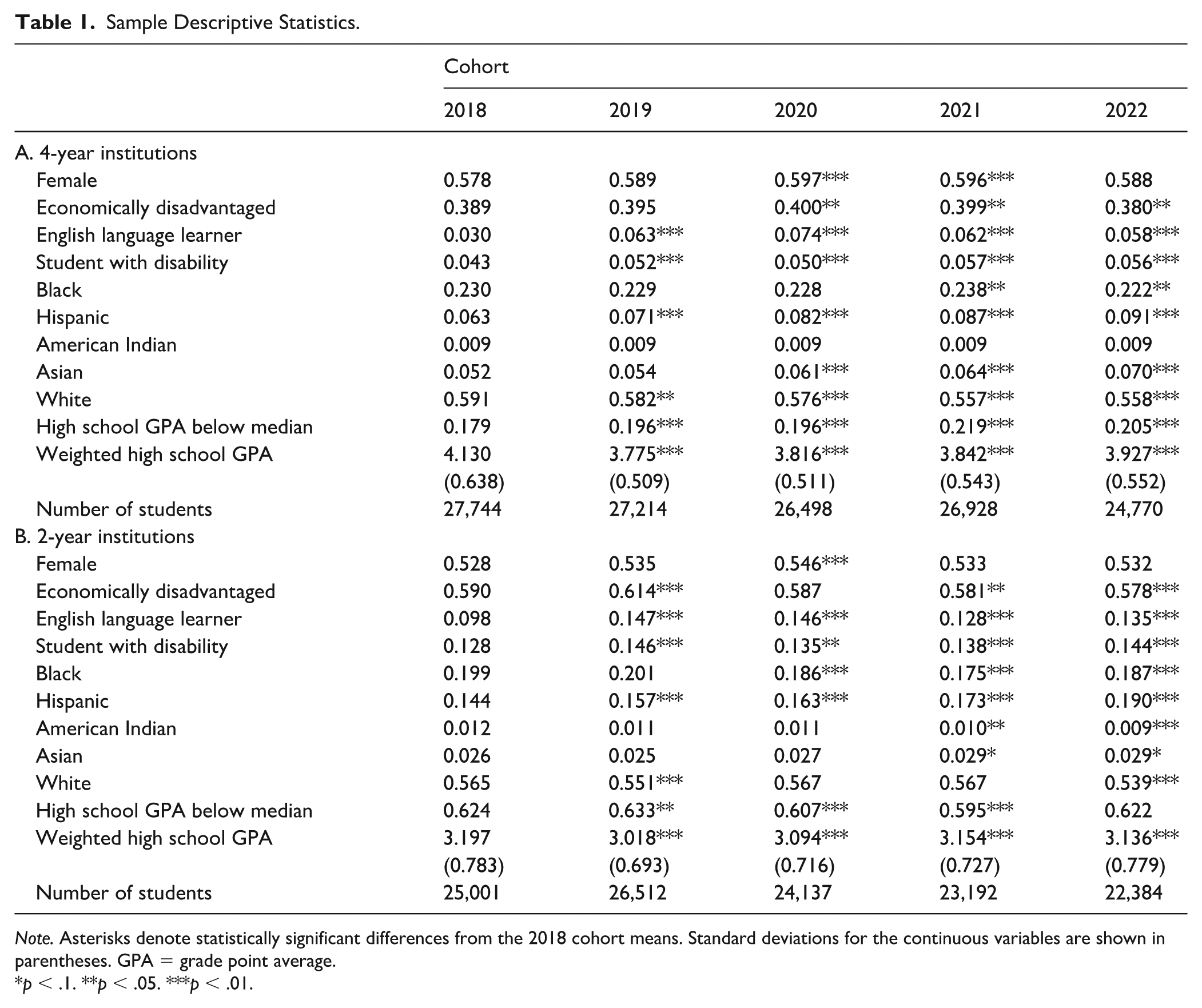
Note. Asterisks denote statistically significant differences from the 2018 cohort means. Standard deviations for the continuous variables are shown in parentheses. GPA = grade point average.
p < .1. **p < .05. ***p < .01.
At 4-year institutions (Table 1, Panel A), we see increases relative to the baseline 2018 cohort in the shares of Hispanic students, English language learners, students with disabilities, and students with below-median high school GPA that start with the 2019 cohort and so predate the onset of the pandemic. We also see more female, Asian, and economically disadvantaged students from the 2020 and 2021 cohorts enrolling in public 4-year institutions. In Table 1, Panel B, we observe similar increases in the shares of Hispanic students, English language learners, and students with disabilities at 2-year institutions that predate the onset of COVID-19. The share of economically disadvantaged students is highest for the 2019 cohort, after which it starts trending down to below-baseline levels for the last two cohorts. In contrast with the trend at 4-year institutions, baseline achievement improved slightly at 2-year institutions for the classes of 2020 and 2021, which indicates that there may have been a shift of high school graduates with above-median GPA from 4-year to 2-year institutions in the state. 3 Weighted high school GPA shows pronounced drops after 2018 for both samples, which can be explained by the change in weights for Advanced Placement and International Baccalaureate courses.
Outcomes
We examine performance through six main outcomes that measure academic progress: (a) number of attempted credits, (b) number of earned credits, (c) share of courses completed with a C or better, (d) share of courses withdrawn or incomplete, (e) fall-to-spring persistence, and (f) summer enrollment.
First, we analyze how the number of attempted credits in a given semester changed for the postpandemic cohorts relative to students who graduated from high school between 2015 and 2018. In additional analyses shown in the Online Appendix, we also examine trends in full-time (12 or more attempted hours) versus part-time enrollment and attempted credits conditional on full-time and on part-time attendance.
We define the number of earned credits to include courses in which the student earned a grade of C (2.0) or better as well as those completed with a grade of “Satisfactory,” “Pass,” and “High Pass.” 4 We use this definition of credit earning because courses completed with lower grades often do not count toward a student’s major or general curriculum requirements and community college students cannot transfer courses in which they earned a grade lower than a C to a 4-year institution in the state. We also construct an indicator for the share of courses that the student completed successfully, as defined previously.
Our fourth outcome is intended to examine in more detail what drives changes in earned credits. We construct an outcome variable measuring the share of courses that the student did not complete, which includes grades of “Withdraw” (W), “Incomplete” (I or IN), and “In Progress” (IP). The difference between the share of courses completed successfully and the share of courses that the student did not complete is accounted for by courses completed with grades of D or F; these percentages can be calculated by the reader, but we also show results for this outcome in the Online Appendix.
The fifth outcome is persistence between a student’s first fall and spring semesters; persistence past the first year is analyzed in a separate work (Eilam et al., 2026). A student enrolled in the fall is defined as persisting if they attempted any credits in the subsequent spring semester at any public in-state institution of the same level. The sample for these analyses excludes 3% of the UNC sample and 14% of the NCCCS sample whose initial enrollment occurred in the spring following their high school graduation. Our final outcome is a binary indicator for enrollment in the summer following a student’s first year in college. 5 It is possible that students use summer terms to make up for unearned credits during the preceding fall and spring, although we do not test directly whether the summer enrollment is in classes that a student withdrew from or failed in the previous terms.
Descriptive statistics for all outcomes measured at baseline (the Fall 2018 and Spring 2019 semesters) are available in Table B1 in the Online Appendix. It should be noted that for attempted credits and fall-to-spring persistence, the COVID-19 pandemic should not have been a factor until the fall of 2020 because the Spring 2020 values for these outcomes were determined prior to March. For all other outcomes, the Spring 2020 semester is the first one that could have been impacted.
Analyses
This section provides an overview of the regression specifications we estimate; more details about our empirical approach are provided in Online Appendix A. We report results from an event study model, which allows us to visualize the trends in the outcomes of interest, conditional on student characteristics, prior to and after the start of the pandemic. For student i who graduated from high school s and enrolled at postsecondary institution j, we estimate the following model:

The subscript t denotes specific semesters (e.g., Fall 2021) for all but two of the outcomes
To document heterogeneities in how academic performance changed during and after the COVID-19 pandemic, we conduct subgroup analyses by gender, URE status, economically disadvantaged status, and high school GPA. Using

In the specification in Equation 2, the
In the following section, we begin by presenting the event study estimation results for Equation 1, followed by heterogeneity analyses for successful course completion based on Equation 2. Results for the rest of the subgroup analyses are shown in Online Appendix B.
Results
Trends in Credit Earning
We begin by examining the number of attempted credits at 4-year institutions. The results in Figure 1a point to a slight downward trend in attempted credits prior to 2020. Attempted credits declined further after 2020, but this decrease appears to be a continuation of the preexisting trend rather than a new phenomenon, and the magnitude of the decrease relative to baseline is fairly small in magnitude: about 0.25 credits per semester. Figure B1 in the Online Appendix shows that with the exception of the Spring 2021 semester, the slight downward trend in attempted credits at 4-year institutions can be attributed to full-time students taking slightly fewer credits rather than to fewer students attending full-time.
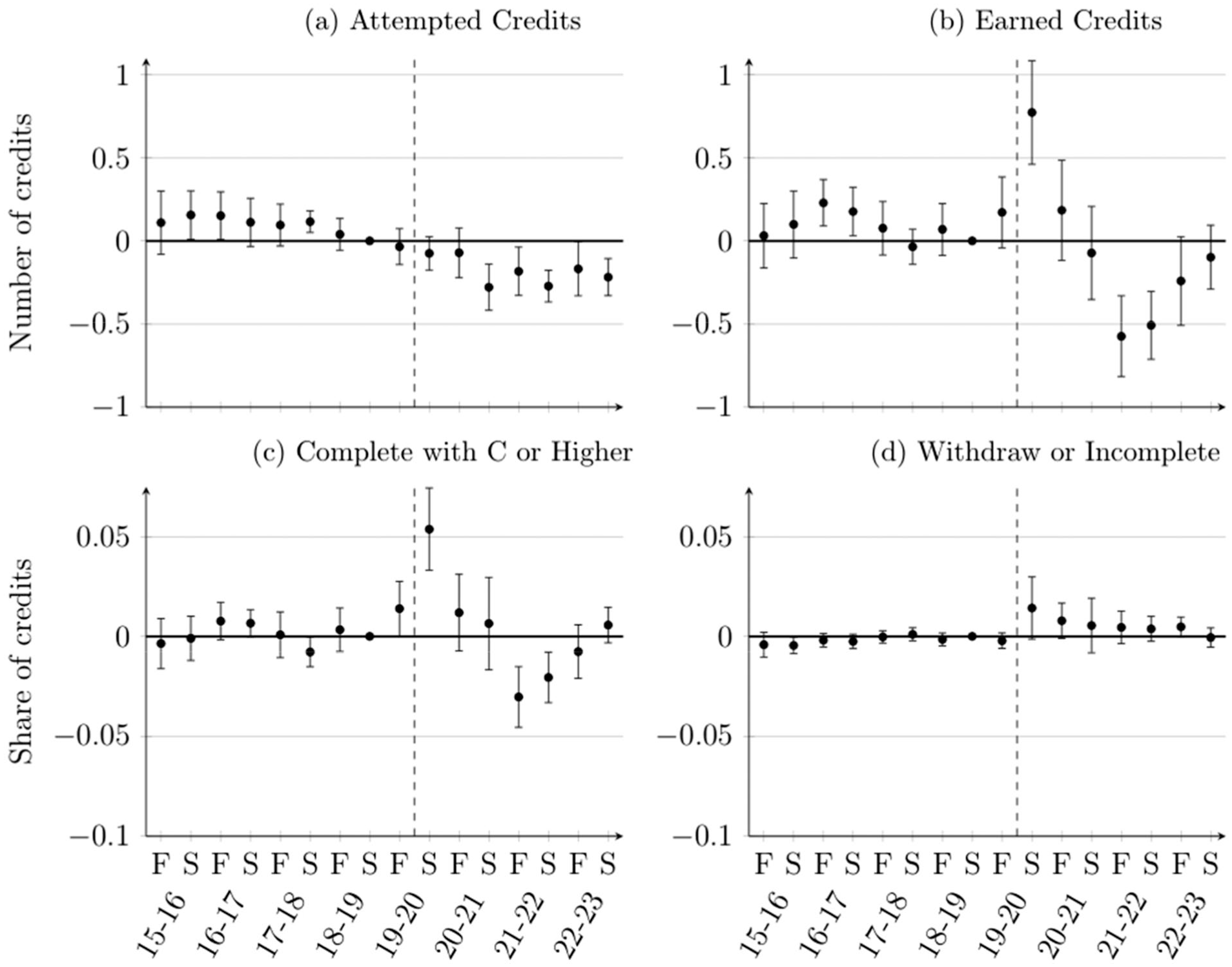
Credit earning at 4-year institutions.
Credits earned successfully (with a grade of C or better) at 4-year institutions showed a pronounced jump of around 0.75 hours in the spring of 2020 and a smaller not statistically significant increase in the fall of 2020, which, as Figures 1c and 1d suggest, were largely driven by a decrease in the share of classes completed with a D or F. In the spring of 2020 in particular, there was an increase of around 5 percentage points in successful course completion rates but not an associated decrease in withdrawals and incompletes, which remained fairly constant at 4-year institutions throughout the sample period. This indicates that the UNC System’s flexible grading policies may have helped many students avoid grades of D or F in the early pandemic semesters. After the initial jump, the share of classes completed successfully as well as the number of credits earned per semester were lower than prepandemic levels for the 2021 cohort but rebounded by the end of the sample period. Taken together, these results suggest that 4-year students from the high school class of 2021 experienced large disruptions coinciding with the COVID-19 pandemic, but credit earning appears to have recovered. Later in this section, we show evidence that this is not the case for all students.
Figure 2 points to similarities and some important differences in credit accumulation trends at 2-year institutions. Attempted and earned credits increased early in the sample period but leveled off for the 2016–2018 cohorts, while successful course completion rates were mostly constant prior to the pandemic. 6 After 2020, there was a drop in attempted credits and a larger decrease in earned credits that continued through the fall of 2022. The trend in attempted credits is consistent with findings from related qualitative work, which indicate that to help less prepared students succeed, some advisors were encouraging these students to take lighter courseloads (Hutchins et al., 2026). Our analyses also show that unlike at 4-year institutions, the decrease in attempted credits was due to more students attending part-time (see Figure B2 in the Online Appendix for more detail).
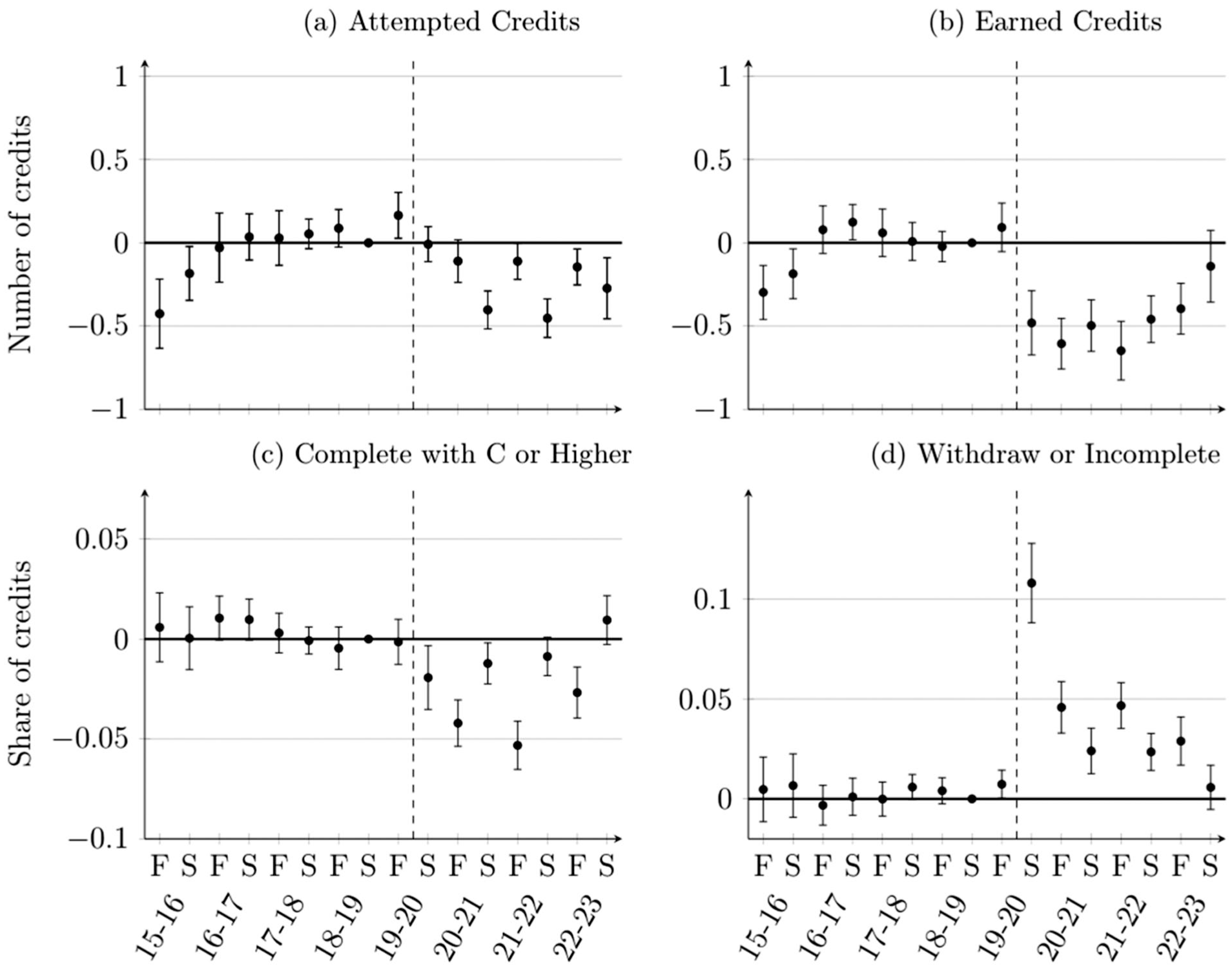
Credit earning at 2-year institutions.
In contrast to 4-year institutions, the decrease in successful course completion for community college students was driven by more withdrawals and incompletes, while the share of courses completed with a grade of D or F remained stable over the sample period, with the exception of the spring of 2020, when it decreased by 9 percentage points. Withdrawals and incompletes increased by 11 percentage points in the spring of 2020, which aligns with the NCCCS guidance for colleges to add the emergency withdrawal and incomplete grading options. A comparable sharp increase in withdrawals in the spring of 2020 offset by a decrease in failing grades has also been documented for community college students in California (Bulman & Fairlie, 2022). Overall, the results suggest that on average, the post-COVID-19 changes in community college students’ credit earning was more pronounced than the changes in 4-year students’ credit accumulation, with the decrease persisting for the later cohorts in our data. North Carolina community college students are less likely to complete classes, driven by a sustained increase in course withdrawals.
Trends in Fall-to-Spring Persistence and Summer Enrollment
Decreases in successful course completion rates as well as other pandemic-induced stressors can have impacts on persistence. Figure 3a shows that relatively fewer 4-year students in the 2020 and 2021 cohorts were persisting between the fall and spring semesters of their first year. A 1 to 2 percentage point decrease in first-year persistence for 4-year students constitutes a fairly substantial change because the baseline persistence rate for this group was 95%. Persistence returned to its prepandemic trend for the high school class of 2022. For 2-year institutions, we see evidence in Figure 3b that the 2020 and to some extent 2021 cohorts also experienced a drop in fall-to-spring persistence relative to the preexisting trend.
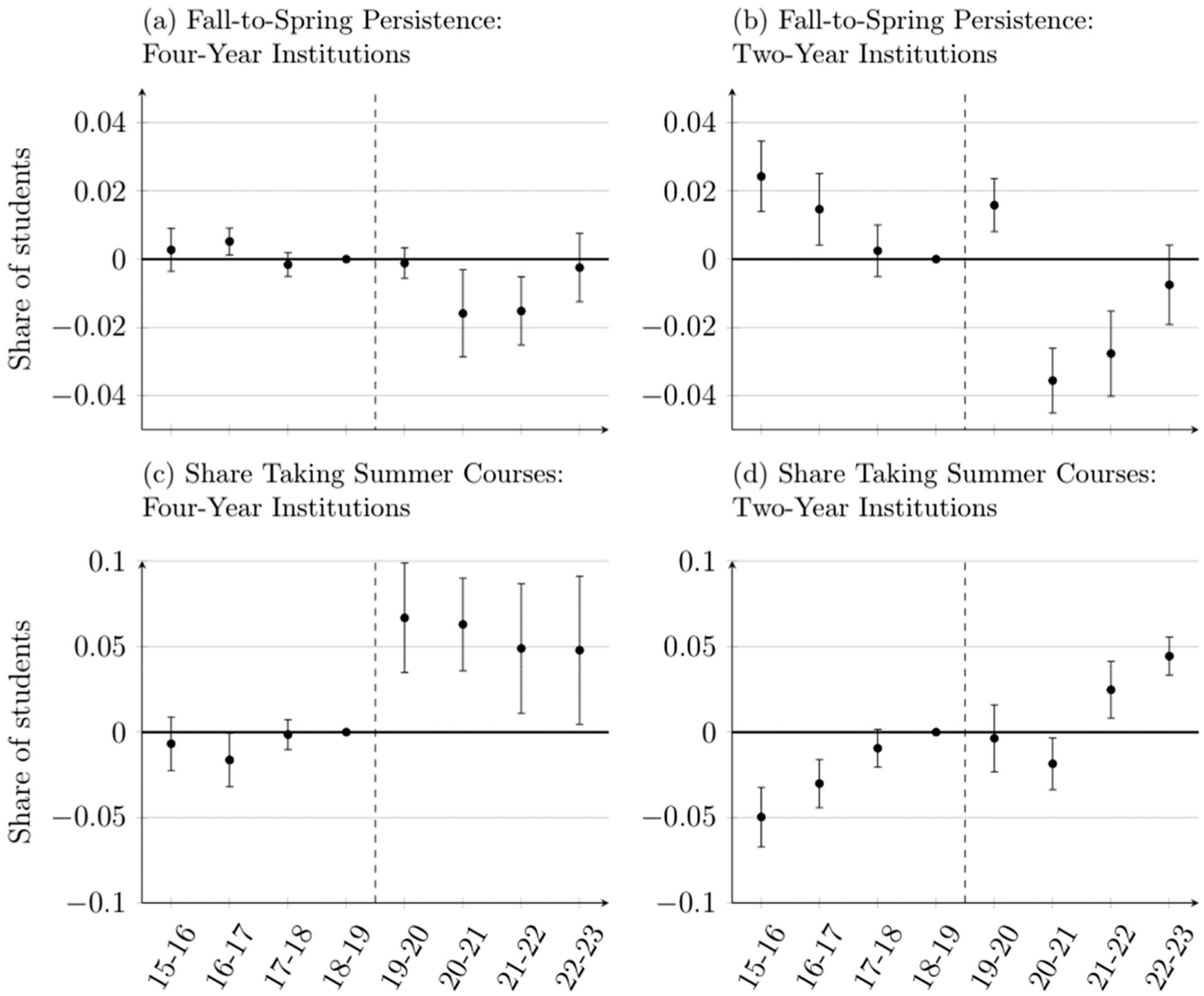
Fall-to-spring persistence and summer enrollment after the first year.
Students may have tried to recover credits through summer school enrollment, and we see this, particularly at 4-year institutions. The results in Figure 3c show an increase of around 5 percentage points in the share of 4-year students taking summer courses starting in 2020. Figure 3d suggests that community college students may have been less likely than students at 4-year institutions to use the summer terms to speed up their credit accumulation at the peak of the pandemic. There was an upward trend in summer coursetaking in the prepandemic years that leveled off for the 2019 and 2020 cohorts before continuing its upward trajectory.
Subgroup Differences
While as a whole college student performance may have rebounded after the COVID-19 pandemic, it is important to consider whether this is the case for all students or if there are differences in recovery rates across groups. We focus on heterogeneity in successful course completion rates, results for which we show in Figure 4; results from subgroup analyses for all other outcomes are shown in Figures B5 through B16 in the Online Appendix. As discussed earlier, the coefficient estimates we show represent the difference between the subgroup of interest (e.g., economically disadvantaged) and the reference group (e.g., non-economically disadvantaged) in the change relative to the base year value for the respective group. A negative coefficient estimate does not necessarily mean that the outcome decreased for the given subgroup; it can indicate that the outcome increased by less than the increase for the relevant reference group.
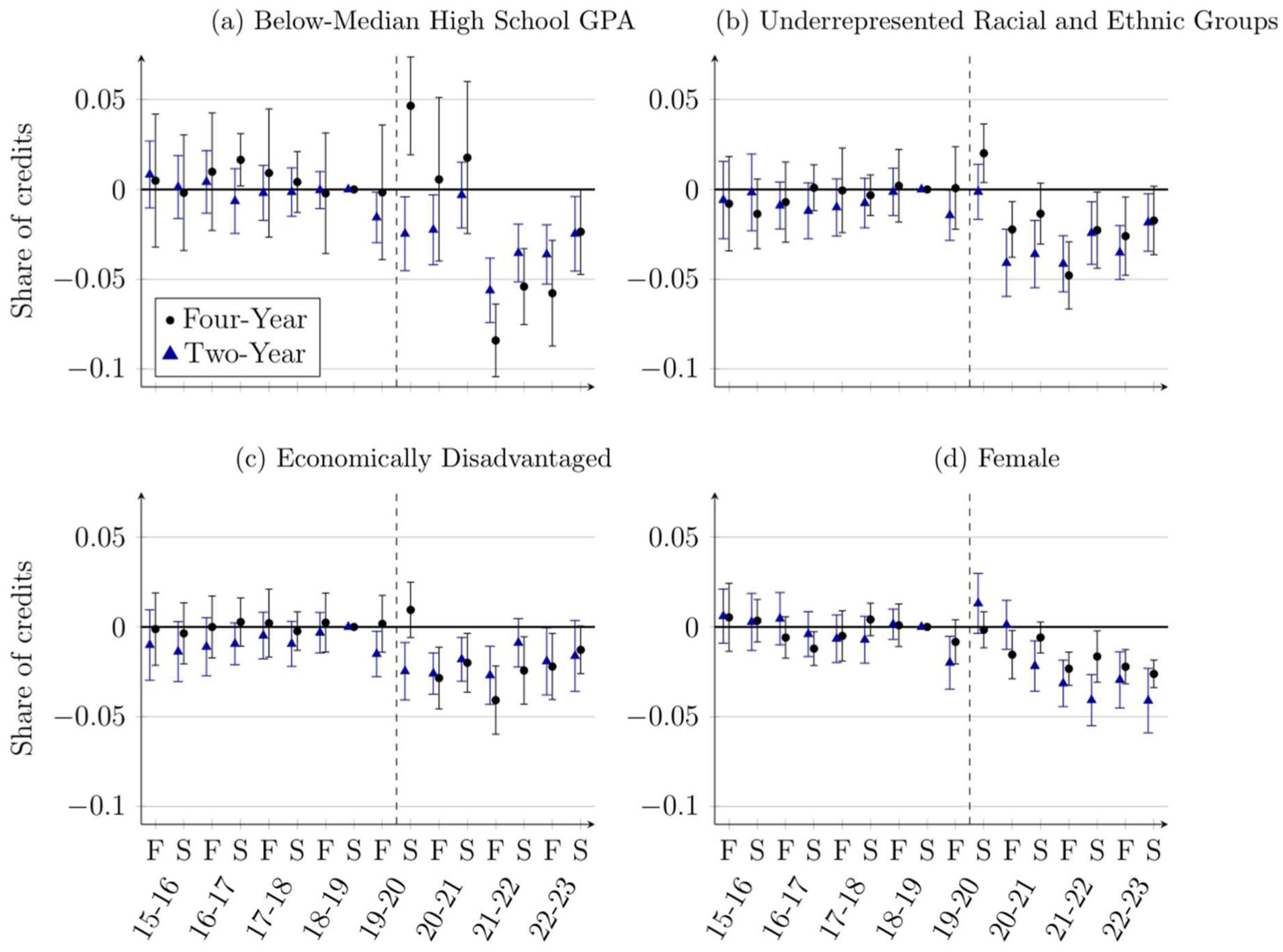
Successful course completion by subgroup.
Figure 4a shows that at 4-year institutions, success rates improved more for low-performing students in the spring of 2020. This is consistent with other evidence from the early stages of the pandemic that lower-performing students were better able to take advantage of flexible grading policies (Rodríguez-Planas, 2022a). This also holds true for underrepresented racial and ethnic groups (as shown in Figure 4b). These relative improvements in performance were not observed at 2-year institutions, where we see relative drops in Spring 2020 performance for low-GPA and economically disadvantaged students.
Following the peak of the pandemic, successful completion rates were lower for female, URE, and economically disadvantaged students. Successful completion rates remained similar for students with below- and above-median high school GPA in the spring of 2021, possibly because universities still had grade relief policies in place, but dropped sharply for the lower-performing group in the fall of 2021 and did not recover fully through the end of our sample period. We see similar gaps at 2- and 4-year institutions for the last two cohorts, but Online Appendix B shows that the differences at community colleges were mainly driven by higher withdrawal rates for the subgroups we examine, while higher shares of courses completed with D or F were driving the subgroup differences at 4-year institutions. The supplemental analyses in Online Appendix B also offer suggestive evidence that prior to the COVID-19 pandemic, there was a trend toward a relative increase in credit earning for URE and economically disadvantaged community college students in North Carolina, which would have served to shrink the underlying gaps in these outcomes, but the pandemic appears to have ended this trend.
Conclusion
Although at this point researchers and educators generally agree that the COVID-19 pandemic constituted a major disruption to the K–12 education sector in the United States and other developed countries with persistent negative impacts on student learning, there is limited evidence as to the extent to which the pandemic has impacted college students. There have been calls in the literature for high-quality evidence on the pandemic’s impacts on education beyond high school (e.g., Polikoff et al., 2023). We use linked high school and college student records for all students at public institutions in the state of North Carolina to document how academic performance at 2- and 4-year institutions has changed following the COVID-19 pandemic.
We find that overall, credit earning at 4-year institutions increased during the spring of 2020, when institutions implemented flexible grading policies that may have helped students complete their courses successfully, but then dropped during the 2021–2022 academic year, largely as a result of students earning more grades of D or F. There was a corresponding decrease in the share of students persisting between the fall and spring semesters.
Changes in credit earning and fall-to-spring persistence were even more pronounced at community colleges, where more students have been withdrawing from their classes. Course completion rates appear to be rebounding for more recent cohorts, especially at 4-year institutions, but it is yet unclear what the long-term trends would be for students who attended college at the height of the pandemic.
We also identify concerning differences for some historically marginalized racial and ethnic groups as well as for academically underprepared students and females. Educators and policymakers need to be aware of the slower recovery rates for economically disadvantaged students, students of color, and students who performed worse in high school as these groups tend to have lower college completion rates and are more likely to need additional academic supports.
It is important to note that our study is largely descriptive because all students were similarly exposed to the COVID-19 pandemic, so we are unable to disentangle the pandemic’s impacts from the effects of other concurrent events and policies. The pandemic brought on large economic shocks, such as changes in the unemployment rate and income fluctuations through federal stimulus payments; political unrest and the Black Lives Matter protests also impacted the college-age population. It is important for researchers and policymakers to continue to monitor the trends in college students’ academic recovery as the economic and political contexts across the United States continue to change.
Supplemental Material
sj-docx-1-edr-10.3102_0013189X261462499 – Supplemental material for Postsecondary Gaps in Recovery From the COVID-19 Pandemic: Evidence From Public Colleges and Universities
Supplemental material, sj-docx-1-edr-10.3102_0013189X261462499 for Postsecondary Gaps in Recovery From the COVID-19 Pandemic: Evidence From Public Colleges and Universities by Dora Gicheva, Julie A. Edmunds, Bryan C. Hutchins, Nir Eilam and Nina Arshavsky in Educational Researcher
Footnotes
Acknowledgements
The opinions expressed are those of the authors and do not represent views of the U.S. Department of Education or other individuals within the University of North Carolina at Greensboro or the NC Collaboratory. We would like to thank Kendal Walker for excellent research assistance.

Funding
The authors disclosed receipt of the following financial support for the research, authorship, and/or publication of this article: This project was supported by the North Carolina Collaboratory at the University of North Carolina at Chapel Hill with funding appropriated by the North Carolina General Assembly via the American Rescue Plan Act of 2021 (H.R. 1319) (federal award identification number SLFRP0129). The project used a data set supported by the Institute of Education Sciences at the U.S. Department of Education through Grant R305H190036 to the University of North Carolina at Greensboro.
Declaration of Conflicting Interests
The authors declared no potential conflicts of interest with respect to the research, authorship, and/or publication of this article.
Supplemental Material
Supplemental material is available online.
Notes
Author Biographies
References
Supplementary Material
Please find the following supplemental material available below.
For Open Access articles published under a Creative Commons License, all supplemental material carries the same license as the article it is associated with.
For non-Open Access articles published, all supplemental material carries a non-exclusive license, and permission requests for re-use of supplemental material or any part of supplemental material shall be sent directly to the copyright owner as specified in the copyright notice associated with the article.
