






Abstract
This scoping review documents the content and outcomes of parental engagement components within school-based social-emotional learning (SEL) programs for pre-K through 12th grade. Of 83 programs reviewed, 45 included parental engagement components and were analyzed for format, rationale, and evidence. Findings showed that although the need for parental engagement is widely recognized, implementation and effectiveness data remain limited. Common formats included standalone written materials, such as pamphlets and letters sent home (80.0%), and parent groups or workshops (62.2%). Rationales for parent engagement predominantly focused on empowering parents and increasing the generalization of children’s SEL knowledge outside of school settings. A significant gap was identified in the evidence base: only a minority of programs documented the effectiveness, acceptability, or feasibility of their parent components. To advance the field, future research should employ methodologically rigorous evaluation designs to assess the impact of parental engagement components within school-based SEL programs.
Keywords
Social and emotional development encompasses the dynamic, continuous process through which children acquire and effectively apply interrelated cognitive, affective, and behavioral competencies that are essential for navigating various life and learning contexts (Cipriano et al., 2023; Payton et al., 2008). Multiple studies have documented that these heterogeneous social-emotional skills, including self-awareness, self-management, social awareness, relationship skills, and responsible decision-making, are both malleable and teachable (Cipriano et al., 2023; Jones & Kahn, 2017). Consequently, numerous school-based “social and emotional learning” (SEL) interventions, such as Second Step (Low et al., 2016) and Head Start REDI (Bierman et al., 2018), have been widely implemented across the United States to cultivate these skills. The perceived value of SEL interventions is reflected in their widespread adoption, with over half of U.S. principals and teachers implementing an SEL program in the 2021–2022 school year (Schwartz et al., 2022). Over the past several decades, in particular, SEL implementation has been supported by extensive federal, state, and local policies aimed at promoting children’s social, emotional, and academic growth (Weissberg et al., 2015).
School-based SEL interventions have been shown to significantly improve social-emotional skills, promote positive attitudes towards self and others, increase prosocial behaviors, enhance school climate and safety, and boost overall school functioning and academic achievement across subjects such as reading, mathematics, and science (Cipriano et al., 2023, 2024; Corcoran et al., 2018; Durlak et al., 2011; Taylor et al., 2017). Beyond prosocial and academic gains, these programs have also been found to contribute to children’s general well-being, effectively reducing conduct problems such as disruptive behaviors and substance use and emotional distress, while fostering stronger interpersonal connections (Cipriano et al., 2023, 2024; Corcoran et al., 2018; Durlak et al., 2011; McCormick et al., 2015; Panayiotou et al., 2019; Taylor et al., 2017). Importantly, such positive findings have been found within a wide range of child populations (including those in high-risk environments), developmental stages, and cultural contexts (Calhoun et al., 2020; Carroll et al., 2020; Durlak et al., 2011; Taylor et al., 2017). That said, there is heterogeneity in SEL intervention effectiveness (Cipriano et al., 2023; Durlak et al., 2011). One potential source of this variability may be the strength of family–school partnerships or the extent to which parents are engaged in SEL programming. Parent engagement processes may be a critical, yet underexplored, variable explaining differences in program impact. This scoping review documents the content and outcomes of parental engagement components delivered within school-based SEL programs.
SEL occurs within the day-to-day interactions children have with the people in their lives (Garbacz et al., 2015; Osher et al., 2021). Although parents and others who act in parental roles are recognized as the child’s first and “lifelong” teachers (Bridges et al., 2012, p. 2), there has been limited focus on parental engagement in school-based SEL interventions (Dinallo, 2016). Indeed, research on SEL interventions has predominantly emphasized classroom-based or school-wide efforts targeting children and teachers only (e.g., Durlak et al., 2011). This reality points to a potential weakness in the SEL intervention literature. Findings from recent meta-analyses demonstrate that parental involvement or engagement in children’s learning significantly impacts children’s overall performance, encompassing both academic and nonacademic outcomes (Barger et al., 2019; Cosso et al., 2022; Tan et al., 2025), and their development of effective emotion regulation skills (Morris et al., 2017). Studies on parent-focused interventions, such as those designed to help parents increase student motivation, indicate positive effects on student outcomes (e.g., Grolnick et al., 2021; Harackiewicz et al., 2012; Lee et al., 2022), lending support to the inclusion of parents in other school-based programs, such as SEL programs. As noted by Skinner et al. (2022), students develop within “complex social ecologies”; aligning interactions within the home–school mesosystem can foster the “proximal processes” that drive social-emotional competence (Bronfenbrenner, 1979). Across multiple intervention studies, it is clear that parent–school partnerships are beneficial for children’s learning, as they establish a collaboration that, if ongoing, reinforces learning consistency across various contexts in a child’s life (Albright & Weissberg, 2010), thereby positively impacting children’s academic, social, and emotional functioning (e.g., self-esteem, behavior regulation, social skills, peer relationships; Sheridan et al., 2019; Smith et al., 2020). The literature conceptualizes a continuum of parent–school partnerships from “parental involvement” to “parental engagement” (Goodall & Montgomery, 2014), which are distinguished primarily by the locus of agency. “Involvement” is typically characterized by school-directed activities (e.g., attending meetings), whereas “engagement” implies a two-way, active partnership. In this review, we employ “parental engagement” as an overarching umbrella term to capture the full spectrum of parent–school interactions and communication to support student learning and well-being. Given this, we operationalize “parent engagement components” as any program activities intentionally designed to increase parent awareness of the program or to involve parents in the program or its content. This encompasses strategies ranging from the provision of passive informational resources (e.g., flyers) to interactive skill-building (e.g., workshops).
Within the context of SEL interventions, researchers have hypothesized various ways that parents can support children’s learning and maximize program effects. For example, parents can support the development of SEL competencies by modeling targeted skills within their parenting, such as establishing boundaries, providing emotional support (including emotion labeling and modeling appropriate emotion expression and regulation), fostering interpersonal connections, using respectful communication, expressing empathy, and explicitly using problem-solving strategies (Garbacz et al., 2015; Morris et al., 2017). Furthermore, by facilitating the transfer of SEL competencies learned at school to the home setting, parents can encourage the generalization and multidirectional flow of learning (Garbacz et al., 2015). When parents engage in SEL interventions (e.g., attending in-person sessions or events or using written or online program materials), intervention effects appear to be enhanced (e.g., Nix et al., 2009).
Unfortunately, significant programmatic and research gaps constrain this promise. Although a substantial majority of U.S parents recognize that SEL skills are instrumental to their children’s success (Princeton Survey Research Associates International, 2015) and articulate their key role in this process (Hill et al., 2018), parents are rarely included or invited to participate in universal school-based SEL interventions (e.g., 87% of programs do not directly engage families, Cipriano et al., 2024). When included, engagement strategies are most often limited to passive, informational methods, such as letters or emails (Cipriano et al., 2023, 2024). This omission translates to a lack of accessible, concrete guidance for families to effectively reinforce SEL skills taught in school, which might constrain the generalization and sustained impact of these programs (Drew et al., 2024). This highlights the need for clear, evidence-based guidelines on how to optimally integrate active parental engagement into SEL interventions (i.e., Garbacz et al., 2015).
The Present Study
To begin to address this need, we conducted a scoping review of parental engagement components in school-based SEL programs and examined their contributions to children’s and families’ social, emotional, and academic outcomes. Despite growing recognition of the critical importance of parental engagement to intervention success across a range of educational and developmental outcomes during childhood and adolescence (e.g., dating violence prevention; Doucette et al., 2021), a comprehensive understanding of how SEL programs engage parents remains lacking. Therefore, this scoping review aims to explore the nature and extent of parental engagement components within school-based SEL programs targeting children in pre-kindergarten (pre-K) through 12th grade. This review will further investigate the specific strategies employed to increase parental engagement in these identified programs and, where data permit, assess their effectiveness, feasibility, and acceptability.
Method
Overview of Literature Search
This review was conducted in accordance with the Preferred Reporting Items for Systematic Reviews and Meta-Analyses extension for Scoping Reviews (PRISMA-ScR) checklist (Tricco et al., 2018). The current scoping review searched for school-based SEL intervention programs from around the world (i.e., without language restrictions) that appear in the peer-reviewed literature, and then for all freely available documents describing the content, processes, and outcomes of those programs. To identify SEL programs for this review, the investigative team took the following steps: (1) created a list of programs previously known to them, (2) identified other programs from published reviews and meta-analyses of SEL programs, (3) conducted internet searches for any other SEL programs that were not found in the first two steps, and finally, (4) consulted other SEL experts. The initial internet searches were conducted via PsycInfo during the fall of 2023 by two senior research team members with extensive experience in SEL, preventive interventions, and parenting/parent engagement. These were followed by additional searches on specific programs (see Online Supplemental Table 1 for detailed search terms for SEL programs). The search identified a total of 12,263 documents, comprising 3,898 from the PsycINFO database search and an additional 8,365 from Google Scholar, citation searching of the included documents, and program websites (see Figure 1). All identified documents related to programs were then reviewed in detail. Documents found in Spanish were reviewed by native Spanish speakers, while six documents in Croatian, Hungarian, Icelandic, Portuguese, and Turkish were translated via Google Translate and then reviewed in English.
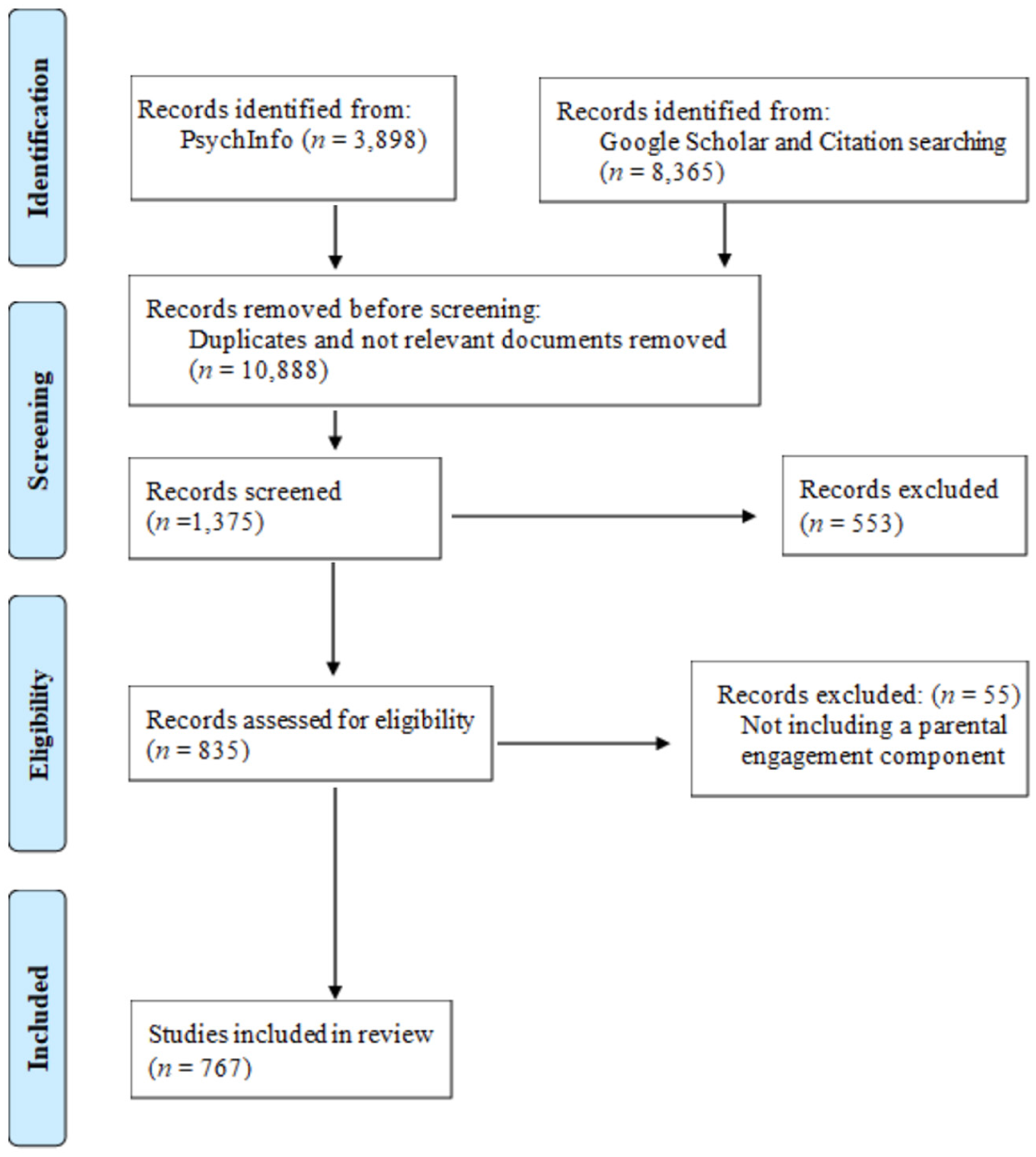
PRISMA flow diagram for assessment of systematic reviews.
Inclusion and Exclusion Criteria
We included documents (e.g., peer-reviewed publications, dissertations, book chapters, review articles, conference abstracts, school magazine publications, program guidelines) that described programs meeting all the following criteria: (a) the program was at least partially implemented in schools (pre-K through Grade 12), (b) the program targeted at least one SEL competency, and (c) the program included at least one family or parent engagement component. For the purposes of this review, a “program” is a targeted SEL curriculum directly delivered to students. While programs could, but did not need to, also include other structural, school-wide, or community efforts, the direct student-facing curriculum was a mandatory requirement for inclusion. Documents on programs that failed to meet any of these three inclusion criteria were excluded from the review. Exemplars of excluded works include programs in nonschool settings (e.g., summer-only settings, Ramos et al., 2022), studies not targeting the included programs or SEL outcomes, and sources with insufficient data independent coding (e.g., Zinsser et al., 2016).
Article Screening Process
Of the 12,263 documents, 10,888 were excluded as duplicates or for not meeting established relevance criteria (e.g., the searched SEL program was only mentioned in the references, was listed in an enumeration of SEL programs without providing any details, was listed in a table with results of studies on various SEL programs without providing program-specific details, and/or described an intervention with the same program name, but that was not the desired SEL program from our list—for instance, an acronym program name, such as DISCOVER or INSIGHTS, commonly used for a variety of programs). This process resulted in 1,375 documents. Following title and abstract review, 553 documents were excluded for not meeting our inclusion criteria. The research team then conducted a full-text review of the remaining documents, resulting in the exclusion of an additional 55 documents because they did not meet the inclusion criteria. Therefore, after excluding 608 documents, a final set of 767 documents containing information about 49 programs was included in the review (see Online Supplemental Table 2 for full references).
Document Coding
Codebook development began with an initial list of codes written by the two senior research team members noted previously. Coding team members (N = 13) then underwent a one-month training that included a thorough review and discussion of the existing literature on parental engagement in school-based interventions. During that period, the codebook underwent an iterative development process; more challenging codes were refined, and examples were added until all team members demonstrated mastery of the codebook elements and coding procedures through structured practice and monitoring. Codes included: (a) the type of document included (e.g., peer-reviewed article, book chapter, dissertation), (b) program name, (c) the age of children targeted by the program (i.e., preschool or 3–5 years, elementary school or 6–10 years, middle school or 11–14 years, high school or 14–18 years, and adult education or over 18 years old), (d) characteristics of the population that the program was developed for (e.g., underserved communities), (e) the rationale of the school-based SEL program parental component, (f) parent component language availability (i.e., English, Spanish, other), and (g) format of the parental engagement components (i.e., parent group/workshop, written materials/hardcopy provided to parents, individualized support for parents and families, website, videos, parent informational meeting about the program, other). Regarding the delivery characteristics of the parental engagement component, the following categories were coded, including (a) the type of contact with parents (i.e., synchronous online, asynchronous online, in-person, in-person school, by phone, written materials), (b) the type of parental engagement activities (i.e., self-directed only, program-directed only, a mixture of self- and program-directed elements), (c) the timing of when activities are delivered to parents (i.e., at the parents’ convenience/anytime; during the day, evening, or weekends), and (d) the number of planned sessions or hours of parent engagement. Programs that used multiple, distinct strategies were coded for each applicable format (e.g., a program that used both written materials and workshops received codes for both). Finally, the codebook included codes regarding the study design (i.e., experimental, quasi-experimental, observational, not an evaluation study) and measurable outcomes of the included study (i.e., parent component effects on child outcomes, parent component positive effects on parent or family outcomes, and acceptability or feasibility of the parent materials or components). To ensure methodological consistency and accuracy, each category was accompanied by definitions, by instructions on who to apply the definitions, and by illustrative examples, which served as guiding references throughout the coding process. Consistent with standard scoping review methodology, a formal assessment of the methodological quality (risk of bias) of the included studies was not performed.
Coders were university students from diverse academic backgrounds in education and health sciences with a strong interest in collaborating on research. The article coding process involved a full-text review and data abstraction for all 767 documents using a structured data-entry system (Qualtrics survey) based on the codebook. Each document was independently coded by two coders. To maintain high coding quality and content expertise for this complex codebook, coding pairs always included an experienced coder. Discrepancies were resolved through a negotiated consensus process. Additionally, weekly team meetings for the entire coder group were held to address any remaining discrepancies, clarify questions, and ensure adherence to protocol and consistency in the coding process.
Data Analyses
The coded data were analyzed using a mixed-methods approach, integrating both qualitative and quantitative techniques. A qualitative content analysis was employed to systematically analyze the rationales for parental engagement described in the included programs. The unit of analysis was the individual program. The process involved extracting specific codes, which were then grouped into subthemes based on semantic similarity. These subthemes were aggregated into primary thematic categories to quantify the predominant objectives of parental engagement. Quantitative analyses used descriptive statistics to summarize the coded data, including frequencies, percentages, means, and standard deviations, to describe the prevalence of various parent engagement formats, types of contacts, activity delivery methods, and documented outcomes. The comprehensive codebook and the mixed-methods approach enhanced the rigor and validity of the study.
Results
Program Description
Table 1 provides a comprehensive overview of the 49 school-based SEL programs we identified that include parental engagement components. The programs vary considerably in the number of included studies, ranging from programs with a single scientific publication (e.g., Voices: A Comprehensive Reading, Writing, and Character Education Program) to those with extensive research bases (e.g., PATHS with 79 studies; Conscious Discipline with 48 studies). Of the 49 programs, almost half (n = 23, 46.9%) had fewer than 10 scientific publications. The included documents (n = 767) comprised a rather diverse range of types, including but not limited to scientific journal articles, dissertations and theses, book chapters, newsletters, presentations, training manuals, and program evaluation reports.
Descriptive Characteristics and Parental Engagement Components of the Included Programs
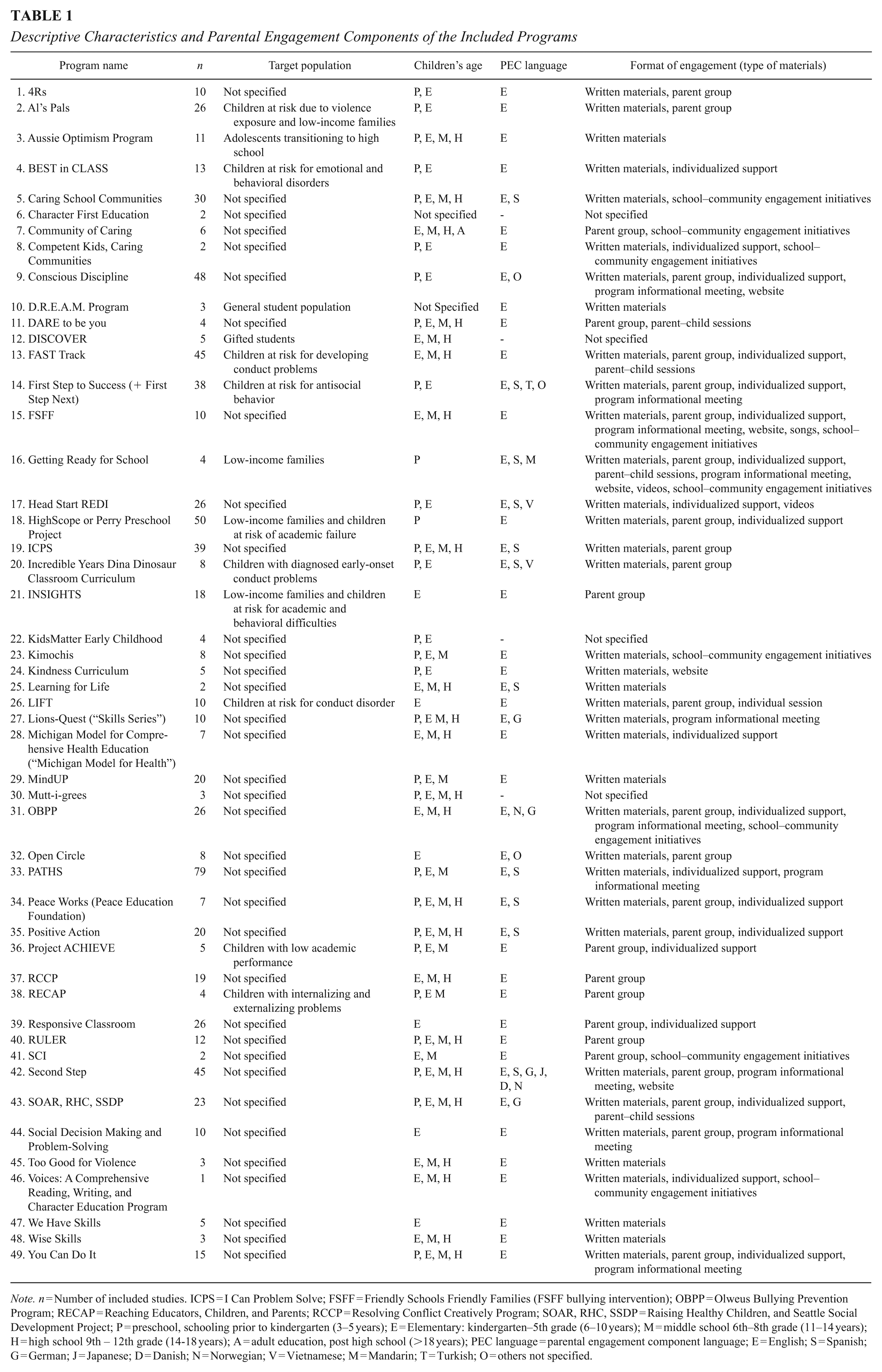
Note. n = Number of included studies. ICPS = I Can Problem Solve; FSFF = Friendly Schools Friendly Families (FSFF bullying intervention); OBPP = Olweus Bullying Prevention Program; RECAP = Reaching Educators, Children, and Parents; RCCP = Resolving Conflict Creatively Program; SOAR, RHC, SSDP = Raising Healthy Children, and Seattle Social Development Project; P = preschool, schooling prior to kindergarten (3–5 years); E = Elementary: kindergarten–5th grade (6–10 years); M = middle school 6th–8th grade (11–14 years); H = high school 9th – 12th grade (14-18 years); A = adult education, post high school (>18 years); PEC language = parental engagement component language; E = English; S = Spanish; G = German; J = Japanese; D = Danish; N = Norwegian; V = Vietnamese; M = Mandarin; T = Turkish; O = others not specified.
The target populations for the identified programs varied. Only a few programs (n = 14, 28.6%) were explicitly designed to target specific populations of students. Among these programs, the most frequently addressed populations were children with or at risk for externalizing problems (n = 7) and those from low-income families (n = 4). Other targeted groups included students with low academic performance (n = 3), children with or at risk for internalizing problems (n = 2), and specific populations such as gifted students (n = 2), those with disabilities (n = 1), children exposed to violence (n = 1), or students transitioning to high school. However, most programs did not articulate a target population (listed as “Not specified” in Table 1).
The age ranges of children targeted by these programs span from preschool through high school, with some extending to adult education. Of the 49 programs, almost all targeted elementary school children (n = 45, 91.8%), and around half also targeted preschool and middle school ages (both n = 29, 59.2%). Two programs (4.1%) were designed to be delivered to adults engaged with preschool and elementary school children, including parents, caregivers, and teachers, by providing organizational and teaching approaches to SEL. These programs also included programming for children. Most programs (n = 37, 75.5%) that specified a target population were designed for more than one age group. The programs targeted an average of 2.66 age groups (SD = 1.11), with a range from one to four. For example, programs such as Second Step, Caring School Communities, PATHS, and Positive Action serve students from preschool through high school, while HighScope and Getting Ready for School primarily focus on the preschool age group.
Of the 49 programs, four (i.e., Character First Education, DISCOVER, KidsMatter Early Childhood, and Mutt-i-grees) were initially identified as having a parent component, but available documentation provided insufficient detail to categorize specific engagement formats. Although program websites allude to such components, they were not in the documents reviewed. Therefore, the subsequent analysis focuses on the remaining 45 programs and their 356 associated documents that explicitly described parental engagement components. As shown in Table 1, more than half (64.4%, n = 29) of the programs’ parental engagement components were available solely in English. Some programs also offer materials for parents in Spanish (n = 11, 24.4%) and/or other languages (n = 10, 22.2%), such as Vietnamese, German, Japanese, Danish, Norwegian, Mandarin, and Turkish.
Formats of Parental Engagement Component
Parental engagement was facilitated through a variety of formats, reflecting a range of strategies to involve parents and caregivers. The most common formats were standalone written materials or other hard copies provided to parents (n = 36, 80.0%) and parent groups or workshops (n = 28, 62.2%). For this review, the “written materials” category referred to the standalone dissemination of asynchronous, print-based text—encompassing a broad range from simple informational letters to prescriptive guides for home activities—distinct from handouts used as supplementary resources during live sessions. Conversely, groups or workshops (typically in-person at the school) provided parents with information on child development topics, parenting skills, and strategies for improving the home–school relationship. These sessions often incorporated resources such as videos (e.g., the INSIGHTS program).
Other frequently observed formats included a family-focused approach to individualized support, provided by program staff or teachers (n = 20, 44.4%). Generally, support comprised home visits, phone calls to monitor progress, and individual parent–teacher conferences to provide program information and tailor goals and strategies to a child’s specific developmental needs and family context. Further, support was often conceptualized as building trust, strengthening the parent–school alliance, and meeting the specific needs of families while promoting the generalization of SEL competencies into the home. Another format was program informational meetings, which were used in 10 programs (22.2%) and designed to inform parents about the program and its benefits. Less common formats included school–community engagement initiatives (n = 9, 20.0%), such as school-run community events, family–school activities, committees, coalitions, or task forces, which were typically aimed at building relationships with parents and increasing community knowledge and interest in the programs. Finally, other formats included websites (n = 5, 11.1%) that contained program lessons and extra activities (e.g., parent mindfulness classes), as well as informational webinars that often incorporated videos.
Interestingly, parent–child sessions, a skill-building approach for parents and children to reinforce positive relationships, were used in only four (8.9%) of the examined programs. These sessions, led by program staff and teachers, are held at the school to help apply learned skills and provide individualized feedback to parents. The least common formats were standalone videos (n = 2, 4.4%) to educate parents on child development or to model parenting skills, songs (n = 1, 2.2%), and an online prerecorded parent information webinar (n = 1, 2.2%) intended to offer additional support for program implementation at home.
Characteristics of Parental Engagement Components
The descriptive characteristics of parental engagement components were coded and are presented in Table 2. A notable finding across the reviewed documents was a lack of specific detail for many of these characteristics. Almost a quarter of the programs (n = 11, 24.4%) used a single strategy to engage parents. The most common were written materials (n = 7, 63.6%), followed by parent groups or workshops (n = 4, 36.4%). Most programs, however, employed a multifaceted approach, with 75.6% (n = 34) using more than one parental engagement component. The mean number of strategies used was 2.56 (SD = 1.55), ranging from one to eight. A substantial portion of these programs employed two strategies (n = 16, 35.6%), primarily involving written materials (n = 11, 68.8%) or parent groups/workshops (n = 10, 62.5%). Less commonly, programs used three (n = 9, 20.0%), four (n = 5, 11.11%), or five or more strategies (n = 4, 8.9%).
Descriptive Characteristics of Parental Engagement Component
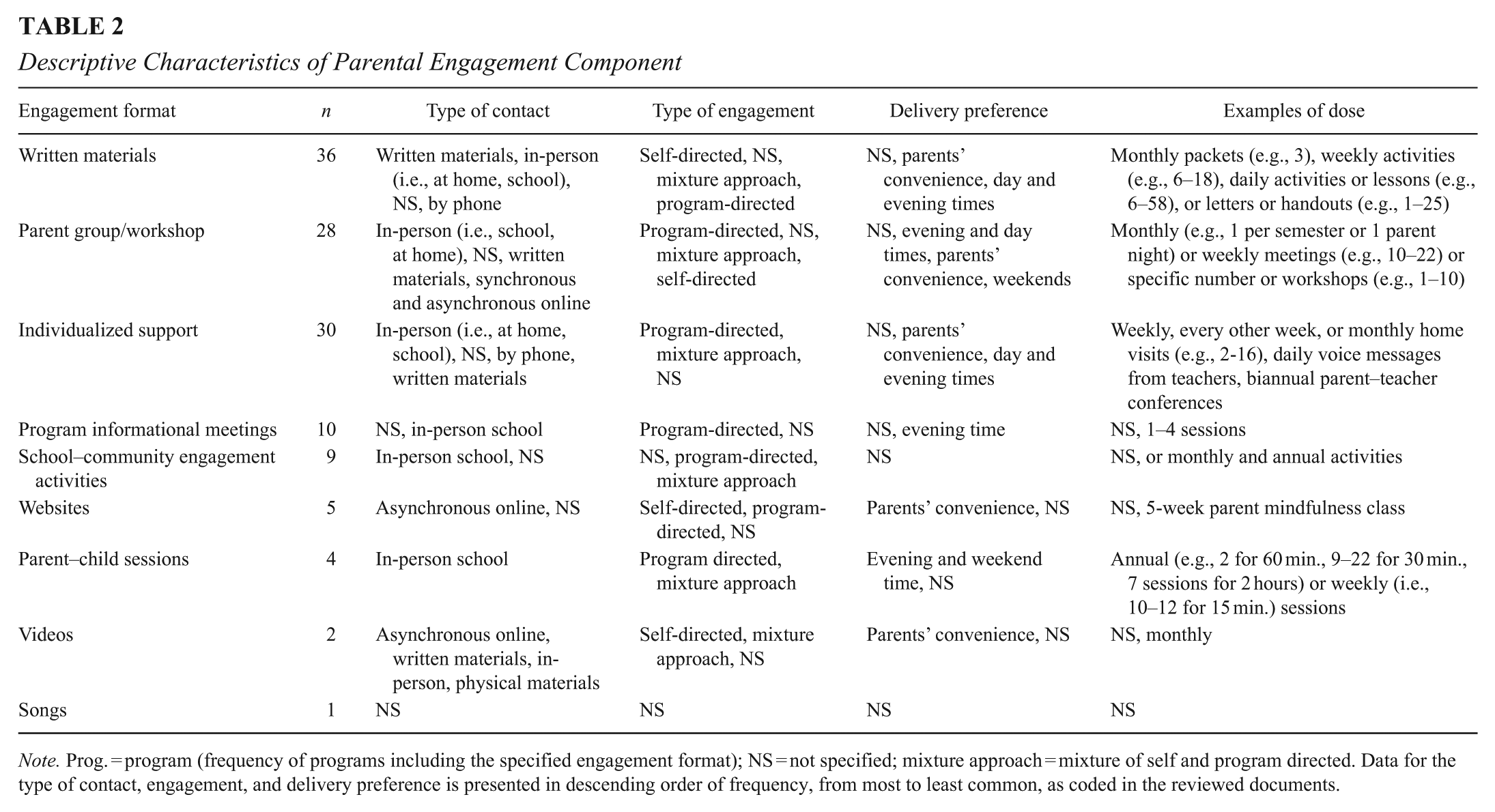
Note. Prog. = program (frequency of programs including the specified engagement format); NS = not specified; mixture approach = mixture of self and program directed. Data for the type of contact, engagement, and delivery preference is presented in descending order of frequency, from most to least common, as coded in the reviewed documents.
The most common engagement components were written materials, including guides, letters, and handouts. When used, these were often supplemented by phone calls and in-person meetings at home or at school. Parent groups and workshops were mainly conducted via in-person meetings, directed by program staff, with a smaller number of instances reporting a mixture of self- and program-directed meetings. Similarly, individualized support for parents and families was primarily characterized by program-directed engagement, delivered in person at the home or school, and conducted by teachers and program staff. Other components included school–community engagement activities, which were typically program-directed and conducted in person at the school. In contrast, digital strategies such as videos and websites were intended to be used asynchronously online at parents’ convenience. More broadly, many unspecified details were observed across all engagement components, particularly concerning the dose and specific delivery schedule. Although some components were noted to occur at the parents’ convenience, at specific times (e.g., evening), or with a defined frequency, most documents did not provide these details.
Beyond the Parent–Child Dyad: Socioecological Layers of Parental Engagement
Almost a quarter of the programs (n = 11, 24.4%) used a single strategy to engage parents. The most common of these was written materials (n = 7, 63.6%), followed by parent groups or workshops (n = 4, 36.4%). Most programs, however, employed a multifaceted approach, with 75.6% (n = 34) using more than one parental engagement component. The mean number of strategies used was 2.56 (SD = 1.55), ranging from one to eight. A substantial portion of these programs employed two strategies (n = 16, 35.6%), primarily involving written materials (n = 11, 68.8%) or parent groups/workshops (n = 10, 62.5%). Less commonly, programs used three (n = 9, 20.0%), four (n = 5, 11.11%), or five or more strategies (n = 4, 8.9%).
A heatmap (Figure 2) visually represents the frequency distribution of parental engagement components across different socioecological layers of a child’s life. Beyond providing simple frequency counts, this visualization elucidates distinct patterns of interaction within the child’s socioecological system. It uniquely highlights the structural “division of labor” within these programs, revealing how specific formats are systematically siloed to specific targets (e.g., workshops are predominantly delivered by program staff, while teacher engagement is comparatively sparse).
The heatmap illustration reveals distinct patterns of interaction, showing that different parental engagement components target specific relationships and contexts within a child’s socioecological system. The color of each cell indicates the frequency, with darker shades indicating a higher number of programs in that interaction layer using a particular component. Written materials had the highest frequency (n = 30) within the Parent*Child layer, indicating that this is a common strategy for facilitating interactions between parents and their children. In contrast, parent groups and workshops were most frequently associated with the Parent*Program staff layer (n = 27), indicating this format is primarily facilitated by program staff rather than teachers (n = 3). Other notable patterns include the use of written materials targeting parents (n = 17), mainly letters informing them about the program and individualized supports for families (n = 11), which showed a high frequency in the Parent*Teacher layer. The Parent*School context was most commonly addressed through school–community engagement activities (n = 9) and program informational meetings (n = 7), highlighting efforts to connect parents with the broader school context. School–community engagement activities targeted the most interactions across the socioecological layers examined, followed by individualized supports, reflecting the diverse engagement opportunities for parents.
Rationale for Parental Engagement in SEL Programs
Table 3 presents a hierarchical thematic analysis of the rationales for involving parents in SEL programs (see Online Supplemental Table 3 for full descriptions). The rationale for the parental engagement component was not specified in 13 programs (28.9%). After excluding irrelevant words and combining similar descriptions, 44 distinct keywords emerged. The analysis identified four primary themes, with the predominant objective being the promotion of parenting competencies (n = 107). This category indicates that programs primarily aim to equip parents with specific capacities. This objective is stratified into general parenting skills (n = 50) and behavioral strategies (n = 27), as well as intrapersonal factors such as parental agency and efficacy (n = 11) and well-being and self-regulation (n = 11).
Detailed Thematic Analysis of Rationales for Parental Involvement in Social–Emotional Learning Programs
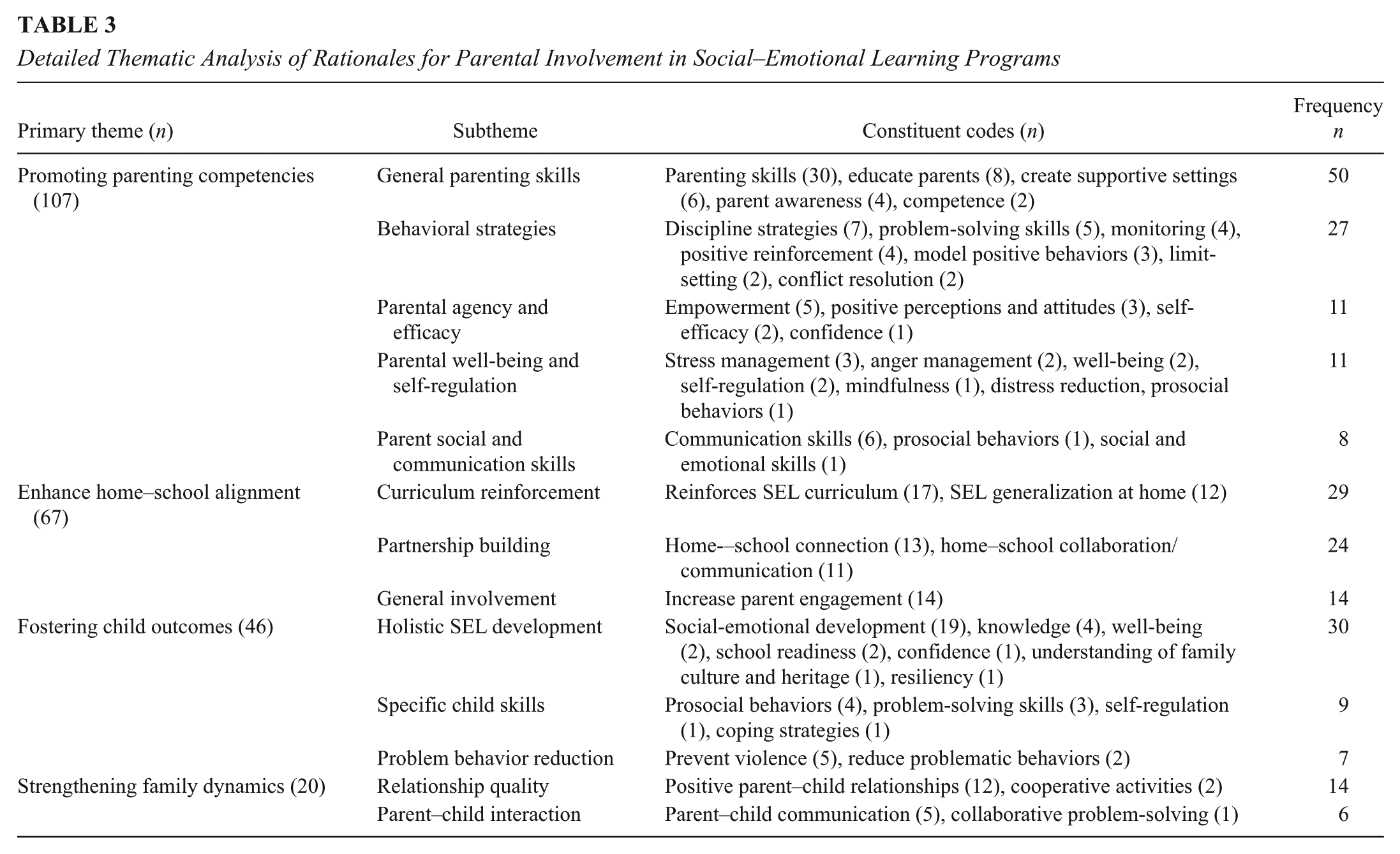
The second most frequent theme, enhancing home–school alignment (n = 67), emphasizes curriculum reinforcement (n = 29) and partnership building (n = 24), highlighting the goal of ensuring continuity between school and home environments. The theme of fostering child outcomes (n = 46) prioritized holistic SEL development (n = 30)—including cultural identity and confidence—over deficit-based problem behavior reduction (n = 7). Finally, the theme of strengthening family dynamics (n = 20) focused largely on improving relationship quality (n = 14) through positive parent–child interactions. Notably, the analysis reveals a dual-generational approach: specific competencies such as “problem-solving,” “self-regulation,” and “prosocial behaviors” are set as objectives for both parents and children, suggesting a parallel skill-building strategy.
Parental Engagement Component Acceptability, Feasibility, and Effectiveness
Empirical documentation regarding feasibility, acceptability, and effectiveness was limited. Among the 45 programs, a scant seven (15.6%) reported any information on parent component effectiveness that isolated the effects of this component (child or family outcomes), and only nine (20.0%) examined feasibility or acceptability (with five programs reporting both) (see Table 4). Even fewer programs examined the effectiveness or efficacy of their parent engagement components using experimental or quasi-experimental designs (n = 6). Rather, studies tended to examine whether parent engagement was associated with overall program effects or represented qualitative examinations of parents’ experiences with the program’s parent components. As most evaluations focused on assessing the program package as a whole, it was challenging to disentangle the independent contribution of the parental engagement strategies from other program components, such as the child curriculum. The remaining programs lacked empirical data for either domain; thus, the effectiveness of parental engagement strategies in these unassessed programs is indeterminate. Of note, this gap in the documentation of outcomes persisted in our work despite our use of a liberal coding approach that included both quantitative and qualitative data from various study designs (e.g., experimental, quasi-experimental, observational) and a diverse range of publication types, including scientific manuscripts, dissertations, book chapters, and program reports.
Findings of Studies Evaluating Parental Engagement Component Effects, Feasibility, and Acceptability
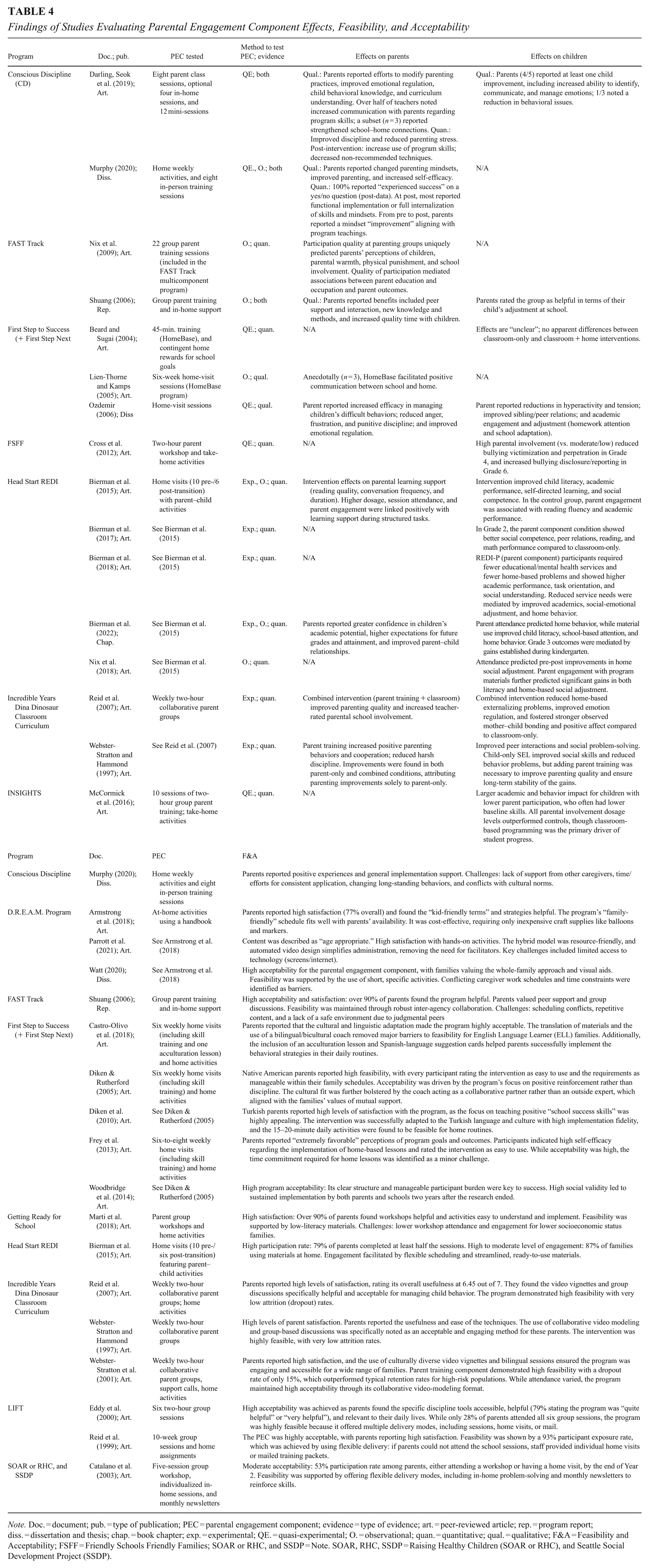
Note. Doc. = document; pub. = type of publication; PEC = parental engagement component; evidence = type of evidence; art. = peer-reviewed article; rep. = program report; diss. = dissertation and thesis; chap. = book chapter; exp. = experimental; QE. = quasi-experimental; O. = observational; quan. = quantitative; qual. = qualitative; F&A = Feasibility and Acceptability; FSFF = Friendly Schools Friendly Families; SOAR or RHC, and SSDP = Note. SOAR, RHC, SSDP = Raising Healthy Children (SOAR or RHC), and Seattle Social Development Project (SSDP).
Across the seven programs with available evaluation data, we identified 16 documents. While 13 were peer-reviewed, the evidence base is characterized by methodological heterogeneity and limited statistical power. Only 37.5% (n = 6) utilized experimental designs, with many of these reporting critically small sample sizes that limit the generalizability of the findings. The remaining evidence relies on quasi-experimental (n = 6) or observational (e.g., pre-post) studies (n = 6). Therefore, the following findings must be interpreted with caution. All programs reporting effectiveness data reported positive outcomes on children linked to the parental engagement component. Analyses isolating the parent component or examining its specific contribution noted improvements in children’s social-emotional competencies, specifically in emotion regulation, self-control, and social understanding. Documents also reported reductions in externalizing behaviors, such as bullying and hyperactivity, and fostered stronger parent–child relationships and peer relations. The programs also yielded notable gains in academic performance—specifically in early literacy, mathematics, and reading skills—and improved school adjustment (see Table 4).
Regarding parents or family outcomes, seven programs reported significant positive effects. These included improved parenting skills, such as the use of more positive and less harsh discipline strategies, better emotional regulation, reduced parenting stress, anger, and frustration. Documents also reported an increase in parental self-efficacy, specifically in managing children’s difficult behaviors, and fostered greater confidence in children’s academic potential. Furthermore, programs reported enhanced family dynamics characterized by increased parental warmth, better communication, and higher-quality time spent together. In addition, some programs (n = 4) strengthened the home–school mesosystem, as observed by more frequent communication and parental involvement. Feasibility and acceptability findings indicated that parents and program implementers viewed the parental components as usable, valuable, and practical. High rates of parent satisfaction and engagement were reported, with participants finding the programs helpful and valuing “kid-friendly’ strategies, peer support, and group discussions. Success was often suggested to be related to specific design elements, including the use of multiple parental engagement formats, flexible scheduling, provision of logistic support (e.g., childcare), and cultural and linguistic adaptations. However, some studies highlighted implementation challenges for developers and implementers to address. These included time constraints, logistical scheduling conflicts, and technology barriers (e.g., limited internet access). Lower attendance was noted for specific engagement formats, particularly in-person workshops. Other reported issues included challenges with homework compliance, repetitiveness of materials, the difficulty of changing long-standing behaviors, conflicts with existing cultural norms, and a lack of support from other caregivers.
Discussion
This scoping review sought to provide a comprehensive understanding of the parental engagement components that have been developed for use with school-based SEL programs for children in pre-K through 12th Grade. Our findings illuminate a landscape where parental engagement is widely recognized as a valuable element of effective SEL implementation (Albright & Weissberg, 2010; Martinez-Yarza et al., 2024), but its execution and evaluation are highly variable, and information regarding formats, rationales, and outcomes is notably limited. This level of missing information highlights a gap in understanding about what is actually delivered to parents when these programs are implemented in practice.
The Rationale for Parental Engagement: Bridging the Home–School Gap
The analysis of program rationales and the diverse parent engagement activities documented in the reviewed SEL programs—including interactions with children, teachers, and program staff, and the school community, as well as opportunities for self-directed learning—revealed a clear and consistent theoretical positioning from program developers: Engaging parents is posited as an important strategy for enhancing children’s social-emotional development (Grindal et al., 2016; LaRosa et al., 2025). This perspective aligns with social ecological theories of development, which suggest that while children can acquire skills within the school setting, the stability and generalization of these competencies are optimized when reinforced by the interconnected systems in which they live, most notably, by parents and caregivers (Bronfenbrenner, 1979; Saracho, 2023; Skinner et al., 2022; Ştefan & Miclea, 2014).
Unfortunately, our findings suggest a discrepancy between this stated intent and actual implementation. Although developers emphasize the value of a coordinated effort, in which consistent parental engagement across contexts is viewed as integral (Maiden et al., 2025), the widespread lack of rigorous evaluation suggests that, in practice, parental engagement often serves as a secondary component rather than a core operational priority. Despite these implementation gaps, our analysis of program rationales, component designs, and socioecological layers reveals a distinctive conceptual emphasis that incorporates active, skill-building approaches (Hill, 2022; Jezierski & Wall, 2017) in addition to passive parental involvement (e.g., simply receiving written information). This focus likely reflects a recognition of the need for a consistent and supportive ecosystem where each engaged agent—in this review, parents or caregivers—communicates and collaborates effectively, thereby avoiding disconnected or fragmented efforts.
However, our findings also highlight a notable structural disconnect, at least in the research literature: in-person parental engagement components are overwhelmingly facilitated by program staff, rather than teachers. This is a point worth noting, as research shows that stronger parent–teacher connections are associated with positive outcomes for children and youth (LaRosa et al., 2025; Wood & Mayo-Wilson, 2012). This division of labor may hinder the development of direct, collaborative parent–school partnerships, contributing to the discrepancy in perceptions, in which teachers underestimate parents’ interest in engaging in SEL efforts, while parents desire greater involvement (Drew et al., 2024). Consequently, SEL programs engaging parents should design strategies to facilitate better communication among the triad of adults: parents, program staff, and teachers.
Furthermore, program rationales frequently emphasize the goal of empowering parents to be partners in the educational process by fostering parenting competencies such as improved communication, problem-solving, monitoring, discipline strategies, and confidence or self-efficacy (Battistich et al., 1996; Sumi et al., 2013). Research in similar and other domains of child development, such as dating violence prevention, further supports this focus on skill-building by demonstrating that these same parental skills are essential for achieving positive outcomes (Doucette et al., 2021; Grindal et al., 2016).
Strategies for Parental Engagement: A Multifaceted Approach
The diverse array of parental engagement formats identified in our review—from written materials to workshops and websites—highlights the multiple avenues through which school-based SEL intervention programs attempt to engage parents in supporting their children’s social and emotional development. Although programs predominantly rely on a few common strategies, the variety of formats suggests an effort to accommodate different parental needs, resources, and learning preferences (Drew et al., 2024). Additionally, although many programs employ a multifaceted approach, our review also reveals that almost a quarter of the programs (24.4%) rely on a single strategy. This is a notable finding, as it suggests that these programs may not be adequately equipped to meet the diverse needs of families within a particular school or across a particular district or state.
Our findings indicate that written materials are the most utilized method for engaging parents, as about 80% of the reviewed programs included them. Their use may be driven by cost, ease of dissemination, and flexibility for parents, who can engage with the content at their own convenience (e.g., Rapee et al., 2006). This aligns with prior research suggesting that parental engagement strategies are most commonly limited to passive, informational methods such as letters or emails (Cipriano et al., 2023, 2024). This high prevalence of information-based strategies used in these programs (see Figure 2) highlights a relatively narrow conceptualization of parental engagement compared to the broader literature, as most programs appear to prioritize unidirectional transmission over reciprocal partnership. These materials offer a foundational, low-barrier approach to informing parents about program goals and suggesting home-based activities; however, their passive nature may lead to lower engagement and less effective skill-building. This may be particularly relevant for busy parents and those who require more guidance or have lower literacy levels (Menghini, 2005). The effectiveness of these resources also depends on the readability, clarity, and structure of the written materials themselves (Nagro & Stein, 2016).
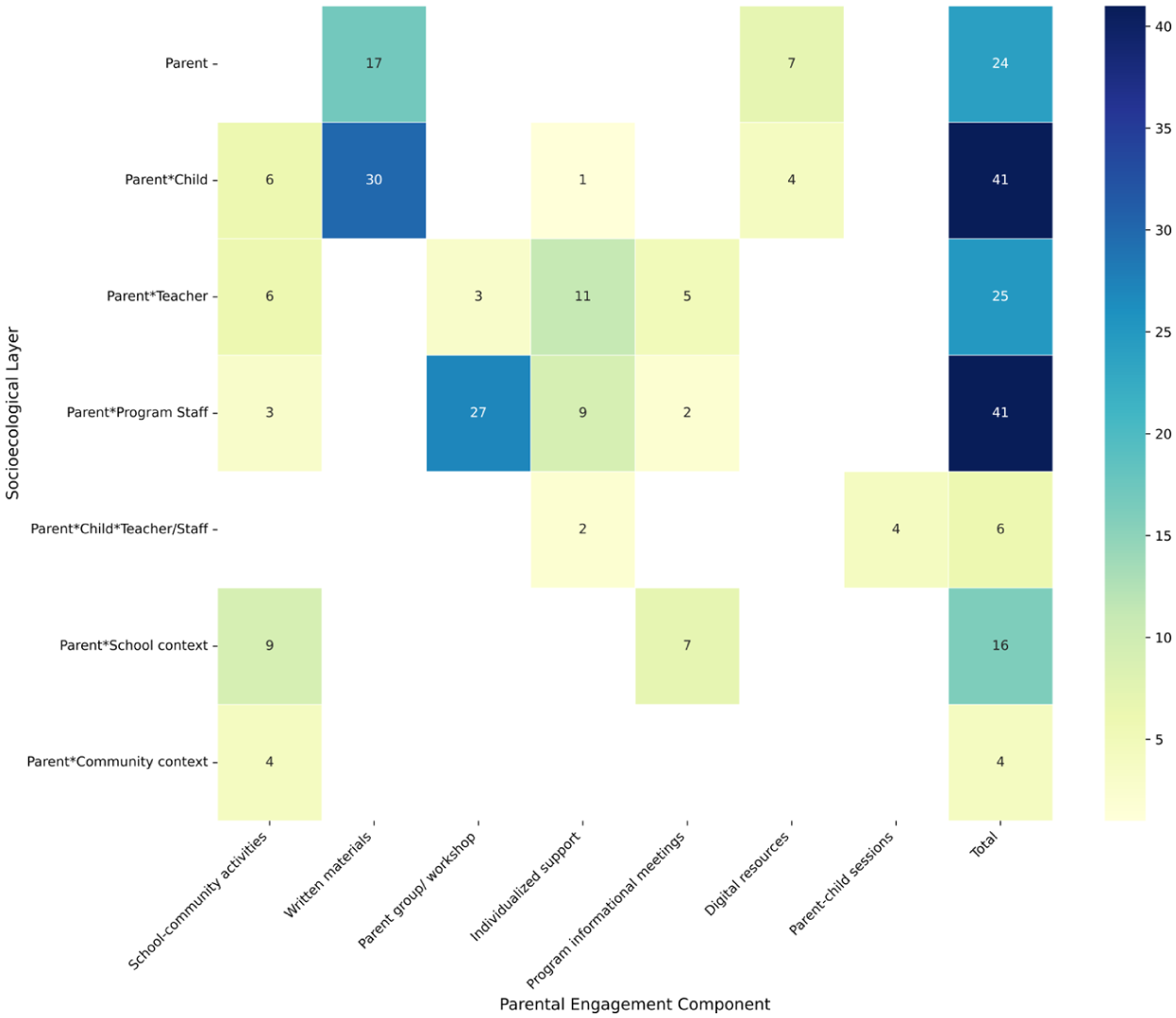
Frequencies of parental engagement components across socioecological layers.
In contrast, workshops led by program staff were the second-most-prevalent engagement strategy. The use of these more intensive formats suggests that program developers recognize their value for teaching complex and nuanced skills, such as communication strategies. This format provides a potential forum for direct instruction, modeling, practice, and feedback—all of which are essential for parents’ skill-building and moving beyond simple information transfer (Karge et al., 2011). Research suggests that parent groups, whether in-person or remote, may also contribute to parents’ positive relationships and sense of support from other attendees and teachers (Darling, Todd, & Seok, 2019; Shuang, 2006). An interactive approach is important given that many parents report lacking the knowledge to support their children’s SEL, despite their willingness to be involved (Drew et al., 2024). Parent groups and workshops, particularly given the variety of delivery options available, offer a valuable approach to bridging this gap by providing active support and skill-building opportunities that passive information transfer often lacks. This is further supported by research in other fields, which shows that formats like this are more effective than passive ones for promoting behavior change (e.g., White et al., 2019).
Gaps in the Evidence for Parental Engagement Outcomes
A notable finding of our review is the significant disconnect between the widespread inclusion and description of parental engagement components (n = 45 programs) and the lack of rigorous evaluation. Only 15.6% of these programs (n = 7) provided documented evidence regarding their isolated effectiveness, with even fewer examining acceptability and feasibility (n = 9). This suggests that although program developers recognize the importance of parental engagement, many are not systematically testing the effectiveness of their specific strategies, potentially leading to an inefficient use of resources. This lack of robust evaluation is further highlighted by the fact that the evidence base for each program is a mix of non-peer-reviewed and peer-reviewed documents, supported by a combination of experimental, quasi-experimental, and observational designs. Additionally, we observed that the rigor of the evidence is inconsistent across programs; although some have undergone multiple experimental trials, others rely solely on observational findings from dissertations or program reports or have no documented evidence at all. Consequently, the independent effectiveness of the parental components per se—distinct from the larger programs in which they are embedded—remains largely untested.
We posit that the observed lack of evidence is likely not solely a matter of research oversight but rather a reflection of major systemic challenges inherent to school-based program delivery, where the high resource demands of implementation divert resources from evaluation. Issues such as limited and short-term program funding often prioritize immediate implementation over costly longitudinal evaluation. For example, in other fields of study, Jones et al. (2019) noted that intensive home-visiting components disproportionately increase costs, while Bierman et al. (2015) indicated that standard funding levels are often insufficient to sustain the dosage required for effectiveness. Concurrently, the complexities of teacher and staff workload compromise fidelity, as high burnout correlates with declined instructional support (Sandilos et al., 2020) and the complex coordination required often overwhelms teachers in high-stress environments (Hughes et al., 2005). Additionally, cultural barriers, including curricula that lack resonance with diverse populations (Ableser, 2003) and language impediments (Upshur et al., 2017), attenuate participant retention and study generalizability (Reid et al., 2007). This systemic reality likely explains why delivery defaults to low-cost, low-effort strategies (e.g., written materials and one-off workshops, as documented in this review) rather than more complex, high-engagement models. This lack of clarity about a program’s intended scope, coupled with a limited evidence base, makes it difficult for practitioners and policymakers to select and implement strategies that are not only effective but also feasible and culturally aligned with real-world constraints. These findings underscore the need for more systematic and methodologically sound research to determine the ideal target population for these programs and to ensure that strategies are not only effective but also culturally sensitive, tailored to unique population needs, and designed to avoid unintended negative or iatrogenic consequences.
When evidence is available, findings suggest promising additive benefits, though the overall support for isolated parent component effectiveness remains limited. Specifically, “dismantling” studies documented positive effects of parental components on both child and parent outcomes—such as improved socio-emotional skills, reduced behavior problems, and enhanced academic performance and parenting skills (e.g., Conscious Discipline, Darling, Seok, et al., 2019; Head Start REDI, Bierman et al., 2018). These findings suggest that although rigorous component-level evaluation remains rare, these strategies have promising potential to drive positive impacts when they are explicitly assessed.
The findings on feasibility and acceptability further provide crucial context, indicating that many parents and program implementers generally view these components as valuable and practical. Evidence suggests that offering multiple components may increase parental participation (e.g., Head Start REDI, Bierman et al., 2015). Feasibility findings regarding time demands were mixed: although some programs encountered barriers such as scheduling conflicts and repetitive content, others mitigated these demands by either reducing logistical hurdles—as seen in LIFT and Head Start REDI, which achieved high engagement (79–93%) through flexible, multifaceted delivery and ready-to-use materials (Bierman et al., 2015; Eddy et al., 2000)—or by demonstrating, as is the case of Fast Track, that high time investments do not necessarily preclude positive engagement (Bierman et al., 2019).
Implications for Practitioners and Researchers and Future Directions
Our findings have several potential implications for educators, program developers, and researchers. First, although our review cannot determine if multifaceted approaches yield stronger outcomes than single-strategy ones, the prevalence of single-method programs (20% rely on just one strategy to engage parents, often solely written materials) raises questions about accessibility and reach. Given that families have diverse learning preferences, literacy levels, and time constraints, a “one-size-fits-all” approach may limit engagement. We propose that a hybrid model—combining the low-cost reach of passive materials, like handouts or websites, with the skill-building potential of interactive sessions (e.g., workshops or online sessions)—warrants investigation. Programs such as Friendly Schools Friendly Families and Getting Ready for School offer examples of this approach (e.g., Cross & Barnes, 2014; Cross et al., 2012). Notably, evidence from Head Start REDI RCT (Bierman et al., 2018) suggests that active, structured parental engagement can yield additive benefits beyond school-only instruction. Consequently, research should systematically test whether the added investment in multicomponent strategies yields significantly better outcomes than school-only or single-strategy parental interventions, particularly when weighed against the challenges of sustaining high-intensity parental engagement (e.g., Bierman et al., 2018). Additionally, the finding that most programs are available only in English (n = 29, 64.4%) underscores a significant gap in serving linguistically diverse communities. Given the linguistic diversity across the United States (U.S. Census Bureau, 2025), the low prevalence of materials in other languages creates a substantial barrier to participation for families from diverse linguistic backgrounds. Programs should prioritize language accessibility—such as by providing materials in multiple languages or offering multilingual staff—to ensure families can effectively engage in their children’s SEL (Drew et al., 2024).
Our results also underscore the need for more rigorous research explicitly focused on the parental engagement components of SEL programs. To determine whether parent components add value to programs, future studies must employ robust designs that isolate the effects of the parental component from the overall program. Beyond methodological rigor, researchers should investigate how feasibility and engagement vary by context; for instance, parents and other caregivers of different student populations likely face distinct barriers to participation. Future research should also explore the intersection of engagement strategies and developmental stages to determine, for instance, if at-school activities for parents are more effective for younger children while home-based materials suit secondary students. Furthermore, understanding the specific mechanisms of change—for example, whether parental engagement improves child SEL skills by increasing parent–child communication or by reducing parental stress—is crucial for developing more targeted and effective interventions.
Limitations
This study has several limitations that should be considered when interpreting its findings. First, our review was limited to documents published up to a specific date, which means that newer programs or publications may not have been included. Second, the effectiveness assessment was significantly constrained by the limited data in the reviewed literature. Of the 45 programs reviewed, only seven (15.6%) reported any empirical data isolating the parent component’s impact. For the remaining programs (n = 38, 84.4%), evaluations either did not assess parental effects or failed to isolate them from the overall program, making it challenging to definitively conclude their specific impact. Although the scant evidence from these seven programs is promising, these findings cannot be generalized to the remaining 38. Without widespread dismantling or component-analysis designs, the field cannot ascertain whether parent engagement provides an additive benefit, remains a neutral addition, or creates iatrogenic effects that impede child-directed elements. Consequently, the “value-add” of the parental component in most school-based SEL interventions remains theoretically assumed rather than empirically proven. Third, the qualitative nature of our coding process also introduced a degree of interpretive subjectivity, particularly in the analysis of program rationales. Finally, the broad scope of this scoping review and page limitations mean that we could not delve here into the nuanced details of program implementation or the specific contextual factors influencing parental engagement.
Conclusions
The inclusion of parental engagement components in school-based SEL programs for students in grades pre-K through 12th is a positive development aimed at generalizing children’s SEL knowledge to the home and enhancing parental skills. However, the systematic evaluation of these components and their outcomes remains in its nascent stages. Although programs employ a multifaceted array of strategies, ranging from written materials to interactive workshops and school–community events, there is a notable absence of detailed data on their implementation and outcomes. An important area for future research and development is therefore the rigorous evaluation of these parental engagement strategies. Prioritizing high-quality, well-funded studies will ensure that efforts to engage parents are both impactful and evidence-based, ultimately leading to better support for children’s social-emotional development.
Footnotes

Notes
Authors
ANNA SEGURA is a clinical psychologist and an assistant research scientist at the Family Translational Research Group at New York University, New York, NY 10016; email:
KIMBERLY A. RHOADES is a research scientist at the Family Translational Research Group at New York University, New York, NY 10016; email:
TYMAA ALQATARI is a clinical psychologist and research collaborator at the Family Translational Research Group at New York University, New York, NY 10016; email:
SHU TING LIN is a psychologist and research collaborator at the Family Translational Research Group at New York University, New York, NY 10016; email:
J. MARK EDDY is a licensed psychologist and a professor in the Department of Educational Psychology and the Department of Kinesiology and Health Education at The University of Texas at Austin, Austin, TX 78712; email:
AMY M. SMITH SLEP is a licensed psychologist, a professor, and codirector of the Family Translational Research Group at New York University, NY 10016; email:
References
Supplementary Material
Please find the following supplemental material available below.
For Open Access articles published under a Creative Commons License, all supplemental material carries the same license as the article it is associated with.
For non-Open Access articles published, all supplemental material carries a non-exclusive license, and permission requests for re-use of supplemental material or any part of supplemental material shall be sent directly to the copyright owner as specified in the copyright notice associated with the article.
