






Abstract
Young carers under the age of 18 years provide informal care for family members with a disability, physical or mental illness, or substance misuse issue in addition to a managing their schoolwork and other responsibilities. Caring responsibilities may negatively impact their wellbeing and educational and social opportunities. Although schools are essential in shaping the educational experiences of young carers, there is a lack of awareness about them and their needs as a distinct group, along with insufficient support from teachers and school staff. The overall aim of this qualitative systematic review was to explore the experiences of young carers in school settings from the perspective of the young carer and the views of their parents and school staff. Following a systematic search process, 17 peer-reviewed, qualitative studies met the inclusion criteria. Findings highlight the dual nature of schools in young carers’ lives, offering support and stability while also posing challenges involving stigma, bullying, and inconsistent and reactive school support. Fear of judgement often prevented young carers from disclosing their caring role to others. Schools should implement proactive policies, including staff training, peer support, and flexible learning, and balance high expectations with empathy to ensure that young carers are recognized and supported.
Introduction
Young carers are children and adolescents under the age of 18 years who provide regular, ongoing informal care for a family member who has a disability, chronic illness, mental health condition, or substance abuse issue (Lacey et al., 2022). This informal care might include a variety of tasks, such as personal care, managing medication, and providing emotional support (Lacey et al., 2022). An estimated 1.4 million children aged 8–18 years in the United States provide informal care to an adult in addition to their school, work, or other responsibilities (Hendricks et al., 2021). Although some caring responsibilities in families are normal and, in many cultures, appropriate, some young people provide inappropriate or excessive levels of care that can negatively impact their physical and emotional well-being and education and social opportunities (Joseph et al., 2020). This study presents a qualitative systematic literature review of young carers’ experiences of one particular aspect of their life—their school experiences. Enhancing our understanding of these issues can guide education policy and improve the support schools and other services provide to young carers.
A caring role often imposes significant responsibilities on young carers, impacting various aspects of their lives, including education (Robison et al., 2020). The unique challenges of the dual demands of family caregiving and school shape young carers’ academic performance, social interactions while at school, and overall wellbeing (Janes et al., 2020). Young carers may face difficulties balancing their academic commitments with their caregiving duties, which can result in absenteeism, reduced participation in extracurricular school activities, and low academic achievement (Moloney et al., 2020). Additionally, the psychological and emotional toll of caregiving can adversely impact their concentration, engagement, and motivation for learning (Lewis et al., 2022). In turn, these outcomes can adversely impact higher education and employment opportunities and economic trajectories (Moloney et al., 2020).
The problem for many young carers is that they are invisible to many social and health services because such services tend to focus on the needs of their ill relative and overlook both the contributions and needs of the young carers (Davidson et al., 2023). Moreover, some young carers do not disclose their caregiving role due to concerns about revealing their family member’s condition to external services, which may lead to family separation or a lack of understanding or acceptance by peers (McGibbon, 2021). With regard to school, some young carers see school as a “safe haven” (Barry, 2011, p. 532) that provides “a break” from responsibilities at home (Lackey & Gates, 2001, p. 324). Some do not want to look different from their peers and, accordingly, want to keep school separate from their caring role so as not to “contaminate” that “safe haven” (Barry, 2011, p. 532). Even though schools play a critical role in shaping young carers’ education experiences, the level of awareness of them as a group and associated support from teachers and other school staff are often lacking (Reupert, 2020).
There is a gap in knowledge on young carers’ experiences of school and the type of support they might want and need from schools. To facilitate the translation of available research into recommendations and future research priorities, a systematic synthesis of the available research is warranted. The overall aim of this qualitative systematic review was to explore the experiences of young carers in school settings. Specific objectives were to provide a comprehensive overview of (a) young carers’ experiences at schools, (b) what support, if any, young carers want from school, and (c) what others (e.g., teachers and parents) think young carers need to support their education. The quality of available research also was assessed to identify shortcomings and future research priorities.
As researchers, we were interested in ascertaining, from the perspective of young carers, how they experience school and what their educational needs might be. Nonetheless, we also were interested in the perspectives of parents, teachers, and other professionals. Notwithstanding the primacy of young carers’ voices, presenting data from others may not necessarily provide the “truth” but does provide a shared perspective about young carers’ experiences and needs (Vogl et al., 2019). Simultaneously, potential discrepancies between young carers’ self-reports and others’ observations (e.g., teachers) can reveal potential misunderstandings, unmet needs, and areas where additional support is required, for example, highlighting the need for teacher professional development.
Methods
A systematic review of published research was conducted following the guidelines of the Preferred Reporting Items for Systematic Reviews and Meta-Analyses (PRISMA; Moher et al., 2009).
Search Strategy
Search terms and databases were identified based on the researchers’ knowledge of the field, preliminary scoping of the literature, and in consultation with a university librarian. All search parameters were piloted and subsequently adjusted before the final search strategy was applied. Seven databases (CINAHL, MEDLINE, PsycINFO, Scopus, ASSIA, ProQuest Education Collection, and A+ Education) were searched using relevant search terms (Table 1).
Search Terms Used
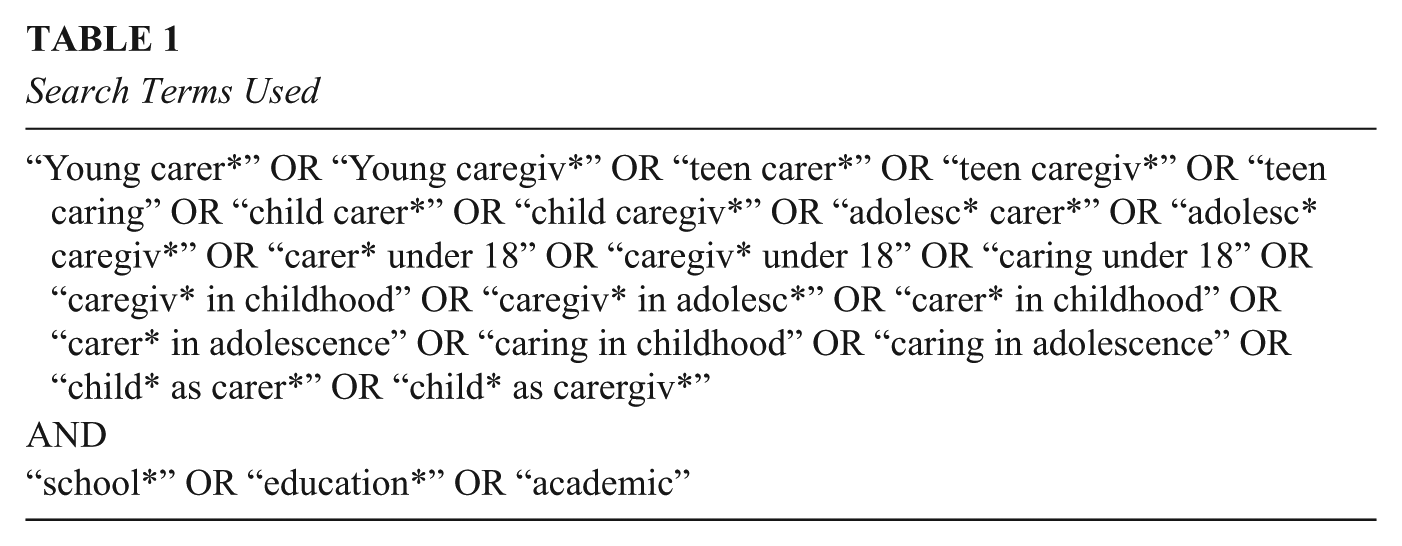
These search terms were used across all fields except full text or within specific fields such as title, abstract, and author keywords. A peer-reviewed filter was applied where search platforms allowed. To capture contemporary evidence, the systematic search was first conducted on May 8, 2024, and updated on January 28, 2025, to capture literature published between January 2014 and January 28, 2025. The 2014 start date was chosen because it marks a pivotal shift in policy and research, with significant legislation such as the United Kingdom’s Children and Families Act of 2014 (HM Government, 2014), formally recognising young carers and prompting increased educational support and scholarly attention. Overall, studies published from this year reflect contemporary educational contexts, including more inclusive, student-centered approaches and the evolving challenges faced by young carers in modern schooling environments. An ancestry searching approach (i.e., searching the reference lists of included studies; Cooper, 2017) was used to identify further relevant studies.
Inclusion and Exclusion Criteria
To be included, the studies had to be qualitative or include a qualitative component. Including only qualitative papers allowed for a deep exploration of young carers’ lived experiences, which may not be captured in quantitative research. Additional inclusion criteria required studies to be peer reviewed, present primary data, and focus on the experiences of young carers (aged 5–18 years) in primary and secondary schools, either currently or retrospectively. This included data pertaining to the experiences of young carers in schools, and the support required, from perspectives of young carers themselves, family members, and/or school staff. When extracting data for those other than young carers, we did not focus on their experiences of supporting young carers. Instead, we presented their perceptions and understandings of young carers and their needs in schools. Articles published in all languages were included to ensure a comprehensive, inclusive understanding of the topic.
Articles were excluded if they were purely quantitative, involved the educational experiences of carers when they were younger than 5 or older than 18 years of age, or if they involved young people assuming caregiving roles for reasons other than family illness or substance use, such as parental incarceration. Systematic and other types of reviews were excluded, as were conference proceedings, dissertations, policy documents, reports, and book chapters. Articles also were excluded if they focused exclusively on young carers’ mental health or wellbeing without relevance to school experiences or if they examined young carers’ experiences within special education, residential education (e.g., boarding schools), or juvenile justice or tertiary education settings. For example, Rahman et al. (2019) examined barriers young carers face when accessing healthcare, with no connection to educational contexts. Similarly, the paper by Van der Werf et al. (2019) was excluded because participants were drawn from bachelor and vocational education settings rather than primary or secondary schools.
Study Selection
The title and abstracts of 1,303 nonduplicated studies identified through the database searches were uploaded to the web-based systematic review program Covidence (Babineau, 2014). During the title and abstract screening phase, 19% of the 1,303 studies were collaboratively screened by two reviewers, yielding an interrater reliability (Cohen’s kappa) of 0.67. Discrepancies were resolved through discussion. The remainder were screened by one reviewer. These two reviewers then independently screened 55 full-text articles identified, with conflicts again resolved through discussion. At this stage, 12 articles were selected for inclusion. Four additional articles were included as a result of the updated search on January 28, 2025. An ancestry search also was conducted on the included articles, resulting in the identification of one additional article, resulting in a total of 17 articles. The PRISMA flowchart (Moher et al., 2009) is shown in Figure 1.
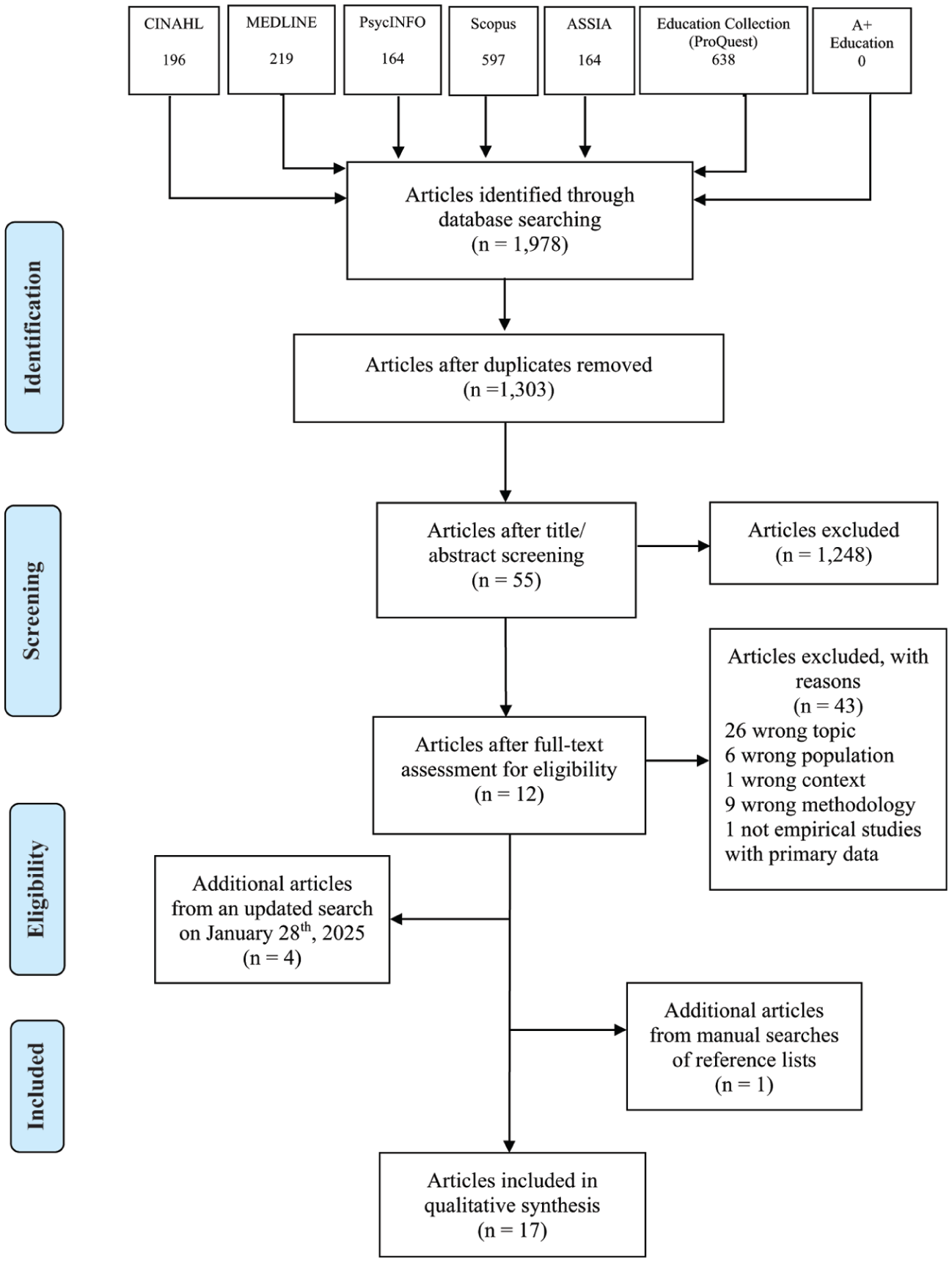
PRISMA flow diagram of the literature search and study selection process.
Quality Assessment
The Critical Appraisal Skills Programme (CASP) Qualitative Checklist (Critical Appraisal Skills Programme, 2018) was used to assess the methodologic qualities of the publications. The quality criteria and rating methods are detailed in Supplementary Table S1 in the online version of the journal. For mixed-methods studies, only the qualitative component was evaluated. The CASP tool uses a rating method with three response types: “Yes” (meets criteria), “No” (does not meet criteria), and “Can’t tell.” The checklist items were assigned binary outcomes (Yes = 1; all other options = 0), with maximum total scores of 10. Detailed ratings for each study are provided in Supplementary Tables S2 in the online version of the journal.
To promote reliability, LC independently assessed five articles (three qualitative, two mixed methods) and AR cross-checked the results, after which LC appraised the remaining studies. A quality rating for each study was established using the methodology outlined by Alexander et al. (2023). The authors tallied each quality checklist, calculating percentages to ensure scoring consistency. Studies that met 75% or more of checklist criteria were deemed high quality; those that met 50–74% of criteria were deemed moderate quality, and those meeting <50% of criteria were deemed low quality. All 17 articles were rated as moderate to high quality and were included in the review. The main shortcomings identified in the studies included inadequate reporting on how researchers managed researcher–participant relationships (e.g., reflexivity) and insufficient transparency in data analysis.
Data Extraction
Data were extracted using a predesigned form in Microsoft Excel that included author/year, country, research aims or questions, information on the participant groups involved (e.g., young carers’ demographics, including which family member was being cared for and for what issue/illness), and methodology and analytic method employed. Other information extracted responded to each of the research objectives, namely
1. What are young carers’ experiences at school?
2. What support, if any, do young carers want from schools?
3. What do others (e.g., teachers and parents/guardians) think young carers need to support their education?
LC extracted the data from the included studies independently. To promote consistency, a pilot extraction of three papers (20%) was performed and then cross-checked by AR. A summary of extracted data is presented in Table 2.
Characteristics of Studies Included in the Review (N = 17)
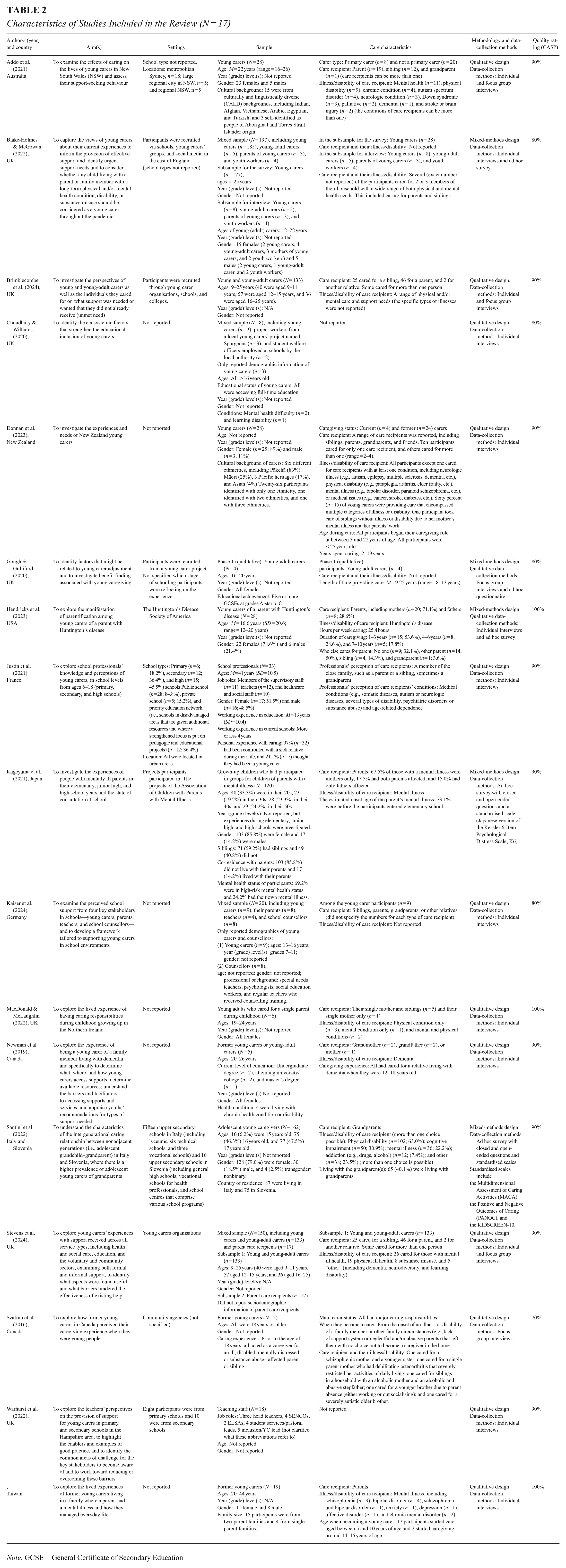
Note. GCSE = General Certificate of Secondary Education
Data Synthesis
Within each of the research questions, a narrative synthesis approach was employed (Popay et al., 2006) to organise and interpret findings across all included studies. In the first instance, extracted findings served as the unit of analysis. Data relevant to each question were coded inductively, with two researchers independently generating initial descriptive codes, including short labels capturing recurring concepts (e.g., “teacher misunderstanding,” “fear of stigma,” and “impact on attendance”). The team met regularly to compare coding, refine data displays (e.g., code matrices), and write analytic memos exploring relationships across codes, distingushing between primary data and authors’ interpretations. Through iterative discussion, related codes then were grouped into subthemes that reflected coherent ideas across studies (e.g., the codes “reluctance to disclose,” “fear of judgement,” and “mental illness stigma” contributed to the subtheme “Disclosure was shaped by stigma, trust, and the visibility of illness”). These subthemes were subsequently elevated into broader themes, that is, higher-order interpretive categories aligned with the review questions (e.g., “Young carers’ experiences of school”). This process ensured a clear distinction between descriptive codes, subthemes, and overarching themes within the synthesis. To enhance transparency and rigour, we distinguished between primary data reported in the identified publications (e.g., participants’ quotes) and the interpretations and conclusions drawn by the respective study authors. Where appropriate, illustrative in-text references and quotations were used to support our thematic interpretations and to justify analytic decisions. It is acknowledged, however, that participants’ quotes are not neutral data points because they have been selected, framed, and situated by researchers and thus reflect an interpretive process (Sandelowski, 1994). Thus, it was not always possible to draw a clear line between participants’ voices and study author interpretations, particularly in studies where commentary and quotations were interwoven. We made this distinction wherever feasible and also indicate where our findings represent a synthesis of patterns observed across multiple studies.
We also examined whether findings differed across different young carer groups (e.g., those caring for a family member with a physical illness and those caring for a family member with mental health challenges). Across studies, we also noted whether the perspectives of young carers differed from those of other stakeholders, such as teachers and parents. Results are presented for each review objective.
Researcher Reflexivity
It is important to recognise that the research team inevitably will shape aspects of the research process, the outcomes reported, and the conclusions drawn (Wilson & Anagnostopoulos, 2021). Our team brings a shared commitment to advancing equity and wellbeing for young carers, particularly in educational and healthcare contexts. Our disciplinary backgrounds span education, psychology, and mental health nursing and include lived and living experience of caring, all of which provide us with a multifaceted lens through which to understand the experiences of young carers. We draw on overlapping expertise in areas such as adolescent development, inclusion, youth mental health, and family-focused practice. We acknowledge that no researcher can be a completely neutral interpreter of data. However, we also agree with Rowan et al. (2021, p. 132) that “much can be learnt from a carefully documented analysis of an under-examined body of literature that draws upon our existing expertise without compromising on matters of procedural rigour.” Accordingly, in line with Rowan et al. (2021), we (a) adopted a robust, transparent methodology that can be replicated by others while (b) recognising and valuing the insight that our disciplinary and lived expertise brought to this work. Our familiarity with the field enabled us to explore its complexity, question taken-for-granted assumptions, and illuminate the specific pressures and barriers encountered by young carers in school settings.
Results
Study Characteristics
Seventeen publications, representing 17 distinct studies, were included in the final review. Although there were overlaps in the datasets used in two articles (Brimblecombe et al., 2024; Stevens et al., 2024), the two papers addressed different research questions. Most studies were conducted in the United Kingdom (n = 7) and Canada (n = 2). The remainder originated from Australia, the United States, France, Germany, Japan, New Zealand, and Taiwan, and there was one cross-country study involving Italy and Slovenia. All articles were published in English, except for one (Kageyama et al., 2021), which was originally in Japanese and translated using ChatGPT.
Twelve studies employed qualitative designs, whereas five used mixed-methods designs. Nine studies used individual interviews, two used focus group interviews, and two used surveys with open-ended questions or a combination of these approaches (n = 4). Three specified school types, with two set in both primary and secondary schools (and another in vocational training schools and high schools (all under the age of 18 years).
Eleven studies focused exclusively on young carers, with six presenting young carers’ retrospective experiences; four included young people who were currently caring for a family member; and one involved both current and former young carers without distinguishing their perspectives. Two focused solely on school staff such as school leaders, teachers, and school counsellors, and four included multiple stakeholders. Sample sizes varied from four (Gough & Gulliford, 2020) to 162 participants (Santini et al., 2022). Three studies included parents/caregivers (Blake-Holmes & McGowan, 2022; Kaiser et al., 2024; Stevens et al., 2024).
Young Carer Demographics
Fifteen studies involved current and/or former young carers as participants. Of the 10 studies that reported gender, six showed a higher proportion of females than males and three included only female participants. Thirteen studies specified that young carers primarily looked after family members, and eight reported young carers supporting multiple recipients. Thirteen studies detailed the illness or disability of care recipients, including mental and physical illnesses, substance misuse, dementia, and Huntington’s disease, with five noting multiple conditions. Three studies examined young carers’ health, identifying chronic illnesses, mental health challenges, and learning disabilities.
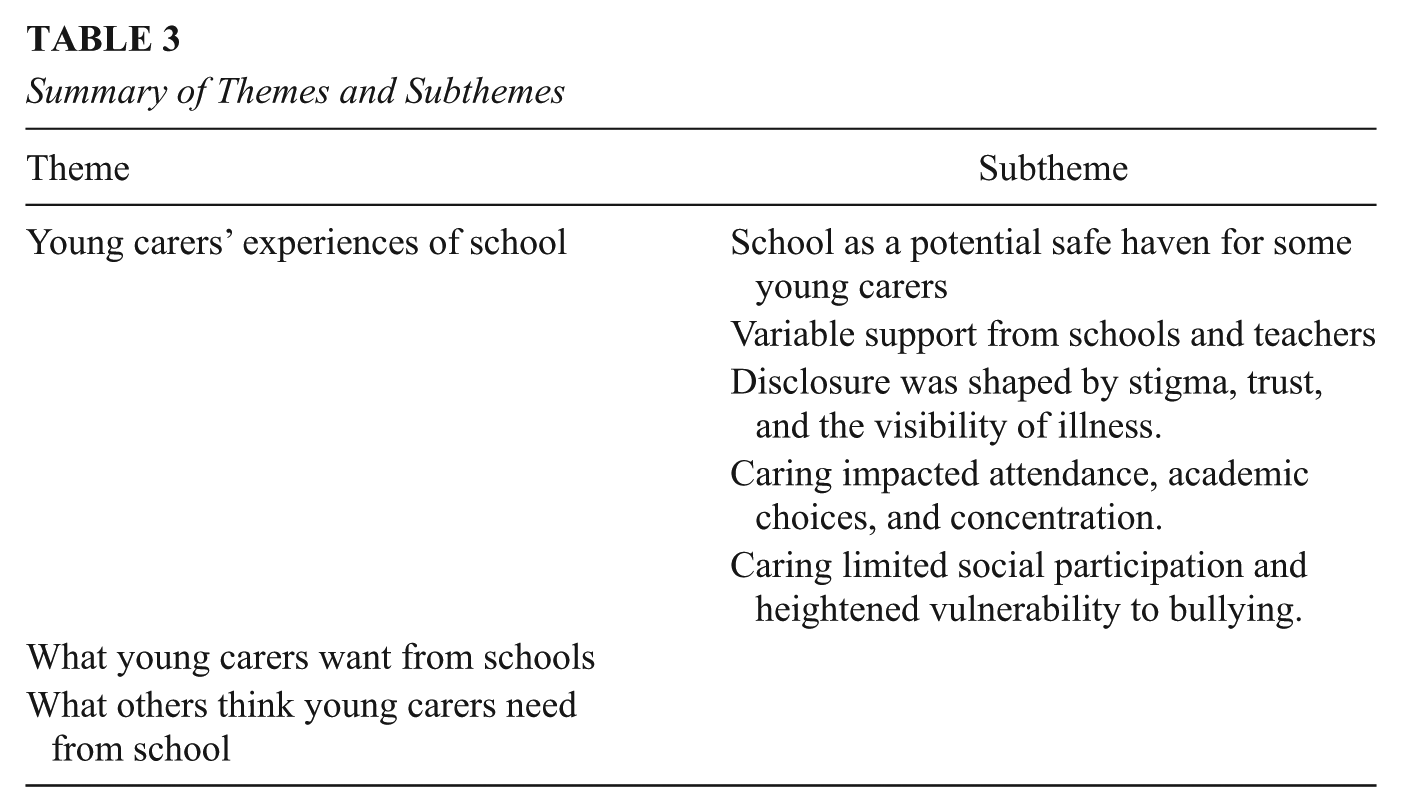
With respect to the research questions, three overarching themes were identified, including one theme comprising several subthemes. Table 3 provides a summary, with further detail presented below.
Summary of Themes and Subthemes
Young Carers’ Experience of School
Five key subthemes were identified that encapsulated young carers’ school experiences in schools.
School as a Potential Safe Haven for Some Young Carers
For some young carers, school offered a temporary reprieve from their caregiving responsibilities, a space where they could feel safe, focus on themselves, and engage in activities outside the home. Young carers described school as an “escape” or a place where they could “breathe,” join extracurricular activities, and imagine a different future. In these cases, school functioned as a stabilising force that supported wellbeing and identity development beyond the carer role. For example, a young carer from the United Kingdom reported, “At school we can breathe” (Blake-Holmes & McGowan, 2022, p. 26), whereas similarly in Canada, a former young carer indicated that “I did really well in school just because it was an escape” (Szafran et al., 2016, p. 138). Others used school to build a life outside caregiving. Another young carer said, “I made time to basically spend as much time out of the house as possible” (Szafran et al., 2016, p. 139).
Teachers similarly acknowledged the role of school, emphasizing that “school is their time, where they play, they don’t have to think about looking after anybody else because they’re looked after,” “they can relax and know their place as a child” (while at school) and that school provided a space to “talk about your hopes and dreams for the future” (Warhurst et al., 2022, p. 8). Overall, young carers and teachers agreed that school could offer a break from caregiving. Teachers in particular saw school as a space where young carers could reconnect with childhood routines and aspirations.
However, this sense of refuge was not universal. Our synthesis (as outlined further below) suggests that the perception of school as a refuge was prominent among carers who had access to trusted adults or opportunities for social connection. Our analysis across studies indicates that for other young carers, school was not a place of comfort or support, particularly when teachers lacked awareness or when the environment was marred by stigma or bullying. The extent to which school could serve as a safe haven depended heavily on individual circumstances, relationships with staff, and broad school culture.
Variable Support from Schools and Teachers
The level of support offered to young carers was inconsistent, ranging from meaningful support to none or negative interactions. Across studies we saw that for some young carers, individual teachers played a critical informal role, offering emotional support, practical flexibility, and a sense of being seen. These relationships often were personal and built on trust, enabling young carers to disclose their situations and receive accommodations. To illustrate, a former young carer from Japan stated, “There was one teacher who noticed I was falling behind and made an effort to check in on me. That small gesture meant a lot to me” (Kageyama et al., 2021, p. 138). Similarly, a current carer from the United Kingdom reported, “I ended up having a good relationship with her [the teacher] ‘cos she was like always there when I needed to talk” (Stevens et al., 2024, p. 15).
However, across studies, we found that teacher support was inconsistent, often limited to specific caring individuals rather than being embedded in school policy. Some young carers described receiving no help at all or feeling judged and dismissed by staff. In Germany, one carer said that teachers would say, “Oh you poor thing,” whereas others indicated that they received no acknowledgement at all (Kaiser et al., 2024, p. 6). One carer summarized these statements by saying, “There are two kinds of teachers—some just teach, others really care about children and understand the importance of wider wellbeing (Stevens et al., 2024, p. 16).
Young carers described the formal supports offered (e.g., flexible timetables and early dismissal passes), which were appreciated by some but considered disruptive for others, particularly when they involved missing class or time with peers. One young carer from the United Kingdom reported, “At school there were one-to-one sessions [for individual learning support] but I . . . really did not like coming out of lessons. . . . Meant I missed time with friends” (Stevens et al., 2024, p. 15), and another in the same study said, “I have a pass at school that lets me leave at 2:30 to look after her, but if I don’t have the pass, I can’t leave. It’s stupid” (Stevens et al., 2024, p. 16).
Teachers had their own views about how they supported young carers, with some being cautious about approaching students. One teacher from Germany said: Well, I’m not the kind of teacher who always approaches the students and interrogates. I don’t like that. And I think most of the students don’t like that either. I make offers and the students know that. . . . But I wouldn’t go to [young carer’s name] for example and say: “Listen, how are things at home?” However, . . . I hope that he might come by himself. (Kaiser et al., 2024, p. 10)
Other teachers located in France commented, “I think our role is educational; we’re not social workers” and “I think it’s a lot to ask from school professionals” (Justin et al., 2021, p. 1540). Other teachers feared that young carers might exploit school support or create misunderstandings with peers due to softer rules applied to them (Justin et al., 2021).
Some teachers wanted to support young carers but struggled with time constraints. Providing one-on-one sessions outside of class time risked academic gaps, although lunchtime and after-school support were limited by short breaks and carers’ home responsibilities. One U.K. pastoral leader reported, “They feel that they have to get home” (Warhurst et al., 2022, p. 6). Flexible academic arrangements were made, as demonstrated by a U.K. inclusion leader: “We don’t necessarily apply the normal sanctions . . . because we recognize their vulnerability” (Warhurst et al., 2022, p. 7). Some teachers also let young carers “know that people care about them, and they’re interested in them, and they are there to allow them to talk . . . so they don’t feel that they are alone (Warhurst et al., 2022, p. 12).
In regard to system-level supports, a deputy secondary school principal in France noted that once they knew of the child’s caring status, “we [would] see [if] it affects his [sic] grades, [then] we [could] put things into action, like a tutoring or an assistant teacher to help him catch up on lessons” (Justin et al., 2021, p. 1539). A school counsellor explained that once a child is identified as a carer, school nurses and social workers collaborated to provide ongoing support within and outside the school. Some teachers described including curriculum topics about illness to promote tolerance (e.g., “You might also talk about certain illnesses in science lessons, for example. . . . you get the consent of the student beforehand, of course, whether he or she might want to talk” (Kaiser et al., 2024, p. 10). One U.K. head teacher noted the need for a bespoke approach;
Sometimes the care becomes much more intense, and sometimes the care doesn’t need to be so intense. So, at times when the child is, you know, fully involved, . . . we have to be on it, straight, all the time, when other times it settles down and then we can step back a little bit. (Warhurst et al., 2022, pp. 8–9)
Home–school communication was another way in which schools supported young carers (although none of the young carers raised this). One secondary school teacher argued that providing school-based support for young carers was largely dependent on parental consent: “As soon as I’m made aware, . . . I contact home and send out the parental consent form” (Warhurst et al., 2022, p. 12). Without consent, options were limited, as a head teacher explained: “We’ve got access to lots of outside agencies, . . . but it depends on whether parents would want that support,” so when “families wouldn’t consent, . . . we can only provide support in school” (Warhurst et al., 2022, p. 12).
Young carers and school staff generally agreed that support in schools was inconsistent and largely dependent on the initiative of individual teachers. Both groups recognised the importance of trusting relationships and acknowledged structural challenges, such as time constraints and unclear role definitions. However, young carers described feeling judged, pitied, or overlooked, especially when their caring role involved mental illness. Although teachers often framed their limitations in terms of professional boundaries or capacity, carers highlighted the emotional impact of these gaps.
Disclosure Was Shaped by Stigma, Trust, and the Visibility of Illness
Many young carers were hesitant to share their caregiving role, fearing judgement, misunderstanding, or being perceived as “different.” As can be seen across studies, disclosure was not simply a matter of individual choice but was mediated by the perceived safety of the school environment, the nature of the family member’s condition, and the availability of empathetic adults. Some were concerned about breaches of confidentiality and the potential involvement of child protective services (Stevens et al., 2024). In New Zealand, Donnan et al. (2023) found that no young carers in their study (n = 28) disclosed their caring role to teachers, with one participant noting, “There was no way that [my teachers] could have understood what I was doing” (p. 11). In some cases, the young carer disclosed aspects of their family member’s disability or illness to their teachers but not their caring role. Some actively avoided disclosure to prevent from being seen as different: I think people assume that as soon as you’re like labelled as a young carer that they assume that you are not going to be able to cope with school and they think you instantly need help, but that it’s not always like that. (Gough & Gulliford, 2020, p. 156)
Study authors often highlighted that disclosure was further complicated when the care recipient had a mental health condition due to both cultural and structural stigma. Young carers supporting a family member with a mental illness frequently expressed concern about stigma, judgement, or being misunderstood by peers and school staff (Kageyama et al., 2021; Yuan & Ku, 2024). For instance, Kageyama et al. (2021) reported a former young carer’s concerns about being judged: “It wasn’t easy to approach teachers. Sometimes I felt they might judge my family, so I kept everything to myself” (p. 141). A school psychologist from the study by Justin et al. (2021) acknowledged this hesitation: “Too often we’re not even aware of the situation, because the student doesn’t talk about it” (p. 1540). In contrast, carers of those with physical or age-related conditions were more likely to frame disclosure in terms of practical challenges rather than fear of judgement. This suggests that the perceived “invisibility” of mental illness amplifies the complexity of disclosure for some carers.
Nondisclosure often extended to peers, because young carers worried about social dynamics. One carer from Germany explained, “The problem is, you need this trust, and very few people actually have that. . . . that’s why a lot of people are afraid to say anything” (Kaiser et al., 2024, p. 6). A former young carer in Japan stated, “I was hesitant to speak to teachers because I didn’t want my classmates or others to know about my parent’s illness” (Kageyama et al., 2021, p. 141).
Our synthesis found that even when disclosure did occur, it did not always lead to support. In some cases, disclosure was met with sympathy but no structural follow-up or was completely ignored. In Australia, Addo et al. (2021, p. 66) reported that young carers felt constrained by societal expectations, for example, “I actually got negative feedback from the teachers saying that, as a child, I shouldn’t be worrying about someone who can look after themselves.” One former young carer in Canada noted that while their struggles were visible, schools often failed to act: “People knew what was going on, but that doesn’t necessarily mean that they were going to do anything” (Szafran et al., 2016, p. 139). Another former young carer indicated that her teachers knew about her caring role, and they did not help: “Maybe they didn’t want to go into it too much in case I broke down or something” (MacDonald & McLaughlin, 2022, p. 83). Similarly, a female carer in the United Kingdom reported that “my schools knew . . . that I’m a young carer and stuff, but they didn’t really help me” (Gough & Gulliford, 2020, p. 158).
Despite these challenges, some participants experienced benefits from limited disclosure. One young carer shared how speaking with her deputy principal about her brother’s conditions (but not her caring role) led to practical support: “dispensation from homework if I need it . . . which was great! I think my grades have improved because I’m not sitting there stressing about 10 million different things” (Donnan et al., 2023, p. 11).
Identifying young carers also was a significant challenge within school systems. Across studies, school staff acknowledged that recognition often depended on students voluntarily disclosing their circumstances, which many were reluctant to do. One inclusion leader in a U.K. secondary school reflected on this dilemma, noting the tension between student privacy and teacher awareness: “How do you definitely know that somebody is a young carer? . . . We have to work on trust, but I just don’t have the time or the resources to really make that one work” (Warhurst et al., 2022, p. 10). Another school leader admitted that some carers were only identified late in their schooling, stating: “We got to year 11 and found out about kids that have been young carers for years, and we never knew . . . because the family hold it very tightly and the kids don’t tell us” (Warhurst et al., 2022, p. 11). In France, a school nurse similarly explained that carers might be recognised only through indirect signs, such as emotional withdrawal, fatigue, or behavioural concerns, which were not always reliably interpreted: “There are often signs. . . . Usually, when there are big behavioural problems, there’s something behind it” (Justin et al., 2021, p. 1573). These examples illustrate the systemic reliance on subjective observation and student disclosure rather than structured identification processes.
Young carers and school staff both recognised that disclosure of caring responsibilities was uncommon. Carers described disclosure as an emotionally complex process tied to stigma, fear, and the nature of the illness, particularly in cases of mental health conditions. In comparison, school staff tended to frame disclosure more as a procedural gap than an emotional or cultural issue.
Caring Impacted Attendance, Academic Choices, and Concentration
Across the identified studies, many young carers reported struggles with maintaining school attendance due to caregiving duties or unstable home environments. In New Zealand, a carer explained how her mother’s mental illness affected her ability to attend school regularly: “We were always staying at other [people’s] houses . . . so I had quite a lot of days off school” (Donnan et al., 2023, p. 11). Likewise, a secondary school social worker noted, “Sometimes they are present in class but [are] absent at the same time. . . . they may be sleeping . . . picking up little brothers and sisters after school” (Justin et al., 2021, p. 1538). A teacher explained that “by the time he [the young carer] gets to school . . . he’s just he’s overloaded and not ready to learn because he’s so overwhelmed by what’s happening at home” (Warhurst et al., 2022, p. 5).
Many of the identified studies showed that practical caregiving responsibilities, such as looking after siblings or managing household tasks, often left young carers with little time or space to focus on schoolwork. Some young carers in the United Kingdom struggled to meet academic demands, citing caregiving responsibilities and a lack of quiet spaces to study as significant barriers (Blake-Holmes & McGowan, 2022). Similarly, a Slovenian young carer shared: “When I want to study, someone always bothers me, and that’s when I lose my concentration” (Santini et al., 2022, p. 12).
The emotional toll of caregiving significantly impacted young carers’ ability to concentrate in school: There was all sorts of things that just made it really difficult to concentrate . . . because in the background you’ve got this pressure and worry: Is today the day that I’m going to be called ‘cause she’s been successful [in her suicide attempt]? (Donnan et al., 2023, p. 11)
Additionally, socioeconomic context was a compounding factor. In the study by Justin et al. (2021), teachers described how poverty intersected with caregiving to further limit students’ academic participation and emotional resilience. These intersections shaped how students were perceived, sometimes mislabeled as “disengaged” or “underachieving,” despite carrying substantial responsibilities at home.
As a consequence, the added burden of caregiving often led young carers to make academic compromises. A young carer in New Zealand explained: “Most kids would just go home [after school] and all they have to do is schoolwork, but it wasn’t really a priority for me. . . . I was picking easier subjects just because they took less effort” (Donnan et al., 2023, p. 11). Another former young carer indicated, “A constant thing in the back of my mind was, ‘Oh, how will this affect my mum?’ Even with picking A levels or picking GCSE’s, I had to like balance time” (MacDonald & McLaughlin, 2022, p. 82). In the United Kingdom, GCSEs (General Certificate of Secondary Education) are subject-specific qualifications typically taken at age 16 years, whereas A levels (Advanced Levels) are taken at age 18 and often determine university entry. Another carer who left school early explained: “No one knew what [I was] really going through . . . that I’m so fucking busy at home. . . . They just saw me with shitty grades, where I would wag classes, forge notes. They just saw me as a badass, but . . . as much as it didn’t look like it, I just wanted help” (Donnan et al., 2023, p. 12).
Although most German parents interviewed by Kaiser et al. (2024) recognised that their children’s home caring responsibilities were a barrier to school engagement, some noticed no impact, instead highlighting the children’s positive outcomes obtained as a result of caring, such as self-confidence and initiative. Nonetheless, secondary school U.K. teachers interviewed by Warhurst et al. (2022, p. 6) were clear: “The struggle to get homework done, low attendance and lateness, feeling guilty and a heavy burden of responsibility, strain on friendships, feeling anxious and worried all the time [have an] impact on grades and GCSE results and restricted childhood and opportunities,” with another teacher in the same study claiming that the impact of caring is “utterly life changing. And we’re not just talking about attainment and progress grades; we’re talking about real life for real people.” (p. 6). Both young carers and teachers noted that caregiving disrupted learning. However, carers felt that their struggles were sometimes misunderstood or misinterpreted by staff.
Several studies highlighted that young carers’ experiences were shaped by intersecting factors. For instance, female carers, who made up the majority in studies, such as Addo et al. (2021) and Donnan et al. (2023), described the emotional labour and psychological burden of caring, whereas relatively fewer male participants made disclosures about emotional strain. Cultural identity also influenced school engagement, with participants from culturally and linguistically diverse backgrounds, such as those in Addo et al. (2021), reporting additional pressures related to cultural expectations of caregiving and fears around stigma or misunderstanding in school contexts.
There was shared recognition between carers and school staff that caregiving responsibilities disrupted school attendance, concentration, and academic choices. School staff acknowledged these impacts, often linking them to reduced achievement or emotional strain. However, young carers frequently described feeling misunderstood or unfairly judged by staff, particularly when their academic struggles were misinterpreted as disengagement or lack of effort, suggesting a disconnect between carers’ lived experiences and how their needs were interpreted within school systems.
Caring Limited Social Participation and Heightened Vulnerability to Bullying
Across identified studies, it was found that caring responsibilities often limited young carers’ opportunities to socialize in schools, leaving them feeling isolated from their peers. Young carers reported difficulties spending time with friends outside of school, which negatively impacted their ability to form or maintain close relationships. One former young carer in Taiwan reported: “People didn’t understand my situations and they didn’t care about ‘my problems,’ either. No one understood that I had to rush home to care for my mum. I was always alone at school and home” (Yuan & Ku, 2024, p. 6).
Additionally, many reported being targets of bullying, which compounded their isolation. One former young carer described being bullied “very badly at school” and, “I’m escaping home and I’m going to school and I’m getting bullied so I was escaping there and I’d just put my head down in class and cried” (Szafran et al., 2016, p. 139). Another former carer stated, “Things like schizophrenic would be written on my locker” (Szafran et al., 2016, p. 139). One young carer in New Zealand recounted being bullied due to her brother’s disability, reflecting, “I think it probably started with me being completely naïve and assuming that everyone not only found it normal but would understand and not think it was weird” (Donnan et al., 2023, p. 12). In Germany, one young carer described a teacher’s response to bullying, which involved receiving written apologies from bullies: “I got 13 letters of apology! Yes. There’s a lot in there, but, sure, they’re not sorry at all, I can tell” (Kaiser et al., 2024, p. 6). Parents also were concerned about the potential for bullying (Kaiser et al., 2024).
Nonetheless, being with peers who understood their caregiving role provided a rare source of connection. One former young carer valued his bond with a friend who had experienced parental illness, explaining, “We bonded over that . . . [because] the realities of terminal illness and death and painkillers and hospital [are] just concepts that are entirely foreign to other people of this age bracket. They were totally naïve” (Donnan et al., 2023, p. 12).
What Young Carers Want from Schools
Eight studies detailed what young carers wanted from school (Brimblecombe et al., 2024; Choudhury & Williams, 2020; Donnan et al., 2023; Kageyama et al., 2021; Newman et al., 2019; Santini et al., 2022; Stevens et al., 2024). Across these studies, young carers consistently expressed the need for school staff to be empathetic, informed, and responsive to the realities of caregiving. A central theme was the desire to be understood without being labelled or exposed. Although some carers valued staff being aware of their situation, others were concerned about their privacy, particularly if they had not explicitly chosen to disclose personal details (Stevens et al., 2024). Nevertheless, there was general agreement that teachers should at least be sensitive to the consequences of caregiving, for example, how it might affect attendance, behaviour, or academic performance.
Emotional understanding and empathy were identified as foundational support needs. Young carers across multiple countries, including Japan, Italy, and the United Kingdom, described the impact of having a teacher who listened without judgement or pressure, with representative excerpts such as, “Just having someone to listen would have made a big difference” (Kageyama et al., 2021, p. 141) and “Empathy from the teachers would help me” (Santini et al., 2022, p. 12).
Carers also wanted a designated person at school they could speak to, someone who understood their situation and could offer support or advocate on their behalf (Brimblecombe et al., 2024; Choudhury & Williams, 2020). Academic flexibility was another priority, with some young carers asking for extended deadlines or reduced workloads during high-stress periods (Brimblecombe et al., 2024). Carers also suggested that education could be used to reduce stigma. In particular, carers supported the inclusion of illness and disability–related content in the curriculum. They also suggested improved teacher training. As one carer in the United Kingdom explained, “They’re not given training on what to do if someone’s really struggling mentally, or how to talk to them about their family” (Stevens et al., 2024, p. 16).
Finally, many carers expressed interest in peer support groups or extracurricular activities that acknowledged their situation and allowed them to connect with others in similar roles. These were seen as both a source of emotional support and a break from caregiving (Choudhury & Williams, 2020; Donnan et al., 2023; Newman et al., 2019).
What Others Think Young Carers Need from School
Five studies highlighted the perspectives of others, such as parents and teachers, on what they thought young carers needed from schools (Choudhury & Williams, 2020; Justin et al., 2021; Kaiser et al., 2024; Newman et al., 2019; Warhurst et al., 2022). A recurring theme was the importance of teachers being aware of the family situation and of approaching young carers with sensitivity. One parent in Germany expressed the importance of understanding rather than reacting harshly: “Be a little gentler with them and see it from a little different perspective” (Kaiser et al., 2024, p. 7).
Parents and educators also supported the integration of disability and caregiving education into the school curriculum as a way to reduce stigma (Kaiser et al., 2024; Newman et al., 2019). Communication emerged as another way to support young carers. Across studies, study authors noted that parents, teachers, and school counsellors consistently emphasised the importance of open and regular communication to support young carers (Justin et al., 2021; Kaiser et al., 2024; Warhurst et al., 2022). Teachers discussed the need to share relevant information across staff and school levels (e.g., from primary to secondary) (Warhurst et al., 2022), whereas school counsellors described themselves as intermediaries between families and staff (Kaiser et al., 2024). However, some also raised concerns about unintentionally stigmatising families or misjudging the situation (Kaiser et al., 2024).
There also was consensus among parents and staff about the need for a designated point of contact in schools (Choudhury & Williams, 2020; Kaiser et al., 2024; Warhurst et al., 2022). They suggested that this could be a trained teacher, social worker, or counsellor who would coordinate support and respond during times of family crisis (Kaiser et al., 2024).
Parents and school staff indicated that training for teachers was essential in recognising the signs of caregiving as well as responding appropriately (Justin et al., 2021; Kaiser et al., 2024; Stevens et al., 2024). A deputy principal in France explained that better training would “allow us to better identify youths that would otherwise slip through the net” (Justin et al., 2021, p. 1540). Parents also suggested that training could improve responses to bullying: “This bullying . . . could really be so well controlled with training . . . and not then stand there at the end and say, ‘For God’s sake, what happened now?’” (Kaiser et al., 2024, p. 8). Finally, suggestions were made by parents and school staff for more tangible supports, involving after-school programs, homework assistance, and peer support groups (Choudhury & Williams, 2020; Kaiser et al., 2024; Newman et al., 2019).
Parents, teachers, and school counsellors broadly agreed with young carers on key priorities, including the need for empathy, better teacher training, improved communication, and access to a designated support person. Both groups also emphasised reducing stigma through education. However, young carers more often stressed the emotional consequences of not being supported or understood and were more critical of inconsistent or tokenistic efforts. Although school staff tended to focus on operational feasibility and institutional roles, carers offered more personal and nuanced accounts of what helped and what did not in practice.
Discussion
This review contributes new understanding of how young carers experience school and the forms of support they value based on a synthesis of qualitative research from multiple international contexts. By comparing the perspectives of young carers with those of parents, teachers, and other key stakeholders, this review identifies both points of convergence and key discrepancies that affect how support is delivered and perceived in schools. In doing so, it contributes to a nuanced understanding of how support is understood, delivered, and received in real-world school settings.
Furthermore, although many findings were broadly shared across the reviewed studies, it is important to recognise that young carers are not a homogeneous group. Across studies, differences were identified based on gender, cultural identity, socioeconomic status, and the nature of the care recipient’s condition. For instance, girls more commonly described emotional strain and educational pressures, whereas carers from culturally and linguistically diverse backgrounds expressed concerns about stigma and cultural misunderstanding (Addo et al., 2021; Donnan et al., 2023). Young carers supporting a parent with mental illness often described fear and concealment. This review brings together such variations to clarify how support may need to be tailored. Nonetheless, reporting of specific demographic variations was largely absent across the included studies. For example, it is not possible to determine whether boys and girls were more likely to support family members with particular conditions (e.g., mental illness vs. physical disability). This and other nuanced analyses of needs across different carer demographics highlight an important limitation in the existing literature and an area for future research.
For some young carers, school provides respite from caregiving and a distraction from their caring responsibilities. Schools allowed them to focus on personal development (Blake-Holmes & McGowan, 2022; Gough & Guilford, 2020) and build a future beyond their caregiving role (Szafran et al., 2016). This aligns with research that has highlighted the importance of schools as inclusive environments free from external pressures (Flensner & von der Lippe, 2019). To illustrate, some young carers described school as a place to
However, alongside schools being a potential safe space, schools also could or instead be a source of stress due in part to inconsistent teacher support (Blake-Holmes & McGowan, 2022; MacDonald & McLaughlin, 2022). Although some teachers are empathetic, others are indifferent or unaware, making young carers hesitant to disclose their caregiving role for fear of stigma and judgement (Kageyama et al., 2021). Some carers experienced bullying, further isolating them and making school a hostile environment rather than a place of support. In addition, some struggled with attendance, concentration, and meeting academic demands due to emotional stress and limited study time (Addo et al., 2021). These obstacles led some to compromise on their learning and attainment and/or to leave school early. Thus, schools play a dual role in young carers’ lives, offering stability and relief while also posing barriers through bullying, stigma, and academic pressure.
A key contribution of this review is its identification of how teachers’ perceptions and roles affect the accessibility and quality of support. Previous literature has consistently shown that the teacher–young carer relationship is a central protective factor, with consistent and warm teacher engagement being linked to improved emotional and academic outcomes (Laletas & Reupert, 2015). However, some young carers encountered pity rather than support from teachers, and some were reluctant to disclose their caregiving roles, fearing that they would be seen as incapable of managing schoolwork. Similarly, Mannay et al. (2017) found some that teachers working with students from turbulent backgrounds held lowered expectations, effectively discouraging academic success. Yet, these students wanted both educational support and challenge (Mannay et al., 2017), highlighting the need for schools to recognise young carers’ strengths alongside their struggles.
Crucially, this review showed how teachers’ own uncertainty about their responsibilities contributes to uneven support. Although some teachers clearly recognised their pastoral role, others saw such responsibilities as outside their remit (Justin et al., 2021; Kaiser et al., 2024). These findings align with research in other professional domains (Reupert et al., 2017) and highlight systemic ambiguity around whose job it is to identify and support young carers. Nonetheless, this perspective overlooks the fact that even minimal support, such as arranging a referral to external services, may be sufficient for meeting the needs of these young people (Reupert et al., 2022).
An additional structural barrier identified across studies relates to the requirement for parental consent before schools could mobilize support. This dependency is particularly significant given that the parent is often the individual for whom the young person is providing care. Several included studies showed that young carers were reluctant to seek assistance due to fears of stigma, judgement, or exposing family difficulties, particularly when the care recipient had a mental health condition (e.g., Kageyama et al., 2021; Stevens et al., 2024). As a result, the need for parental authorization can inadvertently restrict access to timely support. These dynamics underscore the importance of school systems adopting sensitive, flexible pathways that respect young carers’ safety, autonomy, and privacy.
Some teachers and parents were concerned about favoritism or that young carers might exploit the support schools offered (Justin et al., 2021; Kaiser et al., 2024). Favoritism involves giving undue preference based on personal biases rather than need, merit, or behavior (Hussain et al., 2020). In contrast, offering targeted support to young carers is based on their unique circumstances and needs, which can significantly affect their ability to engage and succeed in school. The belief that offering support to young carers equates to showing favoritism reflects a lack of understanding and recognition of the challenges they face in schools.
Various system-level supports were identified, and where, for example, a school leader indicated that when a student’s grades were affected, they would put a plan into action (Justin et al., 2021). Although this approach demonstrates a willingness to provide academic support, it highlights a reactive rather than proactive strategy, with support depending on academic decline rather than a recognition of the challenges faced by young carers. This is problematic because not all young carers experience negative impacts on their academic progress, yet they still may struggle in less visible ways (Lakman et al., 2017). Likewise, providing support only once grades are negatively impacted raises concerns about those who remain unnoticed or unsupported, particularly in light of young carers’ hesitations about self-disclosing their caring role.
Relatedly, this review highlights the systemic reliance on subjective teacher observation or voluntary student disclosure as the primary mechanisms for identifying young carers. This is problematic given that many young carers intentionally conceal their roles due to stigma, fear of judgement, or concerns about family privacy. Without structured, proactive identification processes, support remains uneven and contingent on individual teachers’ insight or young carers’ willingness to self-identify, both of which are highly variable. This reliance risks leaving the most vulnerable young carers undetected and consequently unsupported.
One of the clearest contributions of this review is its comparative analysis of what young carers say they need and what others think they need. Young carers often prioritized emotional understanding, empathy, and confidentiality. They valued flexibility and autonomy, and they described how support could unintentionally lead to stigma if not handled sensitively. In contrast, adults often emphasized formal procedures, role clarity, and improved communication systems. There was agreement on key elements, such as the value of a designated staff contact and the potential of peer support groups, but differences in emphasis reflect the distinct lived experiences of young carers compared with professional or parental perspectives.
Implications and Recommendations
Although some studies included young carers from diverse backgrounds, there was no clear evidence from the review that gender, culture, or type of care influenced what supports they wanted from schools. Support needs appeared to be consistent across groups, suggesting broad agreement on what schools should provide, although simultaneously acknowledging that the differentiation of needs according to subgroups was not a specific focus in any particular study. Nonetheless, overall, there is a need for proactive policies and procedures around identifying young carers in a nonstigmatising manner, particularly given the consistent finding across Europe that young carers remain largely invisible to schools and service providers (Nap et al., 2020). One recommendation was to include designated, trained staff in schools to coordinate support, facilitate communication with families and external services, and provide a consistent point of contact for young carers. Similarly, the ME-WE Project (Hanson et al., 2022) highlights the value of school-based professionals who are trusted by young carers and able to support both their emotional wellbeing and their academic engagement. In that project, multicomponent interventions codesigned with adolescent carers were shown to support mental health and school participation, particularly when embedded in existing school structures and supported by digital tools (Hanson et al., 2022).
According to the young carers included in this review, teachers require training to enhance awareness, empathy, and the ability to recognise the less visible struggles of young carers, alongside approaches to prevent bullying and foster inclusion. Clarifying the respective roles of different school personnel in supporting young carers is likewise needed. Teachers need to balance support with high expectations, acknowledging both the challenges and strengths of young carers. Programs that focus solely on young carers’ deficits may risk reinforcing stigma, whereas those that acknowledge resilience and agency, as in the ME-WE intervention model, are more likely to foster positive identity development and school engagement (Hanson et al., 2022). Schools need to be safe spaces where young carers feel supported, with flexible extracurricular options and peer support groups to promote respite and connection. Incorporating caregiving and disability/illness education into the curriculum might be introduced to reduce stigma and increase understanding, aligned with ME-WE findings that codesigned educational resources and peer engagement were key components of effective support (Hanson et al., 2022). Although core support needs were broadly consistent, Redmond et al. (2022) suggested that girls in caregiving roles may engage more strongly with school than boys, possibly due to internalized expectations or greater recognition from teachers, highlighting the importance of gender-sensitive approaches within otherwise universal support strategies.
The review findings also have policy implications, particularly regarding how schools and systems can identify and support young carers more effectively. Although Leu et al. (2023) identified the United Kingdom as having the most advanced national policy framework for recognising and supporting young carers, they also noted that the impact of such policy remains uneven, a finding that was shown in the review studies coming from the United Kingdom. This underscores the need for future policy evaluation to move beyond legislation and to focus on how support is operationalized and experienced by young carers in practice.
This review advances the field by demonstrating that while there is broad consensus on the types of support young carers need, such as empathy, flexibility, and a designated staff contact, there remain significant gaps between what is offered and how it is experienced. Young carers often described support as inconsistent, emotionally inadequate, or dependent on disclosure, whereas school staff tended to frame support in procedural or academic terms. By bringing together these parallel narratives, this review highlights the need for school responses that are both systemically embedded and emotionally attuned. In doing so, it moves beyond policy recommendations and provides a grounded, evidence-based understanding of what meaningful support can look like in practice. Finally, both the ME-WE Project (Hanson et al., 2022) and the Delphi study conducted by Nap et al. (2020) emphasized that sustainable supports for young carers must be embedded within broad, cross-sectoral frameworks. Coordinated efforts across education, health, and social systems are required to create environments in which young carers are identified early and supported to thrive both personally and academically.
Limitations
There are limitations in the studies included in this review and in the systematic review process. Most studies in this review focused on adolescent young carers, with few addressing primary school-aged children specifically. As such, the recommendations are most applicable to secondary school contexts. Future research should explore whether younger carers have their own distinct support needs.
Although all the studies were rated as moderate to high quality, the main methodologic issues involved inadequate reporting on researcher reflexivity and insufficient transparency in data analysis. Many of the studies included former young carers’ retrospective accounts or included both current and former young carers’ reports. Although contemporaneous reports from childhood are often considered the “gold standard,” there are notable benefits to presenting retrospective accounts from older participants (Maughan & Rutter, 1997). For example, children may become aware of certain circumstances only as they grow older, and their reports may be limited to brief time periods that are incomplete or challenging to explore in depth (Maughan & Rutter, 1997). Many of the included studies looked more generally at young carers’ experiences without explicitly focusing on schools. Some of the included studies did not differentiate between different caring roles (e.g., caring for someone with a physical vs. mental illness or caring for a parent vs. a sibling), and these differences might make a difference in how they experienced school. The search strategy did not include government reports or policy documents, which could expand on opportunities for advocacy, policy gaps, and international best practices. Finally, one included study was originally published in Japanese and translated using ChatGPT. While this allowed for general accessibility, we were unable to verify the translation through a fluent Japanese speaker and therefore acknowledge potential limitations in the accuracy of interpretation.
Conclusion
This review highlights the complex role that schools play in the lives of young carers, offering both respite and support while also presenting challenges such as stigma, bullying, and inconsistent and/or reactive teacher and school responses. Although some young carers find school to be a safe space that provides stability, routine, and personal growth, others encounter barriers that limit their educational success. The relationship between young carers and their teachers is critical, yet many carers remain hesitant to disclose their roles for fear of judgement or lowered expectations. To address these challenges, it is recommended that schools adopt proactive policies that include designated staff, teacher training, peer support initiatives, and flexible learning options to ensure that young carers are recognised and supported. Balancing high expectations with empathy is key to fostering inclusive educational environments that acknowledge young carers’ strengths alongside their struggles.
Supplemental Material
sj-docx-1-rer-10.3102_00346543261455292 – Supplemental material for Young Carers’ Experiences in School: A Qualitative Systematic Review
Supplemental material, sj-docx-1-rer-10.3102_00346543261455292 for Young Carers’ Experiences in School: A Qualitative Systematic Review by Andrea Reupert, Kim Foster, Lingling Chen and Darryl Maybery in Review of Educational Research
Footnotes
Funding
The authors received no financial support for the research, authorship, and/or publication of this article.
Declaration of Conflicting Interests
The authors declared no potential conflicts of interest with respect to the research, authorship, and/or publication of this article.

Authors
References
 [Previous experiences of Japanese children with parents who have a mental illness, and their consultation situation at school: A survey of grown-up children]
Supplementary Material
Please find the following supplemental material available below.
For Open Access articles published under a Creative Commons License, all supplemental material carries the same license as the article it is associated with.
For non-Open Access articles published, all supplemental material carries a non-exclusive license, and permission requests for re-use of supplemental material or any part of supplemental material shall be sent directly to the copyright owner as specified in the copyright notice associated with the article.
