






Abstract
BACKGROUND:
Scoliosis is the abnormal sideways curve of the spine. Screening for scoliosis is controversial, and there has been significant heterogeneity between studies. In Iran, there is still no suitable device to screen sideways curves in spine.
OBJECTIVE:
To investigate the simple scolioscreen software for screening the students of elementary schools for detecting schoolchildren scoliosis. This students has been examined by trained medical student and data entered in scolioscreen application of an iPhone.
METHODS:
One hundred forty-four 7–12 years old students from primary schools in the 17th district of Tehran were randomly invited to participate. Initial screening of the students was done in schools by health care provider or medical student who has been trained by a pediatrician to undergo a vertebral examination. Scoliometer for iPhone’s smartphone has been used for measuring the angle of deviation.
RESULTS:
1.4% of students had overt scoliosis and 10.4% were suspected to have a kind of mild abnormality in spine curve. These individuals were referred to clinic for radiologic evaluation and it was confirmed that relative frequency of this abnormality was defined as 4.86% in our population study. There was no significant correlation between sex and degree of spinal curve.
CONCLUSIONS:
Regarding the high rate of scoliosis in our population and approval of this screening test in different studies, routine use of this screening method is highly recommended in schoolchildren. It is cost beneficial and can be effective in prevention and early treatment of scoliosis.
Introduction
Scoliosis is a spine lateral deviation that is the most common spinal abnormality in children and adolescent which can be proven by an anterior-posterior simple radiologic imaging. Scoliosis is characterized by measuring the Cobb angle of the spine if the Cobb angle is determined to be
Patients with scoliosis are classified according to the age of the onset, etiology, severity and type of curvature and each group has its own characteristics based on the development of the curvature, degree and pattern of their three-dimensional impairment [2, 3]. Moreover, scoliosis is categorized into the two major groups including idiopathic and non-idiopathic scoliosis.
According to research, scoliosis is more common in students and females, and the prevalence of this disease is estimated at 3.2% between the ages of 7 and 16 years. However, in other studies, it has been observed that prevalence is similar in both sexes, but older girls tend to show greater impressiveness [4, 5].
Regarding previous studies, there are various methods for evaluating the prevalence of scoliosis in different countries related ethnics are different. The prevalence of scoliosis varies from one country to another [6, 7]. Screening for scoliosis is revealed to be controversial, whereas there has been much debate in terms of the efficacy of screening. Opponents indicated the lack of effective screening tools, increased cost, and inadequate evidence for reducing the risk of progression, as well as inadequate evidence for brace treatment [8, 9]. This finding led to the recommendation of the US Preventive Services Task Force against routine screening. This recommendation has led to reduced enthusiasm toward screening worldwide, and increased rates of surgeries in some societies [10, 11]. Several systematic review and meta-analysis studies have demonstrated the clinical effectiveness of scoliosis screening [12, 13].
Some multicenter randomized controlled trials have reported the effectiveness of brace treatment for adolescent idiopathic scoliosis (AIS), that lead to a decreased risk of progression for AIS, suggesting evidence for the effectiveness of scoliosis screening [14, 15].
A systematic review emphasized that scoliosis screening can be only recommended in 12-year-old girls (high-risk groups), with evidence of the cost effectiveness of scoliosis screening [12]. In contrast, a meta-analysis evaluated 36 retrospective cohort studies in the literatures had demonstrated substantial heterogeneity across cohort studies, as well as a need for a large prospective study with longer follow-up [13].
In a study conducted in 2008, the prevalence of scoliosis among children aged 12–8 in Granada was 16%, of which 57.6% were boys and were boys. This study referred to the impact of geographical issues on the disease [16].
Another study indicated the value of screening scoliosis and its significant impact on reducing the need for surgery. This mentioned study stated that immature girls were the best group for screening, as well as a reassessment of suspected children was a more appropriate and effective method for the diagnosis of scoliosis instead of referring [17]. Regarding controversy surrounding school scoliosis screening, the present study was aimed to apply simple scolioscreen software for the scoliosis screening among schoolchildren in Tehran. This screening may provide information for better understanding of scoliosis in schoolchildren.
Methods
Ethical statement
This descriptive-analytic study received ethical approval from the Ethics Committee at the Tehran University and is in line with the declaration of Helsinki.
Study population and setting
One hundred and forty-four 7–12 years old students from primary schools in the 17th district of Tehran were randomly invited to participate. The study was performed from October 2016 to February 2017. A total of 72 boys of 72 girls were selected, and informed consent was obtained from the children’s parents.
Moreover, initial screening of the students was done in schools by health care provider or medical student who has been trained by a pediatrician to undergo a vertebral examination. Scoliometer app for iPhone’s smartphone has been used for measuring the angle of deviation. The deviation was measured, while asking the child to bend forward and pull his hands to the ankles, and placing the mobile phone on the back of the child along the spine and moving it from down to top spine [7]. As mentioned, the cluster-random sampling method was used and the 17th district of Tehran was considered as the head of the clusters. Finally, schools were randomly selected and invited to participate in this study. Furthermore, after examinations of children in schools, suspected children or children with positive or suspected test results were referred to the Physical Therapy Clinic of Teaching to confirm the diagnosis by a thorough exam and imaging. The inclusion criteria were as follows: Age 7 to 12 years’ old, willing and signing informed consent by the student’s parents and lack of neuromuscular disease. They were excluded if they reported unwillingness for participate. Then, at specified times the screening was proceeded in a fully safe classroom, with ethical issues, followed by providing necessary explanations and preparing student. Those with scoliometer readings of more than 6 degrees of deviation were defined as scoliosis. Furthermore, a checklist containing necessary information including age, gender, and spinal deviation were used to collect data.
The sample size was calculated as 143 using the following formula as described previously [16].
Statistical analysis
Data were entered and analyzed using the IBM SPSS software (version 24). In order to describe the quantitative variables, the standard deviation and mean were used, while qualitative variables were reported as percentage. The mean of different variables in the two groups were compared using Student t-test. ANOVA and Fisher’s exact test were applied for further analysis. P-values less than 0.05 were considered statistically significant.
Results
In this descriptive-analytical study, 144 schoolchildren were randomly selected from schools in Tehran province. Study population included 72 boys and 72 girls. The minimum age for these children was 7 years and maximum 12 years with mean age of the total population was 9.5
The average age of the children based on gender. The mean for both sexes is the same and is equal to 1.71 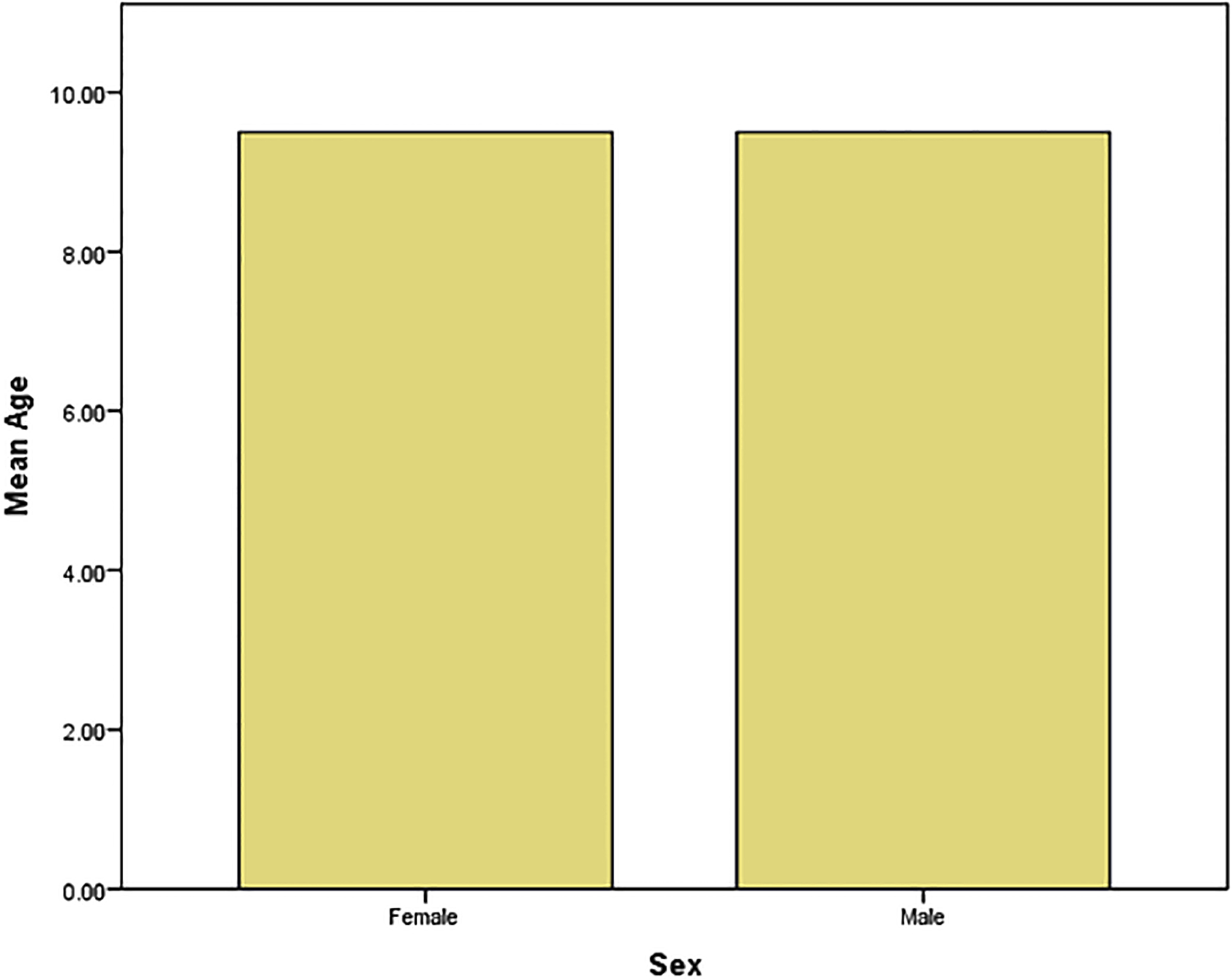
Minimum (0) and maximum (8) degree were measured by the iPhone scoliometer software. The mean
Different degrees of scoliosis in the population studied
Different degrees of scoliosis in the population studied
Regarding the relative frequency of spinal deviation, most children (40.3%) had spinal deviation of 1
The degree of spinal deviation based on the gender of the children was then compared. The mean deviation in boys was obtained to be 1.26
Mean of spinal column deviation based on gender.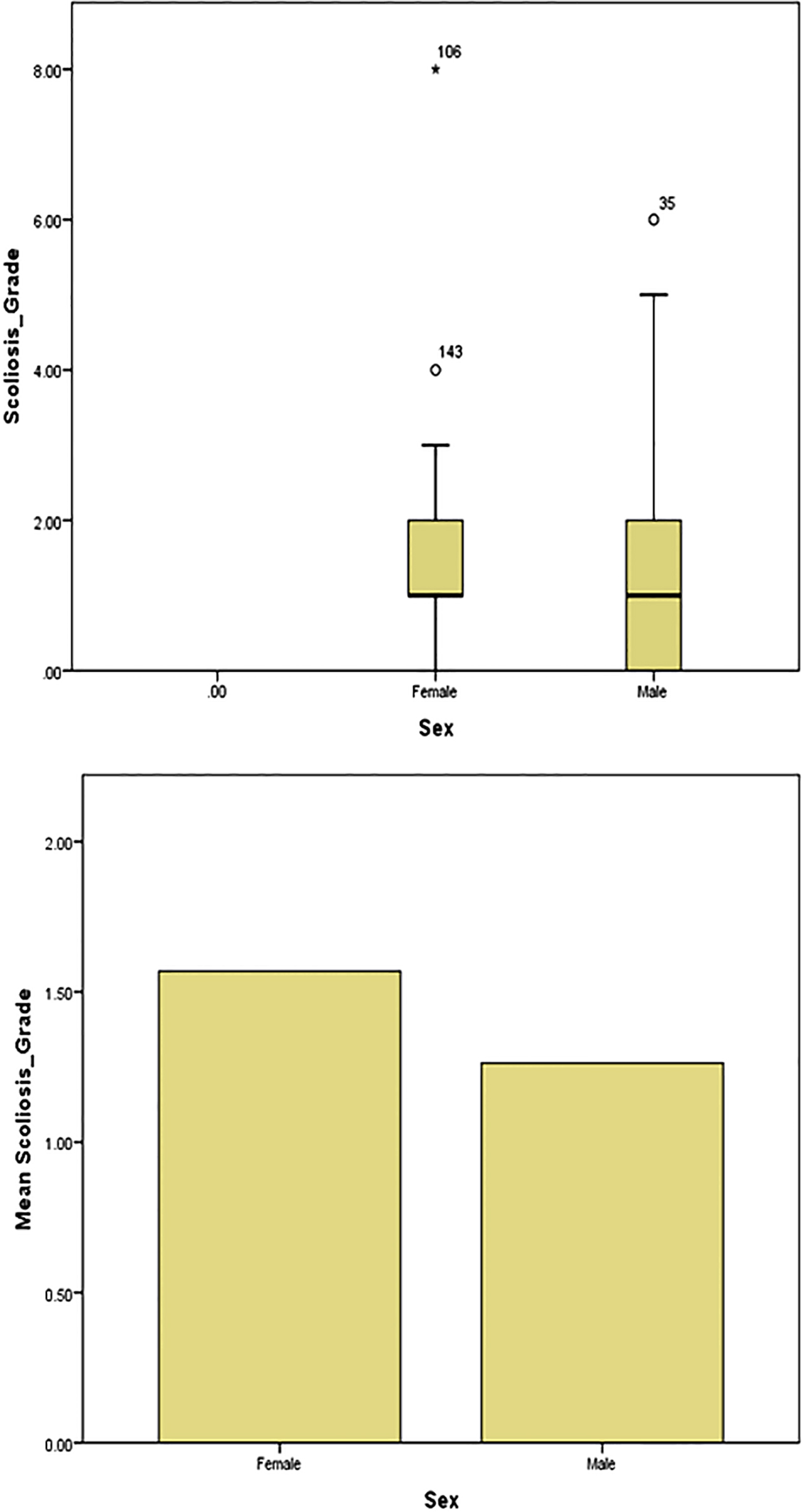
In this study, Measurements between 0 and 2 was considered as healthy, while children with 3–5 degrees were suspected of having this disease and The individuals with deviation more than 6 was considered as having scoliosis
Accordingly, only two children with definite scoliosis were diagnosed in the population with a relative frequency of 1.4%. Furthermore, 10.4% of children had suspected scoliosis (Fig. 3), which if they were taken into account, scoliosis in this population had an overall prevalence of 11.8%.
Relative frequency of definite scoliosis (1.4%), suspected individuals (10.4%) and children without these normal children (88.2%) in the population.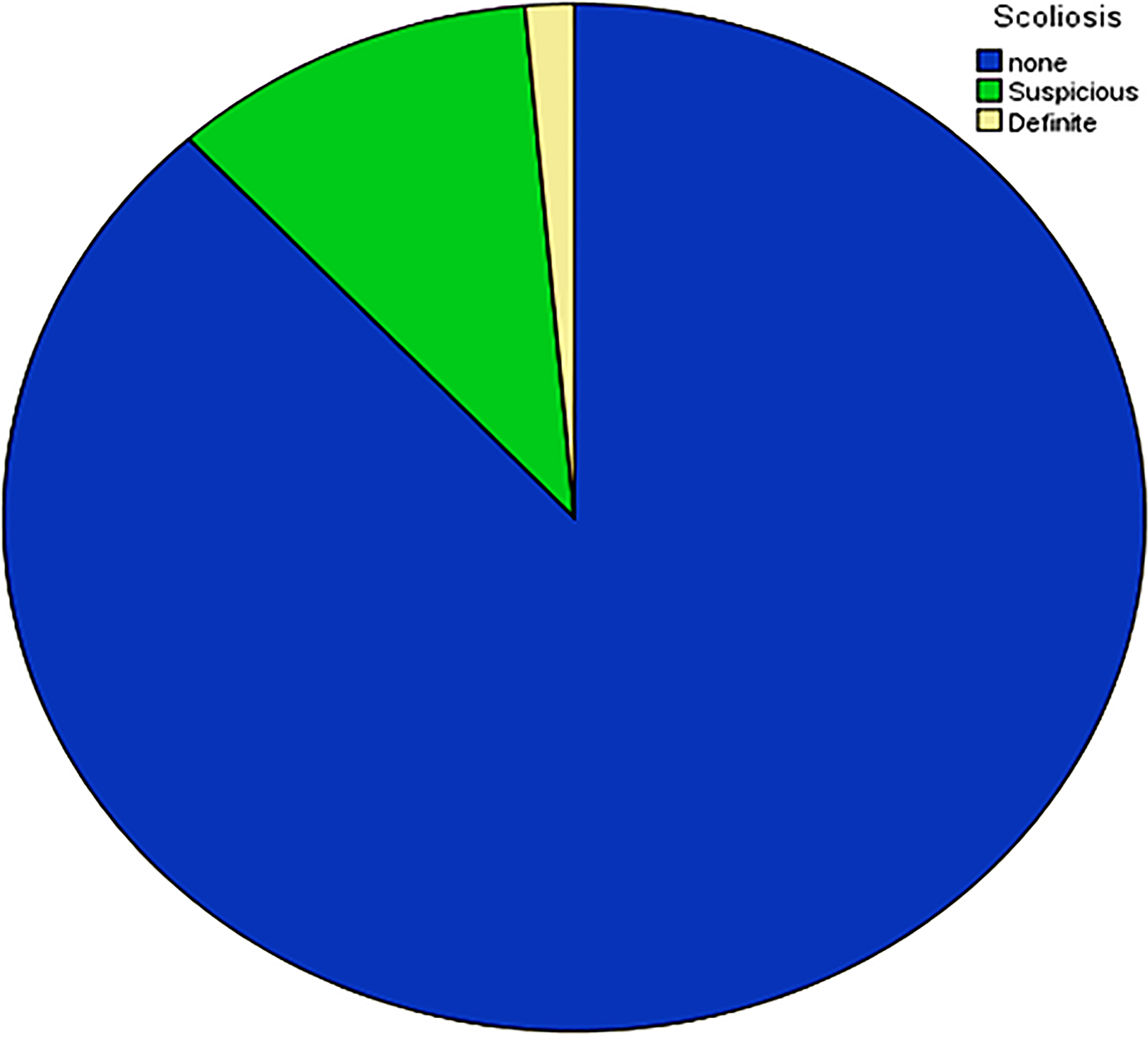
All children were classified based on the age into three groups including without scoliosis, suspected of scoliosis, and individuals with scoliosis. In healthy children, 50.4% were male and 49.6% were female. Among suspected children and affected ones, 46.7% were male and 53.3% were female. Disease frequency was the same in both sexes, between them Fisher test didn’t show a significant difference scoliosis frequency (
Scoliosis dispersion based on gender
The mean age of healthy children was 9.50
Comparison of mean age of three groups: normal, suspected and affected.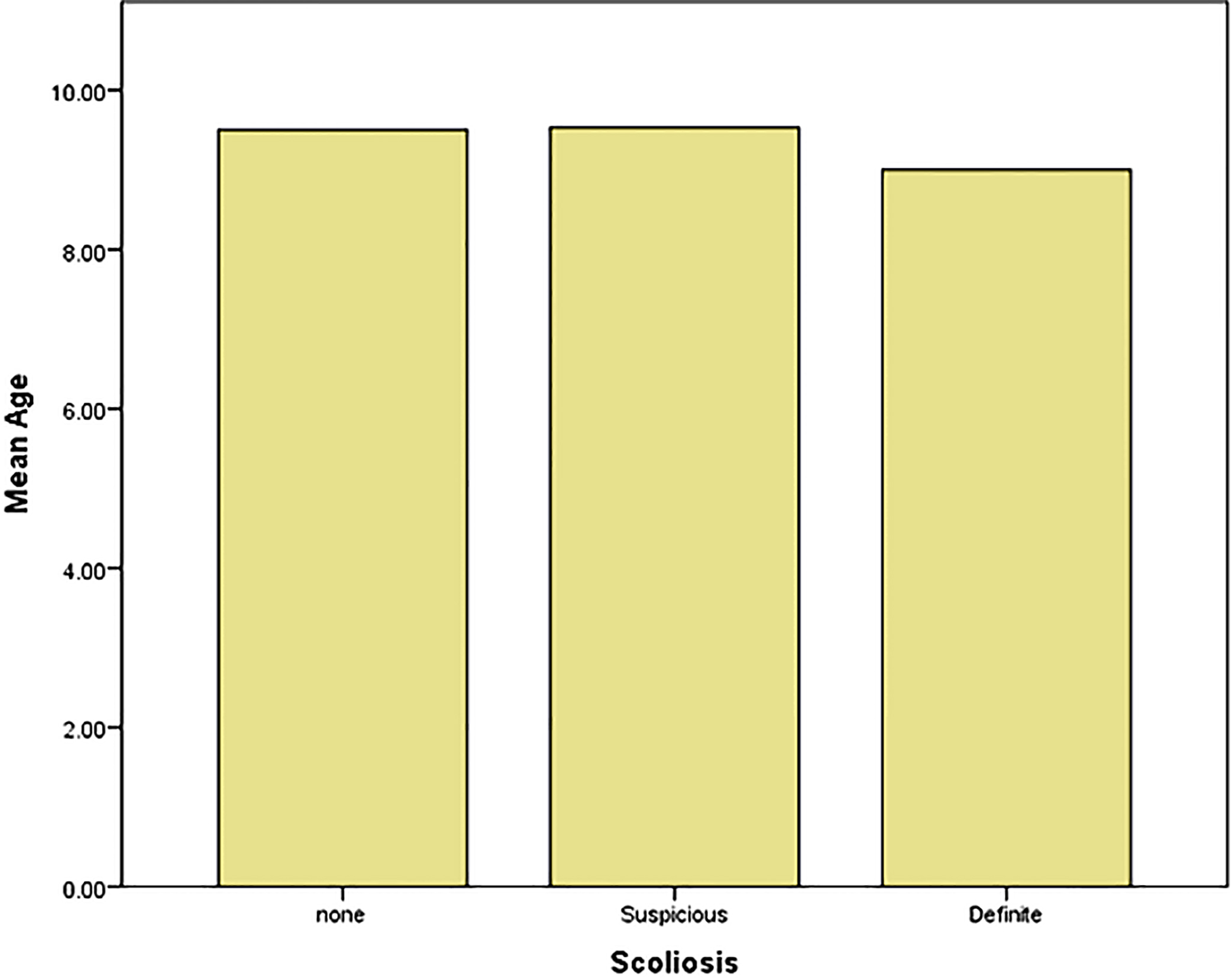
The mean spinal deviation was calculated in healthy, suspected and affected groups. The results showed that healthy individuals had average measures of 1.10
Comparison of measurements in three groups.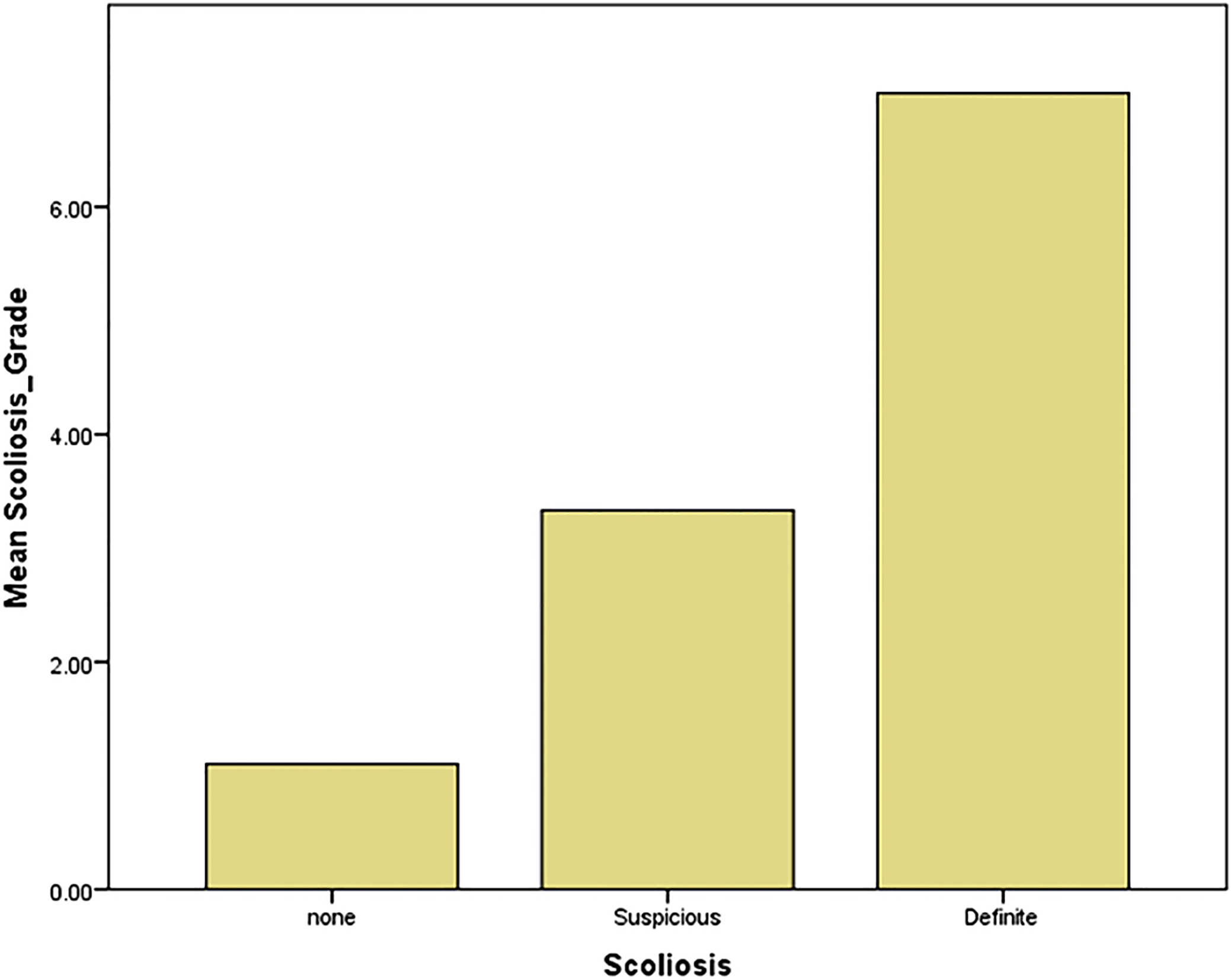
Two children who were diagnosed with scoliosis, were referred to the Ziaeian Hospital for definite diagnosis. Standing radiographs were taken for them and the Cobb angles Cobb angles were measured by a physical medicine and rehabilitation specialist. The mean spine deviation for these children was calculated as 18.20
Out of 15 children with suspected scoliosis, only 9 were visited. The mean spine deviation in these children was 9.29
Clinical study showed that 77.8% of children in the suspected scoliosis group had thoracic curves, followed by thoracolumbar/lumbar curves (11.1%) and lumbar, respectively. Furthermore, prevalence of the thoracic curves was 50% and 50% of participants had thoraco lumbar scoliosis had the type of thoracolumbar/lumbar curves.
Discussion
The prevalence of scoliosis had been revealed to be regional and varies in different countries, depending on the criteria applied for the diagnosis such as the Cobb angles, screening communities‘ gender and age [18, 19, 20, 21]. Previous studies have shown that school scoliosis screening is the best method for timely diagnosis, and prevention of scoliosis. In the current study, 144 schoolchildren between 7 to 12 years old were evaluated to determine the relative frequency of scoliosis.
The mean age of participants was 9.51
It has been shown in our study that that only 1.4% of children was definitely affected by scoliosis. Previous studies have suggested a prevalence of 2% to 4%. The relative frequency was 1.02% in a systematic screening program in China reported a prevalence rate of 1.02% for Chinese children [22]. Furthermore, some studies have reported various amounts from 0.6% to 9.2% [23]. Initially according to the relatively low frequency of 1.4% in the present study, the small impact of this screening will be justifiable regarding the opponents. Clinical screening and imaging in nine of the 15 children with a suspected scoliosis showed that all of them had scoliosis. Therefore, an overall prevalence was reached as to the need for a radiograph (11.8%) in the suspected cases. Regarding the relative high frequency (11.8%), we can say that screening in this population has been effective in terms of the early diagnosis of children, the possibility of timely treatment and prevention of disease progression. It has been shown that evidence for effectiveness of scoliosis screening is low to moderate. The scoliosis screening has been proposed as a means of detecting scoliotic curve at an early treatable stage [24].
Many studies have proposed scoliometer as a screening method for scoliosis in primary school children. This type of measurement of spinal deviation has a significant correlation with Cobb angles in standing radiograph. There are studies that were performed of individuals referred for suspected adolescent idiopathic scoliosis to an orthopedic care center after the discontinuation of scoliosis screening. They reported that among those who referred with a deviation of more than 5 degrees in the school scoliosis screening, 87% were diagnosed as scoliosis and had atypical radiographic curves of more than 10
In the present study, the statistical analysis showed that 55.6% of the children who were suspected to have a kind of mild abnormality in spine curve were referred to the clinic, showed a spinal scoliotic curve types with Cobb angles of 10
According to some studies, prevalence of scoliosis is not influenced by gender, but the possibility of progression of the disease and the need for treatment in women is 5 to 10 times higher than men [34]. Fisher’s exact test in the current study showed that gender had no significant association with the presence or absence of scoliosis in children screening tests (
Since the age range of the children in this study was 7–12 years old, the mean age was less than 10 (9.5
In the current study, clinical study showed that 77.8% of children in the suspected scoliosis group had thoracic curves, followed by thoracolumbar/lumbar curves (11.1%) and lumbar curves (11.1%). Moreover, in the scoliosis group, the type of curves was thoracic in 50% of patients and 50% of patients had the type of thoracolumbar/lumbar curves. The relative frequency of thoracic scoliosis is consistent with the findings of previous studies.
According to a previous study, the prevalence of various curve types is as follows: Thoracic curves were found to be the most prevalent occurring curves (48%), followed by thoracolumbar/lumbar curves (40%). They indicated that the less common curves was belonged to double curves (9%) and double thoracic curves (3%). Moreover, it has been reported that 80% of all children have thoracic or thoracolumbarlumbar curves [21]. Based on the findings harvested, the current school based scoliosis screening and follow-up program is cost-effective. This is mainly due to the relatively low screening cost. Therefore, the fact that scoliosis currently has achieved of this study it is that treatment options contributes to the cost-effectiveness of the program.
There was no limitation in the present study, but, further study is needed to compare between groups with a larger number of participants.
Conclusion
The results of the current study revealed that 1.4% of children had scoliosis and 10.4% of them were suspected of having scoliosis through the screening of schoolchildren. By examining these children in the clinic, it was found that 100% of children with positive screening result scoliosis and 55% of suspected ones had positive clinical assessment for scoliosis. Regarding the high sensitivity and specificity of this method and high relative frequency in clinical evaluation, it can be concluded that after extensive studies and screening for scoliosis in children in the community, this method may be helpful for early diagnosis, improving of the prognosis and reducing the cost of treatment.
Footnotes
Conflict of interest
No potential conflict of interest was reported.