






Abstract
Epitope-based antibody claims have emerged to become one of the most important claim species in antibody patents. At the same time, they are heavily disputed. This article strives to give an overview about the as is situation both in Europe and the United States.
Introduction – the claim category
Antibodies are today’s commercially most important class of therapeutic drugs. Because of high investments into R&D, patent protection is a conditio sine qua non, meaning that the prospect of getting patent protection for a given antibody product is crucial for the same to see the market. If the prospects for patent protecion of a promising drug candidate are poor, pharma companies will be hesitant to invest resources into its development and approval, because they would have only limited possibilities to secure exclusivity of said drug in the market.
Basically, antibody patents can be grouped into three different claim categories: Functional (in which antibodies are claimed by functional properties), structural (in which antibodies are claimed by their sequence, or specifc subsequences) and 2nd generation (dosage, formulation and medical use). Each category is subject to different patentability requirements, and has a different impact on either ethical or generic competitors. Table 1 shows, in a simplified manner, the different claim categories that can be used to protect therapeutic antibodies.
In the present article, patent issues of functional antibody claims according to categories 1.4.1., 1.4.2., 1.4.3. and 1.4.4. (marked grey) will be discussed. These functional claim types are typically categorized under the term “epitope-based claims”.
Epitopes
Quite generally, an epitope is a part of an antigen that is recognized by members of the immune system, including antibodies, B cells, or T cells. In a narrower sense, it is a specific part of the antigen to which an antibody binds, thus exercising physiological function.
Epitopes can either be linear or conformational/discontinuous. Sometimes, residues nearby to, or even more distant from, an epitope can have an influence on either epitope conformation, or on antibody binding thereto, even without actually contacting the antibody. To cover this phenomenon, the term functional epitope is often used.
Epitopes can further be divided into B-cell-epitopes and T-cell-epitopes, with MHC I and MHC II epitopes in the latter category. B-cell epitopes are actially the parts of the antigen to which an antibody binds. T-cell epitopes, by contrast, are the fragments of non-self proteins presented by MHC I or MHC II, and are hence less interesting in the present context.
While for conformational epitopes, indication of typical lengths is impossible, linear B-cell epitopes are usually 5–17 amino acids in length [1].
Typical antibody patent claim categories
Typical antibody patent claim categories
Epitope-based claims are used by antibody companies which want to establish exclusivity for a given target, or at least for the functional epitopes thereof, even in case the target as such has already been known at the time of filing [2, 3].
Problems associated with epitope-based claims
Epitope-based claims pose a number of problems:
In the United States, a problem often associated with epitope-based claims is that they have a written description problem, in that not all antibodies falling under their scope are, or can be, disclosed in the specifcation (often also referred to as “indefiniteness”). Written Description is a distinct patentability requirement in the US, as was confirmed in a ruling by the Court of Appeals of the Federal Cicruit (CAFC) in 2010 [4]. According to this decision, 35 U.S.C. §112, first paragraph, contains a written description requirement separate from the enablement requirement. Sometimes, it is argued that applicants would disclose something which is not the invention, and claim something which is not disclosed, or, as the CAFC phrased it recently [5], functional antibody claims, including epitope-based claims, would “allow to claim antibodies by describing something that is not the invention”. This view is not shared all courts. The German Federal Supreme Court (BGH) for example has explained in 2013 [6] that a claim to the use of dipeptidyl peptidase IV inhibitors for lowering the blood sugar level for the treatment of diabetes mellitus would rely on an inventive step and be suffiiently enabled. The court found that the true invention underlying such claim was not the actual inhibitor, but the finding that DP IV inhibitors, the use of which was already known for other therapeutic indications, can also be used for the treatment of diabetes. Because prior art literature is often silent on the actual epitope a prior art antibody binds to, a proper novelty test is difficult to accomplish when an epitope-based claim is examined, both for examiners as well as for competitors, e.g., in post grant challenges like opposition, nullity action, inter partes/prost grant reviews and the like. Even though epitope mapping technologies have been available for a while, examiners cannot be expected to carry out epitope mapping experiments of existing prior art antibodies to vertify whether the subject epitope-based claim is novel. Hence, epitope-based claims have been blamed for bearing the potential to conceal lack of novelty. For that reason, examiners sometimes reverse the onus of proof of novelty (which usually rests with the office or the opponents) to the applicant. One other point is that, as discussed above, the term “epitope” is not well defined. There exist linear and conformational/discontinuous epitopes. Linear epitopes can come in different lengths. However, epitope-based patent claims often cover a stretch of 20 AA or more, and may hence encompass dysfunctional residues. Anti- or pro-epitope claims attitude of different originator companies
Patentability of target-based claims and sequence-based antibody claims in Europe and the United States
One further problem epitope-based claims actually create is legal uncertainty for competitors. For them, an infringement test is often difficult to carry out, and the claim scope is often unclear – in partcular in claims of type 1.4.4. in Table 1, when the reference antibody is not publicly available. Sometimes, the claim language leaves it open whether the antibody needs to bind to all target amino acids in the epitope, or only to a subfraction thereof. Even in case the respective application discloses assays that can be used to check whether a given antibody binds to same epitope or AA residue as the claimed antibody, or competes for binding therewith, respective assays may be burdensome or expensive, and very often do not deliver reproducible results. And, as long as a given assay is not recited in the independent claim, it would not be binding, meaning that also other assays could be used for such purpose.
And, epitope-based claims are somtimes blamed to violate the “quid pro quo” principle. Epitope discovery is arguably less time-onsuming, and cost-intensive, than actual drug development. For this reason, it is stipulated that epitope-based claims over-reward companies engaging in epitope discovery, and discriminate companies that embark on the long and cost-intensive route to drug development and authorisation.
Despite the above problems, entities existt which have an interest in epitope-based claims. Universities, research institutions and biotech companies who identify and develop an epitope as a suitable target for antibody therapy often have only one antibody as proof of concept (oftentimes only murine).
If patent law would demand them to immediately restrict their patent scope to the structure of the candidate antibody, they would have a very unfavorable licensing proposition.
Parties interested in that epitope as a target for therapy could easily bypass such narrow patent, and actual licensees might want to modify the antibody sequence, so that a prospective drug candidate moves out of the umbrella of such patent.
A controversial claim category
The discussion around these types of claims divides the industry. Table 2 shows originator companies which have in the past demonstrated an outspoken anti- or pro-epitope-based claims attitude.
While the European Patent Office (EPO) has developed a set of patentability tests for target-based claims and sequence-based claims (1.1. and 2 in Table 1), briefly summarized in Table 3, the patentability of epitope-based claims is not well covered by existing case law of the EPO. Furthermore, in the United States, the respective courts have come, quite recently, to inconsistent findings. In order to understand the patentability problems of epitope-based claims, the author will first briefly discuss target-based claims and sequence-based claims.
Target-based claims
In target-based claims, which do not only protect the one or more antibodies that are explicitly disclosed in a patent application, but all antibodies binding the respective target, the test the EPO applies is quite simple. De facto, the finding and proper characterization of a new target, e.g., a new receptor or cytokine, combined with any kind of data that suggest a physiological role thereof which may antibody binding appear feasible to cause some effect, is deemed sufficient to meet the inventive step criterion. This has been confirmed even in cases where the respective applicant has only made and demonstrated a single antibody, or even no antibody at all [7].
EPO’s rationale to award such broad scope for such little disclosure is that, once a target is sufficiently characterized, making of an antibody against the same would be in the routine of the skilled person. It appears that the EPO holds, in this claim category, that it is actually not the antibody that is the core invention, but the characterization of the target, with the antibody being only a secondary invention.
The above principle is also applied, in a similar fashion, by the US Patent and Trademark Office (USPTO), based on a Court decision from 1995 [8], and was nicknamed “antibody exception”. It has recently come under pressue as to raise problems under the principle of written description, which is a patentability requirement in the United States, because the scope of such claims encompasses antibodies which are not described in the patent application.
In fact, in a recent decision [9], the Court of Appeals of the Federal Circuit (CAFC) stated that the antibody exception would flout “basic principles of the written description requirement as it allows to claim antibodies by describing something that is not the invention” [10].
Based on that decision, the USPTO issued a memo for its examiners on February 22, 2018, according to which a newly characterized antigen alone should not be considered adequate written description of a claimed antibody. However, as will discussed hereinbelow, this does not seem to have been the last word in the question whether or not epitope-based antibody claims are patentable in the Unted States.
Sequence based claims
The established inventive test in sequence-based claims is somewhat inconsistent with the problem-solution/could-would approach the EPO usually applies when assessing inventive step. Simplified, under said approach, a new embodiment is found obvious in view of a given technical problem if its combination of features could be derived from the prior art, usually with one prior art document disclosing all features but one, and the second disclosing the lacking feature. Further, if there are indicia that the skilled person would actally have combined these documents to solve the problem, the alleged invention is found obvious.
This test can actually not be applied to most sequence-based claims, because a new antibody sequence is oftentimes the result of either an immunization experiment, or a screening experiment from a library of antibodies. In both cases, the new sequence is not a product of rational design, but relies largely on random recombination. Hence, even if a prior art antibody against the same target existed, there was no pointer or incentive, for the skilled person using that antibody as a starting point, to arrive at the concrete sequence that is subject of the respective sequence-based patent claim.
The EPO argues, however, that making “just another antibody” against a given target is a matter of routine, and hence, in the absence of a suprising effect, not inventive, even without applying the could-would approach [11].
This special test is a derivation from the test the EPO has been applying for small molecules. There, a new chemical structure is found non-obvious per se if is is not “structurally close” to a prior art molecule. However, if it is structurally close to a prior art molecule (e.g., only a propyl group was replaced by an ethyl group, or a halogen substituent was replaced by another halogen), then the modified molecule needs to have a suprising effect in order to be deemed inventive.
The antibody examination divisions at the EPO have transferred this test to antibodies, which, at least when a human framework is used, are structurally similar over large stretches, due to the canonical constant domains. Simplified, therapeutic antibodies differ from one another mostly in their variable domains, and particularly in their complementarity detemining regions (CDR). In an IgG-shaped antibody, the CDRs make out about 12.5% of the light chain sequence, and 7.9% of the heavy chain sequence. In other words, roghly 90% of the sequences of an IgG antibody are canonical.
Due to this subjective similarity, the EPO considers all antibodies as “structurally similar”. This is actually a coarse simplification, because, in essence, the constant domains of an antibody could also merely be considered as carriers that do not substantially contribute to the binding characteristics of an antibody. This becomes particularly clear in antibody fragments like scFv or Fabs, where the relative fraction of the CDRs is significantly higher than in IgG.
Although said disctinction the EPO makes regarding inventive step is subject to criticism [12, 13], there is at least some degree of predictability for patent applicants as to what they need to do to render a sequence-based claim patentable.
The USPTO applies a different standard, called “structural non obviousness”. Having been developed for determining the patentabiltiy of encoding nucleic acids [14], this concept is widely applied to antibodies, according to which in a new antibody having a different structure from any known antibodies to the same target, the new sequence implicitly suggests non-obviousness, irrespective of the presence or absence of a surprising effect. The office’s rationale is that the prior art does in most cases not guide the skilled artisan to that very sequence, so such sequence simply can’t be obvious.
Epitope-based claims
Epitope-based claims fall somewhat between target- and sequence-based antibody claims. Because the number of potential targets in humans is limited, the number of patent filings that have target-based antibody claims has decreased over the last years. Companies which still want to establish exclusivity for a given target, or at least for the functional epitopes thereof, have for that reason felt increased pressure to switch to epitope-based claims.
If granted, epitope-based claims are still very powerful, because they may block competitors from developing a drug against the same target. Oftentimes, a given target, e.g., a receptor or a cytokine, has only a limited selection of potential epitopes that are worth to be used as antibody binding site. For that reason, monopolizing such epitopes by patents can replace protection of the entire target, and can hence practically secure exclusivity over the entire target, meaning that other ethical pharma companies are blocked to develop a competing antibody.
As things stand today, the major jurisdictions have not yet established reliable and reproducible tests which would allow applicants to properly draft their applications comprising epitope-based claims, and enable patent examiners to make reproducible decisions regarding patentability thereof.
It appears that examiners at least at the EPO have treated, and probably still treat, such claims similar to target-based claims, meaning that, if the epitope has so far not been specifically disclosed, and some effect has been shown by an antibody that binds that epirtope, the respective patent claim is deemed inventive – even though the target as such was already known in the art.
However, while identifying a new target, clarifying its biological role and making it accessible for a therapeutic approach is indeed a pioneering achievement which arguably may deserve the privilege of broad functional protection, the pioneering character of epitope identification is significantly smaller. The broad functional protection conferred by epitope-based claims may hence not always be justified under the quid pro quo principle.
Impact of epitope-based claims – the Sanofi/ Amgen controversy
How powerful such claims are has recently been demonstrated in the Sanofi/Amgen controversy, which will be discussed in the following. Both Sanofi and Amgen have an anti PCSK9 antibody on the market, details of which are shown in Table 4 (with bococizumab, Pfizer had one candidate in the pipeline too, development of which was however stopped in Phase III in 2016). Sanofi has developed its drug together with Regeneron. PCSK9 inhibitors are used to reduce Low Density Lipoprotein (LDL) levels in the bloold serum and hence reduce the risk of stroke and cardiovascular diseases.
Amgen’s and Sanofi’s anti PCSK9 antibodies
Amgen’s and Sanofi’s anti PCSK9 antibodies
The market of PCSK9 inhibitors has rapidly grown in the recent years, as shown in Fig. 1a, with Amgen’s Repatha
a: US hyperlipidemia market size, in bn USD; b: Growth of PCSK9 inhibitor market; c: Discounts offered by Sanofi and Amgen for their PCSK9 antibodies.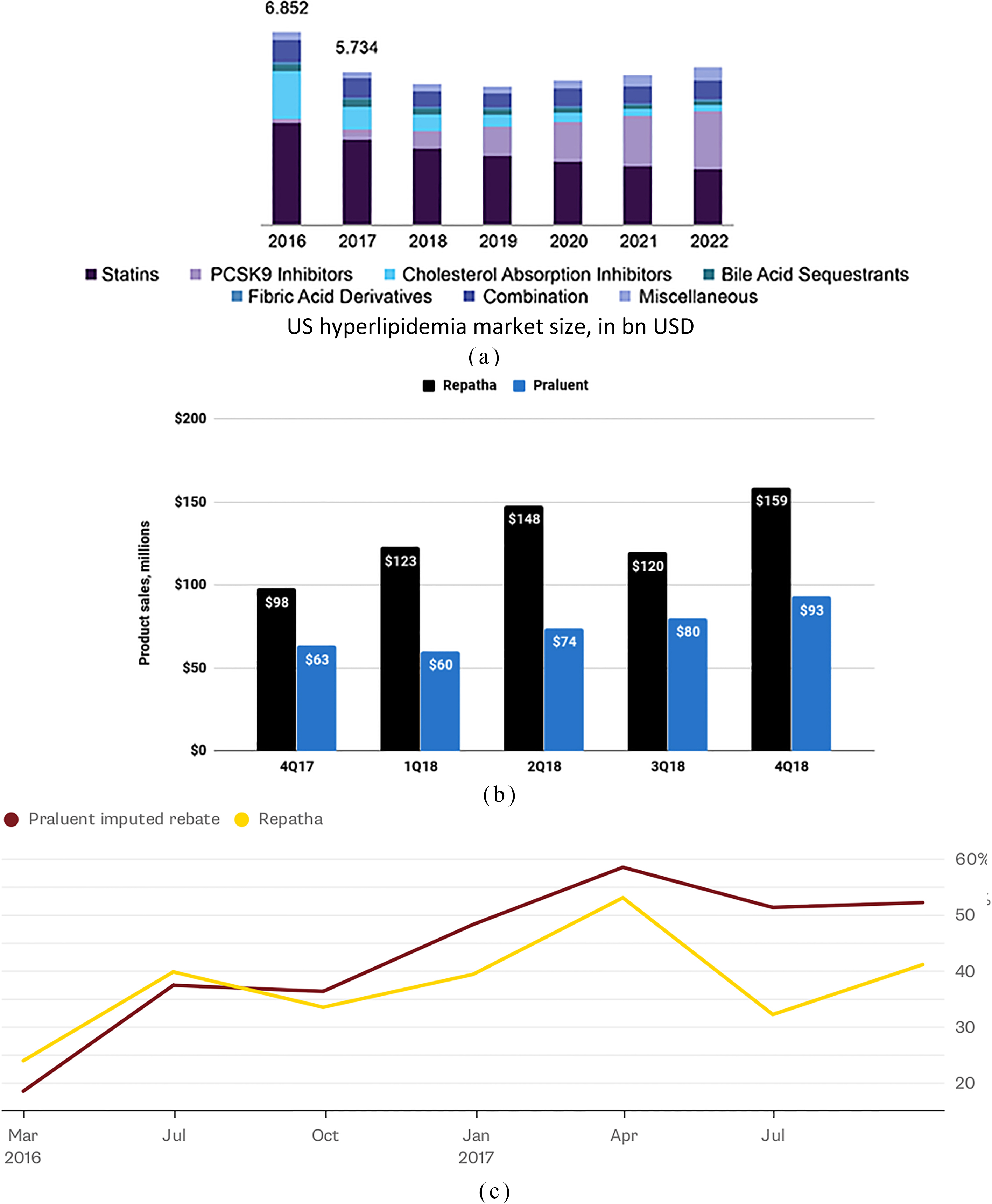
It seems though that Amgen has the broader patent portfolio, with epitope-based claims of categories 1.4.1, 1.4.2. and 1.4.4. (see Table 1) in, inter alia, Europe and the United States. The respective independent claims of 3 of Amgen’s key patents are shown in Table 5.
Independent claims of 3 of Amgen’s key patents protecting Repatha
Sanofi’s Praluent
In Germany, Sanofi has been sued by Amgen for violation of their European patent EP2215124B1 before the District Court in Duesseldorf (OLG) [17]. Amgen demanded, inter alia, an injunction and damages.
The case was stayed because Sanofi had filed, together with Eli Lilly and Regeneron, an opposition against the patent at the European Patent Office. Furthermore, Sanofi filed an action at the German Federal Patent Court (BPatG) against Amgen’s European Patent EP2215124B1 to order a compulsory license under reasonable royalties [18]. Further, Sanofi demanded a preliminary order to award such license.
In the opposition at the EPO, the oral hearing took place on November 29 and 30, 2018. The patent was maintained in amended form, however, with a scope that is likely to still hurt Sanofi (see below).
In the preliminary compulsory license case, the BPatG denied Sanofi’s request. Inter alia, the Court found that Sanofi had not sufficiently demonstrated that there was a public interest in the further free availability of Praluent. Sanofi had failed to make convincing arguments that other products on the market – in this case, Amgen’s Repatha, did not possess the (particular) therapeutic properties of Praluent in equal measure. Sanofi appealed, but the BGH rejected the appeal on June 4, 2019 [19]. Note that this decision only referred to Sanofi’s request for a preliminary order to award a compulsory license. However, the final determination of the merits of the case is still pending.
United States
In the US, Amgen sued Sanofi and Regeneron out of two corresponding patents, US8829165 and US8859741 (see Table 5) before the District Court of Delaware [20]. On January 3, 2017, the Jury decided in favor of Amgen, declared the patent valid and issued an injunction against Sanofi, estopping them from marketing Praluent.
Especially the injunction received a very critical echo in the US, because there had already been patients who had a prescription for Praluent, and who would have been deprived of their actual heart medication. Traditionally, US courts are inclined to not award injunctions against approved therapeutic drugs, because this would harm the public interest [21]. Instead, damages and license payments are usually awarded (or agreed upon in respective settlements). Rachel Sachs, an associate professor of law at Washington University in St. Louis has been cited that it would be “strange for a judge to take one product off the market when there are patients on the medicine already” [22].
The case went into appeal, and, on October 5, 2017, the CAFC first overturned the injunction on grounds of public interest – hence, contrary to what the BPatG had found in the corresponding German compulsory license case – and then remanded the case back to the District Court, to re-examine the validity of the patent.
In its decision [23], the CAFC objected that the Jury had been insufficiently instructed, in particular, that adequate written description must contain enough information about the actual makeup of the claimed products (i.e., a precise definition, such as by structure, of species falling within the genus sufficient to distinguish the genus from other materials).
Hence, the CAFC ordered the District Court to properly instruct the Jury, so as to reconsider if the genus claim (
While the District Court’s decision was still pending, the USPTO already issued the memo discussed above, instructing examiners to no longer consider a newly characterized epitope as adequate written description for an antibody claim.
At that time, epitope-based claims were deemed practically dead at least in the US, as for example evidenced in a panel discussion at the BioConvention 2018 in Boston, to which the author of this article contributed [24].
Many experts had foreseen such development. Already in 2015, at the Bio International Convention in Philadelphia, a speaker said that functinal antibody claims would not longer the preferred startegy, and advised, that, if one can claim structure, claim structure and not function [25].
a: Excerpt of the Delaware Court Jury verdict with regard to US patent US8829165; b: Independent claims of US8829165 that were held invalid and valid.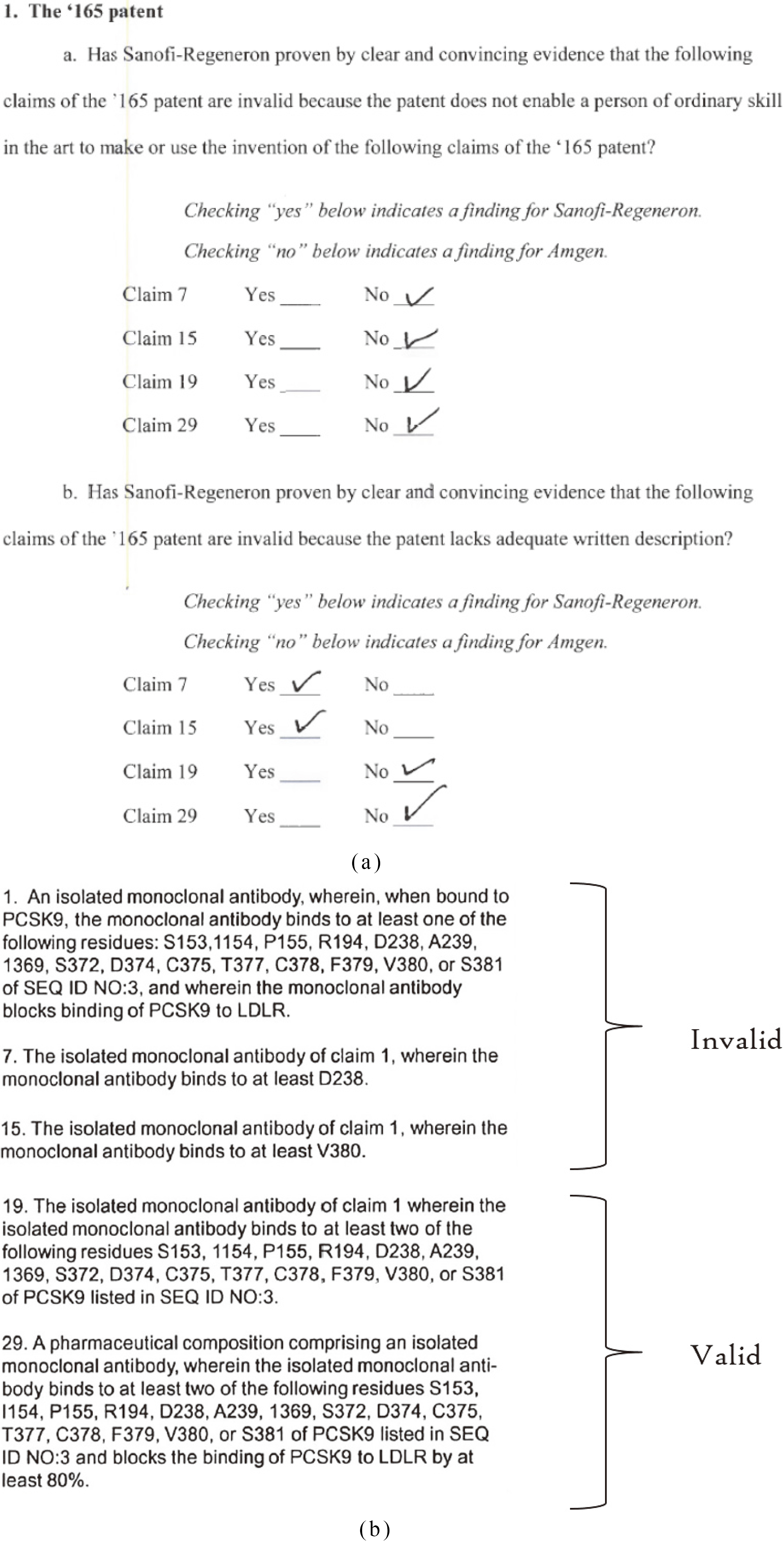
Nonetheless, Amgen filed a petition for certiorari against the CAFC decision to the US Supreme Court, alleging that the former’s ruling would result in “jurisprudential anarchy”. Amgen claimed that the patent act would only require that a patent specification simply teaches others to make and use the invention, instead of demanding possession of invention (which is a conclusion that is based on written description).
The petition, which was supported by amicus curiae briefs by, inter alia, Bristol-Myers Squibb, Morphosys, Bavarian Nordic, and UCB, was rejected on February 23, 2018 [26].
However, the situation changed when the District Court of Delaware, to which the case was remanded, did as ordered.
Based on the fact that in Amgen’s patent, equences for 22 antibodies competing for the claimed epitope were disclosed, and over 3,000 PCSK9-specific antibodies had been screened to identify 85 antibodies with receptor blocking activity, the Jury decided on February 25, 2019, that which most claims of both patents meet the requirements as to enablement and written description. Figure 2a shows an excerpt of the Jury verdict with regard to US patent US8829165, and Fig. 2b shows the independent claims that were held invalid, and valid, respectively.
Sanofi, in response, filed a request for Judgement as a matter of law (JMOL) – meaning, they wanted a judge to overturn the Jury decision. Such request can be admissible if the court finds that a reasonable jury would not have legally sufficient evidentiary basis to find for a party on an issue. DC Delaware Judge Andrews accepted the case and reexamined the Jury’s decision. In his opinion, which issued August 28, 2019, Judge Andrews declared the patents invalid.
With regard to written description, the confirmed the Jury decision, basically on the finding that Amgen’s patents would pass the “representative species test”, because Amgen would have disclosed 8 different families of blocking antibodies (while, in the AbbVie vs Janssen decision (759 F.3d 1285 (Fed. Cir. 2014) all antibodies AbbVie had disclosed in their patent were derived from a clone called Joe-9), which bind to different residues of PSCK9.
Judge Andrews the turned to enablement, and found that (i) the number of antibodies falling within the claim scope is in the millions, (ii) substitution of amino acids in a sequence may have unpredictable effects on antibody function, and (iii) even despite the routine techniques available to identify antibodies within the claim scope, it would appear that a person of ordinary skill in the art would still be required to do essentially the same amount of work as the inventors of the patents-in-suit.
Judge Andrews referred to the same Court’s decision MorphoSys vs Janssen (358 F. Supp 3d 354; D Del 2019) that issued on January 25 2019, which is one of the first that considered enablement issues of antibody claims, but because the parties settled, no appeal was filed.
It is likely that Amgen will appeal the new decision so that the CAFC has a second chance to revisit the written description issue, and, for the first time, the enablement issue of antibody claims.
The Amgen/Sanofi controversy underlines the impact of epitope-based claims, and how controversial they are. Epitope-based claims are highly disputed, offering big promises to those who promote them, and big risks and uncertainties for those who do not.
Interestingly, Sanofi and Amgen have not only spent millions into the legal campaigns. Since onset of the international litigation campaign, both companies started to offer substantial discounts for their respective antibodies (see Fig. 1c) [27].
Granting practice at the EPO – caselaw of the boards of appeal
Quite different to the US, written description is not a patentability requirement in Europe. Therefore, in case an epitope-based claim is found to be novel, its patentability hinges merely on sufficient enablement (Art 83 EPC) and the presence of inventive step (Art 56 EPC).
However, other than in target-based clams and sequence-based claims (see Table 3) it appears that so far, no clear test exists which EPO examiners can apply to arrive at reproducible results when examining epitope-based claims.
EPO examiners seem to have realized this problem, and try to solve patentability issues on the basis of the usually available tools.
In informal communications (e.g., in a presentation at the BioConvention 2018 in Boston), EPO examiners have stated that epitope-based claims using the language as set forth in Table 1 above, category 1.4.2., would likely be patentable for linear epitopes if the latter is new and an unexpected effect would be shown. With regard to the “competes-with” language as set forth in category 1.4.4., it was stated that such claims would usually be deemed sufficiently enabled, while problems would exist for examiners to determine novelty (reversing the burden of proof to the applicant) and inventive step (because it would be uncertain whether
EPO appeal decisions relating to epitope based antibody claims
EPO appeal decisions relating to epitope based antibody claims
Four EPO opposition cases which deal with true epitope-based claims
all antibodies competing for binding with the reference antibody would also share the latter’s technical effects).
However, these insight are non-binding personal views. In order to better understand the as-is-situation of epitope-based claims, the decisions of Board of Appeal (BoA) 3.3.04 of the EPO were therefore analyzed in detail. This Board hears all appeals (both ex parte and inter partes) that relate to antibody patents and patent applications.
In the database of the EPO [28], 70 decisions of BoA 3.3.04 were found which mention either the terms “antibody” and “epitope”, or “antibody” and “compete or competes”. Quite a few out of these 70 cases relate to subject matter that is not relevant in the present context, i.e., vaccines, diagnostic antibodies or the like. Only 17 cases (shown in Table 6) have claim language according to categories 1.4.1.–1.4.4. as shown in Table 1. Out of these 17 cases, 6 cases were decided on non-eptitope related issues, leaving only 11 cases over a period of more than 13 years which actually deal with enablement and inventive step issues of epitope-based claims.
Conclusion
As can be seen, these cases are all solved on a case-to case basis, yet no clear line is developed that would facilitate, both for patent owners and opponents, the assessment of enablement and inventive step issues of epitope-based claims.
Four opposition cases at the EPO which deal with true epitope-based claims have recently raised public attention, and could give rise to the development of a more predictable test for the assessment of inventiveness and enablement in epitope-based claims. These cases are summarized in Table 7.
Case1: EP2215124 (PCSK9, Amgen vs Sanofi)
The Amgen/Sanofi controversy was already briefly discussed above. Amgen’s respective EP patent protects anti-PCSK9 antibodies, which compete for binding to PCSK9 with a reference antibody. It is disclosed that such binding to PCSK9 would interfere with PCSK9 binding to the LDL receptor (LDLR).
The patent was opposed, inter alia, by Sanofi, Regeneron, and Eli Lilly. Claim 1 as granted was as follows:
1. A monoclonal antibody (…) that (…) is capable of reducing the quantity of PCSK9 bound to LDLR (…) competes for binding to PCSK9 with (a) an antibody comprising a HCVR SEQ ID NO: 49; and a LCVR SEQ ID NO: 23; or (b) an antibody comprising a HCVR SEQ ID NO: 67; and a LCVR SEQ ID NO 12.
The patent was maintained in 1
Amgen’s two reference antibodies specified by the sequences in the said claim are 21812 and 31H4, the former being marketed as Repatha
Enablement
When discussing enablement, the OD failed to adress issues of written description. Though not being a patentability requirement in Europe, it would have at least been appropriate to address this point briefly.
Further, the OD argued that the skilled person would not be faced with an undue burden to reproduce the claimed subject-matter, as, inter alia, suitable competitive binding assays would be known to the skilled person and also disclosed in the patent, while methods to assess the reduction of PCSK9 bound to LDLR would as well be disclosed.
However, the OD failed to address a point raised by the opponents, namely, that sometimes, antibodies bind to a different epitope than the reference antibody and can still compete for binding therewith, e.g., in that their FC part might sterically block binding of the reference antibody to its epitope.
Inventive step
When discussing inventive step, the OD opined that novelty of the “interaction area” (i.e., the epitope) implies the existence of inventive step. The OD went on that the prior art would not have provided an invitation for the skilled person to deviate from the interaction area identified therein and attempt to provide antibodies binding to the interaction area as defined by the antibodies 21812 and 31H4.
The OD also stated that though the provision of PCSK9 binding antibodies could be considered a matter of routine in the art, the lack of prior art information regarding the claimed “interaction area” would preclude the skilled person from embarking on a project for obtaining respective antibodies.
In other words: Because the prior art was silent on the specific epitope the Amgen antibodies bind to, the epitope is inventive.
The OD also dismissed concerns that the problem would not be solved across the entire scope of the claim. The opponents objected that some antibodies were disclosed in the patent which compete for binding with 21812 and 31H4 but did not reduce PCSK9 binding to LDLR. The OD still found that the problem has been convincingly solved as demonstrated in the experimental data provided and the commercial approval obtained for an antibody product based on antibody 21812. Because of the functional restriction in claim 1, dysfunctional antibodies would actually not encompassed by the scope of the claim, so the respective inventive step attack was reversed.
Case 2: EP1931710 (IL23, Merck vs Eli Lilly and AbbVie)
The patent protects anti IL23 antibodies, and is assigned to Merck Sharp Dohme, who has the anti IL23 antibody tildrakizumab (Ilumya
Merck’s patent was opposed by Eli Lilly (maker of mirikizumab) and AbbVie (maker of risankizumab). Both candidate antibodies are still in clinical development, but will likely be approved soon. Interstingly, Lilly has recently withdrawn its opposition.
Claim 1 of EP1931710 relates to antibodies binding a conformational/discontinuous epitope. Claim 1 as granted is as follows:
“An antibody, or antigen binding fragment thereof, that binds to human IL-23p19 at an epitope comprising residues 82–95 and residues 133–140 of SEQ ID NO: 29”
The Oral Proceedings of the 1st instance will be on Oct 21–23, 2019. In the non-binding opinion, the OD discusses, inter alia, the following points.
Enablement
The OD considered that the application provided only one example of a structurally defined antibody, called 7G10, that actually binds to the claimed discontinuous epitope, giving rise to the objection that the application would provide only insufficient guidance on how to arrive at other antibodies with the claimed properties. Though being an enablement argument, this criterion is actually quite similar to the written description argument the CAFC raised in the Amgen vs Sanofi case, namely that it would be crucial to reconsider if the genus claim is supported by a sufficient number of representative species.
The OD also referred to the point that the cited prior art documents disclosed only antibodies that bind to only one of the two amino acid stretches on IL-23p19 of claim 1 as granted. Hence, the board opined that the enablement requirement of Art 83 EPC would not be met.
The OD also mentioned that co-crystallization of antibody-antigen complexes was not a matter of routine at the filing date and that having to co-crystallize a panel of pre-screened antibody-antigen complexes to test whether they bind to the epitope as defined in the claims has to be considered an undue burden.
Inventive step
Pursuing the problem solution/could-would approach, the OD defined the problem of the invention as the provision of an anti-IL-23p19 antibody capable of neutralizing linked as well as unlinked IL-23. This problem would be solved by an antibody binding to the discontinuous epitope of claim 1.
According to the OD, findings made with anti-murine IL-23p19 antibodies could not be reasonably transferred to humans without additional testing, because of insufficient structural similarity. For this reason, the OD opined that the subject matter of claim 1 was not obvious in view of the prior art.
The OD however envisaged that it remains to be discussed whether the technical problem was solved over the entire scope of protection, i.e. by all antibodies binding to the epitope as claimed. The OD emphasized that even within a group of antibodies sharing the light chain of 7G10, the capacity to block linked/unlinked IL-23 appears to be very variable, as could be seen by a logarithmic scale in the respective figure.
Implicit disclosure of epitopes
One further point is that the OD addressed that prior art is often silent on the epitopes prior art antibodies bind to, which makes it impossible for examiners to do a proper novelty test. Like in the PCSK9 case, the OD made clear that opponents can support prior art disclosing an antibody, but lacking epitope information, with later mapping data, meaning that epitope characteristics are an an intrinsic feature of a prior art antibody, even if not explicitly disclosed to the public prior to the filing date.
The OD did however not go as far as concluding, in such situation, that the burden of proof that the prior art antibody does not anticipate the claimed epitope would bounce back to the patent proprietor.
Conclusion
Generally, the quality of the technical debate in this intermediate opinion is impressive. The OD really delved into the technical problems to explore sufficiency of enablement of epitope-based claims. Therefore, it will be interesting to see the outcome of the oral proceedings, and the eventual appeal.
Case 3: EP2292665/EP2990420 (IL4R, Immunex/Amgen vs Sanofi and Regeneron)
One other case that is disputed at the EPO – indeed, it’s a case pair – is EP2292665/EP2990420 assigned to Immunex, and again, Amgen, Sanofi and Regeneron are involved. Amgen acquired Immunex in 2002, and an anti IL-4R antibody was part of the marriage portion, which was yet discontinued during clinical studies for lack of success. However, the respective patents, which are set to expire in May 2021, were maintained.
In 2010, Sanofi and Regeneron started to develop a joint product, the anti IL4R antibody dupilumab (Dupixent
Shortly before receiving regulatory approval in the US for Dupixent, in March 2017, Regeneron and Sanofi sued Immunex for a declaratory judgment (DJ) [30] that Dupixent does not infringe Immunex’s US patent, US8679487, which has “competes with” claims (1.4.4. in Table 1) and shortly therafter also filed a request for Inter Partes Review (IPR) against the said patent. Amgen accepted the challenge and sued Regeneron for infringement of its 487 patent [31]. The first IPR was denied institution, but Regeneron and Sanofi managed to get two further IPRs instituted, out of which one led to revocation of the patent for obviouisness over the prior art [32]. Amgen has appealed the decision. In the meantime, Regeneron and Sanofi withdrew their DJ action, leaving Amgen’s infringement case the remaining court action.
In Europe, Sanofi and Amgen filed oppositions against the corresponding EP patents EP2292665B1 and EP2990420B1. The first patent was revoked for violation of Art 76 EPC (i.e., new subject matter was introduced when the divisional application was filed). The second patent was revoked for lack of enablement. The auxiliary request that was eventually rejected was as follows:
A human monoclonal antibody capable of inhibiting an IL-4 induced biological activity that competes with a reference antibody for binding to a cell that expresses human IL-4 receptor (IL-4R) for use in a method of treating dermatitis, atopic dermatitis, contact dermatitis, or asthma, wherein:
the light chain of the reference antibody comprises the sequence of SEQ ID NO: 6 and the heavy chain of the reference antibody comprises the sequence of SEQ ID NO: 8; or the light chain of the reference antibody comprises the sequence of SEQ ID NO: 26 and the heavy chain of the reference antibody comprises the sequence of SEQ ID NO: 24.
The OD argued that the patent would not give any guidance that the skilled person could use in order to reliably identify an antibody, so that the decision on the most appropriate assay would fall on the person repeating the invention. In particular, the claims would not require that the assayed antibody actually binds IL-4R. The OD went on that, after deciding for an antibody that competes with the claimed reference, the skilled person would then have to check if such antibody is capable of inhibiting an IL4 induced biological activity – which, in view of the wide range of possible biologocal activities provided in the description would open a full spectrum of testing to the skilled person. Finally, the OD stated that there wasn’t a single example of a fully human antibody that competes with the reference antibodies or of any threshold values that could help to characterize the competing assay.
So, while the decision against EP2292665B1 does not help further in the present context, the decision against EP2990420B1 provides some preliminary insights into what the ODs deem necessary to acknowledge sufficient enablement of a “competes with” claim, Again, the respective arguments have also aspects of insufficient written description, because the OD objected that actually no human antibody, as claimed, was disclosed in the specification.
Immunex appealed both decisions, and proceedings are ongoing. So, there is a chance that the BoA will take the opportunity to thoroughly consider enablement issues of epitope-based claims in the near future.
Another case that could have helped to clarify the situation was EP2161336 assigned to Bristol Myers Squibb (BMS). The patent protects, inter alia, BMS’s anti PD-1 antibody nivolumab (Opdivo
The author of the present article has discussed the patent battle between BMS and Merck, the maker of the competing anti PD-1 antibody pembrolizumab (Keytruda
The dispute, which was eventually settled, had a counterpart in Europe, where Merck had already filed an opposition against one of BMS’s European PD-1 patents, EP2161336B1. Co-opponents in the opposition were Novartis, 4-Antibody and Janssen. Claim 1 claims nivolumab by it’s CDR sequences (category 2.1. according to Table 1), while claim 3 refers to monoclonal antibodies that cross-compete therewith (category 1.4.4. according to Table 1), thus covering not only nivolumab, but also Merck’s pembrolizumab.
The “competes-with” claim was the root cause for quite a controversy about the legitimacy of such claim types. The Opponents had, inter alia, attacked these claims for lack of novelty, in view of the earlier patent application WO2004056875 assigned to Wyeth.
Claimed epitope in EP1931710B1 and prediction thereof with BepiPred 2.0 software.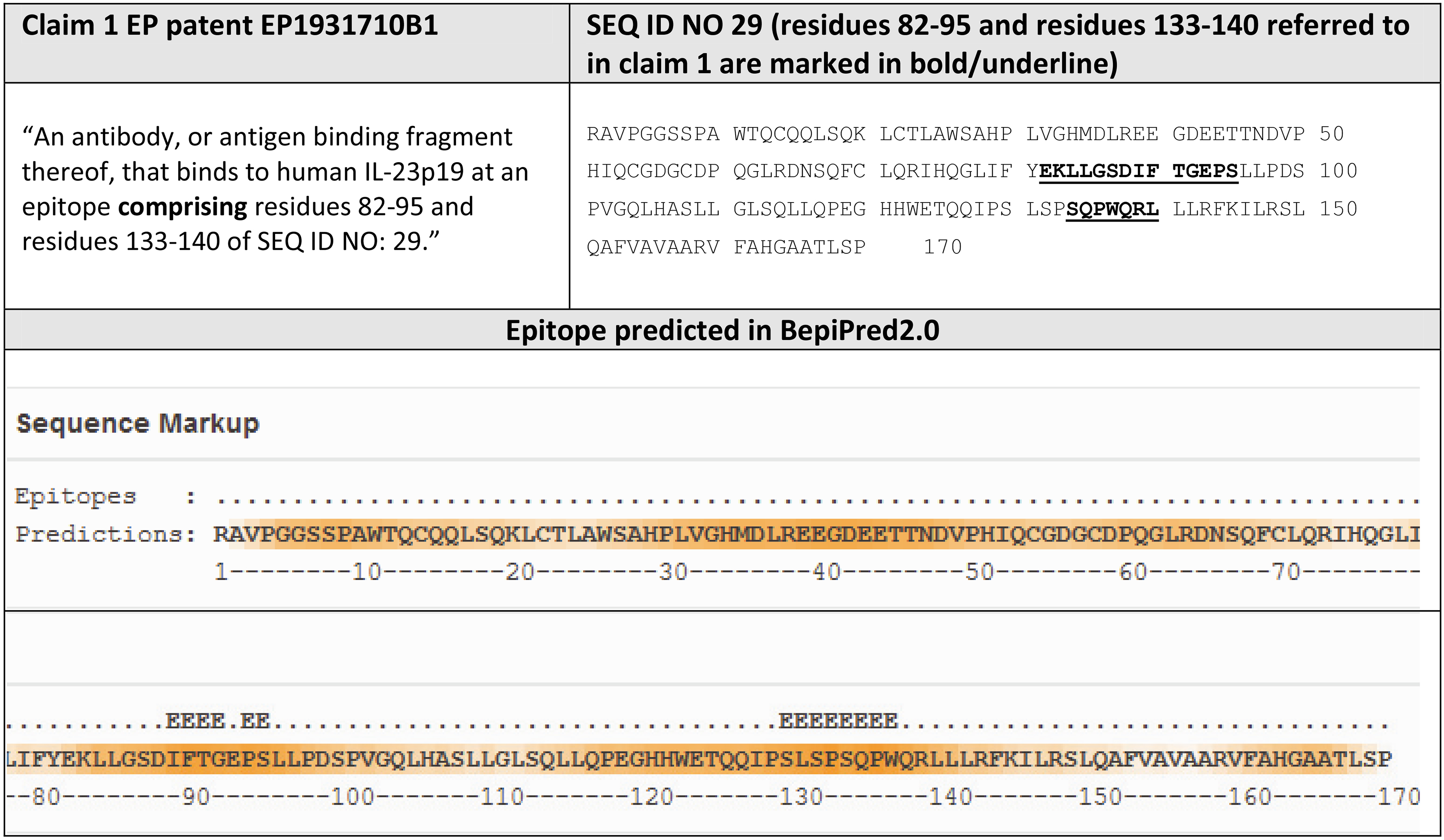
During the proceedings, the patentee filed a new main request in which claim 3 and some dependent claims were deleted, thus no longer embracing Merck’s pembrolizumab. Said move came pre-emptively, i.e., without waiting for the preliminary opinion by the Opposition Division. As a consequence, the patent was maintained in amended form on March 2, 2017, and no appeal was filed. From an observer’s perspective, and in the interest of legal certainty, said move was somewhat regrettable, as a chance was missed to see how the BoA would have judged this claim type, in view of the objections raised.
The above discussion makes clear that the patentability of epitope-based patent claims is still an open question.
In the United States, the major issue is written description and, as of recently, enablement. Court opinions are oscillating around this requirement, with the sword of Damocles being the question whether a judge or jury will be satisfied that an applicant has supported the genus claim by a sufficient number of representative species. In particular, the open questions will be: How much is sufficient, and will a test be ever available to help solve cases on a more reproducible basis?
Another, more fundamental debate in the United States is the question whether or not 35 U.S.C. §112 really codifies enablement and written description as two separate patentability requirements. Although standing caselaw has repeatedly confirmed this, the arguments of those who are denying this bifurcation are at least not completely unsubstantiated.
In Europe, the major issues are enablement and inventive step. At least, the ODs have recently provided some guidance what is deemed necessary to meet the enablement criterion (see cases EP1931710B1 (IL23) and EP2990420 B1 (IL4R)).
However, unlike in target- and sequence-based antibody claims, a practicable test for inventive step has so far not been established. In the absence of a suitable test, patentability questions of epitope-based claims will have to be solved wth the usual toolbox the European Patent Convention (EPC) and the applicable case law can offer. Unlike written descriptiom, however, inventive step is a moving target, where the bar is continuously set higher with technical progress.
Generally, under the approach the EPO pursues, a patent claim fails to meet the inventive step test if its subject matter – meaning, the combination of features that is recited in the claim – was obvious from the closest prior art, usually when referred to in combination with a second prior art document.
As discussed above, the EPO does not pursue this approach in sequence-based claims. In epitope-based claims, EPO examiners seem to be inclined to accept that, in case a target is known, an epitope thereof which is so far not explicitly disclosed is not only novel, but likewise inventive, at least when binding thereof has an effect (see the 1
Epitope prediction can today be accomplished by means of in silico approaches [34]. Epitope software like BepiPred 2.0 [35] is capable of predicting potential epitopes of a given protein sequence. See Fig. 3 for an example, in which SEQ ID NO 29 of the anti IL23 patent EP1931710B1 was analyzed for potential epitopes. The results of that preduction match quite nicely with the epitope sequences that were actually claimed in the patent.
Another routine approach is immunization of a mouse with a series of overlapping peptides, each of which represents a different subsection of the target protein (e.g., a library of 15-mers with a uniform overlap of e.g. 3 amino acids). Textbooks [36] describe that synthetic peptides are good immunogens, so that there would usually be no difficulty in raising antibodies against them instead of the entire protein, by classical immunization procedures, even if the purpose for raising antibodies against such peptide fragment is to obtain a reagent that will also react strongly and specifically with the complete protein.
Just like with EPO case law, academic literature discussing the question of inventive step in epitope-based claims is rare. In one article from 2017 [37], the authors discuss that claims for antibodies with linear epitopes can be subject to obviousness challenges, since the target antigen’s sequence and the use of corresponding short linear peptides for immunization are deemed to constitute routine practice.
Hence, it is necessary that the BoA develops a reliable and reproducible test to assess inventive step in epitope-based claims. The pending cases discussed above (EP2215124B1 (PCSK9) and EP2990420B1 (IL4R), which are already in appeal, and EP1931710B1 (IL23), which will likely make it into appeal, seem to offer a chance for BoA 3.3.04 to accept this challenge.
At least, pending confirmation by the BoA, opponents should prepare to generate epitope data of earlier antibodies, and, if suitable, submit such data (as intrinsic property of a prepublished antibody) into opposition proceedings, to support novelty attacks based on prepublished antibodies against the same target.
And applicants should make sure that, in case a functional characteristic is claimed, sufficient information is given as to which assays are necessary to test for the presence of said characteristic, so that the skilled person is not left alone in the selection which assays to choose – given that different assays can deliver different results. And, a sufficient number of examples that actually represent the claimed embodiment – e.g., a human antibody – should be provided.
Footnotes
Conflict of interest
The author declares no conflct of interest.
Disclaimer
The information provided herein reflect the personal views and considerations of the author. They do not represent legal counsel and should not be attributed to Michalski