Abstract
With the rapid development of global navigation satellite system (GNSS) technology, IGS signals play a crucial role in many fields such as positioning, navigation, and time synchronization. Nevertheless, the multipath error problem seriously affects the performance of IGS signals in practical applications. In this paper, the multipath error problem of IGS signals is studied in depth, and an improvement method based on a digital filtering technique is proposed. The article first provides a comprehensive analysis of the impact of multipath error and identifies the shortcomings of existing studies, thus clarifying the motivation of this study. Subsequently, this paper uses digital filtering techniques to estimate the multipath error accurately and designs a corresponding improvement strategy. Through experimental verification, this paper demonstrates the significant effect of the improved method in improving signal quality and positioning accuracy. Finally, the article summarises the research results. It discusses their potential promotion value in IGS signal reception and related applications, which provides important theoretical support and practical guidance for future technology development and applications.
Introduction
The Global Navigation Satellite System (GNSS) plays an important role in the modern fields of positioning, navigation, and time synchronization, and Fig. 1 shows the GNSS device system. As one of the important components of GNSS, Inertial Guidance System (IGS) signals play a key role in providing highly accurate positioning and navigation information [1]. Refinement and Precision of Signal Processing: Through filtering algorithms, multipath error signals can be effectively removed or suppressed, thus improving signal quality. Frequency domain analysis and feature extraction: digital filtering technology can analyze the signal in the frequency domain, from which the features of multipath error can be extracted. By examining the spectral information of the signal, it can identify and locate the multipath error and provide a basis for subsequent correction.
Global navigation satellite device system.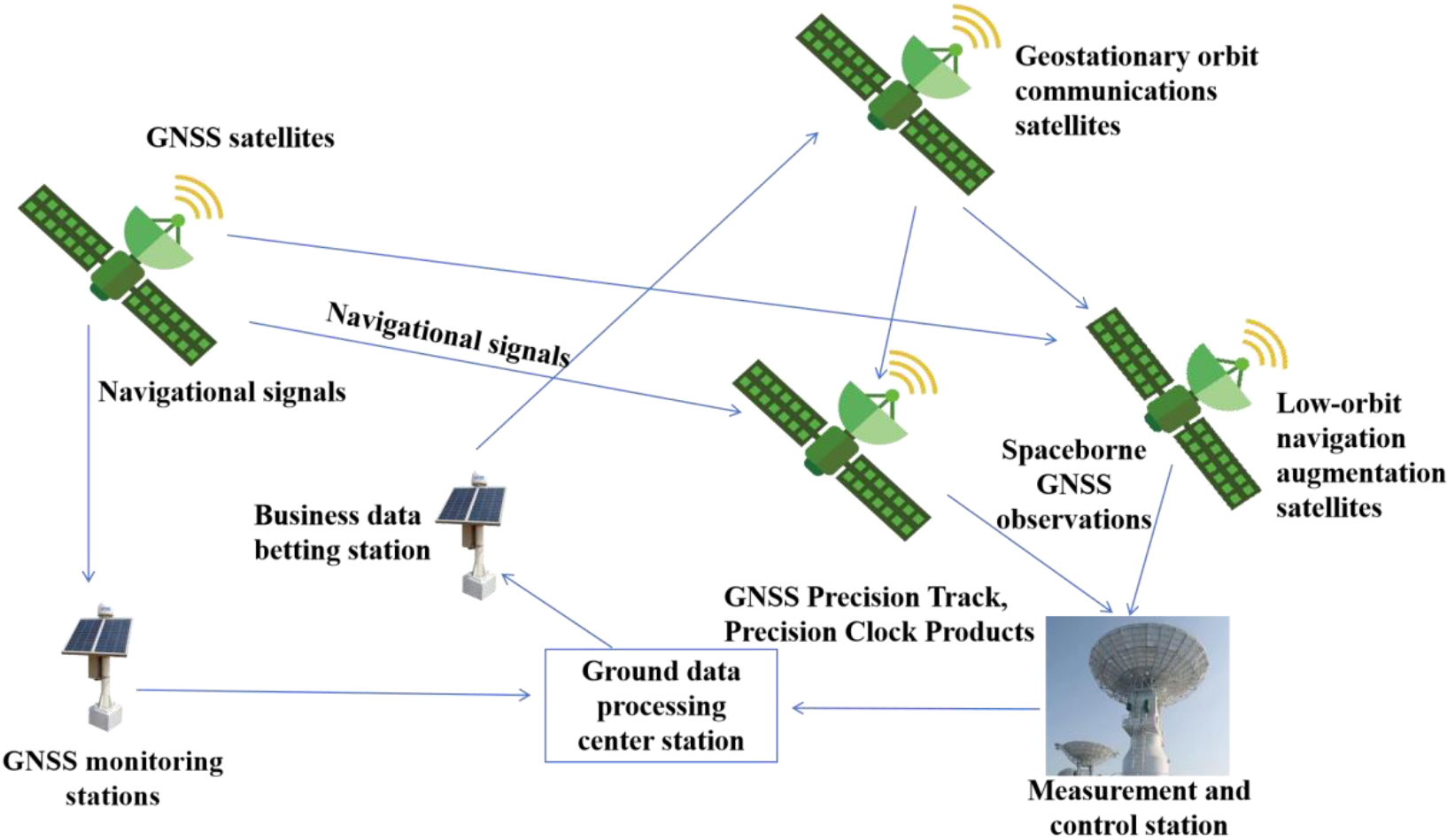
However, IGS signals often face the multipath error problem in practical applications, which is due to the reflection and diffraction effects of the signal from the ground, buildings, and other environments during the propagation process, resulting in the received signals containing both the original and the reflected signals, which in turn affects the accuracy and reliability of positioning and navigation. Therefore, the estimation and improvement of the multipath error of IGS signals has become an important topic in current research. This paper aims to carry out relevant research based on digital filtering technology and propose an effective multipath error estimation and improvement method to enhance the positioning and navigation performance of IGS signals in practical applications.
Currently, the research on multipath errors of IGS signals has received a lot of attention, and scholars have explored and studied multipath errors to some extent through modeling, field testing, and data analysis. However, the existing studies often focus on the analysis and modeling of the error, and there are relatively few studies on how to estimate and improve the multipath error effectively. Therefore, it is necessary to try to propose an effective method for estimating and improving the multipath error of IGS signals by introducing the digital filtering technique, to meet the demand for accuracy and reliability of IGS signals in practical applications [2]. Although some related research has made preliminary discussions on digital filtering techniques in multipath error estimation of IGS signals, such as the new MEMS INS/GPS integration scheme using parallel Kalman filters or the application of street tracking algorithms in feedback configuration of INS/GPS integrated navigation systems, there are still many issues to be solved, such as the digital filtering techniques on high-frequency interference effect, etc. This study aims to investigate the multipath error problem of IGS signals through digital filtering techniques and propose an effective multipath error estimation and improvement method [3]. The design idea of digital filters consists of looking at it from both the time domain and the frequency domain. In the time domain, the designer needs to consider the impulse response characteristics of the filter to determine the cut-off frequency, transition bandwidth, and other parameters of the filter; in the frequency domain, the designer needs to pay attention to the frequency response characteristics of the filter, such as pass-band ripple, and stop-band attenuation. Specifically, this paper will deeply analyze the impact of multipath error of IGS signals, based on which, a digital filtering technique is introduced to propose a feasible error estimation method and further explore the improvement strategy of multipath error, aiming to enhance the accuracy and reliability of IGS signals in positioning and navigation.
In this paper, the impact and background knowledge of multipath error of IGS signals will be introduced first, and the current status and problems of related research will be summarized. Then, the methodology and steps of this study will be elaborated, including the application of digital filtering techniques in the estimation and improvement of multipath errors of IGS signals, as well as the experimental design and data analysis. Finally, the results of this study will be summarized to discuss the significance of the research in the application field of IGS signals and the future development direction.
Reference [4] uses EKF to generate the important density function of particle filtering. However, because many system state equations are nonlinear, EKF ignores the high-order terms of Taylor expansion in the linearization process. Reference [5] improves the multipath estimation algorithm of particle filtering based on differential evolution (DE). The selection of scaling factor F and crossover factor CR in the differential evolution algorithm seriously affects the algorithm performance, causing the optimization ability and convergence speed of the differential evolution algorithm to contradict each other, and there is a certain error in parameter estimation. Wang et al. [6] proposed a multi-path semi-spherical model based on trend surface analysis to alleviate high-frequency and low-frequency multipath. Wang Yawei et al. [7] established a semi-celestial sphere network point model by constructing grid point parameters based on the residuals of double difference observations. Song et al. [8] proposed a method for correcting multipath errors of GEO satellites based on wavelet decomposition, which effectively corrected the multipath errors of GEO satellites; Xie Bingchen et al. [9] used wavelet decomposition to denoise the periodic errors of multipath correlation, improving the accuracy of Beidou deformation monitoring. Yang Wei et al. [10] proposed a BDS multipath attenuation method based on the characteristics of BDS constellations, which combines stellar day filtering and wavelet decomposition to improve BDS positioning accuracy. Reference [11] used an adaptive unscented Kalman filter (AUKF) to adjust the covariance matrix by introducing adaptive factors. The results showed that the positioning accuracy was improved, but the influence of colored noise was not yet considered.
Digital filtering techniques multipath error estimation with IGS signals
Digital filtering techniques
Digital filtering principles and methods
Digital filtering is a method of filtering signals using digital signal processing techniques. In practice, digital filtering technology is widely used to eliminate noise, separate signals, and extract features. When dealing with multipath errors in IGS signals, digital filtering techniques can be used to process the original signal to extract the desired information and eliminate the effects of multipath errors [12].
Common digital filtering methods include finite impulse response (FIR) filtering and infinite impulse response (IIR) filtering.FIR filters, whose outputs depend only on the input and past input values, are capable of eliminating multipath errors when the system is stabilized. In contrast, IIR filters allow the system output to be correlated with past output values, which has the advantage of enabling narrower frequency characteristics.
FIR FILTERS: FIR filters are characterized by linear phase and stability, and when dealing with multipath errors in IGS signals, FIR filters can be designed with an appropriate frequency response to filter out the high-frequency components introduced by multipath propagation.IIR FILTERS: IIR filters are generally more computationally efficient, but more care is needed when dealing with multipath signals, as they may introduce instability. However, in some specific application scenarios, IIR filters can also be effectively applied to deal with multipath errors in IGS signals.
Finite impulse response (FIR) filtering
Finite impulse response (FIR) filtering is a method of digital filtering characterized by the fact that the impulse response of the filter converges in a finite time and does not oscillate continuously [13] The differential equation of FIR filtering in general form can be expressed as:
Where,
The structure of the FIR filter is shown in Fig. 2.
Structure of FIR filter.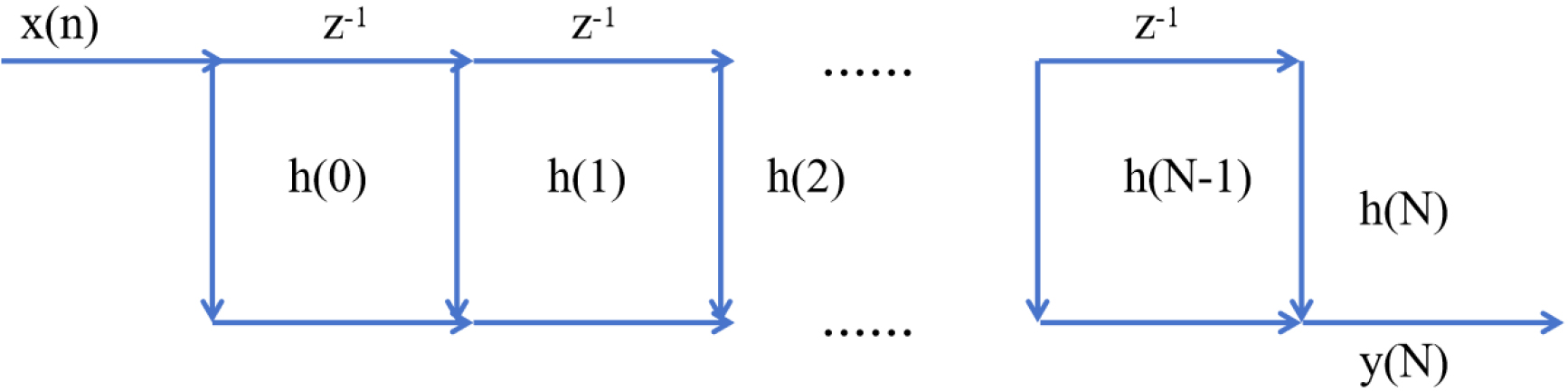
Infinite impulse response (IIR) filtering
Infinite Impulse Response (IIR) filtering is another digital filtering method that is characterized by the impulse response of the filter persisting for an infinite amount of time. The general form IIR filter differential equation can be expressed as:
Where
The structure of the IIR filter is shown in Fig. 3.
Structure of IIR filter.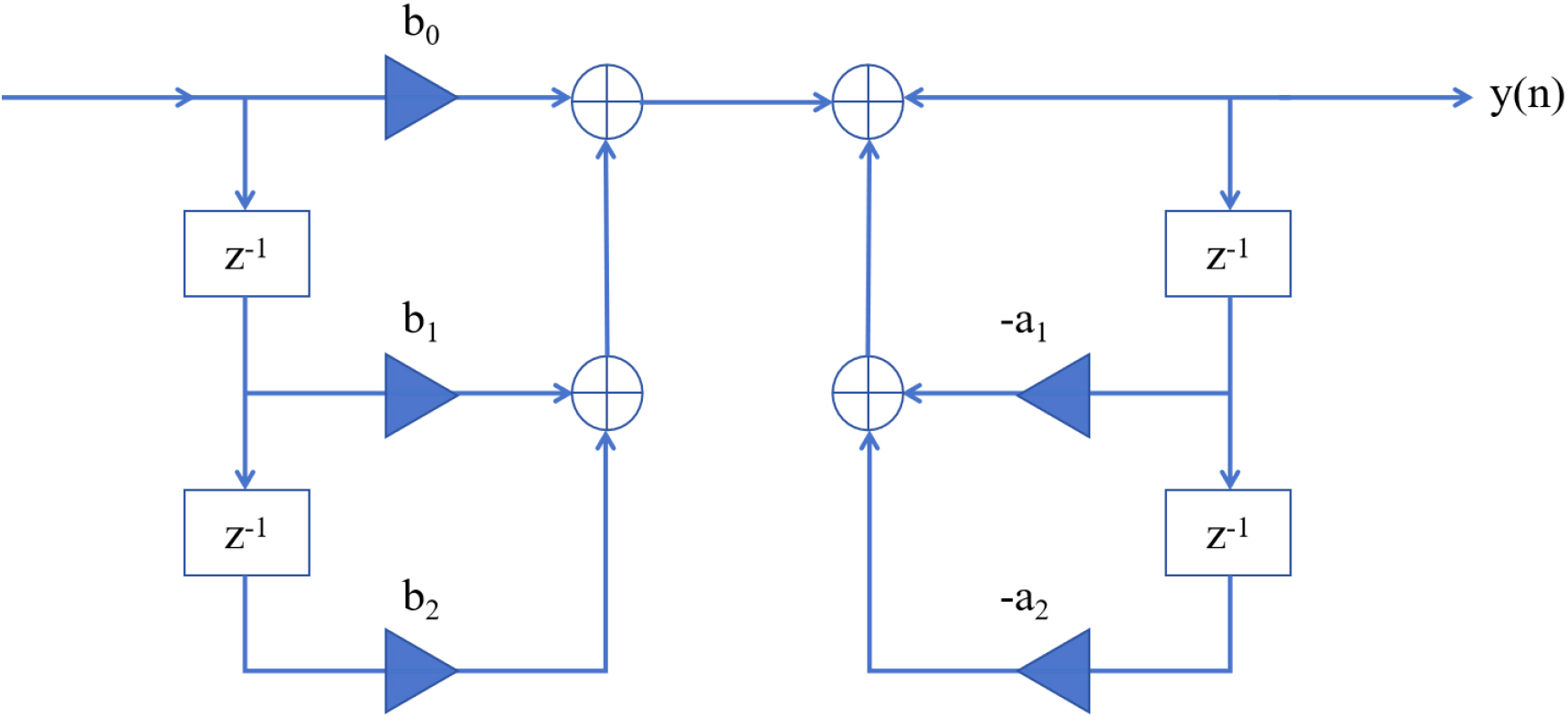
Digital filters can use different filtering methods or filtering parameters depending on the signal, which is flexible, convenient, and functional. Commonly used digital filtering algorithms: arithmetic mean method, median value filtering method, limit filtering method, and chronic filtering method [13].
Arithmetic mean filter
The arithmetic mean method is a simple and commonly used digital filtering algorithm, which is based on the principle of filtering by calculating the arithmetic mean of the signals within a window. Specifically, the arithmetic mean method averages multiple consecutive signal samples within a window as the output and reduces noise and jitter in the signal through averaging. The method is simple and easy to use and is suitable for smoothing noise, but it is not effective for large impulse noise and ramp noise. The arithmetic mean method is sensitive to noise, and when there is a large noise disturbance in the signal, it can cause the mean to be affected by the noise, resulting in a large error.
Median filter
The median value filtering method is a digital filtering method by selecting the middle value of the window as the output. The method achieves the effect of reducing outlier interference by sorting a set of data and then selecting the value in the middle position as the output. The median value filtering method has a better suppression effect on impulse noise and slope noise, can effectively remove outliers, and does not cause too much signal smoothing, so it also has a better application in some occasions with high real-time requirements. The median value filtering method arranges a set of data in ascending order and takes the value in the middle position as the filtered output [15]. However, the median filtering method may lead to blurring of details in the image or signal, especially for smaller features or edges.
Limiting filter (clipping filter)
The limiting filtering method, also known as truncation filtering, is based on the principle of limiting the signal by setting upper and lower limits, which is effective in suppressing sudden disturbances and large amplitude noise. When the signal exceeds the specified range, the output signal is truncated between the upper and lower limits [16]. The limit filtering method is suitable for situations where the amplitude of the signal is limited, but it can lead to distortion of the signal. The limit filtering method reduces the effect of anomalous data by setting a range and limiting the input signal values that exceed that range. The difference equation of the limit filtering method can be expressed as:
Chronic filter (exponential filter)
Chronic filtering is a filtering method that adjusts the degree of filtering according to the rate of signal change. This method realizes filtering by a weighted average of the current signal value and the filter output of the previous moment, which is often used for smoothing slowly changing signals. The chronic filtering method has a better suppression effect on rapidly changing noise and can preserve the dynamic characteristics of the signal, but it needs to set a suitable time constant to balance the filtering effect and response speed.
Application of digital filtering techniques to multipath error estimation of IGS signals
IGS signals are subject to multipath effects during propagation, resulting in variations in the arrival time and amplitude of the signals, generating multipath errors [18]. Therefore, accurate estimation and compensation of multipath errors are important for IGS signal processing. Digital filtering technique, as a signal processing means, can effectively remove the noise and interference in the signal and extract the required information and thus has potential application in the estimation of multipath error in IGS signals. Table 1 shows the application of the digital filtering technique in multipath error estimation of IGS signals.
Application of digital filtering techniques in multipath error estimation of IGS signals
Application of digital filtering techniques in multipath error estimation of IGS signals
The multipath error estimation of IGS signals can be performed by digital filtering techniques, and the selection of appropriate digital filtering methods can effectively reduce the impact of multipath errors on the signals and improve the accuracy and stability of signal processing [19]. Therefore, digital filtering techniques have potential application prospects in multipath error estimation of IGS signals.
Advantages:
Flexibility: digital filters are flexible as the parameters can be easily adjusted to meet different signal processing needs. Accuracy: Digital filters can provide highly accurate signal processing and filtering, making them useful for applications that require precise control. Programmability: digital filters can be implemented programmatically, allowing them to be modified and customized to suit specific application scenarios.
Disadvantages:
Sampling frequency limitation: the performance of digital filters is limited by the sampling frequency, which may result in signal distortion or loss of information if the sampling frequency is insufficient. Latency: Processing delays introduced by digital filters may affect applications with high real-time requirements, such as audio processing or real-time control systems. Computational complexity: Some advanced digital filter algorithms may require significant computational resources, and therefore may increase the computational complexity and power consumption of the system.
IGS signal multipath error analysis
IGS signal characteristics and applications
The International GNSS Service (IGS) signals have many unique characteristics as follows, Fig. 4 shows the distribution of IGS stations in China.
GLOBAL COVERAGE: IGS signals are characterized by global coverage and are capable of providing a continuous and consistent signal worldwide [20]. High-precision positioning: IGS signals have very high precision and are suitable for a variety of applications that require high-precision positioning. Multiple signal frequencies: IGS signals can provide signals at multiple frequencies to meet the needs of different accuracy and applications. Long-baseline observation: IGS signals are suitable for long-baseline observation, which are useful for geodetic and geoscientific research [21].
The applications of IGS signaling are shown in Table 2.
Application of IGS signals
Distribution of IGS sites in China.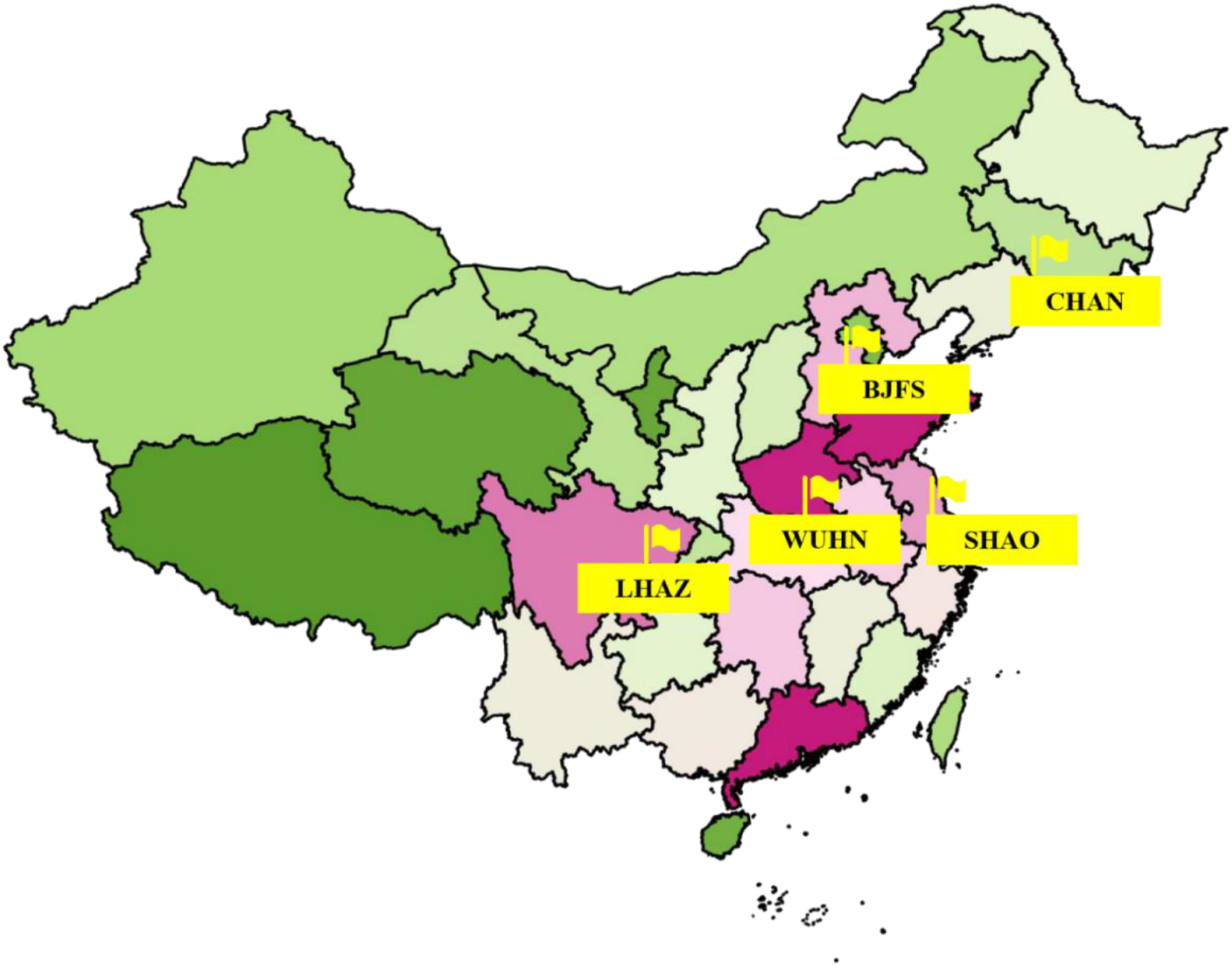
The global coverage of IGS signals and the availability of multiple frequencies make them susceptible to multipath effects. The multipath effect is an error caused by phenomena such as reflection and refraction of the signal with the ground, buildings, or other obstacles during propagation. These errors cause the receiver to receive signals from different paths, thus affecting the positioning accuracy. For multipath errors, the high-accuracy positioning and long baseline measurement characteristics of IGS signals can be used for correction. By receiving signals at different frequencies and combining differential positioning techniques and complex signal processing algorithms, the effects of multipath errors can be reduced.
Multi-path error means that when a GNSS receiver receives satellite signals, in addition to the signals on the direct path, it also receives signals that arrive at the receiver after reflections. These reflected signals result in aliasing and interference of the original signal, causing errors in the receiver’s interpretation of the satellite signal. Figure 5 shows a schematic of the multipath signal propagation path.
Schematic diagram of multipath signal propagation paths.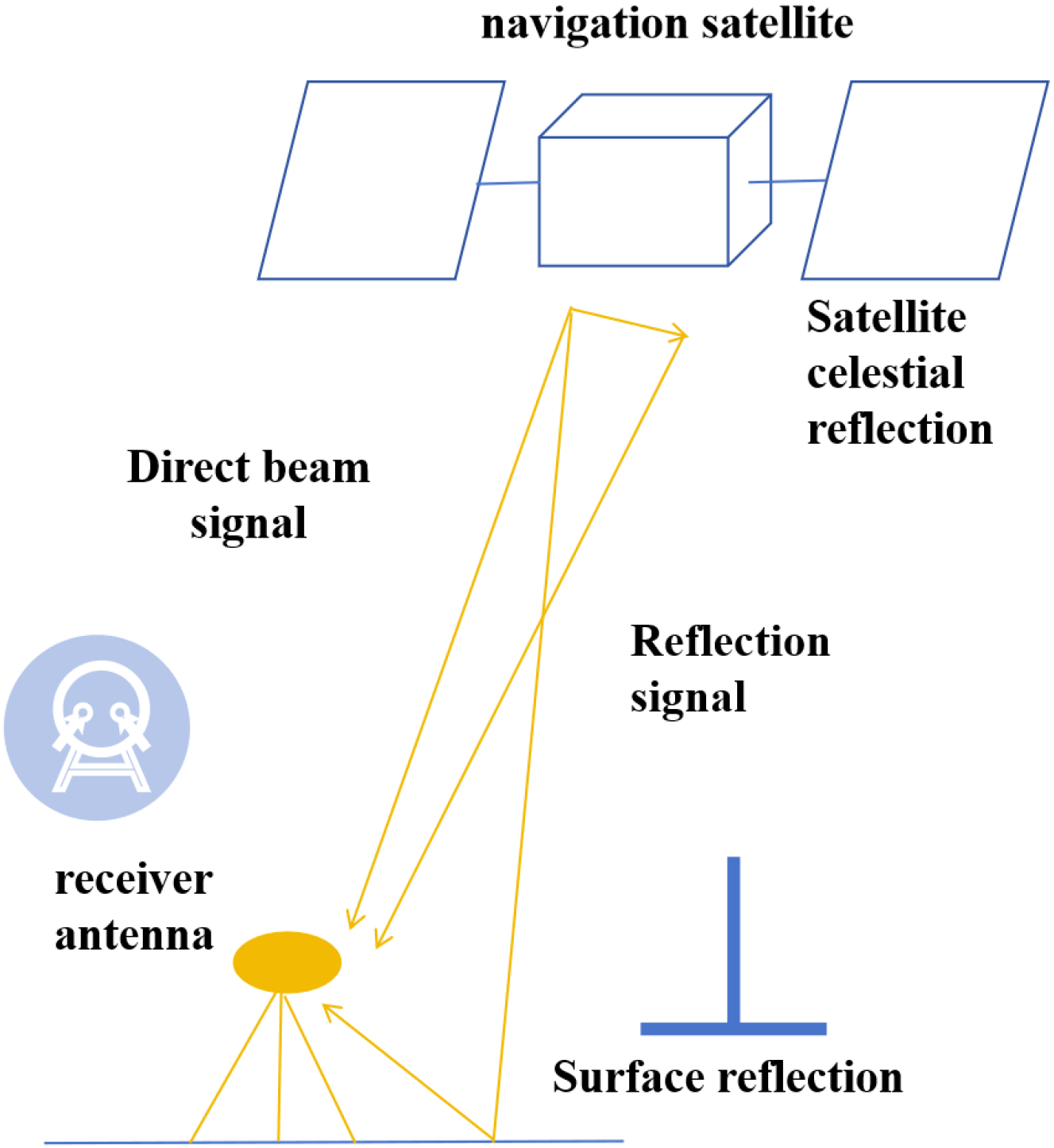
Multipath errors are a common problem encountered in the propagation of GNSS signals, which affect the accuracy and stability of the signals [22]. Multipath errors cause the receiver to pick up raw signals from the satellite as well as signals that have been reflected from the ground, which are superimposed at the receiver, causing instability in signal latency and power. IGS signals, as part of the international GNSS service, are also affected by multipath errors. Multipath errors cause the signal to produce additional reflected signals at the receiver, which affects the appearance time and power of the original signal. This effect can lead to misinterpretation of the satellite signal, which reduces the accuracy and reliability of the positioning. The main effects of multipath errors on IGS signals are as follows:
Decrease in localization accuracy: Multipath errors, which cause signal delays and fluctuations in signal strength, can significantly diminish the precision of localization. This degradation in accuracy is particularly pronounced in intricate urban settings and rugged terrains, where the impact of such errors is more pronounced [23]. Reduced signal stability: Due to the interference of multipath reflected signals, the stability of IGS signals will be affected, leading to a reduction in signal reliability. Impaired data accuracy: multipath errors affect the raw data of IGS signals, leading to impaired data accuracy and affecting the accuracy of subsequent geoscientific research and positioning and navigation applications.
Solutions to mitigate the impact of multipath errors on IGS signals:
Antenna Selection and Arrangement Optimisation: Select the appropriate antenna type and location, and optimize its arrangement to minimize the impact of multipath signals. Signal Processing Technique Improvement: Use advanced signal processing techniques, such as multipath suppression algorithms, beamforming, etc., to identify and suppress multipath signals. Terrain and Building Modelling: Create 3D models of terrain and buildings and use these models to predict and simulate the propagation path of multipath signals. Differential Positioning Techniques: Differential positioning techniques are used to eliminate or minimize the effects of multipath errors. Differential positioning reduces the effects of multipath errors by using observations from a reference station to correct the positioning results from the master station.
The design and optimization of digital filters is a critical step in ensuring high-quality multipath error estimation for IGS signals. The following provides details of the design and optimization strategies and how they can be validated through mathematical modeling and experimental analysis.
Design guidelines
The design of digital filters must follow specific guidelines to ensure effective suppression of multipath errors. Design guidelines include:
Filter stability: Ensure that the output signal does not diverge over time, the output of the filter can only depend on current or past input values at any point in time and not on future input values. This means that the response of the filter cannot exhibit predictive behavior, which would result in divergence of the output signal. Linear phase characteristics: Keep the time delay of different frequency components consistent to avoid signal distortion. Satisfy predefined performance metrics: according to the application needs, such as bandwidth setting, fluctuation, and attenuation in passband and stopband [25].
For IGS signal processing, the commonly selected filter structures include FIR and IIR. FIR filters are commonly used in application scenarios that require linear phase characteristics and stability, such as speech processing, image processing, signal reconstruction, etc. IIR filters are typically used in application scenarios that require higher filter efficiency and lower resource consumption, such as audio equalizers, biomedical signal processing, and communication systems. Considering the adaptability and realizability of the filters in practical applications, FIR filters are preferred in most cases, although their computational effort is greater than that of IIR filters.
Parameter optimization
Parameter optimization involves several aspects such as cutoff frequency, filter order, and window function type. The determination of these parameters is affected by the IGS signal characteristics and the spectral distribution of the multipath error. Usually, advanced optimization techniques such as genetic algorithm and particle swarm optimization are used for parameter optimization. The selection of an appropriate optimization algorithm depends on the requirements of the design and the objectives of the optimization. For example, in real-time applications, the computational efficiency and convergence speed of the algorithm may need to be considered.
Design methods
FIR filter design usually uses the window function method, frequency sampling method, or optimization algorithms (e.g., least squares method, minimum phase method, etc.).IIR filter design usually uses the impulse response invariant method, bilinear transformation method, frequency transformation method, or optimization algorithms (e.g., elliptic method, Butterworth’s method, etc.).
Research on multipath error improvement method for IGS signals
Principle of error improvement based on a digital filtering technique
Principles of digital filtering techniques
In the study of multipath error improvement methods for IGS signals, digital filtering techniques are widely used to reduce the effect of multipath on the signal. The principle of digital filtering is to process the signal using mathematical models to eliminate or attenuate the multipath effect. When dealing with multipath errors in IGS signals, the principles of digital filtering techniques mainly include sampling, reconstruction, filtering, and resampling.
The sampling process is designed to convert a continuous analog signal into a discrete digital signal, allowing the signal to be processed by a digital system. The multipath error in IGS signals manifests itself in the form of multiple received signal pulses, and sampling discretizes these pulses, allowing for subsequent processing.
The reconstruction process involves recovering the signal obtained from sampling to obtain a digital signal that is as close as possible to the original analog signal. When processing IGS signals, the reconstruction process is effective in reducing the signal distortion caused by multipath errors and improving the accuracy of the signal [26]. Interpolation is a commonly used signal processing technique to achieve smooth signal recovery by estimating the values of new data points between known data points. In IGS signal processing, the interpolation method can effectively reduce the distortion caused by multipath errors, making the reconstructed digital signal closer to the original analog signal. The filtering process is the core of the digital filtering technique, where digital signals are processed by designing suitable filters to filter out the extra signal components introduced by multipath errors. In the processing of IGS signals, the filtering process reduces the influence of multipath effects on the signal spectrum and power and improves the stability and accuracy of the signal. Resampling is the process of resampling the filtered signal to calibrate the sampling frequency and time interval of the signal. In IGS signal processing, the resampling process allows the signal to match the sampling frequency of the receiving device, making further signal processing more efficient. Figure 6 shows the logical steps of the digital filtering technique.
Logical steps of digital filtering technique.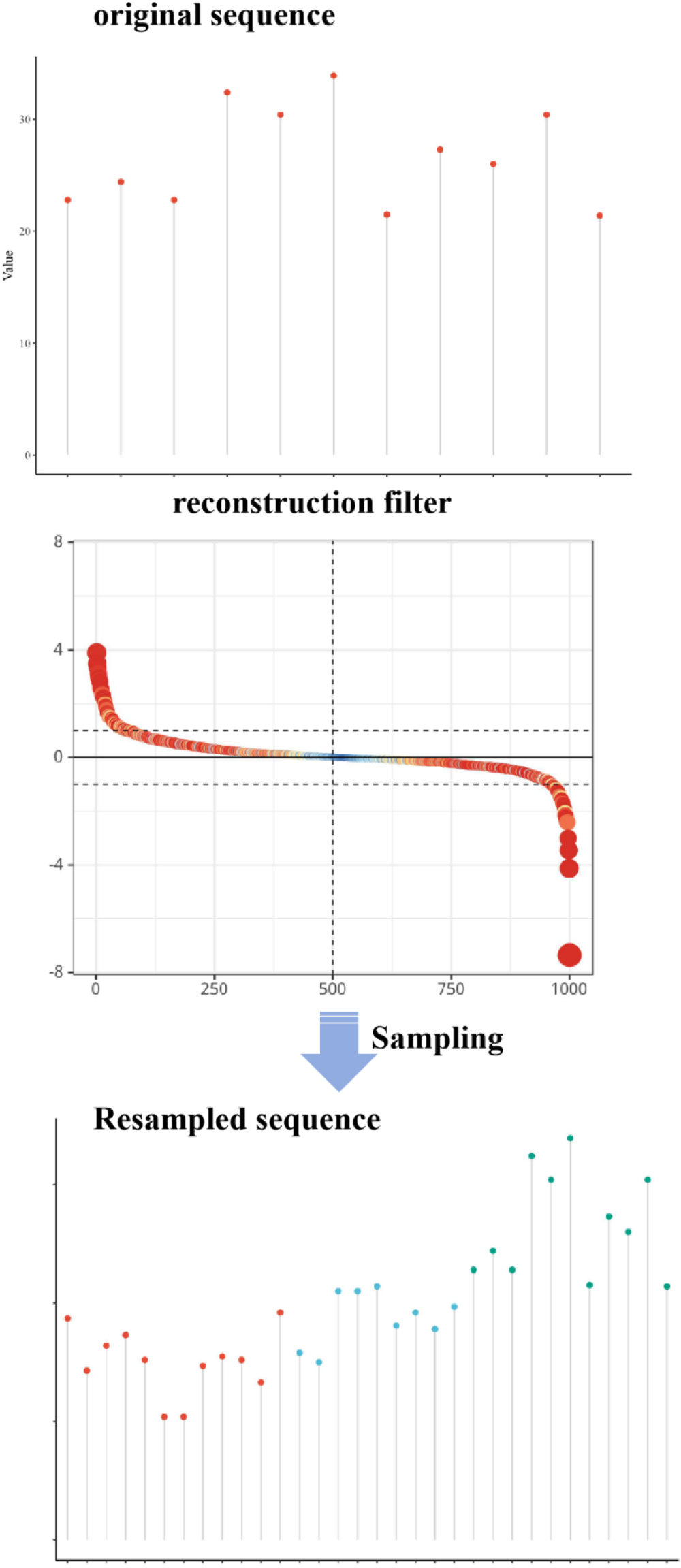
Resampling is the process of resampling the filtered signal to calibrate the sampling frequency and time interval of the signal. In IGS signal processing, the resampling process allows the signal to match the sampling frequency of the receiving device, making further signal processing more efficient.
Estimation and improvement of multipath error is a key task in precision data processing for Global Navigation Satellite Systems (GNSS). This part details the methods of multipath error estimation and the strategy of error improvement using the Least Mean Square (LMS) algorithm.
Let the pseudorange and carrier observation equations for the different frequency bands be.
See the literature for the interpretation of the parameters in Eq.
Since the ionospheric delay error and multipath error are frequency-dependent parameters, the dual-frequency pseudo-range and carrier observations are consistently differenced using the CMC method to obtain the observation equation for the station as:
where the parameter
The ionospheric delay errors in the
Substituting Eqs (7) and (8) into Eq. (6) yields.
Where
A set of output signals corresponding to the original input signals is obtained by filtering. Compare the output signal with the design signal to obtain the error vector. Continuously update the filter weighting coefficient matrix based on the error vector [28].
The filtering closed loop consisting of 3 steps is shown in Fig. 7. The closed loop can be equivalently expressed as.
Where:
Typical LMS closed loop.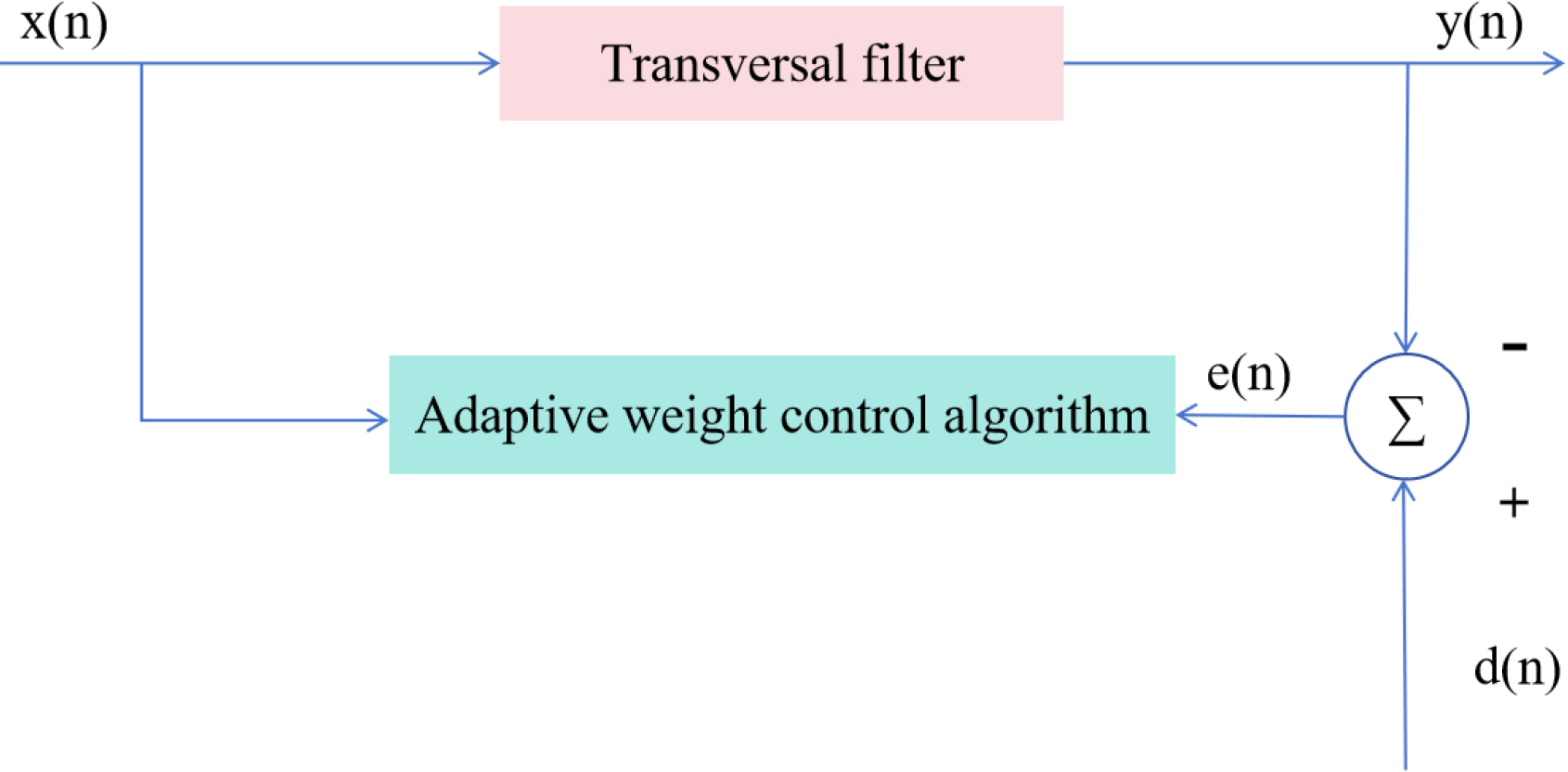
In the practical application of LMS algorithms, the performance of the algorithm needs to be evaluated in detail. The performance evaluation includes the convergence speed of the algorithm, the stability of the error, and the robustness of the algorithm. To evaluate these performance metrics, tests can be performed using real GNSS data, or signals containing simulated multipath effects can be designed for verification.
Based on the LMS algorithm, the following improvements can be taken to further improve the efficiency and accuracy of multipath error processing:
Selection of adaptive step size: Dynamically adjust the step size according to the change of the error signal to achieve fast convergence and high stability. Fuzzy Degree Solving and Verification: Combine the carrier phase observations to solve and verify the fuzzy degree to improve the accuracy of multipath error processing. Utilization of a priori information: If possible, use historical data or environmental models as a priori information to initialize the filter weights and improve the filtering effect. Optimization of weight updating algorithms: Research on more efficient weight updating strategies, such as Regularized LMS (RLMS) or Normalized LMS (NLMS) algorithms, to improve the algorithm’s resistance to noise.
Ultimately, the improved multi-path error processing method is implemented in software form and code optimization is performed to ensure its efficient operation. The software implementation should include a human-computer interaction interface to enable the user to conveniently input data, set parameters, and view the algorithm operation status and processing results.
Based on the principles of the digital filtering technique described above, an improved algorithm for multipath error of IGS signals can be designed and implemented. This study proposes an optimization strategy for multipath errors in IGS signals. Integrate adaptive filters, such as LMS, to dynamically adjust the coefficients to adapt to environmental changes. Use machine learning to identify multipath patterns to improve prediction accuracy. Tailor filter parameters with terrain analysis to enhance the filtering effect. Real-time evaluation tools to ensure algorithm stability and comprehensively improve signal processing accuracy. First, a suitable digital filter needs to be designed, including the filter type (e.g., FIR filter or IIR filter), filter parameters (e.g., cutoff frequency, passband fluctuation, etc.), and the structure of the filter. When designing the digital filter, the spectral characteristics of the IGS signal and the frequency-domain distribution of the multipath error need to be considered to ensure that the filter can effectively reduce the multipath interference [29]. Secondly, the digital filtering algorithm needs to be implemented, including the parameter setting of the filter, sampling and reconstruction of the signal, the filtering process, and resampling. In the realization process, the efficiency and practicality of the algorithm need to be considered to ensure that it can be processed effectively in practical applications.
In designing and implementing the multipath error improvement algorithm for IGS signals, we can consider utilizing Discrete Fourier Transform (DFT) and digital filters. The Discrete Fourier Transform (DFT) converts a time-domain signal into a frequency-domain representation, which allows us to better understand the spectral characteristics of the signal. The design of suitable digital filters can target the removal of interfering signals based on the spectral characteristics of multipath interference, thus improving the signal quality and the accuracy of the navigation system.
First, we need to sample the signal and then apply DFT to transform the signal from the time domain to the frequency domain. In the frequency domain, we can process the signal using digital filters to reduce the effect of multipath errors, and finally restore the signal to the time domain by inverse DFT. In the following, we will cover the specifics of discrete Fourier transform and digital filters.
Discrete fourier transform (DFT)
The discrete Fourier transform converts a discrete time-domain sequence into a frequency-domain sequence and can be expressed as the following equation:
Where
For digital filters, we can choose either FIR (finite impulse response) filters or IIR (infinite impulse response) filters, and here we take FIR filters as an example. The frequency response of a FIR filter can be expressed as the following equation:
Where
Schematic diagram of digital filter-based processing of multipath errors in IGS signals.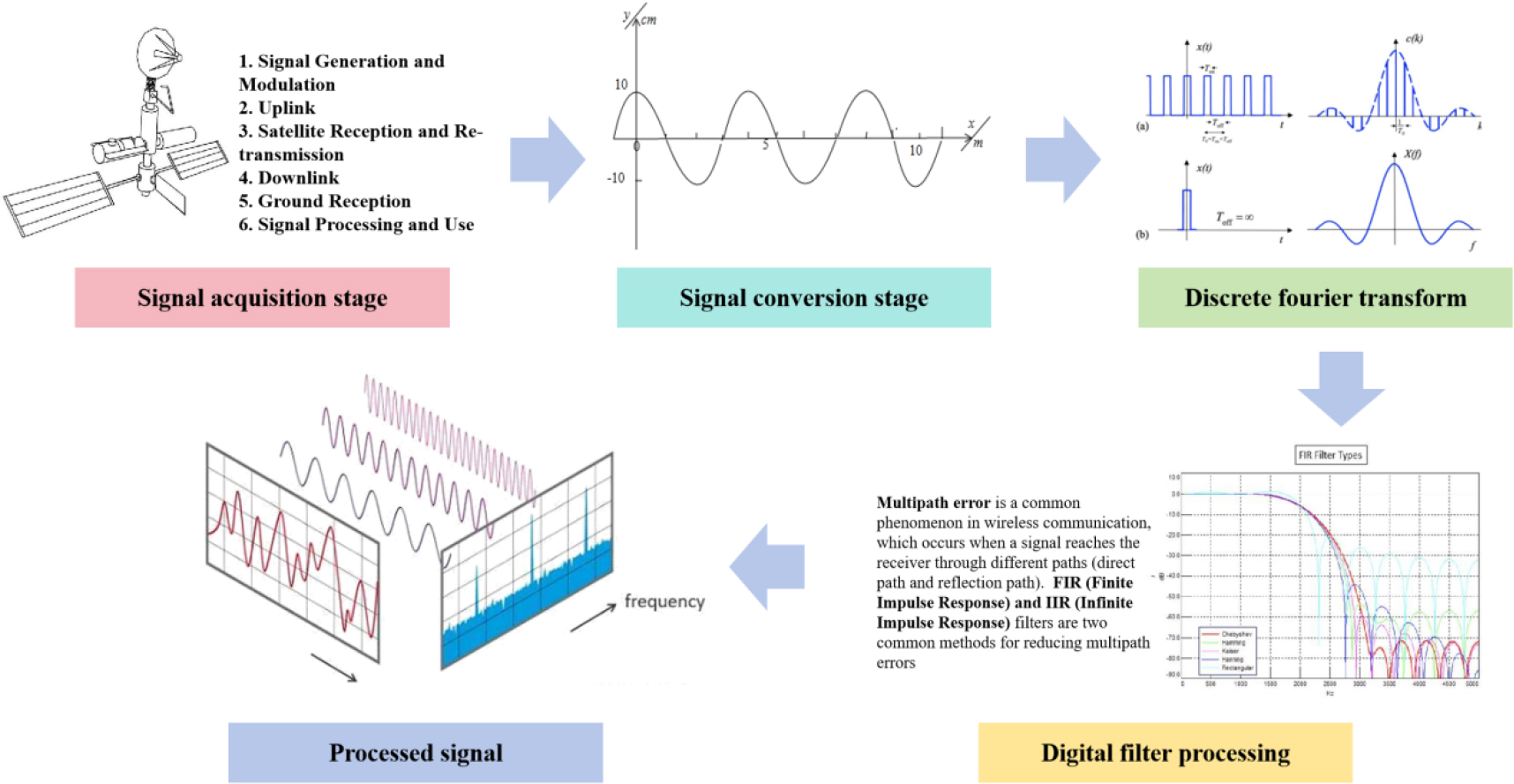
By combining the steps of sampling, DFT, digital filtering, and inverse DFT, we can design an efficient multipath error improvement algorithm for IGS signals and achieve the goal of efficient processing in practical applications [30].
To ensure the objectivity and reliability of the experimental results, the experimental design requires a sufficient amount of data to be obtained from IGS receiving stations in different terrains. Five representative tracking stations, located in different terrain environments such as mountains, plains, coasts, and cities, were selected for the study. Depending on the terrain conditions, the impact of multipath effects is expected to vary, thus helping to fully assess the effectiveness of the proposed method [31].
Data acquisition
Data collection is mainly based on the following process:
Two consecutive days were selected (e.g., days 150 to 151 in 2012) to ensure that the data collected covered different climatic conditions and insolation.
Set the GNSS receivers at all tracking stations to collect data at a frequency of every 30 seconds to ensure the temporal resolution of the data.
Collect observations from each station, including raw multipath error values, signal strength, satellite altitude angle, and parameters such as atmospheric delays.
Pre-processing of the collected data, including signal denoising, data synchronization process, and initial multipath error priming.
Comparison of localization results before and after multipath error improvement in each terrain environment
Comparison of localization results before and after multipath error improvement in each terrain environment