





Abstract
The current cold chain logistics management and distribution routes generally face problems such as environmental pollution and high costs. Therefore, the study proposed an improved fireworks-artificial bee colony for optimizing delivery paths. Firstly, the artificial bee colony was improved by using neighborhood search. Secondly, for the optimal solution, the fireworks explosion operator was used for the final result search. The benchmark function validation showed that the proposed algorithm performed better than other algorithms in solving optimal value, average value, and standard deviation. In the simulation analysis of a fresh enterprise in China, the total delivery cost was reduced by an average of 3.30% and 4.93% compared to other algorithms, considering carbon emission and not considering it, respectively. This proposed algorithm had more advantages in reducing quality loss, pollutant emissions, and CE. Therefore, this improved fireworks-artificial bee colony can effectively reduce the economic costs and environmental pollution of cold chain logistics distribution routes. This ensures economic benefits while considering social benefits, achieving the optimal path planning for logistics distribution.
Keywords
Introduction
As the socio-economic development progresses, the people’s living standards continue to improve. The quality and transportation efficiency of cold chain products are difficult to meet people’s pursuit of high-quality material life. In addition, Cold Chain Logistics (CCL) has high costs and pollutes the environment during the delivery process. How to effectively reduce delivery costs and pollutant emissions is an urgent problem to be solved. The emergence of modern information technologies such as artificial intelligence and the Internet of Things has brought new ideas to CCL. By integrating with commercial logistics in all scenarios, CCL distribution can be achieved, which can improve CCL efficiency [1, 2]. Scholars often use artificial intelligence algorithms for the design and planning of logistics paths, which as an optimal route search algorithm mainly include Artificial Bee Colony (ABC), multi-objective, particle swarm optimization algorithms, etc. [3, 4]. ABC is an optimization algorithm that simulates bee honey picking and is commonly used for solving multi-dimensional problems or model optimization [5, 6]. However, traditional ABC is prone to getting stuck in local extremes during the solving process, resulting in poor accuracy and slow convergence speed. Therefore, the study proposed to improve ABC and designed an Improved Fireworks-Artificial Bee Colony (IFW-ABC) algorithm that combined Fireworks Algorithm (FWA). The convergence efficiency of the algorithm was improved by utilizing an improved neighborhood search strategy and fireworks explosion operator. This can reduce the transportation cost and pollutant content of CCL, achieving sustainable CCL distribution.
The study explores the distribution path optimization method for CCL management based on the IFW-ABC algorithm. Taking the cold chain transportation of fresh products as the research object, the calculation of pollution cost is carried out from gas pollution, solid-liquid pollution of products during transportation and noise pollution generated by the surrounding environment during transportation, and a new green index is constructed under the consideration of green logistics, which is of positive practical significance for improving economic efficiency and energy saving and environmental protection. And the FWA algorithm is used to improve the ABC algorithm, to improve the solution accuracy of ABC algorithm, to reduce the unnecessary distance, expenses and practices in the distribution process, and to improve the application value of IFW-ABC algorithm in the aspects of multi-dimensional problems and model optimization.
The overall structure of the study consists of four parts. Firstly, the research results and shortcomings on Distribution Path Optimization (PO) and ABC are summarized. Secondly, a distribution PO scheme based on IFW-ABC is designed. Then, experiments and analysis are conducted on the proposed delivery PO scheme. Finally, these results are summarized and future research directions are indicated.
Related works
As an important link in CCL management, delivery PO involves how to effectively and timely deliver goods from suppliers to customers. Optimizing delivery routes can improve logistics efficiency, reduce transportation costs, and increase customer satisfaction. Therefore, scholars have conducted various studies on logistics path distribution. Dzwigol et al. proposed an innovative circular economy method for organizing and implementing logistics in the context of resource closure. The sustainable development of logistics systems was achieved by maximizing secondary resource production with minimal waste loss [7]. To reduce pollutant emissions during coal transportation, Makolova et al. proposed a port coal transportation efficiency evaluation model based on multi-agent systems. An analysis was conducted with the goal of minimizing environmental impact, thereby promoting coal transportation PO [8]. Liu et al. constructed an integer programming model based on the minimum target total cost to solve the high cost and easy cold chain disconnection in CCL transportation. By establishing a minimum total cost function and designing a hybrid algorithm to solve it, effective savings in transportation costs were achieved [9]. Traditional logistics route planning is easily affected by cargo damage and vehicle Carbon Emission (CE), resulting in the inability to obtain the optimal logistics route. Therefore, Teng et al. designed a recursive neural-based cross-border e-commerce logistics route planning method for agricultural products. By combining penalty costs and using recursive neural networks to establish a path planning model and process, the optimal route for cross-border e-commerce logistics of agricultural products was obtained [10]. To provide marketing, product delivery, and location logistics services for elderly farmers and consumers, Nuanmeesri et al. designed a one-stop service supply chain mobile application based on Thailand’s 4.0 economic model. Dijkstra and ABC were used to explore the marketing, distribution, and logistics of primary and secondary product transportation routes separately. This effectively solved the difficulty in one-stop sales of agricultural products distributed by elderly farmers [11].
ABC, as a heuristic optimization algorithm, is inspired by the collective behavior of bees. Its structure is simple and easy to implement. Meanwhile, it has strong robustness and adaptability, suitable for solving various complex optimization problems. ABC can provide effective solutions for various practical problems. Researchers in related fields have conducted various studies on it. Tang et al. proposed a whale optimization algorithm combining ABC to address issues such as slow convergence, low accuracy, and susceptibility to local optima. By integrating ABC and chaotic mapping, local optima are effectively avoided, thereby improving the quality of initial solutions [12]. Li et al. proposed a discrete ABC for mixed flow workshop scheduling. The combination of decoding methods with the earliest available machines and earliest completion time rules resulted in feasible scheduling, thereby improving the factory utilization rate of mixed process workshops [13]. Mahmoodabadi et al. proposed a multi-objective ABC to reduce computational complexity and achieve a uniform distribution solution. By utilizing the technology based on neighborhood radius, the construction of archives was carried out, thereby achieving coefficient optimization of the new composite controller for the spherical beam system [14]. The current methods of artificial diagnosis of breast cancer have artificial errors and inaccuracies. Therefore, Stephan et al. proposed a hybrid algorithm combining ABC and whale optimization algorithm. The worker bee attack stage was proposed by combining the worker bee exploration stage of ABC with the whale optimized bubble net attack. The weak probing of standard ABC was improved through mutation initialization stage, thus the accuracy of 99.20% was obtained in the breast cancer dataset [15]. The vehicle routing problem, as a typical problem in providing intelligent transportation, receives more attention in recent years. Therefore, Gu et al. proposed a multi-depot vehicle routing problem model based on ABC. By introducing parking lot clustering, this problem was downgraded to single parking lot vehicle routing, thus achieving a collaborative evolution strategy in parking lot combination [16].
In summary, scholars have conducted extensive research on logistics path distribution from different perspectives. Research on ABC mainly focuses on improving other algorithms. However, how to ensure green logistics while reducing transportation costs is an urgent issue that needs to be addressed. Admittedly, the issue of green sustainable CCL has more researches, but most of them only focus on the impact of carbon emissions, ignoring environmental indicators such as fuel consumption cost and pollution cost. There are fewer studies on the construction of green indicators and the corresponding measurement methods, and there is a lack of in-depth research and exploration on the green logistics of cold chain of agricultural products under some special circumstances. Therefore, it is especially necessary to conduct the research on green sustainable CCL. And for the defect of low efficiency of intelligent algorithms in solving logistics optimization problems, the research innovatively designs an IFW-ABC algorithm, optimizes the worker bee search phase of ABC algorithm by using neighborhood search, and introduces the explosion operator of FWA algorithm for the search of the result of optimal solution, with a view to realizing simultaneous enhancement of economic and social benefits of CCL.
Design of distribution path optimization algorithm in cold chain logistics management
A distribution PO scheme based on IFW-ABC is proposed to address issues such as high delivery costs, excessive energy consumption, and environmental pollution in CCL. Firstly, the Vehicle Routing Problem (VRP) and the mathematical model of CCL are introduced, and secondly, the search process of ABC algorithm is improved by using the neighborhood search, and the optimal solution is searched by using the firework explosion operator of FWA algorithm.
Logistics optimization problem and mathematical model of cold chain logistics
To solve the vehicle optimization problem of CCL, firstly, an overview of VRP is studied. VRP refers to the problem of scheduling vehicles required to serve a group of customers in a specific time and space [17, 18] in Fig. 1.
Schematic of the vehicle path problem.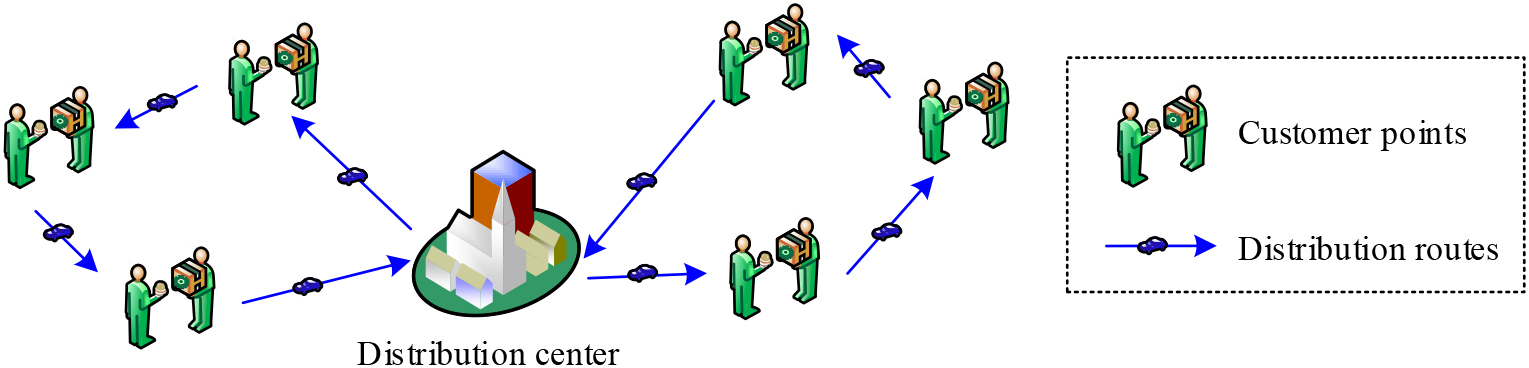
In Fig. 1, VPR mainly consists of five elements: distribution center, distribution vehicles, customers, distribution path, and optimization purpose. In VPR problem solving, the mathematical model of CCL is positively related to the solution result of VPR problem. Therefore, the study carries out the selection of green indexes of CCL from three aspects, namely, gas pollution, solid-liquid pollution and noise pollution, and then carries out the construction of mathematical model of CCL based on the green indexes. Firstly, the study defines the emission formula of air pollutants as shown in Eq. (1).
In Eq. (1),
In Eq. (2),
On this basis, in order to develop a mathematical model consistent with the solution of the VRP problem in CCL transportation, the study assumes that there exists only one distribution center and that the geographic location of this center with respect to a single customer point is known. The distribution and transportation vehicles are of the same model and sufficient in number. The distribution vehicles are kept at a constant speed and only the transportation and distribution part is analyzed. The rate of spoilage of the transported product is constant and the internal temperature of the vehicle’s cargo hold is constant during transportation, and the spoilage rate is only affected by time. The customer’s demand and time requirements are known, and only one vehicle is used for its distribution, and the load does not exceed the maximum load of the vehicle. Therefore, the objective model expression of CCL distribution path optimization for VPR problem established by the study is shown in Eq. (3).
In Eq. (3),
The main purpose of VRP is to minimize the total distance or cost of vehicle travel while meeting customer needs. In practical applications, precise algorithms or heuristic algorithms are commonly used to solve VPR. ABC, as a swarm intelligence optimization algorithm, mainly includes leading bees (solution), following bees (search for new solutions), and scouting bees (global search for better) [19, 20]. The ABC algorithm has the advantages of few setup parameters, strong search capability, fast convergence and easy to expand, which is advantageous for the application of VPR solving. In ABC, the honey source during the initialization phase is represented by Eq. (4).
In Eq. (4),
In Eq. (2),
In Eq. (6),
In Eq. (7),
ABC algorithm flow char.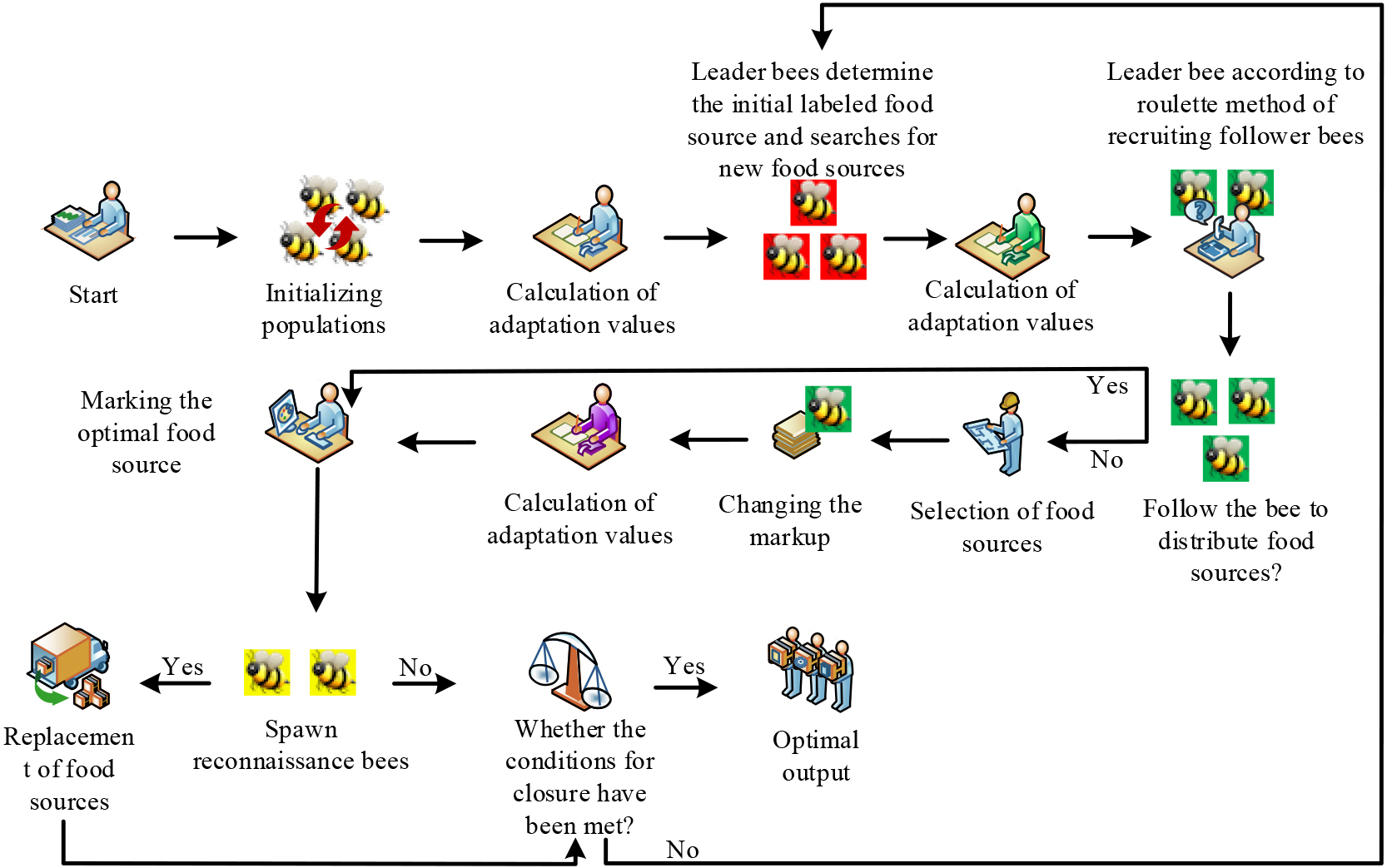
In Fig. 2, ABC requires more iterations for optimization, which does not utilize solving more complex problems. Meanwhile, as the iteration increases, its convergence effect and speed deteriorate. In global search, ABC is prone to falling into local optima. Therefore, the study proposes improvements to it. Firstly, the encoding and decoding of ABC are updated, and a neighborhood search is used to improve the honey source search and honey selection strategy of ABC. After completing the search, FWA is used to continue the search. The encoding of IFW-ABC is represented by Eq. (8).
In Eq. (8), 0 represents the distribution center.
Steps for calculating the initial solution of the IFW-ABC algorithm.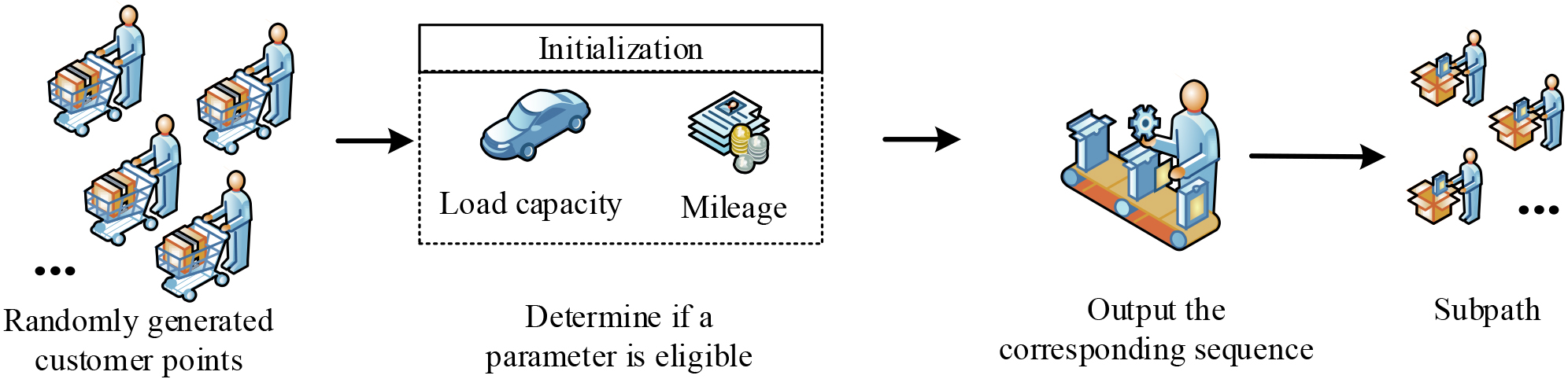
In Fig. 3, customer points are first generated based on a random sequence and the relevant identification quantities are determined. Secondly, the vehicle’s load capacity and mileage are initialized, and the neighborhood radius is equal to the labeled quantity. The output of the corresponding sequence is only carried out when the load capacity, driving distance, or marking amount exceeds the set value. When the identification exceeds the customer point, a sub-path is output and an initial solution is generated. Based on the initial solution obtained, the search process of the algorithm is optimized. When the iteration is large, ABC is prone to falling into local extremes, resulting in poor final accuracy. Therefore, research is being conducted to improve the search strategy in ABC. Firstly, assuming that all solutions in the population form a ring topology structure under the corresponding indicators, multiple populations are interconnected. Multiple solutions in the neighborhood can be obtained based on the neighborhood radius. On this basis, the solutions in traditional ABC are replaced. The leading bee is set to not search for all solutions in the surrounding area, but only search for solutions near the neighborhood. Therefore, Fig. 4 shows the neighborhood radius of the solution and the search of the leading bee.
Neighborhood radius structure of the solution and schematic diagram of leading bee search.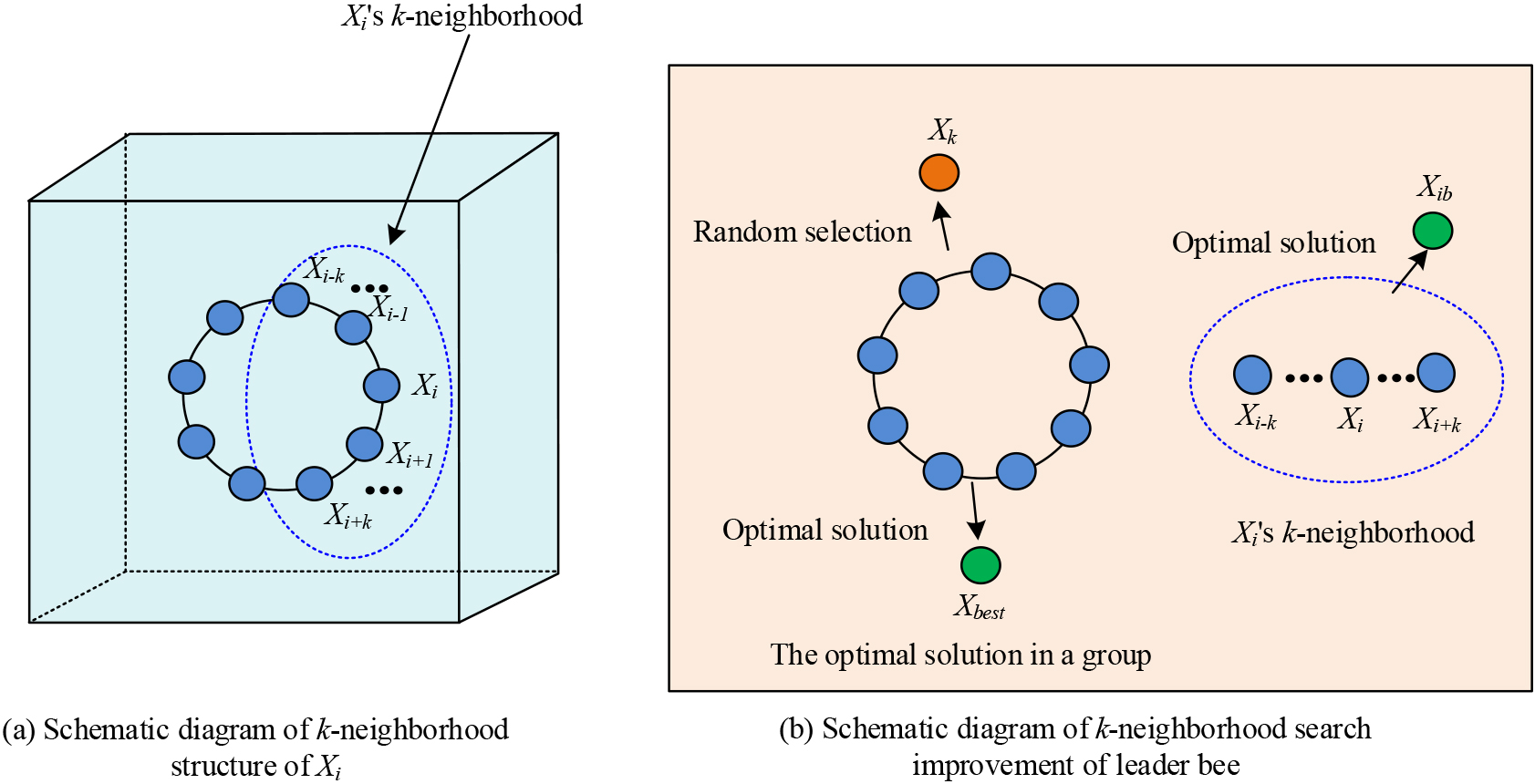
In IFW-ABC, the leading bee only searches for solutions around the neighborhood, so its update is represented by Eq. (9).
In Eq. (6),
The optimal solution update of the following bee is represented by Eq. (11).
The iteration increase will decrease the search area of the bee colony, and the addition of random solutions will slow down the convergence speed of the bee colony. Therefore, the research setting is that when the honey source is abandoned, three solutions will be generated synchronously, represented by Eq. (12).
Equation (12),
Figure 5 shows the search method of following bees and the relationship between optimal neighborhood and resolution.
The search method of following bees and the relationship between optimal neighborhood and resolutio.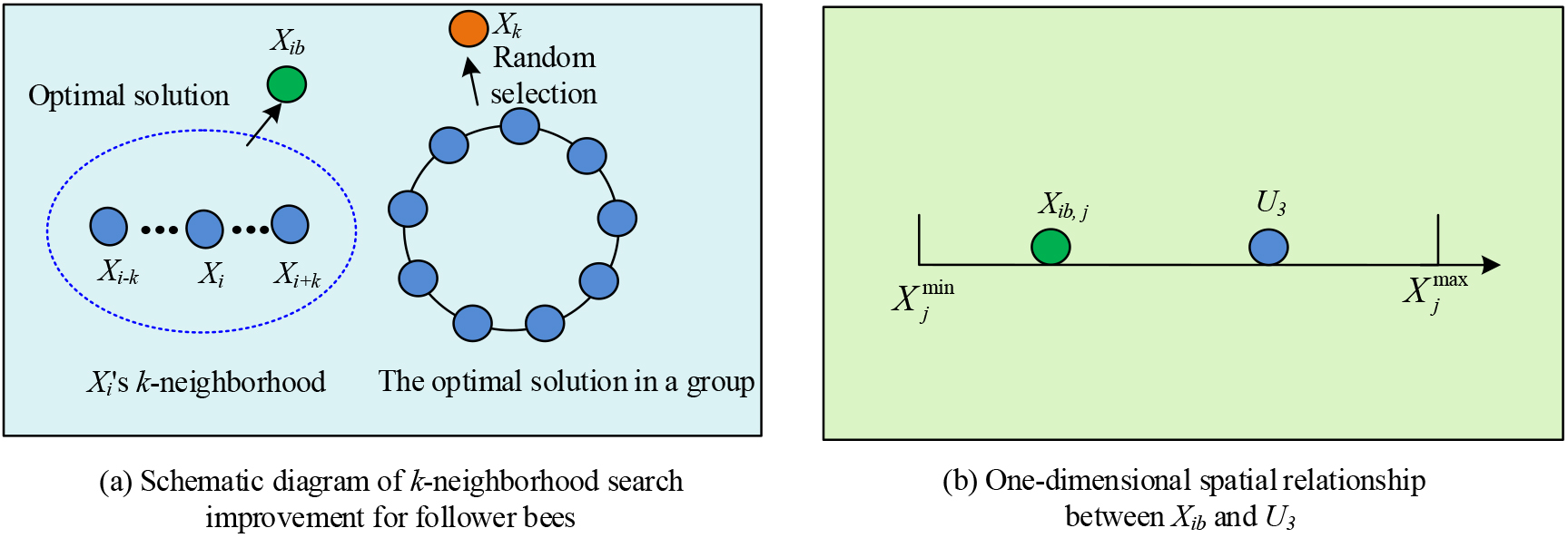
In IFW-ABC, the neighborhood radius of the abandoned solution determines the optimal neighborhood. Therefore, when the optimal neighborhood is in a stagnant state, checking its corresponding solution value can increase the probability of finding better solutions. When three new solutions are generated, honey source substitution is performed based on the optimal choice. On this basis, further research is conducted on utilizing the explosive search mechanism of FWA to search for the optimal solution of IFW-ABC. After the three bee search stages are completed, five individuals are randomly selected for the fireworks explosion search. Priority is given to selecting the optimal population. Secondly, the distance between the optimal individual and other individuals is solved using Eq. (14).
In Eq. (14),
The farther the selected individual is from other individuals, the higher the probability of selection. Therefore, when a spark explodes, more sparks will appear around it, treating the spark as a new individual. The quantity of new individual sparks generated by the explosion is represented by Eq. (16).
In Eq. (16),
In Eq. (17),
In Eq. (18),
IFW-ABC algorithm calculation process.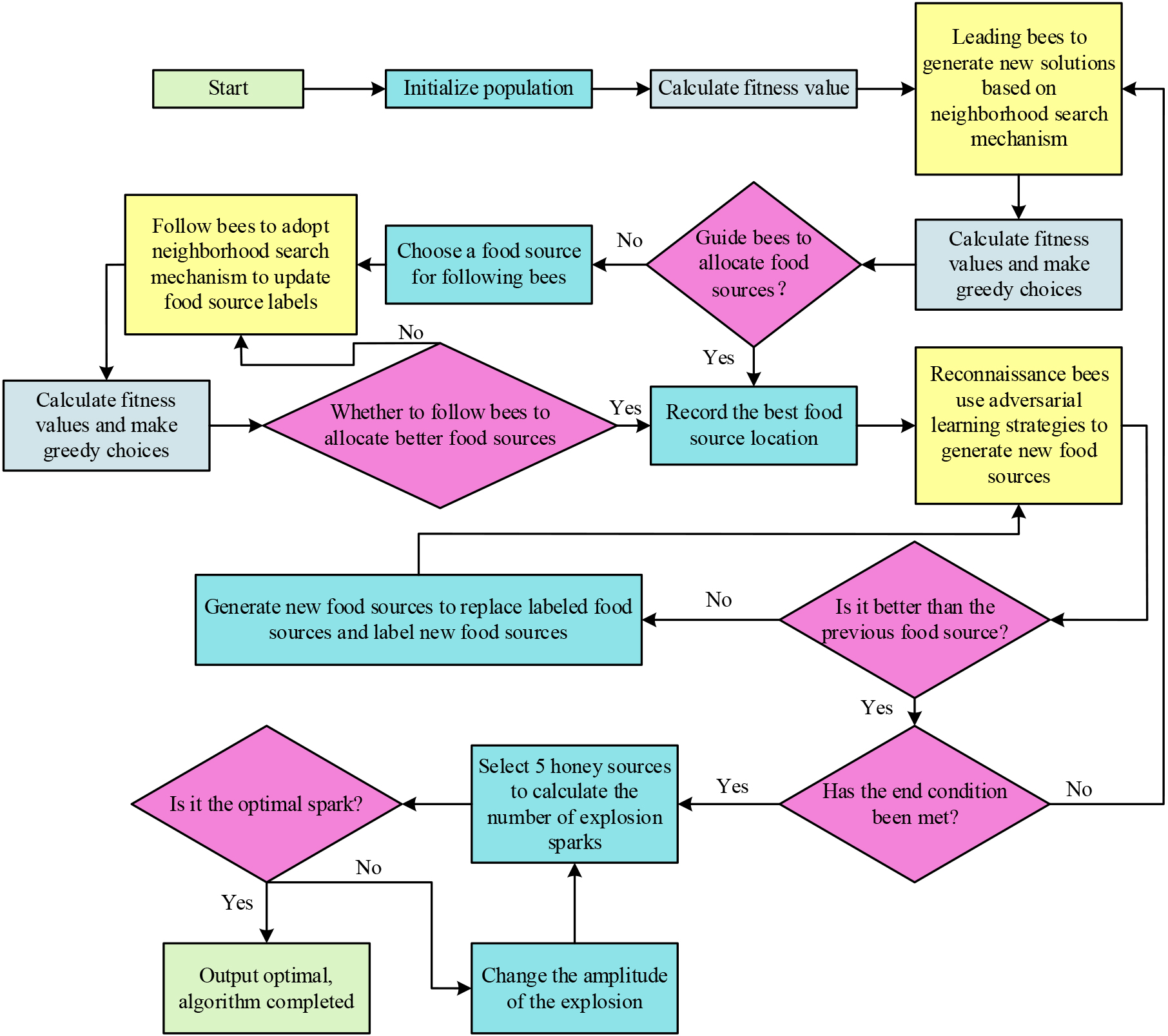
To validate the proposed IFW-ABC’s effectiveness and its effectiveness in distribution PO management in CCL, first, a benchmark test function was used for algorithm comparison analysis. Secondly, an example of a fresh food enterprise was used to analyze and verify the delivery PO algorithm.
Comparison of calculation results in four test functions
Comparison of calculation results in four test functions
Comparison of test function convergence curve.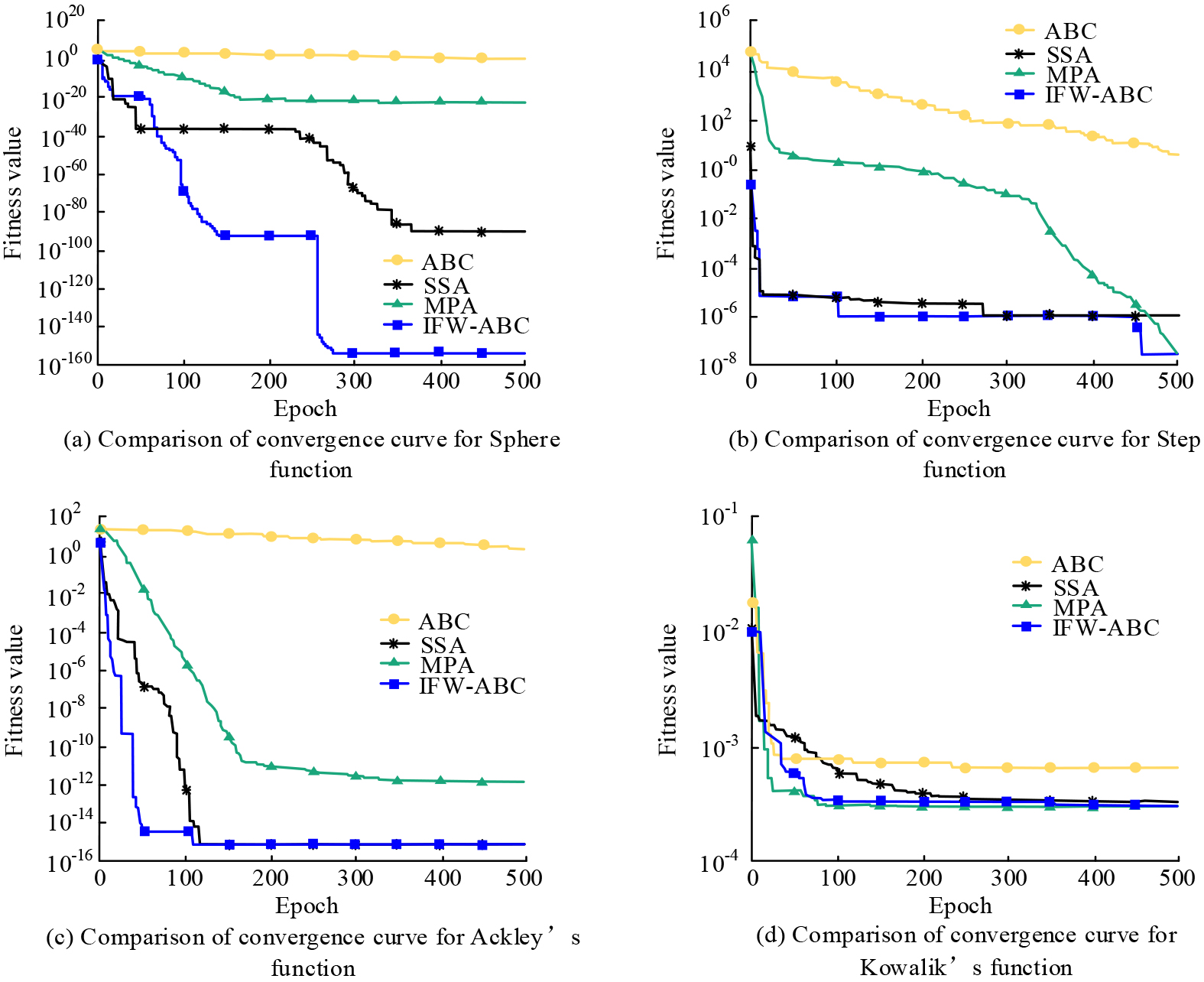
Demand information of 15 stores.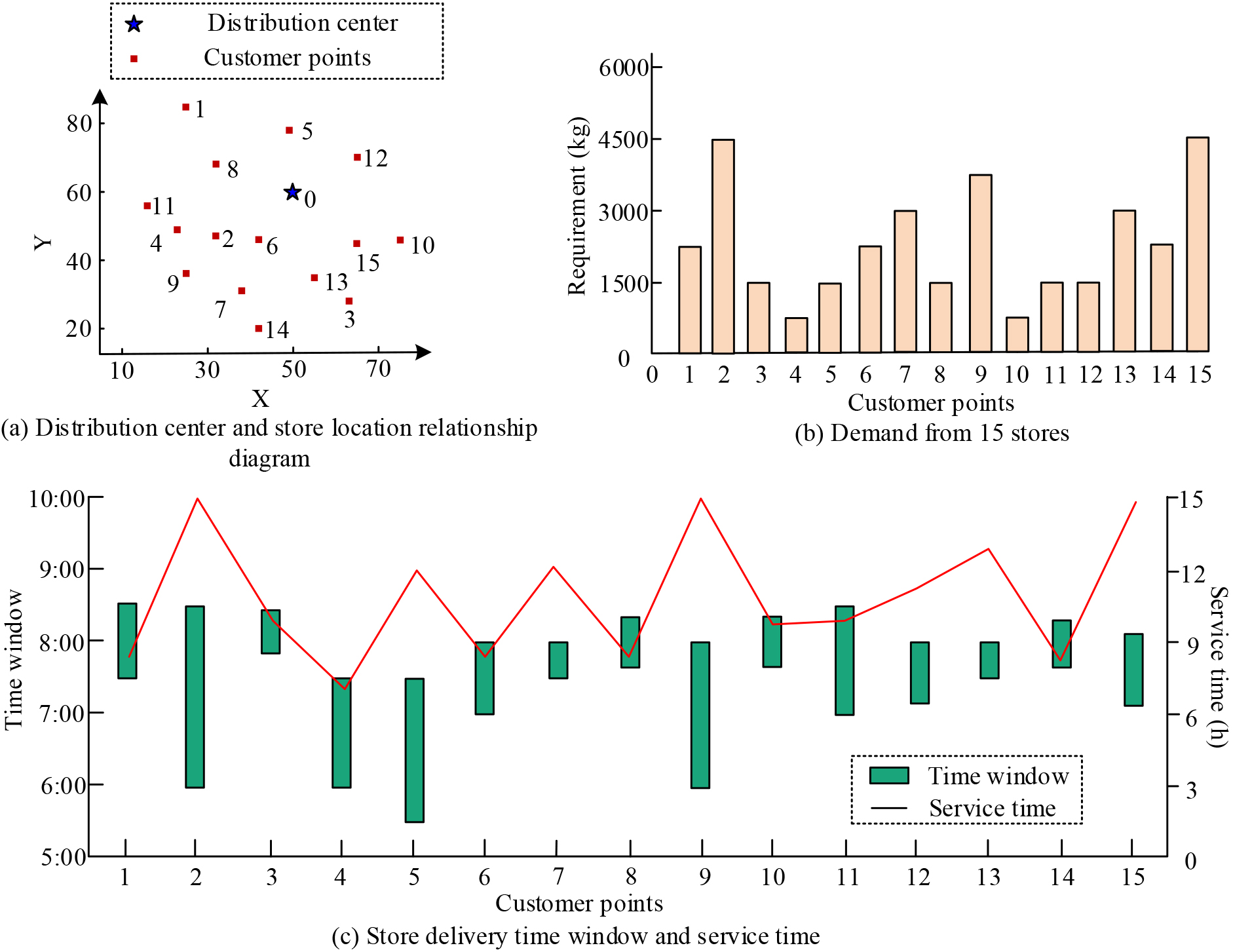
Comparison of three algorithm pathways considering carbon emissions.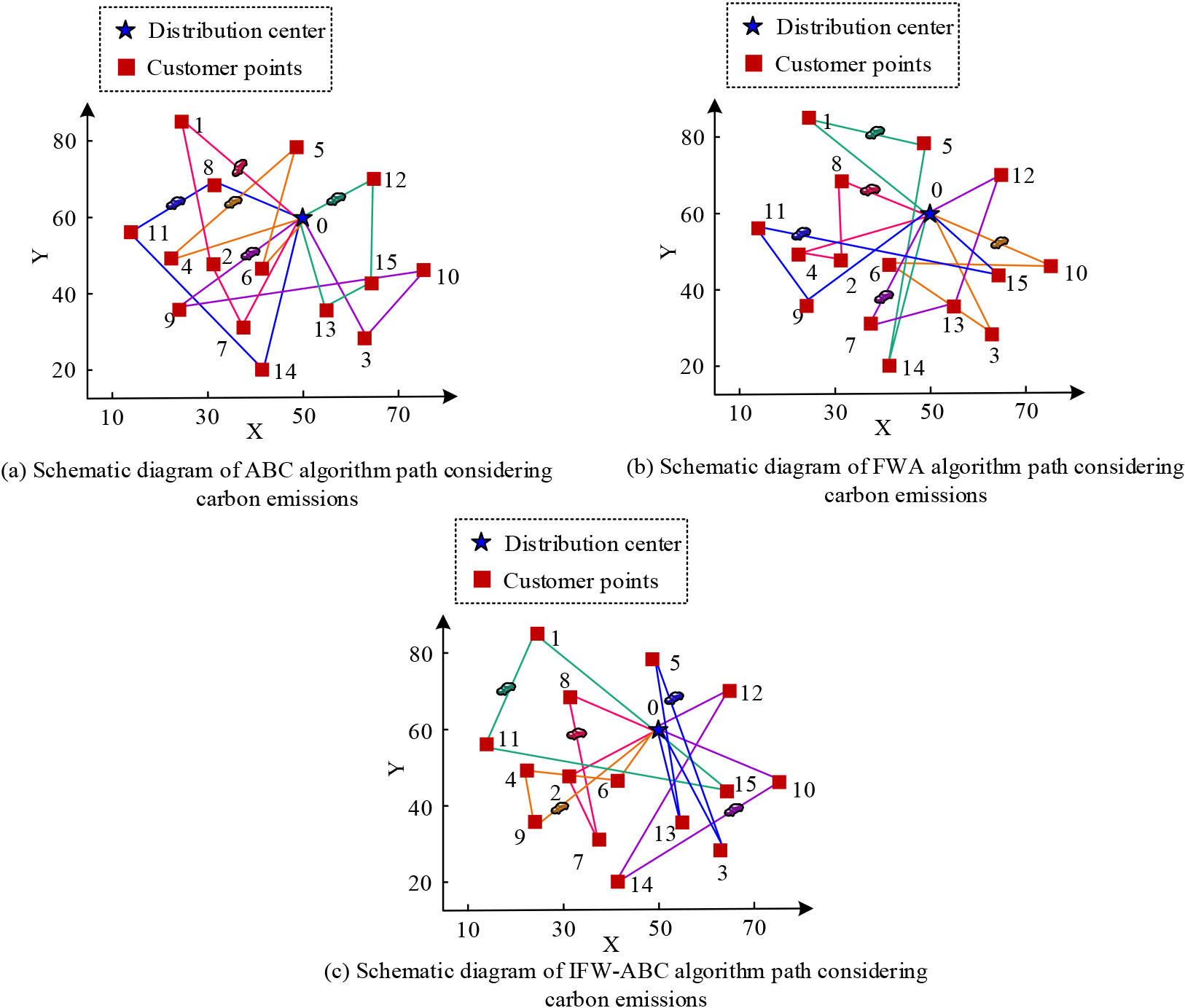
Based on the benchmark tests of spherical, stepped, Ackley, and Kowalik functions, performance analysis was conducted on the algorithm’s solving accuracy and optimization efficiency. Meanwhile, numerical experiments were conducted in MATLAB 2020a software using ABC, Marine Predators Algorithm (MPA), and Sparrow Search Algorithm (SSA) as comparisons. The initial population of all algorithms was set to 50, with 500 iterations and 30 runs. A comparison was made for comparing the Optimal Value (OV), Standard Deviation (SD), and Average Value (AV). Table 1 shows the comparison results.
From Table 1, among these four test functions, IFW-ABC had three best OV, with ABC having 0 OV, SSA having 2 OV, and MPA having 1 OV. IFW-ABC achieved a theoretical OV of 0.00 in spherical functions. This indicated that this proposed algorithm had superior optimization performance in solving benchmark test functions. IFW-ABC added three best SD compared to traditional ABC. IFW-ABC’s AV also demonstrated better performance. Meanwhile, the study further compared the convergence curves of each algorithm in Fig. 7.
Figure 7a shows the convergence curve in a spherical function. IFW-ABC had the fastest convergence speed and highest convergence accuracy, while ABC had the worst convergence effect. Figure 7b shows the convergence rate in the step function. The convergence speed of SSA and IFW-ABC was comparable, but the convergence accuracy of IFW-ABC was superior. In the Ackley function in Fig. 7c, the convergence accuracy of SSA and IFW-ABC was the same, but IFW-ABC had the fastest convergence speed among four algorithms. Figure 7d shows the convergence performance in the Kowalik function. The convergence accuracy of IFW-ABC was slightly lower than that of MPA, but the overall convergence effect still had superiority. Overall, IFW-ABC had achieved good results in the four test functions, and its convergence accuracy and speed are superior to the other three algorithms.
Verification of distribution path optimization based on IFW-ABC algorithm
To further verify the reliability of the proposed PO algorithm, a case study was conducted on a certain fresh enterprise. The city where the enterprise is located has 15 stores, which use unified delivery for transportation, and a general distribution center is set up in a certain location in the city to provide delivery services to its subordinate stores. By organizing and summarizing, the geographic location coordinate information was studied to generate corresponding coordinate points in the coordinate system. Figure 8 shows information such as the required quantity of products to be delivered and the delivery time.
Figure 8a shows the coordinate distance between 15 stores and the distribution center. Figure 8b shows the fresh demand of 15 stores. Figure 8c shows the logistics delivery time window and service time of 15 stores. The delivery PO problem considering time windows was solved based on the delivery information of the fresh enterprise. An initial population of 50 was set, with a maximum of 50 searches and a limit of 10 neighborhood searches. The upper and lower limits of sparks generated by fireworks explosion search were 40 and 20, respectively. The total sparks generated were 50. The dynamic amplitude
Figure 9a–c show the paths of ABC, FWA, and IFW-ABC. Significant differences existed in the path transportation planning of 5 refrigerated delivery vehicles among the three algorithms. Combining the delivery time windows and service times of 15 stores, FWA had a shorter path than ABC, while IFW-ABC’s path planning was more reasonable than the other two algorithms. Table 2 shows the costs of three algorithms considering CE.
Consider the solution results for CE
Consider the solution results for CE
Comparison of three algorithmic paths without considering carbon emissions.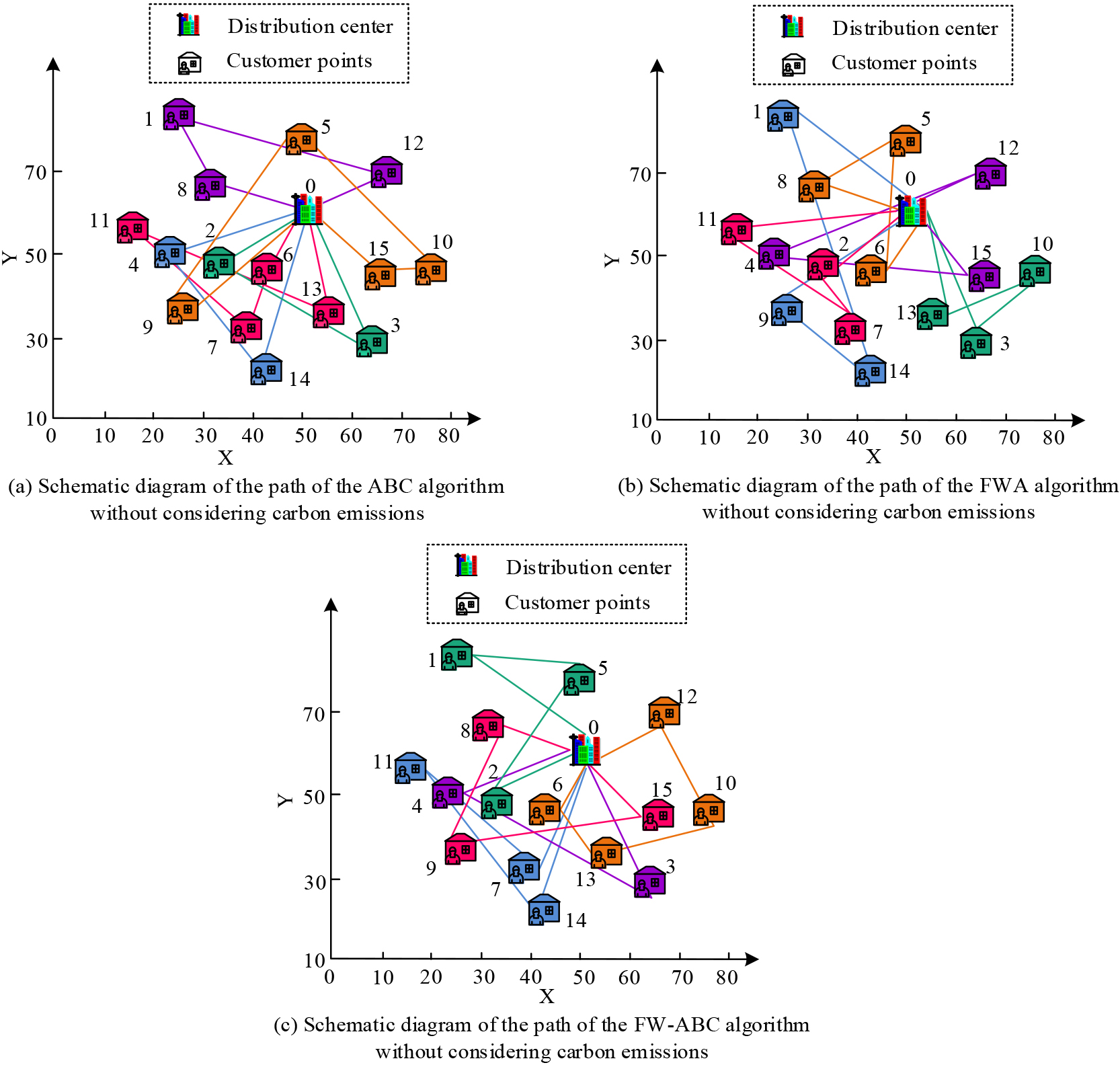
From Table 2, considering CE, the total cost of the proposed IFW-ABC distribution path was reduced by 1.71% and 4.89% compared to the other two algorithms, respectively. The CE cost was 1376.32 yuan, which was slightly lower than the CE cost of the other two algorithms. Comparing all data costs separately, the fuel cost of IFW-ABC increased compared to the other two algorithms, while other costs decreased. The greatest reduction in quality loss cost was beneficial to improve the conveying efficiency of CCL to a certain extent. In addition, the study further compared the CCLPO performance of three algorithms without considering CE. Figure 10 is a specific schematic diagram.
In Figure 10, the path planning of these three algorithms without considering CE was different from the path solved by considering CE. The ABC path in Fig. 10a was less considered in terms of time window planning. FWA’s consideration of delivery time windows was better than ABC’s. But IFW-ABC’s time window planning was more reasonable, taking into account the demand of each store and the transportation volume of refrigerated trucks. Table 3 shows the solution costs of three algorithms without considering CE.
Solution results without considering carbon emissions
In Table 3, the proposed IFW-ABC algorithm outperformed the other two algorithms in terms of calculation results without considering CE. It required a total cost of 6216.13 yuan, which was 6.45% and 3.41% less than ABC and FWA, respectively. Compared to various indicators, the fuel consumption cost of IFW-ABC was higher than the other two algorithms. This may be because the algorithm focuses on parameters such as delivery time window and service time during the logistics delivery PO process. Therefore, the total distance of refrigerated trucks was greater than the other two algorithms. It is worth mentioning that IFW-ABC reduced indicators such as pollutant emission costs and quality loss costs in CCL. This indicates that the proposed IFW-ABC can consider both the economic benefits of the enterprise and the social benefits of environmental pollution.
To address the high delivery costs and severe environmental pollution in CCL management, the study proposed to improve the search process of ABC and design an IFW-ABC based on FWA. Through benchmark function validation, the algorithm performance showed that IFW-ABC had the best OV results on spherical, step, and Ackley functions, with faster convergence speed and better convergence accuracy than ABC, SSA, and MPA. The numerical simulation analysis of a fresh food enterprise showed that the proposed algorithm reduced the total cost of ABC and FWA by 1.71% and 4.89%, respectively, considering CE. Without considering CE, the total cost of IFW-ABC was reduced by 6.45% and 3.41% compared to the other two algorithms, respectively. Therefore, the proposed IFW-ABC PO in CCL management effectively reduced delivery costs and generated the optimal delivery path based on delivery time windows. It reduced important indicators such as quality loss, pollutant emissions, and CE in delivery. PO performed by IFW-ABC can ensure the economic benefits of the enterprise while considering social benefits, which has certain application value in CCL management. However, the limitation of the research is that the setting of distribution centers and vehicles is relatively single. Currently, logistics companies often have multiple distribution centers and on-demand allocation of vehicle types. Therefore, the next step of this study can be to further analyze examples from multiple distribution centers and logistics vehicles to achieve sustainable development of CCL distribution management.
Footnotes
Acknowledgments
The research is supported by: Key scientific research project of higher education institutions in Henan Province: Research and practice on new forms and models of cold chain logistics in Henan Province (No.24B630006).