






Abstract
Alzheimer’s disease (AD) is a serious neurodegenerative disease, which seriously affects the behavior, cognition, and memory of patients. Studies have shown that sensory stimulation can effectively improve the cognition and memory of AD patients, and its role in brain plasticity and neural regulation is initially revealed. This paper aims to review the effect of various sensory stimulation and multisensory stimulation for AD, and to explain the possible mechanism, so as to provide some new ideas for further research in this field. We searched the Web of Science and PubMed databases (from 2000 to October 27, 2020) for literature on the treatment of AD with sensory and multisensory stimulation, including music therapy, aromatherapy, rhythmic (e.g., visual or acoustic) stimulation, light therapy, multisensory stimulation, and virtual reality assisted therapy, then conducted a systematic analysis. Results show these sensory and multisensory stimulations can effectively ameliorate the pathology of AD, arouse memory, and improve cognition and behaviors. What’s more, it can cause brain nerve oscillation, enhance brain plasticity, and regulate regional cerebral blood flow. Sensory and multisensory stimulation are very promising therapeutic methods, and they play an important role in the improvement and treatment of AD, but their potential mechanism and stimulation parameters need to be explored and improved.
Keywords
INTRODUCTION
Alzheimer’s disease (AD) is a progressive neurodegenerative disease. The characteristics of AD patients are memory decline, cognitive impairment, language disorder, learning ability decline, and so on. In the elderly, AD is the third leading cause of death after heart disease and cancer (2019) [1]. Mild cognitive impairment (MCI) patients are a high incidence of AD, and with the passage of time, about 70% of MCI patients develop AD [2]. At present, the therapeutic effect of AD is not satisfactory. The course of AD generally takes several years, or even decades; this is undoubtedly a painful process for patients and their families, and also causing a huge financial burden to society [3, 4]. Therefore, it is of great significance to carry out research on the treatment and care of AD to improve the quality of life of patients and reduce family burden.
The pathogenesis of AD mainly includes synaptic loss [5], cholinergic neurons damage [6], amyloid-β (Aβ) accumulation and tau protein hypothesis [7–10], and neurovascular hypothesis and vestibular loss hypothesis [11]. Aβ oligomers are deposited outside the cell to form senile plaques [12]. Tau protein is hyperphosphorylated and accumulates in the cells to form neurofibrillary tangles [13, 14]. These misfolded proteins accumulate excessively in the aging brain, leading to tissue oxidation and inflammation, and eventually lead to synaptic dysfunction and memory decline [8, 15]. At present, drug therapy is still the mainstream treatment for AD and has achieved certain results. For example, three acetylcholinesterase inhibitors— rivastigmine, donepezil, and galantamine— are widely used to strengthen synaptic transmission, and memantine by use of N-methyl-D-aspartic acid receptor antagonists to slow down the rate of cognitive and behavioral decline [16], improves the symptoms of patients and delays the disease process. On this basis, a variety of new drugs to alleviate AD pathology have been researched and developed one after another, but most of them ended in failure [17]. Drug therapy usually does not reverse the pathology of AD, and may have great side effects, especially for the elderly. Recently, more attention has been paid to non-drug intervention to alleviate and improve the pathology of AD [18]. These interventions include invasive and non-invasive stimulation [19]. Among them, common invasive stimulation includes deep brain stimulation [20] and optogenetic [21]. Common non-invasive stimulation includes sensory stimulation, transcranial magnetic stimulation [22], transcranial electrical stimulation [23], such as transcranial direct current stimulation, and transcranial alternating current stimulation [24].
AD patients often experience sensory deterioration faster than normal aging, such as visual impairment [25], olfactory impairment [26], and hearing loss [27, 28]. Sensory loss increases the risk factors of AD in daily life and may result in a decreasing cognitive function [29–31]. Studies have shown that sensory intervention for AD patients, such as music therapy (MT), aromatherapy, visual or auditory stimulation, multisensory stimulation, and virtual reality (VR) training seems to be effective [32]. Many researchers have explored the treatment and nursing benefits of MT, aromatherapy, rhythmic acousto-optic stimulation, VR training, and so on in AD patients. These methods can have a significant effect on improving emotion, memory, and motor ability of AD patients. Among them, MT is a safe and effective treatment method, which can effectively regulate the emotion, agitation, and memory of patients with AD [33]. In 1986, Carol Shively [34] used music for the first time in the treatment of AD patients, which showed singing old or familiar songs helps to stimulate reminiscing. In 1993, Gerdner and Swanson [35] considered that personalized music can improve the agitation of AD patients. Subsequently, more and more studies have been conducted on the use of music in the treatment of AD, and it is believed that music has a positive impact on many aspects of AD patients. Olfactory stimulation is transmitted to limbic system and hypothalamus through the olfactory nerve. Aromatics activate the sympathetic nervous system, improve anxiety and depression symptoms, and improve cognitive ability [36]. Rhythmic auditory or visual stimulation can specifically cause the corresponding electroencephalogram (EEG) rhythmic response, 40 Hz auditory stimulation can be used to induce 40 Hz auditory steady-state response (SSR), the gamma oscillation induced by 40 Hz auditory stimulation is related to cognitive function and language learning and memory ability [37, 38]. Animal studies show that 40 Hz cortical light stimulation can cause changes in neuronal activity, accelerate or inhibit neuronal discharge, change microglia into phagocytic state, and reduce Aβ protein. Aβ protein accumulation in the brain is the pathological manifestation of AD [9]. Singer et al. [39] used non-invasive 40 Hz white light flicker to drive 40 Hz neural activity, which can transform microglia into phagocytic state and reduce Aβ protein. Visual stimulation-induced gamma oscillations can reduce amyloid plaques and phosphorylated tau protein, enhance neuroprotective factors, reduce neuronal damage, and reduce inflammatory reaction of microglia [40]. In 2019, Martorell et al. [41] proposed that 40 Hz sound stimulation improved recognition and spatial memory in 6-month-old 5XFAD mice. And they also indicated that the gamma rhythm caused by multisensory stimulation combined with auditory stimulation and light induction can reduce the level of amyloid protein in hippocampus CA1, auditory cortex, and medial prefrontal cortex of AD mice, and improve the spatial memory ability of 5XFAD and APP/PS1 mice. It may be more effective than using a single sensory approach; this indicates that the brain gamma rhythm can be caused by a variety of sensory stimuli. Although rhythmic sensory stimulation is a new method for the treatment of AD, its effectiveness on cognitive function has been studied for a long time. Therefore, it is promising to use rhythmic sensory stimulation in the treatment of AD patients. Light therapy (LT) plays an important role in the regulate circadian rhythm disorders [42]. Increasing the lighting time of patients during the day may affect circadian rhythm activities and regulate sleep wake and activity-rest rhythm. Patients with AD are often accompanied by sleep disorders and circadian rhythm disorders, and there is also a close relationship between cognitive impairment and sleep [43]. LT has been proved to be effective on anxiety and sleep-wake rhythm of AD patients. Simply increasing the time of exposure to bright light can improve sleep quality, sleep-wake rhythm, and some negative behaviors of AD patients [44, 45]. Sloane et al. [46] also pointed out that the subjects had a good tolerance to bright light, indicating that bright light therapy (BLT) was safe. In addition, the combination of multiple sensory stimuli seems to have an effect on AD patients [47]. Previous studies have provided a good living environment for AD patients, aiming to reduce anxiety, improve happiness, improve their quality of life, and reduce the burden of nursing, such as Snoezelen room and healing garden [48–51], also used a combination of sensory stimulation. VR has a super strong simulation system, because it has the perception function of human beings, such as vision, hearing, touch, taste, smell, and other sensing systems [52], and provides participants with a virtual multisensory training environment. VR systems can provide online human testing and training, allowing precise control of complex dynamic 3D stimulation demonstrations, and these complex behaviors can be recorded. VR technology can be used to evaluate people’s attention, executive function, memory, language, and spatial ability. Various studies have proved the successful combination of VR and medicine, including surgical training, education of patients and medical students, treatment of sensory and motor disorders, treatment of psychological disorders such as anxiety and acrophobia, pain relief, and the treatment of AD and MCI [53, 54]. VR technology is safe and effective for cognitive screening and training. Yeh et al. [55] investigated subjects’ subjective feelings about the virtual system in the study of VR technology and head-mounted display. The results show that the system is safe, and the participants are willing to accept and continue to use it.
Sensory based interventions are becoming more and more common in the treatment of dementia and AD. Smith et al. [56] reviewed the effects of sensory based interventions on AD patients, and showed that massage, multi-sensory activities based on occupation and environment, including lighting, gardening, meal time, music, Montessori, animal assisted therapy, dance, and yoga interventions are beneficial to dementia and AD, and there is strong evidence to support the use of massage. Arroyo-Anlló et al. [57] reviewed the effect of sensory stimulation on self-consciousness of AD patients, and showed that familiar smell or music, or the use of a rehabilitation garden can play a positive role in arousing the emotional autobiographical memory of AD patients. Emotional sensory stimulation can be used as a tool to activate the self-consciousness of AD patients, so as to improve the quality of life of patients and caregivers.
Sensory stimulation and multisensory stimulation have the advantages of being non-invasive, easy to achieve, almost no side effects, and low cost, making them a promising treatment for AD. Therefore, this paper reviews the benefits of various sensory stimulation and multisensory stimulation for AD patients, discusses the therapeutic effect of various sensory stimulation and multisensory stimulation on AD patients and to explore the possible mechanisms, so as to provide reference for follow-up studies, and hopes that these sensory stimulation methods can be superimposed in a good way to apply to the daily care of AD and reduce the pain of AD patients.
METHODS
Search strategies
Literature retrieval and analysis were conducted in the databases of Web of Science and PubMed. The key words included single search and combination search of “music therapy”, “aromatherapy”, “olfactory stimulation”, “VR technology”, “light stimulation”, “light therapy”, “Visual stimulation”, “Auditory stimulation”, “sound stimulation”, “rhythmic stimulation”, “multisensory stimulation”, “Snoezelen room”, “healing garden”, “dementia”, “Alzheimer*”, “Alzheimer’s disease”. Considering the novelty of the research and the latest research progress in this field, the retrieval time is set from 2000 to October 27, 2020.
Inclusion and exclusion criteria
The retrieval results were screened by reading the abstract and full text. Studies were eligible for inclusion if they were original studies exploring the therapeutic application of the relevant research on music therapy, visual stimulation, olfactory stimulation, rhythm stimulation, LT, multisensory stimulation, Snoezelen room, or healing garden on AD patients. Participants included AD patients, and if participants include a range of disease stages, the severity must be clearly defined and a clear distinction between the degree of cognitive impairment, such as mild, moderate, or severe must also be included.
We excluded review articles, patents, and non-experimental research literature on the effectiveness of sensory stimulation. We also excluded studies that did not include AD patients, or where MCI patients accounted for the majority of participants with only a small number of AD patients, because it would affect the accuracy of the results.
Data extraction
Two reviewers (YH, HQR) independently extracted information from the selected papers. Data items comprised of number and age of participants, methods, paradigm features, and results. In order to further illustrate the level of evidence, we classified all the included studies according to evidence-based medicine [58]. The classification level is as follows (reliability decreases in turn): evidence level I: systematic review, or meta-analysis of relevant quality randomized controlled; evidence level II: Randomized controlled trials with sufficient sample size; evidence level III: Study with a control group but not randomized; evidence level I: A series of uncontrolled studies, its reliability is lower than that of level II and III. Because our inclusion criteria did not include review or meta-analysis, the level of evidence was mainly II ∼ IV. In the next two sections, data is analyzed qualitatively, and following is a discussion of the possible mechanisms.
RESULT
A total of 1,687 articles were retrieved, and after duplicates were removed, there were 1,531 records. By reading the titles and abstracts, some reviews and mechanisms studies were excluded, leaving 376 articles. After full-text review, 45 articles were included in the analysis. Among them, there are 6 level II studies and 15 level III studies related to MT, 2 level II studies and 5 level III studies related to olfactory therapy, 1 level II study and 1 level III study related to rhythmic stimulation, 5 level II studies and 5 level III studies related to LT, 3 level III studies related to multisensory stimulation, 1 level II study related to VR treatment, and 1 level II study combining MT and VR treatment. A systematic analysis of this literature was concluded. In order to facilitate comparative analysis, the research articles were sorted out and compared to analyze the mode, type, treatment scheme and effects, after effect, and evidence level, as shown in Tables 1–6. Table 1 lists the application of MT in the treatment of AD, Table 2 lists the application of aromatherapy in the treatment of AD, Table 3 lists the application of rhythmic sound and light stimulation in AD patients, Table 4 lists the application of LT in AD patients, Table 5 lists the application of multisensory stimulation for AD patients, and Table 6 lists the application of VR technology or combine VR training in the treatment of dementia.
Application of MT in the treatment of AD
AD, Alzheimer’s disease; MMSE, Mini-Mental State Examination; SG, singing group; MLG, music listening group; CG, control group; CDR, Clinical Dementia Rating; CBS, Cornell-Brown Scale; QOL-AD, Quality of Life in Alzheimer’s Disease; SC, self-consciousness; BEHAVE-AD, Behavior Pathology in Alzheimer’s Disease Rating Scale; GBS, Gottfries– Brane– Steen Scale; QOL-AD, Quality of Life in Alzheimer’s Disease Scale; VMT, video-music therapy; HM, SM, NS, CS, and NM, happy music, sad music, no sound, coffee shop sound, and new music; MEP, Music Engagement Program; BPSD, behavioral and psychological symptoms of dementia; CSD, Cornell Scale for Depression; AWS, Algase Wandering Scale; CMAI, Cohen Mansfield Agitation Inventory; FAST, Functional Assessment Screening Test; DBRS, Disruptive Behavior Rating Scales; AMI, Autobiographical Memory Interview; ADAS, Alzheimer’s Disease Assessment Scale cognitive test; ADL, Katz Index Independence in Activities of Daily Living; OLST, One leg standing balance test; NPI, Neuropsychiatric Inventory; NM scale, N type Mental States Scale and N type Activities of Daily Living; N-ADL, N type Activities of Daily Living; MOSES, the Multidimensional Observation Scale For Elderly Subjects; CgA, chromogranin A.
Application of VR technology in the treatment of AD
MMSE, Mini-Mental State Examination; BBS, The Berg Balance Scale; GDS-K, The short form geriatric depression scale-Korean; KQOL-AD, the Korean version of quality of life-Alzheimer’s disease.
Application of aromatherapy in the treatment of AD
NPI, Neuropsychiatric Inventory; J-ZBI, the Japanese version of Zarit Caregiver Burden interview; ADAS-cog, Alzheimer’s Disease Assessment Scale-cognitive subscale; MMSE, Mini-Mental State Examination; BPSD, behavioral and psychological symptoms of dementia; TDAS, Touch Panel-type Dementia Assessment Scale; TEMPau scale, Test Episodic de Mémoire du Passe; SAM, Self-Assessment manikin; OSIT-J, Odour Stick Identification Test for Japanese; PSQI-J, Pittsburgh Sleep Quality Index; PAS, Pittsburgh Agitation Scale; CMAI, Cohen-Mansfield Agitation Inventory; VaD, vascular dementia; GBSS-J scale, the Japanese version of the Gottfries, Brane, Steen (GBS) Scale; HDS-R, the revised version of Hasegawa’s dementia scale; ADAS, Alzheimer disease Assessment Scale.
Application of rhythmic stimulation in AD (clinical research)
AD, Alzheimer’s disease; MCI, mild cognitive impairment; HE, healthy elderly; SLUMS, Saint Louis University Mental Status; TRR, test– retest reliability; SSR, steady state response.
Light therapy for Alzheimer’s disease
GIP, The Dutch Behaviour Observation Scale for Intramural Psychogeriatrics (Gedragsobservatieschaal voor de Intramurale Psychogeriatrie); MMSE, Mini-Mental State Examination; BLT, Bright light therapy; DSR, daytime sleep restriction; CSDD, Cornell Scale for Depression in Dementia; CMAI, Cohen-Mansfield Agitation Inventory; CRBRS, Crichton Royal Behavior Rating Scale; MOUSEPAD, Manchester and Oxford Universities Scale for the Psychological Assessment of Dementia; BIMS, Brief Interview for Mental Status; PSQI, Pittsburgh Sleep Quality Index; BEHAVE-AD, Behavior Pathology In Alzheimer’s Disease Rating Scale; NPI-NH, The Neuropsychiatric Inventory– Nursing Home; SWD, sleep– wake disturbances in dementia.
Application of multisensory stimulation in AD patients
VRMT, VR memory training; SC, self-consciousness; SCQ, the Self-Consciousness Questionnaire.
Music therapy for AD
Parameters of MT
The means of MT include active treatment and passive treatment. Active therapy means active participation in music creation, humming, hitting musical instruments, and rhythm; passive therapy means passively listening to music. In 1994, Brotons et al. [59] explored AD patients’ preferences for five kinds of music activities for the first time. Twenty participants were grouped into five groups to participate in five kinds of music activities: singing, playing musical instruments, dancing/moving with music, playing music games, and composing/improvisation. The results showed that AD patients had the highest participation in playing musical instruments, followed by singing and dancing, which indicated that playing musical instruments was a better kind of musical activity for use in the intervention of AD. Sakamoto et al. [60] compared the effects of interactive music interaction, passive music intervention, and non-music on the behavior and psychology of patients with severe AD; the results showed that both interactive and passive MT had an impact on the emotion and stress of patients with AD, with the interactive intervention having the greatest effect on improving the emotional state of patients with AD.
Music has emotion, and it can be cheerful, sad, soothing, or passionate. Different types of music stimulation have different effects on AD patients. Study by Meilan Garcia et al. [61] has shown that emotional music can evoke memories in patients with AD. Some researchers also believe that classical “relaxing” music or personalized music has certain therapeutic effects on AD patients. Arroyo-Anllo et al. [62] showed that when compared with unfamiliar music, using familiar music can improve the self-awareness of AD patients more effectively. The study of Jihui et al. [63] also showed that familiar or preferred music of AD patients can effectively improve their memory and language ability. Pleasant music can enhance the energy of EEG, especially the β and α frequencies in right frontal and temporal lobes [64]. It can be seen that different types of music have different effects on AD patients. When designing experiments or conducting treatment, music should be selected according to the needs of each AD patient. If it is necessary to improve the emotion of AD patients, music with emotion should be selected, while to arouse the memory of AD patients, music with familiar or preferred by patients should be selected.
Effect of MT on emotion and psychobehavioral symptoms of AD patients
AD patients will have early temperament changes, such as indifference, depression, anxiety, and irritability; these symptoms are easily ignored, leading to the gradual aggravation of the disease. Research shows that MT can improve the emotion of AD patients. Guétin et al. [65] studied the effect of MT on anxiety and depression in mild to moderate AD patients. After twenty-four weeks of treatment, the anxiety and depression symptoms of AD patients in the treatment group were significantly improved, and the aftereffect lasted for eight weeks. Svansdottir et al. [66] performed MT on thirty-eight patients with moderate and severe AD for six weeks. They found that the aggression and anxiety of AD patients in the MT group were significantly reduced, and there was a four-week aftereffect. Suzuki et al. [67] performed music therapy for AD patients for three months, and the anxiety of the patients was significantly improved after treatment, which may last for one month. Ray et al. [68] studied the effect of MT on depression and agitation symptoms of AD patients. After two weeks of MT, the depression and agitation symptoms of AD patients were significantly reduced, and there was a two-week aftereffect. Suzuki et al. [69] performed MT for ten weeks with ten AD patients. According to the results of Multidimensional Observation Scale for Elderly Subjects (MOSES), the score of irritability decreased significantly, indicating that MT can reduce the level of irritability in AD patients. The above studies show that MT has a positive effect on the emotional improvement of patients with AD and has a certain aftereffect. The duration of the aftereffect may be related to the treatment time.
MT can also improve the psychological symptoms of AD patients, that is, they are more willing to socialize and show some positive behaviors. Lancioni et al. [70] studied the hand movement of patients with severe AD during MT and their active participation in the process of treatment, such as singing or shaking with the music. The results show significant differences between the average hand reaction and active participation data of patients before and after music intervention. The social behaviors of AD patients have also changed. Positive social behaviors include trying to contact, talking, smiling, trying to calm another patient, humming, drumming with hands/feet to the rhythm of music, shaking the body with the rhythm of music, shaking hands, touching, etc. Negative behaviors include showing excitement and aggression. Ziv et al. [71] studied the influence of music on social behavior of AD patients. The results showed that when music was playing, AD patients showed more positive behaviors (such as talking, smiling, or moving with rhythm) and less negative behaviors (such as walking, sitting uneasy, and showing aggression to others). Lancioni et al. [72–74] designed experiments to explore the effects of active and passive music on positive participation of patients with moderate and severe AD; results showed that active music stimulation increased the positive participation index (such as singing, music related actions, or smiling). Dassa et al. [75] used familiar music to treat AD patients for one month and encouraged them to participate in singing songs. After singing, the patients expressed positive emotions, sense of achievement, and belonging.
Rubbi et al. [76] showed that Video-MT was a valuable tool for improving the quality of life in patients affected by less severe neurocognitive impairment. Gulliver et al. [77] evaluated the effectiveness of music in terms of quality of life, well-being, and depressive symptoms in AD patients, indicating that MT can enhancing the mental health and well-being of AD patients.
Effect of MT on memory of patients with AD
A major feature of AD is progressive loss of memory; patients gradually forget previous memories of their lives and their relatives. Irish et al. [78] studied the effect music has on autobiographical memory in ten patients with mild AD; patients were interviewed under two conditions of music playing and no music. The results showed that the recall ability of patients in the autobiographical memory interview was greatly improved under the condition of music playing, which indicated that MT could improve the autobiographical memory of patients. Meilán García et al. [61] analyzed the recall of autobiographical memory in twenty-five AD patients under different emotional music (happy, sad, lack of emotion) stimulation, noisy sound stimulation, and silent conditions. They found that emotional music, especially sad music, was more effective in arousing long-term memory of AD patients. Särkämö et al. [79] conducted music intervention on patients with dementia for 10 weeks and found that listening to music and singing improved the mood of patients and improved the memory and cognitive ability to a lesser extent, whereas music listening had a positive effect on quality of life. Fraile et al. [80] explored the effects of personalized music on autobiographical memory and cognitive function of AD patients. The results showed that MT has a significant improvement in cued recall, and the executive ability of AD patients’, such as linking objects and uses, producing sentences, oral understanding of implicit senses, and solving mathematical problem was significantly improved. Personalized music may be a useful and motivating tool to solve the decline of autobiographical memory and cognitive function in patients with AD.
Effect of MT on motor behavior of AD patients
AD patients are often accompanied with gait disorders, such as decreased balance ability, walking speed, step length, etc. When walking, it is easy to fall down and it can create risk to the lives of AD patients when they go out alone, which is also one of the reasons why AD patients need long-term care from caregivers. Research shows MT can improve the gait of AD patients and increase the active participation of AD patients. Wittwer et al. [81] studied the effect of rhythmic music on the gait of patients with AD, walking speed, step length, duration of bipedal support, and gait variability (coefficient of variation) of AD patients before and after the intervention was quantified. The results showed that after listening to music, the gait variability had no significant change, but walking speed and step length were significantly improved, which indicated that MT was effective in improving the gait of AD patients. Patients with AD are also accompanied by a decrease in their participation and practical ability.
Olfactory stimulation for AD
Application progress of aromatherapy in the treatment of AD
Studies have shown that the olfactory function of AD patients is impaired to varying degrees. In the early stage of AD, degeneration occurred in the entorhinal hippocampal inferior colliculus complex [82] and especially in the olfactory anterior nucleus, showing many neurofibrillary tangles, the damage of the inner olfactory area, and trans olfactory area effectively cut off the connection between the hippocampus and cerebral cortex. This disturbs the flow factor information necessary for advanced olfactory tasks such as breathing, odor recognition, and odor memory [83]. Odor recognition defects often occur in AD and MCI and can be used to predict the transition from MCI to AD [84, 85]. Jimbo et al. [86] treated twenty-eight elderly patients (including seventeen AD patients) with aromatic drugs and observed the curative effect. In the morning, lemon and rose were mixed to activate the sympathetic nervous system to strengthen attention and memory. At night, the fragrance of lavender and orange was used to activate the parasympathetic nervous system to pacify the nerves of patients. After twenty-eight days of control treatment, it was found that aromatherapy had potential to improve cognitive function. It is an effective non drug therapy for dementia, especially for patients with moderate AD. Before and after olfactory stimulation, fMRI data showed significant activation of entorhinal cortex and temporal lobe [87], and medial temporal lobe was related to olfactory function [88].
Aromatherapy improves memory of AD
Olfactory dysfunction is also associated with decreased language learning and memory, and previous studies have shown that olfactory stimulation can improve the memory of AD patients. Glachet et al. [89] studied whether olfactory stimulation can influence memory of past events and imagination of future in AD patients. They treated AD patients with various flavors of sesame oil (lemon, orange, cinnamon, chocolate, coffee, coconut, peach, etc.), and selected the most suitable sesame oil to stimulate each AD patient according to the score of patients’ odors, and considered the relationship between the past and the future, the results showed that olfactory stimulation made the memory of past events and imagination of future events more specific and emotional. Two other studies by Glachet et al. [90, 91] also showed that olfactory stimulation has a positive effect on the memory of AD patients. Compared to memories evoked without odors, olfactory-evoked autobiographical memories were more specific and accompanied by more subjective experience of reviviscence in AD patients.
Aromatherapy improves psychobehavioral symptoms of AD
Olfactory stimulation has positive effects on many aspects of AD patients, such as improving agitation symptoms, sleep disorders, behavior, psychology, and so on. The study of Takeda et al. [92] found that inhaled aromatherapy has a positive effect on sleep disorders in AD patients. Takahashi et al. [36] divided thirty-six AD patients without olfactory disturbance into two groups (intervention and the control groups). After eight weeks of treatment, the cognitive function, behavior, and psychological symptoms of AD patients in the treatment group were significantly improved. This indicates that olfactory stimulation can effectively improve the symptoms of AD and may reduce the burden of care. Fujii et al. [93] found that the use of lavender fragrance in the treatment of AD patients can effectively improve the behavioral and psychological symptoms of dementia, and this method is safe.
Rhythmic sensory stimulation for AD
EEG and cognition
EEG signals are very weak, generally 0– 75 mV and not more than 100 mV, and is a non-stationary random signal. According to the rhythmic activity of EEG signals, it can be subdivided into five basic rhythms: δ (1– 4 Hz), θ (4– 8 Hz), α (8– 12 Hz), β (15– 30 Hz), and γ (30– 100 Hz) according to the frequency. Different frequency bands of brain waves reflect the different state of brain activity. Among them, gamma waves are a high frequency band of brain waves, with its frequency range at about 30– 100 Hz, especially the 40 Hz gamma wave, which has attracted the attention of researchers [94]. Research shows that gamma waves are related to thought formation, language processing, learning ability, memory, and cognition, and the faster the wave speed, the faster the recall speed [95]. Specific EEG rhythmic oscillations can be caused by specific external rhythmic stimuli and may regulate the sensory integration or cognitive function of the brain [96, 97]. Rhythmic sensory stimulation may be beneficial to patients with neurological disorders and cognitive dysfunction.
Study of rhythmic sensory stimulation in the treatment of AD
Clements Cortes et al. [98] studied the rhythmic sensory stimulation of 40 Hz auditory stimulation and the use of non-rhythmic DVD in patients with mild to moderate AD. The results showed that 40 Hz auditory stimulation had a great impact on mild to moderate AD patients and improved anxiety level, and also increased cognition. Van Deursen et al. [99] used 40 Hz click sound to stimulate AD patients, MCI patients, and normal controls to study the 40 Hz SSR between AD patients, MCI patients, and normal controls. The study showed that the 40 Hz SSR power of AD group was significantly increased.
Light therapy for patients with AD
LT can regulate sleep rhythm and improve sleep quality of dementia patients. Ancoli-Israel et al. [100] evaluated whether bright light under four different light modes (evening bright light, morning bright light, evening dim red light, and daytime sleep restriction) could improve the nighttime sleep quality, daytime alertness, and circadian activity rhythm of patients with dementia. The results showed that there was no improvement in nighttime sleep quality and daytime alertness in any treatment group, while bright light in the morning might delay the circadian rhythms and improve circadian rhythm quality in nursing home residents. Another study by Ancoli-Israel et al. [101] also showed that morning and evening bright light resulted in more consolidated sleep at night. More consolidated sleep of patients may reduce sleep interruption of caregivers and their worries about patients at night, and patients and caregivers may sleep better. Evening light also increased the quality of the circadian activity rhythm, and it lasted more than five days. Sloane et al. [46] compared the effects of light on the circadian rhythm and sleep patterns of AD patients under four modes, including morning bright light, night bright light, all day bright light, and minimum standard light. The results showed that under morning and all-day light, the nighttime sleep time of patients increased significantly, especially in patients with severe or very severe dementia. It was also pointed out that the subjects had a good tolerance to bright light, indicating that BLT was safe. Yamadera et al. [102] conducted morning BLT for AD patients for four weeks, which showed that BLT can improve the circadian rhythm disorder of early AD patients, and then improve the cognitive status of patients. Skjerve et al. [103] treated ten patients with severe dementia with 45 minutes of bright light (5000– 8000 lux) every day for four weeks. The results showed that short-term bright light irradiation improved the behavioral symptoms and activity rhythm disturbances in patients with severe dementia. Dowling et al. [104] compared the effects of morning BLT and ordinary room light on patients, as well as morning and afternoon BLT, which showed that morning BLT had a positive effect on the most impaired rest– activity rhythm of patients with AD.
LT can not only regulate the circadian rhythm of dementia patients but also improve the symptoms of dementia patients’ restlessness and depression. The study by Dowling et al. [105] in 2007 also showed that the morning BLT or afternoon bright light improved the association/aggregation, depression/dysphoria, and aberrant motor behavior of AD patients. Van Hoof et al. [106] evaluated the effects of long-term high-intensity bluish light and yellowish light on apathic behavior, disturbances of consciousness, restless behavior, depressive/sad behavior, and anxious behavior of patients with AD. Nighttime sleep quality, daytime alertness, and circadian activity rhythm parameters were evaluated, indicating that high-intensity bluish light irradiation can significantly improve sleep rhythm and restlessness, while yellow light has no such effect. Figueiro et al. [107] also showed that four-week light intervention significantly reduced the depression and agitation scores of patients, and the sleep quality of patients also improved. Four weeks after of intervention, the depression and agitation scores of patients still decreased significantly, indicating that LT has a certain residual effect. Burns et al. [108] used BLT and standard light to treat dementia patients, which showed that BLT had beneficial effects on restlessness, and circadian rhythm of severe cognitive impairment patients.
Multisensory stimulation on AD
Using a specific sensory stimulation alone can improve and treat AD. At the same time, the use of a variety of sensory stimulations can also have a therapeutic effect on AD. The design of Snoezelen room and heating garden, which combines vision, smell, touch, and hearing, may play an important role in the daily care of AD patients. Goto et al. [48] studied the effects of multisensory Snoezelen room and Japanese garden on the behavior of AD patients. The results showed that garden-viewing group had more positive behavior changes, while Snoezelen group showed negative behavior. The garden-viewing group showed positive behavioral changes while the responses of the subjects in the Snoezelen group were more negative. Exposure to a small interior Japanese garden could be an effective intervention for individuals suffering from late-stage AD. Rivasseau Jonveaux et al. [50] studied the effects of different smell, color, texture, and sound in healing garden on improving cognitive impairment and psychological behavior of AD patients. The results show that the healing garden can promote interpersonal relationship and communication and improve cognitive ability of AD patients. Gueib et al. [49] also showed that the self-awareness of AD patients was improved in the multisensory healing garden.
VR technology helps to create a multi-sensory, dynamic, and interactive virtual environment, which has greater similarity with real life. Lee et al. [109] used VR technology to conduct game training on patients with dementia to strengthen the physical exercise. By comparing the scores of the Berg Balance Scale, Geriatric Depression Scale-Korean, and the Korean version of the Quality of Life-Alzheimer’s Disease scale before and after treatment. Results showed that after VR technology was used to treat cognitive decline patients, the scores of the Berg Balance Scale, emotion, and quality of life were significantly improved. Improving balance to prevent falls is important because it can overcome the limitation of daily activities and improve the quality of life in these patients. MT can restore the emotion of AD patients, combining MT with VR technology can make patients get more attention and achieve good training and treatment effect. Playing quiet music during VR training will help patients better immerse themselves in virtual environment. Optale et al. [110] performed VR visual and auditory training on thirty-six patients. After six months of intervention under the condition of soothing and calm background music, the participants’ language ability, cognitive ability, and depression were evaluated. The results showed that VR training significantly improved the cognitive function, speech function and memory ability of the treatment group.
THE MECHANISM OF SENSORY STIMULATION
Mechanism of MT in the treatment of AD
There are fundamental differences between AD patients and healthy elderly people in the coding and retrieval process of musical and non-musical stimuli. AD patients retain good music processing ability and the ability to sing familiar song lyrics [111]. Compared with the brain regions usually related to memory, the brain circuits related to music memory are better preserved in AD. With the aggravation of AD pathology, the hippocampus, frontal lobe, temporal cortex, and anterior cingulate gyrus of AD patients will be damaged in varying degrees, affecting the ability to recognize the emotion of music. By comparing the volume of hippocampus and amygdala in 18 mild AD patients and 18 healthy patients, Philippi et al. [112] indicated that emotional memory impairment is related to the atrophy of right amygdala and hippocampus. However, Gagnon et al. [113] and Drapeau et al. [114] studied the judgment of music emotion between healthy elderly and mild AD patients, and the results showed that there was no difference between the performance of healthy elderly and AD patients; early AD patients still retained the ability to identify the emotion of music.
Music stimulation can activate multiple brain regions and enhance brain plasticity. King et al. [115] shows that after listening to their favorite music, AD patients can activate the supplementary motor area and increase the functional connectivity in the cortex and cerebellar network, which has a short-term impact on brain function. Gordon et al. [116] also shows that after listening to music, most of the brain regions located in the motor system were widely activated, including the primary motor cortex, supplementary motor area, dorsal and ventral premotor area, and parietal lobe area. In addition, music has been shown to induce synchronization of neural network oscillations related to learning and memory [117], such as high-frequency synchronous enhancement of right temporal cortex and low-frequency synchronous enhancement of bilateral temporal lobes and frontal cortex. Some studies have shown that memory is related to such synchronous oscillation of frontal and temporal lobes [118]. Therefore, this synchronous rhythmic oscillation may be the neurophysiological basis of music induced lasting memory.
Music stimulation can cause the release of a variety of chemicals, such as excitatory neurotransmitters, cortisol, testosterone, and estrogen [119], and affect the expression of receptor genes and related proteins related to these substances [120], and potentially change status of AD patients. Estrogen can inhibit the increase and deposition of Aβ protein and prevent nerve cell injury [121]. Dopamine is an excitatory neurotransmitter; the mood changes of AD patients during music stimulation may be accompanied by dopamine. Salimpoor et al. [122] has shown that emotional states induced by pleasant music can lead to dopamine release, combined with PET scanning and fMRI technology, dynamic information about dopamine release over time was obtained. It was found that dopamine release was most active in the midbrain limbic system including dorsal and ventral striatum under pleasant music stimulation. Through fMRI, Koelsch et al. [123] found that under music stimulation, some brain regions related to emotion, such as amygdala, hippocampus, parahippocampal gyrus, and ventral striatum, were significantly activated. On the contrary, when using sad and unpleasant music stimulation, the risk-taking behavior of participants increased significantly, which indicated that these structures had emotional responses to both pleasant and unpleasant auditory information, and music had the ability to upregulate and downregulate the neuronal activities in these structures. At the same time, it also shows that music memory may be related to emotion [124]. The decrease of anxiety level caused by music is the potential mechanism of music stimulation enhancing autobiographical memory [78].
Mechanism of aromatherapy in the treatment of AD
Aromatic essential oils have neuroprotective effects, which can reduce the toxic effect of Aβ on the brain and is an effective tool to alleviate neurological dysfunction [125]. There are many interconnected brain regions in the entorhinal cortex, hippocampus, amygdala, peripheral cortex, olfactory bulb, and piriform cortex, which are directly involved in olfactory memory process [126] and are activated during olfactory stimulation. FMRI showed that odor stimulation significantly activated amygdala and hippocampus; the hippocampus is related to memory function. The amygdala in the limbic system is also an important brain area involved in emotion regulation and memory. Another study showed that olfactory cue memory activated limbic system and temporal lobe, such as the middle temporal gyrus, bilateral activities of superior temporal gyrus and temporal parietal cortex, and marginal lobes such as anterior entorhinal cortex, parahippocampal gyrus and right insular lobe were activated [127] (Fig. 1 shows the olfactory activation pathway). Therefore, odor can be used as a powerful tool to evoke memories and can be used to evoke memory in AD patients [90]. Familiar or specific odors may evoke people’s memories intentionally or unintentionally. However, these memories are likely to be involuntary. El Haj [128] and Glachet et al. [91] found that when compared with the blank control group, odor and music can induce more specific, emotional experiences and faster induction of memory, indicating that odor can be used as a clue to evoke memory. The beneficial effects of odor exposure and MT on autobiographical characteristics were similar, but for retrieval time, odor exposure was more improved. Research by Herz et al. [129] also showed that odor stimulation on AD patients can stimulate more emotional memory. These results indicate that smell is a powerful clue to retrieve autobiographical memory. This involuntary autobiographical memory of AD patients has little connection with cognitive control and is easy to be aroused.
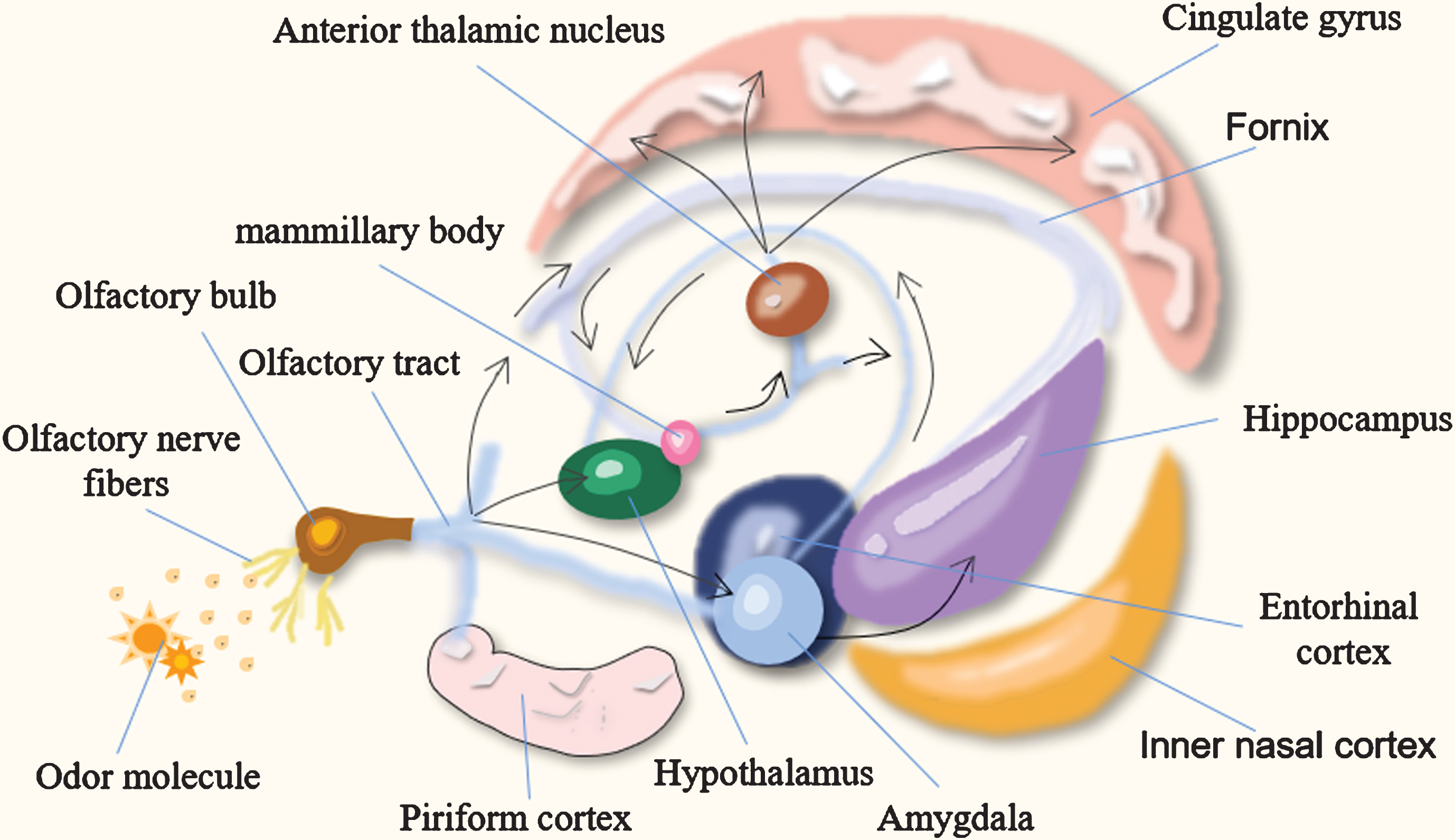
Olfactory projection pathway.
Neural oscillations of sensory stimulation
When a person receives a specific external stimulus, the EEG signals will also keep pace with the frequency of external stimulus. When a person is stimulated by a continuous external stimulus such as frequency flash, the EEG signals collected from the cerebral cortex keeps pace with the frequency of the flash stimulation. Recent studies have shown that gamma entrainments are related to cognition, that is, the 40 Hz EEG segment is a specific event-related potential, and the research on sensory stimulation is also devoted to inducing 40 Hz gamma entrainment. Jones et al. [130] analyzed the 40 Hz gamma response induced by 40 Hz, 60 Hz, and 80 Hz light stimulation by quantitative electroencephalogram. The results showed that the average response of 40 Hz light stimulation was the largest; 40 Hz light stimulation might induce extensive entrainment. Martorell et al. [41] has proposed that under the tone of 8 Hz, 20 Hz, 40 Hz, 80 Hz, or random tone stimulation, the 40 Hz tone stimulation can significantly improve the cognitive level of AD mice, and significantly reduce the number and size of plaques in the brain. Similarly, Singer et al. [39] treated the visual cortex of AD mice with 20 Hz, 40 Hz, 80 Hz, and random sequence light scintillation. Under the same conditions, only 40 Hz light stimulation could reduce the level of amyloid protein. The use of sensory stimulation can also enhance brain plasticity. Studies have shown that non-invasive flash visual stimulation shows significant frontal parietal gamma coherence [131]. In all gamma entrainment, the response of AD patients to visual sensory and cognitive stimuli will increase gamma consistency. Therefore, gamma oscillations seem to be the basic function of the brain at the sensory and cognitive levels.
DISCUSSION
Senile dementia is one of the main issues affecting the quality of life of the elderly, especially AD, which is the main type of dementia. Since the process of AD is irreversible, various studies have been carried out all over the world to seek effective methods for the treatment of AD. In this paper, from the perspective of sensory and multisensory stimulation for AD, the effects and mechanisms of MT, VR, aromatherapy, rhythmic stimulation, and multisensory stimulation in the treatment of AD were discussed. Among them, strong evidence supports the effectiveness of MT in improving the autobiographical memory, behavior, and emotion of AD patients. Two level II studies and five level III studies support the value of aromatherapy in AD. By activating the central and peripheral nervous system, aromatherapy can improve the agitation symptoms, sleep disorders, behavior, and psychology of AD patients, and also has a positive impact on learning ability and memory ability. There is only limited evidence supporting that rhythmic stimulation can specifically induce gamma oscillations, enhance brain plasticity, and improve the memory ability of AD patients. Animal studies have also shown that rhythmic stimulation can cause changes in glial cells, accelerate or inhibit neuronal discharge, and reduce Aβ and plaque deposition to alleviate AD process. There is strong evidence to support the effectiveness of LT-based interventions in the treatment of AD. LT can regulate the circadian rhythm of dementia patients, improve their sleep quality, and improve their cognition and quality of life. The Snoezelen Room and Healing Garden for the treatment of AD by multisensory stimulation is currently developed for AD patients through environmental enrichment. Three level III studies supported the effectiveness of multi-sensory therapy for AD. There is only limited evidence indicate that cognitive training with VR technology can improve the spatial memory and behavioral ability of AD patients.
MT is non-invasive, ubiquitous, and accessible. Therefore, if music can be used in medical treatment or nursing, the application prospect of this safe and cheap treatment method is unlimited. However, MT may need to be guided by professional music therapists to get good therapeutic effect.
The olfactory function of AD patients is impaired due to different degrees of peripheral and central nervous system damage, which often occurs in the early stage of the disease [132]. Therefore, olfactory tests can be used as one of the clinical diagnostic methods. It was found that the coherence of spontaneous activities of the two olfactory bulbs in AD mice were significantly reduced in each wave band of the brain. However, the coherence of β-band was significantly reduced only when the olfactory bulb was stimulated by odor. The local field potential inconsistency of olfactory bulb caused by odor is also a problem worthy of attention [133]. In addition, olfactory disorders have a great impact on cognition, memory, and emotion, and it has been proved that aromatherapy plays an important role in improving the symptoms and cognitive function of AD. Aromatherapy is simple to implement and easily accepted by patients.
Neural oscillations are closely related to memory: temporal cortex θ-γ phase amplitude coupling and frontotemporal cortex θ phase synchronization are related to working memory. Desynchrony of frontotemporal θ phase in AD or elderly patients will lead to working memory defects [118]. The decrease of cortical functional connectivity may be one of the causes of cognitive dysfunction in AD. At present, there are many non-drug intervention methods that can cause the synchronous response of EEG rhythm and change the neural plasticity of functional connection, thus producing direct and lasting effects, such as transcranial magnetic stimulation, transcranial direct current stimulation, transcranial alternating current stimulation, deep brain stimulation, optogenetic, etc. However, sensory stimulation is the safest means of intervention. In addition, most sensory stimulation methods are low-cost and easy to implement, which are easily accepted by patients and affordable for families. Sensory stimulation can even relax the psychological status of patients, while other intervention methods may cause trauma, side effects, or psychological pressure in patients. To date, the application of rhythmic sensory stimulation in AD is still in its infancy. At present, the application of sensory stimulation in AD animal model has achieved exciting results. Anyway, rhythmic sensory stimulation is still a very novel research direction, and more research is needed to support its therapeutic effect in human AD.
Multisensory therapy environment is beneficial to dementia, but it is easy to be limited by the environment, such as site, climate, etc. Patients also need nursing staff to prevent accidents when they play in the treatment garden.
VR technology has a high degree of flexibility and programmability. It can make a specific diagnosis or treatment plan for patients, but professionals are needed to complete it. The successful application of VR technology in cognitive training shows that the cognitive training method based on virtual reality is very promising. It may be difficult and costly to create a special multisensory treatment environment for patients, but through VR technology, it is easy to customize the appropriate training plan for each patient. Although VR has unique advantages in short-term memory, spatial memory, language ability, and other aspects, VR technology needs to be combined with a computer to form an interactive interface, and professionals are still required to design targeted training modes. AD patients also need a certain period of adaptation before therapeutic use, and there may be operational difficulties and poor effect for moderate and severe AD patients with cognitive decline. Clay et al. [134] systematically reviewed the application of immersive virtual reality (iVR) in AD assessment and treatment. It is confirmed that iVR is becoming a feasible method to evaluate the elderly and AD patients. It is also beneficial to cognitive training. In order to further fully evaluate the clinical benefits, acceptability, and participation of iVR technology for AD patients, further randomized controlled trials integrated with clinical populations are required. In general, VR technology is a relatively advanced method in cognitive training, which caters to the trend of social development. How to effectively use intelligent equipment to better serve AD patients will be a hot topic in future research. The future research should also focus on how VR technology can be better integrated into the daily life of AD patients, such as 3D smart TV, smart helmet, etc. Research is also needed to develop a set of simple and flexible cognitive assessment, diagnosis and treatment procedures for AD, to provide auxiliary support for clinicians and nursing staff. Third, we should also consider the cost of changing procedures and whether more people can afford it.
We have ample evidence that phototherapy is useful in dementia. However, there are many factors influence the effect of LT; most of the studies use LT to improve the wake-sleep rhythm of dementia was in the morning but after the lowest core body temperature, to increase the exposure time of AD patients to bright light, which seems to have a significant impact on improving the sleep quality, restless behavior, and depressive symptoms of AD patients. [108]. On the contrary, LT may aggravate circadian rhythm disorder [135]. LT is also affected by seasons, the light intensity during the day will affect the effect of LT. Alistair Burns et al. [108] show that BLT may be more effective in winter. Future research should also focus on exploring effective lighting device parameters and lighting time. Previously, we have shown that 40 Hz flash stimulation may be effective on AD, and the LT may have a more beneficial effect when 40 Hz entrainment is considered. However, this method has not been confirmed by experiments.
Although sensory stimulation is noninvasive and easy to implement, we need to consider the patient’s hearing ability, olfactory function, vision, sensitivity, physical disability, and so on. Due to individual differences, the implementation of sensory stimulation still needs to be combined with the actual situation of patients to formulate specific experimental scheme, which is difficult to complete. At the same time, we also need to consider the influence of implementation site, the surrounding environment and other external factors.
CONCLUSION
In general, research shows it is safe and effective to treat AD with sensory and multisensory stimulation. In the early stage of AD, the use of sensory stimulation for intervention may produce exciting effects that hinder the development of AD, and these operations are easy to achieve. Due to the lack of drugs to cure AD, it is of great significance to study and develop sensory stimulation therapy for AD. In the diagnosis and treatment of AD, future research may focus on providing a comfortable multi-sensory stimulation treatment environment for patients using advanced VR technology to assist the diagnosis of AD. In addition, more efforts should be made to explore the neuroprotective mechanism caused by sensory stimulation and the interaction between brain circuits. Experiments should be carefully designed when exploring how rhythmic sound or flash can lead to a coherent neural response and promote brain plasticity in some brain neurological injury diseases.
Because AD patients need long-term care, many researchers have focused on studying the improvement and enrichment of living environments for AD patients. Therefore, we can also provide a comfortable living environment for AD patients from the perspective of multi-senses. If possible, it can provide improvement and treatment for these patients. At the same time, it can also greatly reduce the burden of nurses. Sensory consideration may play an important role in the nursing of AD patients in the future. Of course, the environmental enrichment of multi-sensory stimulation may not be a simple superposition. How to maximize the stimulation effect, whether there is any influence among the stimulus parameters, whether the stimulus is superimposed at the same time, in turn, or intermittently, still needs to be confirmed.
