






Abstract
Background:
There is a critical need to develop effective interventions for cognitive impairments associated with dementia-related disorders (i.e., Alzheimer’s disease, frontotemporal dementia, mild cognitive impairment). Prospective memory (PM), or the ability to create and carry out future intentions, is one cognitive domain that is impaired in individuals with dementia-related disorders. Effective treatment of PM could significantly improve daily functioning, level of independence, and quality of life.
Objective:
To date, there have been a number of studies investigating potential interventions, but these interventions have not been comprehensively reviewed and compared across the stages of dementia-related disorders, as is the aim of the current review.
Methods:
This review examined 21 studies on the success of intervention strategies for prospective memory in patients with dementia-related disorders.
Results:
All the studies demonstrated positive effects of intervention on PM abilities, but there are questions concerning ecological validity, length of positive effects on PM, and a lack of diversity of interventions across the different stages of dementia-related disorders.
Conclusion:
Future research should address these issues by incorporating daily functioning activities and caregiver support into the intervention process, as well as investigating these interventions at more severe stages of dementia-related disorders.
INTRODUCTION
Prospective memory (PM) is the ability to create and successfully perform future tasks and goals [1, 2]. Examples of PM include remembering to take medication at a certain time, remembering to attend appointments, and remembering to buy groceries while driving home from work [3]. PM plays an important role in autonomy and independence and is more generally indicative of everyday memory competence and functioning [3, 4]. PM deficits can significantly limit functional independence, the ability to perform everyday tasks, and emotional well-being for individuals with dementia and their caregivers, as well as present a number of serious health and safety risks [3].
Dementia-related disorders
Approximately 50 million people worldwide are diagnosed with dementia, with around 10 million new cases diagnosed each year [5]. The number of people with dementia is predicted to reach 82 million by 2030 [5]. Furthermore, the total societal global cost of dementia was estimated to be $818 billion in 2015 [5]. Dementia-related disorders comprise a range of conditions including Alzheimer’s disease (AD), vascular dementia, dementia with Lewy bodies, and frontotemporal dementia (FTD); all these disorders are characterized by decline in two or more cognitive domains and functional disability [6–8]. Initial signs of dementia, also referred to as the early/mild stage, include forgetting names or appointments, forgetting about important dates or events, and losing track of time [5, 9]; these are also critical aspects of PM, which suggests that PM impairments could be an early indicator of dementia [10]. The middle/moderate stage of dementia is characterized by confusion, difficulty with communication, behavior changes such as wandering, and requiring assistance with personal care [5]. Finally, the late/severe stage of dementia includes an inability to recognize friends and family, losing awareness of time and place, difficulty with walking, increasing need for assistance with daily living activities, and increasing behavior changes such as aggression [5]. PM impairments are also clearly present in these stages; these deficits often hasten disability, as successful PM is necessary to carry out personal care, daily living activities, and time and place awareness [3].
While mild cognitive impairment (MCI) has traditionally been distinguished from dementia, it is also characterized by functional disability and significant impairment in multiple cognitive domains [6, 11]. A subtype of MCI is amnestic MCI (aMCI), which is primarily characterized by memory impairment [11]. Both MCI and dementia-disorders have been shown to have significant PM deficits [12]. While dementia-disorders and MCI are often examined together in studies, MCI is usually considered to be a separate condition that is a stage of dementia progression. In this review, MCI and its subtype, aMCI, are considered dementia-related disorders due to overlap in their neuropsychological profiles with dementia, their presence of PM deficits, and research indicating that aMCI and MCI are precursors to early dementia in many cases [11, 14].
PM has been shown to be impaired in individuals with dementia-related disorders such as AD [15], MCI [16], aMCI [17], and FTD [18]. As described previously, PM impairments potentially cause emotional and physical detriments, as well as hinder independence and autonomy [3]. Due to the high prevalence and well-known harm caused by dementia-related disorders, understanding the appropriate interventions to limit distress caused by dementia is vital. Since PM deficits appear as the earliest symptoms of dementia [5, 10], addressing these impairments through effective interventions could prevent challenges and harm caused by the initial onset of dementia-related disorders. Further, implementing PM intervention strategies throughout the various stages of dementia-related disorders could reinforce and support PM abilities as neurodegeneration progresses, allowing individuals with dementia-related disorders to maintain some level of functional independence and quality of life. For these reasons, effectively targeting PM for cognitive preservation could be a beneficial step in treating the different stages of dementia-related disorders.
Neural correlates
Brain imaging studies have shown that PM is associated with neuronal activity of the dorsal frontoparietal network, the dorsolateral prefrontal cortex [19], the ventral frontoparietal network [20], and the temporoparietal network [21]. More specifically, the anterior prefrontal cortex (especially Brodmann Area 10) bilaterally, right lateral prefrontal cortex, the right parietal lobe, the precuneus bilaterally, and the thalamus [22] have been implicated in PM abilities. Other important areas of activation are the anterior cingulate cortex, posterior cingulate cortex (PCC) [23], temporal cortex [24], insula, right parahippocampal gyrus [25], and occipital areas [26].
Dementia-related disorders are characterized by neurodegeneration. In AD, early neuronal loss occurs in the medial temporal lobes and, eventually, cortices of the frontal, parietal, and temporal lobes, including the hippocampus and amygdala [18, 27]. Both AD and FTD have been shown to have decreased gray matter density in the insular cortex, anterior cingulate gyrus, and orbitofrontal cortex [18]. AD, MCI, and aMCI have been shown to have increased neurofibrillary tangles, which are made up of an abnormal accumulation of tau proteins within neurons [28–30]. The tau proteins create tangles that block the neuronal transportation system between neurons and eventually spread throughout the entire brain [30]. It is also important to note that decreased function of the PCC and precuneus in early AD patients has been correlated with decreased scores on memory tasks such as the Rey Auditory Verbal Learning Test and the Babcock Story Recall Test [31].
Key areas of overlap between brain regions implicated in PM functioning and regions impaired in dementia-related disorders include frontal areas (specifically the anterior prefrontal cortex), temporal areas, the anterior cingulate cortex/anterior cingulate gyrus, the PCC, the precuneus, parietal lobules, and the insular cortex. Additionally, decreased activity in the anterior prefrontal cortex in early AD patients has been correlated with decreased PM performance [31]. These overlaps further indicate that individuals with neurodegeneration are at increased risk for PM deficits.
Aims
Interventions aimed at improving PM in populations with dementia-related disorders could markedly improve patients’ lives at possibly all stages of neurodegeneration. This review will examine intervention strategies aimed at treating PM deficits in individuals at various stages of dementia-related disorders. Our aim is to assess the relative success of these PM treatment strategies, and to determine areas that are in critical need for further study.
METHODS
We conducted a literature search for peer-reviewed publications examining PM treatments for dementia-related disorders. We conducted a combined search of the PsychInfo, Medline, Web of Science, and PubMed (1992 – September 2021) databases using the terms: (“prospective memory”) and (intervention*) and (dementia* OR Alzheimer* OR mild cognitive impairment*). The year 1992 was used as the starting cut-off date due to it being the first year that PM interventions were investigated in a population with dementia [32]. This resulted in 233 articles. We limited the search by only including articles written in English (excluded 3) and articles (no book chapters) published in peer-reviewed journals (excluded 22). We further limited the search by removing duplicates between databases (excluded 90). We removed studies that were review articles (excluded 13) and that did not contain an intervention strategy, measurements of prospective memory, and participants with dementia or MCI (excluded 87), which left a total of 18 remaining studies. The references of applicable reviews, book chapters, and remaining articles were examined, which resulted in 4 additional studies, for a total of 22 articles.
We examined these 22 articles using the Newcastle Ottawa Quality Assessment Scale modified for cross sectional studies (NOS) [33] to assess potential bias in the selected studies [34]. This version of the NOS has three domains (selection, comparability, and outcome) with potential scores of 5, 2, and 3, respectively. Scores are rated based on representativeness of the sample, sample size, non-respondents (attrition), measurement of the dementia-related disorder, comparability of the participants in different groups based on study design, control of potential confounds, assessment of the outcome, and appropriateness of the statistical tests. A score of 0 indicates the highest level of bias and a score of 10 indicates the lowest level of bias. We removed one study due to having a NOS score less than 6, due to concerns regarding methodological quality [35], leaving us with a total of 21 studies to review. Overall, the mean NOS score was 9, with a median score of 10. Some studies lost points due to small sample sizes and unclear statistical analyses. See Fig. 1 for a flow diagram of the selection procedure. See Table 1 for a summary of all the studies, as well as their quality assessment rating.
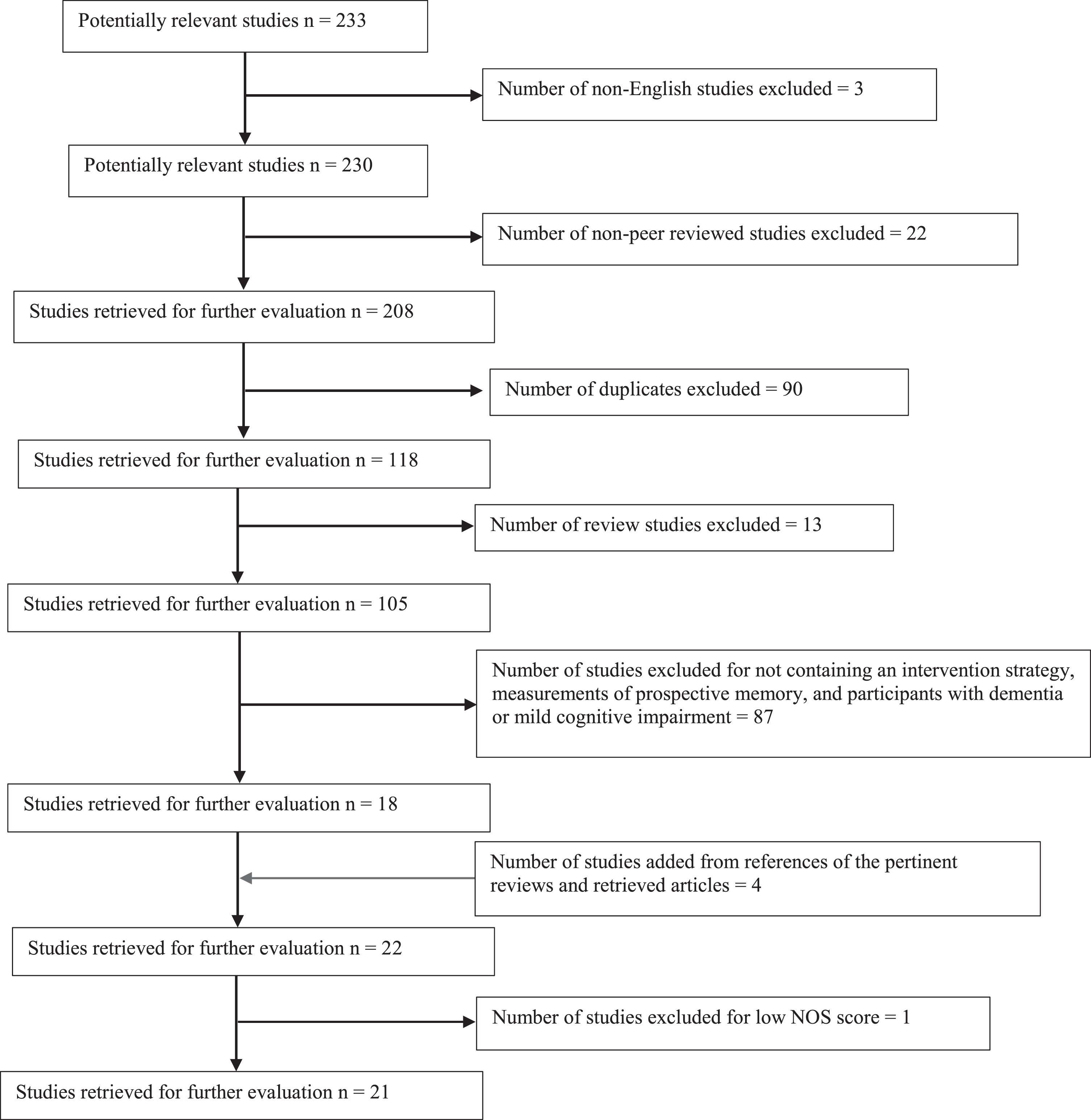
A flow diagram of the selection procedure for the review.
A summary and quality assessment of the studies that were included in the review
AD, Alzheimer’s disease; ADLs, Activities of Daily Living; aMCI, amnestic mild cognitive impairment; BAPM, Brief Assessment of Prospective Memory-Short Form; CAMPROMPT, Cambridge Assessment of Prospective Memory; CAPM, Comprehensive Assessment of PM; CDR, Clinical Dementia Rating; CELP, Computer-assisted errorless learning; CS, cognitive stimulation; CT, cognitive training; DSM, Diagnostic and Statistical Manual of Mental Disorders; EE, Enactment Encoding; EL, Errorless learning; EMA, Electronic Memory Aid; FU, follow-up; FUCAS, Functional Cognitive Assessment Scale; GCI, Group-based Cognitive Intervention; GDS, Geriatric Depression Scale; HCI, Home-based Cognitive Intervention; hx, history; IADLs, Instrumental Activities of Daily Living; II, Implementation Intention; MCI, mild cognitive impairment; MDE, major depressive episode; MEST, Memory Specificity Training; MMSE, Mini-Mental Status Examination; MoCA, Montreal Cognitive Assessment; NINCDS-ADRDA, National Institute of Neurological and Communicative Disorders and Stroke and the Alzheimer’s Disease and Related Disorders Association; PM, prospective memory; PMT, PM Test; PRMQ, Prospective and Retrospective Memory Questionnaire; RA, randomly assigned; SES, socioeconomic status; SR, Spaced Retrieval; TELP, Therapist-led errorless learning; TEMP, Ecological Test of PM; VE, verbal encoding; VW, Virtual Week; WM, working memory; WMS, Wechsler Memory Scale.
Within these studies, the following dementia-related disorders were present: MCI, aMCI, mild AD, early AD, dementia, AD, vascular dementia, and cognitively impaired. The stages of dementia included in the studies were early/mild, moderate, and severe. Early and mild were used interchangeably across studies and will also be used interchangeably in the current paper. The intervention strategies fell into five primary categories: implementation intention, electronic memory aid, spaced retrieval, enactment encoding, and combined methodology. PM was assessed using a variety of tests (e.g., Prospective and Retrospective Memory Questionnaire, Prospective Memory Test, Cambridge Assessment of Prospective Memory, Functional Cognitive Assessment Scale), standardized experimental recall tasks, reports from caregivers of daily task completion, and self-report of memory success.
RESULTS
In order to understand the current literature on intervention strategies in dementia-related disorders, the studies are organized here based on the type of intervention strategy, with the aim of highlighting the important findings on PM intervention techniques. There is also information on stages of dementia-related disorder as it relates to the intervention. All studies included participants with a dementia-related disorder and clear PM measurements.
Implementation intention (number of studies = 3)
Implementation intention involves reading task instructions aloud numerous times and visually imagining oneself performing the task. Three studies examined the short-term effects of implementation intention training on PM performance for participants with MCI, AD, and vascular dementia. All the studies reported positive effects of implementation intention training on PM immediately post-intervention [36–38]. There were no long-term follow-ups for PM performance for the weeks or months following implementation intention training. In Burkard et al. [36], the relationship between improved PM performance and implementation intention intervention was moderated by working memory performance, suggesting that implementation intention is more effective for individuals with average or better cognitive resources and high working memory abilities. Lee et al. [37], and Shelton et al. [38] speculated that while implementation intention training improved PM performance in a laboratory setting, it is possible that the PM assessments used in the laboratory settings do not accurately represent everyday behavior. The PM tasks utilized in these studies were a computerized ongoing categorization task with a PM component [37], and virtual version of a board game with PM tasks (Virtual Week) [38]. Since these studies were performed with laboratory tasks and did not include measures of everyday PM behaviors, it is possible that the methodologies limit the ecological validity of these results [37, 38].
Effects of staging on PM
Regarding stages of dementia-related disorders, Lee et al. [37] and Shelton et al. [38] both demonstrated positive effects of implementation intention with early/mild stages of dementia, as determined by a Clinical Dementia Rating (CDR) score of 0.5. Burkard et al. [36] did not include any description or measures of dementia staging. Based on the two studies out of three that addressed staging, results suggest that implementation intention training could support relatively short-term PM in laboratory settings for individuals with early/mild stage dementia and MCI, and when working memory functioning is high.
Electronic memory aid (number of studies = 3)
Electronic memory aids in the studies reviewed included applications on smartphones (i.e., MindMate, Google Calendar) and vocal recording devices. Both forms of electronic memory aids provide reminders for the participants of their scheduled PM tasks at time-specific intervals. Three studies examined the short-term and long-term effects of electronic memory aid training on PM performance for participants with mild to moderate AD. All the studies reported that electronic memory aid users increased their PM performance and were more likely to accurately carry out real-world and time-specific schedules of tasks [39–41]. While Oriani et al. [41] demonstrated the short-term positive effects of electronic memory aid training on PM performance, McGoldrick et al. [39] and Haj et al. [40] demonstrated successful use of electronic memory aids and improved PM performance for periods of four or five weeks.
Oriani et al. [41] speculated that the electronic memory aids could serve as an external cue for retrieval, potentially reducing cognitive load on the individual and increasing cognitive resources for PM. In the case study by Haj et al. [40], the participant indicated that they had been successfully using their smartphone to communicate with family members and they felt comfortable in their ability to use the device. The participant also told the researchers that they would prefer to use their smartphone as a memory aid, as opposed to using a paper calendar or notepad. For this reason, Haj et al. [40] attributed usefulness of the electronic memory aid to the individual’s previous experience, comfort, and familiarity with their smartphone. McGoldrick et al. [39] discussed the potential for technical errors within the app to limit its effectiveness. Concerns raised by multiple studies include patients must be properly trained to use electronic memory aids, and cognitively impaired individuals must remember to schedule tasks in order to benefit from electronic memory aids [39, 41].
Effects of staging on PM
In terms efficacy at different stages of dementia-related disorders, Haj et al. [40] and McGoldrick et al. [39] demonstrated positive effects of an electronic memory aid training on participants with early/mild dementia. Haj et al. [40] used the National Institute of Neurological and Communicative Disorders and Stroke and the Alzheimer’s Disease and Related Disorders Association (NINCDS-ADRDA) criteria to determine the dementia stage. McGoldrick et al. [39] used the International Classification of Diseases, Tenth Edition, (ICD-10) criteria to determine the dementia stage. Oriani et al. [41] demonstrated their positive effects on participants with both mild/early and moderate stages of dementia, as determined by the NINCDS-ADRDA criteria. Overall, all three studies included criteria for staging and results across the three studies suggest that electronic memory aids could serve as helpful memory cues, potentially for multiple weeks, for individuals with early/mild to moderate stages of dementia in remembering to carry out daily PM tasks.
Spaced retrieval (number of studies = 4)
Spaced retrieval is an active learning technique that involves practicing information and strengthening memory by recalling a target task/instruction at increasing intervals of time. Four studies examined the short-term and long-term effects of spaced retrieval training on PM performance for participants with mild, moderate, and severe AD, and MCI. All these studies demonstrated positive effects of spaced retrieval training on PM performance [32, 42–44]. McKitrick et al. [32] and Small [44] practiced and trained spaced retrieval techniques over a period of days to weeks, which led to PM performance improvement over multiple days/weeks. Kinsella et al. [42] and Ozgis et al. [43] practiced and trained spaced retrieval in one day, demonstrating same-day positive PM effects. McKitrick et al. [32] suggested that spaced retrieval could also support cognitive flexibility, due to the participants’ ability to successfully perform PM using spaced retrieval when the PM cue changed each week. Ozgis et al. [43] indicated the spaced retrieval training improved PM performance in cognitively impaired individuals to reach the level of PM performance in healthy older adults. Here, the term cognitively impaired was used to describe older adults who met Petersen’s criteria for MCI—but were not assessed to have an absence of dementia—so MCI could not be assigned as their diagnosis [43]. Small [44] included caregivers in the study by having them help with spaced retrieval training during the maintenance period. This led the researchers to theorize that incorporating caregivers into the intervention training could aid in shifting spaced retrieval techniques for laboratory settings to real-world settings [44].
Kinsella et al. [42] utilized a modified version of spaced retrieval, elaborated spaced retrieval, which involves training in spaced retrieval techniques and completing practice trials of the PM task. This study found elaborated spaced retrieval to be more effective than traditional spaced retrieval in performance of a laboratory text-reading PM task [42]. The addition of completing practice trials to traditional spaced retrieval is thought to strengthen the memory trace of the intended goal and target explicit and implicit memory processes. This was supported by the elaborated spaced retrieval group successfully encoding and memorizing the task requirements in fewer trials than the traditional spaced retrieval group. Also, more participants in the elaborated spaced retrieval group improved their PM performance in comparison to the traditional spaced retrieval group [42]. None of the studies used real-life PM tasks, but instead used variations of laboratory PM tasks (i.e., text-reading PM task, color-coupon task, Virtual Week, targets questions and target answers), limiting the ecological validity of the positive results [32, 42–44].
Effects of staging on PM
Regarding the stages of dementia-related disorders, all the studies demonstrated positive effects on different stages. Small [44] found their positive results with participants with MCI, early/mild, moderate, and severe dementia, as determined by the Mini-Mental State Exam (MMSE), Modified MMSE, and Montreal Cognitive Assessment (MoCA). It is important to note that only one participant in this study was diagnosed with severe dementia, and that MCI and early/mild dementia were grouped together [44]. Kinsella et al. [42] performed their study with individuals with early/mild dementia, measured by MMSE. McKitrick et al. [32] demonstrated their positive results with individuals with mild to moderate dementia and Stage 3 to Stage 5 dementia, indicated by the NINCDS-ADRDA criteria and the DSM III-R. Ozgis et al. [43] did not report on the dementia stages of their participants. Overall, three of the four studies included criteria for staging, and results suggest that spaced retrieval and elaborated spaced retrieval training could potentially support and improve PM performance for periods of days to weeks by promoting implicit and explicit memory processes involved in PM. Involving caregivers in the study helps to expand the scope of the results to real-life, but these positive PM effects have only been demonstrated in laboratory settings, and in individuals with cognitive impairment, MCI, early/mild, moderate, and severe stages of dementia.
Enactment encoding (number of studies = 1)
Enactment encoding involves reading task instructions aloud multiple times and then acting out the task. One study examined the short-term effects of enactment encoding training on PM performance for participants with MCI. There was no long-term follow-up for PM performance for the weeks or months following enactment encoding training. Pereira et al. [45] indicated improved PM performance immediately following enactment encoding training. Due to the movement that is required in this type of intervention, Pereira et al. [45] theorized that enactment encoding could activate motor and sensory processes, which could direct individuals to allocate more attentional resources to the target PM task. This could ultimately lead to enhanced memory encoding and improved PM performance, as indicated by the positive effects on PM performance demonstrated in this study [45]. PM performance was assessed using a virtual cue-action word sorting task, which could present limitations to the ecological validity of these results [45].
Effects of staging on PM
In terms of the stages of dementia-related disorders in this study, Pereira et al. [45] reported positive effects on PM performance for participants who were diagnosed with MCI and did not have dementia present, as determined by the MMSE and DSM-V [45]. These results suggest that enactment encoding could support PM abilities in laboratory settings immediately after intervention in individuals with MCI.
Combined methodology (number of studies = 10)
Combined methodology includes a variety of training techniques that take place over several weeks including educational sessions about aging, memory, and memory deficits, training in various memory recall techniques, visual imagery practice, goal planning, practice in using electronic memory aids, help with activities that aid in daily functioning, motor learning activities, and/or structured discussions. Ten studies examined the short-term and long-term effects of combined methodology training on PM performance for participants with aMCI, MCI, and AD. Of the studies reviewed, two studies included spaced retrieval training [46, 47], one study included electronic memory aids [48], two studies included both electronic memory aids and spaced retrieval [4, 14], and five studies did not utilize any intervention strategies previously described [49–53]. The length of training periods included five weeks [4, 50], six weeks [47, 48], ten weeks [53], twelve weeks [14, 52], four months [51], or two years [49]. All the studies indicated improved PM abilities to some degree following a combined methodology training intervention [4, 46–53], but there are differences in components of PM improved, length of positive effects, and ecological validity. Specifically, Emsaki et al. [50], Chen et al. [52], Jeong et al. [46], Kinsella et al. [4], and Tsantali et al. [51] demonstrated a positive effect on PM performance in both post-training assessments soon after the intervention, and in follow-up assessments that occurred several months after the intervention (i.e., three-months, six-months, four-months, or twelve-months). Tappen and Hain [14] and Poptsi et al. [49] did not include follow-up assessments months after intervention, but they demonstrated a positive effect on PM immediately after intervention.
Kinsella et al. [48] demonstrated a positive effect on PM performance in the ten-week late post-test and at the six-month follow-up, but not in the two-week early post-test following intervention. Healthy older adults demonstrated improved prospective memory at the early post-test, late post-test, and six-month follow-up. The researchers described the period between the early post-test and the late post-test as a maintenance phase. While Kinsella et al. [48] did not describe what the participants were instructed to do during the maintenance phase, it is likely that they were able further practice and utilize the memory skills that they learned during training. The positive results in the late post-test and 6-month follow-up, but not in the early post-test, suggest that individuals with aMCI may need longer periods of time than healthy older adults to consolidate and practice the memory strategies in order to demonstrate positive effects on prospective memory [48].
Lee et al. [47] demonstrated a positive effect on PM performance at the post-intervention assessment for a computer-based combined methodology intervention, but not at the three-month follow-up. These results could be due to the computer-based aspect of this intervention, which required participants to allocate cognitive resources for navigating the computer system. Since cognitive resources were necessary to utilize the computer system, less resources could have been allocated to the memory aspects of the intervention that support PM. A therapist-based version of this intervention did not report significant changes in PM performance post-intervention or in the three-month follow-up, which could be explained by reports from the therapists that the participants were having difficulty with the memory training and required additional support. Also, it is important to note this study had the shortest interval of training: only 30 minutes [47].
Chen et al. [52] implemented three different types of cognitive training (executive function training, memory strategy training, and combined cognitive training) and found that all strategies were successful in improving PM performance in individuals with MCI immediately post-intervention and at the 3-month follow-up in comparison to a control group. The memory training strategy was found to result in significantly greater PM improvement than the other types of training post-intervention [52]. PM improvement was maintained at the 3-month follow-up, but there were no significant differences between the training groups [52]. The post-intervention and follow-up positive results were seen in the Prospective and Retrospective Memory Questionnaire, but not in Virtual Week [52]. Chen et al. [52] suggested the lack of significance for the Virtual Week task may be due to complexity of the task. For this reason, the success of these training strategies in challenging situations measured by the Virtual Week task is questionable.
Lajeunesse et al. [53] demonstrated improved cue detection during the PM task as measured by fewer false alarms for individuals with MCI, but the participants did not indicate overall PM performance improvement in comparison to a control group. This intervention involved two aspects: education and training in PM components of cue detection and intention retrieval, and implementation of interactive visual imagery techniques over ten weeks [53]. Specifically, participants were taught to create interactive mental images associated with a PM cue and an intended action [53]. The results of this study suggest that this training technique enhances a participant’s ability to notice and identify a PM cue, but not necessarily retrieve the corresponding action [53]. The visualization aspect of this intervention does not seem to facilitate PM performance as the researchers intended [53]. This could be explained by the structure of the visualization technique for this intervention, which will be further explored in the discussion. Also, participants reported having difficulty creating mental images for the intended actions during the training period, suggesting that they were unable to properly carry out the criteria of the intervention strategy [53].
Emsaki et al. [50], Jeong et al. [46], Tsantali et al. [51], and Poptsi et al. [49] indicated potential real-world implications from the combined methodology training intervention, with participant outcomes including decreased memory slips in everyday life, increased memory of appointments, and increased daily functioning as measured by self-report and caregiver report. Kinsella et al. [48], Kinsella et al. [4], Lee et al. [47], Chen et al. [52], Lajeuness et al. [53], and Tappen and Hain [14] found positive effects with laboratory assessments of PM (CAMPROMPT, Envelope and Reminding Tasks, BAPM, Prospective and Retrospective Memory Questionnaire, Event-Related Prospective Memory Task), limiting the generalizability of the positive PM effects to everyday life. Kinsella et al. [4] indicated positive effects in PM laboratory tasks, but not in self-report of memory failures in everyday life; researchers stated that self-report in this case may not be an accurate measure of memory due to its subjectivity. Lajeunesse et al [53] demonstrated a similar pattern, which could relate to the difficulty that the participants had in creating mental images for the intended actions during the training period.
Effects of staging on PM
Regarding the stages of dementia in these studies, Lee et al. [47], Poptsi et al. [49], and Tsantali et al. [51] demonstrated their results with participants with early/mild dementia. Lee et al. [47] defined early/mild dementia by a Chinese Dementia Rating Scale score of 1. Similarly, Tsantali et al. [51] defined early/mild dementia by a CDR score of 1. Poptsi et al. [49] determined early/mild dementia by a MMSE score of ≥19. In contrast, Emsaki et al. [50], Jeong et al. [46], Kinsella et al. [48], Kinsella et al. [4], Chen et al. [52], and Lajeunesse et al. [53] indicated their results with participants who were diagnosed with MCI and did not have dementia present. Emsaki et al. [50] and Lajeunesse et al. [53] used Petersen’s criteria for MCI to define MCI. Jeong et al. [46] utilized both Petersen’s criteria for MCI and a CDR scale of 0.5. Chen et al. [52] defined MCI with a CDR score 0.5. Kinsella et al. [48] used both the NINCDS-ADRDA criteria and a CDR score < 1 to describe MCI. Kinsella et al. [4] used the NINCDS-ARDA criteria. Tappen and Hain [14] demonstrated their positive results in participants with both early/mild dementia and MCI. They utilized an MMSE score of≥19 and a CDR score of≤1 to define early/mild dementia and MCI, which were grouped together [14].
Overall, all ten studies included criteria for staging, and results across the ten studies suggest that combined methodology training supports PM in individuals with early/mild stage dementia and MCI, but there are mixed results on how long lasting these effects are, and on how generalizable these results are to real-world functioning. Furthermore, since these training sessions have a wide variety of methodology, it is unclear which aspect of the training best supports and enhances PM. Due to the wide variety of cognitive training techniques utilized in combined methodology, it is possible that this training strategy supports overall brain health and functioning [50].
DISCUSSION
The 21 articles examined in this paper provide a complete review of the current findings and trends regarding the success of PM intervention strategies in individuals at various stages of dementia-related disorders. The results from these studies indicate areas of strength as well as gaps and inconsistencies in the current intervention strategies. An overall summary of the important themes in the systematic review are discussed here.
Positive findings
Overall, every study included in this review demonstrated some degree of positive effects on PM abilities following intervention using implementation intention, spaced retrieval, enactment encoding, electronic memory aids, or combined methodology techniques [36, 46]. These improvements were observed for a variety of individuals with a dementia-related disorder (i.e., mild AD, early AD, aMCI, MCI, etc.). In comparison to single method PM interventions, the combined approach appears to be the most effective strategy in terms of long-term efficacy and ecological validity. The combined methodology intervention seems to have the most long-term positive outcomes, as six of the ten combined methodology studies included positive effects on PM performance months after the intervention had been completed [4, 50–52]. In contrast, few other studies included long-term outcome measurements, with two including outcome measurements a few weeks post-intervention [40, 44].
Electronic memory aids and the combined methodology strategies appear to be most validated in terms of ecological validity, as all three of the electronic memory aid studies and four of the ten combined methodology studies included positive effects on real-world measures of PM [39, 49]. It is possible that the incorporation of multiple memory training techniques, including spaced retrieval and electronic memory aids in some cases, could make combined methodology training more effective in supporting and maintaining PM [4, 47]. Overall, all intervention techniques were successful in improving PM, but the experimental design of the studies demonstrate varying levels of effectiveness, real-world applicability, and length of positive effects.
Efficacy of intervention based on dementia/MCI stage
Overall, all the interventions showed benefits to prospective memory performance at nearly all stages of dementia-related disorders, but there are disparities in how often the interventions were investigated across the different stages [32, 44]. Generally, mild/early dementia was the most common stage of dementia-related disorder investigated in the studies reviewed. In total, eleven studies investigated the mild/early stage of dementia [14, 51]. In comparison, three studies examined their intervention in the moderate stage of dementia [32, 44], and one study had a single participant in the severe stage [44]. These interventions also appear to be successful in individuals with MCI [4, 52], and older adults with cognitive impairment who qualify for MCI, but dementia has not been ruled out [50]. Burkard et al. [36] and Ozgis et al. [43] did not report on their participants’ stages of dementia. These disparities make it challenging to examine the stage-intervention interaction, but conclusions can still be drawn from the current literature.
Implementation intention was only examined in studies including participants who met criteria for MCI and early/mild stage of dementia, or in a study with participants who did not provide stage of dementia information. While these studies demonstrated positive results, comparisons cannot be made to the other stages of dementia-related disorder [36–38]. Similarly, the combined methodology studies only investigated the effects of the interventions on participants with MCI or at the early/mild stage of dementia, so the positive results of these studies can primarily be applied to the early/mild stage of dementia, and older adults with MCI [4, 52]. Electronic memory aids were implemented on a slightly wider range of dementia stages, as these studies demonstrated improved prospective memory performance in individuals with early/mild and moderate stages of dementia [39–41]. Spaced retrieval appears to be effective across the widest range of stages of dementia, as these studies indicated positive effects in MCI, early/mild, moderate, severe, and unknown stages of dementia [32, 42–44]. Spaced retrieval intervention was the only strategy that was implemented with an individual at the severe stage of dementia [44]. Finally, enactment encoding demonstrated positive results for participants with MCI, so conclusions cannot be drawn about the efficacy of this intervention for the three stages of dementia [45]. From these findings, the current research indicates that spaced retrieval is the only intervention that is successful for prospective memory remediation across MCI, early/mild, and moderate stages of dementia-related disorders, but there is a clear lack of research for the moderate and severe stages of dementia-related disorders.
Limitations
There are a number of limitations associated with the intervention strategies discussed in this review. Incorporating any of these interventions into a patient’s life requires some degree of time, money, and resources, which must be taken into consideration. Electronic memory aids require a technical and cost burden, as this intervention requires the use of a phone or recording device [39, 41]. The combined methodology intervention presents a similar limitation: due to the variety of techniques utilized in the combined methodology, some of which involve electronic memory aids, there is also a potential for technical and cost burdens. Additionally, combined methodology is the most time intensive intervention. This is beneficial for the long-term outcomes of the intervention, but it poses a potential burden on patients. Combined methodology also requires the most resources in terms of skill training sessions and educational materials, which could further increase the cost of the intervention [4, 51]. This could pose more of an issue as an individual progresses through the stages of the dementia-related disorder and their symptoms intensify. The technical, cost, time, and resource burdens for electronic memory aids and combined methodology could limit the availability and accessibility of these interventions. Enactment encoding, spaced retrieval, and implementation intention do not pose these limitations, as they occur over a shorter period of time and do not require technology or extensive training materials.
Electronic memory aids present an additional potential limitation to the current literature. While electronic memory aids appear to help participants carry out daily tasks, they seem to support PM in a different manner than the other interventions. Electronic memory aids provide an external memory cue that facilitates retrieval, possibly functioning as a compensatory memory tool as opposed to a memory strengthening technique [41]. There is also the issue of usability of electronic memory aids for individuals with dementia-related disorders, as they have to learn to properly use the device and remember to program their target events into the device [39, 41]. Without a technique to support their memory and cognitive functioning, this could make using electronic memory aids challenging and impractical. There could also be negative consequences if the electronic memory aids were to malfunction or become damaged. The results from this review suggest that electronic memory aids could be useful to assist memory-impaired individuals in carrying out everyday tasks, but they may be most effective when used in combination with other techniques to enhance PM.
Finally, while the quality assessment ensured that relatively unbiased studies would be included in this review, an important limitation could not be avoided: not all the studies assessed PM as a primary measure. For example, Tsantali et al. [51] did not intend to primarily target PM functioning, but instead hoped to improve general cognitive functioning such as semantic memory and retrieval ability, with PM as a secondary outcome measurement. In contrast, the study by Shelton et al. [38] utilized PM as a primary outcome measurement. These differences in overall aims and primary outcome measures of the studies could limit the comparability of such studies.
Gaps in the literature and future directions
Despite many promising PM studies, there are still more questions than answers in this field. First, as discussed previously, not all the studies included measurements examining the long-term effects of the interventions on PM performance. The combined methodology interventions appear to have the longest lasting positive effects, but this cannot be fully determined until investigators examine the durability of spaced retrieval, implementation intention, electronic memory aids, and enactment encoding techniques by examining long-term outcomes. Future intervention studies should consistently aim to incorporate follow-up assessments months after the intervention has ended.
Second, very few studies have ecological validity. Studies that have demonstrated positive effects of PM on laboratory tasks offer promising results, but real-world measures of PM in everyday life are needed. Based on the current literature, electronic memory aids and combined methodology strategies appear to have the highest level of ecological validity, but spaced retrieval, implementation intention, and enactment encoding studies should also use real-world measures of PM in order to further determine the efficacy of these strategies. Additionally, very few studies have incorporated caregivers into the intervention techniques. Doing so could help integrate the use of PM intervention strategies into everyday life, as well as allow individuals with dementia-related disorders to work towards functional independence while still being emotionally and physically supported by their caregivers [44]. There is a clear need for additional research on transfer of PM interventions to everyday, real-world tasks.
Third, there is a lack of diversity in examining the intervention efficacy across the stages of dementia-related disorders. Most studies examined their intervention at the mild/early stage of dementia-related disorders [14, 51]. A few studies investigated their intervention at the moderate stage of dementia [32, 44], and many studies had participants diagnosed with MCI [4, 53]. Across the 21 studies, only one participant was diagnosed with severe dementia [44]. Small [44] was the sole study to include participants at the three stages of dementia and MCI, but they had a small sample size for each stage. Further, some studies do not report on their participants’ stages of dementia [36, 43]. This lack of diversity in dementia stage limits the ability to fully assess the efficacy of the interventions. It also restricts the potential to fully compare the different interventions to determine if one intervention better supports prospective memory remediation over the others. Since PM interventions would benefit an individual through every stage of dementia-related disorders, it is critical that future studies incorporate individuals at every stage of dementia-related disorders.
Fourth, there are inconsistencies in how the stages of dementia-related disorders are determined. For example, some studies used a CDR Score of 0.5 to determine early/mild dementia [37, 38], while Jeong et al. [46] and Chen et al. [52] used the same score to determine MCI. Further, a couple of studies categorized MCI and early/mild dementia together [14, 44], while other studies differentiated between these stages [4, 42]. To better investigate the efficacy of these interventions in improving prospective memory across the stages of dementia-related disorders, there should be more consistency in how the dementia stages are determined.
Fifth, little is currently known about how pro-cognitive medications used to treat dementia (e.g., anticholinesterase inhibitors) interact with PM interventions. The topic was only mentioned as an inclusion/exclusion criterion in two studies [14, 51]. An important question is whether there is any pharmacologic augmentation, or inhibition, of PM training for participants taking these medications. Researchers should incorporate information on participants’ medication regimens to explore how drugs might interact with the intervention efficacy. Anticholinesterase inhibitors could also be incorporated into the different types of intervention strategies, which was not addressed in current literature.
Sixth, there is a lack of studies that utilize neuroimaging techniques. As discussed previously, there is overlap in brain regions implicated in PM and regions affected by dementia-related disorders [18, 27–29]. Despite this overlap, none of the current studies measure brain activity before or after intervention. Incorporating neuroimaging in intervention studies could demonstrate correlations between interventions and increased brain activity in the areas associated with PM, which could further determine the efficacy of these intervention strategies. Neuroimaging techniques should be integrated into intervention studies to further explore the efficacy of these strategies as measured by brain activity in regions associated with PM.
Seventh, the use of visualization in intervention strategies should be further investigated. While visualization has been an effective strategy for other domains of memory (retrospective memory, facial recognition, etc.), it appears that the visualization technique implemented by Lajeunesse et al. [53] is not ideal for PM performance. The technique described by Lajeunesse et al. [53] requires mental imagery in a highly structured manner that could interrupt PM functioning: during training participants must create a set of mental images connecting the cue with the action, and during the task they must be able to identify the cue, recall the associated mental image for that cue, recall the mental image for the intended action associated with the cue, and carry out the intended action, all in a short time span [53]. This could explain why the participants were able to detect the cue more readily, but their overall PM performance was not improved [53]. Implementation intention is a technique that also utilizes mental imagery, but it is much more streamlined: the primary goal of implementation intention is to focus on visualizing the specific task instructions [36, 37], which could help with encoding of the cue and the intended action for that task, ultimately improving PM performance. Since visualization seems to be an effective strategy when utilized efficiently, future studies should investigate how to best implement visualization techniques for PM.
Summary and conclusions
Overall, the results from this systematic review suggest that the current intervention strategies (implementation intention, enactment encoding, spaced retrieval, electronic memory aids, combined methodology) primarily show promise at improving PM in individuals with early/mild dementia-related disorders and MCI, but there are mixed findings in terms of ecological validity, duration of treatment effects, and consistency in reporting the stages of dementia. Implementation intention, enactment encoding, spaced retrieval, and combined methodology appear to support and maintain PM functioning, while electronic memory aids more likely offer a retrieval cue for daily-tasks. Future studies should focus on interactions with medication, neuroimaging, and the role of visualization to determine how to improve PM most effectively in dementia-related disorders. Dementia is prevalent worldwide, and it is projected to become worse with time [5]. For this reason, it is important for intervention strategies to be effective in remediating impaired cognitive abilities at all stages of dementia-related disorders. This review indicates that the current 21 studies investigating intervention strategies for PM in dementia-related disorders all demonstrate positive effects, but the ecological validity, length of positive effects, and efficacy of these interventions across the various stages of dementia-related disorders are unclear and should be further investigated.
