







Abstract
Background:
In the digital era monitoring the patient’s health status is more effective and consistent with smart healthcare systems. Smart health care facilitates secure and reliable maintenance of patient data. Sensors, machine learning algorithms, Internet of things, and wireless technology has led to the development of Artificial Intelligence-driven Internet of Things models.
Objective:
This research study proposes an Artificial Intelligence driven Internet of Things model to monitor Alzheimer’s disease patient condition. The proposed Smart health care system to monitor and alert caregivers of Alzheimer’s disease patients includes different modules to monitor the health parameters of the patients. This study implements the detection of fall episodes using an artificial intelligence model in Python.
Methods:
The fall detection model is implemented with data acquired from the IMU open dataset. The ensemble machine learning algorithm AdaBoost performs classification of the fall episode and daily life activity using the feature set of each data sample. The common machine learning classification algorithms are compared for their performance on the IMU fall dataset.
Results:
AdaBoost ensemble classifier exhibits high performance compared to the other machine learning algorithms. The AdaBoost classifier shows 100% accuracy for the IMU dataset. This high accuracy is achieved as multiple weak learners in the ensemble model classify the data samples in the test data accurately.
Conclusions:
This study proposes a smart healthcare system for monitoring Alzheimer’s disease patients. The proposed model can alert the caregiver in case of fall detection via mobile applications installed in smart devices.
INTRODUCTION
In recent decades due to the remarkable development in medicine and technology, there has been a significant increase in the older adult population in developed countries. The increased elderly population worldwide has led to the prevalence of age-related disorders among them. One such disorder is Alzheimer’s disease (AD), leading to brain cell death and irreversible brain damage. The disease affects the person’s memory, critical thinking, judgment, and behavior. It is a neurodegenerative disease that crumples the lives of elders, leaving them dependent on their children and relatives. Statistics indicate that in America, 6.5 million people aged 65 and older were living with AD in 2022 [1]. There are five stages that AD patients go through: preclinical AD, mild cognitive impairment, mild dementia, moderate dementia, and severe dementia. AD is caused by amyloid-β deposition, a protein deposit in the brain. Neuroimaging technologies can detect amyloid-β deposits. Mild cognitive impairment affects the patient’s memory and thinking ability. Patients with mild dementia show symptoms like memory loss, change in personality, difficulty expressing thoughts, and losing their way in familiar places. The next stage shows excessive memory loss, increased confusion, and assistance for daily activities. The last step of dementia shows the inability to speak meaningful words and a decline in physical ability [2]. This degeneration in the mental and physical condition of the patient raises the need for continuous monitoring of the patient.
AD patients suffer from muscle weakness, poor mobility, and imbalance while walking. Due to medications, they have side effects like dizziness and low blood pressure [3]. All these factors make patients susceptible to frequent falls. There is an inevitable need to monitor AD patients living alone to provide immediate help in case of such fall episodes. Usually, falls cause head injuries or bone fractures. These patients, left unattended, may be at high risk of bleeding to death in case of head injuries. Fractures can also lead to the patient being unattended for substantial periods in pain. This is the strong motivation for this research work. Smart healthcare systems can monitor patients continuously with real-time data. The Internet of things (IoT) provides value-added services by connecting networking devices, sensors, people, and objects. IoT devices communicate with Wi-Fi, Bluetooth, and a low-power wide area network. Integrating the latest technologies like IoT, artificial intelligence, cloud computing, and data analytics begets smart healthcare systems. Smart healthcare systems include a network of wearable devices, IoT, and applications to monitor patient condition and maintain data effectively. Smart care systems and computer-aided tools have made diagnosing and treating patients easy for medical practitioners [4]. Computer-aided diagnosis tools are developed with machine learning algorithms and deep learning techniques to classify and predict the disease. These models show high accuracy in their results and decrease the false positives in disease diagnosis [5]. Healthcare systems find application in real-time monitoring of the patient. These smart healthcare systems highly benefit patients with chronic health issues who need assistance on an emergency basis. Continuous monitoring of the devices is possible with sensor-based wearable devices that transmit informative patient data to the healthcare system [6]. This research paper extensively studies the various IoT frameworks and healthcare systems for AD patients. Smart health system proposed in this research paper facilitates AD patients to lead a more secure life in the early stages of the disease.
Smart health systems can diagnose diabetes mellitus with machine learning algorithms like SVM, KNN, Naïve Bayes, Decision tree, and Random Forest [7]. Wireless Sensor Network (WSN) plays a major role in implementing the IOT architecture. The sensors spatially scattered collect various real-time health data from patients. WSN deals with sensor data acquisition, storage, and transmission of sensor data. Consumption of resources is high in WSN, a major setback for this technology. An intelligent, opportunistic routing protocol can optimize resource consumption, particularly during data communication [8]. The vital symptom of AD patients is losing memory. They cannot identify a person or recollect their name. A healthcare system for aiding AD patients automatically identifies known persons by Convolution Neural Network (CNN). The system includes preprocessing the visitor’s face image to improve image quality. The feature extraction phase extracts the features using key facial points and classification is performed by CNN. The system also includes a Google assistant for communication and a GPS location tracker with a messaging facility [9]. An Ontology-based computational model accepts physiological data from IOT devices for identifying strange and dangerous behavior of AD patients. Dcare acts as a mediator transmitting location and patient data from wearable devices to consumer applications. AD patients suffer from physical, nonphysical, and verbal agitation. There is an inevitable need to alert the caregiver when such behavior is predicted. The context recognition component identifies the context by processing the data and maintains the context history in the database. Predictions are made based on the analysis of context histories based on the dataset populated with patients’ daily activities. The machine learning algorithm makes behavior predictions based on the context history [10]. The sensors, devices, and applications collect individual mobility and activity data. GPS sensors track locations, whereas the accelerometers in smart watches that track the movements and step count. The data is securely collected, stored, and transferred in a well-designed application [11]. Intelligent assistive technology (IAT) is built with Triple Point Sensor (TPS) by Thought Technology Ltd. The sensor collects electrodermal activity, skin temperature, and heart rate to detect movements in AD patients. Alert is given to the caregivers about the physiological changes in individuals with dementia [12]. Smart watches, smart stickers, smart cameras, and applications are used to trace the movement and health parameters of AD patients. Smart watches monitor the temperature, blood pressure, and diabetes level of the patient. The protocols like MQTT, HTTP, or WebSocket gather information from Alzheimer monitoring IoT devices connected via a wireless network. This system can be used in pandemic situations for remote monitoring of patients. The dashboard is an integral part of the system that displays the data stored in the database [13]. AD detection model was implemented using a customized CNN model, a deep learning technique with high accuracy for MR images [14]. The other health care systems for fall detection include the epilepsy detection and heart rate variable (HRV) monitoring with artificial intelligence algorithms. Several automated systems are available for epilepsy detection using EEG signals [15]. The EEG signals from epilepsy patients are pre-processed to remove noise. The signals are then processed by deep learning techniques to detect epilepsy automatically. The HRV monitoring system [16] and glucose monitoring system can be evaluated on accuracy, sensitivity and specificity metrics.
This research paper proposes a smart healthcare system to monitor and alert (SHMAD) caregivers of AD patients. The key merit of the proposed system is to provide easy and secure living for AD patients in the early stages of the disease. The SHMAD module has several submodules to monitor the patient’s health parameters, such as glucose level, heart rate variability, and body position. The module also alerts the caregiver in case of an epileptic attack or falls due to any other reasons. The AI-based fall detection module is implemented and evaluated in this study. The fall detection model is an artificial intelligence model built with AdaBoost ensemble machine learning algorithm. Several classifiers are studied experimentally with the IMU fall open-source data set.
MATERIALS AND METHODS
Architecture of Fog-based IOT system
The IoT is an emerging technology that provides smart solutions to difficult and complex problems in all walks of life. IoT is a network of devices, sensors, and objects that automate a manual task to simplify our lives. IoT has spawned innovation in education, industry, medicine, agriculture, traffic management, smart cities, and smart homes [17]. The promising solutions using Internet of Medical Things (IOMT) aid medical practitioners in monitoring chronic patient’s status remotely, maintaining their medical records securely, and alerting the caregiver in case of emergencies. Some patients with chronic illnesses can be remotely monitored and treated by telehealth. These patients are monitored at home by integrating the features of IOMT with innovative smart home solutions. IOMT is a three-layered architecture with layers of perception, network, and application service. The bottom layer, the perception layer, consists of the data acquisition sublayer to collect data from sensors of IOMT and the data access sublayer to connect to the upper layers. Wireless Fidelity (Wi-Fi), Bluetooth, and ZigBee facilitate the data transfer in this layer. The middle layer has two sublayers of network transmission and network service. The data received from the perception layer is processed and transmitted to the application layer. This layer stores, analyzes, and processes a large amount of data via the cloud and big data processing. Figure 1 shows the architecture of Fog-based IoT system.
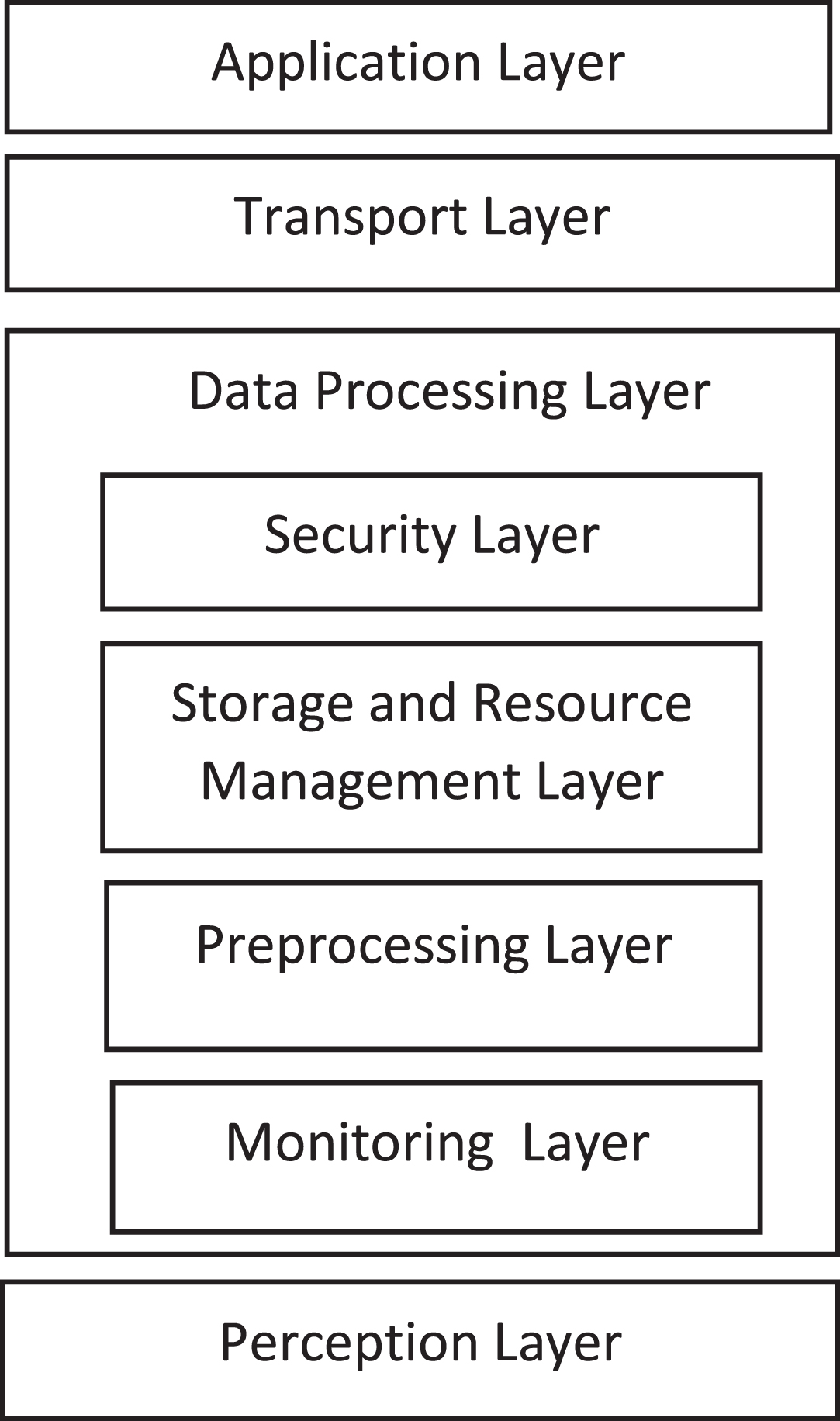
Architecture of the Fog-based IOT system [13].
The Fog-based architecture of IOT, more popular in recent decades, imbed the monitoring, preprocessing, storage, and security layers in the middle layer. The monitoring layer tracks the resources, power consumptions, and all related services. The data storage layer deals with the database and its associated tasks. The security layer is for data integrity and privacy [18].
Proposed SHMAD system
The proposed SHMAD system for monitoring and alerting AD patients includes phases of data acquisition, edge computing, secure cloud server data transmission, and the SHMAD module for AD patient monitoring.
Data acquisition
The sensors in the S-CMAD system record the glucose level, posture, acceleration of the body, blood oxygen level, HRV, SpO2/FIO2, electrocardiogram (ECG), and electromyography (EMG) for continuous monitoring of patient health conditions. The health parameters for creating an emergency alert for the patient are measured by different sensors available as wearable devices. The breakthrough in technological advances in the field of sensors has led to the invention of Biosensor 2A by LifeSignals Ltd. This biosensor can monitor the 2-ECG channel, heart rate, heart rate variability, respiration rate, SpO2, posture, skin temperature, body temperature, and orientation measured by gyroscope and accelerometer. A sensor that monitors a patient’s vital health parameters is a boon to health monitoring systems. Biosensors are disposable sensors having seven-day wear time and event indicators [19]. The data acquisition phase will acquire the data from the biosensor and transmit it to the secure cloud server for storage. The AI model for predicting and classifying the patient’s condition processes the data from the cloud. The caregiver is alerted about the patient’s disease through the application on smartphone. Figure 2 shows the block diagram of the proposed SHMAD system.
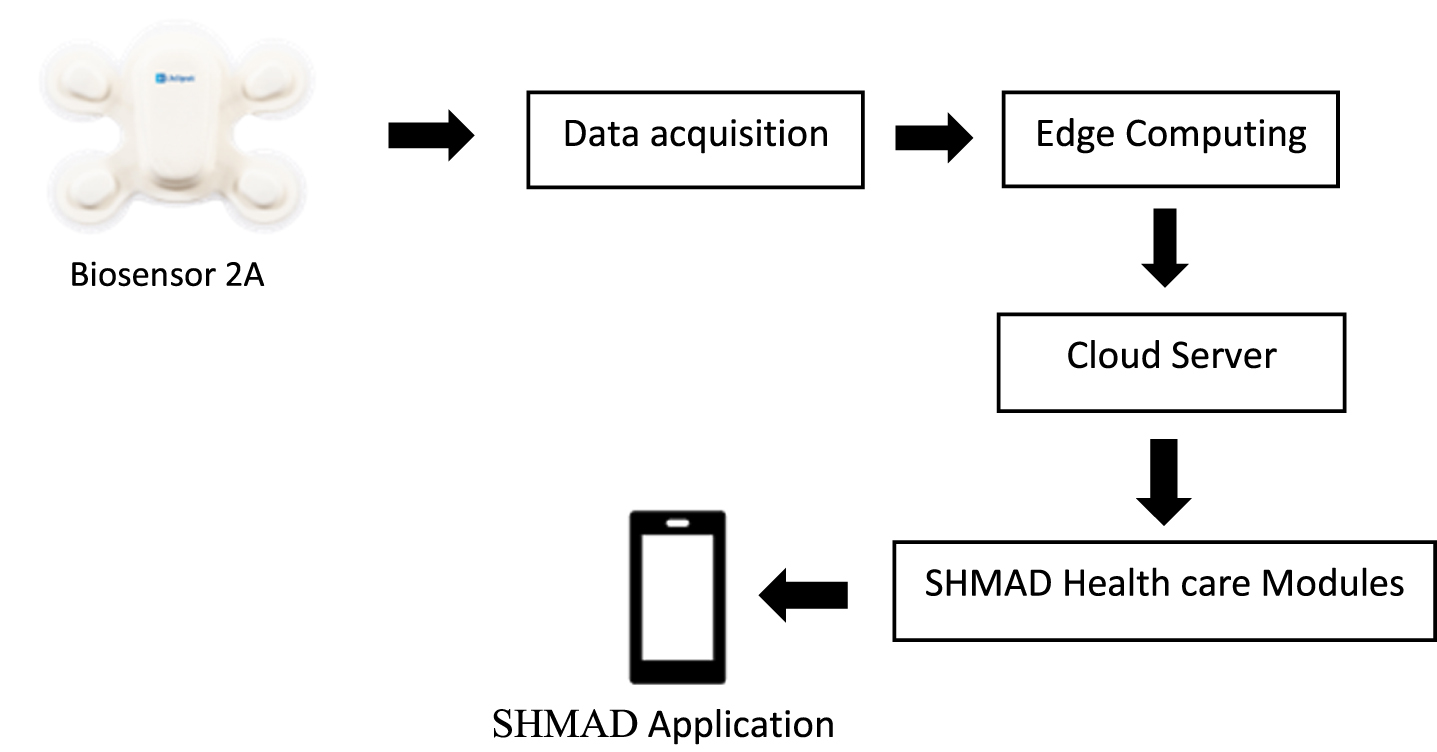
Block diagram of the proposed SHMAD system.
Edge computing
Health data collected from the sensors must be securely stored, precisely analyzed, and usefully processed. Cloud computing is the best solution, as the significant features of the cloud are voluminous data handling, scalability, and flexibility. Fog computing aims to reduce the computation load in the cloud and move it to the network’s edge, which provides faster service to the users. Fog computing will improve the speed of data processing. Several network and computation services are provided to the end devices of the cloud. Fog is distributed computing that performs operations by virtualized and non-virtualized edge devices. The fog layer reduces the amount of information stored and processed. In the proposed system, the application requires heavy computational resources that will lower the speed of mobile applications. Task overloading is a convenient solution to this issue but not a suitable solution for time-critical applications. Deployment of IOT-based health applications is at a substantial increase in the market. A centralized storage entity like the cloud may need to be more efficient for this growing technology. Processing voluminous real-time data with high efficiency and low latency recommends fog and mobile edge-based computing. Fog nodes at the network’s edge serve mobile users with timely and efficient services [20]. A timely response is a high-priority requirement of an IOMT-based application. Mobile edge computing excels in applications with data stored in the cloud, where edge analytics performs computation and network gateways management. The MEC servers are deployed in the mobile network to facilitate the computation and storage of massive amounts of IOT data. Migrating the deployment of applications and services to the edge allows a reduction in the core network traffic [21].
Edge computing is suitable for this proposed system as the data can be saved in the same location where it was generated. When stored in the cloud, the data induces latency due to connectivity issues. The data stored on the edge boosts the performance of the model. Enhanced data security and privacy is achieved when the data is processed within the edge. This does not imply that the data is secure from hackers, but the entire data will not be hacked as it is available in the cloud. Maintaining most of the data in the edge and moving a few data to the cloud reduces operational costs. Fault tolerance and reliability is higher when the data is stored in the edge. Artificial intelligence models perform better with the data on the edge rather than the cloud.
Cloud servers
Cloud servers are virtually hosted servers that use advanced technologies like hypervisors to connect and virtualize thousands or even millions of physical servers. These servers are hosted by specific individuals or companies that allow people to store their data on their cloud for a fixed rate and time. Cloud servers are hosted and accessed from anywhere in the world; for example, in a lot of ways, cloud servers are like the Internet. The cloud can store data, create, and use virtual machines, and much more.
SHMAD HealthCare Module
This research paper proposes a Smart Health Care System for AD patients, SHMAD. The SHMAD has modules to monitor, collect data, and alert the caregivers in case of emergencies. The modules are listed and discussed in the following section. They include a Continuous glucose level monitoring system, home security system, fall detection system, HRV monitoring system, epilepsy detection system, and biometric authentication system. Figure 3 shows the block diagram of modules of SHMAD.
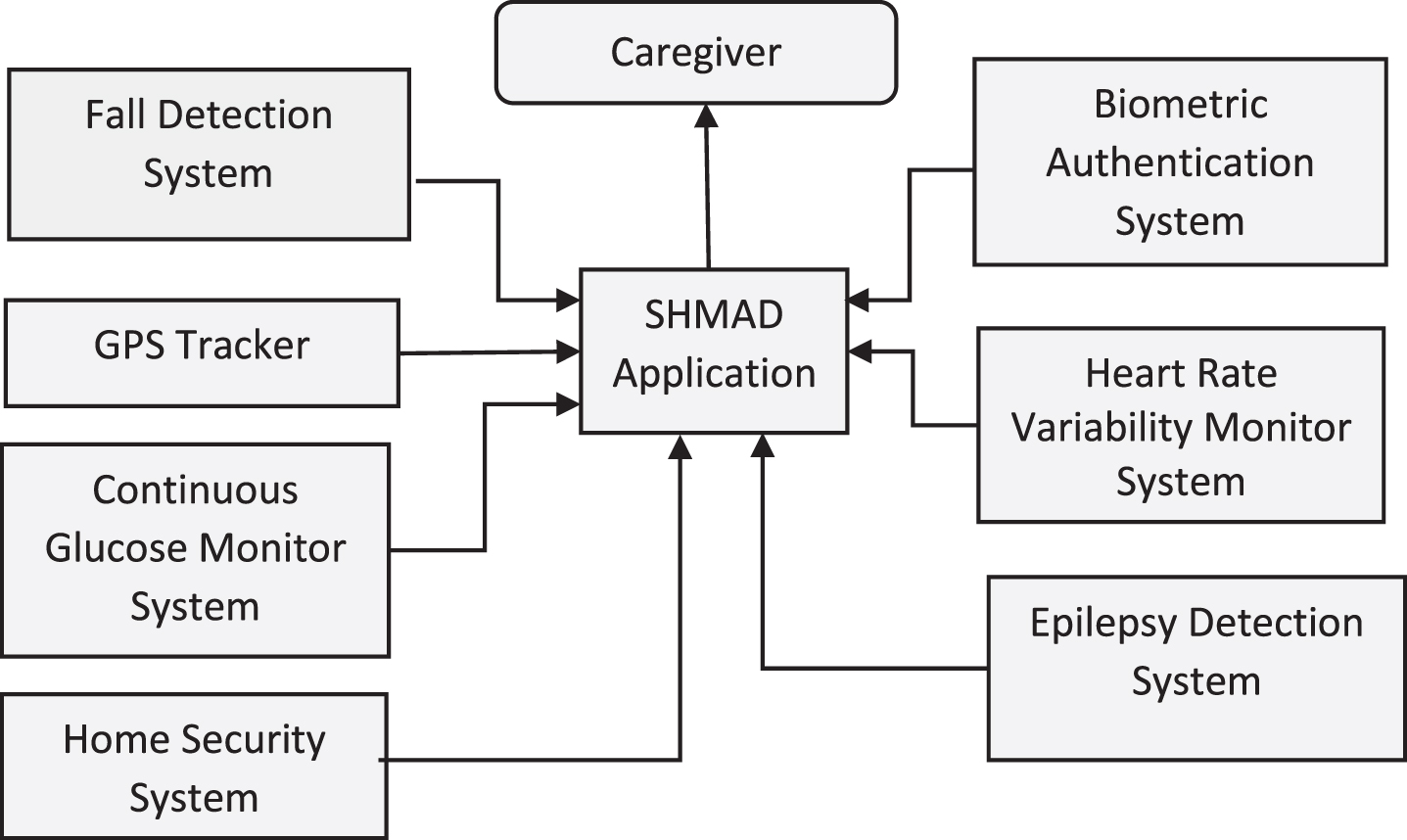
Modules of the proposed SHMAD system.
Continuous glucose level monitor system
AD is a disease affecting the age group above 60 years. Diabetes is commonly prevalent among the elderly population above 65 years of age [22]. Hypertension or high blood pressure is found in the age group above 55 among men [23]. Hypertension and diabetes are chronic conditions associated with risk of life-threatening cardiovascular diseases (CVD) [24]. AD is a disease that affects the elderly population. Diabetes and hypertension increases the chances of dementia risk in the elderly population [25]. Diabetes affects the heart and blood vessels, and damaged blood vessels increase the risk of AD. High insulin levels induce a chemical imbalance in the brain. This chemical imbalance in the brain triggers AD. Oxidative stress associated with type 2 diabetes is a high-risk factor for AD development [26]. The glucose level in AD patients with diabetes can be monitored effectively using the continuous glucose monitor. Wearable sensors with minimum invasive needle sensor feature are best for insulin monitoring and administration. The sensors provide continuous monitoring of blood glucose reading every 1 to 5 minutes. The latest devices have features like visualization of the blood glucose level change and smart alarms for hyper/hypo-glycemic conditions. The device recommended for the proposed system is Dexcom G6. The features of G6 sensors are arrows depicting the changes in glucose levels, alerts for drastic rate-of-change, hypo/hyperglycemic alarms, and remote monitoring [27]. This CGM data could be integrated with laboratory test results, clinical data, and e-health records of the patients. Visualization of these digital records provides meticulous insights regarding diabetes awareness and management.
Home security system
Fire alarm detectors play a vital role in fire detection systems. The time taken for fire detection has a direct impact on the damage caused due to the spreading of fire. In a fire breakout, the primary cause of death is inhaling harmful substances such as carbon monoxide, ammonia, and hydrogen cyanide [28]. The wireless fire alarms are built on heat, optical, or optical-heat sensors that eliminate false alarms. They have low energy consumption [29]. It is essential to use automatic turn-off devices with timers to alert them after the completion of cooking to keep the AD patient’s kitchens safe. The gas stoves should also be automated to avoid any gas leaks.
Fall detection system
Adults with cognitive disabilities fall more frequently than those cognitively normal. Fall-related injuries like hip fractures and head injuries are common in AD patients [30]. SHCAD proposed in this study includes a fall detection system with wearable sensors. Fall detection raises an emergency alarm to the caregivers in the event of a fall detected. The wearable devices worn on the wrist, neck, or waist detect the patient’s movement. The accelerometer detects unusual body movements such as a fall. The data is transmitted to a neural network classifier that classifies the fall from regular activity [31]. cStick is an edge computing device that processes and saves information in the cloud. cStick allows real-time data analysis on an elderly patient. The health parameters analyzed for fall detection include the grasping pressure of the objects, blood sugar level, posture, blood oxygen level, surrounding, location, and irregular heartbeats. The accelerometer detects vibrations, and the gyroscope sensor tracks the orientation changes. The heart variability measurement indicates a sudden change in breathing pattern, and low blood sugar and oxygen levels are essential factors in fall detection. cStick is a fall detection and prediction tool that alarms the patient about the onset of fall episode [32].
Heart rate variability monitoring system
HRV is a significant parameter in evaluating the cardiac effects on the autonomic nervous system. A simple physiological parameter, the SpO2/FIO2 ratio of peripheral arterial oxygen saturation to the inspired fraction of oxygen may be a reliable tool for hypoxemia screening among patients in ICU. These two parameters are the most deterministic biomarkers correlated with mortality in the multivariate analysis [33]. AD patients are monitored for ANS-controlled physiological variables such as ECG, pulse oximetry, temperature, and respiration. HRV can also measure arrhythmia and irregular heartbeat. HRV is a promising biomarker for detecting cognitive impairment in elders. With the feature of continuous transmission of real-time physiological data, wearable devices have made revolutionary changes in health monitor systems. The sensors available in wearable devices also measure nocturia, sleep quality, and gait speed [34].
Epilepsy detection system
Epilepsy is a neurological disorder that induces convulsions in patients due to unpredictably occurring electrical signals in the brain. The most general type of epilepsy is Grand mal epilepsy Tonic-Clonic seizure that sensor-based wearable devices can detect. The IoT model can detect all types of epilepsy, whether it is clonic, tonic, atonic, or myoclonic. The IoT framework for epilepsy detection includes ECG for heart rate detection and EMG for muscle spasm detection from a patient. The accelerometer 3-axes is a device for detecting sudden falls and Dallas sensor monitors the body temperature [35].
Biometric authentication system
AD patients find it challenging to identify with their own family and friends. They may open the door for an unknown person or refuse to open the door to a known person. An automated door unlock system will allow the authorized person to access the smart home. The AI-based authentication system deals with emergencies allowing AD patients to open the door simultaneously, alerting the caregiver. The caregiver is permitted to access the door remotely. Standard biometric authentication includes facial recognition, eye recognition, and fingerprint recognition. The advent of the latest AI technologies has made biometric-based face detection easy. Technological advances in computer vision, pattern recognition, and image processing techniques build such AI models [36]. The proposed model designed for automated door unlocking includes facial and fingerprint biometric authentication factors. Two-factor authentication improves the system’s security and is preferable for AD patients.
Wearable sensors for health care monitoring
Wearable sensors are classified as on-body sensors and implantable sensors. The on-body sensors detect physiological changes in the body. Some on-body sensors include glucose sensors, bionic ears, and bionic eyes. The on-body sensors designed as smartwatches detect patient seizures [37]. AMP 331 and Minimod are wearable sensors placed on the lower back and right ankle to monitor the gait in children with cerebral palsy. These sensors can monitor the average stride length and step count. Thermistor sensors and prosthetics or fixation devices monitor fractures in patients and acquire motion feedback details. Hip, femoral, and shoulder implant sensors use strain gauges, thermistors, and transducers. Implantable orthopedic sensors monitor the forces acting on internal fixation devices found in the patient’s hip, spine, and femur. Implantable cardiac sensors monitor heart conditions due to blockages or stenosis. Sensors for monitoring blood pressure in patients have tremendous clinical significance [38].
Proposed AI model for fall detection module based on IMU sensor data
One of the causes of severe injury and immobility in elderly patients is due to fall episodes. Elderly patients could get immediate help if the fall detected, and the caregivers are alarmed about the patient’s condition. With the advent of IoT and machine learning algorithms, automated fall detection is no longer challenging. According to the literature study [39], the fall detection model has higher performance and fewer false alarms when the data from multiple sensors are fused to predict the fall. This proposed methodology is based on the open-access IMU fall dataset [40]. The IMU dataset is a benchmark for fall detection with prediction algorithms based on acceleration, angular velocity, and magnetic fields of body worn APDM Opal IMU sensors at seven body locations. The locations include the right ankle, left ankle, right thigh, left thigh, head, sternum, and waist. Any sensor-based fall detection has four layers: The physiological sensing layer, the local communication layer, the information processing layer, user application layer [41]. The physiological layer has sensors as wearable devices, including accelerometers, gyroscopes, and magnetometers. The patient wore wearable devices at seven locations to record the patient’s acceleration, angular velocity, and magnetic field parameters. The application layer raises alarms and intimates the caregiver regarding the patient’s status. This data is sent to the upper layers by the local communication layer. Wireless mediums are ZigBee, Bluetooth, and Wi-Fi. The information processing layer is where the data is collected from sensors and processed for valuable results. The threshold-based algorithms were used in many research studies for fall detection. Lately, machine algorithms have gained attention due to their high-performance accuracy. Both traditional machine learning algorithms like SVM and deep learning models are developed for fall detection. Figure 4 shows the proposed ensemble machine-learning model for fall detection.

Proposed AI system for fall detection module in SHMAD.
APDM Opal IMU sensors
Opal sensor is a small, wireless inertial measurement unit that can log kinematic data and stream it continuously for over 8 hours in real-time. APDM Opal sensors find applications in measuring the person’s acceleration, angular velocity, and magnetic fields while walking. Full body gait that includes legs, arms, and trunk are measured for asymmetry, variability, turning, postural stability, and anticipatory postural adjustments. The sensor data measurement indicates the fall episode for a person.
IMU fall dataset
Inertial Measurement Unit Fall Detection Dataset (IMU dataset) is a dataset devised to benchmark fall detection and prediction algorithms based on acceleration, angular velocity, and magnetic fields of body worn APDM Opal IMU sensors recording at 128 Hz at seven body locations. They are the right ankle, left ankle, right thigh, left thigh, head, sternum, and waist. The dataset contains data from 10 subjects, healthy young adults aged 22 to 32 years. The subjects underwent 60 trials. There are samples of Activity of Daily Living (ADLs), 24 Falls, and 15 Near Falls [40]. The proposed study includes the ADL and fall data for classification. The dataset is a large sample set of 65552 samples of patients’ ADL and fall episodes.
Machine learning classifiers
When processed by algorithms, structured or unstructured data predict reliable information. Machine learning algorithms adopt the statistical method to identify the patterns in the complex dataset in an intelligent manner to classify them into labeled classes or to predict the values of certain response variables. Machine learning algorithms are classified as supervised, unsupervised, and semi-supervised algorithms. The training dataset is labeled in supervised algorithms, and the test dataset is unlabeled. The algorithm learns the dataset’s interesting data pattern and predicts the sample labels in the test data. Supervised algorithms can classify the data samples in the test dataset or predict a value for the labeled data. Some of the supervised classification algorithms include Naïve Bayes, Support Vector Machine (SVM), Decision tree (DT), and Logistic Regression (LR). The classification algorithm finds applications in problems where the data samples, according to the similarity in the feature variables, are to be classified into binary or multiple classes. Naïve Bayes theorem can specify the probability of an event based on the prior knowledge of conditions related to that event. Naïve Bayes considers the prior probability and likelihood value to classify the samples. SVM transforms the n features in the dataset to n dimensions for classification. If the feature set is more than two, then the classification is performed by constructing hyperplanes that segregate the data points into classes. The decision tree has nodes at several levels for testing the feature variable on specific conditions. The decision tree classifies the data sample into labeled classes finally at the root node. LR is a solid binary classifier that identifies the probability of the sample belonging to the labeled class based on a certain threshold. KNN is also a simple but powerful classification algorithm [42]. The data samples are measured for similarity to the ‘k’ neighboring data samples. k should be an odd value to avoid a tie between the classification results. The data sample is classified based on majority of the classes near the k-data points in the data sample. One of the ensemble classification methods is AdaBoost, which integrates weak classifiers into an efficient model. AdaBoost is an ensemble method where short decision trees called stumps are developed for each feature variable. In boosting technique, multiple base learners are created sequentially. The first base learner is trained on the training dataset, the second base learner trains the misclassified data samples, and those misclassified from the second base learner is trained by the third, and so on. Ada boost is the most popular boosting technique for classification. In AdaBoost, every data sample in the dataset is assigned the same weight, approximately equal to the number of samples in the dataset [43]. The base learners are short decision trees called stumps created for every feature from the feature set. The feature with min-entropy value is selected for the first base learner model. For every data sample incorrectly classified, compute the total error TE. The total error is a sum of sample weights of misclassified data samples. The performance of the stump is calculated with Equation 1.
The weights of the data samples of the misclassified records are updated and given higher value. The sample weights of the data samples are updated with Equation 2.
Every record’s weight is normalized so that all weights are summed up as 1. The data samples are set with buckets having intervals such that the misclassified data samples have larger intervals. The algorithm selects random values for buckets, which are more likely to select misclassified data samples as part of the updated dataset. The stumps are created from the new dataset for each feature, and the steps are repeated. The several weak learner decision trees are integrated in a sequence. Every decision tree classifies the data samples as one of the binary classes, and the data samples are classified based on the majority vote. The classifiers Decision tree, LR, KNN, and AdaBoost are evaluated experimentally for the IMU dataset.
RESULTS
The experimental study of the different classifiers for the IMU dataset is performed by open-source Python language. The classifiers compared are decision tree, LR, KNN, and AdaBoost. The results are recorded in Table 1. The precision rate, recall rate f1-score, and accuracy are standard metrics to evaluate any classifier model. Accuracy is defined as the ratio of correct predictions to total accurate and erroneous predictions. It is the ratio of the number of accurate classifications of FALL and ADL classification to total classifications. True positives and negatives are the correct predictions of the data samples. The sum of true positives, true negatives, false positives, and false negatives amounts to the total number of predictions.
The recall rate is the ratio of True positive of the FALL or ADL to the total of correct predictions of FALL and ADL class of the patient. F1-score is the harmonic mean of precision and recall rate.
Table 1 records the performance metrics of the classifiers on the IMU dataset. The decision tree classifier shows a precision rate of 98% for both FALL and ADL. The recall rate for the decision tree for ADL is 99%, and FALL is 95%. The f1-score is 99% for ADL and 97% for FALL. The high precision rate indicates that the true positive count is high, and the false positive count is low. The recall rate of 95% indicates that there are true negatives in the classification results for ADL and FALL that have affected the recall rate. Table 2 shows the classifier and model execution time. Table 2 clearly indicates that LR algorithm executes faster than any other algorithm whereas computation time for AdaBoost is higher than LR. The computation time for SVM is the highest compared to all the other classifiers. The proposed methodology is compared with the state-of-the-art IOT systems for monitoring AD patients in Table 3.
The performance evaluation of different classifiers for the IMU Dataset
The precision is the ratio of correct predictions of the FALL or ADL to the total of accurate predictions and false predictions of the FALL and ADL class of the patient.
Empirical analysis results of different classifiers for the IMU Dataset
Comparison of state-of-the-art methodology with proposed system
DISCUSSION
A decision tree generates a complex tree and overfitting occurs for large feature sets in the dataset. Decision trees can be unstable due to high variance. The decision tree classifies stepwise each node, starting from the root to the leaf. If there is an interrelationship between the features that the tree cannot learn, it reduces the model’s performance. LR method improves the model accuracy when the feature reduction is performed on the dataset, and most deterministic features that correlate highly with response variables are included in the reduced dataset. In this study, no feature reduction is performed, and all the features are included in the dataset. Therefore, the LR shows accuracy of 99% and a precision and recall rate of 98%. Hence the performance is not at par with the KNN and AdaBoost classifiers. The KNN shows the highest values of evaluation metrics for the IMU dataset. KNN cannot handle outliers and missing values. This dataset does not have missing values or outliers that are challenging for the KNN classifier. KNN performs well when the feature set is not too large. The ensemble method of AdaBoost gives the highest accuracy for the IMU dataset. The AdaBoost allows multiple weak learners to classify the data samples accurately using the majority voting scheme. Ensemble methods improve the model efficiency compared to the other classifiers for a balanced dataset with no outliers. A precise model may only classify some samples correctly, but most of the samples that they mark as true positive are accurate. The model with a high recall rate has only a few false negative classifications. The fall detection model should not allow false negatives as the patients will not receive emergency help when a fall episode occurs. Hence it is essential to develop an automated model that gives a 100% recall rate with no false negative FALL detections. The classification results are high due to the high-quality large dataset with few outliers that train the model well. Figure 5 shows the ROC curves for different classifiers in the study. The proposed Fall detection model uses AdaBoost classifier to classify the FALL data samples from the ADL. This fall detection module is part of the SHMAD system that monitors all health parameters and alerts in case of emergencies. AI-driven IoT systems face challenges in privacy issues of collecting such voluminous data from sensors. This privacy issue of the patient data collected can be solved with data anonymization. Data anonymization replaces the patient’s identity or personal information with unique serial numbers [44]. IoT healthcare needs a real-time operating system and customized computing platform. App development for IOT systems requires valuable assistance from medical practitioners for quality app design. Advanced and updated sensors and networking devices compatible with the IOT are required for healthcare IOT systems. The health care IOT systems cannot afford any software or hardware failure. The system should be reliable with excellent backup measures to overcome. Scalability is yet another factor to be considered while designing any IOT system. The IOT system should allow scalable services and operations. Continuous monitoring is the primary goal of any healthcare system. Hence IOT healthcare systems should be designed for continuous monitoring of patient health and maintenance of patient data [37].
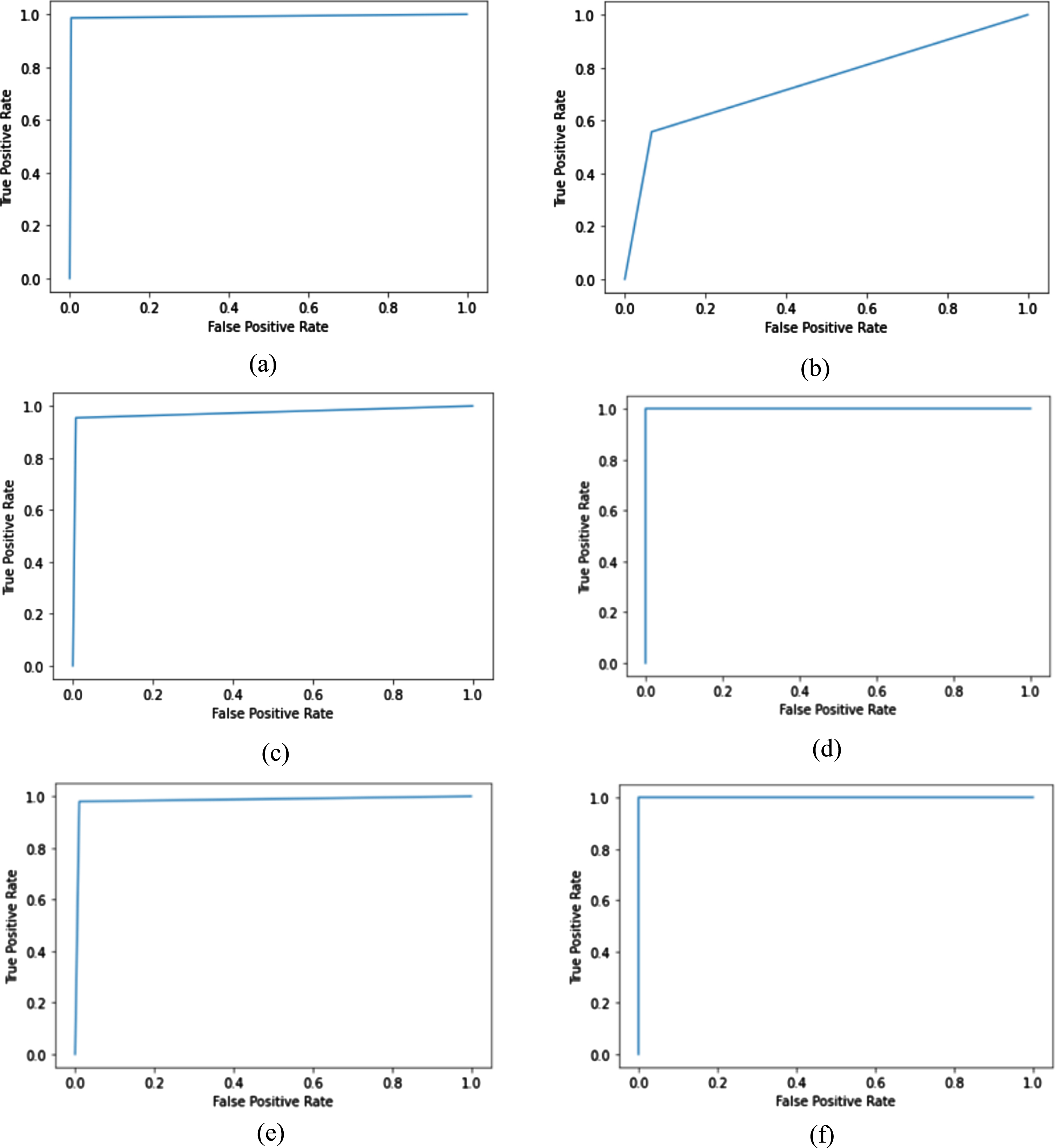
Receiver operating curve for (a) Support Vector Machine, (b) Naïve Bayes Classifier, (c) Decision tree, (d) kNN, (e) LR, and (f) AdaBoost.
Conclusions
Smart health care systems integrate the latest AI technology with cloud servers and edge computing to monitor patients in critical conditions. AD patients suffer from accidental falls due to their disease condition and old age. Such fall episodes can be fatal for elderly patients. They are at a high risk of being bedridden due to orthopedic fractures and dislocations. These factors pose an inevitable need for fall detection system and immediate emergency care to the patients monitored by a smart healthcare system. The AI model proposed for fall detection in this research study shows high accuracy rate and precision in detecting a fall and ADL activity. The future direction of work will include developing other modules of the SHMAD smart health care system for AD patients to live independently and securely without a caretaker or family member’s support.
Footnotes
ACKNOWLEDGMENTS
We sincerely thank Mr. Armaan Ziyad of the Yara International School, Riyadh, for the conceptualization and data visualization presented in this research study.
FUNDING
This study is supported via funding from Prince Sattam bin Abdulaziz University project number (PSAU/2023/R/1445).
CONFLICT OF INTEREST
The authors have no conflict of interest to report.
