






Abstract
Fruit berries are one of the most effective source of bioactive food ingredients with multiple health benefits when consumed regularly. Phalsa fruit (Grewia asiatica L.) a native to the Himalayan region grows equally well in tropical areas of the world yet unexplored with regards to its immense nutritional benefits. The phalsa seed, fruit, and pulp contain numerous functional phytochemicals that can be used to treat various diseases, and have be found to be highly effective in improving respiratory and cardiac functioning. Its cultivation has been limited to subsistence cultivation and it is sold in the form of raw fruit mostly. There are certain challenges as regards to its perishable nature of the berry fruit, and the optimization of the crop yield. Therefore, this comprehensive review is designed to highlight its economic and nutritional potential for the food and beverage industry as an effective source of bioactive functional food/beverage ingredients. Further potential area of research and developments have been identified for the subsequent authentication of health effects of phalsa berry fruit. Moreover, issues related to value addition in food product development have been explained along with proposed solutions.
Introduction
Fruit berries have acquired a special consideration in human diet over the last couple of decades in global health and wellness market owing to their immense antioxidant, anticancer and anti-aging effects [1, 2]. The health benefits associated with the consumption of these berries is attributed to the higher contents of phenolic compounds, organic acids, tannins, anthocyanins and flavonoids [3]. Berry fruits are “edible round-shaped small fruits with a seed within the flesh, tasting usually sweet to sour, and having different intensity of coloration” as cited in Veberic, Slatnar [1]. Owing to such functional properties an increased demand for formulating functional beverages out of these various berry fruits such as blackberry, American cranberry, lingonberry, gooseberry and blackcurrant have been reported in various businesses of foods [1, 2].
Phalsa (Grewia asiatica L.) is one such promising, yet underutilized berry fruit of tropical regions of South Asia (Pakistan and India) containing a rich source of various bioactive compounds such as anthocyanins, tannins, phenols and flavonoids [4, 5]. Further its fruit pulp contains flavonoids, proteins and amino acids [6] that are good source of nutrition. In addition, other parts of this plant have been used as herbal medicine for the treatment of various diseases such as cancer, aging, fever, rheumatism and diabetes [5, 8]. Despite immense nutritional value of the berry fruit, its commercial scale cultivation and production has not attained due attention from the industry. However, a delicate nature of the berry fruits grown in remote areas of South Asia (Pakistan and India) coupled with inefficient supply chain, may be the other compounding reasons for its underutilization [5]. In line with the shorter shelf-life of 1–2 days of this berry fruit, time to the market and further processing is very limited [9]. Moreover, traditionally its cultivation is on subsistence farming and hence consumed mostly in its raw form or juice extract sold by the hawkers/venders [6].
Research and development on berry fruits have recently noticed that a rich source of bioactive food ingredients can be procured from these berry fruits for developing healthy food products normally termed as functional foods. In an attempt to respond to these emerging trends in food science and technology, it is timely to explore the potentials of this unexplored berry fruit. In recent literature there have been very few, but limited in scope, studies reporting on its potential as a bioactive food ingredient [6, 10]. Hence this review is an attempt to review available literature for extrapolating the potential of future food products development and health efficacy studies. A comprehensive presentation of its botanical features description, cultivation patterns and challenges (pre-and post-harvest management), nutritional profile composition, and various health benefits associated with the regular consumption of phalsa berries has been sketched. A special attention has been given to the value addition opportunities as food and beverage production with targeted health benefits that may help in reducing various degenerative diseases.
Botanical description, origin and global distribution
Main areas of cultivation
Phalsa is native to the Himalayan region spanning South Asia, and includes Pakistan, Bangladesh, Sri Lanka, and India, as well as Nepal [11]. It grows well in tropical and sub-tropical parts of South Asia including Cambodia, Luzon region of the Philippines, Laos, northern and central Thailand, and some parts of the United States of America [9].
Phalsa plant is a small shrub belonging to the family Malvaceae (Tiliaceae), with the genus Grewia encompassing more than 140 species. The wild species G. elastica Royle grows well on the lower Himalayan hills. Other important species include G. tiliifolia Vahl., G. glabra Blume., G. villosa Willd., and G. microcos L. Phalsa plant is predominantly entomophilous, with yellow flowers in cymes clusters.
The most suitable climatic conditions
Phalsa gives better yields under limited water climatic conditions with temperatures ranging between 3°C to 45°C [12]. This plant can tolerate mild frost but requires protection from very low temperatures i.e.,<3°C. This plant has been found to grow well at >1,000 meters above sea level. However, the optimum growth regions for phalsa plants are the regions/planes where a distinctive summer and winter season can be found. In the absence of such a distinctive change of seasons, the plant does not shed its leaves, flowers are produced throughout the year, and hence fruits poorly. Adequate sunlight and high temperatures are essential for its fruit ripening i.e., development of appropriate fruit color and taste. Phalsa is not fastidious to its soil requirements, however, well-drained loam soils are best suited for its cultivation [13].
Challenges to commercial scale cultivation
The most pressing challenge in the process of converting the raw berry fruit into value added functional foods and beverages such as jams and juices, is its shorter shelf life (Fig. 2). It is reported that the mature berry fruit cannot be stored more than 48 hours until and unless it is stored under refrigeration temperature. In addition, the remote areas of Pakistan and India where this fruit is grown abundantly are faced by the severe shortage of proper cold supply chain and post-harvest technologies to store it for longer time. The visible and abrupt changes that may occur due to improper cold storage facilities are; the fruit becomes flaccid and bitter due to fermentation, and the color changes to a dark red from a purple tinge [14]. Moreover, the value added food products of berry fruits in South Asia is still in its infancy.
The phalsa plant has indeterminate growth behavior with several fruiting spells. Due to uneven and steady ripening of fruits, its harvesting continues for a month [15]. Moreover, harvesting is done several times on alternate days which is quite cumbersome and labor intensive. Thus it limits the profit margins of the farmers [14]. Another associated problem that has adversely affect the yield and quality of phalsa berry fruit is the pest attack i.e., leaf-cutting caterpillars attack the plant foliage and cause tremendous damage [13]. These mentioned challenges can be minimized through better crop management practices. Recently, many vegetative methods are used to cultivate phalsa like cutting, layering and grafting. It has been reported that treating phalsa cuttings with 100 ppm indole butyric acid (IBA) for 24 hours yield 60–70% success rate. According to one report, air layering gives 50% success when treated with mixture of IBA, NAA, 2, 4– D and boron in 10,000, 10,000, 10,000 and 100 ppm, respectively [16]. Moreover, soft wood grafting is recommended that gave 100% success rate. Zinc and iron as micronutrients are recommended to increase the berry size and juiciness [17].
Postharvest challenges
Phalsa mostly grows in warm climate and can easily tolerate light frost. Adequate sunlight and hot temperatures are necessary for fruit ripening, development of color, and for improving the quality of the fruit. Regular harvesting of phalsa fruits is necessary since its fruit ripens in clusters [14]. Phalsa is a non-climacteric, highly perishable fruit (Fig. 1) that is why storage for longer periods of time (>1 day) not possible without proper cold storage facilities and must be marketed within a day or two [9]. It has been recommended that the storage of phalsa berry fruits at deep freezing temperatures (– 5 to – 6°C) improves the shelf life and quality [18]. Further the shelf life of phalsa fruit can be increased through the application of edible coatings composed of soy protein isolate, potassium sorbate, olive oil, and propyl methyl cellulose. Application of 100 ppm gibberellic acid improves the yield, as well as the quality of phalsa fruits in different agro-climatic conditions [19]. Recently, Vyas, Tadapaneni [20] evaluated different chemical elicitors to improve the shelf life of phalsa wherein the application of 0.1% sodium benzoate can increase the shelf life of phalsa fruit by up to 14 days after harvest at low temperature.
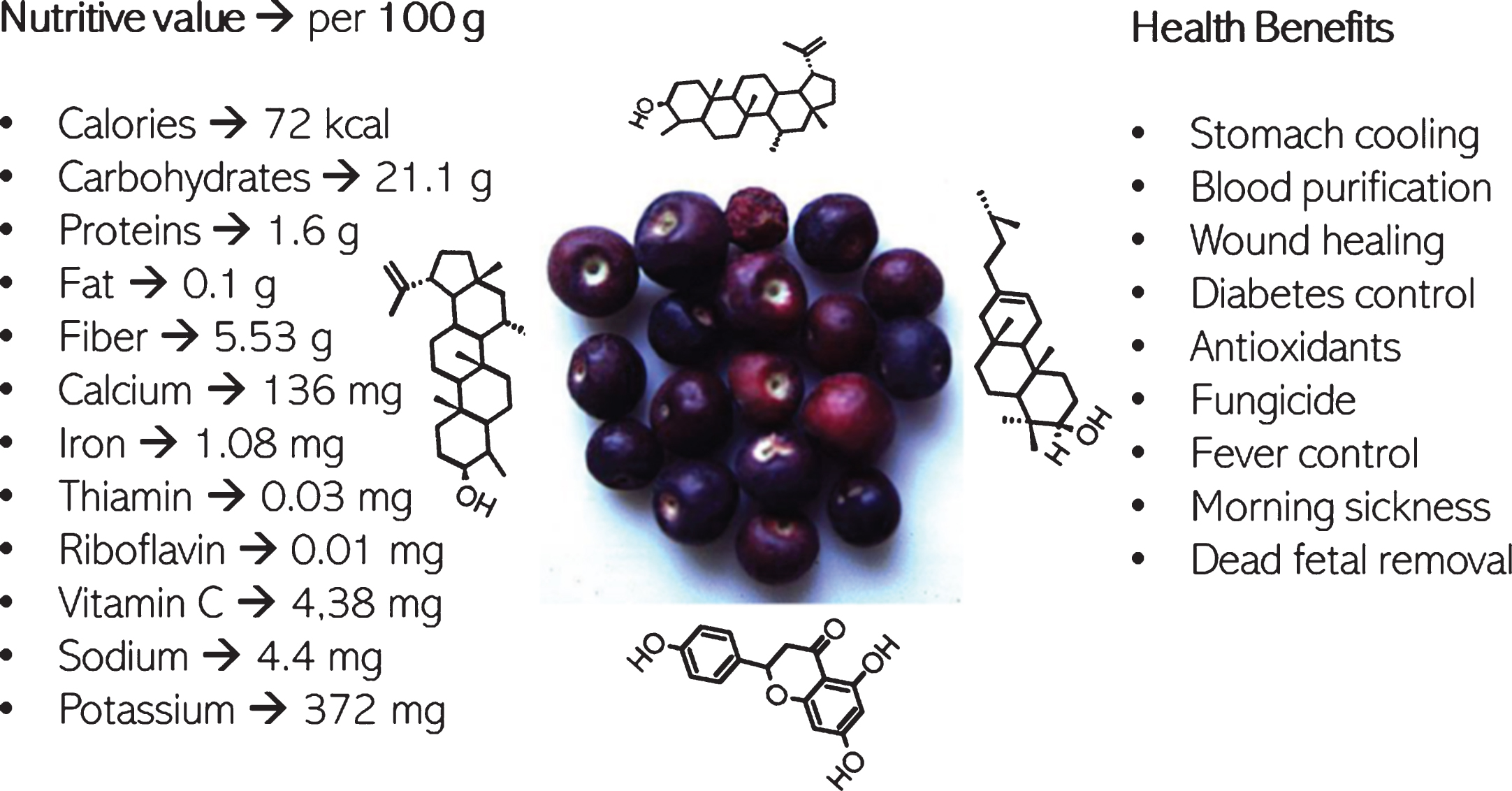
Schematic presentation of contents used to review phalsa berry fruit.
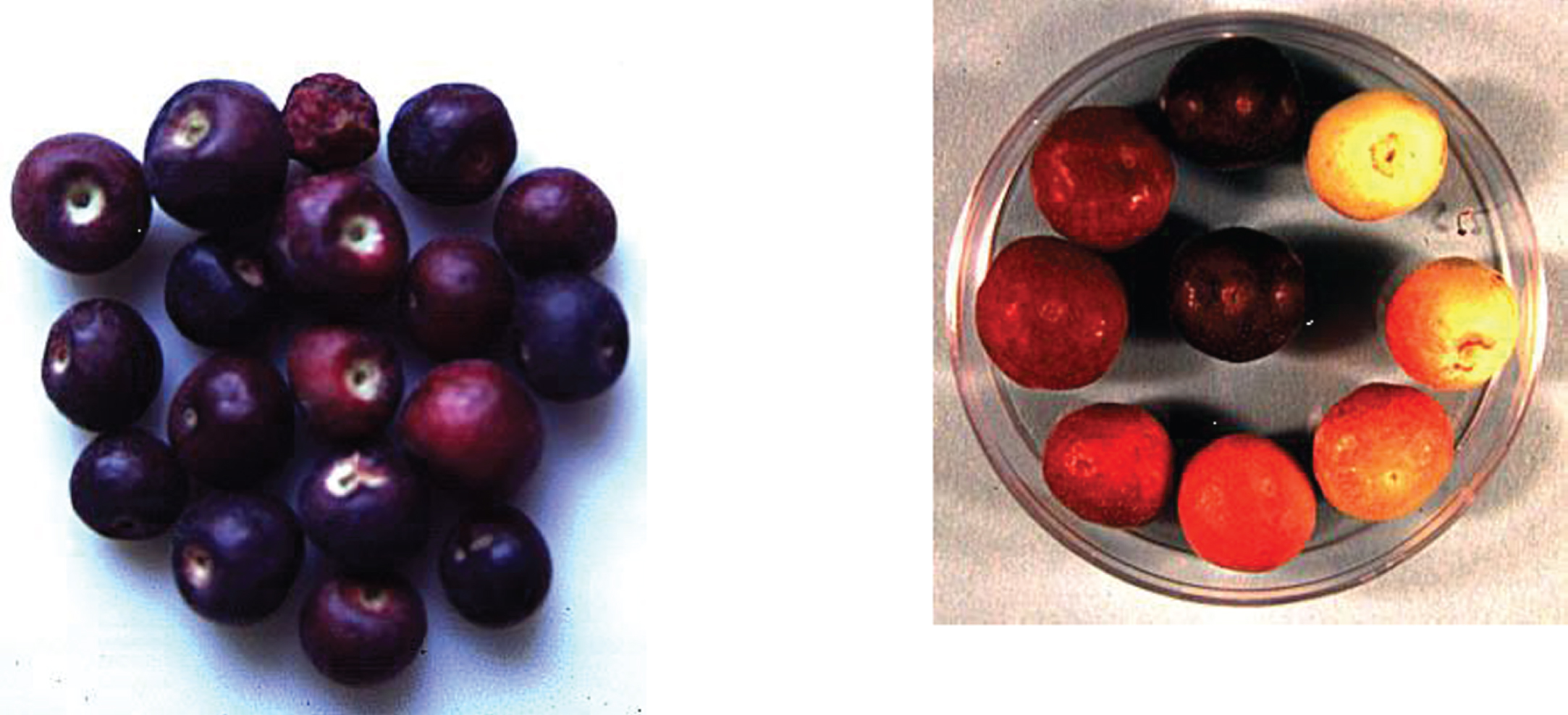
Freshly harvested phalsa fruits. The fruits are from a variety of Grewia subinaequalis DC. The pictures are taken from the chapter ‘Phalsa (Grewia subinaequalis DC.)’, published by P.C. Tripathi from National Research Center for Women in Agriculture, Orissa, India.
Physicochemical composition of seeds and fruits
Phalsa is considered as one of the underutilized fruits in most of the countries [21]. The ripe phalsa fruits are edible, albeit with a slightly acidic taste, while the leaves are rich in protein without any tannins. Moreover, the leaves are rated as good fodder during the winter season. The nutritive value of phalsa is equally comparable with many other fruits consumed in most parts of the world (Table 1). Phalsa fruits are low in calories and fat, but contain many vitamins, fiber, and essential minerals (Table 2). The fresh fruit weight varies from 0.5 to 2.2 g [9, 22]. However, the average fruit weight is reported to be around 0.59 g [23]. The pH value of phalsa fruits ranges between 2.7 to 3.3 [24]. The total soluble solids in fresh phalsa fruits vary from 10 to 23.80 °Brix [25, 26], while the titratable acidity ranges between 2.8 to 2.0% [26]. Phalsa fruits are also rich in reducing sugars, and the content varies between 10 to 14% [22, 27], and depends upon the cultivated variety. G. asiatica generally has low total sugar contents [9]. Phalsa fruits contain 70–72 mg/100 g of anthocyanins [7, 28], while tannin content ranges between 1.13 to 2.46% [27].
Comparison of underutilized (phalsa) fruit, with most utilized fruits around the world
Comparison of underutilized (phalsa) fruit, with most utilized fruits around the world
The values are presented in 100 g edible portions of fruits [21].
Nutrient content of phalsa fruits from different studies
Yadav [9] reported nutrient composition in G. asiatica L. grown in Fort Valley, Georgia. Elhassan and Yagi compared three different varieties of phalsa (G. tenax (Forssk.) Fiori, G. flavescens Juss., and G. villosa Willd.), grown in Sudan, while Haq et al. [31] presented composition in G. asiatica L. seed grown in Pakistan.
The typical constituents of different types of phalsa include 8 to 9% seeds, 75 to 77% moisture, 66 to 68% juice, while pomace constitute between 32 to 35% [29]. Moreover, phalsa fruits are rich in vitamin A and C with average values to be close to 16μg/100 g and 4 mg/100 g respectively [9]. The phalsa pulp is also rich in vitamin A and its content of 419μg/100 g pulp is higher in comparison to that of Ficus carica L. and Madhuca indica Gmelin. [30].
Similarly, phalsa fruits and seeds are enriched with different minerals like potassium, calcium, iron, phosphorus and sodium, while trace amounts of zinc, nickel, cobalt and chromium are also reported. The concentration varies depending upon the soil condition, growing techniques, and the varieties used [9, 32].
Amino acids profile is an important indicator for assessing the protein quality of any food or designing the protein-rich foods. The amino acid composition (Table 3) of phalsa seeds and fruits indicated presence of both the essential and non-essential amino acids [27, 34]. Phalsa seeds and fruits contain 18 different amino acids, with high concentrations of leucine (11.02%), glutamic acid (11.0%) and aspartic acid (19.06%). Moreover, the fruits of G. flavescens Juss. and G. villosa Willd., have comparatively higher contents of histidine, threonine and lysine. Aboagarib, Yang [35] evaluated free amino acids in seeds, peels and pulp of G. tenax Forssk.; the peel and pulp contained good concentration of essential amino acids such as arginine (9.5%), isoleucine (4.4), phenylalanine (3.8%), and threonine (3.3%). However, total essential amino acid concentration was 36.5 g/100 g in peels, 33.7 g/100 g in pulp, and 25.2 g/100 g in seeds. Only one study has reported the amino acid composition in the hydrolyzed and unhydrolyzed pulp, and seeds of phalsa juice. Threonine was found in pulp but was missing in seed extract. Moreover taurine, serine and phosphoserine are the dominant amino acids in phalsa juice [36].
Amino acid profiling of different varieties of phalsa grown in different regions of the world
Amino acid profiling of different varieties of phalsa grown in different regions of the world
The values presented are in percentage (%) and are concentrated in seeds.
Phalsa seeds are bright yellow in color, and contain 5% oil [37], rich in triacylglycerols, but low in phospholipids [33]. Phalsa seed oil contains different hydrocarbons and waxes (1.09%), sterol esters (7.91%), triacylglycerols (70.83%), free fatty acids (2.06%), various glycolipids (2.50%), and phospholipids (2.01%) [33]. In In terms of free fatty acids, phalsa seed oil has high concentrations of linolenic acid (60.06–64.5%), oleic acid (13.5–16.31%), palmitic acid (8.0–12.17%), and stearic acid (5.01%) [33, 37]. Moreover, small amounts of myristic acid, margaric acid, behenic acid, dihydro malvalic acid, and dihydro sterculic acid are also present [33].
Phalsa seed oil also contains α-tocopherol (651.35 mg/100 g), β-tocopherol (5.01 mg/100 g), and γ-tocopherols (1.08 mg/100 g). The presence of different tocopherols indicates the strong anti-inflammatory properties of phalsa, while the sterol profile indicates presence of β-sitosterol (18.30 mg/100 g), stigmasterol (4.04 mg/100 g) and fucosterol (2.91 mg/100 g). Small amounts of cycloartenol, fucosterol, and campesterol are also present in the oil [33].
Phytochemical composition
Phalsa varieties contain different phytochemicals, that are concentrated either in fruits, leaves, stem, bark, flowers, and even in pomace. The phytochemicals constitute different alkaloids, glycosides, saponins, functional acids, different steroids, and flavonoids. These phytochemicals are extracted either in aqueous extracts, or in different solvents like petroleum ether, ethyl acetate, methanol, acetone and dichloromethane [38]. The total phenolic contents vary in terms of the extracted solvent, and also fluctuates in different regions like seed, pulp and peel [38]. The total phenolic contents in G. asiatica L. varied from 67 to 288 mg/100 g in different fractions [7]. The highest phenolic contents were quantified in 70% acetone, that shows 1020 mg gallic acid equivalent (GAE)/100 g in seeds, 5080 mg GAE/100 g in peel, and 2060 mg GAE/100 g in pulp [38].
Various secondary metabolites were also quantified in phalsa fruits such as, naringenin– 7– O– β-D-glucoside, quercetin, quercetin 3– O-β-D-glucoside, pelargonidin 3,5– diglucoside, and cyanidin– 3– glucoside [39]. The flowers of phalsa contain β-sitosterol, naringenin 7– O-β-D-glucoside, δ-lactone, 3,21,24– trimethyl– 5,7– dihydroxyhentriacontanoic acid, and quercetin 3– O-β-D-glucoside [6]; the dried flowers contain grewinol and its derivatives [40]. The pomace contains 9,12– octadecadienoic acid methyl ester, α-methyl– l– sorboside, citric acid trimethyl ester, and fairly good amounts of campesterol and stigmasterol [41]. The flavanones, like quercetin, kaempferol, and the mixtures of their glycosides are mostly concentrated in the leaves. The stem and bark also contain betulin, lupenone, friedelin, β-amyrin, lupeol, taraxerol, and erythrodiol [22, 42]. The phytochemical contents vary among different species (G. bilamellata Gagnep., G. bicolor Juss., G. flavescens Juss., G. mollis Juss., G. tiliaefolia Vahl., G. tomentosa Juss. and G. elyseoi Cavaco & Simoes), and are mostly concentrated in aerial parts, roots and leaves [43]. Harman, 6– methoxyharman and 6– hydroxyharman, coumarinolignan, 2,6– dimethoxy– 1– acetonylquinol, and ciwujiatone are also present in different phalsa species [43].
Beneficial effects of Phalsa on human physiology
Various components of this nutritionally and clinically important plant have been reported to render multiple positive effects on human health. There have been quite a few studies conducted over the years to explore the pharmacological and nutritional value of this fruit plant in recent past [22, 44]. Therefore, it is critically important to realize the potential of this plant, and its fruit, in boosting the overall wellbeing of human health. In the succeeding section, detailed benefits of berries and seeds are presented. The folk or traditional uses are highlighted in Table 4.
Important therapeutic properties of phalsa fruit and pulp. Most of the therapeutic properties are reported as folk, or traditional medicines
Important therapeutic properties of phalsa fruit and pulp. Most of the therapeutic properties are reported as folk, or traditional medicines
The bioactive ingredients are yet to be explored, and extensive research is needed to confirm the originality of protective properties.
Phalsa fruit contains numerous phytochemicals and bioactive primary and secondary metabolites, that are effective in improving the health and wellness in human beings [3, 45]. In addition, phalsa fruit has been used as folk medicine, with reports of being effective in alleviating inflammation, and respiratory, cardiac, and blood disorders [45]. Other medicinal uses of phalsa juice include relieving stomach pain, and has been reported with a formulation containing 25–30 mL phalsa juice mixed with 3 g of carom seeds [45]. Similarly, phalsa sherbet (drink) together with sugar and lemon, is effective in reducing stomach and chest burns, and also effective in reducing sour burping [45]. Hot phalsa juice together with ginger and rock salt, is effective in reducing respiratory troubles, and hiccups [45].
A considerable antioxidant activity of various parts of phalsa has been reported in recent studies. Phalsa fruit, and juice contain a good amount of phenolic compounds, and antioxidant activity, equally comparable (Table 5) with other fruits and juices [46]. Siddiqi, Naz [47] evaluated antioxidant activity in different polyphenolic fractions (flavanols, phenolic acids and anthocyanins) of G. asiatica L. The DPPH activity of 85% in 20 ppm extract is well comparable with butylated hydroxyanisole, i.e. the synthetic antioxidant used in food industries. Moreover, the fruit part contains higher antioxidant activity (98.2%), in comparison to different parts of G. asiatica L. by DPPH assay [48].
Antioxidant and phenolic contents of phalsa fruit and juice, in comparison to other fruits and their juices [46]
Asghar, Khan [38] evaluated the antioxidant activity of fresh and stored samples of seeds, peel, and pulp of phalsa fruit with different organic solvents. The fresh fruits and its parts have higher antioxidant activity in comparison to frozen samples. Moreover, higher content of antioxidants is detected in peel followed by pulp, and seeds. The strong antioxidant activity is also related to low IC50 values. The successive extraction in petroleum ether, ethyl acetate, water, methyl alcohol, benzene, and crude methanolic extracts exhibit IC50 values of 249, 26, 152, 56, 16 and 72μg/mL respectively in nitric oxide inhibition assays. The observed quantification values are more than those obtained for quercetin, and ascorbic acid [49]. The phalsa pomace also contains different flavonoids (12.4 CE mg/g), alkaloids (1.5 g/100 g), saponins (1.0 g/100 g), and tannins (0.5 g/100 g) [50]. These bioactive compounds also contain significantly higher antioxidant activity, as depicted by various assays [51].
Numerous studies point to the protective effect of phalsa fruit in radiation-induced damages [52–55]. The methanolic extract of phalsa fruit at a dose of 700 mg/kg for 15 consecutive days, is effective in controlling irradiation (5 Gy) effect on Swiss albino mice. The effective supplementation of phalsa fruit extract controls the lipid peroxidation that usually increases after irradiation. Moreover, glutathione levels increase to 14.5% after 30 days, that reflects protective effect due to radiation-induced disorders [56]. Similarly, the same researchers evaluated the radioprotective efficiency of phalsa fruit extract on radiation-induced alterations in mice cerebrum. The extract shows protective effects by increasing the glutathione levels and controlling the depletion of proteins [57, 58]. Similar radiation protective effect was noticed with phalsa pulp [52, 55]. Phalsa fruit also have hepatoprotective effect against gamma irradiation. The phalsa fruit extract at a dose of 700 mg/kg caused a significant elevation in liver DNA and RNA level, in comparison to the control group. Moreover, counting of different type of hepatocytes also showed that, phalsa fruit extract protects the liver against radiation [59].
The ethanolic extract of G. asiatica L. fruit and pomace possesses excellent antimicrobial activities against both Gram-positive, and Gram-negative bacteria [60, 61]. Similarly, the phalsa pulp and peel also show antimicrobial activity against Staphylococcus aureus and Salmonella typhi. However, the pattern of activity is dependent upon type of bacteria and solvent extract. Moreover, antifungal activities were also observed with different extracts of peel and pulp [7].
Phalsa fruit has been reported to be effective in controlling glycemic index, along with modulating reactive oxygen species (ROS) production, thus preventing cell death via autophagy. It has also been found, that the extracting solvent has a striking effect on ROS production stimulation. Aqueous, methanol, and butanol extract of fruit has been found to be enhancing the ROS production, whereas chloroform, hexane, and ethanol-acetate extracts have inhibitory effects on ROS production [10]. Phalsa fruit thus can have positive impact on blood glucose metabolism rendered by low glycemic index, and modulation of ROS production [10]. G. asiatica L. also have anti-hyperglycemic activity in alloxan-induced hyperglycemic rabbits; the ethanolic extract of fruits, stem and leaves in capsules or suspension at 100 mg/kg and 200 mg/kg dosage, reduced serum glucose level in rabbits [62]. Similarly, aqueous extract of fresh fruits has inhibitory effect on carbohydrate digesting enzymes. Phalsa fruits have moderate α-amylase, and high α-glucosidase activity, in comparison to other fruit extracts [63]. Moreover, organic extracts of phalsa pomace also have anti-diabetic activities. The aqueous mixture of acetone (80:20), methanol (80:20), and combined mixture of ethanol/hexane/water (80:10:10), showed inhibition of α-amylase activity. The IC50 values were stronger for combined mixture (138.1), followed by methanol (85.2), and acetone (45.7) [50].
Aqueous extracts of phalsa fruit also have good analgesic activity in swiss albino rats, when tested by hot plate methods. 100 to 200 mg/kg extract has inhibitory effect on acetic acid-induced pains. Moreover, aqueous extract at a dose of 400 mg/kg has inhibitory effect similar to that of aspirin. The aqueous fruit extract also has good antipyretic activity, and the administration of 100 mg/kg of aqueous fruit extract reduced the pyrexia induced by lipopolysaccharides extract from Escherichia coli in swiss albino rats [51].
Comparatively less studies were conducted to assess the anti-inflammatory activities of phalsa fruit. Recently, the methanolic extract of fruit demonstrated anti-inflammatory activity against carrageenan-induced edema in Wistar rats. The extract at a dose of 250 to 500 m/kg showed significant anti-inflammatory activity [64]. The phalsa fruit also has good immunostimulant activity [65]. The ethanolic extract at a dose of 200 and 400 mg/kg counteracts the effect of cyclophosphamide-induced reduction in white blood cells. The incorporation of ethanolic extract increase the percentage of neutrophils and hemoglobin [65]. In another study, phalsa juice showed significant reduction in total cholesterol, low density lipoproteins (LDL), the LDL/high density lipoproteins (HDL), and the ratio of total cholesterol to HDL [66].
The phalsa fruit also has good antiemetic activity. Oral dosage of 120 mg/kg caused antiemetic effect in dogs, and controlled emesis induced by apomorphine. Moreover, this activity was comparable with standard anti-emetic drugs like metoclopramide and chlorpromazine.
The leaves of phalsa show strong anti-cancer activities, but comparatively less studies were conducted on fruit, pulp, peel and seed pomace. In almost all the studies, only the activity is reported, and the active ingredient is yet to be identified. The phalsa fruit also has good anti-cancer properties. The aqueous extract of fruits and leaves showed cytotoxic activity is various cell lines such as, HeLa (cervical cancer cell line), NCI-H522 (lung cancer cell line), HEK293 (epidermal kidney cell line), MCF–7 (breast cancer cell line), and HEp–2 (laryngeal cancer cell line). The fruit extract shows good results against lung cancer (IC50, 59μg/mL), and breast cancer with IC50 of 50μg/mL [67]. In another study, with similar cell lines, and methanolic fruit extract, no anti-cancer activity was observed for cervical and larynx cell lines during MTT assay [68]. Similarly, the methanolic extract of phalsa pomace shows anti-cancer activity against, HeLa, MCF–7 and Hep G2 (hepatocellular carcinoma cells), the IC50 follows the order of 100, 68 and 250μg/mL [50].
Phalsa berries are often consumed fresh after simple washing when ripened, or in desserts, or processed into various drinks and beverages (Fig. 3). They have a specific flavor, and sensory appeal, that attracts the consumers. However, their freshness cannot prevail for a longer period of time, and the fruit starts to rot after a few days at room temperature [9], hindering its distribution to distant markets. Refrigerated storage may prolong the life of fruit by up to a week.
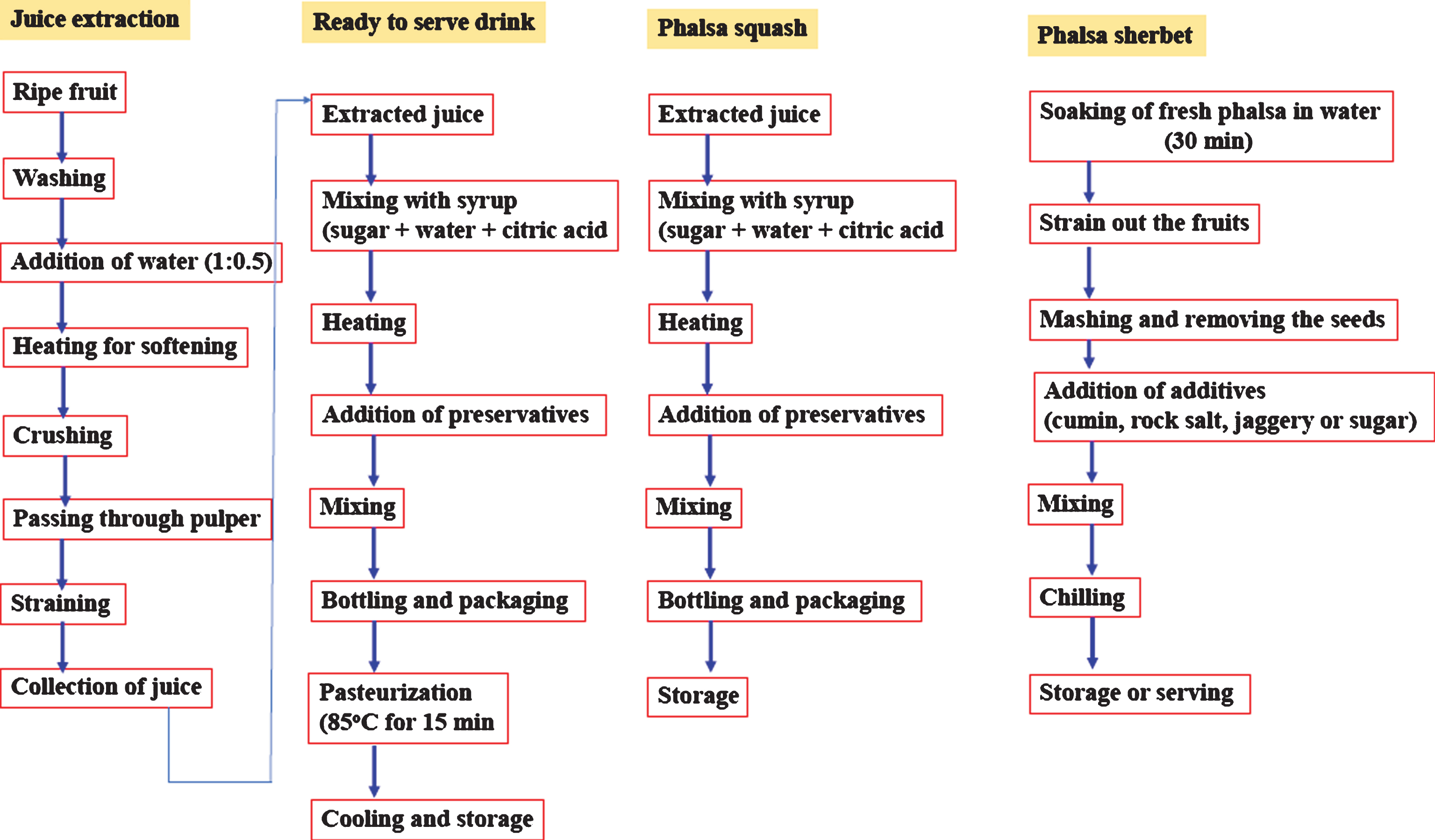
Various processing techniques for phalsa fruit. The fruit is either used for making ready-to-serve drinks, squash or sherbet (a popular diluted drink used in South Asia). Adopted from [74].
Phalsa berries can be processed by dehydration or freezing for long storage intervals. But hot air dehydration results in loss of natural aroma, and color of the fruit, while freeze storage involves high costs. Loss of antioxidants has also been reported in processed and stored samples of G. asiatica L. [22]. Dehydrated phalsa powder may be stored for long storage intervals, if packed under modified atmosphere packaging (MAP) [69]. Slightly unripened, but mature whole fruit (green color) may be used in pickle preparation, by dipping in vinegar or oil. The unripened fruit may also be used to prepare phalsa preserve by mildly cooking it in sugar syrup. In local markets of the Indo-Pak Subcontinent, fresh juice and drinks of phalsa berries are a popular beverage during the summer season. The pulp is separated and diluted in water with the addition of sugar and salt. The beverage is reputed for imparting a cooling effect against the tropical hot weather.
Carbonated phalsa beverage is another product, that can enhance the sensory appeal for the consumers [70]. Phalsa squash is another product prepared from fruit pulp and sugar syrup [23, 71]. Phalsa jam is prepared from fruit pulp and sugar, and may be used as topping for bakery products [72]. Phalsa leaves and fruits may be boiled in water to make a nutritious and aromatic herbal tea [69].
Phalsa juice has been reported to ferment very rapidly, that can only be controlled by immediate processing, or by using some chemical preservatives such as, sodium benzoate or potassium metabisulphite. The latter may additionally exert color bleaching effect on the product. Therefore, sodium benzoate is a recommended preservative for phalsa products. Prolonged storage and processing techniques e.g., thermal processing (pasteurization) of phalsa juice and drinks, result in considerable losses of natural aroma. This problem can be overcome by using biological aroma release practice. In this practice, an enzyme β-glucosidase is added to the juice, or the juice is treated with an immobilized enzyme, that increases the level of aroma compounds such as pinenes, terpenes, linalool, and some lactones that are bound to other compounds [73].
Phalsa berries are mostly grown as wild shrubs and appear in market for a short duration. For commercial processing of these berries at industrial levels, there is a need to cultivate them in a more organized manner. This practice will help in reducing the postharvest losses of phalsa berries, and fruits of desired quality may be achieved according to the intended use. Moreover, the development of new varieties with bigger fruit size, improved quality, sweetness and flavor, greater yield, pest resistance, and adaptability to grow in colder regions have also been suggested [22].
Phalsa fruit has shown tremendous potential as a traditional, as well as functional food ingredient for formulating innovative beverages, and food preserves. Currently, the fruit is mostly used in traditional products formulation at cottage scale, or even at household scale. However, there is a huge potential for this important berry fruit to become an effective functional food, with little efforts on improving its crop yield, and developing a suitable cold supply chain for ensuring a safe supply to distant markets. Moreover, this berry fruit can also be effectively applied in various pharmaceutical applications, such as pain-relief drugs, digestive aids, and drugs for controlling the glycemic index. Pharmaceutical studies published in the literature need further improvements, especially in terms of evaluating the active ingredients. There are studies that demonstrate the potential health benefits, but the active or main phytochemical agents is missing in almost all studies. Moreover, the correlation of different phytochemicals is needed to map the beneficial aspect of this neglected minor fruit.
Besides new product development, there is a need to develop new and improved varieties that can give better fruit yield, and improved quality. Genetic improvement is also needed to improve the sweetness, insect resistance and improved growing potentials in colder regions.
Funding
The authors report no funding.
Conflict of interest
The authors have no conflict of interest to report.
Footnotes
Acknowledgments
The authors have no acknowledgments.