






Abstract
BACKGROUND:
Lingonberry (Vaccinium vitis-idaea L.), as an important natural and wild plant resource in the world, has high economic and nutritional values. Many researchers have focused on the effect of antioxidant and enzyme inhibitors.
OBJECTIVE:
The present study aimed to evaluate the active ingredients, in vitro antioxidant and enzyme-inhibitory activity from different parts (root, stem, leaf, and fruit) of wild lingonberry.
METHODS:
The active ingredients of lingonberry were determined by ultra-performance liquid chromatography-triple quadrupole-mass spectrometry (UPLC-TQ-MS/MS). Antioxidant activities were measured by DPPH, ABTS, FRAP and CUPRAC assays. Principal component analysis (PCA) and agglomerated hierarchical clustering (AHC) were used to analyze the relationship between active ingredients, antioxidant and enzyme-inhibitory activity.
RESULTS:
Phenolic compounds were significantly higher in leaf and stem. The enzyme inhibitory of the extracts varied observably according to the plant parts. Fruit had the highest acetylcholinesterase (317.67 mg GALAEs/g) and butyrylcholinesterase (346.04 mg GALAEs/g) inhibitory activity, while leaf had the most potent activity on α-amylase (256.59 mg ACAEs/g), α-glucosidase (186.70 mg ACAEs/g) and tyrosinase (42.87 mg KAEs/g). Tyrosinase had strong correlation and similarity with phenolic acids and flavonoids in the correlation analysis and PCA.
CONCLUSIONS:
29 active ingredients were detected, including phenolic acids, flavonoids, anthocyanins, and triterpenes. Lingonberry sample to inhibit the activity of tyrosinase was associated with five flavonoids (kaempferol-3-O-galactoside, kaempferol-3-O-β-D-glucosyl (1 ⟶ 2) galactoside, biorobin,,quercetin 3-O-glucoside-7-O-rhamnoside, rutinum) and phenolic acid content (arbutin). These results suggested that the lingonberry could be used as a promising natural resource for functional food and medicinal development.
Introduction
As the massive development of the new plant-based functional foods, nutraceuticals and enzyme inhibitors [1], many edible plant sources, which rich in antioxidants and phenolic compounds, are gradually moving towards public concern. This improvement has been a great preoccupation due to the beneficial effects exhibited by the plant materials, and they make contributions to an overall better state of people’s health [2]. Moreover, the availability and relatively easy access to this material could also provide the practical value for using plant sources. One of the plants, that has been reported as a good source of natural active ingredients, such as anthocyanins, proanthocyanidins, quercetin, and hydroxygenic acids, is a species from the genus Vaccinium [2].
Lingonberry (Vaccinium vitis-idaea L.), as an important natural and wild plant resource in the world, is an evergreen shrub of Ericaceae family that mainly located in northern Europe, Central Europe, Russia, North America, and other places [3]. It has high economic and nutritional values, and used for foods and traditional medicines due to rich sources of hydrophilic phenolic compounds, flavonoids, flavan-3-ols, flavanols, anthocyanins, and lipophilic compounds in its fruit and leaf [4]. Lingonberry is also widely distributed in China, mainly growing in Xinjiang, Heilongjiang, Jilin and Inner Mongolia. At present, the wild Vaccinium vitis-idaea in China can be consumed directly or processed into products, such as juice, pulp, jam, wine, beverage, or natural coloring agent [5, 6]. The utilization rate of wild lingonberry resources in China is relatively lower compared with foreign countries. However, study about the other parts of this plant is still relatively lacking. The utilization characteristics of lingonberry are often ignored, which leads to a great waste of resource [5].
In recent years, many researchers have focused on the effect of antioxidant and enzyme inhibitors which were intaked from plant products. For example, antioxidants can prevent neurodegenerative diseases, cardiovascular diseases, cancer and obesity [7, 8], enzyme inhibitors can treat Alzheimer’s disease [9, 10], diabetes [11], melanin diseases [12]. Compared with traditional drug treatment methods, plant extracted antioxidants and enzyme inhibitors have the advantages of wide source, strong activity, good affinity with the body and high safety. Therefore, the development of natural product enzyme inhibitors has increasingly become the requirement of scientific research. Considering that the chemical composition of the roots, stems and leaves of wild bilberry plants in the Greater Khingan Mountains has never been the subject of a scientific paper to best of our knowledge. In this paper, the effective components of the roots, stems, leaves and fruits of lingonberry were accurately analyzed with the help of UPLC-TQ-MS and studied the potential of various parts of lingonberry as antioxidants and enzyme inhibitor. The correlation between active ingredients, antioxidant and enzyme inhibition has not been proved in previous work. Therefore, agglomerative hierarchical cluster analysis (AHC) and principal component analysis (PCA) are used to connect of the tested parameters. This can provide effective data and theoretical basis for future clinical trials, so as to improve the added value of lingonberry.
Materials and methods
Plant material
The lingonberry plants were obtained from kudu Forestry Bureau, Hulunbeir, Inner Mongolia Autonomous Region. The lingonberry plant was harvested in the middle of September. The roots, stems, leaves and fruits of lingonberry were randomly sampled from ca.10 shrubs in the same 20 m×20 m area for each habitat. The soil was cleaned firstly, and then all parts of the plant were separated. Plant material is dried at room temperature for 7∼10 days to keep its moisture content at 20%. The separated parts were put into sealed bags, labeled, and stored in the -20°C freezer. Stored in the refrigerator for about a week before analysis.
Description of Habitats
Kudur Forestry Bureau is subordinate to the key state-owned forest administration bureau of Daxing’anling, Inner Mongolia. It is located in the middle of Daxing’anling, Inner Mongolia (120°52′05′′∼122°35′45′′E, 49°36′28′′∼50°22′10′′N). Kudur Forestry Bureau has a relatively high terrain, with an average elevation of 1058 m. It is a continental cold temperate monsoon semi-humid forest climate, with an annual average temperature of –4∼6°C, an annual precipitation of 450 mm, and an annual average sunshine hours of 2520 hours. The soil is mainly brown coniferous forest soil, with some gray forest soil, swamp soil and meadow soil distributed. There are a wide variety of wild plant resources and rich reserves.
Chemicals and reagents
Folin-phenol, vanillin, potassium ferricyanide, trichloroacetic acid, ferric chloride, potassium hexacyanoferrate, copper sulfate, neocupric reagent, ascorbic acid, DNS, L-DOPA, dimethyl sulfoxide (DMSO), and other reagents were purchased from Merck (Shanghai, China). All of the reagents used for analysis are of atleast analytical grade.
Gallic acid, catechin, oleanolic acid, 1-diphenyl-2-picrylhydrazyl (DPPH), 2,2’-azino-bis (3-ethylbenzothiazoline-6-sulfonic acid) diammonium salt (ABTS), 6-hydroxy-2,5,7,8-tetramethylchroman-2-carboxylic acid (Trolox), potassium persulfate tyrosinase, acetylcholinesterase, butyrylcholinesterase, α-amylase, α-glucosidase, 4-nitrophenyl-β-D-glucopyranoside (PNPG), acarbose, thioacetylcholine iodide (ATCI), iodothiobutyrylcholine (BTCI), galanthamine, 5,5’-dithiobis-(2-nitrobenzoic acid) (DTNB) were purchased from Sigma (Shanghai, China).
Preparation of extracts
The samles were dried before they were homogenise. The root, stem, leaf, and fruit of lingonberry were grounded to obtain powder samples. 10 g each portion was weighed and added with 95% precooled ethanol. The mixture was homogenized for 5 min, then the high shear dispersing emulsifier was applied for another 3 min. Crude extracts were obtained after filtration and solvent evaporation. The filtrate was evaporated under vacuum to yield a dark brown paste that constituted the crude extract. This extract was transferred to a centrifuge tube and freeze-dried.
Active ingredient content
Total phenolic [13], flavonoid contents [14], and total triterpenoid [15] content were determined by using colorimetric methods. Gallic acid was used as a positive control of polyphenols. Catechin is positive control of flavonoids, while oleanolic acid is positive control of triterpenoids. The total anthocyanin content in lingonberry extract was determined by the pH-differential method [16].
Antioxidant activities
DPPH radical-scavenging assay
The DPPH scavenging activity assay was conducted based on the Zheng, Lin, Su, Zhao, and Zhao [17] method. DPPH (0.2 mmol/L) was prepared in absolute methanol and kept in the dark at 4°C. An amount of 0.1 mL of different concentrations of ascorbic acid or sample and 1.5 mL of DPPH solution were mixed and kept in the dark for 30 min. The absorbance of ascorbic acid was measured at 515 nm, and used as Acontrol. The DPPH radical scavenging activity of the sample was calculated as follows. In the formula, A means absorbance (Abs).
ABTS+ radical-scavenging assay
The ABTS free radical scavenging activity was assayed using a method previously described by Marecek et al [18]. ABTS solution was prepared by mixing ABTS stock solution (7 mmol/L) and K2O8S2 (142 mmol/L) in a ratio of 1 : 1, and placed in the dark at room temperature for 12 h. An amount of 100μL aliquot of sample was added to 2.9 mL of the ABTS+ solution, and the mixture was kept in the dark for 6 min at room temperature. The absorbance at 734 nm was determined by a visible light spectrophotometer. Ascorbic acid was used as Acontrol. The ABTS radical scavenging activity of the sample was calculated as follows. In the formula, A means absorbance (Abs).
CUPRAC assays
The reduction ability of copper ion [19] was performed by mixing 0.1 mL of sample solution with 1 mL of CuSO4 solution (5 mmol/L), 1 mL of new copper reagent (7.5 mmol/L), 1 mL of NH4Ac buffer (1 mmol/L), and 1 mL of distilled water. The mixture was added into the 96 well plate, and reacted at room temperature for 30 min. The absorbance was measured at 450 nm.
FRAP assays
The reducing power of Vaccinium vitis-idaea different parts extracts was determined according to the method of Oyaizu [20]. Briefly, 2.5 mL of the sample solution at various concentrations was mixed with 2.5 mL potassium hexacyanoferrate buffer (0.2 M, pH 6.6) and 2.5 mL potassium ferricyanide (1%) in a test tube. The test tube was incubated at 50 °C for 20 min. Afterward, 2.5 mL of trichloroacetic acid (10%), 2.5 mL distilled water, and 0.5 mL of ferric chloride solution (0.1%) were added. The absorbance was measured at 700 nm by a visible light spectrophotometer.
Enzyme inhibition
Determination of anticholinesterase activity
Refer to the method of Ellman [21], slightly modified. The reaction mixture (prepared for 15 min of incubation at 25°C) composed by DTNB (1.5 mg/mL, 125μL), enzyme solution (0.08 u/mL AChE or 0.073 u/mL BChE, 20μL) and Tris-HCl buffer (pH 8.0) was added to the substrate [acetylthiocholine iodide (1 mg/mL ATCI) or butyrylthiocholine chloride (2 mg/mL BTCl, 25μL)]. Likewise, a blank sample (prepared in the same procedure but without adding the extract) was prepared and the absorbance was recorded at 405 nm after 15 min. The cholinesterase inhibitory activity was expressed as equivalents of galanthamine (mg GALAEs/g extract).
α-Amylase inhibitory assay
According to the method described by Xiao, Z [22], slightly modified. The plant extract solution (0.2 mL) at different concentrations was added to the test tube containing the α-amylase solution (20μL). The mixture was incubated at 37°C for 20 minutes, and 200μL of starch solution (1%) was added. This reaction was performed at 37°C for another 15 min and then stopped by adding 300μL of DNS in each test tube. The absorbance value was determined at 540 nm by enzyme reader. The α-amylase inhibitory activity was expressed as equivalents of acarbose (mg ACAEs/g extract).
α-Glucosidase inhibitory assay
α-Glucosidase inhibition [23] was evaluated as follows: 40μL samples at different concentrations and 50μL PBS buffer solution was mixed with 200μL of PNPG (2 mg/mL) and kept at 37°C for 10 min. Then, 10μL of enzyme solution (2800 U/mL) was added followed by incubation at 37°C for 20 min. After that, 100μL of Na2CO3 solution (0.2 mol/L) was added to stop the reaction. The absorbance was monitored at 405 nm.
Tyrosinase inhibitory assay
Refer to the method of Zengin [24], slightly modified. The tyrosinase activity was studied by L-DOPA as a substrate. The reaction mixture consisted of 25μL of sample solutions, 100μL of KH2PO4 buffer (0.05 M, pH 6.8), and 40μL of tyrosinase (75 U/mL). The reaction started with the addition of 40μL of L-DOPA (10 mmol/L), and the light absorption value of 492 nm was measured in a 96-well plate reader. The tyrosinase inhibitory activity was expressed as the equivalents of kojic acid (mg KAEs/g extract).
UPLC-TQ-MS analysis
Identification of phenolic compounds in the extract was performed on UPLC H-class PDA and uplc/xevo TQ MS system. The separation of phenolic compounds was conducted in the chromatographic column, Hypersil Gold (100*2.1 mm), with a temperature of 25°C. Ionization Polarity: ESI-&ESI+; Spray Voltage: 3,800/3,000 V (+/-); Capillary Temp: 320°C. The positive mobile phase was prepared from 0.1% FA-H2O (solvent A) and MeOH (solvent B), and the negative was prepared from 5 mM Ammonium acetate-H2O (solvent A: Ammonia water regulation, pH = 9) and MeOH (solvent B), with a flow rate of 0.35 mL/min. Data obtained from UPLC-TQ-MS were analyzed by using compound discoverer 3.2 software. Compounds with standard deviation of peak area less than 10% in the screening database.
Statistical analysis
The experiments were carried out in triplicate, and the data were expressed as the mean±SD. Bar charts and line diagram were drawn by Origin 8, and semi-inhibitory concentration was assessed by IBM SPSS Statistics 22. Statistical comparisons among the samples were estimated by analysis of variance (ANOVA) followed by Tukey’s test. Differences were considered to be significant at p≤0.01.
Results and discussion
Active ingredient content of lingonberry
This study evaluated the active compounds, antioxidant activity, and enzyme inhibition ability of stem, leaf, root, and fruit of lingonberry samples. The experimental scheme for the separation and identification are shown in Fig. 1. Furthermore, the detailed information of active ingredient contents of the ethanol extracts from four parts of lingonberry is shown in Fig. 2.
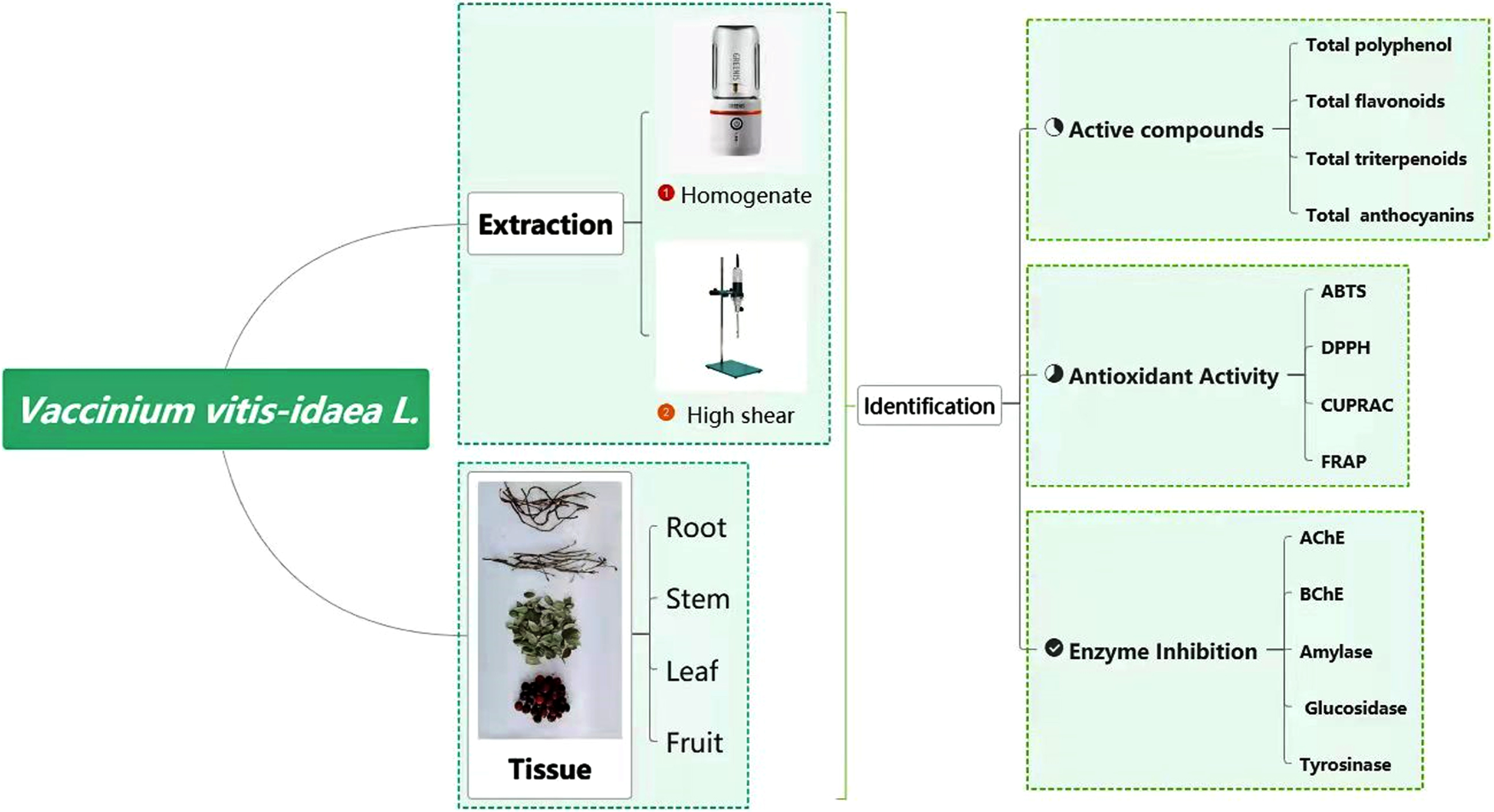
The total experimental contents include: determination of the active compounds, antioxidant activity, and enzyme inhibition ability of stem, leaf, root, and fruit of lingonberry.
As presented in Fig. 2, the contents of total polyphenol and flavone in leaf and stem were significantly higher than those in roots and fruits (Total polyphenol were 1194.4 mg/100 g in leaf and 867.79 mg/100 g in stem, total flawone were 1042.8 mg/100 g in leaf and 567.3 mg/100 g in stem). The higher phenolic content in Ficus symorocus’s leaf than other parts of plant was also reported by Suliman [25], but the phenolic content in F. symorocus’s leaf was much higher compared with the present research. These differences could be attributed to genetic variation, the environmental growing conditions (temperature, sunlight, soil nutrients), geographical locations (latitude and altitude), and the stage of growth [3]. Fruit extract was observed to be contain 3-fold less phenolic compounds than leaf extract, which could be attributed to the high concentration of sugar in fruit. However, the active compound of anthocyanins was observed to be higher in the fruit (255.32 mg/100 g) comparable to other parts of lingonberry. Previous studies also showed that anthocyanins appear as the major constituent in other fruit [26, 27].
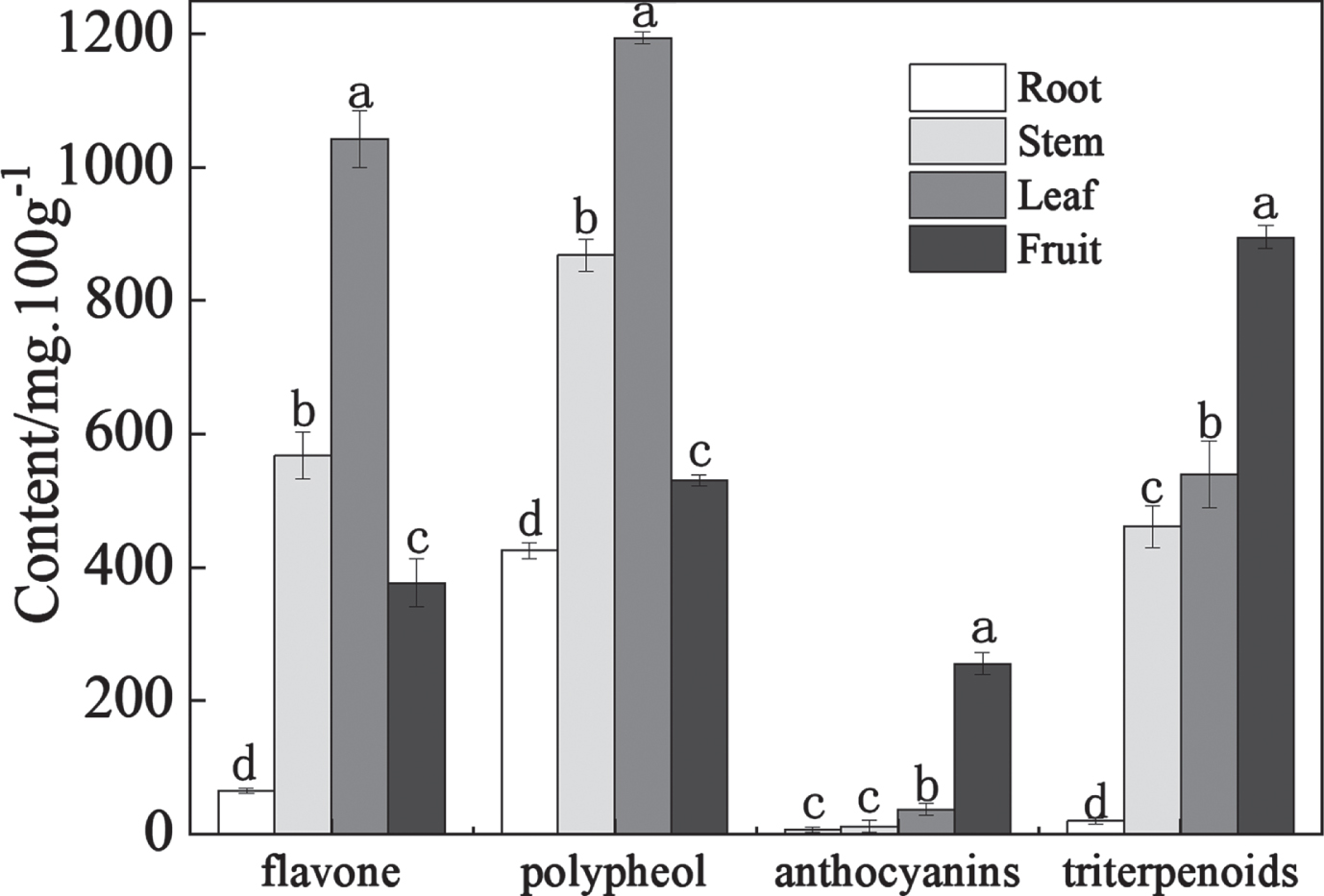
Active substance contents of different parts in Vaccinium vitis-idaea. The data are presented as the mean±SD. Different letters on the bar chart indicate significant differences (p < 0.01).
In this study, 5 phenolic acids and 11 flavonoids were detected in Vaccinium vitis-idaea (Table 3). The phenolic acid consisted of arbutin, 4,5-Dicaffeoylquinic acid, 3,5-O-dicaffeoylquinic acid, cinnamic acid and caffeic acid. Almost all kinds of phenolic acids are different in different plant parts, it generally contains derivatives and isomers of caffeic acid and caffeoylquinic acid. Caffeic acid and its derivatives are widely distributed in plants and have notable biological activities such as anti-virus [28], anti cardiovascular and cerebrovascular diseases [29], hypoglycemic [30], anti ultraviolet damage [31] and so on. The test results show that leaf and stem extracts contain more kinds of phenolic acids. Among flavonoids detected, The typical flavonoids include rutin, catechin, epicatechin, quercetin and glycosides with quercetin as mother nucleus, glycosides with kaempferol as mother nucleus and so on. Licochalcone A was relatively found in all parts of the plant. In addition, isorhamnetin-3-O-glucoside, quercetin and isoquercitrin were detected in stem and leaf, while kaempferol-3-O-galactoside, kaempferol-3-O-β-D-glucosyl(1 ⟶ 2)galactoside, biorobin, quercetin 3-O-glucoside-7-O-rhamnoside and rutinum only existed in leaf. Oana Crina-Bujor et al. [2] also assessed the phenolic composition of all parts of Vaccinium vitis-idaea cultivated in Romania, and stated that arbutin appears as the major constituents in leaf, representing 31–50% of the total phenolic compounds. That amount was significantly higher than in stem, while it was absent in fruit. Catechin presented as the predominant compound of flavonoid in stem and fruit, while it was detected as the second major group in leaf [32–34]. These reports were consistent with the results of this paper.
Concerning the anthocyanins class, the seven anthocyanins identified were 3,5-diglucosyldelphinidin, delphinidin, cyanidin-3-O-arabinoside, cyanidin-3-O-glucoside, delphinidie-3-glucoside, delphinidin-3-arabinoside and delphindin-3-O-rutinoside chloride in fruit. The main anthocyanins include glycosides with delphinidin and cyanidin as the mother nucleus. Anthocyanins are flavonoids, which widely exist in the cell fluid of plant organs such as roots, leaves, flowers and fruits, making them show colors such as red, blue or purple [35, 36]. They are one of the important water-soluble pigments in nature [37]. Anthocyanins in natural state exist in the form of glycosides, called anthocyanins, and few free anthocyanins exist [38].
Terpenoids are the main ingredients of the essential oils and pigment of plant species [39]. Plant terpenoids not just only play an essential role in plant life activities, but also have important commercial value. In this study (Fig. 1), terpenoids were found to be most abundant in fruit of lingonberry (895.13 mg/100 g), which was about twice compared with stem (460.63 mg/100 g). However, there were almost no terpenoids observed in roots (18.98 mg/100 g). As presented in Table 3, 6 terpenoids were detected in Vaccinium vitis-idaea plant. Among all terpenoids detected, typical include oleanolic acid, ursolic acid and Maslinic acid. Ursolic acid is an isomer of oleanolic acid and belongs to pentacyclic triterpenoids. It has a very significant effect on lowering blood sugar. Therefore, it is usually extracted from natural plants as a hypoglycemic target. oleanolic acid was found in all parts of plant. The high content of terpenoids in the fruit could contribute to the unique aroma of lingonberry fruit. Several studies have also reported the effects of terpenoids on the treatment of prostate cancer, melanoma, breast cancer, and meningioma [40]. In addition, triterpenoids have several beneficial effects such as neuroprotective [41], α-glucosidase inhibitory [42], antimalarial [43], hypoglycaemic [44], and antioxidant [45].
The antioxidant activity of lingonberry extracts was determined through the reduction of transition metal ions, the scavenging of ABTS radical and DPPH radical. The antioxidant capacities of different parts of lingonberry plant shown in Figs. 3 and 4. The obtained results clearly showed that the antioxidant activity of extracts from different parts of lingonberry increased with the increase of concentration, showing a dose-effect relationship in all assays (Fig. 3).
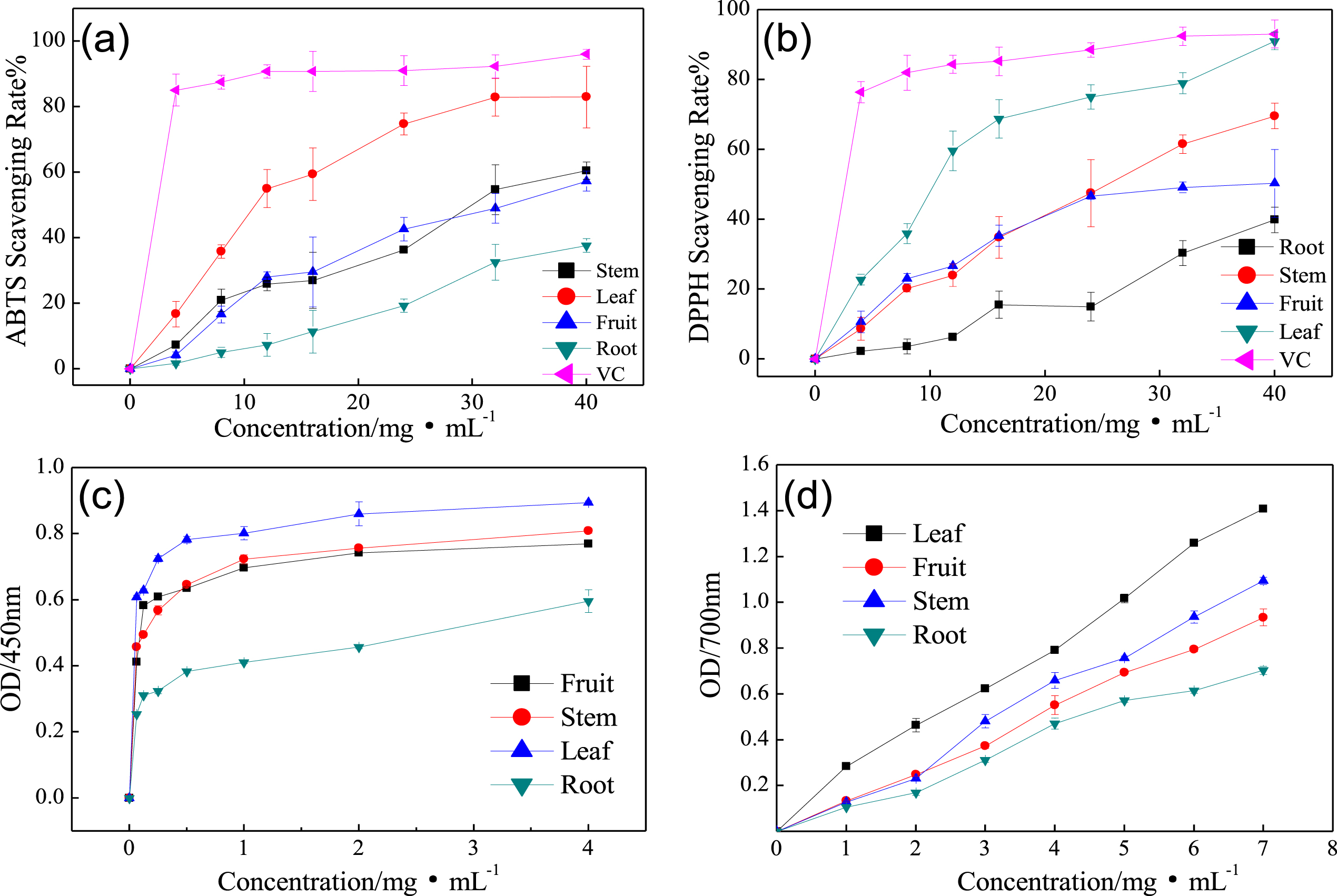
Antioxidant of different parts in Vaccinium vitis-idaea. (a) DPPH radical scavenging ability. (b) ABTS radical scavenging ability. (c) Reduction ability of copper ion (CUPRAC). (d) Total reducing power (FRAP).
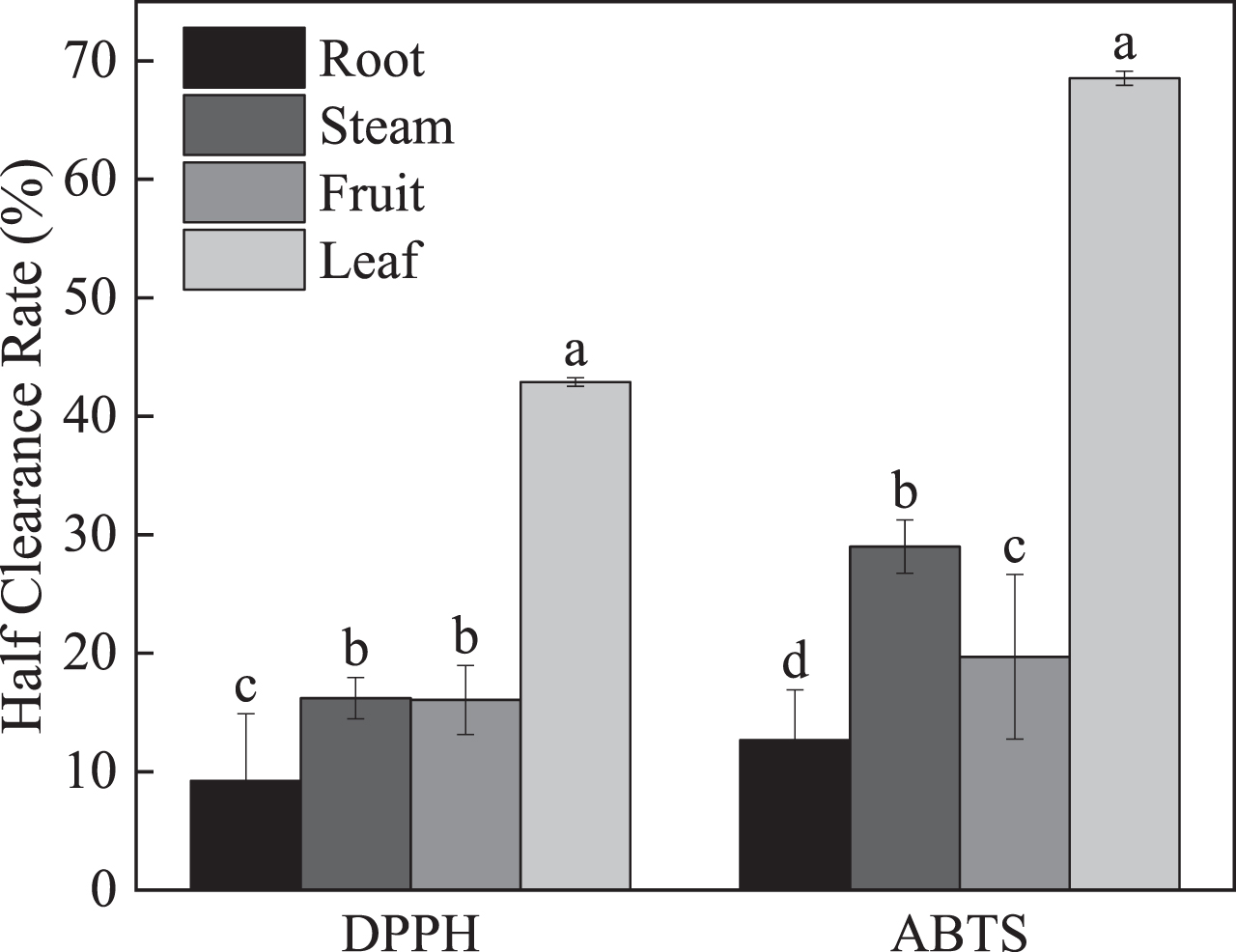
Half clearance rate of ABTS and DPPH in Vaccinium vitis-idaea, expressed as equivalents (mg TE/g). The data are presented as the mean±SD. Different letters on the bar chart indicate significant differences (p≤0.01).
In this study, radical scavenging activity for DPPH ranged from 9.23±5.66 to 42.89±0.35 mg TE/g and for the ABTS assay ranged from 12.66±4.24 to 68.52±0.59 mg TE/g (Fig. 4). Among them, Vaccinium vitis-idaea leaf had the strongest free radical scavenging activity against DPPH and ABTS, slightly lower than the positive control vitamin C. For both two methods, the order of radical scavenging activity was as follows: leaf > Stem>Fruit>Root. In addition, according to the data in Table 1, the correlation between total phenols, flavonoids, anthocyanins, triterpenoids and DPPH, ABTS free radical scavenging activity was analyzed. The correlation coefficient between total phenols and DPPH radical scavenging activity is R2 = 0.792 (p < 0.05), and the correlation coefficient between total phenols and ABTS radical scavenging activity is R2 = 0.902 (p < 0.05), which is slightly lower than that between flavonoids and the two radical scavenging activities. Triterpenoids and anthocyanins had little correlation with the scavenging activities of the two free radicals. A large number of data show that the number of total phenols and flavonoids in the crude extract of vaccinium vitis-idaea directly reflects the antioxidant activity of the extract. In the previous study, Vaccinium vitis-idaea have DPPH radical scavenging activity in a dose-dependent manner, and positively correlated with the total phenolic content [46]. In this paper, the higher radical scavenging activities measured by DPPH or ABTS assay in leaf could also be explained by the higher content of polyphenolic, which is in agreement with the reported literature.
Correlation between total phenols, flavonoids, anthocyanins, triterpenoids and antioxidant activity of vaccinium vitis-idaea. *p<0.05
Regarding the strong ability of leaf and stems of lingonberry as a natural antioxidant agent, it has been demonstrated that they are not only capable measured by ABTS and DPPH assay, but also present a significant result through their activity to reduce transition metal ions [47]. As same as ABTS and DPPH assay, FRAP and CUPRAC assay also demonstrated the high reducing potential, as well as antioxidant activity, exhibited by leaf of lingonberry. However, stem and fruit exhibited a moderate, while root extracts expressed low reducing power. The experimental results were consistent with the ABTS and DPPH.
In recent years, the theory states that the inhibition of key enzymes [48] could be a valuable strategy for disease treatment, particularly with natural-based products to avoid the side effects of synthetic inhibitors. In the present work, four parts of lingonberry extracts obtained were evaluated for the inhibition activity potential towards the following enzymes: acetylcholinesterase, butyrylcholinesterase, tyrosinase, α-amylase, and α-glucosidase (Figs. 5 and 6).
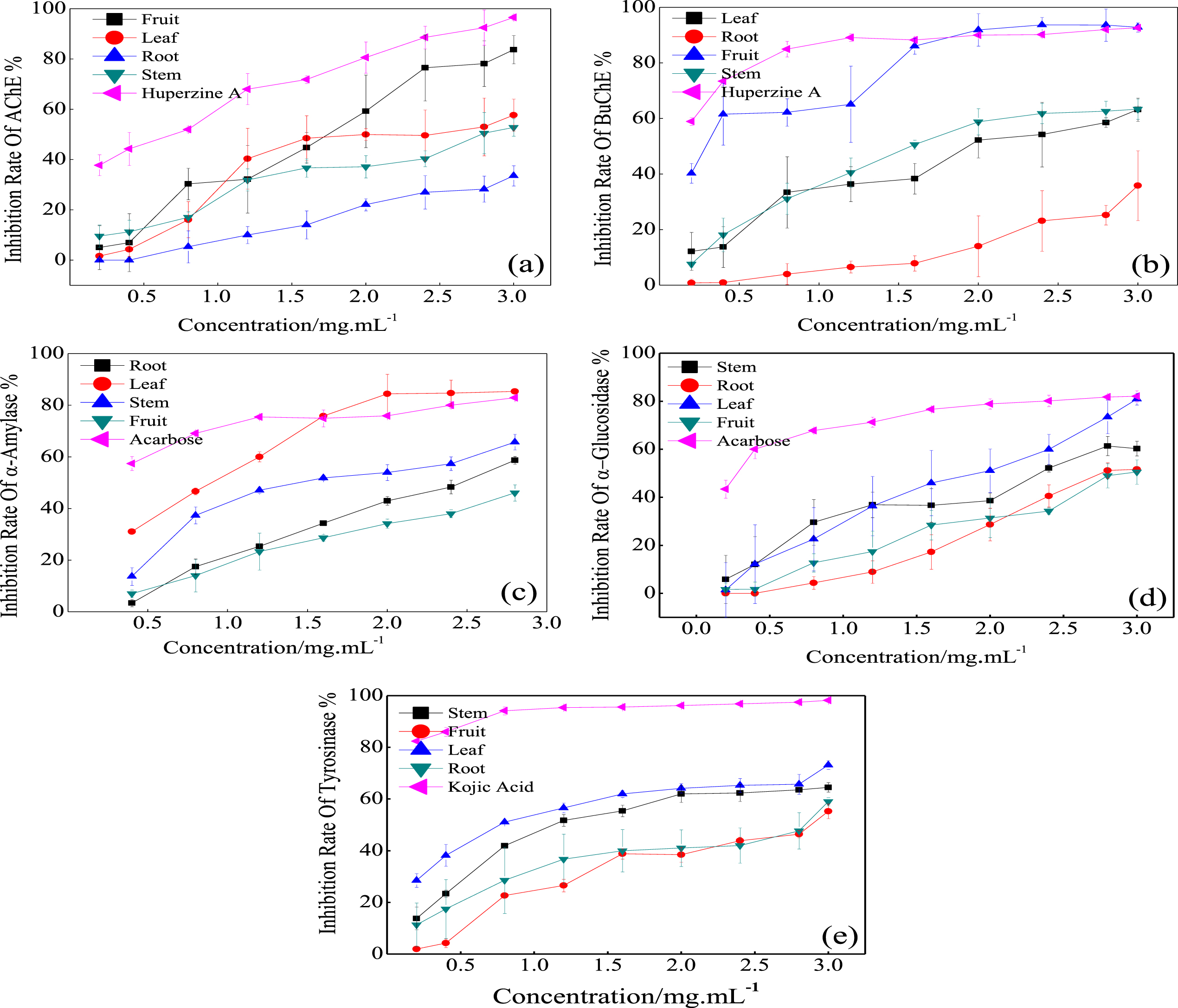
Inhibition ability of different parts of Vaccinium Vitis-idaea to various enzymes.
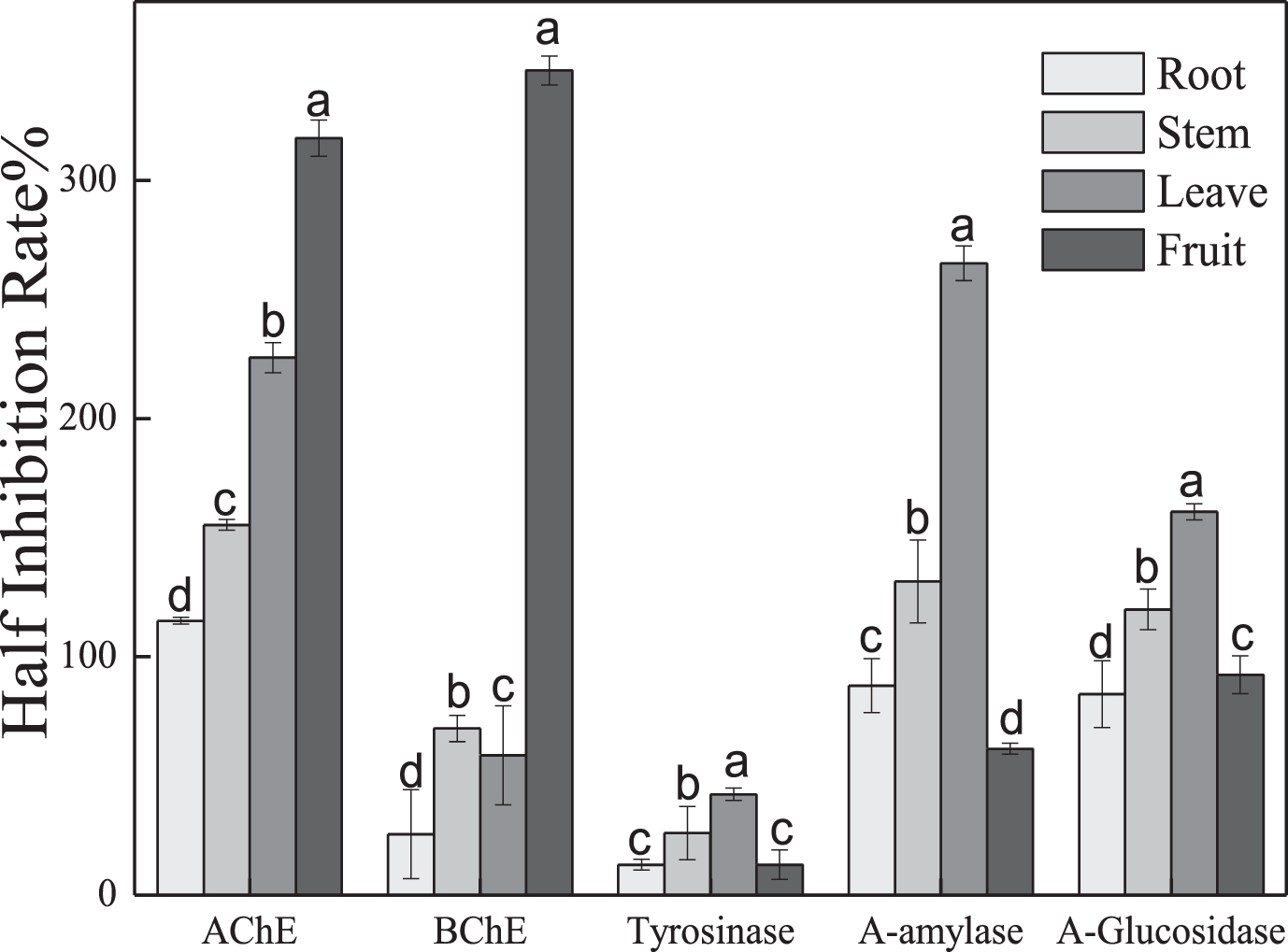
Half inhibition rate of different parts of Vaccinium Vitis-idaea to various enzymes. AChE and BChE inhibitory activity were expressed as equivalents of galanthamine (mg GALAEs/g extract). The α-amylase and α-glucosidase inhibitory activity were expressed as equivalents of acarbose (mg ACAEs/g extract). The tyrosinase inhibitory activity was expressed as equivalents of kojic acid (mg KAEs/g extract). The data are presented as the mean±SD. Different letters on the bar chart indicate significant differences (p≤0.01).
Choline is the main transmitter that conducts and connects the neurons in the brain. The deficiency of acetylcholine often leads to the decline of cognitive function, and even leads to Alzheimer’s disease [49]. As cholinesterase is mainly responsible for the hydrolysis of acetylcholine, inhibition of these enzymes can make the accumulation of acetylcholine released by cholinergic nerve endings, so as to achieve the purpose of treating Alzheimer’s disease [50]. Significant differences in cholinesterase inhibitory effects were observed in the different lingonberry parts. As presented in Fig. 5, there was a significant dose-dependent relationship between the concentration of each extract and the degree of inhibition, fruit exerted the highest AChE inhibitory activity with 317.67±7.60 mg GALAEs/g extracts, followed by leaf (225.53±6.41 mg GALAEs/g extract), stem (155.39±2.21 mg GALAEs/g extract), and root (115.10±1.42 mg GALAEs/g extract). Similarly, BChE inhibitory activities can be ranked as fruit (346.04±6.07 mg GALAEs/g extract), stem (69.88±5.56 mg GALAEs/g extract), leaf (58.59±20.76 mg. GALAEs/g extract), and root (25.60±18.62 mg GALAEs/g extract). The inhibitory activity of root extract is poor, so it can not be used as a good inhibitor of cholinesterase activity. Analysis according to the data in Table 3, the correlation coefficient between total anthocyanins and anti-AChE is R2 = 0.991 (P < 0.05), the correlation coefficient between total triterpenoids and anti-AChE is R2 = 0.889 (P < 0.05), which is slightly higher than that between BChE and the two kind of active substance. But there was little correlation between cholinesterase, polyphenols and flavonoids. In general, lingonberry extracts were more effective toward AChE enzyme than BChE enzyme. Many studies have shown that alkaloids, triterpenoids, coumarins and other compounds in natural plants are effective ingredients for inhibiting cholinesterase, in which alkaloids are dominant and are easy to be extracted by organic solvents. This topic is to find effective active inhibition parts and compound structures from the perspective of natural plant resources.
Inhibition Tyrosinase ability
Tyrosinase is a key enzyme in melanin biosynthesis. Melanin plays an important role in protecting the skin from ultraviolet rays; however, it could lead to pigmentation and neurodegenerative disorders if present in excessive quantity [51]. Most tyrosinase inhibitors are synthetic inhibitors, which have many side effects and toxicity. Thus, many experts have been focused on investigating natural bioactive as potential substitutes. Regarding the tyrosinase inhibitory activities in lingonberry, leaf was found to be the most effective inhibitor 42.87 mg KAEs/g extract, slightly higher than stem 26.08 mg KAE/g extract (Fig. 5). However, there was no significant difference in anti-tyrosinase activity between fruit and root (12.7 mg KAE/g and 12.94 mg KAE/g, respectively). In general, the inhibitory ability of each part of lingonberry to tyrosinase was worse than that of other enzymes. Research on compounds that inhibit tyrosinase activity at home and abroad has found that flavonoids, coumarins, sterols and triterpenoids are typical active substances. Among them, bilberry leaves are mainly hydroquinone substances, namely arbutin, and ethanol is a good extraction solvent.
Inhibition α-amylase and α-glucosidase ability
Diabetes mellitus is a common endocrine metabolic disease caused by the relative or absolute lack of insulin secretion, and lead to hyperglycemia [52]. One of the beneficial treatments for diabetes is to control the blood sugar level, which can be reduced by preventing the sugar absorption from gastrointestinal tract with the inhibition of α-amylase and α-glucosidase. Results showed that all parts of Vaccinium vitis-idaea have a significant effect on inhibiting α-amylase and α-glucosidase enzyme (Fig. 6), and it was significantly correlated with phenolic acids and flavonoids. leaf exerted the highest α-amylase and α-glucosidase inhibitory activity with 256.59 mg ACAEs/g extract and186.70 mg ACAEs/g extract, the lowest α-amylase inhibitory activity was observed in fruit. Some previous studies have shown that phenols have good properties α-amylase inhibition activity, while stem and leaf extracts contain a large number of polyphenols, so the inhibition effect is more prominent, Saponins, flavonoids and other compounds have significant inhibition of α-glucosidase. Chunpeng Wan [53] isolated 7 flavonoids from Rhododendron plants, which can effectively inhibit α-glucosidase activity, which is more consistent with the research results of this subject. Therefore, lingonberry leaf are worth further research in the treatment of diabetes.
PCA, AHC and UPLC-TQ-MS analysis
Principal components analysis (PCA) is a way of determining whether or not this is a reasonable process and whether one number can provide an adequate summary. In this study, PCA and AHC were analyzed by SIMCA Version (14.1) software and SPSS version 20 software, principal component analysis (PCA), agglomerative hierarchical cluster (AHC) and UPLC-TQ-MS analysis (Fig. 7 and Table 3) were combined to evaluate the similarity between active ingredients and antioxidant, enzyme inhibition in lingonberry. By analyzing which active ingredients are involved in the process of antioxidant and enzyme inhibition, specific active ingredients can be inferred.
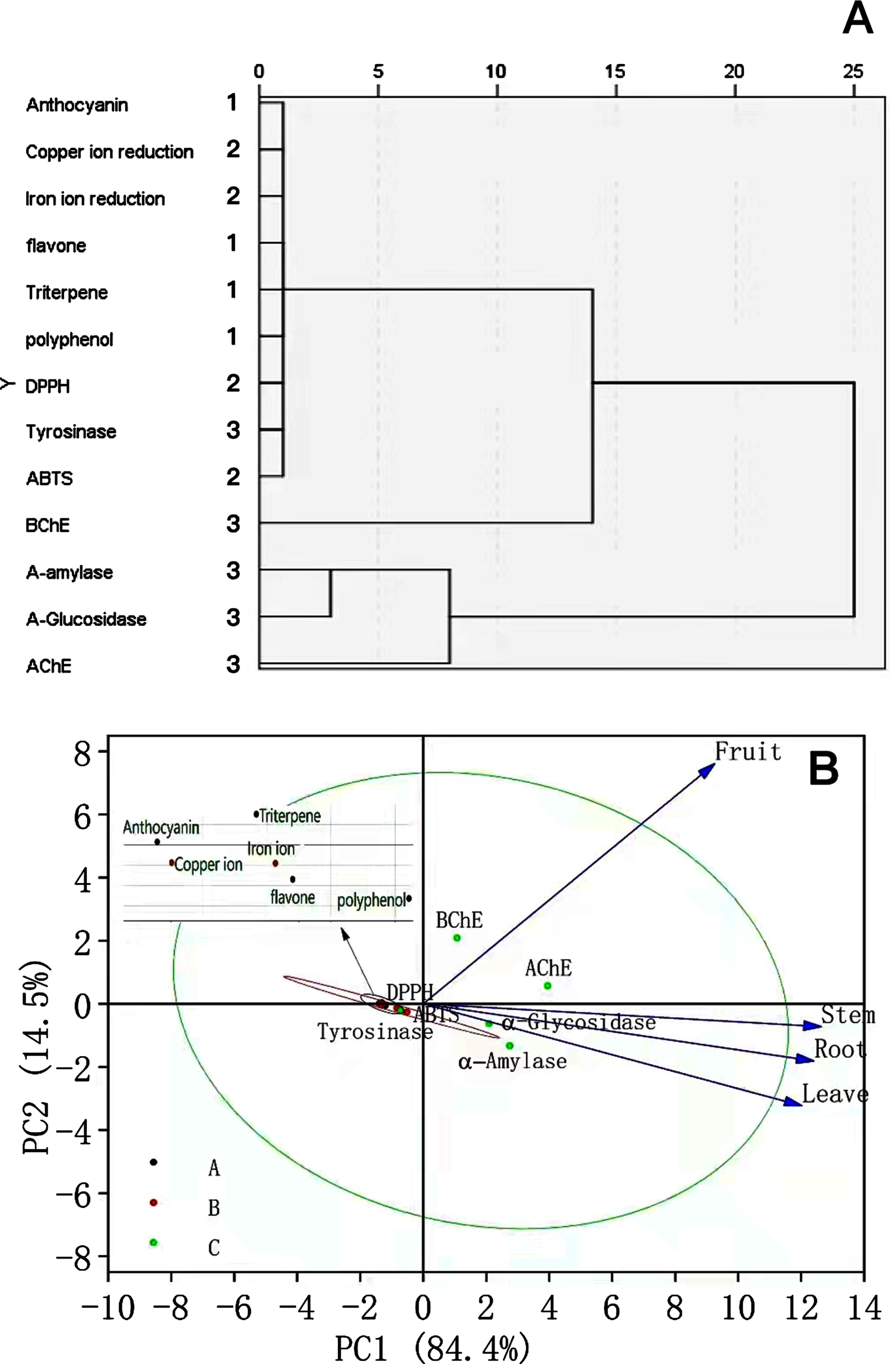
Active ingredient, antioxidant and enzyme inhibition for vaccinium vitis-idaea parts. (A) Agglomerative hierarchical cluster analysis- dendrogram. (B) Principal component analysis.
On the basis of the presented dendrogram (Fig. 7A) it can be concluded that flavone, polyphenol show similarity to antioxidant abilities. Next, PCA was performed to explain the differences between the analysed various antioxidant abilities and active substance (Fig. 7B). It is not difficult to see from the picture, PC2 (anthocyanins and triterpene) is negatively correlated with antioxidant activity (ABTS, DPPH, copper ion reduction, iron ion reduction) and explains more than 14.5% of the model variation. Combine the above analysis with Fig. 3 and Table 3, Arbutin, 4,5-Dicaffeoylquinic acid, 3, 5-O-Dicaffeoylquinic acid, Caffeic acid, cinnamic acid, Isorhamnetin-3-O-glucoside, Quercetin, Isoquercitrin, catechin (phenolic acids and flavonoids) was found not only in stems but also in leaves. Therefore, it preliminarily determined that these ingredients determine the high antioxidant activity of lingonberry stems and leaf. A previous study also reported that the highest antioxidant activity of leaf was mainly due to the high content of arbutin, catechins and flavonols [3].
Active ingredient analysis of inhibition Cholinesterase
In the principal component analysis diagram, two main factors with eigenvalues higher than one explain over 98.9% of the data variance while the first distinguished factor (PC1) explains nearly 85% of the variance. PC1 is the component along which the enzyme inhibition discriminants change (green circle), there was a negative correlation between cholinesterase (ache and BChE) and polyphenols and flavonoids. In Fig. 6 and Tables 2 and 3 can be found the ability of extract to inhibit the AChE and BChE enzymes were related to the higher anthocyanins and triterpenoids present in extract. Because the fruit has a high inhibition ability of cholinesterase, anthocyanins and terpenoids (Lupeol) only exist in fruit. Therefore, it is speculated that these ingredients have stronger ability to inhibit cholinesterase. In addition, during the research, it is found that the physiological activity of coumarins can not be ignored, and they have good effects in biological activities such as antitumor [54], antioxidant [55], anti-inflammatory [56], hypoglycemic [57] and bacteriostatic [58]. pteryxin, a good inhibitor of butyrylcholinesterase [59], was found in the extract of vaccinium vitis-idaea leaves; Fraxetin, hesperidin and dicoumarin were found in the stem extract. These coumarins have synergistic effects with phenolic acids, flavonoids and terpenoids, and have a certain correlation in physiological function, which makes the extract of vaccinium vitis-idaea show good inhibition of enzyme activity. The water extract of root is not ideal in the determination of various indexes, and its activity is poor. It is roughly speculated that it contains less active components, which needs to be analyzed. However, at present, there are differences in the affinity between inhibitors and enzyme molecules, and no relevant research can explain how anthocyanins and triterpenoids compounds dock with AChE and BChE.
Correlation between total phenols, flavonoids, anthocyanins, triterpenoids and enzyme inhibition of vaccinium vitis-idaea. *p <0.05
Correlation between total phenols, flavonoids, anthocyanins, triterpenoids and enzyme inhibition of vaccinium vitis-idaea. *p <0.05
Identification of active ingredients from different parts of Lingonberry (vaccinium vitis-idaea)
Tyrosinase had strong correlation and similarity with phenolic acids and flavonoids in the correlation analysis and principal component analysis. Organic solvent extracts contain many kinds of flavonoids, so the inhibitory effect is very significant, especially leaf and stem extracts. Combined with UPLC-TQ-MS analysis, the ability of lingonberry sample to inhibit the activity of tyrosinase was associated with five flavonoids (kaempferol-3-O-galactoside, kaempferol-3-O-β-D-glucosyl (1 ⟶ 2) galactoside, biorobin,,quercetin 3-O-glucoside-7-O-rhamnoside, rutinum) and phenolic acid content (arbutin), which were found in sample. Methyl hesperidin (in stems) was also detected in this study, it has an excellent inhibitory effect on tyrosinase. Methyl hesperidin is often extracted from natural plants to treat skin diseases such as black spots and erythema. It was also reported that tyrosinase inhibition of medicinal plant extracts could be attributed to the presence of flavonoids [60].
Active ingredient analysis of inhibition α-amylase and α-glucosidase
We cannot observe the similarity between α-amylase, α-glycosidase and active ingredients intuitively in Fig. 7. According to Fig. 6, Tables 2 and 3, the blade has the highest the inhibitory activity of α-amylase (256.59 mg acaes/g extract) was much higher than that in stem and slightly higher than that of positive control. It is inferred that the specific flavonoids in leaf have a significant inhibitory effect on amylase. In the inhibition of α-glycosidase, stems and leaf were prominent. Abundant flavonols (isorhamnetin-3-O-glucoside, quercetin, isoquercitrin, catechin) content present in stems and leaf of lingonberry could be associated with the high inhibition ability of α-glucosidase. Vinayadam et al. [61] also reported correlations between inhibition of α-amylase and α-glucosidase with flavonol content were r = 0.54 and r = 0.50, respectively. In vitro and animal model studies showed that flavonoids had anti-diabetic effect, and its main mechanism was scavenging free radicals, anti-lipid peroxidation and non-enzymatic glycation damage, influence β-cell function; promote the utilization of sugar in peripheral tissues and target organs; anti-inflammatory, enhance immune function, improve circulation, etc. [60]. Thus, based on this report, leaf and stem of Vaccinium vitis-idaea would have a high potential effect on protecting against diabetes, obesity, and complications.
Conclusions
The aim of the present study was to evaluate the different parts of Vaccinium vitis-idaea (stem, root, fruit, and leaf). In the past, the research on lingonberry focused more on the anthocyanins in the fruit, and there were relatively few studies on the stem, leaf and root. Therefore, from the perspective of gain more research value, this topic detected and analysed the samples of each part of lingonberry by UPLC-TQ-MS. 5 phenolic acids, 11 flavonoids,7 anthocyanins and 6 terpenoids were detected in Vaccinium vitis-idaea in different plant parts. Lingonberry leaf and stems have significant antioxidant and inhibitory effects on tyrosinase, α-amylase and α-glycosidase. Therefore, they can be used to develop functional foods such as sugar-reducing tea. Among them arbutin, derivatives,isomers of caffeic acid and caffeoylquinic, isorhamnetin-3-O-glucoside, quercetin, isoquercitrin, catechin (phenolic acid and flavonoids) play a decisive role. Anthocyanins and triterpenoids (Lupeol) of fruit have good cholinesterase inhibitory ability. Such substances have potential for the development of sunscreen products and products to prevent age-related diseases. Principal component analysis also confirmed that phenolic acids and flavonoids had a good correlation with antioxidation and tyrosinase inhibition. Root extract is not ideal in the determination of various indexes, and the effect of activity is poor. It is roughly speculated that it contains fewer active ingredients. In general, our results suggest that Vaccinium vitis-idaea could be considered as a source of natural enzyme inhibitors in food and pharmaceutical areas. However, further studies are needed for phytochemicals isolation in Vaccinium vitis-idaea extracts.
Ethical of interest
The authors declare that they have no conflict of interest. This study does not involve any human or animal testing, and written informed consent was obtained from all study participants.
Footnotes
Acknowledgment and Funding
This work was supported by the Fundamental Research Funds for the Central Universities (2572019BA09), Higher Education Teaching Reform Research Project of Heilongjiang Provincial Department of Education (SJGY20200018), Heilongjiang Science Fund (LH2020C035), Postdoctoral Research Foundation of China (2016M600239). All authors would like to thank Professor Bob Tuck from Australia who edited and refined an early version of the paper. We wish to thank our colleagues and members of our laboratories for useful discussions.
Conflict of interest
The authors have no conflict of interest to report.