






Abstract
To improve the economic benefits of river dredging engineering construction, studies have been undertaken to optimize construction period costs. This study suggests a scheme for optimizing schedule costs through the use of three algorithms: non-dominated sorting genetic algorithm with elite strategy, simulated annealing colony algorithm, and ant colony algorithm. To achieve the preliminary algorithm selection of construction duration cost, the objectives have single and multi-objective, and iterative models are constructed separately. The validation results showed that the simulated annealing algorithm achieved the optimal solution in single objective optimization after the 81st iteration. The optimal solution of genetic algorithm in multi-objective optimization was a construction period of 49 days and a cost of 1788.15 million yuan. The non-dominated algorithm reduced the construction period to 313 days, which can save 52 days of construction period and reduce costs by 52.32 million yuan. This optimization algorithm has high efficiency in predicting shorter construction periods and lower costs, and has strategic foresight in the decision plans of decision-makers.
Introduction
River dredging engineering is an important environmental protection work, its purpose is to improve the water quality of the river and increase the utilization rate of water resources in the basin [1, 2]. However, the time limit and cost control of project implementation have always been the focus of attention in the industry, and its optimization is essentially a multi-objective decision-making problem. An effective optimization algorithm is non-dominated sorting Genetic algorithm II (NSGA-II). NSGA-II is widely used to solve multi-objective optimization problems, and its advantage lies in finding multiple optimal solutions at the same time to form Pareto frontiers, which can meet different decision requirements [3, 4]. NSGA-II algorithm has high convergence and distribution, and it has high applicability to solve practical problems. The study aims to use NSGA-II to optimize the duration and cost of river dredging projects. The choice of research method is mainly based on the advantages of NSGA-II and its application to such problems. First of all, it is necessary to establish the construction period and cost model of river dredging project, based on which the subsequent optimization work can be carried out [5, 6]. Then, NSGA-II is applied to this model. Through the iterative operation of the algorithm, although NSGA-II algorithm has high applicability, its application in practical problems still needs to be adjusted according to specific situations. In this study, NSGA-II algorithm is used to optimize the duration and cost of river dredging projects, which not only provides a new optimization idea for related projects, but also provides a new research case for the application of NSGA-II in practical problems. The main contribution of this study is to provide a method for optimizing the duration and cost of river dredging engineering based on NSGA-II, which has both theoretical significance and practical application value. In order to find an optimization scheme that can shorten the construction period and control the cost while meeting the engineering requirements, it provides an effective decision basis for the implementation of such projects. The research will be carried out in four parts. The first part is an overview of river dredging engineering based on NSGA-II. The second part is a study on optimizing the construction period cost of river dredging engineering based on NSGA-II. The third part is an experimental verification of the second part. The fourth part is a summary of the research content and points out the shortcomings.
Literature review
At present, there are few research cases on the combination of GA and SA algorithms in the construction period cost of dredging projects. Zhu et al. established a hierarchical multi-objective optimization model to improve the efficiency of the optimization algorithm and reduce search space, thereby obtaining the pareto set of multi-objective problems. The results indicated that this algorithm had significant advantages in reducing system energy consumption and configuration costs [7]. Chikhaoui et al. aimed to optimize customer objects for alliance members in cloud storage services. However, these costs were contradictory in some cases. To solve this problem, researchers used precise methods to calculate some solutions and injected them into the initial population of NSGA-II. This method of injecting functions greatly reduced the execution time of NSGA-II. Results showed that it improved NSGA-II performance by 94%, while the repair function executed simultaneously reduced the execution time by an average of 68% [8]. Nath and Muhuri studied numerous optimization methods to solve the target problem and provided specific details of the new solution process based on NSGA-II. Researchers fully compared and evaluated the performance. Results showed that it had significant advantages in solving practical problems [9]. Rabothata et al. utilized the NSGA-II method in MATLAB to achieve the optimal solution of the design variables. Results indicated that the optimization model can successfully find the optimal solution of the design variables, and the overall optimization results were very consistent with the publicly available data and accurate enough [10]. Aminmahalati et al. used computational fluid dynamics and NSGA-II to carry out multi-objective optimization for the combustion chamber of carbon monoxide steam boiler. The calculation results indicated that neglecting radiation at the start of the combustion chamber can lead to a discrepancy of up to 400 degrees Celsius. At the end of the optimized combustion chamber, the error was as high as 7.4 degrees Celsius. They utilized the NSGA II for multi-objective optimization and extracted and reported Pareto diagrams [11].
Mahmoudian et al. adopted the emerging concept of virtualization network functionality and expanded it to enhance existing methods, thereby promoting end-to-end IoT traffic control. The planner they developed used a GA based meta heuristic algorithm that relied on biological heuristic operators such as mutation, crossover, and selection. Through iteration, their experiments on real case studies have shown that this example was superior to the method based on automatic scaling [12]. Yamaguchi et al. used a fuzzy inference system tree model to monitor and predict the concentration of PM10 pollutants in indoor environments. The prediction model utilized different input parameters for training, with PM10 as the target variable. Its performance was evaluated by measuring four performance indicators, and the particle swarm optimization and GA were used to further improve the model performance. The research results indicated that GA-optimized model aggregation was better than the model based on particle swarm optimization. This model can be installed in a real-time environment to predict PM10 concentration, thereby improving public health and welfare [13]. Qin et al. proposed a new algorithm that better applied the performance of GA algorithm to repressors combined with extreme gradient decision trees in an optimization framework. Analyzing and comparing the new algorithm with the existing GA algorithm, it was found that the new algorithm is faster and has been successfully applied to non-repetitive events [14].
In summary, scholars and scientists have made contributions in NSGA-II and period-cost optimization. Meanwhile, considering the good data processing performance of NSGA-II and the current degree of waste in resource management, using this method to optimize resources for construction period and cost should have significant application value in promoting efficient engineering construction.
Period-cost optimization model construction for dredging engineering based on NSGA-II
The construction of a dredging engineering cycle cost optimization model based on NSGA-II (Non Dominant Sorting Genetic Algorithm II) involves determining cost factors at each stage of the project, and integrates the global optimization NSGA-II algorithm to minimize costs. The implementation of the model aims to improve the smoothness and quality of the engineering process while reducing project costs. Therefore, this model not only provides a new perspective for theoretical research, but also provides important reference for practical dredging project management, and has significant application value.
Period-cost optimization model construction for river dredging engineering projects
The construction of cycle cost optimization model of river dredging project involves determining each stage of the project and its cost factors, and using global optimization algorithms such as genetic algorithm (GA), simulated annealing algorithm (SA) and ant colony algorithm (ACO) to minimize the cost [12]. The implementation of this model not only helps to reduce the project cost, but also ensures the smooth engineering process and the improvement of quality. Therefore, this model not only has theoretical research value, but also provides an important reference for the actual project management of river dredging engineering. In the model, these three algorithms are organically combined to obtain the optimal solution. GA is used to search for the global optimal solution, SA is used to fine-tune the solution, and ACO is used to guide and optimize the path during the search process. The combination of these three algorithms makes the model not only make full use of the global information, but also make fine adjustment locally, and guide the search path effectively in the process of finding the best solution. The processed model not only finds the optimal solution, but also finds it in the most efficient way [13]. It provides practical tools and methods for the construction period and cost optimization of river dredging engineering, helps to improve engineering efficiency and cost effectiveness, and provides a bridge between theoretical research and practical application. Therefore, in terms of the overall benefits, finding the shortest construction period and the lowest cost has become the optimization direction of the construction period cost model. GA was proposed by Holland. Based on its intelligent and organized characteristics, the core of GA lies in the selection, crossover, and variation of biological evolution [14]. According to the characteristics of the fitness value function, the whole system is searched through problem optimization and natural selection, and the complex solution is optimized. After the objective function is processed and changed, the adaptive range of the function is met through Eq. (1).
In Eq. (1),
In Eq. (2),
In Eq. (3),
According to Eq. (4),
In Eq. (5),
In Eq. (6),
In Eq. (7),
Global optimization algorithm optimization.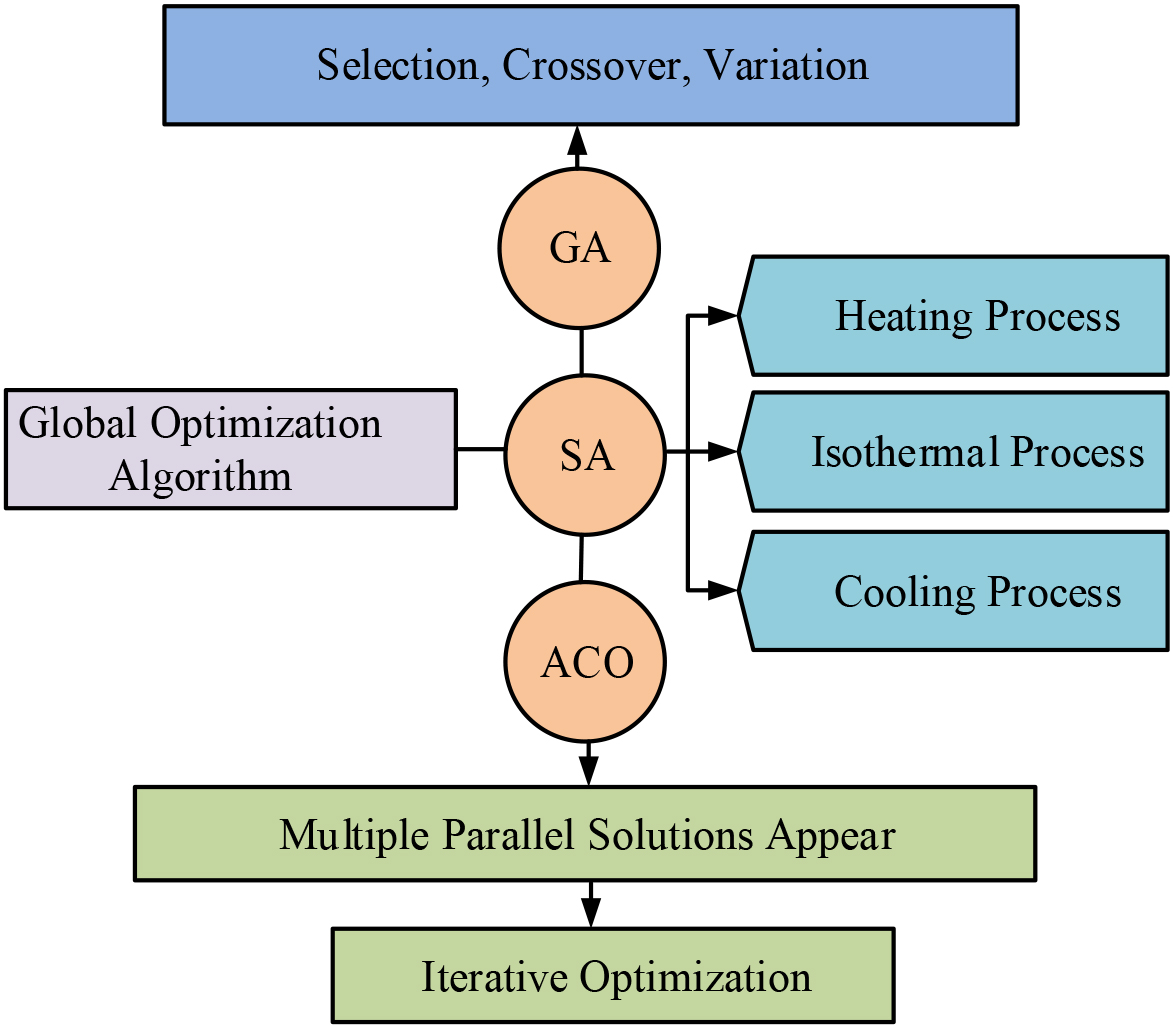
Figure 1 shows three global optimization algorithms: GA, SA, and ACO. These algorithms provide different optimization paths for different problems. GA has the characteristics of intelligence and organization, so it can adjust the deviation of overall trends and achieve more optimized results. SA optimizes the display and temperature state of particles based on different energy levels, including heating, constant temperature, and cooling processes, so that the entire system can be adjusted in a timely manner. ACO has high adaptability and multi solution parallelism, so it can search multiple environments simultaneously, which can save time more efficiently in practice.
The optimization of the construction period and cost of river dredging engineering constitutes the core of decision-making problems, and the NSGA-II algorithm is frequently cited for its significant optimization ability. This study aims to elucidate how to apply the NSGA-II algorithm to construct a time cost optimization model for river dredging engineering. In the fast non dominated sorting process of NSGA-II, individuals in the evolutionary population are divided into several levels based on dominance relationships. The smaller the level value, the better these solutions are. These individuals are also preferred in the selection of offspring. The traditional NSGA-II uses the same mutation operator for all parents, and the mutable range of individuals at different levels is roughly the same. Therefore, it should be considered to apply different mutation operators to optimize the population evolution process. The total project duration is determined by the Critical Path Method (CPM), and the total cost includes both direct and indirect costs. The critical path method is a commonly used project management tool used to determine the timing of project activities and identify the critical activity chain or path that determines the total project duration. In this study, first, all engineering activities and their required time were included in the table, and the dependencies between each activity were determined. Then, calculate the earliest start time, earliest completion time, latest start time, and latest completion time for each activity, and determine the total construction period. Afterwards, identify which activities have no floating time between their earliest and latest start (or completion) times, which constitute the critical path of the project. Based on the critical path, the total project duration can be calculated. Calculate the total cost based on direct and indirect costs [18]. After that, without affecting the project progress, Eq. (8) is obtained.
In Eq. (8),
In Eq. (9),
Equation (10) is the total cost after removing the reward and punishment coefficients, which is used to budget the completion of dredging work within a limited time, identify the optimal cost and construction period, and construct Eq. (11) to verify the judgment decision of multi-objective optimization of project cost.
In Eq. (11),
In Eq. (12),
Construction cost structure of engineering projects.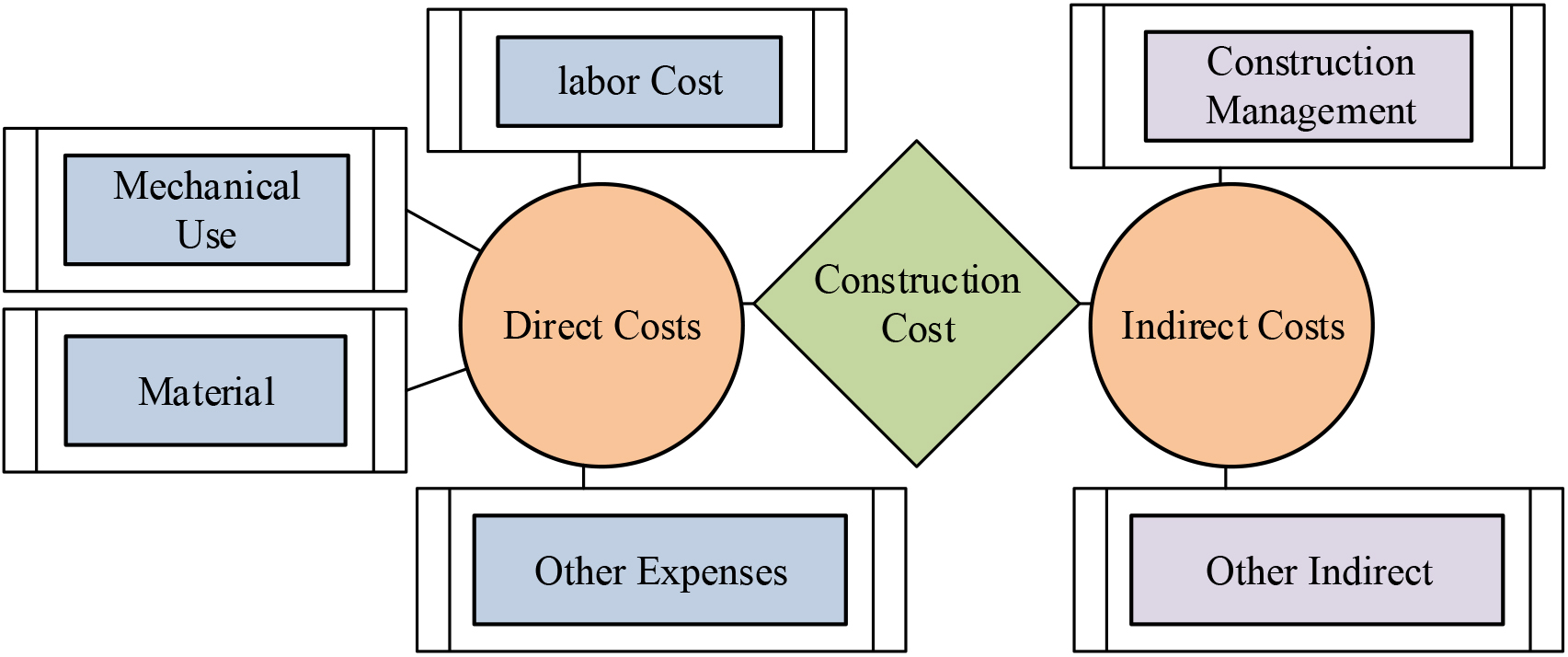
In Fig. 2, for projects with time constraints, schedule is a key factor. By determining the construction time of each process and allocating resources reasonably, the governance effect can be improved in the shortest possible time, and the best balance between construction period and cost can be sought [20]. Furthermore, the composition of construction costs is shown in Fig. 3.
Composition of construction cost for engineering projects.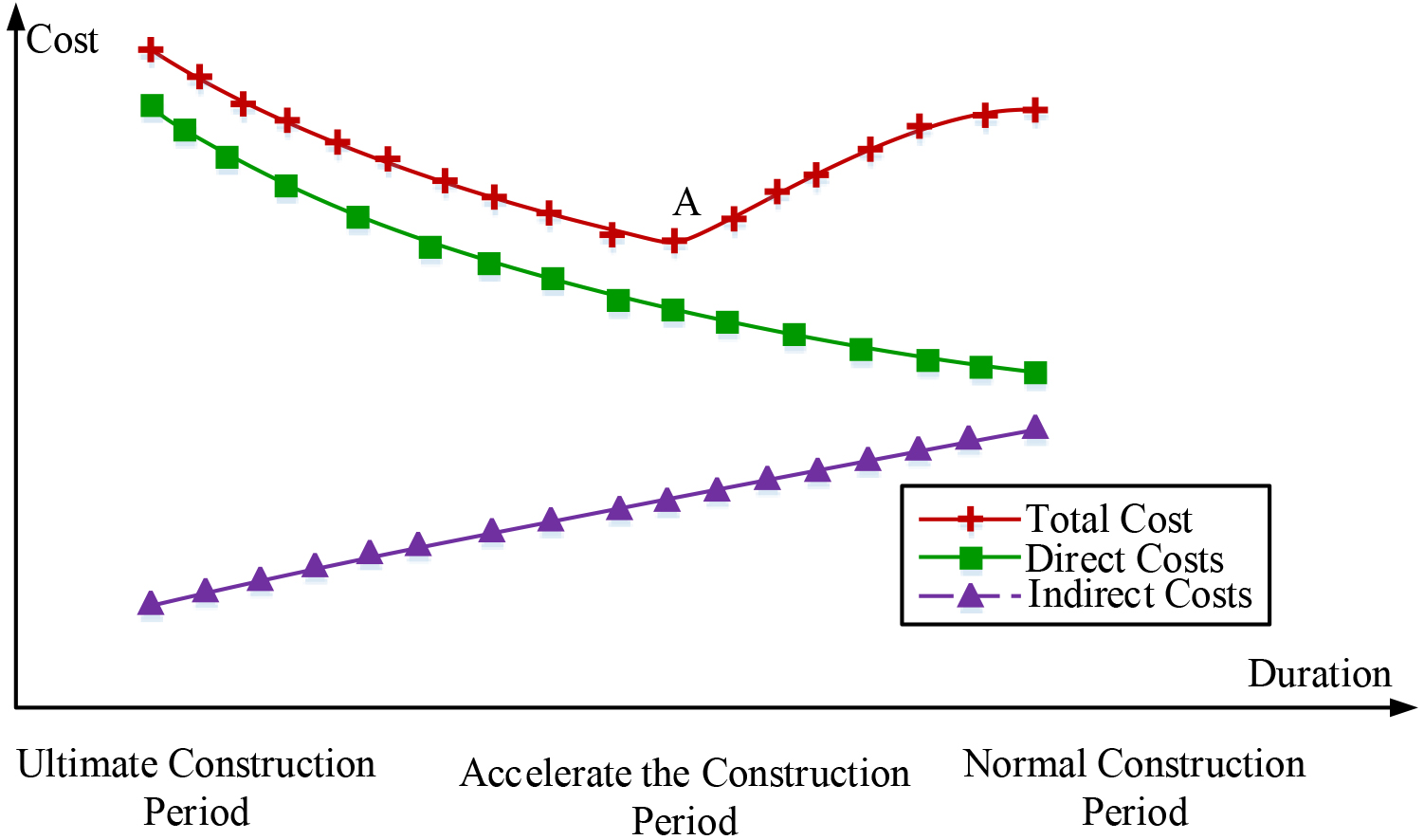
In Fig. 3, point A is the key point that needs to be optimized, but finding the best solution in the huge search space is not easy. There is a close connection and mutual influence between construction period and cost. The direct cost required to complete the work content increases as the construction period shortens, while the indirect cost increases as it extends. Therefore, finding an optimal point that minimizes the sum cost is needed. This requires comprehensive optimization of the construction period and cost to achieve the optimal balance point, and then construct an Eq. (13) that can be sorted among individuals with the same sorting value.
In Eq. (13),
Multi-objective algorithm flowchart.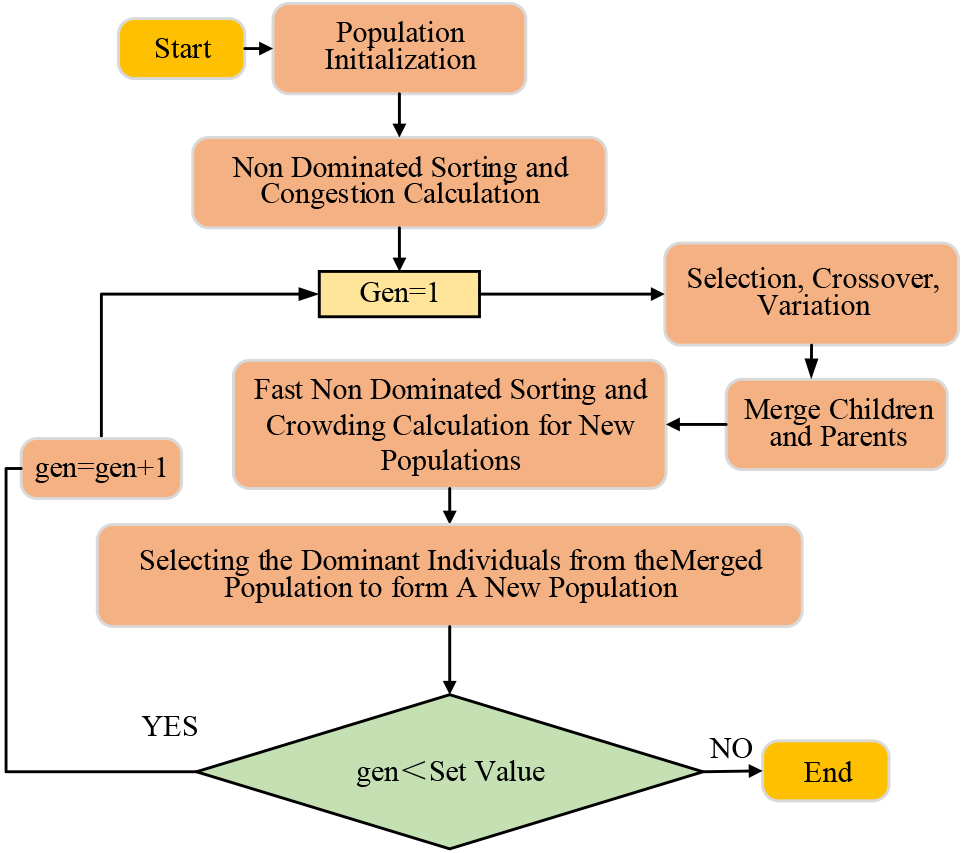
In Fig. 4, NSGA-II is applied for algorithm optimization. The process is as follows: the population is first initialized, then non dominated sorting and crowding calculation are performed. Meanwhile, population recombination is prioritized for dominant individuals. The algebraic gen of the population is set between 50 and 1000, and the population size of each generation is taken as 50 to 200; the crossover probability Pc ranges from 0.4 to 0.7, and the mutation probability Pm ranges from 0.0 to 0.18. By combining the initial parent population and offspring population through non dominated sorting, a dominant population that is more adaptable to the new environment is formed. In the process of optimizing the duration and cost of river dredging, the algebra, size, crossover probability, and mutation probability of the population are constantly changed to calculate the advantages of NSGA-II.
Based on NSGA-II analysis of dredging project schedule cost optimization, non-dominated sorting genetic algorithm II (NSGA-II) is applied to the schedule cost optimization of dredging project. Through detailed analysis of cost factors in each stage of the project, the model achieves an effective balance between cost and schedule. The introduction of NSGA-II makes the model more powerful when dealing with multi-objective optimization problems, and can seek the optimal solution between schedule and cost. Therefore, the analysis not only provides a new method for theoretical research, but also provides an effective decision-making tool for practical dredging project management.
Single objective construction period-cost optimization analysis
The objective functions in optimization mathematical models are generally divided into single objective and multi-objective functions. As sub objective functions increases, the difficulty of optimization also increases. Therefore, the existence of sub objectives should be minimized as much as possible while meeting basic requirements. To verify the applicability of intelligent optimization algorithms in practical engineering, a linear single objective optimization case with cost as the function value and duration as the independent variable can be selected. This case is similar to the mathematical model of a river dredging construction case. As the independent variable of the construction period changes, the cost also changes accordingly. In actual engineering, the changes in project duration and cost are relative. MATLAB R2014b was applied to develop an optimization program to optimize the construction period-cost of the project. First is the issue of duration iteration in Fig. 5.
Iterative curve of three algorithms for construction period.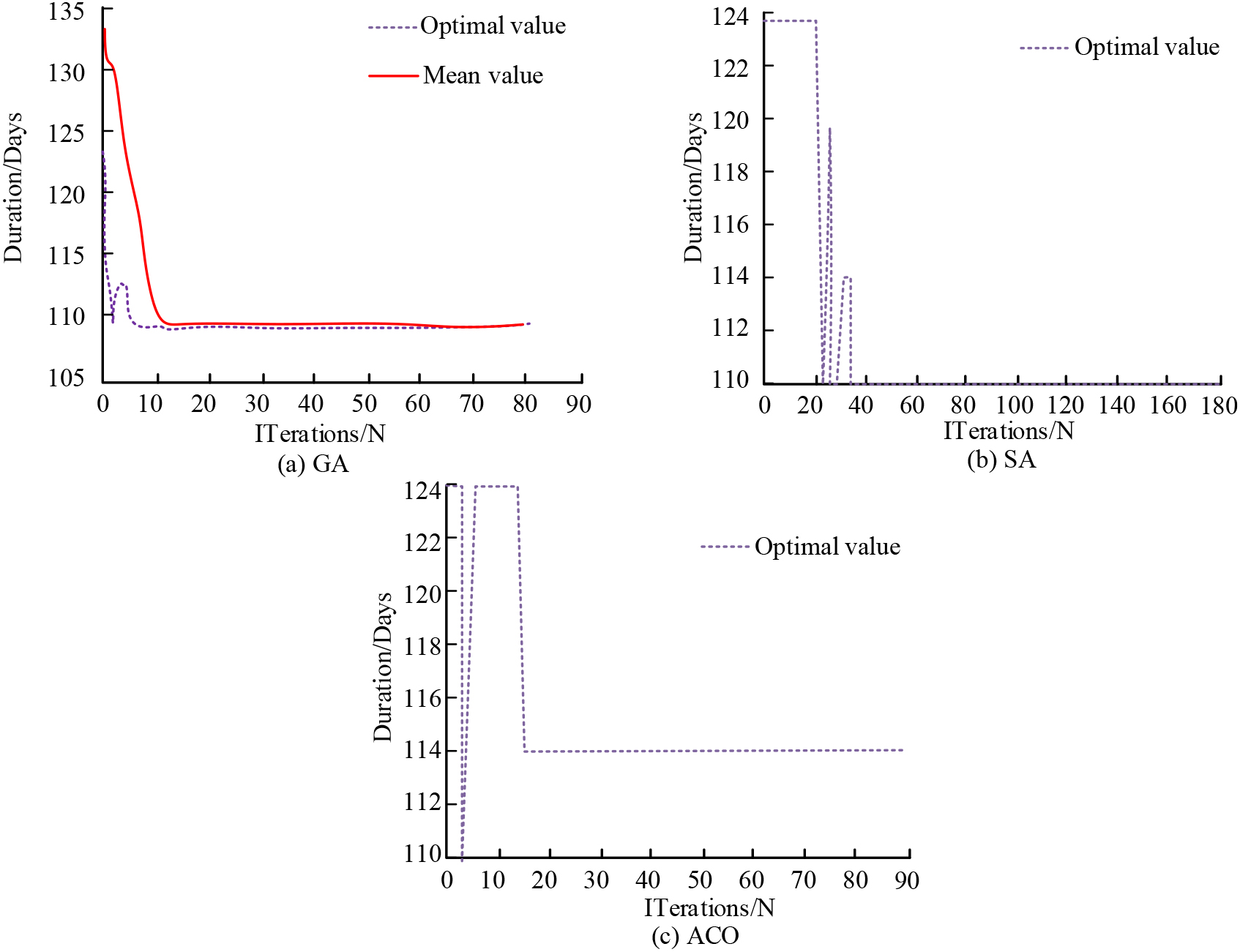
In Fig. 5a, when the number of GA iterations was 0, the period of the optimal value was not significantly shortened compared to the mean. As the number of iterations increased, the searched duration days no longer changed, and the optimal solution of GA appeared at 110 days; in Fig. 5b, the optimal value of SA was between iterations [0, 20], and the duration did not decrease. As the number of iterations increased, the duration decreased from 124 to 110 after 37 iterations, and the optimal solution appeared; in Fig. 5c, the number of ACO iterations was already significantly reduced by 13, but in terms of duration, the number of days reduced was not as good as GA and SA. Only in the 6th iteration can the duration be reduced to 110 days, and then until the 17th iteration, the duration rebounded to the initial value. Then is cost iteration issues in Fig. 6.
Cost iteration curves for three algorithms.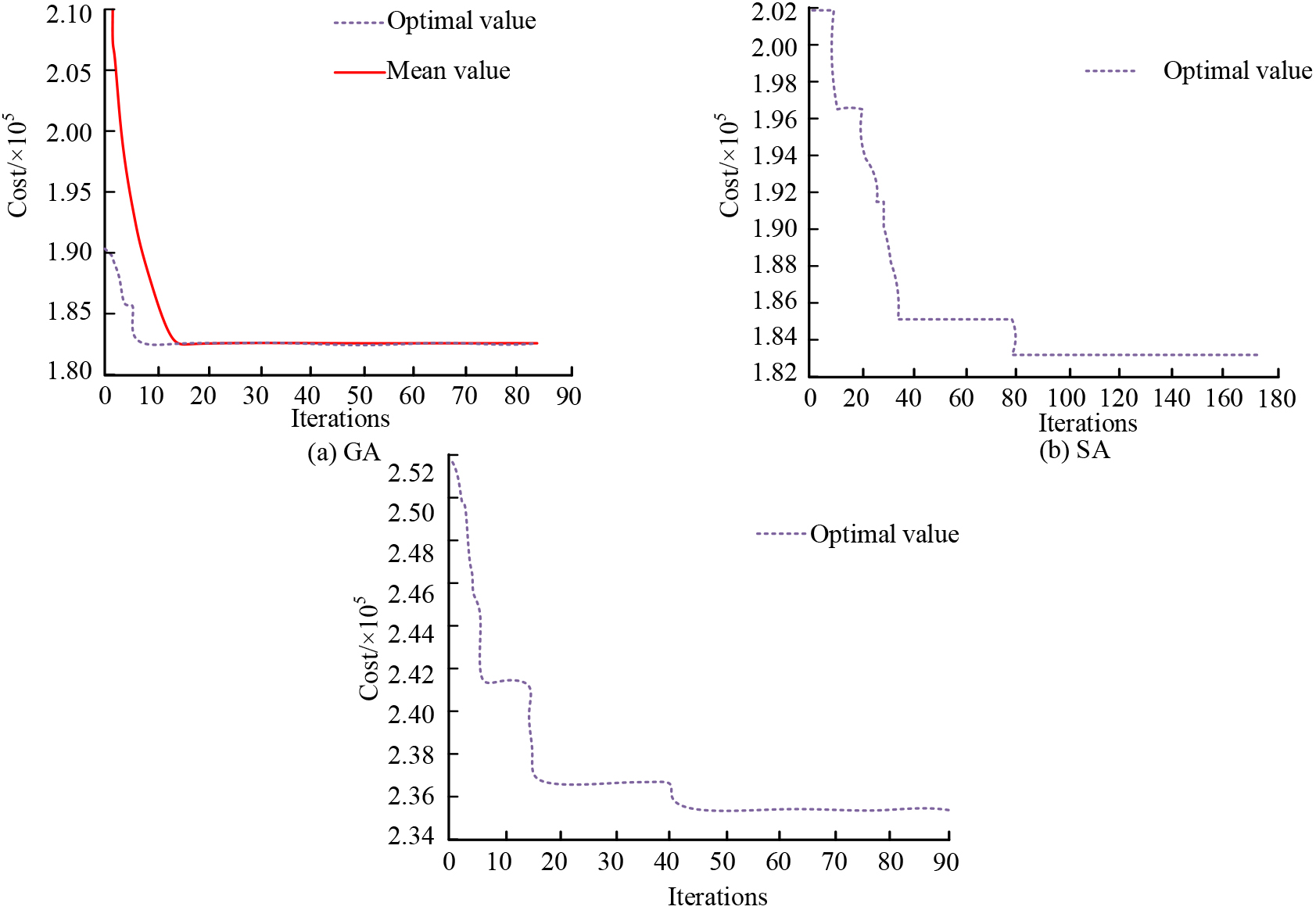
In Fig. 6, for the cost iteration curves of the three algorithms, the experimental costs were compared. In Fig. 6a, the optimal value of GA was compared to the mean value. In terms of the number of iterations, the minimum iterations required to reduce the cost of the optimal value to 1833 million were 6, and the minimum iterations required for the mean value were 13. Regardless of the subsequent iterations, there was no difference between the two; in Fig. 6b, the cost of the optimal value of SA decreased to a certain extent in iterations 0 to 36 and 79 to 81, until the 81st iteration where the cost did not change; in Fig. 6c, the number of iterations decreased from 0 to 40, and the cost did not stabilize until after the 42nd iteration. Subsequently, by comparing the duration cost, the three algorithms can be more intuitively compared, as shown in Fig. 7.
Period-cost graph of three algorithms.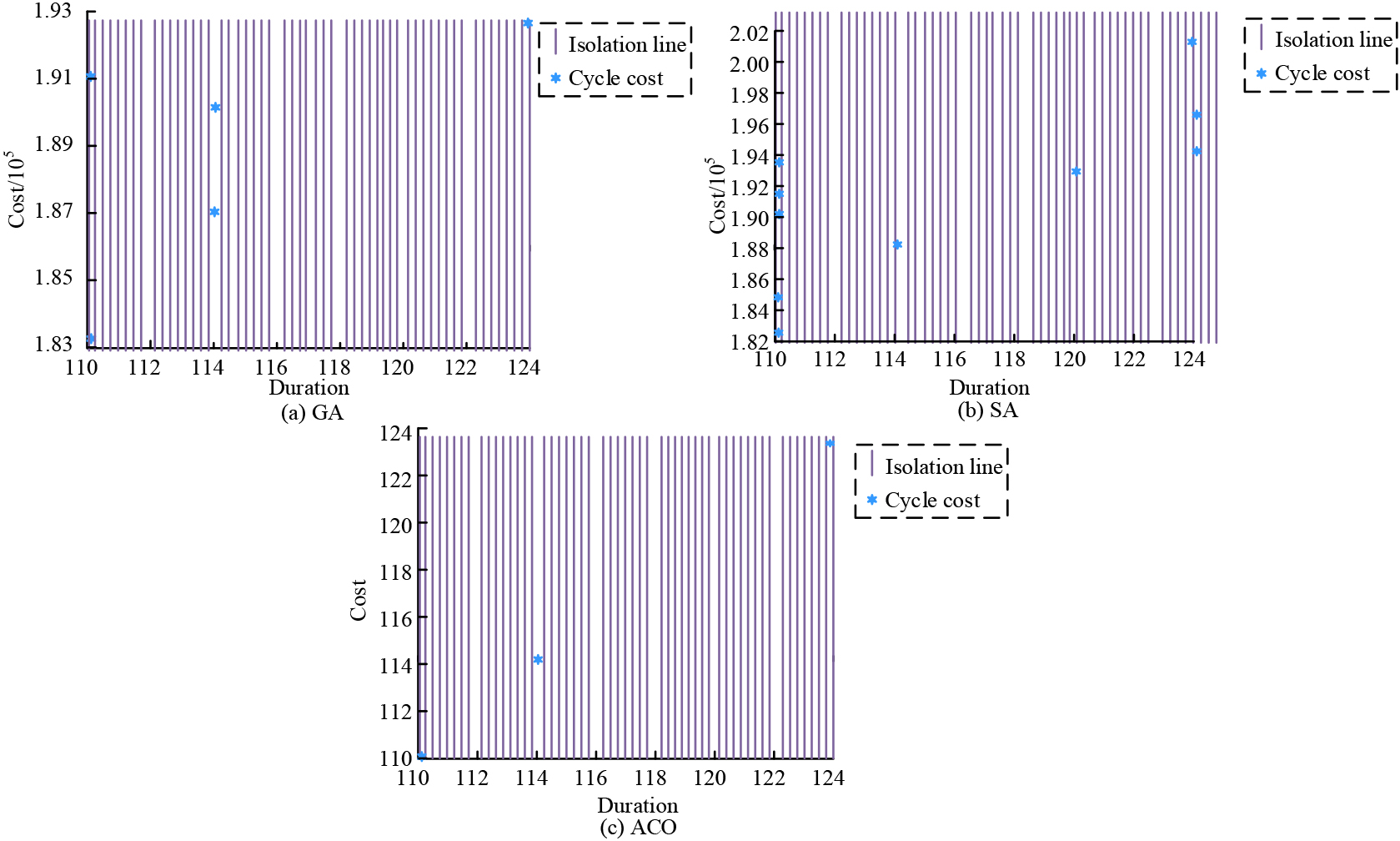
In Fig. 7a, GA had the lowest total cost of 1833 million yuan when the construction period is 110 days, and an increase in search duration led to an increase in cost; In Fig. 7b, when SA had a duration of 110 days, the optimal solution was found by optimizing the parameters, which was 1833 million yuan. At the same time, SA had high discreteness between duration and cost, and its stability was more unstable than GA; afterwards, looking at Fig. 7c, although the optimization process of ACO was faster than GA and SA, the optimal solution did not have an advantage compared to GA and SA. Therefore, in terms of duration and cost, using GA and SA was relatively more advantageous. Then, according to the operation Gantt chart of each process, the time distribution of the three algorithms is shown in Fig. 8.
In Fig. 8a, GA, ACO, and SA performed the same 18 processes at corresponding times, with each process lasting {1425332028, 24, 18, 24, 15, 20, 18, 22, 24, 18, 12, 30, 14, 9} days, {14, 25, 33, 20, 28, 24, 18, 14, 15, 15, 12, 22, 14, 9, 16, 20, 30, 9} days and {14, 25, 33, 20, 28, 24, 18, 24, 15, 15, 20, 22, 24, 18, 12, 30, 14, 9} days. From the perspective of job scheduling and resource management, there was room for optimization in the 10th process of ACO and SA, the 15th process of GA was the optimal processing process, and the 13th and 14th processes of ACO were the optimal processing processes. And in terms of process duration, ACO had the shortest duration, so for process optimization problems, ACO had the best applicability. To verify the optimization performance of the objective function, 9 processes were utilized, based on different combinations of 10578 actual project durations and costs.
The optimization results of this case was compared with NSGA-II, ant colony algorithm, and simulated annealing colony algorithm. The optimization purpose of the objective function was to shorten the construction period and reduce costs. The optimization results are shown below.
Multi-objective optimization results
Multi-objective optimization results
Gantt chart of operation with three algorithms.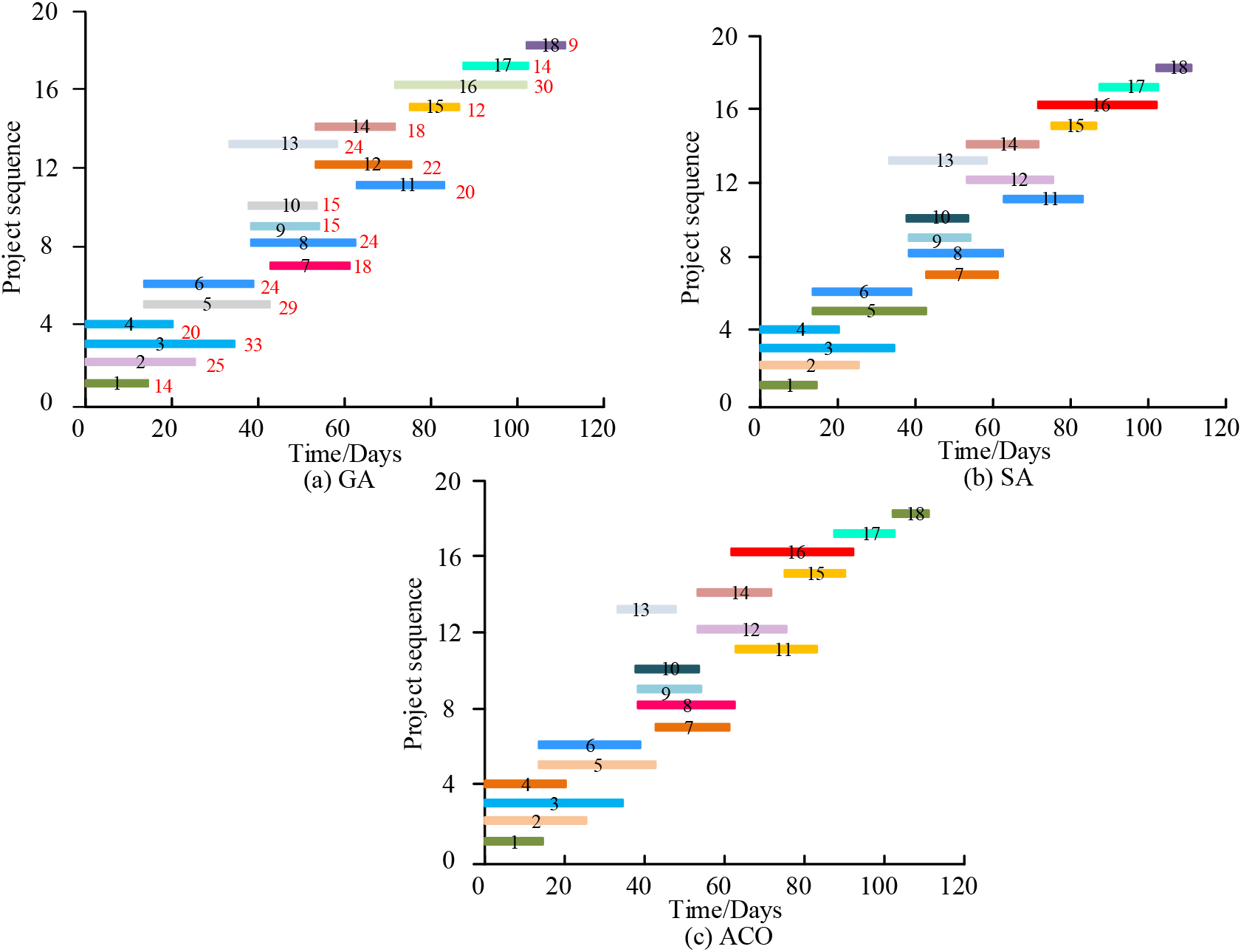
NSGA-II pareto frontier and Gantt chart.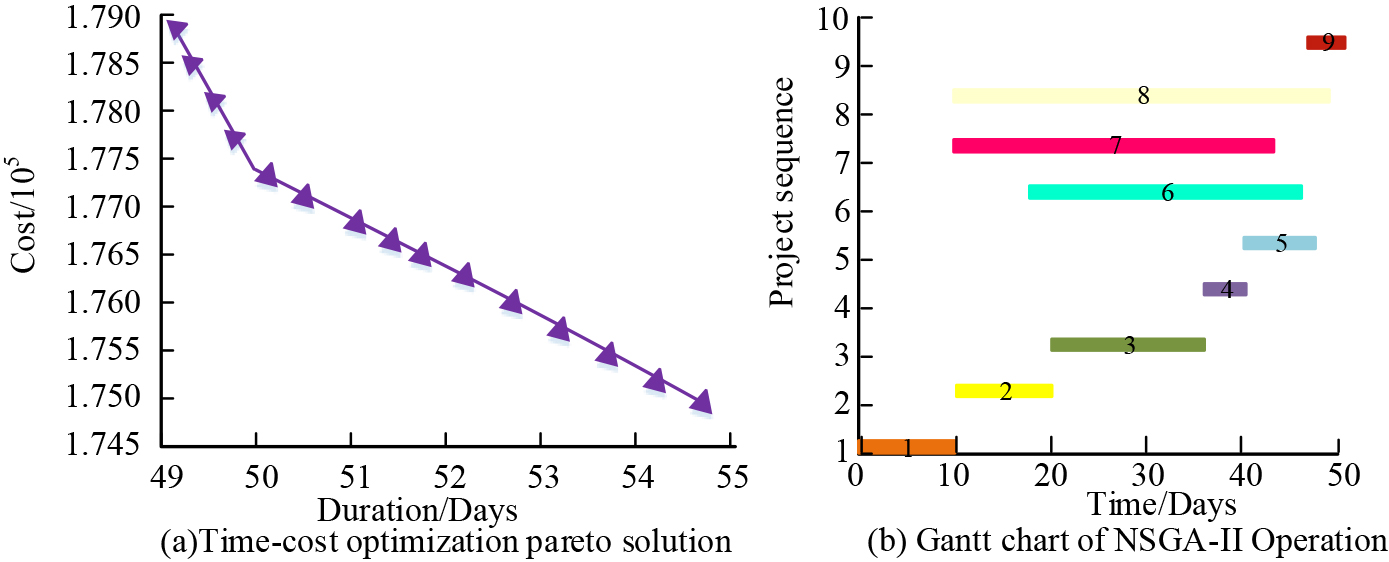
In Table 1, for different algorithms, the cost of the construction period was non discrete and inversely proportional; according to the differences in optimization costs among different algorithms, the reduction of NSGA-II was more significant, and the required number of iterations and iteration time were 20/200 and 195 both of which performed best among the three algorithms. The construction period cost was analyzed based on the PARETO solution and the Gantt chart, as shown in Fig. 9.
According to Fig. 9, 7 optimal solutions were found in the vast search space. Figure 9a shows that among the optimal solutions found, the optimal duration was 49 days and the optimal cost was 1788.15 million yuan. From this, the optimization plot of schedule and cost was in line with the actual engineering situation. In actual construction, as the construction period shortened, the investment in mechanical equipment and personnel increased, and the cost also increased. The duration and cost were interrelated and mutually constrained. The optimized 7 solutions were approximately inversely proportional, effectively verifying the rationality and feasibility of the model. The Gantt chart of job scheduling is shown in Fig. 9b. The black numbers in the chart represented the process. Based on the actual situation, decision-makers can choose the most suitable solution for the project from the optimal solution.
This experiment used real data as experimental parameters, intercepted a total of 6 processes, and recorded their investment time and funds. By applying NSGA-II to improve the genetic algorithm, non dominated sorting and screening of these dredging construction process modes were carried out. Iterating repeatedly within the search space can find the optimal combination solution.
NSGA-II algorithm optimization process.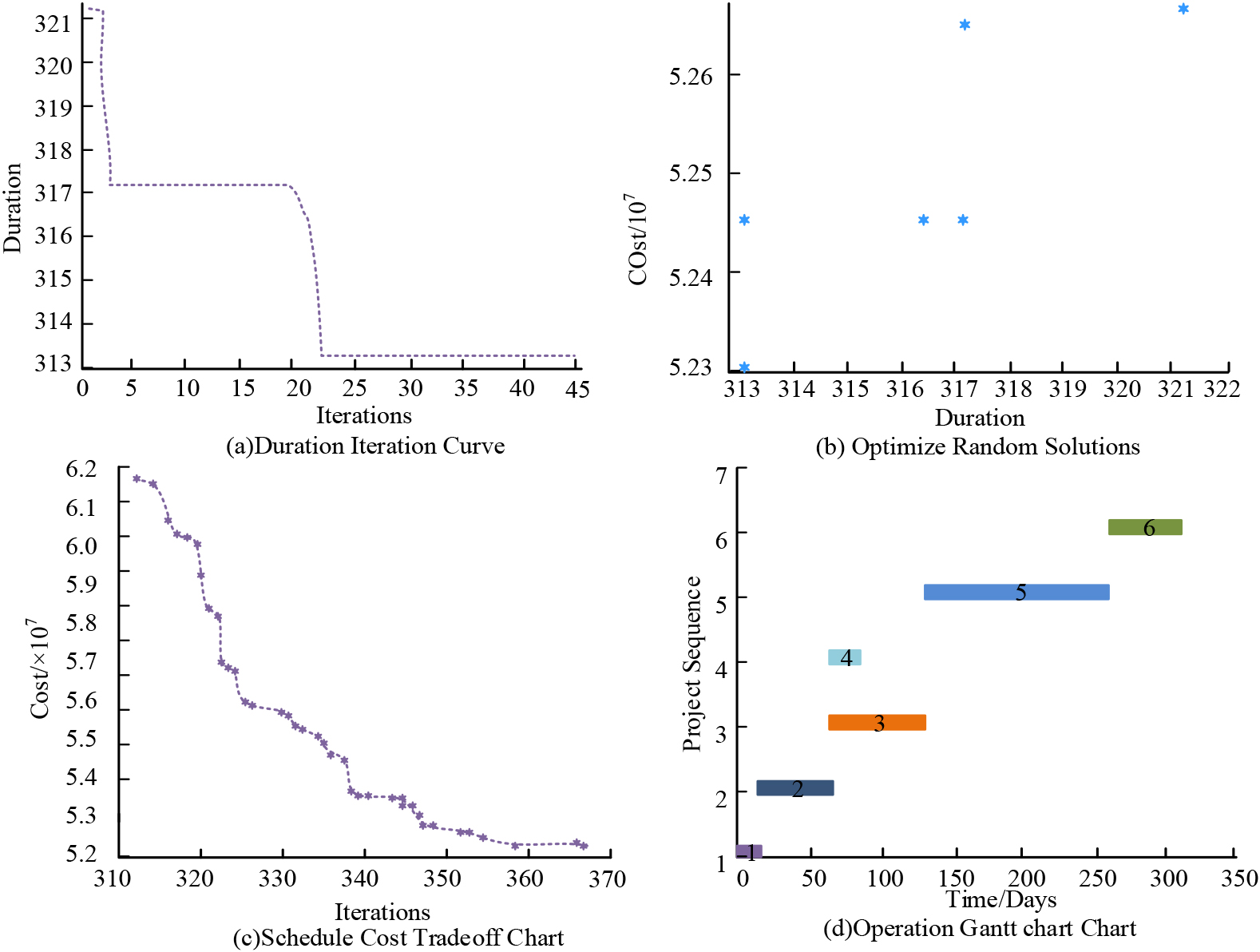
In Fig. 10, as the number of iterations increased, it is found that the values of duration and cost remained stable at a constant value, indicating that the optimal solution was found. From the schedule cost plot, 28 pareto solutions were found. From Fig. 10a, after 24 iterations, the optimal solution appeared in the duration search, which was 313 days; in Fig. 10b, by optimizing the random solution, there was no dispersion of construction period cost; in Fig. 10c, the longer the construction period, the lower the total cost required. As the construction period extended, the cost continued to decrease, which met the requirements of the defined objective function and the actual engineering situation; in Fig. 10d, regarding the job scheduling and resource management of these six processes, the first and fourth processes took the shortest time, while the fifth process took the longest. The satisfactory solution is shown in Table 2.
Satisfactory solution obtained from optimization of schedule cost (Partial)
In Table 2, the construction of river dredging was simplified into six processes, but the mechanical equipment and personnel investment in each process were different, resulting in significant differences in construction time and investment funds. To achieve shorter construction periods and cost savings while balancing resource allocation, NSGA-II was adopted for optimization. The results indicated that shortening the construction period increased costs, verifying the feasibility of the model application. The algorithm had high search efficiency, with the optimal solution being a duration of 313 days, saving 52 days, and optimizing costs of 52.32 million yuan. Although the selected river dredging project has a small scale, the use of algorithms accelerates the construction progress and makes it more convenient for decision-makers to understand the engineering process in advance. The use of NSGA-II algorithm for target control is reasonable and feasible. This optimization method can greatly improve the efficiency of construction units, avoid unnecessary resource waste, and bring positive impacts to the promotion of engineering construction.
This study focuses on the time-cost optimization problem of dredging engineering construction, using a goal iteration model by NSGA-II, and verifying the optimal solutions of various optimization indicators. The research results indicated that in the GA algorithm, for the duration iteration problem, when the number of iterations was 0, the optimal value did not significantly shorten compared to the mean. However, as the number of iterations increased, the GA optimal solution appeared at 110 days for the searched duration days, and no further changes occurred thereafter. In the cost iteration problem, the optimal value of GA was better than the mean value, reaching 1833 million. The minimum number of iterations required was 6, while the minimum number of iterations required for the mean value was 13. According to the Gantt chart of job scheduling, the 15th process of GA was the optimal processing process. In the target model based on NSGA-II, after more than 24 iterations, the optimal solution appeared in the duration search, which was 313 days. By optimizing the random solution, the duration cost was not discrete. Meanwhile, the longer the construction period, the lower the total cost required, which met the defined objective function requirements and was consistent with the actual engineering situation. For job scheduling and resource management of six processes, the first and fourth processes took the shortest time, while the fifth process the longest. Therefore, when the scale was small, applying NSGA-II to target manipulation had higher feasibility and operability. In fact, in the process of engineering implementation, in addition to efficient construction, quality and safety are also crucial management objectives. Future research can explore the impact of considering safety and quality factors on the optimization effect of construction. Therefore, the results of this study have great reference value for guiding and planning the construction of dredging projects.
Footnotes
Funding
The work was supported by Water Conservancy Science and Technology Research and Extension Project of Shanxi Province: Study on the effect of water regulating conditions on growth efficiency of winter wheat [grant number 201614]; Water Conservancy Science and Technology Research and Extension Project of Shanxi Province: Application of IOT technology in agricultural water-saving pipe irrigation management system [grant number XS2019007]; and Water Conservancy Science and Technology Research and Extension Project of Shanxi Province: Study on the purification of pollutants by ecological wetlands in the Fenhe River into the Yellow River estuary [grant number 2022GM037].