







Abstract
The coal-rock interface identification function enables the shearer to automatically identify the coal-rock interface and demonstrates outstanding advantages in improving economic efficiency and safe operation. It can improve the recovery rate of coal seam, reduce the content of rock, ash and sulfur in coal, improve the efficiency of coal mining operation and reduce equipment wear. It is one of the key equipments to realize coal mining automation. At present, there are more and more researchers on the research of coal rock interface identification technology. A common method is to use a single sensor to establish a coal rock identification system, and use the neural network algorithm as the core algorithm of the system. Therefore, this paper proposes a recognition system based on wavelet packet decomposition and fuzzy neural network. A variety of sensors are used to collect the response signal of the shearer, and then the multi-signal feature extraction and data fusion of the coal-rock interface identification method are realized, thereby improving the recognition rate. On the basis of the physical simulation system of coal and rock interface, a large number of tests were carried out, and a large amount of test data was collected through experiments. In view of the many advantages of wavelet analysis, this paper uses wavelet packet technology to extract signal features. An energy allocation method based on wavelet packet decomposition can determine the sensitive frequency band of each sensor signal and extract each feature value. The wavelet packet energy method is used for feature extraction, which completes the conversion from mode space to feature space, and provides reliable and accurate feature level data for data fusion. The results show that neural networks and genetic neural networks can be trained and simulated using experimental data. Data fusion based on genetic neural network can perform state recognition and has high recognition accuracy. Multi-sensor data fusion technology based on genetic neural network is feasible in coal-rock interface identification.
Keywords
Introduction
As the main energy source of China, coal plays an important role in ensuring the stable development of the national economy. At present, China’s coal mining methods are mainly underground mining. In order to increase coal production, improve labor productivity, reduce the occurrence of major malignant accidents, and improve the working conditions of workers, coal mining mechanization has become the mainstream trend of coal mining and key technologies [1]. The main equipment for comprehensive mechanized coal mining depends on the shearer, so the automation of the shearer is directly related to the automation of the entire working surface. In the working process of the shearer, how to accurately control the cutting heights of the shearer drum? The foreign mining machine adopts the control method of the height of the storage cutting model. Compared with the domestic one, most of them still adopt the manual height adjustment control method. In order to accurately adjust and determine the vertical position of the drum, the operator must rely on his auditory and visual judgment to determine if the cutting drum is in the correct rock cutting or cutting state [2]. In fact, the large amount of coal dust and large noise generated during the cutting process makes the environmental noise on the working surface very high and the visibility is low, making it difficult for the operator to accurately and accurately determine the shear state of the shearer. Especially in thin coal seams, it is more difficult for the operator to walk on the work surface, which seriously hinders the operator from adjusting the drum height in time. If the adjustment is not timely, cut the roller directly into the rock of the upper or lower plate. This can exacerbate the wear of the drumsticks and lead to accidents such as explosions caused by sparks during rock cutting. This has an adverse effect on equipment and personal safety; removing dust from the rock will not only affect the worker’s line of sight, but also damage the health of the worker; cutting the rock into the raw coal will reduce the quality of the raw coal [3]. In addition, if the adjustment of the drum position is not appropriate, it may cause the roof or floor to remain too thick, thereby reducing coal production and wasting coal resources [4].
China’s coal mining process usually does not leave top coal, so this must require the drum to cut along the coal-rock interface. However, it is difficult to control the height of the drum and the distance of the top plate by manual manual operation, so the rock is often cut during the working of the shearer. Therefore, having the automatic height adjustment of the shearer drum is the best way to solve this problem [5]. However, in order to achieve automatic height adjustment of the short miner drum, it is necessary to identify the real-time cutting state of the shearer and automatically adjust the drum height according to the recognition result. Therefore, the system is mainly composed of two parts: automatic identification system and control system. The automatic adjustment of the drum height is not only an important component of the automation of the production process, but also prolongs the service life of the equipment, improves the stability of the equipment and the safety of the operator, and ensures the quality of the coal [6]. In addition, this technology has greatly promoted the research on the intelligent control of the subsequent coal mining machine [7]. This not only helps to promote the rapid development of coal mine automation in China, but also helps to reduce the rock removal process in the coal washing process and improve the coal production efficiency in China. The identification of the coal-rock interface not only has outstanding advantages in terms of economic benefits, but also has an irreplaceable advantage in terms of safe production. First, it can reduce the wear between the cylinder bore and the rock, while reducing the severe vibration during coal mining, reducing the risk factors of the machine and coal mining environment. Secondly, this method can reduce the dust generated during rock cutting, and also increases the safety factor of workers in the well [8].
Tang, J., Fang, L., Zou, et al. proposed two learning processes in order to train the evolving fuzzy neural network. Firstly, the K-means method is used to divide the input samples into different clusters, and a Gaussian fuzzy membership function is designed for each cluster to measure the membership degree of the sample to the cluster center. As the number of input samples increases, the cluster center is modified and membership features are updated. Second, the weighted recursive least squares estimate is used to optimize the parameters of the linear function in the Takagi-Sugeno type fuzzy rule. In addition, a triangular regression function is introduced to capture the periodic components in the raw velocity data. Specifically, the prediction performance between the proposed model and the six traditional models is compared, namely artificial neural network, support vector machine, autoregressive integrated moving average model and vector autoregressive model. The results show that the prediction performance of EFNN is better than the traditional model and has strong learning ability. As the prediction time step increases, the EFNN model can consider the periodic pattern and prove superior to other models with smaller prediction errors and slower error rates [9]. Mlynarczuk, M used pattern recognition techniques and artificial neural network techniques for analysis [10]. Classification was performed using microscopic images of polished sections of coal. A multi-dimensional feature space is defined, which makes it possible to automatically classify structures based on pattern recognition methods and artificial neural network algorithms. In addition, from the study, they evaluated the impact of the validated parameters of the applied method on the final outcome of the classification procedure. Analysis of the results showed that the proportion of correctly divided microscopic components and mineral components was well above 97%. Specific microscopic components of the inert group were also analyzed. The results show that it is feasible to use artificial neural networks to classify more than 91% of the microscopic components. This proves that the artificial intelligence method can be successfully applied to the identification of coal rock features. Yong, Z et al. proposed a combination strategy for the extraction of EEG signal features [11]. In the first strategy, the autoregressive coefficients and the approximate entropy are calculated separately, and the features are obtained by combination. In the second strategy, the EEG signal is first decomposed into sub-bands by wavelet packet decomposition. The wavelet packet coefficients are then sent to an autoregressive model to calculate autoregressive coefficients, which are used as features extracted from the original EEG signal. These features are fed to a support vector machine to classify the EEG signals. Classification accuracy has been used to assess classification performance. The experimental results of five psychological tasks show that when the order of the autoregressive model is greater than 5, the combination strategy can effectively improve the classification performance, while the second strategy is superior to the first strategy in classification accuracy.
This paper refers to the status quo and existing problems of coal and rock interface identification methods and technologies at home and abroad, and on this basis, the main research ideas of this paper are determined. Then, an instantaneous mechanical analysis of the shearer cutting section was performed to investigate the relationship between mechanical properties and the object to be cut. At the same time, in order to collect these parameters, this paper will also use the sensor method to analyze the installation location of the sensor to lay the foundation for subsequent data processing. Then, methods and features of various signal processing are analyzed to determine a method of processing the decomposition and reconstruction of the sensor signals. The fuzzy neural network integration technology is applied to coal and rock information fusion, and the interdisciplinary integrated information processing technology makes the coal rock interface recognition result more stable and optimistic. Uncertainty is assessed by understanding the practical significance of uncertainty and combining data from coal-rock interface identification results.
Methods
Signal analysis method
(1) Classical spectrum analysis method
The signal is processed in the amplitude, time or frequency domain by classical spectral analysis, and the amplitude domain analysis method can analyze the peak value, average amplitude, root mean square amplitude, skewness and degree of the signal; time domain analysis method can analyze autocorrelation and cross correlation, cepstrum, etc., frequency domain analysis methods can be used for power spectrum analysis [12]. However, the semaphores obtained by classical spectral analysis are doped with many unwanted signals, so the effect of classical spectral analysis is not very satisfactory. Therefore, some conventional signals were found in the frequency domain analysis, and as with the previous theoretical analysis, even if the input signal strength of the test system changes significantly, the output frequency does not change significantly under different cutting conditions. Therefore, the same frequency band in different output states depends on the amplitude or energy variation of the output signal. That is to say, even if the difference can be seen, there is no quantitative concept, so valuable feature extraction cannot be made by classical spectral analysis.
(2) Fourier transform and short-time Fourier transform
In the field of signal processing, Fourier transform is the most complete, most widely used and best analytical method in signal processing [13]. There are a series of signal processing methods based on fast Fourier transform, such as amplitude analysis, correlation analysis and spectral analysis, which can analyze and process signals from different angles. This makes it easier and more convenient to extract basic features from the signal. The Fourier transform is completely limited to the frequency domain, but due to its global nature in the time domain, it has no temporal resolution. Therefore, it does not adapt to the analysis of non-stationary signals. And once its window function is determined, its time domain and frequency domain resolution cannot be changed. Therefore, it is impossible to determine the signal resolution in different frequency bands. However, the wavelet transform has this variable resolution characteristic to meet the requirements of time-frequency analysis.
Fourier transform is a very important tool in signal processing and is defined as equations (1) (2). It maps x (t) from the time domain to the frequency domain, and f (t) e-jωt becomes the basis function of the transformation. We can generate such a set of basic functions, that is, any function X (t) can be expressed as the sum of these basis functions. It can be seen that the characteristic time intervals of these basis functions are all from [- ∞ + ∞]; They are only different from each other. Through the Fourier transform, we can get the frequency components and the size of each component contained in the signal. For most applications, the Fourier transform is sufficient, but for non-stationary signals, usually only using the Bolly transform is not sufficient. When the frequency of the signal changes with time, the Fourier analysis can only determine the frequency characteristics of the entire frequency domain and the frequency characteristics cannot be described in a short time interval. It can only give the frequency of the signal to be analyzed, and it is impossible to determine the moment when the frequency exists, which requires a new method to replace the Fourier transform.
The short-time Fourier transform is a tool that is mainly used to study the frequency domain characteristics of signals in local time periods. The short-time Fourier transform uses a windowed time domain signal method to obtain the locality of the time domain. Let the signal pass through the “window” and then perform a Fourier transform on the partial signal through the “window”. The short-time Fourier transform is also known as the windowed Fourier transforms. Frequency domain locality can also be obtained by adding a window function in frequency domain F (ω). Two forms of STFT:
Using equation (3), the time signal spectrum we can obtain is the spectrum of the signal over a period of time, which is the length of the window. Although the integral domain of the short-time Fourier transform is still the entire time axis, the result of the windowing causes the above transform to produce a “local spectrum” only on small time slices close to time. When the spectrum changes, the position of the window is translated on the time axis, so that the spectrum of the time period near any position on the time axis can be obtained by using the window function. In other words, we can achieve time domain positioning through the function of the window function.
And we use STFT is a two-dimensional semaphore based on the time-frequency plane.On this two-dimensional plane we need to observe the signal characteristics of a specific time period and a specific frequency segment. That is to say, the short-time Fourier transform can obtain the local properties of this signal simultaneously in the time domain and the frequency domain. This is not possible for the Fourier transform, and this should also be a major advantage of the short-time Fourier transform versus the Fourier transform. For the short-time Fourier transform, when we select the window function, we can determine the width of the time-frequency window in the direction of the time axis and the frequency axis. Thus the time resolution and frequency domain frequency resolution in the time domain are also fixed. When the time resolution and frequency resolution are fixed, they do not change with time and frequency, which is an important feature of the short-time Fourier transform.
Although the short-time Fourier transform can describe the frequency information of a certain local time range, the characteristics of fixed frequency resolution and time resolution make it an insurmountable obstacle when analyzing non-stationary signals. The requirements of the non-stationary signal for frequency resolution and time resolution vary according to a certain law, rather than being fixed and unchanging. In order to accurately analyze non-stationary signals, we need an analysis tool to analyze the signal characteristics of time-frequency locality, and the changes in time resolution and frequency resolution need to be consistent with changes in non-stationary signals.
(3) Multi-resolution analysis method
Considering the following L2 closed subspace V
j
= . . . + Wj-2 + Wj-1, and through the expansion of the wavelet function to form a series of closures W
j
, the closed subspace of the group is monotonous if the following conditions are met: Monotonic: ⊂V-1 ⊂ V0 ⊂ V1 ⊂ . . . Approximation: V
j
= { 0 } , ∪ V
j
= L2 (R) , j ∈ Z
Scalability: (t) ∈ V
j
⇔ x (2t) ∈ Vj+1, j ∈ Z
Translation invariance: x (t) ∈ V0 ⇒ x (t - k) ∈ V0, k ∈ Z
Riesz base existence: The presence of φ ∈ V0 makes {φ (t - k) } k∈Z constitute the Riesz base of V0.
Then the set of nested subspaces {V j } j∈Z constitutes a multi-resolution analysis of L2, and W j is the orthogonal complement space of V j in Vj+1, i.e. Vj+1 = W j ⊕ V j .
Multi-resolution analysis can determine the corresponding scaling function for us, which in turn can also determine the corresponding wavelet function, and the coefficient sequence of the filter can completely determine the analysis multi-resolution. Then, by finding a series of resolutions that meet the requirements, we can construct the corresponding orthogonal wavelet base. The wavelet base contains information amounts of different frequency bands from high frequency to low frequency, and each of them contains time information of the original signal and includes a time-frequency signal. However, as the ratio increases, the frequency resolution of the signal is gradually increasing, while the time resolution is gradually decreasing, so this is called multi-resolution analysis. However, the amount of data after each decomposition is reduced to half of the original data, so the time resolution of the low-frequency and high-frequency components obtained after the decomposition is reduced to half. In order to increase the temporal resolution of the decomposed low and high frequency signals to the temporal resolution of the original signal, it is necessary to reconstruct the decomposed signal by an algorithm.
It should be noted that in order to distinguish the description from the wavelet packet analysis without causing confusion, wavelet analysis refers only to multi-resolution analysis. In the generalized wavelet analysis, two parts are included: wavelet packet analysis and multi-resolution analysis [14].
(4) Insufficient wavelet analysis
The main idea of multi-resolution analysis is to project the signal values into the orthogonal wavelet function subspace W j to form extended signals of different scales. Therefore, the characteristics of signals in different frequency bands can be extracted while maintaining the signal time domain characteristics of various scales. Multi-resolution analysis is an effective time-frequency analysis method, but it can only resolve the low-frequency part of the signal, but does not affect the high-frequency part. Wavelet packet analysis is different, and it is a generalization method for multi-resolution analysis. With more details on signal processing and analysis, signals can be decomposed into different frequency bands depending on the measurement principle and time-frequency resolution. The time-frequency components of the signal are accurately projected corresponding to orthogonal wavelet spaces representing different frequency bands. It overcomes the shortcomings of wavelet transform of low frequency resolution high frequency signal or high frequency signal component and more flexible and accurate signal analysis and processing. In terms of wavelet packet transform, wavelet transform is actually a special case of the former [15]. But in fact, in many problems, we only need to study the signal at a certain point in time or frequency band. Therefore, we only need to extract information about these specific points in time. Therefore, we want to increase the frequency domain resolution as much as possible on the frequency of interest and maximize the time point and time resolution to be studied. Orthogonal wavelet packets are intended to further improve the frequency resolution and overcome the deficiencies of local variations in wavelet transforms in the mid-band and high-band. This is a powerful signal conversion method that can meet the time-frequency local detailed analysis requirements of other characteristic signals [16].
At present, the parameters selected by the feature extraction method based on wavelet packet transform are various and sometimes domain-based. But for different problems, the focus of attention is also different, and different parameters can be used. In order to better identify the coal-rock interface, this paper applies the feature extraction method based on wavelet packet decomposition.
For a given system, its transfer function remains constant during normal operation, and the corresponding amplitude-frequency characteristics and phase-frequency characteristics are also fixed. In terms of amplitude-frequency characteristics, it mainly exhibits different suppression or enhancement effects on input signals with different frequency bands. Combined with the actual situation, we can determine the frequency band where the signal strength change is relatively sensitive. Then, according to the above analysis, the amount of energy change of each frequency component of the output signal exhibits a frequency band in which the system is sensitive to changes in the input signal. That is to say, a frequency band having a large amount of energy change is more sensitive to a frequency band having a lower change. Based on this, we propose a feature collection method of “energy-band”.
First, four-layer wavelet packet decomposition is performed on the sampled signal, and the number of decomposition layers analyzed is specifically determined. Secondly, the wavelet packet decomposition coefficients are reconstructed, and the eigenvalue signals in each frequency band are extracted by using wavelet packets. Third, the total energy of the signals in each frequency band is obtained. Fourth, since the coal seam and the rock layer are cut, the signal energy in each frequency band is greatly affected, so it is necessary to construct a feature vector. Fifth, we can determine the eigenvalues and tolerance ranges of the feature vectors in the state of cutting coal and cutting rock.
Identification of coal-rock interface based on fuzzy neural network
Fuzzy neural network is a combination of powerful structural knowledge representation ability of fuzzy logic reasoning and powerful self-learning ability of neural network. Basically, traditional neural networks are given fuzzy input signals and fuzzy weights [17]. Simply put, on the basis of traditional neural networks, the input signal is blurred and the output signal is defuzzified. The fuzzy neural network structure generally includes an input layer, a fuzzy layer, a fuzzy inference layer, a deblurring layer and an output layer, wherein the fuzzy inference layer is a hidden layer of the neural network [18].
1) Number of input layer nodes
The number of input layer nodes is determined by the dimension of the input signal, which is equal to the number of input feature values. According to the experimental observation and empirical analysis, the parameters reflecting the change of the cutting state of the shearer drum mainly include cylinder pressure, rocker vibration, cutting current, torsional vibration and drum shaft torque. The wavelet packet is used to decompose the vibration signal, the pressure signal, the torsional vibration and the torque signal in three layers, and the four-layer decomposition of the cutting current signal. The wavelet packet coefficients of each frequency band are obtained by reconstruction, the energy of each frequency band signal is calculated, and the energy in a typical frequency band which can reflect the essential attribute of the signal is selected, and the feature vector is formed as an input signal of the network. Table 1 shows the energy characteristic values (the drum speed is 90r/min) in the typical frequency band after decomposition of the five kinds of signal wavelet packets. Therefore, the number of input layer nodes is 18, which is X = (X1, X2, ⋯ , X18).
Characteristics of coal and rock in each frequency band (roller speed is 100r/min)
Characteristics of coal and rock in each frequency band (roller speed is 100r/min)
(2) Number of output layer nodes
In order to identify the coal-rock interface, it is necessary to determine whether the shearer drum is cutting coal or cutting rock. Therefore, it can be determined that the output layer node is one, and the output is in the state of 0 and 1, that is, when the output is 0, it means that the drum is cutting coal; when the output is 1, it means that the drum is cutting rock.
(3) Determine the number of hidden layers and the number of hidden layer nodes
A BP network with a hidden layer can implement any M-dimensional to J-dimensional nonlinear mapping, so the number of layers of the hidden layer is determined to be 1 [19]. For the number of hidden layer nodes, first use empirical formula
(4) Training algorithm improvement
In this paper, an improved BP algorithm with momentum term is used, and the momentum factor is dynamically adjusted in the application process to improve the convergence speed and generalization ability of the network, as follows:
In the above formula: ω-connection weight, α-learning rate, η-momentum factor, D (k) = - E/W (k) is the negative gradient at k time, and E (k) is the global error.
(5) Design of fuzzification layer and defuzzification layer
Unlike neural networks, fuzzy neural networks add a blur layer between the input layer and the hidden layer. The fuzzy input signal exists in the deblurring layer between the hidden layer and the output layer. For the input quantity that satisfies the condition, we need to classify and defuzzify the amount of blur.
1) Fuzzy layer
This layer is used to blur the input. For the identification of coal-rock interface, after characterizing the multi-sensor signals of coal cutter drum cutting and cutting rock, these features are characterized by complete coal cutting, characterization of complete rock cutting, and characterization of coal-rock mixing. It cannot be simply divided into coal or rock, but should give the degree of membership of the coal or rock being cut. In this paper, when coal is completely cut, the membership degree of coal is 1 and the membership degree of rock is 0. When the rock is completely cut, the membership degree of coal is 0, and the membership degree of rock is 1; when coal and rock are mixed, if the thickness of the coal is larger, the degree of membership of the coal is greater, and the degree of membership of the rock is smaller. Conversely, if the thickness of the cut rock is larger, the degree of membership of the rock is greater, and the degree of membership of the coal is smaller. And we assume that the thickness of the coal rock is linear with the membership.
2) Defuzzification layer
The fuzzy pattern recognition method is used to calculate the membership degree of each input sample belonging to each category, so that the neural network has the ability to represent the membership relationship between the input sample and the category in the training sample. In practical application, the network output can give the membership degree of the category. According to the membership degree, the input sample is characterized by coal cutting, rock cutting or coal rock hybrid cutting. This fuzzy recognition method replaces the common original binary value. This fuzzy recognition method replaces the universal original binary method and improves the ability of the neural network to recognize various fuzzy data.
The coal-rock interface identification system mainly uses the sensor to obtain the secondary effect of each component as the equipment information, and determines the coal-rock interface by analyzing the information [22]. Therefore, accurate pickup of the signal is the most basic prerequisite for the system. There are two main ways in the process of picking up signals: one is to obtain signals in the coal mining face. This method has certain difficulties in its implementation, and since the test itself is a process of continuous exploration, it is often affected by many factors in the implementation process. Second, under similar conditions, the physical simulation system established in the laboratory included media simulations and simulations of shearers and cutting mechanisms. The method can change the internal structural parameters of the shearer and the physical properties of the coal rock in a large range. At the same time, we must strictly control the test parameters during the test, and the test method needs to be optimized to make the test results more accurate and reliable [23].
The shearer simulation system is based on the MGTY400/900–3.3D electric traction shearer and is designed with a geometric ratio of 1 : 8. The main components have a drum diameter of 225 mm, a rocker arm length of 490 mm, a height of 150 mm, a width of 154 mm, and a frame width of 735 mm.
The coal machine cutting components are the most important part of the coal mining machine and are also indispensable in the coal mining process and are also the most expensive components [24]. The cutting portion has two main portions, one of which is a drum through which the coal seam is cut, and the other is a rocker arm for supporting the drum, decelerating, adjusting the drum position, and transmitting power to the drum. The prototype drum has a diameter of 1800 mm and a drum width of 800 mm, so the simulated shearer drum has a diameter of 225 mm and a drum width of 100 mm. The parameters of the drum are shown in Table 2 below:
Roller parameters
Roller parameters
Based on wavelet packet decomposition and fuzzy neural network performance test analysis
In this paper, the performance of the coal mining machine identification system based on wavelet packet decomposition and fuzzy neural network information fusion is tested and analyzed.
The shearing, shearing torque and motor current data of the coal seam cutting coal seam, coal-rock ratio 2 : 1, coal-rock ratio 1 : 2 and coal rock in the whole rock formation are monitored. The identification is identified by the established coal rock identification system. The identification results are shown in Fig. 1, and compared with the identification results of the identification system based on a single vibration, resistance torque and motor current sensor.
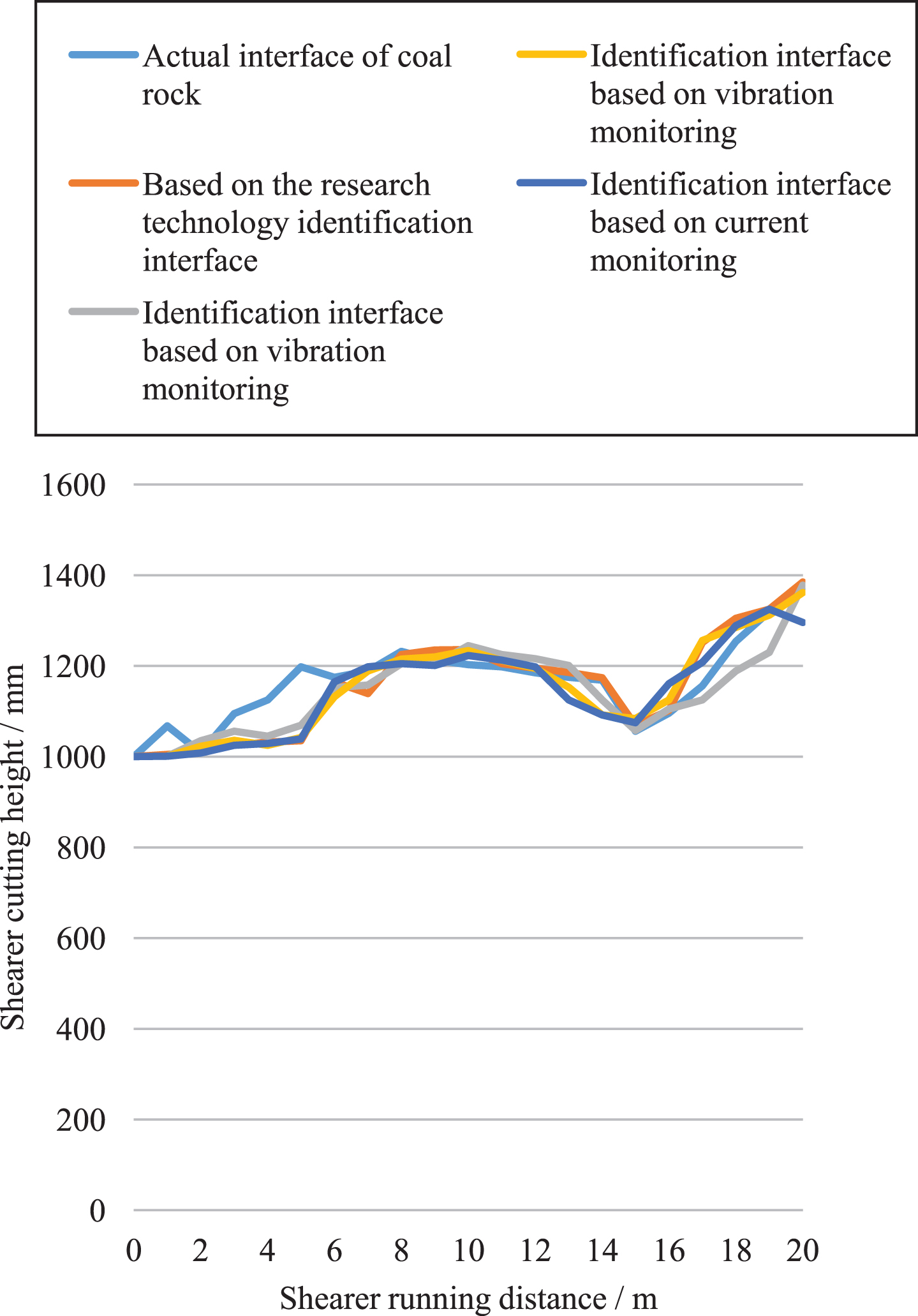
Comparison of identification results of coal and rock with different identification technologies.
The test results show that the identification system based on single vibration, resistance torque and motor current sensor can have certain recognition ability for coal rock, but due to the limitation of using a single sensor, the accuracy of recognition results is not high enough. The identification system based on wavelet packet decomposition and fuzzy neural network information fusion technology can effectively identify the interface between coal seam and rock stratum, and the accuracy and stability of recognition are higher than other methods.
The existing multi-sensor fusion model can be divided into distributed structure and centralized structure according to different architectures; and according to the degree of information abstraction, it can be divided into three layers: information layer fusion, feature layer fusion and decision layer fusion. In order to better identify the coal-rock interface [25], this question uses multi-sensor to extract information, so the processing model used in this paper is a model of distributed multi-sensor and secondary feature layer fusion. Since the characteristic value of the vibration signal is a two-dimensional vector and the current signal is a three-dimensional vector, the vibration and current signals are respectively composed of a first-order fuzzy neural network for feature level fusion. The decision data they output and the decision data for pressure, torsional vibration and torque signals are then used as decision-level fusions of the inputs to the secondary neural network. The redundant and supplemental information obtained by the multi-sensor is processed by the quadratic fusion model to make the system more robust.
Through the improvement of neural network, fuzzy neural network and secondary fuzzy neural network, training and recognition are carried out. As shown in Figs. 2–4, after the feature values of the sensor are extracted, the network is merged and identified according to the data fusion model established above.
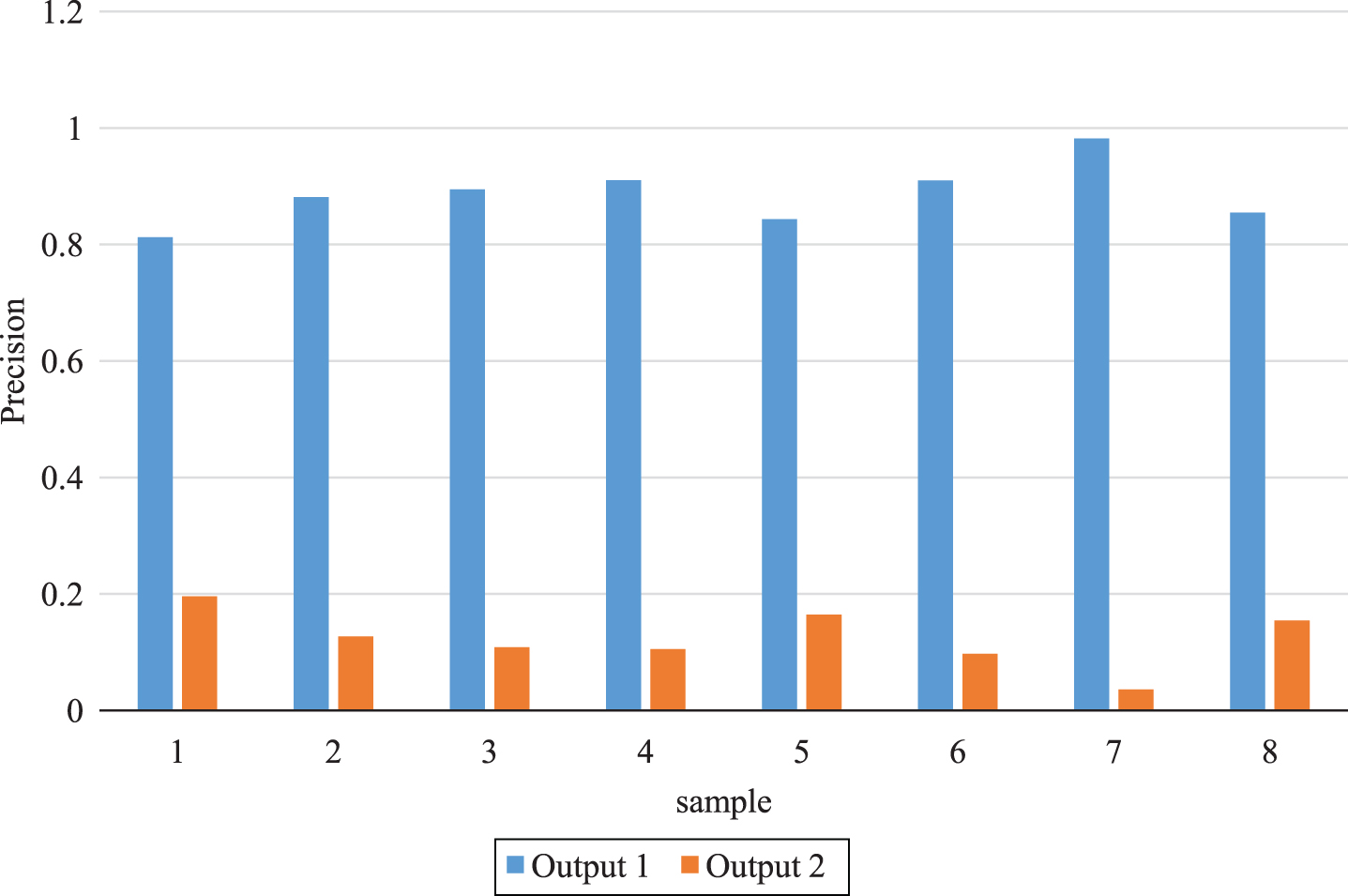
Comparison of fuzzy neural network recognition results of coal.
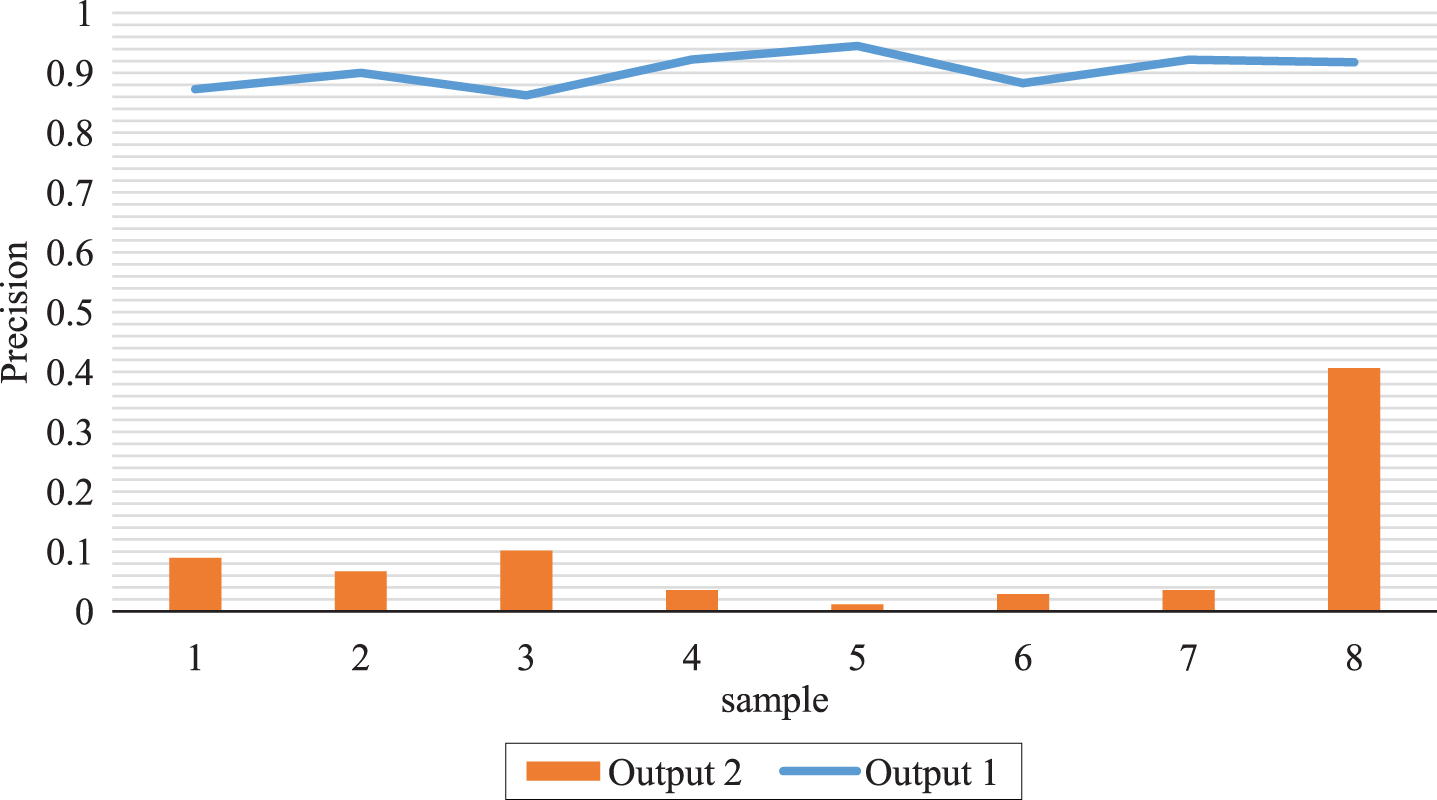
Comparison of fuzzy neural network recognition results of rock.
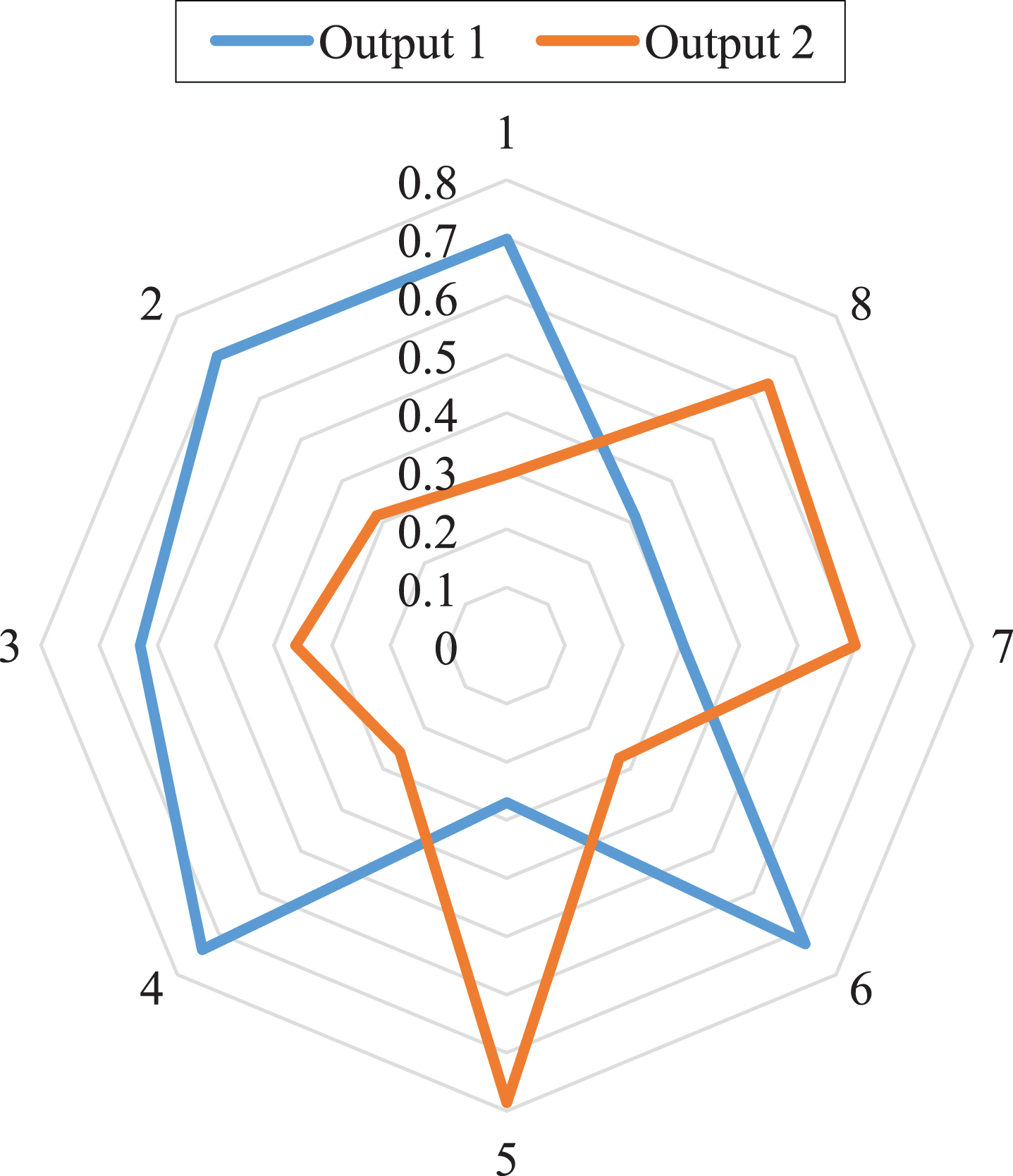
Comparison of fuzzy neural network recognition results of mixtures.
From the above figures, we can see: The established test identification system can well complete the state recognition of the coal-rock interface. For the memory data that the network has, these three structures can obtain accurate recognition results and behave as correct data. For the data that is not memorized by the network, the recognition effect of the neural network is significantly lower, and the recognition ability of the fuzzy neural network is strengthened. After the fuzzification, the recognition rate can be improved, thereby further improving the recognition rate of the secondary fusion. The data fusion model not only identifies the various states of cutting coal, cutting rock or cutting the mixture, but also provides the probability value of coal or rock in the mixed state. The identification system still has certain accuracy problems. Therefore, it is stipulated that if the output unit value is greater than 0.8, it is considered to belong to the state; less than 0.2 is not in this state; and between 0.2 and 0.8 is the mixed state.
To study the automatic identification technology of coal mining machine for coal mining machine, which is used to replace the artificial judgment of the distance of the coal cutting machine drum cutting coal wall, to reduce labor costs, reduce coal mine safety hazards, improve coal mining quality, reduce coal gangue, etc. The proportion of miscellaneous materials and the improvement of the life of the shearer are of great significance. In this paper, we study a coal mining technology based on information fusion technology, using multiple sensors instead of traditional single sensors to establish a coal rock identification system, and use fuzzy neural network algorithm as the core algorithm of the system to replace the traditional coal rock identification technology. Use a single sensor and a single identification technology. The experiment proves that the identification system proposed in this paper has better stability, strong anti-interference ability and high recognition than traditional technology.
By collecting different data signals in the process of cutting coal rock by shearer, the characteristic fuzzy sample values of different characteristic values are obtained according to the principle of minimum ambiguity, and the wavelet packet decomposition based on wavelet packet decomposition is established. Coal rock identification model based on fuzzy neural network fusion. The coal-rock cutting interface under different cutting signal recognition conditions is obtained by laboratory contrast cutting experiment. The accuracy and reliability of coal-rock identification in fuzzy neural network multi-sensor information fusion system are verified. The on-site random coal-rock interface industrial cutting the experimental results show that the coal mining rock identification system based on wavelet packet decomposition and fuzzy neural network can realize the real-time dynamic identification of coal-rock interface, and automatically adjust the control according to the coal rock identification result. The system has very good static performance and dynamics.
The wavelet packet decomposition and fuzzy neural network coal-rock interface identification model established in this paper can accurately and accurately identify the coal-rock interface under different coal quality conditions. It is with high identification accuracy, and as the number of training samples increases, the recognition accuracy of the model can be further improved. Therefore, the
Multi-information fusion method based on wavelet packet decomposition and fuzzy neural network is feasible and effective for coal-rock interface identification.
Footnotes
Acknowledgments
This study was partially funded by The Institute of Tibetan Plateau Research, Chinese Academy of Sciences.