







Abstract
Blockchain practices have been attracting attention in industries other than financial services, since blockchain is not only an information technology, but also an institutional technology owing to its new currency economics and distributed structures. Today, supply chains, power, and food/agriculture have emerged as promising areas in terms of their potential to incorporate blockchain technology for improving processes and reducing costs. Logistics corporations, especially, have been concentrating on developing efficiency in integrated data, fleet management, and communication issues, to achieve cost advantages. Experts from a well-known logistics company in Turkey contributed to our study by helping to assess critical factors for successful blockchain technology implementation. Our research topic included determining whether blockchain technology is suitable for this company. Fuzzy decision-making trial and evaluation laboratory (DEMATEL) was used to determine and evaluate the critical factors to encourage blockchain technology adoption, based on the company’s requirements. For the company experts, the factors affecting the decision to adopt blockchain technology were, in order of priority: cryptocurrency, instant money transfer, privacy, real time processing, smart contract, security, authentication, transparency, immutability, traceability, distributed ledger, reduced delays, and peer-to-peer networks.
Introduction
Ginni Rometty, the CEO of IBM, once stated, ‘What the internet did for communications, block-chain will do for trusted transactions’. Blockchain is a new type of information technology that unites cryptography and distributed computing; it also acts as an institutional technology owing to its distributed infrastructure [1]. Blockchain technology has the potential to transform fields such as insurance, cybersecurity, elections, energy, logistics, identity, legal, governance, and health care [2]. Supply chains deserve particular attention in terms of their significant potential to be transformed by blockchain technology [3].
According to research, nowadays, the packages in enterprise systems depend on a central database that gathers information from a series of applications and also provides information to these applications while backing diverse business functions [4]. The technological concept behind the blockchain is similar to that behind a database [4]. Whether a blockchain is a better system compared to traditional databases is a topic that still needs investigation. Evaluation of the suitability of a blockchain for companies’ existing systems while considering their process needs can be considered the first stage of designing a blockchain-based application [5]. There are complex relationships between different characteristics and performance outcomes of blockchain technology [6]. The process of identifying potential performance outcomes and establishing relationships between them will enable organizations to focus on more immediate effects of the blockchain technology [6].
For supply chains, there are not enough decision-making frameworks based on an analysis of blockchain performance outcomes [6]. In logistics chains, the role of the blockchain is still not obvious [7]. More sector-specific blockchain applications are needed to determine and enhance the utility of blockchain [8]. The availability of more established blockchain practices will also help to persuade and guide company leaders to apply this technology to their processes. This study aims to determine the most critical factors for blockchain technology implementation considering the requirements of the case company. To do this, literature and blockchain frameworks were reviewed in detail, and Fuzzy DEMATEL was determined to be an appropriate tool to evaluate blockchain characteristics since there are relationships between these characteristics. Additionally, when considering implementation of blockchain technology, the companies’ existing systems should be evaluated carefully, since blockchain may be a suitable option for some use cases while traditional technologies may be more suitable in other situations [5].
This paper is organised as follows: Section 2 describes the related work, Section 3 describes the blockchain concept, Section 4 presents the methodology and case study, and Section 5 concludes.
Related work
It is not yet clear which intermediary duties and what impact blockchain will have on tasks in logistics chains [7]. The authors in [7] inspected ten use cases to examine the effect of blockchain technology on the logistics industry and also on business models. With the help of IoT, Radio-Frequency Identification (RFID) tags, sensors, barcodes, GPS tags, and chips, the locations of products and shipping containers can be tracked [3]. The authors in [3] examined the roles of blockchain in reaching the various supply chain management goals. They also inspected the roles of IoT in blockchain solutions. The authors in [9] proposed a framework using blockchain to provide online shipment tracking information during the physical distribution process of the supply chain. In [10], the authors proposed a framework based on blockchain and re-engineering viewpoints in supply chains; with their framework, logistics progress and cash flows can be tracked in real time. The relations of blockchain and business process characteristics were investigated by the authors in [11], and they proposed a framework to innovate business processes through these characteristics.
To investigate how blockchains may change supply chains, the authors in [12] utilised sensemaking theory. Cognitive mapping and narrative analysis were applied by the authors to increase their understanding and for the assessment of people’s cognitive complexity in making sense of blockchain technology. In the USA, blockchain acceptance in logistics is not the same as in India [13]. The authors in [13] emphasise the challenges of blockchain adoption, and suggest more blockchain research in other countries. In [14], a crowd-based framework is introduced using blockchain to handle IP concerns, and fuzzy set theory was used to handle epistemic uncertainty. The authors in [15] proposed a smart watering system which is intelligent and secure due to fuzzy logic and blockchain. In [6], the authors identified the blockchain enablers that stimulate the blockchain adoption in agriculture supply chains, and they determined the complex causal relationship between the enablers using DEMATEL and Interpretive Structural Modelling (ISM). After the analysis in [6], the most significant blockchain performance outcome was shown to be the traceability of the product. To evaluate public blockchains comprehensively, the authors in [16] designed different levels of indicators, the weights of which were calculated by the entropy method. As for ranking of Bitcoin, Ethereum, and EOS, the Technique for Order Preferences by Similarity to an Ideal Solution (TOPSIS) was used by the authors. An empirical case of Hainan Airlines (HNA) group was conducted in [17], which offered benefits to employees through a blockchain-enabled e-commerce platform. Another blockchain implementation study was successfully carried out in [18] using the theory of affordance-actualization (A-A), which could help IT specialists to apply blockchain effectively.
In literature, a relatively small number of papers investigated the relations of factors affecting the decision to adopt blockchain technology. Additionally, there is not a clear comparison of blockchain and traditional databases, which is essential to do at the beginning of the evaluation process for the decision to adopt blockchain technology.
Blockchain concept
Blockchain technology concept
Blockchains can be divided into three categories as public, private, and federated; a federated blockchain is a hybrid form of public and private blockchains [19]. Private blockchains have a centralised authority to verify the transactions and protect them from threats. As for the public blockchains, Bitcoin and Ethereum are among the most well-known. Private blockchains are suitable for closed systems where all nodes are completely trusted while hybrid blockchains are suitable for semi-closed systems including a few enterprises which are frequently organised as a consortium [11]. Table 1 shows a comparison of public, private, and hybrid blockchains.
Comparison of Public, Private, and Hybrid Blockchains
Comparison of Public, Private, and Hybrid Blockchains
When reviewing the practices in logistics and supply chain management areas, the characteristics of the blockchain can be summarised as peer-to-peer network structure, immutability, consensus mechanism, permanent availability of the data, chronological order of the data, open source structure, encryption mechanism, cryptocurrency creation, enabling smart contracts, and distributed ledgers.
Peer-to-peer network structure of the blockchain is considered one of the most important characteristics of blockchain in [7, 20]. In a logistics chain, suppliers can interact directly with customers via blockchain through its peer-to-peer network which facilitates disintermediation [7, 21]. Hence, power is spread across the system without having a single point of failure [22].
Immutability
The transactions cannot be altered once inserted into the blockchain, since all the nodes have a copy of the data [5, 21]. Blocks are linked via cryptographic hashes which helps to assure immutability of historical transactions [5]. Even if some nodes are faulty or malicious, immutability is ensured by all kinds of blockchains [11].
Consensus mechanism
The consensus mechanism is another important characteristic of the blockchain [7]. It is the core component of a blockchain which provides the achieving of consensus on sharing information, state replication, and spreading transactions across the network [11].
Permanent availability of the data
In a blockchain, recorded transactions considered permanent as they broadcast in the network [11]. Persistency can be achieved in a blockchain permanently as long as most of the parties are of good character [11]. Blockchains can create permanent records of products’ digital footprints, which ensure product traceability, authenticity, and legitimacy by integrating the Internet of Things [12].
Chronological order of data
Chronological order is another important issue in the blockchain [7]. A built-in audit trail can be provided since all the records are time-stamped [21].
Open source mechanism
As an open source technology, blockchain can continually innovate, iterate, and develop based on consensus [22]. Through the open source feature of the blockchain, the source code can be modified freely [22].
Cryptocurrency creation
Bitcoin is a cryptocurrency and a peer-to-peer payment framework from where the blockchain originated [17]. For efficient operations, organizations can create their cryptocurrency which is structured as an exchange tool with its own cryptography [17].
Encryption mechanism
Public and private keys are included in an encryption mechanism; the public key is utilised for the encryption of the data, while the private key is utilised for participant authentication [18]. These authentication keys can help participants to identify users in a network [17].
Smart contract enablement
Smart contracts have the ability to automate processes in businesses [7, 20]. In order to generate smart contracts on the blockchain, it is required to have accounting, authentication, and authorization abilities [23]. When considering the transfer of ownership, a new owner will not be registered in the record until the conditions in the smart contract are met, which can avoid fraud for assets [23]. Through the integration of product delivery, invoice generation, and final payment processes, smart contracts can decrease late and costly payments which are prevalent in traditional supply chains [8].
Distributed ledger enablement
Blockchains can be considered as a subset of distributed ledgers that assume the same adversarial threat model but have additional features which separate them [24]. The main difference between blockchains and other distributed ledgers is the usage of a special data structure that bundles transactions into blocks, and/or the broadcast of data to all participants [24].
Potential benefits of blockchain technology for logistics and supply chain management
Traceability is considered highly important for blockchain technology as in [6, 9]; and it is one of the most common values proposed by the blockchain in applied studies of the logistics sector [7]. Transparency is another important issue in blockchains [3, 6–9]. In the blockchain network, each participant has an identical copy of the network which supports real-time audits and inspection of the data, and hence yields transparency [6]. From the cases of the logistics sector in [7], transparency is also found to be one of the most common values proposed by the blockchain. Another benefit is that blockchains have the potential to reduce costs [3]. With the help of IoT and blockchain, resources can be allocated efficiently, regulatory compliance costs can be decreased, and defective products can be detected easily [3]. Besides, blockchain has an important role in time reduction [6, 9]. Since the blockchain speeds the data transfer between sides, logistics and supply chain efficiency can be increased (9).
For a business, there is not always a single blockchain factor that determines the most appropriate blockchain solution. Both the way of doing business and its requirements need to be considered when evaluating suitable solutions. Companies should be informed about which characteristics and benefits of the blockchain may be advantageous for particular requirements. In the literature, it is seen that similar problems are solved by focusing on more than one blockchain characteristic, as shown in Table 2. The authors in [7] analysed the blockchain applications in logistics and supply chain management. According to them, increased transparency, traceability, and process efficiency were the most prevalent value propositions of blockchain technology. They found the value of increased transparency on the blockchain characteristics of immutability, real time processing, permanent availability and chronological order of data in [7]. The authors in [9] proposed a framework for visibility during the physical distribution in supply chains using public and private ledgers. In their proposed framework, a peer-to-peer model provides pseudo real-time tracking of the shipment.
Potential benefits of blockchain technology with the authors’ focused blockchain characteristics
Potential benefits of blockchain technology with the authors’ focused blockchain characteristics
Relations among the characteristics of blockchain should be inspected carefully. Although smart contracts and cryptocurrencies are determined as separate blockchain functions in [7, 20]; smart contracts can be utilised for token applications [25]. A distributed peer-to-peer network and cryptography were leveraged by Satoshi to create a consensus mechanism which could solve double spending [22]. Here, a peer-to-peer network already existed in the consensus mechanism, so the relations can be recognised between the peer-to-peer network structure and the consensus mechanism of blockchain. Additionally, consensus mechanism in the blockchain facilitates higher authenticity thus improving transparency [6]. Trust in supply chains can be built by the transparency, visibility, and security attributes of the blockchain [12]. Additionally, developed transparency and tracking capabilities affect the delivery cycle of any supply chain [8].
With a blockchain application study in [17], employees within a company gained benefits: the blockchain provided value in cryptocurrency creation, privacy, and disintermediation. Cryptocurrency was particularly effective in increasing operational efficiency. In another study of blockchain technology [18], transaction delays and errors were reduced without using paper-based clearance. As mentioned by the authors in [18], the focal IT artefacts were encryption mechanism, distributed ledgers, and smart contracts. With the help of blockchain, payments can be settled directly by subsidiaries and suppliers [18]. This was actualised through a blockchain wallet system in [18], which enabled instant and digitally recorded money transfers. Using blockchain technology, information sharing and synchronization can be achieved by an information push mechanism [10]. The real-time information of process status can be updated on smart contracts, and cash backlogs due to untimely delivery can be mitigated, and thus costs can be decreased [10].
In our study, blockchain technology application studies in logistics and supply chain management were reviewed in detail. Blockchain characteristics which relate to the potential benefits of blockchain technology were inspected in detail. Considering the multi-participant network structure of supply chains, it is very likely that companies can take advantage of such blockchain benefits and be influenced by these characteristics. Table 2 summarises potential benefits of blockchain technology and the blockchain characteristics on which we focused: peer-to-peer network structure, immutability of data, open source mechanism, consensus mechanism, processing of data in real time, permanent availability of data, chronological order of data, smart contracts, distributed ledgers, encryption mechanism, cryptocurrency, and authentication. Here, the peer-to-peer network characteristic of the blockchain represented disintermediation enablement of the blockchain.
To address uncertainty in innovation, Model of the Innovation Decision Process (MIDP), by Rogers [26], presented a sequential approach involving five stages: knowledge, persuasion, decision, implementation, and confirmation [26]. Before deciding whether or not to implement blockchain technology, organizations can answer the key questions of the first three stages. In this model, knowledge stage focuses on where a decision maker is exposed to an innovation [26]. Applied methodology can be seen in Figure 1.
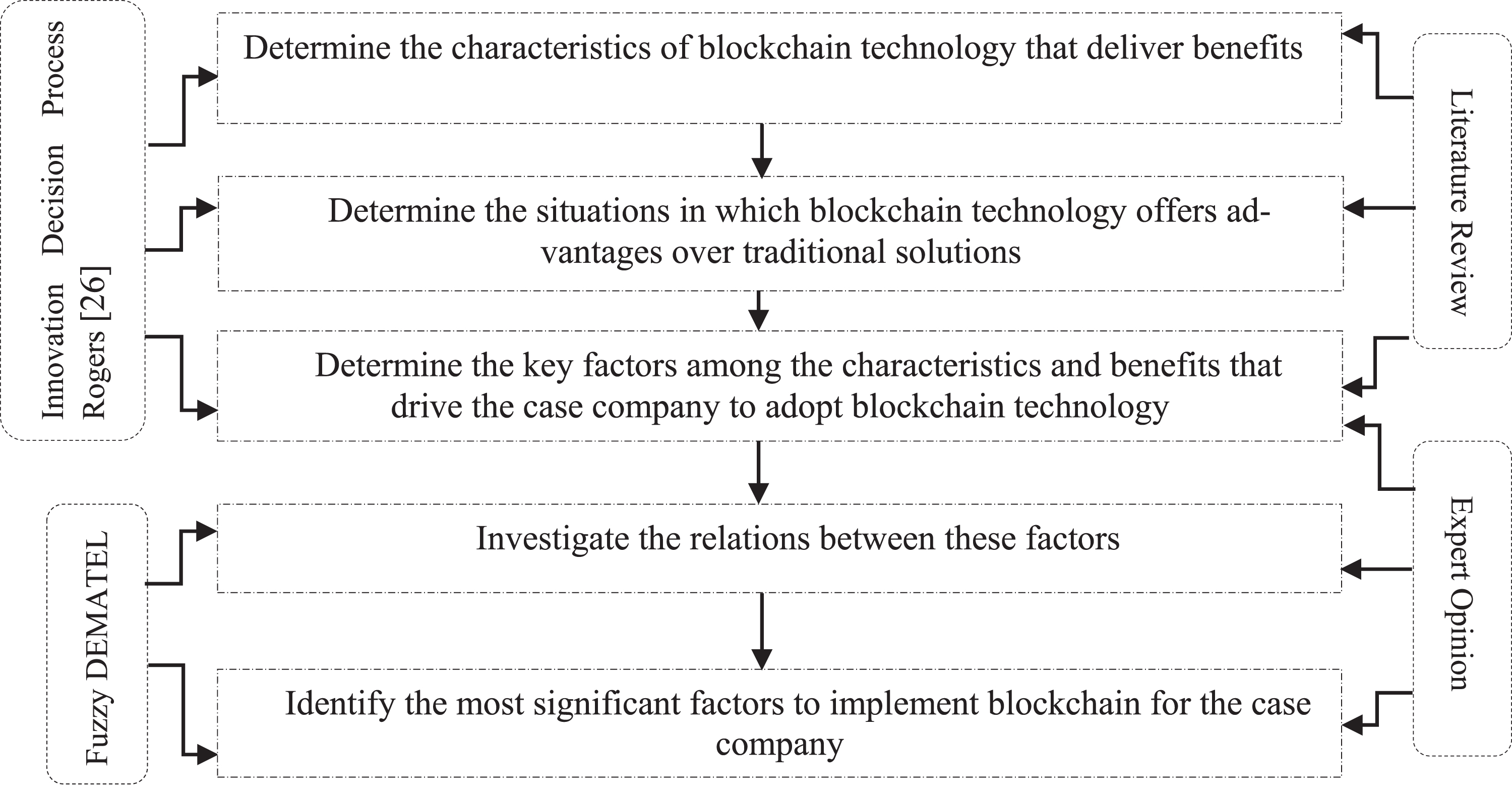
Applied methodology in this study.
In this study, the characteristics of blockchain technology are inspected in detail in the first stage. The persuasion stage consists of forming favourable or unfavourable views on the innovation, while the decision phase leads to whether the innovation is rejected or accepted [21, 26]. In the persuasion stage, we clarified the potential situations of blockchain that offer advantages over traditional solutions, and advantages for logistics and supply chain management. There are complex relationships between the factors affecting blockchain technology adoption which must be taken into consideration. Hence, the Fuzzy DEMATEL method was applied since it has the ability to clarify the complexities between the factors. In light of the (MIDP), literature review, and expert opinions, Figure 1 shows the stages of the applied methodology for this study.
According to the MIDP [26], it is important to determine in which situations an innovation should be rejected or accepted [21]. A clear distinction should be made between blockchain technology and traditional databases since complexities are involved in these concepts.
We propose a framework to evaluate blockchain technology compared to traditional databases, using the schemes in [5, 27]. Before considering blockchain technology implementation, the following questions should be asked, as can be seen in Figure 2.
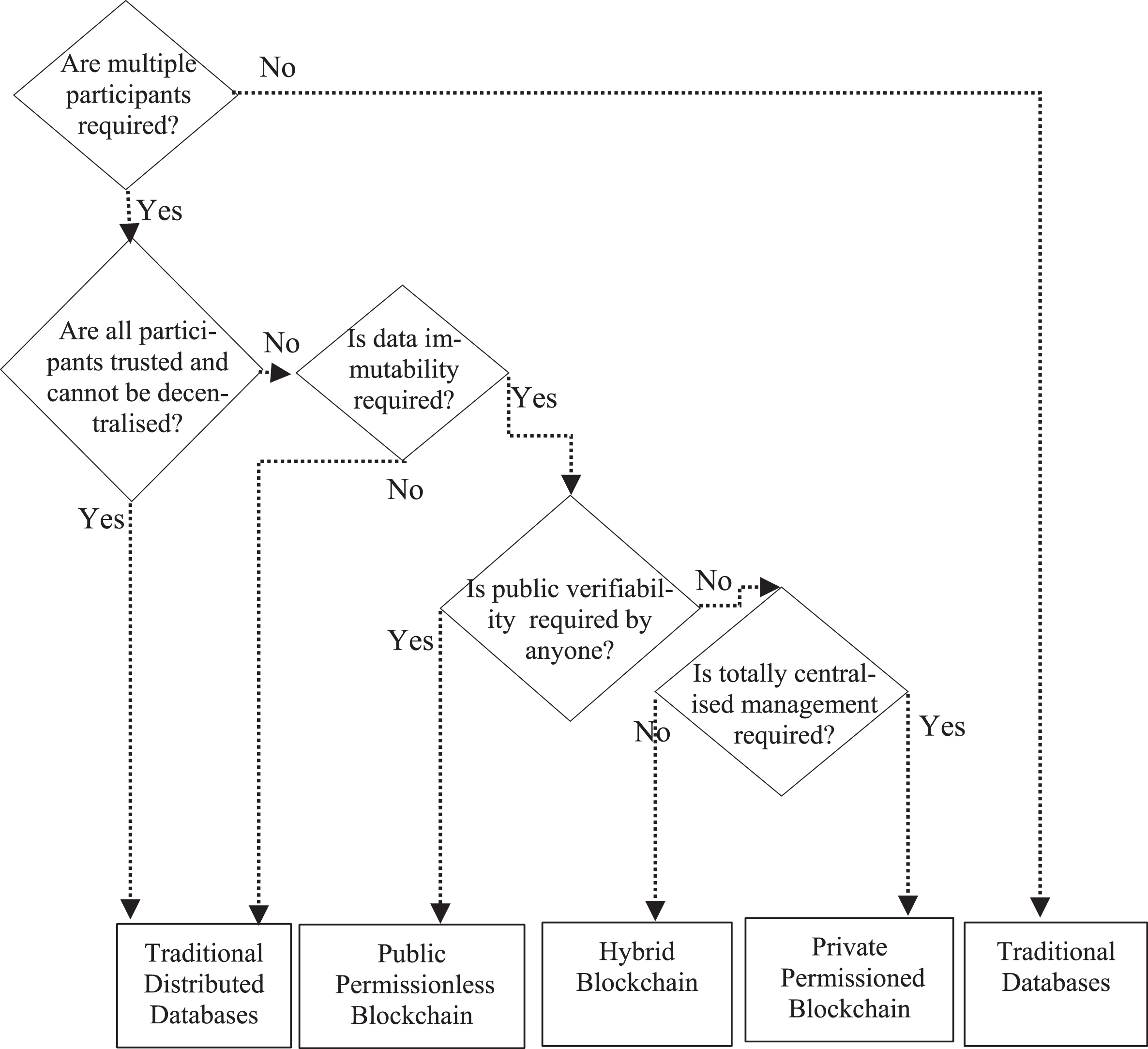
Proposed evaluationframework.
This phase includes determining if multiple participants are required. A blockchain framework is reasonable when there are multiple parties who want to interact with each other and replace the status of a system, without complying with a trusted intermediary [27]. In supply chains, there are generally complicated dynamic and multi-party regulations, as well as logistical limitations which cover distinct jurisdictions [5]. It may be better for a single node to use other platforms similar blockchain, at comparatively more affordable latency and throughput [5, 27].
Trust
Blockchain enables trust by default, while centralised operations need people or further technology to provide trust [21]. In traditional distributed databases, all the participants can share data based on trust [24]. Therefore, traditional distributed databases can be used when all the participants are already honest and trusted. Blockchain can be called ‘distributed trust’, since there is no need to trust an intermediary [5]. Disintermediation or eliminating the need for intermediaries can help to reach supply chain aims of speed, cost, reliability, quality, sustainability, flexibility, and reduced risk [3, 7]. All kinds of blockchains have the benefit of decentralization in some degree through its peer to peer network structure [11].
Immutability
When contrasted with traditional mechanisms, blockchain has some distinctions. Unchangeable and chronologically ordered data is stored in the blockchain, which is unlikely in traditional architectures where the data can be modified and reordered [21]. Immutability also guarantees trust because fraud can be noticed easily within supply chains [21]. Immutability is assured for all types of blockchains [11], but especially for the public blockchains, since there may be attacks on private and federated ones [19]. When designing a blockchain framework, the problems that may rise for historical transactions should also be taken into account, such as inaccurate addresses and disagreements in the transactions [5], because it is difficult to change and delete the data due to its immutable nature.
Categorization of the blockchain
In permissionless blockchain, readers and writers can participate in the network at any time, while in permissioned blockchains, only authorised participants are permitted to write and read the blockchain which is preferable if there is a lack of trust among writers [27]. Using a public permissioned blockchain makes sense when public verifiability is needed, otherwise a private permissioned blockchain is suitable where particular users are allowed [27].
In federated blockchains, only chosen leader nodes are allowed to verify the transactions instead of one leader [19]. For public blockchains, privacy can also be gained through cryptography but this causes expensive computations [27].
Our proposed framework to evaluate blockchain technology compared to traditional databases can be seen in Figure 2.
Fuzzy DEMATEL
DEMATEL
This method was developed at the Geneva Research Centre of Battelle Memorial Institute [28]. DEMATEL method has mainly four stages [29]:
[Stage 1:] Direct-relation matrix A is developed, which shows direct comparisons. The relations can be either 0 (no effect), 1 (low effect), 2 (high effect), or 3 (very high effect). In matrix A, aij indicates the degree of the impact of the criterion i on j.
[Stage 2:] The normalised direct-relation matrix X is established, as indicated by (Wu, 2008):
[Stage 3:] Total relation matrix T is determined by showing I as an identity matrix:
[Stage 4:] Visual diagraph is developed. The sum of rows is indicated as the vector
[Stage 5:] Through the normalization, an internal dependence matrix is constructed [30].
To address the vagueness of human judgment, the fuzzy set theory was created by Zadeh [31]. Explanation of the judgments through linguistic labels can be easier since numerical explanation of the ideas is difficult. These labels include very high, high, middle, low, and very low [32]. Fuzzy logic is a precious approach in group decision-making problems [33]. The triangular fuzzy number is broadly used. The descriptions of fuzzy set theory are described as [34, 35]:
First, X is described as the universe of discourse, with X = {x1, x2, x3, . . . x
n
}. Then, a fuzzy set
The following descriptions are as:
The membership function of the fuzzy number
Let
Where α1, α2, and α3 are real numbers and α1≤α2≤α3 .
By fuzzy minimum and maximum, the total score is reached as a weighted average.
If a committee has k members,
Normalization:
Left (ls) and right (rs) normalised result is calculated:
Total normalised crisp value is computed:
Crisp values are computed:
Crisp values arintegrated as:
The fuzzy DEMATEL method can be implemented through four steps:
Linguistic terms for the evaluation
Linguistic terms for the evaluation
After inspecting the reasons the companies wanted to use blockchain technology, and determining the potential achievements from the blockchain adoptions, commonly utilised blockchain characteristics were identified. We concluded that each alternative blockchain framework should be evaluated in terms of the needs of companies, and these frameworks should be evaluated as a whole with the existing structure and characteristics of the companies. In Turkey, businesses from a variety of fields are willing to derive and use the potential benefits of blockchain technology. When it comes to the usability of blockchain, the fundamentals are not well understood by most company experts. In the case company, multiple participants were required since there were multiple parties, from buying to transportation departments. Since there is a rivalry between some of the participants, all the parties may not be considered as trusted and honest. For the company experts, immutability is especially important to avoid fraudulent transactions. Permissioned blockchain may be suitable for the company since there is a lack of trust between the buying sides of the parties. Hence, only particular parties can be included in the network. However, in the subsequent processes, the perspectives and needs of the experts were considered for assessing specific process-based needs. The company experts especially focused on procurement-related activities which have problematic processes. Blockchain can reduce payment delays and can ensure instant money transfers, which seems very attractive for company experts. Making better contractual agreements and forming good relationships between suppliers were also tempting for them to use blockchain. In their payment processes, long bidding durations in equipment purchasing create operational difficulties. Besides, changes in gasoline prices need to be kept up-to-date in their system which requires simultaneous monitoring of the recent data. Serious losses are incurred when the products are not tracked during or after transport. Among the blockchain characteristics and potential benefits, the factors that may affect the decision of blockchain technology implementation were determined as peer-to-peer networks (F1), cryptocurrency creation (F2), transparency (F3), instant money transfer (F4), distributed ledger (F5), smart contract (F6), privacy (F7), traceability (F8), real-time processing (F9), immutability (F10), reduced delays in transactions (F11), authentication (F12), and security (F13).
The presence of influenced variables should be included in the evaluation process when making decisions about adopting blockchain. This process should proceed in line with the needs of the company. Using these factors and expert evaluations, the fuzzy DEMATEL method was applied which is appropriate to show the relationships between the factors which may affect the blockchain technology adoption decision.
Firstly, the initial linguistic direct relation matrix was established as shown in Table 4. The total relation matrix was established as shown in Table 5. Lastly, D + R and D-R values were calculated as can be seen in Table 6.
Initial Direct Relation Matrix
Initial Direct Relation Matrix
Total Relation Matrix
Through the calculated (D + R) values, the importance of the factors was prioritised as cryptocurrency, instant money transfer, privacy, real time processing, smart contract, security, authentication, transparency, immutability, traceability, distributed ledger, reduced delays, and peer-to-peer network respectively. Factors were separated as cause and effects factors through the (D-R) values. Peer-to-peer network, instant money transfer, distributed ledger, smart contract, immutability, authentication and security were defined in the cause group with positive (D-R) values; cryptocurrency, transparency, privacy, traceability, real-time processing, and reduced delays were determined in the effect group. As an illustrative scheme, the cause and effect diagram for the factors can be seen in Figure 3. Figure 4 shows the cause and effect relations.
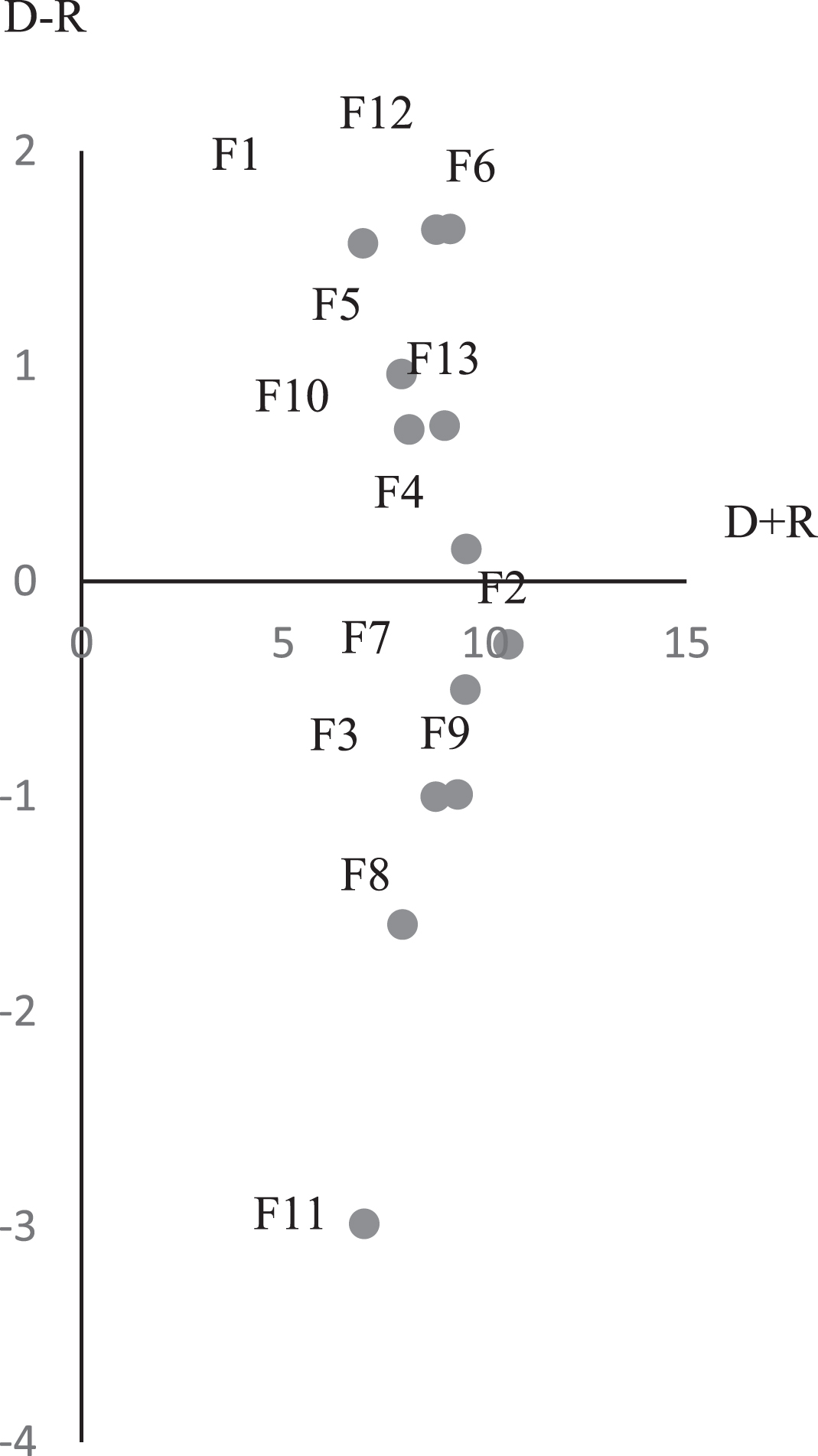
Cause and Effect Diagram for the Factors.
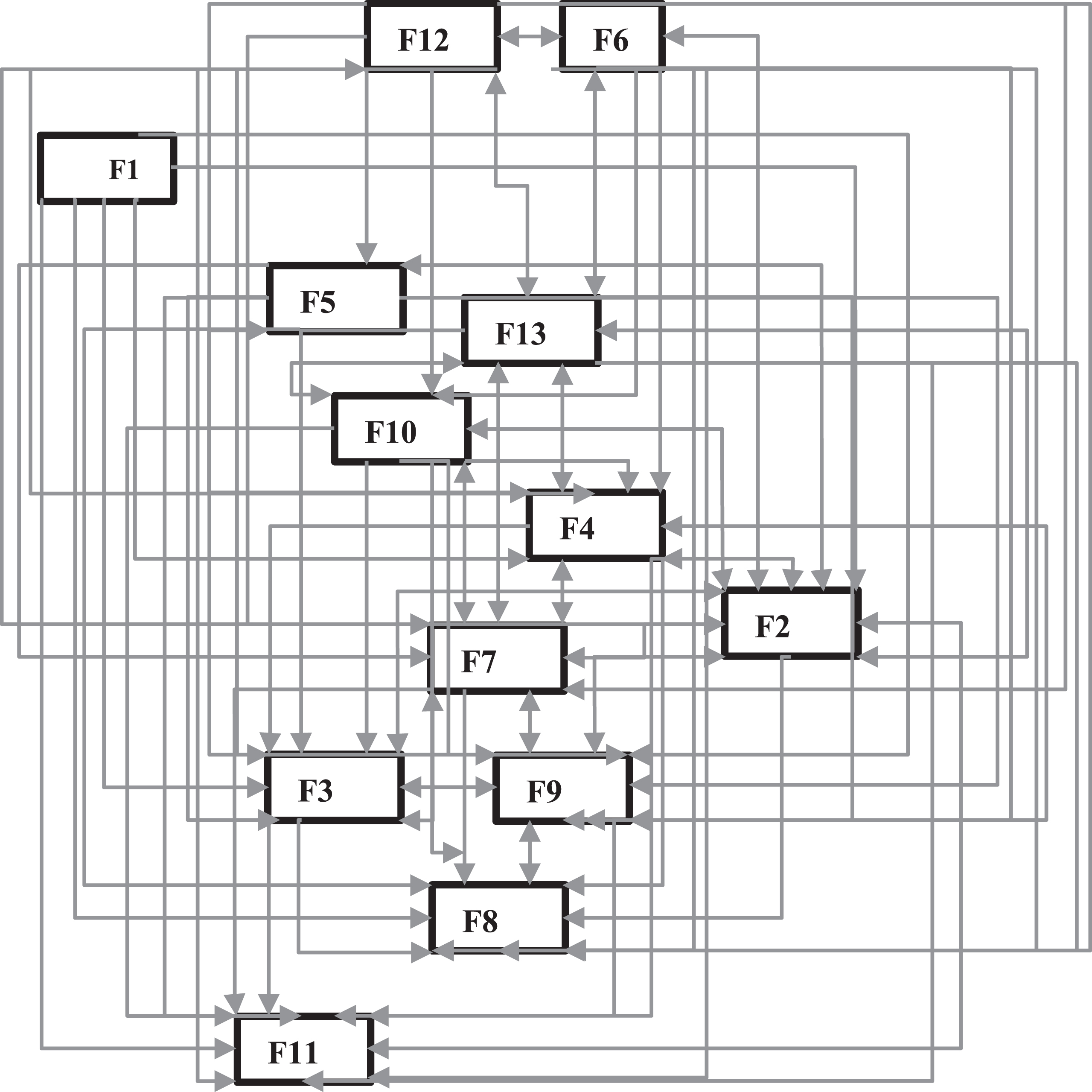
Causeand Effect Relations.
In the case study, the questions we asked the experts were: Which characteristics of blockchain technology may deliver benefits for your system? Which potential characteristics and benefits (factors) of blockchain would drive you to implement blockchain technology for your system? Are multiple participants required for your system? Are all participants trusted and can’t be decentralised in your system? Is data immutability required for your system? Is public verifiability required by anyone? Is totally centralised management required? Among these factors, which ones do you think have relations?
Evaluation of state-of-the-art technology is a complex process. In this study, the advantages of blockchain over traditional solutions, and the advantages for logistics and supply chain management in particular, were reviewed in detail. To determine critical factors affecting the decision to adopt blockchain technology, blockchain characteristics and potential benefits were investigated. Company leaders can focus on these critical factors when considering their process requirements, especially in procurement activities. For the company, the critical factors, in terms of priority were: cryptocurrency, instant money transfer, privacy, real time processing, smart contract, security, authentication, transparency, immutability, traceability, distributed ledger, reduced delays, and peer-to-peer networks. Since blockchain offers advantages for companies other than those in the financial industry, where its advantages are already well-known, in the future, more application studies should be performed in industrial environments to identify suitable evaluation frameworks for blockchain systems. In this study, experts were equally weighted since they have similar experience and roles in the company. When the experts are not equally weighted, a sensitivity analysis based on different weights of the experts should be applied. For further research, we suggest that experts from different departments with varying experiences should participate in the evaluation process on whether to adopt blockchain.