







Abstract
Because rhythmic gymnastics requires a combination of human movements and hand-held instruments, it is difficult to teach and requires high movement standards. Therefore, the actual course teaching is difficult. In order to improve the teaching efficiency of rhythmic gymnastics courses, based on VR image recognition technology and digital twins, this paper combines the actual teaching needs of rhythmic gymnastics to build a corresponding auxiliary teaching system. The sports database designed in this article mainly has three kinds of sports: difficulty movements, connecting movements and equipment movements. It is different from the traditional method in that each movement and the device-related connection movement correspond to a difficulty movement of the same length and close coordination, and the connection movement plays a role in smoothly connecting the two difficulty movements. In addition, the performance of the auxiliary teaching system constructed in this paper is studied through system experiments. The research results show that this system is feasible.
Introduction
The rapid development of information and information technology is changing human society in an unprecedented way and making human society quickly enter the information age. In the information age, society’s production, management, and people’s lives will be inseparable from information and information technology. At the same time, information resources will become the first production factor of society and will constitute an important technological material foundation of the information society. With the development of information technology, the traditional dissemination of information in paper form has become a combination of computer technology, software technology, network technology, satellite technology, etc. Today, the fastest development is networked information, that is, information produced, disseminated, and spread on the Internet, including current news, e-journals, e-book texts, legal documents, data statistics, audiovisual, image data, and databases, etc. [1]. This has huge advantages over traditional information dissemination methods, such as high-speed information dissemination, cross-cultural dissemination, large storage capacity, and interactive communication. The premise of information resource network dissemination is to digitize related information resources to form digitized information, and then disseminate through relevant network computer technology. Compared to other sports, there is very little digital information about gymnastics. As far as domestic digital gymnastic information is concerned, it includes literature s distributed in the literature database, information of gymnastic management centers in various provinces and cities, relevant news reports, picture information, video resources on major new websites, and information on relevant network interactive platforms, such as WeChat, forums, Weibo, etc. This digital information is extremely distributed, so people cannot get the knowledge they want in the messy and disorderly ocean of information. Therefore, it is necessary to digitize the relevant gymnastics information resources and establish a systematic information database to share through network related platforms [2]. In the context of the information age, sports information resources are also undergoing a digital process. One is the collection of sports information resources established by major sports colleges and comprehensive colleges. The other is professional sports information websites, including government websites, association (confederation) websites, thematic websites, club websites, and related enterprise websites. In the process of digitization, research on related issues has naturally become a hotspot for many scholars, such as research on digital processes, research on database construction, research on problems in digital construction, and research on digital copyright. The construction of digital gymnastic information resources is not only a practical process, but also a theoretical research process. The research of the above-mentioned digital issues in the digital construction of gymnastic information resources should be combined with the characteristics of gymnastics itself. The digitized practice construction of gymnastic information resources and the advancement of related theories have positive significance for expanding the perspective of gymnastic theory research and enriching the content of gymnastic theory system. Today, unlike the prosperity of competitive gymnastics, the teaching of mass gymnastics and gymnastics in primary and middle schools is very sluggish. One of the main reasons for the sluggish is the lack of relevant resources available, such as instructors and related teaching information resources. If the information resources related to the mat tumbling teaching in the general gymnastics course are digitized to establish a data package and be distributed through the network platform, the people who benefit the most are undoubtedly the gymnastics enthusiasts and physical education teachers. They can choose the corresponding content to learn according to personal needs through the network. Compared with the traditional resources spread in the form of paper, DVD hard disk, etc., not only the spread speed is fast, but also the learning is convenient, visual and intuitive. Therefore, digitizing related gymnastics information resources has great practical value [3].
Related work
Digital media technology is to integrate various media such as text, graphics, images, sound, animation and video through a computer, perform sampling and quantization, edit and modify, encode and compress, reconstruct display and storage transmission, and establish a logical connection [4]. The computer constantly refreshes all records with its unparalleled convenience, accuracy, high efficiency, convenient storage and easy modification. In recent years, the rapid development of multimedia technology and the continuous upgrade of software have made the computer widely used in the field of design and performance to gain broad prospects. Multimedia technology not only brings a revolution to the visual performance of the stage in a new form, but also has a great impact on people’s aesthetic concepts [5]. With the extensive application of multimedia technology, dance art is breaking through the limitations and closures of the traditional manual era, and the stage is designed as a complex of space-time art. It has not only the time and hearing of literature and music, but also the space and vision brought by painting and architecture [6]. Dance art not only expands the visual scope of the audience and editors, but also expands people’s thinking ability [7]. The important role of computer technology in the creation of dance beauty and graphic design has provided new ideas for sports gymnastics practitioners. Moreover, the computer can become a brand-new “stage language", and people have sufficient reasons to believe that the combination of computer and sports gymnastics will inspire more creative passion and artistic spirituality [8].
Network-based digital educational information resources are the expansion and extension of traditional education methods. Its many advantages such as distance learning, interactive learning, and free choice can effectively broaden students’ knowledge and improve teaching effects [7]. At present, the digital construction of educational information resources has achieved good results. However, the results of the digital construction of physical education information resources are quite different from other fields, and the related theoretical research is also very little.
The literature [8] investigated the construction of physical education information resource websites: Through extensive browsing, various physical education websites can be searched for specific situations. The literature [9] expounded the construction process of the school’s establishment of a physical education information resource library: the physical education information resource library is logically divided into five parts: a production platform, a distance teaching support platform, a database center, a transmission network and a user terminal. The literature [10] believed that the physical education information resource library should contain the following contents: one is the knowledge base, which includes the knowledge system, CAI courseware library and teaching strategy library, the second is the standard action model library, the third is the communication library, and the fourth is the student library. The literature [11] discussed the mode of online teaching resources: the application of digital sports teaching resources must have certain communication conditions, and the network and classroom environment also have certain software and hardware requirements. Moreover, cross-applications of various subsystems such as video-on-demand, network-assisted teaching platform, resource download, classroom recording, webcast, and WebTV are constructed. From the perspective of application depth, it covers various types of network streaming media applications. For the breadth of application of learning, it covers the various needs of online links for online browsing, data downloading, and communication, and has formed a three-dimensional sports teaching video application model.
The literature [12] exemplified the current achievements of digital network information construction in colleges and universities. The literature [13] established excellent physical education courses, put the construction of excellent physical education courses into the track of disciplinary construction, and compiled textbooks and multimedia teaching courseware with innovative content, which are suitable for the characteristics and needs of ordinary college students and adapted to the teaching development in the 21st century. The literature [14] proposed the use of multimedia courseware in the teaching of the theoretical courses of track and field fitness, track and field skills, and track and field expansion, and in accordance with the requirements of quality course construction, all the course resources have been initially networked. The literature [15] pointed out the problems in sports network teaching: the concept of network teaching of sports teachers needs to be changed, the level of network teaching needs to be improved; the quantity of physical education resources in colleges and universities is limited and the quality needs to be improved; the current evaluation of sports network teaching cannot stimulate the enthusiasm of teachers and students. Moreover, it has put forward corresponding countermeasures against the above problems: Physical education departments should strengthen the guidance and create a sports network teaching environment and do a good job of teacher training; college sports teachers should change the educational concept and improve the level of network technology; colleges and universities should build rich college physical education network teaching resources, use the website, strengthen the physical education network interactive links, and pay attention to comprehensive evaluation. The literature [16] discussed the design of network sports gymnastics teaching: the network-based sports gymnastics teaching structure includes teaching objectives, classroom teaching, network teaching and teaching evaluation. Among them, classroom teaching is the core, and the sub-structure includes course content, communication help, online exams, and video pictures. Moreover, video pictures are a highlight of the structure. The article [24] focuses on IoT and its major role in sophisticating the human behaviours and efforts. This paper also dealt with the collection of various data from various resources that are connected to the internet. The literature [25] talks about the various problems in the vehicular communication field with the proposal of cooperative centralized and distributed spectrum sensing model. Due to the implementation of cooperative cognitive model, interference and various hidden problems are minimized. The literature [26] addresses the problem such as massive volume of bigdata and come up with the concept of SmartBuddy to make intelligent and smart environment using human behaviours and human dynamics. The literature [27] talks about the construction of directed acyclic graph for video coding algorithms for motion estimation in parallel reconfigurable computing systems. Also, partitioning algorithm plays a major role to speed up the video processing. The article [28] dealt exploiting IoT and BigData Analytics using Hadoop ecosystem in real time environments. Implementation of IoT-based Smart City is achieved by the above-mentioned processes [29, 30].
Incoherent coaxial digital hologram recording method
Taking the non-coherent digital holography based on the Michelson interferometer as an example, the analysis and recording process is shown in Fig. 1. After the light emitted or reflected at any point on the object passes through the filter F, it then splits into two beams of light after passing through the beam splitter BS. Among them, a beam of light passes through the lens L1, then is reflected on the mirror M1, and then enters the CCD after passing through the lens L1 and the beam splitter BS again. After passing through the lens L2, the other beam of light is reflected on the mirror M2, and then enters the CCD after passing through the lens L2 and the beam splitter BS. During the operation, the front-back distance of the mirror M2 is adjusted so that the optical path difference of the two beams of light split by the beam splitter is controlled within the coherence length. Then, the two light waves interfere on the CCD plane to obtain a self-coherent hologram at this point. The non-coherent superposition of self-coherent images of each point on the object forms a hologram of the entire object [17].
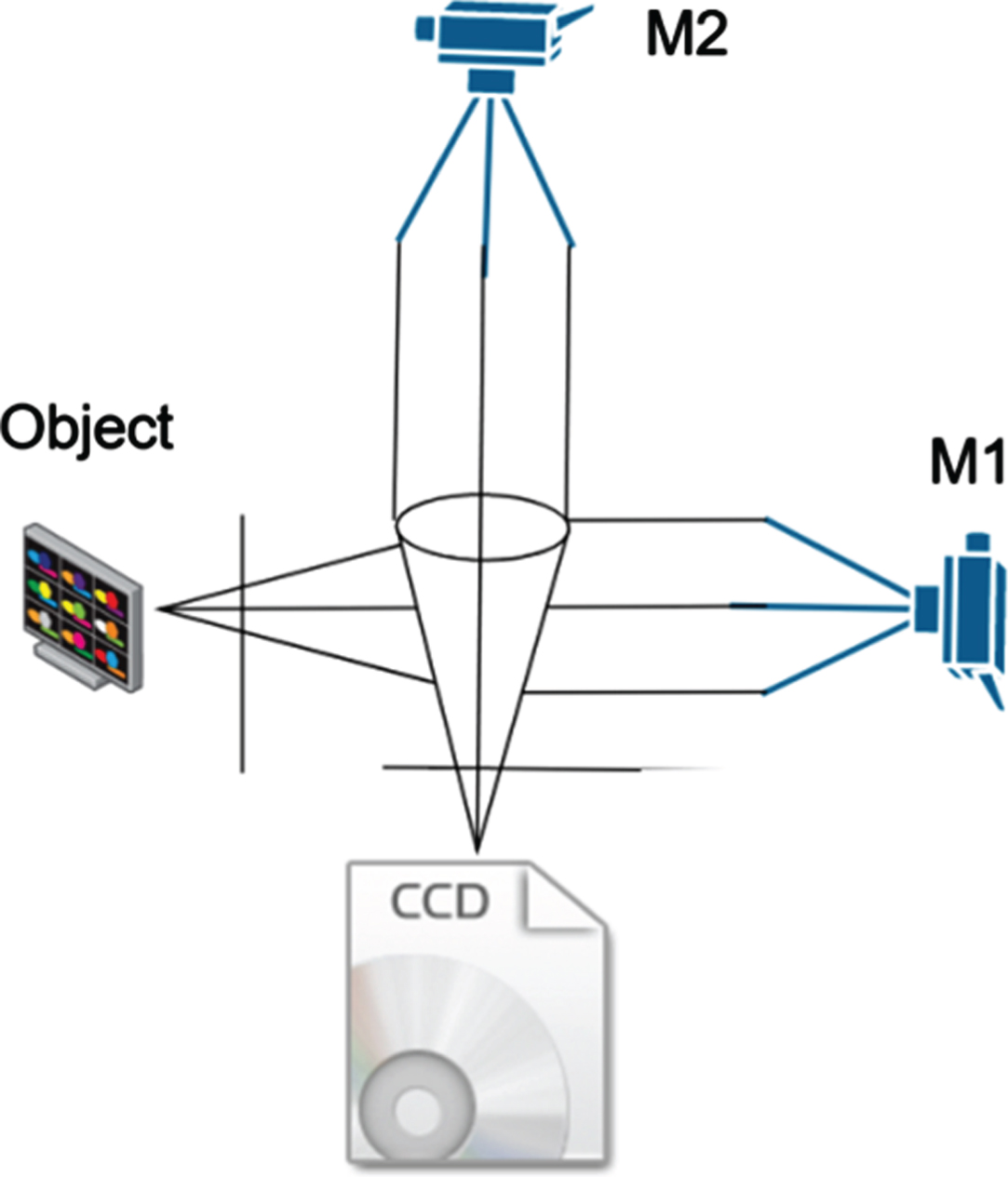
Incoherent coaxial digital holographic imaging system based on Michelson interferometer.
In order to facilitate the discussion, the above system optical path is divided into the following two optical paths, simplified as shown in Fig. 2, and one of the optical paths is analyzed [18].
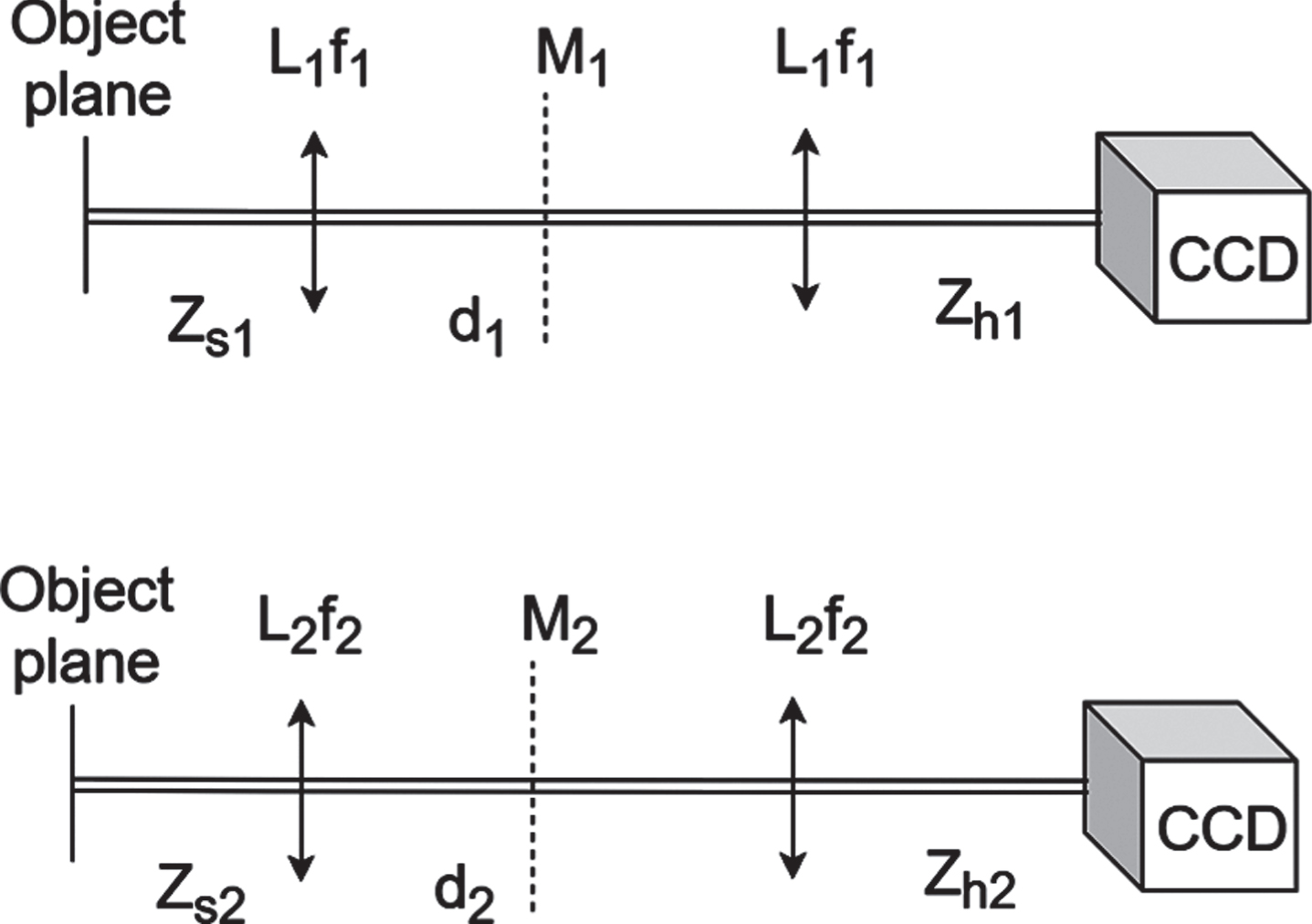
Simplified optical path of incoherent coaxial digital holographic imaging system based on Michelson interferometer.
Among them, zs1, zs2 is the distance from the plane of the object to the lens L1, L2, respectively. d1/ 2, d2/ 2 is the distance from the lens L1, L2 to the mirror, M1, M2, respectively. zh1, zh2 is the distance from the lens L1, L2 to the CCD, respectively [19].
We assume that any point on the object is (x
s
, y
s
). From the Fresnel approximation calculated by diffraction, the complex amplitude of the front surface of the lens L1 at the distance zs1 from the object is:
After the phase transformation of the lens, the complex amplitude on the rear surface of lens L1 is:
When the light beam reaches the mirror after the distance d1/ 2 and is reflected by the mirror and then reaches the front surface of the lens L1 through the distance d2/ 2, the complex amplitude is:
The complex amplitude on the rear surface of lens L1 is:
After thelight beam propagates through the diffraction of distance zh1 and reaches the CCD surface, the complex amplitude is:
The complex amplitude distribution of the CCD surface obtained by calculation is:
According to the above theory, when the light emitted from this point passes through another optical path, the complex amplitude distribution on the CCD surface is:
In the formula, M1, M2, h1, h2 is a constant,
If the two beams of light interfere on the CCD surface, the light intensity recorded on the CCD is:
In the formula, A, M, h is a constant,
is the lateral magnification of the system,
is the reproduction distance.
The above formula (12) is the point spread function of the system [20].
For a three-dimensional object g (x
s
, y
s
, z
s
) illuminated by incoherent light, the non-coherent superposition of the intensity distribution of all points on the object forms the hologram I (x, y) of the entire object, and I (x, y) can be expressed as [21]:
Holography is the use of interference between the original light wave and the reference light wave to record the three-dimensional information of the original object. In the early days of holography, the recorded interference fringes are mainly stored in holographic dry plates. When the holographic dry plate is illuminated with light waves, the original light waves recorded in the holographic dry plate can be seen because of the diffraction effect. With the progress of the times, holography has developed into digital holography, the recording medium has become CCD or CMOS, and the original object information can be obtained on the computer by processing the hologram recorded by CCD or CMOS with the computer. With the development of science and technology and the efforts of many scientists, there are more and more methods for reconstructing holograms in computers.
Convolution method is a holographic reconstruction algorithm based on Fresnel diffraction integral formula. The impulse response function is defined as [22]:
Among them,
Since the system is a linear space invariant system, the above formula can be written as:
Using the convolution property, the Fourier transform is taken on both sides of the above formula:
The results obtained are as follows:
This is the convolution method of digital holography. The pixel size of the reproduced image reproduced by the convolution method has nothing to do with the reproduction distance. It is only related to the pixel size of the CCD, and the smaller the pixel size of the CCD, the smaller the pixel of the reproduced image. However, the convolution reconstruction method requires two Fourier transforms and one inverse Fourier transform, so the reconstruction process takes a relatively long time.
The angular spectrum reconstruction algorithm is a fast and accurate hologram reconstruction algorithm based on the angular spectrum diffraction algorithm and is also the most commonly used reconstruction algorithm at present. The observed light wave propagates along the z direction and appears in the frequency domain as the product of the spectrum G0 (f
x
, f
y
) of the light wave field on the diffraction screen and a phase delay factor
After G0 (f x , f y ) and G z (f x , f y ) is subjected to inverse Fourier transform, it can be written as:
The above formula is the angular spectrum reconstruction algorithm in digital holographic reconstruction. In order to better understand the physical meaning of the angular spectrum algorithm, it is transformed into:
It can be seen from the above formula that the distribution of the light wave field can be expressed as the superposition of plane waves with amplitude |G
z
(f
x
, f
y
) |df
x
df
y
and direction cosine
From Equation (21), as long as the frequency spectrum of U0 (x, y, 0) is obtained, multiplied by the phase delay factor, and then performed inverse Fourier transform, the light field information that reaches the diffraction screen after a certain distance of diffraction can be obtained. Similarly, the pixel size of the reproduced image obtained by the angular spectrum method is only related to the pixel size of the CCD. At the same time, because there is no Fresnel approximation in the derivation process, the angular spectrum algorithm can be used for the reproduction of different distances.
The Fresnel transform reconstruction method is a common hologram reconstruction method based on the Fresnel diffraction integral formula. It can obtain the original information of the object through the fast Fourier transform.
If expand the quadratic phase factor in the formula and notice
The calculation of the above formula can be implemented in two steps: The Fourier transform calculation of The calculated result is multiplied by the constant
The characteristics of low cost and high simulation caused by virtual reality technology determine its broad application prospect in the field of sports simulation. Virtual reality technology can not only provide new and effective training methods for sports gymnastics practitioners and athletes, but also expand the application range of system simulation, which in turn also promotes the development of virtual reality technology. The so-called VR-based sports simulation is to use virtual reality technology to simulate the sports training process to allow teachers and students to train in a virtual environment. Compared with other simulation technologies, the advantages of sports simulation using virtual reality technology are extremely obvious. It can improve the level of user interaction with the sports simulation system and significantly improve the effect of sports training. The application of virtual reality technology in sports training can significantly improve the training level and competitive level of athletes while reducing costs and training volume, and greatly promoted the development of sports as a national fitness exercise. In general, virtual reality technology will play an increasingly important role in the research and application of modern sports training.
In today’s highly developed modern sports, computer technology is more and more valued by sports workers. The “scientific” training of athletes has been verified and developed in various sports (such as the Olympics, World Championships, National Games, etc.), and a complete and systematic training system has been formed, as shown in Fig. 3, Figs. 4 and 5. However, the technical conditions of virtual reality software and hardware are currently subject to more restrictions. For example, various special interactive devices based on virtual reality are quite expensive, the existing interaction methods are not user-friendly, the operations are more complicated, and the real-time and precision of the system are not high. These constraints greatly limit the popularization and application of virtual reality technology in the field of physical training. With the continuous advancement of virtual reality hardware and software technology, more innovative and more applications can be expected in the near future.
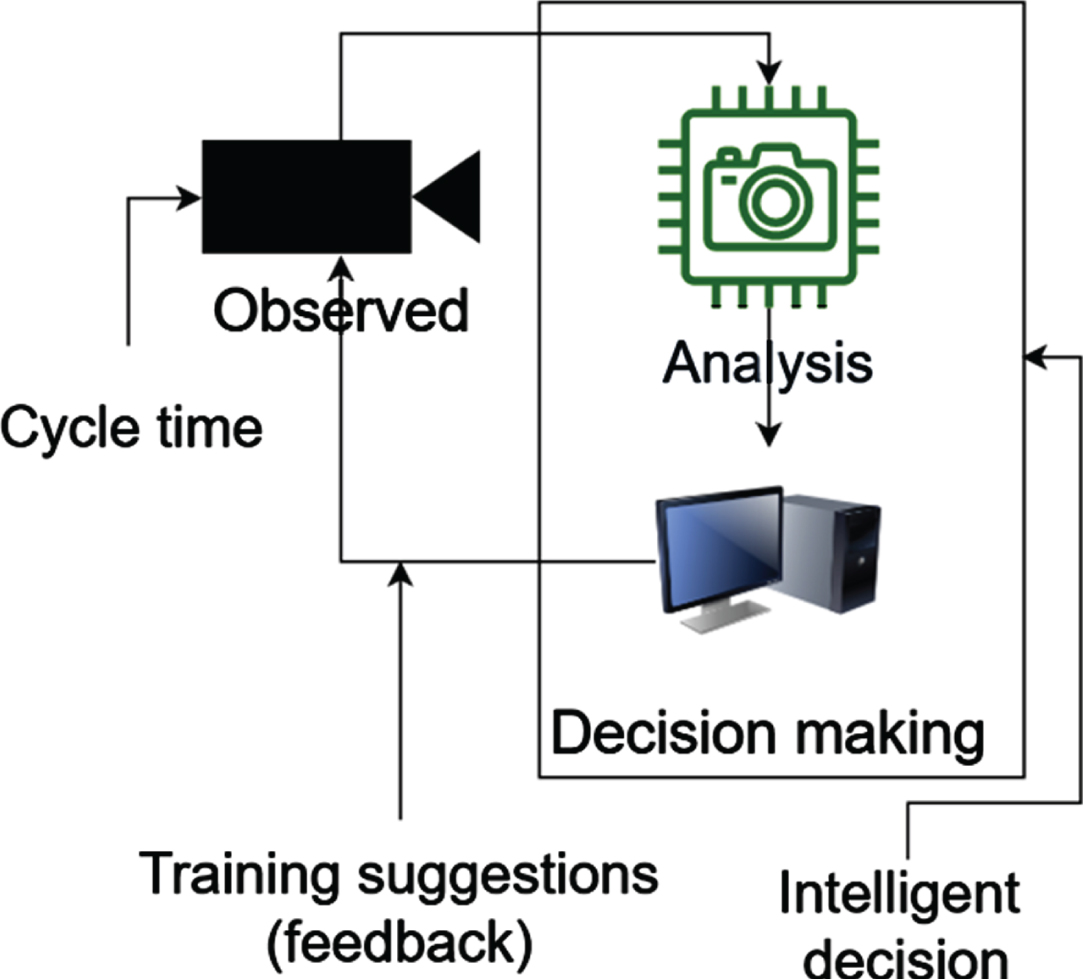
Sports technology diagnosis system.
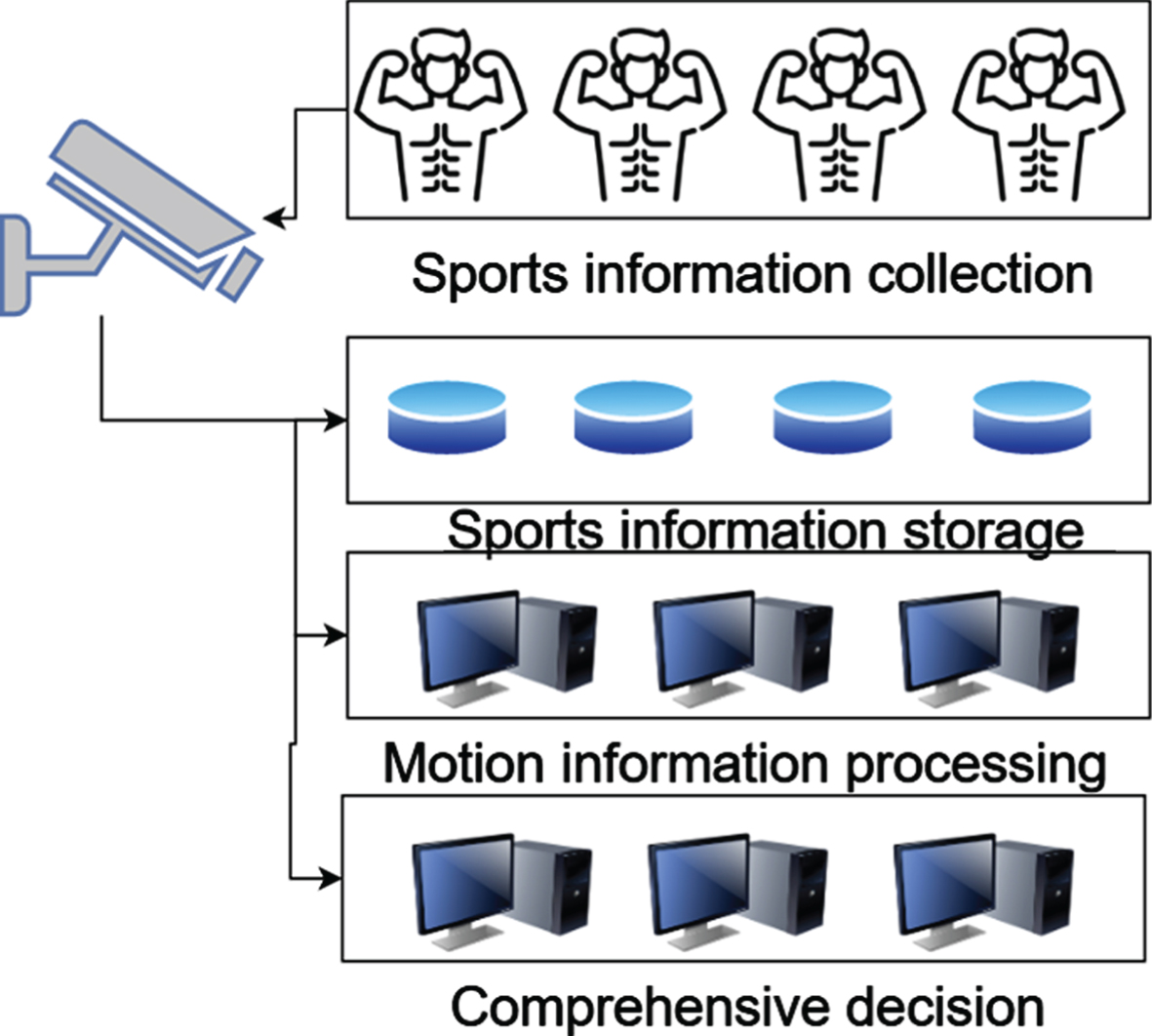
The basic model of the sports technology diagnostic system.
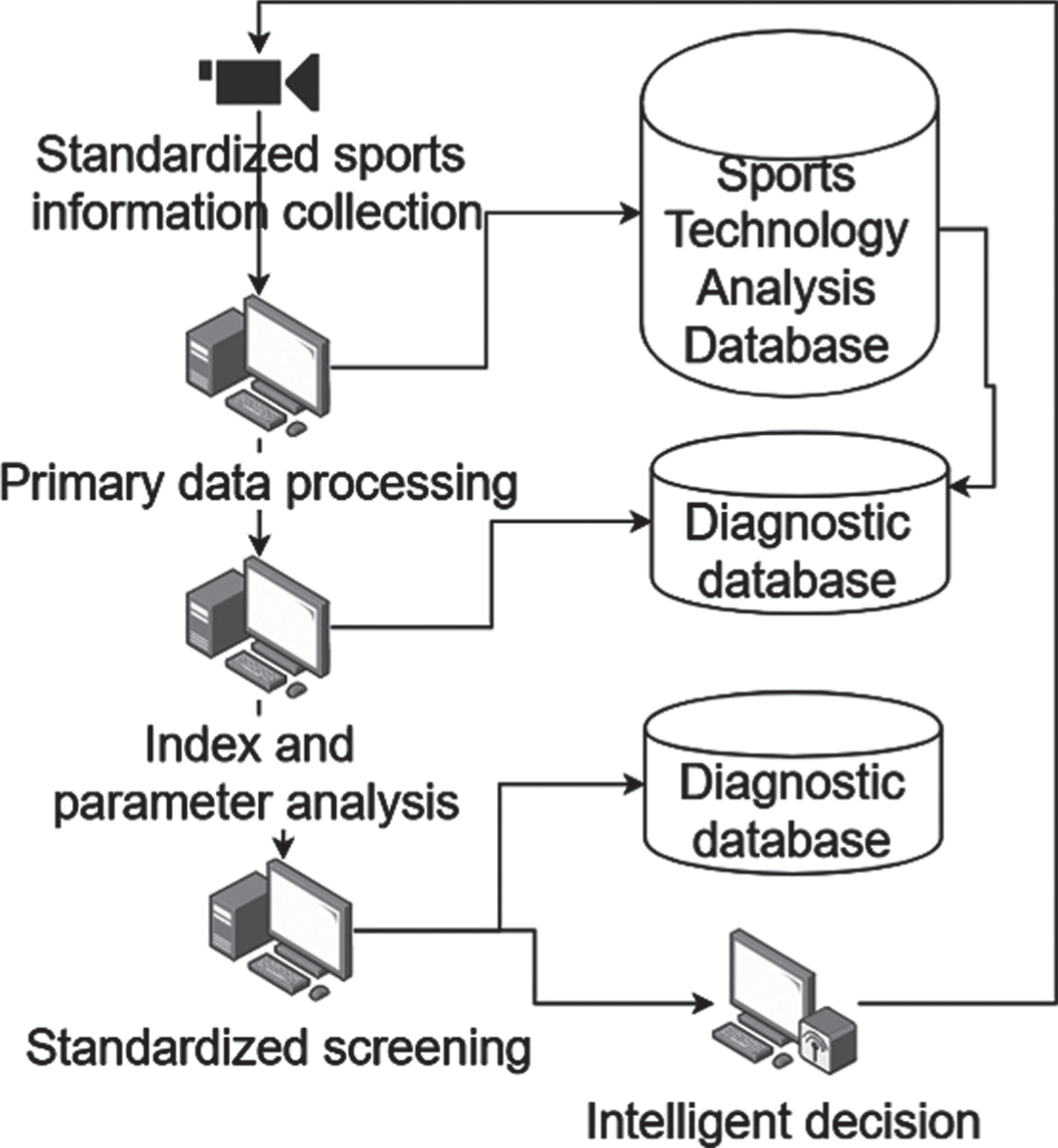
The working mode of the excellent athlete diagnosis system.
Although the virtual human in sports gymnastics does not need to be too realistic, the complexity of the virtual human’s movement is very high, which presents a brand-new topic to the relevant researchers. In this subject, there are two major research directions. The first is to simulate the existing movements of successful athletes, that is, recover the movements of the athletes according to the video or memories, and extract the sports parameters as the training objects and goals of the trainer. This problem needs to first establish a geometric model for “human", and then use a lot of video processing technology to extract data to drive the geometric model of the human body, and then get the human body animation. The second direction is that the designer of sports gymnastics first conceives a piece of gymnastics, communicates with the animator to realize the piece of gymnastics, and then revises, corrects, and arranges the gymnastics on the basis of the existing animation. This direction requires computer workers to go to the dance studio to conduct in-depth communication with the coach and master the technical essentials of the movement and digitize it and use the obtained data to drive the human body model to get animation.
The generation of virtual human movements and the interactive control of virtual humans are a research hotspot and difficulty in the field of virtual simulation. The real motion data of the human body can be obtained by using human motion sensors, but the virtual human body driven by the captured data is a process of real motion reproduction, so the motion data is difficult to be reused. The motion editing algorithm is based on human motion tracking technology to generate realistic and vivid new motion sequences that meet user requirements. Not only do we require synthetic human movements to be natural and realistic, but we also want to provide users with a programming interface for human-computer interaction and adjust the corresponding actions according to user requirements. The generation of new action sequences not only allows users to control it from a high level, but also reuses motion capture data, which can be widely used in animation, games, virtual reality and other fields. The generation of new action sequences includes three steps: (1) Target action requirements, including basic information such as the type and length of the target action. (2) Arrange the movement: According to the requirements, the captured motion fragments are synthesized into new motion fragments. (3) Smooth transition: When the final synthesized animation does not meet the mechanical requirements, it is modified. The basic movements for constructing rhythmic gymnastics are shown in Figs. 6 and 7.
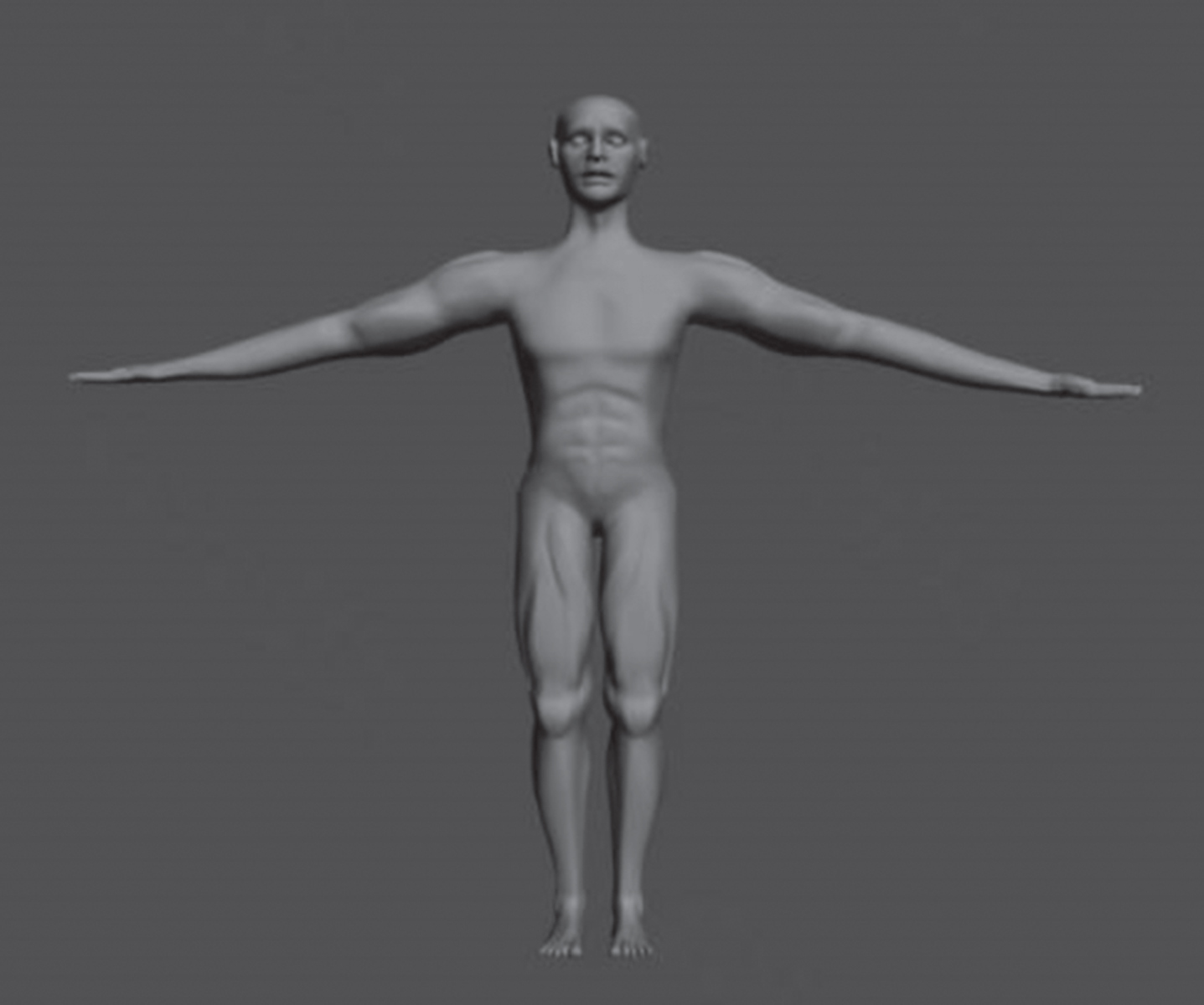
Rhythmic gymnastics virtual reality simulation action model (male).
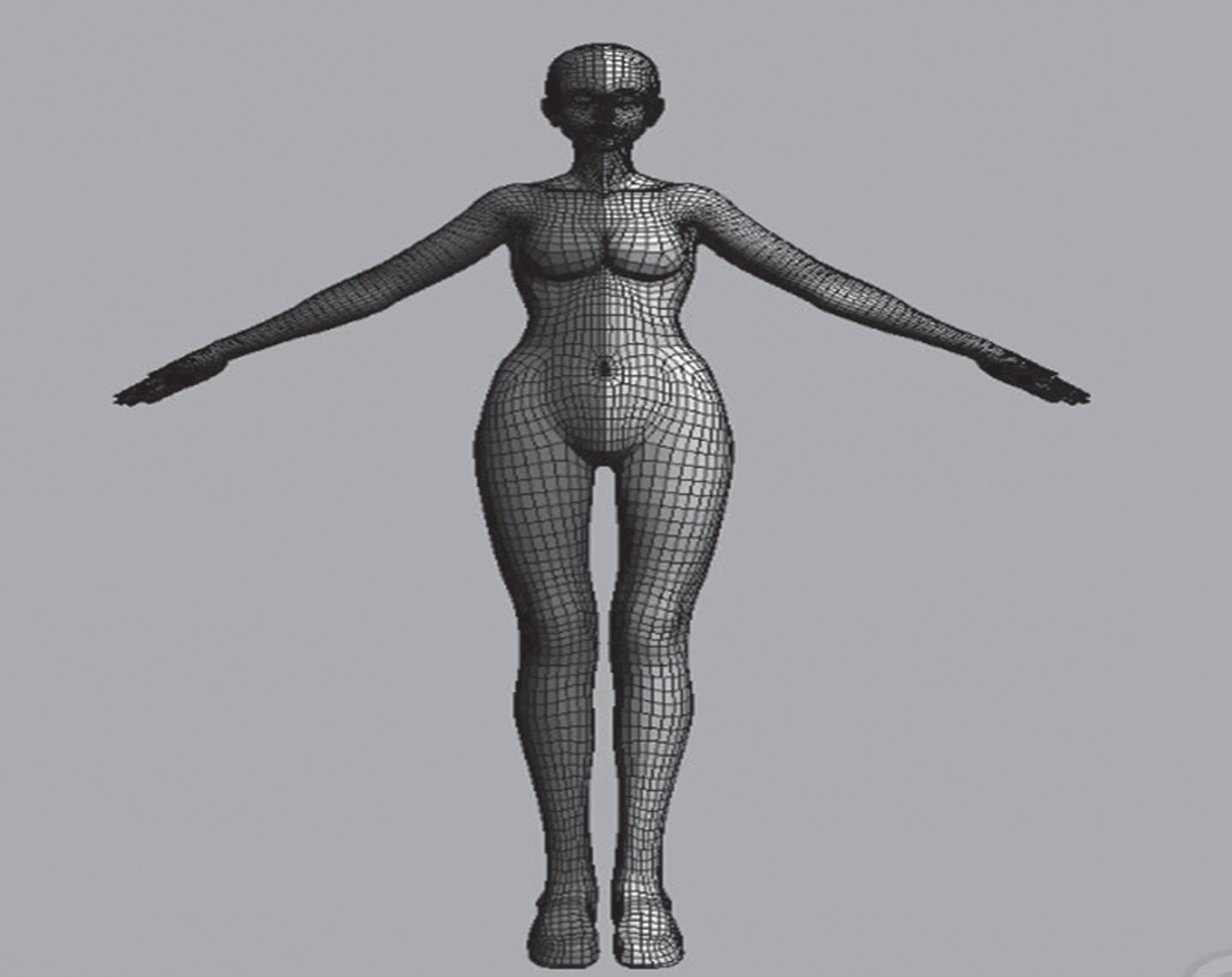
Rhythmic gymnastics virtual reality simulation action model (female).
By using motion sensing devices, we can get ac-curate and full-angle movements of athletes, but these movements are only specific movements performed by specific people in specific ways. This strong personal characteristic makes it diffi-cult for computer workers to modify and reuse exercise data. Therefore, when designing a motion database, this study adds additional association information to the motion in the database, mainly including inter-motion constraints, inter-motion relationships, and motion classification. The database designed in this paper is very different from the traditional method. The graph node in this sys-tem is a “difficulty action” as the selection point or turning point of continuous action. According to which of the four major categories of “difficulty action” are jumping, turning, balancing and soft turning, the system can determine whether it is a key frame or a short continuous movement. There are two types of connection actions, free-hand connection actions and connection actions related to instruments (ropes, loops, balls, sticks, belts). Each connection action related to the device corresponds to a difficulty action with the same length and close coordination. The connection action plays a role in smoothly connecting the two difficulty actions.
From the several difficult movements specified by the gymnastic designer, several vertices on the sports map can be obtained. Starting from these vertices, the “edges” connecting the vertices can be obtained. These “edges” are actually the connecting actions used to connect the “difficult actions". Since there may be more than one edge connecting two vertices, multiple connecting actions can be provided to gymnastic designers as “candidates” for connecting actions. Sports retrieval can be divided into two parts: offline and real-time. After the sports database is established, the gymnastic designer can build a directed graph of the sports database from a large number of real sports fragments. The offline part mainly retrieves the “difficult actions” from the real sports library and calculates the time points at which they appear and end. Then, the gymnastic designer judges subjectively the action segments that can be connected to it before and after the “difficult action", which is also called “connected action". The real-time search part only needs to perform a depth or breadth search on the established action “graph” according to the connection relationship of dotted lines. The real-time part is used to select a corresponding series of vertices and edges from the established directed graph according to the difficulty actions selected by the gymnastic designer and add these calibrated difficulty actions and connecting actions to the directed graph structure.
After doing the above work, the gymnastic designer determines the “difficulty action” and “connection action” according to the vertices and edges on the specified graph. The motion obtained by connecting all the motion segments involved in the path formed by connecting vertices and edges in sequence is the final motion that meets the requirements of the gymnastic designer. The conversion of the resulting path into continuous smooth motion requires corresponding coordinate conversion. Since the (x, z) plane coordinates of the root node of the human body in the original motion segment record the three-dimensional coordinates of the performer’s space position, when connecting the motion represented by the outgoing edge of a vertex and the motion represented by the incoming edge of the node, the entire motion represented by the outgoing edge of the vertex needs to be multiplied by a transformation matrix M.
Based on the above system construction, the application effect of the system is analyzed. Taking the rhythmic gymnastics course as an example for research and analysis, a total of 100 sets of movements are identified by the students of the rhythmic gymnastics. These movements incorporate some difficult movements, so that the system can effectively identify them. In order to distinguish effectively, this article identifies boys and girls separately, and the actions set according to the gender are also different. The results are shown in Table 1, Table 2, Figs. 8, and 9.
Statistical table of female rhythmic gymnastics movement recognition rate
Statistical table of female rhythmic gymnastics movement recognition rate
Statistical table of male rhythmic gymnastics movement recognition rate
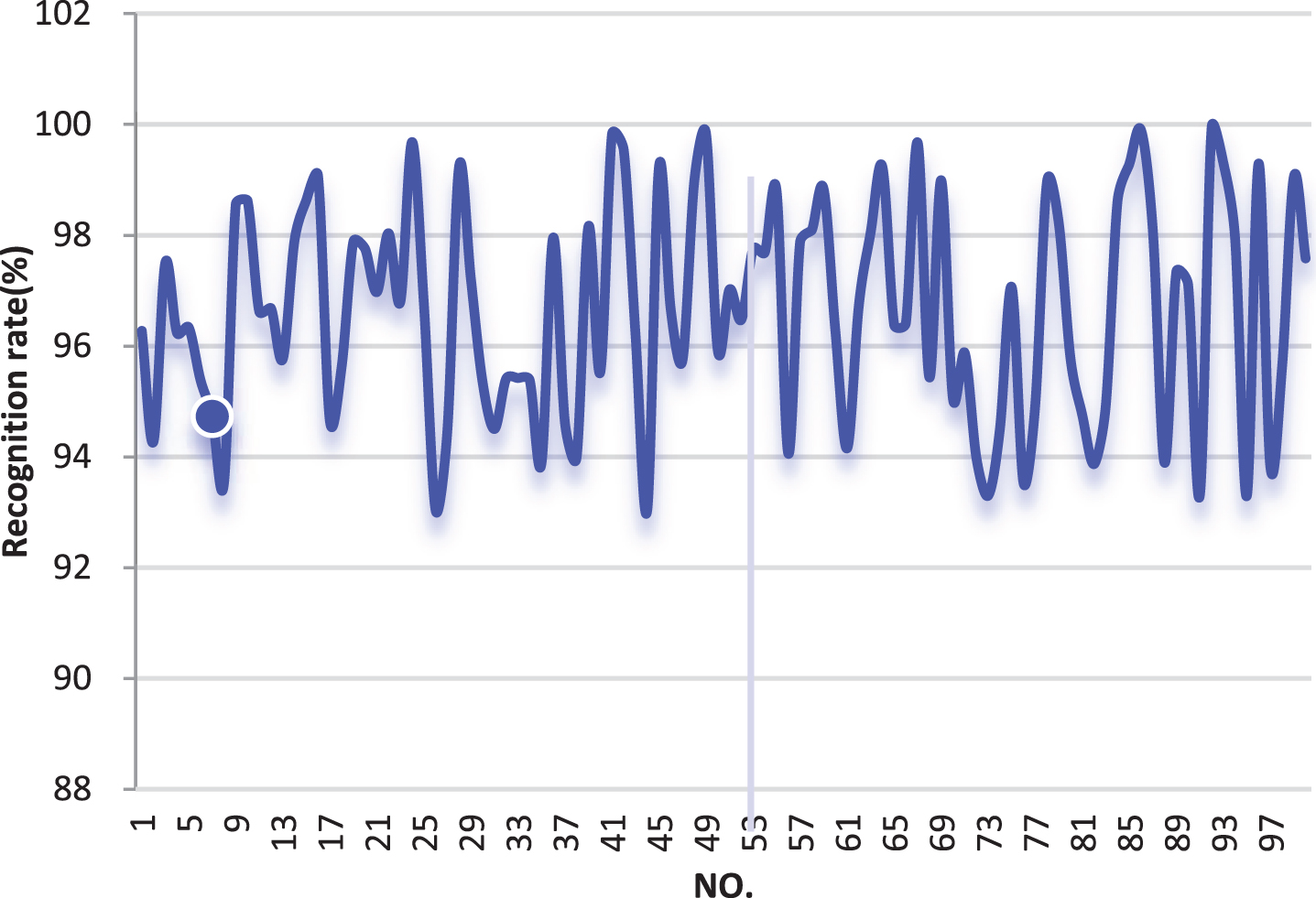
Statistical diagram of female rhythmic gymnastics movement recognition rate.
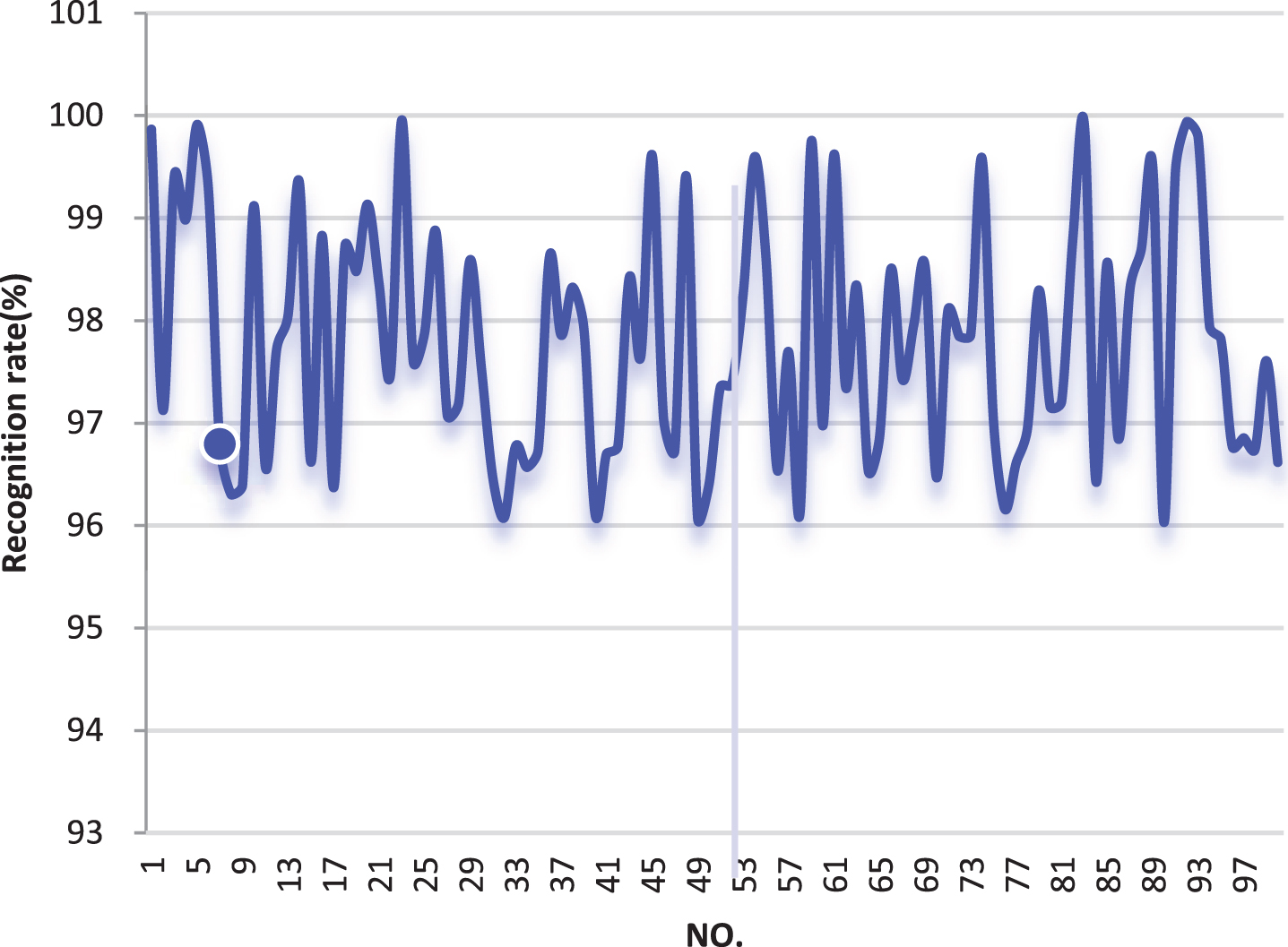
Statistical diagram of male rhythmic gymnastics movement recognition rate.
As shown in Figs 8 and 9, the form constructed in this paper performed well in the rhythmic gymnastics movement recognition rate test, and the recognition results of both male and female movements exceeded 90%. The overall male recognition rate is higher. The main reason is that the movements of men are not as rich as those of women. It can be seen that the system constructed in this paper has a certain practical effect in the teaching of artistic gymnastics courses.
Rhythmic gymnastics is a kind of physical exercise performed by students with light instruments and accompanied by music. The content of artistic gymnastics is rich and colorful, and it has the characteristics of novel form and obvious theme. Rhythmic gymnastics combines sports, music, dance and has a strong artistic and ornamental, so its teaching is difficult. In order to improve the teaching effect of the rhythmic gymnastics course, this paper combines VR image recognition technology and digital twins to construct a human body model to recognize the students’ movements in classroom teaching and constructs a rhythmic gymnastics auxiliary teaching system. The sports database designed in this article mainly has three kinds of sports: difficulty movements, connecting movements and equipment movements. The database designed in this paper is very different from the traditional method. The graph node in this system is a “difficulty action” as the selection point or turning point of continuous action. According to which of the four major categories of “difficulty action” are jumping, turning, balancing and soft turning, the system can determine whether it is a key frame or a short continuous movement. Finally, through the system experiment, the performance of the auxiliary teaching system constructed in this paper is studied. The research results show that this system is feasible.