







Abstract
The purpose of this study was to examine the relationship of relationship benefit and commitment in developing customer loyalty first and then to develop the intelligent model to predict the customer loyalty. Survey methodology was used to gather data from three different service sectors based on the classification by Bowen. A sample of 600 customers and responses were collected randomly from the front desk of services. Regression analysis by Using SPSS 20 was applied to analyze the data collected. The findings of the study revealed that relationship benefit and commitment had direct positive influence on customer loyalty. Furthermore the commitment of customer towards an organization is instrumental in developing loyalty. After performing the advance data analytics, ANN model was developed to predict the loyalty, which can be utilized to prepare the further directions and road map for service industry. Obtained results reveals that proposed machine intelligence approach is very useful for service industry for short-term as well long-term future planning.
Keywords
Introduction
In this increasingly competitive era of marketing, the impact of relationship management has doubled. Building a strong customer base is a very essential element of today’s marketing dynamics. Firms can build their competitive advantages through customer relationship management [32], which will lead to an increase in customers’ share of the firm. For this reason, it is very pertinent to understand the basic elements of the customer’s relationship to management in different service industries. A relational benefit approach has been used in research [20] as tool to measure or predict future outcomes with customers. Henning- Thurau and Klee [19] suggested that extremely positive outcomes, like the loyalty of a customer, are largely determined by the amount of related benefits associates with the service. Relationship benefits can lead firms to extend their revenue streams by capturing large market shares through loyal customers.
Retaining loyal customers instead of increasing market shares is more economically viable for companies. By providing relational benefits, companies can retain their loyal customers. The length of a relationship between the service provider and customer does affect profitability of the service provider. Loyal customers tend to pay premium prices to the service provider because there particular customers know the value of maintaining such a relationship [33]. In service settings, relationship benefits perceived by the customer are considered a predictor of satisfaction, which leads to positive behavior like loyalty [20].
The significance of customer relationship marketing is increasing rapidly in order to get the leading edge over competitors in this contemporary era. This is done to increase the share of customers, satisfaction and loyalty [32]. Relationship marketing is an important and essential component for an organization to get economic benefits by retaining their customers [37]. Future buying intentions like loyalty, positive word of mouth, repurchase, leaving intention, price insensitivity, complaints and bad word of mouth are some consequences of relationship marketing that stem from the relationship between the service provider and the customer. All these consequences and all the marketing activities are linked with a profitability aspect and which helps companies to design segments based on their customer portfolio [36].
It has been empirically proven in a research setting by Zeithamal, Berry and Parasuraman [38] those customers who have no service problems have the highest tendency to show a favorable behavioral intention. Impacts of after-sale service satisfaction on an existing problem also enforce positive future behavior intentions of customers.
To understand the nature and outcome of relationship marketing, Heinnig-Thaurau, Gwiner and Grembler [20] proposed two conceptual models of relationship marketing based on a relational benefit approach and a relationship quality approach. Numbers of research projects that were carried out on relationship benefits mainly attempted to identify and explain the reasons of success and failures of the relationship between service providers and customers [3, 34].
Positive word of mouth and repeat purchase intentions are the behavioral aspect of customer loyalty; companies engage in a relationship with customers to get economic benefits in return. Satisfaction and commitment has been considered an antecedent of loyalty [36]. On the other hand, Patterson and Smith [29] empirically proved relational benefit as the antecedent of loyalty in a Thai context. It is evident in research that the relationship benefits positively affect customer loyalty and the presence of alternative attractiveness aggravates the impact of relationship benefits on customer loyalty [25]. Gwiner, Gremler and Bitner [17], suggested that in a relationship with their current service provider, a customer get benefits in the form of psychological, social and special treatment, which takes the customer beyond the satisfaction level. Confidence benefit triggers satisfaction and trust in a novice customer [10]. The impact of various relationship benefits like confidence and social and special treatment benefits, impact different customers differently [11].
In the service sector, companies invest in the form of time, money and space, in order to build a relationship with customers. In return, the company gets benefits in the form of customer share and revenue [25].
Many researchers have examined the impact of relationship benefits on customer loyalty, as well as other consequences, like positive word of mouth, repurchasing intention and leaving intention. There are reasons for the success and failure of the relationship between customers and their current service providers [4, 34]. There are lack of studies on the mediating role of multi-dimensional constructs of commitment opens venues for fulfilling the research gap.
Thus, this research is an attempt to explore the impact of multifaceted relationship benefits on effective, continuance and normative commitment on customer loyalty. Furthermore, it is expected to investigate the role of commitment in developing loyalty by using artificial intelligence method from different industry setting. Most of the existing studies done so far have some limitations and variable specification bias and thus the conclusions obtained from them might not be significant. This type of novelties of this study are listed below.
The broader aims are as follow: To develop a comprehensive model that investigates: The degree to which relationship benefits influence positive behavioral response like customer loyalty. The mediating role of a multifaceted commitment between relationship benefits and customer loyalty. To develop the machine intelligence approach for customer loyalty prediction To test the model by using data from three different service industries.
The research questions which need to be answer by conducting this research are as follows. Does relationship benefit impact loyalty? Do relationship benefits play an antecedent role to commitment? How large are the relationship benefits and commitment influences in attaining positive behavioral responses from service industry customers?
The organization of this study is organized into six section, in which few sections are included sub-section as well. The section-1 introduce the introduction of the study and the related work of the study which is called state-of-the-art is presented in section-2. In section 2, all possible hypothesis are mentioned, which re the useful for the reliability analysis of a variable. In section-3, real-dataset collection from three service industries has been presented. The proposed approach is represented in section 4. Section-5 shows the results and discussion part and finally, conclusion, limitation and roadmap for the service industry are represented in the section 6.
Literature review
According to Henning-Thurau et al. [20] relationship benefits and especially confidence benefits play very vital roles in developing loyal customers in service industries. Relationship benefits increase relationship competence by minimizing the cost associated in using services.
Social benefits help in developing mutually exclusive beneficial relationships between customers and clients. It also helps in strengthening the existing relationship [5]. It has also been proven in research by Bendapudi and Berry [4] that this social benefit is associated with human emotion, which leads to the development of loyalty, trust and a greater dependence on the service provider.
Special treatment benefit is considered to be the most tangible benefit in nature, greater than that of confidence and social benefits. According to Gwinner et. al [17] it includes discount cards, customized services or any sort of special treatment. Lack of loyalty with an existing service provider used to be the result of special treatment offers by the competing firm [29]. According to Gwiner, Grembler and Bitner, [17] customer loyalty is directly associated with the relationship benefit and especially with the special treatment benefit.
Peterson [28] argued that the service-client relationship is two-way process, both seeking different benefits. Service provider offers augmented service to increase loyalty and client intention use to have more benefits from service provider.
The preceding discussion implies that relationship benefit services can earn behavioral as well as attitudinal loyalty from their customer. In this case we formally posit that: There is strong association between confidence benefit and customer loyalty. There is strong association between social benefit and customer loyalty. There is strong association between special treatment benefit and customer loyalty.
Confidence benefit helps customers in minimizing the level of frustration from the mind of the customer and developing a sense of comfort ability [17]. Moreover, empirical evidence from the service sector provided undeniable results of significant impacts of relationship benefits when it comes to developing long lasting relationships. Henning-Thurau et al. [20] provide empirical evidence of positive influence of confidence benefits on commitment.
The social benefit includes all the benefits that are related to human emotions and interactions. Gwinner et al. (1998) identified personal liking, belonging, friendship and elements which are personal in nature and vary accordingly. Positive feelings from both customer and service provider make their mutual relationship stronger and committed from both ends [15].
Special treatment benefits are more tangible in nature and consist of elements like price cut offs, special engagements and so on. Vaughn and Hogg [37] mentioned in their social exchange theory that the relationship between two parties are formed and strengthened on the basis of cost and benefit analysis and the strength and weaknesses of alternatives. By mentioning this social exchange theory, we can identify our assumption that the relationship between two parties can flourish and strengthen on the basis of more tangible benefits than the cost of acquiring that particular service. Based on the preceding discussion, we formulate the following hypotheses: There is strong association between confidence benefit on affective commitment. There is strong association between confidence benefit and calculative commitment. There is strong association between confidence benefit and normative commitment. There is strong association between social benefit and affective commitment. There is strong association between social benefit and calculative commitment. There is strong association between social benefit and normative commitment. There is strong association between special treatment benefit and affective commitment. There is strong association between special treatment benefit and calculative commitment. There is strong association between special treatment benefit and normative commitment.
Commitment and loyalty are used interchangeably, but there are differences between commitment and loyalty. Commitment consists of motivation to continue a relationship and the resulting positive attitude to be part of a long-lasting relationship. On the other hand, loyalty is the amalgamation of attitude and behavior. Kumar et al. [24] determined the roles of different commitment on behavioral loyalty. According to the said author, affective commitment has strong and positive impacts on loyalty, whereas the role of normative commitment is also positive but to a lesser extent. Cater and Zabkar [7] empirically tested the role of three components of commitment on behavioral loyalty, and they proved that among the three, affective commitment poised the strongest impact on behavioral loyalty of the customer. Fullerton [13] proved that delighted customers who feel free and comfortable in making transactions with their service provider are found to have a stronger intensity in spreading positive word of mouth about the service provider.
In marketing of service firms, social behavior tends to have a deeper impact on a firm’s profit. Affective commitment has the ability to influence the social behavior of customer towards the marketing of service firms [16]. Commitment, mainly affective commitment, has been found as a precursor to word of mouth communication [6]. On the other hand, the role of continuance commitment has been specified by some authors as prejudicial in a relationship [13]. Fullerton [13] empirically provided evidence and enhances the literature of commitment by giving proof that continuance commitment negatively influences word of mouth communication. Customers with continuance commitment have the tendency to leave the relationship as soon as they get a good alternative. Among the three constructs of commitment, normative commitment is the most understudied variable. Allen and Meyer [1] and Meyer et al. [27] work on this phenomenon in the context of organizational behavior. Normative commitment, and to a lesser extent than that of affective commitment, has shown positive impacts on social behavior as displayed by employees. On the account of social behavior, spreading positive word of mouth comes under social behavior.
The intangibility and heterogeneous nature of service, as well as the customer as a driving source of a relationship, makes interpersonal relationships among the service provider and customer a very important element [9]. Empirical evidence, e.g. Riordan and Griffeth, [35] from social psychology and management standpoints, proved that people tend to be more attracted to groups where interpersonal relationships are strong. References from marketing literature Beatty et al. [2] also found the impact of interpersonal relationship in strengthening a customer-retailer relationship. After giving empirical evidence for this study we hypothesize that: In the relationship between confidence benefits and customer loyalty affective commitment mediates. In the relationship between social benefits and customer loyalty affective commitment mediates. In the relationship between special treatment benefits and customer loyalty affective commitment mediates. In the relationship between confidence benefits and customer loyalty calculative commitment mediates. In the relationship between social benefits and customer loyalty calculative commitment mediates. In the relationship between special treatment benefits and customer loyalty calculative commitment mediates. In the relationship between confidence benefits and customer loyalty normative commitment mediates. In the relationship between social benefits and customer loyalty normative commitment mediates. In the relationship between special treatment benefits and customer loyalty normative commitment mediates. Strong association of affective commitment in developing customer loyalty. Strong association of calculative commitment in developing customer loyalty. Strong association of normative commitment in developing customer loyalty.
Based on the review of literature, we developed a framework (as shown in Fig. 1) with the component of relationship benefit as an independent variable along with the three dimensions of commitment and word of mouth of behavioral loyalty as a dependent variable.
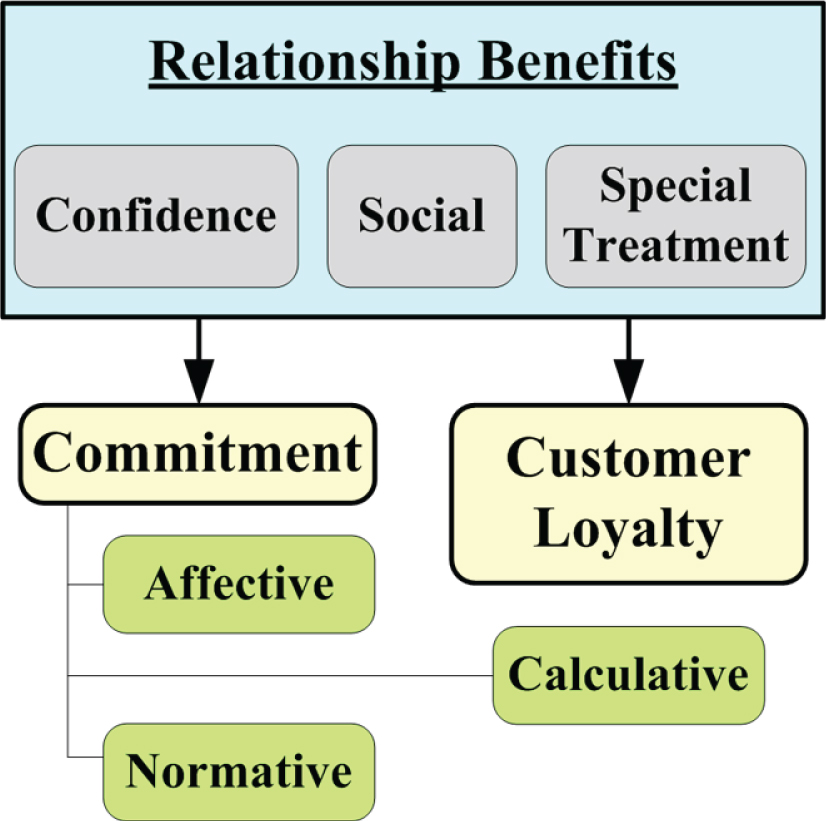
Conceptual framework.
The study was intended to evaluate the link between relationship benefits on behavioral loyalty and to check the mediating role of commitment. Relationship benefits were used as an independent construct, while customer loyalty was used as dependent construct.
Restaurants from high contact, customized personal service category, Laundry services from moderate contact, customized personal service sectors and fast food from moderate contact standardize service sector operating in the city of Rawalpindi of Pakistan.
The data was collected randomly from more than 600 customers of these specific service groups. Two hundred customers’ responses from each group were analyzed.
Gwinner et al. [17] scales were adapted to measure RB, for commitment scales were adapted from Allen and Meyer [1] and for Loyalty scales developed by Zeithaml et al. [38] were adapted. Seven-point likert scale was used in the study.
Proposed approach
The Proposed approach for customer loyalty prediction is shown in Fig. 3, which is the marriage of five sub-parts. These five sub-parts are: 1) dataset collection, 2) reliability evaluation and validation, 3) according to Cronbatch Alpha value, database preparation 4) development of training and testing dataset using prepared dataset of PART-2, 4) MLP-ANN model designing and its parameter assigning, 5) training and testing the MLP model, and save the model for customer loyalty prediction for future prospective.
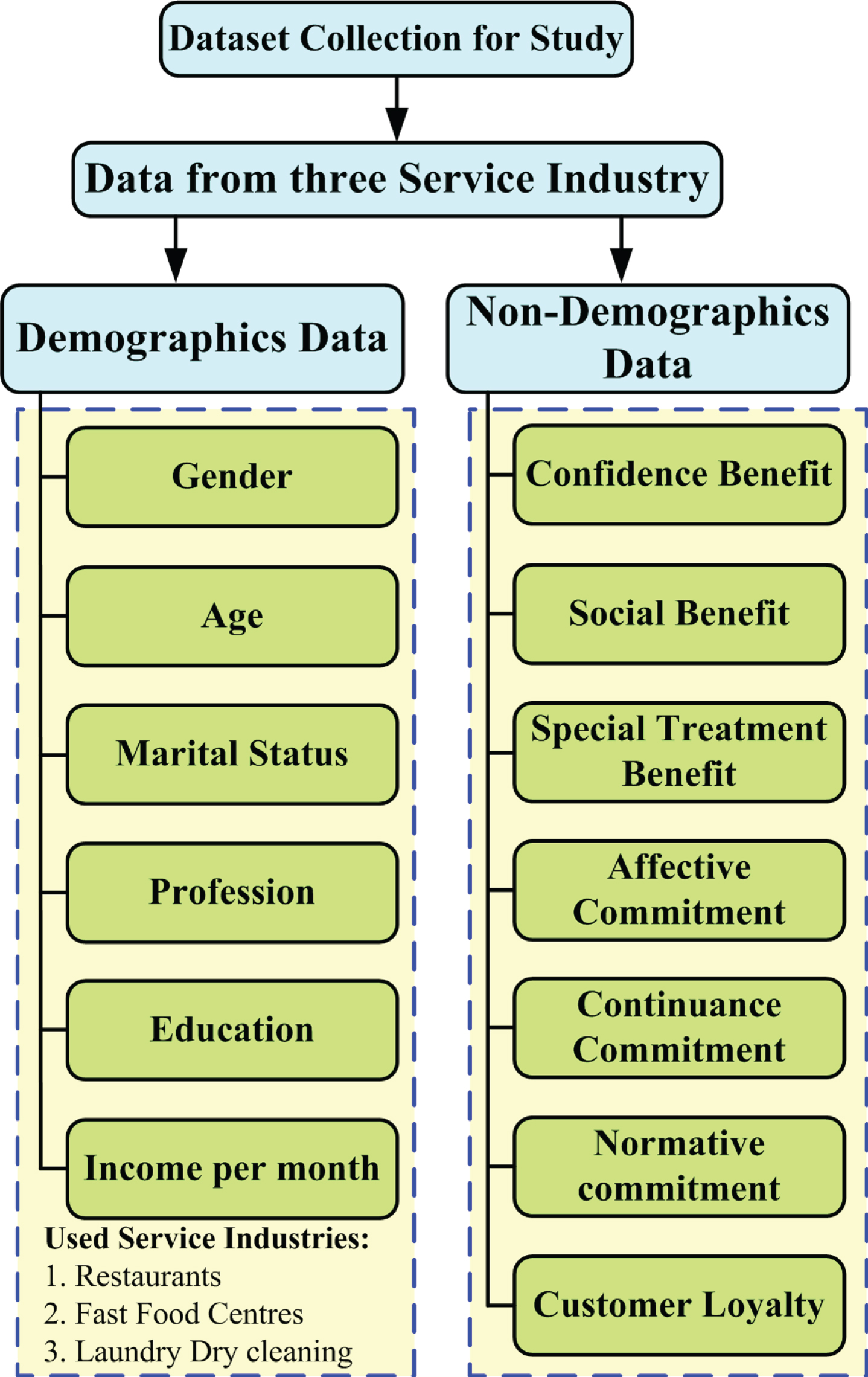
Information of Collected Dataset for Study.

Proposed approach for customer loyalty prediction.
In PART-1, real-side data has been collected from three different service industry. The collected dataset includes the demographic and non-demographic variables. All hypothesis (as mentioned in section-2) are evaluated in PART-2 then Multiple regression method has been implemented to evaluate the relationship benefits on the behavioral loyalty then Cronbatch Alpha method has been implemented to evaluate the degree of reliability of each variables with respect to the customer loyalty. If degree of alfa is greater than 0.6, then that variable is utilized in prediction of loyalty, else discarded from the database. In PART-3, prepared database from selected variables has been divided into two groups (i.e., training and testing data). Both training and testing dataset are not identical to each other and both datasets include the different samples information. By using training dataset, developed model in PART-4 is trained. After successful train, testing is performed to validate the performance of the MLP model in PART-5 then proposed model is saved for future purpose application in service industry to evaluate the customer loyalty. So that service industry may prepare the short-term as well as long-term plans.
A statistical tool to identify relationship among different constructs under investigation, to perform regression analysis smoothly it requires dependent constructs. The relationship among constructs need to be hypothesized and should be dependent on several other independent constructs. Data set gathered through survey is required to implement this regression analysis. Instruments/questionnaire and through self-administered survey data set can be created.
Using regression analysis on this survey data, researchers attempted to determine whether or not these independent and mediating constructs have impacted on customer loyalty, and if so, to what extent.
Artificial neural network (ANN)
This study has been analyzed by using MLP network with three-layer architecture (i.e., input, hidden and output layer) as shown in Fig. 4. The mathematical implementation of MLP model is very straight forward and easy to understand.
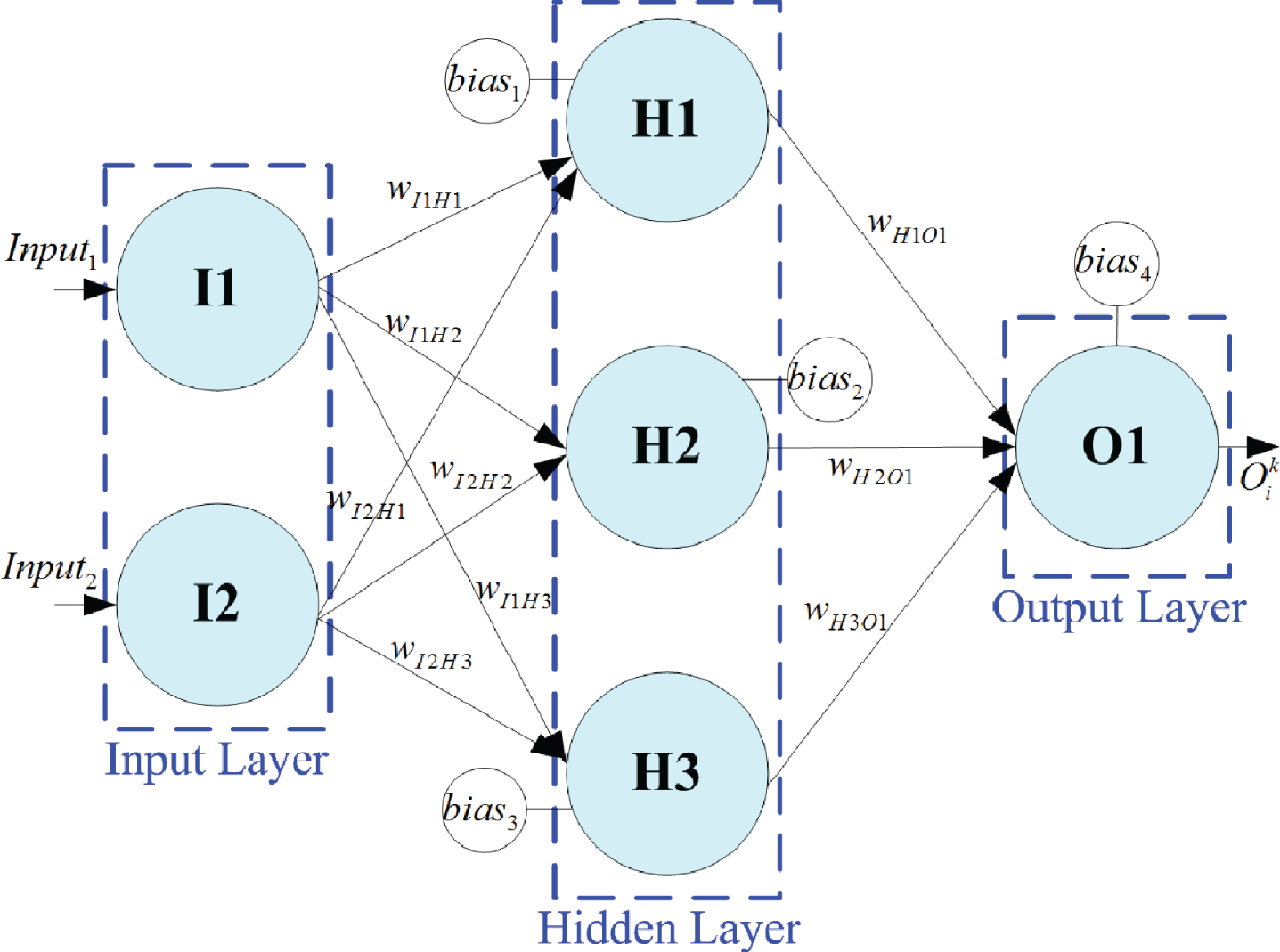
MLP based ANN modelling architecture.
The mathematical modelling as follow:
Where, k = 1, 2, 3, 4, . . . . . . N and N = total number of input
S () =activation function of the neuron
H =neurons at hidden layer= 1, 2, 3, 4, . . . . . . z
Where, j = 1, 2, 3, . . . . . K = neurons at output layer
This study is performed into two parts. These two parts of study are as follow: The part#1 attempted to find the impact of RB on CL as well as mediating role of Commitment and its impact on CL in three service sectors operating. The part#2 attempted to evaluate the CL using machine intelligence approach.
Descriptive statistics, correlation, and regressions analysis were used to analyze the data through SPSS (20). For analyzing mediating effect Sobel test is used. Descriptive statistics are shown in Table 1. Through mean and standard deviation position of responses can be identified and the statistic shows that responses are mostly in category 5 which represent (agreed somewhat).
Descriptive Statistics
Descriptive Statistics
A/α shows Cronbach alpha. Cronbatch alpha (α) is the most acceptable, widely, and frequently used key to measure the reliability of items of the variables [8]. For a reliable scale the value of alpha should always be α> 0.6. The reliability of current study falls under a very good range.
Table 2 depicts the validity analysis results among the constructs. The results of all six variables are shown below in 7×7 formats. Correlation among variables is displayed. The above Table 2 shows positive and significant correlation among each other.
Correlation Matrix among all variables
**p < .01.
Multiple regression analysis is used to analyze the data. Table 3 shows the regression analysis statistics. After applying validity and reliability, multiple regression analysis is used to evaluate the hypothesis developed for this study. The first regression 3 shows that all the relationship benefits components found to have positive and significant impact on the dependent variable i.e. loyalty of customer. The result suggested that Customer loyalty will change up to 0.91, 0.132 and 1.82 unit if there will be change in CB, SB and STB respectively.
Multiple Regression Analysis (Relationship Benefit on Customer Loyalty)
Multiple Regression Analysis (Relationship Benefit on Customer Loyalty)
Dependent Variable: Customer Loyalty: *p≤.05, **p≤.01, ***p≤.001.
The value of R2 = 0.186 shows explanations of variation by the three independent constructs for the dependent construct customer loyalty.
The regression Tables 4 and 5 shows that all the relationship benefits components found to have positive and significant impact on the dependent variable i.e affective commitment and customer loyalty. The result suggested that affective commitment is changed up to 0.168, 0.91 and 0.299 unit and customer loyalty is changed upto 0.075, 0.124 and 0.155 unit, if there is change in CB, SB and STB respectively.
Multiple Regression Analysis (Relationship Benefit on Affective commitment)
Dependent Variable: Affective commitment: *p≤.05, **p≤.01, ***p≤.001
Multiple Regression Analysis (Relationship Benefit & Aff. Commitment on Customer Loyalty)
Dependent Variable: Customer Loyalty: *p≤.05, **p≤.01, ***p≤.001.
The value of R2 = 0.112 and 0.212 show explanations of variation by the three independent constructs for the dependent construct affective commitment as well as for customer loyalty, respectively.
According to this regression analysis affective commitment is statistically significant (b = 0.091, p = 0.000). After inclusion of AC the value of other independent variable has been decreased. This allows affective commitment to act as mediator.
The regression Table 6 shows that all the relationship benefits components found to have positive and significant impact on the dependent variable i.e calculative commitment. The result suggested that calculative commitment will change up to 0.132, 0.413 and 0.144 unit if there will be change in CB, SB and STB respectively.
Multiple Regression Analysis (Relationship Benefit on Calculative commitment)
Dependent Variable: Calculative Commitment: *p≤.05, **p≤.01, ***p≤.001.
The value of R2 = 0.198 shows explanations of variation by the three independent constructs for the dependent construct calculative commitment.
According to Table 7, the regression analysis calculative commitment is statistically significant (b = 0.096, p = 0.000). After inclusion of AC the value of other independent variable has been decreased. This allows calculative commitment to act as mediator.
Multiple Regression Analysis (Relationship Benefit and Calculative commitment on Customer Loyalty)
Dependent Variable: Customer Loyalty: *p≤.05, **p≤.01, ***p≤.001.
The regression Table 8 shows that all the relationship benefits components found to have positive and significant impact on the dependent variable i.e. normative commitment. The result suggested that normative commitment will change up to 0.003, 0.212 and 0.110 unit if there will be change in CB, SB and STB respectively.
Multiple Regression Analysis (Relationship Benefit on Normative commitment)
Dependent Variable: Normative Commitment: *p≤.05, **p≤.01, ***p≤.001.
The value of R2 = 0.052 shows explanations of variation by the three independent constructs for the dependent construct normative commitment.
According to Table 9, the regression analysis normative commitment is statistically significant (b = 0.157, p = 0.000). After inclusion of NC the value of other independent variable has been decreased. This allows normative commitment to act as mediator.
Regression Analysis (Relationship benefit and Normative commitment on Customer Loyalty)
Dependent Variable: Customer Loyalty: *p≤.05, **p≤.01, ***p≤.001.
The term p-value is used to identify the significance level. To accept the alternate hypothesis and to reject null hypothesis p-value is used as benchmark. The smaller the value of p, greater the probability of accepting alternate hypothesis and rejecting null hypothesis. *p≤.05 Means probability kevel at 95 % **p≤.01 at 99 % ***P < 0.001 (less than one in a thousand chance of being wrong).
This test is used to analyze the mediation effect for which the ratio of independent variable should fall outside the interval of 1.96±.
According to Table 10, the analysis for finding mediation effect of affective commitment, on independent variables CB, SB and STB on loyalty can be evaluate through Zab statistics. The result clearly shows that the value clearly falls outside the 1.96±interval, indicates and confirms mediation.
Sobel Test for Affective Commitment
Sobel Test for Affective Commitment
According to Table 11, the analysis for finding mediation effect of calculative commitment, on independent variables CB, SB and STB on loyalty can be evaluate through Zab statistics. The result clearly shows that the value clearly falls outside the 1.96±interval, indicates and confirms mediation.
Sobel Test for Calculative Commitment
According to Table 12, the analysis for finding mediation effect of normative commitment, on independent variables CB, SB and STB on loyalty can be evaluate through Zab statistics. The result clearly shows that the value clearly lies outside the 1.96±interval, indicates and confirms mediation.
Sobel Test for Normative Commitment
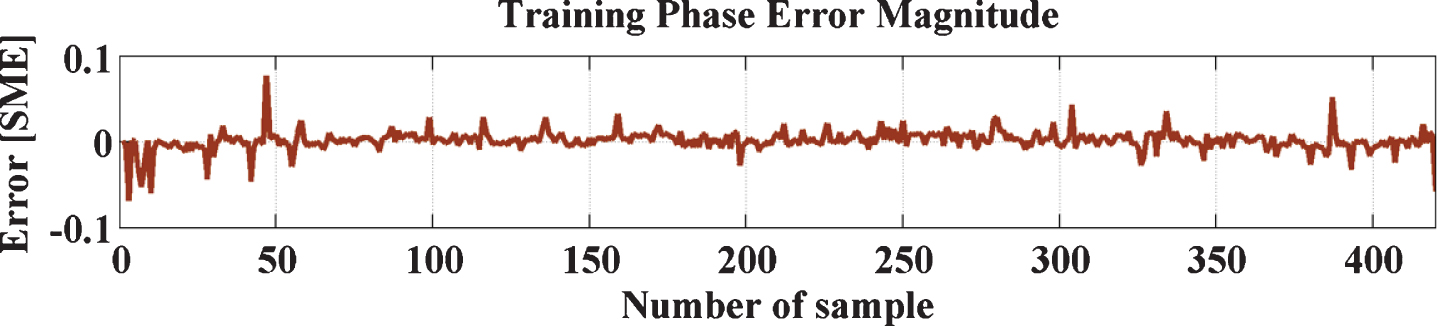
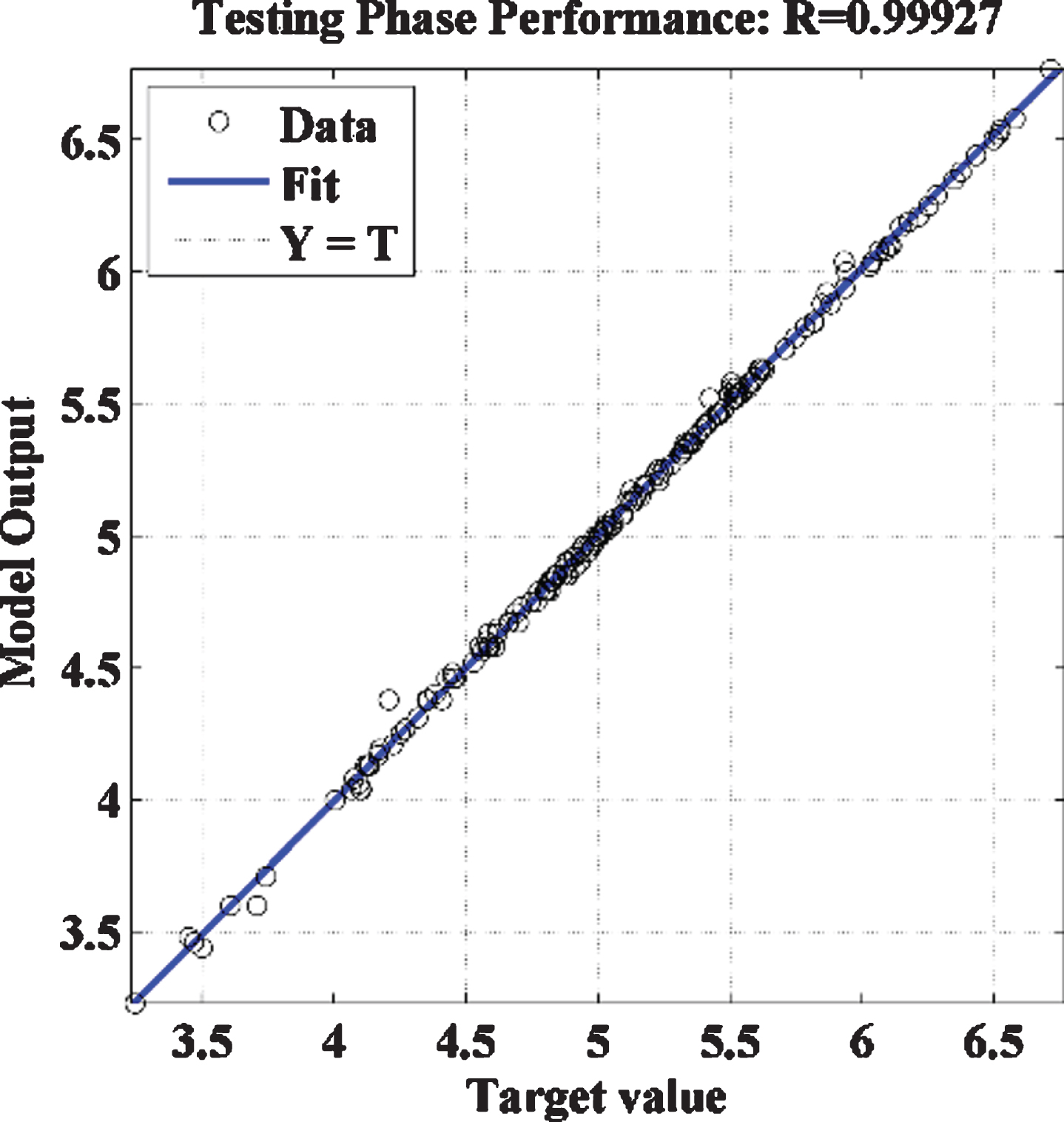
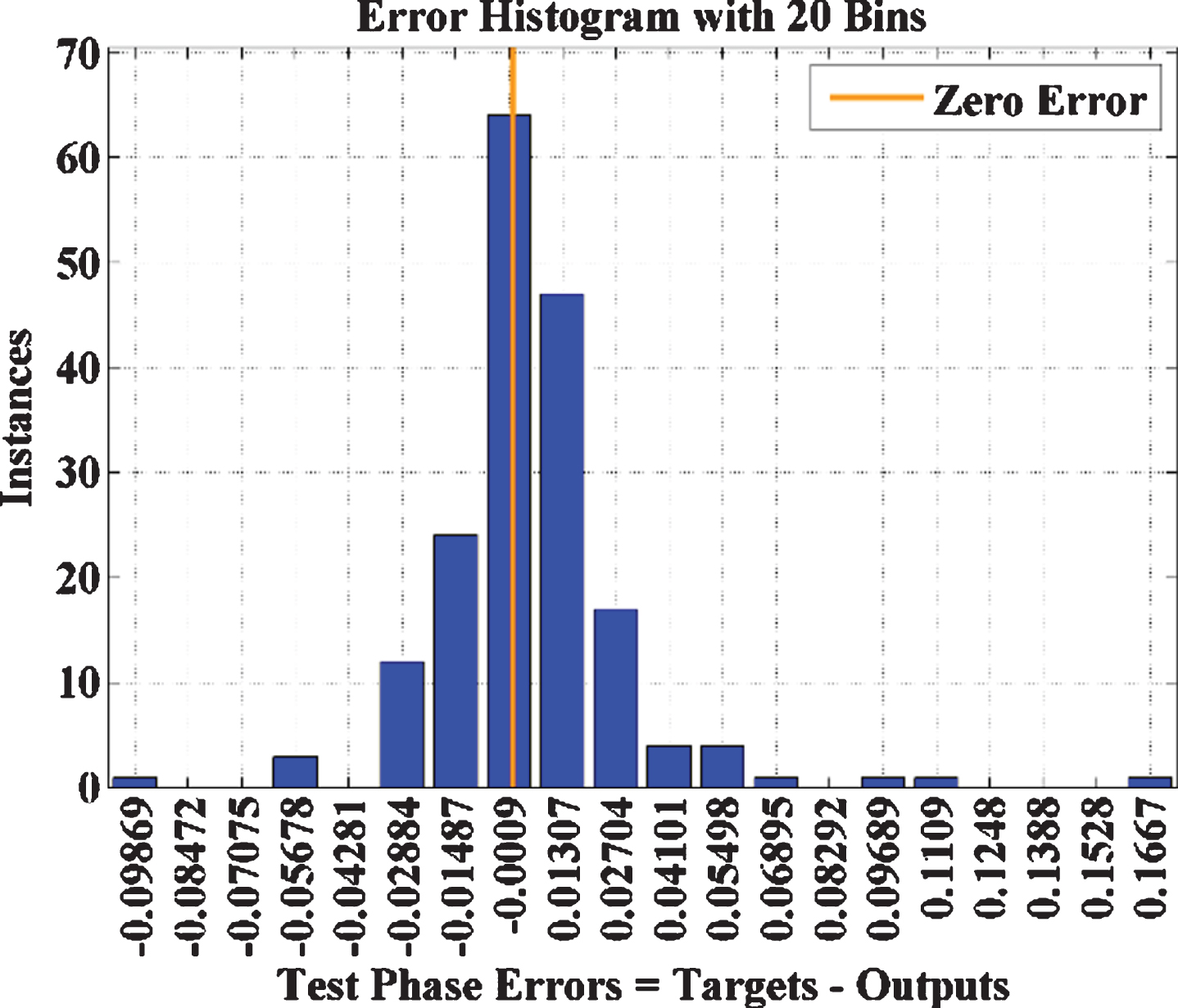
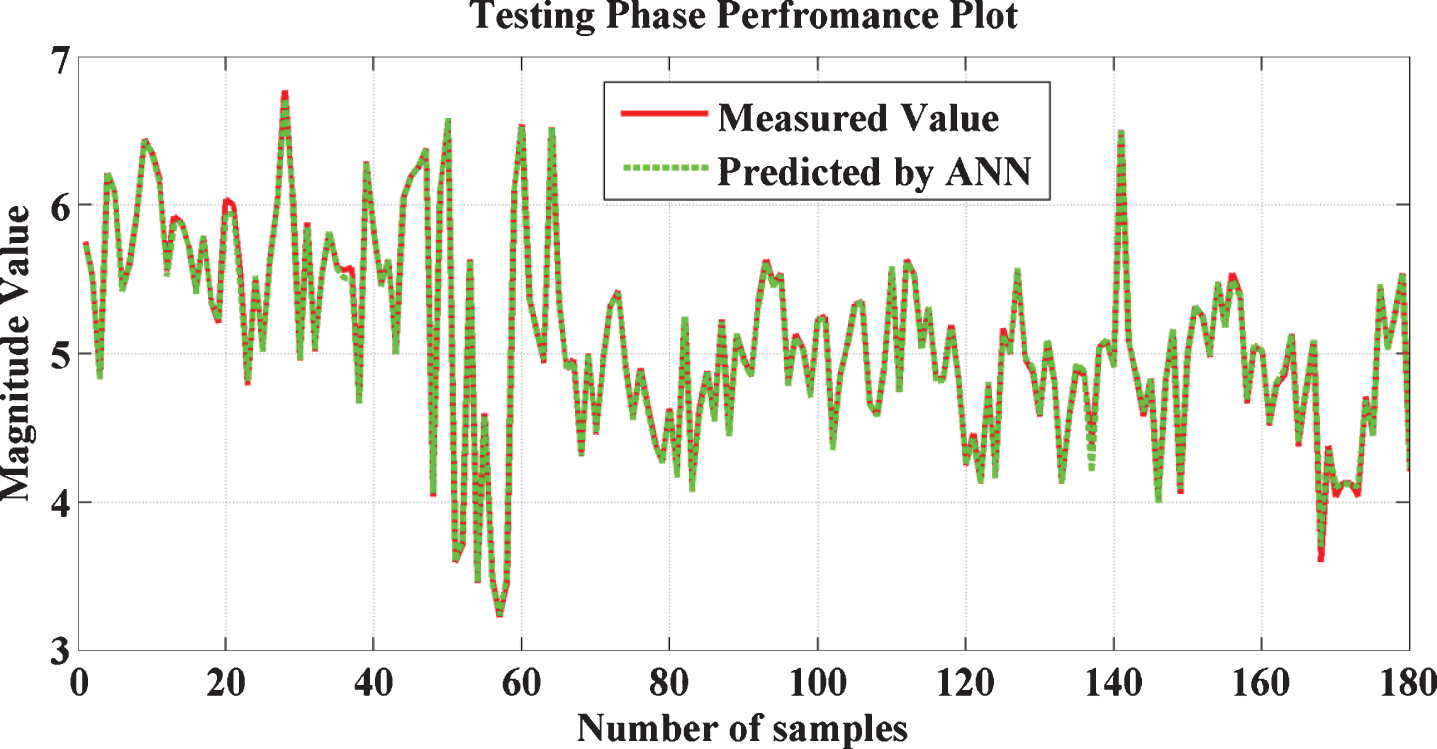
In this section, obtained results for customer loyalty prediction using MLP model have been presented. The model performance validation is represented in graphical way for better understanding of a new researcher point of view as well as industry application. In training process, model learn the pattern and develop the mapping between input variables with respect to the target value using training dataset. The model performance during training phase is presented in Figs. 5–10. In testing phase, trained model is validated by using testing dataset. The model performance during testing phase is presented in Figs. 11–14.
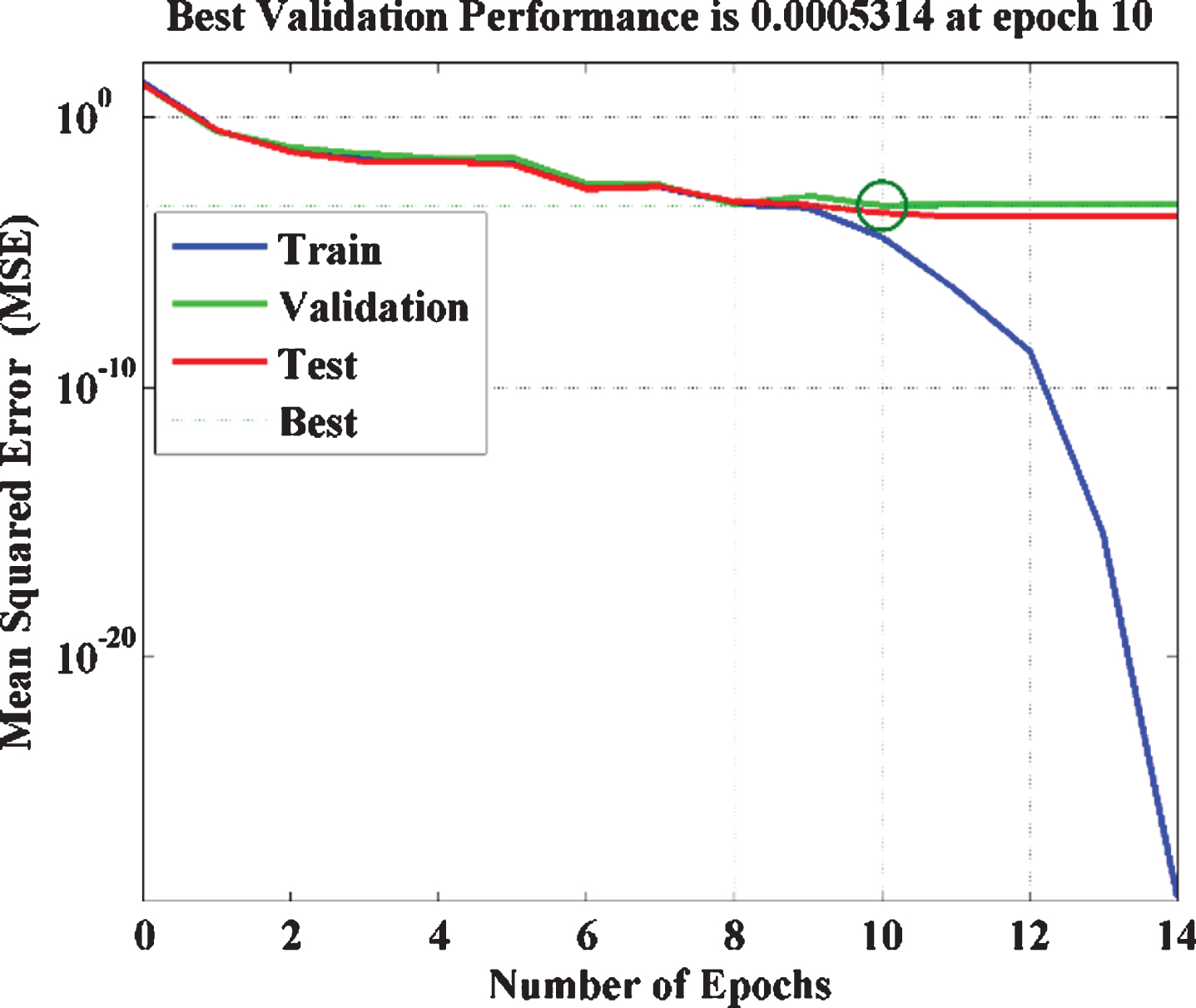
Performance plot for training phase.
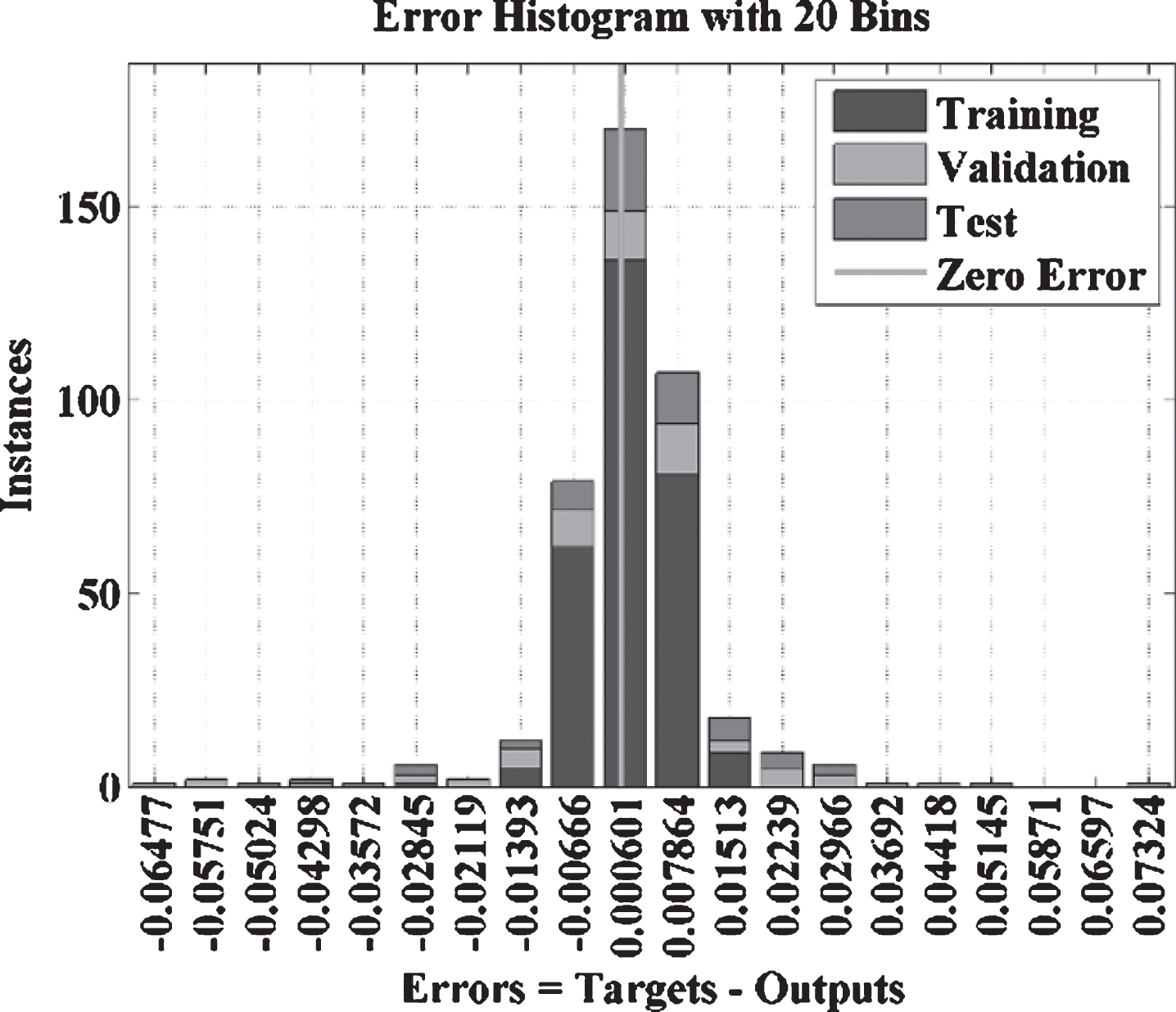
Error histogram plot for training phase.
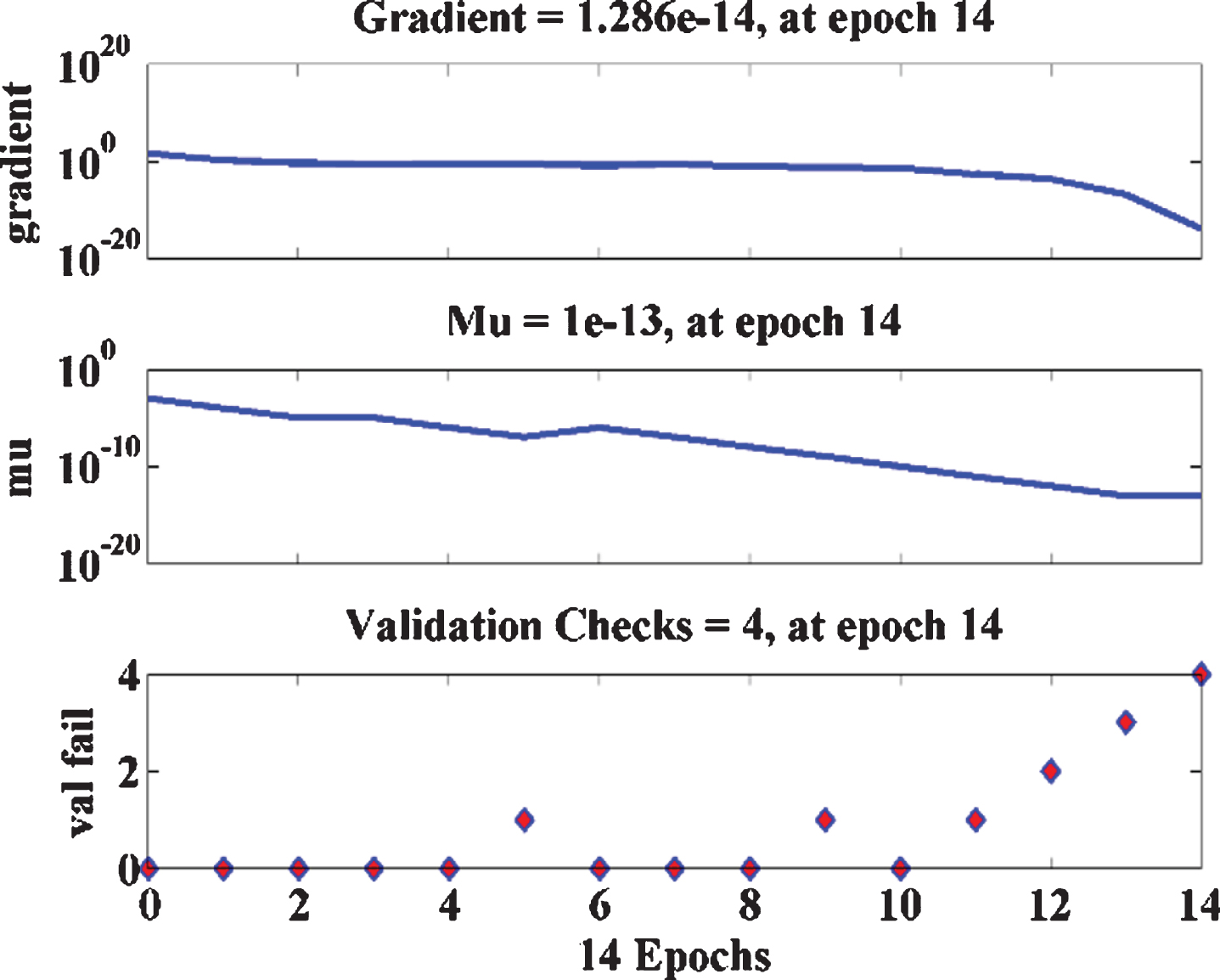
Train state plot for training phase.
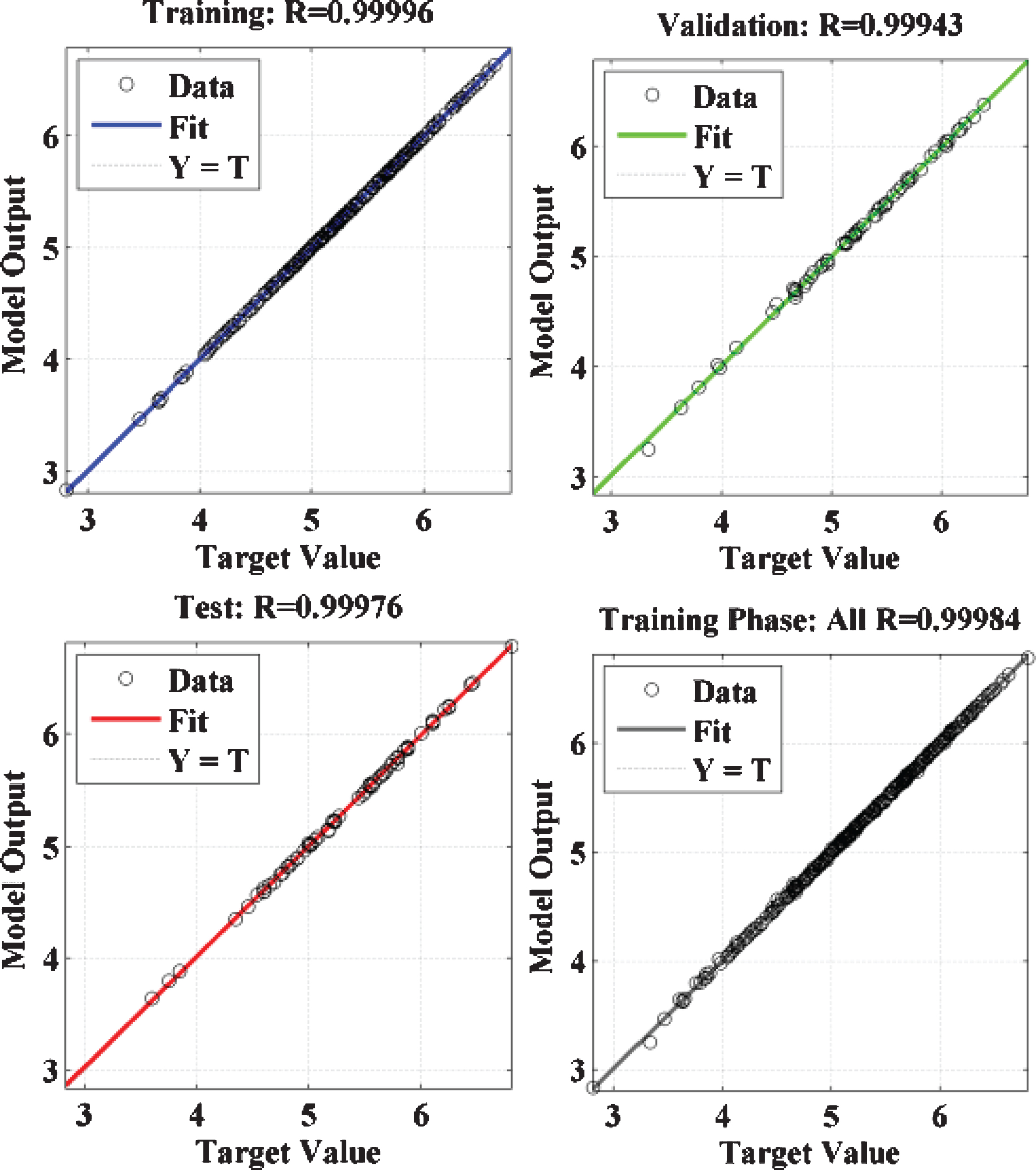
Regression plot for training phase.
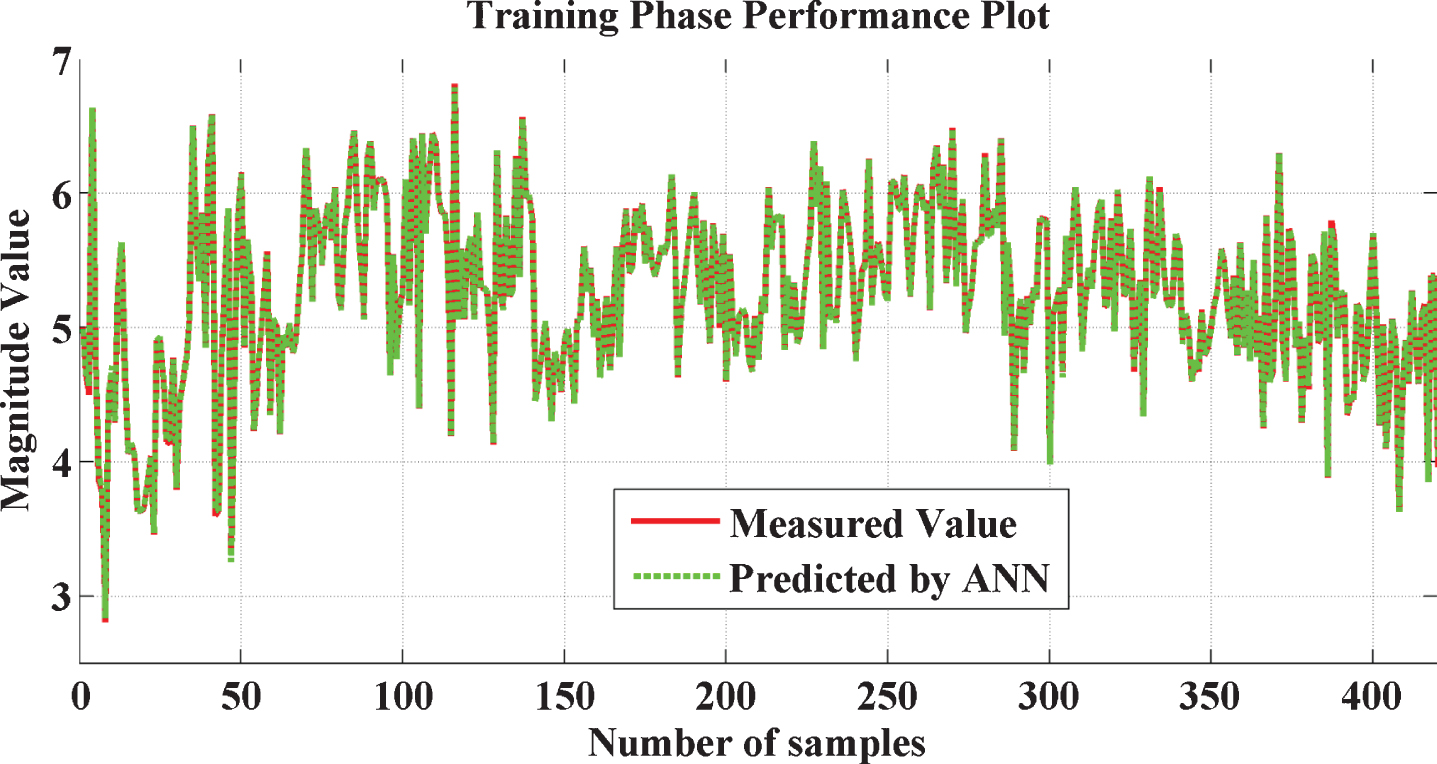
Measurred and predicted loyalty comparison plot for training phase.
Error plot between measurred and predicted loyalty values for training phase.
Regression plot for testing phase.
Histogram plot for testing phase.
Measurred and predicted loyalty comparison plot for testing phase.
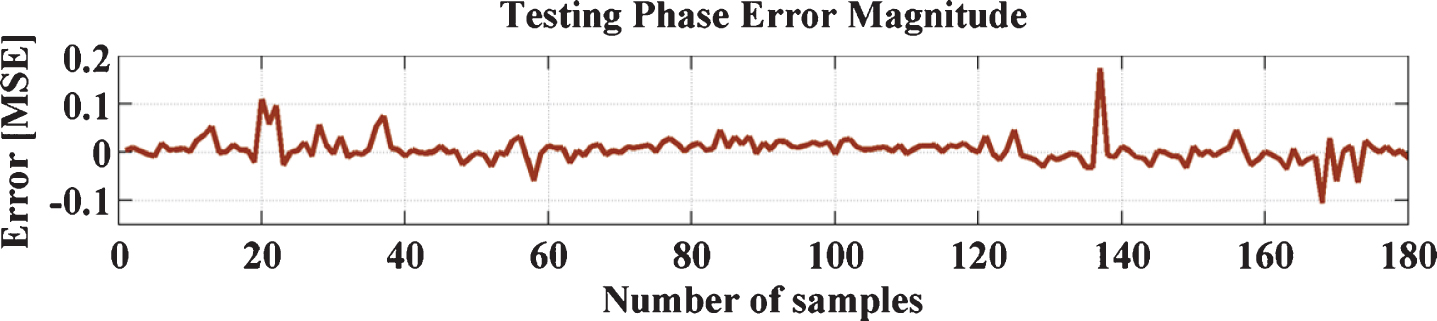
Error plot between measurred and predicted loyalty values for testing phase.
The loyalty prediction accuracy during training phase and testing phase is 99.984% (as shown in Fig. 8) and 99.927% (as shown in Fig. 11) respectively, which is the very close to actual value therefore, proposed model for customer loyalty evaluation may be utilized for further future planning of service industry. For the one step-ahead validation of the performance of the MLP-ANN model, performance plot (Fig. 5), histogram plot (Fig. 6 for training and Fig. 12 for testing), and training state plot (Fig. 7) have been presented.
Figures 9 and 13 are represented the comparison of evaluated loyalty by MLP model and the actual value during training and testing phase respectively, which are the very close to each other. So, the evaluated error value is negligible, as shown in Figs. 10 and 14 for training and testing phase, respectively.
Significant positive effect of relationship benefit on loyalty can be found in this study by analyzing the result of the current study. This shows that customers who build strong relationship with companies tend to have deeper loyalty level. Furthermore the different facets of relationship benefits found to have positive impact on commitment as the result and the summary of hypothesis is suggesting. Customer commitment held customers to stay for longer period of time than that of other customers who are not more committed towards a particular brand or company. In consistence with the previous literature, e.g. (Gwinner et al. (1998) and Reynold and Beatty (1999) Lee, Ahn and Kim (2008) Goodwin and Gremler (1996) and Henning-Thurau et al. 2002) relationship benefit in this study found to have significant impact in developing customer loyalty in three diverse service sector organizations working in Pakistan.
The regression analysis and Sobel test validated the role of commitment as mediator. The importance of commitment indicated by the results reaffirms this belief that committed customers tends to stay longer period of time with company resulting in stable market share as compare to competitors. The end result of relationship benefit and customer commitment is the behavioral and attitudinal loyalty of customer towards a particular brand or company. After the reliability analysis of the all variables, intelligent machine approach has been designed and implemented to predict the loyalty of the customer using MLP-ANN model. Obtained results of the proposed approach show the acceptability of the proposed approach for the planning in service industry.
Direction road map for service industry
It is expected that the finding of this study will help marketing manager of service organizations to design relationship benefit in such a way that will enhance affective and normative commitment and to reduce dependency on continuance commitment. It will also help marketing managers to design such marketing tactics which will strengthen commitment of customers with current service provider. The new phenomena of call centre considered to be initiated by telecom service sector in Pakistan is to establish a good business relationship which reflects mutual benefits and the other aspect from company point of view is that they are trying to underpin customer’s commitment with social benefit.
This topic will expected to open new arena for service manager that with confidence benefit, social benefit and special treatment will help company to increase their heart and mind share in a particular market. This research finding is expected to help manager in devising different strategies to create positive emotion and to build long term social bonding with customer and experiencing mutual benefits and improving affective commitment of customer towards service and to get result in terms of positive future behavioral intention.
It has been discussed earlier that relationship is integral part of any business; the result of this study hope to help managers of service providing firms to devise strategy and will hope to bring out important components from relationship benefit to get desired output. This research will expected to help, in terms of managerial context that how to increase affective commitment for their service and to reduce negative connotation of continuance commitment to get maximum life time value out of their customers.
Limitation and future research
This study is based on relationship benefit, commitment and consequences of customer loyalty like word of mouth intention repurchase intentions, price sensitivity and complaint behavior in the presence of mediating role of affective, calculative and normative commitment in three different services setting. Model is designed with the aim to generalize the result in different service settings but there are hurdles in this study. The research will be carried out in a particular demographic setting, so the finding will remain stick to this very cultural context and generalizability will remain an issue. Number of service organization in our cultural context is numerous and to select all of them in our study is near to impossible so it is beyond the scope of this study.
More qualitative and quantitative research can explore the true nature of relationship benefit. For further study on this topic researcher can investigate the role of relationship benefit and cost associated with customer in maintaining long lasting relationship with the service provider. Introducing different construct like service quality or relationship quality can explore, role of relational benefit as antecedent of customer satisfaction and loyalty in more indirect way. The framework of relational benefit can be used as to find personal expectation and perception of relationship to investigate personal and relationship characteristic as moderating variable.
Footnotes
Acknowledgments
The authors extend their appreciation to the Intelligent Prognostic Private Limited, India for providing necessary fund and facilities for this research work.