






Abstract
Cardiovascular diseases are the leading cause of death worldwide. Early diagnosis of heart disease can reduce this large number of deaths so that treatment can be carried out. Many decision-making systems have been developed, but they are too complex for medical professionals. To target these objectives, we develop an explainable neutrosophic clinical decision-making system for the timely diagnose of cardiovascular disease risk. We make our system transparent and easy to understand with the help of explainable artificial intelligence techniques so that medical professionals can easily adopt this system. Our system is taking thirty-five symptoms as input parameters, which are, gender, age, genetic disposition, smoking, blood pressure, cholesterol, diabetes, body mass index, depression, unhealthy diet, metabolic disorder, physical inactivity, pre-eclampsia, rheumatoid arthritis, coffee consumption, pregnancy, rubella, drugs, tobacco, alcohol, heart defect, previous surgery/injury, thyroid, sleep apnea, atrial fibrillation, heart history, infection, homocysteine level, pericardial cysts, marfan syndrome, syphilis, inflammation, clots, cancer, and electrolyte imbalance and finds out the risk of coronary artery disease, cardiomyopathy, congenital heart disease, heart attack, heart arrhythmia, peripheral artery disease, aortic disease, pericardial disease, deep vein thrombosis, heart valve disease, and heart failure. There are five main modules of the system, which are neutrosophication, knowledge base, inference engine, de-neutrosophication, and explainability. To demonstrate the complete working of our system, we design an algorithm and calculates its time complexity. We also present a new de-neutrosophication formula, and give comparison of our the results with existing methods.
Keywords
Introduction
Artificial intelligence (AI) is an umbrella term for algorithms aiming at delivering task of solving capabilities comparable to humans. Its dominant sub-field is decision-making to develop a system that can make an intelligent decision, on behalf of humans to improve the quality of life [1–3]. Even in the health care industry, automatic approaches recently demonstrated impressive findings. Unfortunately, such approaches have several disadvantages because of a lot of mathematical modeling, they are often considered black-box approaches, which do not foster trust and acceptance of AI generally. AI models or computational theories are generally considered not explainable [4]. In health care, there is a growing need for AI approaches, which are not only performing well but are trustworthy, transparent, and explainable for human experts in the health care industry [5–7].
According to the world health organization (WHO), cardiovascular diseases (CVDs) are the leading cause of death worldwide. About 17.9 million people die of heart diseases. With the help of different decision-making methods, it is possible to diagnose the disease at an early stage or at least guide a medical expert about the impending health condition, so that precautions can be taken and overall deaths can be reduced globally. Such a decision-making system will facilitate and simplifies the work of medical professionals. Many such systems have already been introduced in the literature, but because of the lack of transparency and the complexity of decision-making methods, it is difficult for medical professionals to adopt or use them with confidence. To achieve these goals, we introduced a new decision-making system which makes every step of the decision-making process transparent using understandable AI techniques, so that the medical expert understands that how the decision-making process works.
The information related to the diseases contains a-lot of imperfections, vagueness, and imprecision which may lead to an incorrect diagnosis. In 1965, Zadeh proposed a novel concept named fuzzy sets to deal with vagueness and imprecisions [8]. After that, many extensions of fuzzy sets derived and neutrosophic sets (NSs) are also one of them [9]. Smarandache proposed as a new branch of philosophy called neutrosophy in 1999 [10]. Neutrosophy is the base of the neutrosophic set (NS) and neutrosophic logic (NL). NS simultaneously focuses on true membership, falsity membership, and indeterminacy membership, which are more practical and appropriate than fuzzy systems and intuitionistic fuzzy systems in trade, which are unsatisfactory, incomplete, and is inconsistent in sequence. The single-valued neutrosophic set (SVNS) is an extension of the NS [11–13]. Ye introduced [14] simplified neutrosophic sets, and Peng et al. [21, 22] explained precisely their new operation and aggregate operators. The neutrosophic logic (NL) has no restriction on truth membership, indeterminacy membership, and falsity membership, while intuitionistic fuzzy logic has a summation of its components (or their upper limit) = 1. In this way, neutrosophic logic can address incomplete information (sum< 1), and para-consistent information (sum> 1). This property of neutrosophic sets makes it more suitable for the interpretation of medical knowledge.
There are many decision-making methods proposed in the literature, some of them are discussed here. The function of sign trigonometry (ST) is a method of decision making, which plays an important role in the aggregation of data. The biggest advantages of this function are its periodicity and the fact that it is symmetric about the origin, and therefore it meets the decision-making priorities over the multi-time phase parameters [15]. Immediate probabilities aggregation operators for single-valued and interval neutrosophic sets is another method of decision making which describes the decision-maker’s behavior objectively (in terms of probability) and subjectively (in terms of weight), with the concept of probabilistic information playing a dominant role in the investigation. The advantage of these proposed operators is that they simultaneously combine objective and subjective behavior in the decision-making process [16].
The technique for order preference by similarity to an ideal solution (TOPSIS) is a well-known approach that works on the principle of making the best choice according to the minimum distance from the target. For this, PIS (“Positive Ideal Set") and NIS (“Negative Ideal Set") two theories are considered and depends on the method of TOPSIS. In the TOPSIS method, both inclinations, such as similarity or dissimilarity, are looked all together to achieve the goal. Based on these features, numerous researchers have solved the problem of TOPSIS to solve the problem of multiple criteria decision making under the SVNS environment [17]. Frank t-norm operations are more compatible and common than other norms, giving the decision-maker more flexibility while adjusting its parametric value. Meanwhile, the correlation between any kind of argument is a significant advantage of the heroin main (HM) operator. Encouraged by these basic features, it is interesting to combine Choquet integral HM operator to the SVNS based on the Frank norm operations [18]. During the aggregation process, the most important process is to define the operational rules. But from the current literature, it is observed that most of the existing aggregation operators are based on the assumption that there is a crisp number within the weight [0.1]. However, Ye et al. introduced explicit operational rules as an appendix to the SVNS operational rules, where the bases are the real numbers and the exponents are the SVNS [19].
In 2019, Zhu et al. proposed a family of pythagorean fuzzy aggregation operators based on the interactive operational laws of pythagorean fuzzy numbers (PFNs). Such as pythagorean fuzzy Interaction power PBM (PFIPPBM), pythagorean fuzzy Interaction power partitioned geometric bonferroni mean (PFIPPGBM), and weighted forms of PFIPPBM and PFIPPGBM. Proposed operators can not only handle situations where attributes are divided into several sections and in which the attributes are interrelated but also reduced the negative impact of irrational reviews on the outcome of the decision. He performed numerical examples as well as a comparative analysis to show the validity and superiority of the proposed approach [20].
In 2016, Ye et al. [23] proposed a novel single-valued neutrosophic similarity measuring method to resolve multi-period medical diagnosis problems. This technique used the tangent function and weighted aggregation of multi-period data. They compared their formula generated results with other similarity measures with the help of pattern recognition examples. After that, a multi-period example is demonstrated to find out the applicability of a multi-period medical diagnostic method with the help of comprehensive information on a multi-period.
In 2019, Cui et al. [24] presented a dynamic neutrosophic cubic set (DNCS) as an extension of neutrosophic sets. They expressed the patient’s symptom data using varying periods. Afterward, they used the proposed logarithmic similarity measure (LSM) of the DNCSs to diagnose the patient’s disease. Subsequently, a clinical diagnosis method is developed that used a logarithmic similarity measure of DNCS, where information on the symptoms of the disease is gathered after fixed time intervals. The time intervals are identified by DNCS. The applicability of this technique is checked with the help of different examples.
In 2019, Basset et al. [25] offered a new way to evaluate the process of selecting smart medical devices (SMDs) in group decision-making (GDM) in an ambiguous decision environment. The proposed method combined neutrosophic bipolar numbers with order priority techniques. In this study, diabetes patients had taken to choose diabetes diagnostics smart medical devices. Their main objective was to present the complexities of the problem, increase interest among experts in the health care industry, and evaluate smart medical devices under different diagnostic criteria. The results of the neutrosophic are analyzed with the help of the TOPSIS model, which showed that the obtained results and classification capability are sufficiently stable. The results generated from the proposed techniques are also compared with other models.
In 2019, Gulerial et al. [26] demonstrated various decision-making models that are useful for handling impreciseness and uncertainty among the qualitative and quantitative factors of the decision-making process. In the proposed work, a new parametric divergence measure for neutrosophic sets has suggested along with its various characteristics. Based on this method parametric divergence measured and outlined some methodologies along with its implementing procedural steps for classification problems and multi-criteria decision-making problem. Also, numerical examples of the application problems have provided for the illustration of the proposed methodologies. They compared their results with existing approaches as well.
The motivations of this article are described below: CVD is the leading cause of death worldwide. Deaths from CVD can be reduced if a decision can be made by experts earlier. There is a lot of uncertainty in health-related data. Misdiagnosis can be made if we do not handle such data effectively. Current decision-making systems are extremely complex, and lack transparency, making it difficult for medical professionals to understand them, so they are reluctant to adopt them with confidence. We develop a new decision-making system to determine the risks of heart disease. This system early detects heart disease to reduce the overall mortality rate. The decision-making system is taking thirty-five parameters as input and determining the risks of eleven heart diseases. SVNS is used for decision making. SVNS is very close to human thinking because it focuses on the degree of truth, the degree of indeterminacy, and the degree of falsity at the same time, and there is no restriction on its sum, unlike intuitionistic fuzzy sets. We integrate the concept of explainable AI to make our system adaptable for medical professionals. The quality of explanation is measure using causability. Explainable AI and causability AI systems build the confidence of medical professionals. We design the algorithms to show the complete working of the system, as well as calculate its time complexity. We also propose a new de-neutrosophication formula as an alternative approach to existing methods and provide a comparative analysis with existing methods.
Our contribution to this article is outlined below:
The remainder of this paper is organized in the following way: Section 2 briefly reviews important concepts of neutrosophic sets, explainable AI, and causability measures. Section 3 discusses the explainable neutrosophic clinical decision-making systems for cardiovascular diseases. Section 4 presents a case study to show the effectiveness of the system. Section 5 compares the results of the proposed de-neutrosophication formula with the existing de-neutrosophication formula. Section 6 concludes this paper and discusses possible future research directions.
Preliminaries
This section reviews some of the preliminary notions that need to be understood to fully benefit from this article.
I S 3 (p) = max(I S 1 (p) , I S 2 (p)) ,
F S 3 (p) = max(F S 1 (p) , F S 2 (p)) , for all p in P.
for all p in P.
The following matrix shows the binary relation between symptoms and CVDs. This matrix will be helpful to check the accuracy of the final highlighted cardiovascular disease.
Explainable neutrosophic clinical decision-making system for cardiovascular diseases
In this section, we will see the detailed working of the neutrosophic clinical decision-making system for cardiovascular diseases. We use single-valued neutrosophic sets for decision making. To make this system easy for the medical professional, we use explainable artificial intelligence approaches. We integrate the explanation part in each module of the system. The explanation module explains the working of that specific module. The quality of explanation is measure using causability. We design an algorithm and computes its time complexity. A new de-neutrosophication formula is also proposed in this article. Let’s move towards the detailed working of each module.
Block diagram of the explainable neutrosophic clinical decision-making system
There are five major modules of the system. The first module of the system is neutrosophication, the second module is a knowledge base, the third module is the inference engine, the fourth module is de-neutrosophication, and the fifth module is explainability. The system inputs thirty-five variables and calculates the risk of each type of cardiovascular disease. There are major eleven types of cardiovascular diseases. Figure 1 shows the block diagram of the proposed system.
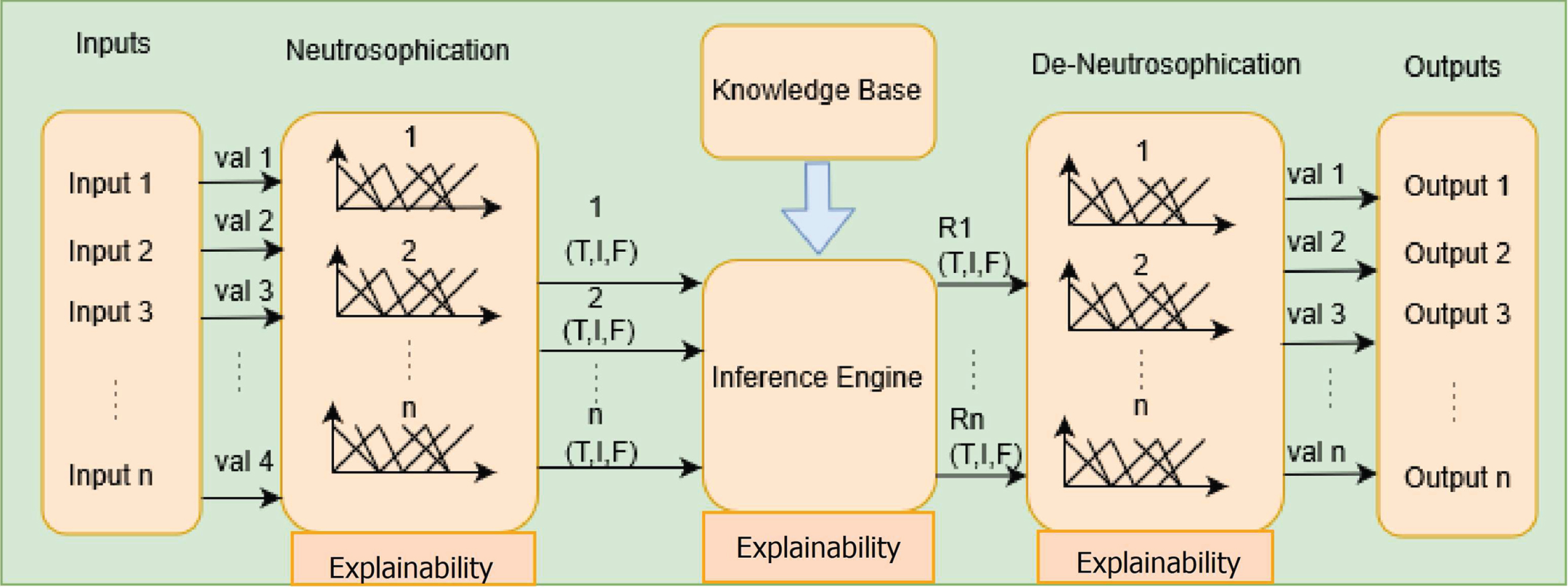
Basic structure of explainable neutrosophic clinical decision-making system.
Neutrosophic logic (NL) is used as a helping tool for modeling the proposed system. NL is a logic in which each proposition is estimated the percentage of truth in a subset T, the percentage of uncertainty in subset I, and the percentage of error in a subset F, where T, I, F are described above are said to be NL. We conclude that the process of implementing the decision-making system for CVD consists of the following steps:
1- Linguistic variables: Establish system input and output variables.
2- Defining the neutrosophication, inference, and de-neutrosophication mechanisms.
3- Neutrosophication: The process of assigning crisp values to the neutrosophication system as input sets and calculates the degrees of membership, degree of indeterminacy, and degree of falsity of each set.
4- Inference Engine: Apply the NL rules and calculates the output neutrosophic sets concluded from these input sets.
5- De-Neutrosophication: De-neutrosophication is a process of determining the accurate output value from the inferred neutrosophic sets. These crisp values are the final output of the system.
Algorithm
The algorithm of the proposed system is as follows:
Working of explainable neutrosophic clinical decision-making system for CVDs
The proposed decision-making system of CVDs is taking thirty-five symptoms as inputs and determines the risk of eleven types of CVDs diseases. The working range of each input variable is described in Table 1.
Range of input variables
Range of input variables
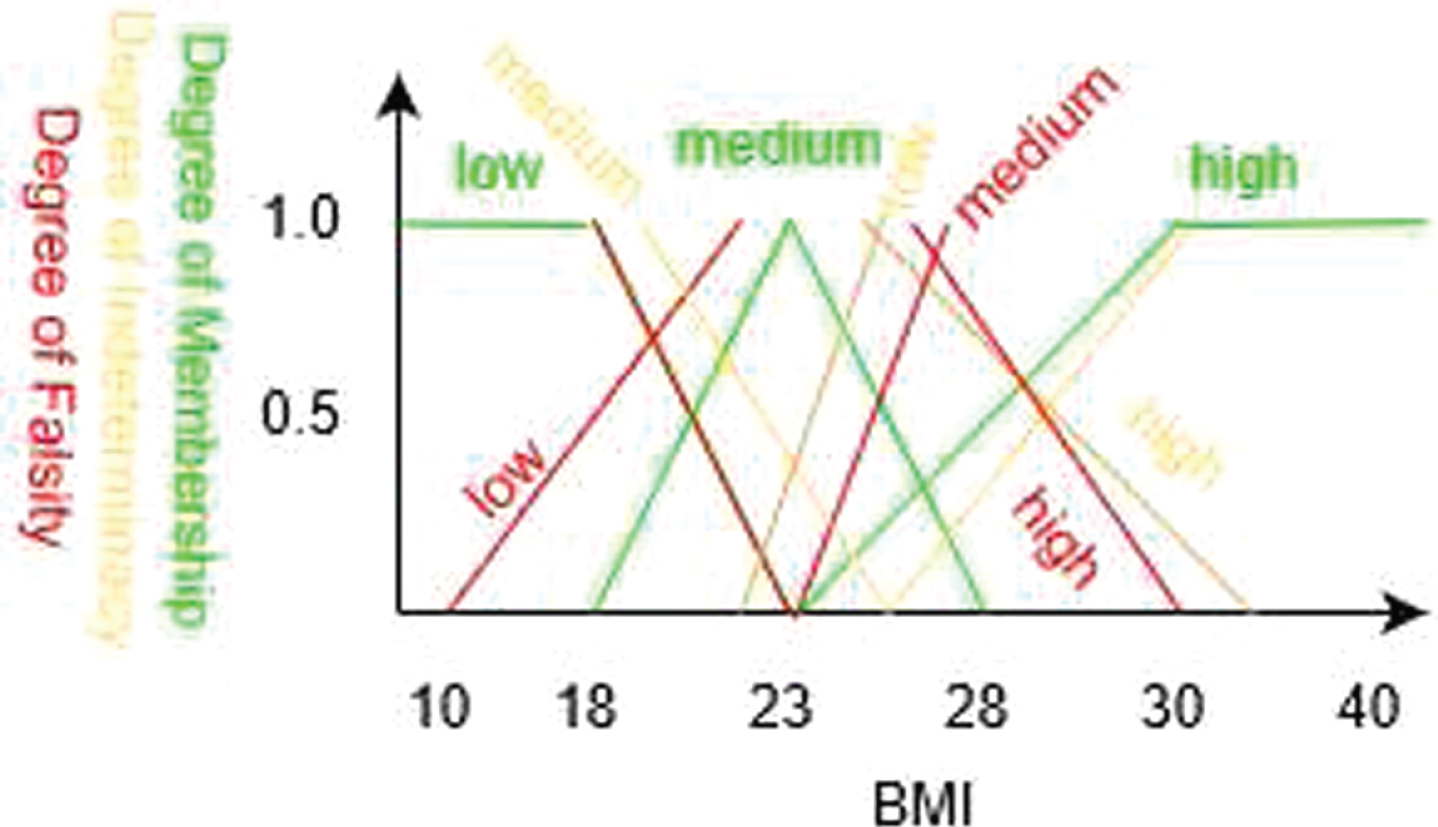
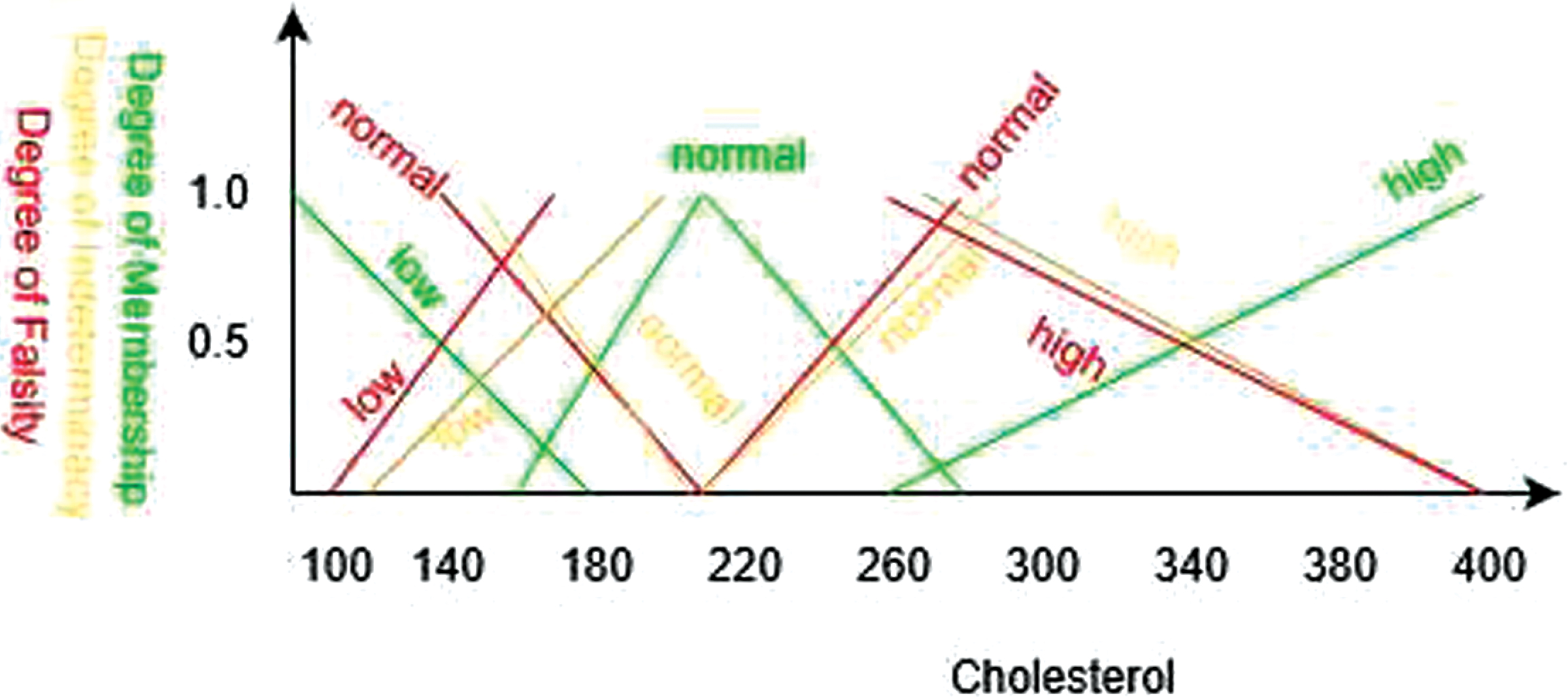
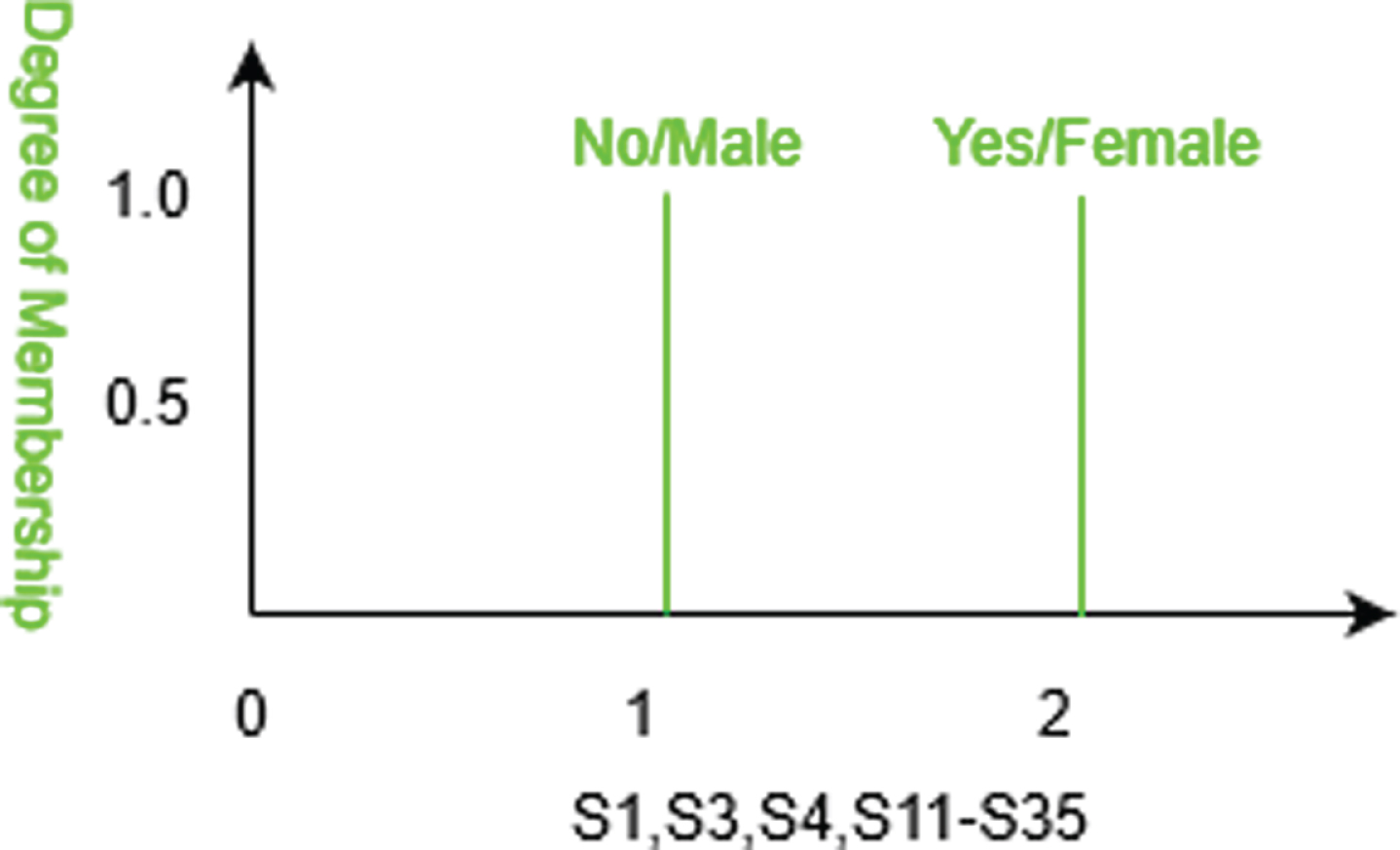
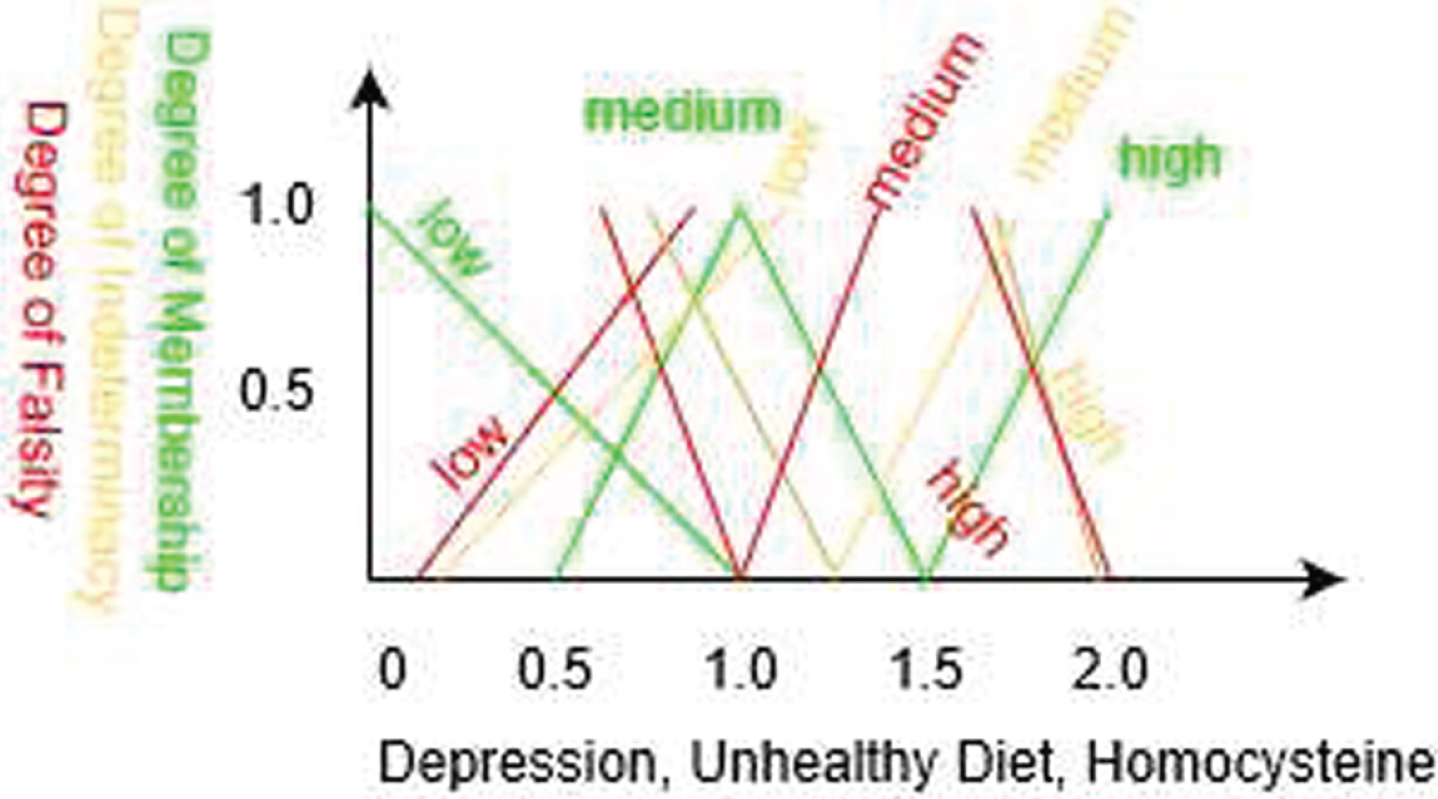
The neutrosophication is a process of converting crisp inputs in linguistic terms by determining the membership degree, indeterminacy degree, and falsity degree. The process of neutrosophication is depicted in the following Figure 2. The input range is divided into three types of membership functions. The plot of each input variable is shown in Figure 3, Figure 4, Figure 5, Figure 6, Figure 7, and Figure 8. The green color shows truth membership, yellow color shows indeterminacy membership, and red color show falsity membership. The mathematical form of truth membership, indeterminacy membership, and falsity membership of age are as follows:
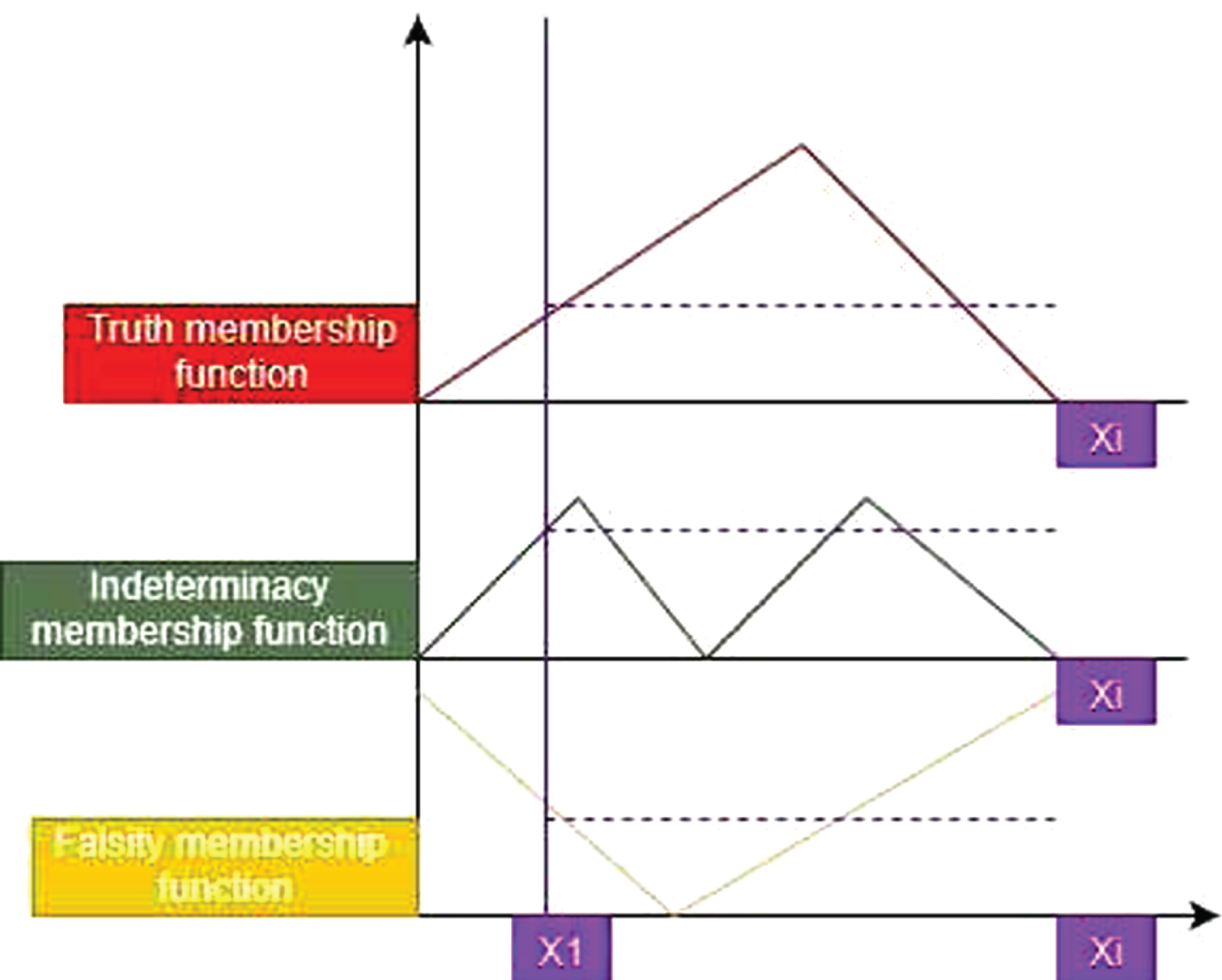
Neutrosophication process [32]
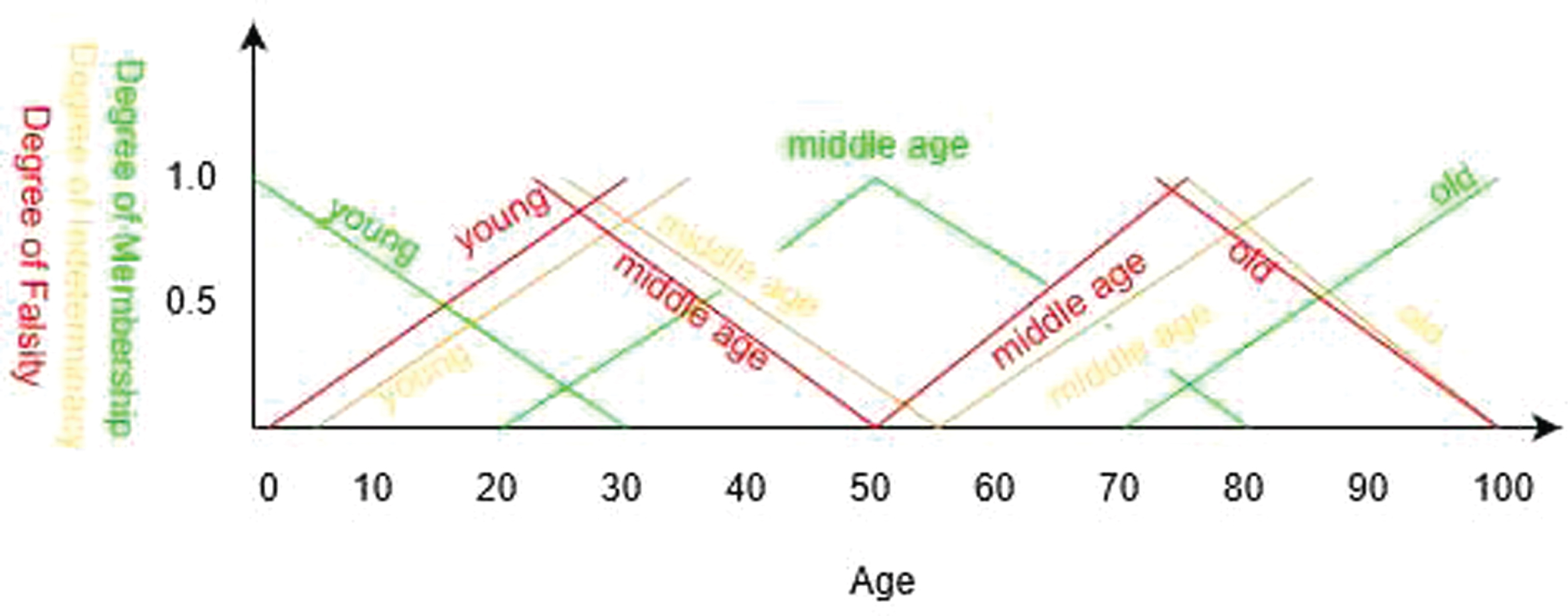
Age
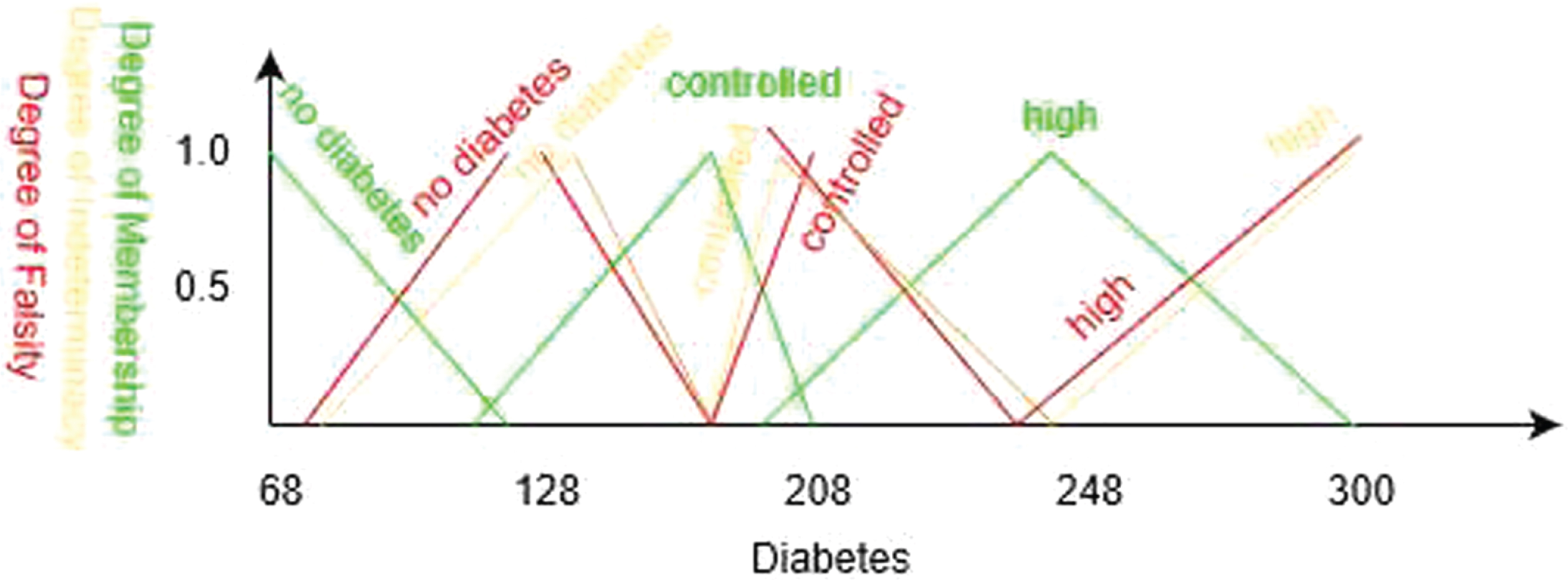
Diabetes
Body mass index (BMI)
Cholesterol
S1,S3,S4,S11-S35
Depression, Unhealthy diet, Homocysteine level
The mathematical form of degree of membership, degree of indeterminacy, and degree of falsity of cholesterol are as follows:
In this module, we define linguistic variables of all inputs and their truth membership, indeterminacy membership, and falsity membership. We have written their mathematical forms and represented them using their plots. These membership functions enable us to determine how much an input value is true, uncertain, and false. The value of these functions lies between 0 to 1. The value of each linguistic variable is the output of the neutrosophication module.
Inference engine
The inference engine is the major component of the decision-making systems that applies logical rules to knowledge-based to get new information. It contains human-like judgments which are expressed by the rules. Rules are IF-THEN statements. There are 665 rules of our system. Some of them are described below:
Ante-hoc explanation
The knowledgebase is a very important part of our system. It contains all possible rules which portray human intelligence. These rules are IF-THEN statements, which represent how to relate inputs with desired outputs. The inference engine takes the linguistic value of the neutrosophication module and determines active rules out of all possible rules. The output of each active rule is simply the minimum value of all membership functions, maximum value of all indeterminacy membership functions, and maximum value of all falsity membership functions which comes under the IF statement of that rule. The value of each active rule is called the firing strength of the rule.
De-Neutrosophication
The last step of our decision-making system is de-neutrosophication. In this paper, we use two ways to perform de-neutrosophication. The first de-neutrosophication method is taken from the literature, as discussed in [9]. The second method is proposed by us and it is the modification of the defuzzification formula discussed in [33]. The modified de-neutrosophication formula is as follows:
n is the sample space, and x i is a point in the sample space, μ x i is the membership value of x i , ν x i is the indeterminacy value of x i , λ x i is the falsity value of x i , and z is the crisp output.
The plots of degree of membership, degree of indeterminacy, and degree of falsity for output parameter (i.e. CVD risk) are shown in Figure 9, Figure 10, and Figure 11.
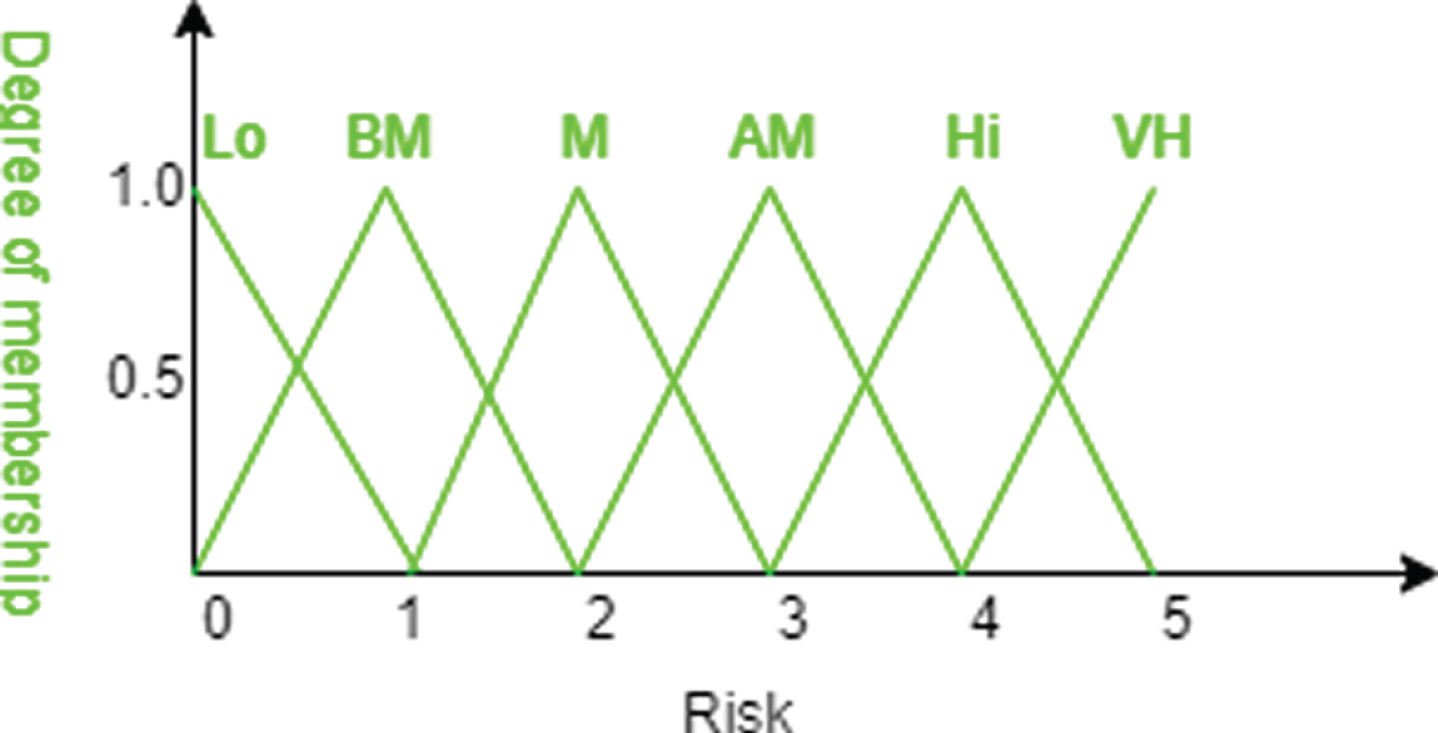
CVD risk-degree of membership
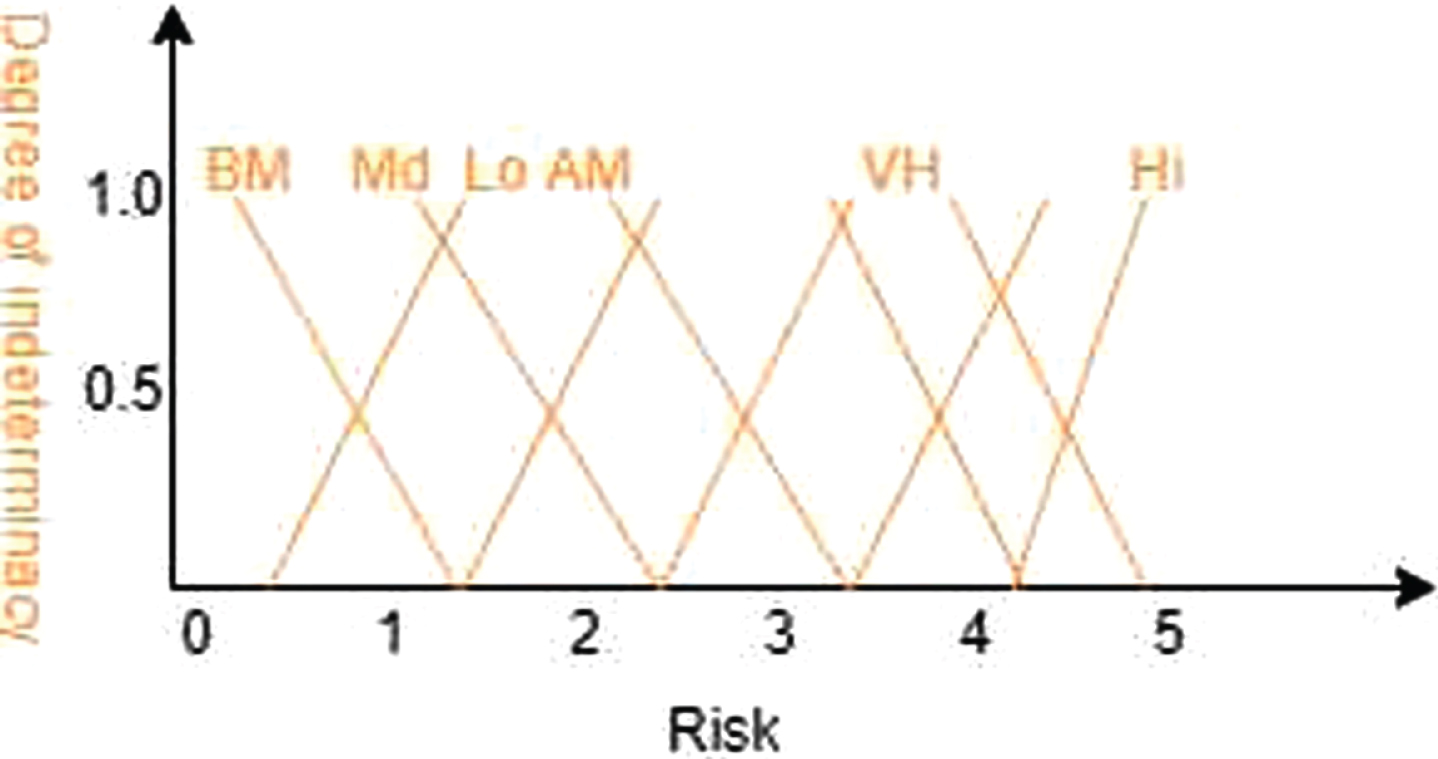
CVD risk-degree of indeterminacy
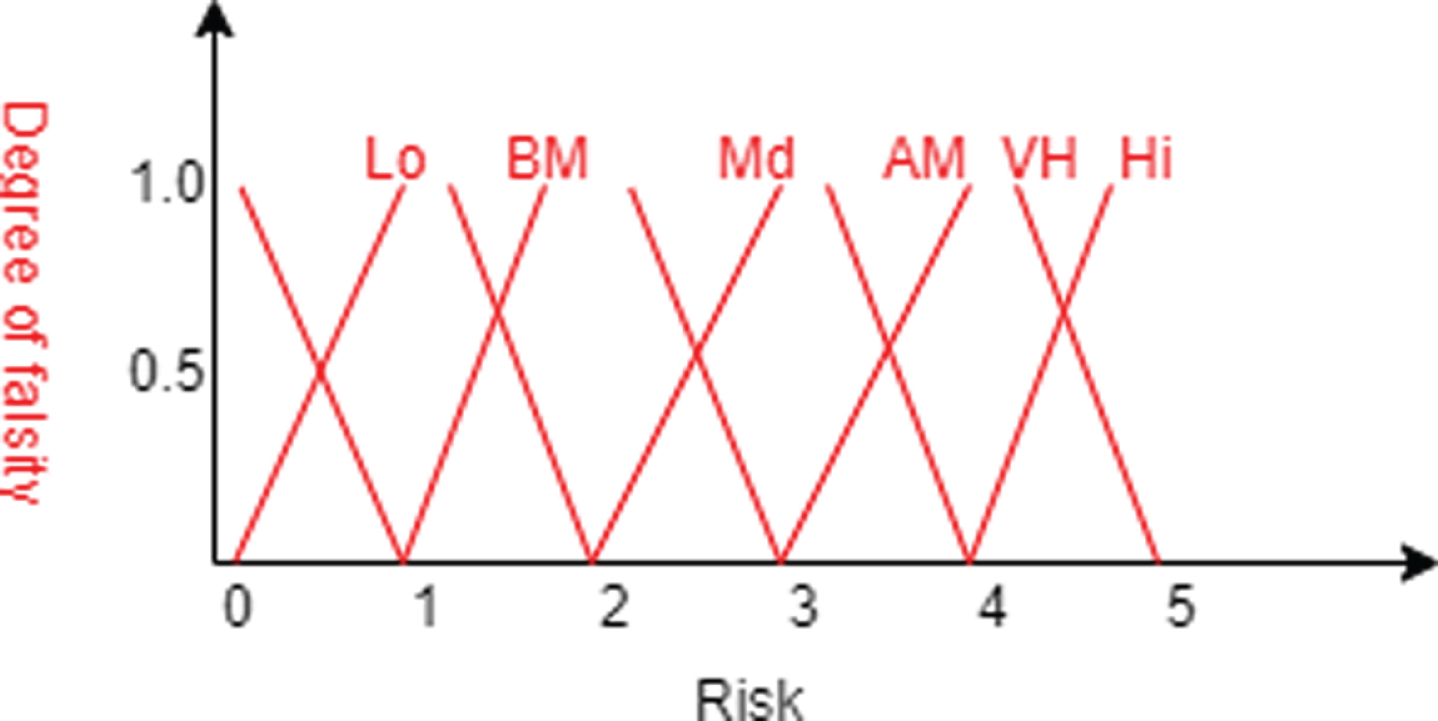
CVD risk-degree of falsity.
The mathematical form of truth membership, indeterminacy membership, and falsity membership of CVDs risk are as follows:
De-neutrosophication is the last step of our system. This part takes firing strength of the active rules and maps these values on output membership functions of CVDs risk. We mathematically defined the truth membership, indeterminacy membership, and falsity membership of each CVDs and show their plots too. The output of de-neutrosophicaion is a crisp value for each output, which shows the risk of each CVDs. We will take the maximum value of risk as a final output.
Case study
This section describes an example of a neutrosophic clinical decision-making system as a tool to analyze the risk of each cardiovascular disease. For this purpose, consider an input: (age, gender, genetic disposition, smoking, blood pressure, cholesterol, diabetes, body mass index,depression, unhealthy diet, metabolic disorder, physical inactivity, pre-eclampsia, rheumatoid arthritis, coffee consumption, pregnancy, rubella, drugs, tobacco, alcohol, heart defect, previous surgery/injury, thyroid, sleep apnea, atrial fibrillation, heart history, infection, homocysteine level, pericardial cysts, marfan syndrome, syphilis, inflammation, clots, cancer, electrolyte imbalance)=(60, 1, 2, 2, 143, 290, 210, 29, 1.9, 1.75, 1, 2, 1, 1, 1, 1, 1, 1, 2, 1, 1, 1, 1, 1, 1, 1, 1, 0.1, 1, 1, 1, 2, 2, 1, 1). Now we will pass the above input from each module of the system and show the detailed working of the proposed system.
Neutrosophication
The first module of the neutrosophic clinical decision-making system for CVDs is neutrosophication. After passing the considered input of this module, we get the following output:
Age(60)= (μ young , μmiddle-age, μ old )=(0,0.67,0), (ν young , νmiddle-age, ν old )=(1,0.17,1), (λ young , λmiddle-age, λ old )=(1,0.4,1).
Gender(1)= (μ male , μ female ) =(1,0), (ν male , ν female ) =(0,0), (λ male , λ female ) =(0,0).
Genetic disposition(2)= (μ yes , μ no ) =(1,0), (ν yes , ν no ) =(0,0), (λ yes , λ no ) =(0,0).
Smoking(2)= (μ yes , μ no ) =(1,0), (ν yes , ν no ) =(0,0), (λ yes , λ no ) =(0,0).
Blood pressure(143)= (μ low , μ medium , μ high )=(0,0,0.8), (ν low , ν medium , ν high )=(1,1,0.4), (λ low , λ medium , λ high )=(1,1,0.29).
Cholesterol(290)= (μ low , μ medium , μ high )= (0,0,0.21), (ν low , ν medium , ν high )= (1,1,0.81), (λ low , λ medium , λ high )=(1,1,0.8).
Diabetes(210)= (μ low , μ medium , μ high )= (0,0,0.5), (ν low , ν medium , ν high )= (1,1,0.58), (λ low , λ medium , λ high )= (1,1,0.53).
BMI(29)=(μ low , μ medium , μ high )=(0,0,0.86), (ν low , ν medium , ν high )= (1,0.75,0.57), (λ low , λ medium , λ high )= (1,1,0.2).
Depression(1.9)=(μ low , μ medium , μ high )=(0,0,0.8), (ν low , ν medium , ν high )=(1,1,0.33), (λ low , λ medium , λ high )= (1,1,0.25).
Unhealthy diet(1.75)=(μ low , μ medium , μ high )=(0,0,0.5), (ν low , ν medium , ν high )=(1,1,0.83), (λ low , λ medium , λ high )=(1,1,0.625).
Metabolic disorder(1)= (μ yes , μ no ) = (0, 1) , (ν yes , ν no ) =(0,0), (λ yes , λ no ) =(0,0).
Physical inactivity(2)= (μ yes , μ no ) =(1,0), (ν yes , ν no ) =(0,0), (λ yes , λ no ) =(0,0).
Pre-eclampsia(1)= (μ yes , μ no ) =(0,1), (ν yes , ν no ) =(0,0), (λ yes , λ no ) =(0,0).
Rheumatoid arthritis(1)= (μ yes , μ no ) =(0,1), (ν yes , ν no ) =(0,0), (λ yes , λ no ) =(0,0).
Coffee consumption(1)= (μ yes , μ no ) =(0,1), (ν yes , ν no ) =(0,0), (λ yes , λ no ) =(0,0).
Pregnancy(1)= (μ yes , μ no ) =(0,1), (ν yes , ν no ) =(0,0), (λ yes , λ no ) =(0,0).
Rubella(1)= (μ yes , μ no ) =(0,1), (ν yes , ν no ) =(0,0), (λ yes , λ no ) =(0,0).
Drugs(1)= (μ yes , μ no ) =(0,1), (ν yes , ν no ) =(0,0), (λ yes , λ no ) =(0,0).
Tobacco(2)= (μ yes , μ no ) =(1,0), (ν yes , ν no ) =(0,0), (λ yes , λ no ) =(0,0).
Alcohol(1)= (μ yes , μ no ) =(0,1), (ν yes , ν no ) =(0,0), (λ yes , λ no ) =(0,0).
heart defect(1)= (μ yes , μ no ) =(0,1), (ν yes , ν no ) =(0,0), (λ yes , λ no ) =(0,0).
Previous surgery/injury(1)= (μ yes , μ no ) =(0,1), (ν yes , ν no ) =(0,0), (λ yes , λ no ) =(0,0).
Thyroid(1)= (μ yes , μ no ) =(0,1), (ν yes , ν no ) =(0,0), (λ yes , λ no ) =(0,0).
Sleep apnea(1)= (μ yes , μ no ) =(0,1), (ν yes , ν no ) =(0,0), (λ yes , λ no ) =(0,0).
Atrial fibrillation(1)= (μ yes , μ no ) =(0,1), (ν yes , ν no ) =(0,0), (λ yes , λ no ) =(0,0).
Heart history(1)= (μ yes , μ no ) =(0,1), (ν yes , ν no ) =(0,0), (λ yes , λ no ) =(0,0).
Infection(1)= (μ yes , μ no ) =(0,1), (ν yes , ν no ) =(0,0), (λ yes , λ no ) =(0,0).
Homocysteine level(0.3)= (μ low , μ medium , μ high )= (0.7,0,0), (ν low , ν medium , ν high )= (0.1,1,1), (λ low , λ medium , λ high )= (0.25,1,1).
Pericardial cysts(1)= (μ yes , μ no ) =(0,1), (ν yes , ν no ) =(0,0), (λ yes , λ no ) =(0,0).
Marfan syndrome(1)= (μ yes , μ no ) =(0,1), (ν yes , ν no ) =(0,0), (λ yes , λ no ) =(0,0).
Syphilis(1)= (μ yes , μ no ) =(0,1), (ν yes , ν no ) =(0,0), (λ yes , λ no ) =(0,0).
Inflammation(2)= (μ yes , μ no ) =(1,0), (ν yes , ν no ) =(0,0), (λ yes , λ no ) =(0,0).
Clots(2)= (μ yes , μ no ) =(1,0), (ν yes , ν no ) =(0,0), (λ yes , λ no ) =(0,0).
Cancer(1)= (μ yes , μ no ) =(0,1), (ν yes , ν no ) =(0,0), (λ yes , λ no ) =(0,0).
Electrolyte Imbalance(1)= (μ yes , μ no ) =(0,1), (ν yes , ν no ) =(0,0), (λ yes , λ no ) =(0,0).
Explanation
We have taken the input values from the user and with the help of mathematical equations of membership functions defined in section 3.5, we calculated the degree of truth membership functions, degree of indeterminacy membership functions, and degree of falsity membership function of each linguistic variable. The output of this module is a value lies between 0 and 1.
Inference engine
The second step is to pass the outputs of the neutrosophication module to the inference engine, and the following rules will be triggered:
Table 2 shows the result of the inference engine.
Results of the Inference Engine
Results of the Inference Engine
We can ignore R60 because the inference engine result shows that its truth membership is absolutely zero and falsity membership is 1.
The value of each membership function is passed to the inference engine and find out the active rules. According to the specified example, rule 60 and 64 triggers and their values represent the firing strength of both rules as shown in Table 2.
De-neutrosophication
The last step of the proposed system is de-neutrosophication to get the final output. Now we will perform de-neutrosophication using two methods:
a). By using the de-neutrosophication method proposed in [9].
low=(0,0,1;0.3,1.2,1.2;0.2,0.9,0.9)=0+2(0)+1+0.3+2(1.2)+1.2+0.2+2(0.9)+0.9/12=0.605. below medium=(0,1,2;0.2,1.5,2.5;0.1,1,1.7)=0+2(1)+2+0.2+2(1.5)+2.5+0.1+2(1)+1.7/12=1.125. very high=(4,5,5;4.3,4.3,5,4.2,4.2,5)=4+2(5)+5+4.3+2(4.3)+5+4.2+2(4.2)+5/12=4.54.
We concluded that the maximum risk value is of coronary artery disease.
b). According to our de-neutrosophication method the final output is calculated as follows:
Here,
P= Point in the sample space, TR= Degree of truth at P, IN= Degree of indeterminacy at P, FL= Degree of falsity at P, U=3-(TR+IN+FL), V=TR*IN*FL. Table 3, Table 4, and Table 5 show the de-neutrosophication results of rule 65.
De-neutrosophication of very high
De-neutrosophication of very high
De-neutrosophication of below medium
De-neutrosophication of low
Take the maximum value out of all outputs, and the risk of coronary artery disease is again very high. Hence, we concluded that both methods give the same output.
Now, de-neutrosophication has been performed. We have used two ways to do so. The first method is taken from the literature and the second method is proposed by us. Using both methods, we calculated the risk of eleven CVDs which shown the risk of each disease.
Three-layered causal hierarchy
According to Pearl et al., there are three Layers of causal hierarchy to measure the quality of explanation [34, 35]:
Comparison analysis
This section provides a comparative analysis of the proposed de-neutrosophication formula with the existing de-neutrosophication formula, fuzzy soft-sets, and fuzzy cognitive maps with the help of various data sets [9], [37, 38]. In the literature, many methods of decision making are discussed. Here we considered fuzzy soft sets and fuzzy cognitive maps as decision-making approaches to compare the proposed de-neutrosophication method. We’ve taken twenty different data sets to test the accuracy of our system. The results obtained by these methods are very similar to the results produced by our method. All methods identified the same heart disease against the same dataset values. The final risk values obtained by these methods are summarized in Figure 12. The proposed system discusses the practical approach of applying neutrosophic logic to cardiovascular diseases. Based on the concept of neutrosophic sets, its advanced decisive alternatives that would allow us (and the machines) to consider the complex role of biological phenomena, thereby meeting real medical and experimental needs. This system aims to facilitate doctors and emergency specialists. Particularly in times of crisis, this system can also be extended to increase alarm for any deviation monitored.
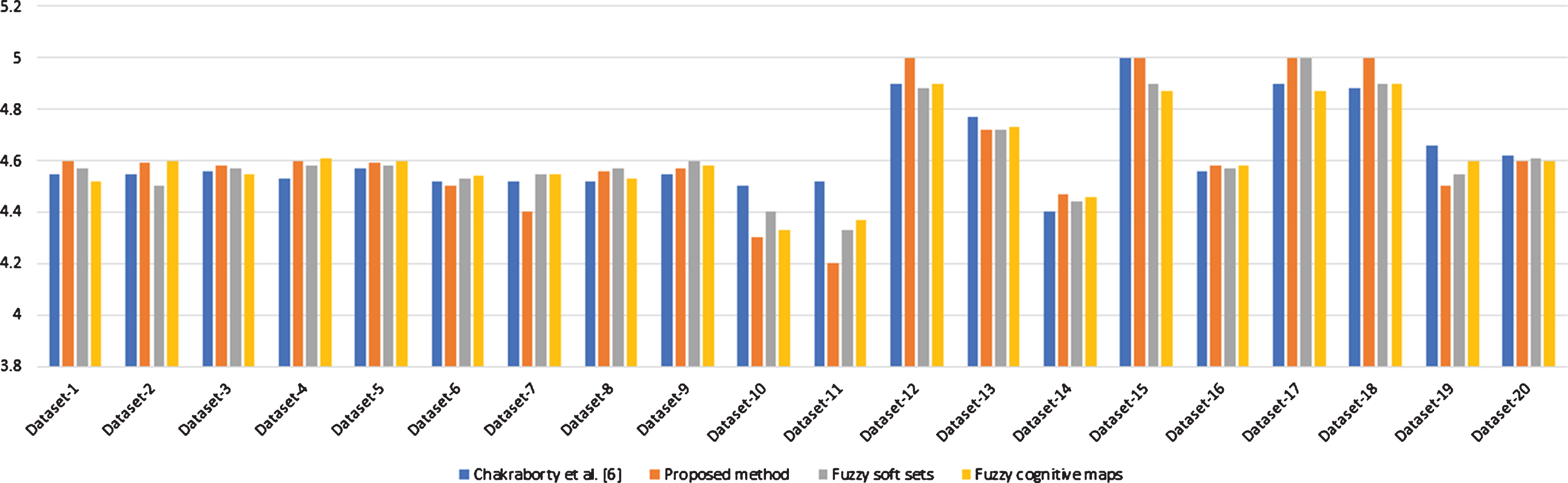
Comparison analysis
Multiple attribute decision-making method is an algorithm that is commonly used and needs certain aggregation methods. In this paper, we have purposed the neutrosophic clinical decision-making system for cardiovascular diseases using explainable AI approaches. Our system helps medical experts to early detect the risk of CVDs so that precautionary measures can be taken timely. As a result, overall mortality will be declined. Our system takes thirty-five parameters as inputs and determines the risks of eleven cardiovascular diseases. There are five main modules of the system which are neutrosophication, knowledge base, inference engine, de-neutrosophication, and explainability. We have used an ante-hoc explainable artificial intelligence method to make this system more understandable and also used a three-layered causability hierarchy to measures the quality of explanation. We have designed an algorithm for a better understanding of the decision-making process, and computed its time complexity. We have proposed a new de-neutrosophication method. To check the accuracy of this method, we consider an example and perform the de-neutrosophication process using the traditional method and the proposed de-neutrosophication method. Also, we demonstrated a comparative study with other decision-making methods. There are many multi-criteria decision-making methods discussed in the literature. These methods can also be applied to cardiovascular disease risk analysis. The proposed approach can be further applied in many other problems like early diagnosis of cancer, types of fevers, and other diseases as well. Our proposed work is applicable in all those domains that undergo the decision-making process, for example, in precision agriculture, manufacturing industries, robotics, gaming, the textile industry, and many more.