






Abstract
The decreasing resources of the earth and the deterioration of the environment are offering new challenges for handling waste management practices. The establishment of the smart waste bins plays an important role in promoting the development of waste classification and treatment fundamentally. We developed the evaluation system for the location selection problem of smart waste bins. Considering the uncertainty in the location selection of smart waste bins, the probabilistic linguistic term sets (PLTSs) are selected to express the evaluation information. Because of the excellent performance in weight-determing, the best worst method (BWM) is chosen to get the weight of criteria. While the weighted aggregated sum product assessment (WASPAS) method could handle both the qualitative and quantitative information, which are considered to derive the final ranking of the alternatives. This paper proposed a new group multi-criteria decision making approach integrating the BWM and the WASPAS with probabilistic linguistic information. Finally, in the empirical example, a sensitivity analysis shows that the proposed method is stable, a comparison analysis with PL-TOPSIS, PL-VIKOR, and PL-TODIM reflects its effectiveness and rationality, and the managerial implication verifies its usefulness and practicability, which also give guide to the company, government and resident.
Keywords
Introduction
In recent decades, the increase in population and the development of industry have led to economic growth. The global economic growth, technological advancement and the improvement of residents’ living standards have greatly accelerated the waste generation rate in various countries around the world [1]. In the increasingly severe global environment, the raising environmental awareness forces human race to carry out enthusiasm in waste recycling management [2, 3]. The Chinese government issued a garbage classification policy in order to cope with the problems of low efficiency and improper application of domestic waste disposal measures, which prompted the establishment of professional recycling technology companies. These companies research and invent some smart waste bins with new technologies (such as Internet of Things) to sort and recycle garbage [4]. Internet of Things (IoT) and other new technologies usher a new era of waste recycling management, meanwhile, they can be adopted in the invention of smart waste bins and help with garbage sorting.
Motivation
Regarding the research objective and motivation, this paper describes as follows: (1) The development of the IoT technology promotes the development of smart waste bins, which are conducive to garbage sorting and recycling. At present, garbage classification and recycling are in the initial and exploratory stage. While a large number of professional recycling technology companies were established, a large number of companies also closed down. These companies decide the location of the site through the simplest empirical decision-making method. The decision-makers lack more scientific and reasonable methods to evaluate the location of the smart waste bins. There is less research on evaluation of location. (2) The classic method is that decision makers rely on a large amount of data for analysis and calculation, and get a good result. However, experts give a lot of uncertainty evaluation and have different performances according to their knowledge, skills and experience. The classic method is insufficient in the face of such a situation.
Literature review
The evaluation of the best location of the smart waste bins can be regarded as a complex multiple attributes decision making (MADM) problem. It has been applied to different research fields such as site selection [5, 6], equipment selection [7], efficiency measurement [8], project management [9, 10], etc. The location of the smart waste bins requires an exhaustive evaluation of many factors and a trade-off between these factors. Therefore, when dealing with various factors and their interactions to determine the best solution, MADM techniques offer efficient solutions.
MADM has attracted the attention of many scholars and has proposed many methods to solve such problems. Paul et al. [11] studied the location, quantity, transportation route and working hours of smart trash bins combined with the application of GIS. These studies also provide suggestions to enhance the collection of waste for sustainable recycling. Gabriel et al. [12] considered the accessibility to the system, the construction cost, and the access frequency of garbage cleaning and also used a method based on PageRank algorithm to get the ideal target value. The final solution has shown that this method has better trade-offs compared to other methods. Vinay et al. [13] have proposed a two-stage MADM model to solve the problem of evaluating the location of waste transfer stations. Liu et al. [14] have used a method based on D-ANP and VIKOR to effectively solve the location problem. And proved that this method can effectively reduce the mutual influence between factors. Erfani et al. [15] have used TOPSIS and OWA integrated effective parameters to evaluate the number, walking distance and capacity of garbage stations, which improve the waste storage service. The results have shown that the number and capacity of sites have an impact on the final result. Blazquez and Paredes-Belmar [16] have considered the influence of the location, cost and capacity of the smart waste bins. An effective plan was proposed, and a reasonable sensitivity analysis was made to the model. Saleheh et al. [17] evaluated the candidates based on the BWM and MULTIMOORA methods and determine the most suitable location for the disposal of municipal solid waste. Abdullah and Murat [18] integrated fuzzy AHP and fuzzy TOPSIS methods which was used to evaluate the location of Turkish shipyards. Esra et al. [19] used a variety of methods to compare in detail to show that MADM is an effective method to solve complex problems. The literature is summarized as shown in Table 1
Literature review
Literature review
The steps to solve the MADM problems are similar, including the problem description, criteria system determination, criteria weight calculation and alternatives ranking. For weight determination, Rezaei [20, 21] proposed a new method called the best-worst method (BWM). It is a method of calculating the weights of all standards by comparing with different standards. When decision makers encounter alternatives that contain a large number of criteria, the number of pairwise comparisons will increase the workload exponentially. In addition, due to the increased level of complexity of the MADM problem, the consistency of pairwise comparisons is also reduced [22]. BWM is used for pairwise comparison with less compared frequency. For alternatives ranking, a suitable method can better help decision makers make reasonable choices from many alternatives. The weighted aggregated sum product assessment (WASPAS) method is a ranking method that combines two of the most famous ranking methods, WSM and WPM, which can reduce the error rate of both methods [23]. Zavadskas et al. [23], proposed this new method and proved the feasibility and applicability of this method. This method has been used to and extended in many different decision-making problems [24–26]. But researchers found that linguistic terms with the same weight sometimes cannot express the opinions of experts. Pang et al. [27] extended the Hesitant Fuzzy Linguistic Term Set (HFLTS) to the simple structure, called the Probabilistic Linguistic Term Set (PLTS), by corresponding each linguistic term to a probability. This paper considers the application of the BWM and WASPAS method in the context of PLTSs environment to evaluate the locations for the smart waste bins.
The main contributions of this research are: (1) The smart waste bins have been developed along with the IoT technology in recent years and have not been widely used. This article evaluates the position of the newly emerging smart waste bins based on current environmental and technological development and provides theory for smart-waste-bin-site selection. This article aims to help companies reduce operating costs and promote their development. (2) This paper developed the evaluation criteria system for the location selection problems in line with the particularity of the smart waste bins. Ten criteria in four aspects are chosen to assess the alternatives. (3) The probabilistic linguistic term sets (PLTSs) are more powerful qualitative evaluation expression method over the Hesitant Fuzzy Sets (HFSs) and the Hesitant Fuzzy Linguistic Term Sets (HFLTSs) in dealing with imprecise information. Therefore, the purpose of this study is to fill these gaps by extending the BWM and WASPAS method based on PLTSs for the evaluation and selection of the smart waste bins.
The rest of the paper is structured as follows: Section 2 describes key problem of the smart waste bins. The basic theory of PLTSs, the BWM and WASPAS method in probabilistic linguistic environment are introduced in Section 3. Section 4 introduces the application of a case. Section 5 summarizes the conclusion.
Key problem description
Problem description
With the development and progress of technology, the proposal of smart cities marks a new stage of decision-making. Municipal Solid Waste (MSW) management (Fig. 1) is an important application to improve the level of public services using the concept of smart cities. MSW management not only affects the expenditure budget of local governments, but also has serious social and environmental impacts due to improper waste disposal [12].
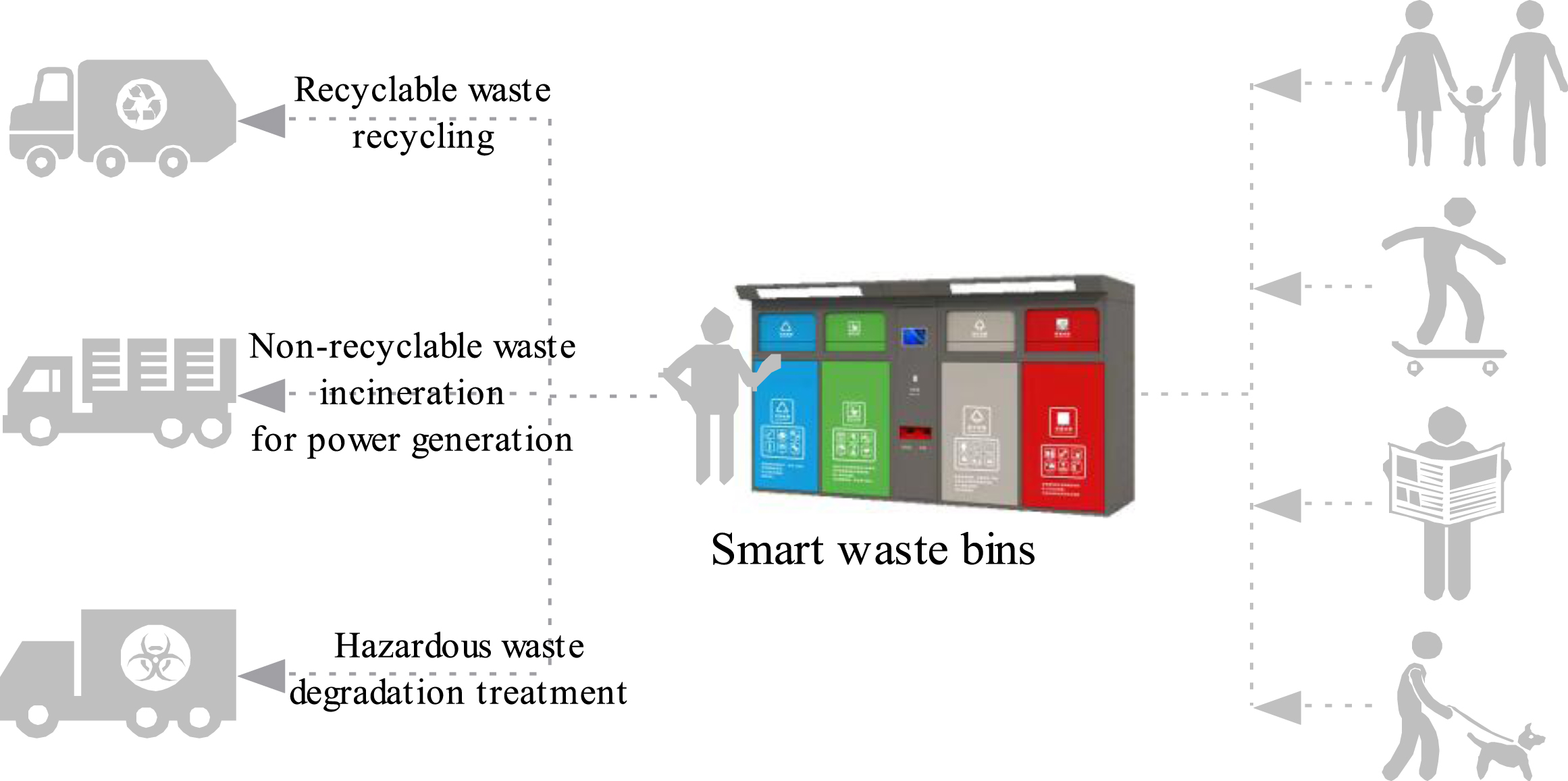
Waste recycling ecological chain.
Smart waste bins use sensors to monitor the degree of overflow. A warning will be issued to the system processing center to pass the network when it reaches the full load. The cleaners clean up according to the location of the smart waste bin where the warning was issued. Compared with the traditional ordinary waste bin, it works more efficiently. The smart waste bins can be automatically exchanged for points based on the weight of the trash delivered. The accumulated points can be exchanged for gifts. Some smart garbage bins with automatic cleaning functions can effectively prevent the spread of infectious diseases and the overflow of garbage smell.
The establishment of smart waste bins has an important role in promoting the waste classification and treatment. On the one hand, the use of the smart waste bins can increase residents’ environmental awareness and cultivate their concept of environmental recycling. The phenomenon of residents throwing away various garbage without sorting often appears in the beginning of the waste collection process. Although most of residents are willing to sort garbage, they are not satisfied with the service quality and service time [28]. The smart waste bins with various network equipments and sensors which are placed in a reasonable position can deal with the above problems. On the other hand, the professional recycling technology companies can collect large amounts of waste products for further manufacturing to generate incomes and some customers have more demand for financial returns or souvenirs through taking part in the recycling process. At the same time, it connects waste recyclers to form a complete waste recycling ecological chain, promoting of social environmental protection and public welfare. The location of a reasonable smart waste bin will help improve the service quality for residents and reduce the operation costs of the enterprise [29].
An evaluation index system has many influencing factors and affected factors, which constitutes a complex multi-level structure relationship. A comprehensive evaluation criteria system should be constructed to better select smart-waste-bin sites from an objective perspective. Many references on location selection have been read, especially the site selection papers on green and sustainable facilities. Their criteria systems are summarized as a table shown in Table 2. This table merges and modifies criteria that have similar meanings but different expressions. From the literature review, we can see that some criteria appear frequently and impact site selection strongly. After the preliminary summary of the criteria system, criteria that have nothing to do with the smart waste bin have been removed to build a comprehensive evaluation criteria system. The established criteria system is shown in Table 3, which is summarized into four main parts: economy, environment, government, and resident. The specific schematic diagram is shown in Fig. 2.
Criteria involve site selection
Criteria involve site selection
Evaluation indexes
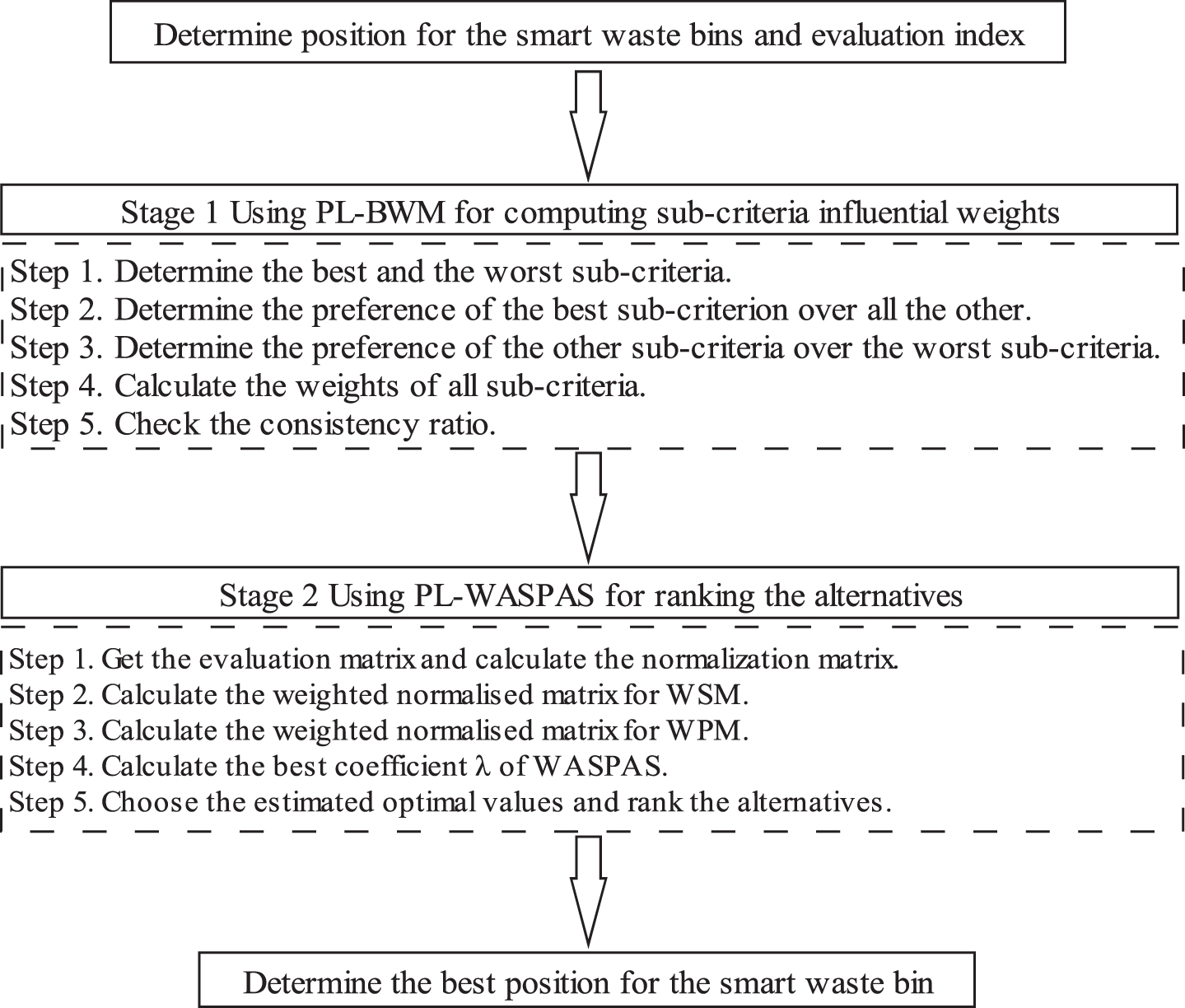
Flowchart of the proposed smart-waste-bin-site selection model.
The economic criteria commonly evaluate the profitability and survivability of the smart waste bins, the sub-criteria of which describe the detailed capabilities of the smart waste bins. Therefore, it is composed of initial construction cost (c1) and operation and maintenance cost (c2).
The construction cost (c1) ([5, 33]) is a one-time investment in the initial stage of construction. It includes the purchase cost of ordering smart waste bins, the transportation cost to the designated location, the installation cost when the smart waste bins are placed, the land occupation cost for using the land, and the advertising cost for promoting the project. These costs are only incurred once in the initial construction of a smart waste bin, and these costs will no longer be incurred in the future.
Operation and maintenance cost (c2) ([5, 34]) includes the cleaning and maintenance costs for the smart waste bin, the transportation costs for each time the garbage is cleaned and transported, the gift costs for rewarding customers, financial costs, taxes, etc. These costs are generated periodically with the application of the smart waste bins, and the amount may change. Because the majority of environmental technology companies are for profit, this study bases on companies who are considering building smart waste bins and looking for locations for providing the services.
Environmental criteria
The environmental criteria evaluate the level of waste disposal and pollution to the surroundings. Therefore, it is composed of environmental benefits (c3) and adverse impacts on people’s lives (c4).
The purpose of building smart waste bins is to classify waste from the source and the classification process achieves the goal of saving resources to protect the environment. Reuse of recyclable waste and suitable disposal of toxic waste is to achieve the purpose of environmental benefit. As an evaluation indicator, environmental benefits (c3) ([34, 35]) are used to evaluate the environmental benefits that a smart waste bin can create after it is put into use in the future.
However, there are still negative environmental benefits impacts near the smart waste bins (c4) ([5, 35]). There are adverse impacts of noise and air pollution due to the construction and operation of the smart waste bins on the daily life of residents. The pollution source of the smart waste bins mainly comes from the kitchen waste stored in them. The increase in the amount of garbage accelerates the decomposition of organic matter in domestic garbage and the volatilization of some materials, accompanied by changes in temperature and humidity in the environment. It will inevitably cause environmental pollution. The toxic and harmful gases emitted mainly include hydrogen sulfide (H2S), ammonia (NH3), formaldehyde (CH2O), etc. The diffusion of these gases will seriously harm human health. In addition to noise and air pollution, many residents are not aware of potential negative effects that require expert evaluation. This requires a criterion to evaluate negative benefits.
Government criteria
The government criteria mainly assess the influences of the smart waste bins on society from traffic conditions (c5), ancillary facilities (c6), policy support (c7) and social benefit (c8). The data of these indicators are more easily obtained by the government.
The pre-equipment installation and post-maintenance operations of the smart waste bins must use the already complete road system (c5) ([5, 33]). In order to reduce the transport expenditure, the proper distance is as small as 5 meters from the road [36]. The location of the smart waste bins is also convenient for people to use.
Ancillary facilities (c6) ([5,33, 5,33]) are essential factors in meeting the requirement of smart waste bins. Necessary power, network and other auxiliary facilities need to be provided to maintain the regular operation of the smart waste bins.
The support of government policies (c7) ([32, 34]) is conducive to the operation of garbage classified recycling and the development of recycling companies. Many city governments have issued decrees requiring residents to sort and deliver garbage in China. This is conducive to the classification of garbage from the source, when residents have an awareness of garbage classification.
The classification and recycling work provide social benefits (c8) ([32,34,35, 32,34,35]) for society and promotes the development and progress of environmental protection. A new industry will bring more people to employment, and a new enterprise will bring some taxes to the government. This is what the government wants.
Resident criteria
The resident criteria mainly assess the influences of nearby residents’ attitudes (c9) and service capabilities (c10).
This activity requires the participation and cooperation of residents, and the attitude of nearby residents (c9) ([5, 34]) is one of the critical factors of influence. The smart waste bins near residential areas will inevitably have a negative impact on the residents. In order to minimize negative impacts on the environment, it is recommended that they are at a greater possible distance from residential areas.
The garbage of residents can get access to the delivery service provided by the capacity of the smart waste bin, the daily delivering volume, and the maximum delivering volume. If the capacity of the smart waste bins is too tiny, residents need to deliver the trash to the smart waste bins further away, and the bin reaches the upper limit of its capacity. Customers are not satisfied with this. If the capacity of the smart waste bins is too large, it will increase the purchase cost in the construction cost and the transportation cost in the operation and maintenance cost. Reasonable service capabilities (c10) ([5, 34]) is very important.
Method
Probabilistic linguistic term set
The experts may hold uncertainty among several PLTSs when expressing their preferences. This paper gives a few definitions and examples about PLTSs.
The second formula for calculating expectations is as follows:
BWM is a method of getting weights, which is graded by experts. But experts are difficult to make certain results from their judgement. This paper uses the BWM to gain the weights of the criteria in uncertain conditions. The process can be better understood through Fig. 3.
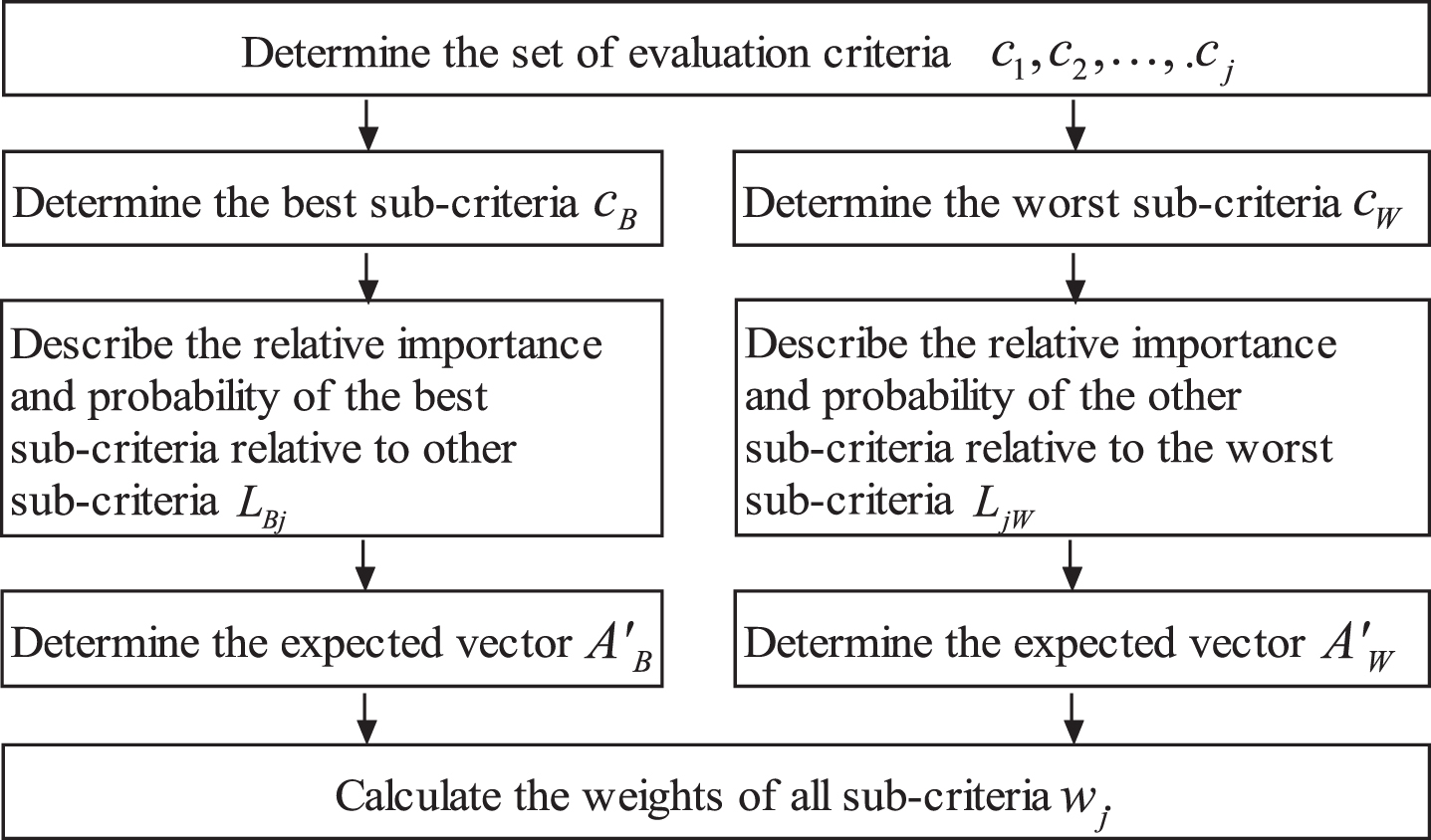
Weights are calculated by the PL-BWM method.
This is how to obtain a comparison between the best criteria and the other criteria. After describing the importance of attributes, experts put forward corresponding probabilities based on their knowledge and experience. In this way, the resulting vector would be:
Importance score
This is how to obtain a comparison between the other criteria and the worst criteria. After describing the unimportance of attributes, experts put forward corresponding probabilities based on their knowledge and experience. By this way, the resulting vector would be:
In order to calculate easily, the above problem can be simplified as the following problem:
Dealing with different values of E BW , the maximum possible ξ (max ξ) can be found, the values of it will be used as consistency index (show in Table 5).
Consistency index (CI) table
Then, the consistency ratio can be calculated by using ξ* and the corresponding consistency index, which is described as below:
It is implied that the smaller the ξ*, the less the consistency ratio, and the higher reliable the comparisons become.
Standardize evaluation index data. The value x ij is expected by the expert according to the alternative i and criterion j. The evaluation index data is standardized, because the values come from different sources and the evaluation criteria are different.
Evaluation indicators can be divided into qualitative indicators and quantitative indicators.
The decision matrix is calculated by standardized expectation formula [38]:
It is clearly that
Calculate the WSM score for each alternative.
Calculate the WPM score for each alternative.
According to the best λ calculated in formula, calculate the best value of Q for ranking. Determine the best ranking and alternative. Analyze and compare the results and give reasonable suggestions.
In the last years, China’s economy has achieved world-renowned development, people’s living standards have continued to improve, and urbanization has accelerated. Tianjin is one of the fastest developing cities in China, and because of the rapid economy development, domestic garbage has been rising dramatically for many years. Sorting garbage from the source can effectively reduce the cost of solid waste management, but this requires more effective organization of managers and active cooperation of residents [1]. The emergence of the smart waste bins can help solve the problem of people’s unsatisfactory classification of garbage. Choosing a reasonable location allows for effective recycling of garbage. This paper chooses four criteria and ten sub-criteria to evaluate. The specific flow chart is shown in Fig. 4.
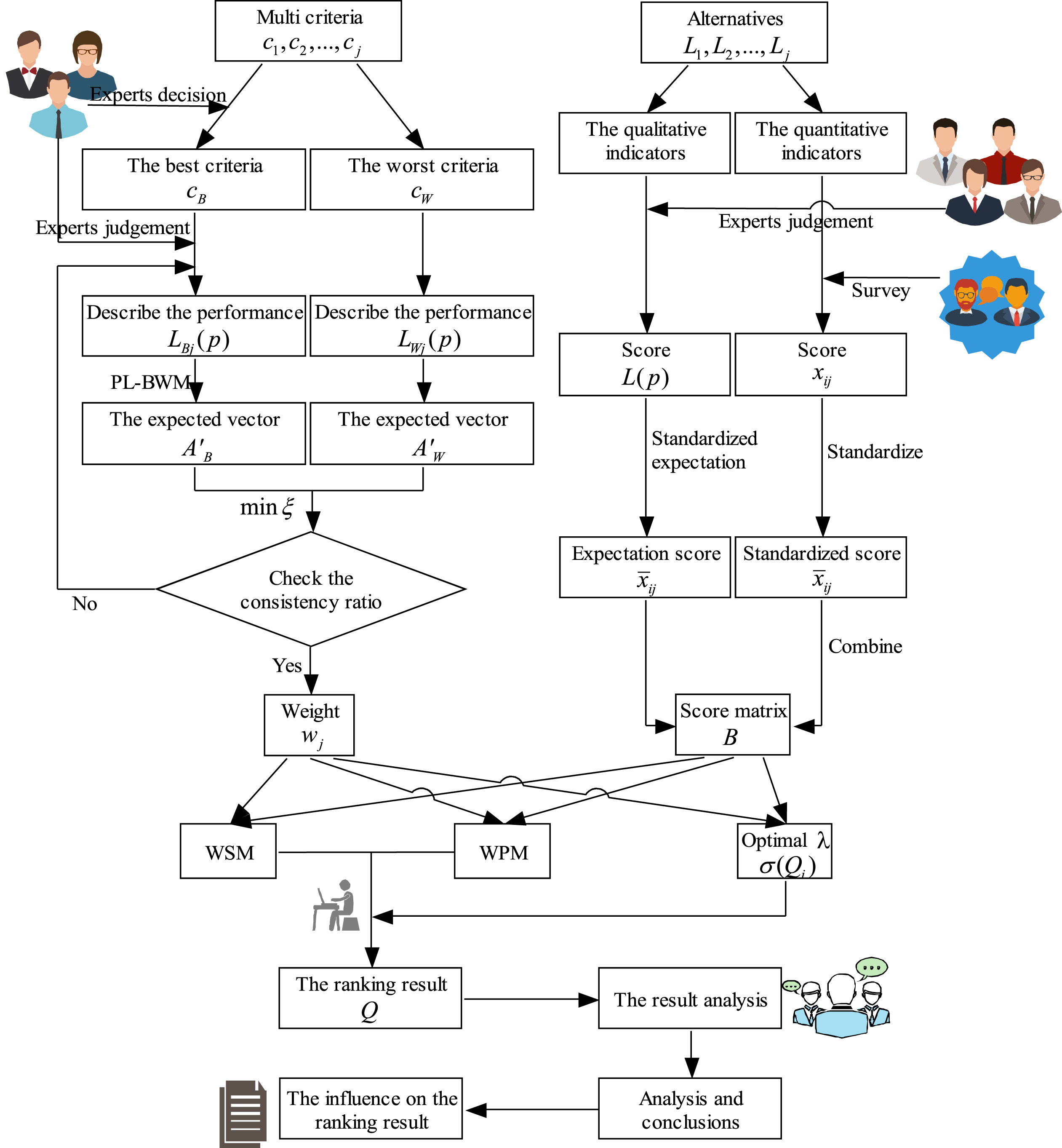
Flow chart of case operation.
Experts with rich experience and qualifications are invited to participate in the evaluation of the location for smart waste bins ([42]). For the long-term development of the professional recycling technology companies, they need to assign a reasonable weight to each sub-criteria and give rational evaluations according to the performance of the alternative locations.
Four experts are selected for evaluation. It is normal sense that they choose the same number of experts and criteria category [40, 41]. The experts who come from different fields are invited to evaluate the five alternatives (m = 5). The expert e1 is an economics expert. He can more accurately and objectively assess the various costs and expenses of the enterprise. However, the level of evaluation in other areas is inadequate. The expert e2 is an environmental expert. He can reasonably and objectively evaluate the positive and negative benefits of setting up smart waste bins at various locations. The expert e3 is a government representative. The government has enough data to analyze the social benefits of smart waste bins. And the expert e4 is a citizen representative, who directly uses smart waste bins. He cares more on the service capabilities and reflect the attitude of nearby residents. Each expert has a deep understanding of their own area of expertise, while pays less attention on other fields. The weights of different experts for different indicators are shown in Table 10.
Weights from experts in different fields
Weights from experts in different fields
The best and worst sub-criteria identified by four experts
Results of the preferences for the best sub-criterion over all other sub-criteria
Results of the preferences for all sub-criteria over the worst sub-criterion
Final weight score
The evaluation index of the smart waste bin location can be divided into qualitative sub-criteria and quantitative sub-criteria. For the qualitative sub-criteria, the experts evaluate the sub-criteria by using the PLTSs. The linguistic term set is selected as: S = {s1 = extremely low, s2 = very low, s3 = low, s4 = slightly low, s5 = fair, s6 = slightly high, s7 = high, s8 = very high, s9 = extremely high}. For the quantitative sub-criteria, data can be obtained by using actual survey methods.
Qualitative criteria evaluation score of each expert
Qualitative criteria evaluation score of each expert
Eq. (4) is used to evaluate all experts’ PLTSs, and consider the different weights of each expert. Then decision makers get the final score of the qualitative criteria, which is shown in Table 12.
Qualitative criteria evaluation score of each expert
The data in Table 12 can be used to calculate the final score of the qualitative criteria, which is shown in the final scoring matrix.
Construction cost include the cost of purchasing the smart waste collection bins, the cost of renting land, the cost of promoting APP, etc. Cost can be obtained through actual investigation.
Ancillary facilities are an important factor in meeting the use of waste collection bins. For the dustbin to work properly, it needs to be provided with electricity and internet. Formulate reasonable scoring criteria for auxiliary facility indicators by investigating the actual situations of alternatives. Neither electricity nor internet is 0 points. With network but no electricity is 0.2 points. With electricity but no network is 0.5 points. Both electricity and network are 1 point.
A smart waste bin needs to serve the surrounding residents. This is measured by the number of surrounding residents.
The data is obtained in Table 13 through the actual survey, and then use Eq. (11) and Eq. (12) to obtain the standardized scores, showing in the final scoring matrix.
Quantitative criteria evaluation
The decision matrix obtained from step 2 and the criteria weight vector obtained from above section are used by calculating Eq. 14 and Eq. 15.
Ranking of alternatives applying WASPAS
This step gets the scores under different values of λ, then plots the data in the Table 14 into a chart (Fig. 5). According to the analysis and comparison, it can be concluded that the value of λ has little influence on the final result.
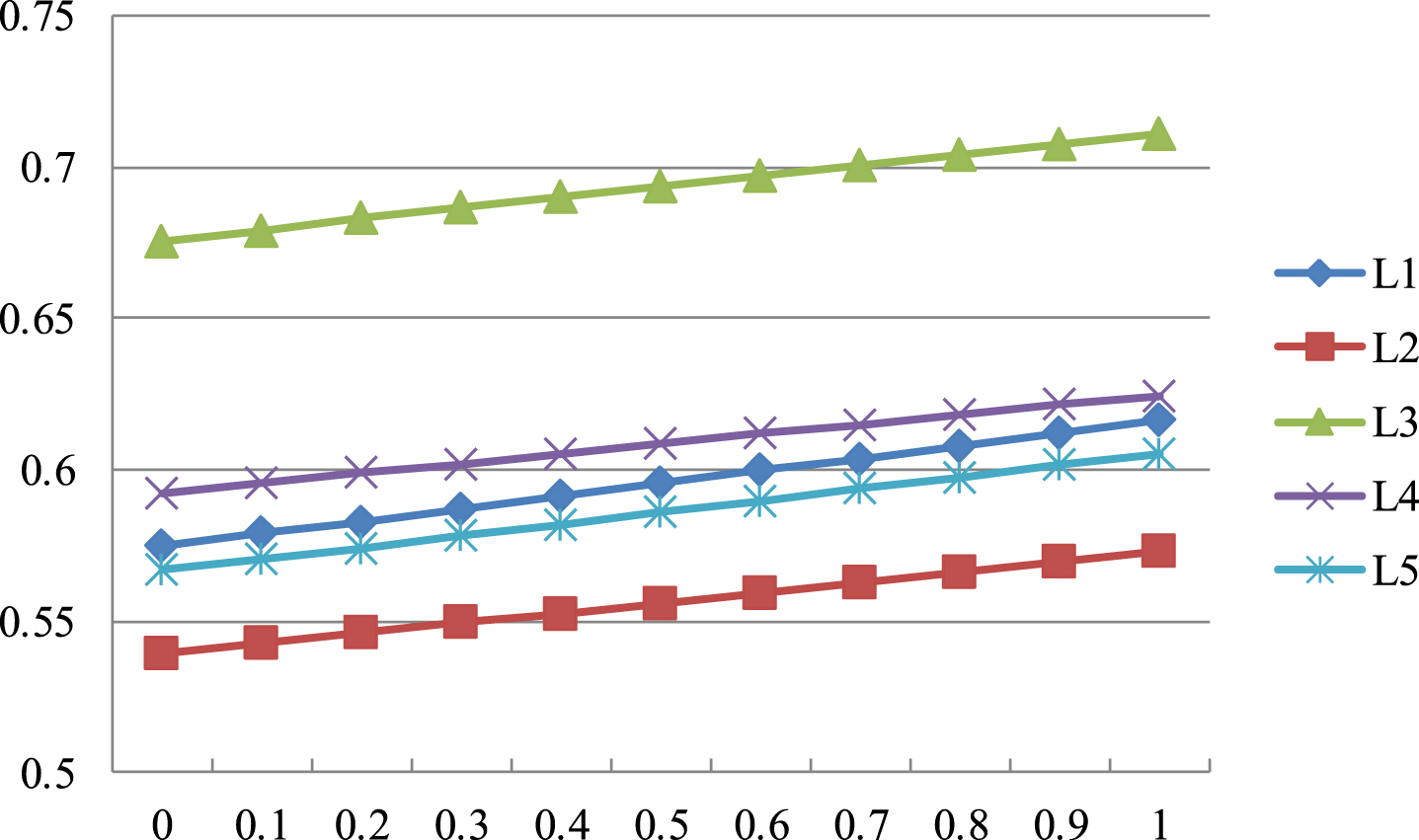
Sensitivity analysis.
Ranking of alternatives applying optimal
In this section, a sensitivity analysis is performed on the weights of different indicators in order to verify the reliability of the indicator weights calculated by BWM in a probabilistic language environment. Select one of the sub-criteria for the first set of tests. The first set of tests selects one of the sub-criteria and increases its weight by 9%based on the original results The specific results can be seen in Fig. 6. Each of the other indicator weights share this reduction percentage equally; in other words, all other indicator weights reduce by 1%. There are ten indicators, so the first set of experiments needs to be calculated ten times.
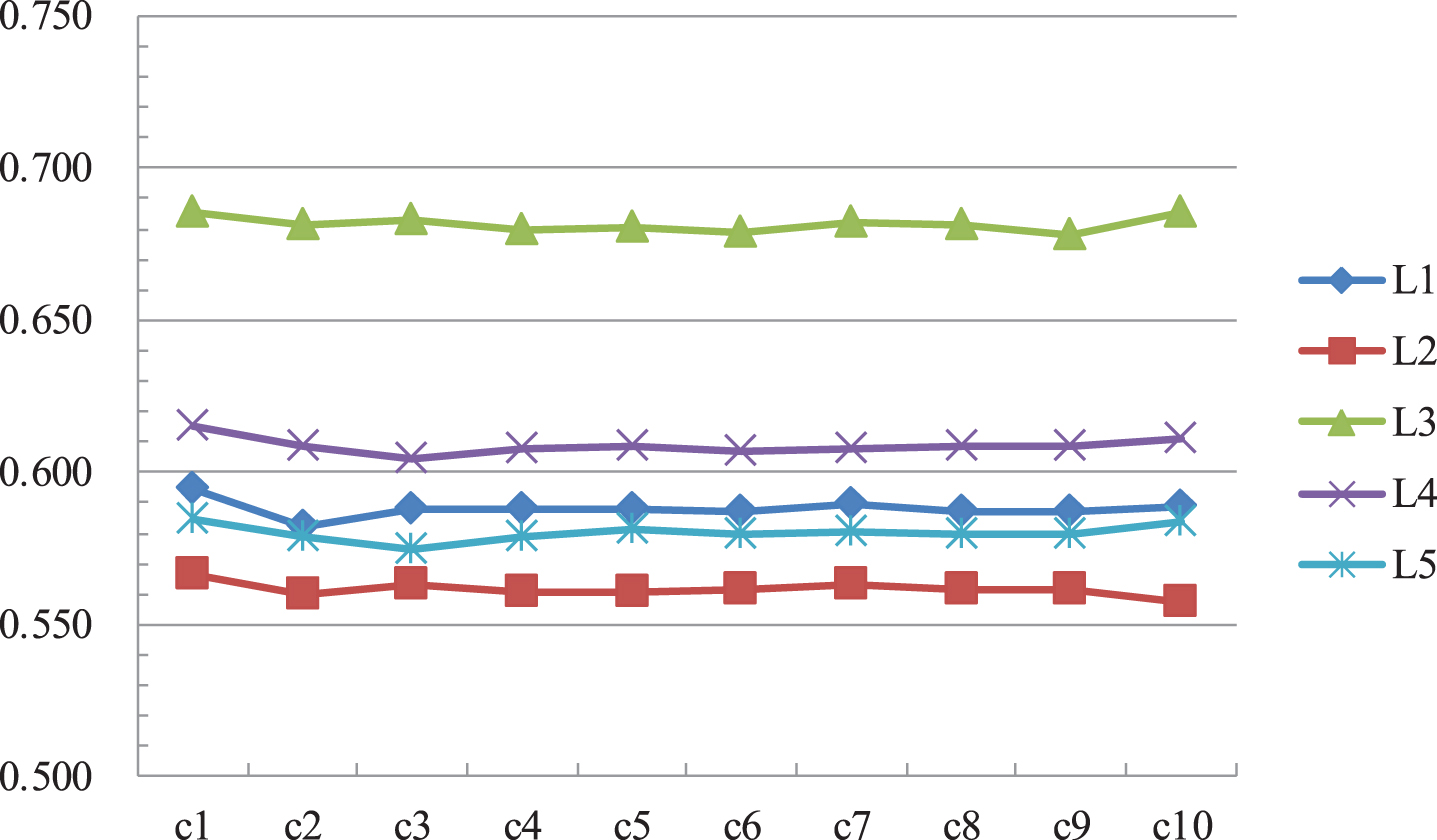
Weight increased by 9%.
The second set of tests selects one of the sub-criteria and reduces its weight by 9%based on the original results which is shown in Fig. 7 Similarly, all other indicator weights increase by 1%and calculate ten times. The results are shown in Tables 17.
Weight increased by 9%
Table17
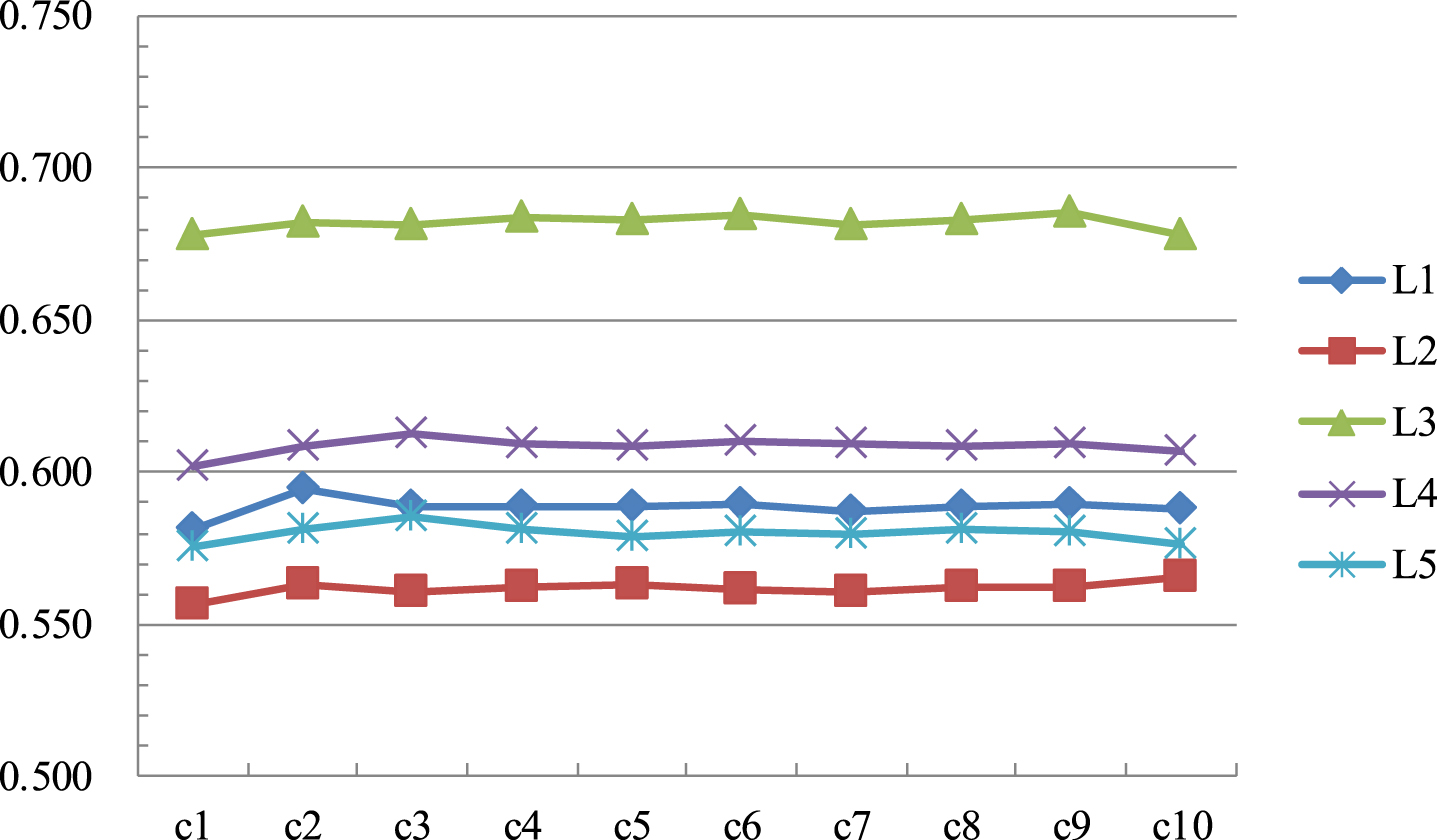
Weight reduced by 9%.
It can be seen from tables and figures that the rankings of scores of five alternatives are relatively stable. Although there is no change in the final ranking, the results of this text show that the relative proximity scores of various alternatives only fluctuate slightly. Therefore, the results obtained in this paper can be discussed reliable.
This paper make a comparison of results concluded by PL-TOPSIS method, PL-VIKOR method and PL-TODIM method with the consequence put forward in the paper. The sorting results of the weights for all sub-criteria determined by experts are shown in matrix B. The qualitative evaluation of experts is shown in Table 11 and the quantitative standardized score shown in final scoring matrix. The remaining solving process of the methods is shown as Table 18.
Methods comparison
Methods comparison
The calculation results of this paper are slightly different from those of the PL-TOPSIS method, and are the same as those of the PL-VIKOR method and the PL-TODIM method. It can get: (1) The difference between the results of this paper and the results calculated by the PL-TOPSIS method is because that the PL-TOPSIS method is based on the strict assumption that the experts are completely rational. The shortcoming has also been raised in other references. In the actual decision-making process, this phenomenon of slightly different results of evaluating alternatives is acceptable. (2) The WASPAS method does not need to select a reference point after get the decision matrix, while the other 3 methods need to select the ideal solution. TOPSIS replaces the best and worst results with mathematical expressions. VIKOR is a compromise ranking method, which compromises and ranks limited decision-making schemes by maximizing group utility and minimizing individual regret values. TODIM reflects gains and losses attitudes of decision makers to the problem. The calculation processes of the above three method are based on the distance between the alternative and the ideal ones. Compared with the other three methods, WASPAS is easier conducted. (3) The parameter λ can help decision makers find minimum dispersion and to assure maximal accuracy of estimation. The parameter λ in this model reduces the intervention of decision makers. After the decision makers put forward their own opinions, the evaluation system can complete the final decision. Compared with other methods, the WASPAS method determines the parameters more objectively. (4) Similarly, the WASPAS method has limitations. Since ideal points are not selected, the ranking depends on the evaluation of each expert. Partial deviation from the actual evaluation may eventually affect the final ranking result. This method requires higher qualifications for all experts.
(1) The results in Table 9 show that Operation and maintenance cost (c2) is the most important indicator, which means that the most important significance of setting up the dustbin is to promote the sustainable development of the companies. The weights of construction cost (c1) and Environmental benefit (c3) are in the second and third positions with the results of 0.194 and 0.185. They are not far from the first criteria, which means the economy criteria is related to the long-term development of the enterprises. Ancillary facilities (c6) is the least important criteria, because there are cheap and sufficient power resources and extensive network in China. It is easy to complete auxiliary facilities.
(2) The professional recycling technology companies can collect large amounts of waste products for further manufacturing to a small amount of operating income. The expensive construction cost in the early stage makes the investment payback period longer. In MADM problems, according to the calculation result, the best alternative or the second-best alternative, etc. can be determined, which can help companies to improve service quality and increase operating income.
(3) This paper conducts sensitivity analysis and comparison analysis by changing the parameters involved in the calculation process and comparing with other methods. The results of this paper are better than those of PL-TOPSIS. In addition, although the calculated results of the PL-VIKOR and PL-TODIM methods are consistent, the calculation process of the proposed method is easier conducted.
(4) With the development of IoT technology, this article fills the blank of the research on location for smart waste bins. An integrated MADM method under probabilistic linguistic environment is introduced to select the most suitable location for smart waste bins. The research results play an essential role in the development of professional recycling technology companies.
Managerial implication
In the case study, it is hard to find a perfect location for each criterion. To handle this problem, the PL-BWM-WASPAS method takes full consideration of the uncertain information of different location, which improves the accuracy of the decision. Choosing the appropriate location of the smart waste bins helps to collect the sorted garbage, further contributes to reducing environmental pollution, improving public welfare and guarantee sustainable development. The location L3 ranks first because it has good performance at most criteria. Other locations fall short in a particular aspect.
The results of the locations can be used not only by the company itself, but also the government. The government can supervisory control the process of the garbage collection and dispatch the urban traffic. Furthermore, they can get more data after analyzing the preference of residents for consumption and garbage disposal to provide corresponding support and make the regional planning. In addition, setting up smart waste bins is beneficial to the residents. Due to the high performance of the smart waste bins, the residents can keep away from the foul smell from the traditional bins and get some gifts when discarding the useless things.
Conclusion
In recent years, with the development of IoT technology, the development of smart waste bins has also received attention. Evaluating the locations for smart waste bins is a new problem that has hardly been studied. The evaluation criteria system for the location selection problems in line with the particularity of the smart waste bins was developed. In this article, an integrated MADM method under a probabilistic linguistic environment was introduced to select the most suitable location for smart waste bins. This method based on BWM and WASPAS carefully considered the evaluation results in uncertain environments. This method can not only solve the uncertain language in the evaluation, but also reduce the number of calculations and comparisons as much as possible. This article took the authority of different experts in different fields into consideration, and standardized qualitative and quantitative data to facilitate calculations. Finally, the proposed method was applied to solve the location selection problem for smart waste bins in a city with good economic development. The validity and superiority of the method were proved by method comparison and sensitivity analysis. The managerial implications were provided for the company, government, and residents.
As a part of the future work, we plan to tackle the deficiencies of the proposed decision method. The consistency and consensus process of the method can be further conducted. The competitive relationship between multiple professional recycling companies in the same area should be considered [46]. New fuzzy sets such as the dual probabilistic hesitant fuzzy sets [47] can be proposed for effectively handling uncertainty.
Acknowledgment
This research was supported by National Natural Science Foundation of China (Grant No. 7217040976), Hebei Natural Science Foundation (Grant No. G2020202008), and the Humanity and Social Science Youth Foundation of Ministry of Education of China (Grant number 19YJC630117).