






Abstract
This research is carried out in the Mexican oil and gas industry. An Intelligent Decision Support System (IDSS) is proposed, through support modules for the human operator (fuzzy expert system and artificial neural network) that simulate, forecast and standardize operational decision criteria of a sequential pipeline pumping system, with problems of vandalism, mechanical deterioration in the face of a complex topographic profile, in order to minimize operational subjectivity and prevent contingencies. The research provides new control and monitoring alternatives that guarantee the operational reliability of a pumping station, minimizing the effects of risk by managing the knowledge of the experts involved in the problem, data mining and association of results, which allow to unify criteria decision. The originality of the work focuses on the ability to model, identify and adapt variables to current international parameters, considering previous works through a comprehensive perspective.
Keywords
Nomenclature A
Diameter
Artificial Intelligence
Artificial neural network
Automated pumping station control with SCADA or similar.
Auxiliary systems and components of the pumping station.
American Petroleum Institute
Availability of human resources in E-5A
Availability of the E-5A turbopumps.
Availability of alarms, tanks, recirculation and safety valves in E-5A.
Availability of firefighting equipment and auxiliary power generator in E-5A
Availability of measurement and filtering equipment for E-5A
Availability of Check valve in E-5A.
Availability of line section valves in E-5A.
Availability of Devil Shipping or Receipt Traps in E-5A.
Availability and management of interconnection equipment for flow improver in E-5A.
Availability of open communication and SCADA equipment in PTS.
Bias
Coronavirus disease
Area Centroid method
Contingencies
Characteristics of the transported product.
Cognitive knowledge.
Total ideal suction pressure capacity of the turbo pumps in the E-5A.
Total ideal discharge pressure capacity of the turbo pumps in the E-5A.
Total suction pressure capacity for the station to receive the product.
Nomenclature b
Total discharge pressure capacity of the station that sends the product.
instrumentation and characteristics of dynamic equipment (turbo pumps).
Decision support System
Daily Barrels Transported
Exploration, Extraction and Production.
Established Operational Program
E-5A Historical Maintenance Data.
Fuzzy expert System
Fuzzy logic
Flow rate of a continuous fluid.
Finance and Human Resources
Gas and basic petrochemicals
Horse Power
Historical data.
Kilometer
Information Technology
Instrumentation and characteristics of a pipe segment.
Intelligent Decision Support System
instrumentation and characteristics of upstream or downstream stations.
Coefficients for the neuron weights j
Logistics
Linear Modeling Techniques or Mathematical formulation.
Maximum
Manual pumping station control (Suction and Discharge).
MATrix LABoratory
Maximum Allowable Operating Pressure
Mendoza distribution center
Mechanical integrity study
Mean square error
Mechanical integrity
Minimum
Multilayer Perceptron
Nonlinear or Dynamic modeling techniques.
Ole for process control
Organization of the Petroleum Exporting Countries
Maximum safe pressure for a pipeline with an indication of metal loss
Pounds-force per square inch
Pipeline Transport System
Permissible Operative Limits
Controllable logic programmers
Refining
Response Surface Graphs
Numerical Correlation
Supports Business Management
Station 1 (KM 0) - Nuevo Teapa, Veracruz, Mexico.
Station 2 (KM 166) - Loma Bonita, Oaxaca, Mexico.
Station 3 (KM 277) - Arroyo Moreno, Veracruz, Mexico.
Station 4 (KM 317) - Zapoapita, Veracruz, Mexico.
Station 5A (KM 351) - Ciudad Mendoza, Veracruz, Mexico.
Station 5 (KM 362) - Maltrata, Veracruz, Mexico.
Station 6 (KM 488) - San Mart
Station 7 (KM 572) - Venta de Carpio, State of Mexico, Mexico.
Supervisory Control And Data Acquisition
Systematic literary review
United States
Thousand barrels per day
Uncertain variables
Iinput Variables
Output Values
Introduction & literature review
Spot crude oil prices rebounded in November 2020 after a rally in crude oil futures contracts after positive news about COVID-19 vaccines sparked optimism about the recovery in oil demand in the coming months. Nonetheless, weak refining margins, an increase in crude oil supply, also in the USA, have constrained prices [1]. The oil and gas industry in Mexico accounts for about 70% of the energy in the country’s primary sector [2]. However, barrel price constraints, technological demands, and constant vandalism on Pipeline Transportation System (PTS) hamper the company’s ability to respond to new global supply and demand. Hydrocarbon theft, mechanical deterioration, cavitation, and the lack of technological updates all add to the operational instability problems that the PTS currently experiences as the conditions in its dynamic equipment (Turbopumps) have to be constantly readjusted. The pumping stations impact communities and the surrounding ecosystem on various occasions [3–5].
The technological progress in the world represents the visible face of the systems and forms the means of communication between the actors (humans) of an interactive process (computer) via interfaces. In particular, intelligent interfaces for monitoring and controlling industrial processes have distinct features, many of which are critical and which strongly influence the communication and decisions that the operator has to make in the equipment [6]. Artificial intelligence (AI) techniques, show their capacity for dynamic adaptability in complex issues before known methodologies, demonstrating their efficiency in a particular way or as a whole.
Recent research in the oil and gas industry shows applications of AI to model control parameters in dynamic and auxiliary equipment in sequential pipeline pumping stations [7–15]. For example, the major advantage of an FL-based control system is its ease of implementation and the lack of dependence on complex or extensive mathematical equations. These models can easily approximate the control behavior of people who function well in such poorly defined environments [16]. On the other hand, the ANNs offer a learning time to achieve the best results at the output [17]. The equivalent relationship between FL and ANN was demonstrated in this study, as well as the importance of using the advantages of both techniques and their comparison [18, 19]. AI collaborative decision support systems generate Intelligent Decision Support System (IDSS), efficient and practical utility in the decision-making process [20], IDSSs are implemented in several research studies to efficiently predict the price of oil, manage hydrocarbon spills, and determine classes in generated thickness maps. on the pollution of oil slicks in the well-known case of Deepwater Horizon [21–23]. In the Mexican oil and gas industry, IDSS uses intelligent agents to optimize the control and logistics planning of contingent liabilities in the maritime zone of the Gulf of Mexico [24]. In other countries, IDSSs are reliable tools for determining trends in equipment deterioration, failures in specific segments, analyzing their effects, and determining the likelihood of occurrence, as well as planning of human resources in oil companies [25–27]. Table 1 shows some relevant applications of IDSS in various areas in the oil and gas industry, however the authors highlight the application of control and monitoring in pipelines as it is the most used, efficient and economical means of transport today. Through a Systematic Literary Review (SLR), which deepens the current state of the art with 245 works published between 1994 and 2018, the graph [A] represents the growing trend of the subject of study [28].
IDSS in the oil and gas industry. Source: Based on [28]
IDSS in the oil and gas industry. Source: Based on [28]
IDSS can be designed using AI-based methods such as Fuzzy Logic (FL) and ANN [20]. Both the fuzzy expert systems (FES) with applications for volume prediction and the diagnosis of circulation losses in oil wells show excellent results [30, 33]. The FES as an inference engine of adaptive fault-tolerant control in a gas turbine reduces the operational variability [11]. ANNs provide inductive means of collecting, PTS, and using cognitive knowledge [40]. Integrating both methods for the interpretation, processing, and regulation of sources of cognitive and historical information for the standardization of decision criteria is not an isolated case in the world in which comparison and evaluation are often consistent [29, 41]. The authors establish the following questions :How does subjectivity impact the human operator who establishes decision criteria for a sequential pipeline pumping system, with problems of vandalism, mechanical deterioration in the face of a complex topographic profile? Why is it important to standardize operational decision criteria for the PTS? Do the operational monitoring and control technologies used clearly justify their operation and adaptive work dynamics in the event of any failure? Below the mention the Purpose, Design/methodology / approach, Findings, Practical implications, Originality / Value, which generated the research.
The methodology underpins its success by considering the eight key issues for the discipline of decision support systems shown in Fig. 1 [20].
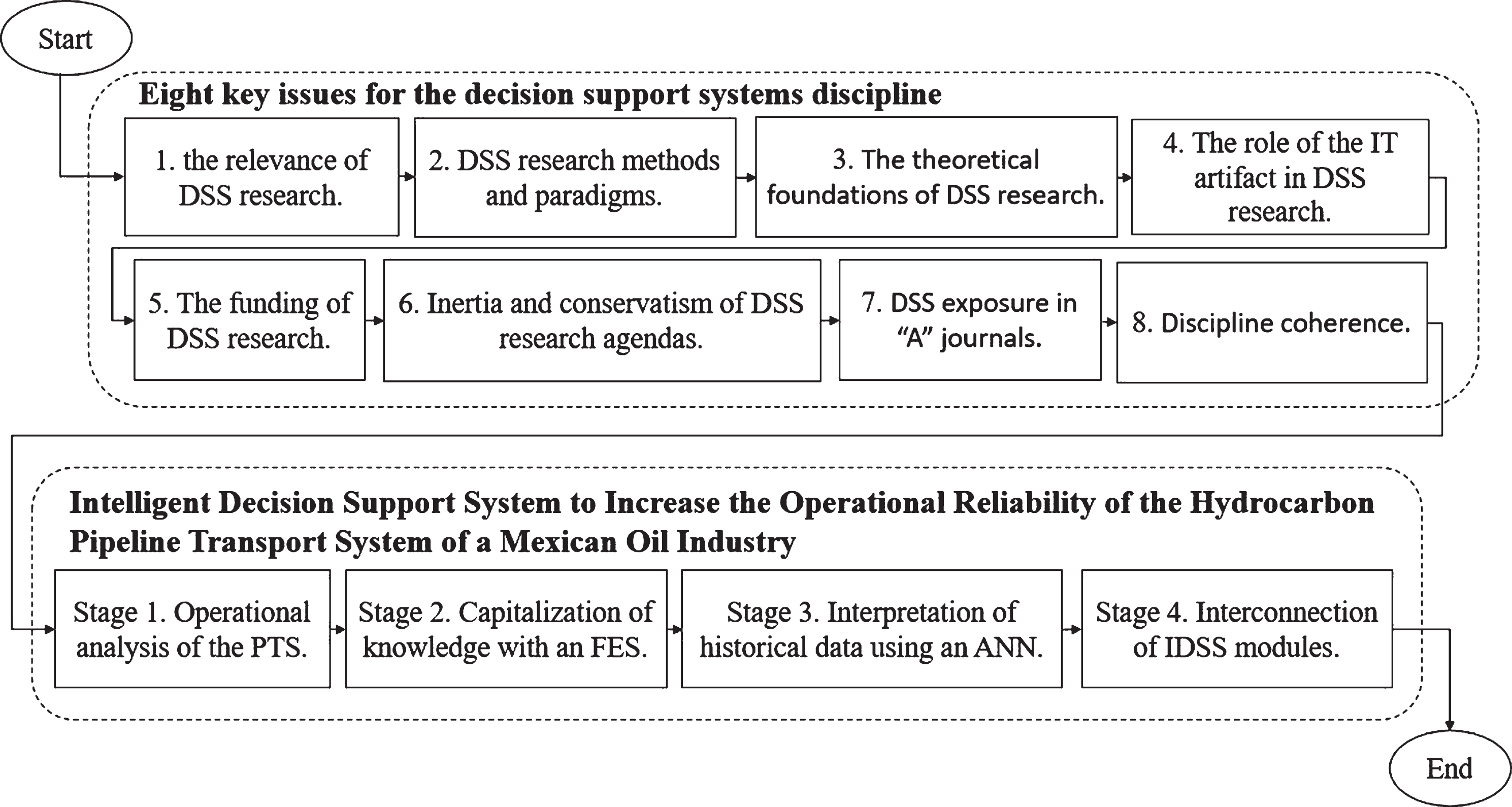
1- The relevance of DSS research, by connecting the practical part [7–15] with the theory [28]. 2-DSS research methods and paradigms, with case study research and design sciences [21–27, 29–39]. 3-The theoretical foundations of DSS research, considering explicit bases in the decision-making judgment through theoretical and practical foundations applied in a case study in Mexico. 4- The role of the information technology (IT) artifact in DSS research, fundamental in all the processes to analyze, interpret and connect the information through a human-machine interface that is easy to understand. 5- Funding for DSS research, no implicit support from any organization. Compliance with keys 6,7 and 8 is generated by considering the largest number of interpretive case studies and the academic rigor to support the research designs [7–15].
The IDSS comprises two AI techniques with which robust databases and cognitive knowledge can be modeled via a human-machine interface, which guarantees the operational reliability of the PTS. A four-stage structure is proposed for the IDSS:
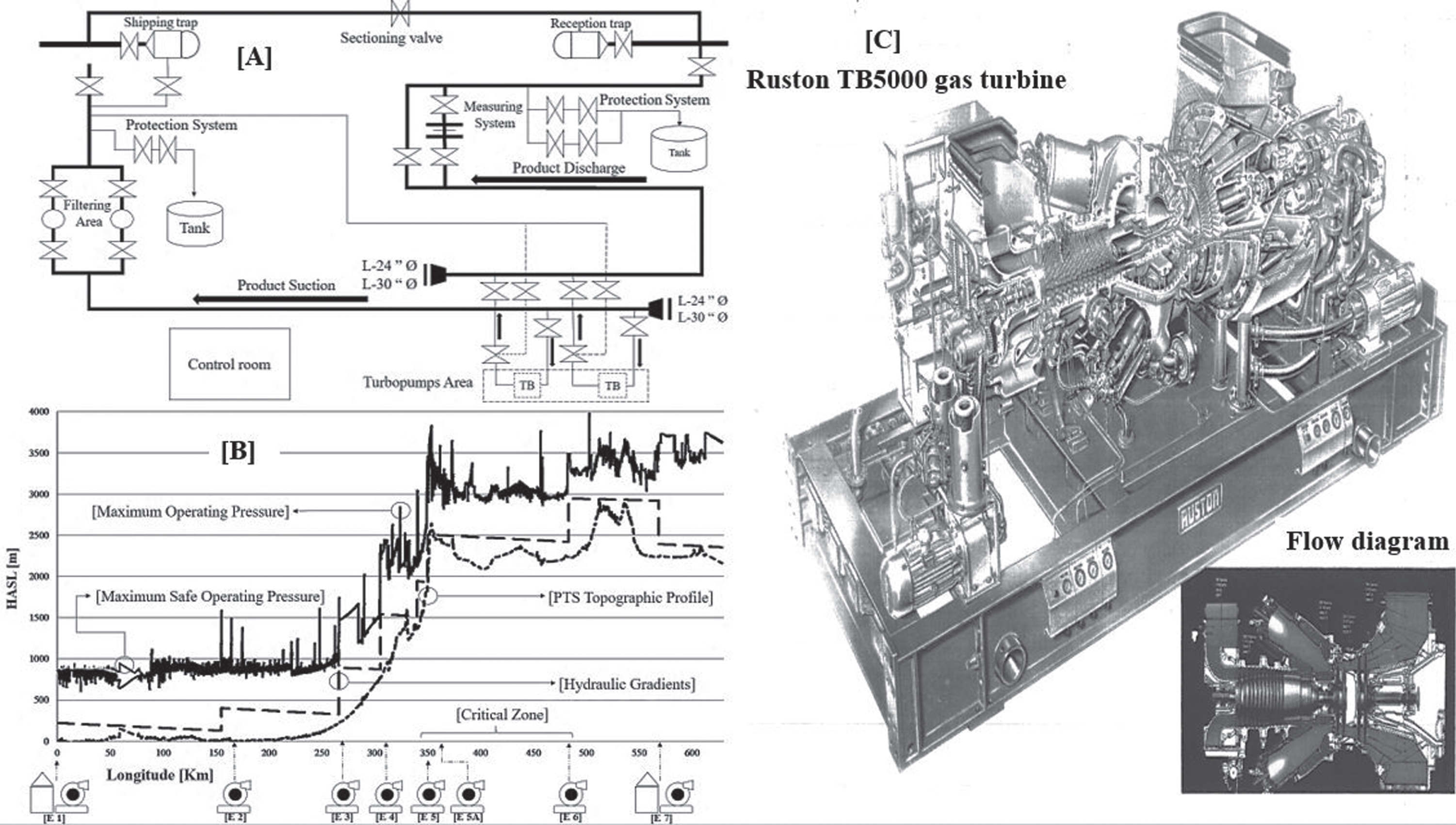
Mexico’s oil and gas industry has developed a strategy to commercialize oil and petrochemical products under international supply and demand. The case study is being developed at the PTS distribution center (DMC) with 62 years of service and based in Mendoza City, Veracruz, Mexico, with an operating program of 140 to 220,000 barrels per day (TBD) [42]. Hydrocarbons are transported through pipes with a diameter of 24 and 30 “Ø, and a length of 572 km. The process is carried out with a sequential hydrocarbon pumping system that allows the flow of the product and is powered by 6 stations with 96 lines isolation valves, 17 check valves, 28 devil traps, and pieces of equipment for remote instrumentation assisted by telemetry and monitoring, data acquisition and control system (SCADA), the functional strategy of a control station pumping the company’s products, comprising measuring, filtering and recovery equipment is shown in Fig. 1. [A] The operating capacity of the DMC is shown in Table 2.
POL established by Industry Mexican of gas and oil. Source: Based on [43]
POL established by Industry Mexican of gas and oil. Source: Based on [43]
The process starts with the receipt of the hydrocarbon from the pumping station (E-1) in Nuevo Teapa, Veracruz (KM 0), receives and sends sequentially to (E-2) in Loma Bonita, Oaxaca (km 166), to (E- 3) in Arroyo Moreno, Veracruz (km 277), to (E-4) in Zapoapita, Veracruz (km 317), to (E-5A) in Mendoza City, Veracruz (km 351) as a power station due to the topographical profile of the area, continue to (E-5) in Maltrata, Veracruz (km 362), to (E-6) in San Martín Texmelucan, Puebla (km 488) and end the pumping process of the distribution center with the (E-7) in Venta de Carpio, State of Mexico (km 572). At this point, the hydrocarbon is transferred to transformation processes, sold and marketed nationally and internationally. A topographical and hydraulic profile of the DMC for a pumping rate of 150 TBD in a 24 “Ø pipeline, the MAYA crude oil with a constant viscosity of 21 ° API and a specific gravity of 0.88 Km/m3 transported considering the operational limits, critical areas and the location of the main facilities at sea level are shown in Fig. 2 [B]. The DMC requires the stabilization of the operational reliability of the PTS, derived from the variable abnormal operating conditions of flow, suction, and discharge that the PTS has over a length of 90 km in the Veracruz and Puebla areas from the E-5 to E-6 which is a critical point due to the topographical profile and fluence of hydrocarbon theft. On average, there are 1403 clandestine intakes every 5 hours and 13 minutes as well as 799 every 8 hours and 13 minutes [5]. The company analyzes the dynamic adaptability of the operating personnel of the E-5A Ruston 5000 turbopumps Fig. 1[C], due to the complexity of the topographical profile of the area as a power station and, given the current problem, crucial for the creation of an intelligent decision support system (IDSS) by AI considering equipment specifications, current regulations and an approach to operational risk that minimizes operational uncertainties and is reflected in the flow differences between pumping and receiving, valve throttling, hydrocarbon spills, ram effects and cavitation in a mechanically deteriorated and constantly vandalized system which generates results given the pressure variability.
The mathematical modeling of all the systems that make up a sequential pumping station by pipelines in said research, consider the contribution in Table 3 [9], where the centrifugal forces of the turbo pumps are characterized by the dependence of the differential head produced by the pump on the fluid flow ΔH = F(Q), in suction condition (P in ) and discharge (P ex ) in a certain section of the line (P g ) represented in Equation (1), segment [A]. Pumps connected in series or parallel provide the basis of oil-pumping stations intended to produce driving pressure [B]. The (Q – ΔH) characteristics of pumps connected in series aresummarized, the fluid flow rates of the pumps are identical Q1 = Q2 = Q and the differential heads are given by ΔH =ΔH1 + ΔH2. If ΔH1 = a1 – b1 * Q2 is the characteristic of the first pump and ΔH2 = a2 - b2 * Q2 the characteristic of the second pump, the characteristic of a system of two pumps connected in series is equal to (2).
Operation oil-pumping station. Source: Based on: [9]
In parallel connection of pumps their (Q - ΔH) characteristics are different. Fluid discharges in pumps are given by Q = Q1 + Q2 but the heads produced by each pump are identical ΔH =ΔH1=ΔH2. If ΔH = a1 – b1 * Q2 is the characteristic of the first centrifugal pump and ΔH = a2 – b2 * Q2 that of the second one, the characteristic of the system of two pumps connected in parallel is equal to (3). To calculate the combined operation of a linear pipeline section and the pumping station located at the beginning of the pipeline section [C] the Bernoulli Equation (4) is used, in which the pressure P o = p (0) at the initial cross section of the pipeline section is excluded with the help of boundary condition. Where a and b are the approximation factors of the pumping station (Q - ΔH) characteristic, the velocity v is measured in (m s- 1). After eliminating P o from these equations we obtain (5). This equation is called the head balance equation. At given values of the head before the pumping station p u and pressure at the pipeline section end p L Equation (6) serves to determine the unknown velocity v of the fluid flow in the pipeline. Consider a pipeline consisting of n successive sections separated by oilpumping stations (D).
The transportation of fluid is performed in the socalled pump-to-pump regime. When intermediate fluid dumping and pumping are absent we can write the Bernoulli equation for each section (7) where ΔH = F 1 (Q), ΔH = F 2(Q),..., ΔH = F n (Q) are the hydraulic (Q - ΔH) characteristics of oil-pumping stations; hj - (j - 1) (Q) the head losses in the sections between the oil-pumping stations dependent on the pumping flow rate Q; Z1, Z2, ... ,Z n the elevations of the oil-pumping stations; hu,1, hu,2, … . . hu,n the heads before the oil-pumping stations equal to hu,i = pu,i/(P g );ZL, h L = p L /(P g );the elevation and piezometric head at the pipeline end (x = L), respectively. In determining the head losses in the pipeline sections it is necessary to account for the possibility of existing transfer points and segments of gravity flow in thesesections.
The architecture of the FES is made up of a system of fuzzy inference and the process of capitalization of the knowledge of the operators of the Oil and Gas Industry, using operational data only from 30 “Ø pipes, for its validation and subsequent application to 24 “Ø pipes [45]. A fuzzy set is a general form of a sharp set. A fuzzy number belongs to the closed intervals 0 and 1, for which one refers to full membership and zero expresses non-membership [46].
The FES comprises deterministic variables (inputs) and uncertain variables (outputs) that model a station’s equipment and operational resources to obtain reliable suction and discharge parameters, as shown in Table 4.
Description of the input and output variables
Description of the input and output variables
The input variables are determined with the support of the company to establish and structure the ideal operational requirements of the E-5A, which are approved by the Energy Regulatory Commission [47]. The two output variables use the uncertainty value that the turbopumps operator must check promptly to deduce risk factors. This demonstrates the structural and operational reliability of the PTS and guarantees compliance with the company’s daily hydrocarbon transportation program [43].The architecture is based on the retrieval of operating parameters from the PTS (Fig. 3) as well as on the linguistic and mathematical classification of the Mamdani model (Table 5A & B). Membership functions are established from goodness and fit tests, as well as non-parametric tests, to determine if the data observed in a random sample fit with a minimum level of significance (variance) to a given probability distribution. Table 5B, presents in section [A], a representative sample of the behavior of 600 population data in the fit tests between the observed data “y(t)” and the estimated “ỹ(t)” with ranges of slack “σ” between the observed and estimated data: σ= y(t) - ỹ(t) ranging from 2 to 8%. Section [B], presents a plot of normalized outliers, identifies the characteristics of the components that are numerically different from the rest of the data. The graph indicates that there are several outliers above the reference line (1.00), however it shows us how well a large agglomeration of the observed (o) and estimated (Δ) data overlap each other in a correlation sample.
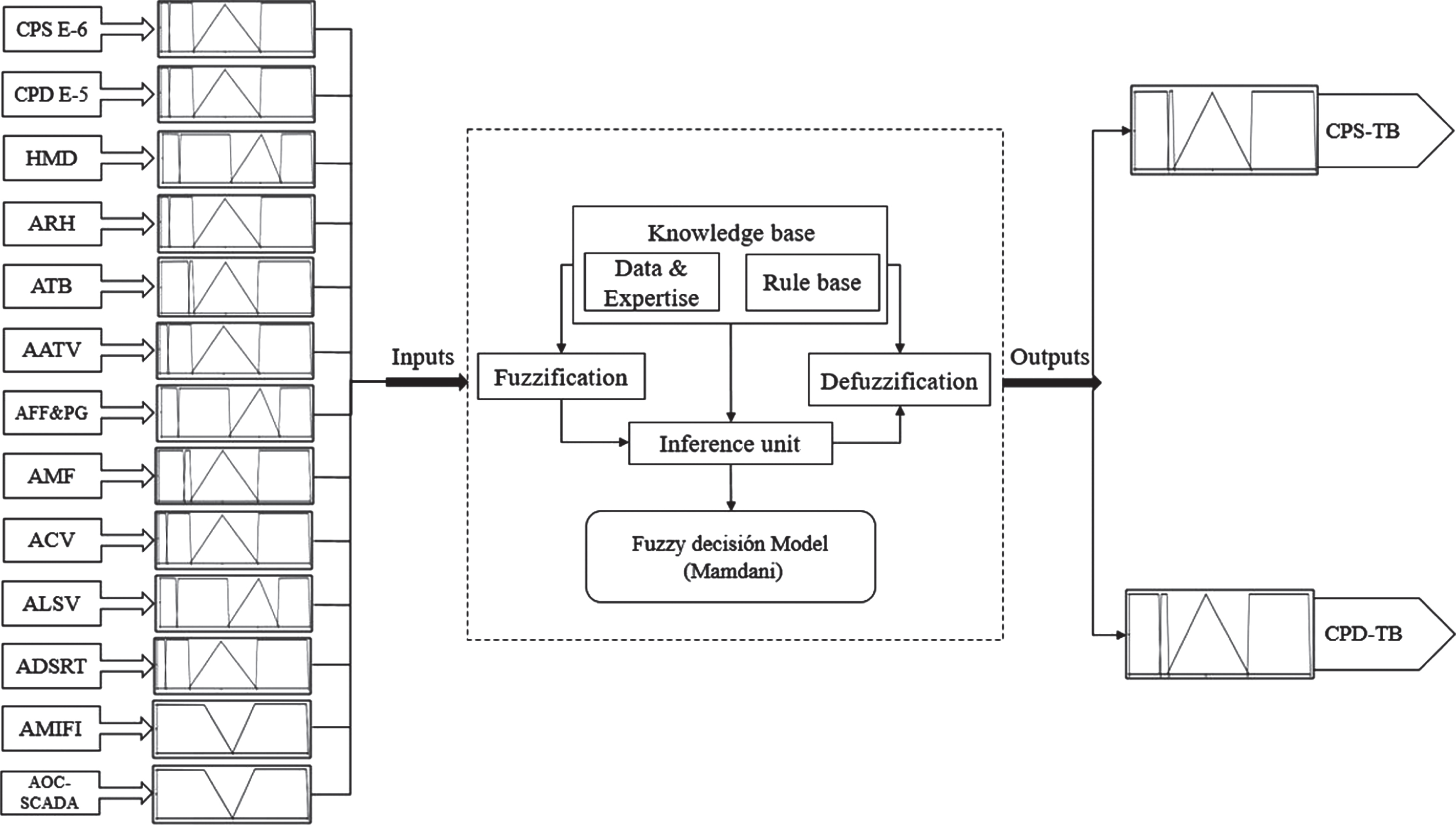
The architecture of the FES.
FES parameters
FES parameters
Fuzzification comprises the process of transforming crisp values into degrees of membership for linguistic terms of fuzzy sets. The membership function is used to assign a degree to each linguistic term [34]. The knowledge base comprises the formulation of the fuzzy rules with the support and experience of specialists. The Mamdani method uses the concepts of fuzzy sets and fuzzy logic to translate a completely unstructured set of linguistic heuristics into an algorithm [48]. The general if-then rule form of the Mamdani algorithm [34] is given below:
Where (X i ) is the input variable, (A ir ) and (B i ) are linguistic terms, (Y) is the output variable, and (k)is the number of rules. Fuzzy rules work in the precedent consequential way. These rules refer to prepositions that contain linguistic variables. A common fuzzy rule relates (m) precedent variables X1, ... X m to n consequential variables Y1, ... Y n . Finally, the defuzzification process is used to transfer fuzzy sets to a precise value, where the output (Y) is expressed by the sum between the normalized weights (w i ) of the variables and the linguistic terms (B i ), to equation (9). The defuzzification process that uses the Matlab software calculates the center of gravity of images (centroid method) that are generated at the moment of decomposing each of the linguistic input variables [50].
730 tests were conducted to evaluate and monitor the confidence level of FES the results showed a high degree of certainty, indicating that the system meets realistic expectations. In Fig. 4, the correlation rates 0.9501 and 0.9449 for the output variables CPS-TB [A] and CPD-TB [B] are observed at the EOP, respectively. Response surface graphs (RSG) allow one to determine the impact that the input variables can have on the output variable [51], and the objective is to maximize the response [52].
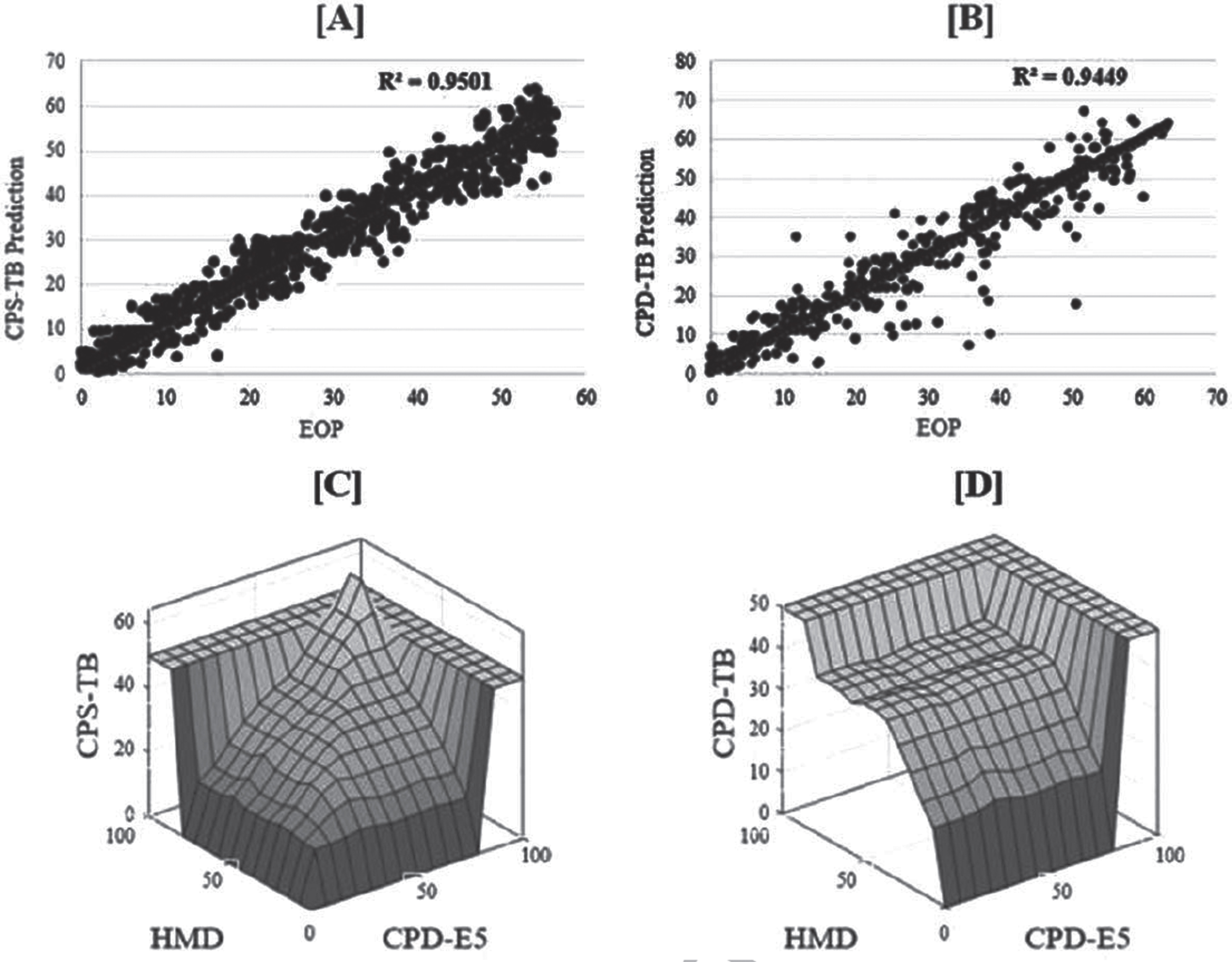
Correlation coefficients and response surface plots of the FES outputs.
If the combination of these variables activates an optimal zone (light colors), the FES works well. However, if the combinations activate a sub-optimal area (dark colors) it means that the FES is underperforming. Two examples of RSGs developed for the FES are shown in Fig. 4. The output variable CPS-TB is used in the graph [C]. After influencing two input variables of the model (HMD and CPD-TB), a gradual increase is achieved for the variable (CPS-TB). For case [D], the same input variables are used as in case [C], which are affected by the second output variable CPD-TB. As a result, the FES is trained to perform functions that facilitate decision-making for operations personnel, as well as conduct operational response and control assessments to improve personnel skills.
ANNs were used in this research because of their many advantages such as non-linearity, addictiveness, and a high degree of robustness [53]. The model estimates the CPS-TB and CPD-TB values of the E-5A using databases from the PTS operating registry. The aim is to work with FES and maximize operational reliability, by modeling historical operational information from the PTS, thereby reducing operational human resource subjectivity when interacting with turbopumps.
The ANN model is a feed-forward with a multilayer perceptron type (MLP) that uses numerical variables from the operating history of the E-5A turbopumps in its inference mechanism, as opposed to the Fes, which use the experience of the personnel. The input variables use the historical 4-year suction and discharge capacity of the E-5A (HCPS & HCPD E-5A), the hydrocarbon flow (Flow), and the injection of Flow Improver into the system (Flow Improver) and analyze detailed operating times and availability, Unavailability, maintenance and accumulation of the station’s 4 turbopumps, which can be used to model various operating scenarios and predict the ideal operating conditions for station suction and discharge (CPS-TB & CPD-TB). The IDSS integrates the experience of human resources and the historical data of an oil company. This study will be useful to compare the results between ANN and FES and to unify decision criteria in a complex, deteriorated, and vandalized system.
Architecture, Tests, validation and results of the ANN
The architecture of the ANN comprises thirty-one neurons in its input layer, sixteen neurons in the hidden layer, and two neurons for the output layer, as shown in Fig. 5 [A]. Index Xj stands for the input variables; IWji shows the coefficients for the neuron weights j. The bias is represented by b, which is considered as a skew value, which allows the neuron weights to be adjusted to get a minimal output error, and finally the index Ys is used for the output values. This Y value is obtained by a Sigmoid-type function since the initial value is normalized using IW values [54]. To determine relative contribution (RC) of the 31 input variables of the ANN, Garson’s Algorithm is used, defined in Equation (10) for the training process (Trainlm) applied to a Perceptron supervised learning architecture, and the differences between the known and estimated outputs are analyzed using mean square error (MSE). RC determine in how much each input variable affect the behavior of the discharge and suction capacity outputs of the E-5A. Where (p) is the input which is calculated its relative contribution (CPS-TB or CPD-TB), (n) is the number of hidden neurons, j the (j-nth) hidden neuron, (I) is the number of ANN inputs, (W jp ) is the synaptic weight of input (p) to the input j, (V j ) is the synaptic weight of neuron (j) to the output, and (W jk ) is the synaptic weight of output (k) to theneuron (j).
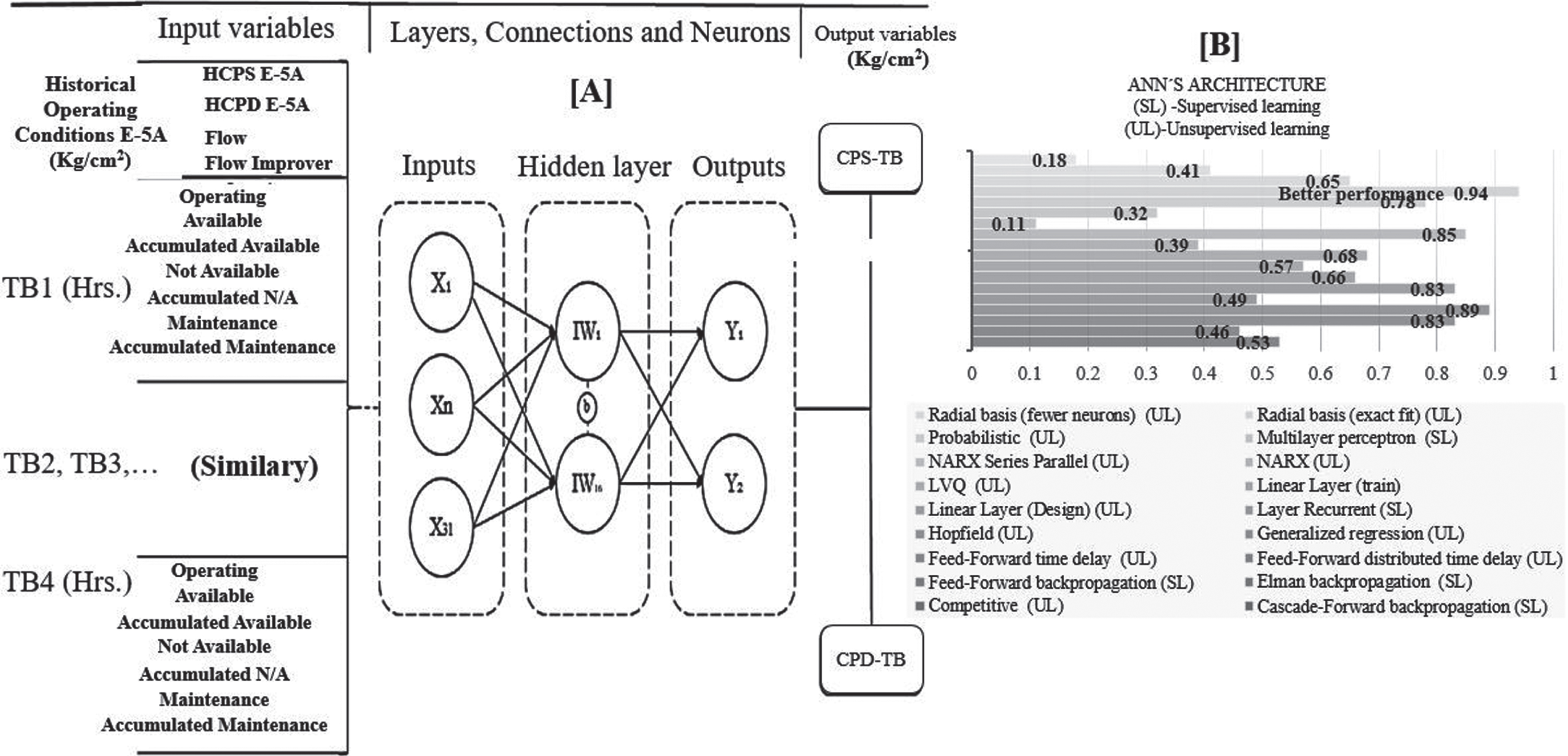
Architecture and evaluation of the ANN.
Figure 5 [B] shows that the selected supervised learning architecture performed best, given the 18 available from MATLAB software using normalized data, various transfer functions, weight-related connections, and back-propagation training algorithms categorized into heuristics and numerical optimization has the best performance (0.94%) before those evaluated.
56 networks were trained, for training, 0.9629 for tests 0.9886, and 0.9857 for validation (Fig. 6). The coefficients are close to 1, which indicates that the ANN is very efficient and can be used with great certainty for IDSS predictions. During training, 45,260 data received normalization and desnormalization treatment, and the expected value of POL was obtained, and the subjectivity of operation was minimized through the company’s historical data.
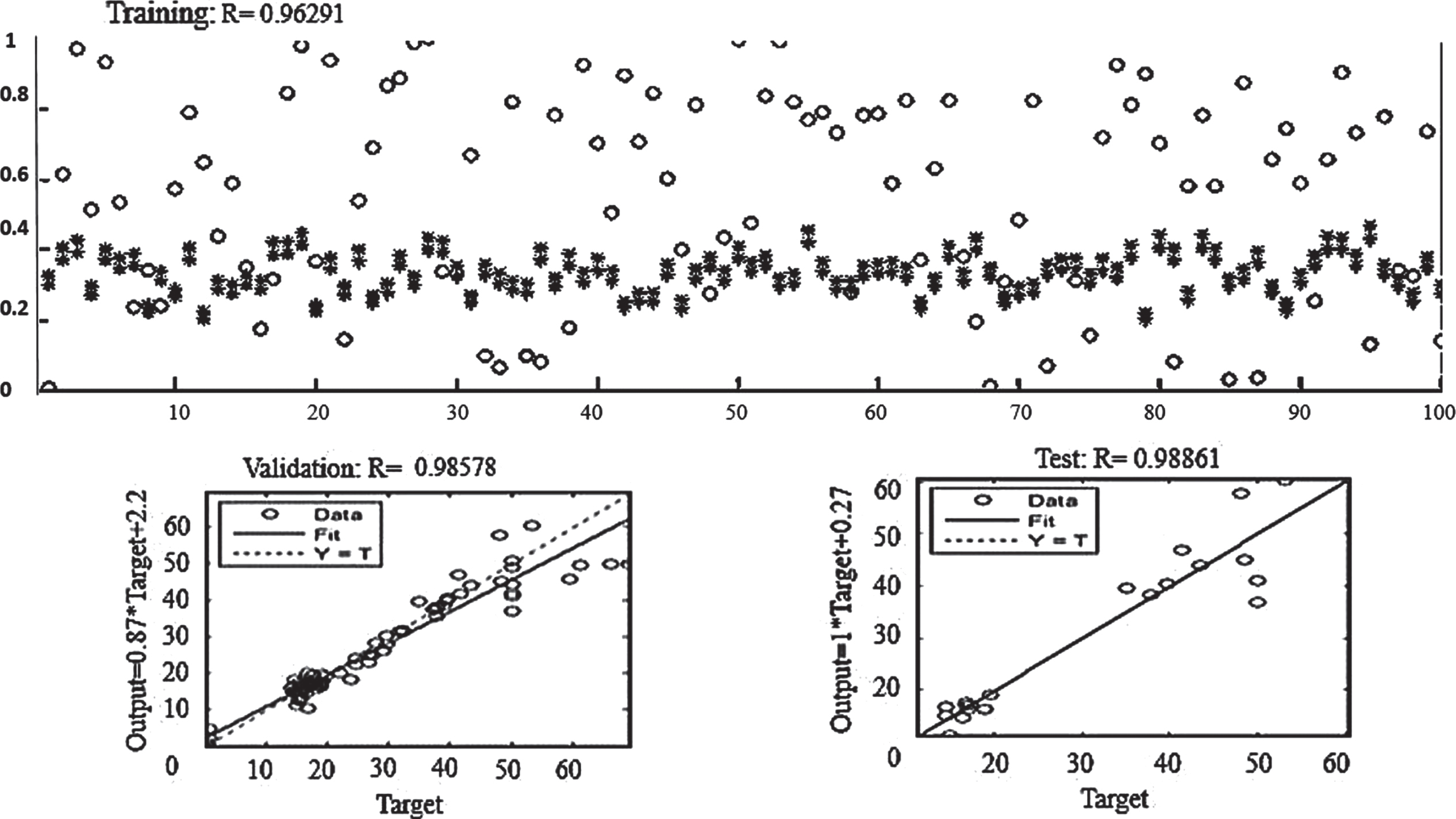
Tests, validation and results of the ANN.
The smart module developed in this research works according to POL, ensuring the operational reliability of E-5A, the versatility of FES (for the cognitive knowledge of modeling specialists), the operational requirements of the station, and the ANN for modeling the conditions. The historical operation of a turbopumps is being supplemented to standardize the criteria in IDSS. The results of the modules are compared with 300 data from the POL of the CPS-TB and 300 data from the CPD-TB of the E-5A. Table 6 shows a fraction of 20 tests in which developing both modules produces very similar results when assessing each of the uncertain parameters that affect the output variables and their direct impact on the expected result.
POL tests against ANN outputs and FES outputs (Kg/cm2)
POL tests against ANN outputs and FES outputs (Kg/cm2)
The resulting numerical correlation (R2) of 40 data for each of the outputs (FES VS ANN) is shown in Fig. 7. An acceptance level of 0.9692 is obtained when comparing the uncertain variable CPD-TB and 0.9767 for CPS-TB. After performing this process in various tests, it is determined that the values generated by the modules are reliable, allowing their operational use within the IDSS.
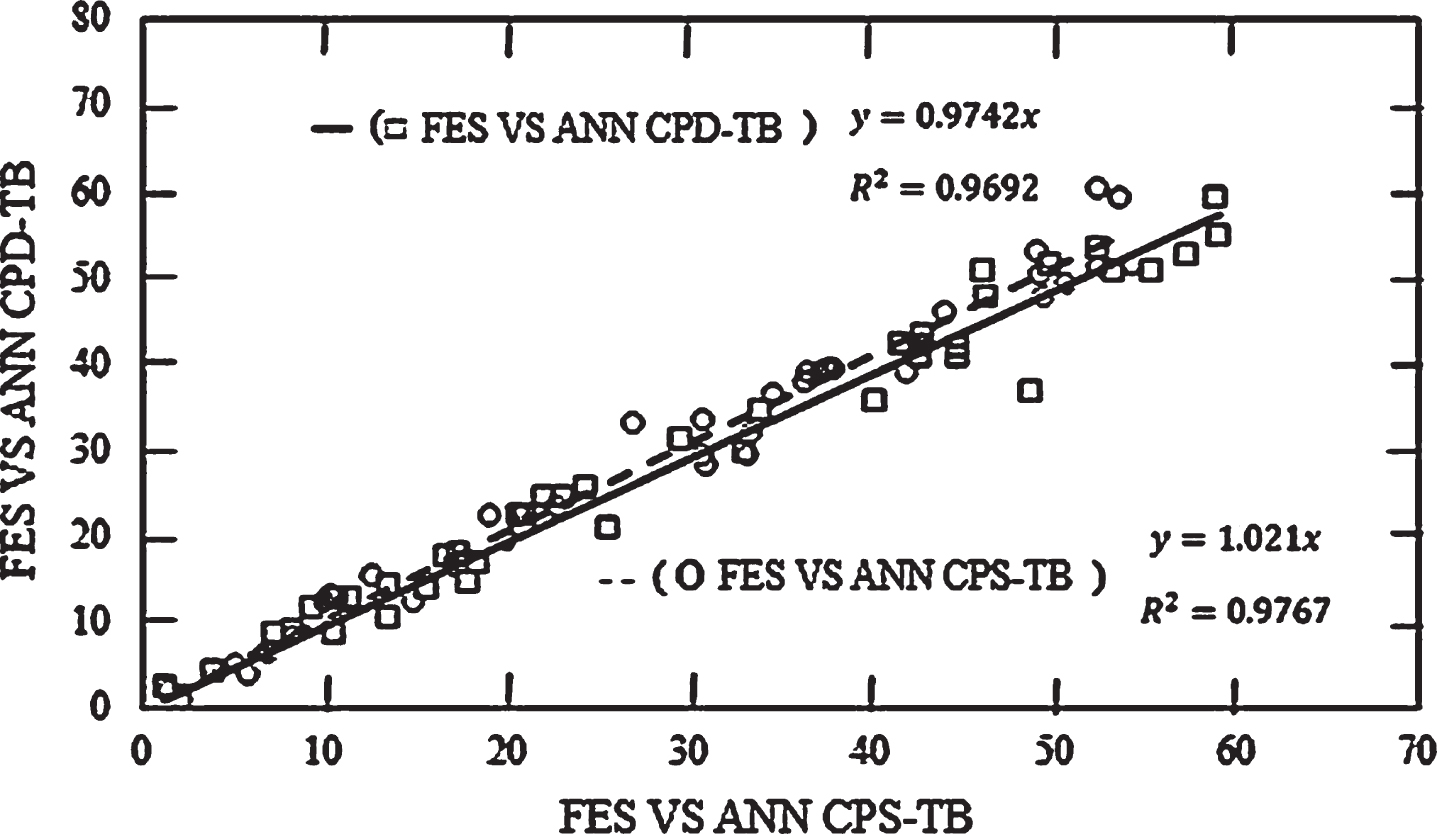
A fraction of the results of the tests of the outputs of the ANN vs. FES (Kg/cm2).
The IDSS man-machine interface is developed in Simulink, Matlab, through remote information from the suction and discharge meters of the turbopumps in SCADA connected to the control room by Siemens 57–1200 controllable logic programmers (PLC) for monitoring and control. Information are taken in real-time using data Access 3.0 with an Ole for process control (OPC), in parallel connection sequences to standardize the interconnectivity between servers, SAP / R3 historical information bases, and unchanged parameters of the cognitive knowledge factory. The interconnection model between FES and ANN shows the results of uncertain variables and deterministic variables that operators must attend to through interfaces. For this purpose, operational manuals and training campaigns have been developed. The diagram in Fig. 8 shows the interconnection sequence of IDSS.
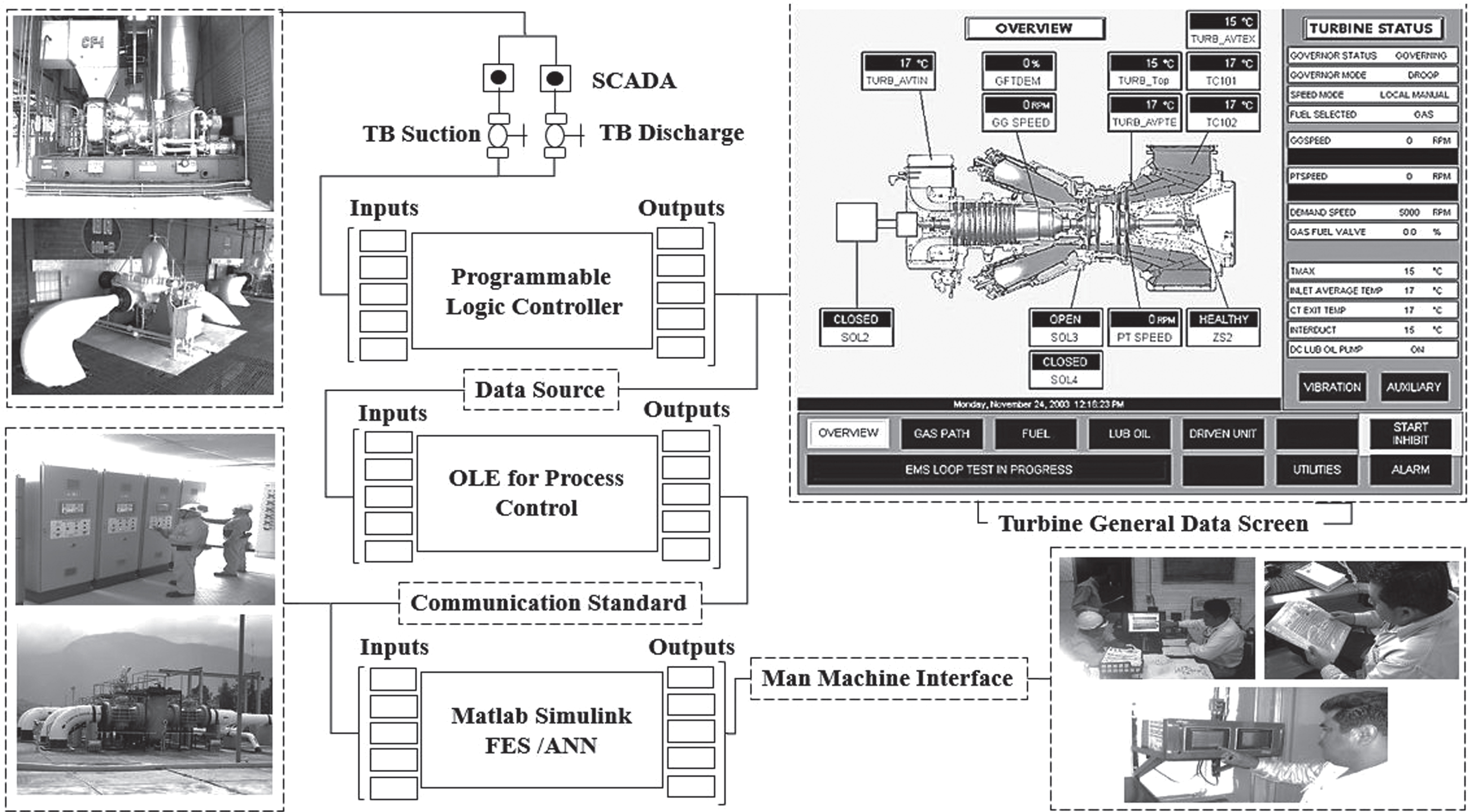
Interconnection of IDSS modules.
The research specifically contributes to the current state of the art by the ability to model, identify and adapt its variables to current international parameters, considering previous works through a comprehensive perspective, capable of standardizing decision criteria and generating new control and monitoring alternatives in a sequential pipeline pumping station. Table 7 presents the parameters considered in the research for the modeling and improved control of pumping station operations, based on the capabilities offered by dynamic modeling through fuzzy logic to model the suction and discharge capabilities of the pumps. turbo pumps [8] considering its equipment and instrumentation [7, 44] in manual or assisted operating procedures [13, 15] through the use of cognitive knowledge [14, 55] and modeling the capabilities of all auxiliary systems to maximize station reliability [9, 12]. Determining operating conditions through mechanical integrity studies of the pipe [8, 56] product characteristics and capacities of upstream and downstream stations [13, 14]. However, the authors agree that the generation of a system capable of interpreting the dynamic behavior of a team backed by historical data, will maximize the reliability of the IDSS, highlighting the learning capabilities that an ANN offers.
FES parameters
FES parameters
A quantitative comparison of the proposed IDSS, given the papers presented would be wrong, because there are papers that do not declare success rates and model conventional operating pressures without considering auxiliary systems [8, 57]. The FES shows rates of 0.9501 for the suction capacity and 0.9442 for the discharge capacity of the turbopumps considering auxiliary systems. The ANN models the performance of the system using percentages of 0.9629 for training, 0.9886 tests and 0.9857 for validation, through data mining. However, an adaptive tolerant control of the neurodiffuse type shows its versatility when modeling the operating capacities of a turbopump with indicators from 67.3 to 82.9% [11], which does not generate a direct or indirect comparison, with the present work, on the contrary, it represents the flexibility of current methods to solve a problem. The IDSS was developed to increase operational reliability between the suction and discharge capacities of pumping stations and to minimize operational subjectivity, given the vandalism of the region [5]. However, it does not rule out the application of linear systems directly to optimize their function and consider the possibility of implementing other methodologies such as fault-tolerant control to improve the control of the proposed system under fault conditions [9, 15]. The IDSS can be designed using techniques such as FL and ANN [30, 35], However, there are success cases that have been developed using genetic algorithms, Bayesian networks, and Monte Carlo simulations to make their theories reliable to maturity [58–60]. Integrating AI in dynamic equipment such as gas turbines represents intelligent automation processes that could one day bring the machine into full autonomy [11, 62].
An IDSS does not replace the work of human resources but generates support that minimizes subjectivity in operational processes in contingency scenarios. The company currently uses offline databases and uses IDSS as a strategy to train and develop new skills with its operators. The representativeness and coherence of the data make it impossible to compare the IDSS directly with another current one [7–15], However, the oil sector is an exceptional field for testing new technologies.
With the implementation of IDSS, improved indicators used to measure the hydrocarbon distribution process have been obtained, and the decision-making criteria for controlling and monitoring dynamic equipment in the station have been standardized, giving personnel new operating skills, thereby reducing operative subjectivity by 82% according to 39 evaluations of personnel trained with the IDSS in 6 months of use. More research is needed to expand the database and modeling capabilities to optimize IDSS. Due to space limitations, some graphs and tables of the study were not given. In this case, no calculation method of the net income of the study was established to determine whether the failure of the model is acceptable (based on current knowledge), but to interpret with variable flexibilities and results, because certain non-quantifiable criteria may be important for assessing overall risks (such as the cost of protecting lives and the naturalenvironment).
Footnotes
Acknowledgments
The research was developed with the support of the National Technological Institute of Mexico through the project 14222.22P “Development of a monitoring system tolerant to behavior patterns that generate corrosion in a pipeline transport system” and by the scholarship for doctoral studies Conacyt (CVU-660805).
Disclosure statement
No potential conflict of interest was reported by the authors.