






Abstract
The improved Sparse Signal Reconstruction (SR) algorithm for Trusted Artificial Intelligence (AI) and Distributed Compressed Sensing (DCS) technology was thoroughly investigated. The study verified its effectiveness and advantages in trusted AI and DCS systems, which have significant implications for enhancing the credibility, security, and performance of signal processing and AI algorithms. The reconstruction performance was evaluated using Orthogonal Matching Pursuit (OMP), Basis Pursuit (BP), and Least Absolute Shrinkage and Selection Operator (LASSO). The analysis primarily focused on runtime, refactoring errors, and the number of successful reconstruction attempts. When K = 4, K = 6, K = 8, and K = 10, OMP outperformed BP and LASSO in terms of successful reconstructions, demonstrating better performance and higher reconstruction precision.
Keywords
Introduction
CS (compressed sensing) is a new technology that breaks the traditional signal sampling theory. It is widely used in wireless communication, image processing, wireless sensor network (WSN), radar signal processing, target detection and tracking, signal detection and estimation and many other aspects. Theoretically, the research of CS theory cannot be separated from the sparse representation of sparse signals (dictionary design, observation matrix design, and reconstruction), and reconstruction is the core content of CS theory. Sparsity is the core problem of CS theory, that is, the information capacity of continuous signal is far less than its bandwidth, while the freedom of discrete signal is far less than its sequence length. Most actual signals have sparse characteristics, usually manifested in transform domains such as time domain and spatial domain, which indicates that the signal is compressible. There is a close relationship between the sparsity of the signal and the precision of reconstruction. The more sparse the signal, the smaller the measurement dimension required and the higher the compressibility. It is also easier to reconstruct with high accuracy on the decoding side. It is necessary to find a sparse transformation basis, which can be sparsely expressed on this basis, that is, a dictionary. Non-coherence guarantees that the low-dimension observation values of the original signal include all the information of the original signal. Thus, the original signal can be reconstructed accurately from the low-dimensional observation values. Common observation matrices are Gauss, Fourier, Bernoulli, and Toeplitz matrices.
In recent years, the research on sparse SR algorithm based on CS has made great progress, and a series of classic reconstruction algorithms have emerged, mainly including convex optimization, greedy tracking, non convex optimization, etc. The reconstruction methods based on convex optimization include BP and basis pursuit denoising (BPDN). Greedy pursuit algorithms are one of the most active fields in current reconstruction method research. Their core idea is to search for atoms in the observation matrix related to the observed residuals, determine the support set, and use the least squares method to solve the coefficients corresponding to non zero points.
In indoor environment, according to the characteristics of multi-path natural sparsity, it can be processed based on the principle of CS. When the natural sparsity of multiple paths is strong, a random observation matrix can be used for signal sampling. In order to obtain a high probability reconstruction of the original signal, the signal with multi-path natural sparsity was mapped to a low dimension space and the optimal solution was obtained. Cai J F studied the problem of reconfiguring a signal that is spectral sparse from a random subset of the regular time domain samples. He also proposed an efficient method to reconstruct spectral sparse signals by using low-order matrix completion. The theoretical recovery guarantee of the fast iterative hard threshold algorithm has been established, indicating that the sample size is sufficient to achieve precise recovery with high probability [1]. Xu B proposed a sparse SR problem based on discrete-time projection neural network. The sparse SR was converted into two methods, polarization and BP noise reduction. For the l1 extremum problem, a new iterative method for solving the l1 extremum problem was adopted, which was theoretically analyzed using Lyapunov method. On this basis, simulations were carried out on sparse super-resolution images and several commonly used face samples, which verified the effectiveness of the method proposed by Xu B. Xu B demonstrated experimentally that the proposed algorithm is not only robust to different degrees of sparsity, amplitude and noise, but also insensitive to different scalar weights [2]. Improving sparse SR algorithms is also an indispensable part in the currentenvironment.
A major problem with evaluating AI is that people tend to personify it. This tendency is especially problematic when it comes to the attribution of human morality to AI. Ryan M explained that according to the most common definition of trust, AI cannot become something capable of being trusted because it does not possess an emotional state and cannot be held accountable for its own behavior, all of which are required for emotional and normative descriptions of trust. Although AI satisfies all the requirements of reasonable trust, it’s not really a kind of trust, and it’s a kind of dependency. After all, even complex machines such as AI should not be regarded as reliable, because it undermines the value of trust among humans, personifies AI, and shifts responsibility to those who create and use them [3]. Based on the Cyber Physical Systems (CPS), the intelligent industry environment has achieved a highly concentrated information resource. For analysis and quantification of CPS reliability, Lv Z proposed a machine learning-based method for automatic online assessment of CPS reliability. This method designed an evaluation framework, and used online sorting algorithm to realize real-time analysis and evaluation. On this basis, Lv Z proposed the CPS trusted smart control strategy and the trusted smart forecast model. On the basis of simulation analysis, the factors that influenced resource’s attack and defence and the dynamic process of distributed cooperative control were derived. The CPS defender can lead and choose the proper defence resources in the distributed cooperative control model according to the CPS attack and defence environment [4]. Trust is an essential activity in human relationships, so the suggestion that AI should be trusted is a seriousproposition.
In WSNs, a lossy distributed source coding method based on CS is proposed to obtain information about relevant sparse sources. This method utilizes CS technology to compress sensor data, achieving a distributed source encoding process. Leinonen M developed a new CS method with complex constraints, which minimized the weighted sum of the mean squared error SR distortion and the average coding rate. Pre-quantization of encoder input (that is, CS measurement value) through vector quantization limited the encoding complexity of each sensor. Based on the entropy constraint, each encoder was simulated as a quantizer, and then a lossless entropy encoder, which was incorporated into variable rate encoding through entropy-constrained rate measurement. The necessary optimum conditions were deduced for a dual-sensor system. A practical training algorithm was proposed, and its complexity was analyzed to assess its performance in practice. Through numerical experiments, the results showed that the method has good performance in obtaining information about relevant sparse sources. Compared with the baseline method, the proposed method achieved better compression performance, and was suitable for general settings with different performance requirements [5]. The CS technology provided an efficient method for data aggregation in WSN, which can significantly reduce data transfer and power consumption. Zhang D proposed an effective data aggregation method based on CS based on WSN clustering structure. In the cluster, the nodes set the seed vectors according to the network distribution, and then send them to the cluster heads. Between clusters, clusters forward measurements to nodes along a multi-hop routing tree. Performance analyses and comparisons with other methods showed Zhang D’s method is efficient and better than other methods in terms of its impact on the total network energy consumption, both within and between clusters [6]. When the signal is compressibility or sparse in the transform domain, the CS technology can be used to sample and reconstruct the signal by using the observation matrix independent of the transform basis. Then, the high dimensional signal was projected into low-dimensional space, and the optimization problem was solved. With fewer projection functions, it is possible to reconstruct the original signal with a high probability, and it is shown that the projection function contains adequate reconstruction information. Traditional compressed sensing mainly assumes a light tail model of underlying signal and/or noise statistics. However, this assumption is not satisfied in highly pulsed environments where non-Gaussian infinite variance processes occur in the signal and/or noise components. This makes traditional sparse reconstruction methods fail because they cannot suppress the influence of heavy tail sampling noise. Tzagkarakis George has designed a robust algorithm for reconstructing sparse signals from linear random measurement data corrupted by infinite variance additive noise. In particular, a greedy reconstruction method is proposed to improve the robustness to pulse sampling noise by solving the fractional moment minimum dispersion optimization problem. Experimental evaluation shows that this algorithm has better reconstruction performance in a wide range of pulse environments than the most advanced compressed sensing technology [7].
This paper mainly studies and analyzes the improvement methods of sparse SR algorithm by understanding the trusted AI and DCS technology, and analyzes the reconstruction performance of OMP, BP, and LASSO algorithms. The result of which algorithm is optimal in terms of running time, reconstruction error, and number of reconstruction successes compared to each other is derived.
Overview of trusted AI and DCS technology
Trusted AI
Trustworthy AI refers to the characteristics of trustworthiness and reliability in the design, development, deployment and use of AI systems. Trusted AI enables AI systems to be trusted and accepted by users by ensuring the requirements of transparency, interpretability, fairness, security, and privacy protection of AI systems. The goal of trusted AI is to ensure that AI systems are guided by ethical principles, laws and regulations, and social values when interacting and making decisions with humans, thereby minimizing potential negative impacts and risks.
Distributed Compressed Sensing is a technology for sensor network communication and data acquisition. Based on compressed sensing theory, it reduces the overhead of data transmission and storage by sampling and compressing on sensor nodes. The traditional data acquisition method usually needs to send the original data of each sensor node to the central node for processing, while the distributed compressed sensing technology can compress and reduce the data of the sensor node locally, thereby reducing the burden of communication and storage, and improving the energy efficiency and bandwidth utilization of the system. In distributed compressed sensing, the central node can reconstruct and recover the source data through the collected compressed data, so as to monitor the physical environment and obtain key information. Distributed compressed sensing technology has wide application prospects in wireless sensor networks, Internet of Things and big data. AI is a discipline that simulates, expands, and develops theories, methods, technologies, and applications for human intelligence, resulting in significant changes in today’s human society. From a macro perspective, AI plays an irreplaceable role in social life. Today’s life is filled with various AI applications: unlocking phones through facial recognition, engaging in conversations through voice assistants, and purchasing products on e-commerce platforms. At the macro level, AI has generated enormous economic benefits. However, while it is developing rapidly, it also exposes its untrustworthy side.
In addition, the calculation methods of AI may also bring unfair and unjust results. Artificially intelligent “chatbots” on the Internet are also likely to write nasty, racist, sexist, offensive and socially undesirable content. At the same time, AI systems may also expose users’ personal privacy and corporate secrets [8]. Hackers can reconstruct private information such as fingerprints by using feature vectors obtained through AI modeling, thereby obtaining private information. For AI, concerns about integrity have become a major obstacle to achieving progress in a certain field, achieving wider applications, and generating greater economic benefits [9]. The framework for trusted AI can be shown in Fig. 1:
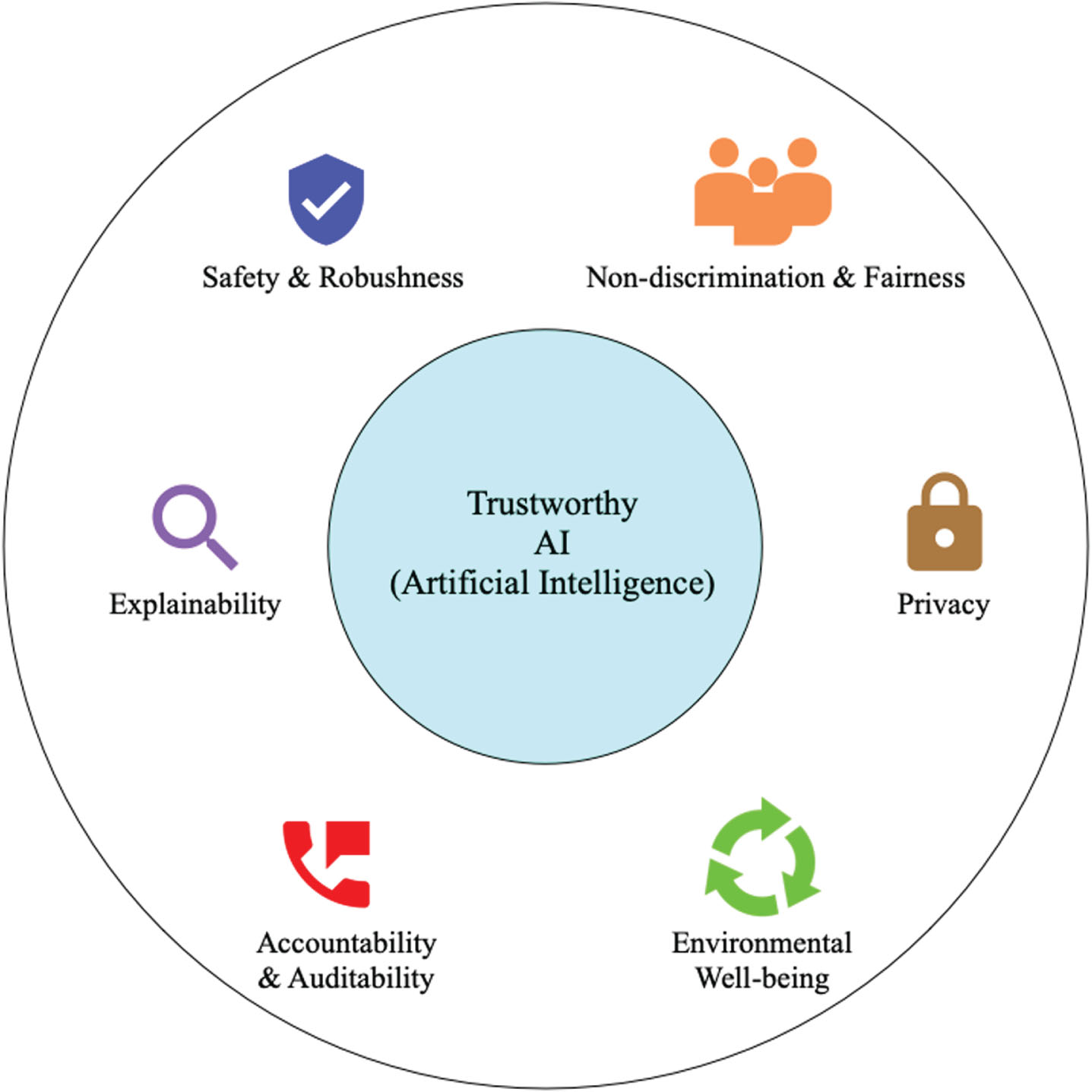
Framework of trusted AI.
Trusted AI has the following six most important aspects: ➀ privacy; ➁ safety and robustness; ➂ interpretability; ➃ non discrimination and fairness; ➄ environmental welfare; ➅ accountability and auditability. In the digital age, AI has been widely applied.
DCS is a new method of target SR using a small amount of observation information, which can effectively save communication resources. CS technology is a new method that can restore target signals with very few samples [10]. In this way, during the collection process, as long as a small number of basis functions are selected and the data reconstructed through sparse representation, the target signal can be restored. There is a certain relationship between the compression ratio of the input signal and the reconstruction error. In general, as the compression ratio increases, the reconstruction error also increases. Compression ratio refers to the ratio between the original input signal and the compressed signal. The higher compression ratio means that the compressed signal takes up less storage space, thus saving storage resources. But at the same time, due to the need for data loss or compression in the compression process, it may lead to the failure to perfectly restore the original signal during reconstruction, resulting in reconstruction errors.
Striking a balance between signal compression and reconfiguration errors is a key issue that requires consideration of system-specific requirements and application scenarios. Here are some common methods and strategies that can help achieve a good balance:
Adjusting the compression ratio: increasing the compression ratio can reduce transmission and storage costs, but it can also lead to larger reconstruction errors. Depending on demand, compression ratios can be adjusted based on resource constraints and performance requirements. Weigh the relationship between the compression ratio and the reconstruction error and choose an appropriate compression ratio.
Choose appropriate reconstruction algorithms: Different reconstruction algorithms have different performance on compression effect and reconstruction error. Some algorithms may perform better at high compression ratios, while others may be more effective at low compression ratios. Depending on the situation, choose the appropriate reconstruction algorithm to achieve the desired balance.
Use optimization techniques: Using optimization techniques can improve the accuracy and quality of the reconstruction. For example, combining a priori knowledge, using sparse representations, and employing regularization techniques can improve the accuracy of the reconstruction and reduce the reconstruction error.
Iterative reconstruction: in some cases, the reconstruction results can be improved by multiple iterations. For example, in iterative compressed perception algorithms, the reconstruction error can be gradually reduced by multiple iterations of reconstruction and correction.
Adoption of error control mechanism: In the signal transmission or storage process, the introduction of an error control mechanism can help balance the compression effect and the reconstruction error. For example, by using error-correcting codes or reconstruction techniques, the errors that may be introduced during transmission or storage can be reduced, thus improving the reconstruction accuracy.
In summary, balancing signal compression effects and reconstruction errors requires trade-offs based on specific situations and needs, and selecting appropriate methods, algorithms, and techniques to achieve the desired balance.
DCS technology introduces sparse expression technology into the field of distributed signal processing. By distributing the originally centralized signal acquisition process to different spatial nodes, and processing the collected data through distributed algorithms, the target signal is finally obtained. This technology has been widely applied in practical applications. This algorithm does not need to send all collected data to the central node for processing, which can greatly reduce communication resource consumption [11]. The sampling of CS can be as shown in Fig. 2:

CS sampling.
DCS technology is widely used in various fields due to its advantages of saving communication resources and improving analysis efficiency. ➀ WSNs: due to the large number of nodes in WSNs, data transmission costs are relatively high distributed image processing. ➁ Intelligent transportation system: DCS technology has the potential to be widely used in the detection and prediction of traffic flow. This sensor network can simultaneously collect information such as traffic flow and speed on multiple roads and intersections.
Therefore, DCS is a new technology with important application prospects, which can reduce communication resource consumption in networks and improve signal resolution. At present, it has been widely used [12]. With the continuous progress of distributed computing and signal processing technology, DCS technology could usher in a broader development and application prospects.
OMP algorithm
OMP algorithm is a kind of traditional CS algorithm, which is the basis of many common and efficient algorithms at present [13]. The improved sparse signal reconstruction algorithm has some advantages over the traditional algorithm in many aspects, especially in the case of dealing with high-dimensional data or noise. Here are some possible advantages:
Higher reconstruction accuracy: Improved sparse signal reconstruction algorithms generally provide more accurate signal reconstruction, even when the signal is disturbed by noise or there is missing data. This is important in many applications, such as image recovery, medical imaging, and signalprocessing.
Faster computation speed: Some improved algorithms employ efficient mathematical tricks or approximation methods to speed up the computation process of signal reconstruction. This is very useful for large-scale data or real-time processing tasks.
Greater robustness: Improved algorithms are generally more robust and able to handle a wider range of signal types and distributions. They may be less dependent on assumptions about signal sparsity and therefore perform well in a variety of applications.
Better convergence and stability: Some improved algorithms have better convergence and stability characteristics, which means that they reach accurate solutions faster in the iterative process, and are less prone to falling into local minima or numerical instability.
Wider applications: Improved algorithms can often be adapted to a wider range of applications, including computer vision, signal processing, biomedical image processing, compressed sensing, wireless communications, and more.
More tunable parameters: Some improved algorithms provide more tunable parameters, enabling users to tune to specific problems to get the best signal reconstruction results.
The basic idea of the OMP algorithm is to find CS matrix that best matches the current residual by calculating the inner product of the current residual and the CS matrix during each iteration. Then, by removing the contribution of this column, a new residual is calculated, and after iteration, the estimated value of the original signal is finally output [14]. The calculation process of OMP is as follows:
Input: CS matrix is A = φψ; random mediation framework matrix is φ ∈ RM×N; Fourier transform basis is ψ ∈ RN×N; observation vector is y ∈ R M ; sparsity is K;
Initialization: in the case where the supporting index set Λ is an empty set, r0 = y, and t = 1 is repeated;
Repeated processing:
The maximum value in the inner product of residual r
t
–1 and column vector φ
j
of matrix A is calculated and the corresponding column index is recorded:
The updated index set is:
The update atomic set is:
The calculation using the least squares method is:
➃ Residual
➄Judgment: If the number of iterations is t < K, step ➀ is executed; otherwise, step ➅ is executed;
➆ The final signal estimation value of
The method based on BP can solve the minimization problem with parameter l1. BP method is a commonly used method that sparsifies known parameters. An important idea of the BP method is to convert an optimal problem from an l0 norm to an l1 norm.
BP is an optimal tracking method based on convex optimization. It uses an over complete dictionary to find the sparse representation of signals, which is more stable than matching tracking method. Under certain conditions, the obtained echo coefficient could be lower [15]. BP and matching tracking have similar ideas.
Least absolute shrinkage and selection operator
LASSO can also be translated as least absolute shrinkage and selection operator. This is a regression analysis method that performs both feature selection and regularization (mathematically). Similar to Lingnan regression, LASSO algorithm adds a norm after objective function Q(β):
λ ∥ β ∥ 1 represents the minimum absolute contraction and selection operator, an Xβ represents the objective function.
The LASSO algorithm can solve a common problem in high-dimensional data today - sparsity. In the case of high-dimensional data being p > > n (which is not discussed here), as data collection capabilities increase, more variables (also known as features) are collected, but many of them may be unimportant and have small coefficients. If ridge regression is used, this unimportant variable may also be estimated and may not be small. However, if people use LASSO, people can reduce the coefficients of these nonsignificant variables to 0. The estimation diagram of LASSO algorithm and Lingnan regression can be shown in Fig. 3:
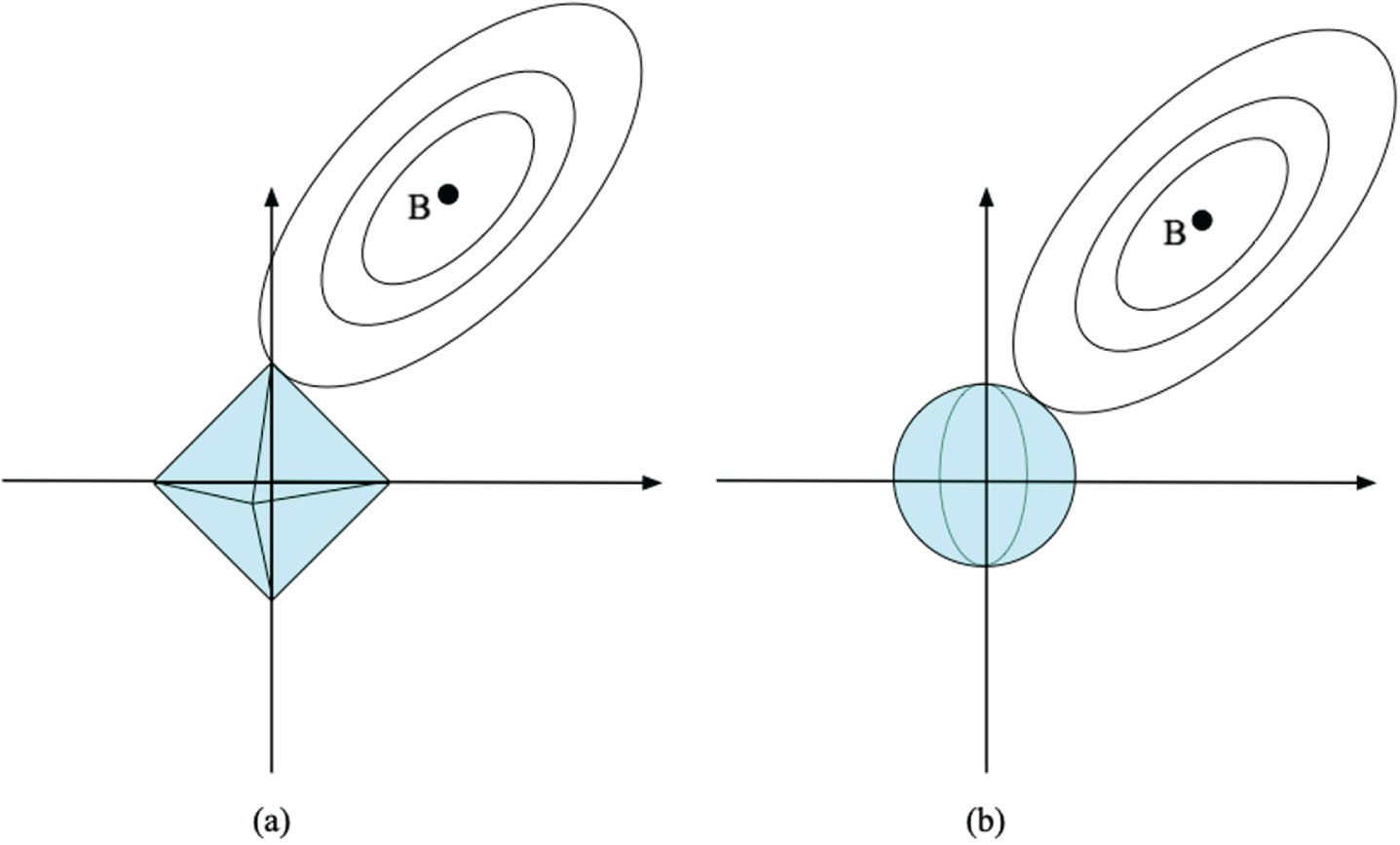
LASSO algorithm and Lingnan regression estimation chart.
In Fig. 3, Fig. 3 (a) shows the LASSO algorithm estimation graph, and Fig. 3 (b) shows the estimation graph of Lingnan regression. The blue part represents the constraints of the two methods.
Experimental design
The OMP algorithm tends to select atoms that are highly correlated to the current residuals, but it does not take into account the interrelationships between atoms and can lead to overfitting problems.
The BP algorithm is a signal reconstruction method based on linear programming, which tries to minimize L1 norm in sparse representation, so as to promote signal sparsity.
An important feature of LASSO algorithm is that it can drive the coefficient of sparse signal to zero to a certain extent, so it can achieve feature selection and reduce the influence of irrelevant features.
When comparing the compression performance of these three algorithms, it is necessary to consider the characteristics of the signal, the dimension of the problem and the noise level. In general, if the signal is discrete and the dimension is low, the OMP algorithm may be a suitable choice.
For high-dimensional signals, especially continuous signals or noisy cases, BP algorithm and LASSO algorithm are usually more advantageous. The LASSO algorithm is a powerful tool if you want feature selection or if there are a lot of uncorrelated features in the signal. The specific steps and parameter settings of experimental design were described to ensure that the results of experiments are reliable and comparable.
The entire simulation process can be divided into three steps:
➀ Sampling refers to the sampling of input signals through the MWC (Modulated Wideband Converter);
➁ Eigendecomposition of a matrix is signal preprocessing in frequency domain;
➂ The reconstruction algorithm is to find a spectrum that preserves useful information.
The experimental procedure is shown in Fig. 4:

Experimental flow chart.
The simulation mentioned that the simulation mainly focuses on the comparison of the above three methods. The simulation process was divided into two parts, which are composed of two parts. Among them, the main program is mainly the program that reorganizes the front-end, while the subroutine is the program for the three algorithms mentioned above. Simulation is mainly to call each subprogram through the main program, and output its performance indicators such as mean-squared error and running time. On this basis, three different algorithms were compared in terms of performance.
Parameter setting: Assuming the expression of input signal x(t) is:
Among them, n(t) represents Gaussian noise. In the n-th frequency band, τ n represents time delay; f n represents frequency; R n represents bandwidth. Total bandwidth is F = 10 GHz, and sub band bandwidth is R n = 50 MHz. The sampling period of the MWC neutron channel is the same as the period of the random sequence, that is, T s = T p , M = L. The number of channels is m = 50 and M = L = 195. The sparsity is K. When K = 4, f = 2.06, 3.52GHz, and τ= 1.431, 0.984μs; when K = 6, f = 1.03, 2.82, 3.79GHz, and τ= 1.567, 1.984, 0.982μs; when K = 8, f = 1.45, 2.54, 3.09, 3.87GHz, and τ= 1.567, 1.284, 0.997, 0.724μs; when K = 10, f = 1.15, 2.04, 2.54, 3.09, 3.87GHz, and τ= 1.567, 1.375, 1.284, 0.997, 0.724μs. In the following section, the three algorithms mentioned above could be used to simulate the original signal 500 times. Because 500 data sets are very large, the average value is taken here.
Evaluation metrics to measure the performance of the algorithms were defined, such as running time, reconstruction error, and number of successful reconstructions.
On the basis of the above steps and parameter settings, the reconstruction performance of OMP algorithm, BP algorithm, and LASSO algorithm was analyzed.
SNR can be used as a reference index for system design and optimization. By increasing the energy of the signal or reducing the level of noise, the signal-to-noise ratio can be increased, thereby improving the performance and efficiency of the system. In the communication system, the signal-to-noise ratio can be improved by improving the modulation scheme, increasing the transmitting power and improving the channel quality. In signal processing and data decoding, signal-to-noise ratio is an important reference index. A higher signal-to-noise ratio can improve the accuracy and reliability of data transmission and processing. For example, in audio and image processing, the signal-to-noise ratio can affect the decoding, de-noising and enhancement of audio signals or images.
In short, the signal-to-noise ratio plays an important role in the field of communication and signal processing, it can be used to evaluate the quality of signals, judge system performance, optimize system design, and play a role in data processing and decoding. By improving the signal-to-noise ratio, the quality of communication and the accuracy and reliability of data processing can be improved. When K = 4, the reconstruction performance of LASSO algorithm is shown in Fig. 5:
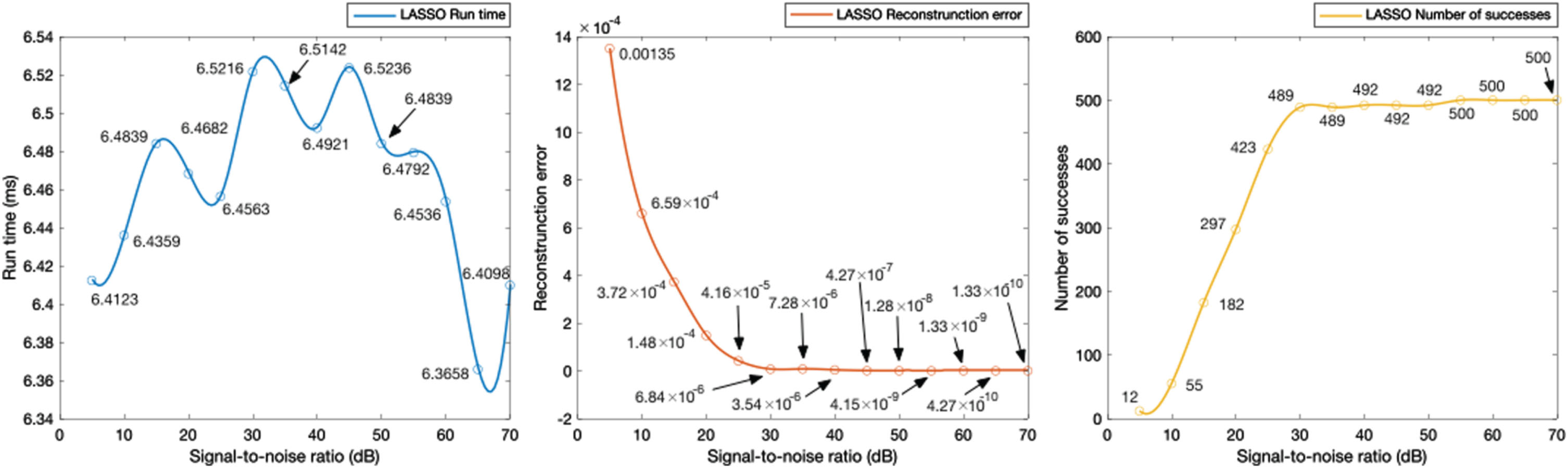
Reconstruction performance of LASSO algorithm when K = 4.
From Fig. 5, the signal-to-noise ratio (SNR) was 5dB-70dB. Within this range, the success rate of the LASSO algorithm increased with the increase of SNR. When the SNR reached 55dB, the success rate of the LASSO algorithm also reached 500 times.
The reconstruction performance of the LASSO algorithm in the case of K = 6 is shown in Fig. 6:
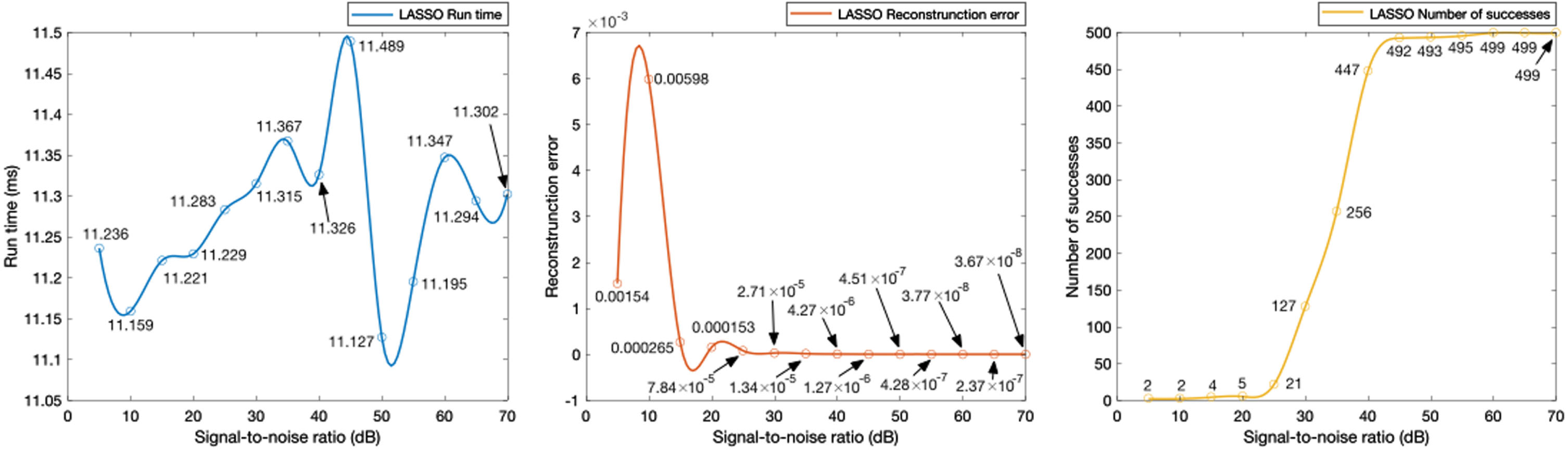
Reconstruction performance of LASSO algorithm when K = 6.
From Fig. 6, the SNR was 5dB–70dB. In this range, as the SNR increased, the success rate of the LASSO algorithm increased, with a SNR of 60dB. The success rate of the LASSO algorithm also remained at 499.
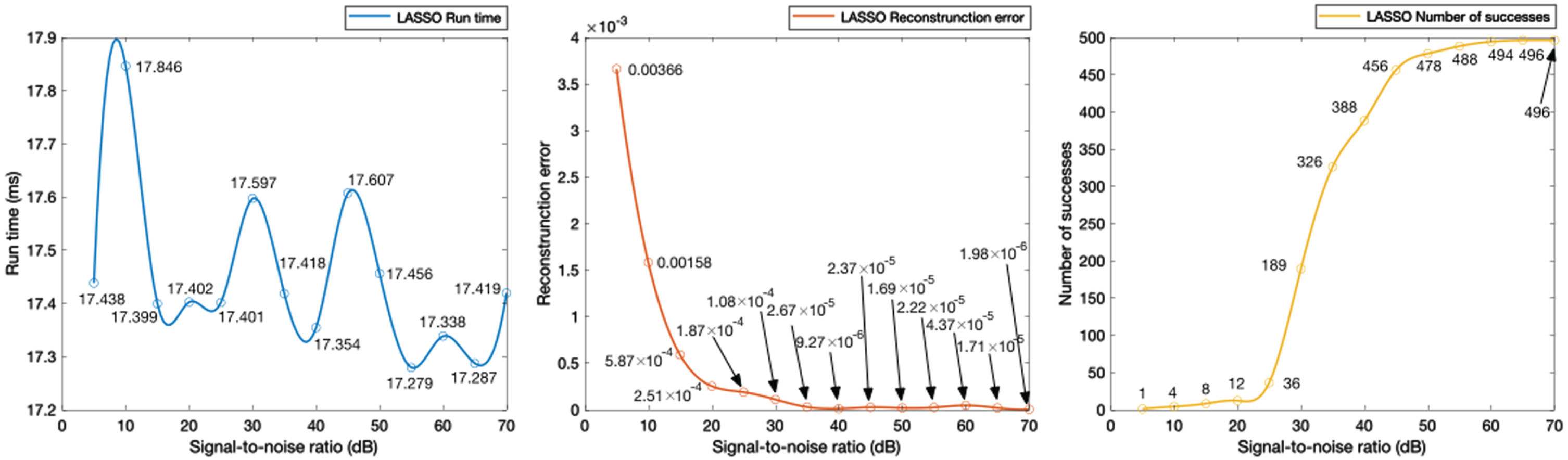
The reconstruction performance of LASSO algorithm when K = 8 is shown in Fig. 7:
Reconstruction performance of LASSO algorithm when K = 8.
As shown in Fig. 7, the SNR was 5dB–70dB. Within this range, the success rate of the LASSO algorithm increased with the increase of SNR. When the SNR reached 65dB, the success rate of the LASSO algorithm also reached 496.
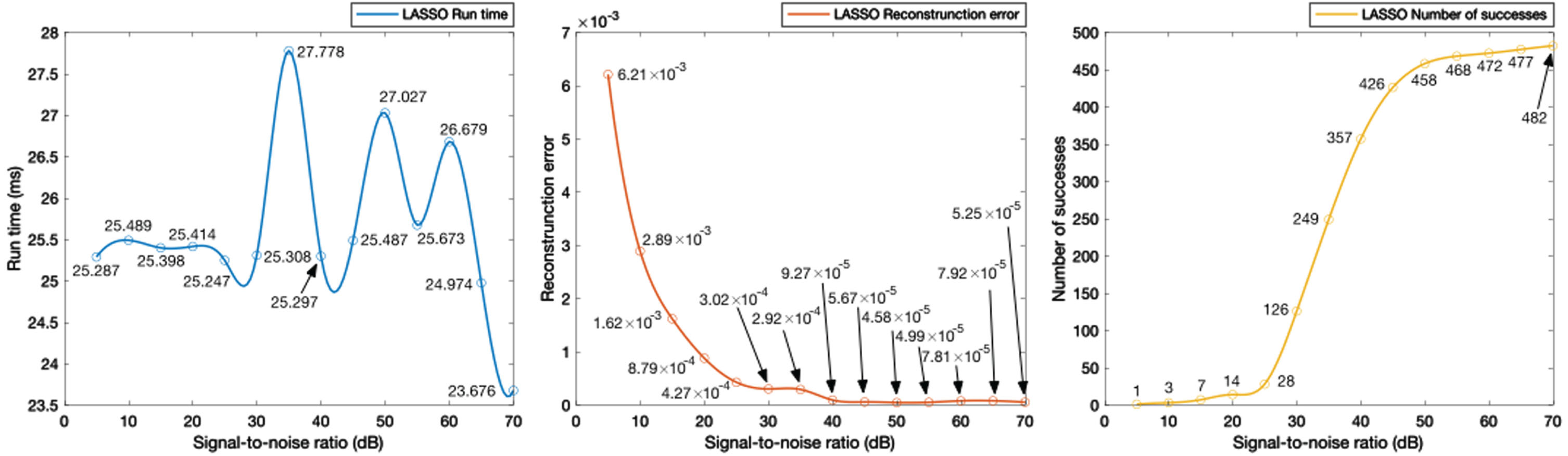
When K = 10, the reconstruction performance of LASSO algorithm is shown in Fig. 8:
Reconstruction performance of LASSO algorithm when K = 10.
From Fig. 8, the SNR was 5dB–70dB. Within this range, the success rate of the LASSO algorithm increased with the increase of SNR. When the SNR reached 70dB, the success rate of the LASSO algorithm reached 482 times.
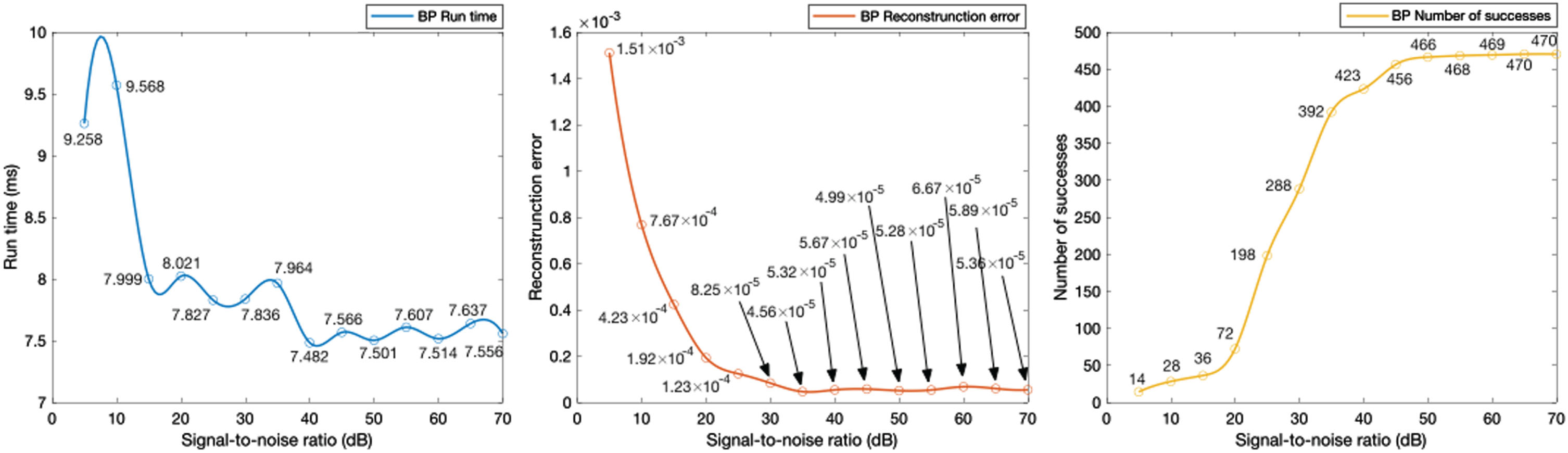
When K = 4, the reconstruction performance of the BP algorithm is shown in Fig. 9:
Reconstruction performance of BP algorithm when K = 4.
From Fig. 9, the SNR was 5dB–70dB, and within this range, as the SNR increased, the success frequency of the BP algorithm also increased. When the SNR was 65 dB, its success frequency also reached 470 times.
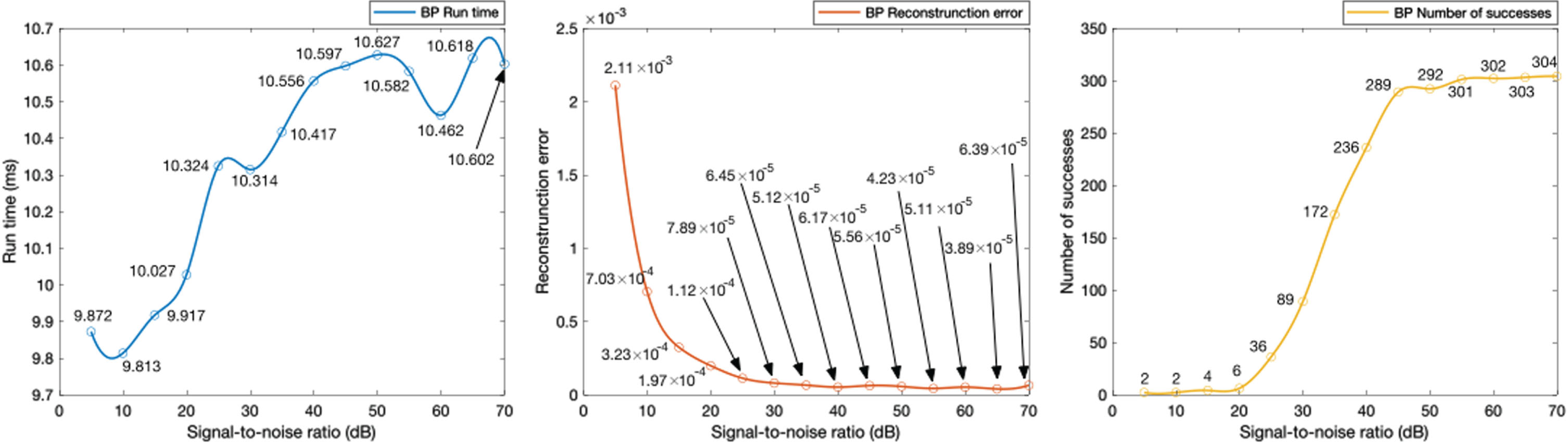
When K = 6, the reconstruction performance of the BP algorithm is shown in Fig. 10:
Reconstruction performance of BP algorithm when K = 6.
From Fig. 10, the SNR was 5dB–70dB. Within this range, the success rate of the BP algorithm increased with the increase of SNR. When the SNR reached 70dB, the success rate of the BP algorithm reached 304 times.
When K = 8, the reconstruction performance of the BP algorithm is shown in Fig. 11:
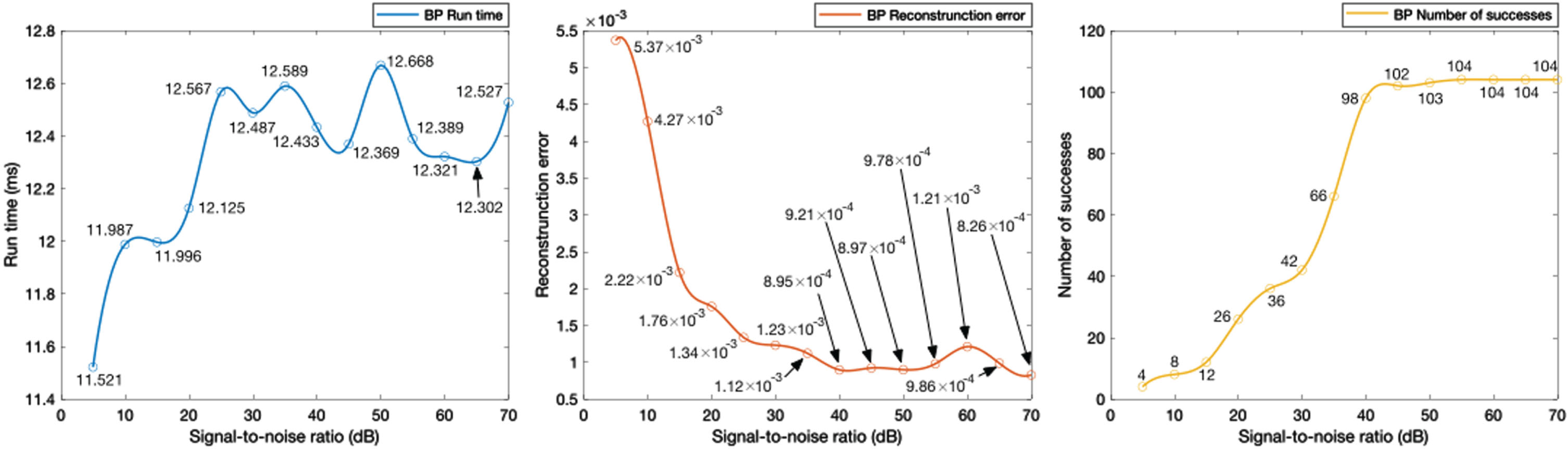
Reconstruction performance of BP algorithm when K = 8.
From Fig. 11, the SNR was 5dB–70dB. Within this range, the success rate of the BP algorithm increased with the increase of SNR. When the SNR reached 55dB, the success rate of the BP algorithm also reached 104 times.
When K = 10, the reconstruction performance of the BP algorithm is shown in Fig. 12:
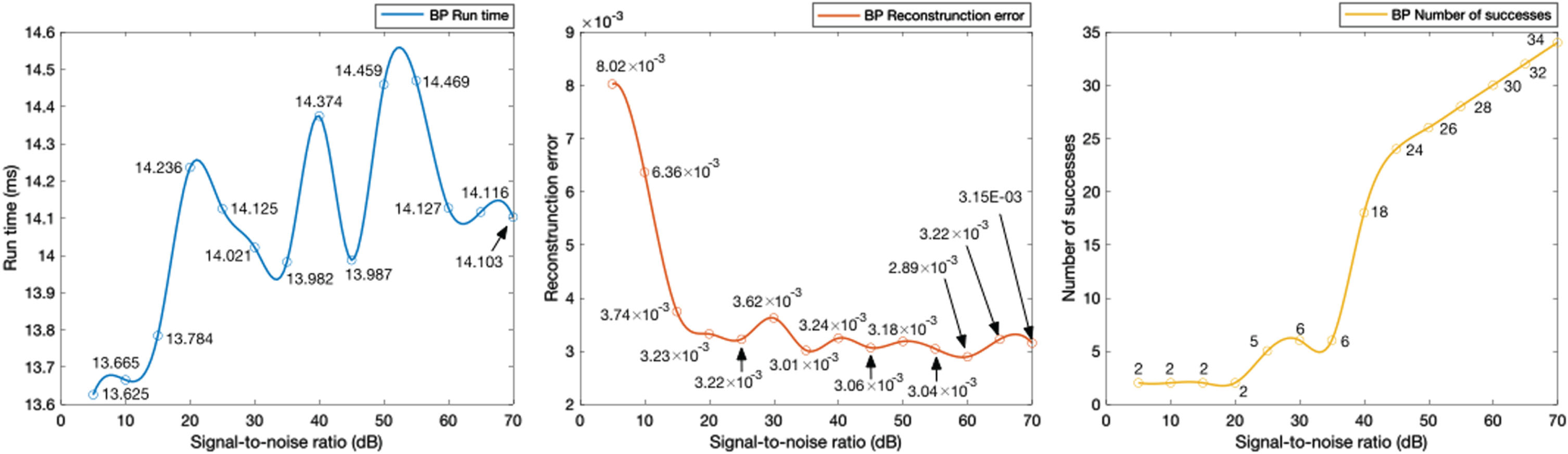
Reconstruction performance of BP algorithm when K = 10.
From Fig. 12, the SNR was 5dB–70dB. Within this range, the success rate of the BP algorithm increased with the increase of SNR. When the SNR reached 70dB, the success rate of the BP algorithm also reached 34 times.
When K = 4, the reconstruction performance of the OMP algorithm is shown in Fig. 13:
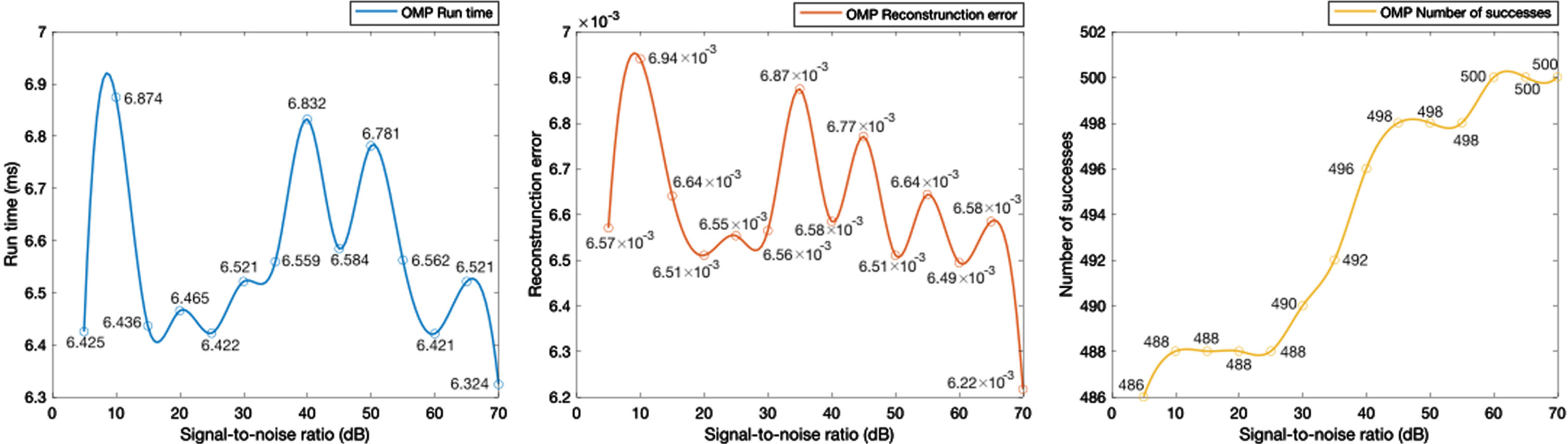
Reconstruction performance of OMP algorithm when K = 4.
From Fig. 13, the SNR was 5dB–70dB, and within this range, as the SNR increased, the success rate of the OMP algorithm increased, and when the SNR was 60 dB, the success rate of the OMP algorithm also increased to 500 times.
When K = 6, the reconstruction performance of the OMP algorithm is shown in Fig. 14:
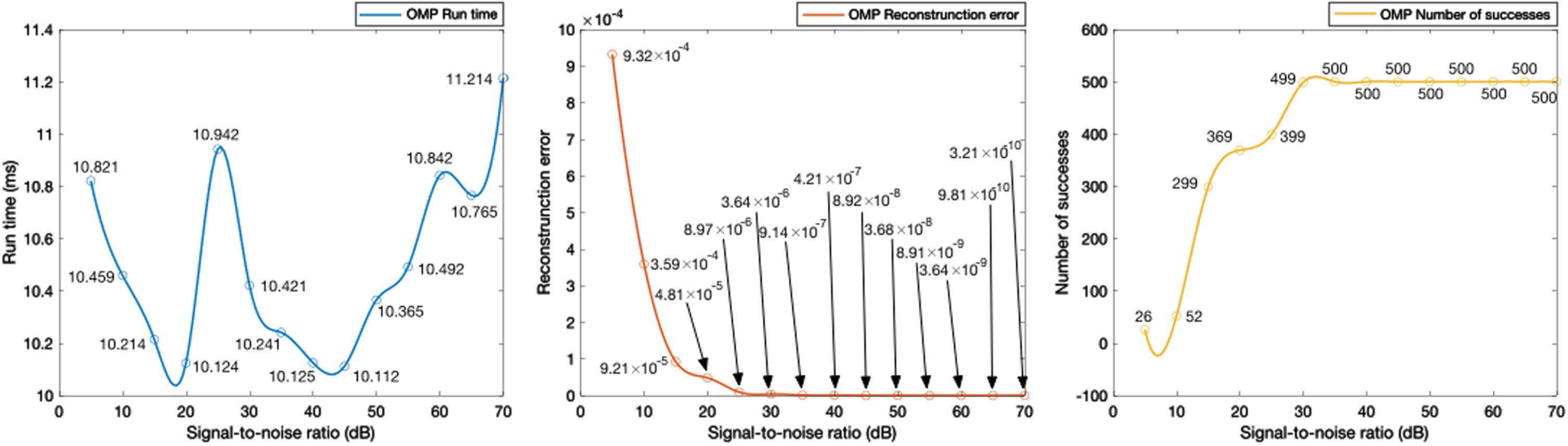
Reconstruction performance of OMP algorithm when K = 6.
As shown in Fig. 14, the SNR was 5dB–70dB. Within this range, the number of successful OMP algorithms increased with the increase of SNR. When the SNR reached 35dB, the number of successful OMP algorithms also reached500.
When K = 8, the reconstruction performance of the OMP algorithm is shown in Fig. 15:
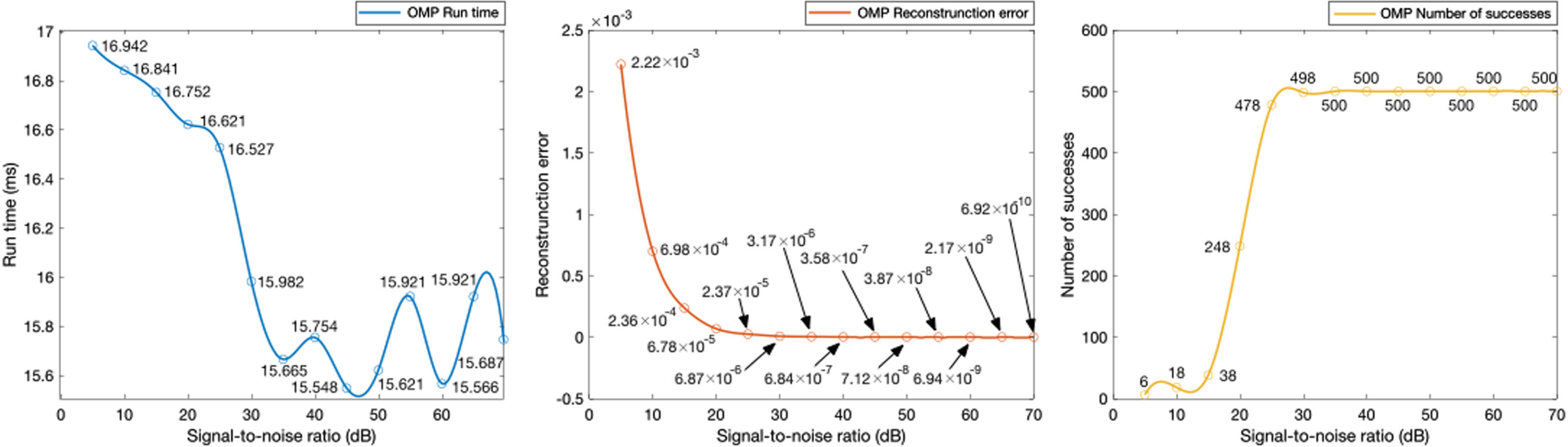
Reconstruction performance of OMP algorithm when K = 8.
From Fig. 15, the SNR was 5dB–70dB, and within this range, as the SNR increased, the success rate of the OMP algorithm increased, and when the SNR was 35 dB, the success rate of the OMP algorithm also increased to 500 times.
When K = 10, the reconstruction performance of the OMP algorithm is shown in Fig. 16:
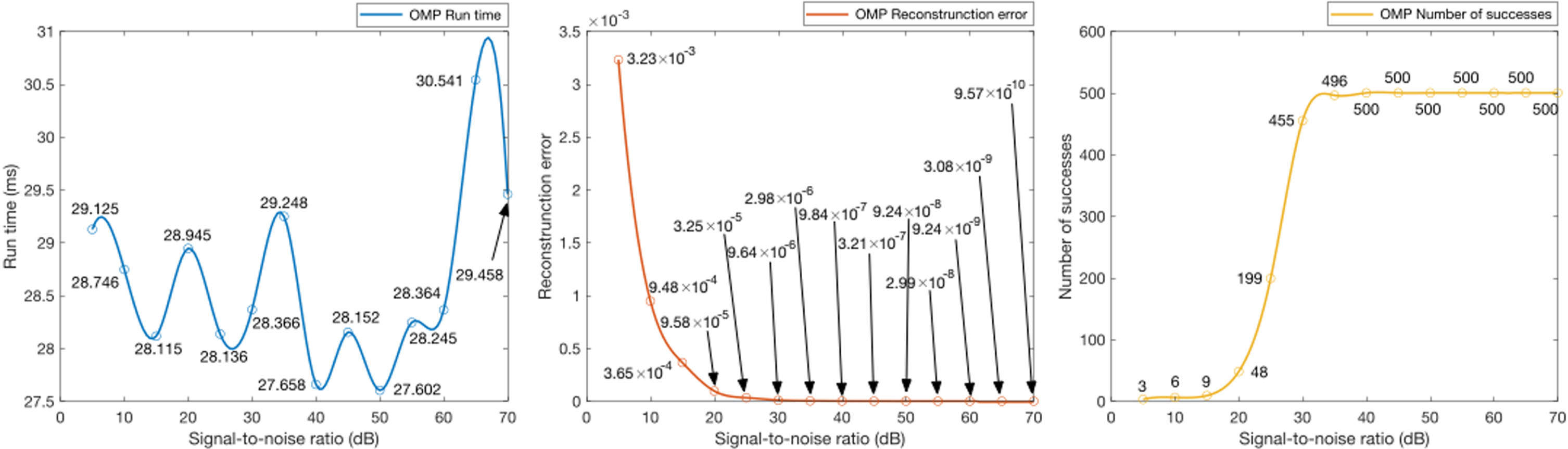
Reconstruction performance of OMP algorithm when K = 10.
As shown in Fig. 16, the SNR was 5dB–70dB. Within this range, the number of successful OMP algorithms increased with the increase of SNR. When the SNR reached 40dB, the number of successful OMP algorithms also reached 500.
(OMP) algorithms are commonly used to solve practical engineering problems in the field of signal processing and compressed sensing, including but not limited to the following situations:
Image compression and recovery: The OMP algorithm can be used to compress image data, especially for medical imaging, satellite image transmission and image transmission in low-bandwidth communication environments. In these applications, images can be represented in sparse form, and OMP algorithms help to efficiently recover the original image, reducing data transmission and storage requirements.
Internet of Things (IoT): In IoT applications, sensors often collect large amounts of data, but not all of it needs to be transmitted. OMP algorithm can be used for data processing and compression at the sensor side to transmit only the information of interest and reduce the communication overhead.
Spectrum sensing and wireless communication: The OMP algorithm can be used for spectrum sensing, that is, the efficient use of spectrum resources in wireless communication. By sparse representation of signals, the spectrum can be utilized efficiently and the communication capacity can be improved.
Radar and target tracking: OMP algorithm is used in radar system for target tracking, which helps to identify targets from complex radar return data and improve the performance of radar system.
In summary, the application of OMP algorithms covers a number of engineering fields, especially those involving signal processing, data compression, and sensor networks. It has unique advantages in dealing with sparse signals and reducing data redundancy, which can be used to solve various practical engineering problems and improve the efficiency of data transmission, storage and analysis.
To deepen the understanding of the reconstruction performance of these three algorithms, a comparative analysis was conducted. From the perspective of runtime, under the four conditions of K = 4, K = 6, K = 8, and K = 10, compared with the LASSO algorithm, the OMP algorithm had a runtime of +0.09%, –0.77%, –1.35%, and +3%, respectively. Compared with the BP algorithm, the OMP algorithm had run times of –1.4%, +0.17%, 3.79%, and 14.54%, respectively. From the perspective of reconstruction success times, OMP algorithm had more success times than LASSO algorithm and BP algorithm under the four conditions of K = 4, K = 6, K = 8, and K = 10.
Conclusions
This article has learned about trusted AI and DCS technology. The OMP algorithm, the BP algorithm, and LASSO algorithm under the sparse SR algorithm were explained in detail, and the three algorithms were compared and analyzed. The evaluation indicators for comparative analysis include runtime, reconstruction error, and number of successful reconstructions. The whole experimental analysis is based on Gaussian noise, but there are other noises in real life, which could affect the reconstruction performance of these algorithms. In future research, more attention can be paid to improving the anti noise performance of algorithms.
The improved sparse signal reconstruction algorithm based on Trusted AI and distributed compressed sensing technology have important contributions and innovations in the field of signal processing, which provide some key advantages and new ideas for processing large-scale, high-dimensional data and complex signals. Algorithms based on trusted artificial intelligence incorporate AI techniques to more accurately identify sparse structures in signals, thereby improving the quality of signal reconstruction. AI technology can automatically learn the characteristics and patterns of signals, so it can better adapt to different types of signals, including complex and noisy ones. The algorithm based on trusted artificial intelligence can adaptively select appropriate reconstruction methods and parameters according to the characteristics of the signal, thus improving the flexibility and efficiency of signal processing.
Outstanding contribution of the paper: state the innovation, value or problem solved in this research so that the reader can clearly understand the importance of this paper.Breakthroughs of the article: point out the innovations or improvements of this article compared to existing research, such as the treatment of noise, the improvement of algorithm performance, etc.
In general, the improved sparse signal reconstruction algorithm and distributed compressed sensing technology based on trusted artificial intelligence have brought innovation and contributions to the field of signal processing in terms of higher quality, robustness, efficiency and privacy protection. They help to process complex signals and large-scale data, and are suitable for a variety of application scenarios, including medical, communications, image processing, Internet of Things and other fields. As technology continues to evolve, these methods will continue to drive advances in the field of signal processing.
Declaration of conflicting interests
The author declare that there is no conflict of interest regarding the publication of this work.
Data availability statement
The data of this paper can be obtained through the email to the author.
Funding
There is no funding information for the work in this paper.
Acronym
(signal reconstruction,SR): Signal reconstruction refers to the recovery of the whole signal from the known part of the time domain signal or the frequency domain signal; Or use part of the signal value to represent the whole signal to achieve the purpose of data compression; Or the observed data is distorted due to interference, but part of the data is not distorted, and it is required to reconstruct the signal from the undistorted part of the data to eliminate the influence of interference.
(artificial intelligence, AI): Artificial intelligence is an important part of the intelligence discipline, which attempts to understand the nature of intelligence and produce a new kind of intelligent machine that can react in a similar way to human intelligence. The research in this field includes robotics, speech recognition, image recognition, natural language processing and expert systems. Since the birth of artificial intelligence, the theory and technology are increasingly mature, and the application field is also expanding, it can be imagined that the scientific and technological products brought by artificial intelligence in the future will be the “container” of human wisdom. Artificial intelligence can simulate the information process of human consciousness and thinking. Artificial intelligence is not human intelligence, but can think like a human, and may exceed human intelligence.
(distributed compressed sensing, DCS): DCS is a data acquisition and reconstruction method based on signal sparsity, which can efficiently collect and transmit data in distributed sensor networks, and realize signal reconstruction and recovery.
(Orthogonal matching pursuit, OMP): OMP refers to an algorithm that orthogonalizes all selected atoms at each step of decomposition.
(basis pursuit, BP): In addition to matching and tracking greedy iteration algorithms, another major class of compressed sensing reconstruction algorithms is convex optimization algorithms or optimal approximation methods, which find the approximation of signals by transforming non-convex problems into convex problems.
(least absolute shrinkage and selection operator, LASSO): This method is a kind of compression estimation. It gets a more refined model by constructing a penalty function that compresses some coefficients and sets some coefficients to zero. Therefore, it retains the advantage of subset shrinkage and is a biased estimator dealing with complex collinearity data.