






Abstract
Wireless sensor network (WSN) collect and detect data in real time, but their battery life limits their lifetime. The CH selection process increases network overhead and reduces lifetime, but it considers node processing and energy limitations. To solve that problem this research methodology proposed Multi Objective Energy trust - Aware Optimal Clustering and Secure Routing (MOETAOCSR) protocol. At first, the trust factors such as direct and indirect factors are calculated. Thus, the calculated values are given as input to the SDLSTM to detect the malicious node and normal node. Here, the network deployment process is initially carried out and then the cluster is formed by HWF-FCM. From the clustered sensor nodes, the cluster head is selected using Golden Jackal Siberian Tiger Optimization (GJSTO) approach. Then, the selection of CH the paths are learned by using the Beta Distribution and Scaled Activation Function based Deep Elman Neural Network (BDSAF-DENN) and from the detected paths the optimal paths are selected using the White Shark Optimization (WSO). From the derived path sensed data securely transferred to the BS for further monitoring process using FPCCRSA. The proposed technique is implemented in a MATLAB platform, where its efficiency is assessed using key performance metrics including network lifetime, packet delivery ratio, and delay. Compared to existing models such as EAOCSR, RSA, and Homographic methods, the proposed technique achieves superior results. Specifically, it demonstrates a 0.95 improvement in throughput, 0.8 enhancement in encryption time, and a network lifetime of 7.4.
Keywords
Introduction
A wireless sensor network is a system made up of several low power sensor nodes that are arranged in accordance with the needs. They only have a small amount of memory and the capacity to process networking for one or more base stations [1, 2]. Reliability is a crucial trait, particularly in WSNs for intelligent industrial monitoring, military investigation activities, and diverse applications to assure the quality of information transmission. As a consequence, reliable and energy-conscious networks with efficient data transmission may be designed with the help of efficient analysis of reliability enhancement elements (energy efficiency and network longevity). Routing algorithms can describe a single-hop or multi-hop path for transferring data packets from source to destination [3]. In comparison to multi-hop data transmission over the same distance with smaller steps, single-hop data transmission over a long distance uses more energy. As a result, each node transmits data directly to its CH and it when clustering is complete. Data from member nodes can be sent as a packet by CHs to a sink or a nearby node [4].
A key factor in enhanced information transfer is the CH selection. In order to perform at its best, CH changed over several iterations. A CH with more cluster members is part of the unique cluster. All of the cluster’s nodes must be coordinated, according to the CH’s duties [5]. These leaders are responsible for collecting data from the clusters’ member nodes, aggregating it, and sending it to the BS via a single-hop transmission model or a multi-hop transmission mechanism [6]. CH transfers data to BS directly under the single-hop transmission mechanism. The data is sent by CH to BS using a few intermediary nodes, or other CHs, in the multi-hop transmission paradigm. The capacity of the protocol for adequately adjusting the energy efficiency process using sensor nodes throughout the CH process grows as the network’s lifespan increases.
A well-known clustering technique in WSNs is low energy adaptive clustering hierarchy (LEACH). To achieve energy balance, CHs are randomly chosen and rotated in each round. Due to the fact that this protocol is totally dispersed, it could have some success. The packet transmission in distributed protocol consumes more energy [7]. Fuzzy logic has also been used to develop clustering methods. Swarm intelligence provides effective metaheuristic tools that WSNs may effectively use. A well-known optimization issue is clustering. Clustering optimization also uses the Particle Swarm Optimization (PSO) technique. For clustering in sensor networks, a hybrid centralized protocol combining the harmony search algorithm (HSA) and PSO is also utilized [8]. The clustering issue in WSN was successfully solved using the bee colony metaheuristic. The clustering of nodes is influenced by several variables, including distance and energy. For clustering and CHs selection, the trust factor is not taken into account by the majority of methods [9]. The algorithms do, however, encounter a number of typical issues, including rapid convergence, local search issues with the fitness function, and increasing cost. Additionally, compared to other tasks performed when working on a WSN, communication tasks often consume the most energy [10]. As a result, energy is used, which reduces the network lifetime. This research offered a unique strategy to create trustworthy nodes and improved CH selection for reducing node energy usage.
The main contribution of this research work: The development of a clustering-based routing algorithm based on the MOETAOCSR protocol for multi-objective energy trust-aware optimum clustering and safe routing. Using the Golden Jackal Siberian Tiger Optimization (GJSTO) method, safe nodes are chosen for routing. Selecting the CH’s best pathways using the BDSAF-DENN. The Four Point Curve Cryptographic and Rivest Shamir Adleman (FPCCRSA) technique ensures security while data is being sent. To evaluate the performance of the MOETAOCSR protocol by comparing it to existing protocols.
The structure of the presented research is organized as follows: in section 2, the existing research works related with clustering protocol is explained, in section 3, the proposed part is explained, in section 4, the experimental analysis of the proposed research is carried out and in section 5 it was concluded with the future enhancement.
Wireless sensor system technology is developing swiftly. There are several protocols available for the efficient routing of WSNs. These protocols depend on extending network lifespans and conserving energy. To balance sensor network lifespan and energy efficiency, Rajesh et al., [11] have developed a OEECSs (Optimized Energy Efficient Cluster-based Scheduling Schemes) for WSNs. The distances between the members of the cluster and the CHs (Cluster Heads) constitute the basis for OEECS-based cluster formation. KFCM (Kernel-Based Fuzzy C-Means) clustering is used to form clusters. The energy threshold settings for the network and the amount of power used by Cluster members are under the control of CHs. The AWBOAs (Adaptive Weight Butterfly Optimization Algorithms) are used to choose the CHs, and time slots are then employed to send data packets from the cluster’s members, preventing congestion in certain areas.
Energy harvesting, topology, and efficient routing have been offered by Hemanand et al., [12] as potential ways to increase network longevity. WSN energy is enhanced in an effective way. The optimal route is chosen using the Chikoo search algorithm. In order to maintain energy stability and lengthen network lifetime, the self-adaptive cuckoo search-based clustering technique (MWIDOA-SACS) suggested by Pratha et al., [13] has been examined. In MWIDOA, the whale optimization algorithm (WOA) entirely updates the dragon fly search behavior to avoid load balancing at CHs. After dividing the network into unequal clusters, it integrated self-adaptive cuckoo search (SACS) for obtaining sink mobility utilizing radius, energy stability, received signal intensity and throughput for producing the best possible data transmission process. Janarthanan et al. [14] proposed a Multi-Objective Cluster Head-Based Energy-Aware Routing system utilizing Auto-Metric Graph Neural Network alongside Hybrid Balancing Composite Motion and Border Collie Optimization for secured data aggregation in WSNs. The Auto-Metric Graph Neural Network facilitates the selection of CHs based on a multi-objective fitness function. Liu et al., [15] introduced the DNN-HR algorithm, enhancing the reinforcement learning process in WSNs through three key strategies. Roberts et al. [16] introduced an optimized energy-aware multipath routing protocol, TMERP, comprising three key components: ticket manager (TM), routing planner (RP), and backup node (BN). Lastly, the BN selects optimal routing paths based on node trust evaluation and backup processes to reduce data loss, thereby enhancing network lifetime with minimal energy consumption.
To address this, conduct a detailed comparative analysis between our proposed MOETAOCSR protocol and the existing approaches mentioned in the literature, including those by Rajesh et al. [11], Hemanand et al. [12], Pratha et al. [13], Janarthanan et al. [14]. This analysis will involve identifying the pros and cons of each approach, focusing on key aspects such as energy efficiency, network lifespan, scalability, security, and overhead. Additionally, compare the performance of each method based on common evaluation metrics, including network lifetime, packet delivery ratio, energy consumption, scalability, and resilience to node failures or malicious attacks. By conducting simulations to evaluate the performance of our protocol and comparing it with the state-of-the-art methods, we aim to provide valuable insights into the relative advantages and limitations of each approach, thereby enhancing the significance and relevance of our paper in the field of WSNs and secure routing protocols.
Proposed multi objective energy trust - aware optimal clustering and secure routing protocol based maximizing the lifetime of wireless sensor networks
Sensor networks have gained significant attention in recent years. WSNs consist of many small nodes that act as routers and carry limited, non-rechargeable, and non-replaceable power sources. Therefore, energy consumption is a major concern in WSNs. Energy conservation is essential for prolonging network lifetime, and routing techniques play a key role in controlling energy consumption. Existing research has focused on developing energy-efficient routing systems for WSNs, but many challenges remain. To solve those research problems this research methodology proposed Multi Objective Energy trust - Aware Optimal Clustering and Secure Routing (MOETAOCSR) protocol for WSN. The proposed methodology consists of eight phases that are network formation and node deployment, trust calculation, malicious node detection by SDLSTM, cluster formation by HWF-FCM, cluster head selection by GJSTO, node attribute extraction, path selection using BDSAF-DENN, secure data using FPCCRSA. The block diagram for the proposed research methodology is shown in Fig. 1.
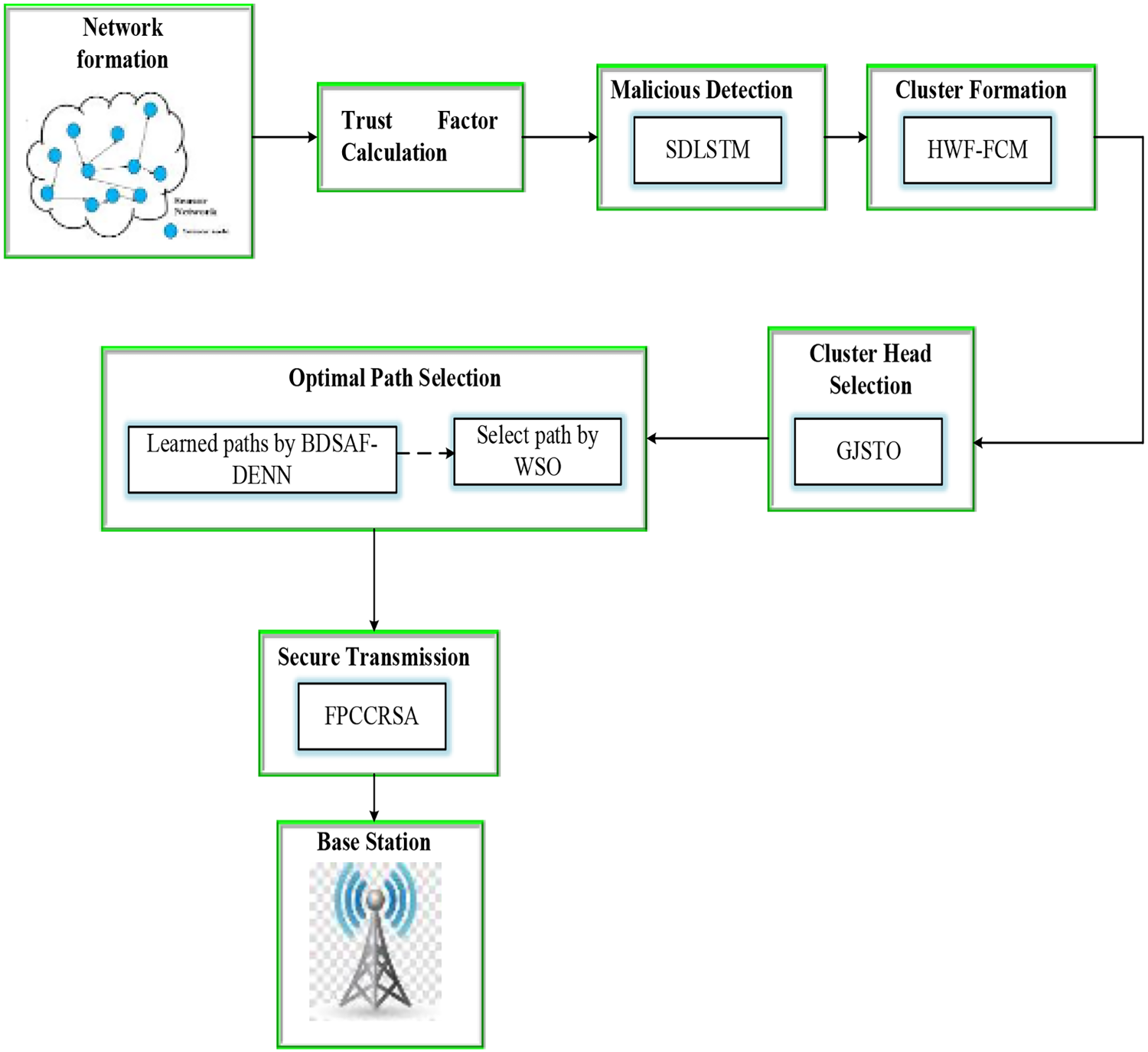
Structure of Proposed Methodology.
Pseudo-code for MOETAOCSR Protocol:
Initialization:
- Set network parameters such as maximum energy threshold, trust thresholds, etc.
- Deploy sensor nodes randomly within the network area.
Trust Factor Calculation:
- Calculate direct trust factors based on node behavior (e.g., packet forwarding, reliability).
- Calculate indirect trust factors by considering the opinions of neighboring nodes.
Node Classification (using SDLSTM):
- Train SDLSTM model using labeled data (malicious vs. normal nodes).
- Classify nodes into malicious or normal categories based on trust factors and SDLSTM predictions.
Cluster Formation (using HWF-FCM):
- Calculate node weights based on residual energy, trust levels, and distances to potential cluster heads.
- Employ HWF-FCM algorithm to form clusters with balanced energy distribution and minimized intra-cluster distances.
Cluster Head Selection (using GJSTO):
- Utilize GJSTO algorithm to optimize the selection of Cluster Heads based on energy, trust, and communication overhead.
Path Learning (using BDSAF-DENN):
- Train BDSAF-DENN neural network to learn optimal paths between Cluster Heads and Base Station.
- Use Beta Distribution and Scaled Activation Function for better convergence and accuracy.
Path Optimization (using WSO):
- Apply WSO algorithm to optimize learned paths, considering energy consumption and network stability.
Secure Data Transfer (using FPCCRSA):
- Encrypt sensed data using RSA encryption with cluster-specific keys.
- Transmit encrypted data to the Base Station securely.
Performance Evaluation:
- Conduct simulations or experiments to evaluate the proposed protocol’s performance metrics such as energy efficiency, network lifetime, throughput, and security.
- Compare the results with existing methodologies to demonstrate the superiority of MOETAOCSR.
Iteration and Optimization:
- Fine-tune protocol parameters based on experimental results.
- Iterate through steps 2–9 to optimize protocol performance further.
Initially, the network is formed which is composed of a finite set of sensor devices geographically a given indoor or outdoor environment. Then, the node deployment process is carried out. Node deployment means sample data communication between each node before real-time data transmission for gathering detail about the node information. The sensor nodes are expressed as follows,

Here, Ω set specifies the set of sensor nodes, and Ω x indicates the x-number of sensor nodes presented in the network.
After network initialization the trust factors are calculated for the initialized nodes such as, residual energy (α1), degree difference (α2), sum of the distances betwixt nodes with all its neighbor’s cumulative time (α3), initial energy (α4), signal to inferences plus noise ratio (α5), network load (α6), distance as of source node to base station (α7), time factor (α8), collision factor (α9), packet forwarding rate (α10), and loss factor (α11). Thus, the calculated trust factors are mentioned as in equation formation in equation (2),

Here, α x specifies the trust factor set. Thus, the factors are calculated via direct way and indirect way of the processing.
This component uses the estimated trust value as an input to identify malicious nodes. Using Sigmoid Deep Long Short Term Memory (SDLSTM) Network, hostile nodes are identified as automated systems in this situation. The order dependency can be learned using Long Short-Term Memory (LSTM) with Recurrent Neural Networks (RNN). The output of the previous RNN step is used as input for the next step. However, there is a vanishing gradient issue. This study approach employs the sigmoid activation function rather than the tan activation function to address that issue.

Where, L
F
denotes the forget gate output, F
τ
and F
b
indicates the weight value and bias values for input value,

Where, L I defines the outcome of the input layer, I τ and I b indicates the weight and bias values of the input layer. The calculation for the tanh expression is given in Equation (5),

Here, L T specifies the tanh output layer, T τ and T b indicates the weight and bias values of the tan sig function of input layer.

Where, L o denotes the output gate, o τ and o b indicates the weight and bias values of the output layer in Equation (6). Thus, the SDLSTM predicts the node as malicious and normal nodes.
After network formation, the cluster is formed by using the Haversine with Weighted Function based Fuzzy C-Means Clustering (HWF-FCM). FCM is an unsupervised clustering algorithm. The clusters are formed according to the distance between data points and the cluster centres are formed for each cluster. The main reason for choosing FCM is it gives flexibility. But it has random centroid selection which may provide an inaccurate clustering output and it uses the Euclidean distance which is not support for the large amount of data. So, here the centroid is selected by calculating standard deviation between each data point and maximum deviated input node is considered as the centroid and this research uses the Haversine distance instead of Euclidean distance. The purpose of the cluster formation in this protocol is to minimize the following objective function (G F ):

Where,

Where, C cen specifies the cluster centre, and μ indicates the mean value. After the calculation of centre vector the distance matrix is calculated based on Haversine distance calculation this is given as follows,

Then, update the partition matrix for the y th step is derived as follows,

Where, x denotes the iteration step. The FCM process is repeated until it converges. In this way the cluster is formed. The formed cluster is denoted as,

Where, H Set indicates the formed cluster sets and h i defines the n-number of clusters.
It is more significant in the WSN environment for the selection of CH to make an efficient data transmission process. To reduce the communication delay and to enhance the routing performance, it is required to choose CH among the number of sensor nodes. By selecting CH, the cluster members cannot directly communicate with BS instead of that, the nodes can directly interact with CH, which sends the data packets to BS. The selection of CH is made by considering the objective factors, such as intra-cluster and inter-cluster distance, the energy consumption of nodes, delay and predicted energy such that the minimum objective function is assumed as the best solution. Here, clustered set the cluster head is selected using Golden Jackal Siberian Tiger Optimization (GJSTO) algorithm. For the CH selection the minimum transmission energy of the sensor node is considered as the fitness function. Selection of cluster head has a vital role in clustering. GJO is inspired by the collaborative hunting behaviour of the golden jackals (Canis aureus). The three elementary steps of algorithm are prey searching, enclosing, and pouncing. But it has the convergence problem so that this research methodology considers the updation procedure of the siberian tiger process. The proposed algorithm provides a global search with quick convergence rate. The proposed method has a high GJO search efficiency and a dynamic STO capability that extends the life of sensor nodes. Here, sensor nodes of each cluster are considered as the golden jackal. The first step of the golden jackal’s optimization algorithm is to randomly generate population over the solution space. Every solution is represented by:

Where Δ p indicates the initial population placements of the golden jackal, Rand expresses an arbitrary uniform vector in the range [0, 1], Δmin and Δmax expresses the bottom and upper bounds of the solution. The fitness is then assessed using the suggested study approach, which takes throughput (P T ) and the maximum quantity of residual energy (E R ) into account. The following is a mathematical definition of the fitness function (FF):

The following (|P E | > 1) is the mathematical representation of the golden jackal’s hunt:


Where i is the current iteration, α SQ (i)represents the location of the female golden jackal, α Q (i) represents the position of the male golden jackal, P (i) represents the position vector of the prey. The current positions of the male and female golden jackals are α1 (i) and α2 (i) respectively. P E is the prey’s avoiding energy, computed as follows:


Where I is the maximum number of repetitions;

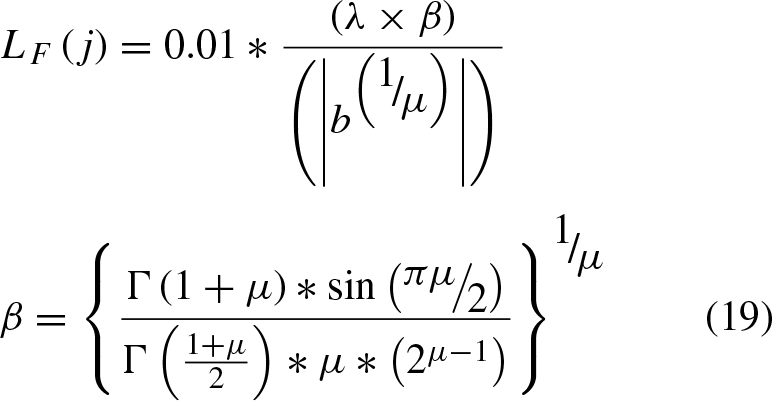
Where λ and b are random numbers between (0, 1), and 1.5 is the default value for the constant μ.

Based on the location of the male and female golden jackals, α (i + 1) is the updated prey position. If the goal function’s value is improved, the new STO algorithm location is approved. The siberian tiger has taken the place of the female golden jackal in the previous position. The new computed location is allowed for updating STO members as long as it raises the value of the goal function [17]. In Equation (21) is used to simulate this process.

Where
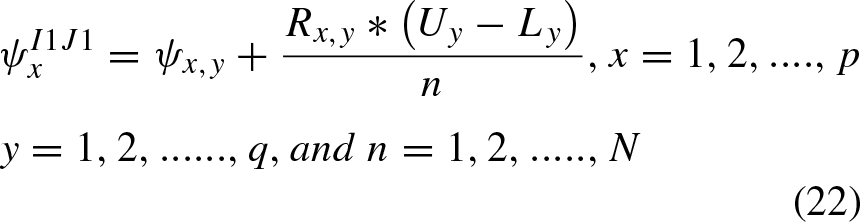

Where, ψx,y is the yth dimension of Ψ
x
variable in the search space, p is the number of problem variables, Rx,y are random values in the range [0, 1], L
y
and U
y
are the yth problem variable’s lower limit and upper bound.


The proposed GJSTO’s pseudocode is provided as follows:

Thus, the selected cluster heads are given as in Equation (26),

Where,
After selection of the cluster head the attributes such as maximum residual energy, minimum distance, mobility of node and hop count of the data transmission between the nodes are extracted which is derived as follows,

Here, A i defines the extracted attribute sets.
After selection of the cluster head the optimal path is detected. For that detection the path is learned by using Beta Distribution and Scaled Activation Function based Deep Elman Neural Network (BDSAF-DENN). The vanishing gradient problem is presented in the neural network so to solve that problem this research methodology considers the BDSAF. Based on the learning the elements are updated in the routing table which is helpful to know the available paths [18]. From the available paths the best path is chosen by using White Shark Optimization (WSO) algorithm. The recurrent connections in a deep Elman neural network are fixed, whereas the feedback connections can be changed. Input layer, hidden layer, undertake layer, and output layer are the four layers that typically make up an Elman neural network. The output of the hidden layer, which may be seen of as a step delay operator, is remembered using the undertake layer. For substantially learned input values, deep layers are taken into consideration [19].
Assuming input I, output O, the number of hidden and undertake neurons k, the weight of the input layer to the hidden layer, the weight of the undertake layer to the hidden layer, and the weight of the hidden layer to the output layer are all given as W1W2 and W3. The input, output, hidden layer, undertake layer, and output layer of the neural network are all given as I (q - 1), Hk (q) and O (q) respectively, then,


Where, A F indicates the activation function, which is obtained as follows from the beta distribution function (β DF ),

Where the variable is defined v, the parameters are shown γ and λ, and the gamma function is Ω indicated. The following is how the process’s final error is derived:

Where, T O the desired output value is both specified, and the error function is Eindicated. As a result, the hidden layer updates the learnt pathways. Utilizing WSO, the best path is chosen from the list, and fitness function is taken into consideration for the shortest distance and least amount of energy used. The sensor nodes are used in this population’s initialization as the white shark [20]. Next, fitness is evaluated using confidence, distance, energy, and the quantity of jumps. When the great white shark approaches its prey after spotting it utilizing Equation (32)’s wave hesitation, it glides in undulating patterns with the following velocity.
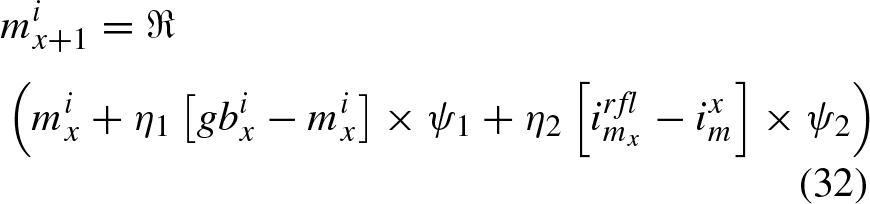
Where,
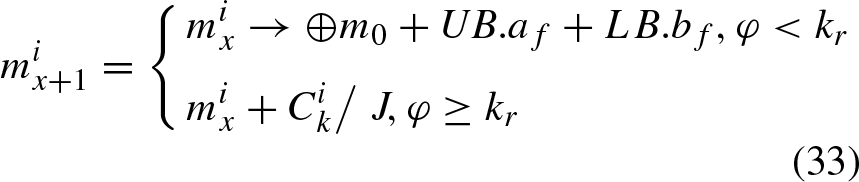
Where, UB and LB indicates the upper bound and lower bound values, a f and b f represents the binary vectors, φ defines the random number, k r provides the number of times the shark will attack its prey, and ⊕ describes the bitwise XOR operation. The best great white shark’s motions as it approaches its prey:

Where, from equation (34) the distribution coefficient c d , μ L the mean location of all white sharks, and m* the white shark that is now in the best position within the swarm are all denoted. The best optimum path is selected as m* in this study.
The section on Secure Data Transmission to the BS is expanded to include an analysis of potential vulnerabilities inherent in the protocol and the corresponding mitigation strategies against common attacks observed in WSNs. Vulnerabilities such as eavesdropping, data tampering, message replay, and node compromise will be identified and discussed in detail. The MOETAOCSR protocol will employ encryption techniques Four Point Curve Cryptographic and Rivest Shamir Adleman (FPCCRSA) to protect data confidentiality and integrity, thereby mitigating eavesdropping and tampering attacks. Additionally, mechanisms such as digital signatures and message authentication codes (MACs) to be utilized to ensure data authenticity and prevent message replay attacks. To address the risk of node compromise, the protocol was incorporate intrusion detection systems and anomaly detection algorithms to identify and isolate compromised nodes, thus safeguarding the network from potential threats. Moreover, secure key management procedures to be implemented to protect cryptographic keys and prevent unauthorized access. These comprehensive security measures to enhance the resilience of the protocol against various types of attacks commonly encountered in WSNs. Once the optimum path has been determined, data is transferred securely to the BS using FPCCRSA. The first step is to establish primary keys using the four points based curve technique. Four point curve means the Edward curve. Thus, the Edward curve is a new form for elliptic curves over fields of characteristics [21]. The Edward curves satisfy the following form,

Where, σ and μ defines the neutral element and ωrepresents the non-zero value. The operation of the Edward curve is more efficient than for most of the other forms of elliptic curves. First the private key is generated randomly [22]. To generate a private key, the cumulative distribution function is utilized. The formula for this looks like this:

Here, p indicates the private key, nm x defines the all the values. Finally, based on the private key and four points of the curve, a public key is generated. This process can be expressed as follows:

Where, Pnt defines the point on curve of the four points. Then use to determine the ciphertext,

Where, RR denotes the product of the two prime integers and

The encrypted data is then utilized at the BS to track the progress of various apps. In the further section the performance of the proposed research methodology is analysed.
Here, the performance of the proposed multi objective energy trust - aware optimal clustering and secure routing system for WSN is analyzed with the existing methodology. The proposed methodology is implemented in the working platform of MATLAB. In obtaining these results, we conducted each simulation 10 times and calculated the averages, ensuring a confidence interval of 96% . Our comparisons were made against the QEBSR algorithm [23]. In Table 1 shows that the simulation parameters of proposed system have been determined. The cluster simulation diagram is shown in Fig. 2.
Simulation of system parameters

Simulation of system parameters
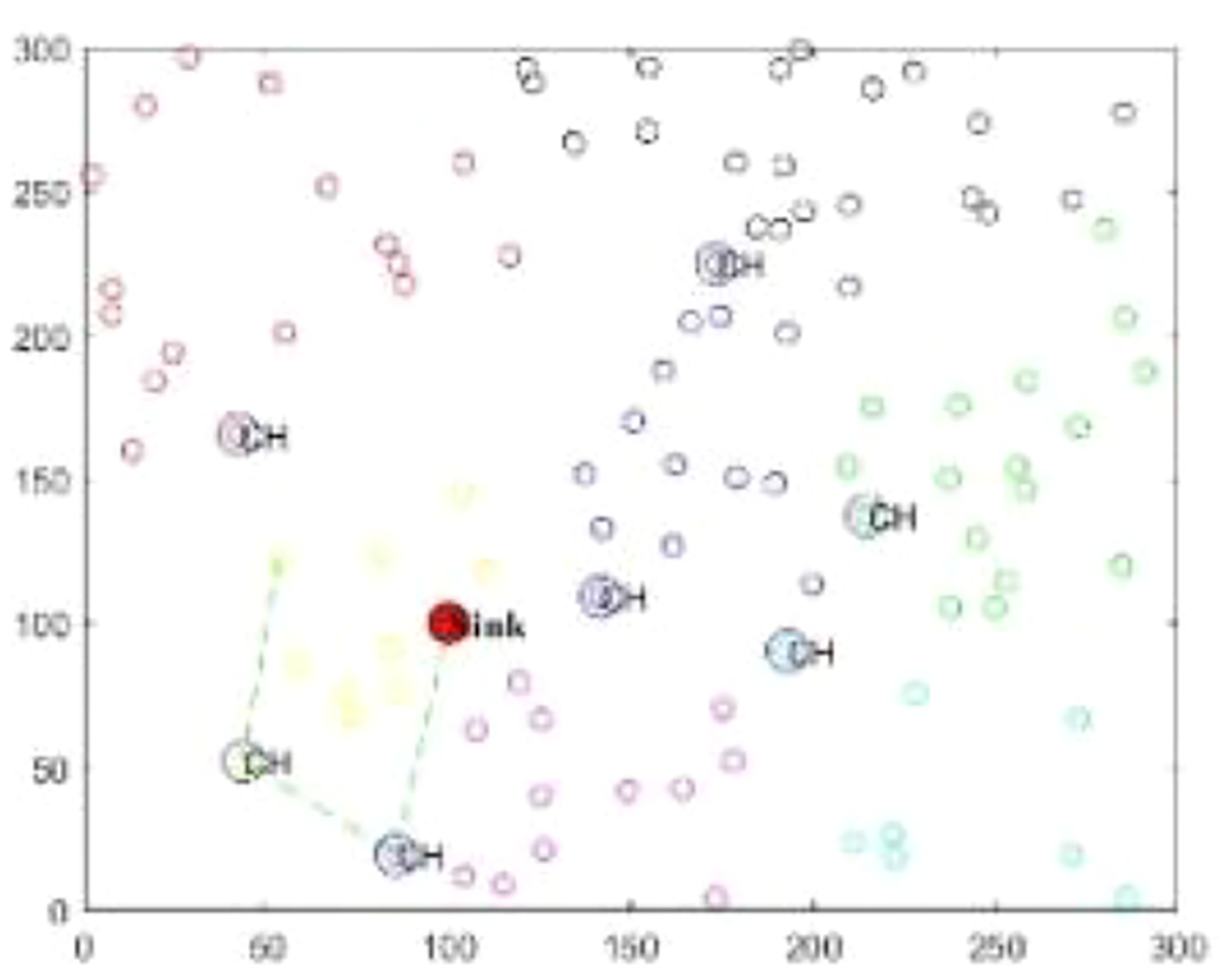
Simulation diagram for clustering and cluster head selection process.
In this section, the performance of the proposed clustering process based on cluster formation and clustering head selection is analyzed with the existing K-Means algorithm with the LEACH and FCM approach in terms of alive nodes, dead nodes, delay, energy consumption, residual energy, and throughput.
Figure 3 displays the comparative analysis of the proposed research methodology with the existing research methods such as K-Means, LEACH and FCM in terms of (a) alive nodes and (b) dead nodes. In Fig. 3(a) the number of alive node is higher for the proposed methodology. In Fig. 3(b) the number of dead node is lower for the proposed approach that is, for 40 numbers of nodes only 4 nodes are dead nodes. Similarly, for the remaining number of nodes the proposed methodology achieves better performance. Because, the proposed approach is based on HWF-FCM based clustering and CH selection by the GJSTO algorithm.
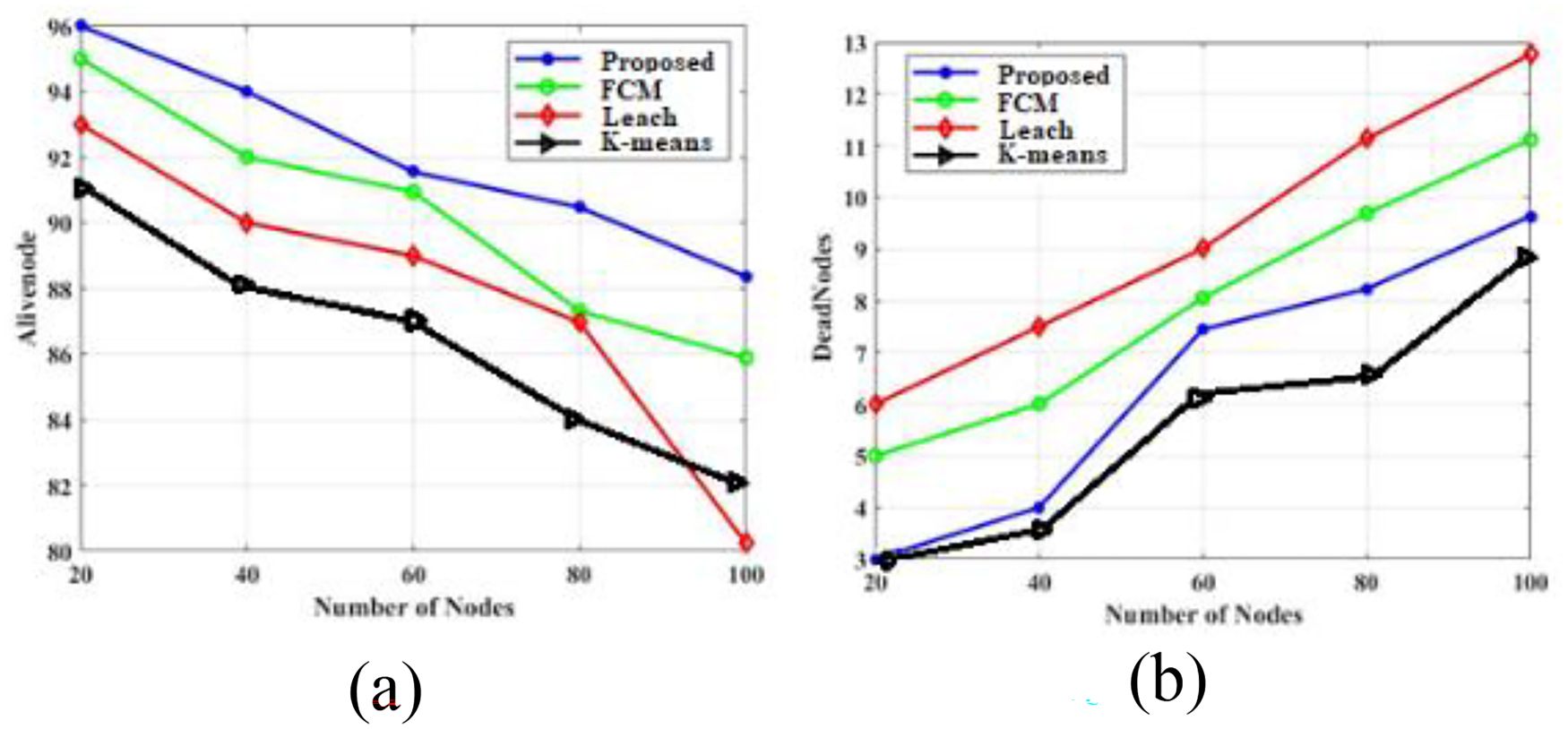
Analysis of the proposed system with the existing systems with respect to the (a) number of alive nodes and (b) number of dead nodes.
Figure 4(a) shows the delay analysis of the proposed approach with the existing algorithms. The average period occupied to route a data from the source node to target node is deliberated as delay in milliseconds. When the number of node count is 80 then the proposed methodology has 4 ms time which is lower than the proposed methodology. Based on delay metric the FCM, LEACH and K-means has worst performance than the existing algorithms and the proposed approach. Energy consumption is defined as the sum of receiving energy with the number of nodes and the transmitted energy. Thus, the energy consumption of the proposed and existing research methodology is shown in Fig. 4(b). For the number of nodes, energy consumption has slightly increased, but it is very low while comparing to the existing methodologies. For a better communication, this energy consumption should be low to prevent the node from network failure. The proposed approach attains lower energy consumption than the existing algorithms.
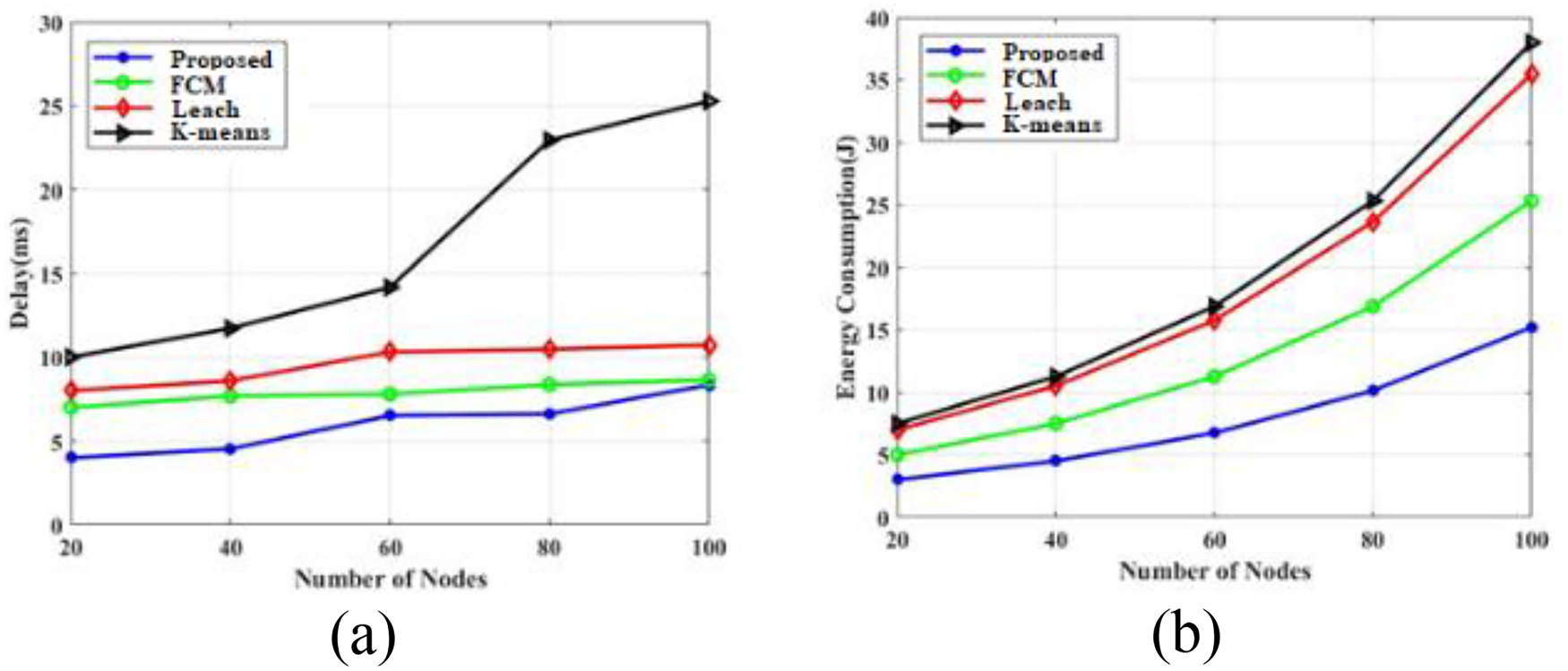
Analysis of the proposed approach with the existing approaches (a) Delay and (b) Energy consumption.
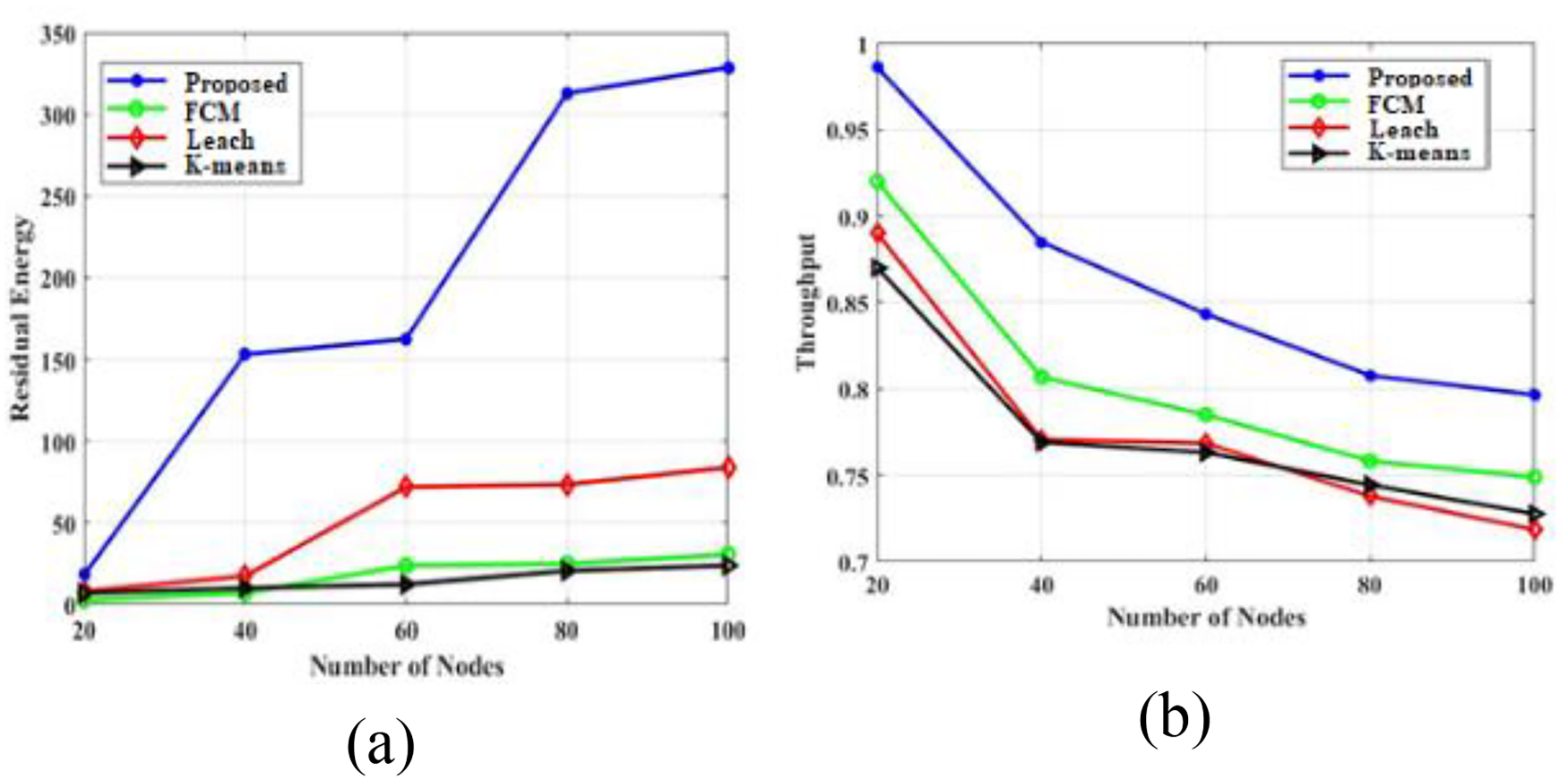
Figure 5(a) displays the residual energy analysis of the proposed approach with the existing approaches. The residual energy for the proposed algorithm is higher at all the node count. For the node count 60 the obtained residual energy is 25 but the existing FCM has 15, LEACH has 14 and the K-means has below 15 energies. Figure 5(b) displays the throughput analysis of the proposed and existing research methodologies. Throughput is the number of packets received at the receiver to the packet transmission delay in the process. When number of node are 20 the proposed method obtained above 0.95 throughput value. When using K-Means, LEACH, and FCM throughput is obtained above 0.85. The throughput analysis of these two approaches is lesser than the proposed approach. Finally, the proposed technique obtained the highest throughput when compared to other existing methods.
Analysis of the proposed approach with the existing approaches (a) Residual energy and (b) Throughput.
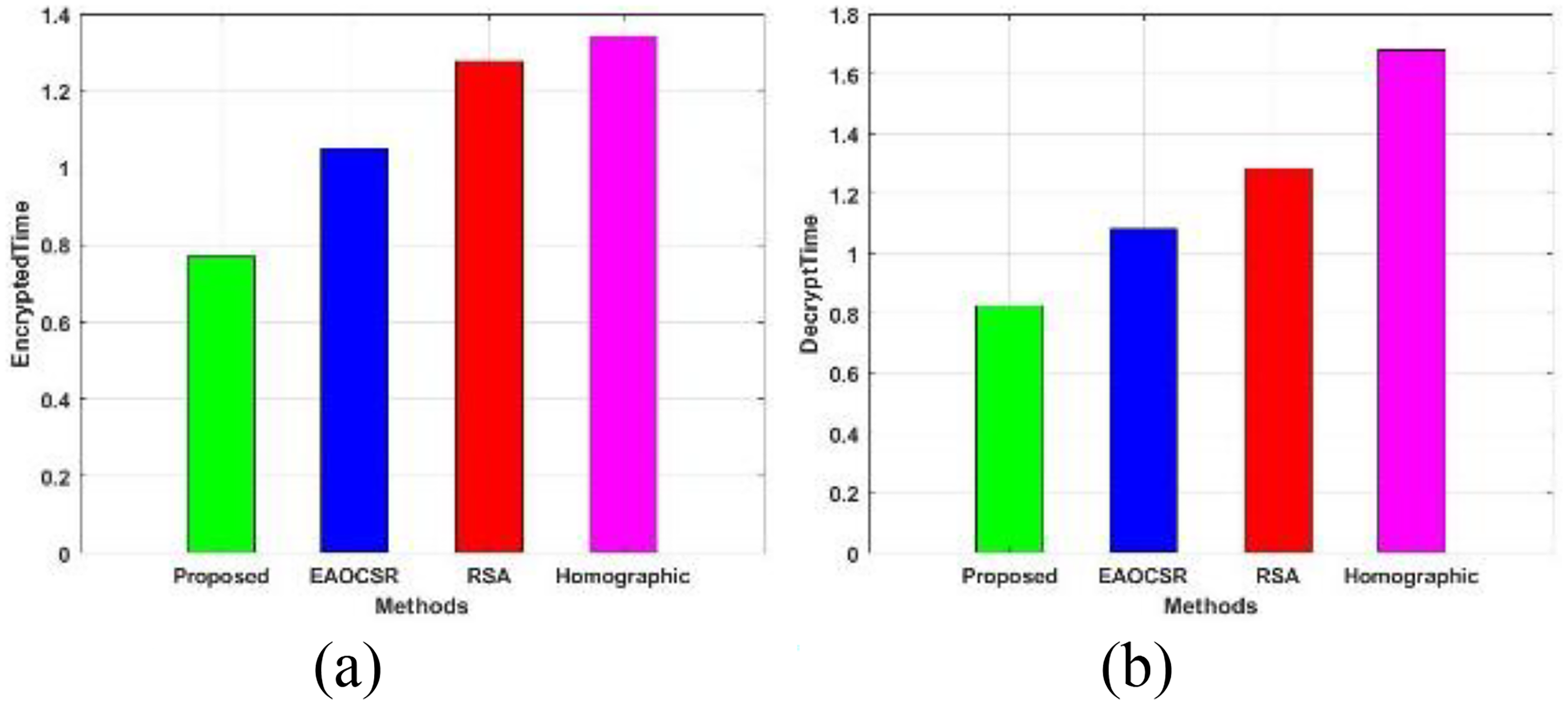
In Fig. 6 shows that the secure data transmission using poposed FPCCRSA is compared with the existing security method of Energy-Aware Optimal Clustering and Securing Routing (EAOCSR) approach that is Log based Improved Elliptic Curve Cryptography (LIECC) is compared with the existing Rivest, Shamir, Adleman (RSA), and Homographic algorithms based on encryption time and decryption time. In Fig. 6(a) the encryption time is analysed. The encryption time denotes the time taken for convert the plaintext to ciphertext and the decryption time defines the time taken for convert ciphertext format into plaintext. If the system takes less time than the system is denoted as the efficient system. From that way the proposed methodology takes less time for encrypt the data which is less than 0.8 but the existing takes more time than the proposed approach. Similarly, the decryption time is displayed in Fig. 6(b). Here also the proposed takes less time than the existing research approaches.
(a) Encryption time and (b) Decryption time analysis of the proposed and existing algorithms.
Performance of node vs. network lifespan with network area

Performance of node vs. PDR with number of source node

Table 2 showcases the network lifetime performance, measured in seconds, of different methods. The proposed MOETAOCSR method demonstrates significant improvements in network lifetime across various node counts compared to existing methods. Analyzed against SA-PGAN-DAWSN [14], BCMO-BCO-DAWSN [14], Homographic, RSA, and EAOCSR, MOETAOCSR achieves notably higher network lifetimes. Specifically, at node 500, it provides enhancements of 20.87%, 14.23%, and 50%; at node 600, improvements of 27.56%, 42%, and 25.67%; at node 700, increases of 58.34%, 71.34%, and 48.56%; at node 800, advancements of 54.09%, 27.31%, and 30.67%; at node 900, boosts of 21.65%, 49.32%, and 29.03%; and at node 1,000, enhancements of 31.85%, 56.55%, and 28.08% over SA-PGAN-DAWSN [14], BCMO-BCO-DAWSN [14], Homographic, RSA, and EAOCSR, respectively. This underscores the superior performance of the MOETAOCSR method in extending network lifespan across a range of node scenarios.
Performance of node vs. PDR with network area

Computational time analysis

Table 6 provides a comparative analysis of various methods’ performances, focusing on Packet Delivery Ratio (PDR) and Network Lifetime metrics, with values sourced from relevant literature. This article introduces the MOETAOCSR technique to mitigate the challenges faced by SN located near the BS, which tend to have shorter lifespans. The technique aims to address the issue of low lifespan caused by high traffic movement from various CH to the sink node. In this context, the MOETAOCSR protocol is proposed, which employs energy-efficient CH selection based on multiple objectives. Additionally, a hybrid approach using GJSTO is applied for optimal route selection from CH to the sink node. Furthermore, the efficiency of the MOETAOCSR protocol is evaluated through comparative analysis with existing approaches. Sert et al. [24] achieved a moderate PDR of 0.42 with a corresponding network lifetime of 3.4 seconds. Sert and Yazici [25] showcased a higher PDR of 0.7 but with a shorter network lifetime of 2.76 seconds. Mazumdar and Om [26], however, exhibited a lower PDR of 0.33, coupled with a slightly extended network lifetime of 4.1 seconds. On the other hand, Ashwinth Janarthanan [14] demonstrated an impressive PDR of 0.95, albeit with a network lifetime of 6.2 seconds. Notably, the proposed method surpassed all referenced techniques, achieving a remarkable PDR of 0.96 and an extended network lifetime of 7.4 seconds. This comparison aids in understanding the relative efficacy of each method in terms of PDR and network lifetime, with the proposed approach exhibiting superior performance in both aspects.
Comparison of method performances based on literature support

In this paper the Multi Objective Energy trust - Aware Optimal Clustering and Secure Routing (MOETAOCSR) protocol for WSN is proposed. Here, both the direct and indirect trust evaluation is considered based on the trust values the cluster formation, cluster head selection and optimal path are selected. At last, the sensed data are securely transferred to the BS using FPCCRSA approach. In clustering process, the proposed approach is compared with the existing K-Means, LEACH, and FCM based on alive nodes, dead nodes, delay, energy consumption, residual energy, and throughput. Also, the secure data transmission using proposed cryptographic algorithm is analysed with the existing algorithms the proposed attains better result than the existing research methodologies.