







Abstract
In this study, asymmetric zinc phthalocyanine compounds with Donor-π-Anchor (D-π-A) property that enable the movement of electrons in molecular structure in one direction were synthesized. Phthalocyanines were designed to ensure electron mobility within the molecule and to facilitate the transfer of electrons to the TiO2 layer. The synthesized asymmetric zinc phthalocyanines (
Introduction
Dye-Sensitized Solar Cells (DSSC), also known as Grätzel cells, which appeared as a result of the studies led by M. Grätzel and B. O’Regan in 1991 [1], have attracted high attention from the first day to this day. The advantages of DSSCs in cost and production stages compared to standard silicon (Si) based solar cells are the main reasons of this rising concern. Dye-Sensitized Solar Cells consist of four basic parts: conductive glass, semiconductor layer (TiO2), sensitizer (dye), and electrolyte solution. Optimization of these key parts is the most important factor of determining cell efficiency [2].
Continuous improvement since the discovery of dye-sensitized solar cells in 1991 by Brian O’Regan and Michael Grätzel [1]. Phthalocyanines (Pcs), which have a conjugated 18π electron system, are very interesting for dye-sensitized solar cells because these properties facilitate electron transfer [3, 4]. In addition, it is preferred in many industrial applications because of its different colors, having different metal cations in its center, having peripheral and nonperipheral substituents, and being stable molecules [5, 6]. Donor and anchor groups that bind to the phthalocyanine molecule play an important role in increasing cell productivity [7–9]. When dye-sensitized solar cell applications of asymmetric metal phthalocyanine compounds were examined, the highest efficiency was reported as 6.49% in the literature [10].
In the previous study where we examined the effects of cyano groups on dye-sensitized solar cells, the highest efficiency obtained with molecules containing cyano groups was 0.97. In this study, it was aimed to investigate the synthesis of asymmetric phthalocyanine compounds containing one aldehyde as an anchor group and three cyano groups as anchor / acceptor in the donor group, and the effects of cyano groups on cell productivity in comparison with our previous study [11]. In the literature, the contribution of the CN group, whose both anchor [12–14] and acceptor properties are known, to DSSC efficiency has been examined [15, 16]. The aldehyde group, which has high efficiency and long-lasting use in DSSC applications, is used in compounds as anchors. It was desired to obtain devices with high cell potential with the designed asymmetric phthalocyanine compounds. The structure of synthesized asymmetric phthalocyanine compounds was characterized by FTIR, Uv-vis, fluorescence, MALDI-MS, H-NMR and C-NMR analyzes. The solar cells of the compounds were prepared, their power conversion efficiencies were measured and optimization studies of the devices were carried out [17].
Materials and methods
Instruments and chemicals
4-Phenylphenol, 4′-hydroxy-4-biphenylcarbonitrile, and 4-Hydroxybenzaldehyde were purchased from Merck. The FTIR spectra were recorded with Perkin Elmer 1600 FTIR spectrophotometer. Absorption spectra were recorded with an Agilent 8453 UV–visible spectrophotometer. Fluorescence excitation and emission spectra were recorded on a Varian Eclipse spectra fluorometer using 1-cm-path-length cuvettes at room temperature. Mass spectra were determined with Bruker microflex LT MALDI-TOF MS at the Gebze Technical University MALDI-TOF Mass Laboratory.
Synthesis
The starting compounds 4-[([1,1′-biphenyl]-4-yl)oxy] phthalonitrile (BP), 4-[(4′-isocyano[1,1′-biphenyl]-4-yl) oxy]phthalonitrile (CBP) were synthesized in the same way as in our previous publication [11]. and 4-(4-formylphenoxy)phthalonitrile (FP) [18] were synthesized according to the procedure reported in the literature.
2(3), 9(10), 16(17)- Tris [4-(1,1′-biphenyl) -4-yl) oxy]-23(24)- [4-(4′- isoaldehyde (1,1′-biphenyl) -4-yl) oxy] phthalocyaninato zinc(II) (ZnPc-1)
4-[([1,1′-biphenyl]-4-yl)oxy] phthalonitrile (BP) (0.020 g, 0.0676 mmol), 4-(4-formylphenoxy)phthalonitrile (FP) (0.006 g, 0.0225 mmol) and anhydrous zinc acetate (0.04 g, 0.0225 mmol) were dissolved in 2 mL pentanol in sealed tube. The reaction mixtures were stirred and heated at 150 °C under argon atmosphere for 14 hours. The color was yellow, and then it started to turn green gradually after 15 min. The cooled reaction mixture was added drop by drop to 50 mL n-hexane. Then, it was left in the refrigerator for 2 h to complete the precipitation. The precipitate was filtered through a sintered glass filter and the final products were dried in vacuum. FTIR (cm–1): 2860, 2930 (C-H, s), 1650 (C = O, s), 1230 (Ar–O–Ar, s). MALDI-TOF m/z: 1203.08 [M]+.
2(3), 9(10), 16(17)- Tris [4-(1,1′-isocyano) -4-yl) oxy]-23(24)- [4-(4′- isoaldehyde (1,1′-biphenyl) -4-yl) oxy] phthalocyaninato zinc(II) (ZnPc-2)
4-[(4′-isocyano[1,1′-biphenyl]-4-yl)oxy] phthalonitrile (CBP) (0.015 g, 0.0467 mmol), 4- (4-formylphenoxy) phthalonitrile (FP) (0.004 g, 0.0156 mmol) and anhydrous zinc acetate (0.003 g, 0.0156mmol) were dissolved in 2 mL pentanol in sealed tube. The reaction mixtures were stirred and heated at 150 °C under argon atmosphere for 14 hours. The color was light brown, and then it started to turn green gradually after 10 min. The cooled reaction mixture was added drop by drop to 50 mL n-hexane. Then, it was left in the refrigerator for 2 h to complete the precipitation. The precipitate was filtered through a sintered glass filter and final products were dried in vacuum. FTIR (cm–1): 2860, 2930 (C-H, s), 2230 (C≡N), 1730 (C = O, s) 1600 (HC = N, s), 1230 (Ar–O–Ar, s). MALDI-TOF m/z: 1276.83 [M]+.
Preparation of dye-sensitized solar cell (DSSC)
J/V graphs of cells prepared with synthesized ZnPc molecules were made under 100 mW cm–2 illumination with AM1.5G solar simulator. Nanostructured TiO2 paste [19] used in solar cells was prepared and using the dr blade coating technique, TiO2 paste is placed in front of the coating blade and the blade is moved to flush with the surface to form a wet film [20]. It was coated on indium tin oxide (ITO, the sheet resistance of 8–10 Ω/cm2) in an area of 0.2 cm2. It was covered with blade technique. After drying for half an hour at room temperature, it was sintered at 500
Result and discussions
Asymmetric zinc phthalocyanines, whose molecular shape is shown in Figure 1, were synthesized. When designing these compounds, 4-[([1,1′-biphenyl]-4-yl)oxy] phthalonitrile (BP) groups were chosen as the donor group. The 4-[(4′-isocyano [1,1′-biphenyl] -4-yl) oxy] phthalonitrile (CBP) group is known for both anchor [13–15] and acceptor [16] properties. and in our previous study, DSSC efficiencies were investigated by synthesizing phthalocyanines with these groups. Differently in this study, it is known that aldehyde groups have a good anchor feature. Therefore, 4- (4-formylphenoxy) phthalonitrile (FP) was selected as the anchor group and phthalocyanines were synthesized and DSSC measurements were made. As a result, the highest DSSC efficiency [21] was achieved among the molecules with cyano groups.The flow chart of the synthesis of phthalonitrile and phthalocyanine compounds is shown in Fig. 2 and Fig. 3. The structure of the synthesized zinc phthalocyanine compounds is determined by FTIR spectra. In the spectrum of the phthalonitrile compound, the NO2 band is seen at 1310 cm–1. In addition, a strong cyano (C≡N) band was seen at 2230 cm–1. In the spectra of
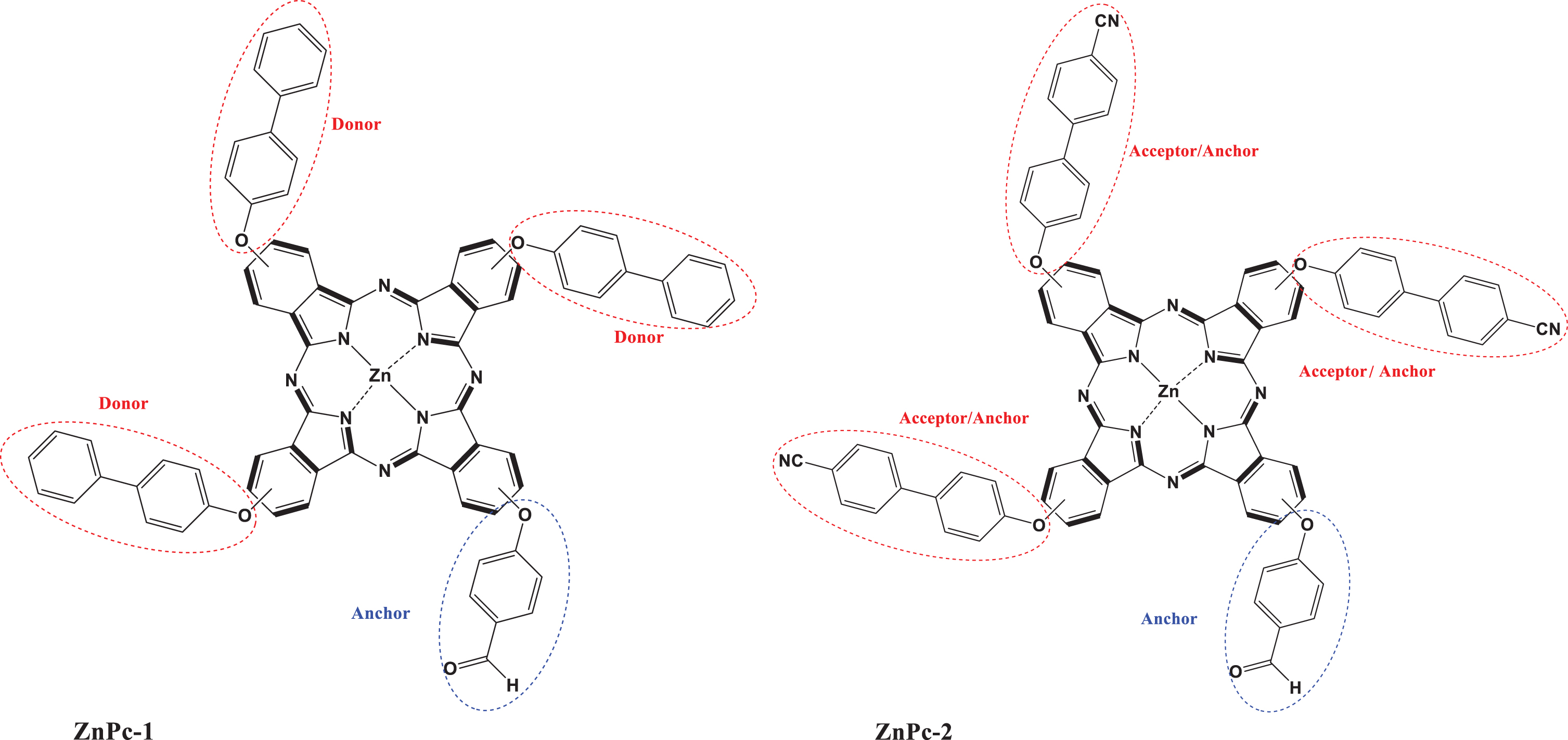
Molecular structures of the asymmetrical zinc phthalocyanines.
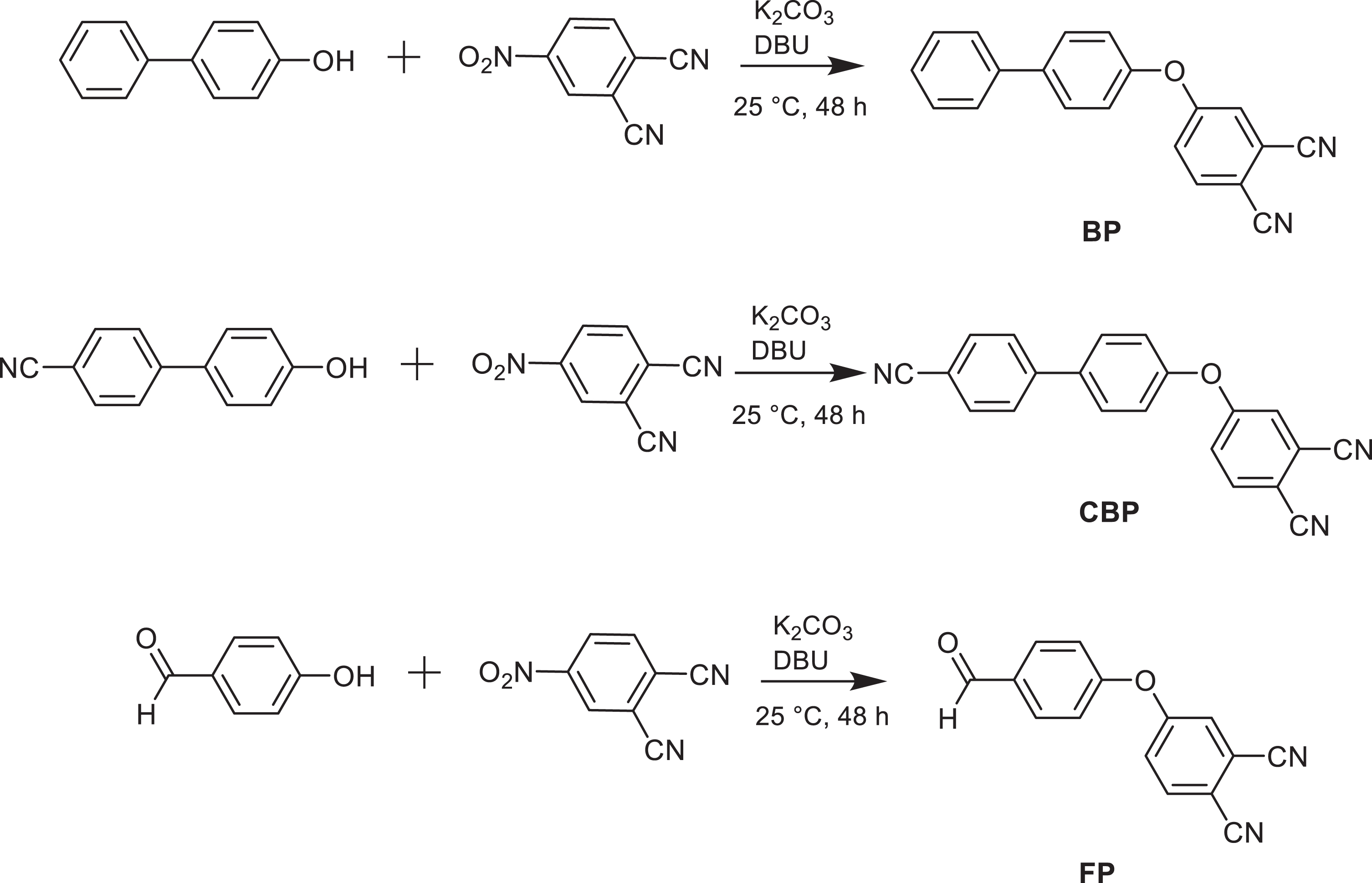
Synthesis of phthalonitrile ligands.
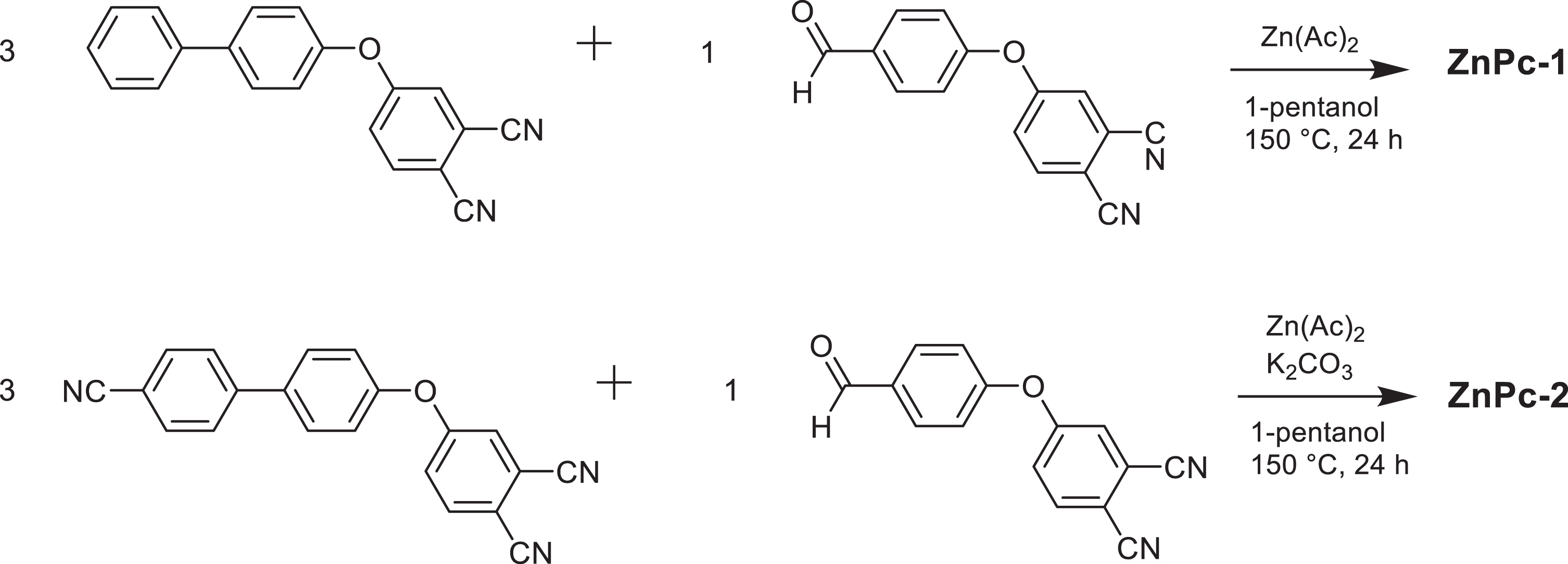
Synthesis of Zinc(II) phthalocyanine complexes.
In the MALDI-TOF mass spectra, the molecular ion peaks [M]+ of ZnPc-1 and ZnPc-2 were found at 1203.08 and 1276.83 respectively. MALDI-TOF mass spectrum consists of a molecular ion peak at (Supplementary Information S4, S5).
UV-vis spectra of the solutions of
UV–Vis spectral and photophysical parameters of asymmetrical ZnPcs in CHCl3
The optical band gap of ZnPc’s was calculated from UV-vis spectrum [22]. It was calculated by using the absorbance and wavelength values according to equations 1 and 2. The band gap values which were obtained from the UV-vis spectrum of the ZnPcs are shown in Fig. 4. In order to support the results, the band gap values obtained by DFT calculation are also shown in Table 2.
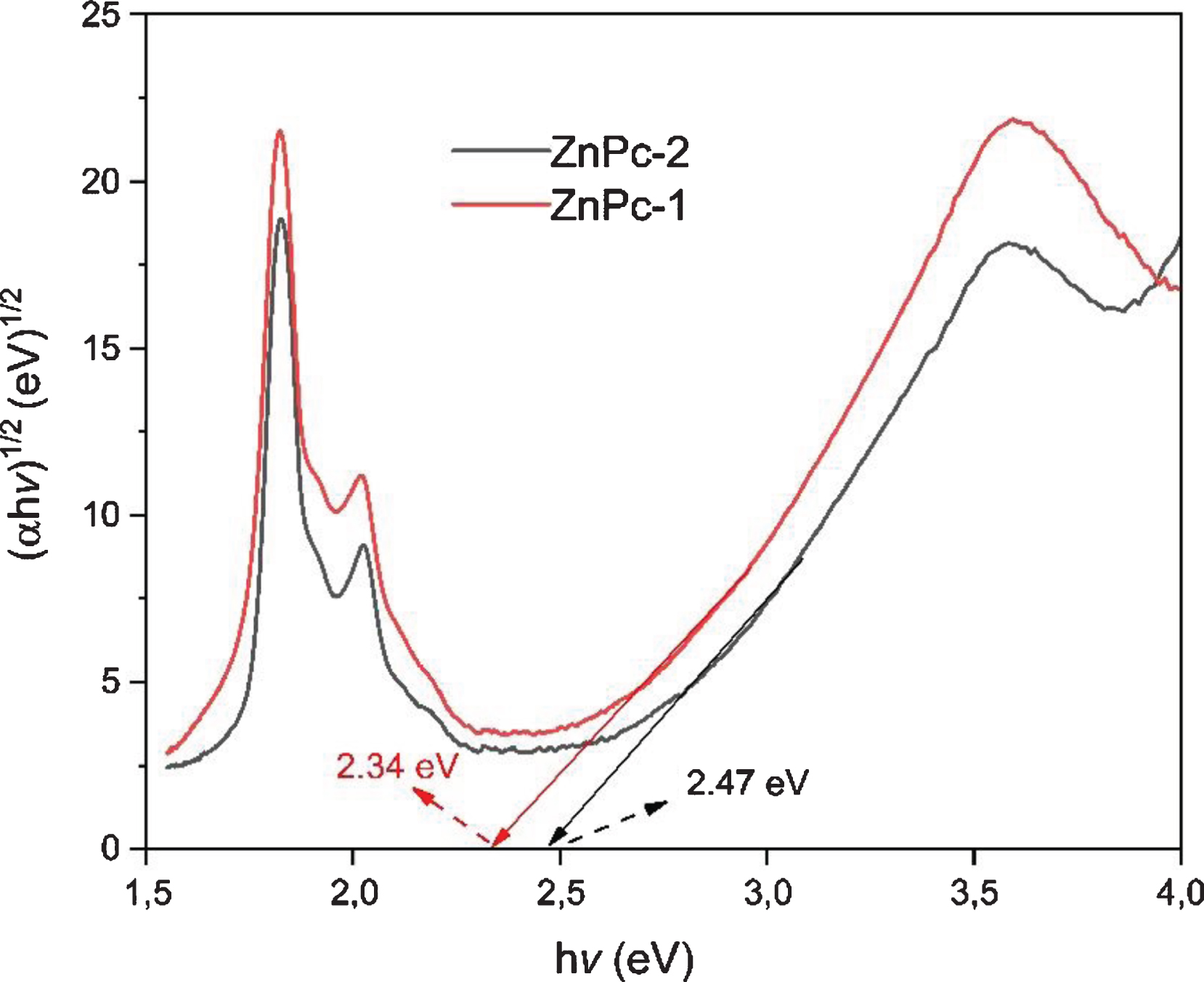
Optical band gap values calculated from the Uv-vis spectrum.
HOMO-LUMO energy levels and band gap values by DFT calculation of ZnPc-1 and ZnPc-2
In Equation 1. Equation is the optical band gap and λ is the wavelength symbol.
In equation 2, α is the absorbance, hv is the energy of the photon, A is the proportionality constant.
For DSSCs fabrication, two transparent TiO2 pastes were deposited using Doctor Blade’s method on the conductive side of ITO substrate. In order to prepare the dye-sensitized TiO2 films (photoanodes), the coated ITO substrates were immersed into a 0.3 M
Photovoltaic performance parameters of the DSSCs based on ZnPc-1 and ZnPc-2
The results show that the aldehyde anchor group [23, 24] on the asymmetric
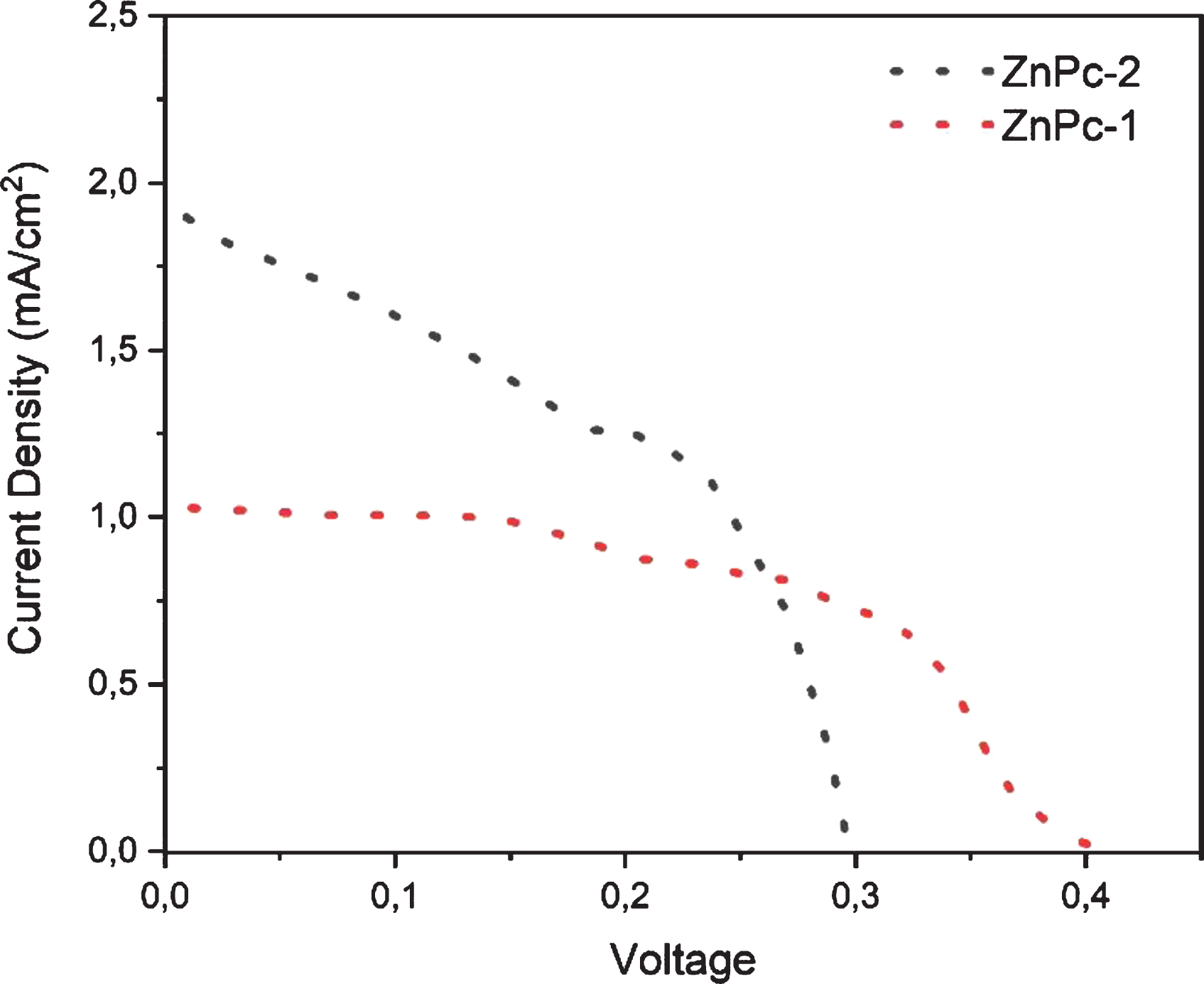
J-V characteristics of the DSSCs based on ZnPc-1 and ZnPc-2.
This work showed high cell potentials were achieved with DSSC applications using newly synthesized Donor-acceptor/anchor structured ZnPcs dyes. While the cyano and biphenyl groups in the dye molecules increase the electron mobility in the molecule, the transfer of electrons to the external circuit with the aldehyde anchor group through the TiO2 layer has increased the efficiency. The efficiency of cells was increased approximately two fold by binding the aldehyde group, which is known as one of the best anchor groups according to the literature. It was observed that the power conversion efficiency of the cyano group as an acceptor/donor group could be increased in the applications of asymmetric ZnPc phthalocyanines in DSSCs. In phthalocyanine compounds, improvements in solar cell performance can be achieved by using different electron donor and π-conjugation systems in the structure besides the cyano group.
Footnotes
Acknowledgments
This work was supported by The Scientific and Technological Research Council of Turkey (TUBITAK) Ph.D. Scholarship Program in Priority Areas (2211/C) and Council of Higher Education (YOK) Ph.D. Scholarship Program (100/2000).
