







Abstract
Periodontitis is an important health concern that is associated with long term complications. Development of resistance to antibiotics limits the treatment options in periodontitis. We investigated Thymus linearis essential oil for treatment of periodontitis. The essential oil was collected using hydrodistillation and characterized using GC-MS. The constituents were further analyzed for druglikeness, ADMET properties and molecular docking using transcription regulators 2UV0 and 3QP5. The GC-MS results revealed that carvacrol was a major constituent (76.26%) followed by caryophyllene oxide (6.83%) and L-borneol (6.08%). The in vitro antimicrobial studies showed significant inhibition against Staphylococcus aureus, Staphylococcus epidermidis and Pseudomonas aeruginosa (MIC range 0.024 –0.312μg/mL). The essential oil showed a good inhibition of bacterial biofilm produced by S. aureus (72%) and S. epidermidis (70%). Finally, the antiquorum sensing property (30 mm zone of inhibition) was recorded with violacein inhibition (58%). Based on in silico and in vitro findings, it was concluded that T. linearis essential oil can be used for the treatment of periodontal infections.
Introduction
Periodontitis is an important health concern, which not only affects oral cavity (with serious long term complications) but also has impact on social life of patient [1]. Further, a two-way relationship between diabetes and periodontitis occurs, as a poor glycemic control not only increases risk for periodontitis but also produces a negative effect on glycemic levels due to periodontal inflammation [2].
Generally, antibiotics are prescribed for treatment of periodontitis, however development of resistance leads to failure of therapy [3]. The cell to cell signaling or quorum sensing among bacteria promotes the development of bacterial biofilms [4, 5], which in turn, facilitates development of resistance towards antibiotics [6]. Researchers have focused these days on finding alternative options for treatment of bacterial infections, especially in medicinal plants, including functional foods. The essential oils are commonly used in aromatherapy and also posess antiviral, antidiabetic, antiparasitic, antioxidant, antimycotic, anticancer and antimicrobial properties [7, 8]. They are liquid in nature, volatile, and comprised of a complex mixture of compounds that are mainly terpenes [9]. Earlier investigations have shown that antimicrobial properties of essential oils are mainly due to their capabilities to either modify the bacterial cell membranes or to inhibit quorum sensing [10].
Thymus linearis Benth. (Lamiaceae) is a small herb, commonly found in hilly areas of Pakistan, Afghanistan, and India. In Pakistan it has been reported from North Waziristan, Chitral, Kashmir and Gilgit-Baltistan [11]. The plant is traditionally taken as tea and used for the treatment of diabetes, hypertension, and microbial infections of gastro intestinal tract (GIT) by the indigenous community [12]. The phytochemical studies of various extracts confirmed presence of saponins, sugars, tannins and flavonoids [13], whereas the gas chromatography-mass spectrometry (GC-MS) analysis of essential oils indicated presence of thymol, carvacrol and L-borneol as major constituents [14].
Keeping in mind the traditional importance of T. linearis, antibiofilm and antiquorum sensing potential of essential oil was investigated against periodontal bacteria. To the best of our knowledge, this is first report that describes antiquorum sensing and antibiofilm properties of T. linearis essential oil.
Materials and methods
Plant material
The fresh leaves of Thymus linearis Benth. were collected from Shakai, North Waziristan [Pakistan] and authenticated by Dr. Zain Ul Abedene (Institute of Biological Sciences, Gomal University, D.I.Khan). The plant material was dried in oven (38°C) and powdered and stored at 4°C till fur-ther use.
Microbial strains and growth media
The strains including Chromobacterium violaceum (DSM 30191), Pseudomonas aeruginosa (ATCC 15442) were purchased from the German collection of microorganisms and cell cultures (DSMZ), and American Type Culture Collection (ATCC). The ethical approval for the project was obtained (Ethical Review Board, Gomal University, D.I.Khan, 2019). The dental plaques were collected from female diabetic patients after informed consent with the help of a dentist. The plaques were further processed for growth of bacteria using nutrient media. The isolation and purification of bacteria was performed using Congo red agar. Finally, the strains were submitted to National Culture Collection of Pakistan (NCCP) to facilitate the 16S rRNA gene sequencing and identified as Staphylococcus aureus and Staphylococcus epidermidis [15].
Isolation of essential oil
The isolation of essential oil from dried plant material (100 g) was performed by using clevenger apparatus (6 h, repeated twice). The collected essential oil (EO) was dried using anhydrous sodium sulphate to remove traces of water and stored at 4°C.
Gas chromatography analysis
The gas chromatography was performed by using GC-MS (Shimadzu GC 2010, Japan) and GC-FID (equipped with a flame ionization detector; FID) for qualitative and quantitative analysis. The instrument was equipped with AOC-20i autosampler using a DB-5 MS (30 m×0.25 mm id, 0.25μm film thickness) capillary column. The column oven temperature was programmed initially at 40–90°C at the rate of 2°C/min and then raised to 90–240°C at the rate of 3°C/min. The final temperature was held constant for 5 min. Injector and detector temperatures were maintained at 240 and 280°C, respectively. The Essential oil (0.5μL) was injected via split-mode ratio of 1 : 5. Helium was used as a carrier gas at a flow rate of 1 ml/min. The relative quantification of constituents was done by integration of peak areas. The components identification was carried out on a GC-MS-QP 2010 Plus (Shimadzu, Japan) operating in electron ionization mode at 70 eV. Mass units were monitored from 35 to 500 AMU. A DB-5 MS (30 m×0.25 mm id, 0.25μm film thickness) capillary column was used. Column conditions and injector, detector temperatures were the same as in GC analysis. Linear retention indices were calculated using a homologous series of n-alkanes (C8-C25) under the same temperature-programmed conditions. The components were identified by comparison with linear retention indices (RI), mass spectra with those of NIST mass spectral library, or co-injection with standards [Supplementary data].
Drug likeness (Lipinski properties)
On the basis of GC-MS analysis, following compounds were chosen for further experiments based on their common occurrence in various medicinal plants. The selected compounds were carvacrol (
ADMET analysis
The ADMET analysis for major components was performed using online tools including the SWISS ADME (http://www.swissadme.ch) and pkCSM ADMET (http://biosig.unimelb.edu.au/pkcsm) predictor [19].
Molecular docking
For molecular docking studies, the X-ray crystallographic structures of the transcriptional regulators LasR (2UV0) [20] and quorum sensing regulators CviR (3QP5) [21] were obtained from the Protein Data Bank [PDB]. The active site dimensions for each protein were recorded by using their co-crystallized ligands, respectively. Then, the water molecules and co-crystallized ligand were removed and hydrogen atoms and charges were added. The SDF format for 3D structures of all the phyto-constituents were downloaded from Pubchem database and PDB files were generated in Accelrys Discovery Studio Visualizer 2.0. The molecular docking was performed using Lamarckian Genetic Algorithm embedded in AutoDock v 4.2. [22]. A total number of 72 different poses were generated and clustered according to their RMSD values. Each cluster was carefully visualized in Discovery Studio Visualizer 2.0 and putative binding modes were selected accordingly. Best docked structures based on the binding energy scores (ΔG) were chosen for further analyses. The hydrogen bonding and hydrophobic interactions between ligand and protein were calculated by Accelrys DS Visualizer 2.0. and Ligplot+.
Biological activities
Determination of MIC and MBC [minimum inhibitory and bactericidal concentrations]
The antimicrobial activity of T. linearis was determined using a standard protocol [23]. In the MIC assay, the 96 microwell plates were loaded with 50μL of the over night-grown bacterial strain (1.5×10⁷ CFU/mL), followed by addition of 50μL of test sample (0.012–100μg/mL). The plates were incubated at 37°C for 24 h. On the next day, 40μL of resazurin solution (0.015 %) was added to each well followed by incubation at 37°C for further 60 min. Colorimetric readings were recorded using 96-microplate reader (Hippo MPP-96, Biosan). For MBC values, bacterial suspensions (10μL) from the MIC microwell were relocated to already prepared agar plates (Muller Hinton) and incubated for 24 h. Afterwards, bacterial growth was recorded on the agar plates. All samples were loaded in triplicate. Ciprofloxacin was used as positive control.
Time-Kill kinetic studies
The time-kill kinetic studies were performed by using previously described methods (Appiah et al., 2017). Briefly, the test samples equal to MIC were added to bacterial cultures in Mueller- Hinton broth with an inoculum size of 3×10⁶ CFU/mL and incubated at 37°C. At time 0, 1, 2, 4,6, 8, 10,12, 16,20 and 24 h the samples were removed and spotted onto already prepared agar plates and incubated for 24 hrs at 37°C. A control test was performed for the organisms without the test sample. Later, the colony forming unit (CFU) of the organisms was determined. The results were expressed in a graph of the log CFU/mL was plotted against time.
Antibiofilm activity
The biofilm formation assay was performed using 12-well polystyrene plates with a slightly modified method [24]. Briefly, the bacterial strain was inoculated in TSB medium (280μL) and allowed to incubate for 24 hrs to produce biofilm. Afterwards 100μL of test compound (0.01–3 mg/mL) was added to the bacterial culture followed by incubation at 37°C for further 24 h. For quantification, the biofilms in the 12-well plates were stained using crystal violet. Afterwards 95%ethanol was added to the stained cells and absorbance was recorded at 592 nm to quantify total biofilm formation.
The %inhibition was calculated using following formula
The reaction without test sample was taken as control
Antiquorum sensing
The quorum sensing inhibition potential of isolated compounds was evaluated by a standard procedure [25]. An overnight culture of C. violaceum was streaked onto BHIA (Brain Heart Infusion agar) in petri dishes. Sterilized filter paper discs (6 mm) were prepared and placed on the top of agar plates seeded with indicator strain (C. violaceum). Then 15μL test compound (0.01–3 mg/mL) was applied on each disc and allowed to dry for 30 min. Afterwards, the assay plates were incubated at 30°C for 3 days. Ciprofloxacin was used as standard drug. Finally, results were recorded by measuring the zone of inhibition around each disc.
Violacein inhibition assay
A modified method [26] was adopted for violacein inhibition assay. The 24 hrs old culture (200μL) of C. violaceum (OD = 0.4 at 592 nm) was loaded to sterilized microtiter plates containing various concentrations of compounds (1–4 mg/mL). The plates were incubated at 30°C for 24 h and violacein pigment formation was measured by taking absorbance at 592 nm. The percentage inhibition was calculated by following the formula:
The reaction without test sample was taken as control.
Results and discussion
GCMS analysis
The hydrodistillation of T. linearis yielded (1.8 mL±0.12 mL/150 g) aromatic, pale yellow essential oil. The GCMS spectrum was quiet complex (Fig. 1) and a total of thirteen compounds was identified (Table 1). The carvacrol was detected as present in highest amount (76.26%) followed by caryophyllene oxide (6.83%), L-borneol (6.08%), caryophyllene (5.36%), thymol (1.70%), p-cymen-8-ol (0.51%), and O-methylthymol (0.46%). The structures of major compounds are given in Fig. 2.
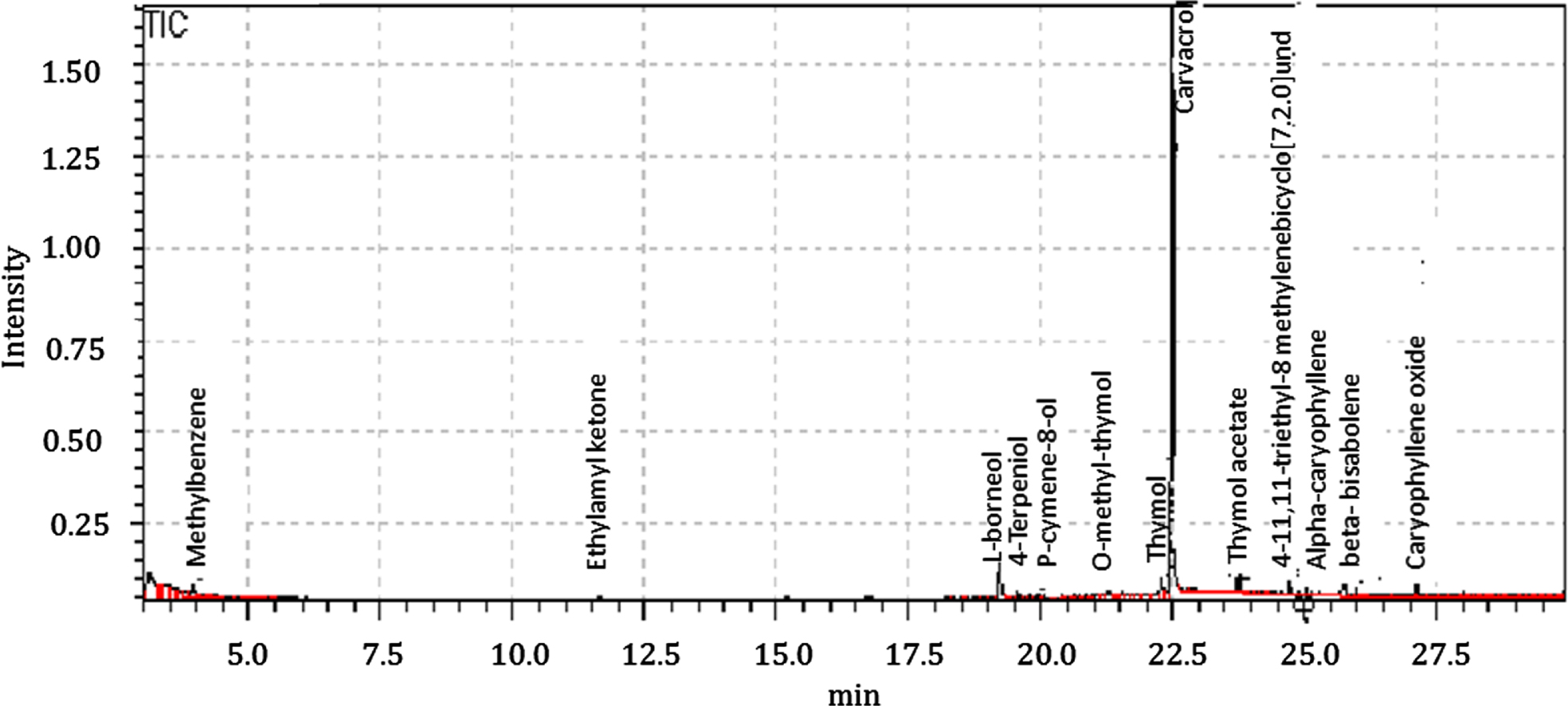
GC-MS chromatogram of T. linearis.
GC-MS Profile of T. linearis
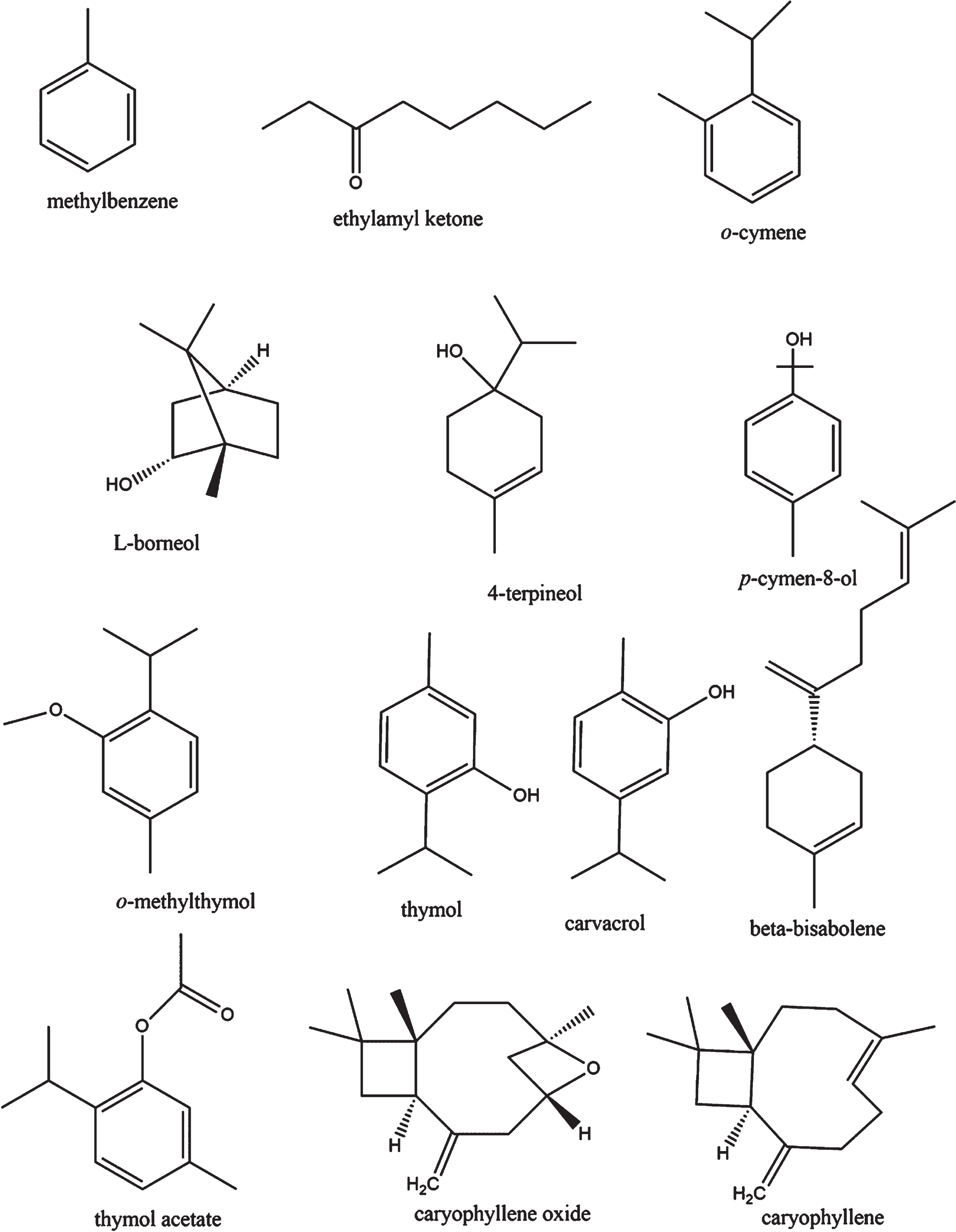
Structure of compounds from Thymus linearis identified using GC-MS.
All of tested ligands were screened for Lipinski’s rule of five (Table 2). The drug likeness and bioavailability parameters of all other compounds are shown in figure (Fig. 3), that are consistent within set parameters. [18]. Caryophyllene oxide violated the Lipinski’s rule, and overall drug likeness score was –1.50 (Fig. 3), that is less than standard values (–1 to +1). Similarly, it also showed non-compliance with bioavailability parameters.
Lipinski properties of compounds
Lipinski properties of compounds
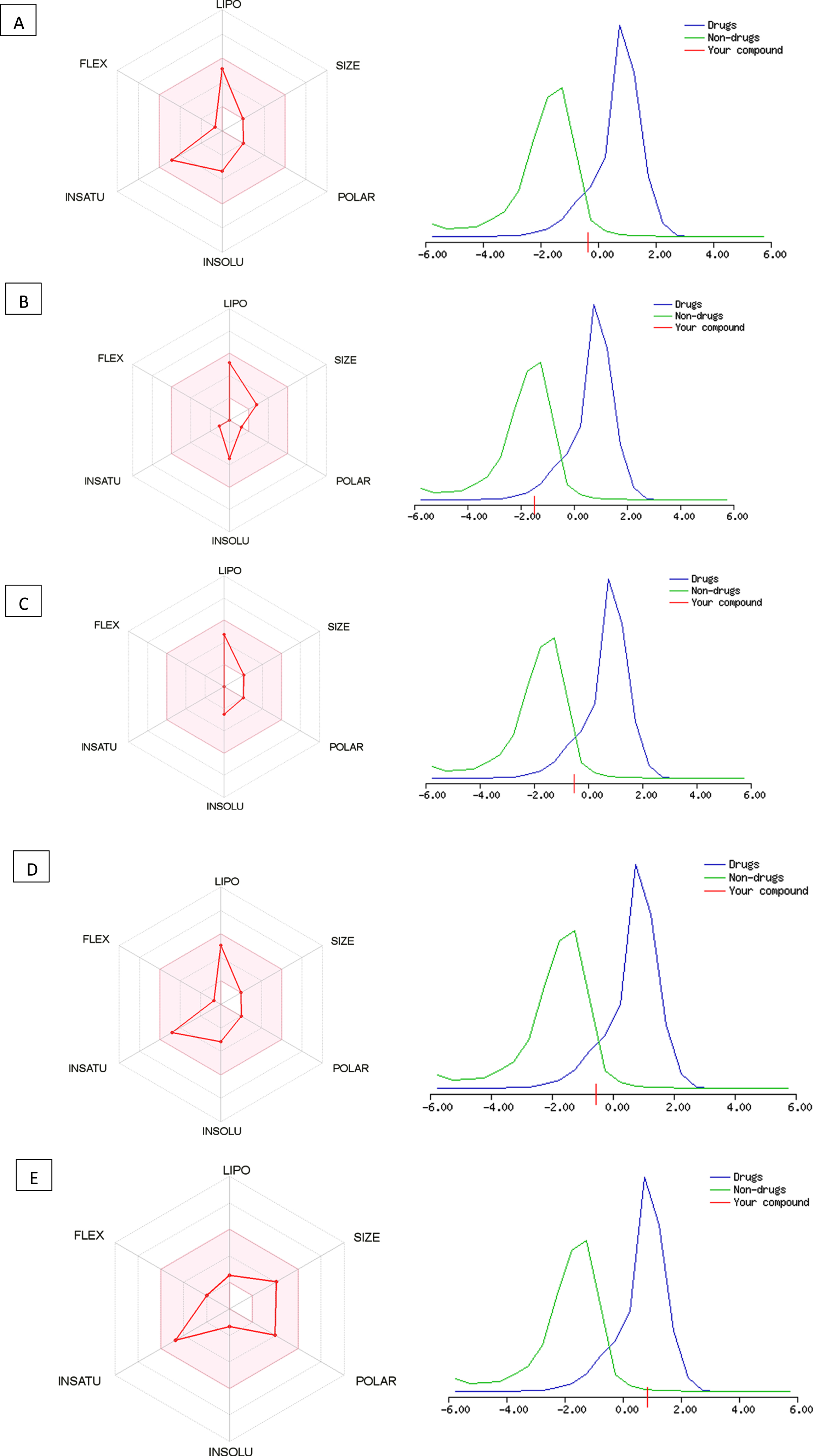
Bioavailability Radar and drug likeness score of carvacrol[–0.35][A], caryophyllene oxide[–1.50][B], L-borneol[C], thymol[–0.54][D] and ciprofloxacin [0.84][E] [–1 to +1.mol].
Generally, systemic therapy for the treatment of periodontitis helps the mechanical periodontitis and kills oral pathogens by giving support to host defense system. This strategy is important since sub-gingival pathogens still exist after that remain after conventional mechanical periodontal therapy. The determination of ADMET properties of a therapeutic agent becomes essential in this regard. The ADMET properties of all ligands are shown in Table 3. The TPSA of all compounds (20.23) except caryophyllene oxide (12.53) was less than 100 [27] that suggested good oral absorption or membrane permeability. The Caco-2 permeability, intestinal absorption (human), skin permeability and P-glycoprotein substrate or inhibitor are mainly employed to predict the absorption level of the compounds. When the Papp coefficient is > 8×10⁻⁶, the predicted value is > 0.90; thus, the compound has high Caco-2 permeability and is easy to absorb. All compounds showed high Caco-2 permeability. Regarding intestinal absorption (human), absorbance of less than 30%is thought as poorly absorbed. In our case all compounds showed excellent (> 90%) absorption. For skin permeability, the compound with log Kp > –2.5, demonstrates a relatively low skin permeability, therefore carvacrol, thymol, L-borneol were reported with poor skin permeability. P-glycoprotein is an associate of the ATP-binding transmembrane glycoprotein group [ATP-binding cassette (ABC)], that can excrete drugs or exogenous chemicals from cells. The results suggested that tested compounds are neither substrates nor inhibitors of P-glycoprotein (Table 3).
ADMET Properties of compounds
ADMET Properties of compounds
ADMET, absorption, distribution, metabolism, excretion, and toxicity; TPSA topological polar surface area; Consensus Log Po/w average of five different lipophilicities; Papp, apparent permeability coefficient; AMES, assay of the ability of a chemical compound to induce mutations in DNA; Kp, skin permeability constant; Fu, fraction unbound; BBB, blood–brain barrier; BB, blood–brain; CNS, central nervous system; PS, permeability-surface area; T. pyriformis, Tetrahymena pyriformis; LD, lethal dose; LOAEL, lowest-observed-adverse-effect level. Adopted from [Han et al., 2019].
The distribution volume at steady state (VDss), Fraction unbound [human], CNS permeability and blood–brain barrier membrane permeability (logBB) are helpful tools to characterize the distribution of drugs in tissues. The case with VDss is lower than 0.71 L kg–1 (log VDss < –0.15), the distribution volume is considered to be relatively low. When VDss is higher than 2.81 L kg –1 (log VDss > 0.45), the distribution volume is considered to be relatively high. Our results showed that all compounds had low distribution volumes (Table 3).
For blood–brain barrier membrane permeability, the compounds with logBB > 0.3 are considered to easily cross the blood–brain barrier. The tested compounds can easily cross blood–brain barrier as all tested compounds has logBB > 0.3. For CNS permeability, compounds with logPS < –3 are not able to cross it. Based on this value, our tested compounds may penetrate the CNS.
Cytochrome P450 enzymes are very for metabolism of many drugs in liver. This class is comprised of above 50 enzymes, however six of them (CYP 1A2, 2C9, 2C19, 2D6, 2E1 and 3A4) with CYP3A4 and CYP2D6 are mainly involved in metabolism of majority of drugs (above 90%). Our results confirm that all tested four compounds were substrate for CYP3A4 and CYP2D6. All tested compounds were inhibitor of CYP1A2, whereas caryophyllene oxide was inhibitor of CYP2C19 and CYP2C9. This shows that our tested compounds may be metabolized in liver.
During drug elimination, caryophyllene oxide and L-borneol have highest total clearance compared to other tested compounds. Finally in safety profiling, carvacrol and thymol were observed as hepatotoxic and all compounds were found sensitive to skin (Table 4). These findings clearly indicate that oral administration of T. linearis essential oil can produce toxicity and can cause skin sensitization. However, since the T. linearis herbal tea is used by indigenous community, in vitro and in vivo analysis is recommended to validate the in silico analysis.
Docking score, H and non H-Bonding interactions of selected compounds from T. linearis
2UV0 [Structure of the P. aeruginosa LasR ligand-binding domain bound to its aJutoinducer; 3QP5 [Crystal structure of CviR bound to antagonist chlorolactone [CL].
Molecular docking studies of test compounds were performed in the active pocket of transcriptional regulators LasR (2UV0) and quorum sensing regulators CviR (3QP5) (Table 4).
Among four homo-tetramer forms of transcriptional regulator LasR (2UV0), (chain E, F, G and H), chain E was selected based on earlier reports [15]. The binding interactions amongst the test compounds and amino acid residues inside the active site LasR (2UV0) were visualized by Discovery Studio. In this case, compound carvacrol, L-borneol and thymol showed highest number of H-bonding interaction (3). The binding pocket of compound carvacrol showed H-bonding interaction with Ala 27, Ile 22, Leu23 and neighboring amino acids included Leu10, Leu30, Gly6, Leu154, Thr150. whereas compound L-borneol showed H-bonding interaction with Ile22, Leu23, Ala27 with Gly6, Leu154, Lys25 as neighbors. Likewise, thymol showed H-bonding interactions with Leu23, Ala27, Ile22 and neighboring amino acids included Asp29, Lys25, Gly6 and Leu154. The binding activity and the mode of interaction of the atoms in each molecule are shown in the 3D binding modes and 2D representation (Fig. 4). Thus the antibiofilm activity could potentially be the due to contribution of all tested compounds.
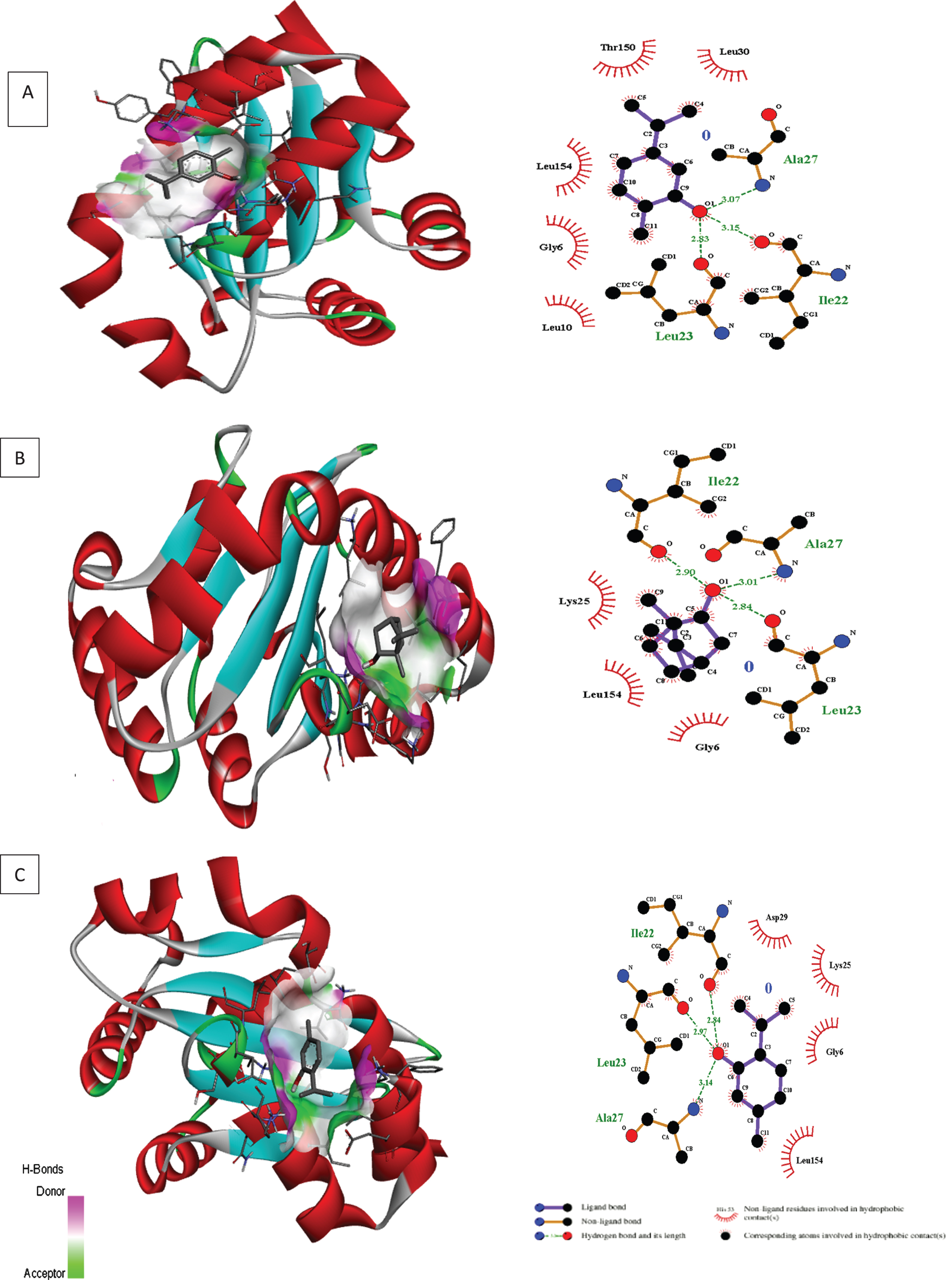
3D, H, non-H Bonding interactions of carvacrol pose rank 3 [A] L-borneol with pose rank
Further, all compounds were docked inside the active pocket of quorum sensing regulator CviR (3QP5). This protein exists as a homo tetramer form (A, B, C and D) and chain A was chosen for docking studies based on earlier reports [15]. In this case, only L-borneol showed the highest number of H-bonding interaction (2). The binding pocket of L-borneol showed H-bonding interaction with Glu39, His33 and neighboring amino acids included Met30, Phe43, Ile34, whereas carvacrol showed H-bonding interaction with Trp84 and neighboring amino acids included Met135, Phe 115, Asp97, Ile99, Ile53, Ser155, Leu57, Trp111, Tyr 88. The binding activity and the mode of interaction of the atoms in each molecule are shown in the 3D binding modes (Fig. 5) and 2D representation (Fig. 5). It was noticed that caryophyllene oxide showed no H bonding interaction. The binding activity and the mode of interaction of the atoms in each molecule is shown in the 3D binding modes (Fig. 5) and 2D representation. Based on in silico data the carvacrol, L-borneol and thymol are considered best fit in active pockets of transcriptional regulators and thus could contribute towards antibiofilm and antiquorum sensing activities [28, 29].
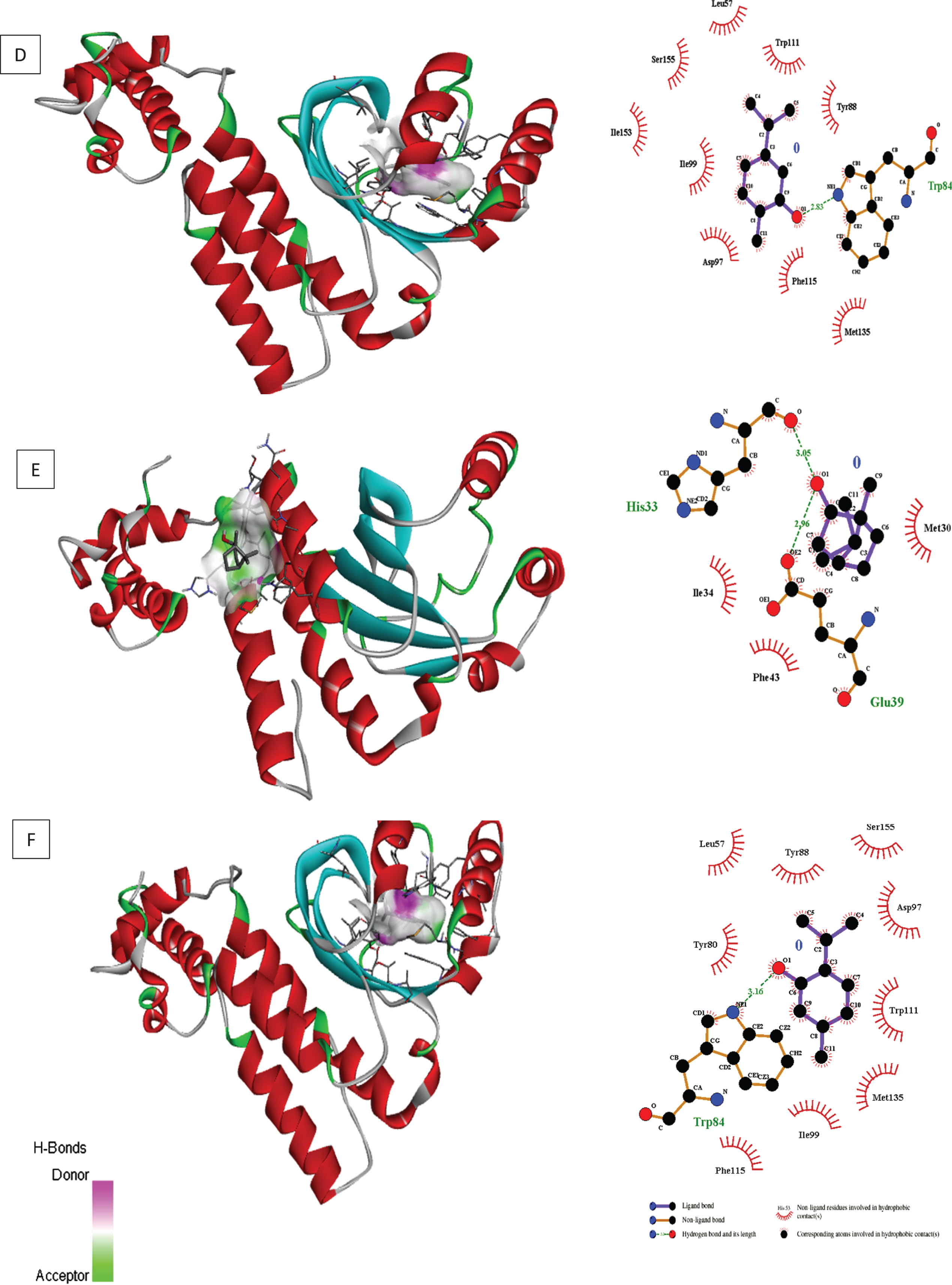
3D interaction and H, non-H Bonding interactions of carvacrol with pose rank 1[D], L -borneol with pose rank 9 [E] and thymol with pose rank
The antimicrobial activity of essential oil was determined using MIC and MBC (Table 5). The MIC values ranged from 0.024–0.312μg/mL whereas the MB values ranged from 0.048 –0.624μg/mL. The essential oil exhibited significant activity (MIC/MBC) against reference strains S. aureus (0.024 /0.096μg/mL) and P. aeruginosa (0.024 /0.048μg/mL). In case of clinical strains S. aureus (0.312/0.624μg/mL) and S. epidermidis (0.078/0.078μg/mL), lesser inhibition was recorded as compared to reference strains. It was therefore concluded that T. linearis essential oil was effective against both clinical and reference strains (Table 5).
MIC and MBC (μg/mL) of T. linearis essential oil against tested strains
MIC and MBC (μg/mL) of T. linearis essential oil against tested strains
aisolated strain; bisolated strain; cATCC 33862; dATCC 15442. ciprofloxacin (MIC/MBC) < 4.8μg against. S. aureus a and S. epidermidis b ; 9.6μg/mL against S. aureusb and P. aureginosa.
For time kill kinetic studies, the T. linearis essential oil was incubated with bacterial colonies of clinical strains of S. aureus and S. epidermidis. Based on earlier reports; if a reduction in CFU/mL is≥3 log10, it was considered as bactericidal (99.9%) (NCCLS, 1999) and if reduction in CFU/mL is < 3, it was considered as bacteriostatic (less than 99.9%) [30]. In kinetic studies against S. aureus significant eradication rate over 90%was recorded as a decrease of colony forming units > 3 log10 over a period of 24 hrs (Fig. 6). Nearly similar results were recorded in case of S. epidermidis (Fig. 7).
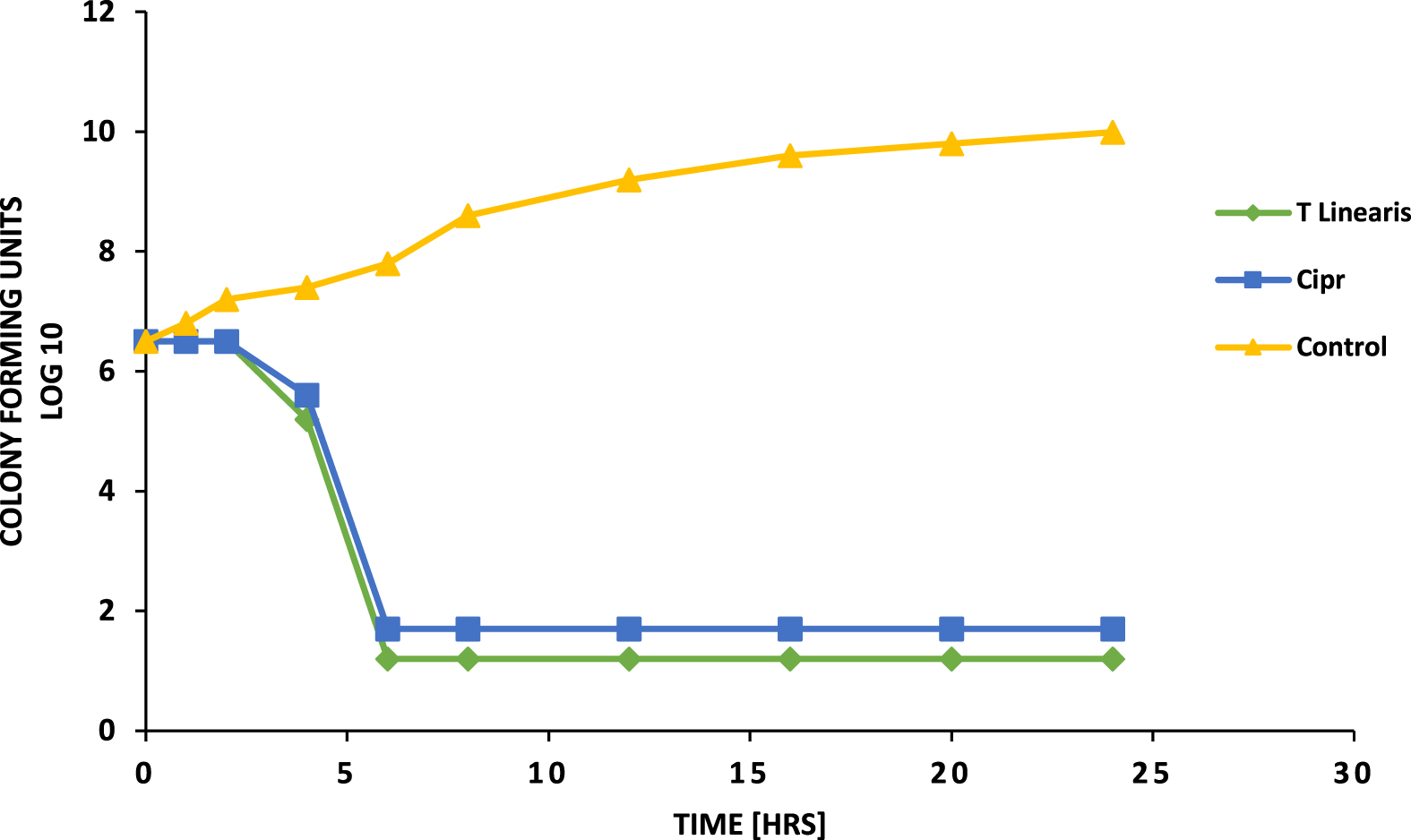
Time kill- kinetic studies of T. Linearis essential oil against S. aureus.
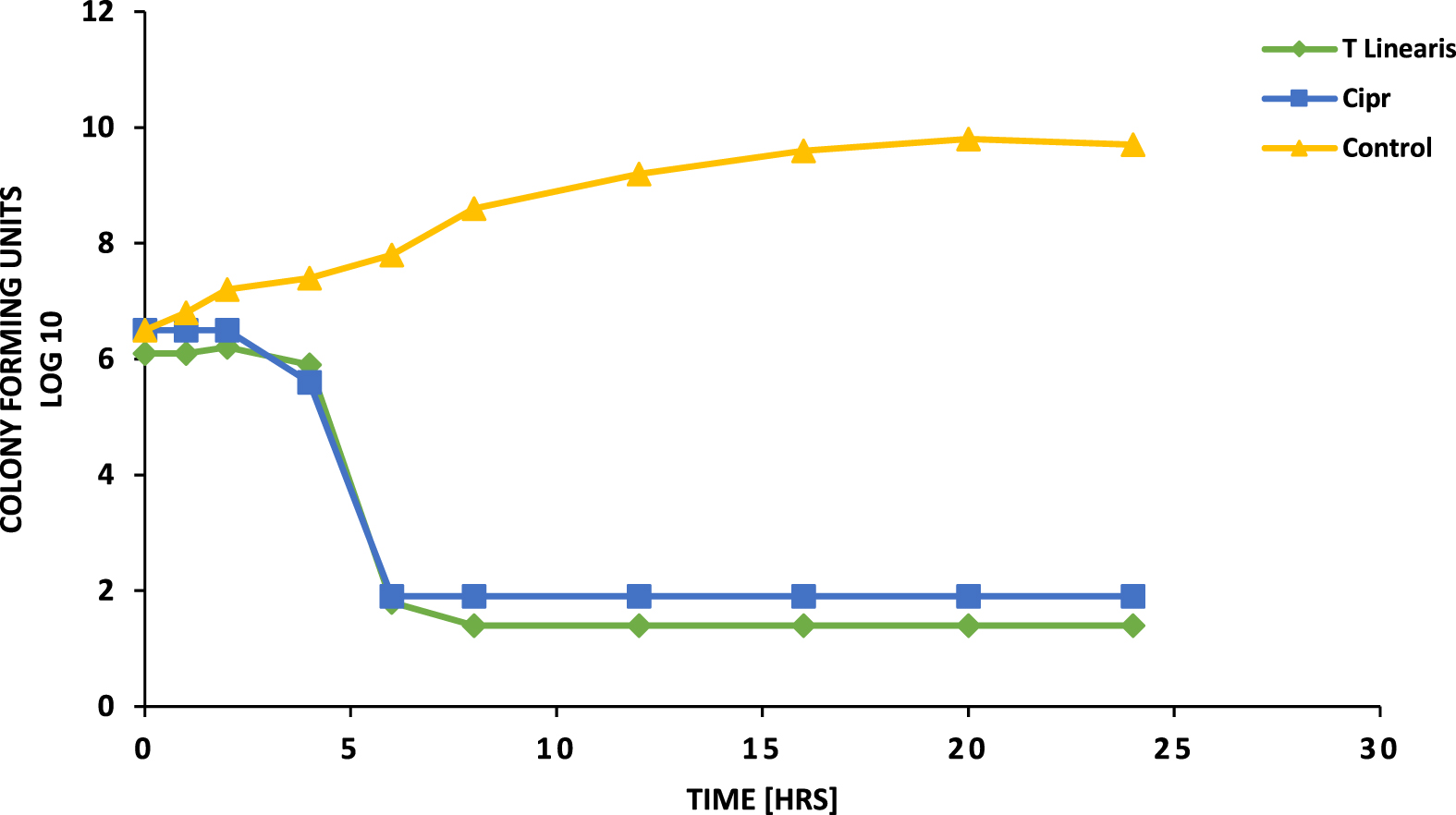
Time kill- kinetic studies of T. Linearis essential oil against S. epidermidis.
Based on findings of antimicrobial activity, we thus decided to analyse the potential antibiofilm and antiquorum sensing activities of T. linearis essential oil. The essential oil presented excellent inhibition against S. aureus (72%) and S. epidermidis (70%) (Table 6). As biofilm formation by pathogens is one of the most notable aspects of their pathogenicity and resistance [31], the biofilm inhibition property of drug can be considered as an important tool to combat bacterial infections [32]. As evident from GC-MS data, carvacrol and thymol are found in T. linearis essential oil, and most recently, investigations including both carvacrol and thymol has confirmed that they inhibit biofilms (more than 70%) produced by Staphylococcus aureus and Pseudomonas aeruginosa. Similarly, caryophyllene oxide and L-borneol is also reported with antimicrobial activities [34]. Thus it was concluded that they may be contributing towards antimicrobial and antibiofilm properties.
Antibiofilm and antiquorum sensing activity of T. linearis essential oil
Antibiofilm and antiquorum sensing activity of T. linearis essential oil
a = 10μg/mL; b = 0.19μg/mL; S. aureusc and S. epidermidisd.
The quorum sensing plays a vital role in biofilm formation, thus interference with the quorum sensing system might be a preferable and convenient method to block its pathogenicity [35]. Thus the essential oil was assayed against C. violaceum, (as biomarker strain for quorum sensing) and a significantly highest inhibition (15 mm). Further, as the violacein synthesis is regulated by the QS system, and violacein is used as a simple and intuitive indicator for screening quorum sensing [36]. The results of purification and quantitative analysis of the violacein in the culture supernatant demonstrated a higher inhibition (58%).
It was concluded that T. linearis possesses, antibiofilm and antiquorum sensing properties and can be used as treatment option in periodontal infections.
