







Abstract
According to the structure/property characteristics of polyacids, the design and synthesis of new inorganic organic hybrid materials based on POMs is of great significance for the rapid and effective removal of pollutants in wastewater. In addition, many researchers have synthesized a large number of POMs-based inorganic organic hybrid compounds with organic cations as templates. Based on the above background, in this article, a new supramolecular compound named o-[C20H18N2O4][Mo8O26]0.5.H2O was obtained through hydrothermal method by reacting 1, 2-bis[4-nitrile-pyridine)-N-methylene]phenyldibromide (L1) with (NH4)6Mo7O24.4H2O. The compound was characterized by IR, PXRD, and single crystal X-ray analysis. Single crystal X-ray analysis shows that the compound consists of a [β-Mo8O26] 2–, a dicarboxylic acid chelating ligand and a water molecule. This compound exhibits good catalytic activity towards MB. The degradation rate of MB by photocatalysis of compound
Introduction
Supramolecular chemistry is the self-assembly of molecules through interactions between molecules.[1–3] Today, supramolecular chemistry is a highly interdisciplinary discipline among the fields of chemistry, biology, and materials science. It downplays the boundaries between various disciplines and emphasizes supramolecular systems with specific structures and functions, which is one of the important directions conducive to the development of chemistry. In many research fields, the synthesis and functional research of inorganic-organic hybrid materials based on polyacids have attracted much attention. Due to the structural characteristics, polyacid anion clusters have good physical and chemical properties in the fields of catalysis, magnetism, medicine, adsorption, biochemistry, solar cells and materials science. At present, many studies on inorganic-organic hybrid supramolecular materials which are induced by cationic templates have been broadly reported [4]. Supramolecular system guided by nitrogen-containing heterocyclic organic cationic templates has become an important research direction owing to their excellent properties in organic and inorganic components. Inorganic-organic supramolecular systems are receiving more and more attention and developing vigorously due to their topological structures and their applications in photochemistry, catalytic degradation and other fields [5]. Polyoxmetaltalates (POM) are a kind of important metal oxides, which have wide application prospects in photochemical materials, electrochromic and pharmaceutical fields [6–9]. POMs has a history of 180 years. The structural diversity of POMs was further demonstrated by the discovery of molybdenum oxide cluster isomers [10–20]. So far, there has been nine isomeric forms of octamolybdates what are the α-, β-, γ-, δ-, ɛ-, ζ- η-, θ and ι-isomers. What is worth mentioning is that our laboratory was the first to discover and synthesize ι-isomers [15].
Previously, a large number of different carboxyl ligands were obtained in our laboratory by the hydrolysis of cyano group [20]. Now, a new supramolecular compound named o-[C20H18N2O4][Mo8O26]0.5.H2O was obtained by the reaction of 1,2-bis[4-nitrile-pyridine)-N-methylene]phenyldibromide(L1) with (NH4)6Mo7O24.4H2O through hydrothermal method. We find that under acidic conditions, the cyano group is hydrolyzed to form a carboxyl group and ligand L1 was changed to L2. The photocatalysis of the supramolecular compound was also discussed.
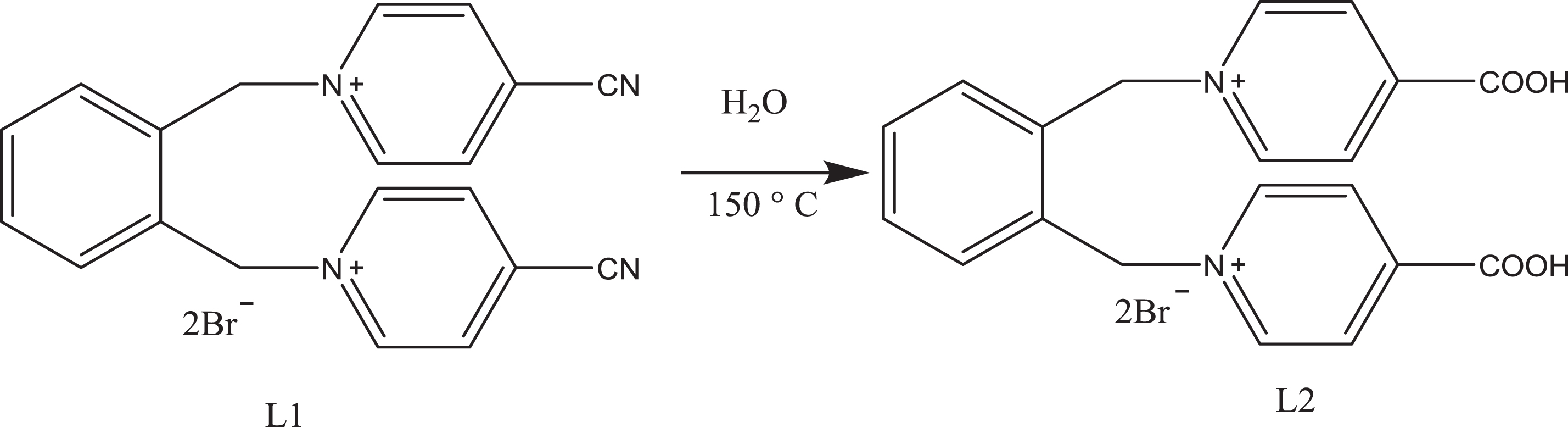
The reaction and the structure of the title ligand L1 and L2.
Materials and physical measurements
The ligand L1 was synthesized on the basis of the literatures [21]. The IR spectrum was measured on Shimazu IR435 spectrometer, using KBr particles with a scale of 400–4000 cm–1. C, H and N were analyzed using a Perkin-Elmer 240 elemental analyzer. The UV-5500 PC spectrophotometer was used to obtain the ultraviolet visible absorption spectrum. All powder patterns were collected on a Philips X-pert X-ray diffractometer with graphite monochromatized Cu-Kα radiation (λ= 0.15418 nm).
The synthesis of compound {o-[C20H18N2O4][Mo8O26]0.5.H2O} (1)
Compound
X-ray crystallography study
Crystallographic data of the compound was collected on a Bruker APEX-II area-detector diffractometer equipped with graphite-monochromatized Mo-Kα radiation (λ= 0.71073 Å). Non-hydrogen atoms were refined with anisotropic thermal parameters. The hydrogen atoms were assigned by isotropic displacement factors and incorporated into the final refinement process using geometric constraints. SADABS software package was used for data reduction. All structures were solved, and full matrix least squares optimization was carried out by SHELXL-97 or OLEX-2 program on F2 [22]. The related crystallographic data of compound
Crystallographic data of compound 1
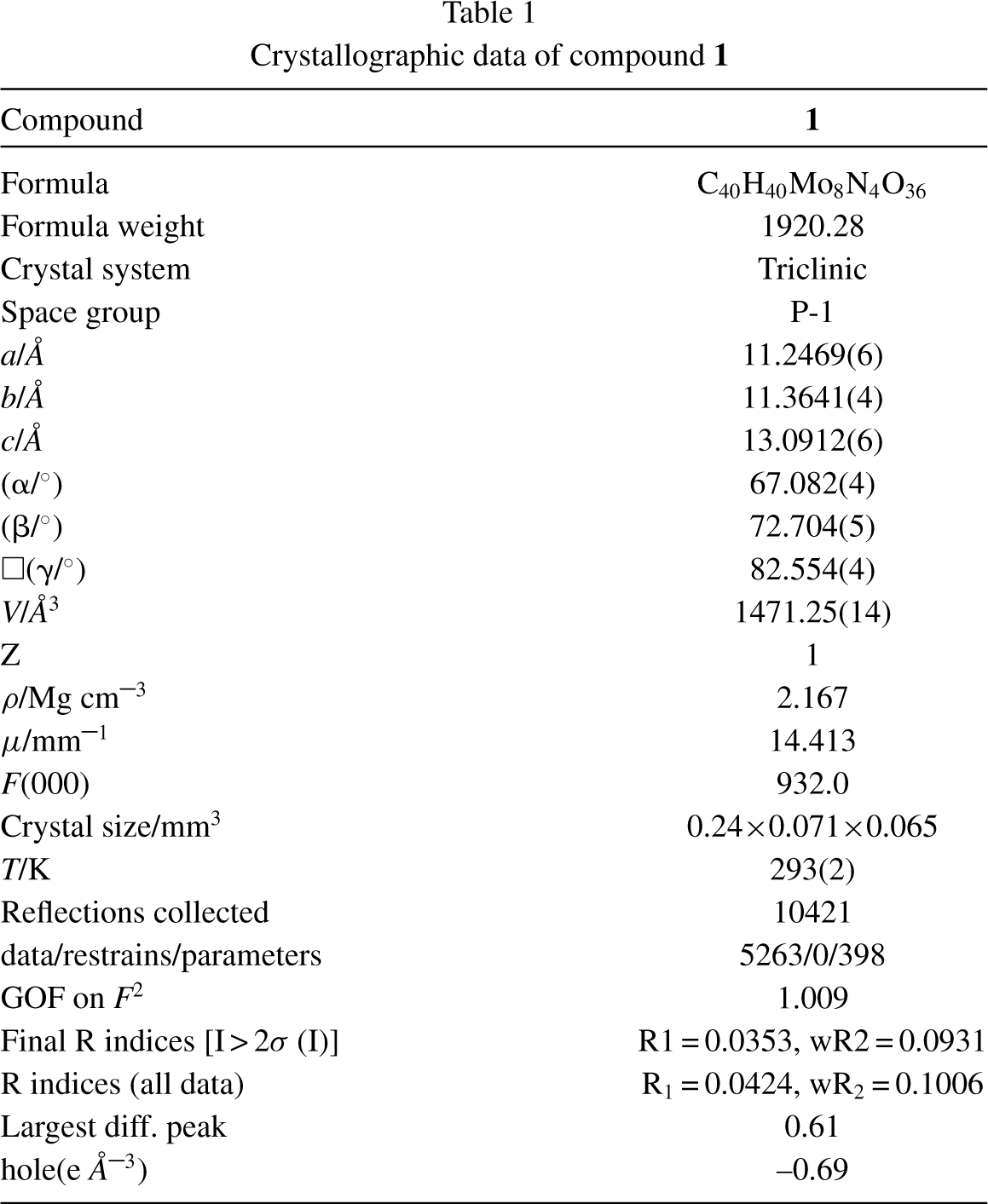
Crystallographic data of compound
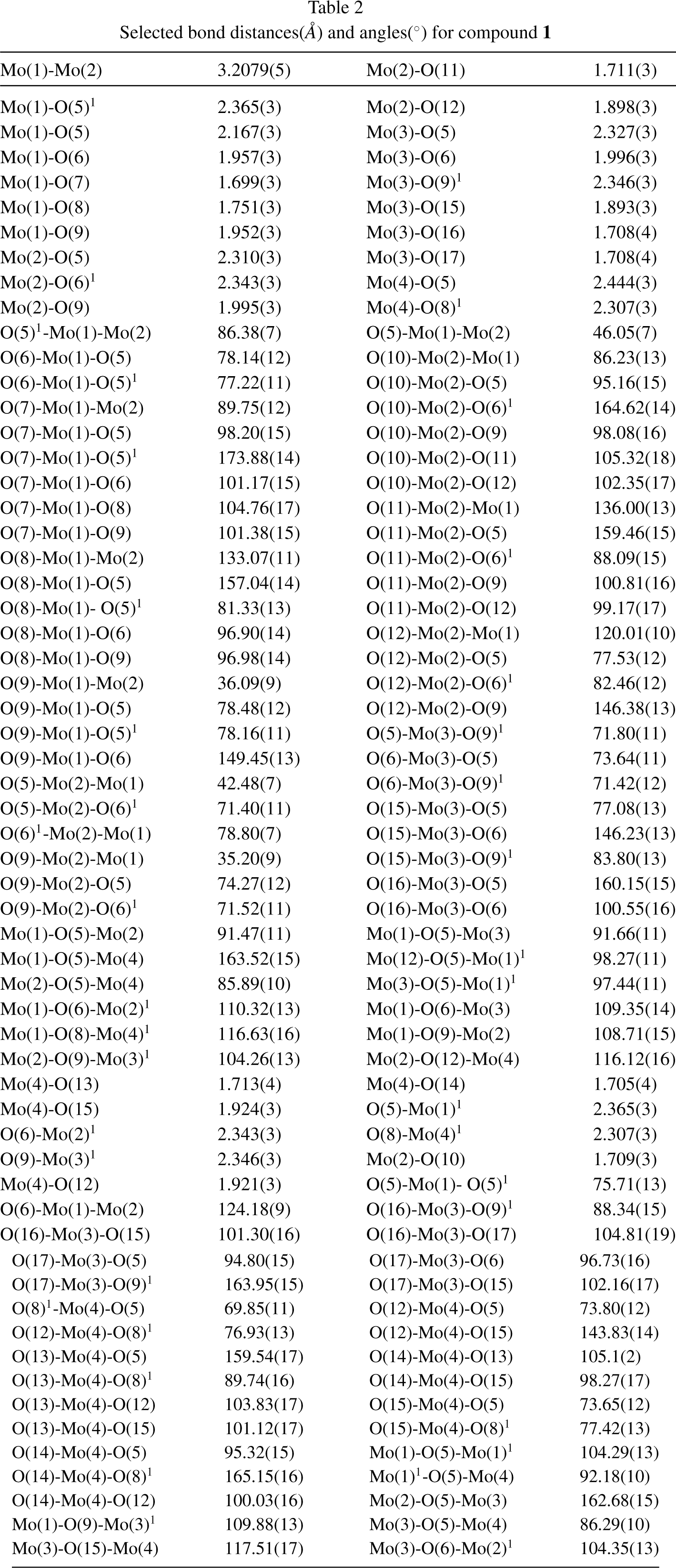
Selected bond distances(Å) and angles(°) for compound
Description of crystal structures
Crystal structure of compound {o-[C20H18N2O4][Mo8O26]0.5.H2O} (
X-ray single crystal diffraction indicates that compound 1 belongs to triclinic with space group P-1 (as shown in Fig. 1 (a)). The structural unit consists of a [β-Mo8O26]2–, ligand L2 and a water molecule. The [Mo4O13]2– unit is constructed as a classical [β-Mo8O26]4– cluster structure containing eight distorted {MoO6} octahedrons. O atoms can be divided into four types on the basis of the combination of O and Mo atoms: terminal oxygen, two bridge oxygen, triple bridge oxygen, and five bridge oxygen. The four Mo-O bond length ranges are: Mo-Ot (1.699–1.713 Å), Mo-Oμ
2 (1.751–2.307 Å), Mo-Oμ
3 (1.953–2.346 Å), Mo-Oμ
5 (2.167–2.445 Å). The C–H dots O hydrogen bonds lengths are in normal ranges of 2.277(44)–3.129(42) Å. bonds lengths and bonds angles may be similar to other compounds with similar anion structure (see CCDC reference numbers 1960976, 1972124, 2023356, 2023371, 2023379 and 2085866). There are C–H dots O hydrogen bonds in the molecule, and they are connected to form a one-dimensional chain structure, as shown in Fig. 1 (b, c). The cationic ligand is surrounded by polyacidic anions. The superposition diagram of different types of compound
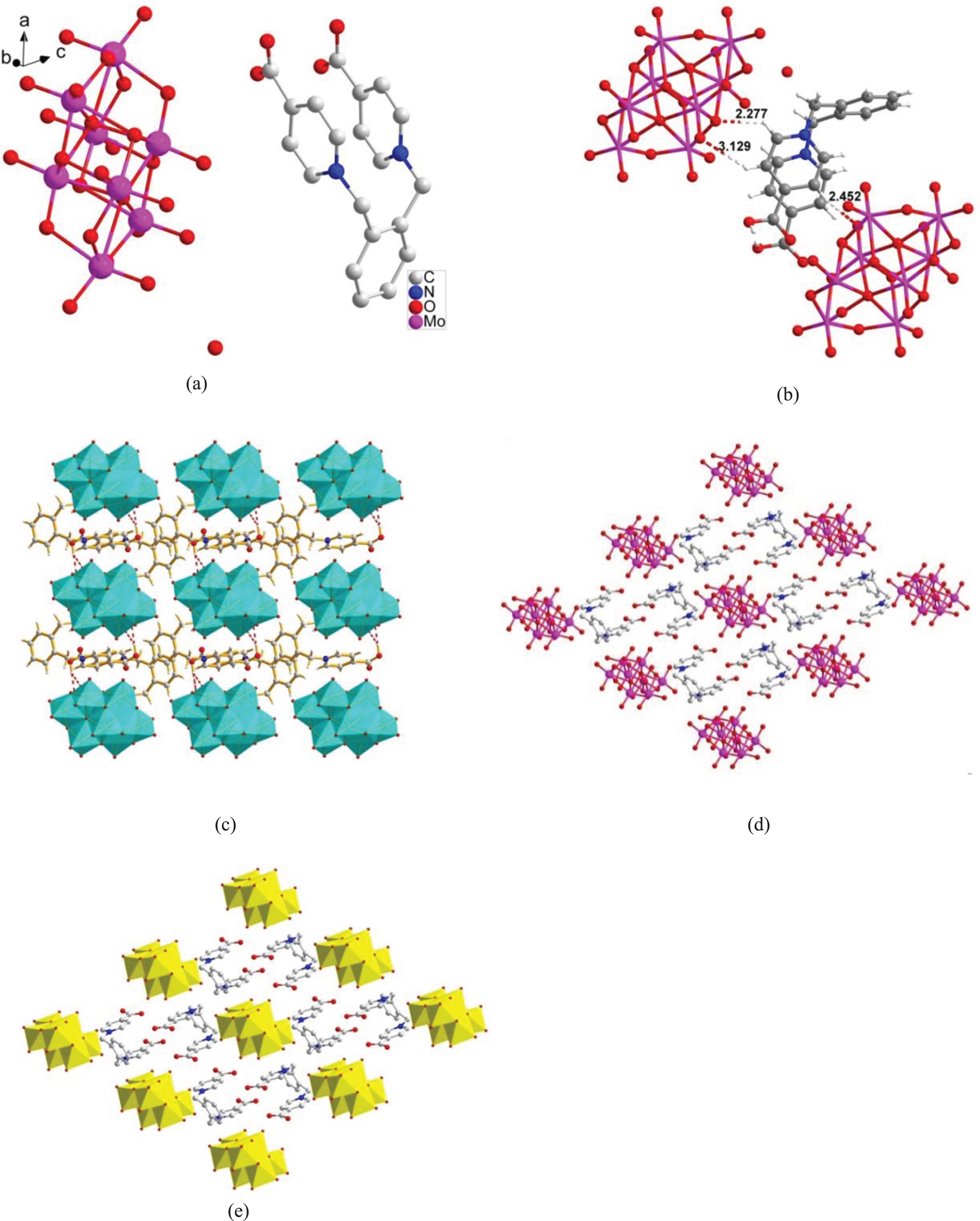
(a) The asymmetry of compound
The purity of the sample was determined by powder X-ray diffraction (XRD). For compound
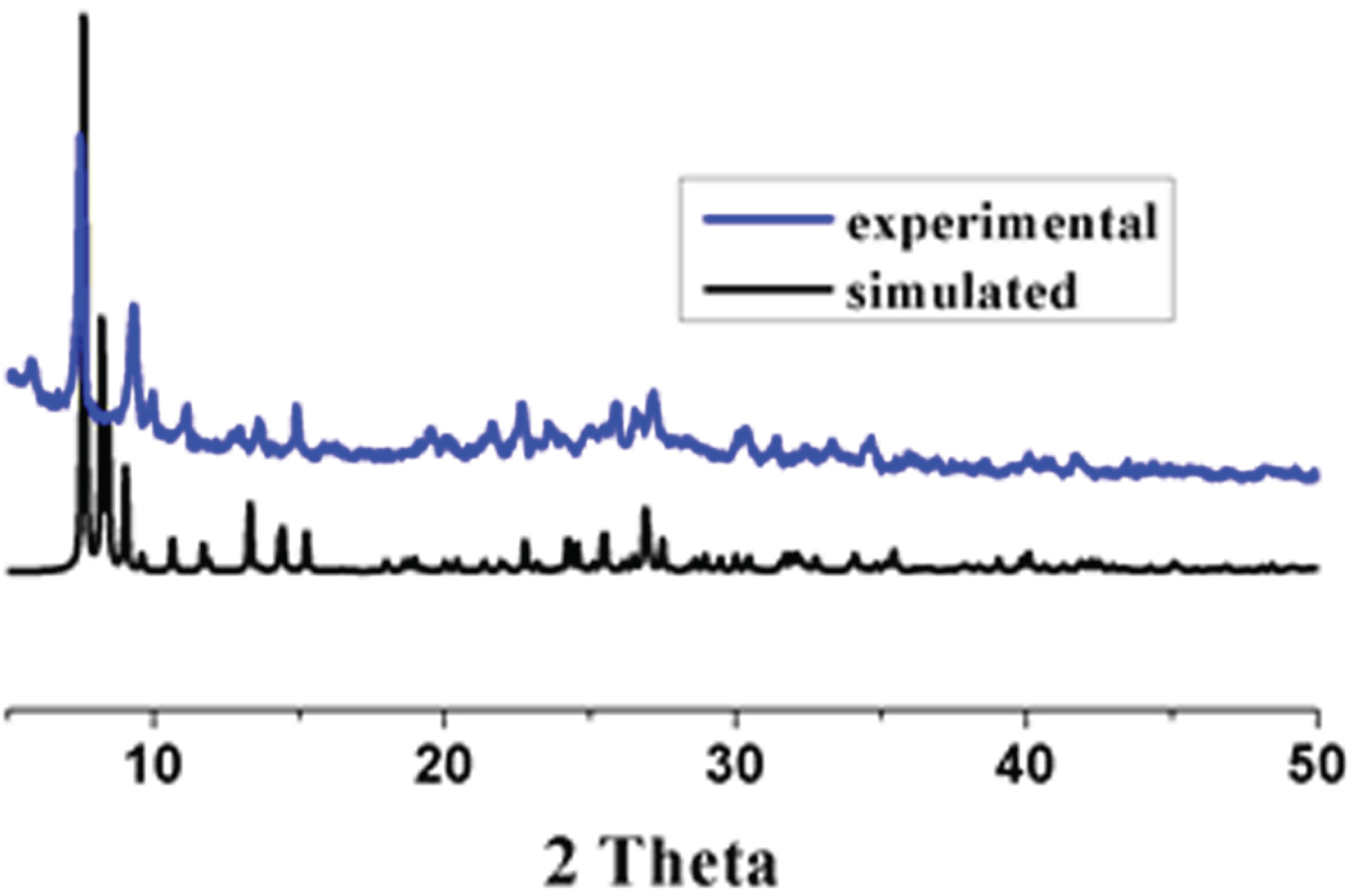
Power X-ray diffraction of compound
We tested the diffuse UV reflectance spectra of compound
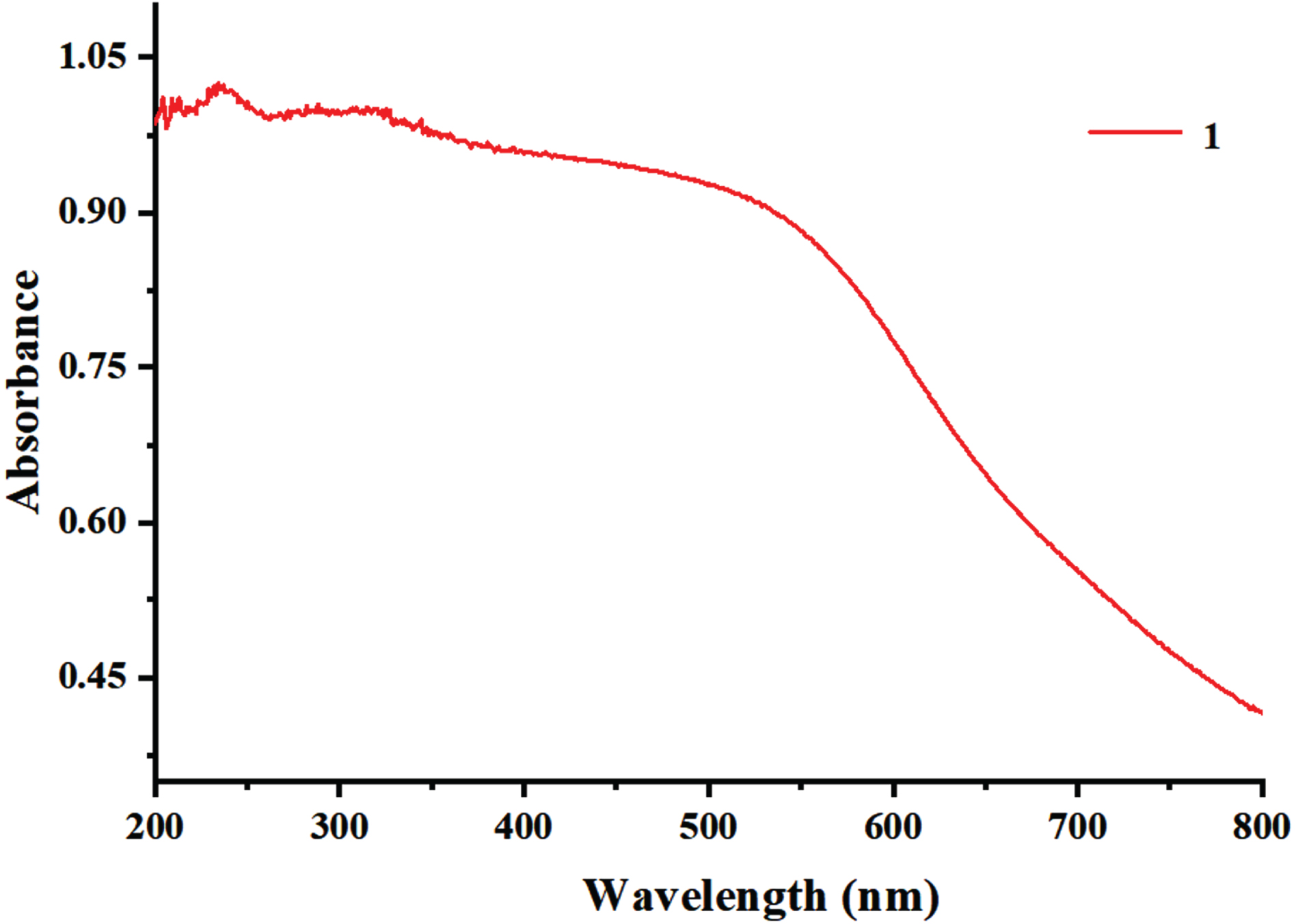
The diffuse UV reflectance spectra of compound
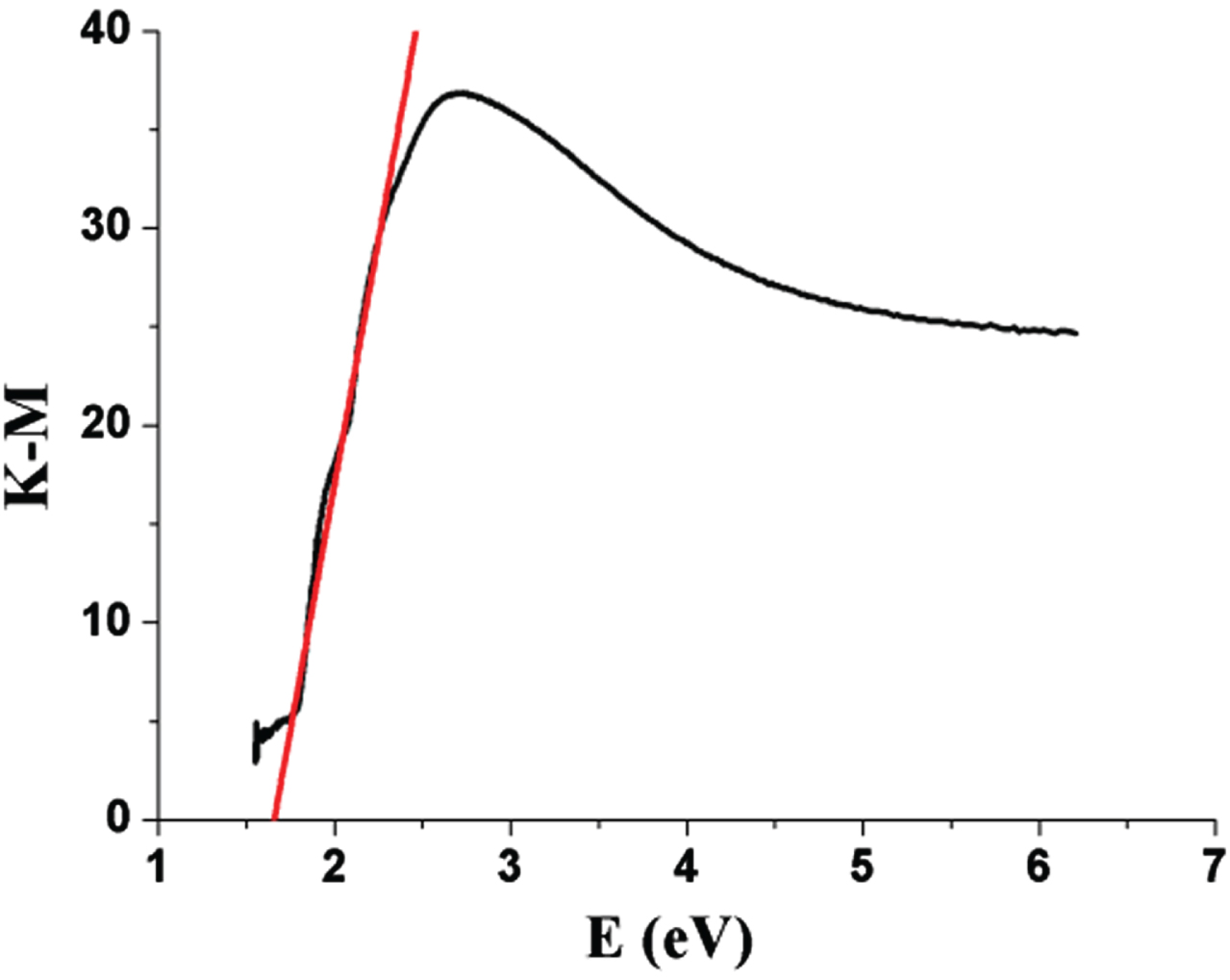
Semiconductor bandgap diagram of compound
The specific experimental method was as follows: prepare MB solution (500 ml, 4 ppm), put 50 mL solution into a 50 ml volumetric bottle, then add 50 mg of compound
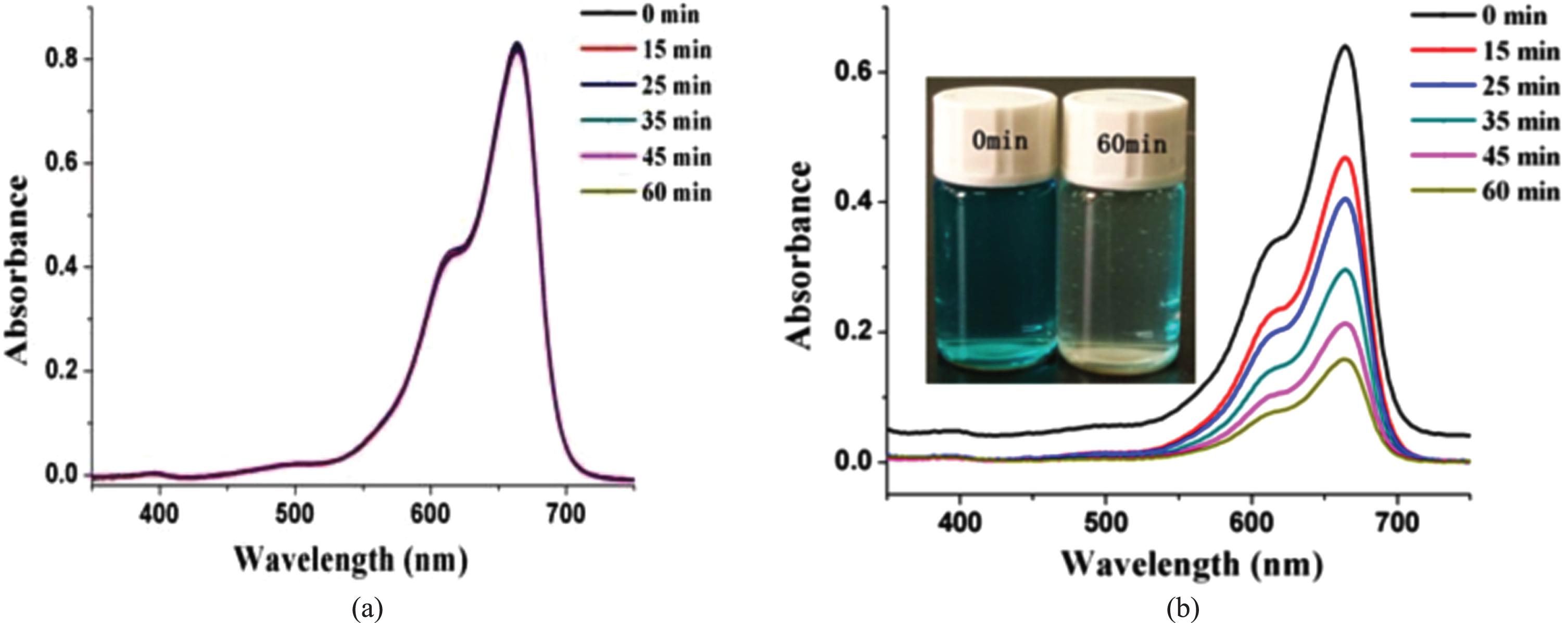
(a) Blank test, (b) after joining compounds
In the Figs. 5 and 6, compound
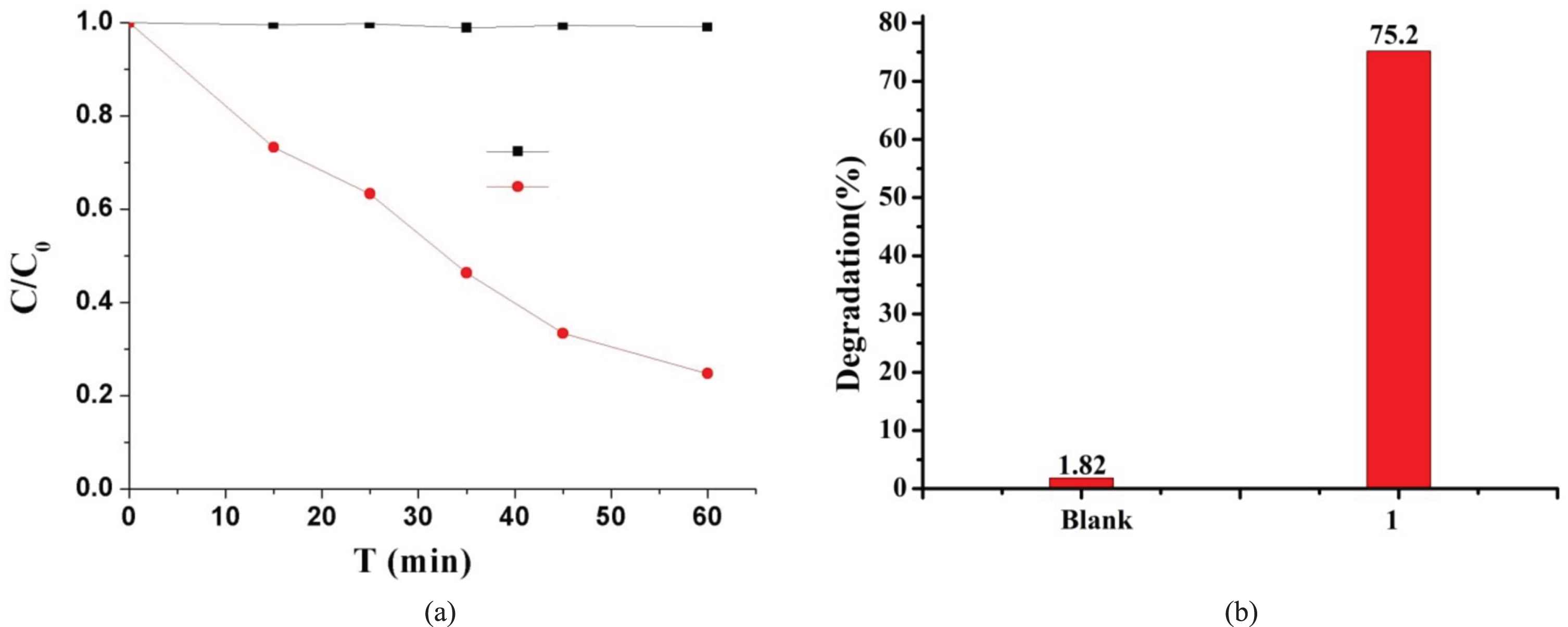
(a) The catalytic degradation of the compounds
In summary, a new kind of inorganic organic hybrid material consists of a [β-Mo8O26]2– and dicarboxylic acid chelating ligand was hydrothermally prepared, and characterized by IR and PXRD and SCXRD. Electrostatic interaction and hydrogen bonding play an important part in the formation of compound
Footnotes
Acknowledgments
This research is funded by 2023 College Student Innovation and Entrepreneurship Training program of Zhengzhou University (No. 2023CXCY271) and the Key Scientific Research Projects of Colleges and Universities of Henan Province in 2023 (No. 23B150021).