






Abstract
BACKGROUND:
Unilateral vestibular deficits are associated with postural instability and loss of quality of life. Common treatments frequently fail to achieve satisfactory outcomes.
OBJECTIVE:
To assess the durability of changes in participant-reported disability and objective posturography after computerized vestibular retraining.
METHODS:
This was a single-group study. Individuals with persistent symptoms of an objectively determined unilateral vestibular deficit completed questionnaires and posturography assessments before and after twelve sessions of computerized retraining, and 4–6 months and 10–12 months after treatment.
RESULTS:
13 participants completed the post-treatment assessments; 9 completed the follow up. Mean improvements in perceived disability at 4–6 months after retraining were: DHI 14.3 points (95% confidence interval 4.0 to 24.5), ABC scale 14.9 points (4.3 to 25.6), FES-I 11.6 points (–3.2 to 26.5).
The SOT composite score increased by 11.4 points (95% CI 1.9 to 20.9; p = 0.0175) immediately after treatment, 8.9 points (–2.9 to 20.7; p = 0.1528) at 4–6 months, and 10.6 points (2.2 to 19.0; p = 0.0162) after 10–12 months. At the 10–12 month time point, the areas of the functional stability region increased significantly for both endpoint excursion (p = 0.0086) and maximum excursion (p = 0.0025).
CONCLUSION:
Computerized vestibular retraining was associated with improved participant reported disability and objective measures of postural stability.
Introduction
Unilateral vestibular deficits can arise due to infection, inflammation, vascular disorders, or trauma. The acute effects of unilateral vestibular loss or weakness, namely nystagmus, vertigo, nausea, and disequilibrium, typically diminish or resolve within weeks to months. Some individuals recover day-to-day global balance function at or near the level prior to injury. Functional recovery comes about through an incompletely understood process of compensation, habituation, substitution and adaptation. However, 30–50% of individuals with unilateral vestibular deficits fail to achieve meaningful compensation (Curthoys & Halmagyi, 1998; Okinaka et al., 1993). Furthermore, even among those that achieve robust compensation allowing them to return to normal activities, some vestibular function, such as the vestibulo-ocular reflex response to natural head angular accelerations towards the lesioned side, may recover poorly or not at all (Curthoys & Halmagyi, 1998).
Many patients experience persistent adverse effects for months or years after initial onset. These individuals may exhibit postural unsteadiness, an increased risk of falls, and loss of visual acuity that contributes to difficulty concentrating or reading. Some patients are unable to return to work or other tasks, and many curtail activities, such as hiking, cycling, and driving at night. Visually complex environments, such as crowded areas or store aisles, typically exacerbate feelings of nausea, vertigo, or unsteadiness. Patients often self-limit dynamic motions, such as head turning or leaning, in order to accommodate their deficient vestibular sense.
Rehabilitation administered by a multidisciplinary team of physical and occupational therapists, audiologists, neurologists, and otolaryngologists, is the current gold standard for treatment of chronic vestibular symptoms (Whitney & Sparto, 2011). Vestibular rehabilitation has been robustly demonstrated to be beneficial for those with unilateral vestibular deficits (McDonnell & Hillier, 2015). A wide variety of interventions –including physiotherapy, home exercises, optokinetic stimulation, and various biofeedback devices –have been reported to be better than no treatment for reducing patient-reported disability and fall risk and improving visual acuity and postural stability (McDonnell & Hillier, 2015); however, many patients do not respond at all to treatment (Krebs et al., 2003; Yardley et al., 1998) or the treatment effect wanes over time.
Patients seen in primary care or in otolaryngology clinics that have persistent symptoms, especially those that have had previous vestibular rehabilitation, are left with few options. Worse, when they experience a plateau in their improvement, they are likely to get worse with time, rather than better, as vestibular function declines with age even for individuals with no vestibular deficit (Agrawal et al., 2019; Baloh et al., 2001). Furthermore, withdrawal from activities of daily living, exercise, and social interaction, which is common for those with deficits in postural stability, leads to poorer physical health, cognitive decline, and emotional sequelae (Yardley & Redfern, 2001).
We have previously reported that computerized vestibular retraining was associated with improved patient-reported disability, increased area of their functional stability region, and improved objective posturographic measures (David & Shahnaz, 2022b, 2022a). In the present report, we report the durability of changes associated with computerized vestibular retraining at 3–6 months and 10–12 months after completing treatment.
Materials and Methods
Experimental subjects
Candidate participants were screened based on their medical records: eligible patients were aged between 18 and 80, complained of feelings of imbalance characterized by symptoms present for greater than six months and that their symptoms negatively affected their day-to-day activities. In order to be included in the study, the symptoms of imbalance were clinically determined to be caused by a stable vestibular deficit rather than an active or irritative, vestibulopathy based on the criteria of the Barany Society International Classification of Vestibular Disorders (ICVD-1) consensus classification of vestibular symptoms (Bisdorff et al., 2009). Objective determination of unilateral peripheral vestibular deficit required at least one of:
(a) unilateral weakness during videonystagmogram (VNG), as defined by a 25% or greater difference between ears using bithermal caloric testing;∥(b) significant cervical or ocular vestibular evoked myogenic potential (VEMP) interaural asymmetry, or absent cervical or ocular VEMP responses in one ear with intact responses in the other ear (Shahnaz & David, 2021).
We excluded individuals that exhibited fluctuating symptoms of an active vestibulopathic etiology within the last six months, such as active Menière’s Disease (characterized by fluctuating hearing loss, tinnitus and vertiginous exacerbations lasting at least twenty minutes according to AAO-HNS criteria (Lopez-Escamez et al., 2015)); autoimmune inner ear disease, patients with concurrent diagnosis of BPPV, or presbyvestibulopathy as defined by the Barany Society criteria (Bisdorff et al., 2009). Any patient with clinical and audiometric evidence of a perilymphatic fistula, or otosyphilis was excluded. We also excluded those with a deficit that precluded providing informed consent or completing the rehabilitation exercises, such as orthopedic or neurological deficits. Those meeting the eligibility criteria were contacted by telephone and invited to enrol in the study.
Ethical considerations
The Clinical Research Ethics Board at the University of British Columbia approved this study (H20-04045, approval date April 22, 2021). Assessments and interventions took place between April 26, 2021 and May 16, 2022. This study was performed in accordance with the Declaration of Helsinki and participants provided written informed consent.
Intervention and assessments
Consenting participants were invited to the clinic for their baseline assessment where they completed three questionnaires: the Dizziness Handicap Inventory (DHI) (Jacobson & Newman, 1990), the Activities-specific Balance Confidence Scale (ABC scale) (Powell & Myers, 1995), and the Falls Efficacy Scale-International (FES-I) (Yardley et al., 2005). Using a computerized dynamic posturography instrument, they also completed a Sensory Organization Test (SOT) and a Limits of Stability (LOS) test.
Participants completed twelve bi-weekly sessions of CDP-guided vestibular retraining exercises in the clinic. These exercises were designed in accordance with the accepted principles of vestibular rehabilitation in order to promote compensation, adaptation, habituation, and substitution (McDonnell & Hillier, 2015; Whitney & Sparto, 2011). Participants were challenged to shift their weight fore and aft and right to left as directed by an interactive display or to maintain their balance while the support surface moved. The display also provided a visual representation of the center of gravity as a biofeedback aid for their postural control. The exercises grew progressively more difficult over the course of the treatment protocol. The exercise programs were pre-determined and each participant received the same protocol, except to account for the laterality of their deficit.
Upon completion of all twelve sessions of retraining exercises, the participants again completed the DHI, ABC scale, and FES-I, and performed the SOT and LOS tests.
Analysis
Participants were stratified to those with moderate-to-severe disability, according to DHI (scores > 30) and those with mild disability (DHI≤30) (Whitney et al., 2004) as well as those with or without previous vestibular rehabilitation.
LOS and SOT scores were calculated by the instrument software. Functional Stability Regions for Endpoint and Maximum excursion (the sum of areas between adjacent excursion limits) were calculated using published methods (Alvarez-Otero & Perez-Fernandez, 2017). Hypothesis testing for differences between repeated measures was performed by mixed-effects analysis with Bonferroni’s multiple comparison test. This study followed the STROBE guidelines. Analysis was performed between July 7, 2021 and August 9, 2022 using Prism 9.4.1 (GraphPad Software, San Diego, CA, USA).
Results
We enrolled 13 participants in this study. All 13 completed the pre-retraining assessment, all retraining sessions and the post-retraining assessment. Nine participants completed follow up assessments at 4–6 months and 10–12 months. Demographic information and vestibular diagnoses are reported in Table 1.
Participant demographics and vestibular test results
Participant demographics and vestibular test results
VNG: videonystagmography, vHIT: video head impulse test, oVEMP: ocular vestibular evoked myogenic potential, cVEMP: cervical vestibular evoked myogenic potential.
Perceived disability was measured using three questionnaires, the DHI, the ABC scale, and the FES-I. Mean scores for each questionnaire improved immediately after treatment. The maximum improvement for all three questionnaires was recorded at the 4–6 month time point, when the DHI mean improvement was 14.3 points (95% confidence interval 4.0 to 24.5; p = 0.0206) and the ABC scale improved by a mean of 14.9 points (4.3 to 25.6; p = 0.0197). We recorded a change in FES-I score of 11.6 points (–3.2 to 26.5; p = 0.1815), which was not statistically significant (Fig. 1A).
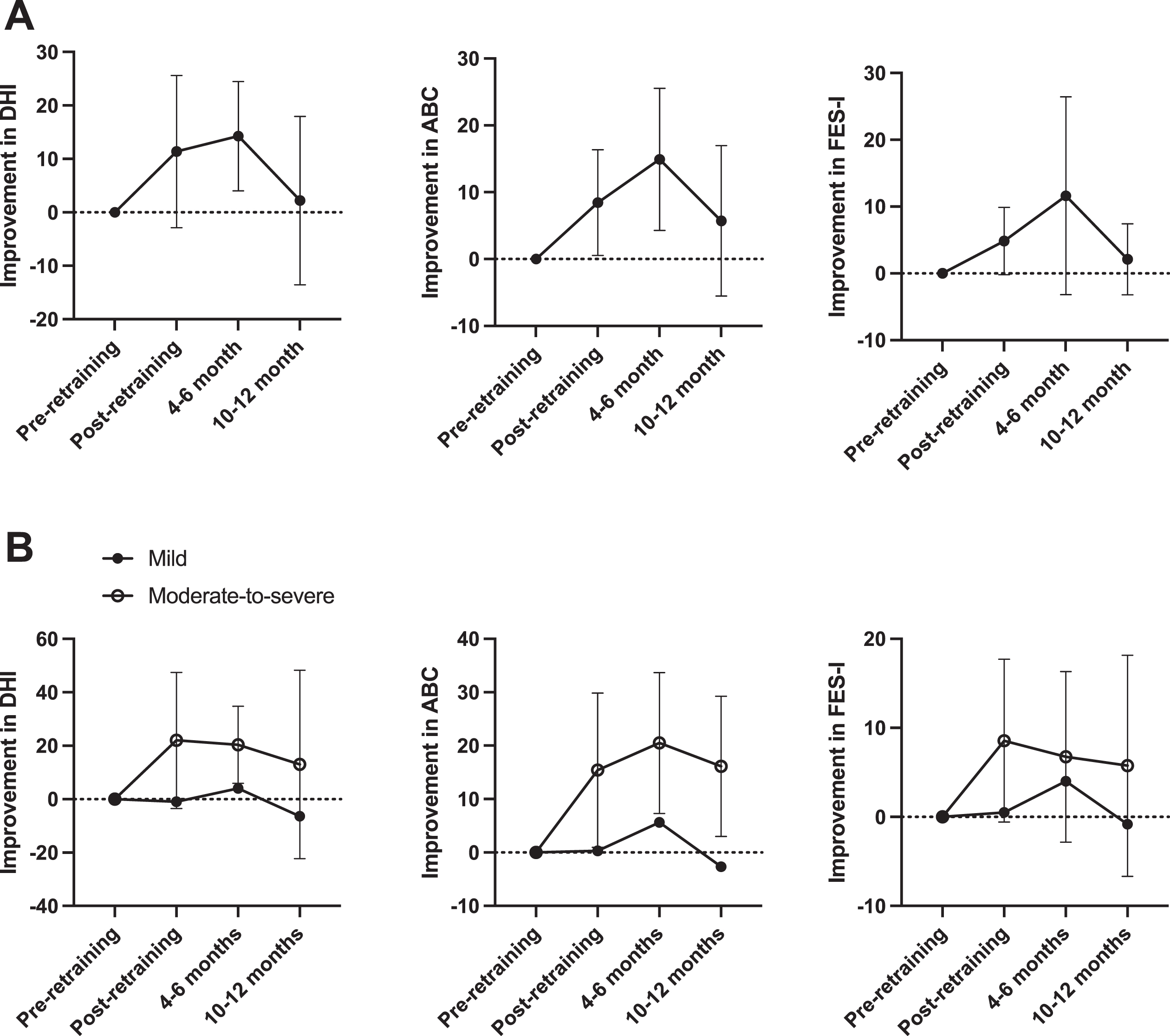
Improvement in participant-reported measures after retraining and up to one year post retraining for all participants (A) and stratified for participants with mild disability at baseline (DHI≤30; closed circles) and moderate-to-severe disability at baseline (DHI > 30; open circles) (B). Error bars indicate 95% CI. In panel B, error bars only shown for moderate-to-severe group.
In our previous report looking at short term outcomes in this cohort, participants with mild disability, as defined by an initial DHI score≤30, did not respond to retraining, while those with scores > 30 showed significant improvement. We stratified the longer term data in the same manner (Fig. 1B). We observed no change in score for the mild group while mean improvements in score were larger in the moderate-to-severe group. There was a significant difference in the change in ABC scale score between the mild and moderate-to-severe subgroups (p = 0.0058) while changes in DHI and FES-I scores between groups were not significant (p = 0.0602 and p = 0.0775).
Prior to treatment, the mean SOT composite score was 67.83 (SD 12.72). After retraining, the mean increase in SOT composite score was 11.4 points (95% CI 1.9 to 20.9; p = 0.0175). The mean improvement compared to baseline was 8.9 points (–2.9 to 20.7; p = 0.1528) at 4–6 months after treatment and 10.6 points (2.2 to 19.0; p = 0.0162) at 10–12 months after treatment (Fig. 2A). Concordant with our observation of the difference in response on the participant reported measures, the degree of improvement in the SOT composite score was significantly greater for participants with moderate-to-severe disability at baseline than for those with mild disability (p = 0.0240) (Fig. 2B).
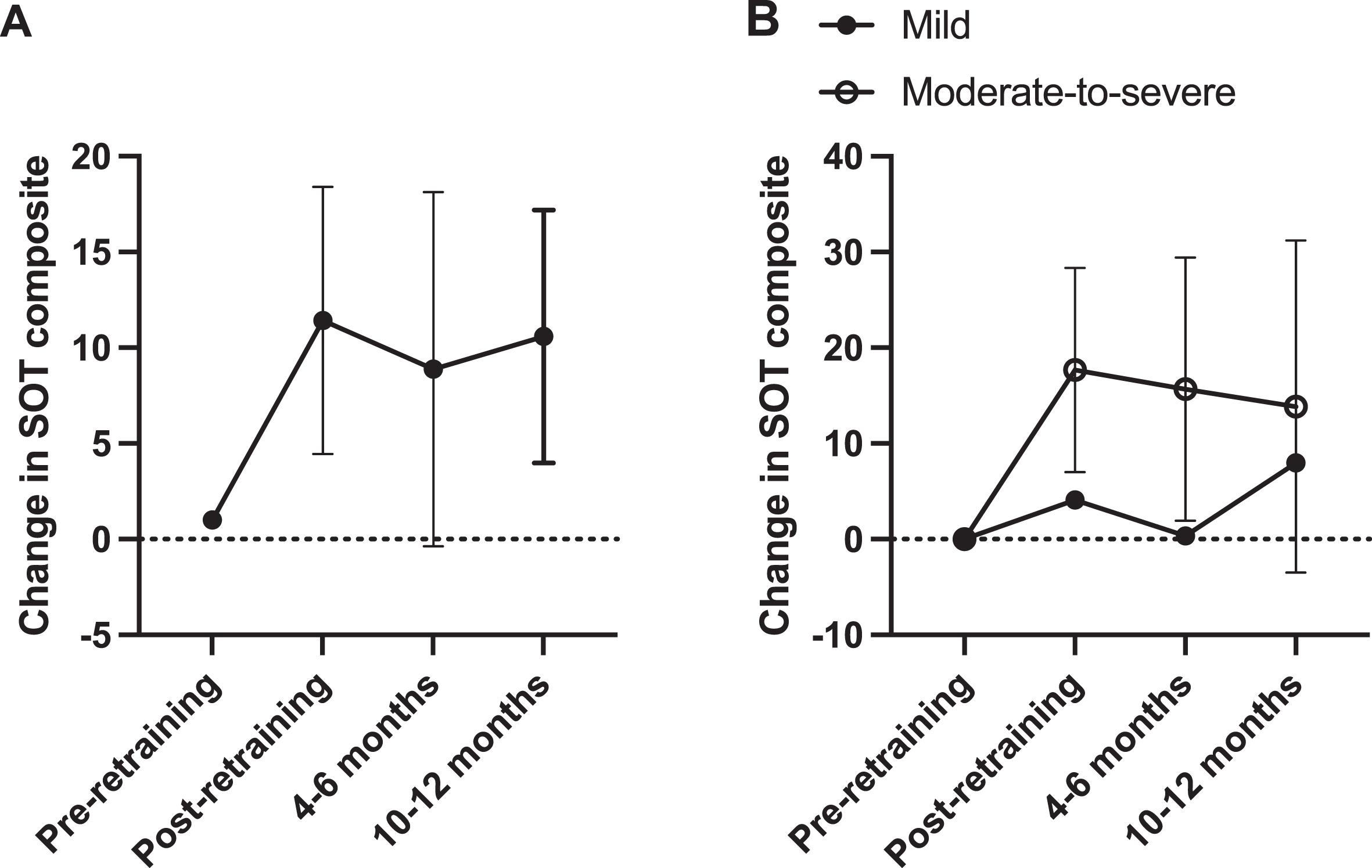
Mean change in SOT composite score from pre-treatment baseline for (A) all participants and (B) for participants with mild disability at baseline (DHI≤30; closed circles) and moderate-to-severe disability at baseline (DHI > 30; open circles). Error bars indicate 95% CI. In panel B, error bars only shown for moderate-to-severe group.
FSR measures the area described by the angle a participant can safely lean in eight anteroposterior and lateral directions. The mean endpoint excursion FSR was 4300 (95% CI 1492 to 7109) prior to retraining and the mean maximum endpoint FSR was 7662 (2940 to 12383) prior to retraining. At the 10–12 month time point, the areas of the functional stability region increased by 12097 (3469 to 20725; p = 0.0086) for endpoint excursion and 16990 (7142 to 26838; p = 0.0025) for maximum excursion. There was no difference for either endpoint or maximum excursion FSR when comparing measurements immediately after retraining and 4–6 months or 10–12 months after retraining (Fig. 3). This improvement was evident in both the anteroposterior and lateral directions (Fig. 4).
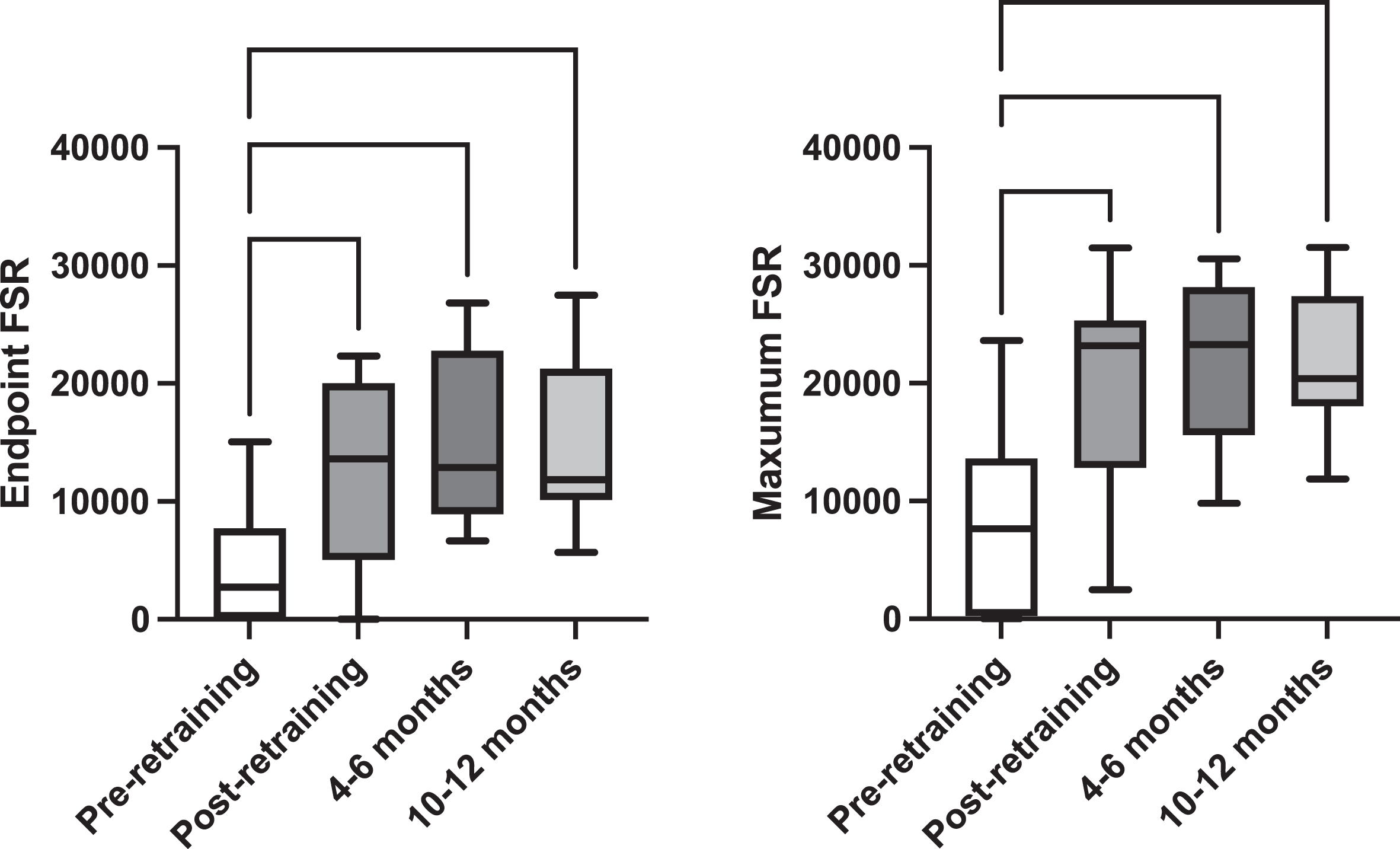
Functional stability region area for endpoint excursion (left panel) and maximum excursion (right panel) prior to retraining and at three times points after retraining. *indicates p value < 0.05.
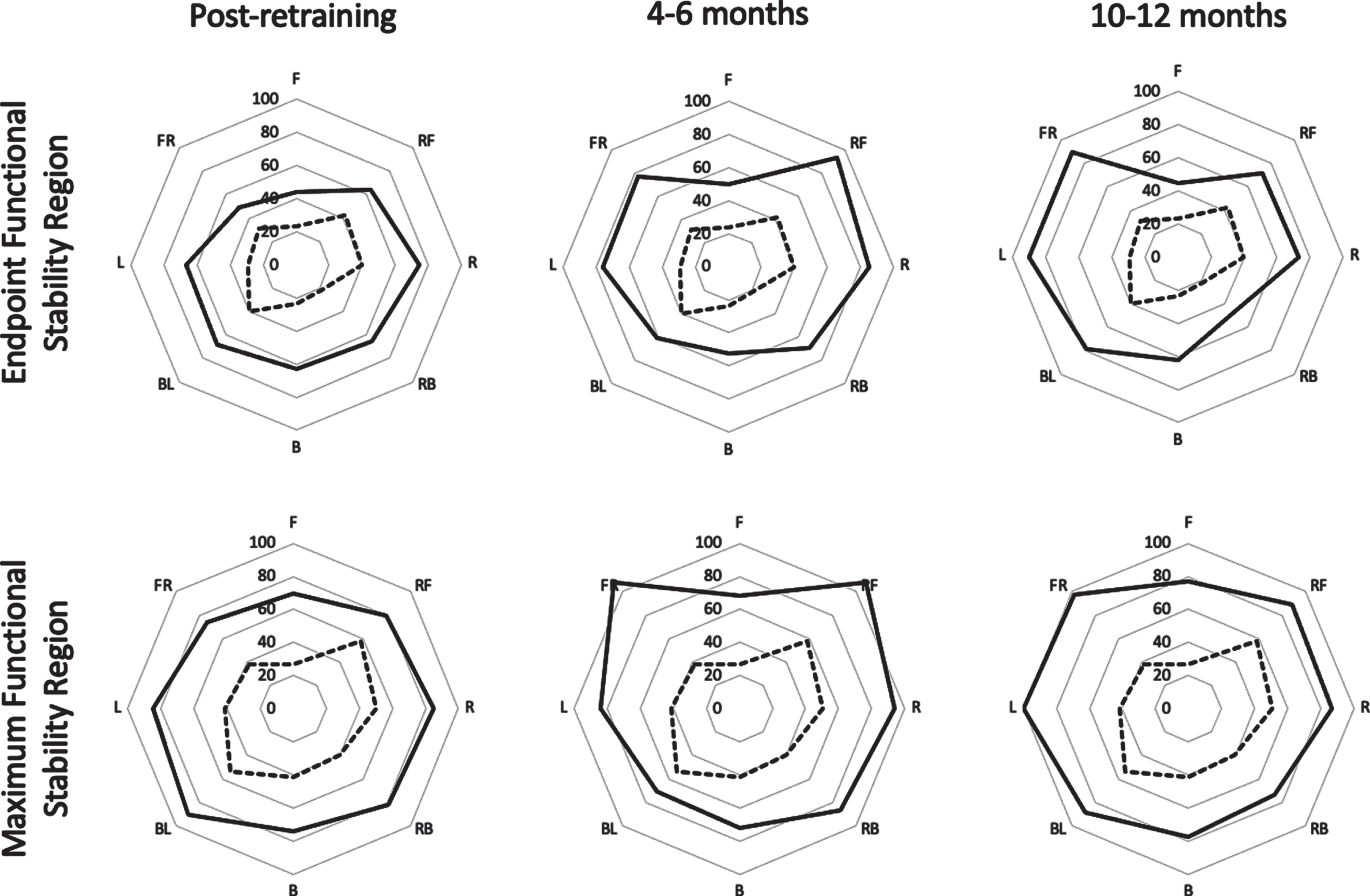
Mean endpoint excursion (top row) and mean maximum excursion (bottom row) for each of eight directions of the LOS test before retraining (dotted line) and at three time points after retraining (solid lines).
Here we report in a single-group pilot study that computerized vestibular retraining is associated with durable improvement in subjective and objective posturographic measures in patients with objectively verified persistent unilateral vestibular deficits. Enrolment in the present study required that participants have stable symptoms attributed to an objectively confirmed unilateral vestibular weakness for at least 6 months. This period of stable disability was included to avoid confounding by spontaneous improvement in the early weeks after injury. Early compensation from acute vestibulopathy is different from rehabilitation and retraining of chronic persistent deficits with respect to the nature of functional recovery, the magnitude of improvement, and the rapidity of changes (Curthoys & Halmagyi, 1998). In the acute phase after vestibular loss, significant improvement has been reported for several treatment modalities (Barozzi et al., 2006; Kammerlind et al., 2005; Vereeck et al., 2008) or even without treatment (Cohen et al., 2002; Strupp et al., 1998; Teggi et al., 2008). After such acute compensation, whether it is spontaneous or facilitated with treatment, persistent residual deficits are often difficult to treat and carry a high burden of morbidity for patients.
Vestibular rehabilitation has been demonstrated to be beneficial compared to no treatment for dizzy patients with a variety of diagnoses and underlying causes at any stage after onset (McDonnell & Hillier, 2015); however, few studies have investigated the durability of improvement. Studies of durability have enrolled patients with central and age-related vestibulopathy (Hansson et al., 2004), acute unilateral peripheral deficit (Kammerlind et al., 2005), following accoustic neuroma resection (Vereeck et al., 2008), or mixed populations. None, to our knowledge, have investigated treatment durability specifically in patients with stable unilateral vestibular deficits.
Two studies evaluated interventions on mixed groups of patients that included some with chronic unilateral vestibular deficits. Krebs et al. investigated gait speed and postural stability after vestibular rehabilitation exercises for a mixed group with unilateral and bilateral vestibular hypofunction. They reported sustained improvements at one year, with 61% of participants showing improvement in gate velocity and 78% reported feeling a subjective benefit of treatment (Krebs et al., 2003). Those with a unilateral deficit fared better than those with bilateral hypofunction.
Meli et al. reported improvements in DHI and ABC scale in a mixed cohort in which 58% of participants had unilateral vestibular hypofunction at a mean follow up interval of 8.7 months. The study also assessed the postural stability of subjects using the SOT and reported an improvement of 10 points in the composite score (Meli et al., 2009). While they did not report a separate analysis, the authors stated that participants with bilateral hypofunction had a greater magnitude of improvement than those with unilateral hypofunction.
We observed a similar magnitude of improvement in our cohort for objective and subjective measures, compared to what was reported in the Meli et al. study. The median initial DHI score in our group was the same as the mean in the Meli study; however, the Meli group had fewer subjects with mild disability (35%) than our cohort (46%). We have found that those with mild disability by DHI tend not demonstrate measurable improvement in subjective or objective measures after computerized retraining (David & Shahnaz, 2022b). This suggests that, given similar cohorts, the computerized vestibular retraining protocol in the current study would compare well to that use by Meli et al.
In the current study, 9 of 13 participants had previously undergone similar vestibular physiotherapy interventions to those from the studies above by Meli et al. and Krebs et al. Despite previous treatment, all participants had symptoms that affected their day-to-day activities. While more study is needed, computerized vestibular retraining may provide second-line option or adjunct treatment for those that did not achieve adequate response to physiotherapy.
Association with baseline severity of disability
We have consistently observed that participants with more severe disability, as measured by an initial DHI score of > 30, demonstrate a larger magnitude of improvement after computerized retraining than those with mild baseline disability (DHI≤30). In this paper, we report significant differences in response for the SOT composite score, DHI, and ABC scale between those with mild DHI at baseline and those with moderate-to-severe disability. It is unknown whether this difference is due to ceiling effects in our measurements that fail to detect changes in those with mild disability, or whether these participants did not respond to the intervention.
In their paper, Krebs et al. recognized a need for better patient screening to target treatment to those most likely to benefit, but did not make conclusion from their data how to select patients likely to respond to treatment. While our results are preliminary and based on a small number of patients, our data suggest that computerized vestibular retraining achieves best results with those with moderate-to-severe disability (DHI > 30) and is suitable for those that have persistent symptoms after vestibular physiotherapy. In the current protocol, all subjects received the same series of exercises during their rehabilitation sessions. It may be that the difficulty of these exercises was matched well for those with moderate-to-severe disability but did not challenge participants with mild disability sufficiently to provoke compensation. It would be of interest to study whether an optimal level of difficulty could be determined according to a participant’s level of disability when starting treatment and whether this would results in greater improvement for more patients.
Durability of treatment
We observed that improvements in both participant reported measures as well as objective posturographic measures were sustained for months. At the latest time point, 10–12 months after completing treatment, we observed regression towards baseline values for the participant-reported measures. This might be partly explained by the fact that there was a slight majority of participants with moderate-to-severe disability immediately after retraining (7 of 13) and at 4–6 months (5 of 9), whereas at the last time point, there was a minority of participants meeting that threshold (4 of 9). As discussed above, those with mild disability respond less than those with moderate-to-severe disability, so this shift would be expected to result in a diminished mean improvement.
Despite this, the means for all three participant-reported measures and both objective posturography measures reflected improvement for all time points. This preliminary finding supports the need for additional study with a larger cohort and with the inclusion of a control group to better understand the objective and subjective effects of computerized vestibular retraining for patients with unilateral vestibular deficits.
Conclusion
This pilot study found that computerized vestibular retraining was associated with improved participant reported disability and objective measures of postural stability. Those with moderate-to-severe disability, as measured by DHI, represent the best candidates for this treatment. Improvement appears to be durable for many months after treatment.
Limitations
This was a pilot study on computerized vestibular rehabilitation with no control group. Only 13 participants were enrolled and 9 completed assessments at the last two follow ups; this increased the confidence intervals and is a potential source of bias for the later time points. Participants with mild disability at baseline showed no improvement; future studies should focus on those with moderate-to-severe disability.
Conflict of interest
The authors declare that there is no conflict of interest.
Footnotes
Acknowledgments
The authors acknowledge Chris Cochrane, PhD, for contributions to study design, data analysis, and manuscript preparation; and Alex Gouvea, M.Aud, for technical help with participant assessments.
Funding
The authors report no funding.