







Abstract
BACKGROUND:
Conducting mild traumatic brain injury (mTBI) longitudinal studies across multiple sites is a challenging endeavor which has been made more challenging because of COVID-19.
OBJECTIVE:
This article briefly describes several concerns that need to be addressed during the conduct of research to account for COVID-19’s impact.
METHODS:
The recent actions and steps taken by the Long-term Impact of Military-relevant Brain Injury Consortium (LIMBIC)-Chronic Effects of Neurotrauma Consortium (CENC) researchers are reviewed.
RESULTS:
COVID-19’s effects on the conduct of LIMBIC-CENC for the short-term and long-term were considered to ensure the study continued safely for participants and researchers. COVID-19 may have long-lasting health and especially neurological effects which may confound the quantitative and qualitative measures of this any comparable longitudinal studies.
CONCLUSION:
The recognition, understanding, and preparation of COVID-19’s impact on a longitudinal military and veteran mTBI population is crucial to successfully conducting LIMBIC-CENC and similar neurological research studies. Developing a plan based on the best available information while remaining agile as new information about COVID-19 emerge, is essential. Research presented in this special issue underscores the complexity of studying long-term effects of mTBI, in a population exposed to and symptomatic from COVID-19.
Keywords
Background
The Long-term Impact of Military-relevant Brain Injury Consortium (LIMBIC 2019–2025) was the follow-up program of investigation awarded to the initial Chronic Effects of Neurotrauma Consortium (CENC 2013–2019) research team (Walker et al., 2016). The overall goals of these ongoing efforts are to conduct a longitudinal, big data, and ancillary research studies on combat-related mild traumatic brain injury (mTBI) with the aims of identifying risk factors for sequelae resulting from the mTBIs, co-existing conditions, co-morbid issues, and combat exposures, and to identify risk factors associated with the eventual development of neurogenerative illnesses. The research programming of CENC and LIMBIC-CENC are dual VA and DoD funded projects.
The initial phases of the pandemic
Fortuitously, the core leadership, comprised of leaders at the coordinating center, prospective longitudinal study, data and biostatistics core, biomarkers core, neuroimaging core, retrospective database study, phenotypes study, health economics study, knowledge translation center, and external collaboration program, and the site-specific researchers from LIMBIC-CENC, remained intact when the brunt of the pandemic took effect. The first step the consortium took was to recognize that 1) there was a problem and 2) proactive measures were needed to address it. Out of this realization, the immediate second step was to ensure that participants and research staff remained safe during the conduct of the study: pandemic appropriate universal precautions were implemented that included rigorous hygiene, masking, PPE use, social distancing, and other COVID-19-specific anti-contagion guidance. As the guidance became more informed with real-time data, LIMBIC-CENC modified its practices including 1) altering education and recruitment efforts, 2) adjusting site visits, 3) monitoring enrollment, 4) stressing adherence to non-essential hospital functions practices, 5) establishing remote working functions, 6) dealing with supply chain issues, maintenance contracts, and quality control of equipment (e.g., MRIs), 7) switching from in-person meetings to remote conferencing technology, 8) addressing pandemic and burnout reductions in the health care and research workforce, 9) identifying and managing mental stress related to isolation, co-existing mental health issues and anxiety, and 10) employing health vaccinations and disease modifying medications. As part of the prospective longitudinal study team’s plan to limit participant burden, the LIMBIC-CENC had already programmed follow-up visits as telehealth appointments; therefore, it was poised to seamlessly collect those interactions during the pandemic.
Impact on research
With safety paramount and being monitored, the next concern was how COVID-19 would impact research into the chronic-effect of mTBI(s). Discussions among senior LIMBIC-CENC leadership began early in 2020 regarding how COVID-19 would add complexity to the participant’s collected data. LIMBIC-CENC began questioning the virus’ consequences on fluid biomarkers, MRIs, and questionnaires. Initially, COVID-19’s role in the full gamut of neurological and psychological effects on the central and peripheral nervous systems, was speculative. As the years of the pandemic progressed, the clinical and research community began to appreciate the role COVID-19 on the acute, intermediate, and chronic neuropathic effects, after disease. Early in the disease, dysgeusia/ageusia and dysnosmia/asnosmia symptoms may portend not only viral involvement, but also a neuro-mechanism to infection. In addition to more systemic symptoms such as fever, chills, sore throat, cough, shortness of breath, many infected individuals manifest headaches that may represent peripheral nerve and/or possibly CNS encephalopathic, meninigiopathic, or cerebrovascular involvement. In those more extensively affected by the virus, stroke and seizures may occur (Beghi et al., 2022; Harapan & Yoo, 2021; Hingorani et al., 2022). The LIMBIC-CENC research program identified that the potential COVID impacts on brain function would affect the conditions that they were studying (i.e., recovery from mTBI, effects of combat exposure, impacts of secondary mental health issues) and have independent effects on the brain. Thus, the inclusion of short- and long-term impacts of COVID-19 exposures and infections needed to be incorporated into the enduring LIMBIC-CENC research mission.
The medical community appreciates and is increasing its understanding of the long-term effects of COVID-19. The post-acute sequelae of SARS-CoV-2 infection (PASC), also known as Long-COVID, constitutes approximately one-third of those infected with the virus who develop symptoms persisting beyond 6-weeks after the initial date of infection. Neurological symptoms associated with PASC, termed Neuro-PASC (NP), include headache, “brain fog”, myalgias, cognitive dysfunction, pain syndromes, fatigue, and autonomic dysfunction. Some of these symptoms overlap with the symptoms of the LIMBIC-CENC post-mTBI population (Orban et al., 2023). Another potential issue that arises involves not only the study group and the overlap of symptoms (PASC and mTBI), but also the impact of COVID-19 on those exposed to repetitive head impacts/injuries or with diagnosed mTBI(s). One will also have to account for those participants in the control arm of longitudinal studies who have documented COVID-19 infection, to ensure symptoms endorsed or objective data collected are attributed to respective disease processes. Careful consideration of the symptoms, symptom onset, and other biometric data will help to determine the influence that the virus has on the study participants. It is possible that the “signal” being researched is lost in the “noise” of symptoms, in the absence of this awareness. Complicating this issue further is how infection is documented, how clinicians and researchers will mine retrospective data, and the level of accuracy they will adopt for clinical care and research studies. For example, will a SARS-CoV-2 PCR, home antigen, patient report, or ICD-10 diagnosis be the level of proof to enter one into a COVID-19 study or used in an administrative inquiry. As the pandemic progressed, home testing rather than PCR testing became commonplace. Long-COVID researchers have begun to recognize this issue, especially in those who have post-viral symptoms consistent with PASC, but without the documentation of a positive COVID-19 test (Orban et al., 2023). The LIMBIC-CENC team benefited from its nationwide, integrated research team. This team employed standardized assessment batteries to the more than 3,000 participants in the Prospective Longitudinal Study (PLS) prior to the COVID-19 pandemic from which to build a practical and scientifically meaningful study of the impact of COVID-19. The established relationship among LIMBIC-CENC and its government sponsors allowed and fostered this innovative research study.
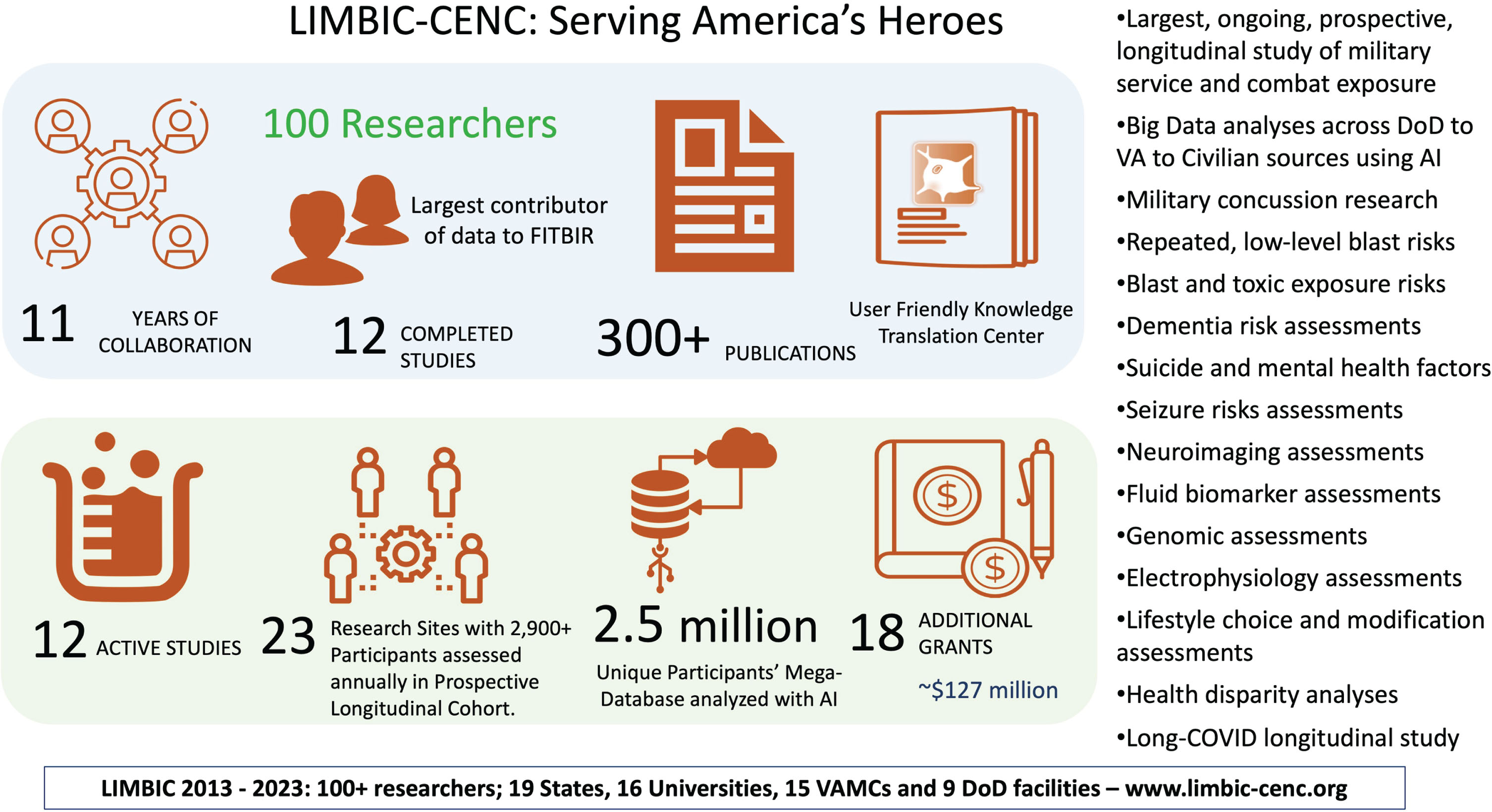
LIMBIC-CENC: Serving America’s heroes.
One of the most impactful aspects of LIMBIC-CENC is its Government Steering Committee (GSC), a group of appointed federal government research experts who provide oversight of the consortium’s processes and its milestone attainment (the funding for LIMBIC-CENC is a research contract and not an award). While the majority of large VA and DoD medical research award are required to participate in interim progress reviews (IPRs), only a select few have assigned GSCs. The GSC facilitates problem-solving of challenges which may pose barriers to the successful completion of the consortium’s aims and goals. LIMBIC-CENC has numerous, regular interactions with representatives of the GSC that includes biannual formal meetings, quarterly progress reports, and frequent government senior leader inquiries. As the pandemic developed and as early as the spring of 2020, VA representatives approached the consortium. They encouraged LIMBIC-CENC to propose research questions and submit proposals to investigate COVID-19’s effects on our cohort. Successfully competing and being awarded additional resources allowed LIMBIC-CENC to activate the hypotheses which it had been considering and had not been provided via its pre-pandemic research award. In 2022, the LIMBIC-CENC team was awarded a 5-year grant, the Long COVID Assessment Module (LCAM), to collect additional participant elements to better understand the impact of COVID vaccine, exposure and infection on the Prospective Longitudinal Study (PLS) cohort including COVID vaccination, hospitalization for COVID, and symptom inventories (Phen-X) related to COVID infection. By comparing the comprehensive, pre-pandemic assessments (i.e., physical examinations, symptom questionnaires, electrophysiologic testing, neuroimaging, saliva and serum biomarker testing) with the repeated comprehensive testing that is occurring post-COVID exposures and infections, the LIMBIC-CENC team has identified a growing cohort of individuals with and without COVID vaccinations, exposures, hospitalizations and PASC that it is investigating with advanced measures and anticipates analyzing results by 2027. In addition, the LIMBIC-CENC biomarker core expanded its standard fluid biomarker analyses to include antibodies related to vaccination, exposure and infection and inflammatory indicators.
Results
The LIMBIC-CENC research team has been able to meet or exceed each of its required milestones despite the pandemic. As expected, the participants recruited during the CENC phase (2013–2019) were younger and more proximate to their TBI but otherwise appear comparable with the LIMBIC phase (2020–2025), see Fig. 2. To date, the Prospective Longitudinal Study has enrolled more than 3,000 participants and comprehensively assessed >3,000, with more than 40 new participants enrolled and tested monthly and another 40 existing participants re-evaluated for their annual testing, monthly. LIMBIC-CENC researchers have performed >1,400 comprehensive follow-ups (performed every 5 years) and >6,700 brief follow-ups (performed annually), with a 90% overall study retention rate and 72% completion rate for all follow-ups. Of note, the overall rate of clinical COVID infection in the cohort, through 2024, is 11% with a significantly higher rate of antibody positive COVID exposure anticipated.
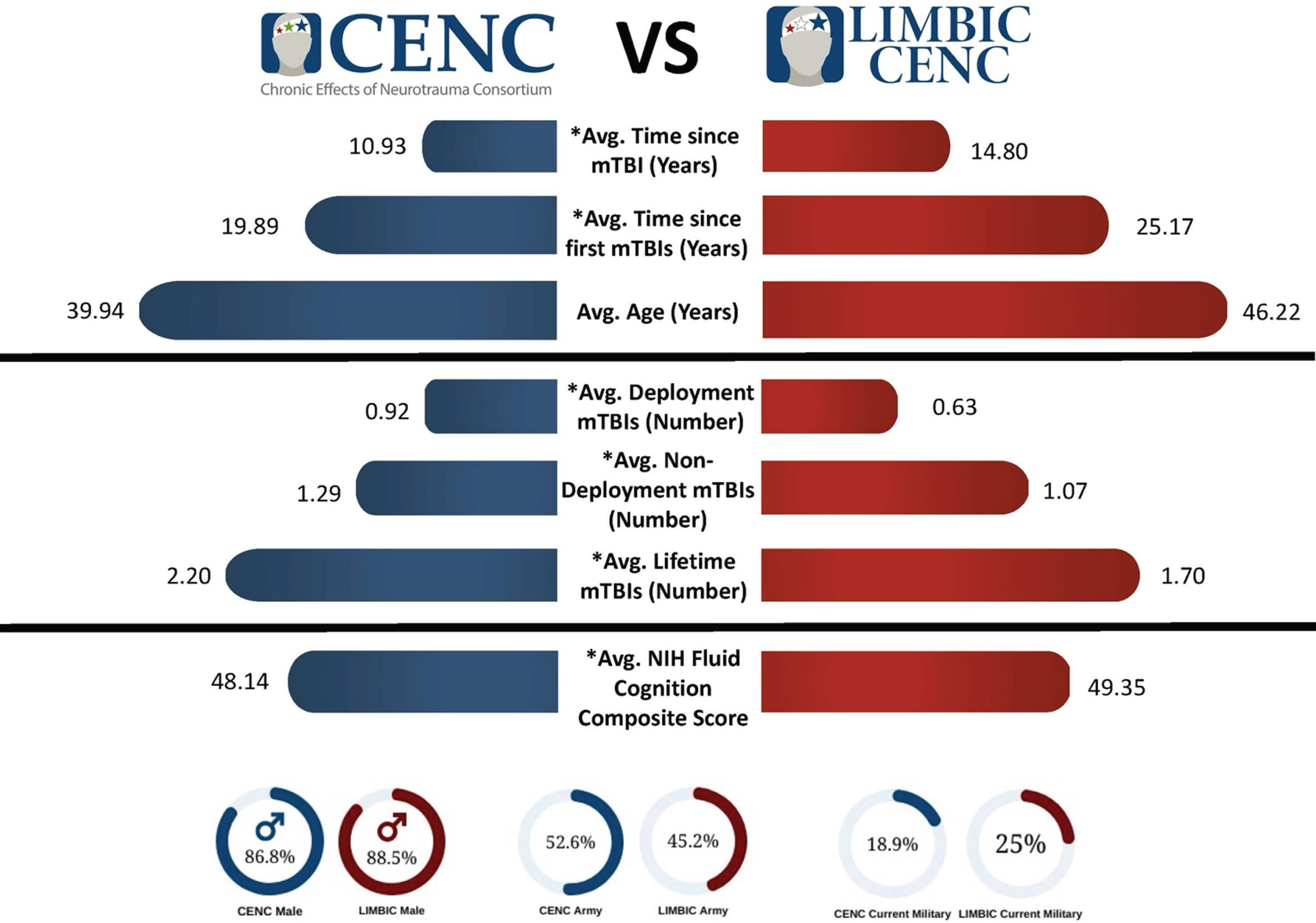
CENC – LIMBIC comparison.
Conducting multiple-site, longitudinal research by itself, is a challenging endeavor and an established and well-resourced consortium is best suited to execute this type of research. Building on the prior successes, the experience of its research, and the agility that comes of expertise, LIMBIC-CENC was able to successfully continue its research mission despite a global pandemic. A core tenet and modus operandi of this consortium has been to collaborate and share information, which has allowed LIMBIC-CENC to be flexible and capable of capitalizing opportunities and dealing with obstacles. This has sustained the overarching research program, and even allowed for extended exploration of new hypotheses generated within the new COVID-19 environment. As the impact COVID-19 has on this cohort and other cohorts unfolds, LIMIB-CENC and its future iterations will be poised to provide real-world solutions to research and clinical care of those who have served in harm’s way. This Military Neurorehabilitation Special Issue highlights the outstanding work that LIMBIC-CENC and the range of LIMBIC-CENC collaborators have accomplished, with a focus on clinically relevant research.
Disclaimer
The views expressed in this article are those of its authors. This publication should not be viewed as the opinion of the Uniformed Services University, Defense Health Agency, Department of Defense, or the Federal government.
Funding
The work has been supported from the U.S. Army Medical Research and Material Command and from the U.S. Department of Veterans Affairs Long-term Impact of Military-relevant Brain Injury Consortium under Award No. W81XWH-18/TBIRP-LIMBIC.
Conflicts of interest
Dr. Cifu is an employee of the U.S. Department of Veterans Affairs and the Virginia Commonwealth University. He has received financial support from the LIMBIC-CENC grants. He has prior and active funding from NIH, CDMRP, VA and NIDILRR. He has no other financial interests or conflicts.
Dr. Hinds is an employee of SCS Consulting LLC, which has financial affiliations with Major League Soccer Players Association, Nano DX, Owl Therapeutics, Prevent Biometrics, Collaborative Neuropathology Network Characterizing Outcomes of TBI (CONNECT-TBI), United States Army Medical Research and Development Command’s Congressionally Directed Medical Research Programs and the National Football League Players Association. Dr. Hinds has not received financial compensation for his work with LIMBIC-CENC. Dr. Hinds is a member of Concussion Legacy Foundation’s Veterans Advisory Board; advisory Board member to the University of Michigan Concussion Center; advisor to Gryphon Bio; ad hoc reviewer for VA Brain Health Research; invited reviewer to Congressionally Directed Medical Research Programs; contributor to the National Academy of Science, Engineering, and Medicine “Accelerating Progress in TBI Research and Care”; NASEM TBI Forum committee member (currently inactive); and former contributor to Post-traumatic Epilepsy Research Program. His former Department of Defense work includes: NFL Scientific Advisory Board member; NCAA-DoD CARE Medical Advisory Board Member; DoD Brain Health Research Coordinating Officer and Medical Advisor to the Principal Assistant for Research and Technology (PAR&T), United States Army Medical Research and; Development Command (USAMRDC); Ex Officio National Advisory Neurological Disorders and Stroke (NANDS) Council Member; Programatic Review Committee Member, Congressionally Directed Medical Research Program’s Peer Reviewed Alzheimer’s Disease Research Program.