






Abstract
From 2007 to 2015, the National Institute of Statistics and Censuses (INDEC) of Argentina underwent damaging political interventions, which undermined the institution and the quality of its products and services, leading to a widespread distrust of the official statistics of the country. In January 2016, a presidential Decree declared a state of administrative emergency in the National Statistical System (NSS), allowing the recently appointed Director General of INDEC, to reorganise the agency and the NSS. To this end, INDEC authorities implemented several strategic, legal and operational actions in order to recover and develop the statistical capacity. The modernisation of the statistical legislation represented an important objective of this process and a draft law was prepared drawing especially on the Generic Law on Official Statistics (UNECE), the Fundamental Principles of Official Statistics (UN), and the OECD Recommendation on Good Statistical Practice. This paper presents the main actions taken to recover the Argentinian statistical system, and derives the lessons learned.
Keywords
Introduction
From 2007 to 2015, the Argentine National Institute of Statistics and Censuses (INDEC) suffered from extensive political interference which harmed its institutional quality and generated a widespread distrust in the official statistics of the country (see [1]). As of 2015, after a new government took office in Argentina, the new INDEC authorities began to implement several strategic, legal and operational actions in order to recover and develop the statistical infrastructure of Argentina. The work program designed for this purpose involved five strategic pillars, which sought to establish priorities in the different dimensions of statistical capacity: transform the legal and institutional framework for official statistics, improve coordination within the national Statistical system (NSS), strengthen statistical infrastructure, enhance dissemination policies, and revive international statistical cooperation.
The objective of this article is to shed light on this experience and to document a case of success in terms of statistical capacity recovery as a window of opportunity to undertake institutional reform and leverage the modernization of the statistical legislation. In doing so, it aims at contributing to a better understanding of the drivers and role of professional independence in the activities of National Statistics Offices (NSOs), as well as the roles of institutions’ management teams, political will at the highest level, and the international statistical community. Some key research issues emerge in this context, including: what were the problems and how did INDEC manage to identify and solve them? What lessons have been learned from this experience? To what extent could they be useful if a similar situation were identified in another country? What are the lessons for the international organisations identifying similar situations in their partner countries? How international organisations could assess whether the definition and delineation of professional independence used for national statistical regulatory purposes are aligned with international standards?
Relevant information in official documents and media has been collected and important protagonists and key players in the international statistical community have been interviewed to answer these questions. Additional background was found in a series of case studies carried out by the Inter-American Development Bank (IADB) [2], which includes a specific study on the Argentinian case. Likewise, the OECD report on the “National Statistical System and Official Statistics of Argentina” [3] provides a detailed evaluation of the national statistical system and official statistics in Argentina.
The Argentine case likely represents one of the most relevant cases of deterioration and quick recovery of an NSS. The purpose of the following pages is to present the main actions undertaken to achieve this recovery process, and to share the lessons and challenges learned from this experience, in order to provide the international statistical community with useful input to detect similar patterns and provide relevant responses when countries are facing similar situations. To this end, the discussion is divided into descriptive sections on the loss of credibility (Section 2) and the rebuilding process (Section 3), followed by analytical sections on the key drivers of recovery efforts (Section 4) and its success factors (Section 5).
A steady loss of credibility
The INDEC is the governing body of the Argentinian NSS under the statistical law No17622, enacted in 1968. The legal framework sets forth, among other matters, that it is INDEC’s responsibility to implement a statistical policy for Argentina, to structure and lead the NSS, to design statistical methodologies, to organise and run statistical infrastructure operations and to produce basic indicators and social, economic, demographic and geographic data.
The Institute is a “deconcentrated” administrative body under the aegis of the Argentine Ministry of Treasury. Deconcentrated agencies enjoy delegated authority from their supervising ministry for some of their tasks. Deconcentrated status is different from, and weaker than, “decentralised” status, as in particular deconcentrated agencies do not possess their own legal personality, nor can they undertake obligations on their own authority, as decentralised entities may.
INDEC has regulatory authority both over the central statistical services of the National Government and over the peripheral services, such as the Provincial Statistical Offices (PSOs). The PSOs are in charge of the main part of domestic data collection, and although they fall under the provincial governments, they are linked to INDEC through agreements and transfers of financial resources. Coordination of this task is complex for INDEC, given that it involves interacting with offices that depend on provincial governments in the context of a federal government system, but that are linked to INDEC as members of the NSS.
INDEC’s Director General now has the rank of Secretary of State, reporting directly to the Minister of Finance. He is appointed by the National Executive Power without a specific selection process and can be dismissed for any reason by a presidential decree. The organizational structure of INDEC is divided into a Technical and a Management Directorate, comprising a total of 12 National Directorates, 30 Directorates and 9 Units. In 2019, INDEC’s staff numbered around 1,500 employees and its annual budget for current expenses was USD 40 million.
Most of the time since its creation, INDEC was recognised as an institution which promotes and complies with the highest professional standards in statistics within the Latin American and Caribbean (LAC) region. Up until at least 2007, successive governments respected INDEC’s independence with regard to data sources, methodologies, production process, results, and dissemination. INDEC also participated in many international initiatives to exchange statistical experience which strengthened the perception of its profession independence. While this independence was not fully guaranteed in a de jure sense by any specific provision in the Argentinian legal framework for official statistics, it was implemented de facto in particular through the implementation of appropriate procedures and mechanisms.
Institutional deterioration
INDEC suffered a period of political interference between 2007 and 2015, widely reported both nationally [4] and internationally [5] While the interference initially focused on the consumer price indices (CPIs), the credibility of almost all the official statistics and technical reports released by INDEC was progressively called into question (see [5]).2 Scepticism grew among the users of all official statistics, who began to develop and use alternative indicators to measure social and economic phenomenon.
International criticism made it clear that “the problem was neither irrelevant nor an exaggeration of the political opposition or the local press”[2]. The IMF took the exceptional steps of issuing a Statement of Concern in 2012 and then a Declaration of Censure in 2013 [7]. The situation was also widely reported in international media. In 2012, The Economist announced that it would stop including in its publications the official inflation figures of Argentina as they were deemed not credible, and published a series of articles about the situation of the country’s official statistics [8].
Organizational deficits
According to Todesca [9], the agency had serious organizational deficits by 2015, which were mainly reflected in five aspects:
An obsolete legal framework based on the law on statistics adopted in 1968 and occasionally amended afterwards; Serious negligence of office accommodation and facilities, including an obsolete information and communication system in danger of collapse; Serious deterioration in human resources; An old and inefficient organizational structure; and, An absence of planning, operational and administrative procedures, that were neither established nor formalized.
Political interference in the organisation of INDEC exacerbated these problems, leading to the replacement of several directors and the arbitrary displacement of many statisticians, who have either resigned, been dismissed, or, in many cases, continued to work in a hostile environment [10]. The vacant positions were filled by professionals ideologically aligned with the government. The concept of “militant statistics”, meaning statistics produced to support a political project, was adopted. The dire consequences of this institutional deterioration were fully identified in December 2015. According to the testimonies of those who participated in the reconstruction of INDEC, “the first few days nothing worked properly, power outages were frequent, computer systems failed and there was no storage capacity on the servers. No formalized processes were in place and the main people responsible for the critical statistical operations, as CPIs, left their positions without notice. We had to start from nothing”. Conflicts with the main workers’ union were pervasive, raising concerns that some staff representatives with legally protected status, could aim at destabilising the institution. Given this situation, the new management was considering whether to try to recover INDEC, or whether to dissolve it and create a new statistical office.
Impact on the statistical infrastructure
INDEC’s phase of decline included a decrease in its investment budget and in its capacities to carry out statistical operations, resulting in a deterioration of the main data collection processes included in the statistical infrastructure (see Table 1). A failed Agricultural Census in 2008 and a deficient Household Expenditure Survey in 2012 illustrate this situation. In the absence of reliable baseline information from these failed data collections, many indicators and sample frames had to be based on the last fully successful operations of 2002 and 2004, respectively. The last Economic Census was more than ten years old, and no statistical business register was available, and identification of some serious inconsistencies regarding the 2010 population census motivated a criminal complaint [11].
Status of major statistical operations as of December 2015
Status of major statistical operations as of December 2015
Source: INDEC.
The administrative emergency in the national statistical system
The first actions and decisions of the new authorities that took office in December 2015 were focused on recovering the credibility of official statistics produced by INDEC and within the NSS. To this end, the publication of all indicators was suspended until an exhaustive review of their methods and calculation procedures had been completed. Each statistical program was assessed for consistency and coherence, validity of the source and methodology, sampling design, estimation methods, accuracy, treatment of non-responses, missing data imputations, IT and quality processes, dissemination standards and scientific rigor, and other factors [3]. The review found that many of the statistical programs did not meet the required standards. The length of this review process ranged from several weeks for statistical operations based on administrative data, to several months for those involving field operations. The regular publication of revised CPIs became possible only six months after the interruption. Thereafter INDEC warned users that series for the 2007–2015 period should be used with caution since although some could be recalculated, in many other cases gaps in reliable data would persist.
Distortions in the statistical series. Source: Comparison between alternative/revised series and pre-2015 INDEC data [12]. 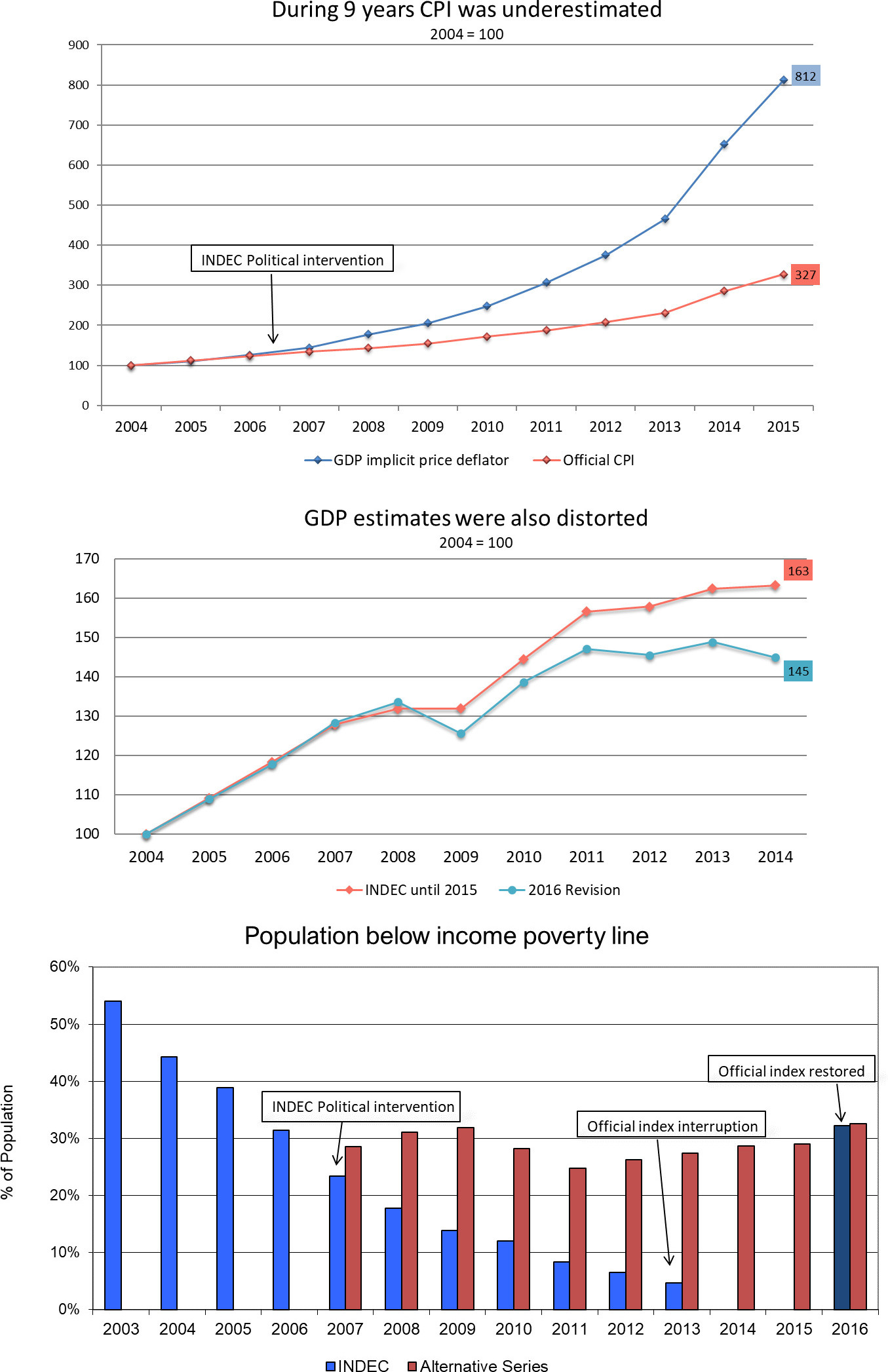
The declaration of the state of emergency in the NSS by the government on 7 January 2016 was criticised, in particular because of the so-called statistical “blackout” that followed. The decision to discontinue all publications was a difficult and unprecedented one. It unleashed serious consequences for national and international users, including policy makers, who turned to other sources; but in the following months, as publication of consistent indicators was gradually restored, INDEC quickly rebuilt trust among users (see [13]). Many statisticians displaced during the political intervention returned to INDEC and with the technical assistance of the IMF in particular the revision of the CPIs and the national accounts statistics, greatly contributed to restore credibility.
Tampering with inflation figures in a high-inflation country causes major distortions in estimates of economic growth and poverty rates (see Fig. 1). In September 2016, the release of revised poverty and indigence index – interrupted since 2013 – was a milestone representing the complete reestablishment of the official statistical service of Argentina. A few months later, the IMF lifted the Declaration of Censure on Argentina’s official data, and the statistical emergency decreed by the government was terminated at the end of a twelve-month period as initially planned.
The state of emergency also referred to INDEC’s organizational deficits and some emergency actions were taken to address the most urgent issues, mainly in terms of infrastructure and human resources, which prevented the normal development of the activities, later complemented by a comprehensive plan implemented as of 2017.
The effective combination of a series of political measures was fundamental for the quick recovery of the statistical service and the future development of INDEC:
First, the emergency declaration of the NSS declared for 12 months through Decree 55/2016 by the National Government that took office in December 2015. This administrative tool served to restore the normal operation of the Institute in the short term and gave expanded powers to its Director General, including the faculty to “terminate the services of the acting directors and designate the staff of the Institute”. Following the usual procedures of general public administration, this task would have required several months. Likewise, the emergency declaration was useful in terms of accessing increased financial resources, since the inherited budget barely allowed to cover basic expenses [14]. The initial reorganization of INDEC implied the change of 40 officials from all hierarchical ranks and the recruitment of qualified staff sometimes previously displaced. The human factor was the main catalyst that enabled the improvement of INDEC’s statistical and technical capacities [2]. The Decree 181/2015 appointing Jorge Todesca as the new Director General also had important implications for the future of INDEC. Appointing a career politician with a strong technical background was critical to successfully weather the storm. But the Decree also contained two prescriptions, which later proved particularly useful to administratively facilitate the management to the Director General, and to pave the way for a new statistical law. First, the Decree raised the rank of the Director General of INDEC in the public administration from Undersecretary to Secretary of State. This higher hierarchical status allows not only a direct access to higher levels of the national public administration, but also to issue certain administrative rules and documents without the approval of a higher authority. On the other hand, the Decree instructed the Director General of INDEC to “propose to the Executive Power the reforms to Law 17622 that he considers necessary for the better administration of the National Statistical System”. Another milestone of great relevance for the future development of INDEC was the formal request of the Government of Argentina to adhere to the Council Recommendation on Good Statistical Practice (hereafter the OECD Council Recommendation), the first legal instrument on statistics of the OECD.3 OECD experts carried out a preliminary review in late 2016, and the report with elements to form a judgement on the willingness and capacity of Argentina to put in place a sound statistical system aligned with the OECD Council Recommendation was presented to the heads of statistical authorities in OECD Members. Based on this process as well as on a committed action plan that included strengthening the institutional framework and statistical infrastructure, Argentina formally adhered to the OECD Council Recommendation in July 2017. The OECD then carried out in 2018–2019 a thorough review of Argentina’s statistical system and official statistics, which provided to INDEC further detailed indications as well as a roadmap for establishing and ordering INDEC’s strategic, methodological, and operational priorities [15]. The Inter-American Development Bank (IDB) assisted INDEC in designing a financing program during the emergency period to strengthen the statistical capacity of INDEC.4 This program included many of the resources for urgent investments. The early start on this financing program was very important, since the approvals of the authorities of the national and multilateral organizations are not immediate, and budget items must be included in the budget laws of the following years. In this case, funds were made available in the second half of 2017. In addition, the initial assessment carried out by the IDB for the design of the program led to a first roadmap for the work programs to be implemented after the emergency was overcome.
The post-emergency take-off required simultaneous intervention in the different dimensions of statistical capacity. INDEC designed a work program for the period 2017–2020, later formalized through Resolution 141/2018, involving a series of actions that required effective coordination in a four-year cycle. In order to catch up with international standards, the following six strategic axes were identified: institutional transformation, strengthening technical capacity, NSS coordination, improving dissemination, facilitating access to statistics, and developing international relations. Although some of these actions may sound obvious in a well-established NSO, they proved difficult to implement simultaneously in the context described above. All the actions being necessary and urgent, the setting of priorities and effective coordination played a fundamental role. Bottlenecks had to be avoided as the organization progressively rebuilt its capabilities. The experiences documented by the international community and transmitted through technical cooperation were very useful to guide the design of actions and improve their implementation.
In January 2017, the post-emergency phase was affected by the arrival of a new Minister of Finance, involving changes both in the vision of the future of INDEC and in the relationship with the Director General. However, the support from the highest level of political power to the institutional reconstruction process remained strong and was mainly reflected in four essential aspects during this phase: the political support to INDEC’s technical independence; the approval by the executive branch of the modification and expansion of the Institute’s organizational structure in a general context of shrinking state offices; the political support for the human resources policy and overcoming conflicts with the main union of workers, and a substantial increase in INDEC’s budget for current expenses and investment5, which was maintained until late 2019.
During this period, the development of INDEC encountered two major obstacles in terms of financial and human resources. On the one hand, the Ministry of Finance set spending limits for all public agencies, regardless of the source of income. Therefore, although INDEC managed to maintain the budgetary improvements initially achieved, part of the additional resources from the IDB to complete the institutional strengthening program could not be implemented. On the other hand, Decree 632/2018 suspended the hiring of new personnel throughout the national public administration until the end of the presidential term, which substantially conditioned the human resources policy that INDEC was developing. However, despite these limitations, much progress were achieved. The following sections describe the main actions carried out by INDEC towards institutional strengthening, improving the production and dissemination of statistics, and reintegration into the international statistical community.
Institutional strengthening
Building, Information and Communication Technologies, and logistics infrastructure
INDEC’s historic ten-storey building in the centre of the City of Buenos Aires, offices, and workspaces were dilapidated and poorly maintained, and did not meet health and safety standards: elevators were malfunctioning, bathrooms and common spaces had been neglected for decades, and the electrical system was outdated and failed daily [14]. A first dilemma faced by the new INDEC authorities was either to acquire a new building or improve the existing one. A new building would have been a step forward in terms of modernisation, a symbolic element to the new INDEC, and an opportunity to move to a more convenient location away from the central administration offices, generating a physical distancing effect from political power.6 But the acquisition of a new building encountered some obstacles and the priority was given to restoring the production and dissemination of credible official statistics. Nevertheless, INDEC reached an unprecedented level of investments between 2017 and 2019, allowing the complete rehabilitation of its headquarters and the almost complete renovation of its computer equipment, furniture, and vehicle fleet.7
More than half of the budget funds allocated to investment (approximately USD 1.5 million annually during 2017 and 2018), was used in the renewal of all computer equipment and, above all, in the regularization of software licenses. By 2015, the Institute did not have licenses for most of the more than 100 software, applications, and development tools it used. Much of the software in use were illegal versions installed on the personal computers of the IT staff. Likewise, the Institute was lagging behind in updating its operating systems, network services and the virtual and physical security of the data. Regarding the latter, the old data centre had very limited storage capacity and was located in a single site, without adequate backup or ventilation, and had suffered 20 power failures in 2017 [3]. The measures adopted included the modernization of the data network, installing new wiring and equipment, and the migration of the Institute’s information to servers and devices with greater capacity and security, especially after contracting the certified data centre Tier III of ARSAT, the Argentine state satellite company.
With these improvements and an initial acquisition of 400 tablets (3,500 will be added later), INDEC was able to start facing the process of replacing paper questionnaires and make the data collection more efficient through mobile devices. This complex task also involved changes in the organizational culture and required specific training to develop skills in these new data collection methods. This process has not been without difficulties, in particular with regard to connectivity at national level and INDEC started the process in 2016 only. The National Victimization Survey carried out in March 2017 was the first operation collecting data through mobile devices. This technological change allowed substantial improvements in the processing speed and consistency in data capture, as well as lower operating costs [15].
Human resources policies
The lack of skilled and trained human resources, and the practice of having staff fulfil functions in areas beyond their expertise, were the main human resources problems INDEC was facing. This was mainly due to the organisational culture in place after almost a decade during which the Institute operated under a mission, vision, and values distant from those usually adopted by the NSOs. “We found an institution aligned to values and objectives different from those set and, therefore, also a bureaucracy that adapts to these changed values” [16]. The Institute had also lost many competent technical staff due to arbitrary decision-making, conflicts and the lack of professional development perspectives.
The relationship with the labour unions was an additional challenge. For the first two years after the declaration of emergency, INDEC’s management faced a high degree of conflict with the main trade union.8 The so-called programme “INDEC Listens” involving psychologists to listen staff who wanted to talk about their experience, problems, and personal and professional needs, proved to be very useful to reform and pacify this work environment.
The optimal staff composition was established based on an initial diagnosis in which the human resources department detected that more than a third of the professionals were assigned to various departments that did not correspond to their areas of expertise. Based on this examination, a large-scale restructuring plan involving entire areas was prepared, and employees were relocated to positions more suitable to their profile. It was also necessary to dismiss those who did not comply with the necessary suitability conditions or could not adapt to the new labour guidelines in terms of attendance, punctuality, and objectives (see [17]). At the beginning of 2017, only 61% of staff worked at least 7 hours a day on average in a month. At the end of 2018, it increased up to 89%9[16].
Simultaneously, a significant number of new qualified employees were recruited. The new hiring policy was made public. It included open competition, psychometric tests, training courses for incoming employees and the search of interns in universities. About 80% of these new employees had a college degree. This is not a minor fact, since only 32% of staff were professionals in 2015, well below normal for an NSO; this increased to 47% by 2019 (60% if survey interviewers are excluded) [3].
In turn, the human resources policies included several incentives, such as the study scholarship plan and trips for training in international organizations, with the aim of retaining the suitable personnel and compensating the low remuneration.
However, the hiring and retention of qualified technical personnel was one of the greatest difficulties faced by INDEC, mainly due to the low remuneration in the public sector in Argentina. The problem is especially acute in the areas of computer science and data science, because of the boom in demand from private firms and the impossibility of matching private sector wages. For these cases, a special contracting system was established for "independent contractors" within the framework of Decree 1109/2017, but without the possibility of guaranteeing employment stability.
The lack of administrative autonomy did not allow the Institute to design its own career streams and establish salary scales different from the rest of the public administration to reflect the technical and professional capacities it requires [3]. A new regulatory framework would be essential to empower INDEC to regulate its staffing establishment.
New organic and functional structure
Modernising the outdated organisational structure of the Institute was key to make it more efficient. While some specific changes had been made in the past, a comprehensive modification like the one carried out during the reform process was never implemented previously. A new basic organizational structure was approved by Administrative Decision 305/2017 in May 2017, establishing four directorates reporting directly to the Director General: a Technical Directorate, a Management Directorate, and two strategic directorates with institutional roles. These directorates oversee new entities focused on transversal management and territorial coordination at national and sub-national levels (see Box 1), with renewed functions and reporting mechanisms.10 Coordination activities have thus been considerably strengthened. The changes also included the creation of a Planning Directorate and a National Directorate of the NSS, which includes six new regional offices to allow technical and administrative interaction with provincial statistics offices, and an upgrading of the Methodology Directorate and the Statistical Dissemination Directorate.
Planning and processes
INDEC introduced planning activities with the creation of a Planning Directorate in 2017. Until 2006, some strategic although rather symbolic planning exercises had been carried out, but the practice had been discontinued, and the 2018–202011 work programme was the first to be fully implemented. In addition, annual programs were implemented for specific annual activities, with the aim to monitor these activities and effectively achieve the proposed goals. For this purpose, a reporting and monitoring system that also serves as an internal coordination and evaluation tool was developed. The software developed entirely in-house is based on the Generic Statistical Business Process Model (GSBPM) of UNECE and includes detailed information on deadlines, managers, and human and financial resources for each statistical activity.
Another serious organizational deficit faced by the Institute was related to the lack of formalization of administrative processes. In this sense, an exhaustive review and redesign of all procedures was carried out, which was formalized through administrative acts. INDEC developed procedural manuals for the first time while all the administrative files were digitalised and the paper files abandoned.
Modernization of the regulatory framework
In November 2019, the President of the Nation sent a new draft Statistical Law to the Congress, after a long period of internal discussions in the Government.12 The draft law proposes, among its most relevant innovations, the functional, legal and patrimonial independence of INDEC; transferring responsibility from the Ministry of Finance to the Head of the Cabinet of Ministers; inclusion of explicit provision on the professional independence in the production and dissemination of official statistics, a mechanism for appointing the Director General, with parliamentary agreement, for a fixed term of 5 years renewable only once, and the creation of a cross-sectoral advisory council; a parliamentary monitoring committee; and unrestricted access to data sources for statistical purposes.
The draft law was in line with the recommendations of the OECD review of the Argentinian statistical system and official statistics, based on the OECD Council Recommendation, which stated that “the project represents a considerable improvement of the legal and institutional basis for the production of official statistics in Argentina” [3]. Likewise, following good practices in this regard, the text was submitted for consideration through a public consultation that gathered comments from several national and international actors [18].
Improvements in statistical production and dissemination
The statistical infrastructure necessary for the production of high-quality indicators was outdated; therefore, the initial restoration of the statistical service had to face great methodological challenges. Difficulties lay in the lack of updated and adequate sampling frames for household, agricultural and economic surveys, as well as primary data for making base-year changes in indicators such as the CPIs or the national accounts. As an example, the improvements made to the CPIs had to use ad hoc mechanisms to adjust the weights derived from a household expenditure survey that was more than ten years old, a decade marked by high inflation and frequent changes in relative and regulated prices.
Therefore, one of the great challenges for INDEC was the need to carry out in less than five years all the operations considered critical to consolidate the statistical infrastructure. This implied carrying out a number of major data collection activities, including a National Census on Mining Activity in 2016, a National Household Expenditures Survey in 2017, and a National Agricultural Census in 2018 (see Box 2); as well as launching the preparation of the National Economic Census and the National Population Census.13 Two fundamental operations were performed in order to carry out the Population Census, as well as to complete the sampling frame of the periodic surveys: INDEC updated the urban housing sampling frame and carried out an exhaustive territorial sweep, so that for the first time a dwelling register was made available. In addition, the initial development stages of the first statistical business register were launched in 2019. Another (late) innovation which added challenges to the task was the use of mobile devices in statistical operations.
As regards the regular statistical operations, after the initial exhaustive review during the administrative emergency state, INDEC launched a program with the aim to strengthen and expand in almost all its products. Firstly, the primary surveys of economic statistics were strengthened, with new surveys, coverage extensions and the introduction of web questionnaires in the surveys of companies. The production of macroeconomic statistics also included new products such as the quarterly publication of the Generation of Income Account, the annual publication of the National Saving and the Culture Satellite Accounts, and methodological adjustments of the international accounts, as well as the incorporation of the Standard Data and Metadata eXchange (SDMX) in several areas [15]. As regards the CPIs, a new CPI was launched with national coverage and disaggregated data for the six statistical regions of the country (see Box 3), a year after the indicator for the traditional Greater Buenos Aires (GBA) area was restored.
Socioeconomic statistics also required major improvements in quality. To this end, INDEC redesigned the publications, including a greater number of indicators about living conditions, and carried out several special surveys, within the framework of cooperation agreements with other areas of the public sector. Conducting these special surveys also pursued strategic purposes, in terms of strengthening INDEC’s role as the governing body over the national statistics-producing system and attracting additional resources.14
On the other hand, INDEC made significant progress in disseminating information of its products and institutional communication. Since January 2017, when a twelve-month in advance continuous calendar was created, INDEC has strictly complied with the dates and times set for publications. The data are published at 4:00 p.m., and measures are taken to ensure simultaneous access for all users (see [3]). The dissemination policy pursued the objectives of increasing transparency and a user-friendly access to statistics. To this end, new access channels were opened in social networks and for online answers, a digital statistical library was developed, progress was made in statistical literacy through the “INDEC Educa” project aimed at primary and secondary educational institutions, and a comprehensive modernization of the Institute’s website was undertaken (see [15]). A key action to increase transparency was to re-establish and strengthen relations with the media and specialized users, who had gradually lost interest in statistical outputs produced by INDEC.
The guiding principles of INDEC’s dissemination policy were formalized by Resolution 85/2019 [21], which establishes procedures for the dissemination of statistics under the principles of impartiality, objectivity, and transparency. Likewise, Resolution 86/2019 developed a “Style Manual” [22] applicable to all the dissemination and communication of the Institute. The institutionalization of these principles and procedures contributed to strengthening the credibility of INDEC.
The comprehensive review of the Argentinian statistical system conducted by the OECD in 2018–2019 highlighted the importance of this dissemination strategy in rebuilding confidence in official statistics [3]. In this sense, the report states that “the recent progress of INDEC in the communication and dissemination of statistical information – including equal, simultaneous, and free access to statistics, the new Style Manual, the advance calendar of publications, the new bilingual glossary and the creation of brochures and other educational material – has been excellent… The published data is presented objectively, focused on the movements observed in the values and avoiding any political comment. The methodologies for the statistical series are available in digital format and any changes in the methods used or in the presentation of the data are reported to the users at least 30 days in advance”. In addition, the report highlights that the timeliness and periodicity criteria set out in the IMF’s Special Data Disclosure Rules (SDDS) are met, and consistency and comparability were improved, although there are serious obstacles to improving the data for the period 2007–2015. Users also recognize this progress in the area of dissemination. A user satisfaction survey [23], carried out by an external counterpart in 2019, shows that more than 70% of the users are satisfied with INDEC’s dissemination service, and in particular with the accessibility and clarity of information.
INDEC was isolated from the international statistical community in 2015, although some of its representatives used to cover the regular agenda of international forums. At that time, INDEC had a limited number of cooperation agreements and the Institute was not actively involved in any initiatives. By the last years of political intervention, Argentina had even stopped participating with its highest authorities in the annual meeting of the United Nations Statistical Commission, after receiving criticism from colleagues from other countries [24]. The new management team set a specific objective of earning back the respect of the international statistical community. However, international reintegration was also a strategic objective, following the premise that the transformation of INDEC could not be carried out while isolated (see [25]). The international statistical community was involved in every important step on the INDEC’s road to normalization and rebuilding credibility. The support received from institutions such as the IDB, the OECD, the IMF, and the United Nations, and bilateral cooperation with other NSOs was essential, not only in terms of the technical assistance, but also to leverage support for reforms by society and the government itself.
The role played by the IDB and the OECD as strategic partners all along the process has already been described above. The IDB provided the financing and the outline of a first roadmap while the OECD provided a comprehensive diagnosis and guidelines for future development. The IMF provided assistance and cooperation to INDEC in the initial review of the CPI methodology and the national Accounts, and organised a special course on international accounts for technical staff in Buenos Aires in 2018.16
The support of the UN Statistics Division (UNSD) in the reintegration of INDEC in the international statistical community was also especially important, in particular with a mission of its director Stefan Schweinfest in 2018 to Buenos Aires to reinforce the discussion on the new statistical law [26].17 At the same time, the INDEC leadership again actively participated in the various activities that arose from the United Nations system.18 Another important point was the return to the United Nations International Comparison Program, given that Argentina had been one of the few countries that had given up participating in the previous round in 2011. The OECD highlights in its report that “Argentina’s growing commitment to international processes notably raised its profile in the international statistical community” [3].
At the same time, the participation of staff in technical workshops and sectoral working groups was encouraged by the Institute’s management, with the aim of updating and developing technical capacities. With this objective, INDEC officers carried out, between 2016 and 2019, an average of 77 international missions per year.
INDEC’s bilateral cooperation was also very intense in this period. Cooperation agreements were signed with EUROSTAT and three NSOs (CBS Netherlands, ISTAT, and INEGI Mexico); and specific alliances were agreed with several other regional NSOs, such as INE Chile and IBGE Brazil. INDEC’s own technical assistance to other countries (Republic of Honduras, Central Bank of Ecuador, etc.) also resumed.
INDEC also re-established relationships and participated in meetings of international statistical associations such as the International Statistical Institute (ISI), the International Association for Official Statistics (IAOS) and the Inter-American Statistics Institute (IASI).
Analysis and explanations
The INDEC reconstruction process was widely recognised as successful despite two major hindrances: the lack of de jure professional independence in the statistical legislation, and the economic crisis that prevented a further strengthening of human and financial resources. This section analyses the results of the implemented measures and the fronts still pending and requiring further action. The results can be seen both in terms of the recovery of credibility of the Institute, and in objective measurements such as the NSCI of the IDB.
Success factors
Institutional strengthening and modernization of NSOs are public policy initiatives that are often postponed; therefore, reforms must be engaged whenever there are windows of opportunity. The political economy factors that open these possibilities must be correctly detected and taken advantage of by decision-makers, whose strategic action must also seek to build legitimacy and maintain visibility so as to remain on the public agenda. The reforms carried out by INDEC had three main catalysts and drivers: i) political will at the highest level of government, ii) particular characteristics of the INDEC leadership team, and iii) the role of the international statistical community. Many challenges have conditioned INDEC’s path of transformation and modernisation, all of which affected both effective compliance and the speed of implementation of the work program and the proposed reforms.
Dargent et al. [2] identified five common political economy factors that have influenced the statistical capacity of Latin American countries in the past: i) the existence of technical areas of the State that require statistics to carry out their functions; ii) external demands on countries and international aid received by NSOs; iii) the role of presidents and their political projects; iv) the effect of economic and political crises, and v) the existence of a civil society and businesses that demand quality statistics. In the Argentine case, these factors were present and determined the success of the process.
State requirements The new paradigm of the incoming government in 2015, based on transparency, institutional strengthening and commitment to evidence-based public policies, presented a series of new demands for statistics produced and disseminated by INDEC. Likewise, one of the objectives of the government administration between 2015 and 2019 was the reinsertion of the country in the international community through strengthened international engagement and cooperation, which, among other relevant aspects, included an application to the OECD Membership, the G20 presidency in 2018 and the reestablishment of relations with the IMF. The international factor The promotion of international insertion among the priorities of the new government was one of the factors that allowed INDEC to channel its own strategy of reintegration into the international statistical community. Argentina’s international opening gave rise to new demands from various fields, including through its involvement in the G20 data gap initiative; the reappearance of multilateral organizations, such as IMF, on the domestic scene; and the focus on the OECD and other organizations as aspirational references (see Box 4). This cooperation with international organisations also facilitated the visibility of the international statistical agenda at the local level and served to build legitimacy, guarantee transparency and disseminate good practices. Thus, many of the reforms were leveraged in different ways in the international statistical community. The role of top decision makers The human factor played a major role in the reconstruction of statistical capacities in Argentina and personal attributes have decisively influenced the process. On the one hand, there was a strong commitment of the INDEC management team, which was made up largely of professionals who had identified themselves with the defence of official statistics during the period of political intervention. On the other hand, the return of qualified technical personnel allowed a quick recovery of technical and institutional capacities. Underpinning these changes was the political project of the new administration to grant full professional independence to the agency, as well as to support budgetary efforts required for its implementation. This was reflected in the appointment of a Director General with the required high profile to lead this process and empowered to take almost all decisions necessary to ensure that the process was implemented. The leadership of the Director General became one of the decisive elements in the success of the process (see Box 5). Finally, the reconstruction of the organization was strongly underpinned by the prestige and commitment of many staff members hired after the normalization of the Institute. All in all, leadership qualities were a decisive element in the transformation and modernization of INDEC’s statistical capacities. The effect of the crisis Crises also played a decisive role in INDEC’s statistical capacity building process. On the one hand, the wide media coverage of the crisis in statistics gave the issue a prominent place on the public agenda/debate and encouraged strong support for the institutional strengthening of the organization. The institutional crisis, therefore, created a window of opportunity to introduce reforms that would not have been possible in another context. On the other hand, the economic crisis that began in Argentina in 2018 limited the execution of several of the actions planned in pursuit of institutional transformation. A high demand for high-quality statistics The demand for high-quality statistics emerges as a determining factor for NSO capacity building. Public sector, companies, academia, civil society organizations or the media, international organisations demand high-quality statistics and if the NSO establishes a fluid relationship with them they can become allies that increase its legitimacy and constitute a barrier against governments that try to interfere, or reduce its statistical capacity (see [2]). Throughout its history, INDEC had strengthened links with a large variety of users to strengthen its de facto independence. In fact, the existence of a large and influential group of these users, in particular in the media, was a determining factor in reporting and making visible the political intervention in the past. It has also been one of the strategic tools used by the Institute’s management during the normalization of recent years. Demands for better official statistics were therefore an essential element in supporting the implementation of the reforms.
Recovery of credibility
The recovery of INDEC’s credibility was widely recognized. Argentinian official statistics were again accepted and used, without any question about the veracity of the figures, both in the political discussion, media, and academic debates. The OECD reports this situation in its review of the Argentinian NSS and states that “the new statistical information produced since May 2016, in a wide variety of domains, is credible and has been well received by the public and internationally” [3].
In this regard, an institutional image study [23] commissioned by INDEC from an external consultancy firm in 2019, also underlined this phenomenon. More than 80% of the interviewees, on a random sampling, consider that the INDEC meets the credibility attribute in a medium to high degree. However, according to the same study, 27% of those interviewed even in 2019 considered that the Institute’s independence from political power was low. The impossibility of achieving progress towards de jure independence and the fact that fixing the damages of the political intervention required further political intervention were no doubt important in this regard. Indeed, while the initial intervention forced out competent staff, a fresh intervention was required to force out the less competent staff. Breaking this cycle of executive interventions is only possible with a modernisation of the statistical law, which would guarantee the professional independence of INDEC, and would provide the institute with the managerial autonomy needed to create a strong institutional culture of professional competence and probity. Despite all the progress made in Argentina since 2015, these institutional pillars are still missing and it is thus to be feared that, once the lessons of the loss of credibility over 2007–15 fade, the way may be open to another round of politically inspired statistical distortions.
Finally, the recovery of INDEC’s credibility was recognised by all users, including political parties, as members of the ruling party and the opposition both used official statistics again in the political debate. The new president elected in late 2019 and leading a coalition government composed of the same political parties that had intervened in the INDEC in 2007, publicly praised the improvements occurred in the INDEC (see [27]), guaranteed the retention of staff, and appointed a new director with a technical-political profile, who publicly criticised the political intervention before 2015.
Increase of statistical capacity
NSCI of selected countries from LAC (2015–16). Source: Dargent et al. [2].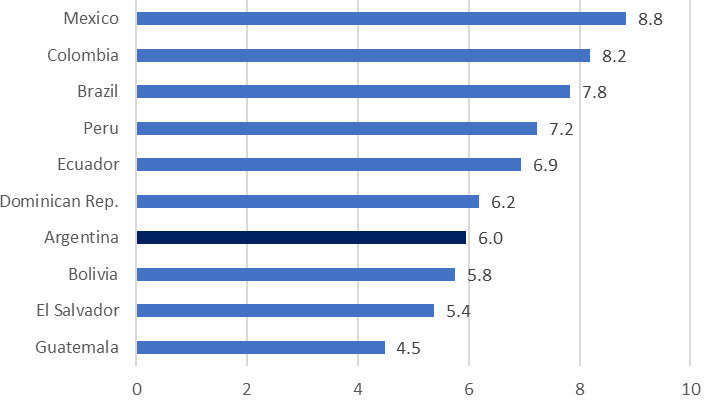
Statistical capacity can be measured by synthetic indicators that bring together several combinations of the technical-operational dimensions. Some tools available for capacity measurement often lack a comprehensive perspective. The National Statistical Capacity Index (NSCI) developed by the IDB for the Latin America and the Caribbean (LAC) region includes the institutional dimension together with the technical-operational one and is a synthetic indicator, which ranges between 1 and 10, derived from a set of 89 individual indicators. In the framework of a series of IDB studies on the political economy of the statistical capacities in LAC [2], the NSCI for Argentina was computed at the beginning of the reconstruction process in 2016, with a result of 6.0. As can be seen in Fig. 2, Argentina was in the group of the most backward countries in the region in terms of statistical capacities.
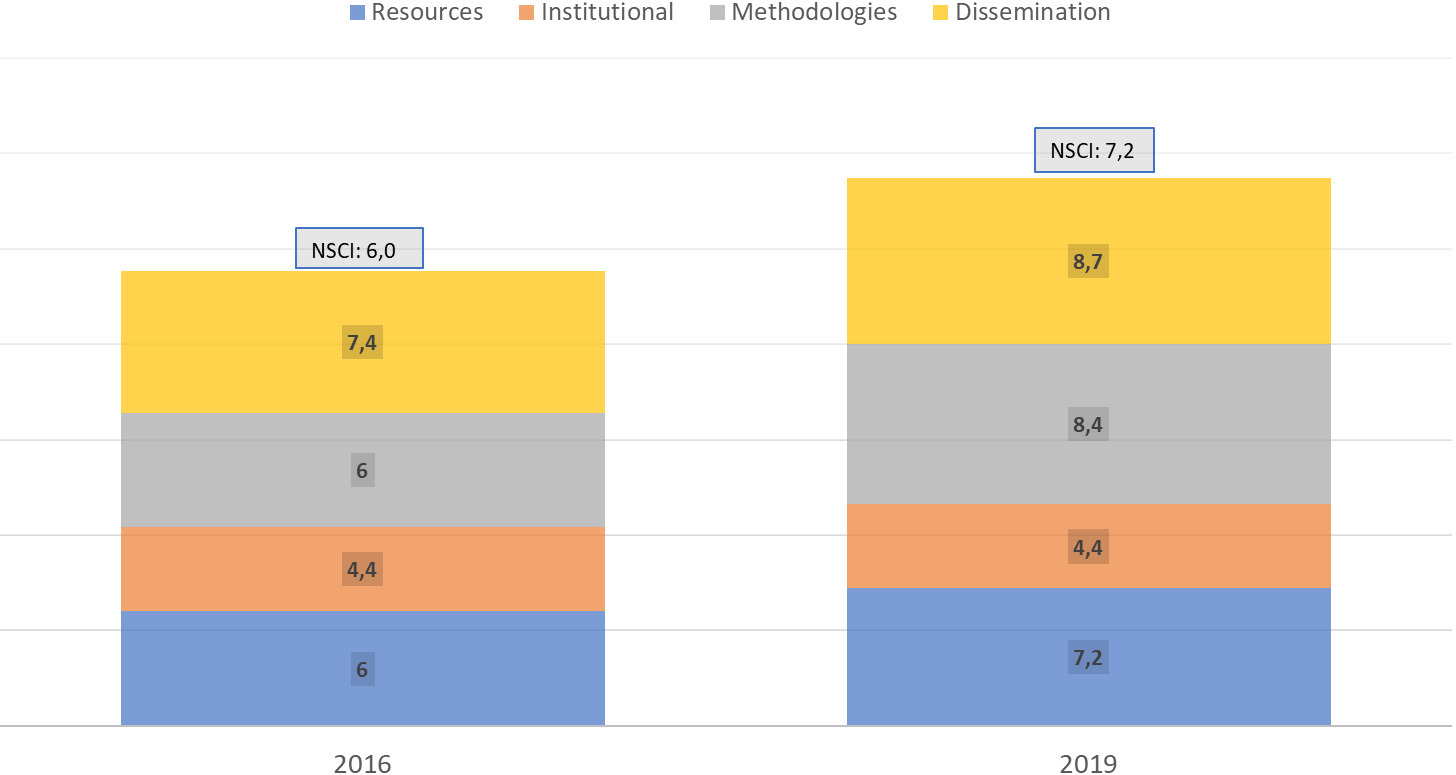
In order to analyse the evolution of the Argentine NSCI throughout the period, this measurement was replicated for the the year 2019. The results are presented in Fig. 3.
Argentina’s NSCI increased considerably during the period under study, from a value of 6.0 in 2016 to 7.2 in 2019. The current level places Argentina again among the countries with the best-established capacities in the region. The statistical capacity of the country has grown in three of the four dimensions considered in the NSCI (resources, methodologies and dissemination). The impact of the measures detailed in the previous sections is reflected in improvements in 18 of the indicators evaluated for both years The greatest advances relate to the budget, the building and computer infrastructure, the qualifications of staff, the implementation of user surveys, improvements to the website, and compliance with the advance dissemination schedule. On the other hand, less progress has been made on the institutional dimension because many of the variables considered by the NSCI refer to institutional arrangements that would require on a new regulatory framework; such as, for example, the specification of selection criteria of the Director General.
The modernisation of the Argentinian legal framework for official statistics is one of the main pending issues that directly affects several dimensions of statistical capacity, in particular human resources. The lack of administrative autonomy, which inhibits the development of professional career paths and of staffing classifications that reflect the professional and technical profiles required by an NSO, limits the growth of INDEC’s capabilities. The OECD review recommended this modernisation of the law on statistics, but also highlighted other aspects in which the institution still faces major challenges for the future, including the need to complete the strengthening of the statistical infrastructure, to update the base years of several indicators and to implement a comprehensive statistical quality management framework.
The presidential decree that appointed Todesca as Director General in 2015 ordered him to propose the reforms that he deemed appropriate to the NSS’s regulatory framework. Therefore, a committee of INDEC experts started the preparation of a draft law that was presented to the Executive Branch in late 2017 after having been reviewed by the OECD, IMF, and the UN. The main principles and definitions in this draft were consistent with the principles of the UNECE Generic Law on Official Statistics (GLOS) [28] and the OECD Council Recommendation [29], which served as a starting point for the development of an own text adapted to national circumstances, but also to guide discussions at the highest levels of government. These instruments, among others developed by international organisations, provide assistance to countries when they need to modernise their statistical legislation. They both contribute to develop solid legal basis for the functioning of the national statistical system and the production of highquality official statistics. To this end, they strongly support internationally recognised principles (e.g. the professional independence of the producers of official statistics, public procedures for the appointment of the Chief Statistician, etc.) but also recommend fundamental provisions for an efficient production of high quality official statistics, such as the implementation of an efficient quality management system, access to administrative data for statistical purposes, statistical confidentiality, coordination of the NSS, frequency of population censuses, etc. INDEC adapted the UNECE Generic Law to national circumstances, but the initial draft was broadly aligned with the model. Some parts of the draft were directly extracted from the GLOS and were very helpful in legitimizing internal discussion, especially in those cases where other agencies might have veto power.
The OECD Council Recommendation had been very clear regarding the need for a new statistical law that would strengthen INDEC’s authority over the NSS and elevate its institutional status to that of an autonomous body with its own legal status and control of its assets and its financial, human and technical resources. The statistical law should also strengthen the access to administrative data for statistical purposes, and apply specific technological, administrative, and organizational standards to protect the security and integrity of statistical databases. Lastly, the law should include provisions that guarantee impartiality, objectivity and transparency in the development and presentation of official Argentinian statistics [29].
Nevertheless, progress towards the new law turned out to be slower and more difficult than expected. In January 2018, within the framework of the 50th anniversary of INDEC, the main leaders of the international statistical community were present at an event held in Buenos Aires, where the desirable features of a new regulatory framework for Argentina were discussed (see Box 6). Less than two months later, a public controversy arose with the Ministry of Finance, which had a vision different from the project prepared by INDEC. The differences with the Ministry of Finance became public in April 2018, when a draft statistical law prepared by that Ministry (see [30]), and which presented strong contrasts with the INDEC text, was leaked to the press. After this incident, an OECD mission met in Buenos Aires with the highest level of government, to clarify that the project that was going to be finally presented would meet the recommendations that had been made.
The definition of the project was brought to a standstill by the economic crisis that began in the second quarter of 2018, with constant changes of the representatives of the Ministry of Finance. Four different vice-ministers of Finance oversaw the matter, each with a particular vision on important issues including the nature of the future relationship with the Ministry, the role of the Advisory Council and the selection process for the Director General. The INDEC management believed that the Institute should functionally report to an organism that promotes a broad vision of public policies, such as the Head of the Cabinet of Ministers [31]. On the other hand, the Ministry proposed the creation of an Executive Council, chaired by the Deputy Minister of Finance, who would henceforth take the lead of the NSS. As regards the election of the Director General, the Ministry of Finance was inflexible on the fact that it should be made by public tender, which implied the impossibility of Todesca to continue as the head of the body since he was already older than the age foreseen for participating in public tenders. Both projects not only expressed conceptual differences about INDEC’s role, but also personal differences in the relationship of the Minister with Director General Todesca. That is the reason why it required the arrival of a new Minister in August 2019 to move forward to a definitive version of the project and send it to Congress. The submitted project respected the original spirit of the text proposed by INDEC and the recommendations made by the OECD.
Conclusions
Main findings
The managerial starting point for the reconstruction and modernization of INDEC had been particularly difficult. The situation as of December 2015 had serious deficiencies in all the dimensions related to the statistical capacity of the Institute, especially those related to professional independence, human and physical resources, and respect for statistical methodologies and good practices.
This situation was reversed and substantial progress has been made. Thus, the capacity gap with statistical offices of equivalent potential, resources and international relevance has been narrowed. The OECD study team concluded that the overall quality of the statistical series that INDEC is currently publishing is good and that INDEC has demonstrated the willingness and ability to implement international best practice recommendations.
The international statistical community has been very present throughout the INDEC reconstruction and modernization process. The Argentine case constitutes important empirical evidence on the potential of the international community to effectively engage in capacity building and the most successful intervention mechanisms in this regard. The international benchmarks provided by the UNECE Generic Law on Official Statistics and the OECD Council Recommendation were very useful all along the process of modernisation of the legal basis for the production of official statistics.
In turn, progress towards deeper reforms in the future will require INDEC to persevere in building legitimacy in its successive stages of development and, in particular, to achieve the still elusive qualitative leap in the legal framework.
The new reputation of INDEC, added to the reinstated qualified staff, the characteristics of the management team, the fluid link with the international statistical community and a community of qualified loyal users, established a solid shell of de facto protection of INDEC’s independence. Although full de jure independence has not yet been achieved, this augurs well for the future of INDEC’s statistical capacities, as does the fact that the government that took office in Argentina at the end of 2019 recognized the successful work done, gave continuity to the staff, and ensured that INDEC’s new leadership could work independently. The new government, politically linked to the one that produced the previous intervention, has been careful to avoid a repetition of earlier problems. So, it seems that this lesson has been learned in Argentina
Lessons learned
As a conclusion, some lessons that the Argentine case leaves for the statistical community are listed below:
The sets of recommendations of the international quality frameworks and good practices are a determining factor in guiding and underpinning the National Statistical Systems, especially due to the indispensable role assigned to professional independence in the production of official statistics. Efforts should not be spared in the dissemination of good practices, not only within the statistical community, but also towards policy makers and the other key actors in the network of producers and users of statistics (media, academia, private sector, civil society, etc.). The Argentinian case confirms that professional independence is one of the most important issues in official statistics and that de jure protection of professional independence, through the inclusion of explicit provisions in the law on statistics, is essential. The recovery after the political intervention which damaged the Argentinian statistical system required further political intervention. Breaking this cycle of executive interventions will be difficult without a modern statistical law guaranteeing de jure independence of INDEC, as well as the managerial autonomy needed to create a strong institutional culture of professional competence and probity. Despite all the progress made in Argentina since 2015, these institutional pillars are still missing. The risk of a new political intervention is still there, once the lessons of the loss of credibility over 2007-15 fade, as de facto independence does not sufficiently protect the producers of official statistics, can have a delaying effect on deeper changes required to restore credibility, and put a ceiling on further capacity development. There are a number of conditions that combined can support a successful capacity building process. The existence of political will, an adequate and committed staff, and the involvement of the international statistical community can be decisive for a quick capacity recovery. Lessons are also important for the international organisations. The IMF issued a Statement of Concern in 2012 and a Declaration of Censure in 2013. At this time, articles in the international press warned about the situation and other international organisations stopped publishing official statistics of Argentina. Although this likely helped the new administration to initiate the reforms, it appears that the international statistical community has limited capacity to intervene against deviations from fundamental principles in countries, but it can play a key role in the rebuilding stage. Rebuilding trust requires a transparent and user-oriented dissemination policy, aimed at generating a critical mass willing to complain about any abnormality in the flow of information they use.
Footnotes
A technical report from the University of Buenos Aires in 2010 determined that “the discrepancies observed in terms of prices between the official statistics of Argentina and other statistics and indicators, both public and private, far exceed methodological debates and point mainly to the institutional framework for the production of these statistics”.
The Argentine Government also expressed its willingness to access the OECD, and its commitment to implement the OECD Recommendation was one of the first steps in this regard.
IDB loan contract AR-L1266.
The budgetary allocation for investment in renovation of the building, goods and equipment increased from less than USD 0.5 million in 2016 to USD 3.3 million in 2017, and USD 3.1 million in 2018. The 2017 budget – the first prepared by the new administration – experienced an increase of 41% in real terms, which continued at those levels thereafter. INDEC also obtained additional extra resources for specific statistical operations, such as the 2018 National Agricultural Census, carried out despite the generalized budget cuts in the Central Administration during the economic crisis that affected the country as of the second quarter of 2018.
In the case of the national statistical office of Mexico, INEGI, the move to Aguascalientes, a city 400 km from the capital, also brought advantages in terms of retaining qualified human resources.
In 2017, USD 480,000 was invested in the renovation of elevators, bathrooms and electrical installations, and another USD 500,000 was used to purchase vehicles, furniture, lighting and medical equipment. (OECD, 2019).

The complete organizational structure of INDEC appears in the Resolution 426-E/2017.
Approved by Resolución 141/2018 (in Spanish).
By late 2022, the project has not been adopted by the Congress.
Carried out between 2021 and 2022.
The Childhood Activities Survey was carried out together with the Ministry of Labour in 2016, the National Survey of Victimization with the Ministry of Security in 2017, the National Study on the Profile of People with Disabilities with the promotion of the Vice Presidency of the Nation in 2018, and the National Survey of Risk Factors together with the Ministry of Health and Social Development in 2019. By 2020, progress was being made with preparations for a survey on unpaid work and time use carried out in 2021.
INDEC’s staff also re-joined the Fund’s courses at its offices in Brasilia and Washington.
This was the first time that Argentina had received a visit from the highest-ranking statistical official of the UN.
The participation of Argentina in the High-Level Group of Collaboration, Coordination and Capacity Building in Statistics for the 2030 Agenda for Sustainable Development was also very relevant, where INDEC co-chaired the Program Committee of the first Forum World Data. INDEC also contributed to the framework of the Friends of the Chair Group on the revision of the Fundamental Principles of Official Statistics (FPOS), in which lessons from the Argentinian experience were discussed.
Conflict of interest
The ideas and opinions expressed in this paper are those of the authors and do not represent the official views of their current or past organisations or their member countries.