







Abstract
The integrated system has generated numerous features for the users, like as identifying heart disease by its symptoms, forwarding the information to the doctors regarding the phase of the probability of disease as well as aiding to fix it. When an emergency situation exists, the system forwards the emergency alert to the respective doctor. Moreover, the automatic system is needed to diagnose heart disease but, the larger data is not sufficient to train the model. Thus, the Internet of Things (IoT) is employed to manage the huge amount of data. Therefore, a novel prediction of heart diseases is implemented with the aid of IoT-based deep learning approaches. Here, the collected data is collected from the three standard databases and then perform preprocessed over the gathered data. Here, the IoT assisted deep learning model is performed to predict heart related diseases accurately. Further, the acquired features of heart diseases are selected using the developed Hybrid Chameleon Electric Fish Swarm Optimization (HCEFSO) via Chameleon Swarm Algorithm (CSA) and Electric Fish Optimization (EFO). Then, the optimally selected features are fed to the training process, where the Trans-Bi-directional Long Short-Term Memory with Gated Recurrent Unit (Trans-Bi-LSTM-GRU) is adopted for predicting heart diseases. Here, the weights are updated with the developed HCEFSO while validating the training phase. The trained Trans-Bi-LSTM-GRU network is used in the testing phase for predicting heart diseases.
Keywords
Introduction
In considering the future generation technologies, the emergence of IoT systems has been required for enhancement [28]. In general, the IoT system has been bounded through various objects that have been invisibly attained from all around the environment [44]. Here, smart Health Monitoring (HM) is demonstrated as the effective computing process to remote the HM along with the IoT system. In addition, it is regarded as the utmost common research application over wearable electronics [2]. Moreover, the Body Sensors Networks (BSN) have functioned as the basic components in the IoT heart disease is a crucial disease [37], which may affect the overall functionality of the heart as well as increase the level of complication [39]. Some of the major symptoms of heart disease are fatigue, weight loss, leg swelling, skin color changes, syncope, dizziness, bradycardia, tachycardia, abdominal pain, neck pain, leg chills, breath shortness, pressure, pain, chest tightness [13]. But, these symptoms may vary under the nature of the heart disease, like dilated cardiomyopathy, mitral regurgitation, congenital heart disease, heart failure, myocardial, and arrhythmia [43].
Moreover, the automatic detection techniques may sometimes acquire a lot of data or may fail to validate the big data, which has created complexity in the system model [3]. Further, this complexity of the system may lead to a decrease in the overall effective rate of the recognition model [33]. So, the automatic system has been combined with the smart devices depending upon the IoT for gathering information about the patients. Here, the system has included the aggregation of sensors as well as devices, which are utilized for attaining the data from the specified environment [40]. Some of the benefits of IoT devices have been harnessed by combining them with the automatic disease recognition model for identifying heart disease. Then, the seriousness of the heart disease requires a screening process for detecting it [12]. During this process, the techniques may detect heart disease features along with the low accuracy rate because of its ineffective validation process, learning, and training [27]. Moreover, the screening process has acquired numerous human interventions and time-consuming manual activities. At the time of screening, the doctors may conduct a stress test, cardiac Computer Tomography (CT), Electrocardiography (ECG), blood glucose level test, and so on. Consequently, the IoT system has generated numerous data related to that health condition and thus attained more attention from the healthcare industries [29].
In addition to that, deep learning-dependent techniques regarding healthcare applications have been highly sophisticated as well as acquired numerous computational aspects for both prediction and training processes [17]. This device has been used in order to gather vital information, such as it refreshes the weightiness over the period and relevant alteration in the well-being restraints [30]. It has also attained more time for training complex neural networks as well as validating the data by utilizing it [35]. Therefore, an intelligent deep learning-based heart disease monitoring system is developed to provide higher detection results [8]. Thus, the heart disease prediction framework with an optimized model has been developed.
Some of the major attribution made in the recommended efficient IoT-based heart disease prediction model is listed below.
To implement novel techniques for IoT-based heart disease prediction models by the Trans-Bi-LSTM-GRU networking model as well as the hybrid HCEFSO model is highly used in the hospital and research field.
To effectively predict heart disease, the newly developed Trans-Bi-LSTM-GRU network model has been developed, and it has been used for the training and testing phase, where the weights of hidden layer in the Trans-Bi-LSTM-GRU network are optimized with the HCEFSO model.
To develop the HCEFSO algorithm via CSA and EFO algorithms that have helped for optimizing the weight in the trained model in Trans-Bi-LSTM-GRU techniques and to update the weight while examining the training phase.
To evaluate the model performance for enhancing the overall performance of the efficient IoT-based heart disease prediction model regarding various metrics with conventional models.
The upcoming section is the proposed model. Phase II gives the literature survey. Deep learning-assisted IoT-based heart disease prediction framework is in phase III, hybrid chameleon electric fish swarm optimization-based optimal feature selection in phase IV, IoT-enabled heart disease prediction by Trans-Bi-LASM-GRU is in phase V, the result is in phase VI, and the conclusion is in phase VII.
Literature survey
Related work
In 2019, Sarkar et al. [1] developed a new methodology, which has been termed as an IOT-dependent Deep Belief Neural Network (DBNN)” to recognize heart-related issues. Further, deep learning techniques can learn heart disease features through attaining the effective manipulation of complex data as well as from past validations. Thus, the IoT-dependent [42] and recommended method validations have effectively reduced heart disease along with reducing heart disease morality by minimizing the complexity of detecting the heart disease. Finally, the validation of the performance has been carried out depending upon the numerous performance metrics.
In 2020, Sarmah et al. [37] designed the IoT that depended on a model for effectively identifying heart disease called “Deep Learning Modified Neural Network (DLMNN)”. In the initial phase, the data related to heart patients have been aggregated. The encrypted data was then decrypted by adopting the proposed classifier model. Then, the categorization was made and thus helps the physician to know the condition of the patients and to treat them. In addition to that, the conventional algorithm in this model has been utilized to secure the transmission data outcomes over the highest level of security as well as to attain the lowest time for encryption.
In 2020, Khan et al. [18] explored the IoT framework for recognizing heart disease by utilizing the model known as “Modified Deep Convolutional Neural Network (MDCNN)”. Thus, the explored model has been used for effectively categorizing the attained sensor data into an abnormal or normal state. The heart monitor and the smartwatch devices were attached to the patients to monitor their condition of the patients. Thus, the outcomes have demonstrated that the explored model, depending upon the heart disease prediction, has outperformed well over other models.
In 2020, Pan et al. [28] implemented a new model for validating heart disease more effectively by utilizing the newly proposed model termed as “Enhanced Deep learning-assisted Convolutional Neural Network” for enhancing the prognostics of patients with heart disease. However, the model was used over the deeper architectural model, which it has covered the multilayer perception techniques along with the regularization of learning techniques. The classifier model has been implemented to aid doctors in effectively detecting heart patients. The validation results have shown that the implemented model was flexible and gained a higher value of precision.
In 2018, Kumar et al. [20] suggested the IoT depended on a scalable “three-tier” framework for detecting heart diseases. In the first tier, the data collection has been carried out through the sensor devices [9,47]. In the second tier, a huge amount of sensor data in cloud computing has been restored. In the third tier, the logistic regression depended on prediction techniques for heart diseases have been explored. In the end, detecting the most relevant clinical parameters for attaining heart disease has been carried out by performing numerous validation metrics.
In 2020, Basumatary et al. [41] demonstrated the new techniques, which were defined as “HealthFog” in order to combine the ensemble techniques over Edge computing devices as well as employed them over real-life applications for automatically detecting heart disease. Moreover, it has generated healthcare for managing the data of heart patients [4,15]. It was then configurable to numerous operation modes that attained better accuracy over diverse fog computation validation as well as for various user requirements.
In 2022, Munagala et al. [26] exploited the novel “Fuzzy-LSTM” techniques for a unique IoT depending on the detection of heart disease framework. Initially, the data was aggregated via wearable IoT devices. Further, the modified algorithm has been used for choosing the most relevant features along with the aid of the objective function. The monitoring system was regarded as the most significant phase for the persistent healthcare mode. Thus, the developed model can minimize the mortality rate, healthcare monitoring techniques have been developed. Hence, the validation has proved that the exploited method has successfully predicted heart illness.
In 2022, XinShi et al. [38] proposed a new methodology named “Attention Mechanism-Enabled Bi-Directional-LSTM (ABi-LSTM) techniques depending upon the ECG signals for automatically detecting heart disease. Here, the ECG signal data has been attained through two publically available resources for both testing and testing the newly proposed model. These techniques have made the model features have the ability to record the information from the signals along with the adaptive learning model. In addition to that, the complex features were also retrieved from the ECG signals and performed the detection process. Thus, the experiment has shown the highest rate of accuracy level for the proposed model. Hence, the recommended technique has provided better outcomes.
Benefits and drawbacks of existing heart disease prediction models using deep learning techniques.
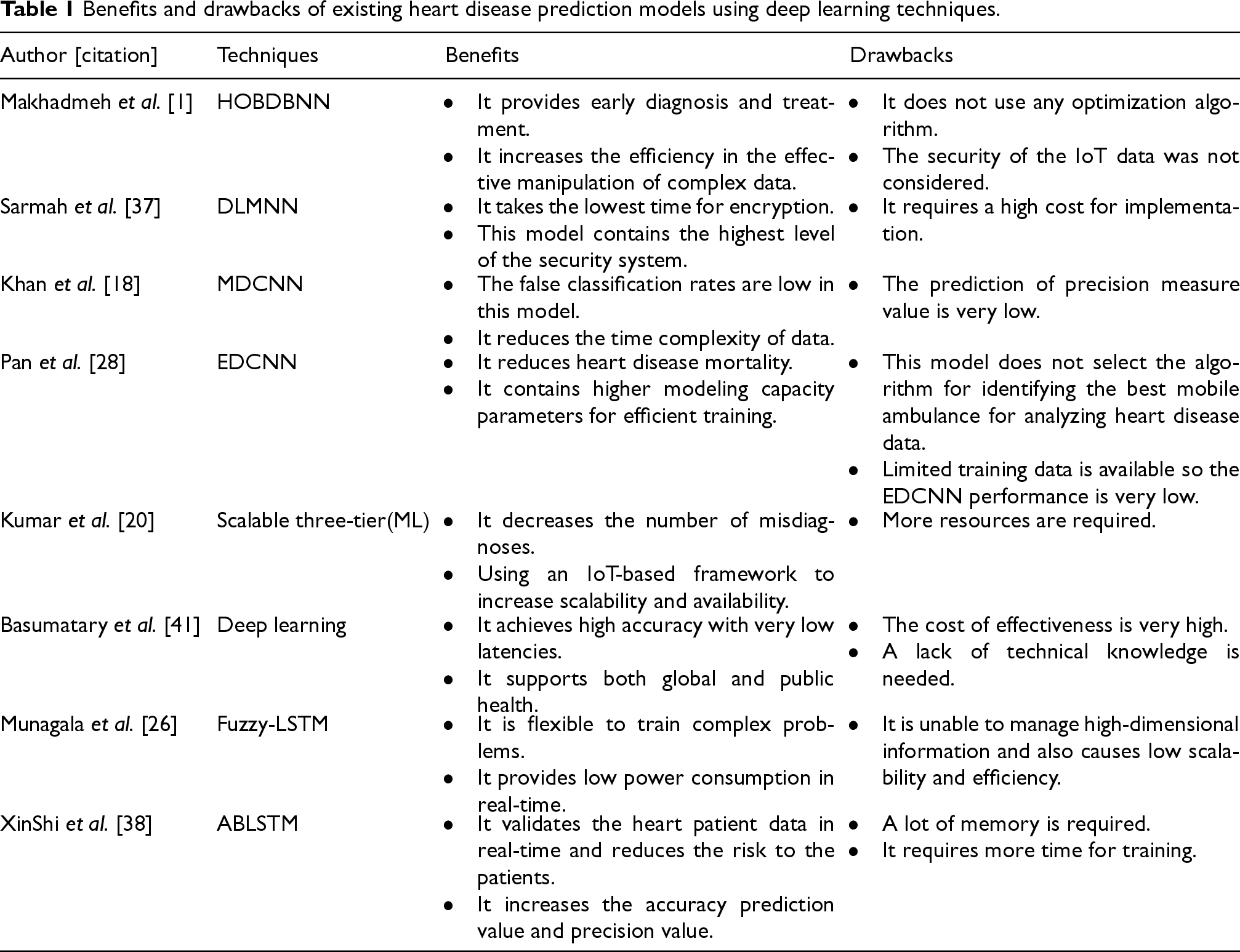
Benefits and drawbacks of existing heart disease prediction models using deep learning techniques.
Most of heart disease detection model demands, high-performance hardware consisting of multi-core graphics processing units that require a lot of electricity and a lot of computational time in the early stage. Therefore, many deep learning techniques have been developed for heart disease prediction, and some of them are listed in Table 1. HOBDBNN [1] provides early diagnosis and treatment. Also, it increases the efficiency in the effective manipulation of complex data. But, it does not use any optimization algorithm. DLMNN [37] takes the lowest time for encryption against the existent AES. Also, this model contains the highest level of the security system. Yet, requires a high cost for the implementation. MDCNN [18] it ensures a lower value of prediction of precision measure value. EDCNN [28] reduces heart disease mortality. Also, it contains higher modeling capacity parameters for efficient training. But, the model does not select the algorithm for identifying the best mobile ambulance for analyzing the heart disease data, and also limited training data is available, so the EDCNN performance is very low. Scalable three-tier (ML) [20] decreases the number of misdiagnoses. Using an IoT-based framework is utilized to increase scalability and availability. Yet, more resources are required, and also the errors are not corrected by the initial stage. Deep learning [41] achieves high accuracy with very low latencies. Also, supports both global and public health. But, the cost of the effectiveness is very high, and also a lack of technical knowledge is needed. Fuzzy-LSTM [26] is flexible to training complex problems. Also, provides low power consumption to monitor patients in real-time. Yet, it is unable to manage high-dimensional information, and also it causes low scalability and efficiency. ABLSTM [38] validates the heart patient data and reduces the risk to the patients. Also, it increases the accuracy prediction value and precision value. But, a lot of memory is required.
By resolving the above mentioned critical issues a new IoT-based heart disease prediction model is implemented using intelligent and machine learning heuristic algorithms. Somehow, heart disease prediction is popularly utilized in real time applications like healthcare and mobile based applications. Additionally, the research work is focused to implement a novel method called Trans-Bi-LSTM-GRU. The overfitting issues are resolved by the developed method, and also it has the tendency to solve the gradient vanishing problems. Often, the designed HCEFSO algorithm is suggested for parameter optimization among the classifiers. Thus, it helps to fasten the performance of the developed model. However, the error rate gets minimized to provide effective outcomes. Here, the validation shows that the offered method provides better performance than the existing methods. Thus, it has the ability to identify heart disease in an accurate manner and also doctors can easily diagnose the disease.
Deep learning-assisted IoT-based heart disease prediction framework
IoT-based heart disease prediction
In this modern era, most hospitals have maintained health care data through health information technology, in which the technology has included a huge amount of data that are utilized for retrieving the hidden information for making an intelligent medical diagnosis. On considering machine learning techniques, it has the potential to process huge amounts of data as well as reliably transformed clinical data, which has aided physicians in providing better detection accuracy. In addition to that, an automatic alert generation feature has also been developed in the case of an emergency. Here, IoT-based techniques have been considered a vast field [16,23]. Some of the models like Random Forest, Decisions Tree, and Neural Networks are utilized in the detection process. Consequently, deep learning techniques have been used in healthcare applications [19,32] that take more time for training the complicated neural networking model as well as validate the data. Some of the conventional techniques have also suffered through complexity in IoT applications and healthcare over real-time applications [6,10]. Further, it requires high time for prediction and huge computational resources for both the detection and training process [32]. Hence, there is an emergency requirement for an automatic heart disease detection model using an IoT framework [21,31,45]. The architectural representation of the designed IoT-based heart disease system is illustrated in Fig. 1.
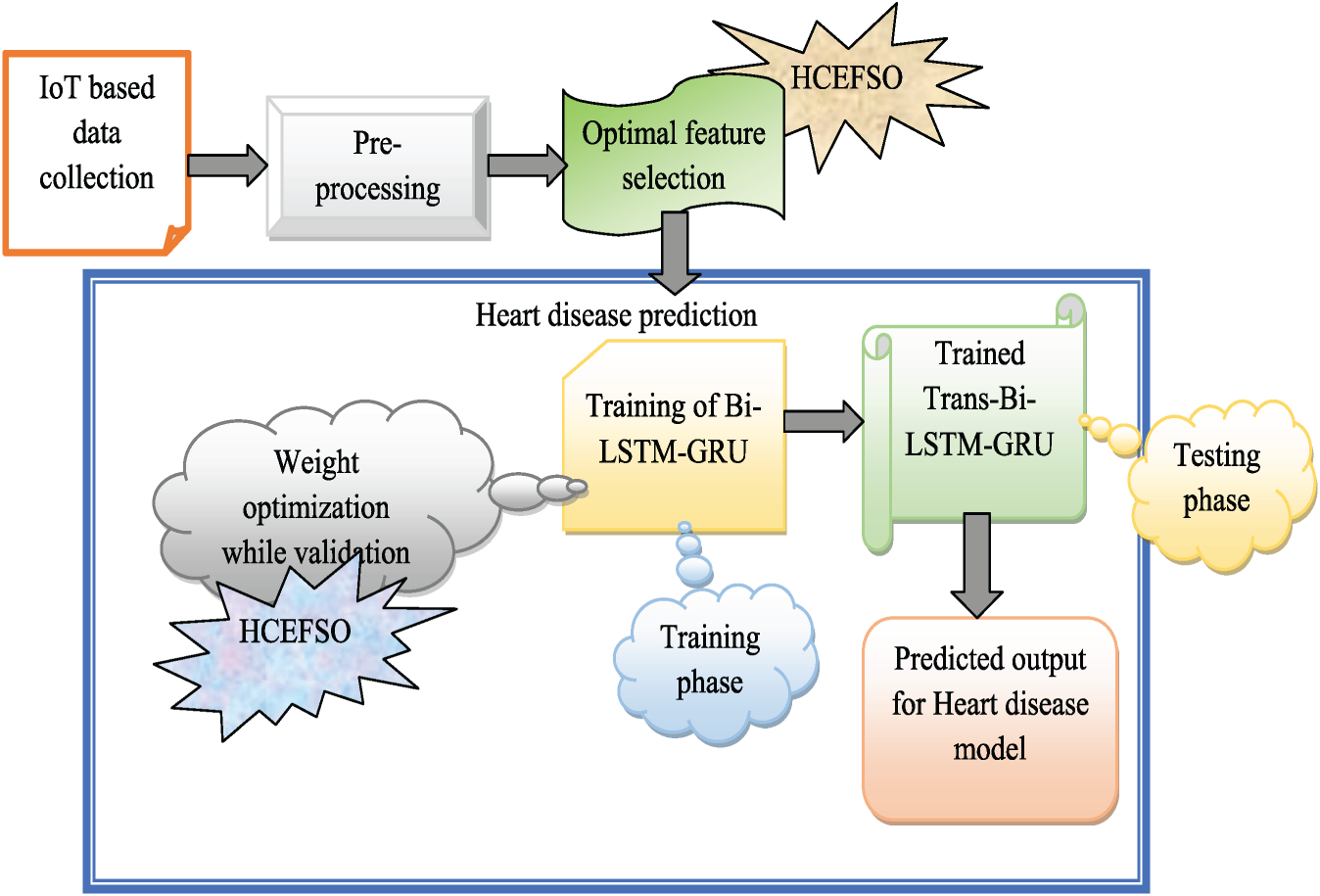
Efficient IoT-based heart disease prediction framework architectural model.
The proposed model is carried out in three different phases. The required data has been aggregated initially, and then the preprocessing of raw data has been performed over the aggregated data. Then, the relevant features of heart diseases have been chosen by utilizing the HCEFSO algorithm model that has been designed via CSA and EFO. Further, the optimally selected features have been forwarded to the training process, in which the technique termed Trans-Bi-LSTM-GRU is adopted to predict heart diseases. Here, the weights of the hidden layer in the Trans-Bi-LSTM-GRU have been updated with the aid of the HCEFSO algorithm while validating the trained model. The trained Trans-Bi-LSTM-GRU network has been utilized in the testing phase for the prediction of heart diseases. Finally, the experimental results have been assimilated by different conventional IoT-based heart disease prediction systems for testing the effectiveness of the given model.
The data that are significantly required to perform the efficient IoT-based heart disease prediction framework has been initially gathered from three datasets. The dataset links and its description are detailed in Table 2.
Datasets description in the heart disease prediction models and their description.
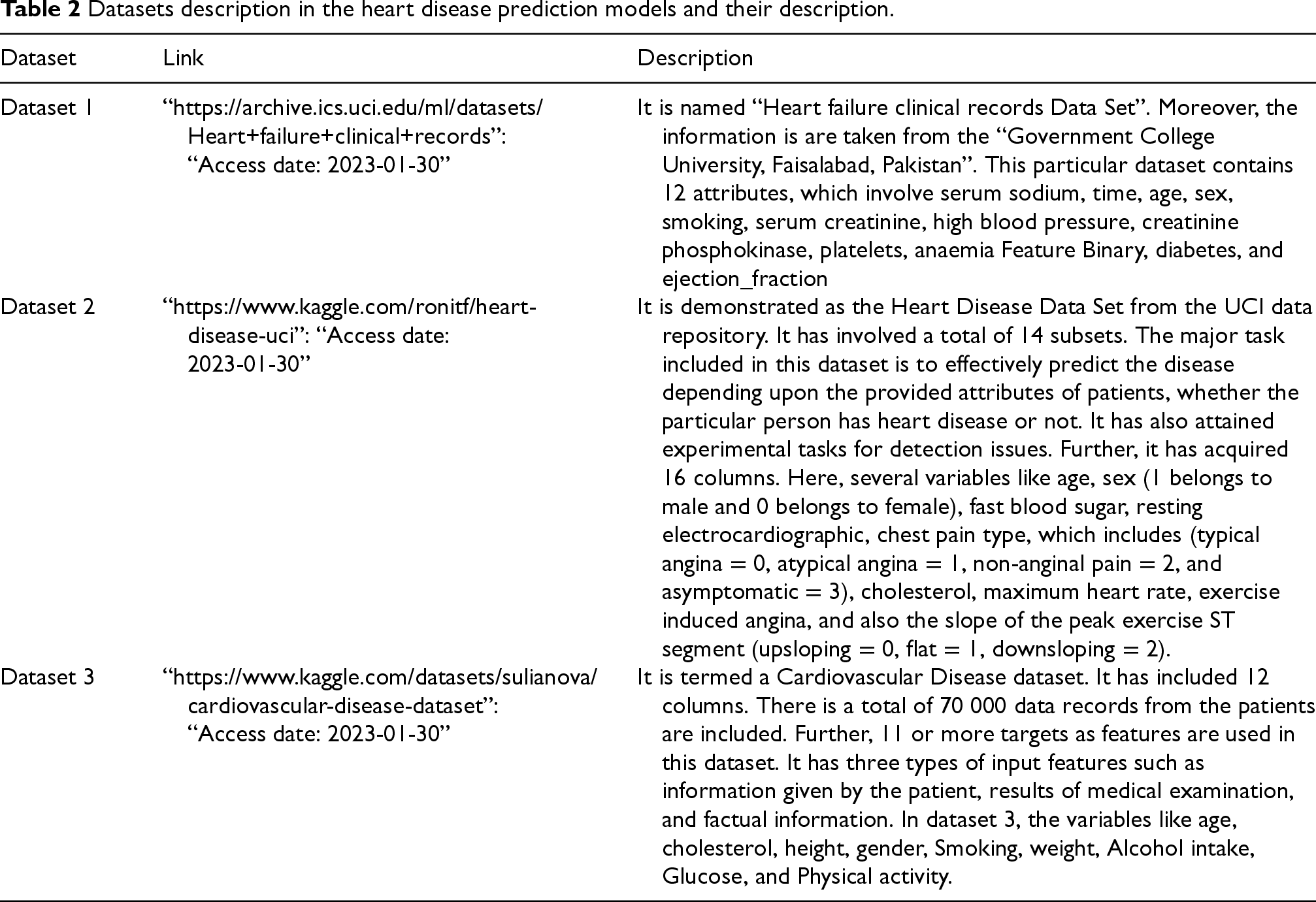
Datasets description in the heart disease prediction models and their description.
The data that is aggregated for further performing the efficient IoT-based heart disease prediction framework is indicated as
In this pre-processing phase,
Hybrid Chameleon Electric Fish Swarm Optimization-based optimal feature selection for heart disease prediction
Proposed HCEFSO
The newly implemented HCEFSO algorithm model has been developed by using two algorithms like, CSA [7] and EFO [46] algorithm model. Here, the EFO algorithm has been used to solve the problems like convergence as well as determined a balance among exploitation and exploration phases. But, it takes more time for execution which degrades the system performance. Additionally, the CSA is used to enhance the flexibility of the model and it also provides better optimal solutions. But it has faced over-fitting issues. In order to tackle the disadvantages of the conventional model and to enhance the performance of the overall model, new techniques called HCEFSO have been developed.

Here, the term
CSA is implemented through the dynamic behavior of the chameleons while hunting for their food as well as on navigating over the near swamps, deserts, and trees. It changes its location when roaming over the trees and deserts looking for its food. In the initial phase, the CSA has been defined as the population dependent on the algorithm; it applies the initial population for initiating the process of optimization. Here, the population of the chameleons is indicated as y over the dimensional searching space termed as x along with each chameleon has defined as a candidate solution to issues has been depicted over the two-dimensional matrix a of size denoted as 
Here, the position of the
The initial population has been developed on the dimension of the problem as well as the number of chameleons in the search space as given in Eq. (3).

Here, the uniformly created random number lies in the interval of
The velocity of the chameleon’s tongue, while it has fallen toward prey has been equated in Eq. (4).

Here, the 
Here, the positive number has been utilized to determine the exploitation capacity is given as ω.
While enhancing the convergence behavior in the CSA has been initialized with the weight parameters. The location of the chameleon’s tongue that has been computed over the motion is equated in Eq. (6).

Here, the earlier speed of the 
Consequently, the EFO algorithm is demonstrated as the nature-dependent algorithm model that has been implemented by the prey location of the electric fishes as well as by communication mannerisms.
With regard to the active mode, the probability for the individual termed as 
Here, the amplitude has become the dominant factor, which it has caused the local search space and choosing of the best individuals. It has been demonstrated, where the probabilistic neighbor selection has been forced while performing the exploration phase before the exploitation stage.
Here, the individual indicated as Z has been selected by 

Here, the individual has lost the information about the location completely, in which does not accept the particular region that is positioned. For tackling the problems, the EFO algorithm has determined the modified parameters, and it is given in Eq. (10). The probability for such the individual altering the entire trait that is significantly minimized within the acceptance condition and it is given in Eq. (11).

Here, the term
Finally, the passive electro-location has altered one of its parameters among the individual indicated as 
Here, the term
While the 
Finally, the overall process repeats until attaining the best optimal solution, and its pseudo-code is given in Algorithm 1.
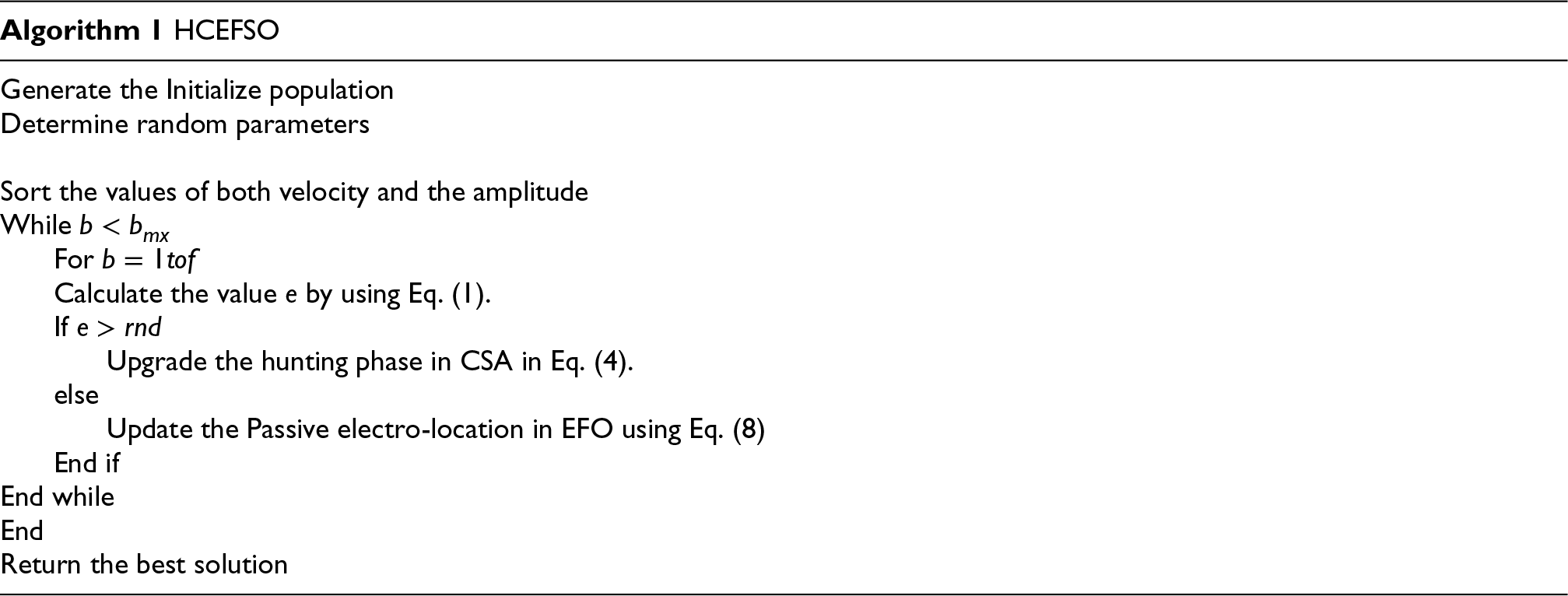
The input is given as 
Here, the term 
Here,
During this process, the optimally selected feature data by using the HCEFSO algorithm has been given as
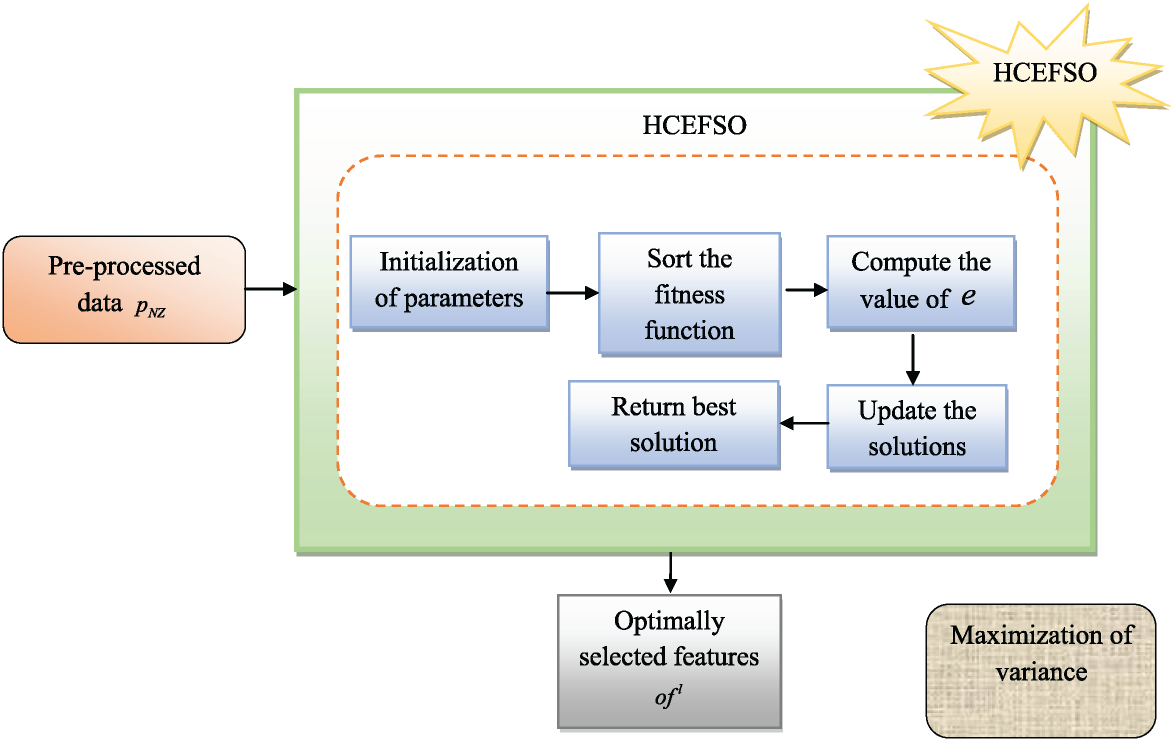
HCEFSO-based optimal feature selection for IoT-based heart disease prediction framework.
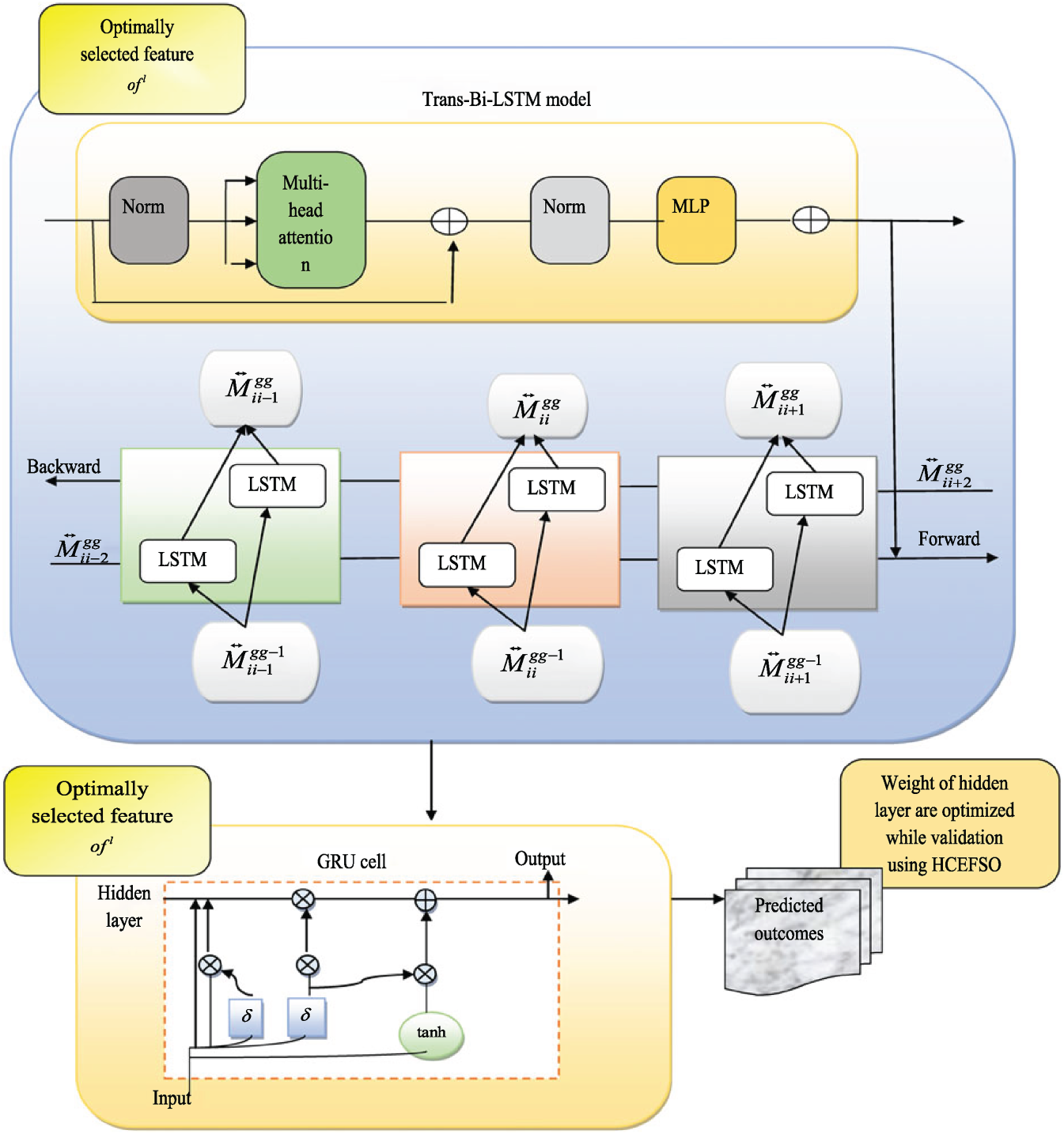
Proposed Trans-Bi-LSTM-GRU model with parameter optimization for the given model.
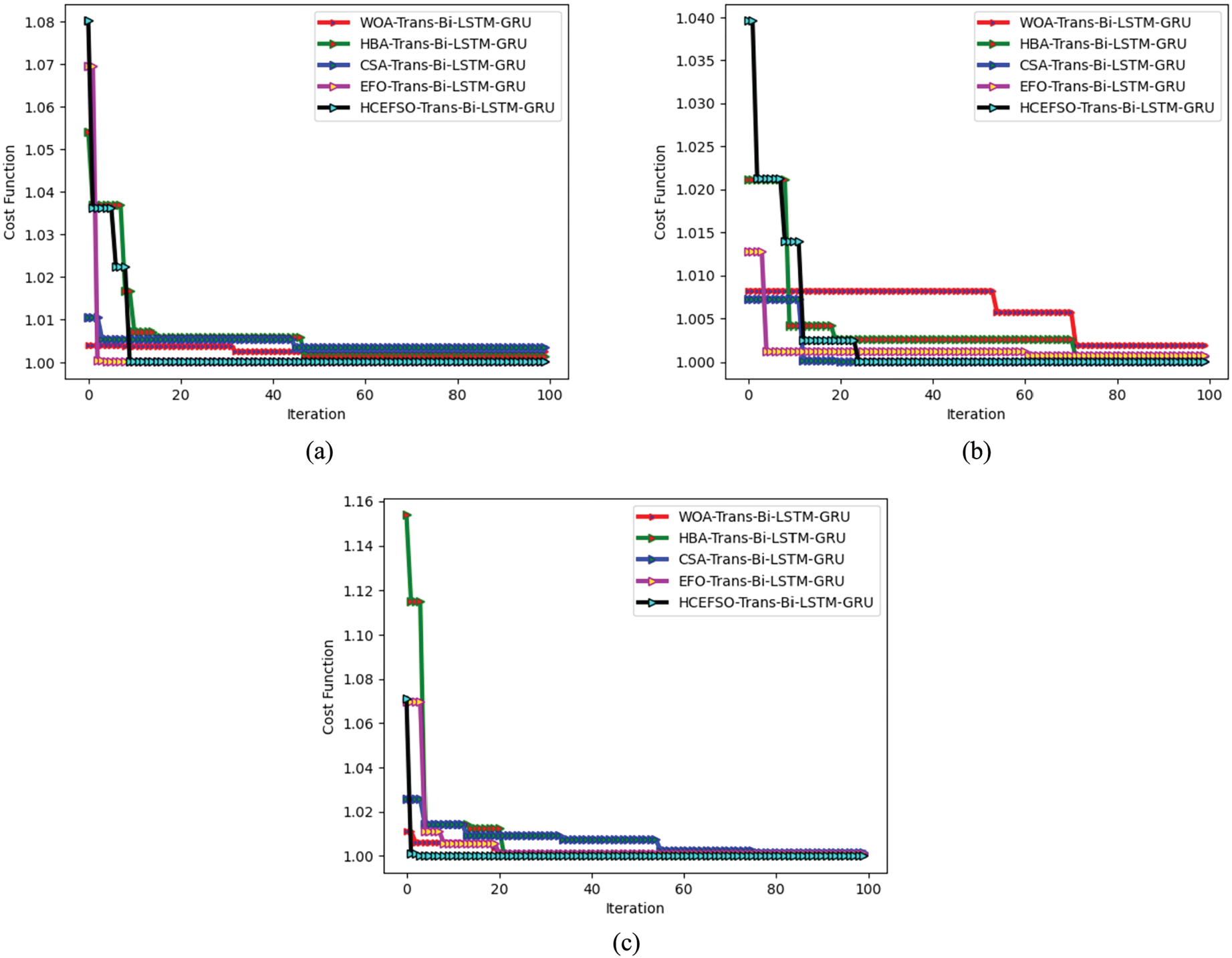
Convergence analysis for the efficient IoT-based heart disease prediction framework regarding “a) dataset 1, b) dataset 2, and c) dataset 3”.
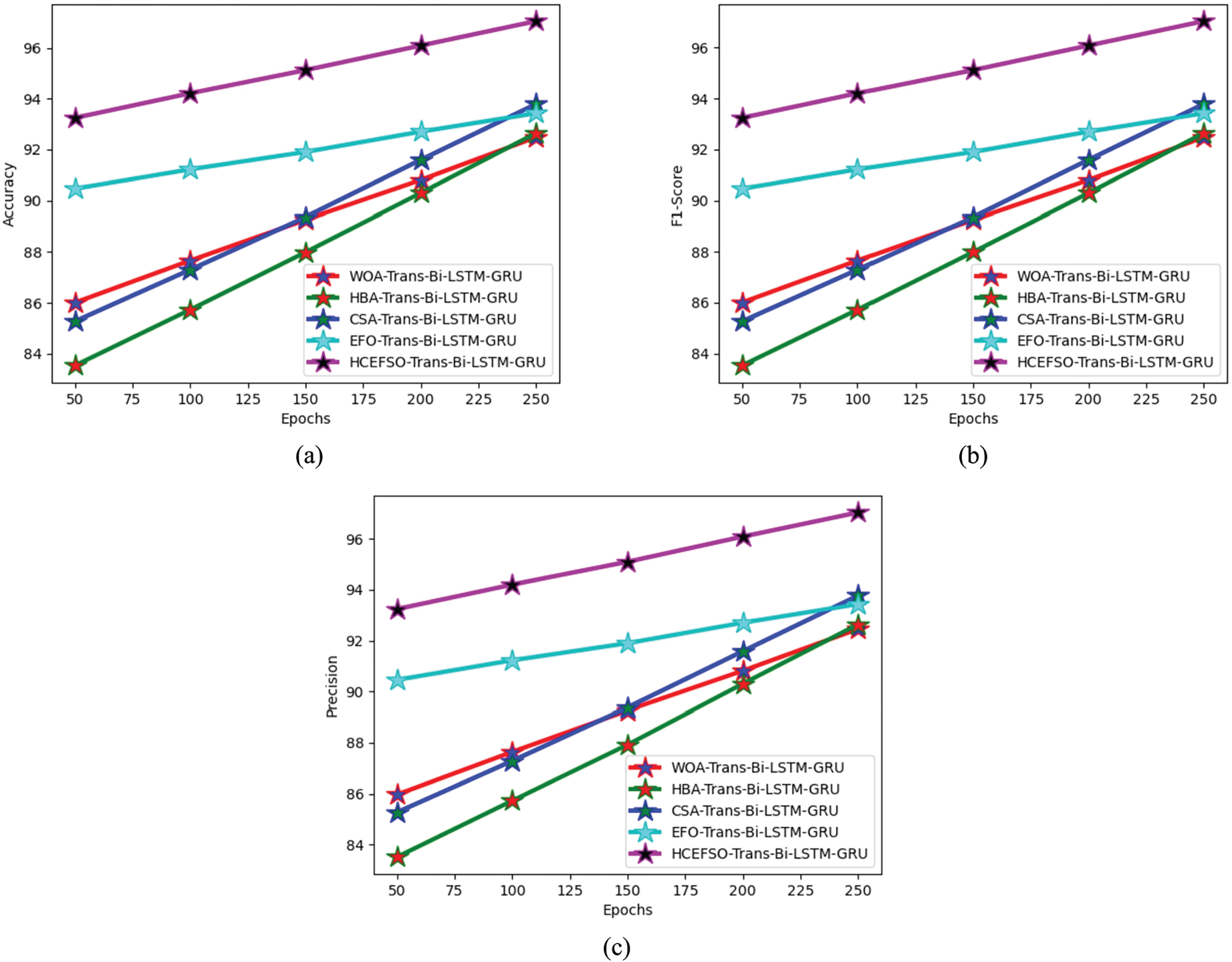
Analyzing the performance for the efficient IoT-based heart disease prediction framework for dataset 1 with various algorithms regarding “a) accuracy, b) F1-score, and c) precision”.
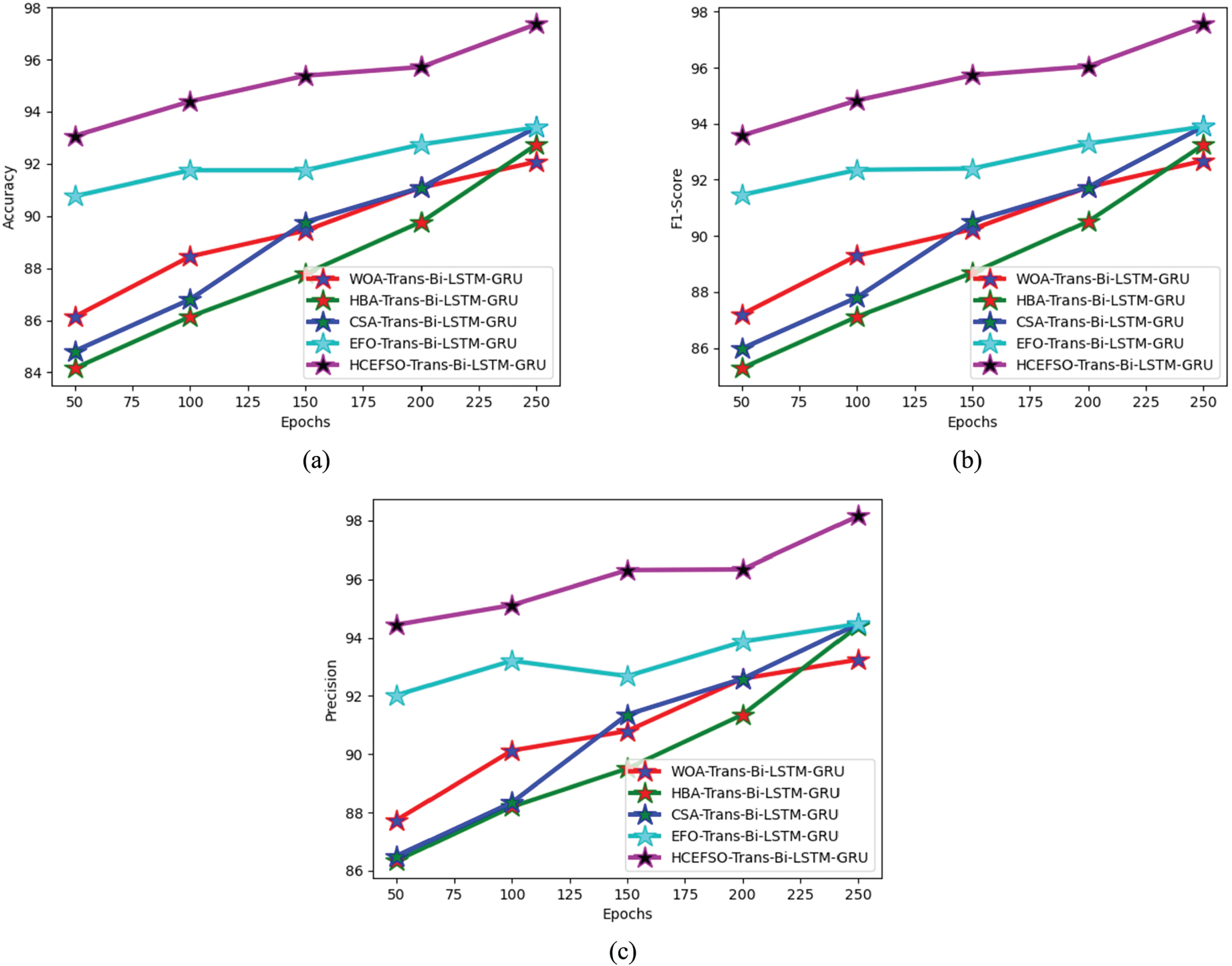
Analyzing the performance for the efficient IoT-based heart disease prediction framework for dataset 2 with various algorithms regarding “a) accuracy, b) F1-score, and c) precision”.
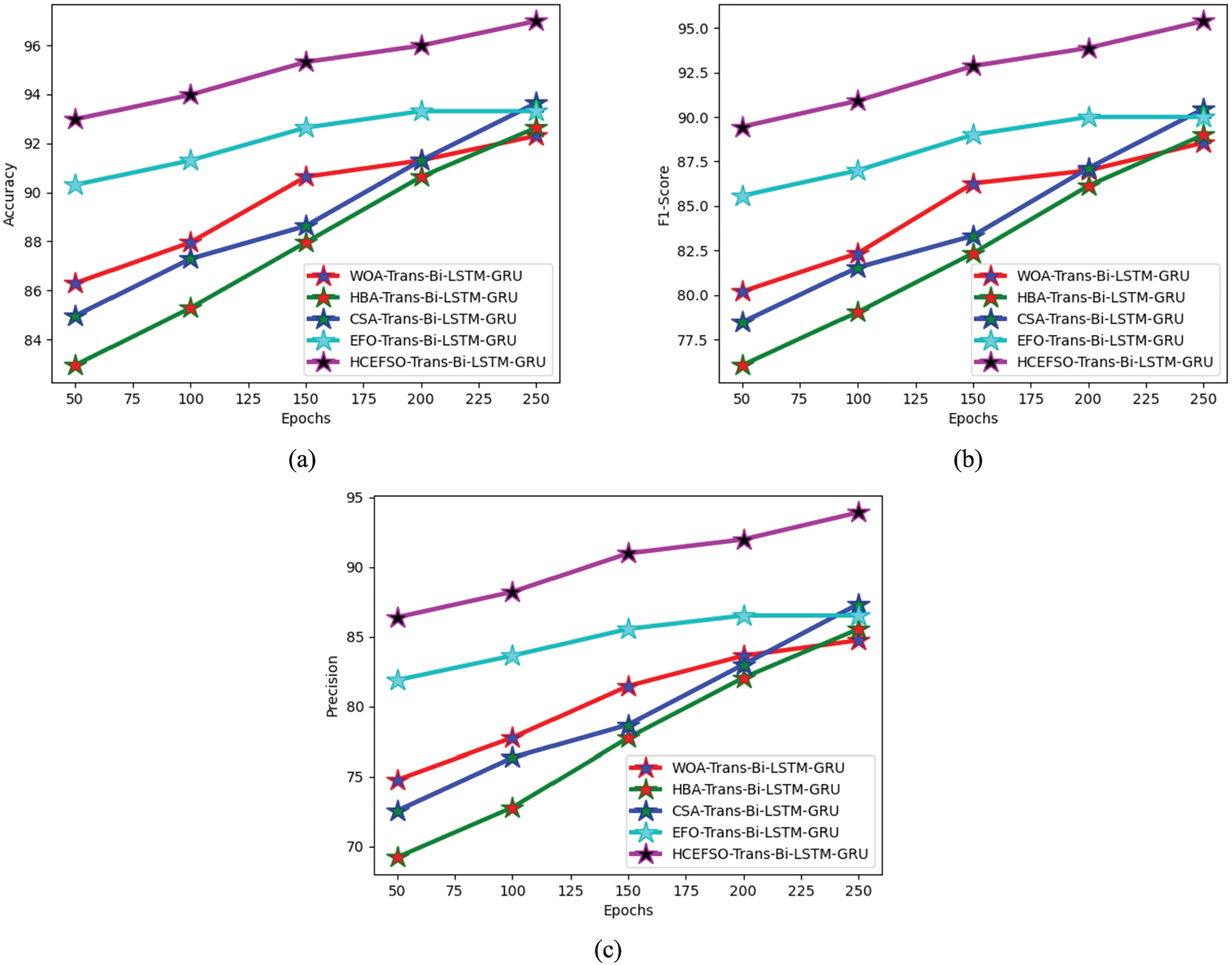
Analyzing the performance for the efficient IoT-based heart disease prediction framework for dataset 3 with various algorithms regarding “a) accuracy, b) F1-score, and c) precision”.
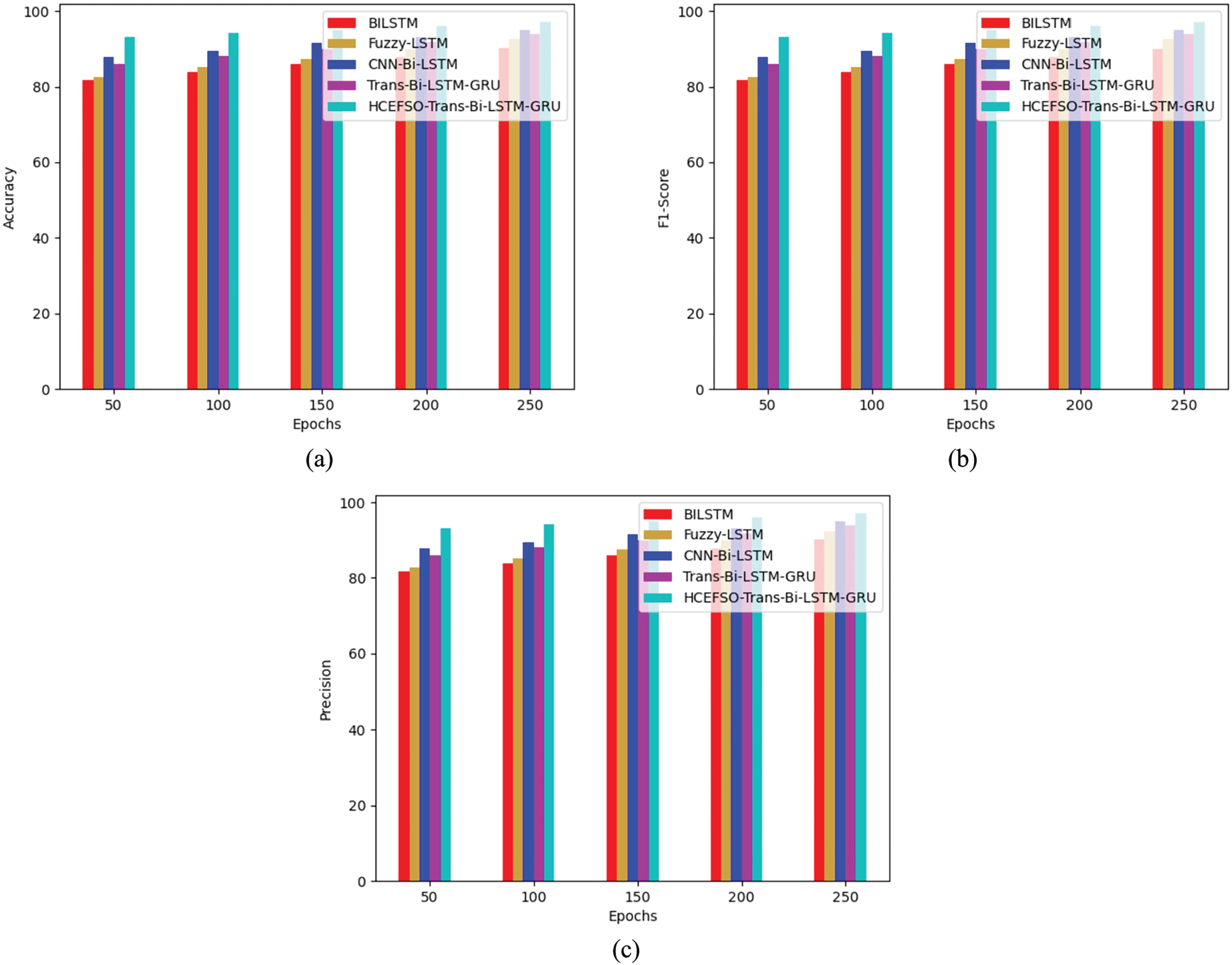
Analyzing the performance for the efficient IoT-based heart disease prediction framework for dataset 1 with various classifiers regarding “a) accuracy, b) F1-score, and c) precision”.
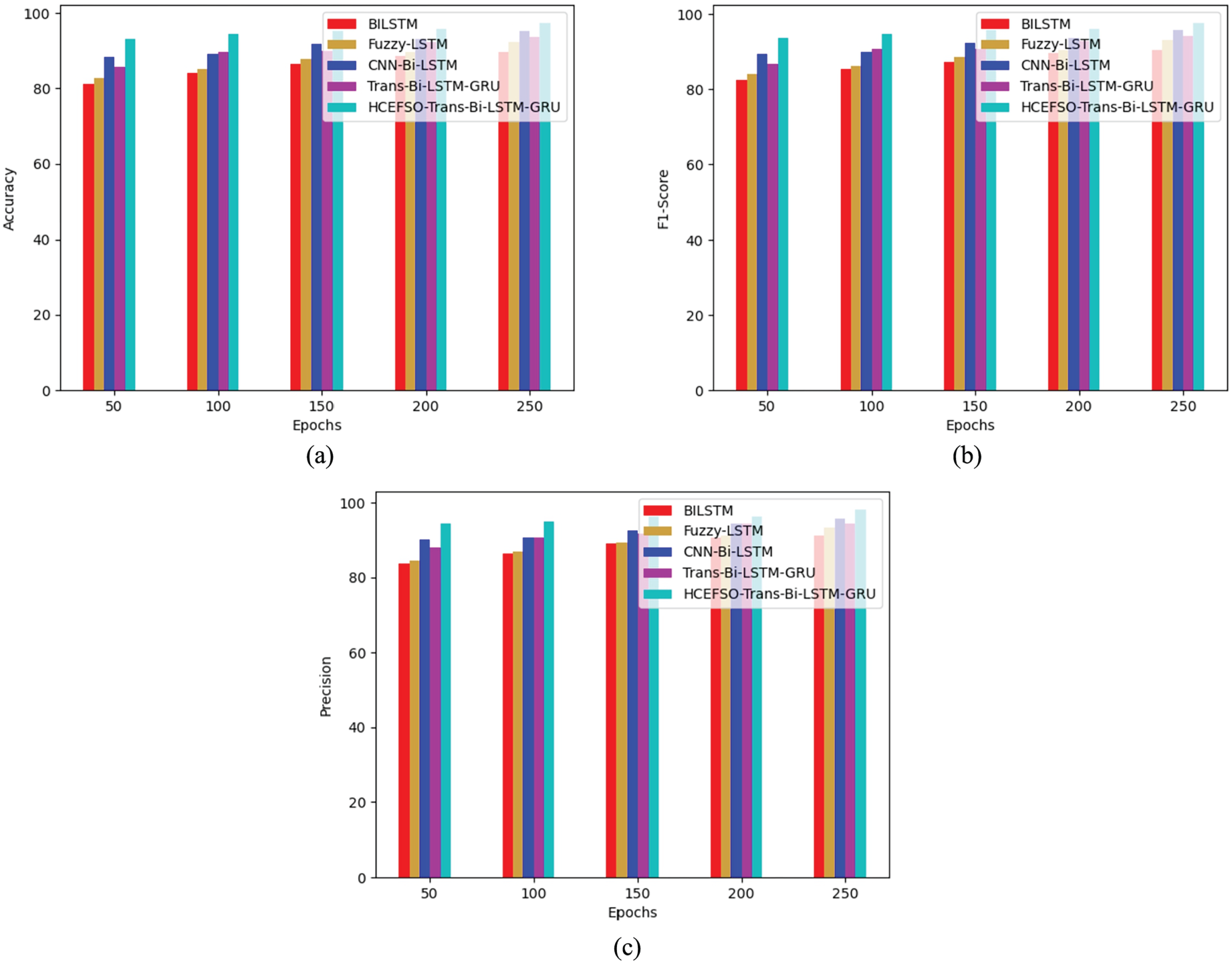
Analyzing the performance for the efficient IoT-based heart disease prediction framework for dataset 2 with various classifiers regarding “a) accuracy, b) F1-score, and c) precision”.
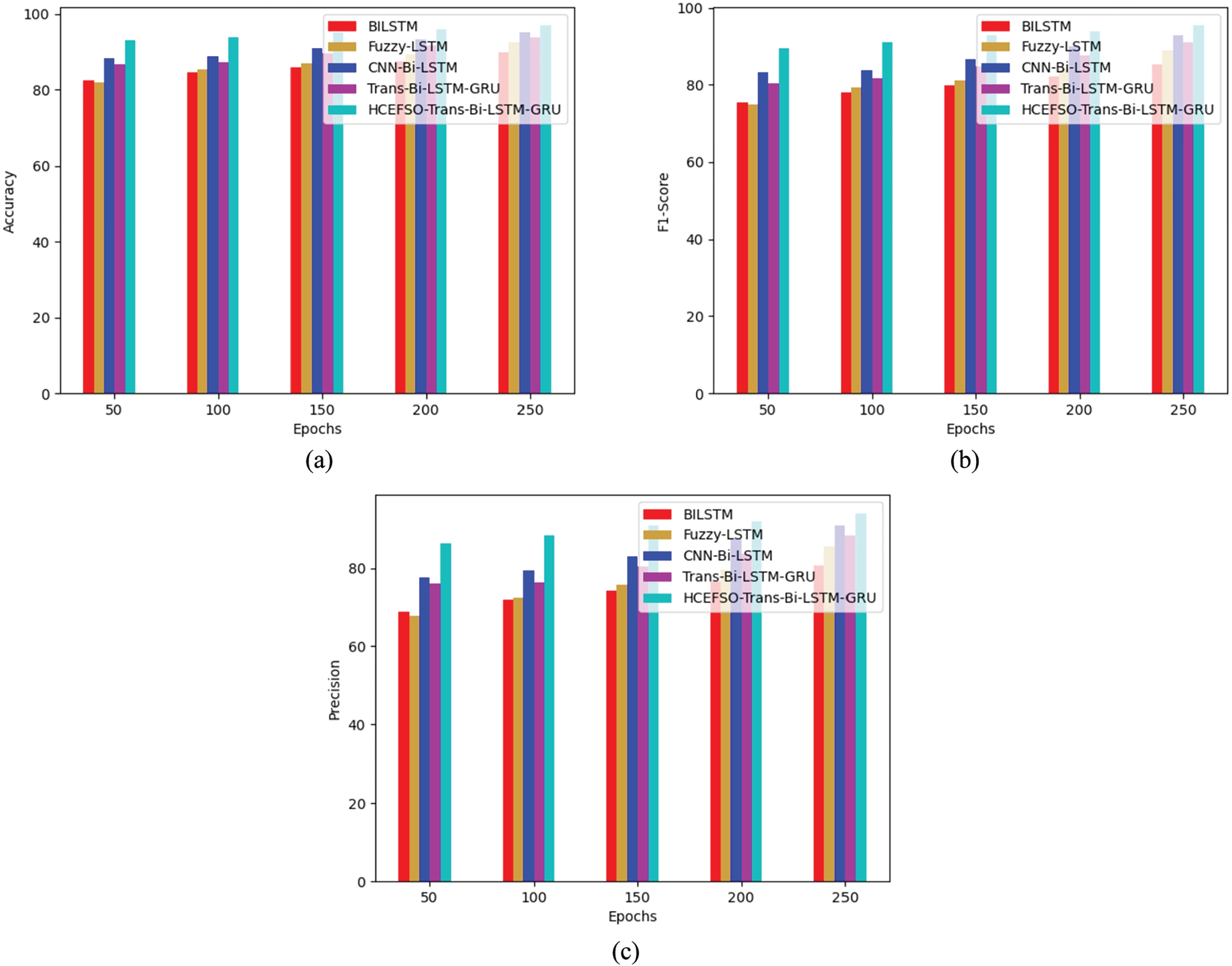
Analyzing the performance for the efficient IoT-based heart disease prediction framework for dataset 3 with various classifiers regarding “a) accuracy, b) F1-score, and c) precision”.
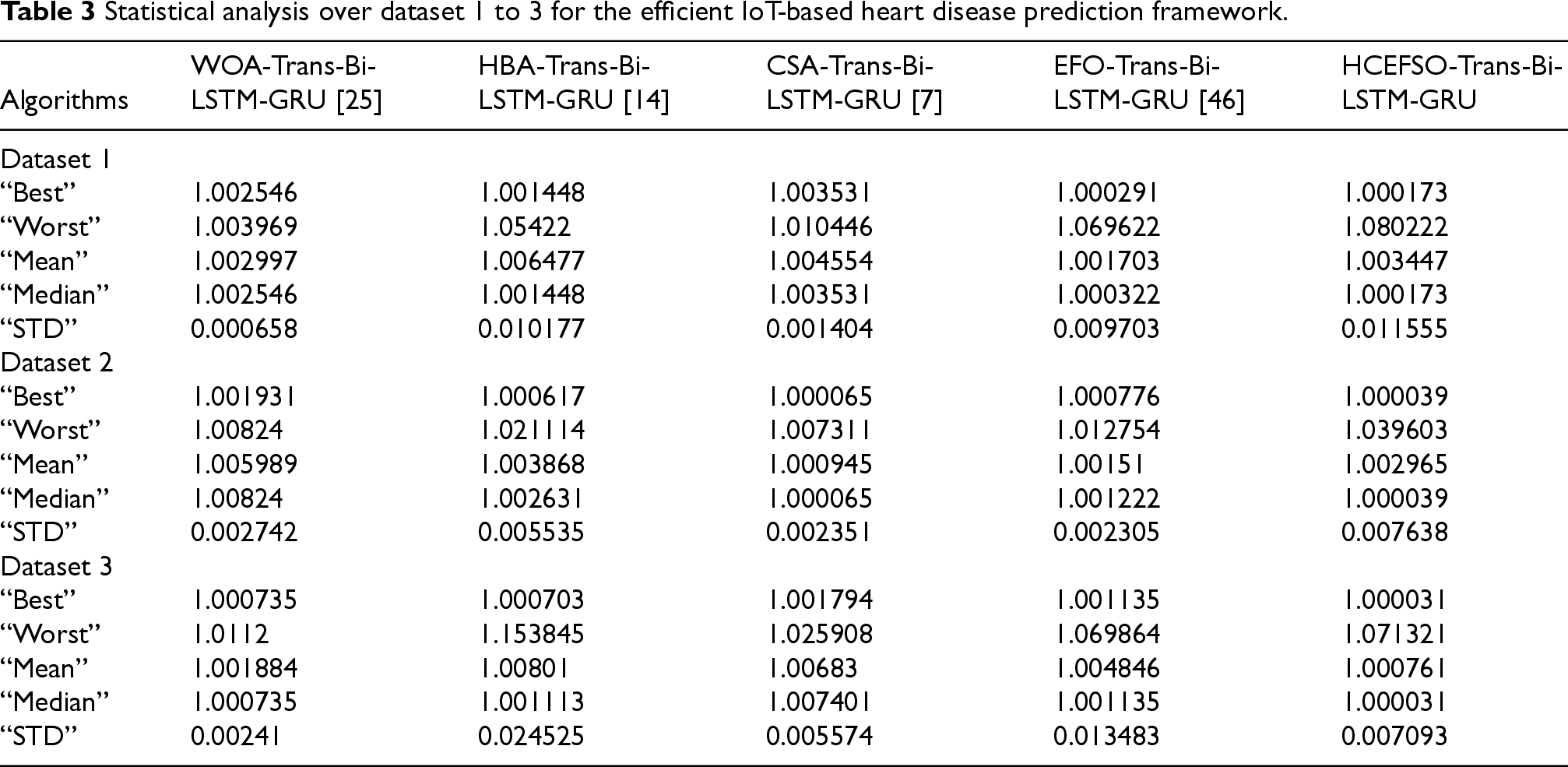
Statistical analysis over dataset 1 to 3 for the efficient IoT-based heart disease prediction framework.
Trans-Bi-directional Long Short-Term Memory
Several deep networks have been emerged and progressed in the field of healthcare. However, the heart disease prediction is necessary to decrease the mortality rate. In existing, the long term dependency cannot be captured in the CNN model.
The transformer-based techniques over the Bi-LSTM [24] model have been effectively defined as the Trans-Bi-LSTM framework. In this case, the self-attention mechanism has been employed by using the transformer model for carrying out their job. Moreover, it has made a specified progression in using the computer vision-dependent framework. It has also been used for language process regarding the general process. For designing the Trans-Bi-LSTM framework effectively both the encoder as well as the decoder has been integrated into a structure. Further, it has been utilized for executing the sequence-to-sequence task. Here, the encoder block has been used alone in order to determine the outcomes. It has then resulted in the encoded output being fed to the Bi-LSTM techniques.
The optimal selected features are given as input to the transformer approach. Here, the primary function of the transformer model is to compute the attention level. It has been then followed through the determined the attention score along with the help of the “scaled dot product attention model.” Through the input, “the query vector termed as 
Here, the 
Thus, the results attained from the transformer are taken as
In an LSTM network is defined as the type of RNN technique in which it has utilized four gates. This gate can decide which portion of the detail is needed to be propagated or sent or forgotten. Here, the LSTM model also has the potential to outperform well in applications, which all need to be carried out in the long sequence of data when assimilated over the RNN model, as well as minimized the over-fitting issues in the RNN model. It technique has trained two LSTMs on the input sequence. Among these two, one of the input sequences through the first step data to the last one, as well as the second over the reversed copy of the input layer. Thus, in this case, it has provided an additional context to the network as well as the outcomes is faster.
Here, the Bi-LSTM techniques have processed the given data in both the backward and forward orientation by two separate LSTM layers. Further, the forward hidden state has been depicted as 
Here, the input layer is represented as
The GRU [48] techniques have been included in the RNN model. The RNN model has the potential to memorize the arbitrary length of the input pattern by developing a connection among the units through the directed cycle. The major key component over the RNN has been defined as the transition function in every time step indicated as 
Here, the differentiable and the nonlinear transformation function are indicated as H. The RNN technique holds its memory of the previous input over the internal state of the networking model, and thus, the recurrent structure has been considered as the memory of previous inputs. A supervised learning layer has been added on top to map the attained depictions 
Here, the bias vector has been depicted as 



Here, the hyper-parameter that represents the dimensionality of hidden vectors is termed as X, the element-wise product is denoted as •, the terms that are shared by all time steps are indicated as
Finally, for attained the predicted outcomes, the proposed model has been carried out in three different phases training, validating, and testing. In phase 1, the optimally selected feature
The Bi-LSTM model has been considered as the most beneficial technique that has been used for processes like translation, recognition, and classification. But, this model has been regarded as slower as well as acquires more time for training the data. Consequently, the GRU model has utilized less memory space for processing the data, and it also can provide more accurate accuracy values. It is also used to address the vanishing gradient issues. But, it has a low learning efficiency rate and slow convergence rate. For overcoming the limitation in the conventional model and to further enhance the performance of the prediction model, the newly developed Bi-LSTM-GRU has been implemented to provide a better accuracy rate as well. The objective function is also used to attain the maximized accuracy, and it is given in Eq. (25).

Here, the weight among the range 
The terms are representing
Simulation setup
The implemented IoT-based heart disease prediction model was performed in Python. However, the Python works on various platforms like Windows, Mac, etc. Additionally, Python is simple but it is effectively perform in object oriented programming. The processor Intelcore i3 is taken, and also the RAM size is 8 GB and 64 bit. Additionally, the version is considered as a community version. The “population size was 10, chromosome length was 8, and the maximum number of iterations was 25” were used. Some of the algorithms like “Whale Optimization Algorithm (WOA) [25], Honey Badger Algorithm (HBA) [14], CSA [7] and EFO [46] and classifiers like BILSTM [24], Fuzzy-LSTM [26] CNN-Bi-LSTM [24,34]” have been utilized to evaluate the performance of the developed model.
Performance metrics
The implemented proposed IoT-based heart disease prediction framework is measured below.









Here, Fig. 4 has depicted the convergence analysis of the proposed model for datasets 1 to 3 by varying the iteration. The proposed model HCEFSO-Trans-Bi-LSTM-GRU has a lower value when assimilated over other conventional techniques that have further enhanced the performance of the given model.
Validating of the given model for datasets 1 to 3 among various algorithms
The validation of the performance of the given model for datasets 1 to 3 among various algorithms have been depicted in Fig. 5 to 7. In Fig. 5 (a), the value of accuracy by varying the epochs at 250 for the proposed -Trans-Bi-LSTM-GRU model is 7%, 7%, 6%, and 6% higher than that of the WOA-Trans-Bi-LSTM-GRU, HBA-Trans-Bi-LSTM-GRU, CSA-Trans-Bi-LSTM-GRU, and EFO-Trans-Bi-LSTM-GRU models. Thus, it has improved the performance of the efficient IoT-based heart disease prediction model.
Validating the given model for datasets 1 to 3 among various classifiers
Figure 8 to 10 indicated the validation of the performance of the given model for datasets 1 to 3 among various classifiers. On considering the positive measure F1-Score, the value of the suggested model HCEFSO-Trans-Bi-LSTM-GRU has a higher value over other conventional models by 11%, 10%, 6%, and 7% for BILSTM, Fuzzy-LSTM, CNN-BILSTM, and Trans-BILSTM-GRU model at 50 in dataset 1. It has been similar for all other datasets also. Thus, the prediction rate for the heart disease model has been effectively increased with maximized accuracy.
Statistical analysis over the given model for dataset 1 to 3
Table 3 has represented the statistical analysis for the given model for datasets 1 to 3 in terms of various algorithms. For dataset 3, the value of the mean for the developed -Trans-Bi-LSTM-GRU model is 0.1%, 0.7%, 0.6%, and 0.4% higher than that of WOA-Bi-LSTM-GRU, HBA-Bi-LSTM-GRU, CSA-Bi-LSTM-GRU, and EFO-Bi-LSTM-GRU models. Hence, it has improved the performance of the newly developed model.
Overall validation of the efficient IoT-based heart disease prediction framework in terms of algorithms for datasets 1 to 3.
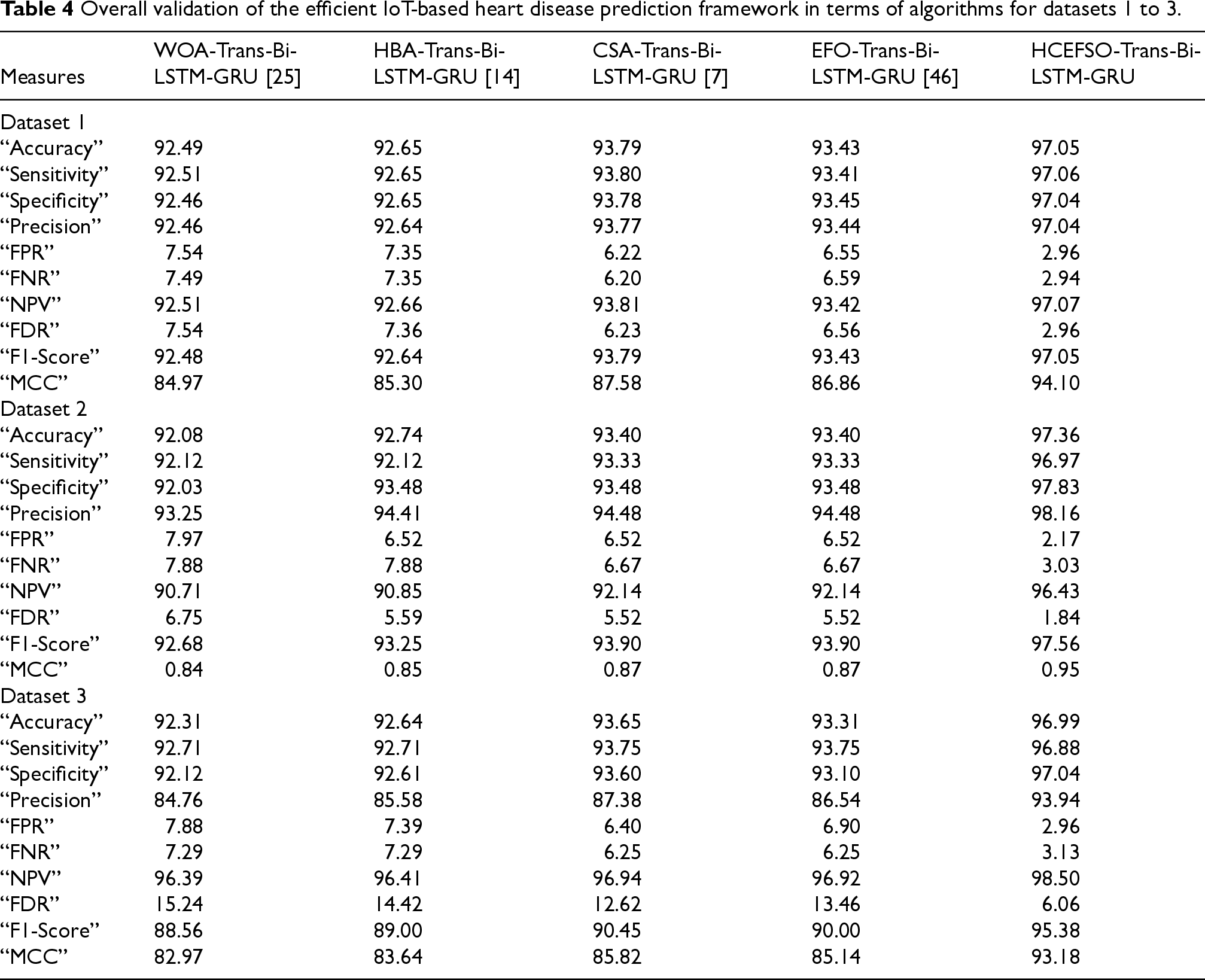
Overall validation of the efficient IoT-based heart disease prediction framework in terms of algorithms for datasets 1 to 3.
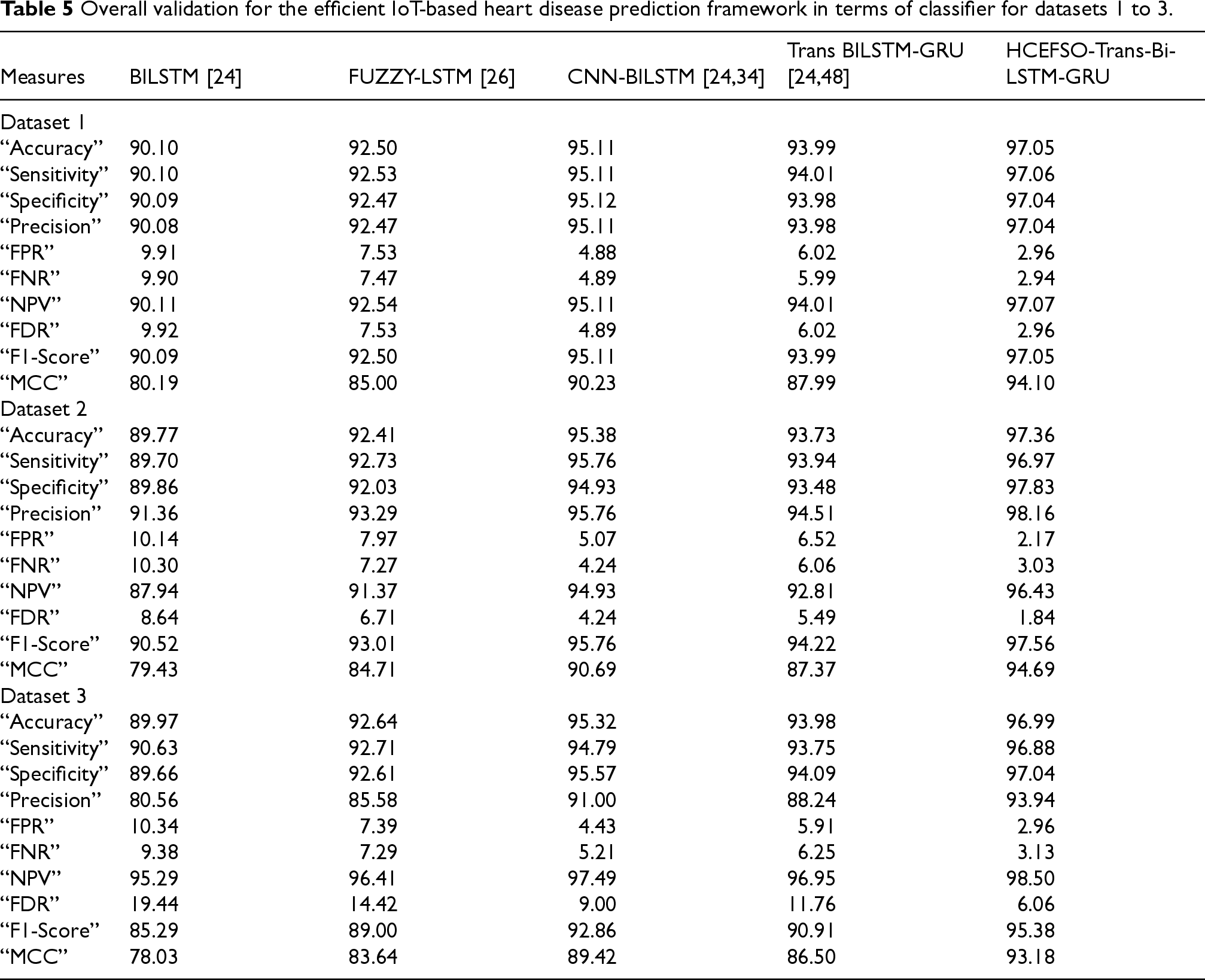
Overall validation for the efficient IoT-based heart disease prediction framework in terms of classifier for datasets 1 to 3.
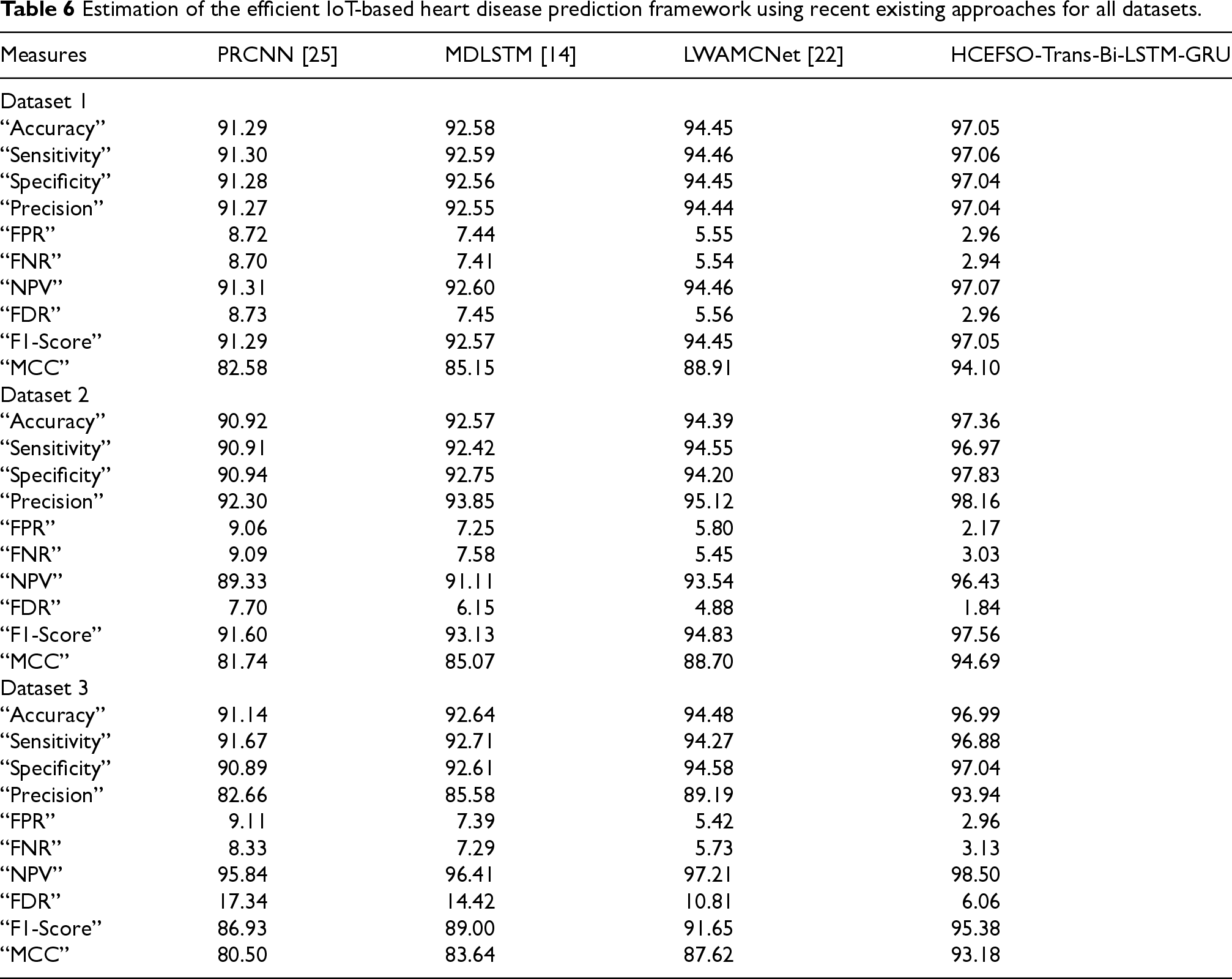
Estimation of the efficient IoT-based heart disease prediction framework using recent existing approaches for all datasets.
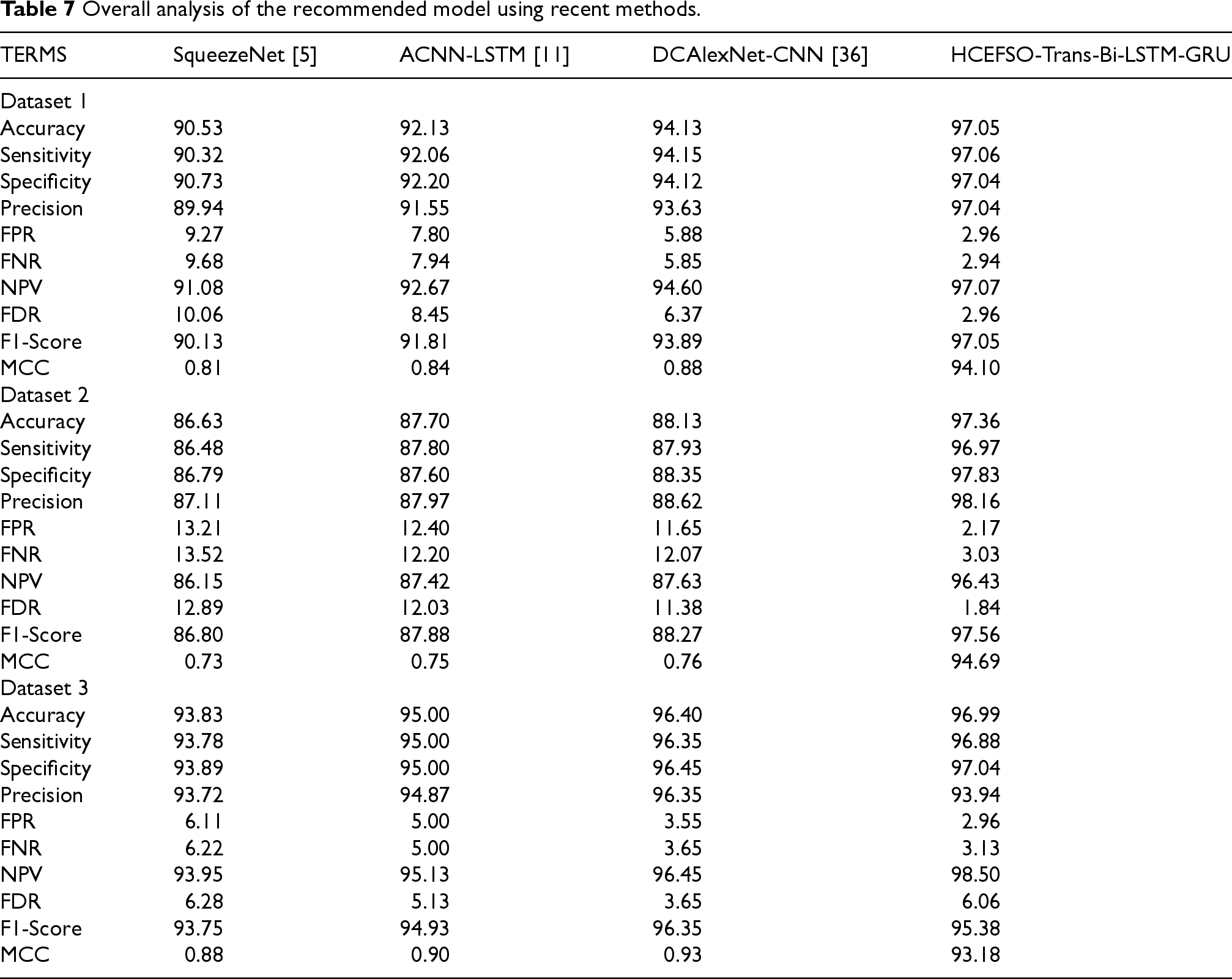
Overall analysis of the recommended model using recent methods.
The overall validation for the proposed model by varying the algorithms and classifiers has been depicted in Tables 4 and 5. In dataset 2, for the algorithm, the suggested HCEFSO-Trans-Bi-LSTM-GRU model has 5%, 5%, 3%, and 4% higher in terms of precision when assimilated with other models like WOA-Trans-Bi-LSTM-GRU, HBA-Trans-Bi-LSTM-GRU, CSA-Trans-Bi-LSTM-GRU, and EFO-Trans-Bi-LSTM-GRU. Consequently, on considering the positive measure MCC, the value of the suggested model HCEFSO-Bi-LSTM-GRU has a higher value over other conventional models by 16%, 10%, 4%, and 7% for BILSTM, Fuzzy-LSTM, CNN-BILSTM, and Trans-BILSTM-GRU model at 50 in dataset 1.
Estimation of the proposed model using recent baseline approaches
An estimation of the offered method using recent approaches is shown in Table 6. In dataset 1, the accuracy of the suggested HCEFSO-Trans-Bi-LSTM-GRU model is secured at 6.31%, 4.83%, and 2.75% elevated performance than PRCNN, MDLSTM, and LWAMCNet. Accordingly, the FNR rate of the designed HCEFSO-Trans-Bi-LSTM-GRU model attains 66.66%, 60.02%, and 44.40% better than PRCNN, MDLSTM, and LWAMCNet for dataset 2. Though, the prediction rate for the heart disease model attained enhanced performance when compared to the other baseline approaches.
Comparative analysis of the offered model
The overall analysis of the designed model with recent methods are validated for detecting the heart disease is shown in Table 7. The performance shows 7.8%, 5.9%, and 3.6% better performance than SqueezeNet, ACNN-LSTM, and DCAlexNet CNN. Here, the table analysis shows that the developed model is validated with various performance metrics. Moreover, the DCAlexNet CNN model achieves a second better performance. The empirical analysis of the developed model attains better performance than recent methods.
Discussion of obtained results
The explanation according to the outcomes of the designed method over baseline algorithms and classifiers is depicted as below. From Fig. 6.3, the convergence analysis of the designed method attains enriched performance regarding a number of iterations. Here, the WOA algorithm attains a second better performance, and also, the WOA algorithm attains a lower performance. Due to this, it has the chance to fall into the local optimum. On considering the evaluation of the baseline algorithms, the efficacy of the offered HCEFSO-Trans-Bi-LSTM-GRU- based prediction rate of heart disease based on the IoT model is computed regarding a number of epochs. Here, the EFO algorithm attains a second better performance, and also the HBA algorithm attains a lower performance. However, the HBA algorithm has generated real-world constrained problems. From Fig. 7, while taking the computation of the classifiers the CNN-BiLSTM achieves a second better performance, and also the Bi-LSTM attains a lower performance. It generates overfitting and misclassification issues. The outcomes of the designed method revealed that it is statistically significant. While taking the overall performance of the designed method attains 97.05 % accuracy and 97.03% precision rate.
Conclusion
In recent years, heart disease is the prime cause of death in the world. However, the prediction of cardiac disease is a challenging task in the medical field. Medical diagnosis is considered as an important, and also it is quite complex to provide accurate treatment effectively. Especially, a recent technology based on IoT is performed for precisely detecting heart diseases. Here, the IoT collects the sensor information of cardiac disease using recent applications in healthcare organizations. Thus, this paper has effectively implemented the prediction of heart disease based on the IoT. Initially, the data was collected from the standard datasets, and then the preprocessing of raw data was also performed over the aggregated data. Then, the relevant features of heart diseases were chosen with the help of the HCEFSO algorithm, which was integrated by the CSA and EFO. Then, the optimal features were forwarded to the training process, in which the techniques termed as -Trans-Bi-LSTM-GRU were adopted. Here, the weights were updated with the HCEFSO algorithm while validating the training phase. The trained Bi-LSTM-GRU network was utilized in the testing phase for the prediction of heart diseases. In dataset 2, for the algorithm, the suggested HCEFSO-Trans-Bi-LSTM-GRU model has 5%, 5%, 4%, and 4% higher regarding accuracy when assimilated with other models like WOA-Trans-Bi-LSTM-GRU, HBA-Trans-Bi-LSTM-GRU, CSA-Trans-Bi-LSTM-GRU, and EFO-Trans-Bi-LSTM-GRU. The validation outcomes were aided to show the improved performance of the IoT-based heart disease prediction systems. The final validation of the designed model achieves 97% regarding accuracy. While validating with precision, the developed model attains 93%. Moreover, the IoT platform that uses the HCEFSO algorithm helps the doctor to monitor and diagnose the patients in a precise manner. However, in this work, the deep learning strategies require more amount of labeled data. Here, the marking of medical images is a crucial task and time-consuming. It needs intelligent and ensemble techniques to resolve these problems. The synthetic data that are utilized to address the privacy concern as well as to overcome the constraints need to be developed in the future.