






Abstract
BACKGROUND:
Improving Occupational Health and Safety performance has become a challenge for industry, because investing in technology, equipment, or robust management systems has not been enough to prevent accidents in the workplace. With the expansion of commercial relations and the intensification of competitiveness in the global market, leadership is essential to prevention.
OBJECTIVE:
Evaluate leadership in occupational safety through a case study.
METHODS:
The leadership training methodology “The seven steps of leadership and worker involvement” was adapted and applied. Data collection was conducted through the application of diagnosis, training, and monitoring of the evolution of the leadership performance in the management of occupational safety via structured interviews, monitoring of accidents and statistical analysis of the data.
RESULTS:
Research has shown that assertive leadership behavior positively influences performance in the management of occupational safety and the results of this case study showed a reduction in accidents with injuries of more than 50%.
CONCLUSIONS:
Evidence shows that there is a correlation between safety leadership behavior and the reduction in the occurrence of accidents.
Introduction
With increased globalization and competitiveness, organizations have focused on seeking new strategies and management tools to continuously improve the performance of their processes and the quality of their products and services with the aim of increasing their profitability and competitiveness [1]. This scenario has a direct impact on the relationship between people and their work and has become a major concern in society due to the impact on workers’ health and the sustainability of organizational reputations[2]. Technological innovation has advanced within industries and the aspect related to the quality of life and safety of workers has been neglected, highlighting not only the lack of ability to meet and comply with the wide range of standards and laws, but also a significant deficiency in terms of safety and protection [3]. For a long time prevailed the concept that man should be adapted to the machine, to the detriment of value human beings [4]. A work environment that does not offer adequate environmental conditions and does not value the individual is not capable of offering the necessary elements to form a balanced, fair, and responsible society and assure human values, much less attain the objectives that a job demands [5].
In view of global growth, work accident rates and occupational diseases can significantly affect the competitiveness or even threaten the survival of an organization, as well as affect a company’s reputation. Despite the advances in labor legislation, investment in prevention technologies, and improvement of work organization, workplace accidents are still a serious health problem for workers around the world [6].
Toward the end of the 20th century there was a significant increase in leadership and safety culture research. Results of this research have facilitated technological improvements as well as work design changes and the use of personal protective equipment in the majority of industries, which has in turn allowed significant advances. Even with these improvements, there are still too many incidents/accidents in the workplace; therefore, occupational safety is still a significant concern [7].
It is important to emphasize the importance of the role of and the need for responsible intervention by organizational leaders in the management of occupational health and safety. Those with management responsibilities must demonstrate their commitment to the continuous improvement of operations, implementation of practices for the reduction and control of risks and prevention of work accidents [8]. For work activity to be socially sustainable and provide appropriate health and safety conditions for workers, raising the awareness of organizational leaders regarding the prevention of accidents must occur [9]. Leadership can be characterized by the involvement of three elements: influence, group, and objective. Leaders have the power to influence the behavior of their subordinates; this process develops in a group context. The behavior of group members is influenced to achieve the goals set by the leader. These elements remained clear in the leadership development process until the mid-1980s. Thereafter, the fundamental characteristic of leadership, concentrated on developing shared values that furthered the goals of the organization. In this way, leaders began to exercise the function of “changing the way people think about what is desirable, possible and necessary” [10].
In this context, it is emphasized that leaders and managers, as well as organizational factors have a significant influence on safety, either directly or through their impact on worker behavior. Management and organizational failures, such as inadequate systems, poorly designed equipment, or lack of resources, the origin may often be attributed to insecure manager behavior, have the potential to influence the performance of the entire organization in terms of occupational safety [11]. Leaders play a key role in influencing the management of occupational health and safety when they develop a culture of prevention within in their organizations. Leaders should involve all staff in matters of health and safety, deciding on funding, training workers to take preventive measures and adopting healthy and safe procedures; providing employees with appropriate tools and equipment; providing examples of good practice through their own behavior; ensuring that health and safety is a daily priority during operations and involving employees in health and safety decisions [12]. There are three indispensable factors for achieving results in any human endeavor: leadership, technical knowledge and method. Leadership is the most important of these factors, simply because without it nothing happens. Leadership has the power to turn intentions into actions. There is no point in trying to change methods or technical knowledge without the leadership to make it happen [13]. It is clear that leadership exerts a strong influence on the formation of organizational values and is an effective instrument of cultural change. Leaders teach by example, if they value safety, those being led will also value it. If they neglect security rules to meet goals, such a deadline or event they will mistakenly demonstrate to a team that production is given greater value than the life of an individual [14]. Over time, many leadership styles have emerged, however, regardless of the model, being a leader means balancing how to be cautious with being responsible, having vision, knowing how to work as a team, and being innovative. It also entails understanding that everyone is different, has their own opinion. A good leader must know how to measure and value the characteristics of his/her coworkers so that he/she can have a solid and effective group [15].
Leadership in occupational health and safety is aimed at protecting the health, safety, and well-being of workers in the workplace, reducing risks, and preventing damage or illnesses arising from work-based activities [16]. In the industrial sector, leader effectiveness is usually evaluated through the performance of indicators such as productivity and profitability. However, in light of increased globalization, valuing well-being and preservation of quality of life factors impacts absenteeism and job safety and have also become part of the responsibility of leaders [17]. Scientific studies have shown that the commitment to, and involvement of, managers with safety at work is the most important factor in achieving a satisfactory level of safety in the workplace [8, 18]. When the organization establishes guidelines, allocates resources and assigns safety performance as the responsibility of leadership, this indicator becomes sustainable [19]. Over 50 years ago, Heinrich advised “The supervisor or foreman is the key man in industrial accident prevention. His application of the art of supervision to the control of worker performance is the factor of greatest influence in successful accident prevention” [20].
Against this background, one of the key points needs to be a consensus; at the heart of a climate of safety are worker’s perceptions of supervisor’s true priorities or value of safety [21]. It is important to emphasize that leadership should stimulate the development of a proactive culture of occupational safety, where the organization and all workers are actively involved and contribute their perceptions, values, skills, and safe behavior practices [22]. A supervisor’s response to safety significantly influences workers’ safety behaviors [21]. A supervisor must have the capacity to identify and understand changes in human behavior and to transmit assertive feedback [23]. To ensure safe performance in an organization, it is essential that an environment that supports safety be developed through compliance and adherence to legal requirements, procedures, policy, culture, and so on [24]. On the other hand, to monitor human behavior, supervisors need to be trained in job safety and have experience and knowledge of workplace tasks and environmental conditions. In general, these professionals require a safety risk assessment and communication techniques qualification, in order to establish rules and perfectly clear that safety is everyone’s responsibility [25]. Supervisors need to be skilled enough to achieve manpower productivity targets, to manage health and safety risks and to gain their subordinates respect. Needless to say workers must be supported by their managers to be successful [26].
A supervisor’s role includes conveying expectations of accountability related to performance, creating an environment that sustains and provides support so that the team accomplishes its work safely while protecting their own well-being [27]. It is imperative that leaders regularly assess their team’s performance to verify the level of competence using tangible measures. Leaders should establish indicators and goals to monitor their team’s level of safety performance. High levels of job security performance come from well-planned activities and a work environment that is compatible with the required level of safety. At times where there are high levels of pressure from an organization’s executive board to obtain results, such pressure must be carefully managed by leaders to avoid having a negative impact on operational levels. Supervisors play an essential role in the performance of their subordinates’ behavior and should trust their subordinates, stress the importance of safe behavior, and act with consistency of purpose [23, 28].
In this context, leaders should strive to encourage and provide resources for safe working practices and their decisions should reflect their commitment to safety. Organizations that have an excellent safety record have two key characteristics: good leadership and a great organizational culture. Implement a safety culture through effective and engaged leadership is a crucial success factor. Developing leaders and building a community are the keys to building a sustainable organization and a solid and lasting organizational culture [29, 31].
Occupational safety encompasses people management, work methods and organization, machines, equipment and tools, procedure management systems, qualifications and training, and behaviors and attitudes. Therefore, it is imperative that work be managed by multidisciplinary professionals and with the responsibility and rigor that issues require.
Effective leadership is based on ethics, professionalism, technical knowledge, responsibility, that trusts and respects the individual characteristics of each professional develops teamwork, always strives to balance the needs of the organization and employees, promoting the common good. Leadership encourages and supports risk management, promotes team participation in operational improvements, recognizes safe behavior, and values the continuous improvement. Leaders need to engage in an open dialogue with teams and seek to provide its employees with a healthy, productive and participative work environment.
Given the above, the following research question was developed. Can the behavior of leaders influence the performance of management in Occupational Health and Safety?
Methodological procedures
Qualitative and-quantitative measures were used in this case study. The qualitative method was based on the HSE Institute’s “Leadership and Worker Involvement” model [32]. The quantitative techniques included developing measures to monitor leadership behaviors in relation to occupational safety.
The study was conducted in a medium-sized float glass manufacturing industry based in the south of Brazil.
Study participants comprised the organization’s leadership team which included 33 professionals in management, coordination, and supervisory positions. The sample consisted of operational leadership, that is, those responsible for teams operating in manufacturing processes and that are susceptible to occupational accidents and disorders. Thus, the sample was composed of 18 leaders (6 coordinators and 12 supervisors). They were informed about the methodology, that participation was voluntary and that they were free to opt out at any time without explanation. They all gave their written consent, in accordance with Brazilian legislation.
Documentary research was carried out to analyze the work accident reports in the organization that corresponded to the year prior to the application of the leadership training methodology (May 2015 to April 2016) to form a comparative database against the study period from May 2016 to April 2017.
To determine the performance level of the organization’s leadership behavior in terms of the management of occupational safety, it was necessary to measure the standard of behavioral excellence using the components within “Leadership and Worker Involvement” methodology [32]:
The technical content of the “Leadership and Worker Involvement” methodology [32] was evaluated and adapted for application to the training of management staff in occupational safety in terms of environmental risks, history and type of accidents, leaders’ profiles and the need for improvement within the float glass industry.
The training content was based on the following HSE principles [33]:
“1. Don’t walk by: it is everyone’s responsibility on site to prevent any unsafe acts and conditions that they witness from turning into accidents as soon as they see them. Talk to the person(s) involved and draw their attention to the risks.
2. STOP: all workers should be encouraged to stop working whenever they feel unsafe, no matter if their reasons for doing so turn out to be unfounded. Better to stop than to have an accident.
3. A safe working environment drives safe behavior: if you expect your workers to work in a safe way, you need to make sure that you do all you can to make the environment they work in as safe as possible.
4. Don’t blame the worker until you have accounted for all causes: the causes of unsafe ways of working, accidents, incidents and ill health do not always stop with the worker. The problem can often be traced back to less obvious causes such as decisions made by management and the wider organization.
5. Use your workforce for ideas: your workers can have a more accurate idea of which efforts to improve health and safety may or may not work than you, your management or other experts. They have to deal with the issues every day.
6. Change does not usually happen overnight: do not expect quick wins. Improvements are likely to emerge over time, but only if you stick with it.
7. Knowledge is not enough: simply telling workers that something is wrong, or is a risk, is not enough. They also need to know why, and how to avoid harm if they are to act on the information that you provide.
8. You lead by example: your behavior sends strong signals to your workers as to how they should behave. If you carry out your job in a safe way, your workers are more likely to work in safe ways. If you do not then your workers will not.
9. Encourage co-operation: treat your sub-contractors in the same way as direct employees. Encourage different sub-contractors and trades to proactively communicate with each other. Getting consistency in standards will then be that much easier.
10. Don’t neglect occupational health: if you look after the health as well as the safety of your workers now, you are less likely to store up problems for either you or your workforce in the future.”
The training consisted of seven modules implemented over two four-hour classes per month from May to November 2016. The modules are as follows: Module I – Introduction to Leadership and Worker Involvement; Module II – Cause analysis and Failure Modes and Effects Analysis; Module III – Risk Management; Module IV – Effective leadership in Occupational Safety; Module V – Risk Assessment and Work permission; Module VI – Management of routine in Occupational Safety; Module VII – Management of results in Occupational Safety.
The use of this methodology represents an innovation in the field of leadership training in occupational safety, in Brazilian industry.
Parallel to the training, interviews were conducted with the leaders on a monthly basis using a structured questionnaire. The interview allowed the initial level of behavior of each leader to be evaluated and their behavior was monitored throughout the application of the training. The result of this monitoring was expressed through the evolution indicator of the leadership behavior level.
Work-related injuries, in accordance with the respective responsibilities of each of the leaders participating in the survey, were recorded on a monthly basis in order to monitor leader performance in terms of management of occupational safety. In addition to training and interviews during this phase, which began in May 2016 and extended until April 2017, the number of accidents was also recorded and this was used as an indicator to measure industry health and safety.
To evaluate and determine if the behavior of the leadership effectively influenced performance in occupational safety, the statistical treatment of the data collected via the application of the Hypothesis Test was prepared.
The first step of the test consisted of establishing the hypotheses, as follows: Null Hypothesis (H0) – the average number of occurrences before and after the application of leadership training is equal; Alternative Hypothesis (H1) – the average number of occurrences before the application of leadership training is greater than the subsequent average.
After defining the scope of the null and alternative hypotheses, it was necessary to determine a level of significance that would direct the decision making related to the formulated hypotheses. The level of significance established for the evaluation of tests in the research was α= 0.05, that is, 5%.
Once these parameters were established, the applied scope was defined in Table 1.
Hypotheses test: accidents
Hypotheses test: accidents
In the second stage of the method, the differences of “before” and “after” intervention are calculated. This difference is referred to as di its value is calculated as follows: d i = number of accidents “before” – number of accidents “after”
Based on differences in the number of accidents (di), the mean
In the third stage, with the result of these values, the test statistic will be calculated, considering n < 30, through the Student’s t-test with equation (3).
The value of “n” corresponds to the number of differences calculated and the degree of freedom to be consulted in the Student’s t-table will be given by n – 1.
In the fourth stage, based on the results, the decision was made to accept or reject the Null Hypothesis, where H0 is rejected if the test statistic is situated within the critical region, that is, if tcalc > ttab and H0 is not rejected when the value found is outside the critical region, that is, tcalc < ttab.
The results of the leadership behavior evaluation and monitoring using the Health and Safety Executive methodology [32] allowed the level of the leadership behavior and culture of the organization in the management of occupational safety to be identified.
The evolution of levels of leadership behavior throughout the training process can be observed in Table 2.
Evolution of levels of leadership behavior
Evolution of levels of leadership behavior
The evolution of the behavior level is represented in Fig. 1, showing the positive trend, which continued throughout the training process. The collected data showed an increase (on average 65%) in the evolution of behavioral levels when comparing the results of Module I with those of Module VII.
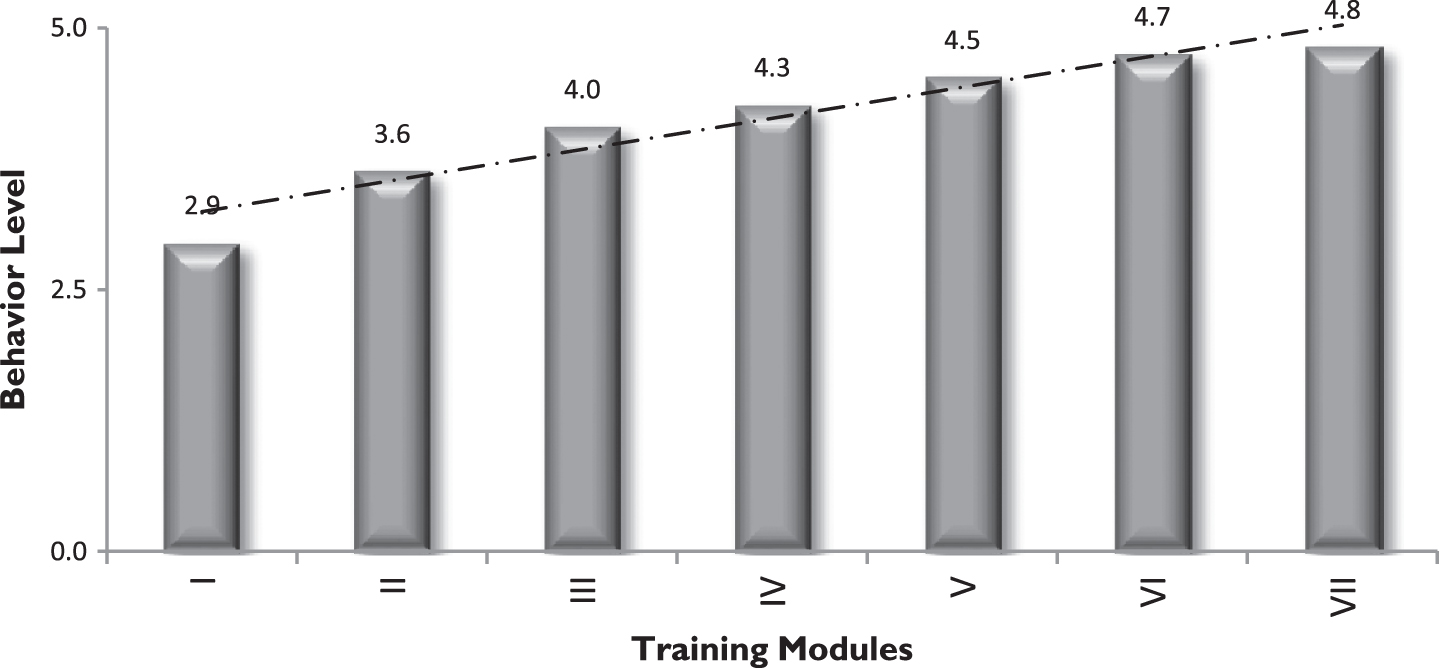
Evaluation level of leadership behavior.
The number of injuries sustained in work-related accidents is an important indicator of industry health and safety. Figure 2 shows the number of accidents for the periods prior to and after the leadership training process.
Figure 2 shows that in the year prior to the survey, the average number of occurrences was 3.5. During the period in which leadership training took place the average was 1.67, that is, there was a decrease of 52% in the number of accidents.
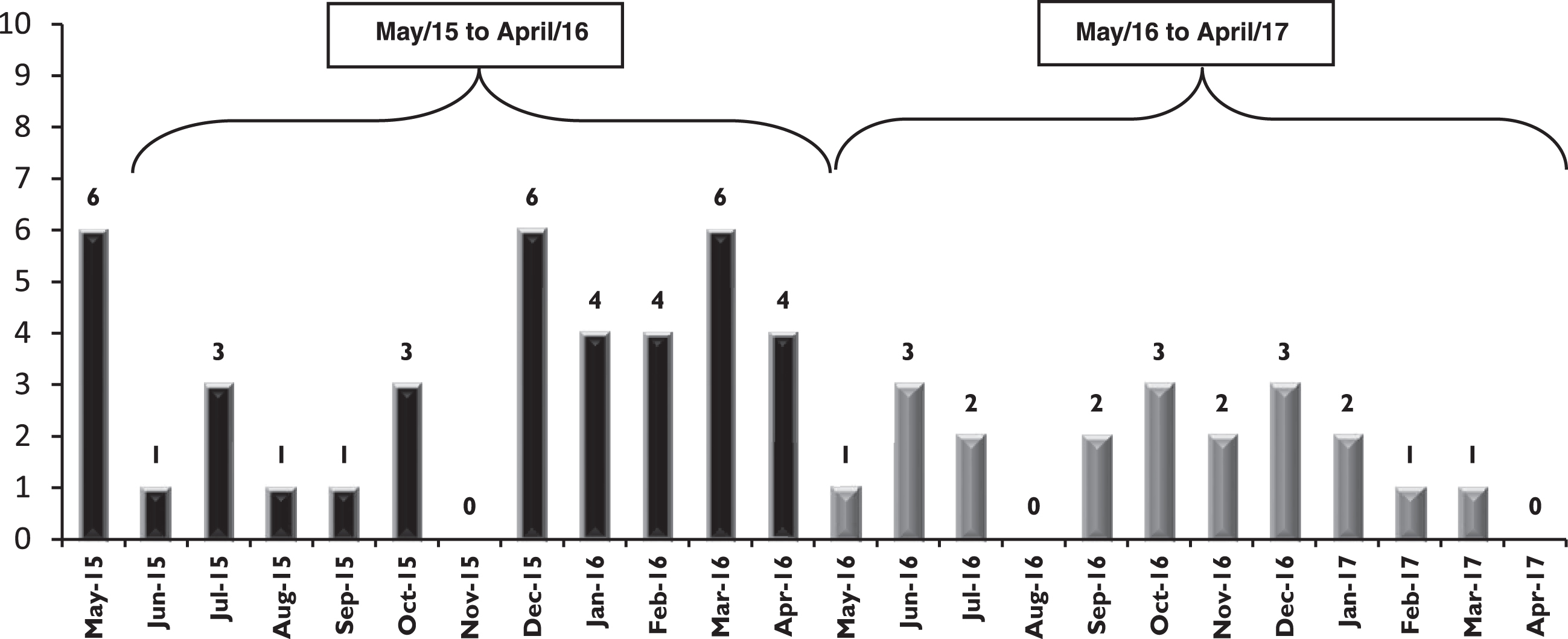
Number of accidents with injuries.
To perform the statistical analysis, the values collected in the research were organized as outlined in Table 3.
Based on the differences in the number of accidents (di), the mean
As a result 2.39 > 1.796, that is, tcalc > ttab, determined that the Null Hypothesis was rejected and it was possible to affirm, that the mean total of accidents with injury decreased after the leadership training. This means that statistical analysis of accidents before and after the supervisor training attended by the supervisors presented enough evidences of its effectiveness not only to reduce the number of occurrences but also the variability, as demonstrated in the Fig. 3.
The leadership improvement opportunities recommended were listed for each type of behavior, with the following results for each of the six elements:
In relation to “ Focus on earning the commitment of its workers to Health and Safety; In the event of an accident or occupational illness due to an unsafe act, make workers reflect on their behavior, as it may not only affect them, but also their co-workers and family; Encourage the commitment of the workforce, beginning all meetings with a reinforcement of Health and Safety practices, giving the subject the attention that it demands.
Accident data
In relation to “ Regularly involve its employees in making decisions regarding Health and Safety improvement solutions; Ensure that workers have received appropriate training and are actively involved in decision-making. Discuss the pros and cons of different options with them and encourage them to participate with ideas; Be obliged to make decisions regarding Health and Safety issues with their team.
In relation to “ Make sure their workers are familiar with line stop procedures; Use appropriate communication and lead by example to ensure that workers feel able to stop working in situations that they find unsafe; Consider Health and Safety to be as important as productivity.
In relation to “ Think about what may go wrong in the future in consultation with their workers, and considering previous risk assessments; Take preventive measures at the site (e.g., signaling/warnings, training, etc.) and apply improvements resulting from specific risk assessments carried out with workers.
In relation to “ Together with their workforce, continue to monitor Health and Safety performance indicators; Take appropriate action based on their findings; Define their objectives to improve Health and Safety.
In relation to “ Adopt formal learning mechanisms related to lessons learned in Health and Safety by disclosing them in the management frameworks; Modify their security management system to ensure compliance; Have their leaders openly admit to employees that their decisions play a significant role in Health and Safety outcomes.
It is worth noting that, of all the aforementioned behaviors, monitoring was evaluated most effectively. This can be explained by the level of differentiated control the organization possesses with regard to the management indicators. Noteworthy are: occurrence records; computerized management systems to analyse causes, actions implemented and evaluation of effectiveness; monitoring of risky behavior and safe behavior by recording and generating daily control statistics; registration of inspections of adherence to procedures; computerized system for access control in restricted (dangerous) areas; control and daily monitoring of incidents, accidents with minor injuries, and significant accidents.
The results of the present study were based on data provided by the leadership of a single organization. The leadership behavior may differ according to the safety culture of an industry. Other factors that may affect replication of the results include the features of the industry, team size according to leadership responsibility, and high hazard and complex working environments. One of the issues to which increased attention should be paid is active employee participation in leadership training. Despite these limitations, we believe that the results presented here make an important contribution to the discussion on leadership behavior in occupational health and safety.
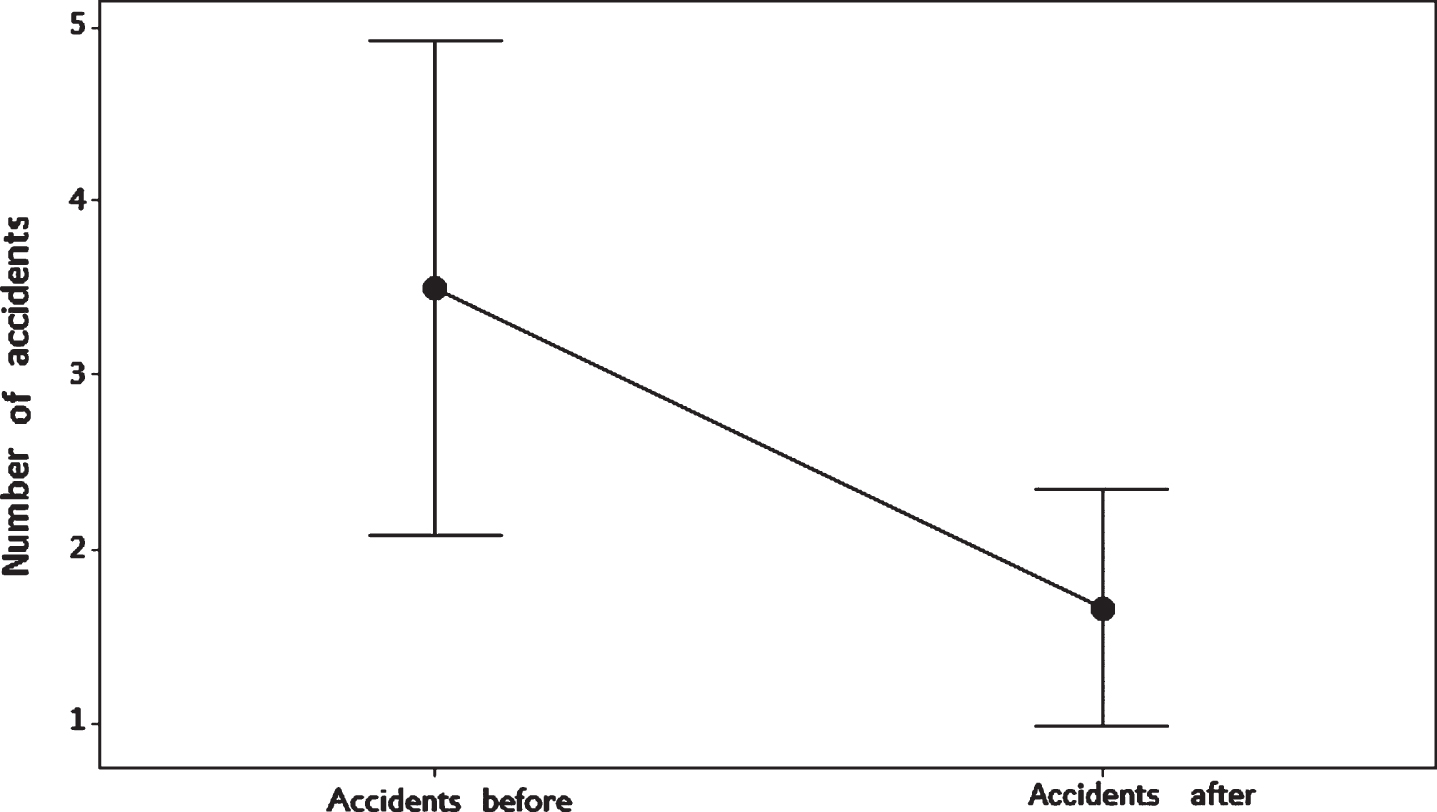
Confidence interval of 95%.
Occupational Health and Safety Management plays a significant role in the success of organizations and the major challenge today is in preserving the physical and mental integrity of workers at all levels of an organization. This premise should serve as a basis for the efforts of all professionals to be directed towards the sustainable growth of the company in synergy with the promotion of healthy human development, capable of leveraging a differentiated performance against the significant rhythm of competitiveness, pressure, and globalization of markets.
Results of the present study showed the importance of leadership training in the management of occupational health and safety.
Learning outcomes obtained after the application of the methodology highlighted leadership behavior as the foundation for the empowerment of supervisors which is fundamental to influence their subordinates in every aspect including health and safety ones.
A significant correlation was found between the evolution of the level of safe leadership behavior and the reduction in the number of occurrences of accidents.
The results of the statistical analysis showed that it was possible to affirm, with 95% accuracy, that there was a reduction in the number of accidents that occurred during the leadership training period and a reduction in comparison to a similar period in the previous year.
When an organization recognizes the importance of occupational health and safety management and invests in the qualification of its leaders in order to achieve the ideal behavior focused on the well-being of its workers, everybody gains and this is reflected in the excellent performance of the organization.
Conflict of interest
None to report.