







Abstract
BACKGROUND:
The impact of occupational footwear and workload on postural stability has been studied previously to prevent fall-related workplace injuries.
OBJECTIVE:
The purpose of this study was to assess the impact of two types of occupational footwear [steel-toed (SB) and tactical (TB) work boots] on human balance, when exposed to physical workload.
METHODS:
Postural stability was evaluated in eighteen male participants in the following conditions: eyes open (EO), eyes closed (EC), eyes open unstable surface (EOU) and eyes closed unstable surface (ECU). Postural sway parameters were analyzed using a 2×3 repeated measures analysis of variance design [prior to (PRE) and twice post-workload (POST1 & POST2) separated by 10 minutes of rest].
RESULTS:
Findings revealed that the use of SB resulted in greater postural stability, which could be attributed to the design characteristics of these footwear and that postural stability was negatively impacted immediately after the workload which could be attributed to the physical exertions during the workload. However, significant differences were limited to ECU with no visual and altered somatosensory feedback.
CONCLUSION:
Design features on occupational footwear can aid postural stability while physical exertional tasks can be detrimental. Findings can offer design and work-rest scheduling suggestions to improve work safety.
Introduction
The Bureau of Labor Statistics reported from a total of 5,147 workplace fatalities in 2017, 887 were attributed to falls, slips and trips [1]. In addition, a total of 227,760 cases of non-fatal workplace injuries that were due to falls (falls to lower level: 47,180; same level falls: 142,770; slips/trips: 33,720) were reported, with high incidence rates in both construction (24,160 falls) and manufacturing (22,010 falls) [1]. An induced loss of balance and failure to recover from the imbalance have been reported as the primary sources for postural instability leading to occupational falls [2]. Loss of balance and increased risk for falls in humans can occur from both intrinsic (or human) factors and extrinsic (or environmental) factors. One of the extrinsic factors to consider is the type of footwear worn [3]. Footwear serves as the interface between the human body and the supporting surface and can significantly affect balance outcome measures [3]. One of the intrinsic factors to consider is muscular fatigue [4]. Muscular fatigue is considered an internal perturbation to the postural control system which can displace the body posture away from equilibrium by destabilizing the body’s center of mass (COM) [4]. Prior studies have shown decrements in balance can occur in individuals wearing occupational footwear with design features that are not appropriate for balance and postural stability [5–7]. This has been shown to occur during both simulated occupational workloads [7–9] as well as during extended durations of standing/walking [4, 5].
Previous studies have reported the role of different footwear types on postural stability, identifying both advantageous and disadvantageous extrinsic effects. These factors are often attributed to the specific design and material characteristics, such as: heel height, mass, boot shaft height flexibility, mid and outer-sole thickness, slip-resistant outsoles, lacing types and material of the footwear [5–7, 10]. Footwear characteristics that are advantageous to maintain balance include: a high [above ankle] boot shaft [5, 11], hard and firm mid-sole [3, 13], minimalist design with minimal heel drop [9], and a lighter mass [5, 7]. Footwear characteristics that are disadvantageous for maintaining balance include: a low [below ankle] boot shaft [5], soft mid-soles [14], elevated heel height [3, 16], and a heavier mass [5, 7].
Intrinsically, when the body’s sensory and motor components are affected, greater demands are placed on the postural control system in its attempt to maintain postural stability. The body’s equilibrium has been reported to be impaired following prolonged physically exhausting exercise [17–20]. There have also been reports that postural stability [quantified by measuring postural sway] is affected by fatiguing exercise, but that the effect is short in duration [4, 21]. Time to fatigue and the amount of fatigue were considered to be important factors influencing postural stability. Greater decrements in postural stability were reported when fatigue was induced over a longer duration and at higher rates [17]. Postural stability was not shown to be impacted by noise that is common to occupational environments, however, it was suggested that the absence of a physically demanding workload in this study, as well as the availability of sensory feedback aided the postural control system [22]. Hence, an increasing level of fatigue can compromise multiple aspects of the neuromuscular system which are responsible for postural control and balance maintenance.
Postural stability is an essential factor in the ability of workers to perform occupational tasks safely. Such abilities, when accompanied by muscular fatigue due to a physically-demanding occupational workload, can create a hazardous environment for the worker to safely perform their tasks [23]. Moreover, the addition of task-inappropriate footwear can influence the worker’s postural stability leading to decrements in balance. Hence, it is crucial to understand the behavior of the postural control system when exposed to different occupational footwear as well as varying types of workloads. Recently, the impact of occupational footwear (such as steel-toed work boots and tactical work boots) on postural stability have been identified under static balance condition with conflicting sensory information [5, 24] as well as during dynamic balance perturbations [6]. These studies were performed either during a low-intensity, long duration workload or during short workloads with (or without) the corresponding workload exposure. The impact of these types of occupational footwear when exposed to a high-intensity workload is currently still unknown. Therefore, the purpose of this study was to assess the impact of two occupational footwear types on postural stability, when exposed to a high-intensity, simulated occupational workload.
Materials and methods
Participants
Eighteen healthy male participants (age: 21.27±1.7 years; height: 177.67±6.0 cm; mass: 87.95±13.8 kg) with no self-reported history of musculoskeletal, neurological or cardiovascular abnormalities completed the study. The study was approved by the university’s Institutional Review Board (IRB) under the human subject research with protocol number IRB 16–388. All participants read and signed the informed consent to participate in the study with an option to withdraw from the study, if needed. Each participant’s physical fitness status was also assessed and found to be at a level considered above recreationally trained [> 3-4 days/week with consistent aerobic and anaerobic training for the at least the last 3 months]. The necessary sample size was determined a priori from prior, similar studies in the laboratory and cross checked by using G-Power statistical software with a desired power of 0.8, an expected effect size of 0.50 and at an alpha level of 0.05. Only males were recruited for this study due to the construction and manufacturing industries having a predominantly male population as well as the availability of only male-size shoes.
Experimental procedures
The experimental protocol followed a pre-test – post-test repeated measures design consisting of 2 separate days of testing along with an initial familiarization day. On the familiarization day, following the obtaining of informed consent, participants went through a session that included the different balance testing methods along with a general anthropometric assessment that included age, height, body mass, shoe size. In addition, general information about current levels of physical activity were assessed using the physical activity readiness questionnaire (PAR-Q) [25]. The two experimental testing days followed the same procedures, separated by a minimum of a 72 hours, on each boot condition (tactical work boot: TB and steel-toed work boot: SB) [Fig. 1 and Table 1] using a counter-balanced design. Each participant was permitted to try on half sizes plus or minus from their own shoe size to ensure the proper fit and comfort for the footwear. Each testing session began with an initial 5-minute warm-up consisting of walking, jogging, high knees, and jumping jacks. Participants were then analyzed for balance prior to (PRE) and twice (POST1 and POST2) following a simulated occupational workload, with each post-workload test separated by 10 minutes of rest. The balance testing was assessed with participants standing in bilateral stance on a force platform (Advanced Mechanical Technology, Inc. MA, USA) in both eyes open and eyes closed conditions on a stable surface and cushion surface for 3 trials of 20 seconds each. An Airextrademark balance pad was placed on top of the force plate and calibrated accordingly to create the unstable testing surface [26]. Hence, four different testing conditions [1. eyes open flat surface (EO), 2. eyes closed flat surface (EC), 3. eyes open foam unstable surface (EOU) and 4. eyes closed foam unstable surface (ECU)] were generated respectively (Fig. 2). Participants were instructed to stand erect and as still as possible with feet shoulder width apart in a normal standing position.
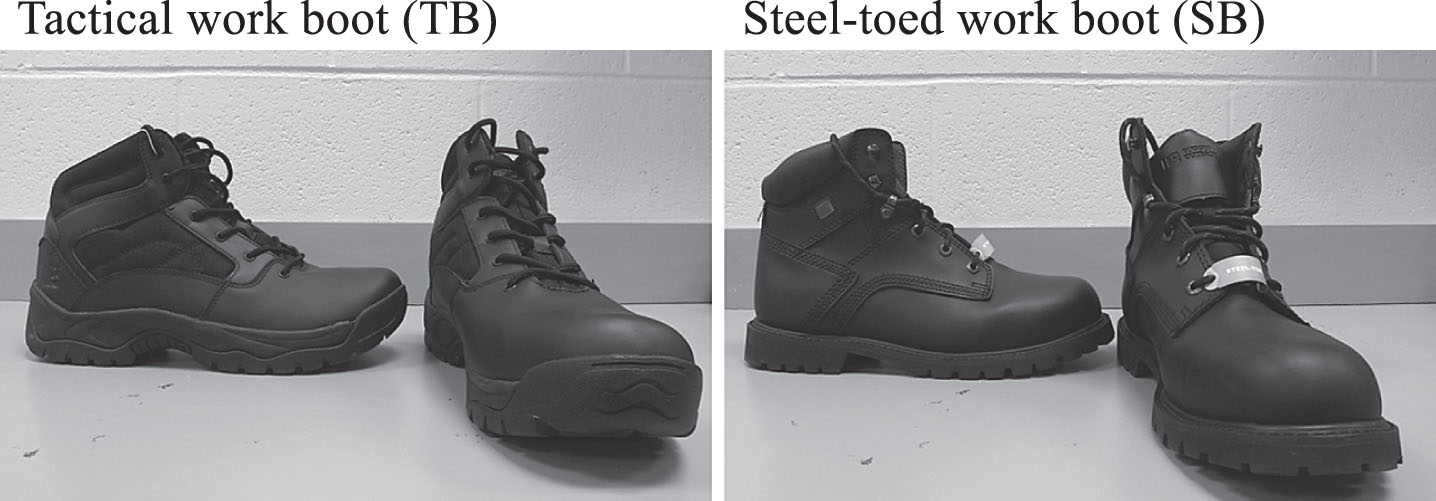
Occupational footwear: Tactical work boot (TB) and steel-toes work boot (SB).
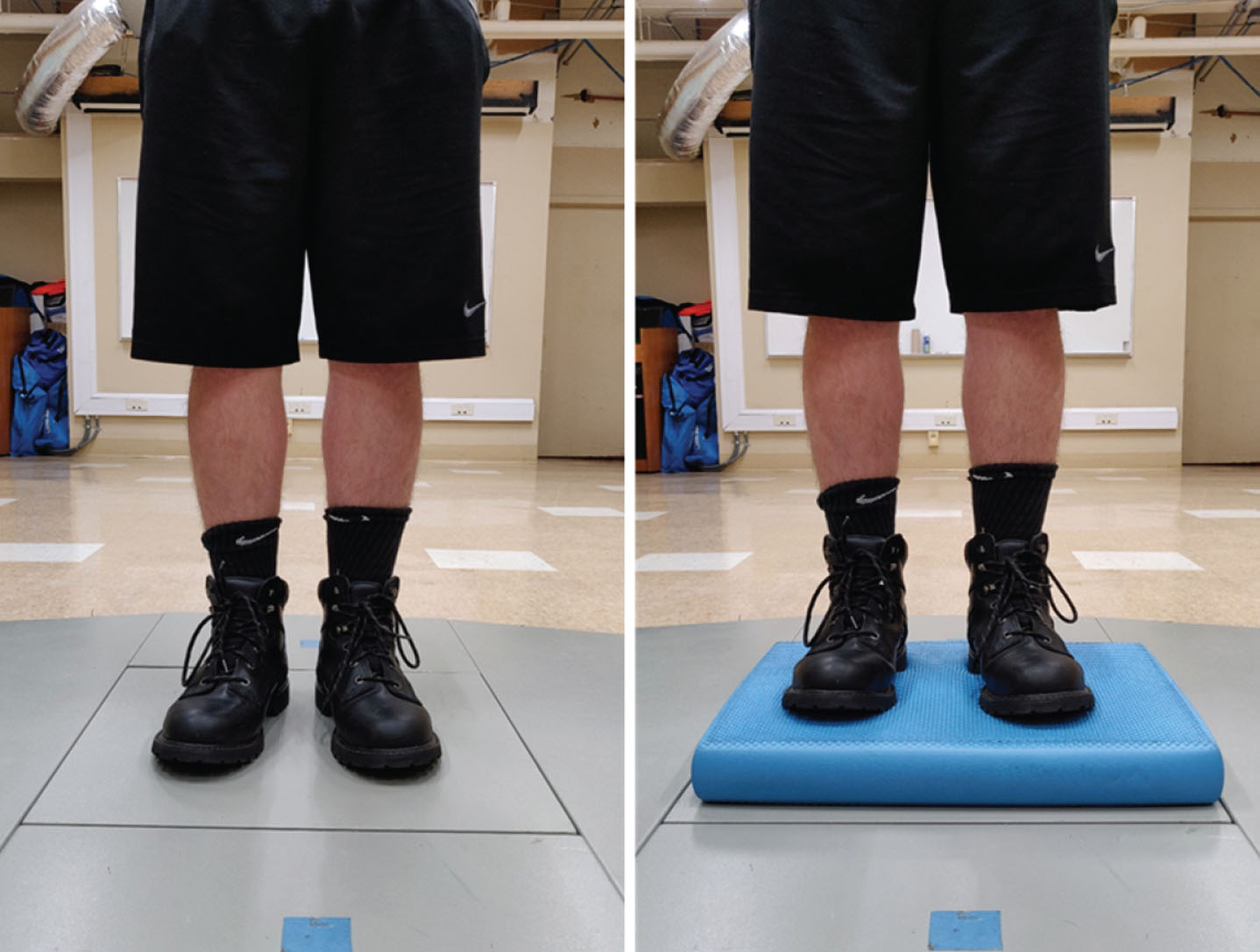
Balance testing conditions of stable (left) and unstable surface (right) with occupational footwear.
Footwear design characteristics
On completion of the pre-workload balance assessment, participants were then directed to a treadmill to complete a physical exercise task following the standard Bruce treadmill protocol that included 3-minute stages to allow achievement of a steady-state prior to any workload increases. This protocol is characterized by beginning stage 1 at 2.74 km/h (1.7 mph) with 10% grade; stage 2 at 4.02 km/h [2.5 mph] with 12% grade; stage 3 at 5.47 km/h (3.4 mph) with 14% grade and subsequent stages of 4, 5, 6 and 7 involving the same 3 minute duration and grade increases of 2% along with speed increasing from 6.76, 8.05, 8.85 and 9.66 km/h (4.2, 5.0, 5.5 and 6.0 mph) respectively. Participants were asked to stop the test at any point whenever they felt that they cannot continue anymore and were provided a 3-minute cool-down period at a self-selected walking pace. Immediately following the cool-down period, participants completed the same balance measures as the first of the post-test measure (post-test 1) and again following a 10-minute seated rest as the second post-test measure (post-test 2). Following a minimum of 72-hours after the completion of the first testing session (to avoid the influence of any physical fatigue), the same testing procedures were repeated in the second footwear condition based on the counter balanced boot assignment. Final heart rate (HR) in beats per minute (bpm) and final ratings of perceived exertion (RPE) were collected at the end of the workload. In addition, time spent on the treadmill [defined as time to task failure (TTF) in seconds] was collected for both footwear conditions (27).
Center of pressure (COP) excursions during the balance assessments, derived from the force platform, were analyzed to quantify postural sway as a measure of postural stability. COP excursions were used to calculate postural sway variables [average displacements in the medial-lateral (M/L) and anterior-posterior (A/P) directions (M/L-DISP and A/P-DISP), the 95% ellipsoid area (EA) and average sway velocity (SV)]. An increase in the displacement, ellipsoid area, and/or sway velocity represent faster and greater COP excursions; which would indicate a decreased postural stability. All postural sway dependent variables were calculated for both footwear conditions (TB and SB) and for all three testing conditions (PRE, POST1 and POST2) during all four balance conditions (EO, EC, EOU and ECU).
Statistical analyses
All balance and postural sway dependent variables were assessed using a 2×3 within-subjects repeated measures analysis of variance (RM-ANOVA) [2 footwear (TB×SB)×3 time (PRE×POST1×POST)] to identify footwear and time differences. A significant main effect for footwear or time was followed up with post-hoc pairwise comparisons with a Sidak Bonferroni correction. All statistical analyses were performed with an alpha level of p < 0.05 using IBM SPSS statistical software v.24.
Results
The RM-ANOVA revealed significant main effect differences for both footwear and time, but predominantly in the ECU balance testing condition. In the ECU condition, significant main effect difference for footwear was evident for M/L-DISP [F (1, 17) = 4.915, p = 0.041, η2= .224] [Fig. 3]; for A/P-DISP [F (1, 17) = 4.557, p = 0.048, η2= .211] [Fig. 4]; for EA [F (1, 17) = 7.416, p = 0.014, η2= .304] [Fig. 5] and for SV [F (1, 17) = 7.167, p = 0.016, η2= .297] [Fig. 6]. Post-hoc comparisons indicated that significantly lower COP postural sway variables existed in SB compared to TB. In the same ECU condition, significant main effect difference for time was evident for A/P-DISP [F [2, 34] = 3.913, p = 0.030, η2= .187]; for EA [F (2, 34) = 4.835, p = 0.014, η2= .221] and for SV [F (2, 34) = 8.591, p = 0.001, η2= .336]. Post-hoc comparisons indicated that significantly greater A/P-DISP and EA during POST1 compared to PRE, but significantly lower SV in POST2 compared to PRE and POST1. No other significant interaction or main effect differences were evident in EO, EC and EOU balance testing conditions. Results of HR, RPE and TTF from the current study are reported in a previously published journal article [27] and exhibited no significant differences between footwear conditions during the treadmill physiological workload [(TB: HR in bpm = 186±10; RPE = 19±0.77; TTF in seconds = 671±95) (SB:: HR in bpm = 189±6; RPE = 19±0.70; TTF in seconds = 669±81)] [27].
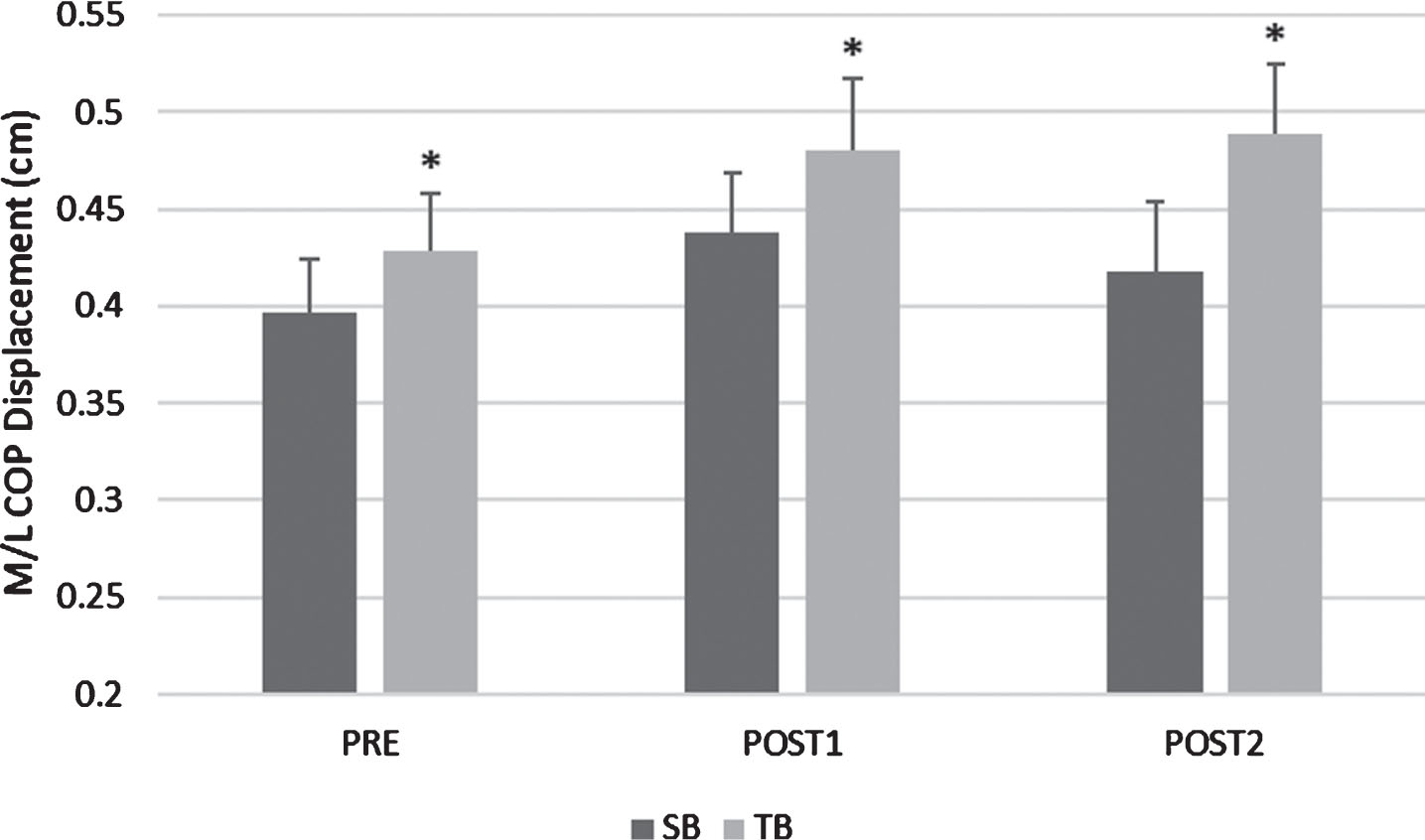
Eyes closed unstable surface testing condition. Center of pressure (COP) displacement in the medial-lateral (M/L) direction during pre-test (PRE), immediately after workload (POST1) and 15 minutes after workload (POST2) for standard work boot (SB) and tactical work boot (TB). *represents significant boot difference and # represent significant time difference. Bars represent standard errors.
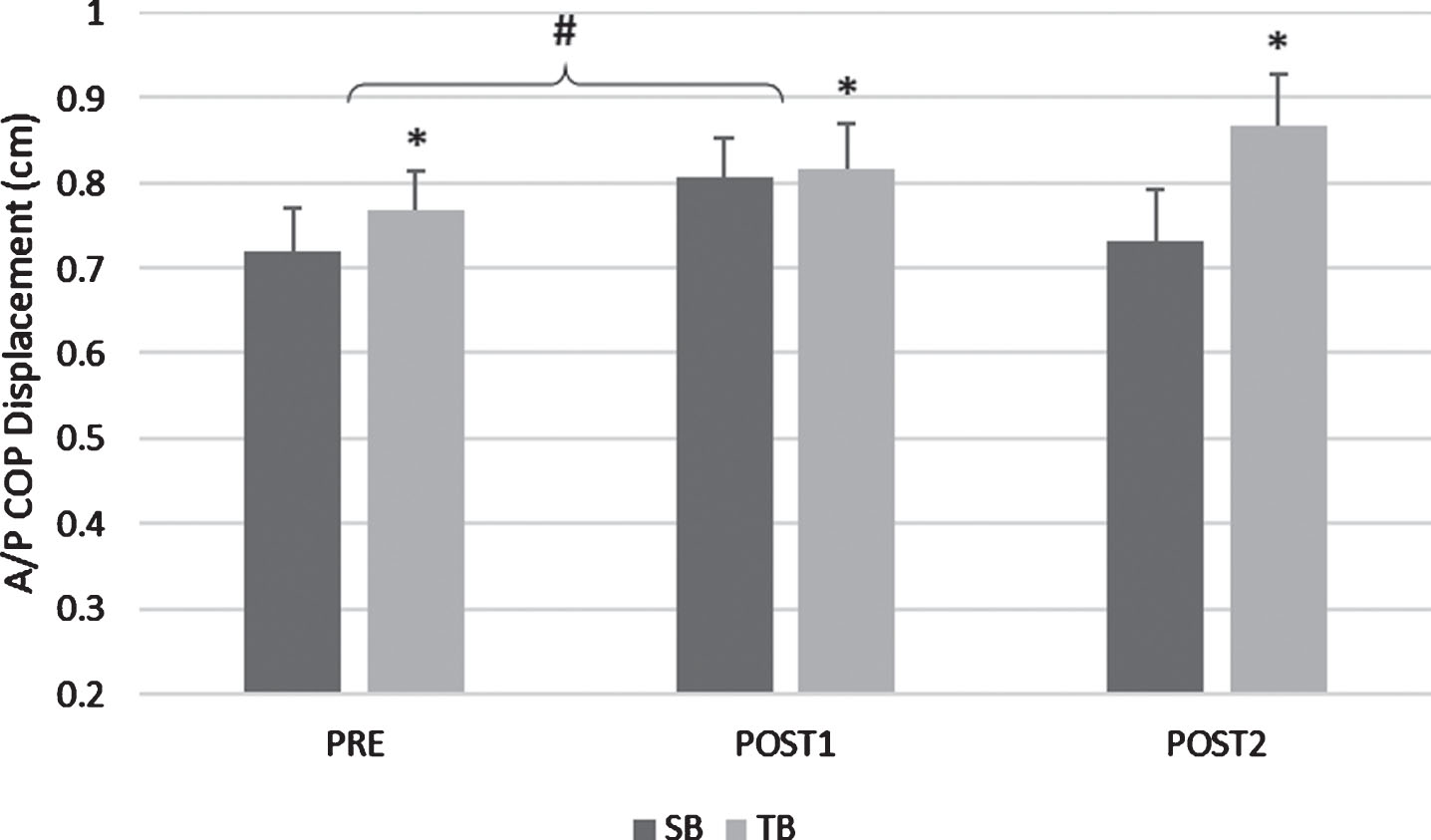
Eyes closed unstable surface testing condition. Center of pressure (COP) displacement in the anterior-posterior (A/P) direction during pre-test (PRE), immediately after workload (POST1) and 15 minutes after workload (POST2) for standard work boot (SB) and tactical work boot (TB). *represents significant boot difference and # represent significant time difference. Bars represent standard errors.
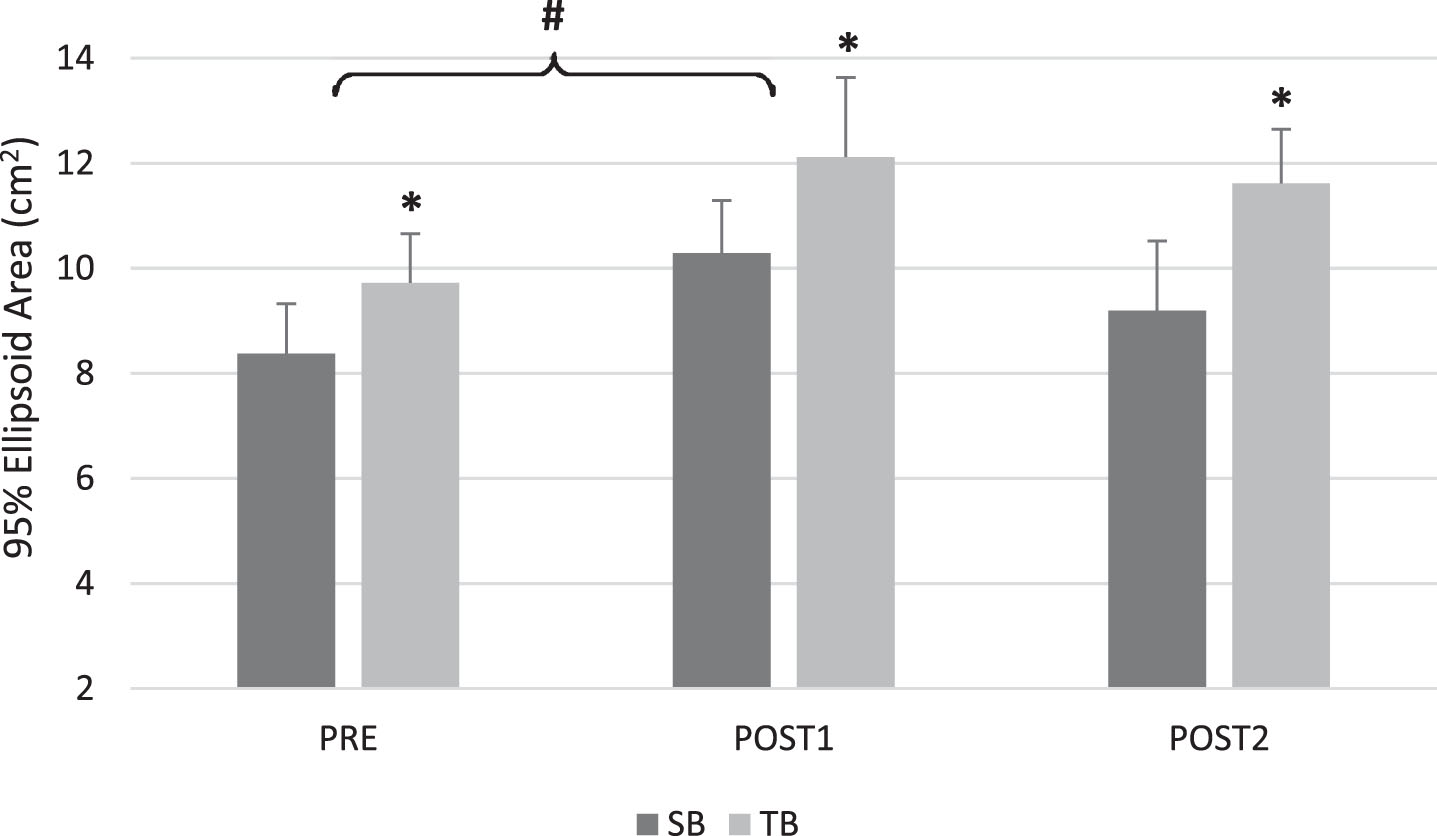
Eyes closed unstable surface testing condition. Center of pressure (COP) 95% ellipsoid area during pre-test (PRE), immediately after workload (POST1) and 15 minutes after workload (POST2) for standard work boot (SB) and tactical work boot (TB). *represents significant boot difference and # represent significant time difference. Bars represent standard errors.
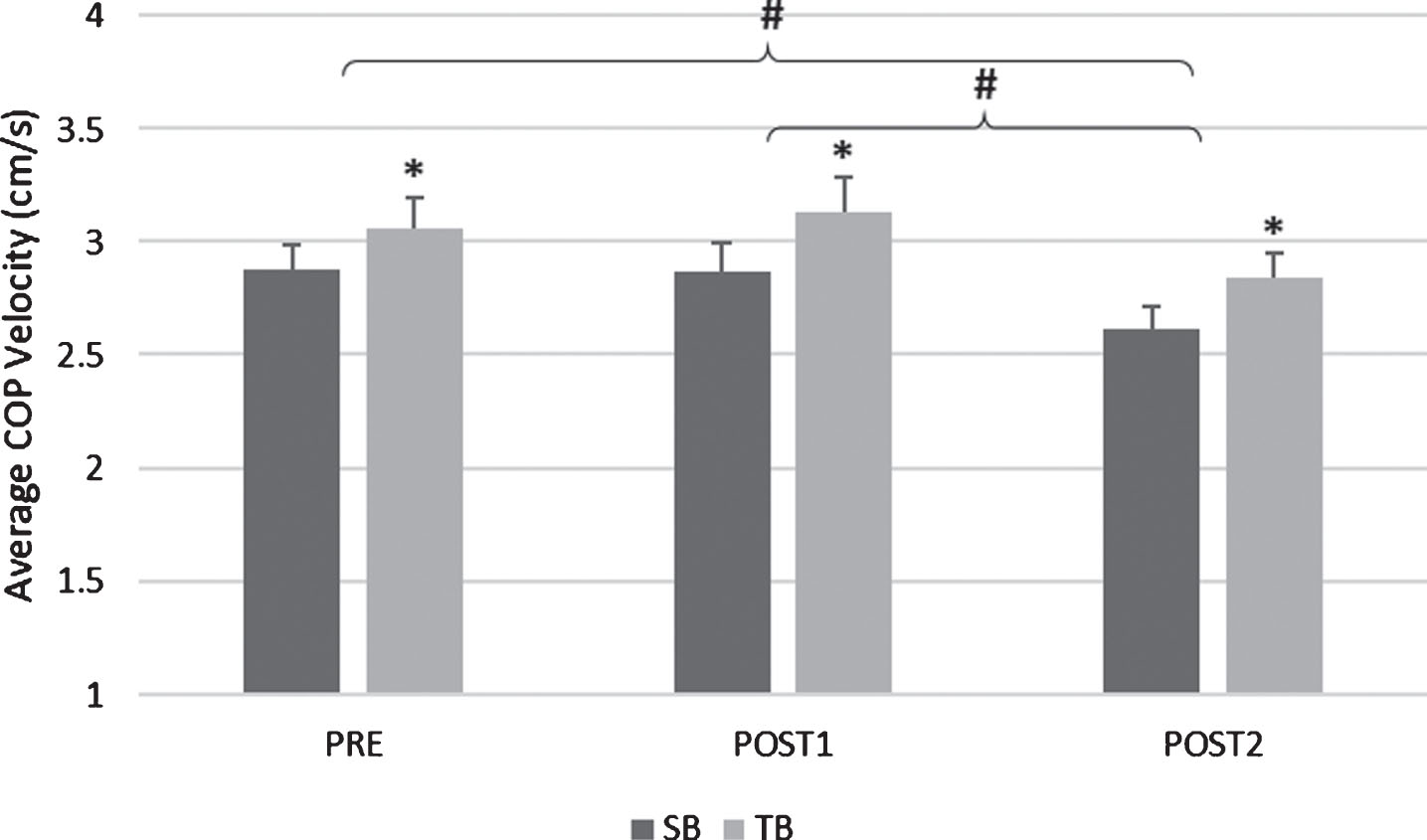
Eyes closed unstable surface testing condition. Center of pressure (COP) average velocity during pre-test (PRE), immediately after workload (POST1) and 15 minutes after workload (POST2) for standard work boot (SB) and tactical work boot (TB). *represents significant boot difference and # represent significant time difference. Bars represent standard errors.
Maintaining upright balance is crucial in occupational environments to prevent falls and fall-related injuries. Occupational footwear and workload can impact postural stability of a worker and compromise worker safety. The purpose of this study was to analyze the impact of the two types of occupational footwear on postural stability before, immediately after, and 10-minutes after a physiological workload. The findings from this study demonstrate the following factors significantly impact postural stability: the type of occupational footwear, the level of the workload, and the timing and type of sensory feedback available in challenging balance testing conditions. Individuals exhibited better postural stability when wearing SB compared to TB which could be attributed to the design characteristics of these footwear that might have aided postural control. Postural stability was negatively impacted immediately after the physical workload (POST1), but not after the 10-minute rest period (POST2). This could be attributed to the physical exertion affecting the postural control system and suggests that even a 10-minute rest can aid in postural stability recovery. However, these significant differences were only evident in the eyes closed, unstable condition, suggesting that when visual and somatosensory/proprioceptive feedback are optimally available, postural stability was not impacted by the occupational footwear or the physical workload. Postural stability was only compromised when the visual feedback was removed (standing with eyes closed) and when the somatosensory/proprioceptive feedback from the lower extremity, and in particular the feet, were distorted (standing on an unstable surface). Based on the results from the current study and based on the results from previous studies that have analyzed the same occupational footwear (SB vs. TB) [5, 28], the TB appears to be a better choice of occupational footwear. Based on the available evidence, they appear to aid in better balance performance, minimize energy expenditure and rate of fatigue, especially in prolonged duration workloads.
Multiple design characteristics on the footwear can impact postural stability both positively and negatively. The design characteristics that are of relevance to the current study are summarized in (Table 1) for both TB and SB, from the average size of the footwear used by the participants (TB: size 11 and SB: size 10.5). Certain design characteristics that can help in an increased proprioceptive feedback to the postural control system and aid in better maintenance of postural stability include: an elevated boot shaft, a thin-hard midsole, and a low heel-to-toe drop or low heel height. The elevated boot shafts provide compression around the ankle joint and enhances joint position sense [5, 6]. Cutaneous and proprioceptive feedback from the sole of the feet are enhanced by having hard-firm mid sole material [3, 13]. A lower heel-to-toe drop or minimalist type of foot orientation (close to barefoot) increases postural orientation by minimizing an anterior shift in the body’s COM, minimizing lateral instability and a less severe tipping angle with an absence of significant heel height (greater than 4.5 cm) [3, 16]. The findings from the current study support previous literature, as the SB had a greater boot shaft height (SB: 18.5 cm vs. TB: 16.5), with a thin hard midsole (SB: Shore A hardness scale 82 HA – hard vs. TB: Shore A hardness scale 74 HA – medium hard); a and a low heel height (SB: 3 cm vs. TB: 4.1 cm), that aided in better postural stability and greater balance performance in SB compared to TB.
Balance and postural stability are directly proportional to the surface area size of the base of support. Implying that postural stability is usually greater when the support surface area is larger. The SB also had a greater total sole surface area (SB: 312.57 cm2 vs. TB: 265.26 cm2), which could be leading to their superior balance performance. These design characteristics in the occupational footwear are extremely valuable, as they aid postural stability, especially when there is no visual feedback and when the support standing surface is unstable, which can be a common occurrence in hazardous and unfamiliar work environments in the construction and manufacturing sector. Finally, a heavier mass of the footwear has been shown to increase energy expenditure and oxygen consumption [29–31] as well an increase in muscular fatigue [7]; thereby decreasing postural stability [7]. However, in the current study there were no significant interactions between footwear type (TB and SB) and workload conditions (PRE, POST1 and POST2), suggesting that the decrements in postural stability that occurred in the POST1 testing was independent of the mass of the SB. This also supports previous literature that, under static balance testing conditions, the design features such as high boot shaft, thin-hard mid-sole, low heel height and greater sole surface area aids in postural stability more compared to footwear mass in both acute non-workload conditions [6] and chronic workload conditions [5, 24]. The differences identified between workload conditions, existed as main effect of time of balance testing and these significant decrements in postural stability could be attributed to the physical exertion from the physiological workload.
A physiological workload has been shown to contribute to decrements in balance performance [5, 33]. Exposure to physically demanding workloads leads to deterioration of the postural control system along with the inability of muscles to produce and sustain a required amount of force production resulting in muscular fatigue [33, 34]. Moreover, a decreased balance performance is a consequence of muscular fatigue, which also negatively impacts the proprioceptive system [34] in providing intrinsic feedback to maintain balance. The findings from this study suggest that during ECU condition, participant’s postural sway displacement in the medial-lateral direction increased from PRE to POST1 and the participant’s postural sway displacement in the anterior-posterior direction and 95% ellipsoid postural sway area significantly increased also from PRE to POST1 conditions. This could be attributed to the decrements in the afferent and efferent postural control systems associated with the physical exertion during the treadmill task. However, a significant decrease in average sway velocity existed in the POST2 condition compared to PRE and POST1 testing conditions. This difference may be attributed to a learning effect from the participants while standing on an unstable surface with eyes closed. Such learning effects of balance testing primarily have been previously documented in more challenging balance testing conditions with the support surface being unstable/moving [35].
The duration and intensity of a workload impacts the postural stability outcomes. Postural stability has been shown to decrease in firefighters, as they spend more time on-duty [36] and with increasing standing/walking time [18, 24]. The HR, RPE and TTF data from the current study are reported in [37]. With an average of final HR (bpm) of 186±10; final RPE = 19±0.77; TTF (seconds) = 671±95 for TB and an average final HR (bpm) = 189±6; final RPE = 19±0.70; TTF (seconds) = 669±81 for SB, these physiological variables were not statistically different between the footwear conditions, suggesting that differences seen between footwear were due to their design features, and not due to the duration of the workload. Additionally, the 10-minute rest period immediately following the workload, aided recovery of the postural control system, as the postural sway parameters were not statistically different from the pre-workload values. This suggests that rest periods even as minimal as 10 minutes can aid in postural control recovery after physical exertion. Such short lasting detrimental effects of physical exertion on postural stability have also been previously reported [4, 21] and the findings on recovery time can aid in developing work-rest intervals during work shifts to prevent fall-related injuries. Finally, even though the postural sway parameters during the EO, EC and EOU balance testing conditions exhibited a similar trend to ECU, with greater postural sway immediately following the workload, and recovering towards pre-workload values after a 10-minute rest, these differences were not statistically different. Postural stability has been shown to be impacted with muscle fatigue [32–34]. However, in the current study it was suggested that physiological parameters such as oxygen consumption, ventilatory and lactate thresholds might have been the limiting factors for the treadmill workload rather than localized muscular fatigue [37]. This may explain the lack significant difference between EO, EC and EOF conditions, but when both the visual and somatosensory/proprioceptive feedback were altered, postural stability was compromised.
Ergonomics and safety research on occupational footwear and work boots have been pivotal in recognizing and preventing workplace injuries [38]. Additionally, the occupational footwear used in the current study have been previously studied for postural stability and muscular exertion during simulated occupational tasks that were of extended duration [5, 24], short duration [37], as well as during acute non-workload conditions [6]. Finally, it has been reported that postural stability quantified by center of pressure excursions, similar to the current study, are impacted by manual material handling (MMH) tasks that are usually common in occupational settings [39, 40]. Hence, the addition of MMH can further predispose the individual wearing inappropriate footwear to postural instability and falls. The current findings add to the previous literature and can potentially aid in offering suggestions for better occupational footwear design. Limitations of the study include: the testing of an only male and generally healthy population, as well as the lack of more precise evaluations of cardiovascular status such as oxygen consumption and energy expenditure during the workload. Additionally, the current study reports an acute exposure to the footwear, as participants were not accustomed to these occupational footwear. However, this unaccustomed exposure can be indicative of brand-new employees who are mandated to wear these occupational footwear for safety reasons.
Conclusion
The findings from the study demonstrate significant postural stability changes as a function of both footwear and workload and could be summarized as follows: (i) postural stability was negatively affected with the use of TB compared to SB, (ii) postural stability was negatively affected immediately following the workload, (iii) potential recovery can occur with as little as a 10-minute rest, and (iv) the significant changes in postural stability were limited to the more challenging eyes closed, unstable surface balance testing condition. The footwear design characteristics, the physiological workload placing a greater demand on the postural control system, as well as the availability and dependence of visual and somatosensory/proprioceptive feedback can be attributed for the observed results in the current study. The findings can help in occupational footwear design and scheduling work-rest intervals for workers in challenging work climates, to prevent fall-related injuries.
Conflict of interest
There was no funding for this project and the authors report no conflict of interest for this study.
Footnotes
Acknowledgments
The authors would like to thank the Neuromechanics Laboratory’s undergraduate students for their help in data collection.