





Abstract
BACKGROUND:
College freshmen, as a special group who are far away from their parents and begin to study and live independently, will face psychological stress in adaption to the college life, which may affect their working and living conditions in the university and even after entering the society if not solved reasonably. Hence, it is necessary to explore how to relieve the psychological stress of freshmen.
OBJECTIVE:
The study aimed to analyze the intervention effects of cognitive behavioral therapy on social psychological stress of freshmen under different demographic variables.
METHODS:
108 freshmen of Northeast Agricultural University were divided into the experimental group and control group. The correlation between psychological stress and impulse, self-esteem, and loneliness was analyzed using structural equation model and multiple regression. The experimental group received group training for one month, while the control group did not accept any intervention. The Fear of Negative Evaluation (FNE) Scale, Interaction Anxiousness Scale (IAS), and Interpersonal Efficacy Scale (IES) were used to score students before and after activities and three months after activities. The relevant information was collected for students’ self-evaluation and the evaluation results from group teachers.
RESULTS:
The subjects’ social psychological stress was positively correlated with loneliness and unplanned impulse, and negatively correlated with self-esteem (P < 0.001); the IAS and FNE scores of the experimental group after test were greatly lower than those of the control group, while the scores of affinity efficacy, communication efficacy, and emotional control were greatly higher than those of the control group (P < 0.05); the tracking IAS and FNE scores of the experimental group were greatly lower than those of the control group, while the scores of affinity efficacy, self-impression efficacy, communication efficacy, and emotional control were greatly higher than those of the control group (P < 0.05). All students in the experimental group were satisfied with the cognitive behavioral group training. Under the positive guidance of the team teacher, the students’ psychological stress was released.
CONCLUSIONS:
The cognitive behavior group training based on impulse, self-esteem, and loneliness can effectively improve the affinity efficacy, self-impression efficacy, communication efficacy, and negative evaluation fear of freshmen, which is instrumental in easing the psychological stress of students and can maintain long-term effects.
Keywords
Introduction
In recent years, mental health problems in colleges and universities are severe, and the prevalence of mental illness among college students is on the rise year by year [1]. Studies have found that many college students in Asian countries, especially in China, face psychological stress caused by social barriers, which is confirmed by many college counsellors [2–4]. Recently, college students face more heavy learning tasks, more complex interpersonal relationships, more adverse employment environment, and other realistic pressures. Consequently, they are more prone to psychological problems [5–7]. How to get along well with other students and establish harmonious interpersonal relationship is an important problem faced by college students. Interpersonal relationship problems are often manifested as difficulty in getting along well with others, lack of necessary communication skills, lack of support and care, and other painful feelings resulted in by the above problems [8]. The role status and living environment of college students are very different from that of high school students. College students, especially freshmen who have just entered the university, need to arrange their own lives and deal with matters related to study, life, and social interaction by themselves, which are more likely to cause mental health problems [9, 10]. Liu et al. [11] conducted a study on the mental health of Chinese college students in four academic years, and found that the students had highest scores for psychological problems such as depression, anxiety, and stress in the first or second year, which were alleviated in the third and final year. Lee [12] conducted a study on 345 students at a community college in Hong Kong, and found that cultivating students’ mental resilience can relieve the pressure of ordinary college students. Therefore, it is very important to effectively treat the psychological stress caused by the interaction anxiety disorder of college students.
Cognitive behavioral therapy refers to a category of psychological treatment methods including cognitive therapy and behavior therapy, which is widely used worldwide for its short-term efficiency, clear structure, and other advantages [13, 14]. Cognitive behaviour therapy has a mature treatment program and clear therapeutic effects for depression disorder, anxiety disorder, compulsive disorder, personality disorder, stress disorder, eating disorder, psychotic disorder, bipolar disorder, insomnia disorder, psychosomatic problem, and various addiction problems [15–17]. At present, relevant studies on the treatment of college students’ psychological stress caused by social disorder are relatively shallow, especially in terms of experimental design [18]. Therefore, whether group therapy based on cognitive behaviour therapy theory can improve the psychological stress caused by social disorder in freshmen is a hotspot to be explored.
To sum up, although the cognitive behaviour therapy is applied extensively, there are few studies on its effects on freshmen. Based on this, 58 freshmen from Northeast Agricultural University were randomly divided into experimental group and control group. A cognitive behavioral group training program was designed based on cognitive behaviour therapy. The experimental group received a month of group training in cognitive behavior, while the control group received no intervention. The (FNE) scale, IAS, and IES were used to evaluate the intervention effects of behavior therapy on psychological stress.
Methodology
Research subjects
In this study, 58 qualified freshmen from Northeast Agricultural University were selected and randomly divided into experimental group and control group, with 29 students in each group. In the experimental group, there were 17 males and 12 females, ranging in age from 17 to 19 years, with an average age of 18.15±2.58 years. They received a month of group training in cognitive behavior; in the control group, there were 14 males and 15 females, ranging from 17 to 20 years old, with an average age of 18.32±1.76 years. No intervention was conducted.
Recruitment conditions were as follows: I. People with a strong desire to change social psychological stress; II. People with an IAS score greater than 50; III. People who assess their social psychological stress and social distress in structured interviews; IV. People who have enough time to actively participate in the activities.
The basic characteristics of the selected subjects were shown in Fig. 1 below, with 63 males, accounting for 58.23%; there were 45 females, accounting for 41.77%. There were 58 only children, accounting for 53.61%. There were 50 non-only children, accounting for 46.39%. There were 68 urban students, accounting for 63.22. There were 40 rural students, accounting for 36.78%. There were 95 students from two-parent families, accounting for 87.57%. There were 9 students from single parent families, accounting for 8.11%. There were 5 other students, accounting for 4.32%.
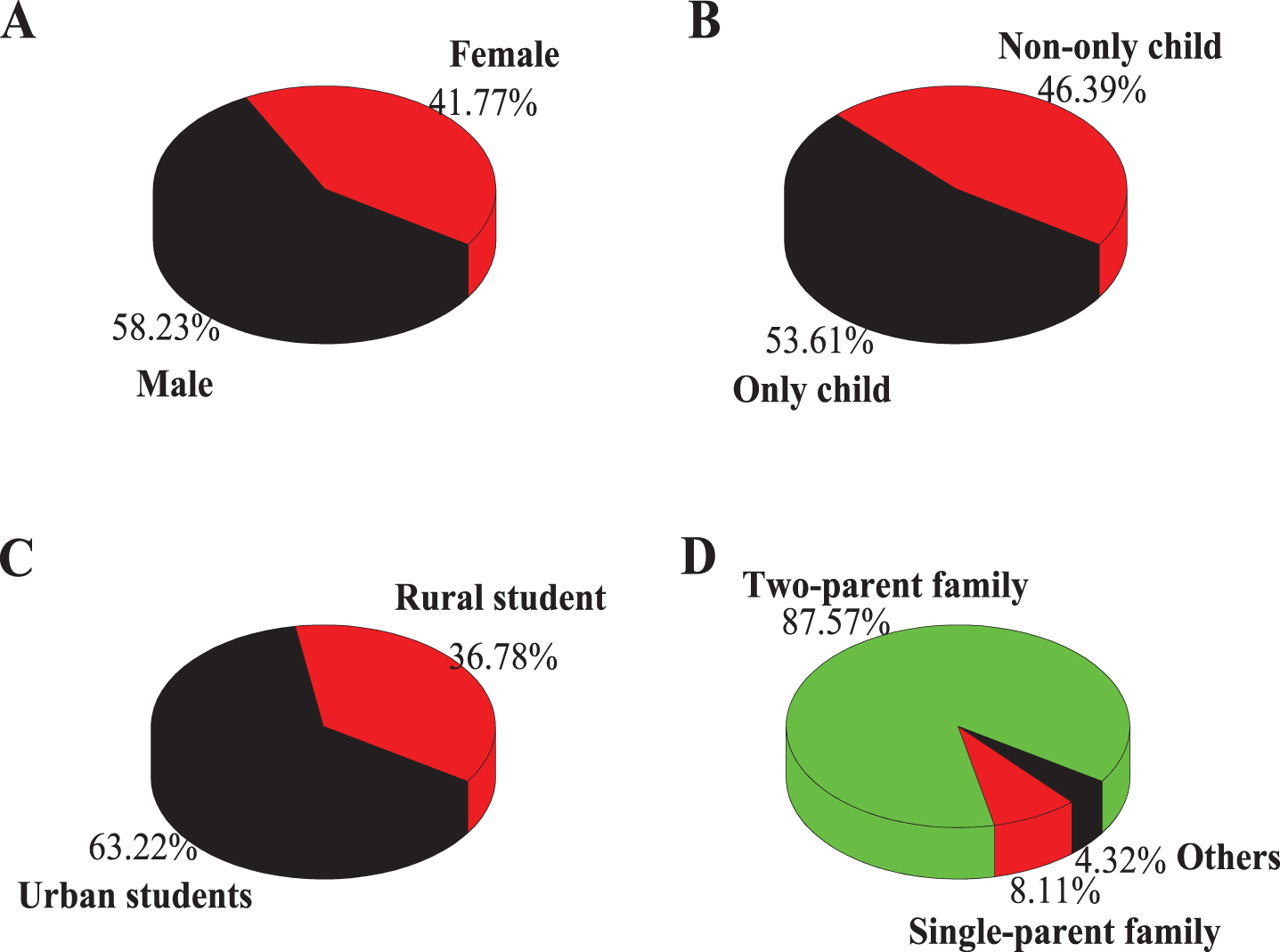
The basic characteristics of the selected subjects. Note: A was the gender proportion of subjects; B was the proportion of only child and non-only child; C was students from urban and rural areas; D was the proportion of two-parent families, single-parent families, and other students.
I. In order to understand the factors related to the formation of freshmen’s social psychological stress, Barratt impulse scale, self-esteem scale, and loneliness scale were specially introduced for evaluation. Barratt impulse scale: impulse refers to the tendency of an individual to take action regardless of the negative consequences of his own actions on himself or others. The scale includes three parts: attention impulse, motion impulse, and unplanned impulse. Attention impulse scores range from 0 to 24, motion impulse scores range from 0 to 40, and unplanned impulse scores range from 0 to 40. The Likert 4-point scale was used, with 1–4 ranging from “very fit” to “very not fit,” the higher the scores, the greater the impulsivity. Self-esteem scale: this scale is a one-dimensional assessment with 10 questions. The Likert 4-point scale was used, with 1–4 ranging from “very consistent” to “very inconsistent.” the higher the score, the higher the self-esteem. Loneliness scale: this scale is used to evaluate loneliness caused by the gap between social desire and reality. There are 20 questions in total. The Likert 4-point scale was used, with 1–4 ranging from “never” to “always”, the higher the score, the greater the loneliness.
II. According to previous studies, social psychological stress is often associated with individual social dysfunction, FNE, and interpersonal efficacy. Therefore, in order to better evaluate the intervention effect of cognitive behaviour group training, FNE, IAS, and IES were used. FNE: FNE refers to the fear of what others are saying, the anxiety of a bad review, and the fear that others might say something negative about you. FNE scale can be used as a tool to measure people’s social anxiety. The score ranges from 30 to 150, and the higher the score, the higher the anxiety level and the more concerned you are about negative evaluations from others. IAS: the IAS scale is mainly used to assess the psychological experience of subjective social anxiety independent of behavior. This scale is divided into 15 items on a 5-point scale, with an assessment range of 15–75. A higher score means more anxiety and lack of confidence in interpersonal communication, and more attention is paid to how others perceive them in interpersonal communication, with more psychological stress during the conversation. IES: this scale is compiled based on the interpersonal communication and self-sense of college students, and is divided into six parts: affinity efficacy, self-impression efficacy, altruism efficacy, communication efficacy, self-value, and emotional control. There were 10 items in each section, each on a 1–4 scale, with a range of 0–40. The higher the scale, the higher the sense of self-efficacy.
Design of cognitive behaviour group training program
Based on rational emotional behavior therapy, self-efficacy theory, and positive psychology, the program of cognitive behavior group activities in this study was designed, which was divided into 7 activity contents in total, and the group training lasted for one month.
Activity 1 (coming together by fate): activities include: I. Social psychological stress and cognitive levels that students need to understand and develop group norms were introduced; II. Classic warm-up rats and squirrels; III. Strong wind blowing, small wind blowing, typhoon blowing activities; IV. Red and yellow card activities; V. 15 minutes before the end of the activity, people needed to share feelings. The purpose of this activity was to encourage students who are strangers to get to know each other, establish team norms, and help students understand the importance of socializing.
Activity 2 (facing anxiety): activities include: I. The dumb snitch game; II. Confiding in each other, sharing their social problems and feelings; III. Knowing oneself and knowing the enemy, people should try to put forward their own solutions to psychological anxiety; IV. 15 minutes before the end of the activity, people needed to share feelings. The purpose of this activity was to promote the in-depth understanding among students, and enhance the ability of student group cooperation and cohesion.
Activity 3 (facing up to negative evaluation): activities include: I. The ice-breaker small game scratching finger; II. Teaching rational emotional behavior therapy; III. Analyzing and discussing the typical social situations from the last event, and understanding the errors in self-perception. IV. Facing negative feedback from others and giving it back to yourself; V. 15 minutes before the end of the activity, people needed to share feelings. The purpose of this activity was to help students recognize the wrong perception of themselves and face the unreasonable idea of FNE.
Activity 4 (public performance 1): activities include: I. Scenario simulation role-playing games; II. Self-portrait; III. Progressive muscle relaxation training; IV. Teaching abdominal breathing; V. 15 minutes before the end of the activity, people needed to share feelings. The purpose of this activity was to correct students’ cognitive concepts and then conduct auxiliary training, so that students can feel psychological stress in social environment, try self-adjustment, and finally learn the means of relaxation.
Activity 5 (public performance show 2): activities include: I. Small game radio transmission; II. Scenario simulation role-playing games; III. Reviewing the abdominal breathing techniques learned last time; IV. 15 minutes before the end of the activity, people needed to share feelings. The purpose of this activity was to deepen students’ psychological anxiety in the social environment, learn to open themselves up, and consolidate relaxation skills.
Activity 6 (self-impression cognition): activity contents include: I. Appreciation of short films related to social psychology; II. Game psychological bombing; III. The Murder Game; IV. “I am the best” speech show; V. 15 minutes before the end of the activity, people needed to share feelings. The purpose of this activity was to improve students’ self-confidence, understand the reflection of self-value, and further strengthen the cohesion of the team.
Activity 7 (harvest party): I. Discussion on the relationship between the opposite sex; II. Dream stage show; III. Harvest analysis; IV. Bless part; V. Teachers’ reviewing analysis; VI. Group photo. The purpose of this activity was to help students summarize the experience and feelings of this team activity and evaluate the training effect.
Specific activities were implemented as follows: I. In September 2017, the research subjects were recruited and determined, and the team training program was formulated; II. From November 1, 2017 to December 1, 2017, cognitive behavior team training was conducted, with a total of 7 activities, each interaction lasting 90–120 minutes; III. After the end of the activity, a collective points evaluation was carried out; IV. Tracking and collecting data on students’ grades on March 1st, 2018.
Observation indexes
The IAS, FNE, and IES scores were recorded before, after, and after 3 months of training in the experimental group and control group. The self-assessment of students participating in the training and the observation and assessment of group teachers were sorted out and analyzed.
Statistical analysis
In this study, statistical software SPAS19.0 was adopted for data processing and analysis, and the measurement data were expressed as mean±standard deviation (x±s). The counting data was expressed as a percentage (%). T test was used for data comparison between groups, with Origin8.0 mapping.
Results
Correlation analysis of IAS, FNE, and IES with impulsivity, self-esteem, and loneliness
As shown in Table 1 below, in addition to altruistic efficacy, self-esteem and loneliness were significantly correlated with negative evaluation fear, interaction anxiety, affinity efficacy, self-impression efficacy, communication efficacy, self-value, and emotional control, respectively (P < 0.05). In addition to self-impression efficacy, each dimension of impulsivity was significantly correlated with negative evaluation of fear, communication anxiety, affinity efficacy, altruism efficacy, communication efficacy, self-value, and emotional control (P < 0.05).
Correlation analysis of IAS, FNE, and IES with impulsivity, self-esteem, and loneliness
Correlation analysis of IAS, FNE, and IES with impulsivity, self-esteem, and loneliness
As shown in Table 2 below, the multiple regression model was conducted with all subjects’ IAS scores taken as dependent variables, and loneliness, self-esteem, impulsivity, urban/rural area, one-child, parental status and gender as independent variables. The regression coefficients of the subjects’ IAS score and loneliness and unplanned impulsiveness were 0.562 and 0.643 respectively, showing an extremely positive correlation (P < 0.001); the regression coefficient of IAS score and self-esteem was –0.581, showing a very significant negative correlation (P < 0.001); the regression coefficients of the subjects’ IAS score and whether they were urban/rural parents or not were –0.541 and –0.324, respectively, showing a significant negative correlation (P < 0.05).
Regression analysis of IAS and family structure, family residence, gender, impulsivity, self-esteem, and loneliness
Regression analysis of IAS and family structure, family residence, gender, impulsivity, self-esteem, and loneliness
As shown in Fig. 2 below, according to the regression results, the structural equation model was used to analyze the relationship between unplanned impulse and self-esteem, loneliness, and social psychological anxiety. The regression coefficient between unplanned impulse-self-esteem was CR =11.584, P < 0.001; the regression coefficient between unplanned impulse-loneliness was CR = 8.159, P < 0.05; the regression coefficient between self-esteem-loneliness was CR = 16.982, P < 0.001, and the simulation fitting was ideal.
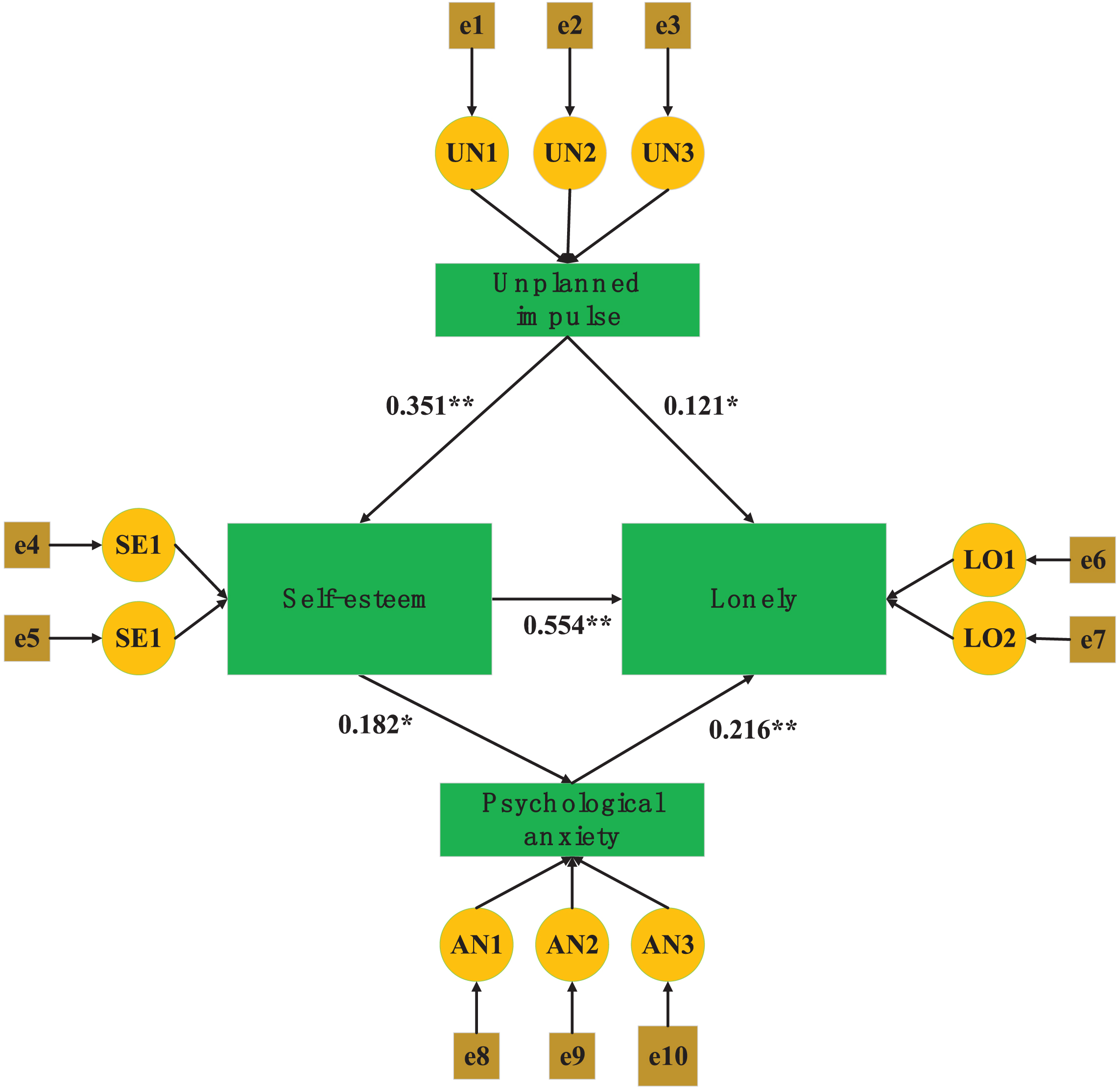
Structural equation path analysis of the relationship between unplanned impulse and self-esteem, loneliness, and social psychological anxiety. Note: **indicated P < 0.001; *indicated P < 0.05.
Considering the significant correlation between urban/rural parents and IAS score, the group structural equation model analysis was carried out with urban/rural and whether two parents or not as category variables. As shown in Fig. 3, Fig. 4, Fig. 5, and Fig. 6, there were notable differences in the relationship models of urban students and rural students (Δx2 = 11.372, Δdf = 4, P < 0.05), that is, the relationship between unplanned impulsivity, self-esteem, loneliness, and social psychological pressure in different household accounts was different, and the effect of unplanned impulsivity on loneliness in urban students was not statistically significant (P > 0.05). There were notable differences between the relationship models of two-parent families and single-parent families (Δx2 = 13.818, Δdf = 6, P < 0.05), that is, the relationship between unplanned impulse, self-esteem, loneliness and social psychological pressure in different family structures was different, and the effect of unplanned impulse on loneliness in students from two-parent families was not statistically significant (P > 0.05).
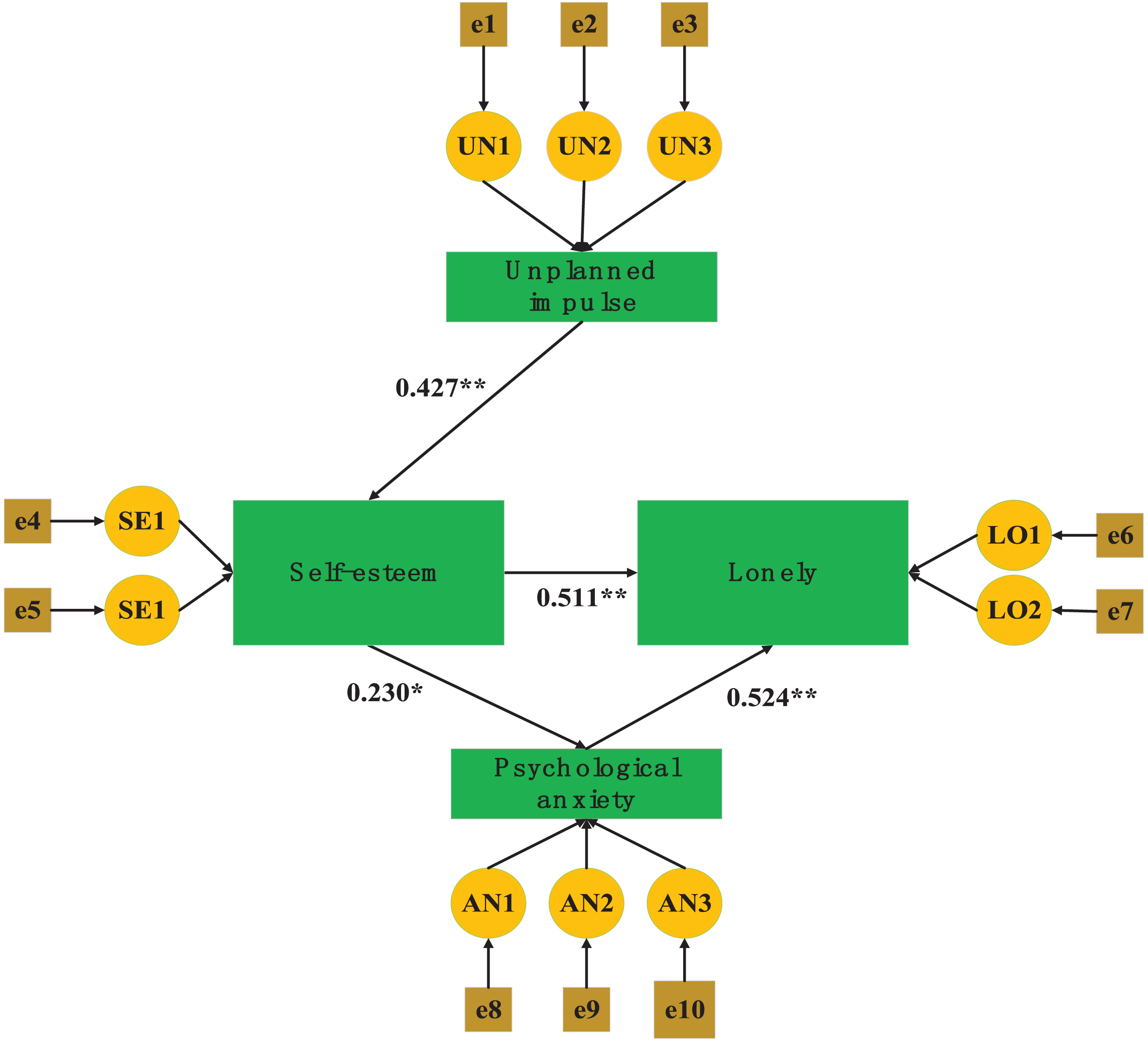
Structural equation path analysis of urban student relationship model. Note: **indicated P < 0.001; *indicated P < 0.05.
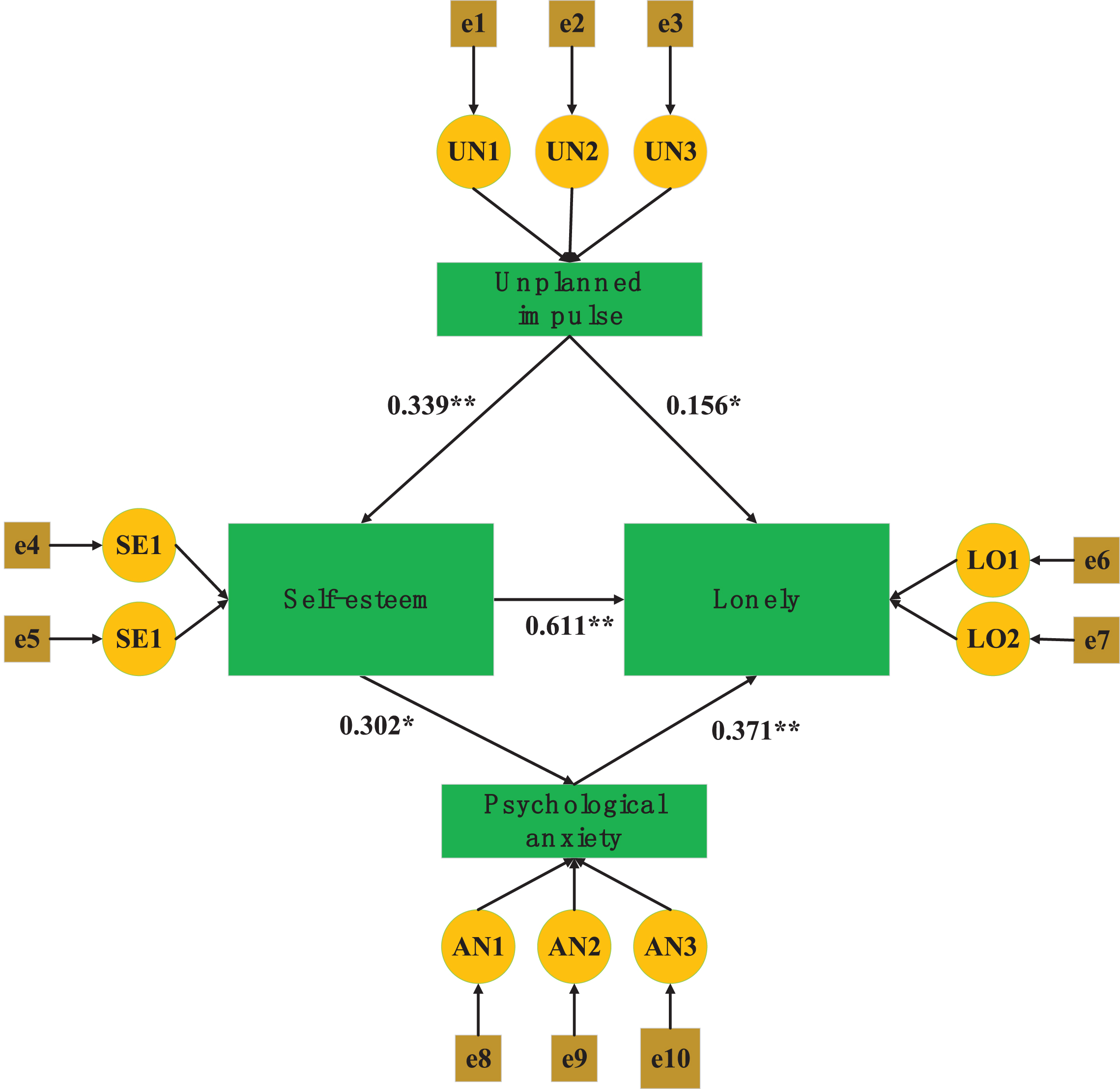
Structural equation path analysis of rural student relation model. Note: **indicated P < 0.001; *indicated P < 0.05.
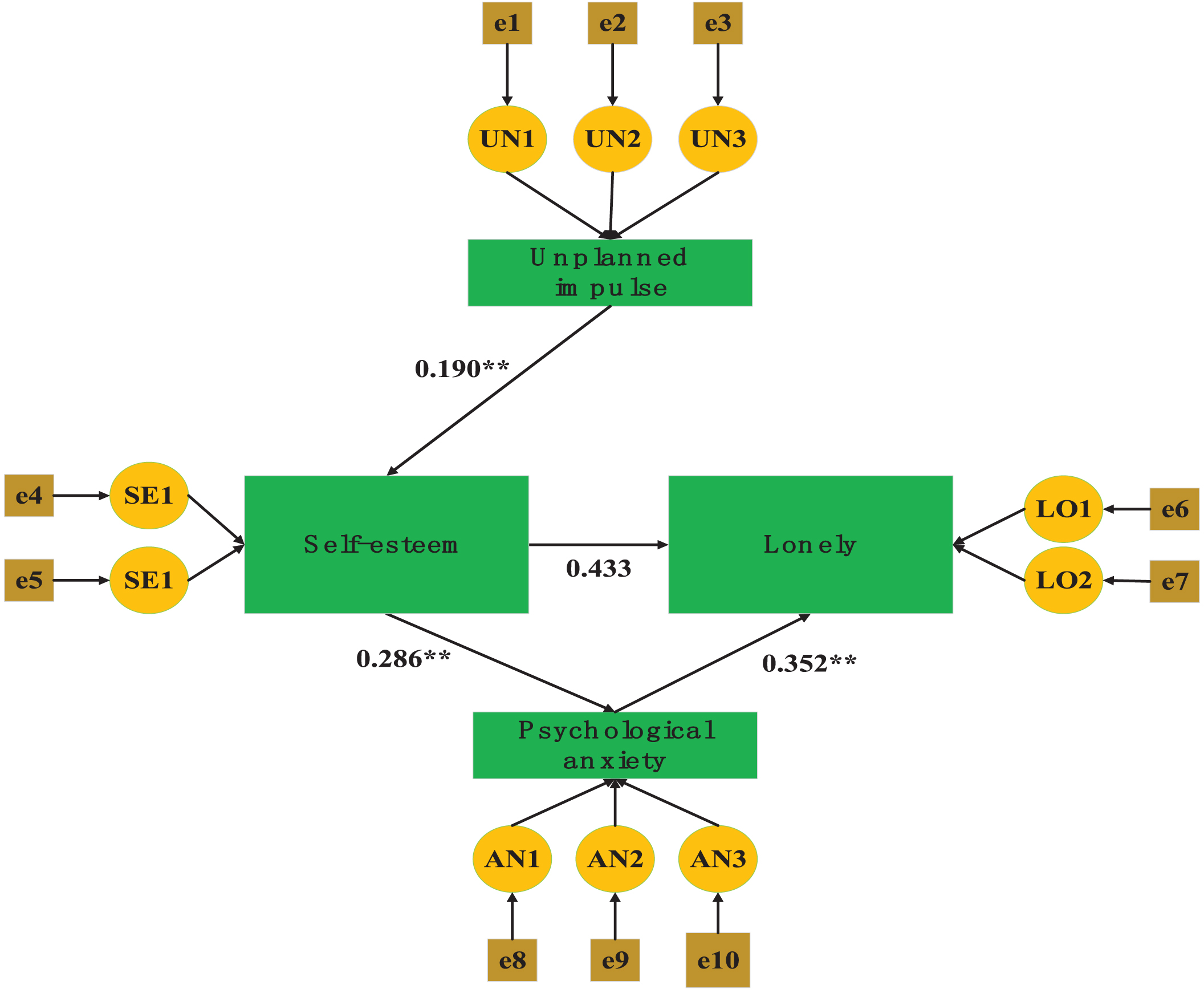
Structural equation path analysis of student relationship model in two-parent family. Note: **indicated P < 0.001; *indicated P < 0.05.
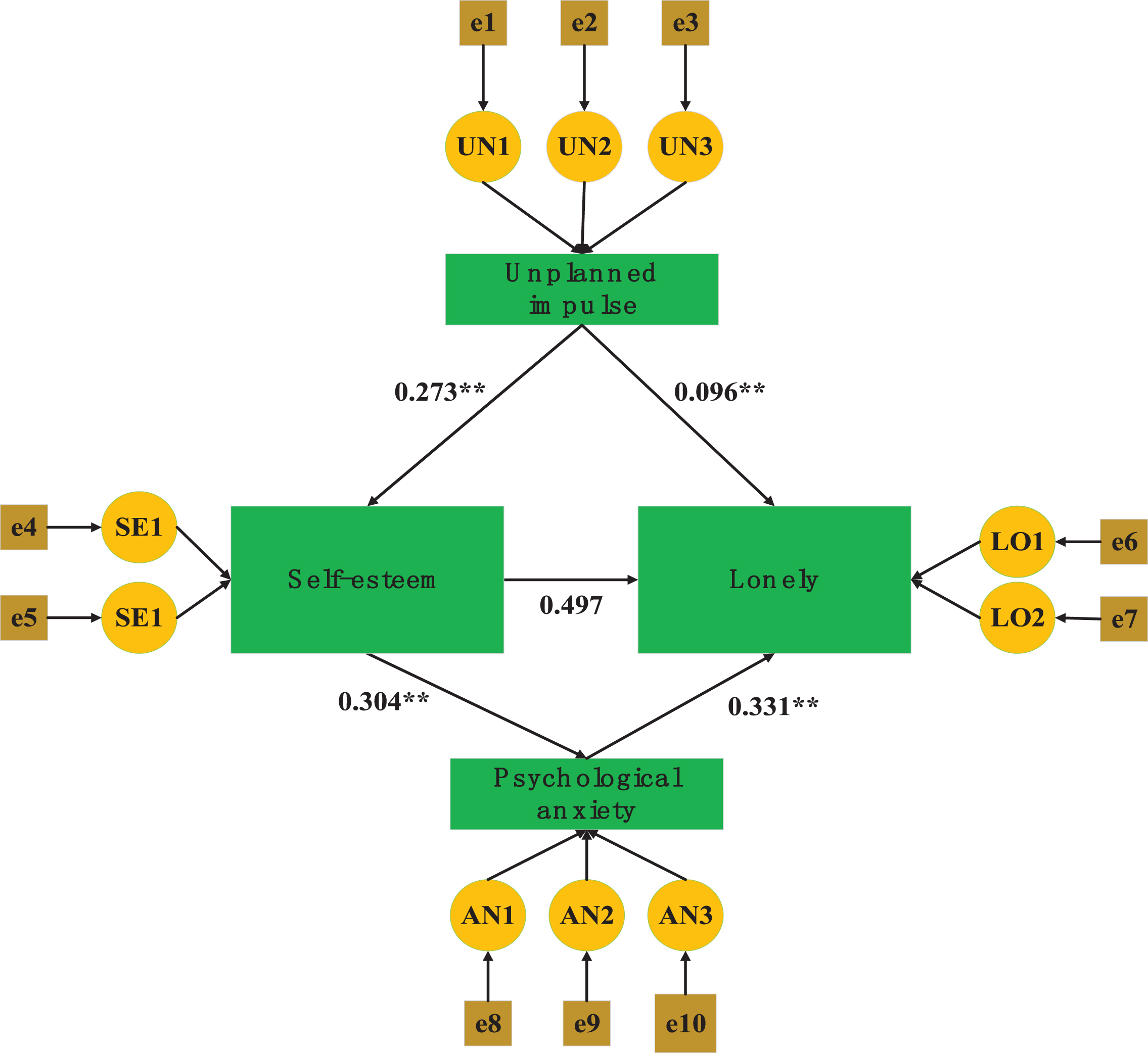
Structural equation path analysis of student relationship model in single parent family. Note: **indicated P < 0.001; *indicated P < 0.05.
As shown in Table 3, the X2 fitting priority index (X2/df), root mean square error of approximation (RMSEA), the goodness of fit index (GFI), adjusted goodness-of-fit index (AGFI), incremental fitting index (IFI), Tucker - Lewis index (TLI), non-normalized fitting index (NNFI), and normalized fitting index (NFI) of the five kinds of relation models meet the reference standard, and the simulation fitting effect was ideal.
The fitting indexes of the five relationship models
As shown in Fig. 7, there was no notable difference between the experimental group and the control group in IAS, FNE, and IES (P > 0.05).
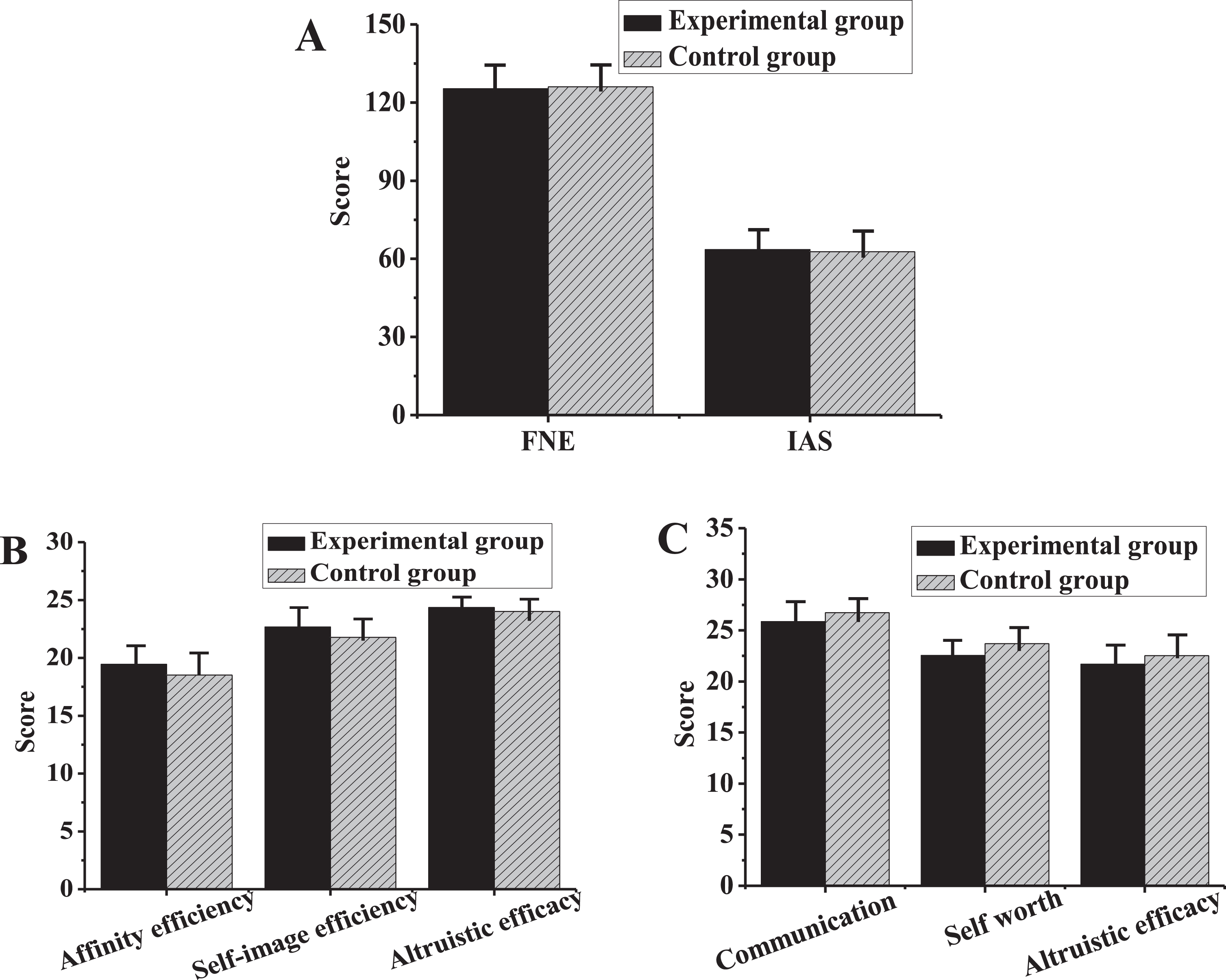
IAS, FNE, and IES scores of the experimental group and the control group A was the IAS and FNE scores; B was the score of affinity efficacy, self-impression efficacy, and altruism efficacy; C was for communication efficiency, self-value, and emotional control.
As shown in Fig. 8, the IAS and FNE scores in the experimental group were greatly lower than those in the control group, and there was a notable difference (P < 0.05). The post-test affinity efficacy, communication efficacy and emotional control scores of the experimental group were greatly higher than those of the control group, and there was a notable difference (P < 0.05). There was no notable difference in self-impression efficacy, altruism efficacy and self-value scores between the experimental group and the control group (P > 0.05).
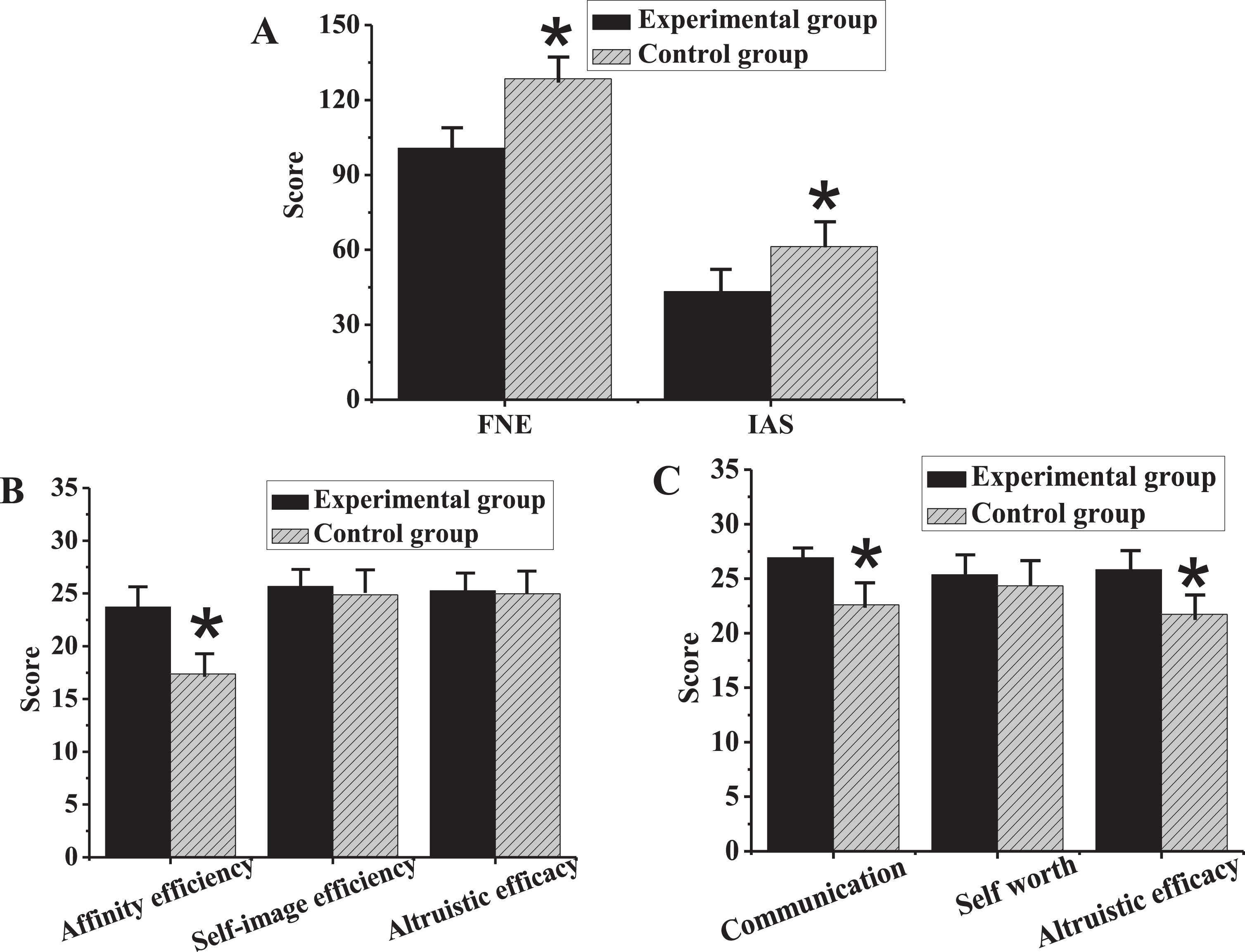
The IAS, FNE, and IES scores of the experimental group and the control group after test A was the IAS and FNE scores; B was the score of affinity efficacy, altruism efficacy, and self-impression efficacy; C was for communication efficiency, self-value, and emotional control. *Indicated that there was a notable difference between the experimental group and the control group (P < 0.05).
As shown in Fig. 9, the IAS and FNE scores in the experimental group were greatly lower than those in the control group, and there was a notable difference (P < 0.05). The scores of affinity efficacy, self-impression efficacy, communication efficacy, and emotional control were greatly higher in the experimental group than in the control group, and there was a notable difference (P < 0.05). There was no notable difference between experimental group and control group in altruism efficacy, and self-value score (P > 0.05).
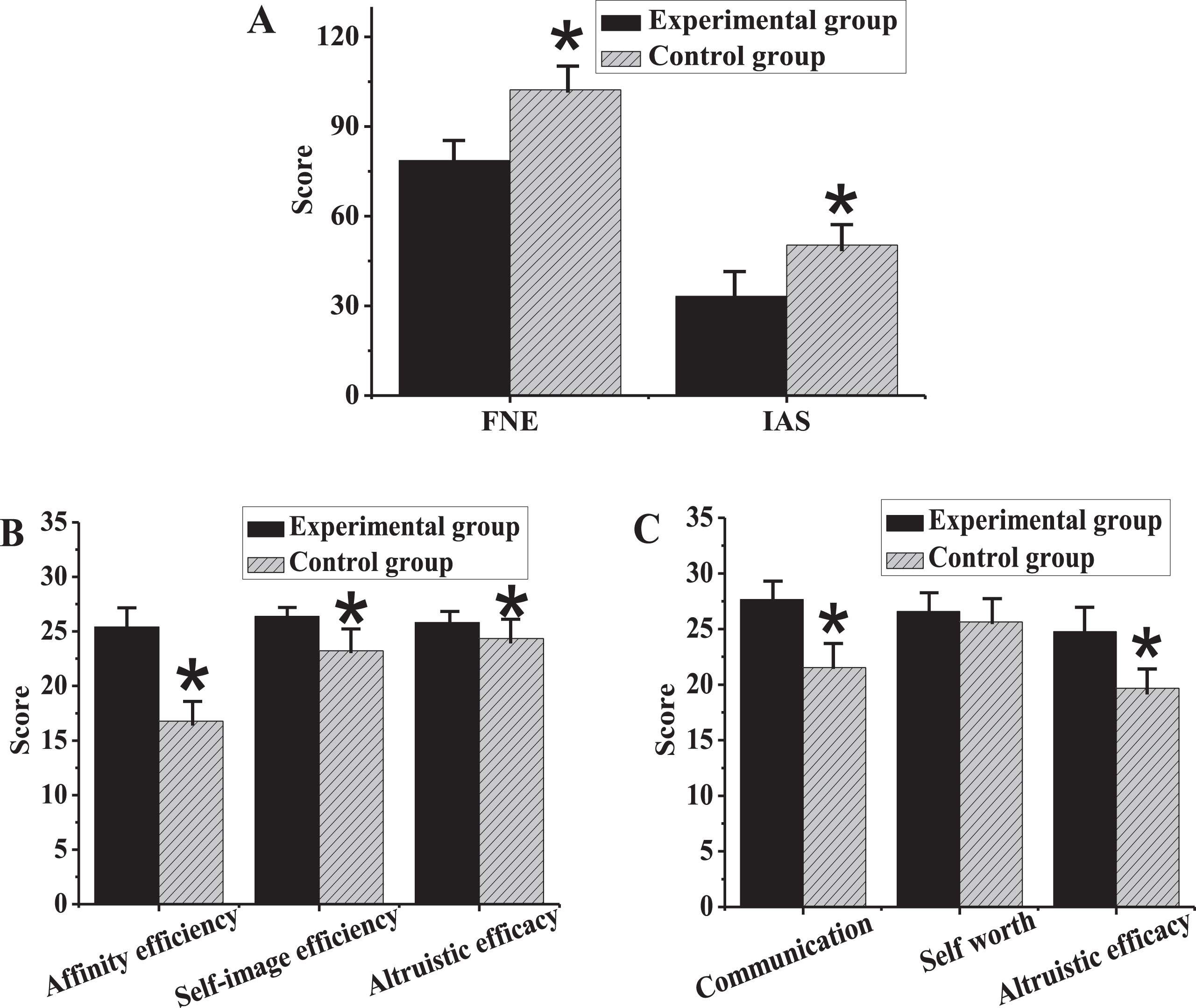
The track of the IAS, FNE, and IES scores of experimental group and the control group A was the IAS and FNE scores; B was the score of affinity efficacy, altruism efficacy and self-impression efficacy; C was for communication efficiency, self-value and emotional control. *Indicated that there was a notable difference between the experimental group and the control group (P < 0.05).
As shown in Fig. 10 below, the scores of IAS and FNE in the tracking test of the experimental group were significantly lower than those in the pre-test and post-test, and the difference was statistically significant (P < 0.05); the post-test scores of IAS and FNE in the experimental group were significantly lower than the pre-test scores, and the difference was statistically significant (P < 0.05); the scores of affinity, altruism, self-impression, communication, self-value, and emotional control in the tracking test and the post test of the experimental group were significantly higher than those in the previous test (P < 0.05); there was no notable difference in the scores of the tracking test of the affinity efficacy, altruism efficacy, self-impression efficacy, communication efficacy, self-value, and emotional control and the post-test in the experimental group (P > 0.05).
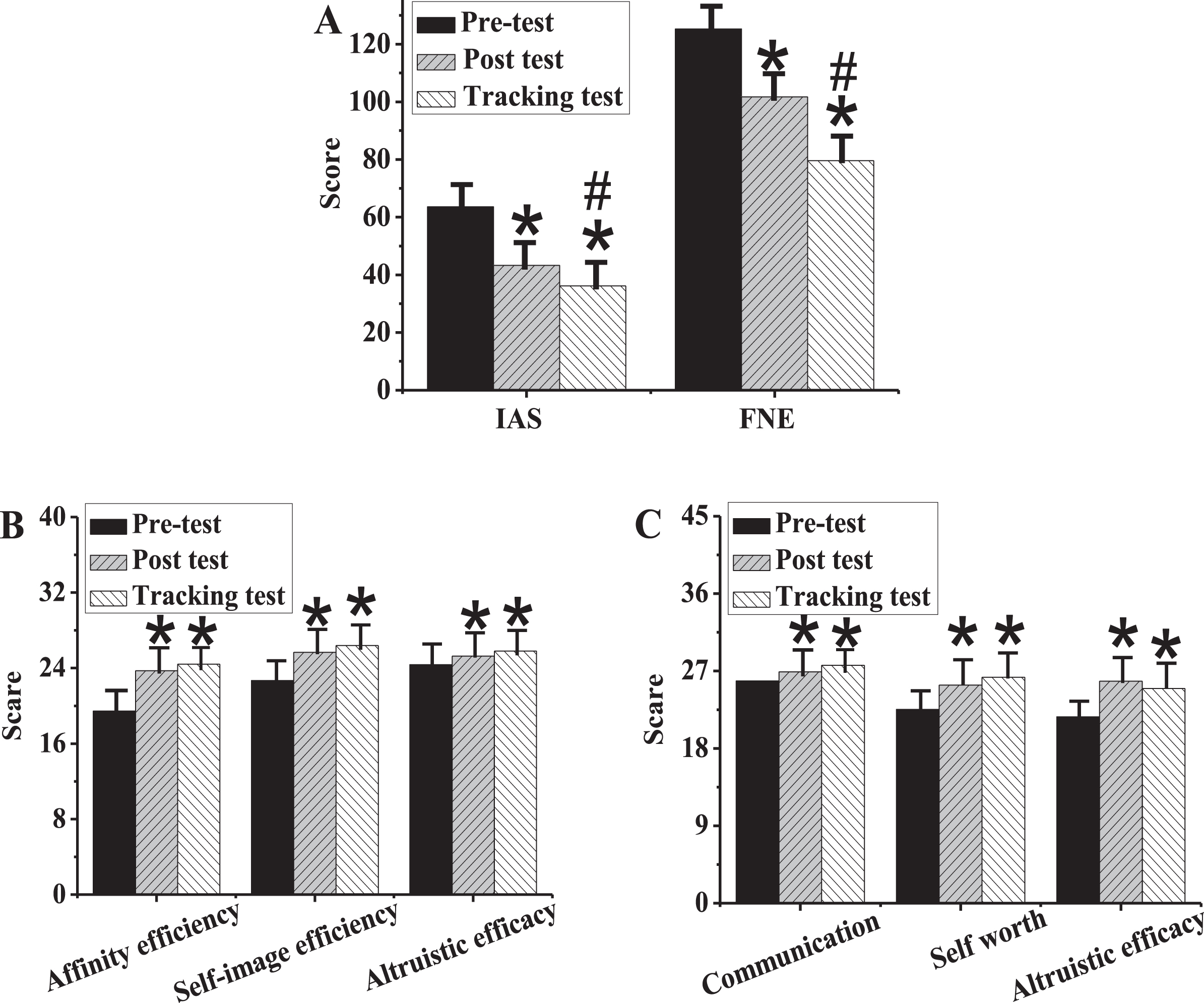
The scores of IAS, FNE, and IES in the pre-test, post-test and tracking tests of the experimental group A was the IAS and FNE scores of the two groups. B was the score of affinity efficacy, altruism efficacy, and self-impression efficacy; C was the score of communication efficiency, self-value, and emotional control. *Indicated that the difference was statistically significant compared with the pre-test (P < 0.05). # Indicated that the difference was statistically significant compared with the post-test (P < 0.05).
As shown in Fig. 11, the IAS and FNE scores in the tracking test of the control group were significantly lower than those in the pre-test and post-test, and the difference was statistically significant (P < 0.05); in the control group, there was no notable difference in the scores of affinity efficacy, altruism efficacy, and emotion control (P < 0.05); in the control group, there were notable differences between the scores of self-impression efficacy and communication efficacy in the pre-test, the post-test, and tracking test (P < 0.05); the self-value score of the tracking test in the control group was significantly higher than that of the pre-test and post-test, and the difference was statistically significant (P < 0.05).
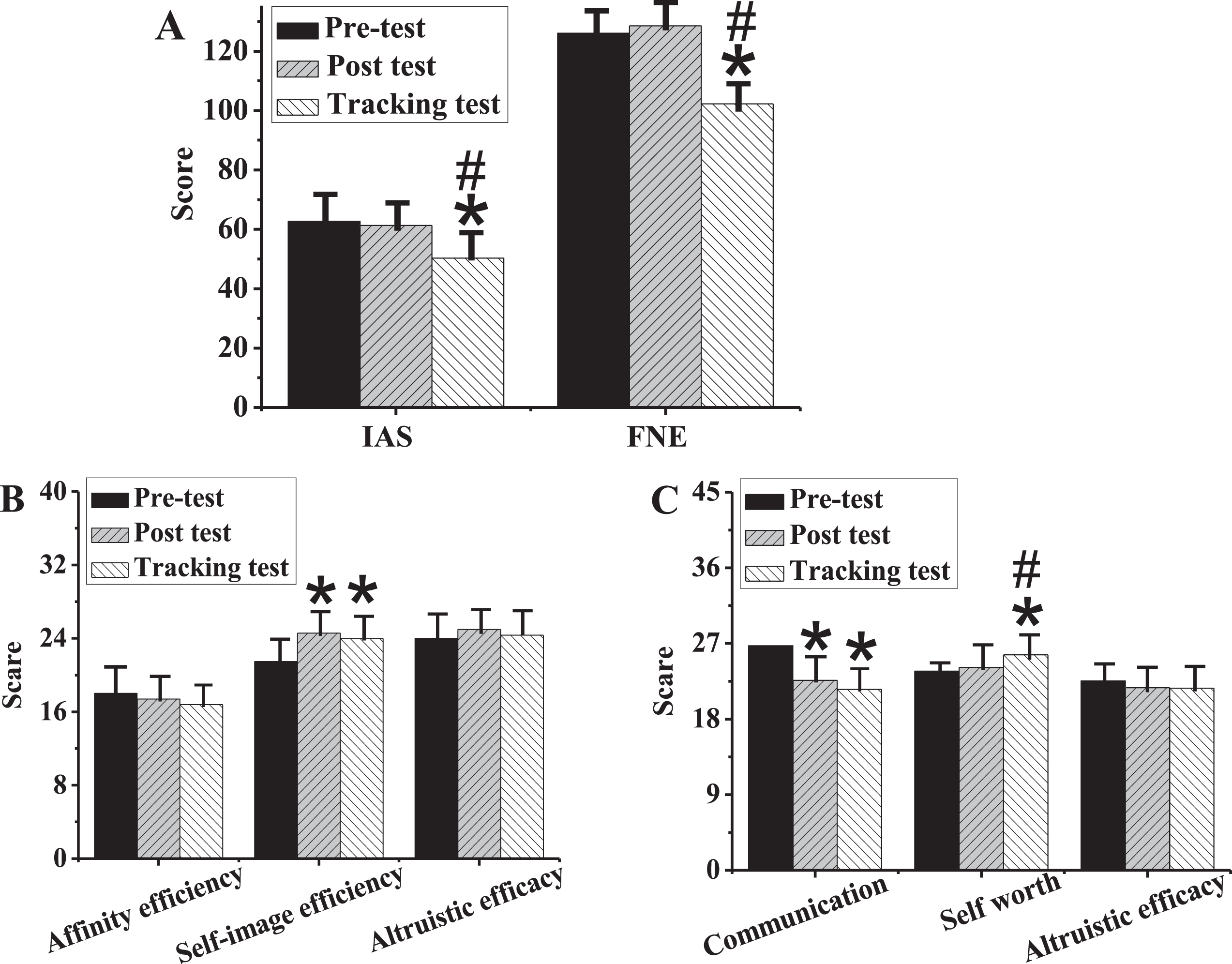
The scores of IAS, FNE, and IES in the pre-test, post-test, and tracking tests of the control group A was the IAS and FNE scores of the two groups. B was the score of affinity efficacy, self-impression efficacy and altruism efficacy; C was the score of communication efficiency, self-value, and emotional control. *Indicated that the difference was statistically significant compared to pre-test (P < 0.05). # Indicated that the difference was statistically significant compared to post-test (P < 0.05).
After the overall training activity, all subjects were assigned homework to write about the harvest and feelings of the whole group activity. In addition, as shown in Fig. 12, the group treatment satisfaction was evaluated, and it was found that subjects with general satisfaction accounted for 10.34%, subjects with good satisfaction accounted for 34.48%, and subjects with good satisfaction accounted for 55.18%.
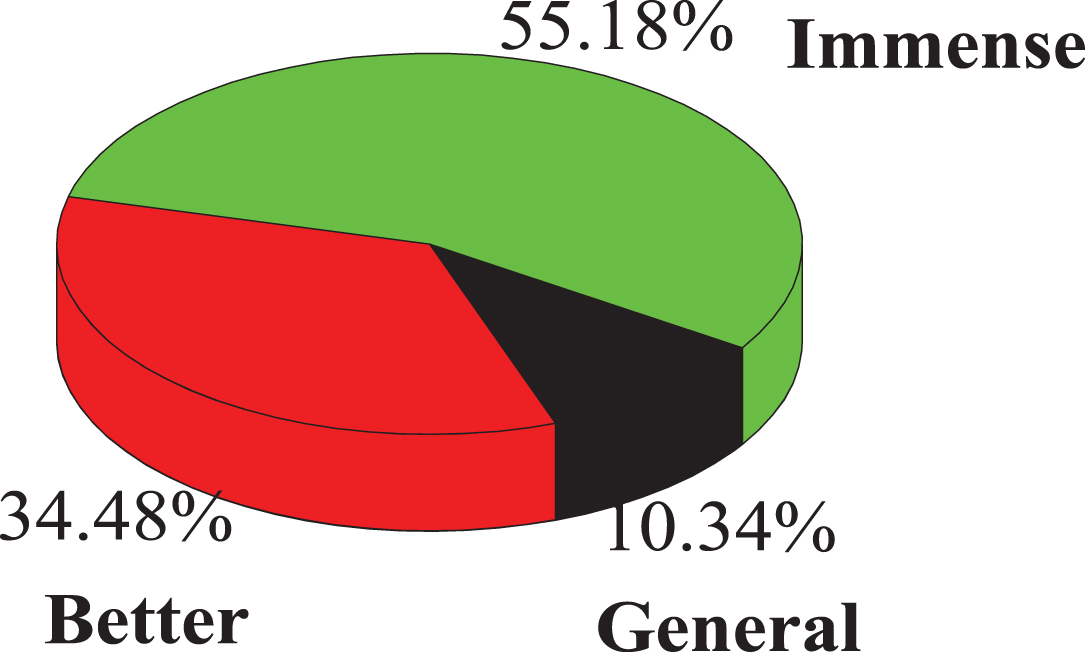
Satisfaction feedback of subjects in experimental group.
After sorting and summarizing, the feedback of some members was summarized as follows. Relief of social psychological stress: As an introvert, I was not good at communicating with others, and I would feel panic when performing in public. After this period of group learning and training, I found that I could do better. When communicating with friends or even strangers, I could also talk calmly and confidently. Even in front of a few hundred people to give a public speech, I am able to feel calm. Changes in self-knowledge: I felt I was stupid, not good enough and had inferiority, so I rarely took the initiative to meet new friends. After this short period of group activities, I found that my self-cognition was wrong, and I became confident, my mood improved and gained a lot of new friends. Emotional control efficacy: I gained a lot from participating in this group counselling activity, which not only made me know a lot of friends, but also made me more mature in expressing my emotions and less negative emotions when interacting with others. We talked to each other about our feelings, shared our experiences, solved our problems, and finally achieved psychological growth.
The team teachers conducted observation and evaluation on the changes of psychological stress of all subjects based on the three scales, and found that 65.51%of the students had obvious improvement effect on psychological stress, 27.59%had moderate improvement effect, and 6.9%had poor improvement effect, as shown in Fig. 13.
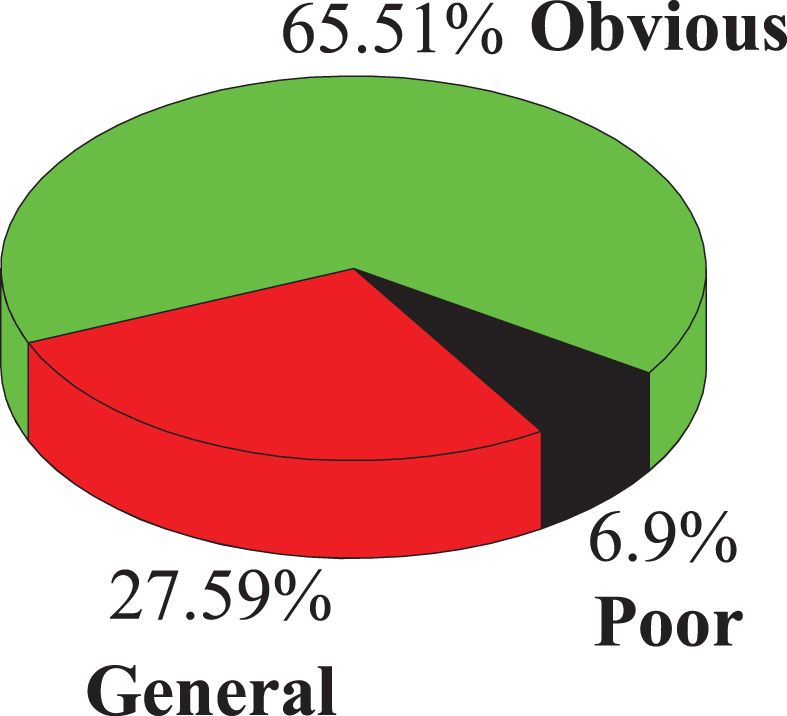
The psychological stress improvement effect of subjects in experimental group.
The overall direction of improvement was better, mental health problems have been alleviated. Enthusiasm for participating in activities: all subjects were able to arrive at the assigned location on time and actively cooperated during the activity, becoming active speakers after two or three group activities. Meeting new friends: Members of group activities have experienced a process from strangeness to familiarity, from initial estrangement to active communication. Now they can communicate actively before and after the activity and become good friends. The improvement of team tacit understanding: with the continuous development of group activities, the cooperation between members of the game was getting better and better, both sides had a sense of tacit understanding. Psychological growth: in the last group activity, each member of the group rushed to the stage to express themselves, and was calm, generous. After comparison with the nervous, timid state at the beginning, it was far different. The results seemed to be far more than what the researchers expected.
Social anxiety disorder is easily caused by the sudden change of living environment among freshmen, which leads to the emergence of psychological stress. However, there are various factors that cause social and psychological problems [19]. In order to develop a better cognitive group therapy program, first, the correlation between students’ social psychological stress and impulse, self-esteem, and loneliness is analyzed. It was found that the IAS score was positively correlated with loneliness and unplanned impulse (P < 0.001); the regression coefficient of the subjects’ IAS score and self-esteem was –0.581, showing an extremely significant negative correlation (P < 0.001), which was the same as the study results of Cao et al. [20], indicating that students with low self-esteem, high loneliness, and high impulse were more likely to experience psychosocial stress. It may be that these types of students are not good at communicating with others in real life and have psychological stress in the face of others [21]. After structural equation modeling, it was found that self-esteem play a mediating role between impulse with loneliness and social psychological stress. Students with high impulse have strong self-esteem, do not care about the consequences, are not easy-going, and lack of friends, which is very easy to cause loneliness and lead to psychological problems [22]. In addition, it was found that there were notable differences in the relationship model between urban students and rural students (P < 0.05); there were notable differences in the relationship model between two-parent families and single-parent families (P < 0.05). This is due to the strong self-perception of impulse among students from cities and with two parents. Excessive self-centeredness leads to the breakdown of social relations, which leads to increased loneliness and pressure on social interaction [23].
According to the analysis of the above related factors, the corresponding group activity treatment plan centering on the subjects’ impulse, self-esteem, and loneliness was put forward. First, it was found that there were no notable differences between the experimental group and the control group in pre-test IAS, FNE, and IES (P > 0.05), which was basically consistent with the research results of Wang et al. [24], indicating that the members were basically homogeneous, which provided a basis for the subsequent experimental results. By comparing the scores after group counselling, it was found that the scores of IAS and FNE in the experimental group were greatly lower than those in the control group (P < 0.05); the post-test affinity efficacy, communication efficacy and emotional control scores of the experimental group were greatly higher than those of the control group (P < 0.05), which was consistent with the results of Schröder et al. [25], suggesting that after group cognitive training and behavior learning, freshmen in the experimental group had significant improvement in social disorder, psychological stress, self-efficacy, and other aspects. The tracking data of the experimental group and the control group were collected three months after the end of group counselling. It was found that the IAS and FNE scores of the experimental group were greatly lower than that of the control group (P < 0.05); the scores of affinity efficacy, self-impression efficacy, communication efficacy, and emotional control in the experimental group were greatly higher than those in the control group (P < 0.05), which was basically consistent with the research results of Alfonsson et al. [26], suggesting that the cognitive behavior group training was effective for the alleviation of freshmen’s psychological stress and achieved long-term effects. Self-impression performance improved greatly on the March test, which may be due to the fact that changing self-perception took longer, therefore, it didn’t work immediately. After three months of practice, the influence of cognitive behaviour group training on this dimension was gradually noted [27].
In addition, an overall analysis of the intervention effects of the experimental group - was then carried out. The results showed that satisfied subjects accounted for 55.18%, and students with significant improvement of psychological stress accounted for 65.51%. In a very relaxed and pleasant team atmosphere, members could get to know each other, and the strong cohesion was cultivated during these activities [28]. Under the active guidance of the team teacher, each member can quickly adapt to the current communication environment and release their psychological stress. A good cognitive behaviour group training needs a targeted training program. In the group activities aimed at social disorder and psychological stress, it is necessary to correct unreasonable cognition behavior training. For example, to learn the rational emotional behavior therapy theory greatly reduced students’ psychological fear and anxiety level. Through public speeches, situational simulation, and other activities, students’ self-confidence was effectively improved, like the greatly improved post-test affinity efficacy, communication efficiency, and emotional control score of experimental group [29]. However, altruism efficacy and self-value were not obviously improved, which may be due to the imperfection of activity time and content, as well as the weak relevance to the dimension of IES [30].
Conclusion
In this research, cognitive behavior group training program was developed to analyze the intervention effects of cognitive behaviour therapy on freshmen’s social psychological stress, which provided an experimental basis for the application of cognitive behaviour therapy in the future. However, the sample is small, which may cause deviation of the research results. In addition, there may be Hawthorne effects in students’ self-assessment, which will also affect the authenticity of the assessment. In the future, more accurate methods can be used to evaluate the effect of intervention. In conclusion, the group training model based on cognitive behaviour therapy can effectively improve freshmen’s affinity efficacy, self-image efficacy, FNE, and social psychological stress, which is of great help to relieve students’ psychological stress and protect their mental health and can maintain good long-term effects.
Conflict of interest
None to report.