







Abstract
BACKGROUND:
Digital technologies (DTs) have gained recognition for educating and training individuals, covering multiple areas in construction sector to enhance safety performance.
OBJECTIVE:
The objective of this study was to conduct a systematic literature review (SLR) focusing on DTs utilized for safety education and training in the construction sector since 2000 and explore their various application areas.
METHODS:
Preferred Reporting Items for Systematic Reviews and Meta-Analyses (PRISMA) guidelines were followed to conduct SLR and fifty-nine articles were identified. This study describes the research trends through bibliometric analysis, encompassing aspects such as annual publication counts, document sources, influential authors and documents, countries of origin, and prevalent research areas.
RESULTS:
The results revealed that immersive virtual reality (VR) technology has seen extensive utilization in educating and training individuals. In the context of application areas, most DTs concentrated on augmenting individuals’ proficiency in recognizing hazards.
CONCLUSION:
The findings summarized the primary research domains, deliberated upon prevailing research gaps, and proposed forthcoming directions for applying DTs in safety training. The suggested future directions can potentially enhance safety training effectiveness within the construction firm.
Introduction
Globally, the construction firm accounts for 13 percent of the gross domestic product (GDP) [1] and provides employment opportunities to people [2]. Despite its benefits, there is a rise in accident and injury rates in construction firm [3]. Global accident statistics show construction accident rates were higher than in other industrial sectors [1]. Also, unintended consequences such as project delays and work loss occur due to the nature of harmful operations [2].
Previous studies [4–6] indicated that a lack of proactive measures, including identification of risks, safety awareness and education, workforce training, causes most construction accidents/injuries. Safety training has been recognized as an effective method that could reduce accident by improving individuals’ risk identification and safety awareness [7]. Effective safety training assists an individual in recognizing potential risks involved in trade jobs and responding appropriately against them [8]. Construction safety training can be implemented in traditional and computer-based methods [9]. According to Guo et al. [10], traditional safety training methods include hands-on training, handouts, toolbox talks, and lectures. However, many researchers pointed out those traditional methods are not effective in transferring safety knowledge during the training process [11], and workers lack consistent engagement with traditional methods [12] and tend to lose interest in memorization of safety standards [10]. The criticisms of traditional methods strengthened efforts to find new approaches, i.e., computer-based methods or digital technologies (DTs) [5]. Virtual reality (VR), augmented reality (AR), mixed reality (MR), and game technology are some of the most recent advancements in DTs [13]. These technologies have been recognized as promising tools for safety training programs due to their effective sharing of safety knowledge [14]. DTs provide visualization from immersive and interactive views [15] and can improve the involvement of users in training by visualizing the construction environment [16]. In recent decades, the DTs-based safety training method has attracted the construction safety research community and numerous construction firms worldwide [6–9, 14].
Despite its expansion, there has been a notable absence of studies addressing the following questions: (1) which DT techniques have been employed for safety training in the construction sector, and (2) what are the existing application domains of DTs in construction safety training? To answer these questions, in this study, a systematic literature review (SLR) was undertaken to comprehensively investigate the evolution and utilization of DTs for safety training in the construction industry. Chellappa and Srivastava [17] stated that performing a SLR of existing studies within a specific domain can facilitate a comprehensive understanding of the current research directions. To this end, 59 journal documents were retrieved from the Scopus and Web of Science (WoS) databases from 2000 to 2021 that focused on DTs for safety training in construction. This study contributes to existing knowledge in the following ways by: (1) presenting the distribution of papers across publication years; (2) illustrating the distribution of articles across various journal sources; (3) visualizing the most prominent authors, regions, and documents in the field; and (4) exposing DTs methods and their application areas for safety training in construction.
Research method
This study used Preferred Reporting Items for Systematic Reviews and Meta-Analyses (PRISMA) to carry out the SLR. PRISMA is a method for collecting and screening scientific documents for an SLR [18] and has been widely adopted in different research fields, such as safety [19], social science [20], and business management [21]. The four main processes of PRISMA are identification, screening, eligibility, and data abstraction and analysis.
Identification
Identifying documents was the first step in the systematic review process conducted in May 2022. The Scopus and WoS databases were chosen to gather the relative documents in this study. The reason behind choosing these databases was based on document quality, its international reputation, and broader coverage of the scope of the study [22]. The keywords employed to gather relevant documents were “digital technologies” OR “safety training” OR “extended reality” OR “BIM” OR “building information modeling” OR “virtual reality” OR “construction industry” OR “occupational health” OR “construction safety” OR “augmented reality” OR “construction ergonomics” OR “design for safety” OR “workers safety” OR “Computer-aided design” OR “mixed reality” OR “prevention through design” AND “construction simulation”. This process yielded 123 and 217 documents from the Scopus and WoS databases, respectively.
Screening
In this step, researchers first carefully identified the duplicate documents from the Scopus and WoS databases. A total of 31 duplicate documents were identified, and the remaining 319 documents were selected for the next phase, where documents were examined in detail to meet the criteria set by the researchers. First, only the articles published in the journals between 2000 and 2021 were included. Despite other sources, such as conference papers, book chapters, and reports, journal articles were chosen because of their reliable source of knowledge [17]. Next, the documents published in other languages except in English were excluded. As a result, 223 documents were excluded, and the remaining 96 documents produced from both databases were used for further. The inclusion and exclusion criteria set by the researchers are listed in Table 1.
Criteria for documents
Criteria for documents
This step determined that the retrieved documents should be included or excluded from this SLR. The screened documents were reviewed in this step based on each document’s title, abstract, and keywords. It was observed that some documents (n = 22) did not match this study’s scope and were found irrelevant were excluded. Next, although the term “VR, AR, MR, and XR” used in the abstract of the articles did not focus on safety training in construction. Similar articles (n = 15) that did not target DTs for safety training in construction were removed. It should also be noted that this SLR covers the articles that contributed only to applying DTs for safety training in the construction industry. Finally, 59 documents were found to be relevant to this SLR study.
Data extraction and analysis
The 59 documents obtained were subjected to a comprehensive review, analysis, and subsequent discussion. Bibliometric analysis of the Scopus database search results was conducted using the Vosviewer software developed by Van Eck and Waltman [23]. Automated phrase identification and the creation of bibliometric maps based on network data are facilitated by the Vosviewer software [22]. A CSV file was generated using the data downloaded from the Scopus database. Vosviewer was employed to generate a co-occurrence map of bibliographic data after importing the CSV file. Figure 1 depicts an overview of the SLR process.
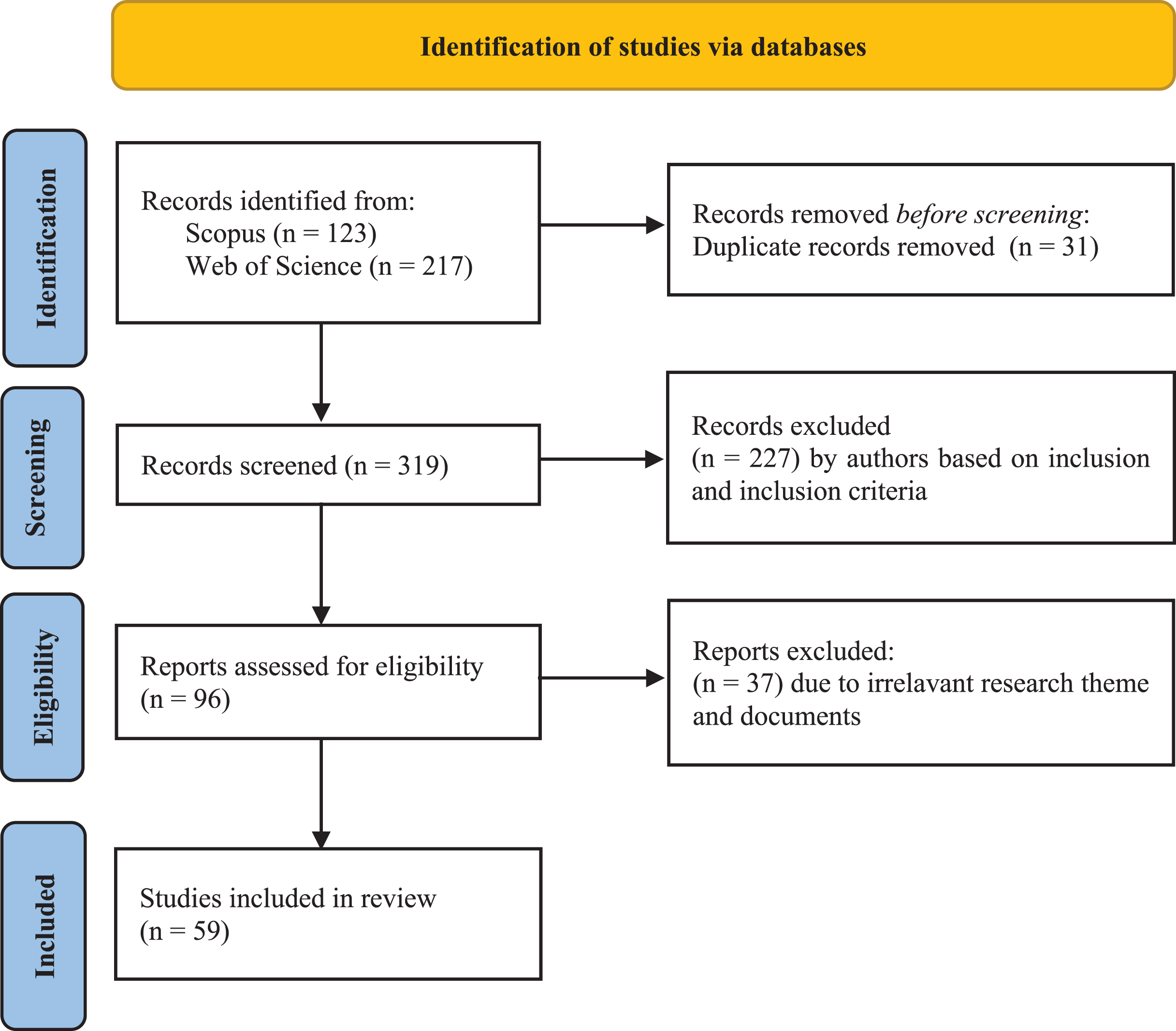
The PRISMA flow diagram for this SLR.
Year of publications
In recent years, studies focusing on applying DTs for safety training in construction have increased tremendously. According to Vigneshkumar and Salve [22], the potential development trend in a topic will be explained by plotting the number of publications over time. Figure 2 shows the number of articles published per year. While there was no notable increase in publications from 2000 to 2019, there was an increase in the documents released in 2020 and the highest articles registered in 2021 (16 articles). This suggests growing interest within the construction management research community in adopting DTs for safety training in construction. It is anticipated that there could be an increase in publications in upcoming years with more innovative DTs to address safety training challenges in construction.
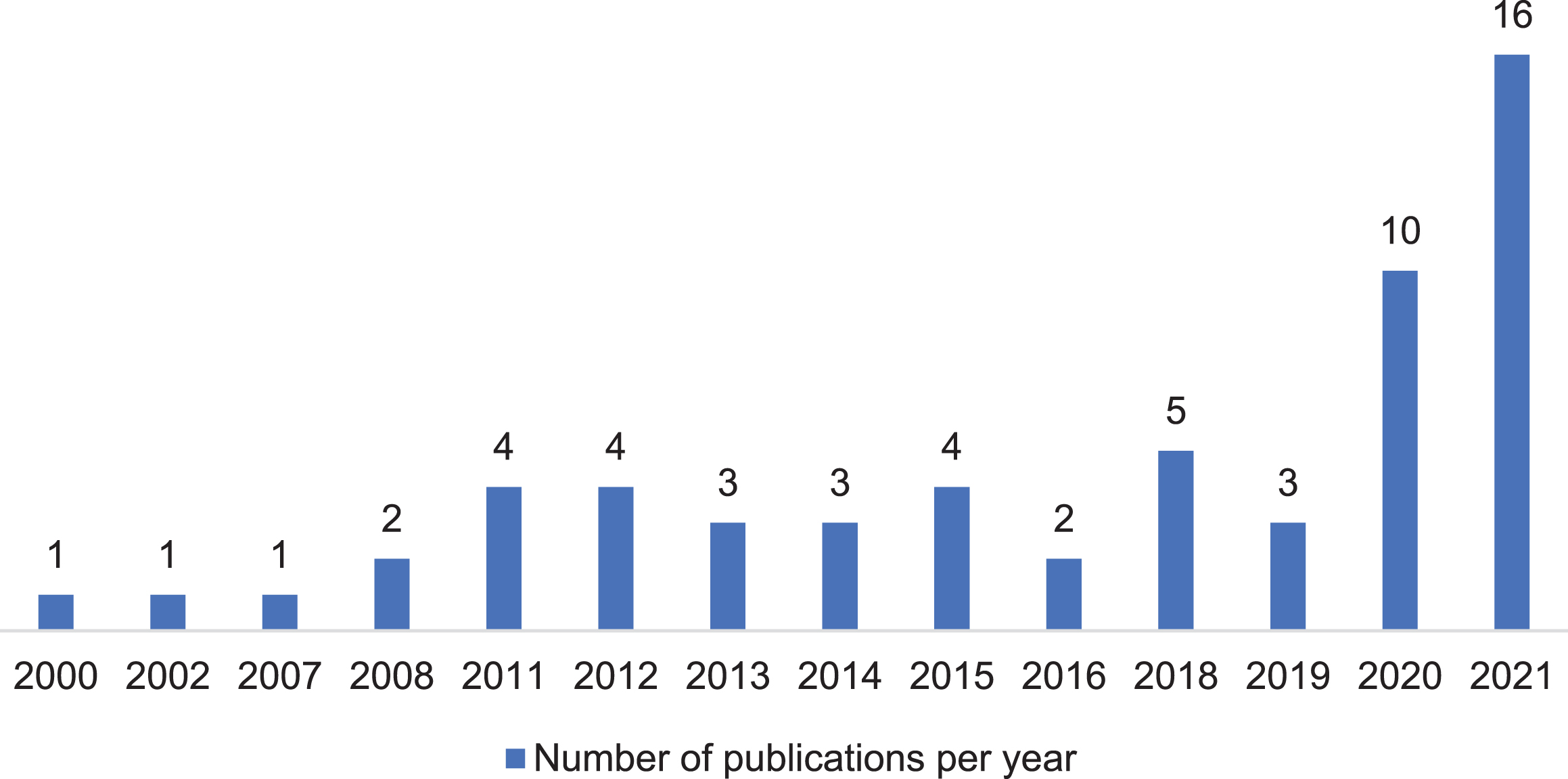
Number of publications per year.
Academic journals play a crucial role in communicating and disseminating scientific knowledge [17]. In total, 59 articles were obtained from various journals. Table 2 displays the journals that contributed at least two papers within the scope of this study. It has been noted that Automation in Construction stands out as the most influential journal in this context, with 12 documents and receiving a total of 769 citations. This is followed by the Electronic Journal of Information Technology in Construction (6 articles, 327 citations), Advanced Engineering Informatics (4 articles, 118 citations), Safety Science (3 articles, 390 citations), Journal of Computing in Civil Engineering (3 articles, 114 citations) and Engineering, Construction and Architectural Management (3 articles, 36 citations).
Most influential journal sources
Most influential journal sources
Keywords serve as a crucial element in defining the central themes of published papers [17, 22]. Therefore, it is vital to group these keywords into various topics, which can effectively describe the concentration domain of the ongoing research. In the VOSviewer, the initial selection comprised 178 keywords by selecting “Author Keywords.” By performing further analysis, general keywords such as “construction industry,” “safety training,” “construction safety,” and so on were removed. Some other keywords with the same semantic meaning, such as “bim” and “building information modelling,” were combined, and finally, 49 keywords were selected, as displayed in Fig. 3.
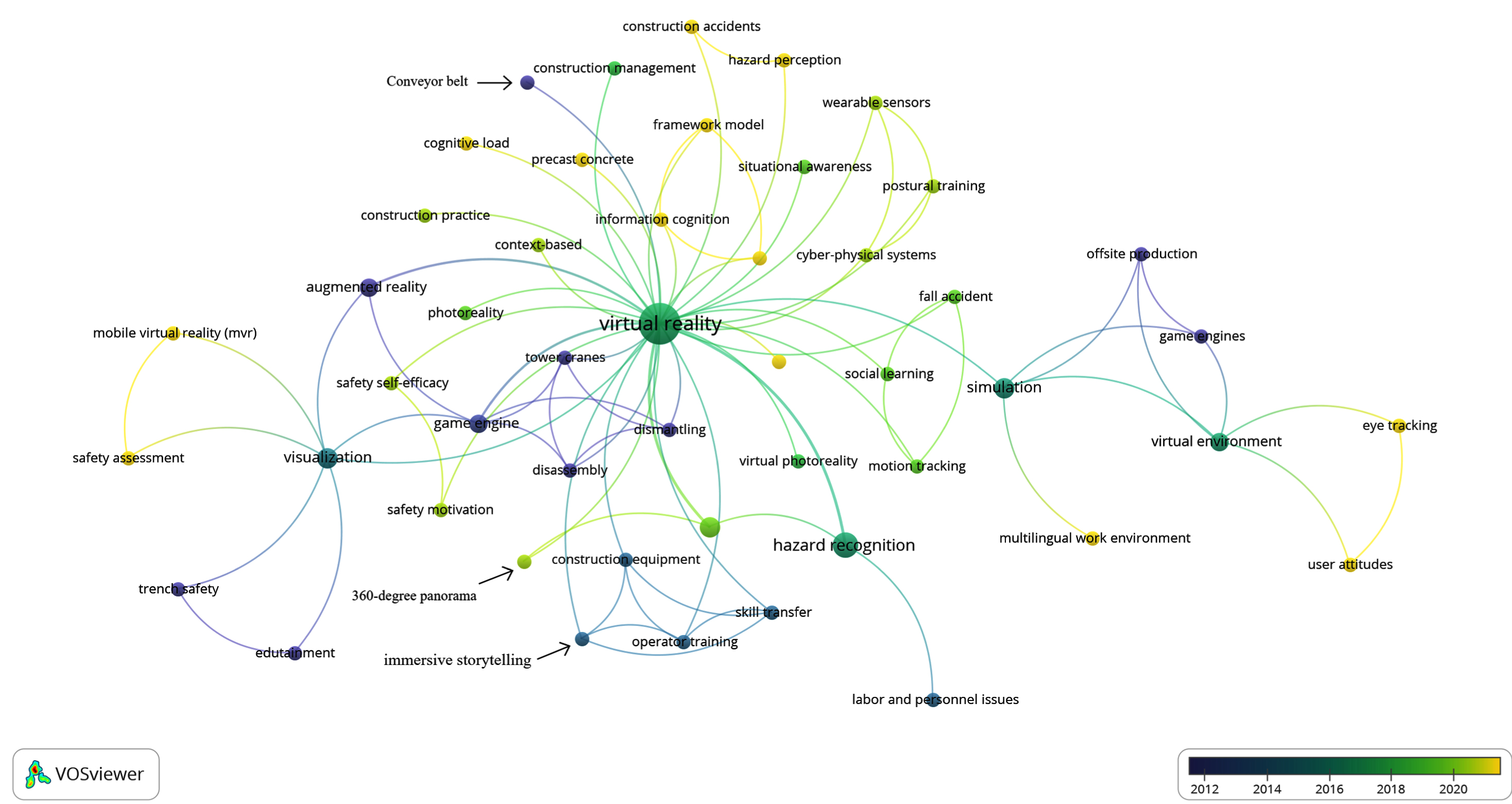
Visualization of co-occurring author keywords. Note: To avoid the over-crowdedness of fonts, key phrases such as immersive storytelling, conveyor belt, and 360-degree panorama are represented in Fig. 3 outside the initially generated mapping.
It is important to highlight that in Fig. 3, the connecting lines signify the degree of closeness or association between a pair of keywords. For instance, hazard recognition (HR) is closely related to 360-degree panorama and VR, which covers research focusing on fall hazard training within the electrical trade using 360-degree panorama [24]. Figure 3 visually represents the clustering of keywords into multiple groups. Keywords within the same cluster exhibit a higher degree of co-occurrence. Dismantling, for example, is often paired with tower cranes in the same article. The font size in Fig. 3 reflects the frequency of keywords explored in the selected literature. Based on observations from Fig. 3, the following keyword cluster emerges, describing the utilization of DTs for safety training in the construction industry:
Among 59 retrieved documents, 54 studies (92%) used VR-based methods for safety training in construction. Figure 4 illustrates the extensive use of VR-based methods for safety training from 2000. Wang et al. [25] categorized VR-based technologies in construction into four different methods: BIM-enabled VR, desktop-based VR, game-based VR, and immersive VR. Figure 5 presents the distribution of the collected articles characterized by VR-based technologies in construction safety training. Figure 5 revealed that immersive (44%) VR-based safety training methods were the most frequently employed, followed by desktop-based methods (37%). Regarding growth, it’s worth noting that the immersive training method received substantial attention in the past decade, with 24 publications published between 2013 and 2021. In the early stages, desktop-based VR technologies were most commonly adopted for safety training in construction. Figure 5 depicts that BIM-enabled and game-based VR safety training methods emerged after 2010.
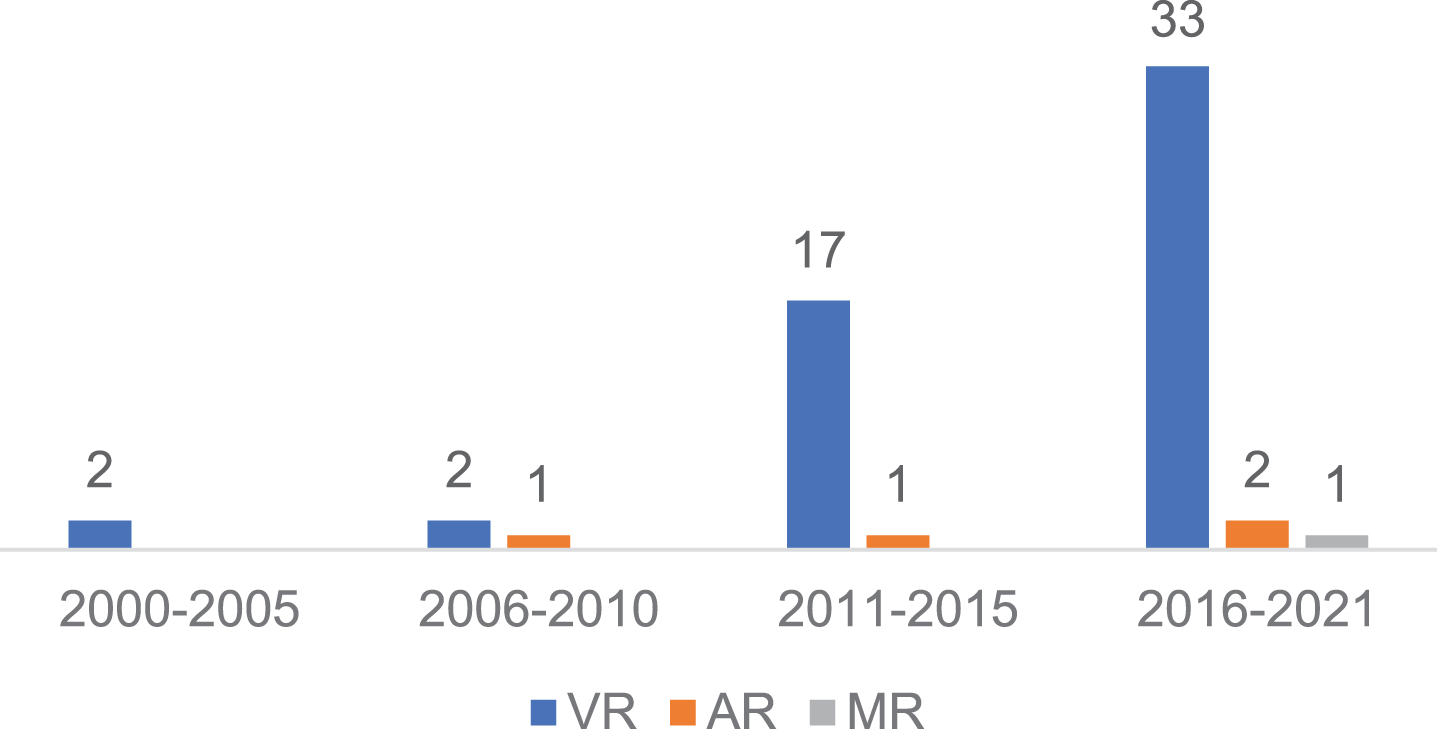
Distribution of documents characterized by DTs and publication year.
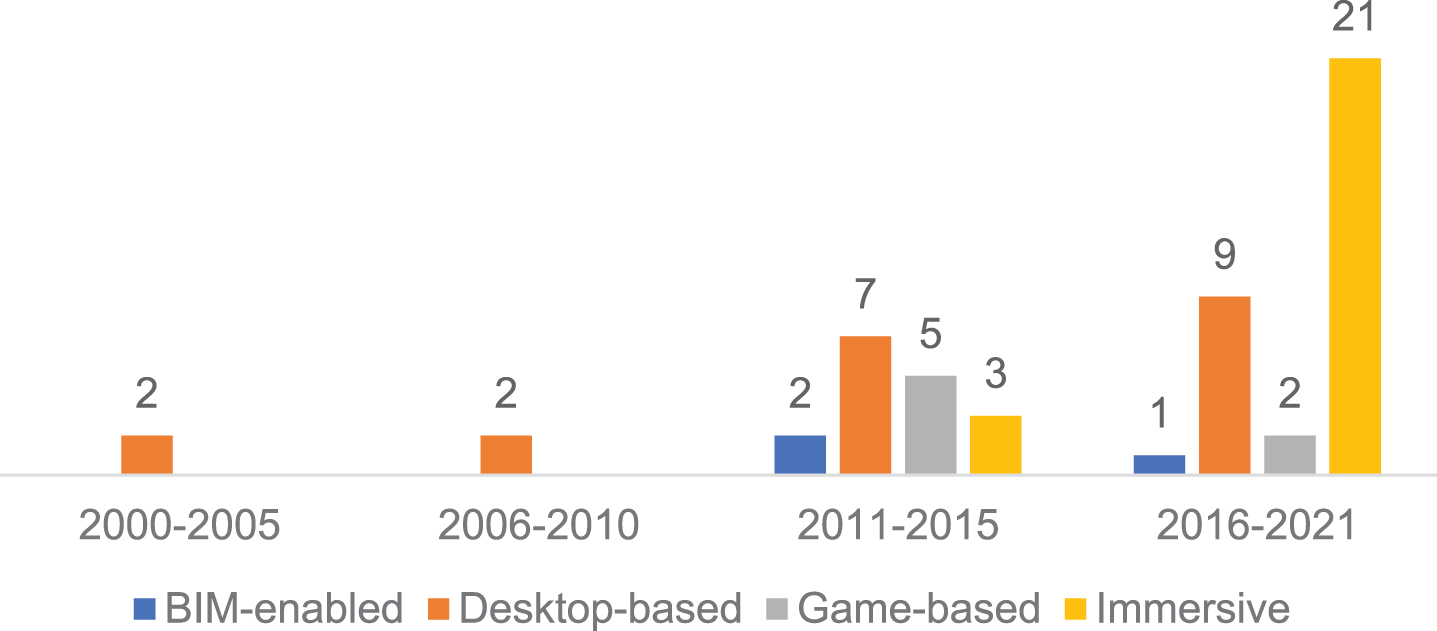
Distribution of documents characterized by publication year and VR safety training technologies.
3.3.1.1. Immersive training. According to Wang et al. [25], immersive VR relies on using a head-mounted display (HMD) to provide users with an immersive world by effectively disconnecting them from their physical surroundings. To offer real-time feedback, diverse sensors and additional equipment, including gloves, controllers, and treadmills, are integrated into the immersive VR setup [31].
Figure 6 shows VR technologies’ application for safety training in different research areas. The first VR-based immersive safety training method was adopted by Sacks et al. [5] to test whether safety training through VR would be more effective in identifying hazards than traditional safety training methods. Similarly, Perlman et al. [26] aimed to test whether construction superintendents can identify hazards better in a virtual environment or traditional project documents such as drawings and photographs. On the other hand, Teizer et al. [27] proposed a VR training method for ironworkers to recognize hazards in construction workplaces. Eiris et al. [24] employed digital 360-degree panoramas as a training tool to educate civil students on identifying fall hazards. Similarly, Jeelani et al. [28] developed a stereo-panoramic environment to deliver safety training to civil engineering students. Both studies’ findings indicated that the proposed training methods could reduce the time spent identifying hazards compared to traditional methods. Recently, Bhagwat et al. [29] tested safety training modules among engineering students and working professionals through VR and highlighted that visualization platforms were beneficial in recognizing hazards. Afzal and Shafiq [30] evaluated the effectiveness of immersive-based VR safety training for multilingual crews in UAE construction projects. In another study, Han et al. [31] evaluated the effect of a VR immersive training system during HR by measuring individual cognitive load.
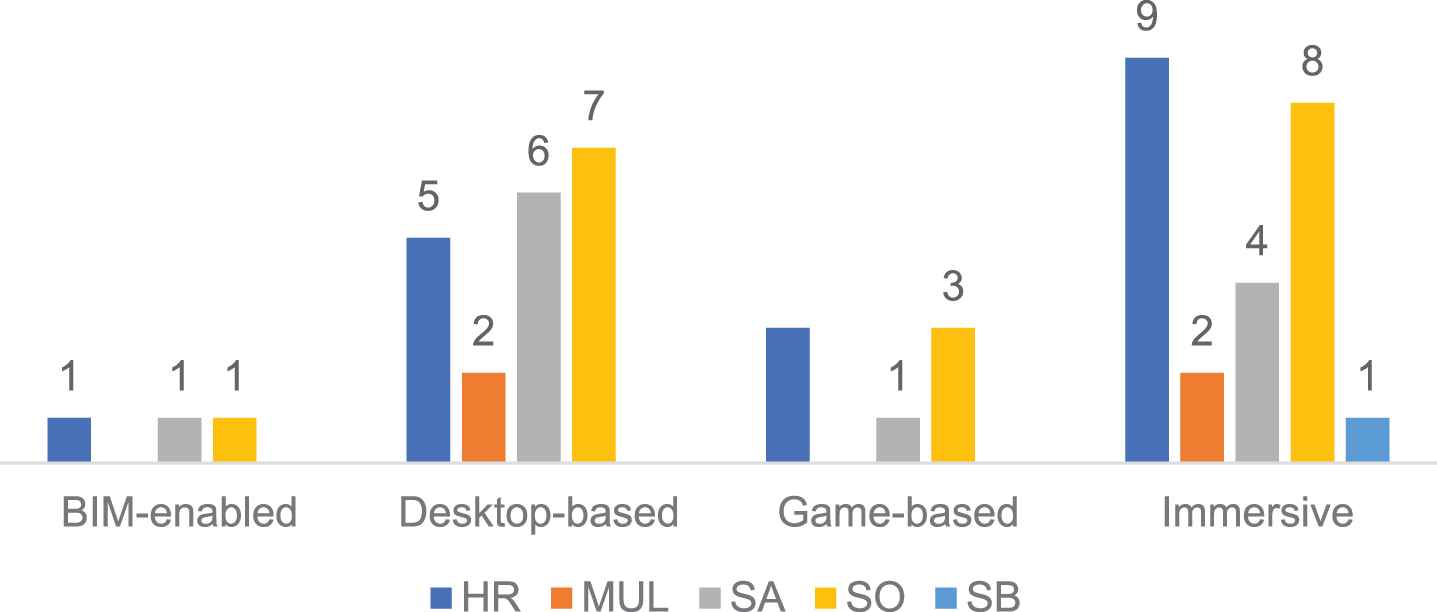
Application of VR technologies for safety training in different research areas. (HR –Hazard recognition; SO –Safe operations; SA –safety awareness; SB –safety behavior; MUL –multiple).
Many studies adopted immersive VR methods to train individuals about safe operations (SO) for trade jobs in construction environments, such as wooden wall construction [32], electrical work [33], and wall panel installation [24]. Vahdatikhaki et al. [35] introduced a context-realistic training simulator to train operators in immersive reality and validated the prototype [36]. Wang et al. [37] proposed an interactive and immersive VR system for workers to collaborate with construction robots to perform safe construction operations. Akanmu et al. [38] created an immersive postural training system that allows workers to practice tasks with minimized ergonomic risks. Adami et al. [39] conducted a study exploring the effects of immersive VR training on the operational skills and safety behavior (SB) of construction workers during robotic teleoperation, comparing it to the traditional in-person training approach.
Four studies adopted immersive VR to improve individuals’ safety awareness (SA) in the construction environment (see Fig. 6). For instance, Joshi et al. [40] developed a VR training module to deliver safety training, aiming to reduce common plant injuries. Song et al. [41] introduced an immersive VR training system for three different crane types and tested their effectiveness with potential users. Getuli et al. [42] proposed a site object library for emergency management to support immersive VR safety training experiences. Xu and Zheng [43] developed an immersive and interactive multiplayer-based training platform to improve the SA of workers about trench safety in construction. Shi et al. [44] conducted human-subject experiments with multiuser immersive VR to investigate the individual’s fall risk behavior between two high-rise buildings. Several studies have embraced the immersive VR approach to encompass multiple areas. For instance, Nykänen et al. [45] and Nykänen et al. [46] introduced an innovative immersive training method designed to enhance HR and SA among construction workers. They assessed the effectiveness of these systems through user evaluations.
3.3.1.2. Desktop-based training. Desktop-based VR training has been a prevalent method for safety training in construction since 2000, as indicated in Fig. 5. In this approach, the virtual environment (VE) is displayed on the computer screen without any tracking equipment [25]. Users typically interact with the VE using a mouse and keyboard to perform tasks. It is worth noting that this method is often regarded as a more cost-effective option for VR safety training compared to other methods [24].
Wilkens and Barrett [47] introduced the first desktop-based VR to support safety learning in construction technology. Assfalg et al. [48] developed a VECWIT (Virtual Environments for Construction Workers’ Instruction and Training) system to support safety training for construction workers. Similarly, Goedert et al. [49] created a VICE (Virtual Interactive Construction Education) system to educate new employees about SO in construction. Conveyor belts account for many accidents and injuries in construction due to human errors and lack of effective training [8]. Hence, aiming to reduce injuries, Lucas and Thabet [50] and Lucas et al. [6] developed desktop-based VR safety training programs for belt conveyors. Dunston et al. [5] adopted VR simulators to train equipment operators about SO in construction. Similarly, Li et al. [52] proposed a behavior-based safety (BBS) approach to train workers on construction processes to improve construction safety. Along the same line, Fang et al. [53] developed a framework and functional system architecture to create SA among mobile crane operators.
Although desktop-based VR emerged in 2000, such technology has been used for HR since 2015. Zhao and Lucas [54] developed a desktop-based VR simulation for safety training programs where users can effectively rehearse tasks with electrical hazards. Similarly, some studies [55, 56] developed a safety training module to recognize hazards associated with construction activities. Pham et al. [57] proposed an interactive Augmented Photo Reality platform (iAPR) to educate construction professionals on HR. Eiris et al. [58] developed and compared two hazard-identification training platforms based on VR and 360-degree panorama and conducted experiments with construction students and professionals to evaluate their HR skills.
Five studies used desktop-based VR to improve SA in the construction industry (see Fig. 6). Goulding et al. [59] introduced a VR prototype to provide a risk-free environment for learning without the ‘do-or-die’ consequences often faced on real construction projects. Li et al. [60] developed a Proactive Construction Management System (PCMS) to provide training for precast installation workers, focusing on raising awareness of potential hazards. Pham et al. [61] proposed a Virtual Field Trip System (VIFITS) that brings a real construction site environment to the classroom and provides practical experience to improve students’ safety knowledge [62]. Recently, Mora-Serrano et al. [63] proposed a VR training system to create SA of hazards at construction sites by incorporating risks and probable incidents, establishing cause-effect relationships, and incorporating a narrative (storytelling) that provides emotional meaning to users. Two studies have also adopted game-based VR to cover MUL areas. For example, Le et al. [64] proposed an online social VR system to educate engineering students about the causes of accidents (CoA) and HR. Pedro et al. [65] developed a context-based approach for learner assessment and tested it through visualization-enhanced safety site inspection (SI) scenario questions and job safety analysis (JSA) review.
3.3.1.3. Game-based training. Game-based technology is a computer-based environment incorporating multiuser operational technologies, networks, interactivity, and other elements to enhance user interactions [25]. It places a strong emphasis on the interactions involving game objects. According to Wang et al. [25], game-based VR can simplify the complexity associated with intricate objects such as cranes and excavators used in construction.
From Fig. 5, it was observed that seven documents adopted game-based VR. The first game-based VR for construction safety training was used in 2011. For instance, Lin et al. [66] proposed a 3D video game in which construction students assume the role of safety inspectors and walkthrough the virtual site for hazard identification. In another study, Dickinson et al. [67] developed a game focused on creating SA among college students on trench safety in construction. Guo et al. [10] proposed a game to assist in the safety training of operatives working in construction plants. Li et al. [68] developed a Multiuser Virtual Safety Training System (MVSTS) system to provide a learning environment for those involved in tower crane dismantlement. A study by Li et al. [11] introduced a 4D Interactive Safety Assessment method to assess the construction practitioners’ skills in hazard identification. Recently, Gao et al. [69] developed an Information-Flow-Based Safety Education (IFSE) safety education system to create SA among new employees. In another study, Comu et al. [70] proposed a VR safety training method. They compared its effectiveness with the conventional method by monitoring the eye movements of three trainees, such as students, workers, and engineers.
3.3.1.4. BIM-enabled training. BIM-enabled training has been primarily utilized for safety training, with only three documents dedicated to this approach. BIM involves the creation and utilization of three-dimensional objects [25]. BIM-enabled VR emphasizes replicating construction processes and operations within the model, highlighting the importance of data integration and linkages [25]. Ku and Mahabaleshwarkar [9] introduced the concept of Building interactive Modeling (BiM) to engage dispersed and traditional classroom students to interactively create SA in the construction process. Park and Kim [4] introduced a Safety Management and Visualization System (SMVS) that incorporated BIM and tested the impact of SMVS on safety experts’ HR skills. Ahn et al. [71] developed a BIM-enabled VR simulation training system to enhance the understanding level of workers to perform SO on construction sites. They compared it with the traditional safety training method. The findings indicated that the workers who trained via BIM-enabled VR showed a higher level of understanding than those trained via the conventional lecture.
AR adds virtual information to a live view of a physical environment using sensory technology [25]. Sound, video, or images may be provided via sensory technology. It should be mentioned that the visualization technologies (VTs) used in AR and VR are different. Compared to a VR environment, AR allows users to interact with objects (including changing location and other attributes) that match the real world, claims the review by Fonseca et al. [72]. The application of AR for safety training in construction has been found in four documents (see Fig. 4).
Wang and Dunston [73] adopted the first AR-based safety training technology to train novice heavy construction equipment operators in real worksites with virtual materials and instructions. Albert et al. [74] developed a System for Augmented Virtuality Environment Safety (SAVES) to enhance construction workers’ HR skills. Similarly, Eiris et al. [75] developed a platform using augmented 360-degree panoramas of reality (PARS) to enhance trainees’ HR skills and evaluated the method for four types of sample hazards. Bhandari et al. [76] conducted a study to examine how emotions influence HR using AR.
MR safety training
Mixed Reality (MR) is a hybrid form of reality that generates visualizations and facilitates the coexistence of digital and physical objects in real time within a novel environment [77]. Among the 59 documents examined, only one document was identified that applied MR for safety training in construction, as depicted in Fig. 4. Bosché et al. [77] utilized the MR training method to provide training for skilled manual workers, specifically focusing on trades involving working at heights, such as painting and roofing. The findings indicate that the proposed system has potential benefits, including low operational cost, enhancing the experience of apprenticeship training, and skills transfer and enhancement.
Overall, regarding research areas for construction safety training, DTs were widely used to enhance HR skills (36%) and perform SO (34%). DTs have been adopted for safety training to create SA (22%). Some studies adopted DTs to cover MUL areas (7%), such as HR and/or SO and/or SA. One study found to have focused on enhancing SB through safety training. Figure 7 illustrates the research areas in which DTs have been applied for safety training in the construction industry.
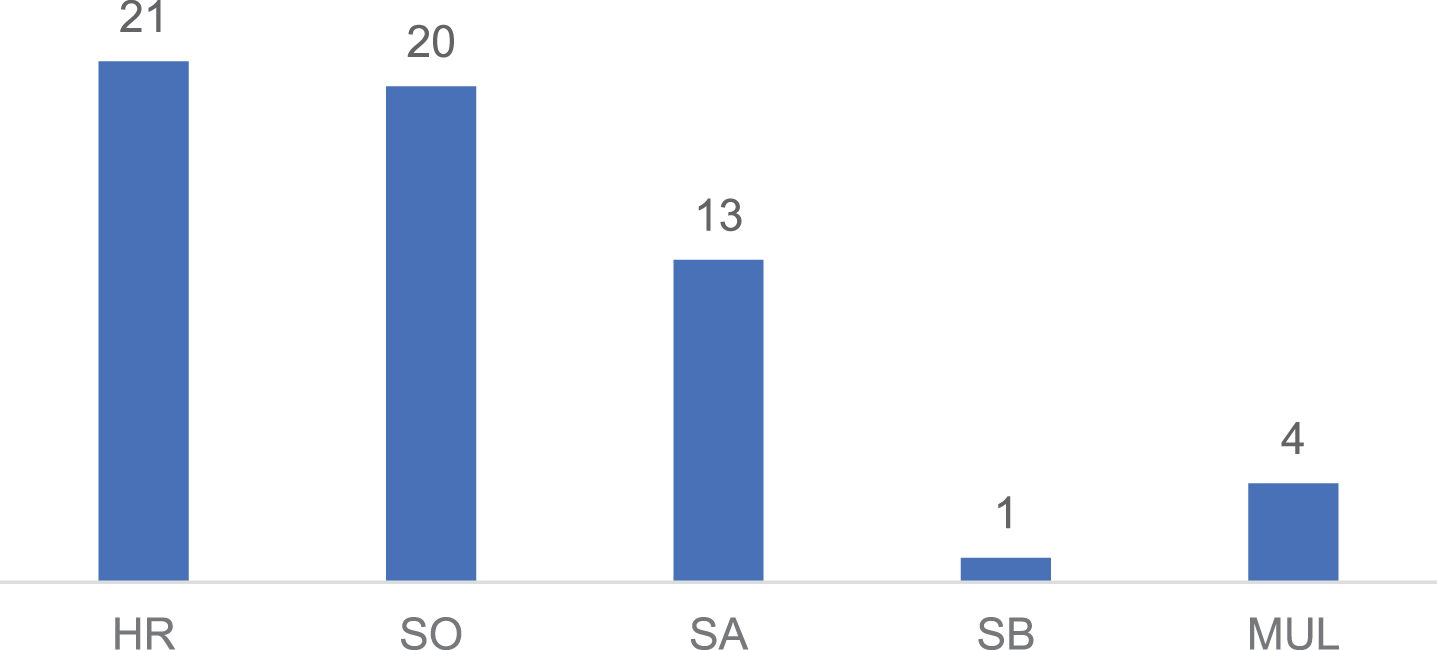
DTs application areas for safety training in construction. (HR –Hazard recognition; SO –Safe operations; SA –safety awareness; SB –safety behavior; MUL –multiple).
Figure 8 displays the various publication years of co-occurring keywords. Before 2013, the literature focused on training individuals through DTs to perform SO during tower dismantling [68] and create SA during trenching [67] and conveyor belt operations [6]. Also, AR-based technology was adopted to train construction operators [73]. In Fig. 8, these keywords are represented visually in purple. Between 2013 and 2020, the primary research focus centered on enhancing HR skills among individuals using DTs, such as immersive VR [26], storytelling [24], social learning [60], and photo reality [57]. These are visually represented in green in Fig. 8. The emergence of keywords such as “precast concrete,” “user attitudes,” and “safety assessment” suggests that these areas are gathering increased attention within the research community for safety training through the utilization of DTs. In Fig. 8, these keywords are depicted using shades of green, yellow, and dark yellow.
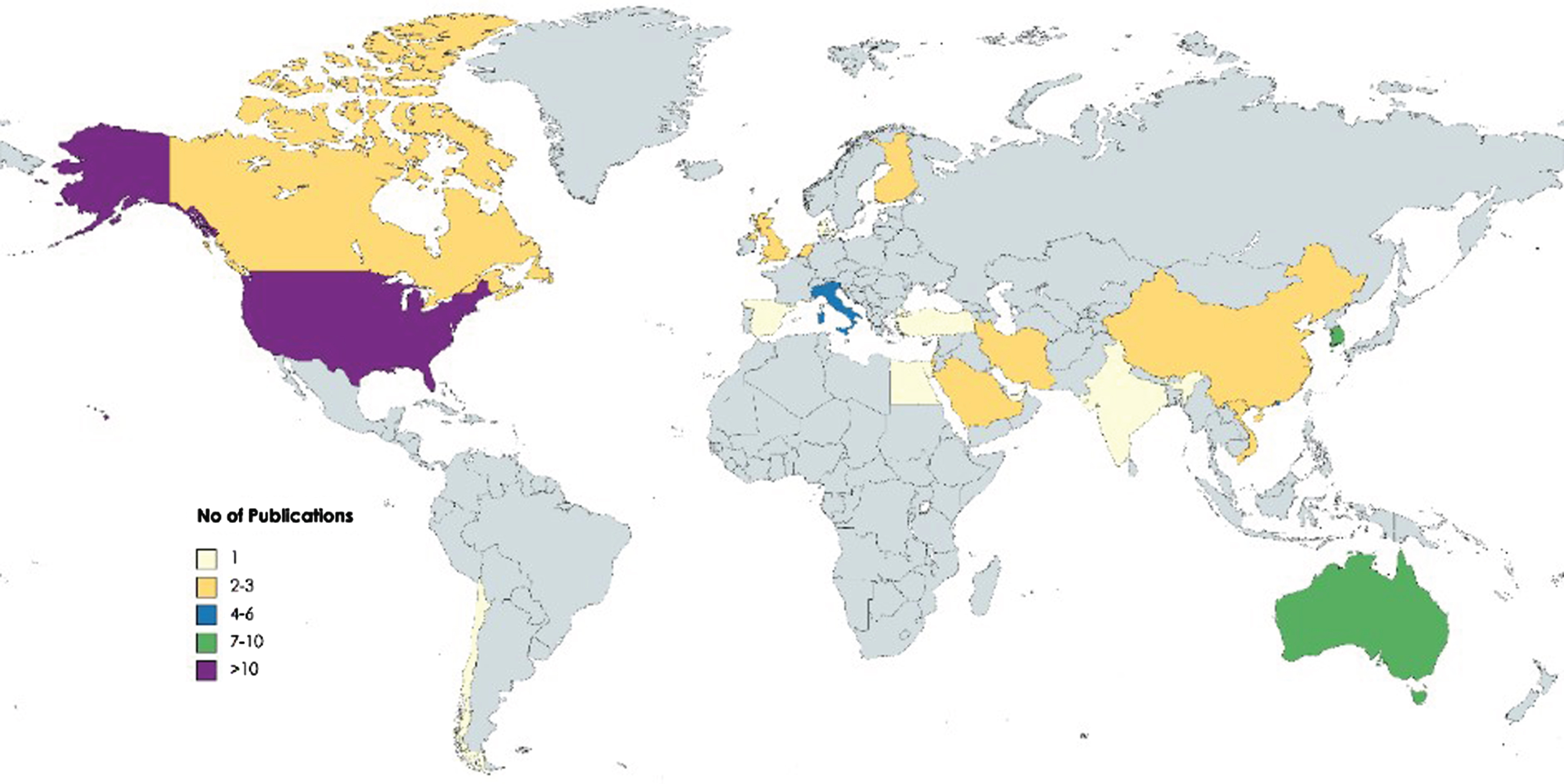
Publication country/territory distribution. The map was rendered with the aid of the mapchart.net software.
The retrieved documents saw authors’ contributions from 20 different nations or territories. The retrieved documents’ geographical distribution was determined by the country affiliation of all authors who contributed to the article’s publication. Most of the documents retrieved came from North America, Australia, and a few Asian and European countries (Fig. 9). The African region had a limited contribution to the literature on applying DTs for safety training in construction.
Table 3 displays the top ten active countries and the influence of their publications measured by the number of citations per document. Researchers from the United States come out on top regarding overall publications and citations, followed by researchers from Australia, South Korea, and Hong Kong. Israel, although it does not have many publications, such as Italy, in terms of total citations, it ranks at the top. Other regions, such as China and the United Kingdom, are the most influential regarding research importance, calculated by the total number of citations.
Top influential regions in applications of DTs for safety training in construction
Top influential regions in applications of DTs for safety training in construction
Evaluating the extracted articles to identify highly cited papers and their focus areas is crucial for understanding the application of DTs. This analysis can provide valuable insights into this field’s most influential and significant contributions. Table 4 lists the top 10 highly cited articles, each with at least 100 citations. The study by Sacks et al. [5] entitled “Construction safety training using immersive virtual reality” has earned more citations (n = 279), which adopted the immersive VR method for HR in construction projects. As shown in Table 4, among the ten highly cited documents, VR-based safety training technology was used by six studies for HR, followed by two studies to create SA and one study focused on MUL areas and performing SO, respectively. In terms of the DTs method, it was observed from Table 4 that nine documents adopted VR-based methods, followed by one that used the AR method for safety training in construction.
Top productive documents focused on DTs for safety training in construction
Top productive documents focused on DTs for safety training in construction
In terms of authorships, the retrieved documents featured a total of 172 researchers, which included both corresponding authors and co-authors. The top productive authors with at least three documents are listed in Table 5, of which Li H (5 articles; 532 citations) ranked top. Among the top researchers, four were from the USA, three were from South Korea, two were from Hong Kong, and one was from Australia and Vietnam.
Top productive authors in applications of DTs for safety training research in construction
Top productive authors in applications of DTs for safety training research in construction
Developing and examining knowledge maps that illustrate the co-authorship networks among active authors can provide valuable insights for a wide range of researcher communities. This information can serve multiple purposes, such as establishing collaboration communities, enabling individual researchers to identify collaboration opportunities, and supporting publishers in selecting editorial teams for special issues published in journals or books [22]. The knowledge domain maps of the critical research groups were created using co-authorship analysis in VOSviewer. In Fig. 10, each node represents an individual researcher, and the node size corresponds to the number of published documents attributed to that researcher. The thickness of the links connecting two nodes indicates the extent of collaboration between these authors, and the links represent the cooperative relationships among researchers. Overall, there are several co-authorship groups. For instance, the green group takes Professors Pedro and Pham (Chung-Ang University) as the core, the purple group takes Professors Eiris and Gheisari (University of Florida) as the core, and the blue group takes Professor Li H (Hong Kong Polytechnic University) as the core.
Bibliometric analysis is a highly effective technique for scrutinizing the status of a specific field, offering valuable insights that assist scholars in evaluating research trends and their overall significance [17]. This research focused on studies that adopted DTs for safety training in construction. To the authors’ knowledge, this is the first bibliometric study focusing on DT applications for construction safety training. The articles were retrieved from the Scopus database from 2000 to 2021 for this SLR study. The findings show that the number of publications has increased in recent years, indicating that the application of DTs for safety training has gained more attention among researchers.
In terms of influential regions, the bibliometric analysis has indicated that the United States had the highest number of studies, followed by Australia, South Korea, Hong Kong, and Italy. Automation in Construction, Electronic Journal of Information Technology in Construction, Advanced Engineering Informatics, Safety Science, and Journal of Computing in Civil Engineering have been recognized as influential journals with a substantial number of articles related to applying DTs for construction safety training. These journals have been instrumental in disseminating research in this field.
In the list of the top 10 productive researchers, the bibliometric analysis has identified four scholars from the USA. Among these researchers, Li H. emerged as the most productive researcher with the most publications, and a document authored by Sacks et al. [5] has gathered high citation counts. Based on the publishing year, recent studies indicate that there has been a growing emphasis on precast concrete, user attitudes, and safety assessment as areas of increasing attention for safety training utilizing DTs.
Visualizing the keywords’ co-occurrence network has effectively emphasized DTs and their application areas. Current studies indicated that VR technologies were widely used for construction safety training. Among 59 retrieved documents, 75% of documents used immersive VR and desktop-based VR technologies for safety training in construction. Other technologies such as game-based VR, BIM-enabled VR, AR, and MR were found to have little contribution to safety training. The study findings indicated that most of the studies used DTs to enhance HR skills among individuals. However, most studies commonly created VE for many trade workers and project types. In addition to these findings, it’s essential to establish DTs tailored for various types of construction projects. Furthermore, specific attention should be given to trade workers involved in hazardous activities such as formwork [78] and roofing [79], as these activities have been associated with the highest rates of accidents in the construction industry.
Many studies focused on improving workers’ operational skills through DTs. However, these studies are limited to workers such as crane dismantlers [46] and heavy equipment operators [44]. Exiting DTs could also be tested in different project conditions, organization sizes, and countries’ situations. Agents such as scaffolds and ladders are risky for construction workers, which may cause falls and result in deaths [80]. However, there have been insufficient studies on adopting DTs to train workers associated with these agents. It is also evident from the literature that MR has the potential to enhance the HR skills of individuals with less operational cost. However, such technology was used in one study.
It is widely acknowledged that ensuring safety within contracting organizations has always been a complex challenge, and traditional training programs, when viewed from a global perspective, have not proven effective in mitigating safety risks [4–6]. Nevertheless, the utilization of DTs for safety training in developing nations is notably limited compared to their implementation in developed countries. This discrepancy is particularly concerning given that developing nations often report poorer safety performance records [2, 78]. Given the potential of DTs to enhance safety training performance, there is a compelling need for more studies in developing nations. Such research endeavors can play a pivotal role in improving safety performance within the construction industry in these regions.
Conclusion
This study conducted an SLR regarding the DTs and their application areas in safety training in construction. Based on PRISMA guidelines, 59 journal documents were retrieved from the Scopus database from 2000–2021. The findings indicated that the DTs adopted for safety training in construction include immersive VR, desktop-based VR, game-based VR, BIM-enabled VR, AR, and MR. The evolution of DTs is moving away from desktop-based models and toward mobile ones with more immersion and interactivity. These advancements have improved several aspects of safety training, including hazard identification and equipment operation.
The discussion has highlighted potential future research directions aimed at achieving a comprehensive approach to enhancing safety performance in the construction industry: Adopting DTs such as desktop VR to train workers associated with formwork and roofing activities; Providing training to workers on how to handle materials and machinery could reduce musculoskeletal disorders (MSDs); Adopting and evaluating the current DTs in different organizations or countries or any other contexts, especially in developing nations; Aiming at improving fall prevention, DTs should be used to train workers associated with agents such as scaffolding and ladders.
The recommended future directions from this SLR study are anticipated to serve as valuable guidance for safety academicians and researchers, which could inform and inspire future research endeavors focused on the DTs for safety training in the construction industry.
A limited sampling of the literature constrained the study’s scope. To begin, the study’s data collection was limited to the Scopus and WoS databases, with no inclusion of other databases like Google Scholar or PubMed. Indeed, these databases may have overlapped content, and conducting further research by utilizing a variety of databases or integrating them could offer the opportunity to compare findings and provide a more comprehensive perspective on the research topic with a larger sample size. Such an approach could potentially enhance the robustness and depth of future studies. Next, this study exclusively focused on journal articles, excluding other documents such as book chapters and conference proceedings. Finally, non-English journal articles were potentially omitted from this study. Including articles in languages other than English in future research could help capture a more diverse range of perspectives and insights on the topic.
Ethical approval
Not applicable.
Informed consent
Not applicable.
Conflict of interest
None to report.
Footnotes
Acknowledgments
None to report.
Funding
This work was supported by the Slovak Research and Development Agency under contract no. APVV-17-0549. This work presents partial research results of projects Erasmus+2019-1-SK01-KA203-060778 “Construction Safety with Education and Training using Immersive Reality” and KEGA 009TUKE-4/2022 “An interactive tool for designing a safe construction site in an immersive virtual reality” and project VEGA, grant number 1/0336/22.