






Abstract
BACKGROUND
Burnout has become one of the main problems in all health systems and nurses in all nursing jobs are subjected to burnout.
OBJECTIVE
To determine the magnitude, levels of burnout and its associated factors of nurses working in general hospitals of Tigray Region, North Ethiopia.
METHODS
A cross-sectional study design among 634 nurses from March 2018 to June 2019 was conducted. A clustered random sample technique was used. Multiple logistic regression analyses were performed using SPSS version 20.
RESULTS
The proportion of burnout among the nurses was 41.10%. The 18.10%, 16.10% and 26% of nurses were with high emotional exhaustion, depersonalization and reduced levels of personal accomplishment respectively. The 5–9 years of work experience, working in a surgical unit, and working night shifts were protective factors.
CONCLUSIONS
This study shows that a high proportion of nurses suffered from job burnout. There is a high emotional exhaustion, depersonalization and reduced personal accomplishment in their job. This study also showed that there is a significant association between factors such as service year, working in surgical units, night shift assignment and job burnout. It is recommended counseling, burnout coping programs and clinical services policy for nurses. All level managers should plan for nurses’ incentives; continuing education, training and regular shift rotations and set nurse recognition policies, and recreational and relaxation programs to increase nurses’ motivation. Future studies in primary and tertiary hospitals using a longitudinal design.
Introduction
Burnout is a physical, mental and emotional state caused by prolonged overwork and a sustained lack of job satisfaction and support [1]. The World Health Organization defines burnout and conceptualizes it as a syndrome resulting from chronic workplace stress, burnout happens when an individual is chronically exposed to extreme stress at work. The definition of burnout has become crucial because it helps professionals and organizations recognize burnout as a legitimate issue that needs to be addressed, and it will be helpful to increase awareness and efforts to prevent and treat this debilitating condition [2].
Nurses in all nursing jobs are subjected to burnout [1]. The American Nurses Association (ANA) mentions that nurse burnout is a serious job-related condition that can have major consequences for nurses and their patients. It’s easy to understand why this event is so common in nursing. Nurses often work long hours performing tasks that are physically and emotionally demanding. As a result, 62% of nurses experience burnout in the profession, which affects all hospitals and healthcare systems in the United States [3]. The concept of burnout combines three constructs: emotional exhaustion, depersonalization and low personal accomplishment [2].
A diversity of studies done across the world revealed the magnitude of burnout among nurses. A cross-sectional study conducted among 485 nurses in Argentina showed that 46.70% of nurses reported high emotional exhaustion, 63.50% of nurses indicated high depersonalization, and 77.10% had no or low personal achievements [4]. Two studies in Spain showed that 18.40% [5], and 16.20% of nurses had burnout [6]. Higher burnout was also reported among nurses in other parts of the world; the study conducted in Suadi Arabia among nurses indicates a high level of burnout, with 62.30% of the respondents in the area of emotional exhaustion, 53.4% in the area of depersonalization, and 18.3% in the area of reduced personal accomplishment [7]. Another study in the same country on burnout and associated factors among nurses showed a high level of burnout: 56.80% of nurses in the area of emotional exhaustion, 71.60% in the area of depersonalization, and 90.80% in the area of reduced personal accomplishment [8].
Few studies in Africa have reported higher burnout among nurses. A study conducted in Uganda among nurses indicated a high level of burnout in 49.10% of the nurses in the area of emotional exhaustion, 36.20% moderate, and 14.70% of nurses experienced a low level of emotional exhaustion [9].
Several contributing factors are associated with the increase in burnout among nurses, like gender, age of the nurse, work experience, being a permanent employee, workload, and social support for nurses [5]. Other factors are hospital type, hospital ward, working overtime [10], education status, marital status, and income [11], conflicts with family, job control [12], healthy eating of nurses, and management responsibilities [9]. Another study also found that variables such as work overload, work-related stress, professional seniority, male gender, being single, and aggression at work were among the factors contributing to burnout development [13].
Among the studies conducted in Ethiopia among nurses working in public hospitals in the North West showed that the magnitude of burnout among nurses was 50.40% [14] and in two similar studies conducted among nurses in the South East, 34% of nurses experienced burnout [15] and in the East also revealed a high prevalence(44.40%) of burnout among nurses [16]. According to the three dimensions of burnout, the level of emotional exhaustion was high in 65.30%, moderate in 29%, and low in 5.70%; depersonalization was high in 43.60%, moderate in 21.70%, and low in 34.70% of nurses; and the level of reduced personal achievement was high in 22.20%, moderate in 33.40%, and low in 44.40% of nurses [14].
There was a higher prevalence of burnout among nurses (9.2% to 34.4%) than the prevalence for other health professionals [17, 18]). There are abundant factors associated with burnout among nurses in Ethiopia, such as educational status, year of experience six to fifteen [14, 15], work overload, intention to leave the jobs [14, 19], perception of poor or fair health status and health problems like mental distress and depression [14, 16, 19], marital status, job title, inadequate staffing, fatigue, presence of social support, and night and rotating shifts of nurses assigned, which could lead to burnout of nurses [15, 16, 19].
Despite the presence of several studies conducted regarding burnout in the world, few research studies conducted on this subject of interest, particularly in the North West, East, and South East of Ethiopia, There has been no study conducted on burnout among nurses working in hospitals in the Tigray Regional State, North Ethiopia. Therefore, this study was aimed at an assessment of the magnitude of burnout, levels of burnout, and associated factors among nurses working in 10 general hospitals in the Regional State. The study will be helpful for policymakers to take corrective actions regarding the profession, and healthcare facilities, mainly hospitals, to identify factors associated with burnout in nurses and support them in taking helpful actions.
Material and methods
Study setting
Tigray Regional State is one of the nine national regional states of Ethiopia with a total of 6 million people. Nearly 5564 nurses are working in the region of which, 2199 (39.52%) are male and 3365(60.45%) are female nurses [20]. The region has seven administrative zones. One zone consists of two or more general hospitals. There are 15 general hospitals in the region. A general hospital serves 1–1.5 million people in a year, equipped with 50 beds and 100 to 200 nurse employees. The zone is a third-level political-administrative structure of Ethiopia with a population of 400000 to 1.5 million people [21].
Study design
A cross-sectional descriptive study design was employed from March 2018 to June 2019.
Study participants
The nurses working in the 15 general hospitals of the region were clustered geographically into six zones. Four zones out of the seven were randomly selected. The participants were nurses working within all general hospitals in the randomly selected zones. The eligibility criteria for the participant selection were as follows: nurses obtained a Bachelor of Science in Nursing, a College diploma in clinical nursing, and Master’s or other nurse specialization without those nurses being promoted to other profession; nurses with at least a year of work experience in general hospitals to measure the status of burnout for at least a year; and without any visual problem to read were included.
Variables and measurement
The outcome variable, burnout is a prolonged response to chronic emotional and interpersonal stressors on the job and consists of three dimensions emotional exhaustion, depersonalization and personal accomplishment. The burnout was measured using the Maslach Burnout Inventory (MBI) questionnaire. The questionnaire was developed to study burnout among various health and service occupations employees. The questionnaire is 22 items on the seven-point Likert Scale ranging from 0 = never felt, 1 = few times a year, 2 = once a month, 3 = a few times a month,4 = once a week, 5 = a few times a week and 6 = felt every day. For the levels of emotional exhaustion burnout: Low if scored ≤18, moderate if 19–26 and high if ≥27 scored of the 9 items. The sum score ranged from zero to 54. For the level of depersonalization burnout: Low if scored ≤5, moderate if 6–9 and high if ≥10 scored of the five items. The sum score ranged from zero to 30. For the level of personal accomplishment: low accomplishment if scored ≤33 but indicated higher burnout, moderate if 34–39 and high accomplishment if ≥40 scored of the eight items. The sum ranged from zero to 48. The mean of all item responses was used to dichotomize job burnout after the items for personal accomplishment were reversed. Those scored above the mean were considered nurses with burnout whereas those who scored mean or below were nurses without burnout [22].
The independent variables were the sociodemographic characteristics of the nurses and their working conditions issues. The sociodemographic characteristics of nurses include sex, age, marital status, educational status, religion, work experience, and monthly income. The nurses’ work condition-related issues were working shifts, workload, the number of nurses working with, working unit in the hospital, and their administrative zone were predictors of outcome. The questionnaire was translated into the local language by nurse experts for a better understanding of the study participants. The translated questionnaire was pretested among 37(6%) of the total sample size among nurses working in a similar general hospital out of the sampled zones in the Adigrat General Hospital. Item reliability analysis was done to see internal consistency. Based on the item reliability analysis test, the internal consistency of the items Cronbach’s alpha is 0.912 for emotional exhaustion, 0.883 for depersonalization, and 0.819 for personal accomplishment in the current study.
Sample size determination
A single proportion formula was used to determine the sample size using the following assumptions (level of confidence is 95% at z 1-α/2): a 5% margin of error (d = 0.05). To get adequate samples, a 50% proportion was used since there was no previous study on burnout in the Tigray Region. Based on these assumptions, the actual sample size of the study was computed as follows from the total population of 1,581 nurses that were working in the general hospitals. For the non-response rate, 10% of the sample was added to “n” and multiplied by 1.5 to correct the design effect. The total sample size was (384+38.4) × 1.5 = 634. A total of 634 sample sizes were used for this study.
Sampling procedure
The nurses working in the 15 general hospitals of the region were clustered into six zones. The nurses in general hospitals are clustered because the hospitals vary in their time of establishment as hospitals and in bed numbers, case mix, and patient flow. Out of the six zones, we selected four zones in a simple random sampling. All nurses in the randomly selected zones (Central, Western, Southern and Mekelle zones all consisting of 10 general hospitals) were the participants of this study.
Data collection
A self-administered questionnaire was used for the data collection. Detailed information about the objective of the study was explained to all participants before the questionnaire administration. The questionnaires were administered to the nurse participants at the same time in each general hospital. To ensure data quality, training was given to data collectors and supervisors on general objectives and techniques for administering the questionnaires. During the data collection, the researcher and supervisors checked for the completeness of questionnaires daily.
Statistical analysis
The collected questionnaires were coded and data was entered into SPSS version 20 for data cleaning and analysis. Mean and standard deviation were determined for continuous variables, and categorical variables were summarized by frequency distributions and percentages. The results were presented in tables. The assumptions of logistic regression analysis adequate sample size of predictor variables, multi-collinearity among predictor variables, and outliers were checked in the pre-analysis process. Binary logistic regression analysis was performed to identify factors associated with the nurses’ burnout. All variables that showed a statistically significant association with nurses’ burnout were included in the multiple logistic regression analysis to determine independent predictors of burnout. Crude Odds Ratio (COR) and Adjusted Odds Ratio (AOR) at a 95% confidence interval (CI) with a p-value less than 0.05 were used to control the possible confounding variables.
Results
A total of 634 questionnaires were distributed to the nurse participants, the 608 of them were complete which accounted for the response rate of 95.90%. The 343(56.40%) of the nurses were females. The mean age of the nurses was 33.6 ± 9.71 years which ranged from 19–59 years. The mean work experience was 10.07 ± 9.54 years. The mean monthly income of nurses was 4820 ± 1547.77 Ethiopian Birr (ETB) (Table 1).
Socio-demographic Characteristics of the nurses
(N = 608).
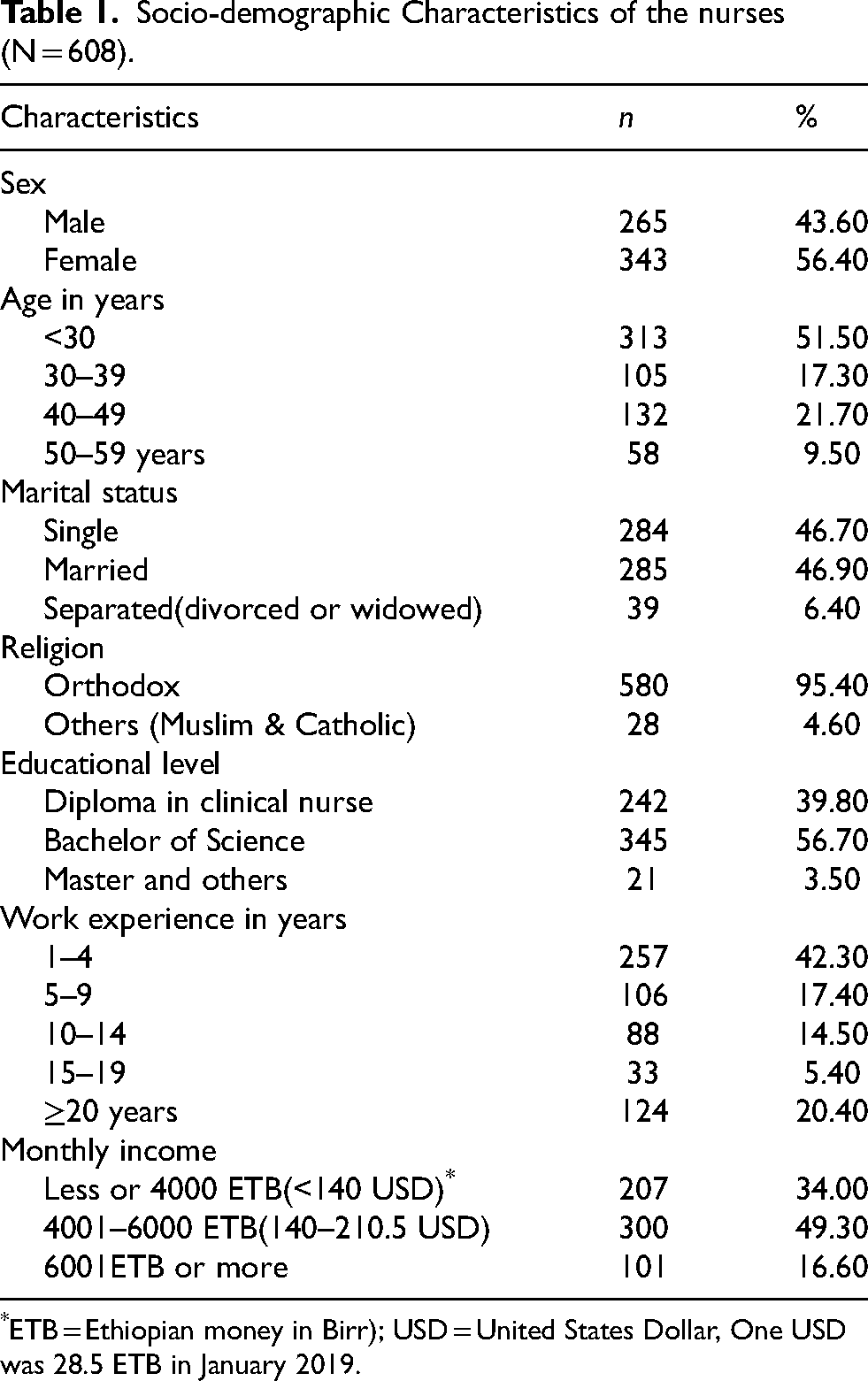
Socio-demographic Characteristics of the nurses (N = 608).
*ETB = Ethiopian money in Birr); USD = United States Dollar, One USD was 28.5 ETB in January 2019.
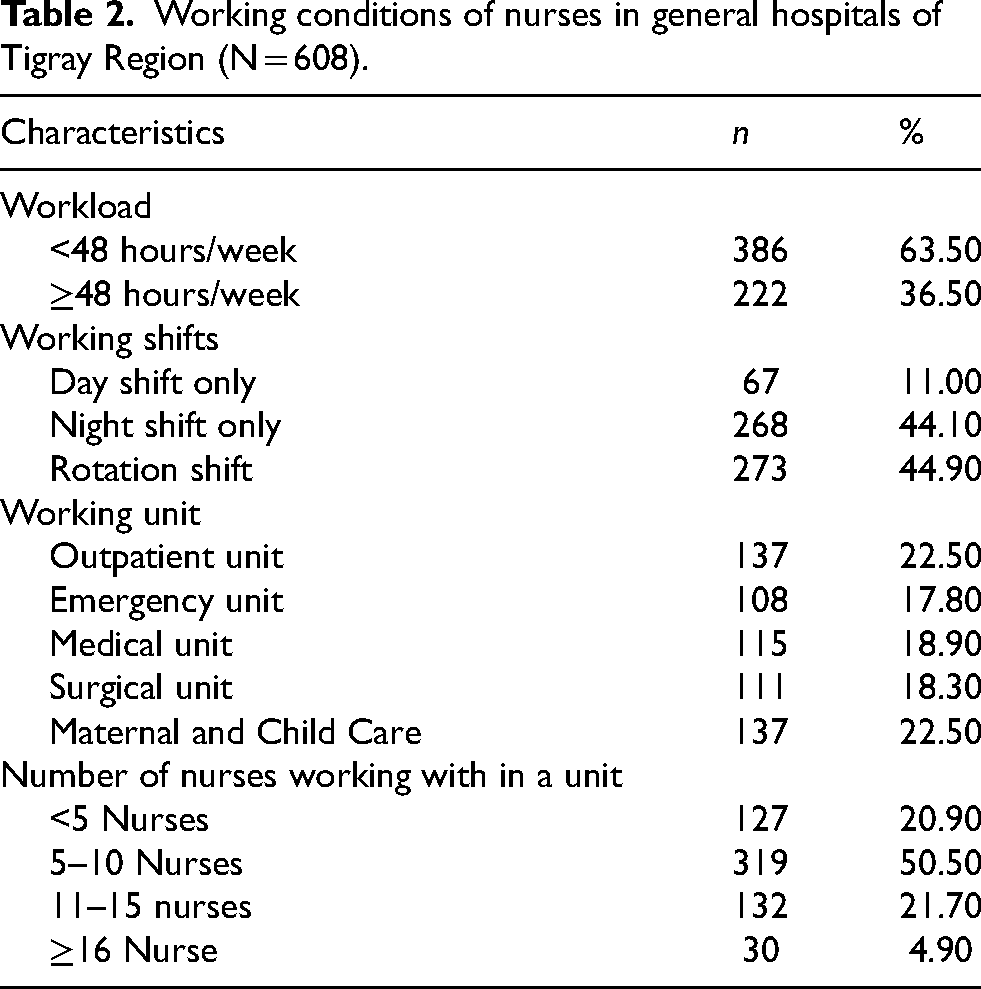
The result of working condition issues of nurses, the mean workload of the nurses was 47.47 ± 12.50 hours/week. An individual nurse had an opportunity to work average with eight nurses in a hospital unit (Table 2).
Working conditions of nurses in general hospitals of Tigray Region (N = 608).
The mean score of burnout among nurses was 55.95 ± 19.22. The proportion of nurse with burnout was 250(41.10%) for their score above the mean of the burnout measure by the Maslach Burnout Inventory tool. The result of this study revealed that 110(18.10%), 66(10.90%) and 432(71.10%) nurses felt a high, moderate, and low level of emotional exhaustion respectively. For the depersonalization, 98(16.10%), 75(12.30%), and 485 (71.50%) nurses felt a high, moderate and low levels of depersonalization. Regarding the nurse’s personal accomplishment also low accomplishment (high burnout) was in 158 (26%), moderate in 102 (16.80%), and 348(57.20%) of the subjects had high personal accomplishment (Table 3).
Levels of burnout among nurses in general hospitals of Tigray Region (N = 608).
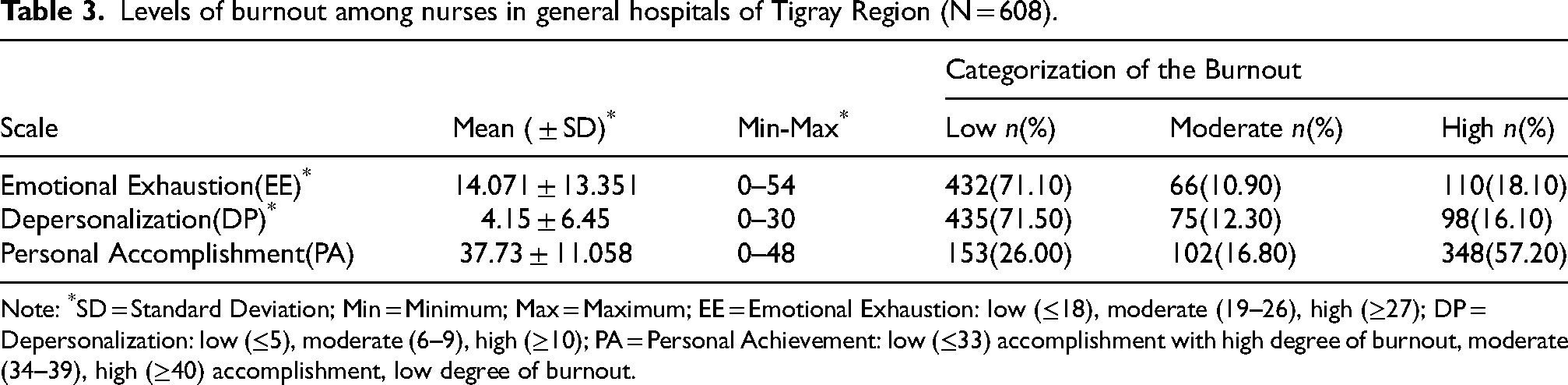
Note: *SD = Standard Deviation; Min = Minimum; Max = Maximum; EE = Emotional Exhaustion: low (≤18), moderate (19–26), high (≥27); DP = Depersonalization: low (≤5), moderate (6–9), high (≥10); PA = Personal Achievement: low (≤33) accomplishment with high degree of burnout, moderate (34–39), high (≥40) accomplishment, low degree of burnout.
In the bivariate analysis, the sociodemographic and working condition variables of nurses were analyzed to determine the association with burnout. The analysis showed that nurses with a monthly income of 6001ETB or more were less likely to feel burnout than those with less than 4000 ETB per month (OR = 0.587, 95% CI = 0.366–0.972). Nurses who have work experience of 5 to 9 years were also less likely to feel burnout than those work experience of 1 to 4 years (OR = 0.516, 95% CI = 0.32–0.833). Nurses who were working in a surgical unit were less likely to feel burnout than those working in the maternal and child health care unit (OR = 0.564, 95% CI = 0.335–0.949). Those assigned to work night shift were also less likely to feel burnout than those working in the rotation shift (OR = 0.531, 95% CI = 0.375–0.752) at p-value <0.05.
In the multiple logistic regressions, nurses who have work experience of 5 to 9 years were less likely to feel burnout compared of 1 to 4 years in work experience (AOR = 0.554, 95% CI = 0.336–0.913). Those working in the surgical unit of the hospital were less likely than those working in the maternal and child care unit to feel burnout (AOR = 0.520, 95% CI = 0.304–0.888), and nurses assigned to work at night shift were also less likely to feel burnout than those working in the alternative shift (AOR = 0.513, 95% CI = 0.353–0.745) at p-value<0.05 (Table 4).
Multiple logistic regression analysis on factors associated with burnout of nurses.
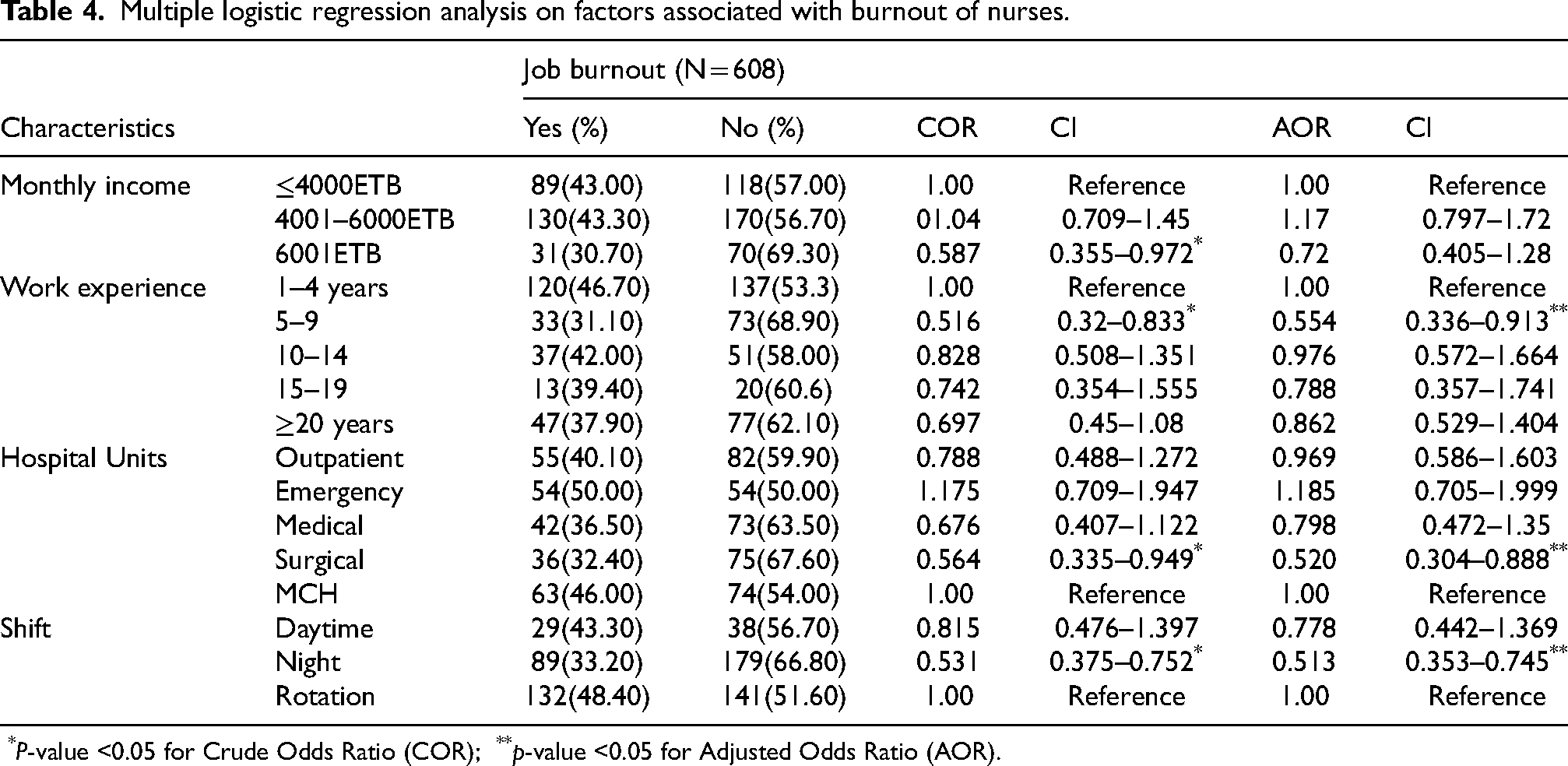
*P-value <0.05 for Crude Odds Ratio (COR); **p-value <0.05 for Adjusted Odds Ratio (AOR).
The purpose of the study was to determine the magnitude, levels of burnout and its associated factors of nurses working in general hospitals of Tigray Region, North Ethiopia. The results showed that 41.10% of nurses felt burnout in their jobs. This finding seems consistent with the study result of 39% of nurses suffering from burnout [23] and 40.90% of Iranian nurses who had high burnout [24]. However, this finding is relatively higher than the result of 16.20% in another similar study carried out in Spain among Certified Nurses [6]. This difference could be due to the difference in the levels of the hospitals and the working units of hospitals. The result is also relatively higher than a similar study result of 18.4% of nurses felting burnout in Spain [5] and 34% in the country [15]. This difference could be due to the Ethiopian nurses working with an inappropriate evaluation process [25, 26] and even if some nurses were being evaluated they did not get a promotion [27], and nurses did not get recognition for their hard work [27, 28]. In addition to this, the presence of high burnout may be due to the presence of a poor interpersonal relationship between nurses and hospital managers and getting little support, and the nurses in Ethiopia were less motivated in the hospitals [29]. In this aspect, motivation and promotion strategies will be parts of burnout reduction in the profession.
This study determined the levels of burnout among nurses working in general hospitals. One of the subscales of burnout is emotional exhaustion; high-level emotional exhaustion was reported in 18.10% of the nurses in this study. This is congruent with the 18.80% of nurses working in Oncology Nurses who felt high emotional exhaustion [30]. However, it is lower than other higher percentages of high emotional exhaustion levels among 56.80% of nurses in a previous study [8], and (62.30%) in another study [7]. This difference could be due to the sample size differences. The low level of emotional exhaustion of burnout was in three-quarters of nurses. This result is similar to the 56.90% of nurses reported [31]. Conversely, the finding in this study is greater than the proportion of 41.60% of nurses working in emergency and intensive-care units of hospitals with low levels of exhaustion in Spain [30]. The difference could be due to the difference in the selection of participants in the hospital units. It is also remarkably greater than the 41.60% of nurses with low levels of emotional exhaustion [30], and 21.40% of nurses reported [4]. The difference could be due to the hospital service complexity difference. Regarding the second subscale depersonalization burnout, a high level of depersonalization was felt by 16.10% of nurses in this study. This finding is consistent with the finding that 21.50% of nurses felt a high level of depersonalization [31], and 20.80% of nurses in Spain [30]. It is, however, less than those reported 63.50% from Argentina [4], 53.40% from Saudi Arabia [7] and 71..60% from Saudi Arabia [8]. This difference could be due to the effect of sample size differences, and socioeconomic or cultural differences.
This study showed that 12.30% of nurses felt a moderate level of depersonalization. It is consistent with the findings of other similar studies, 9.50% [4], and 21.70% [14]. But this proportion is less than the findings of 34.40% [30], and 27.50% [13] in two study results. The difference could be due to hospital-level differences. About 71.50% of the nurses felt a low depersonalization in this study. This low level of depersonalization burnout shows similarity with 78.50% of nurses from Spain [31]. The third subscale of burnout is personal accomplishment in the workplace. The result demonstrated that 26% of nurses exhibited a low level of personal accomplishment in their hospitals. This is in line with other similar study results, 38% [32]. However, it shows disagreement with others who reported low percentages of low personal achievement 2.7% [4], and 0.80% [8]. Also, it is less than 57.10% [7], and 51.89% of nurses [13], and 46.90 of operative nurses [31]. The difference could be due to the hospital working unit differences, participants’ positions and working culture differences. Nearly 16.80% of the nurses felt achieving a moderate level of personal accomplishment. This indicates an agreement with the findings of other similar studies 21.50% [13], 20.20 [33], and 22.30% [19]. About 57.20% of the nurses felt better accomplished. This shows similarity with the findings of other similar studies reports 53.10% [31]. However the finding in our study is less than the 77.10% [4], 90.80% of nurses in Saudi Arabia [8], 93.50% of nurses in China [11], and greater than the 29.200% of nurses achieved better [30]. There might be a need to continue education to build the capacity of the nurses.
Our study also determined the factors associated with burnout among nurses. Nurses with work experience of 5 to 9 years were less likely to feel burnout compared to1–4 years. This shows agreement with the length of work experience six to 10 years was related to lower scores of burnout [14, 15]. For those experienced nurses, there may be a need to plan to counsel them based on clinical assessment, provision of incentives and relaxation programs.
The nurses assigned to work in the surgical unit were also less likely to feel burnout than those working in the maternal and child care unit. This association agrees with the hospital type and words of hospitals in Iran [10], and high burnout among health nurses working in the inpatient unit [8]. This difference could be due to sample size influence. We suggested that hospital and nurse managers do regular and fair rotations of nurses within the hospital units to reduce possible burdens.
We found that nurses working night shifts were less likely to feel job burnout than those working alternative shifts. This is consistent with the nurses working night shifts felt a higher level of burnout [34]. However, it disagrees with a study result that showed too frequent alternative shifts were highly associated with burnout [19]. The reason for this difference could be due to sample size influence in the analysis. To reduce burnout, we suggested hospital and nurse managers make regular and fair shift schedule changes for the nurses.
Limitations
There might be recalling biases and participants’ social desirability bias for untruthful responses. All participants might not give full attention to the questions before answering. Since the study was cross-sectional, it may not be strong enough to demonstrate direct cause and effect between dependent and independent variables.
Conclusions
This study presents strong evidence that a significant proportion (41.10%) of nurses experienced burnout in their jobs. The nurses who participated in the study reported experiencing high levels of burnout with 18.10% high levels of emotional exhaustion, 16.10% high levels of depersonalization and 26% low levels of personal accomplishment (high level of burnout). The nurses with work experience of 5 to 9 years, nurses working in the surgical unit, and nurses assigned to work at night shifts were protective factors of job burnout.
Therefore, we suggest health policymakers are responsible for developing counseling strategies and guidelines. Hospital managers should institutionalize counseling, burnout coping strategies and clinical services for nurses working in hospitals. Nurse managers should plan for nurse incentives, continuing education, training and regular and fair shifting schedules. The nurse managers should set nurse recognition policies, and plan more nurse breaks, and relaxation programs to relieve nurses from burnout and tension due to their long stay in hospitals. We recommend other researchers to assess burnout among nurses working in primary and tertiary hospitals and to use longitudinal study design.
Footnotes
Acknowledgments
I would like to express our gratitude to all nurses participated in this study. Gratitude thanks to the Tehran University Medical Sciences International Campus, Facility of Nursing and Midwifery Department of Community Health and Geriatric Nursing for the provision of the ethical approval of this research. Again we need to acknowledge the Tigray Regional Health Bureau for the provision of secondary data and writing the permission letter to all general hospitals.
Conflict of interests
The authors declared no potential conflict of interest with respect to the research, authorship and/or publication of this article.
Funding
No full grant but small financial support for the data collection of this research work was provided by Tehran University Medical Sciences and Adigrat University. The fund providers didn’t participate in designing and data collection, analysis, writing, and submission of the article for publication.
Ethical considerations
Ethical clearance was obtained from the Institutional Research Ethics Review Committee of the Tehran University Medical Sciences International Campus (Approval ID: IR.TUMS.VCR.REC 1397.697) and and the Health Research Ethics Review Committee at Ethiopian university, Mekelle University College of Health Sciences (Approval ID: ERC 1580/2019). Permission was obtained from every relevant authority on the Tigray Region.
Informed consent
Informed consent was obtained from each participant before they participated in the study. Participants were informed about the study and instructed that they could withdraw their consent at any point during the data collection.