






Abstract

Definitions
Gastroesophageal reflux disease (GERD) is characterized by reflux of gastric contents into the esophagus, causing symptoms sufficient to reduce quality of life, and/or esophageal injury. 1 A more recent global definition states that GERD is a condition that develops when the reflux of stomach contents causes troublesome symptoms and/or complications. 2
The hallmark signs and symptoms of GERD include heartburn and acid regurgitation.
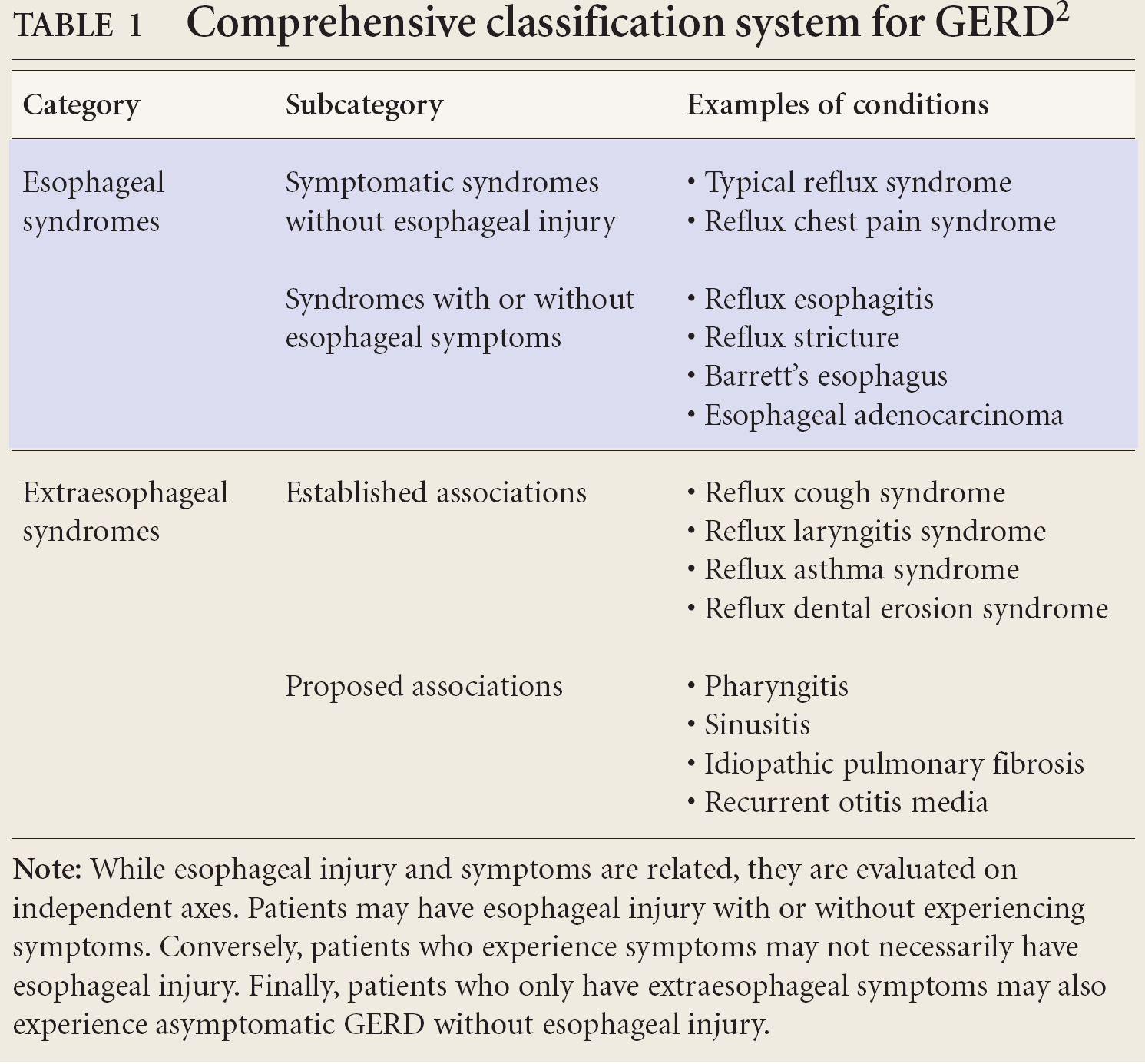
Table 1 shows a comprehensive syndrome-based classification system for GERD that reflects the various presentations in different patients. 2
Comprehensive classification system for GERD 2
GERD may also present as uninvestigated dyspepsia.
3
Two related GI conditions that are outside the scope of this supplement will only be defined here briefly.
Epidemiology
The consensus among Canadian gastroenterology experts is that GERD is the most prevalent acid-related disorder in Canada. 1
A 1996 population survey of over 1000 Canadian adults estimated that 29% experienced substantial upper GI symptoms in the preceding 3 months (15% had chronic substantial symptoms lasting more than 3 months). Since only 32% of people with chronic symptoms reported being diagnosed by a doctor, it is apparent that pharmacists can play an important role in supporting patients who choose to self-treat their GERD in the community setting. 5
GERD appears to affect male and female patients of all ages (pediatric and adult), although extensive epidemiological data on gender and age distributions are lacking. The average age of the adults surveyed in the above study 5 was 43.5 years, and the male-to-female ratio was 49.6 to 50.3. Based on comparisons with Canadian census data, this sample was considered representative of the general population. Canadian consensus guidelines indicate that age in itself is not an indication for further investigation, even though the prevalence of esophageal cancer is slightly higher in people over 50 years of age. This increased prevalence is not high enough to justify investigation of all patients over 50 who have GERD symptoms for the first time. However, this does not apply to those patients for whom a diagnosis of Barrett's esophagus is suspected. 1
Though GERD-related mortality is low, the burden of illness is often quite significant. Previous research shows that patients with GERD have a lower health-related quality of life compared to people with other chronic conditions (including diabetes, hypertension, mild heart failure and arthritis). The reductions in quality of life are common among patients with evidence of erosive esophagitis, as well as those who have endoscopy-negative reflux disease. 1
A number of conditions have been associated with GERD. For example, a recent meta-analysis demonstrated that obesity is correlated with a statistically significant increase in the risk for GERD symptoms, erosive esophagitis and esophageal adenocarcinoma. Research is ongoing to clarify the relationship between increasing weight, GERD and its complications. 6
Dyspepsia accounts for approximately 7% of primary care physician visits, and of this subset, nearly 25% of visits are by patients who are seeking help for the first time. 3 The impact of self-treatment and/or pharmacist consultations on GI symptoms has not been measured.