






Abstract
This Campbell systematic review examines the effects of school-based social information processing interventions on the aggressive and disruptive behavior of school-age children specifically targeted for attention because they are judged to be at risk for such behavior (selected) or already engaged in early versions of such behavior (indicated). Program effects are examined overall and in relation to methodological and substantive differences across studies.
The search strategy identified 68 eligible reports, which reported the results of 47 unique research studies.
The researchers conclude that children who participate in this type of education programme exhibit less aggressive and disruptive behaviour than children who do not participate.
Linked article:
Background for the Review
While the primary role of schools is to provide academic instruction, they are also one of the primary institutions through which we socialize our children. One aspect of this socializing role involves the prevention of aggressive or violent behavior. Over 75% of U.S. schools use some sort of prevention curriculum to deal with behavior problems; and many schools use more than one prevention strategy (Gottfredson, Gottfredson, Czeh, Cantor, Crosse, & Hantman, 2000). Most school-based prevention programs are universal programs. That is, they are implemented on a school-wide basis or delivered to entire classes of students regardless of the risk status of the student participants. In addition to these universal efforts, schools often intervene with individual students who are aggressive or violent or they target at-risk students for special prevention efforts. These types of interventions for specially selected students are called selected or indicated prevention programs (Mrazek & Haggerty, 1994).
Selected and indicated prevention involves targeting prevention efforts on particular students. Selected interventions are delivered to students who are specially selected for treatment by virtue of the presence of some risk factor (such as activity level) that is thought to be associated with later violent or aggressive behavior. Indicated interventions also involve targeting for certain students, but focus on children who are already exhibiting the targeted behavior (e.g., aggression, violence). Most of these programs are delivered to the selected children outside of their regular classrooms (and may use either group or individual formats).
There are many prevention strategies from which school administrators might choose for at-risk or problem behavior students (see, for example, Gottfredson, et al., 2000). One set of overlapping strategies used in school settings focuses on students’ social information processing difficulties. This review examines studies of the effectiveness of programs aimed at improving social information processing for reducing aggressive behavior. The following section will briefly review the social information processing framework and describe the programs that fall under this framework.
Social Information Processing
The programs included in this systematic review all attempt to improve one or more aspects of students’ social information processing. Under this intervention model, social behavior is the result of six interrelated steps: (1) encoding situational and internal cues, (2) interpretation of cues, (3) selecting or clarifying a goal, (4) generating or accessing possible responses, (5) choosing a response, (6) and behavioral enactment (Dodge; 1986; Crick & Dodge, 1994). Negative social behavior such as aggression is thought to be the result of cognitive deficits at one or more of these stages.1 For some children, the inability to process social information results in inappropriate behavioral responses and aggressive children tend to differ from non-aggressive children in various stages of social information processing (Dodge, Pettit, McClaskey, & Brown, 1986; Kendall, 1995). To illustrate, deficits at the encoding or interpretation stage of processing may involve misinterpreting as hostile the intent of others in neutral or ambiguous social situations. Hostile misattributions have been linked to aggressive responses (Crick & Dodge, 1994). And, aggressive children are more likely to make hostile attributions than their non-aggressive peers (Slaby & Guerra, 1988). Deficits at the goal selection or clarification stage can result in the selection of antisocial rather than prosocial goals (Asher & Renshaw, 1981; Crick & Dodge, 1989). Children who have difficulty accessing or evaluating responses to social situations (Steps 4 and 5) tend to have fewer responses from which to choose in social situations and may fail to evaluate the consequences of particular behaviors (e.g., Mize & Cox, 1990; Spivack & Shure, 1974).
Social Information Processing Programs
Some of the earliest programs designed to address social information processing deficits were the social problem solving programs developed in the 1970s (e.g., D’Zurilla & Goldfried, 1971; Shure & Spivack, 1972; 1979). These programs were designed to improve social behavior by teaching cognitively-based problem solving skills. For example, the I Can Problem Solve program (Shure, 1992) involves teaching participants a series of problem solving skills that includes perspective taking, alternative response generation, consequential or means-ends thinking, and causal thinking.
In more recent years, many variations on this theme have been developed (Coleman, Wheeler, & Webber, 1993). Attribution retraining programs, such as Hudley's BrainPower (Hudley, 1991) program, focus on the early stages of the social information processing model and teach children to accurately detect intentionality, to make nonhostile attributions when social encounters are ambiguous, and to generate appropriate behavioral responses to ambiguous negative situations. Lochman's Anger Coping program (Lochman, Lampron, Burch, & Curry, 1985) includes a module that helps children learn cognitive goal-setting skills, a social problem solving component, and a module on anger control (which focuses on the emotional aspects of social information processing).
While these are examples of some typical social information processing programs, a conceptual definition of the programs in general is necessary for conducting the proposed systematic review. This definition aids in identifying candidate programs for the review and in coding the particular treatment components of each program. For purposes of this review, therefore, a social information processing program is one with the following distinct characteristics: The program involves training in one or more of the social information processing steps: (1) encoding situational and internal cues, (2) interpretation of cues, (3) selecting or clarifying a goal, (4) generating or accessing possible responses, (5) choosing a response, (6) and behavioral enactment. The program emphasizes cognitive skills or thinking processes rather than specific behavioral skills. By teaching generic thinking skills, such programs aim to improve information processing in myriad social situations. The program involves the use of structured tasks and activities through which the cognitive skills are learned and applied to actual social situations.
What Social Information Processing Programs are Not
Another set of popular programming strategies also focuses on social competence. These programs, often called by the generic term behavioral social skills, are distinct from the social information processing programs that are the focus of this review. Behavioral social skills curricula focus primarily on the social (or antisocial) behaviors themselves, rather than the underlying cognitive thought processes. These programs generally teach specific skills such as making eye contact, smiling in context, paying compliments, communication skills, group entry skills, assertiveness, and the like (see Goldstein & Pentz, 1984 for a review).
In addition, there are other cognitively-oriented programs that do not specifically target social information processing. For example, programs for children with attention or activity level difficulties often involve teaching skills for cognitive impulse control. Similarly, there are cognitively oriented programs for dealing with stress, divorce, depression, etc. (e.g., Alpert-Gillis, Pedro-Carroll, & Cowen, 1987; Lewinsohn, Clarke, Hops, & Andrews, 1990). While these other cognitive programs focus on thinking skills, they do not have the focus on interpersonal relationships that is characteristic of social information processing programs.
Selected and Indicated Prevention
Programs that address social information processing difficulties tend to be structured and have detailed lesson plans, which make them attractive to schools. These programs are also easily delivered by teachers or school psychologists and can be used in different formats (group or individual) and settings (classrooms or out-of-class school facilities). Our original intent for this systematic review was to include all research studies of social information processing programs delivered in school settings. As we began collecting the relevant research literature, however, we discovered that the programs were delivered using several different approaches to prevention. In particular, social information processing programs are sometimes delivered universally to all students and, other times, only to specially selected at-risk or behavior problem students. That is, social information processing programs can be universal, selected, or indicated (Mrazek & Haggerty, 1994). Universal prevention interventions are delivered in classroom settings to an entire classroom without regard to the risk level or degree of behavior problems among students in the classroom. Selected and indicated prevention interventions target children who are exhibiting risk factors (such as anger or hyperactivity) or children who are already showing early signs of disorder (i.e., behavior problems). The studies of social information processing programs that focus on universal prevention, of course, tend to have different student subjects than studies of programs that focus on youth selected or indicated on the basis of various risk factors. In addition to the differences in the subject samples in universal versus selected or indicated programs, we noticed that there were other important differences between the two prevention approaches, most notably in study procedure and method. Nearly all of the studies of programs delivered under the selected/indicated approach used random assignment of individual subjects to produce treatment and comparison groups, while only a few studies of universal programs used individual randomization. Based on these differences in study and subject characteristics, and the possibility that these factors might be associated with study outcomes, we elected to conduct two separate systematic reviews. The review presented here focuses solely on selected and indicated social information processing programs delivered in school settings. A second review focuses on school-based universal social information processing programs (Wilson & Lipsey, forthcoming).
Prior Research on Social Skills Interventions
Several recent narrative reviews of social skills interventions are available (Clayton, Ballif-Spanvill, & Hunsaker, 2001; Howard, Flora, & Griffin, 1999; Moote, Smyth, & Wodarski, 1999; Nangle, Erdley, Carpenter, & Newman, 2002) but these cover social skills interventions quite broadly by including training in social skills, friendship making skills, communication skills, and other such social behaviors without an explicit focus on altering cognitive and social information processing deficits. A few narrative reviews of programs specific to social information processing have also been conducted (e.g., Coleman, Wheeler, & Webber, 1993; Pellegrini & Urbain, 1985), but these are somewhat dated and also include programs delivered to clinical populations in non-school settings. Several meta-analysis of related interventions are available (e.g., Beelmann, Pfingsten, & Lösel, 1994; Denham & Almeida, 1987; Lösel & Beelmann, 2003; Mytton, DiGuiseppi, Gough, Taylor, & Logan, 2002; Quinn, Kavale, Mathur, Rutherford, & Forness, 1999; Schneider & Byrne, 1985). Like the narrative reviews, but with the exception of Denham and Almeida (1987), these syntheses focus on social competence programs in general and thus include both social information processing and behavioral social skills programs. The Denham and Almeida meta-analysis focuses exclusively on interpersonal cognitive problem solving interventions, but is 15 years old and does not include international studies.
Objective of the Review
This review examines the effects of school-based social information processing interventions on the aggressive and disruptive behavior of school-age children specifically targeted for attention because they are judged to be at risk for such behavior (selected) or already engaged in early versions of such behavior (indicated). Program effects are examined overall and in relation to methodological and substantive differences across studies.
Methods of the Review
Criteria for Including Studies in the Review
Training was provided on one or more of the social information processing steps: (1) encoding situational and internal cues, (2) interpretation of cues, (3) selecting or clarifying a goal, (4) generating or accessing possible responses, (5) choosing a response, (6) and behavioral enactment. Cognitive skills or thinking processes were emphasized rather than specific behavioral skills. Structured tasks and activities were used to teach cognitive skills and their application to actual social situations.
Search Strategy for Identification of Studies
An attempt was made to identify and retrieve the entire population of empirical studies that met the eligibility criteria specified above, including both published and unpublished studies. Several sources were used to identify potentially eligible research reports. First, a large database compiled at the Center for Evaluation Research and Methodology with NIMH grant funding (Lipsey, PI) was searched for eligible interventions. That database includes studies of early intervention programs targeting a wide range of risk factors for antisocial behavior and includes many school-based programs.
In addition, a comprehensive search of bibliographic databases, including Psychological Abstracts, Dissertation Abstracts International, ERIC (Educational Resources Information Center), the Campbell and Cochrane Collaboration trials registers, U.S. Government Printing Office publications, National Criminal Justice Reference Service, and MedLine was conducted, with a special focus on recent studies not included in the existing database.
The search strategy utilized three categories of search terms2 derived from the controlled vocabulary used to index articles for each specific database. Wildcard characters were used to identify variants of words (e.g., delinquen* to locate delinquent, delinquents, and delinquency). Within each category described below, search terms are connected by the OR operator; the results for each of the three categories were combined with the AND operator: The population of interest: child, adolescent, childhood (MEDLINE); children, adolescents, preadolescents, students (ERIC); children, adolescents, students (PsychInfo), and children, adolescents, students (Sociological Abstracts); Risks or outcomes: social adjustment, interpersonal relations, social interaction, social isolation, aggression, juvenile delinquency, peer group, attention deficit and disruptive behavior disorders, hyperkinesis, cultural deprivation, interpersonal relations, social environment, social behavior, child behavior disorders, social problems, antisocial personality disorder, conduct disorder, dangerous behavior, social alienation, conflict, hostility, violence, reactive attachment disorders, impulsive behavior, problem solving (MEDLINE); social environment, social integration, social adjustment, social attitudes, social experience, social characteristics, attachment behavior, antisocial behavior, adjustment, aggression, delinquency, attention deficit disorders, hyperactivity, at risk persons, high risk students, educationally disadvantaged, problem children, dropouts, social influences, behavior disorders, behavior problems, youth problems, conflict, hostility, truancy, violence, peer relations, peer influences (ERIC); interpersonal influences, interpersonal interaction, social skills, social development, social networks, acting out, adjustment disorders, aggressive behavior, juvenile delinquency, predelinquent youth, attention deficit disorder, hyperkinesis, at risk populations, runaway behavior, school dropouts, disadvantaged, social deprivation, cultural deprivation, peer relations, reference groups, behavior disorders, behavior problems, antisocial behavior, conduct disorder, conflict, hostility, truancy, oppositional defiant disorder, impulsiveness, arguments (PsychInfo); adjustment, social dynamics, social participation, social behavior, social attitudes, social competence, social development, social learning, social isolation, juvenile delinquency, social background, disadvantaged, peer relations, peer influence, behavior problems, interpersonal conflict, conflict, violence, deviant behavior (Sociological Abstracts); Treatment/evaluations: social problem solving, social information processing, counseling, intervention, prevention and control, preventive, therapy, psychotherapy, social control, behavior therapy, cognitive therapy, treatment outcome, program evaluation, behavioral assessment, randomized controlled trials, pilot projects, clinical trial, meta-analysis (MEDLINE); behavior change, counseling, prevention, therapy, intervention, social services, social support groups, youth programs, enrichment activities, guidance programs, improvement programs, school community programs, outcomes of treatment, program evaluation, program effectives, program validation, summative evaluation, meta-analysis (ERIC); social problem solving, social information processing, cognitive-behavioral, social cognition, behavior modification, counseling, intervention, early intervention, prevention, psychotherapeutic outcomes, therapy, training, social programs, compensatory education, treatment outcomes, program evaluation, behavioral assessment, treatment effectiveness evaluation, educational program evaluation, meta-analysis (PsychInfo); behavior modification, counseling, intervention, prevention, therapy, training, treatment, social programs, educational programs, treatment outcomes, evaluation, effectiveness, quantitative analysis.
Third, the bibliographies of previous meta-analyses and literature reviews (e.g., Denham & Almeida, 1987; Durlak, 1997) were inspected for studies that met the eligibility criteria. In addition, the bibliographies of retrieved studies were themselves examined for potentially eligible research reports. Finally, follow-up searches on the first and second authors of all eligible studies and cited reference searches of eligible articles in the Social Sciences Citation Index were conducted. We have found this forward searching technique to be more efficient and fruitful than conducting hand searches of journal issues.
Studies identified through our searches were retrieved from the library, obtained via interlibrary loan, or requested directly from the author(s). In addition, we attempted to locate and include any eligible studies published in non-English language sources that were missed by the search strategies described above by asking colleagues from both inside and outside the U.S. to assist us with locating foreign-language studies.
Selection of Studies
Abstracts of the studies found through the search procedures were screened for relevance. Documents that were not obviously ineligible or irrelevant (based on the abstract review) were retrieved from the Vanderbilt University Libraries, Interlibrary Loan, ERIC, University Microfilms, and government documents sources for final eligibility screening. Final determination of eligibility for all studies irrespective of source was made from the full study report document(s) on the basis of detailed eligibility criteria. The abstract screening and eligibility determination were performed by the first author or a trained research assistant. Any ambiguities or questions about eligibility were resolved through discussion by both authors.
Although some research suggests that two reviewers might increase accuracy in identifying potentially eligible studies from abstracts obtained through bibliographic searches (Edwards, et al., 2002), our experience is that most abstracts do not provide enough detail to allow reviewers to make reliable judgments about whether a study meets the review criteria. Thus, we reviewed abstracts mainly to eliminate those clearly irrelevant and deferred the final determination until the entire study report was screened. While this required retrieving many more documents than eventually ended up in the review, it allowed us to make eligibility decisions based on the most complete information about a study that was available.
Data Management and Extraction
The coding protocol used for this project allowed for coding a wide variety of study characteristics, as well as study results. The standardized mean difference effect size statistic (Cohen, 1988; Lipsey & Wilson, 2001) was used to record intervention effects. This effect size statistic is defined as the difference between the treatment and control group means on an outcome variable divided by their pooled standard deviations. When means and standard deviations were not available, effect sizes were estimated from the statistics that were reported using the procedures described in Lipsey and Wilson (2001). Typically, studies reported results on multiple outcome constructs (e.g., aggression, social skills, school achievement) and often included more than one operationalization of the same construct (e.g., parent and teacher reports of aggressive behavior). For purposes of this systematic review, all effect sizes that assessed aggressive or disruptive behavior outcomes that could be extracted from a study were coded. Procedures for maintaining statistical independence during analysis in cases of multiple effect sizes will be discussed in the next section.
In addition to effect size values, information was coded for each study that describes the methods and procedures, the intervention, and the subject samples. The items describing study methods and procedures include details of the design, measures, and attrition. Those coded to describe the subject samples include age, gender, ethnicity, socioeconomic status, and risk for later antisocial behavior. The interventions were described by coding the details of specific program components; duration, intensity, setting, and format of the program; delivery personnel; and, other such characteristics.
All study coding was done on computer screens configured in FileMaker Pro® for direct entry into the database. All coding was completed either by the first author or by trained research assistants. Any study coded by a research assistant was reviewed for accuracy by the first author. Any discrepancies or ambiguities in coding were resolved by the two authors.
Statistical Procedures
Effect sizes based on small samples are known to be biased; to adjust for this, all effect sizes were multiplied by the small sample correction factor, 1 – (3/4n-9), where
The intervention outcome of principal interest was aggressive and disruptive behavior, which involves a variety of negative interpersonal behaviors including fighting, hitting, bullying, verbal conflict, disruptiveness, acting out and the like.4 The most common type of measure was a teacher-report questionnaire, though many studies provided results for more than one aggressive behavior outcome. To create sets of independent effect size estimates for analysis, only one effect size from each subject sample was used in any analysis. The procedures for selecting an independent set of effect sizes are described below.
Finally, many studies provided data sufficient for calculating mean difference effect sizes on the outcome variables measured at the pretest. In cases where pretest effect sizes were available, we adjusted the posttest effect sizes for pretest differences by subtracting the pretest value from the posttest value. In the analyses presented below, we tested whether there were systematic differences between effect sizes that were adjusted and those that were not by including dummy codes for adjustment in the analyses.
Findings
Description of Eligible Studies
The search strategy identified 68 eligible reports, which reported the results of 47 unique research studies. Some eligible studies were reported in multiple reports, while some reports presented results for multiple independent studies. In addition, when the results of a study were reported for subgroups (e.g., male and female results were reported separately), we coded the two subgroups rather than the aggregate and treated them as two studies. Table 1 summarizes the characteristics of the 47 selected and indicated social information processing programs included in this review. Coding details for each of the 47 studies can be found in the Appendix.
Nearly 90 percent of the studies were conducted in the United States, and slightly over half were published in peer reviewed journals. Studies were published from the 1970s to the present, with most programs in the 1980s and 1990s. As would be expected with populations at risk for aggressive behavior, the samples were predominantly male. Age ranged from six to 16, with 45% of the samples in the nine to eleven year range. In the United States, nine to eleven year olds are typically in upper elementary school, between the 4th and 6th grades. Among the studies that reported the ethnicity for their subject samples, over half were comprised primarily of minority youth. Forty percent of the studies were conducted with predominantly low income populations. In terms of the risk status of student participants, 32% of the studies focused on selected groups and 64% focused on indicated groups. There were two studies with very low risk children. They are included here because the children were specially selected and pulled out of their regular classrooms for treatment.
Characteristics of Studies (n=47)
The majority (74%) of studies used random assignment of individual students to create treatment and comparison groups. Eighty-seven percent of the studies presented pretest results on the outcome variable, which allowed us to adjust for any pretest differences between groups at the effect size level.5 Overall, the average pretest effect size was not significantly different from zero, indicating the treatment and comparison groups had equivalent levels of aggressive behavior before treatment began. In addition, the random and nonrandom assignment studies were not significantly different at the pretest.
Only one program was coded as a routine practice program (administered by school personnel as an ongoing school program). The remaining programs were conducted primarily for research or demonstration purposes. Correspondingly, the program evaluators/researchers tended to be involved in treatment delivery or supervision of delivery personnel. In 55% of the studies, the primary researcher developed the program under study, while there were only 5 studies in which the program developer was not involved in the research project. For just over a third of the studies, program developers were not involved, but the primary researchers modified the program. We believe this may engender some ownership in the program; in a sense, the researcher becomes a program developer as a result of modifying an existing program. In addition, because most of the programs had heavy researcher involvement in treatment delivery and program administration, there were few studies (9) in which implementation problems were reported.
Programs were mainly conducted using group formats in regular schools, though seven programs were either solely one-on-one or included individual as well as group sessions. Five programs were conducted with special education students. Treatment duration ranged from short programs of less than 8 weeks to those lasting one school year or more. The majority of programs had sessions once or twice a week. Since students were typically pulled out of their regular classrooms to meet for treatment, it is not surprising that most programs could only arrange sessions once or twice a week. A range of delivery personnel was utilized, with most having some affiliation with the researchers. Finally, Table 1 shows the frequency of the different types of social information processing interventions utilized. Most programs involved more than one aspect of social information processing, and 13 also included a behavior modification component.
Mean Effects of Selected and Indicated Social Information Processing Programs
The 47 eligible studies generated a total of 120 standardized mean difference effect sizes on aggressive or disruptive behavior; these effect sizes index the posttreatment differences between the treatment and comparison groups. Most studies (32) generated more than one effect size (ranging from two to nine), while 15 studies provided only a single effect size. The multiple measures of aggressive and disruptive behavior within studies were either different aspects of aggressive behavior (e.g., physical and non-physical aggression) or were the same type of aggressive behavior reported by different informants.
To create a set of independent effect sizes for analysis, a combination of procedures was used. When studies reported results on different types of aggressive behavior, we selected the effect size(s) that most closely represented interpersonal physical aggression and discarded the others. Next, we wanted to retain informant as a variable for analysis, so did not elect to average across effect sizes from different informants when more than one was reported. If there was more than one effect size from the same informant or source, however, their mean value was used. Then, from the studies with multiple effect sizes reported by different informants, one effect size was selected from the informant that was most frequently represented in the data. In this case, teachers were the most common informants, followed by self-reports from the participants themselves. These procedures resulted in the 47 effect sizes that are the subject of the following analyses.
The overall random effects mean was .26 (p<.001), indicating that subjects in the treatment groups had significantly lower aggressive and disruptive behavior than comparison subjects after participating in selected or indicated social information processing programs. Figure 1 shows the forest plot for the effect size distribution, using random effects methods. The effect sizes range from -.71 to 1.29. This figure shows that the majority of effects (over 60%) are positive, though not large.
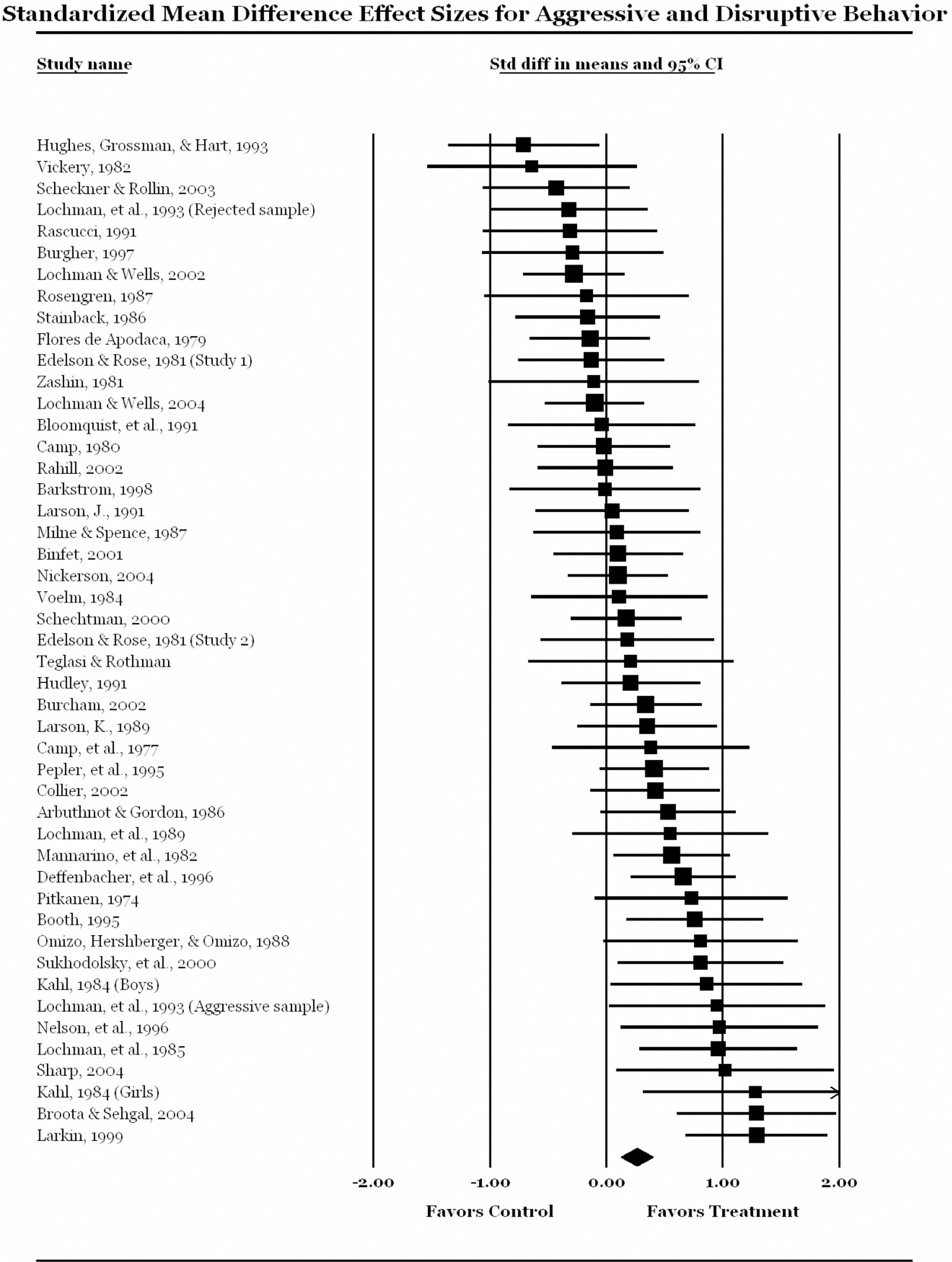
Post-trentine ut Effect Sizes and Confidence Intervals for Aggressive it Disruptive Behavior Outcomes
Analysis of Moderator Effects
There was also significant variability across the different studies in the effect sizes. A test of the homogeneity of the effect sizes using the Q-statistic (Hedges & Olkin, 1985) showed more variability across studies than expected from subject-level sampling error (Q46=97, p<.001). This variation was expected to be associated with the nature of the interventions, subjects, and methods in the studies of universal programs. Our next step, therefore, was to identify the study characteristics most strongly associated with effect size.
The Relationship of Method to Effect Size
The first step in identifying the study characteristics most strongly associated with effect size was to examine the relationships between methodological quality and study effects. We will later use the results of this analysis to control for methodological influences when examining the intervention and subject characteristics that are of more substantive interest. A variety of information describing the methodological characteristics of the studies was used in this analysis. The relevant variables are:
Dependent variable characteristics
Informant: the most frequent informants were teachers (34 of 47 studies), and a dummy code was created to signify teacher informants. A dummy code for self-reports (coded 1) was also created and included in the analysis, to be consistent with the method variables used in the companion review of universal programs (Wilson & Lipsey, forthcoming). Timing of measurement: a dummy coded variable distinguishing between measures taken immediately after treatment (coded 1) and those taken 2 or more weeks after completion of treatment (coded 0; range 2 to 36 weeks).
Design characteristics and problems
Design, coded using three dummy codes, representing individual random assignment, group-level random assignment and non-random assignment (coded 1 if the respective procedure was used; 0 if not). Pretest adjustment: dummy coded variable indicating whether the posttest mean difference effect size was adjusted for pretest differences (coded 1 if so). Attrition: percentage loss from assignment to posttest.
Other
Number of effect sizes aggregated.
The correlation of each of these method variables with the aggressive and disruptive behavior effect sizes was examined. The correlations are zero-order inverse variance weighted, random effects correlations using maximum likelihood techniques and are shown in Table 2.
Zero-order Correlations between Study Method Characteristics and Aggressive and Disruptive Behavior Effect Sizes (n=47)
Note: weighted random effects analysis
There was only one significant relationship between any of the method characteristics examined and effect size. The relationship between attrition and study outcome was large, significant, and negative indicating that studies with greater attrition produced smaller effect sizes. Most striking in this method analysis was the finding that there were no differences between studies that used individual random assignment and those that assigned subjects to groups using a non-random method. Because of its significant influence, attrition was carried forward as a method control in all later analyses. In addition, the non-random assignment dummy code was carried forward to ensure that any influence was made explicit; the teacher-report dummy code was also retained because its relationship with effect size, though insignificant, was not trivial.6
The Relationship of Other Study Characteristics to Effect Size
With the influential method variables identified, we can turn to an analysis of the important substantive study characteristics. This analysis follows the same procedure described above for the method variables, but with adjustments for the three carried-over method variables. A series of inverse-variance weighted random effects multiple regressions were conducted, with each including a single study characteristic and the four method controls (Raudenbush, 1994). We elected to run each of these analyses separately at first in order to identify the relationships between each study characteristic and effect size, without the confounding influence of the other study characteristics. Table 3 presents the results of these regression analyses.
Only one variable shown in Table 3 had a significant relationship with study outcome, the type of school in which the program was conducted. However, there were several other variables with non-trivial relationships with effect size. We will discuss each grouping of variables shown in Table 3 in turn.
Among the general study characteristics, none had significant relationships with effect size. However, the beta for year of publication was greater than .10. More recently published studies generally produced larger effect sizes.
In terms of student characteristics, only the risk status of the students showed a relationship with effect size greater than .10. As shown in Table 1, there are three categories of student risk: low risk, selected, and indicated. Students in the selected category were selected for programs because of some risk for later antisocial behavior, such as poor social skills, attention problems, and the like. Indicated students were already exhibiting aggressive or disruptive behavior. Although the beta was not significant, students in the indicated group tended to show greater reductions in aggressive and disruptive behavior after treatment than did the lower risk students. There were no significant relationships between gender mix, age, or socioeconomic status and effect size.
Several characteristics of the treatment and its delivery circumstances had non-trivial relationships with effect size in addition to the significant relationship between type of school and study outcome. Programs delivered in special education schools or those in which the subjects were pulled out of special education classrooms were not as effective as those in which subjects were pulled out of regular classrooms for treatment. The students in the special education settings tended to have multiple problems, including both academic and behavioral difficulties. Although the higher risk children tended to achieve greater benefits from treatment overall, the children in the special education settings did not. These children may be a particularly difficult group to work with.
The programs in which graduate students delivered treatment tended to be less effective than programs delivered by the researchers themselves or other non-research affiliated delivery personnel (e.g., counselors, social workers, etc.), although the relationship was not statistically significant.
In terms of the amount and quality of treatment, longer programs and better implemented programs tended to be more effective than programs which were shorter or had implementation problems. In addition, the few programs with one-on-one sessions tended to be less effective than those that were delivered exclusively to groups of students.
The final set of study characteristics we examined was a series of dummy codes representing the most common modes of treatment used in social information processing programs, anger control, social problem solving, perspective taking, and general cognitive-behavioral and one dummy code representing the use of behavioral modification in addition to the cognitively-oriented portion of the program. As is evident from Table 3, the different treatment modes did not tend to be associated with better or worse outcomes. All the different modes of treatment tended to produce similar reductions in aggressive and disruptive behavior.
Relationships between Study Characteristics and Aggressive Behavior Effect Sizes with Method Variables Controlled (n=47)
Note: weighted random effects analysis
p<.10
Moderators of Observed Effects on Aggressive and Disruptive Behavior
The final stage of our analysis of important moderators of effect size involved examining the relative influence of some of the critical variables identified above. We performed an inverse-variance weighted random effects multiple regression analysis in which the three method variables were entered along with all variables from Table 3 with beta coefficients greater than .10. The results of this analysis are shown in Table 4.
Only two variables were significant in the final model, attrition and the special education school dummy variable. As in the earlier analyses, studies with greater attrition tended to have significantly smaller effects and programs for special education students were less effective. Publication year, publication status, student risk, and implementation quality all had positive, though nonsignificant, relationships with effect size, similar to the univariate model presented above. Programs with individual components were somewhat less effective than those delivered exclusively to groups.
Regression Model for Effect Size Moderators for Selected and Indicated Social Information Processing Programs (n=47)
Note: weighted random effects analysis
p<.05; * p<.10
Although the relationships in this analysis generally follow what we found in earlier analyses, allowing the individual study characteristics to co-vary produced a few changes. Though not significant, the random assignment dummy code is more influential in the full model. Studies which used individual random assignment tended to produce smaller effects than those which used a non-random design. But, the dummy code for teacher reported outcome variables was less influential in this final model.
Conclusions
The objective of this systematic review was to examine the effects of school-based social information processing interventions on the aggressive and disruptive behavior of selected and indicated school-age children. We were able to locate 47 studies of social information processing programs delivered to specially selected children in school settings. Overall, we found a positive program effect. At-risk and behavior problem students who participated in social information processing programs showed less aggressive and disruptive behavior after treatment than students who did not receive a program. The overall weighted mean effect size was .26, which was statistically significant. Over 60% of the effect size values were positive.
There was significant heterogeneity in outcomes across the 47 studies we reviewed and our analyses of moderators produced some interesting findings. Only one method variable had an impact on study outcomes—studies with greater amounts of attrition between pretest and posttest tended to show smaller program impact than those with little attrition. There were no significant differences between experimental and quasi-experimental studies, although studies which used random assignment methods tended to produce smaller effects than the non-random studies.
Social information processing programs for special education students were significantly less effective than those for regular education students, though overall greater reductions in aggressive behavior were found for higher risk students. Students who have behavior problems likely have more potential for change than those who are at risk but not yet exhibiting serious problems. However, children who have been placed in special schools or classrooms and then selected for special violence prevention programming on top of that may have such serious problems that short-term social information processing programs are not likely to have a strong impact.
The different foci of social information processing programs did not appear to make a difference. Programs emphasizing anger control were no more effective than those emphasizing social problem solving or perspective taking.
Selected and indicated programs to prevent antisocial behavior are part of the violence prevention strategies of many schools. School administrators and teachers have a wide variety of choices of prevention programs and are interested in choosing programs that are likely to be effective. The overall mean effect size of .26 indicates that selected and indicated social information processing programs are effective for reducing aggressive and disruptive behavior. We can translate this into terms that are more concrete by converting it into typical levels of aggressive behavior in schools. According to the 1999 Youth Risk Behavior Survey, 14.2% of students reported being in a physical fight on school grounds in the year prior to the survey. For 1995 and 1997, 15.5% and 14.8% of students reported being in physical fights (Centers for Disease Control and Prevention, 2002). If we use these figures to estimate that about 15% of untreated school children will get into a fight during a school year, the overall effect size of .26 for selected and indicated social information processing programs translates into an eight percentage point reduction in fighting. That is, if 15% of selected or indicated students who received no social information processing training were getting into fights before intervention, only 7% of children in social information processing programs were getting into fights. The most effective programs produced larger effects than this and, thus, would reduce rates of aggressive behavior even more. In addition, since many of the children in selected or indicated programs were already exhibiting some problem behavior, it is likely that their baseline level of fighting behavior was higher than the general estimate of 15%. Thus, the reduction in aggressive behavior could possibly be greater.
Plans for Updating
The authors will take responsibility for updating this review to include new studies reported subsequent to the initial review and earlier studies missed in the search that are identified and located. These updates will be planned for approximately every three years.
Conflict of Interest
None.
Footnotes
Appendix
1
We recognize that social information processing deficits are one of many likely correlates of aggressive interpersonal behavior and that the perpetration of aggression by individual students is determined by an array of interrelated individual, family, social, and environmental processes. The discussion of social information processing deficits here is not meant to provide an exhaustive discussion of the causes of aggressive behavior. Rather it is intended to provide the reader with a brief background on the rationale behind the interventions that are examined in this review.
2
Use of a fourth class is widely discouraged by librarians specializing in research techniques because of the significantly increased likelihood that desired items are excluded when conformity across four categories is required.
3
Note that the sample sizes used in the inverse variance weights were not Winsorized for this review (though they were Winsorized in the companion review of universal programs) because there were no extreme sample size outliers among the included studies.
4
Ideally, we would have examined program effects only on aggressive behavior. However, almost none of the measures called “aggressive” behavior focus solely on physically aggressive interpersonal behavior. Many include disruptiveness, acting out, and other forms of behavior problems that are negative, but not necessarily aggressive. Therefore, our outcome variable includes a broader range of negative behaviors than just aggression and includes both aggressive and disruptive behaviors.
5
We could not adjust five studies for pretest differences because pretest results on the outcome variable were not provided. Four of these studies used random assignment at the individual student level. For the one quasi-experimental study lacking pretest results, the researcher stated that there were no significant differences on pretest measures prior to treatment.
6
The self-report dummy code was not carried forward because there were only 4 studies with self-reported dependent variables; this variable was only included in the initial method analysis to maintain consistency with the companion review of universal social information processing programs.
Supplementary Material
Please find the following supplemental material available below.
For Open Access articles published under a Creative Commons License, all supplemental material carries the same license as the article it is associated with.
For non-Open Access articles published, all supplemental material carries a non-exclusive license, and permission requests for re-use of supplemental material or any part of supplemental material shall be sent directly to the copyright owner as specified in the copyright notice associated with the article.
