






Abstract
This paper reports the results of a systematic review of the effects of second responder programs on repeat incidents of family violence. An exhaustive search yielded ten studies (including three that were unpublished) that met our criteria that included: (a) following a report of a family violence incident to the police, a second response that included a home visit, (b) a comparison group, and (c) at least one measure of repeat family violence.
Fixed and random effects metaanalysis indicated that the second response intervention did not affect the likelihood of new abuse as reported on victim surveys, but did slightly increase the odds of a new report made to the police. We interpret these results to mean that the intervention does not affect the continuation or cessation of family violence, but does somewhat increase victims' willingness to report incidents to the authorities when they occur.
Abstract
Background:
Second responder programs are based on the premises that family violence often recurs and that victims are likely to be especially receptive to crime prevention opportunities immediately following victimization. A team usually consisting of a police officer and a victim advocate follow-up on the initial police response to a family violence complaint, provides the victim with information on services and legal options and may warn those perpetrators present at the follow-up of the legal consequences of continued abuse. The purpose of the intervention is to reduce the likelihood of a new offense by helping victims to understand the cyclical nature of family violence, develop a safety plan, obtain a restraining order, increase their knowledge about legal rights and options, and provide shelter placement or other relocation assistance. A secondary aim of the intervention with victims may be to establish greater independence for victims through counseling, job training, public assistance, or other social service referrals. The intervention has spread widely, with support from the U.S. Department of Justice.
Objectives:
To assess the effect of second responder programs on repeat incidents of family violence.
Selection criteria:
Three criteria were used to define studies eligible for the review: (a) studies had to be evaluations of a second responder program; that is a program operated by or in cooperation with a municipal law enforcement agency in which, in response to a family violence complaint, the police summon family violence specialists to visit victims at their homes; (b) studies had to include an acceptable comparison group which did not receive a second response; (c) studies had to include at least one measure of new offenses committed by the perpetrator against the same victim.
Search strategy:
Search strategies included: (a) keyword searches on a variety of online databases, (b) reviews of bibliographies of second responder studies that were located, (c) hand searches of leading journals in the field, (d) a search of the Department of Justice Office of Violence Against Women website, (e) e-mails to authors of papers that described second responder programs, but whose methods did not meet our criteria for inclusion, and (f) e-mails sent to knowledgeable scholars.
Data collection and analysis:
Narrative reviews were drafted for the ten studies that met the criteria for inclusion. Both fixed and random effects models were used in meta-analyses that examined effect sizes for all included studies and for only experimental studies.
Main results:
The second response intervention increased slightly the odds that a household would report another family violence incident to the police. No effect of the intervention was found on reports of new abuse based on victim surveys.
Conclusions:
The results suggest that the second response intervention does not affect the likelihood of new incidents of family violence. However, the intervention slightly increases victims’ willingness to report incidents to the police, possibly as a result of greater confidence in the police.
Linked article
Summary
This paper reports the results of a systematic review of the effects of second responder programs on repeat incidents of family violence. An exhaustive search yielded ten studies (including three that were unpublished) that met our criteria that included: (a) following a report of a family violence incident to the police, a second response that included a home visit, (b) a comparison group, and (c) at least one measure of repeat family violence. Fixed and random effects meta-analysis indicated that the second response intervention did not affect the likelihood of new abuse as reported on victim surveys, but did slightly increase the odds of a new report made to the police. We interpret these results to mean that the intervention does not affect the continuation or cessation of family violence, but does somewhat increase victims’ willingness to report incidents to the authorities when they occur.
I. Background for the Review
The literature on desistance of family violence suggests that the typical batterer's career is either short or sporadic: It has consistently been found that two in three households that report a domestic incident to the police do not report a subsequent incident over the following 6-12 months (see, for example, Feld and Straus, 1989; Quigley and Leonard, 1996; Maxwell, et al, 2002). But for those batterers who chronically abuse family members, it is no longer assumed that the initial police patrol response – especially those incidents where no arrest is made – is sufficient in and of itself to protect victims from recurrence of abuse. Experts have concluded that legal sanctions or victim actions that raise the personal or social costs to the batterer may promote a reduction or cessation in abuse (Fagan, 1989). Effective solutions to family violence (including intimate partner abuse, abuse within families or households, and elder abuse) must involve efforts to educate victims about their options and connect them with counseling, relocation, civil legal assistance, and other services that may lessen their dependence on the abuser.
Second Responder Programs
In recent years a number of programs have been developed in which social workers (“second responders”) visit homes in which family violence incidents were recently reported to the police in order to help them find long-term solutions to recurring abuse (e.g. see Dean, Lumb, Proctor, Klopovic, Hyatt, & Hamby, 2000; Mickish, 2002). Second responder programs are based on the premises that family violence often recurs and that victims are likely to be especially receptive to crime prevention opportunities immediately following victimization. That is, there is a “window of opportunity” during the first hours or days after a crime during which victims feel vulnerable and are willing to consider seriously behavioral and lifestyle changes (Davis & Smith, 1994; Anderson, Chenery, & Pease, 1995). In second response programs, a team, usually consisting of a police officer and a victim advocate, follow-up on the initial police response to a family violence complaint. The team provides the victim with information on services and legal options and (in some models) may warn those perpetrators present at the follow-up of the legal consequences of continued abuse. The purpose of working directly with the victims is to reduce the likelihood of a new offense by helping them to understand the cyclical nature of family violence, develop a safety plan, obtain a restraining order, increase their knowledge about legal rights and options, and provide shelter placement or other relocation assistance. A secondary aim of the intervention with victims may be to establish greater independence for victims through counseling, job training, public assistance, or other social service referrals. The purpose of conversations with abusers is to ensure that they understand that assaulting an intimate is criminal and that further abuse will result in (additional) sanctions.
Previous Research
A series of field tests carried out in New York (Davis and Taylor, 1997; Davis and Medina, 2001; Taylor, n.d.) suggested a possible iatrogenic effect of a second response program. A pooled analysis conducted by Davis, et al (2006) reanalyzed data from three separate field experiments, each testing the same intervention on somewhat different populations. The pooled analyses indicated that the interventions were associated with an increase in reporting of new abusive incidents not only to authorities (which could indicate simply greater confidence in the police), but also to research interviewers. The New York field tests suggested that second response programs might actually increase the likelihood of new abuse.
Other work, however, suggested that second responder programs are effective in reducing subsequent family abuse. A quasi-experiment by Greenspan, et. al (2003) found that victims who received a second response were less likely to report victimization on a subsequent survey. An experiment by Pate, et. al (1992) also found a decrease in subsequent violence reported on a survey following a second response.
II. Objectives of the Review
The US Department of Justice has extensively funded second responder programs. But, while these programs rapidly gained in popularity in the United States, the evidence regarding their effectiveness is mixed. As noted above, although some research has indicated that second responder programs can prevent repeat victimization, several experimental studies have suggested that these programs may actually increase the odds of abuse recurring.
The purpose of the review was to compile and synthesize published and unpublished empirical studies of the effects of second responder programs on repeat incidents of family violence. In the review, we address the following questions: Do second responder programs decease or increase the number of subsequent calls to the police? Do they decrease or increase abuse as measured on victim surveys? Does the pattern of findings suggest a net positive or negative effect of this kind of intervention?
III. Methods
Criteria for inclusion and exclusion of studies in the review
The scope of this review is experimental and quasi-experimental with matched or otherwise equivalent comparison groups. We define criteria for inclusion as follows:
Included studies had to be evaluations of a second responder program; that is a program operated by or in cooperation with a municipal law enforcement agency in which, in response to a family violence complaint (complaints involving intimate partners, family members, or persons cohabiting), the police summon a family violence specialist or specialists to visit victims at their homes. These specialists could be victim advocates and/or specially trained police officers. The content of the contact had to be aimed at reducing the likelihood of a repeat offense and could include information about the nature of family violence, safety planning, information about legal rights and services, shelter placement, relocation assistance, and referrals to social services. We did not include those programs that contact victims only by mail or phone.
Studies had to include an acceptable comparison group which did not receive a second response. The comparison group had to consist of cases meeting the same criteria as treatment group cases (i.e. family violence complaints) and could be from the same geographic area (e.g., police precinct) as the treatment group or from another geographic area identified as having similar case and demographic make-up. 4
Included studies had to include at least one measure of new abuse following the intervention. These measures could include police reports or arrests of new offenses committed by the perpetrator against the same victim. Information about new offenses may also be derived from surveys of victims. However, reports of new abuse made to the police are ambiguous as an outcome measure since an increase in reports may indicate either an increase in abuse or no change in abuse, but greater confidence in the police as a result of the second responder intervention. Therefore, we were especially interested in studies that included reports of new abuse obtained from victim surveys, a more clear-cut measure of new abuse. At the same time, the presence of both outcome measures provides a possibility for distinguishing between reporting behavior and actual abuse. For example, a finding that abuse reported on victim surveys did not increase or declined, combined with a finding that reports of abuse to the police increased, would suggest that the program had increased the willingness of women to report abuse to the police.
Search strategy
The search strategy was developed and implemented with the assistance of the director of the Criminal Justice Collection at the Rutgers University Law School Library. We employed multiple strategies in performing an exhaustive search for literature that meets the eligibility criteria defined above. First, we performed a key word search on a variety of online databases. Second, we reviewed the bibliographies of all second responder studies that we located. Third, we performed hand searches of leading journals in the field. 5 Fourth, we searched the DOJ Office of Violence Against Women website for a listing of federally-funded second responder programs and any evaluations conducted on those programs. Fifth, after finishing the above searches and reviewing candidate studies, we e-mailed five authors of papers that described second responder programs, but whose methods did not satisfy our requirements for inclusion: We asked these authors whether they had authored any other studies that might qualify. Sixth, we e-mailed key scholars knowledgeable about the criminal justice response to family violence to find out whether they knew of any studies that we had not included. Finally, we consulted with information specialists at the Rutgers University Criminal Justice Collection and Cambridge University Library throughout the review to adjust search strategies based on information gained to that point.
We included the following databases in our search:
Criminal Justice Periodical Index Criminal Justice Abstracts National Criminal Justice Reference Services (NCJRS) Abstracts Sociological Abstracts Social Science Abstracts (SocialSciAbs) Social Science Citation Index Dissertation Abstracts National Institute of Justice Office of Violence Against Women Office for Victims of Crime British Home Office Australian Criminology Database (CINCH) Government Publications Office, Monthly Catalog (GPO Monthly) C2 SPECTR (The Campbell Collaboration Social, Psychological, Educational and Criminological Trials Register) PsychInfo Google Google Scholar Academic Search Premier Web of Knowledge Mincava Justice Research and Statistics Association California Post Library Social Drugscope.org.uk
The following keywords were used to search the databases listed above (in all cases where police is listed we also used “policing”):
Second responder program Coordinated community response Police OR law enforcement AND repeat domestic violence OR wife abuse OR marital violence Police OR law enforcement AND crisis intervention AND domestic violence OR marital violence OR wife abuse Police OR law enforcement AND domestic violence advocates OR battered wom*n OR family violence AND evaluation AND response OR services Police OR law enforcement AND home visitation AND evaluation Police OR law enforcement AND intimate partner violence AND evaluation AND response OR services
Potential candidates found through the search procedures described above were examined for relevance. As a first step, abstracts were reviewed by one or more of the search team members, and an initial decision made about whether the study seemed to meet the eligibility criteria for the meta-analysis. For those that were deemed possible candidates, a full text copy was printed through the Criminal Justice Collection at Rutgers University. In several cases where we were unable to locate full-text versions of the studies found through searches of the various databases listed above, we contacted the author(s) of the article to get a copy of the full-text version of the study.
The Collection director reviewed each paper located and, if it appeared to meet the established criteria, passed the paper along to one of the principals for further review. A handful of studies where there was a question about relevance were discussed among the three principals prior to making a decision to include. These were papers which did not specify the method of the second response intervention – whether it involved a home visit (eligible) or just a phone call (ineligible). In two instances, we wrote or spoke with authors to determine whether the intervention fit the definition of an eligible second responder program.
Selection of Studies
We found a total of 22 studies that discussed second responder programs. We eliminated three studies that examined a second response, but a response consisting of phone rather than face-to-face contact. We eliminated four studies that did not report recidivism data. We eliminated five other studies because they did not meet our research design standards: four of these collected only aggregate data and one had no comparison group.
That left ten studies – described in the next section – that met our criteria. This is a small number of studies, but they were generally of high quality. Three of these were unpublished, indicating the utility of using search procedures outside of library databases. Two of these unpublished studies were uncovered as a result of writing to authors of other papers uncovered in the database searches that did not meet our criteria for inclusion. It is significant that many of the papers we uncovered – both the ones that met our criteria and those that did not – were quite recent. This suggests that second responder programs are becoming an area of increased research concern.
Data Management and Extraction
After collecting an electronic or paper copy of each article or report, we extracted pertinent data from each eligible article using a coding form. A detailed coding protocol was used to extract as much pertinent information for analysis as possible from each report or article. However, many of the potentially relevant variables were not reported well enough in the source studies to allow systematic comparison.
Two trained researchers independently coded all eligible studies. Uncertainty and disagreement between the two coders were resolved through discussion and consultation. Later, a reconciliation process occurred where all disputed cases were resolved with one of the principal researchers. Two main outcome measures were available for a sufficient number of studies to permit meta-analysis. One outcome was based on police data (i.e., whether a new domestic violence incident was reported to the police in the form of a crime report within six months of the triggering incident) and the other was based on survey data collected by researchers (i.e., whether a new domestic violence incident occurred and was reported to a researcher during an interview within six months of the triggering incident).
Where data were available, the selected outcome measures were coded for their means, percentage of failure, and sample sizes for each treatment/comparison group to estimate an effect size coefficient; namely, a standardized difference of means coefficient (Cohen's d). In other cases, where those data were not available, we coded for odds ratios representing the odds of “success” (no failure) for the intervention group participants relative to the odds for control participants. For binary outcomes, the odds ratio provides an effect size statistic that has favorable properties and yields readily interpretable results (Haddock, Rindskopf, & Shadish, 1998). In the meta analysis reported below we converted odds-ratios to Cohen's d, so that comparisons could be made among the studies (see below).
IV. Characteristics of Studies
The ten studies determined to be eligible were all from the U.S. Three of the studies were conducted in New York City, three were conducted in New Haven, CT, and the other four in four different cities. Rob Davis was an author on three of the studies, Carla Stover was an author on three studies, and David Weisburd and Bruce Taylor were authors on two studies each.
Five of the studies used experimental designs and five employed quasi-experimental designs with a concurrent comparison group. The interventions were quite similar between studies, however the timing of the intervention and the eligible population varied. In two of the studies, the second response was conducted immediately while responding officers were still at the scene; in three studies, the response occurred within 72 hours; in one study, the response occurred 5-7 days later; in three studies the intervention occurred 7-14 days after the incident; and one study varied the timing of the response between either immediate or 7 days post-incident. Six of the studies used family violence incidents; three used intimate partner violence incidents; one used elder abuse incidents. Four of the studies included only arrest cases in the samples while the others sampled complaints regardless of whether an arrest was made.
A brief description of each study is presented below, and a synopsis appears in Table 1.
Summary of Eligible Studies
Davis and Taylor describe a second responder program jointly sponsored by New York's Victim Services (now Safe Horizon) with the New York Police Department. The intervention teamed a social worker with a police officer to follow up on incidents of family violence reported in targeted New York public housing projects, usually 7-14 days after an incident was reported to the police. The study also included a public education treatment which was unrelated to the second response treatment. A significant advantage of the sampling frame used in this and the other New York studies (see below) was that, because residents of public housing seldom move, researchers were able to achieve a high response rate in victim surveys. Face-to-face contact was made with victims in 69% of households assigned to the second responder intervention: in the remainder of cases, literature was left for later perusal by household members. The researchers randomly assigned 435 households to receive or not to receive a second response at the time a call for service was logged by the police. Repeat abuse was assessed by examining calls to the police involving the same victim and offender and using victim surveys. The surveys had a 72% response rate. Both sets of outcome data were collected six months after the trigger incident.
Davis and Medina used the same procedures as the earlier Davis and Taylor study. That is, the study was an evaluation of the same Victim Services/New York Police Department program; cases were randomly assigned to treatments; and a public education treatment was included that was unrelated to the second response intervention. Like the earlier study, Davis and Medina also studied incidents generated from public housing units. However, instead of a sampling frame defined by police reports of family violence incidents, Davis and Medina's sampling frame consisted of 406 elder abuse cases. The authors report a face-to-face contact rate of 84% with victims assigned to the second response condition. Repeat abuse was assessed at both six and twelve months post-incident using both incidents reported to the police involving same victim and offender as well as victim surveys. The surveys had better than a 70% response rate.
In an unpublished study, Taylor conducted another evaluation of the Victim Services/NYPD model again using a true experimental design. This study used a sample of 197 arrest cases drawn from family violence incidents in public housing units. As in the other New York studies, the second response was delivered by a social worker/police officer team 7-14 days after the initial patrol response. Police reports involving the same victim and perpetrator were collected and victim surveys conducted six months after the trigger incident. Again, more than 70% of victims completed the surveys.
Davis, Weisburd and Hamilton studied a second response program run by the Redlands, CA Police Department. For purposes of the study, households reporting eligible family violence incidents were randomly assigned to receive either an immediate second response, a delayed (7-day post-incident) second response, or no second response. A specially trained female domestic violence police officer delivered the second response, usually with another police officer. Contact with the victim was established in 84% of the cases assigned to the second response condition. The study tracked 308 cases for six months using police reports of new incidents between victim and perpetrator and victim surveys. Surveys were successfully completed in 41% of the cases in the sample. The response rate would have been far less had the researchers not used letter incentives and home visits to elicit surveys from victims who could not be interviewed by phone.
Greenspan, Weisburd, Lane, and Ready reported on a second response program in Richmond, VA. The researchers used a quasi-experimental design with a sample of 120 family violence incidents. The intervention was an immediate response by social workers employed by the Department of Social Services. The researchers compared households that received a second response in two targeted precincts with family violence cases in two precincts that did not have a second response program. The researchers note that officers in the targeted precincts only summoned second responders in a small proportion of cases. Since the researchers do not know the criteria that officers used in selecting cases for second responses, it is difficult to be certain that the cases selected for the intervention were truly comparable to cases in the control precincts. At the same time, the researchers found that the treatment cases were similar to the general population of cases in the city. Moreover, they compared the treatment and control conditions and found the groups very similar on a series of demographic characteristics. The only outcome that researchers report is a victim survey abuse measure gathered six months after the trigger incident. Interviews were completed with 76% of eligible victims.
Pate, Hamilton, and Annan conducted an experimental evaluation of a second response program in Miami as part of the SARP replication of the Minneapolis domestic violence arrest experiment. The second response treatment was independent of the arrest treatment, and involved a home visit made by a domestic violence detective within 72 hours of the family violence complaint. In ninety-five percent of households assigned to the second response condition, face-to-face contact was established with the victim, a figure significantly higher than in the New York experiments. The study tracked 907 family violence complaints for six months and gathered information on new complaints made to the police involving same victim and perpetrator as well as surveys of victims. Victim surveys had a 65% response rate.
Hovell, Seid, and Liles conducted a quasi-experimental evaluation of a second response program run by the police in cooperation with multiple community organizations in San Diego. Responding police officers called for services of a family violence response team after stabilizing the crime scene. The initial visit was followed up by other services within a week of the incident. Researchers compared 307 households that received the second response with a comparison group of 498 cases drawn from the same area the year before the second response program started. Repeat violence was assessed by examining records of family violence complaints that were made from sampled households (it was not possible to match victim and perpetrator names, so address was used as a proxy). The study did not include a survey measure of repeat violence.
Casey, Berkman, Stover, Gill, Durso, and Marans describe a second responder program that partnered the New Haven Department of Police Service and the Yale Child Study Center. Home visits were conducted by police-advocate teams within 5-7 days of reported intimate partner violence incidents in four of New Haven's ten policing districts. The researchers used a quasi-experimental design that compared 102 arrest cases that received a second response with 102 arrest cases in six control districts. The comparison cases were selected for their proximity in time to the cases receiving the intervention and their similarity across multiple matched variables including seriousness of charge, history of domestic violence, nature of victim-perpetrator relationship, number of days perpetrator was incarcerated following the target incident, age of victim and perpetrator, and ethnicity of victim and perpetrator. Recidivism was defined as any domestic violence intervention by the police in the 12 months following the trigger incident (the authors do not report whether any repeat incidents had to involve the same victim and perpetrator).
Stover, Berkman, Desai, and Marans studied the same New Haven intervention described above in Casey et al. using a similar quasi-experimental design that compared households in five New Haven police districts that housed second response teams with five that did not. As in the Casey et al study, the sampling frame consisted of intimate partner cases in which an arrest had been made. One difference in the intervention was that Stover et al report that the second response was delivered within 72 hours of the incident while Casey et al report that the intervention was delivered 5-7 days afterwards. Relative to the Casey study, the sample in Stover is reported to contain fewer married couples and lower levels of violence severity. The researchers initially identified 430 cases and obtained interviews 6-12 months post-intervention with 107 victims, or approximately one-quarter of those attempted, making this the lowest response rate among studies examined in this review. The study also contained a measure of repeat victimization 12 months post-intervention based on police records. No matching was reported to equate second response and control groups on initial characteristics, but the analyses introduced covariates including victim ethnicity, nature of charge, substance abuse, and arrest history.
Stover, Poole, and Marans conducted another evaluation of the New Haven second responder program reported in Casey et al and the earlier Stover et al study. The sampling frame included all intimate partner arrest cases (N=512) reported to the New Haven police in a one month period in 2005. The recidivism measure consisted of new incidents reported to the police within 12 months of the sampled incident. The sample in this study was a superset of the sample reported in the earlier Stover et al paper; however, this study does not contain a measure based on victim surveys. Therefore, when analyzing police outcomes, we used the measure of recidivism based on police data from the larger sample reported in this paper; when analyzing victim survey measures, we used the measure reported in Stover, Berkman, Desai, and Marans. No matching was reported to equate second response and control groups on initial characteristics, but the analyses introduced covariates including victim ethnicity and perpetrator criminal history.
Methodological Quality
Referring back to Table 1, a number of features of this body of research on second responders to domestic violence are notable. In general, the methodologies used in the studies are of high quality. As mentioned, half of the 10 studies are randomized experimental designs. Most of the sample sizes are large. The average sample size is just over 400, ranging from 107 cases to 907 cases (half of the studies had over 400 cases). In a majority of studies that report victim survey data, the survey response rate was over 70%.
The experimental studies report that the full intervention (face-to-face contact at victim's households) occurred in at least seven of ten cases assigned to receive a second response. (In the other cases, literature was left for subsequent perusal.) (The Taylor study is an exception: No data on the proportion of successful second responses is available). All of these studies base their analyses on the intention to treat. However, none of the quasi-experiments report the proportion of households which were assigned to receive a second response but in which face-to-face contact failed to be established. All base their analyses on cases in which the second response was fully implemented. The fact that the households assigned to treatment, but not treated, were omitted makes the problem of identifying appropriate control cases more difficult. It violates the assumption of strong ignorability since it increases the likelihood that treatment outcomes may be related to treatment assignment. For example, those people who spend more time at home will be more likely to be included in the home visit group, but – according to routine activity theory – also may be more likely to be re-abused since they are exposed for longer periods to their batterer in an environment without capable guardians. These considerations make it especially important to analyze data from experiments separately.
Narrative Review
There was a fair degree of consistency among the ten included studies with respect to outcome measures based on reports made to the police. Eight of the studies reported more subsequent calls to the police among households that received the second response intervention. Two studies reported more police reports among control households: The Taylor study reported a very slight increase in calls among control cases. However, Casey et al reported a large reduction in calls to the police as a result of the second response intervention. What makes this particularly curious is that the Casey study is contradicted by later work by the same research group (the two Stover papers) studying the same intervention. Both of the Stover papers report more subsequent abuse among households that received a second response. Stover, Poole, and Marans speculate that the contradictory results may result from differences in the samples in ethnicity and proportion of married couples.
The results for outcomes based on victim surveys are consistent in that none of the studies found a large effect either in the direction of increased or decreased abuse. Five studies (Davis & Taylor; Taylor, Davis & Medina, Davis, Weisburd, & Hamilton, and Stover, Berkman, Desei, and Marans) found more abuse reported among victims in the second response condition while two studies (Greenspan, et al and Pate et al) reported less. Three of the studies finding greater abuse among experimental cases were conducted at Victim Services in New York. All of the New York studies were conducted in public housing settings where residential stability is high and victims may be reluctant to “solve” the battering problem by moving. Both of the studies finding greater abuse among control cases were conducted at the Police Foundation, although with different researchers.
V. Meta-analysis Results
We conducted our statistical analyses using conventional meta-analysis techniques as presented in Lipsey and Wilson (2001). We conducted all meta-analytic calculations with the program Comprehensive Meta-analysis 2.2 (CMA Version 2.2) (Borenstein, Hedges, Higgins, & Rothstein, 2005). For each meta-analysis conducted, a forest plot displays each study's individual effect size (Cohen's d), standard error for that point estimate, p value for that estimate, and confidence intervals around the point estimates. In general, the narrower the confidence interval, the more confident we are that the true impact is near the estimated value. Also, the overall average effect sizes (across all the studies) are presented (fixed effect/random effect) at the bottom of the individual studies.
The heterogeneity among the effect estimates was assessed by the Q test, and the I2 index (Higgins & Thompson, 2002; Huedo-Medina, Sánchez-Meca, Marín-Martínez, & Botella, 2006). The homogeneity/heterogeneity analysis test we conducted assessed whether variations in the effect sizes are due to sampling error or other factors. For two of the three models we assessed, the analyses of the overall effects revealed Q and I2 statistics that were not large enough to allow us to reject the null hypothesis of homogeneity. That is, the variability across effect sizes did not exceed what would be expected based on sampling error (Lipsey & Wilson 2001). However, for the one model (police data for quasi and randomized experimental studies) the statistics measuring heterogeneity suggested that a random effects model might be more appropriate. The random effects model calculates variance considering both between study variance and within study variance, whereas only within study variance is used to compute variance under the fixed effects model (Lipsey & Wilson 2001). If no between-study variability exists, the computations from the fixed and random effects models will not differ (Lipsey & Wilson 2001).
Table 2 presents a summary of all of the meta analysis results. We present the results of each of the individual studies in the forest plot figures. Figure 1 displays a forest plot of the effect size distribution for the eight studies that included outcome measures based on police reports. The fixed effects model results show a standard difference in means of 0.12 (std. error = 0.05, significant at the .01 level). The mean odds ratio for the eight studies is 1.23, indicating that the odds of reporting new abuse to the police were about 1-1/4 times higher for households assigned to a home visit treatment.
Overall Summary of Metanalysis Results for Police and Victim Interview Data
However, since the Q statistic indicates substantial heterogeneity among the included studies (Q=24.24, df=7, p=.001), we re-analyzed the police outcomes using a random effects model. Figure 1 also displays a forest plot for the standard difference in means based on the random effects model. The effect size of 0.08 was similar to the fixed effects results although the result with the random effects model does not approach statistical significance.
Because of the failure of quasi-experiments to analyze results according to the intent to treat as discussed above, it is of particular interest to examine only experimental studies. Therefore, we conducted another analysis of the police outcomes, this time including only the five studies using a true experimental design. For this set of studies, the Q statistic supported the use of a fixed effects model (Q=3.09, df=4, p=0.54). The effect size of the meta analysis displayed in Figure 2, are similar to the results including both experimental and quasi-experimental designs. The standard difference in means was 0.12 (std. error = 0.06). However, following the fixed model results, this analysis suggests a statistically significant outcome.
Finally, we examined outcomes using data from victim surveys. Again, the Q statistic supported the use of a fixed effects model (Q=9.36, df=6, p= 0.15). For this analysis, the standard difference in means reported in Figure 3 was close to zero (-0.01) indicating no meaningful effect of the intervention on this outcome measure.
VI. Discussion
Overall, the meta analysis results indicate that second responder programs lead to slightly higher reporting of abuse as compared with standard approaches. An increase in calls to the police can be interpreted in one of two ways: Either victims are experiencing more abuse as a result of the intervention, or the intervention has increased confidence in the police. Victim surveys are essential to determining which of these alternatives is true. Meta-analysis of the survey results showed no statistically significant effect of the second responder intervention on reports of abuse.
Therefore, we believe that, while second responder programs may slightly increase victims’ confidence in the police to report abuse, they do not reduce the likelihood of repeat violence. Policy makers will have to decide whether the small gain in willingness to call the police is worth the cost of these programs.
We noted in our literature search that there has been a substantial increase in papers about second responder programs in recent years. Although most did not meet the standards for this review, it seems likely that the number of high quality studies will expand making this a worthwhile area to revisit in another few years.
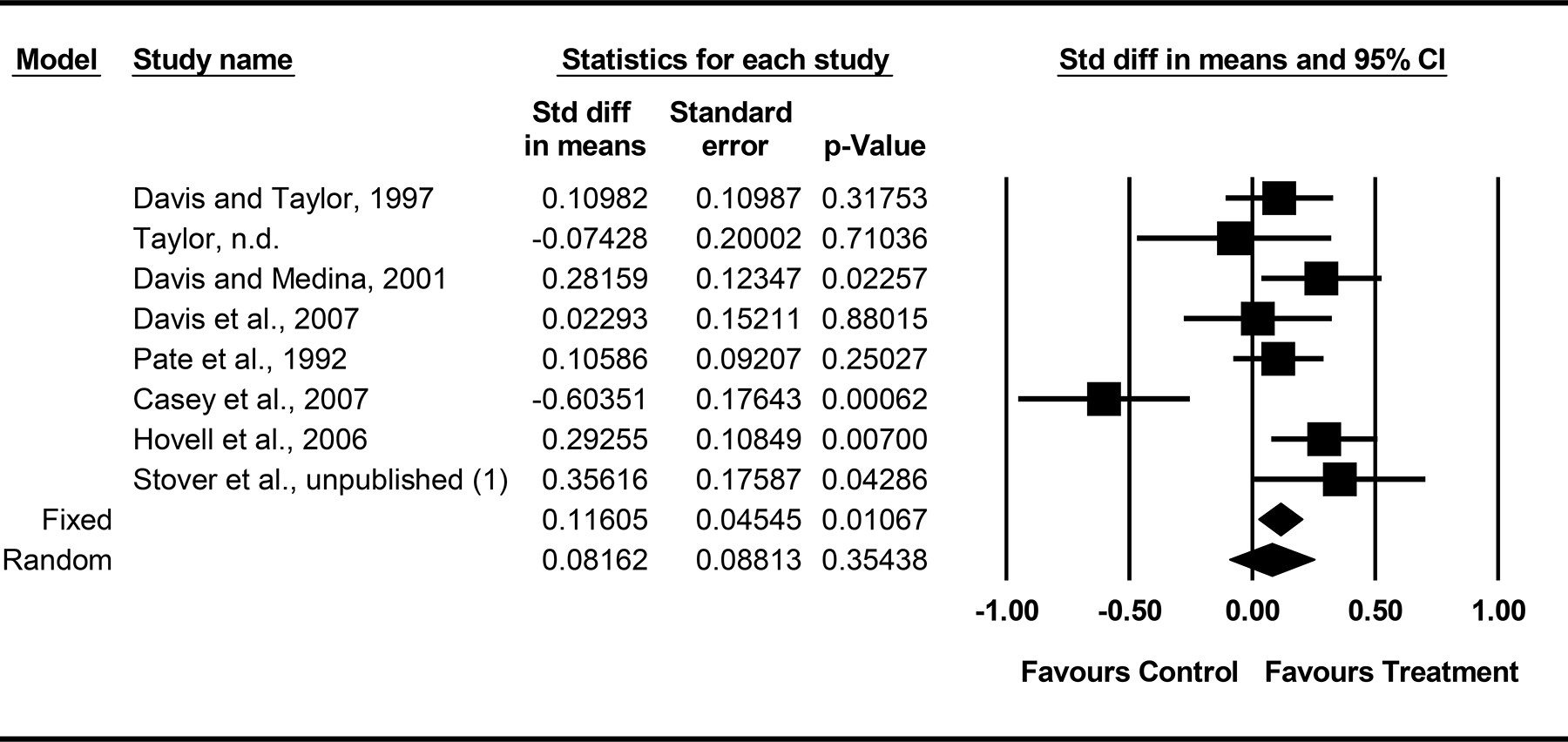
Fixed and Random Effects Models for Reports of Abuse to the Police: Experimental & Quasi-Experimental Designs
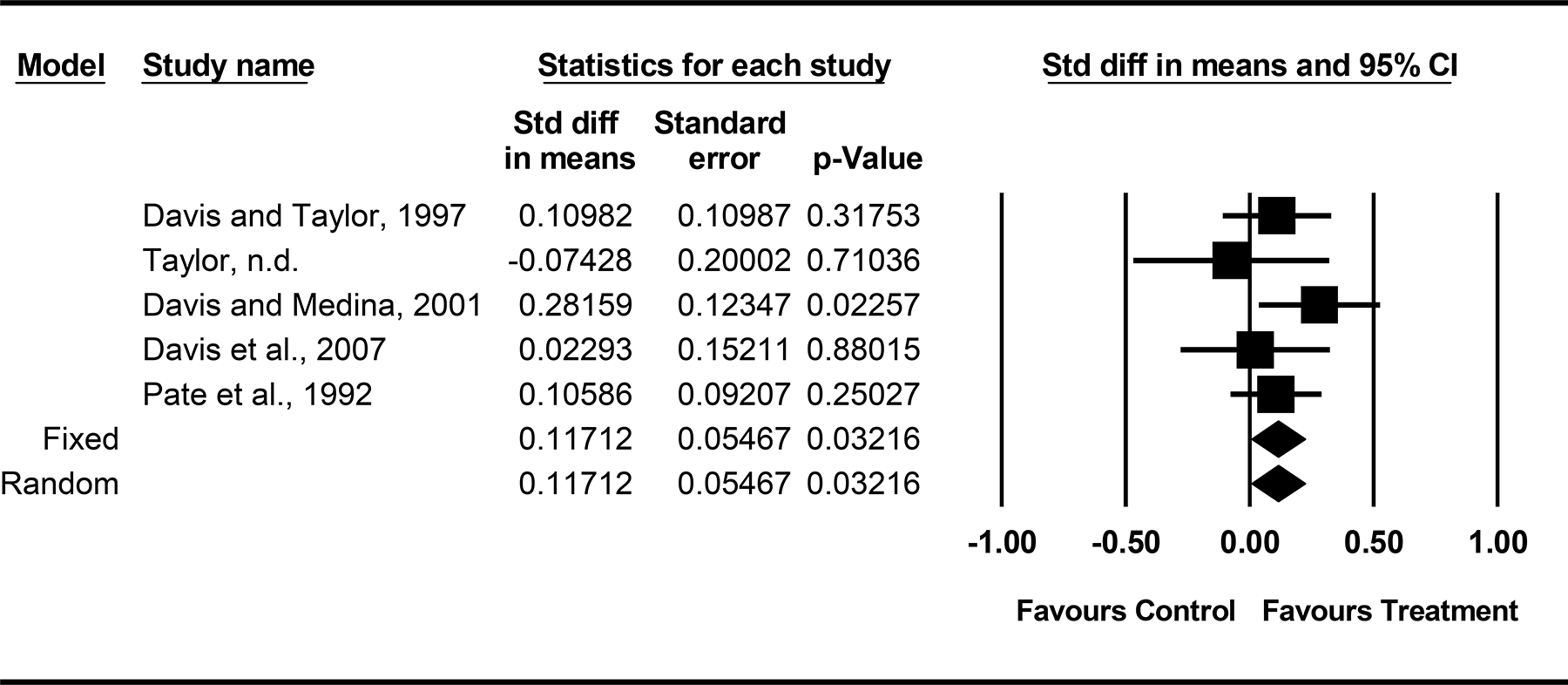
Fixed and Random Effects Models for Reports of Abuse to the Police: Only True Experimental Designs
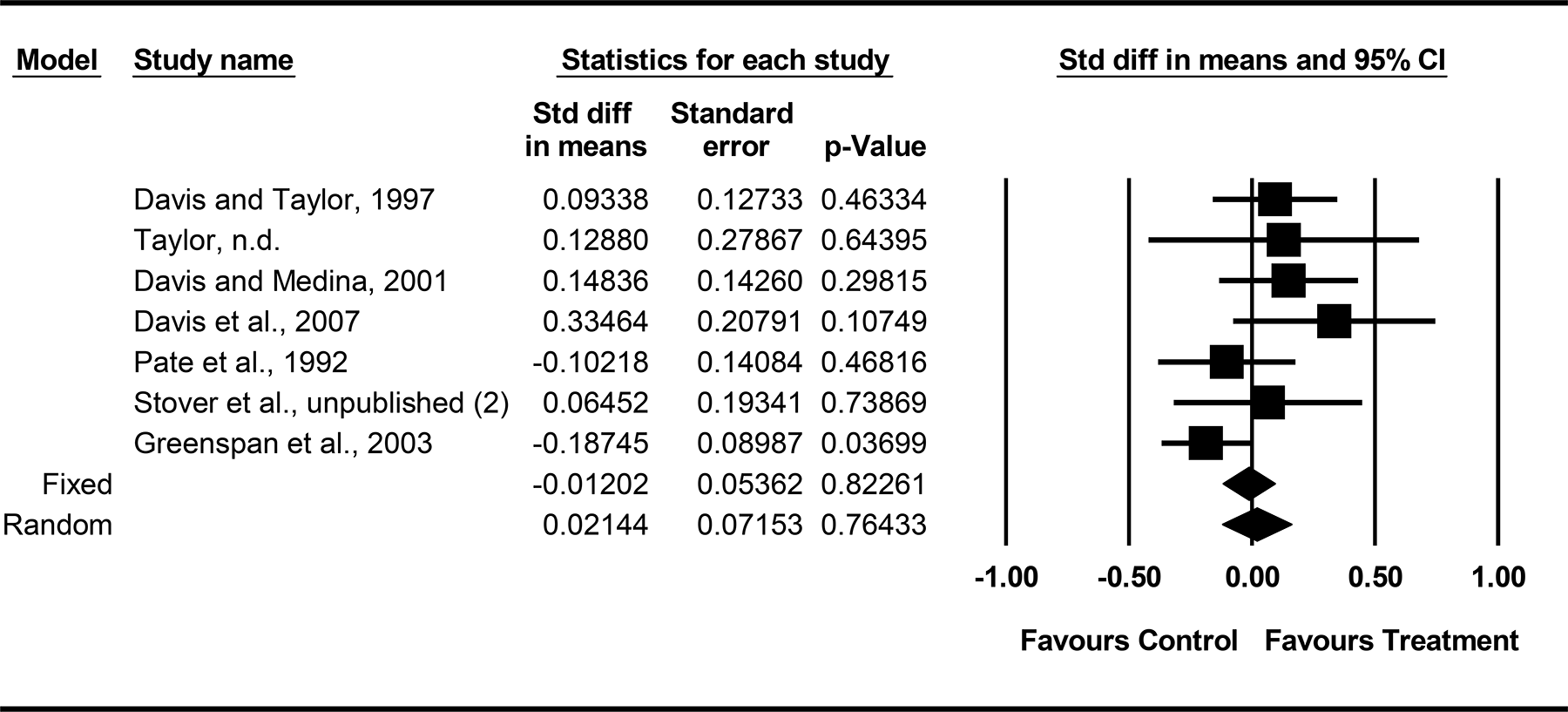
Fixed and Random Effects Models for Reports of Abuse to Interviewers on Surveys: Experimental and Quasi-Experimental Designs
Footnotes
Appendix
4
By similar case make-up, we mean that the distribution of types of offenses (eg., assault, harassment, violation of restraining order, etc. had to be comparable between the intervention and control areas. By similar demographic make-up, we mean that the distribution of basic demographics available on police reports (victim and abuser age, gender, and race) and from census data (indicators of concentrated disadvantage) had to be comparable between the intervention and control sites.
5
These journals included: Criminology, Criminology and Public Policy, Justice Quarterly, Journal of Research in Crime and Delinquency, Journal of Experimental Criminology, Violence and Victims, Journal of Interpersonal Violence, British Journal of Criminology, Crime and Delinquency, Journal of Criminal Law and Criminology, and Journal of Family Violence, Violence Against Women, Aggression and Violent Behavior, and Aggressive Behavior.