






Abstract
This Campbell systematic review examines the predictors of youth gang membership in low- and middle-income countries. The review summarises findings from eight reports from five countries and the Caribbean region.
The lack of available evidence limits the extent to which clear conclusions can be drawn about the factors associated with youth gang membership. The review is based on a very small number of studies, and has significant limitations in coverage. The limited evidence of the correlates of youth gang membership suggests factors that may drive gang membership and suggests areas where interventions may prove promising in the family, school, and community domains, as well as provide a starting point for future studies.
Plain language summary
Evidence shows which factors predict gang membership in low- and middle-income countries, but more studies needed
Youth gang membership is associated with delinquency, violent crime and trafficking. A range of individual, peer, family, school and community factors can predict the likelihood of youths getting involved with gangs. Knowledge of these factors can be helpful for reducing gang membership.
What is this review about?
Youth gang membership is associated with delinquency, violent crime and trafficking – and gang members are themselves frequently the victims of these offences. Yet youth gangs can also provide a form of social capital, a sense of belonging and purpose to disenfranchised youth.
This review identifies the factors associated with young people joining gangs, and the differences between gang-involved and non-gang-involved youth. Understanding these associations is essential to reduce the levels of gang membership and the incidence of related violence.
What is the aim of this review?
This Campbell systematic review examines the predictors of youth gang membership in low- and middle-income countries. The review summarises findings from eight reports from five countries and the Caribbean region.
What studies are included?
Studies of youth gangs in in low- and middle-income countries were included, with participants aged 10-29 years. The studies had to assess an individual predictor or correlate of youth gang membership, where the predictor or correlate is a single characteristic, not a conglomeration of multiple constructs. Included studies had designs including data on both gang-involved and non-gang-involved youth, recruited with strategies that were eligible.
Nine studies met the eligibility criteria and were included in the review. One of these studies did not report all the required data and so was not included in the analyses. The studies were conducted in Turkey, Trinidad and Tobago, the Caribbean, El Salvador, China and Brazil.
Delinquency Alcohol and soft drug use Male gender Risky sexual behaviours Employment Psychological risk factors (low self-control, impulsivity) and lack of psychological protective factors (empathy, future orientation, belief in moral order) Victimisation Age Minority ethnicity Protective behaviours surrounding sexual behaviour or alcohol and soft drug use. Socialising with delinquent peers Socialising with pro-social peers Negative family environments Lack of parental monitoring Middle-income families had greater odds of reporting youth gang membership than those from either high or low-income families (finding from one study) Parental education Parental attitudes to antisocial behaviour Low school attachment Exposure to violence at school Educational difficulties Opportunities for prosocial involvement Level of education School type School performance Exposed to neighbourhood violence Neighbourhood environment risk or protective factors, or geography
Individual
Peer
Family
School
Community
What are the main results in this review?
The eight studies analysed in the review address the associations between life events and circumstances, and the likelihood of being a youth gang member across five domains: individual, peers, family, school and community. Significant associations were found with factors in each domain.
What do the findings of this review mean?
The lack of available evidence limits the extent to which clear conclusions can be drawn about the factors associated with youth gang membership. The review is based on a very small number of studies, and has significant limitations in coverage. The limited evidence of the correlates of youth gang membership suggests factors that may drive gang membership and suggests areas where interventions may prove promising in the family, school, and community domains, as well as provide a starting point for future studies.
How up-to-date is this review?
The review authors searched for studies published up to September 2013. This Campbell systematic review was published in December 2018.
Summary
Background
Youth gang membership is well documented throughout low- and middle-income countries, and youth gang members are increasingly associated with delinquency, violent crime and trafficking. They are also frequently the victims of these offences, often in disproportionate numbers compared to non-gang youth. Yet youth gangs can also provide a form of social capital, a sense of belonging and purpose to disenfranchised youth.
Extensive research, primarily from high-income countries, has categorized five domains of risk and protective factors for youth gang involvement, drawn from the realm of developmental psychology. These domains are: Individual, Peer, Family, School, and Community. Youth gang membership is seen as the culmination of interrelated structural and process factors, which in combination with negative life events may increase the attractiveness of gang membership.
This review aimed to identify the factors associated with young people joining gangs, and to identify and quantify the differences between gang-involved and non-gang-involved youth. Understanding these associations is essential to reduce the levels of gang membership and the incidence of related violence.
Objectives
This review addresses two key objectives: (1) to synthesize the published and unpublished empirical evidence on the factors associated with membership of youth gangs in low- and middle-income countries;(2) to assess the relative strength of the different factors across the domains of individual, family, school, peer group and community.
Search methods
The search was conducted in English, French, Chinese, Arabic, Russian, Spanish and Portuguese. We searched 55 locations including academic databases, journals, and grey literature locations, and located over 54,000 documents to screen.
Selection criteria
We included studies meeting the following criteria: Reports on youth gangs All participants aged 10-29 years Located in low- or middle-income country Assesses an individual predictor or correlate of youth gang membership Predictor or correlate is a single characteristic Predictor or correlate is not a conglomeration of multiple constructs Eligible recruitment strategy for respondents Study design included data on both gang involved and non-gang involved youth.
Data collection and analysis
We conducted a broad abstract screening of over 54,000 titles and abstracts, followed by a close abstract screening of 1509 abstracts. We screened the full-text of 98 documents. Nine studies met the eligibility criteria and were included in the review. One of these studies did not report sufficient data to allow the calculation of a standardized effect size, and so was not included in the analyses. A total of 85 independent effect sizes were extracted from the eight studies with sufficient data to create a standardized effect size. We calculated Cohen's d from continuous data and the Log Odds Ratio from dichotomous data. All effects were categorized into the five predictor domains, and further classified into conceptually similar group and risk or protective factors. We synthesized the data using multiple random effects meta-analyses with inverse variance weighting.
Results
The eight studies analysed in the review address the associations between life events and circumstances, and the likelihood of being a youth gang member. All studies were based on cross-sectional survey data, using different statistical methods to identify correlations between youth characteristics and the likelihood of being a member of a youth gang. No longitudinal, prospective or retrospective studies were located. The studies were conducted in Turkey, Trinidad and Tobago, the Caribbean, El Salvador, China and Brazil. We organized the analyses according to five domains of factors that may be associated with youth gang involvement and summarize the main findings below:
Individual factors
Delinquency, alcohol and soft drug use, male gender, risky sexual behaviours, employment, psychological risk factors (low self-control, impulsivity), and victimisation were each associated with significantly higher odds of youth gang membership. Psychological protective factors (empathy, future orientation, belief in moral order) were associated with lower odds. No association between youth gang membership and age, minority ethnicity, or protective behaviours surrounding sexual behaviour or alcohol and soft drug use.
Peer factors
There is a small amount of evidence that socialising with delinquent peers is associated with increased odds of youth gang membership, but there is no significant relationship demonstrated between socialising with pro-social peers and youth gang membership.
Family factors
Negative family environments are associated with more youth gang membership, while both a positive family environment and parental monitoring were associated with lower odds. One study showed that youth from middle-income families had greater odds of reporting youth gang membership than those from either high or low-income families. No significant relationship was seen between youth gang membership and parental education or parental attitudes to antisocial behaviour.
School factors
Low school attachment, exposure to violence at school, educational difficulties and opportunities for prosocial involvement all show significant association with more youth gang membership. No significant relationship was seen between youth gang membership and level of education, school type, or school performance.
Community factors
There were significantly higher odds of youth gang membership amongst those who reported that they were exposed to violence in their neighbourhood. No demonstrated association between youth gang membership and neighbourhood environment risk or protective factors, or geography.
Gang membership is typically viewed as a culmination of interrelated structural and process factors. Understanding the factors associated with youth gang membership can help inform prevention strategies to reduce the levels of youth gang membership and the incidence of youth gang violence. Unfortunately the small number of studies contributing to any analysis limits the conclusions that can be drawn from this study. Moreover, many of the individual and peer associations identified in this review (such as delinquency, drug use, and sexual risk factors) may be as a result of gang membership rather than its cause. However, our results suggest certain family, school, and community level factors associated with gang membership that could be addressed through targeted preventive interventions, particularly family environment, parental monitoring, school attachment, educational difficulties, and exposure to violence in the home, at school, or in the community.
Authors’ conclusions
The lack of available evidence limits the extent to which we can draw any clear conclusions about the factors associated with youth gang membership. This current review is based on a very small number of studies, and has significant limitations in coverage; however it provides some limited evidence of the correlates of youth gang membership. Specifically, this review suggests factors that may drive gang membership and suggests areas where interventions may prove promising in the family, school, and community domains, as well as provide a starting point for future studies.
Background
The issue
Gang violence remains an issue in low- and middle-income countries in Africa and Asia, and the prevalence of gangs is particularly well documented throughout Central and South America (Decker and Pyrooz, 2010; Gatti et al., 2011). Official estimates of gang membership in Central America estimate approximately 69,000 members, while academic estimates believe this figure to be closer to 200,000 (UNODC, 2007). Some estimates are as high as 500,000 gang members in the region including South America and the Caribbean, and gangs have been identified as “the primary threat to regional stability and security” (Muggah and Aguirre, 2013). While reporting and recording issues make it difficult to estimate rates of gang violence, the homicide rate in Colombia, Brazil, El Salvador and Guatemala are substantially higher than those of European and North American countries (Decker and Pyrooz, 20 UNODC, 2007). Gangs are also active in South Africa, with an estimate of 100,000 members in Western Cape alone (Reckson and Becker, cited in Decker and Pyrooz, 2010); however, to date, there is limited research examining gangs in Africa and Asia.
Youth gangs are internationally associated with increased rates of delinquency and violent crime (Howell, 1997; Klein, 2002; White, 2002), including trafficking in arms, drugs and (increasingly) humans (Organisation of American States [OAS], 2007). The victims of gang crime are not only non-gang-affiliated individuals and rival gang members, but also include members of the same gang. Gang members are disproportionately involved with serious and violent offences compared to non-gang delinquent youth (Howell, 1998). This suggests that something about gang membership encourages violence over and above the correlation between having delinquent friends and a previous delinquent history (Battin et al., 1998; Haviland et al., 2008).
Researchers often contest a uniform definition of a youth gang, as it varies by time and place (Howell, Egley, and O'Donnell, n.d.). Notwithstanding these debates, the literature typically describes a gang as comprising between 15 to 100 members, generally aged 12 to 24; members share an identity linked to name, symbols, colours or physical or economic territory; members and outsiders view the group as a gang; there is some permanence and degree of organisation; and there is involvement in an elevated level of criminal activity (Decker and Curry, 2003; see also Esbensen et al., 2001; Howell et al., n.d.; Huff, 1993; Miller, 1992; Rodgers, 1999; Spergel, 1995; Theriot and Parker, 2008). There have been significant efforts amongst academics and policy makers to reach agreement on the definition of a youth gang. The “Eurogang Working Group” (see The Eurogang Project, 2012) consensus definition is as follows: “A street gang (or troublesome youth group corresponding to a street gang elsewhere) is any durable, street-oriented youth group whose involvement in illegal activity is part of its group identity” (Weerman et. al., 2009, p.20). A youth gang is differentiated from an adult gang if the majority of the gang members are aged between 12 and 25 (Weerman et. al., 2009).
Although associated with criminal activity, gangs can offer a sense of belonging and purpose to disenfranchised youth (Howell, 2012; Tobin, 2008). Self-reported reasons for gang membership can include social reasons, protection, and instrumental or financial reasons (Howell and Egley, 2005). For young men living in environments of deprivation, exclusion and violence, having family members in gangs may lead to them learning to ‘do masculinity’ in a context of “exposure and socialisation into armed groups”, particularly where pro-social opportunities are limited (Baird, 2012, p.186). Humiliating levels of deprivation may lead to the search for an extreme public masculinity that provides the gang member with power or ‘respect’ (Adams, 2012). Gang membership can be viewed as a means to overcome “extreme poverty, exclusion, and a lack of opportunities” (Organization of American States (OAS), 2007, p.5).
“Youth gangs represent a spontaneous effort by children and young people to create, where it does not exist, an urban space in society that is adapted to their needs, where they can exercise the rights that their families, government, and communities do not offer them. Arising out of extreme poverty, exclusion, and a lack of opportunities, gangs try to gain their rights and meet their needs by organizing themselves without supervision and developing their own rules, and by securing for themselves a territory and a set of symbols that gives meaning to their membership in the group. This endeavour to exercise their citizenship is, in many cases, a violation of their own and others’ rights, and frequently generates violence and crime in a vicious circle that perpetuates their original exclusion. This is why they cannot reverse the situation that they were born into. Since it is primarily a male phenomenon, female gang members suffer more intensively from gender discrimination and the inequalities inherent in the dominant culture.” (OAS, 2007, p.5)
In low- and middle-income countries in particular, gang membership has been identified as offering a unique social framework for excluded youth to meet particular social and cultural needs (OAS, 2007); a process that has been described as “filling a social vacuum” (Adams, 2012, p.31).
Factors associated with youth gang membership
Extensive research (primarily conducted in high-income countries) has focused on identifying risk and protective factors which may alter the likelihood of youth becoming involved in violent activity. These have been categorized into individual, peer group, family, school, and community factors (Decker et al., 2013; Hawkins et al., 2000; Howell, 2012; Howell and Egley, 2005; Katz and Fox, 2010; Klein and Maxson, 2006; O'Brien et al., 2013; Tobin, 2008). These five domains are drawn from developmental psychology, where they are identified as the key domains of influence affecting a young person's behaviour (Howell and Egley, 2005).
We recognize that in some instances, these factors may be either a predictor of gang membership or a consequence of having joined a gang. In this review we use the broader term “factors” rather than “predictors” as the causal associations are at many times unclear or unsupported, and distinguish between predictors and correlates of gang membership according to the methodology used in the primary research (for more detail see the ‘Study design’ subsection of the ‘Criteria for inclusion and exclusion of studies’).
Individual factors include biological and psychological characteristics identifiable in children from young ages that may increase vulnerability to negative social and environmental influences (Herrenkohl et al., 2000). Peer group factors that may influence youth gang involvement include peer attitudes, delinquency and gang involvement (Dahlberg, 1998; Katz and Fox, 2010; Moser and Holland, 1997; Olate et al., 2012). Family factors refer to both the structural characteristics of families, such as poverty, single-headed households, as well as the way in which children are socialized within families (Blum et al., 2003; Howell and Egley, 2005; Moser and Holland, 1997; Thale and Falkenburger, 2006). School factors include such aspects as children's academic achievement and experiences at school, including exposure to violence (Herrenkohl et al., 2000; Howell and Egley, 2005; Olate et al., 2012). Community factors are the structural and social characteristics of the local environment, including neighbourhood levels of crime, firearms and drugs in a neighbourhood (Katz and Fox, 2010; Moser and Holland, 1997; Sanders et al., 2009; Thale and Falkenburger, 2006; Tobin, 2008) as well as factors such as community social disorganisation (Howell, 2012; Howell and Egley, 2005). A summary of factors associated with gang membership is shown in Table 1.
Summary of factors associated with youth gang membership
Source: adapted from Small Arms Survey, 2010, pp.236-237.
Previous research conducted within high-income countries provides evidence of the importance of individual, peer and family domains as factors associated with youth gang involvement, whilst relatively weaker evidence exists for the value of school and community factors (O'Brien et al., 2013). The present review seeks to examine whether the relative weight of influence across these domains also applies to youth gang involvement in low- and middle-income countries.
How the factors may affect gang membership
Research indicates that each of the five domains associated with youth gang involvement (individual, peer, family, school and community) are most influential at particular times in a child or young person's life, and that a developmental model is useful to identify the key steps towards offending behaviour (Howell and Egley, 2005). Research in high-income countries demonstrates that the factors associated with gang involvement cut across all five domains, that youth with multiple risk factors have a proportionately higher risk of gang involvement, and that those youth with risk factors in multiple domains have further increased likelihood of gang involvement (Decker et al., 2013; Howell and Egley, 2005).
Building on Thornberry and colleagues’ developmental framework of gang membership (Thornberry et al., 2003), Howell and Egley (2005) propose a developmental perspective that incorporates these factors from early childhood through to adolescence. The model is illustrated in Figure 1.
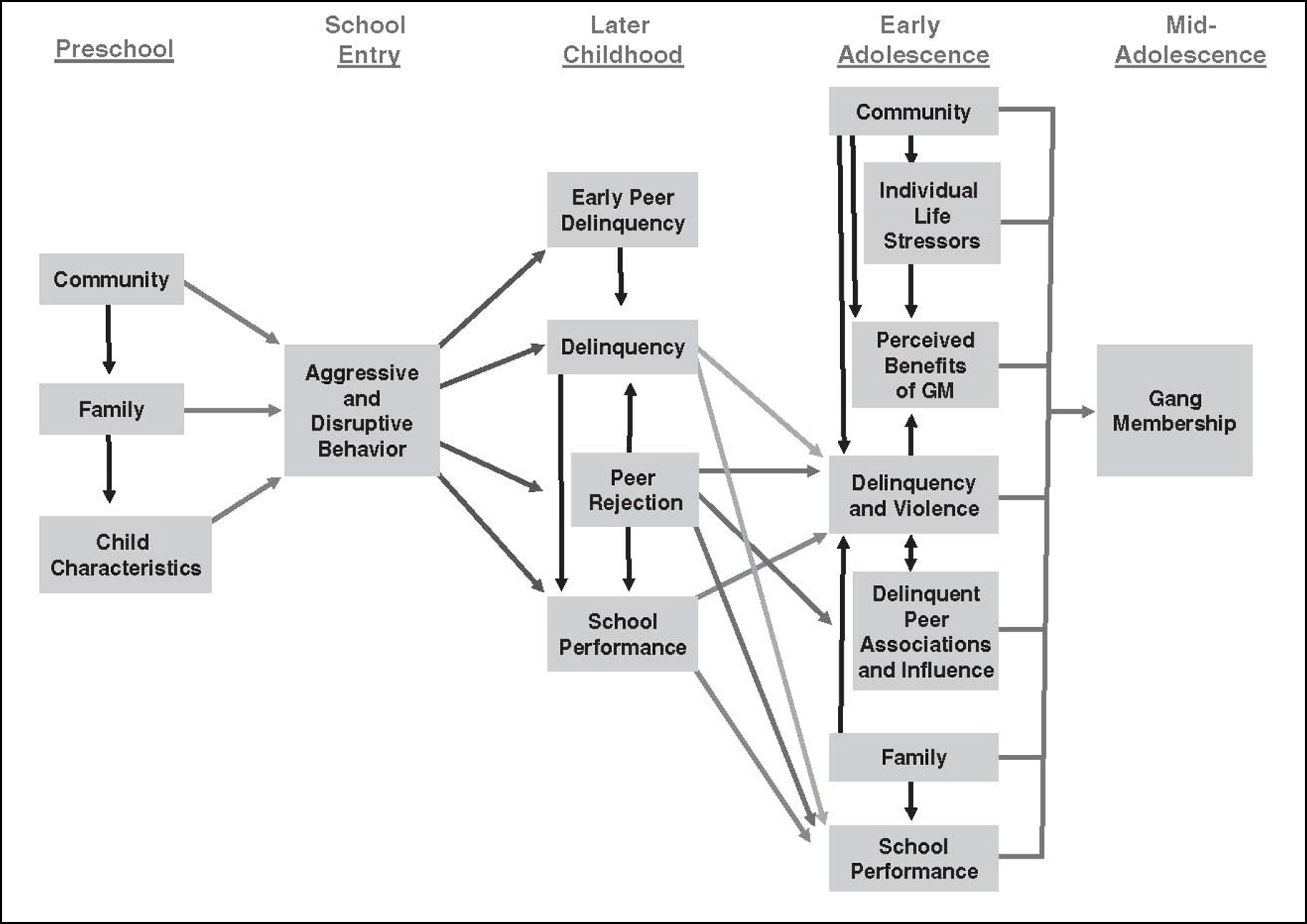
Logic model of predictors of gang membership
Howell and Egley (2005) argue that the pathway to gang membership for youth at the highest risk begins as early as three or four years of age with conduct problems, school failure in elementary school, followed by delinquency at 12 years of age, gang membership in early adolescence and more serious delinquency from mid-adolescence. We describe Howell and Egley's (2005) developmental model in the remainder of this section.
Howell and Egley's logic model of gang membership (2005) begins with preschool factors, where structural disadvantage and lack of social capital at the community level, combined with family factors such as low human capital, family conflict and poor parenting, and child level risk factors such as aggressive and impulsive temperament, are theorized to lead to conduct disorders at the pre-school stage. These aggressive and disruptive behaviours may lead to rejection by pro-social peers, which may increase the likelihood of early delinquent behaviour and decreased school performance. In later childhood, it is suggested that peer factors become even more important. Early rejection by pro-social peers may increase the likelihood of association with aggressive or delinquent peers, and therefore the likelihood of further delinquent behaviour and the weakening of social bonds. School level factors such as poor grades, low-quality schooling or school policies such as suspension or expulsion, may also increase the likelihood of gang membership due to the weakening of school-student bonds and the potential for increased time without adult supervision.
In early adolescence it is argued that the influence of community level predictors increases. Community factors such as high crime rates, drug use, and concentrated disadvantage may lead to decreased informal social control and decreased community attachment. This may lead to negative life stressors, delinquency, and the perception that gang membership offers benefits to the young person. Negative family characteristics (both structural and social process factors) are theorized to continue to affect young people by decreasing family bonds, increasing delinquency and reducing school performance. School risk factors such as poor academic performance, low aspirations, negative labelling by teachers and feeling unsafe at school may reduce attachment and increase the risk of gang membership. The model suggests that delinquent beliefs and delinquent peers in early adolescence, and individual predictors including substance use, delinquency and life stressors such as violent victimisation further increase the likelihood of delinquency and violence, a key precursor of youth gang membership.
Gang membership is seen as a culmination of interrelated structural and process factors. It is argued that individual, community and structural family characteristics influence early pro-social behaviours and pro-social bonds. In an interactive feedback relationship, antisocial behaviours may decrease pro-social friendships and in turn increase the impact of negative peer attachments and the risk of delinquent behaviours. These social and structural factors, in combination with negative life events, negative school experiences and a lack of school attachment, may increase the attractiveness of gang membership.
Why it is important to do the review
Understanding the factors associated with youth gang membership is essential to designing empirically-based prevention strategies to reduce the levels of youth gang membership and the incidence of youth gang violence. The proposed systematic review aims to synthesize the research evidence that identifies the pathways to youth gang membership in low- and middle-income countries.
The Campbell Collaboration has previously published three systematic reviews that examine the involvement of young people in gangs (Fisher et al., 2008a, 2008b; Higginson et al., 2015). The focus of the two reviews by Fisher et al. (2008a, 2008b) was on preventing youth gang involvement through cognitive-behavioural and opportunities provision interventions, and these two systematic reviews found no studies that met their inclusion criteria. Another review of interventions designed to reduce gang-related crime was conducted by the Evidence for Policy and Practice Information and Co-ordinating Centre (EPPI-Centre, 2009). Finally, a review by Higginson et al. (2015) focused on preventive gang interventions implemented in low- and middle-income countries. The authors did not find any studies meeting the inclusion criteria, confirming the lack of empirical evidence on the effects of interventions to prevent youth gangs and violence.
These reviews have not considered the factors associated with youth gang membership, and three of the four reviews have focused on interventions implemented in high-income countries. Klein and Maxson (2006) conducted a systematic review of the published evidence on risk factors for youth gang membership; however this review again focused on surveys conducted in the United States, Canada and Europe.
We suggest that there are differences in the motivations for participation in gangs between youth in high-income countries and those in low- and middle-income countries. This is evidenced in Olate et al.,'s(2011) cross-cultural study, which identifies significant differences in the factors associated with youth gang membership between San Salvador and Boston, particularly with regards to early delinquency and violence. Many low- and middle-income countries have experienced in recent decades or are experiencing some form of war or conflict, creating societies that foster youth gang membership. Issues such as a culture of violence, low sense of citizen security, distrust of authorities, poor economic outlook, high accessibility to firearms and drugs, and migration enable the creation and maintenance of gangs in such countries (Cruz, 2007; Davies and MacPherson, 2011; Thale and Falkenburger, 2006). We therefore focus our review on the factors associated with youth gang membership in low- and middle-income countries, as defined by the World Bank (World Bank, 2013).
This review aims to inform not only the academic literature on the factors associated with youth gang membership, but aim to provide a valuable resource for both policy makers and practitioners to assist in designing appropriate preventive interventions for implementation.
Preventive gang interventions in low- and middle-income countries are funded and implemented by NGOs, government agencies, international aid agencies, and community organisations. This systematic review has been funded by the United States Agency for International Development (USAID), with the aim of informing best practice in youth gang interventions. USAID supports a variety of preventive anti-gang programs in Latin America and the Caribbean, including both primary and secondary prevention programs, and argues that evaluation is important to improve programs and build support for crime prevention programs (USAID, 2010b).
By identifying the most important factors associated with youth gang involvement and disseminating that information to those working in the field, we aim to ensure that policy makers and implementing agencies have access to high quality research when designing their interventions. The Campbell Collaboration systematic review of the impact of preventive interventions on youth gang involvement in low- and middle-income countries highlights the dearth of robust quantitative evaluations of such interventions (Higginson et al., 2015). Despite a comprehensive search strategy, this systematic review found no impact evaluations of preventive gang interventions. Given the lack of evidence on the impact of interventions to prevent youth gang involvement in low- and middle-income countries, it is important to synthesize the available evidence on factors associated with youth gang membership to inform the development of preventive interventions.
Objectives
This review focuses on the factors associated with membership in youth gangs in low- and middle-income countries and identifies multiple factors of interest.
This review has two key objectives: (1) to synthesize the published and unpublished empirical evidence on the factors associated with membership of youth gangs in low- and middle-income countries;(2) to assess the relative strength of the different factors across the domains of individual, family, school, peer group and community.
Methods
Unless otherwise stated, this review follows the methods outlined in its published protocol (Higginson et al., 2014).
Criteria for considering studies for this review
This systematic review aims to determine the association between a characteristic of a young person or their environment and their gang membership status. This review focuses on observational studies rather than experimental or quasi-experimental studies, as youth gang membership is not a characteristic that can be experimentally manipulated. Consequently, this review is interested in the factors associated with youth gang membership, and these factors may be categorized as either predictors or correlates. In order to describe the relationship as a predictive relationship, the “predictor” must occur prior to the onset of gang membership or be a time-invariant characteristic. Ideally studies that examine predictors would be longitudinal; however there are few longitudinal studies examining gang membership and most studies in this field are cross-sectional (Thornberry, 1999). We utilize cross-sectional studies, but classify time-variant factors as “correlates” in this instance, as it can be difficult to determine if a time-variant characteristic is a true antecedent of the outcome if the study is not longitudinal (Murray et al. 2009).
Types of participants
There is a general agreement amongst researchers that most members of youth gangs are aged between 12 and 24 years of age (Howell et al., n.d.; Huff, 1993; Rodgers, 1999; Seelke, 2013). However, we extended the age range to include studies where the participants are aged between 10 and 29, in part because formal definitions of youth vary across countries, and in part to ensure that the age range is broad enough to ensure that studies that retrospectively examine youth gang membership within a short timeframe are not excluded.
We adopted a broad definition of youth gang membership. We acknowledge that there is no clear international consensus definition of youth gangs. As such, we accepted youth gangs as defined by the Eurogang definition: “a street gang (or troublesome youth group corresponding to a street gang elsewhere) is any durable, street-oriented youth group whose involvement in illegal activity is part of its group identity” (Weerman et al., 2009, p.20). Likewise we accepted author definitions of youth gangs. We excluded groups described as organised crime gangs, terrorist gangs and piracy gangs.
This review is focused on the factors associated with youth gang membership in low- and middle-income countries; therefore, we only included studies that take place in countries that have been classified by the World Bank as low- and middle-income countries for at least 50 per cent of the time since 1987, when recordings start (World Bank, 2013).
Types of factors
For a factor to be considered a true predictor, it needs to be present prior to the outcome occurring, making longitudinal designs the optimal study method for identifying predictive factors (Farrington and Loeber, 2000). However, many studies of gang-involved youth use a cross-sectional study design, in which some factors are retrospectively reported or are clearly in existence prior to gang involvement (for example, sex, ethnicity), whilst some factors are only measured once the young person is already in a gang (for example, family conflict, expulsion from school). We recognize that measuring the factor at the same time as measuring the outcome has the potential to conflate the causes of gang membership with the results of gang membership (Klein and Maxson, 2006).
We classify predictors as those factors that are either: estimated from prospective longitudinal studies at a time prior to the onset of gang membership, or estimated from cross-sectional studies and the factor is time-invariant (eg. sex), or estimated from longitudinal or cross-sectional studies and the factor has been reported retrospectively to a time prior to onset of gang membership (e.g. number of family members who were gang members when the respondent was aged 10, parent's marital status when the respondent was aged 5). estimated from a case-control study where predictive factors are assessed retrospectively for samples of gang members (cases) and non-gang members (controls).
We classify correlates as those factors that are either: estimated from longitudinal studies at a time after the onset of gang membership, or estimated from cross-sectional studies without retrospective reporting to a time prior to the onset of gang membership.
We follow Klein and Maxson (2006) in including these cross-sectional studies in order to retain more sources of evidence in our review; however, we synthesized the effect sizes for predictors and correlates separately.
We excluded factors that are conglomerations of multiple constructs across different domains, such as Raine et al.'s (1996) measure of biosocial risk, which combines measures of marital conflict, maternal rejection, family instability, parental crime, neurological problems, and slow motor development.
Types of outcome measures
The outcome of interest is membership in youth gangs. We coded outcomes related to individual youth participation in gangs, including self-reported, peer-reported, family-reported, practitioner-reported, or police-reported measures of youth gang membership. We planned to perform moderator analysis to identify heterogeneity due to different methods of recording gang membership; however all eligible studies used self-reported gang membership, so these analyses were not performed.
Study design
For inclusion in the review, studies must have used a sample where there was variability in the levels of gang membership, including youth who are not gang-affiliated. For example, the sample may have included young people who were gang members, young people who were not gang members, and young people who were ex- gang members. We included observational longitudinal studies, cross-sectional studies, case-control studies, and epidemiological studies, as long as they included a subsample of young people who were not gang members. Studies must have provided a bivariate or multivariate assessment of the relationship between a factor and gang membership.
We did not include studies that reported only on the characteristics of a youth gang sample with no reference to a comparison group. In such studies there is no way to demonstrate that gang-involved and non-gang-involved youth differ on these measures. While single case studies and ethnographies capture details of the lived experience and individual pathways, they are not appropriate for inclusion in this review as there is no comparison group to determine what is unique about gang members when compared to non-gang members.
In the studies, participants must have been recruited through random, stratified probability or total sampling. A study was eligible if it included participants recruited in an institutionalized or specialized setting (e.g. detention centre) if there was also a comparison group recruited from the community through random, stratified probability, or total sampling within both groups.
To be eligible for inclusion in a meta-analysis, the study must have reported an effect size, or provided sufficient detail such that an effect size could be calculated.
Exclusion criteria
We excluded studies from countries that have not been categorized as low- or middle-income by the World Bank for at least 50 per cent of the time since 1987.
Search methods for identification of studies
Search terms
The search for eligible studies was conducted as part of a broader project systematically reviewing literature on conduct problems and youth crime in low- and middle-income countries (Murray et al., 2013; Shenderovich et al., 2015) and alongside a systematic review on preventive interventions targeting youth gang violence in low- and middle-income countries (Higginson et al., 2015). The search terms were broad enough to capture both the corpus of intervention studies and the corpus of studies for this present review, with further refinement occurring at the abstract and title screening stage for each review.
The search strategy was developed using the Cochrane Collaboration's Effective Practice and Organisation of Care Group search strategy for low- and middle-income countries, combined with selected MeSH/DeCS terms and free text terms relating to conduct problems, crime and violence. To maximize sensitivity, no methodological filters were used. The full search strategy is listed in Appendix A.
The search strategy included published and unpublished literature with no date constraints. We did not place any language restrictions on the eligibility of documents; however our search was conducted in English, French, Chinese, Arabic, Russian, Spanish and Portuguese. The geographic location of studies was limited to countries located in a LMIC, defined according to the World Bank as low- or middle-income at least 50 per cent of the time since 1987, when the recordings start (http://data.worldbank.org/about/country-classifications/country-and-lending-groups). The eligible countries included as low- and middle-income are shown in Table 2.
Eligible countries
Search locations
We searched a wide range of electronic academic databases, international organisation databases, the websites of NGOs and other organisations. All locations were searched electronically. The searches were conducted in August and September 2013. The search locations are listed in Table 3.
Search locations used in the English language systematic search (hosting platforms in parentheses)
Table 4 shows the locations searched in languages other than English. Due to the nature of database interfaces, the searches in these databases were less complex. The outcome search terms were used and, where possible, the search terms for child and youth age groups.
Search locations used in the non-English language systematic search
Where possible we examined the full set of results from each search; however, in cases where the search produced an unmanageable number of results that could not be downloaded en masse, we screened the results online by page until the titles appeared irrelevant, based on the searcher's subjective judgement.
The non-English language searches were conducted by a team of six researchers (four who spoke the search language as their first language, and two who spoke the search language fluently).
If dissertations were located that were potentially eligible for inclusion we contacted the author or their institution for a copy of the document. We conducted citation searches of eligible papers and citation harvesting from the references of included studies. We contacted members of the Advisory Group 1 as well as other prominent scholars in the field to locate further studies that may not yet be published or located in our search. Any new literature of interest was obtained and assessed for eligibility.
Data collection and analysis
Selection of studies
Title and abstract screening
The results of each search were imported into EndNote reference management software where the initial title and abstract screening took place.
A team of six trained research assistants used preliminary eligibility criteria to assess, on the basis of titles and abstracts, whether the studies returned from the systematic search were potentially eligible for inclusion in the systematic review. Due to the large number of studies identified in the wider English language search, and the specialized language skills required to screen the studies in the non-English language search, each title and abstract was screened by only one author. One research assistant with native (or near-native) language fluency screened all of the studies from their allocated language. One of the review authors (YS) screened all of the English language studies.
The initial title and abstract screening inclusion criteria were broad to take in all studies potentially eligible for reviews examining the predictors of youth conduct issues in LMICs.
The initial screening inclusion criteria were: all participants are 10-29 years old located in a LMIC, defined according to the World Bank as lower or middle income at least 50 per cent of the time since 1987, when the recordings start all participants recruited through random, stratified probability, or total sampling included a community comparison group if the sample was selected from within prison or juvenile detention centres assessed the association at the level of an individual between at least one specific predictor or correlate and a relevant outcome (including gang membership) predictor or correlate is a single characteristic and does not include conglomerations of multiple constructs longitudinal study, cross-sectional study, or case-control study: comparison of a group with the outcome (gang membership) and those without the outcome
Documents were excluded if the answer to any one of the criteria was unambiguously “No”, and were classified as potentially eligible otherwise. We erred on the side of inclusivity and only excluded studies where it was clear that these criteria were not met.
Full text eligibility screening
Once the initial title and abstract screening had taken place in EndNote, the group of studies that were potentially eligible was imported into SysReview, a Microsoft Access database designed for screening and coding of documents for systematic reviews. In order to narrow down the results of the initial search to the subset of studies that specifically focus on the predictors of involvement in youth gangs, different criteria were included at this second title and abstract screening stage.
A team of trained research assistants used a set of inclusion criteria to assess, on the basis of titles and abstracts, whether the studies returned from the systematic search were potentially eligible for inclusion in the systematic review. After training to ensure that each author adopted the same approach to screening, each document was screened by only one author. The training included a comprehensive briefing by the review manager, which included reading and discussing the protocol, after which each author independently screened a set of 20 studies. The results of the initial screening of the training corpus were then mediated by the review manager, in consultation with the full review team. Once the review team reached an agreement rate of above 95 per cent, the subsequent screening of each document was conducted by only one author. Any issues or questions that arose during coding were discussed amongst the review team and the review manager, and the review manager randomly checked screening decisions to ensure consistency.
The second title and abstract screening criteria were: does not assess individual predictor or correlate of gang membership not a duplicate source.
The full text eligibility screening criteria were: reports on youth gangs all participants are 10-29 years old located in a LMIC, defined according to the World Bank as lower or middle income at least 50 per cent of the time since 1987, when the recordings start not a duplicate source assessed the association at the level of an individual between at least one specific predictor or correlate and gang membership predictor or correlate is a single characteristic predictor or correlate is not a conglomerations of multiple constructs eligible recruitment strategy eligible study design.
The full-text screening was done in two stages. If criteria 1–4 were all screened as “Yes” then the document proceeded to be screened on criteria 5–9. If any of the responses to criteria 1–4 were “No”, the document was immediately deemed ineligible and the responses to criteria 5–9 were not recorded.
Documents were eligible for detailed coding and inclusion in the meta-analysis if and only if they were screened as “Yes” across all criteria (1–9), and were not considered eligible if they were screened as “No” for any of the criteria.
Data extraction
Two authors (KB and AH) used the SysReview database, along with a detailed coding companion document, to code in detail the documents that were eligible for inclusion in the meta-analysis. The coding fields are shown in Appendix B, and included information on study information, sample characteristics, study quality, outcomes reported, and effect size data.
All coding conducted during training was checked by the review manager to ensure accuracy and consistency of information capture. For the final coding, all coding and effect size data were checked by a second author who was not blinded to the initial coding. Coding discrepancies were resolved by discussion between authors, in consultation with the review manager if required. For data from between-groups studies, relevant data were imported into Stata to calculate standardized effect sizes and their standard errors.
We coded all predictors identified in the primary studies, and categorized them according to the framework of individual, peer group, family, school, and community factors, following the conceptualisation shown in Table 1.
Following Lipsey and Derzon (1999) and in line with the developmental framework of Howell and Egley (2005) and Thornberry and colleagues (2003) we planned to categorize factors according to the age of the respondent at the time of measurement, as different factors may have stronger influence during particular developmental periods; for example, if the absence of a male role model is a predictor of interest, it may have a stronger impact if measured at the age of 12 than it does at the age of 3. However, due to the low number of studies identified, this moderator analysis was not performed.
Assessment of risk of bias in included studies
We assessed risk of bias using a series of questions listed in the coding fields shown in Appendix B under Risk of Bias. The quality of each study was assessed by two authors, and the results of the two assessments mediated by the review manager, who was not blind to the original quality assessment. Coding discrepancies were resolved by discussion between authors, in consultation with the review manager. These items assessed the quality of the sampling, the measurement of items, and the timing of the measurements to identify whether the factor was indeed in existence before gang membership. When assessing risk of bias we did not allocate a score or index, as extreme failure in one area can be more serious than minor breaches of quality across multiple arenas. We did not exclude studies on the basis of risk of bias assessment, but planned to conduct moderator analysis to determine whether inclusion of studies with higher risk of bias impacts on the summary effect size. We presented the results of the assessments in a “traffic light” format (see de Vibe et al., 2012).
Effect size metric and calculations
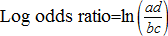
For continuous predictors we used Cohen's d as the measure of effect size, and for binary predictors, we calculated a log odds ratio as the measure of effect size. We used Stata to calculate the effect sizes and convert between effect size types, to ensure that a common metric was used. Following Hawkins and colleagues (2000) we converted all effect sizes to the log odds ratio as a common effect size for synthesis and present results as the odds ratio, as it represents the amount of increased or decreased risk in an intuitive metric. Although converting different effect sizes to a common metric is imperfect, it is preferable to conducting multiple separate meta-analyses (Borenstein et al., 2009).
The following formulae were used to generate effect sizes and their standard errors:
a = the number of youth gang members in the group with the characteristic of interest,
b = the number of non-youth gang members with the characteristic of interest,
c = the number of youth gang members in the group without the characteristic of interest, and
d = the number of non-youth gang members without the characteristic of interest.
a, b, c and d are defined as in Equation 1.
MeanT = the mean value of the characteristic among youth gang members (group T),
MeanC = the mean value of the characteristic among non- youth gang members (group C),
nT = the number of participants in group T,
nC = the number of participants in group C,
SDT = the standard deviation group T, and
SDC = the standard deviation of group C.


A further note on the calculation of Cohen's d: The majority of studies that reported data suitable for calculation of d reported the mean value of the characteristic for youth gang members and non-youth gang members. Once converted to the log odds ratio, however, the resulting effect size was the equivalent of having compared the likelihood of youth gang membership between groups with and without the correlate, as the log odds ratio is symmetrical across conditions.

nT, nC and d are defined as in equation 3.
The following formula were used to convert from Cohen's d to the log odds ratio:
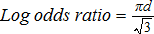

The following formula was used to calculate the standard error of the log odds ratio where a study reported an odds ratio and its confidence intervals only:

Criteria for determination of independent findings
There were two issues of independence that needed to be addressed in this review. The first was that documents may have reported on multiple studies, which may in turn have reported on multiple predictors or outcomes. Documents were allowed to contribute multiple effect sizes; however, if more than one effect size was provided for a conceptually equivalent factor/outcome relationship, the effects were first synthesized using a random effects model with inverse variance weighting, and the pooled estimate was included in the analyses. In this way, the average effect of the conceptually equivalent factors was reported and included in the meta-analyses. There was one study which was treated differently (Ohene, 2005), as it reported results for males and females separately, resulting in two independent effect sizes for each measure. These effects were not pooled prior to synthesis, as they were two independent sub-samples, and were therefore treated as independent estimates.
The second issue of independence was that multiple documents might have reported on the same data. In these instances, we planned to identify which documents were related, and assess all sources in order to select an effect size, based on the completeness of the data and the risk of bias assessment of the studies. Two papers by Olate and colleagues (2011, 2012) both analysed the same dataset. The two papers largely reported on different factors; however, both papers reported on a conceptually equivalent factor/outcome relationship for violent delinquency and school attachment. For the analyses of these two relationships, the effect sizes from the two papers were pooled using a random effects model with inverse variance weighting, and this pooled estimate was included in the analyses.
Missing data
One eligible study (Moravcova, 2012) did not provide sufficient data to compute effect sizes, and so we have attempted to contact the author. This study will be included in future updates if effect size data becomes available.
Method of synthesis
We conducted a random-effects meta-analysis with inverse variance weighting to calculate an overall weighted mean effect estimate for each factor-outcome association. We presented the results of the meta-analyses in forest-plots with 95 per cent confidence intervals.
We categorized each factor into the domains of individual, peer, family, school and community, and performed a meta-analysis for each of these domains, using the summary effect sizes from each individual factor. We used forest plots with 95 per cent confidence intervals to present the results. We synthesized outcomes expected to be risk factors separately to those that we expected to be protective factors.
Assessment and investigation of heterogeneity
We tested for heterogeneity in the meta-analyses using I2 and τ2 following Borenstein et al. (2009).
As all gang membership measures were self-report, and all samples fell broadly into the 14 years and over age category, we did not perform moderator analyses on these factors. There were too few studies identified to reasonably perform moderator analysis by region and sampling strategy. All studies were peer reviewed publications. We performed moderator analyses on the domains of the predictors to identify the relative strength of the domains.
Sensitivity analyses
We had planned to conduct subgroup analyses in order to assess the impact of study quality and study design, including analyses of the effect of risk of bias, publication status, publication year, the use of partial regression coefficients versus bivariate correlation coefficients, and geographic level of analysis. Due to the low number of included studies in each analysis, these sensitivity analyses were not conducted.
Assessment of publication bias
We had planned to test and adjust for publication bias; however these tests were not conducted, due to the low number of included studies in each analysis (a maximum of six independent effect sizes in a meta-analysis) and the fact that all the studies that we located were published studies. Consequently, we cannot assure the reader that the results are free of publication bias, particularly as only published studies were located.
Treatment of qualitative research
We did not use qualitative research to evaluate the factors associated with youth gang membership.
Results
Description of studies
Search and screening process
The results of the search and screening process are shown in Figure 2. The systematic search of English language sources yielded a total of 44,312 records, the Spanish and Portuguese search of databases yielded a further 10,192 records. The grey literature search and reference harvesting provided a further 86 documents, bringing the total set of documents to 54,590.
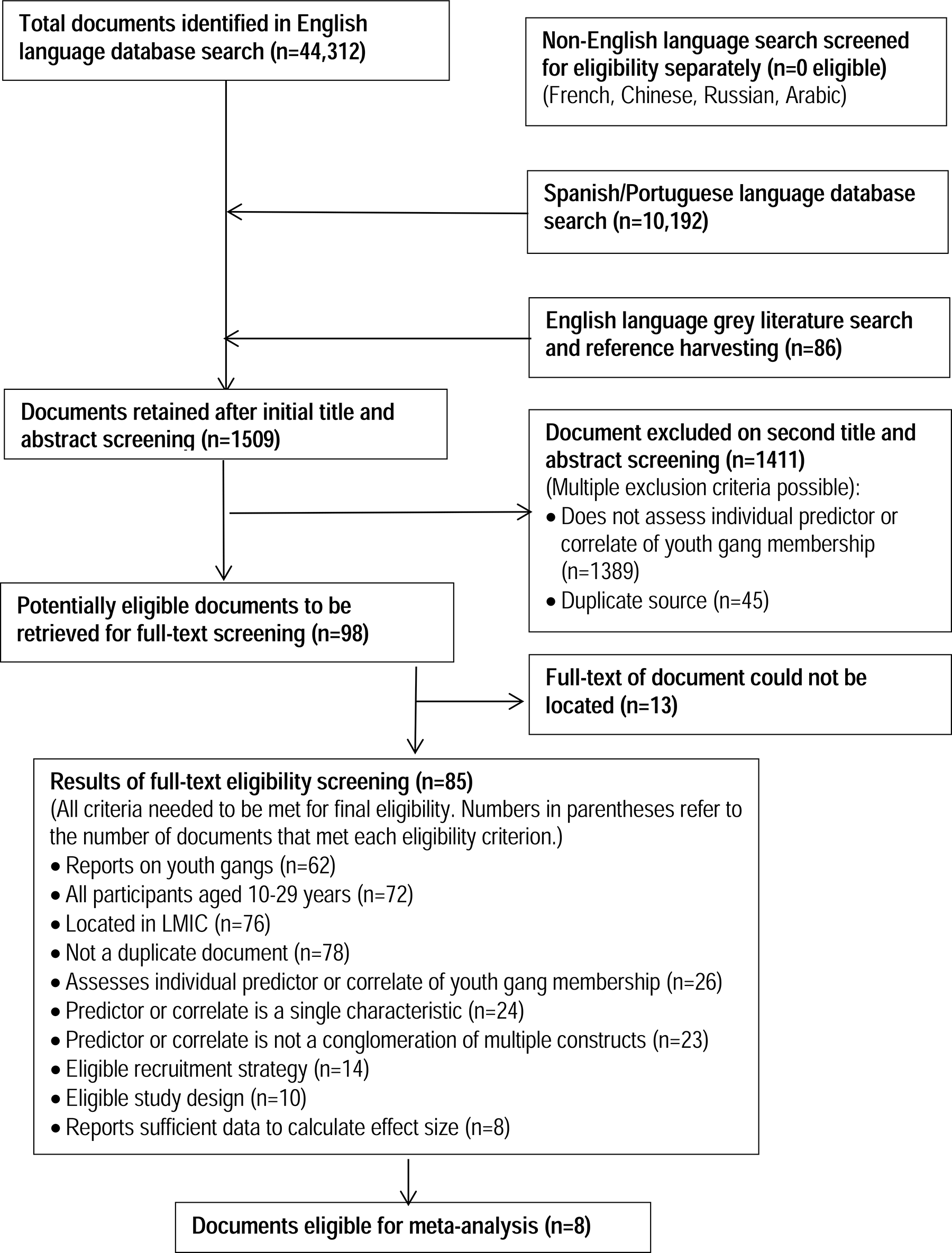
Flowchart of search and screening process
The searches in French, Russian, Arabic and Chinese did not generally allow easy export of results. Some databases allowed an export to Excel, whilst in others no direct export was possible and the search and screening processes were conducted simultaneously, in the manner of a grey literature search.
The titles and/or abstracts of documents were screened by a native speaker of the relevant language. The English language title and abstracts were screened by one author (YS). None of the records located in the French, Russian, Arabic or Chinese searches were deemed potentially eligible at the title and abstract screening stage. This first stage of title and abstract screening was to identify studies that would be eligible for a broader set of reviews, therefore the key screening criteria at this first stage were broader than those required to identify the subset of studies that examined the factors associated with youth gang membership.
After title and abstract screening, a set of 1509 studies was identified that were potentially eligible for inclusion in this review and each title and abstract was screened a second time. At this stage 1411 studies were excluded for one or more of the following criteria:does not assess individual factor associated with gang membership (n=1389); duplicate source (n=45).
The full text documents of the remaining 98 potentially eligible studies were searched for, and we succeeded in locating 85 documents. After full-text screening, 89 studies were excluded on one or more criteria, and nine documents were deemed eligible for inclusion. One study did not report sufficient detail to allow the calculation of effect sizes, leaving eight documents included in the analyses.
Included studies
Eight studies were screened as eligible for inclusion in the analyses. These studies were: Abramovay, M., Jacob Waiselfisz, J., Coelho Andrade, C. and das Gracas Rua, M. (1999) Gangs, crews, buddies and rappers: Youth violence and citizenship around the outskirts of Brasilia. Brazil: UNESCO Brazil. Celbiş, O., Karaoğlu, L., Eğri, M., and Özdemir, B. (2012). Violence among high school students in Malatya: A prevalence study. Turkish Journal of Medical Science, 42(2), 343-50. Katz, C. M., and Fox, A. M. (2010). Risk and protective factors associated with gang-involved youth in Trinidad and Tobago. Revista Panamericana de Salud Pública, 27(3), 187-202. Ohene, S. A. (2005). The clustering of risk behaviors among Caribbean youth. Maternal and Child Health Journal, 9(1), 91-100. Olate, R., Salas-Wright, C., and Vaughn, M.G. (2011). A cross-national comparison of externalizing behaviors among high-risk youth and youth gang members in Metropolitan Boston, Massachusetts, and San Salvador, El Salvador. Victims and Offenders: An International Journal of Evidence-based Research, Policy, and Practice, 6 (4), pp. 356-369. DOI: 10.1080/15564886.2011.607396. Olate, R., Salas-Wright, C., and Vaughn, M. G. (2012). Predictors of violence and delinquency among high risk youth and youth gang members in San Salvador, El Salvador. International Social Work, 55(3), 383-401. Pyrooz, D. C., and Decker, S. H. (2013). Delinquent behavior, violence, and gang involvement in China. Journal of Quantitative Criminology, 29:251-272. Webb VJ, Ren L, Zhao J, He N, Marshall IH (2011) A comparative study of youth gangs in China and the United States: definition, offending and victimization. Int Crim Justice Rev 21:225–242
As noted in Section 3.4.1, two papers used the same data for their analyses, yet largely reported different measures (Olate et al., 2011; Olate et al., 2012). Effect sizes from these papers were pooled before inclusion in any meta-analyses. One further eligible study is currently waiting for information from the author that may allow effect size calculations, and is therefore not included in the analyses at this time: Moravcova, E. (2012). Methodological aspects of gang membership: The case of the Czech Republic. Acta Universitatis Carolinae Philosophica et Historica, s. 69–83. ISSN 0567-8293.
Excluded studies
The majority of studies screened at the full-text stage did report on youth gangs (n=62), with the correct age of participants (n=72), and were located in LMICs (n=76). However, only 26 studies assessed the individual factors associated with youth gang membership, and only 10 included an eligible study design. There were seven duplicate documents identified at the full-text screening stage. A list of the excluded studies and their reason/s for exclusion is included in Section 7.
During the final peer-review process, two further studies were suggested by a reviewer. These documents were not readily available to the review team, but have been ordered and will be translated and assessed for eligibility in the next update.
Characteristics of included studies
A brief summary of the eight included studies is reported below, and in Table 5.
Characteristics of included studies
Data was not available to calculate effect sizes, therefore this study was not included in the meta-analyses.
Population
The included studies were conducted in Turkey, Trinidad and Tobago, the Caribbean, El Salvador, China, Czech Republic, and Brazil. Two of the papers compared the samples taken in the low- or middle-income country (El Salvador, China) with a sample taken from the USA; however the US sample is not used in this review.
The majority of the studies drew samples from schools (Celbis et al., 2012; Katz and Fox, 2010; Moravcová, 2012; Ohene et al., 2005; Pyrooz and Decker, 2013; Webb et al., 2011). The remaining studies drew samples from randomly selected residences (Abramovay et al., 1999) and a youth development organisation that dealt with high risk non-gang youth as well as gang-involved youth (Olate et al., 2011, 2012). School sampling means that the majority of the young people surveyed were under 18 years of age, with only the two non-school samples (Abramovay et al., 1999; Olate et al., 2011, 2012) representing youth in their early twenties.
Gang membership
In each study, gang membership or involvement was self-identified by the respondents. The precise categorisation of gang members differed across the studies. With the exception of Webb et al. (2011), the authors do not report whether they defined the term ‘gang’ to the participants prior to or whilst asking about gang membership
Three studies reported current gang membership (Celbis et al., 2012; Katz and Fox, 2010; Webb et al., 2011). Celbis et al. (2012) used the category of ‘gang member’ but did not report how they applied this category. Webb et al. (2011) used a three question index to categorize gang members: “Some people have a certain group of friends that they spend time with, doing things together, or just hanging out. Do you have a group of friends like that?”; “Do people in your group actually do illegal things together?”; and “‘Do you consider your group of friends a gang?”. If the young person responded yes to all items, they were categorized as a gang member. Katz and Fox (2010) used two questions (“Have you ever belonged to a gang;” and “Think of your four best friends. In the past year, how many of your best friends have been a member of a gang?”) to categorize young people into one of four groups: current gang members”; “former gang members”; “gang associates”; and “non-gang members.” Both current and former gang members were asked further questions about the organizational structure of the gang as validation. For this review we only use the category of current gang members.
Five studies reported a combined measure of gang involvement as either current or former gang membership (Abramovay et al., 1999; Ohene et al., 2005; Olate et al., 2011, 2012; Pyrooz and Decker, 2013). Three studies used one question to categorize gang-involved youth: Ohene et al. (2005) defined gang involvement as an affirmative answer to the question “Have you ever belonged to a gang?”, and Olate et al. (2011, 2012) used a similarly worded question “Have you ever participated in a gang?”. Abramovay et al. (1999) categorize both current and former gang members as ‘gang involved’ but did not report the categorisation process. Finally, Pyrooz and Decker (2013) used two questions to differentiate between non-gang members, current gang members and former gang members: “Do you consider your group of friends to be a gang?” and “If you are not now, have you ever been in such a gang?”. The data available for inclusion in this review aggregates the current and former gang members as ‘gang involved’.
One study (Moravcová, 2012) used the International Self-Report Delinquency study to test three different definitions of youth gang membership: the Eurogang definition, self-identification, and the Mokken scale. A respondent was identified as a gang member using the Eurogang definition if they answered yes to these four questions: 1. Does this group spend a lot of time together in public places like the park, the street, shopping areas, or the neighborhood? 2. How long has this group existed? 3. Is doing illegal things (against the law) accepted by or okay for your group? 4. Do people in your group actually do illegal things (against the law) together?”A respondent was identified as a self-identified gang member if they responded yes to the question “Do you consider your group of friends to be a gang?”Finally, a respondent was identified as a gang member using the Mokken scale if they answered yes to each of the Eurogang questions and the self-identification question.
Study design and analysis
Only five studies aimed to identify associations between gang membership and risk or protective factors (Abramovay et al., 1999; Katz and Fox, 2010; Moravcová, 2012; Pyrooz and Decker, 2013; Webb et al., 2011). The remainder of the studies focused on identifying the factors associated with youth violence or other externalising behaviours (Celbis et al., 2012; Olate et al., 2011, 2012), or early sexual activity (Ohene et al., 2005), and used gang membership as a correlate. Therefore, these latter four studies did report sufficient data to allow effect sizes to be calculated for the associations with youth gang membership.
The majority of studies reported data as either the mean or proportional differences between gang-involved and non-gang-involved youth across the characteristics of interest (Abramovay et al., 1999; Celbis et al., 2012; Katz and Fox, 2010; Moravcová, 2012; Olate et al., 2011, 2012; Pyrooz and Decker, 2013; Webb et al., 2011). Ohene et al. (2005) reported odds ratios and Olate et al. (2012) reported a correlation matrix. Moravcová (2012) conducted a multinomial regression model to assess the associations of individual, social, and behavioural factors with the different gang definitions.
This is not to say that the overall analyses in the studies were of low quality; rather, that the statistical analyses conducted in the papers were not always focused on explaining gang membership. Therefore the data that were available to extract were largely bivariate relationships reported in descriptive statistics. The studies also conducted qualitative analyses (Abramovay et al., 1999), logistic regression analyses (Celbis et al., 2012; Olate et al., 2012; Pyrooz and Decker, 2013), multinomial regression (Katz and Fox, 2010), survival analyses (Ohene et al., 2005), t-tests and chi-square tests of significance (Olate et al., 2011, 2012; Webb et al., 2011).
Risk of bias in included studies
Each of the included studies was assessed for study quality using the eight questions reported in Table 6 below. Each item is answered Yes (Y), No (N) or Unclear (UC).
Risk of bias in included studies
The source populations were described in replicable detail in eight out of nine studies; however the population inclusion and exclusion criteria were not fully listed in five of the nine studies. There is also an issue with regards to sampling. As discussed in section 4.2, the majority of the studies were based on school samples (Celbis et al., 2012; Katz and Fox, 2010; Moravcová, 2012; Ohene et al., 2005; Pyrooz and Decker, 2013; Webb et al., 2011). Each of the samples included both gang-involved and non-gang-involved youth; however these sampling approaches may limit the generalisability of the results. Sampling from schools ensures that only those young people who are still engaged in school will be identified. School sampling also limits the age range under consideration, restricting participants to those under 18, and preventing generalizability to young adults.
None of the studies used a prospective sample. Combined with the fact that none of the studies used a retrospective approach to questioning, this means that none of the studies can truly speak to the predictors of youth gang membership. Rather, the included studies can only speak to the correlates of gang membership, as each study was cross-sectional in design. This introduces a large risk of bias, and it is not at all possible to make causal attributions with these data, except for in the case of generally time-invariant variables such as sex.
As described in section 4.2.2, while the majority of studies were clear in how they categorized gang membership or gang involvement, two studies gave no detail (Abramovay et al., 1999; Celbis et al., 2012). The main issue with how gang membership was classified in these studies is that the term ‘gang’ was overwhelmingly undefined (with the exception of Webb et al. (2011), Katz and Fox (2010) and Moravcová (2012) who asked follow-up questions to validate gang status). One concern is that a lack of a guiding definition may mean that, in some instances, the investigators and the participants may have a different understanding of what a gang is, particularly when the research is conducted cross-culturally. Whilst, Pyrooz and Decker (2013) specifically examined this question and concluded that self-nomination was feasible in the Chinese context, the lack of specificity may pose an issue in other cultural contexts. In addition, the studies were split between those that examined the correlates of current youth gang membership, and those that examined the correlates of both current and past gang membership. As the number of studies was very small, we have chosen to collapse these categories in our syntheses; however, we acknowledge that combining these categories may introduce bias.
Five of the studies described the correlates in replicable detail, however four of the studies did not adequately define the correlate. This introduces difficulties for both synthesis and interpretation. The majority of correlates were not based on validated measures, but for those that were well described there was face validity. Given the types of correlates reported, the lack of validated measures is not problematic for this review; however, future studies that examine psychological correlates in particular would benefit from using validated measures.
Selective analysis may have been an issue within these studies as it was not clear if the analyses reported were designed a priori or post hoc. Without further information we cannot evaluate the impact that this may have on the results.
As discussed in section 4.2.3, not all of the included studies specifically aimed to assess the correlates or predictors of youth gang membership. Consequently, the data for this review have been mostly drawn from bivariate relationships reported as descriptive statistics. Whilst this simplifies the interpretation of the associations, it introduces bias, as the non-gang samples are not matched to the gang samples, so the associations seen may be due to some other selection effects.
In sum, whilst these studies were each of good quality, there are some key considerations that may introduce bias and limit the generalizability of the results of this review. We therefore urge caution in interpretation.
Synthesis of results
The synthesis is based on the eight eligible documents where we were able to extract the necessary data to calculate effect sizes. Moravcová (2012) was not able to be included due to a lack of detail. There were a total of 189 outcomes identified, classified as either a predictor or correlate, across five domains. Table 7 shows the distribution of the 189 outcomes by domain and classification of the factor.
Distribution of factors by domain (*=classified as predictor; all other factors are classified as correlates)
Due to the presence of zero counts in some cross-tabulations of data, effect sizes could not be extracted for 26 of the factor-outcome pairs. The remaining 163 outcomes cannot all be considered independent, as in many cases one study contributes multiple effect sizes that can be applied to the one analysis. As explained in section 3.4.2, in these instances the non-independent effects are first synthesized before being included in the final analyses. This process resulted in 85 independent effect sizes that were synthesized across 37 separate analyses. Whilst 85 effect sizes may appear to be a large number, due to the large number of dependent effect sizes and separate analyses, there is only a maximum of six independent effect sizes contributing to any one analysis. Forty of the 85 independent effect sizes relate to the individual domain, 17 to the family domain, 17 to the school domain, seven to the community domain, and four to the peer domain.
The classification of a factor as either a predictor or a correlate was made according to the method described in section 3.1.1.3, whereby only factors that were time-invariant or very clearly measured prior to the onset of gang membership, were classified as predictors. All other factors, including those where the timing of the measure was ambiguous, were classified as correlates. Only gender and ethnicity are classified as predictive factors, and all other factors are classified as correlates.
Notes for interpreting forest plots
Where there is more than one effect size reporting on a conceptually similar outcome, the results are presented as a forest plot, showing odds ratios and 95 per cent confidence intervals for each of the studies, as well as for the overall summary (shown as a diamond). Where only one study contributes effect sizes, the results are discussed in text, but no forest plot is presented.
Where the summary confidence intervals do not overlap one (the vertical line on the forest plot), there is a statistically significant association between the factor of interest and youth gang membership.
The horizontal axis is marked “less gang” for values less than one, and “more gang” for values greater than one, an abbreviation for “reduced odds of gang membership” and “increased odds of gang membership” respectively.
If the study confidence intervals are much wider than is practical to show on the forest plot, the confidence interval is truncated and marked with an arrow.
Where a study provides more than one conceptually similar effect size, as discussed in Section 3.4.2, those effects are first synthesized and the summary data is used in any subsequent meta-analysis. Where this is the case, the number of effect sizes that have undergone preliminary synthesis is indicated against that study on the forest plot.
Individual correlates
The included studies provided effect sizes to synthesize the associations between gang membership and 11 individual factors. Apart from gender and ethnicity, which were classified as predictors, none of these factors were time-invariant or measured prior to onset of gang membership, so it must be cautioned that these associations are not causal.
Age
Four studies report on the association between age and gang membership. The studies measure the current age of the participant, not age at onset of gang membership, and consequently age is classified as a correlate.
Two studies (Abramovay et al., 1999; Webb et al., 2011) found a negative but not statistically significant relationship between age and gang membership, whilst the other two studies (Pyrooz and Decker, 2013; Olate et al., 2012) found a positive but not statistically significant relationship. Three of the studies measure age in years, either presenting the mean and standard deviation (Pyrooz and Decker, 2013; Olate et al., 2011) or a frequency table of age by gang membership with categories from 12 years to 16+ years (Webb et al., 2011). One study (Abramovay et al., 1999) measured age with two categories, comparing ages 18 to 24 to the proportion who are aged 15 to 17 years. The pooled estimate suggest a non-significant relationship (OR: 1.06, LCL: 0.74, UCL: 1.50). There is no significant heterogeneity amongst the studies (I2: 55%, p=0.083; τ2=0.068). Although the results of Moravcová (2012) could not be included in the analyses, their study also showed no clear association between age and gang membership.
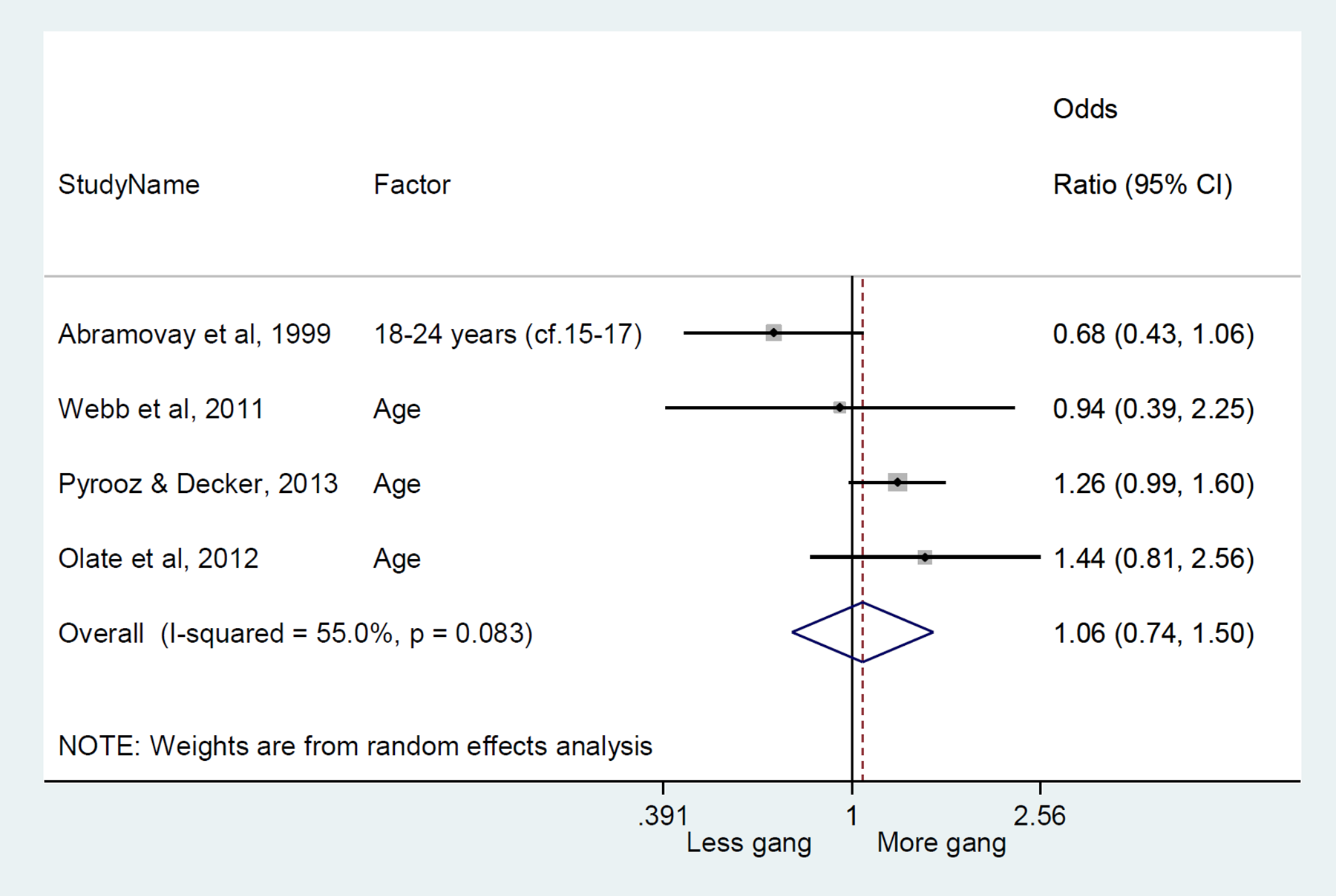
Age
Gender
Five studies examined the relationship between gender and gang membership. As gender is generally considered to be a time-invariant factor, it is classified as a predictor for the purposes of this review, and male gender is categorized as a risk factor.
One study (Webb et al., 2011) found a non-significant positive association between gang membership and being male, whilst the other four studies found a significant positive association (Pyrooz and Decker, 2013; Celbis et al., 2012; Olate et al., 2012; Abamovay et al., 1999). There is however significant heterogeneity of effects, with a much stronger effect (a six-fold increase in odds) found in Olate et al., 2012 than in the other studies, where the increase in the odds of gang membership for males ranges from 33 per cent to 91 per cent (I2: 62.2%, p=0.032; τ2=0.124). The pooled estimate suggests an overall positive association between the male gender and gang membership, significant at the 95 per cent confidence level (OR: 2.04, LCL: 1.35, UCL: 3.08). Overall, males have twice the odds of reporting gang membership than females. Although the results of Moravcová (2012) could not be included in the analyses, their study showed no clear association between the measures of gang membership and gender.
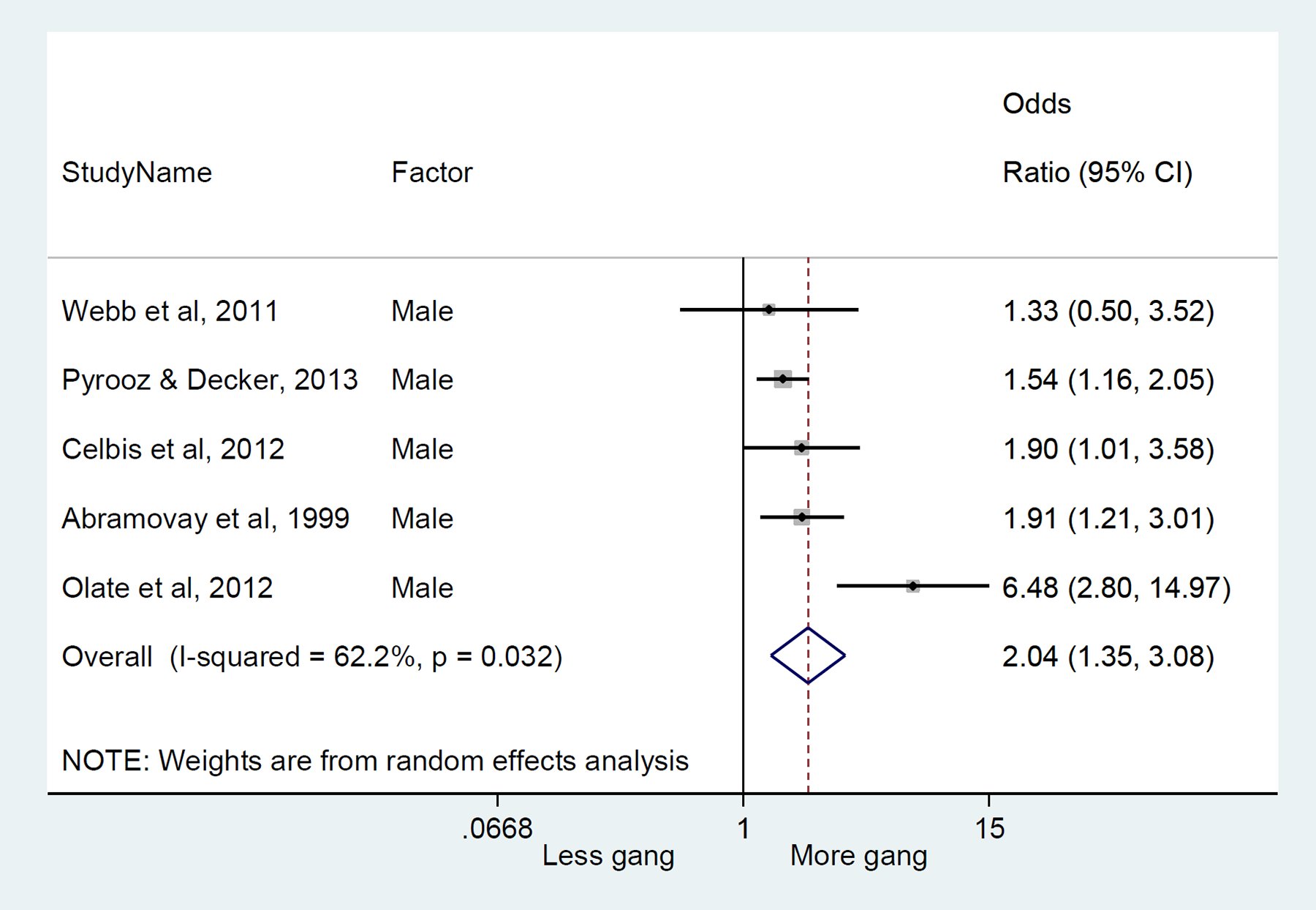
Gender
Ethnicity
One study examined the association between minority ethnicity and youth gang membership in a Chinese sample (Pyrooz and Decker, 2013). As this is a time-invariant factor, minority ethnicity is also classified as a predictor. There was no significant association between Han ethnicity and youth gang membership in this study (OR: 2.05, LCL: 0.76, UCL: 5.55).
Employment
Two studies contributed multiple measures of employment (Abramovay et al., 1999; Olate et al., 2011). As these estimates come from the same sample, they have been pooled before including in the final synthesis across studies. Abramovay et al. (1999) measured employment in three ways, none of which were individually statistically significant: formal work documentation (negative relationship); work experience (positive relationship); and presently employed (positive relationship). The pooled estimate of the relationship between employment and gang membership for these three measures is positive, but not statistically significant. Olate et al. (2011) measured employment in two ways, both of which were individually positive and statistically significant relationships: employed; and employed full time.
The overall estimate for the two studies’ pooled measures of employment and gang membership is positive and statistically significant (OR: 1.97, LCL: 1.07, UCL: 3.63). There is no significant heterogeneity in the association between employment and gang membership (I2: 9.5%, p<0.293; τ2=0.019). Overall, these indices of employment almost double the odds of youth gang membership, and therefore, perhaps counterintuitively, appear to be risk factors for gang membership.
Employment, of course, need not be legitimate (as Abramovay's negative relationship between formal work documentation and gang membership illustrates). An alternative explanation is that employment, and full-time employment in particular, is more likely to be available to those who are no longer in full-time education. The relationship between employment and gang membership may therefore be indirect and mediated by poor school attendance or attachment, which is a significant correlate of gang membership (see Section 4.3.6.5).
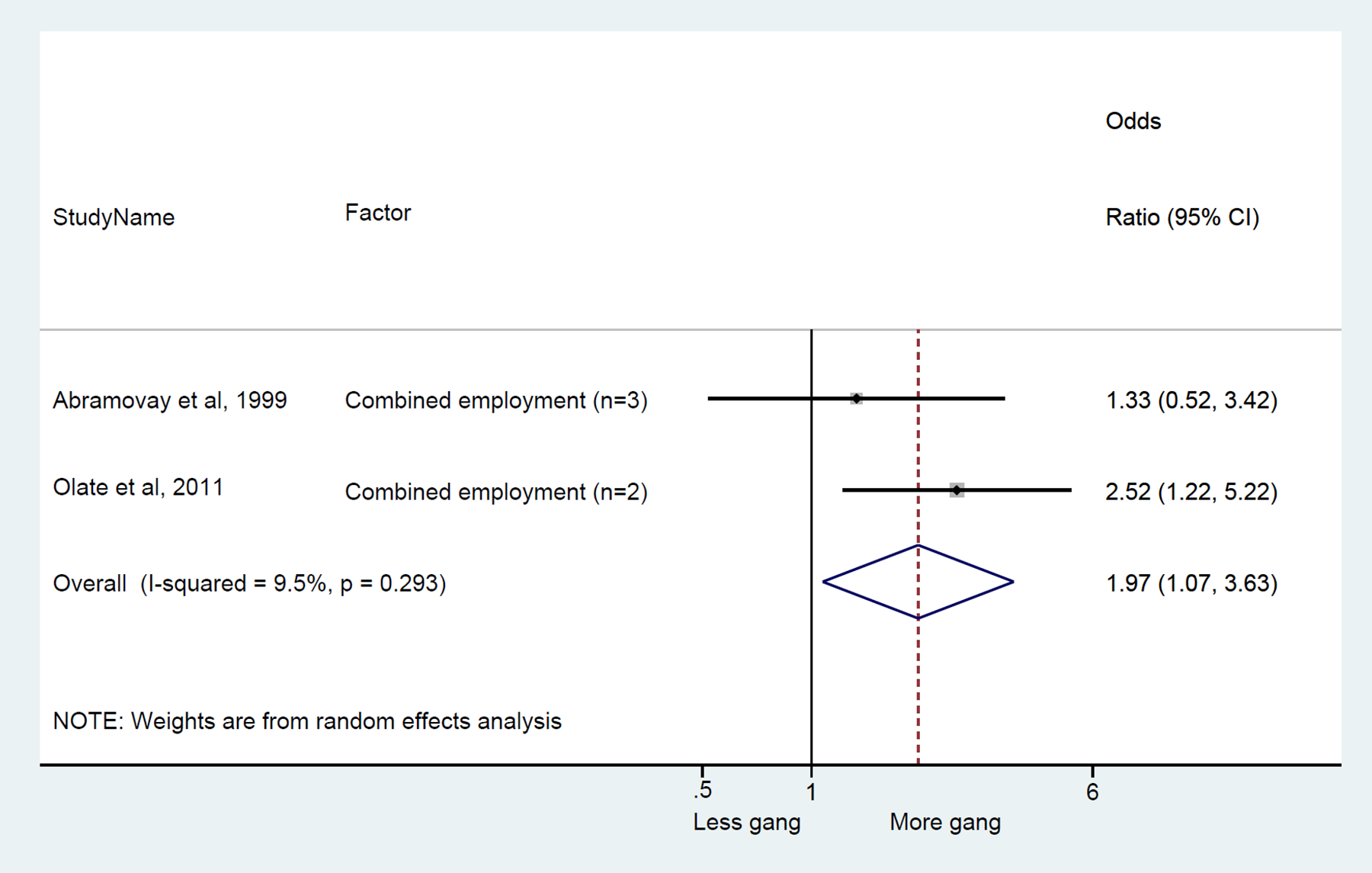
Employment
Delinquency
Three studies examined a total of six measures of general delinquency (Katz and Fox, 2010; Olate et al., 2011; Pyrooz and Decker, 2013). Delinquency is treated as a correlate, as it is generally measured concurrently with gang membership. In the one estimate of the association between early initiation of antisocial behaviour and youth gang membership (Katz and Fox, 2010), the study asks the age of initiation, but does not specify whether this early initiation occurs prior to, or concurrently with, the onset of gang membership. Therefore this effect is also treated as a correlate.
Katz and Fox (2010) measure early intitiation of antisocial behaviour, and Pyrooz and Decker (2013) report a delinquency index. Olate et al. (2011) report four measures of delinquent behaviour: arrest, number of arrests, legal problems, and a delinquency index. All six individual estimates suggest a positive and statistially significant relationship.
The overall estimate suggests delinquency is associated with more than three and a half times the odds of reporting youth gang membership (OR: 3.65, LCL: 1.89, UCL: 7.04). There is significant heterogeneity between studies (I2: 91.3%, p<0.001; τ2=0.306) with early initiation of antisocial behaviour showing a weaker association with gang membership than the other measures of delinquency.
Although the results of Moravcová (2012) could not be included in the analyses as effect sizes could not be calculated, non-gang involved youth had lower prevalence than gang-involved youth for each of 11 forms of delinquency (shoplifting, vandalism, group fighting, carrying weapon, drug dealing, assault, robbery/extortion, car break, burglary, car theft, and bicycle theft). Gang-involved youth also showed higher levels of leisure time risky behavior than non-gang involved groups, regardless of gang definition. There was no clear effect of gang membership on truancy behaviours, with truancy only associated with Eurogang definition but not self-identification or Mokken scale.
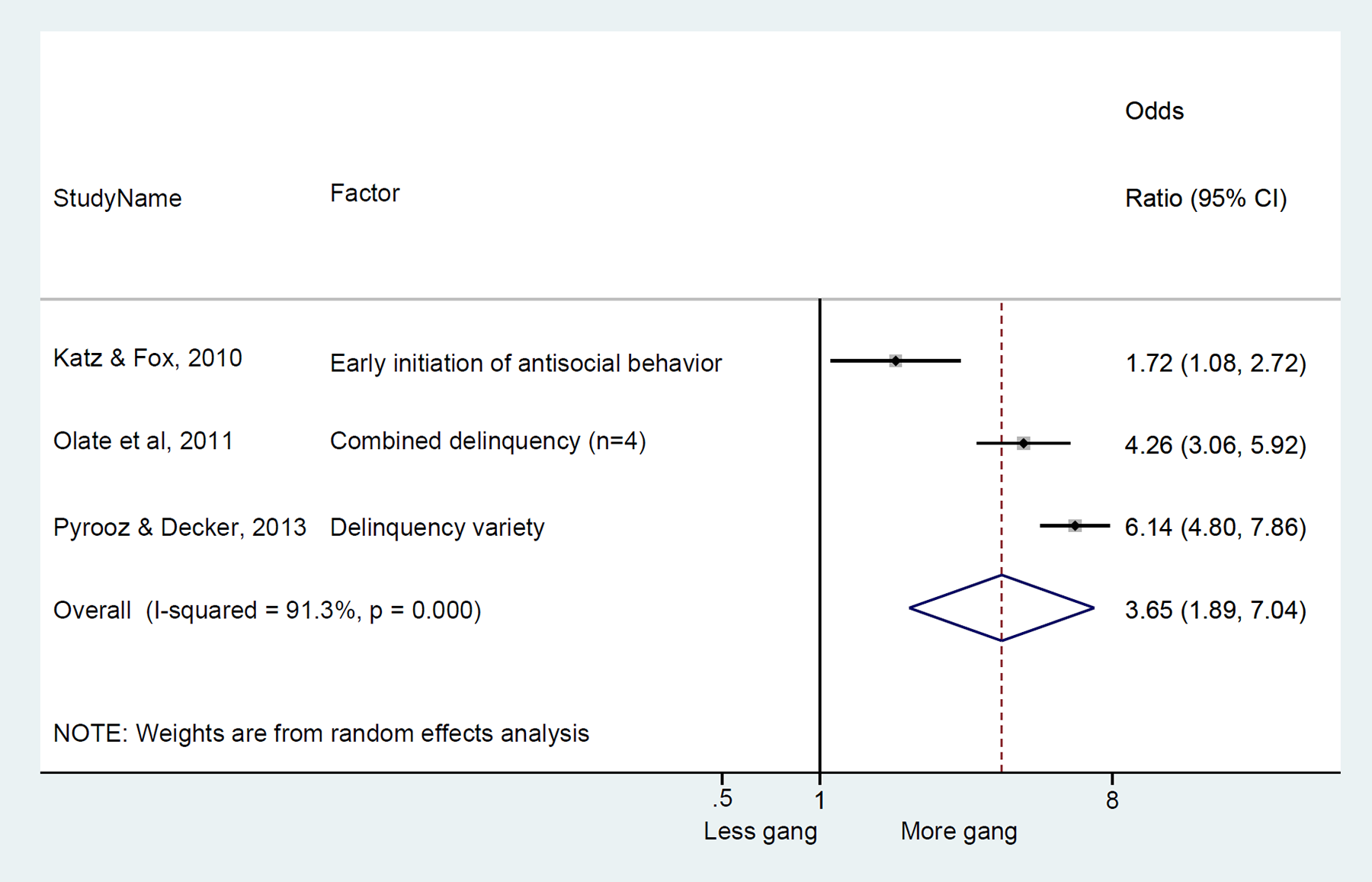
Delinquency
Violent delinquency
Six documents provided a total of 17 estimates of the association between various forms of violent delinquency and gang membership (Abramovay et al., 1999; Ohene, 2005; Olate et al., 2011, 2012; Pyrooz and Decker, 2013; Webb et al., 2011). Abramovay (1999) reported seven measures that were categorized as involvement in violence: sexual aggression, fights in traffic jams, robberies/mugging, fights over lovers, frisk, physical aggression, and other problems with police. All measures showed a positive relationship with gang membership, and all but the first three listed were statistically significant. Ohene (2005) reported two measures of violence: weapon carrying for males, and separately for females. Both were statistically significant positive effects. Olate et al. reported two measures in their 2011 paper: a physical aggression index and violence, and three measures in their 2012 paper: carrying weapons, attack with a weapon, and hitting someone. All were statistically significant positive effects. Pyrooz and Decker (2013) reported one measure of violent delinquency, which was a significant positive effect. Each relationship was positive and all but three of these effects were individually significant. Webb et al. (2011) reported two measures: lifetime prevalence of group fighting (positive but not significant); and lifetime prevalence of weapon carrying (positive and significant). The estimates from each study other than Ohene (2005) were synthesized prior to being included in the final meta-analysis.
The overall estimate demonstrates that self-reported violent delinquency is associated with an almost six-fold increased odds of youth gang membership (OR: 5.83, LCL: 5.12, UCL: 6.63), and there is no significant heterogeneity amongst the effects (I2: 48.1%, p=0.086; τ2=0.010).
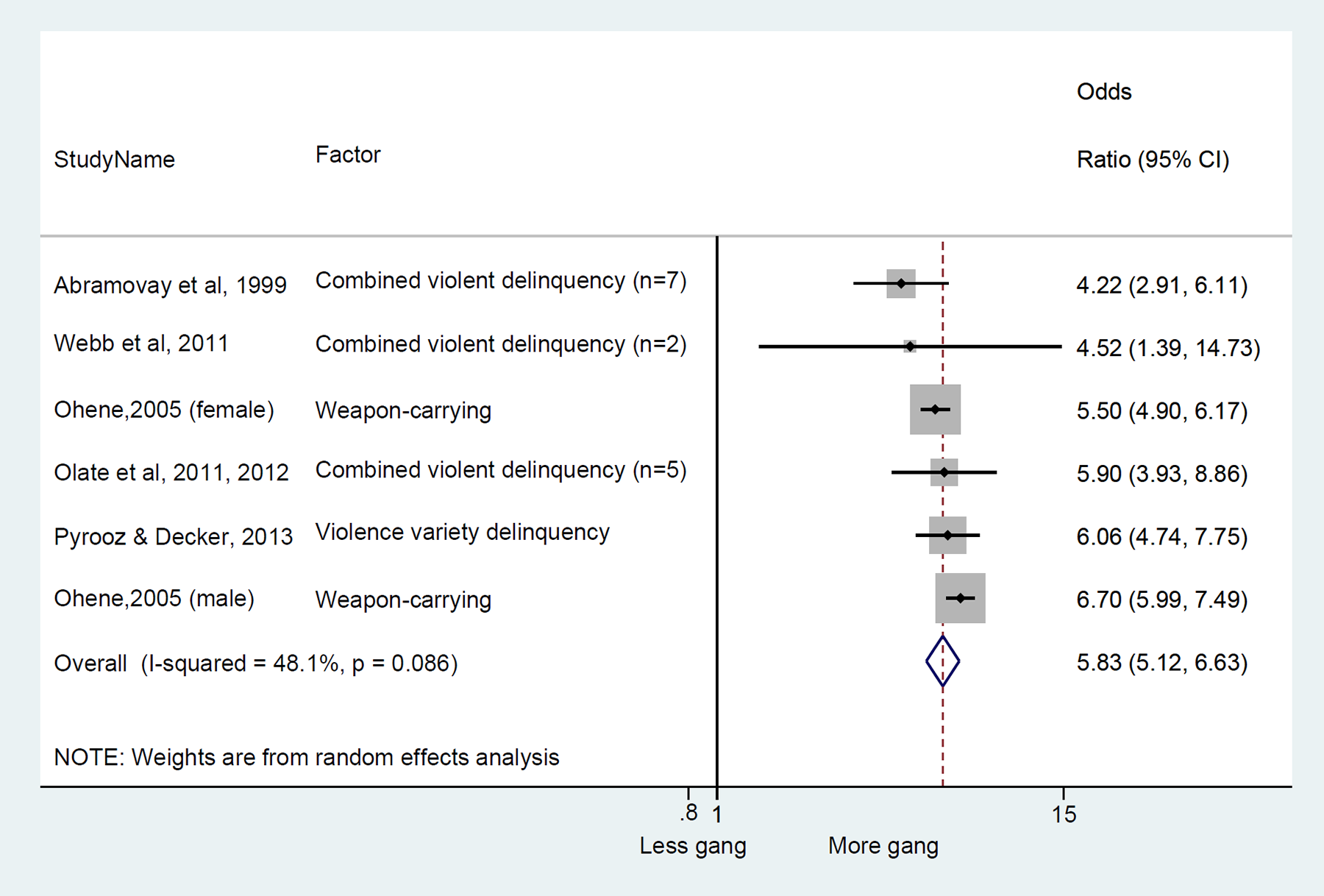
Violent delinquency
Non-violent delinquency
Three studies provide estimates for nine measures of non-violent delinquency (Olate et al., 2012; Pyrooz and Decker, 2013; Webb et al., 2011). Olate et al. (2012) report a positive association between gang membersip and three different measures of non-violent delinquency (selling marijuana; buying or selling stolen items; and stealing a valuable item) Pyrooz and Decker (2013) report a positive association with a general measure of non-violent delinquency. Finally, Webb et al. (2011) also find a positive association between gang membership and five measures of non-violent delinquency (lifetime prevalence of shoplifting; vandalism; pick pocketing; and burglary, and one measure of last year prevalence: vandalism). Multiple estimates from one study were synthesized before being combined in an overall meta-analysis.
The overall estimate suggests that youth who report non-violent delinquency have more than four and a half times the odds of also reporting youth gang membership. Non-violent delinquency is significantly associated with gang membership (OR: 4.67, LCL: 3.80, UCL: 5.76), and there is no significant heterogeneity across studies (I2: 0.0%, p=0.502; τ2=0.000).
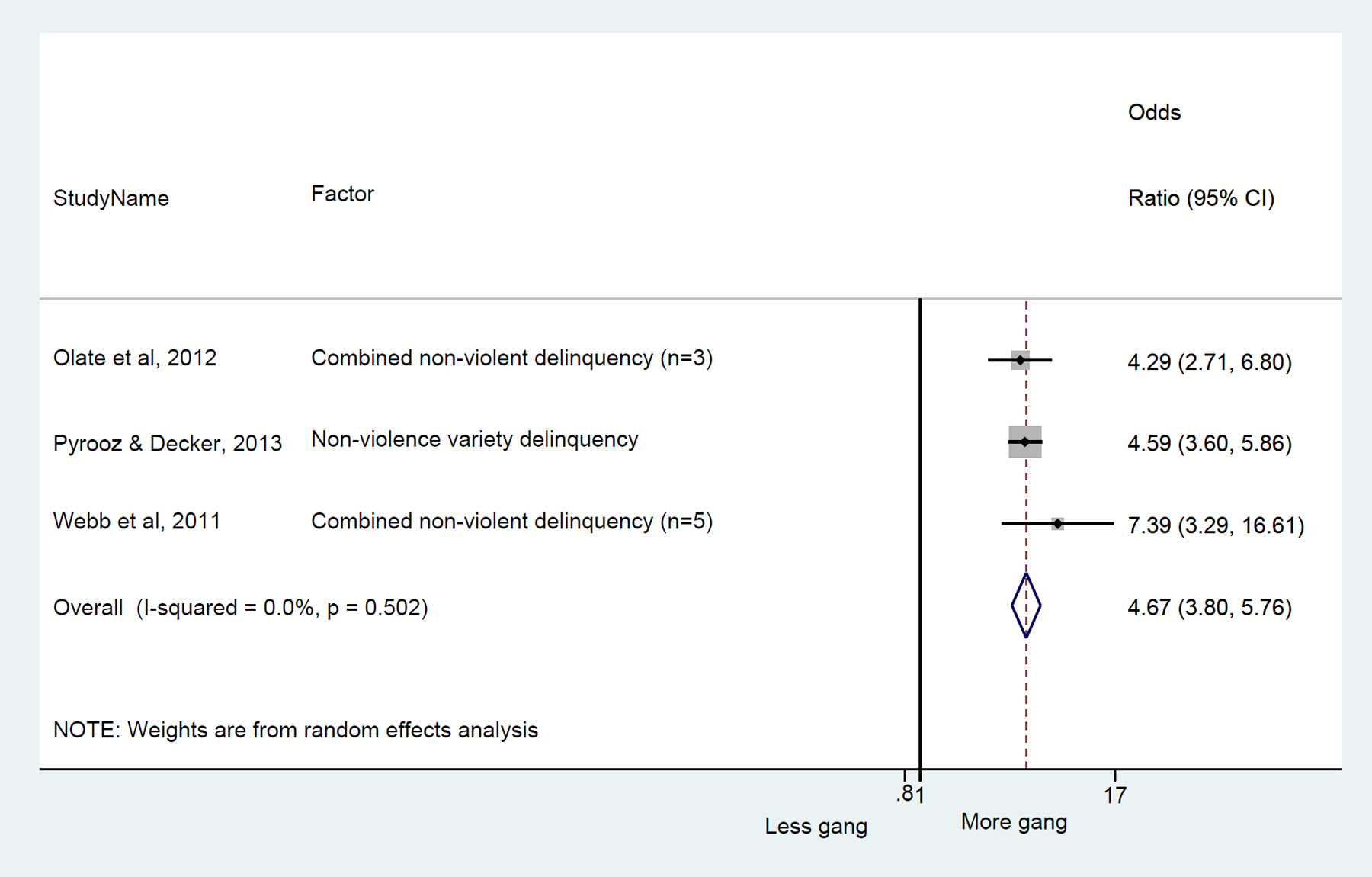
Non-violent delinquency
Psychological factors
Three of the included studies report psychological risk or protective factors that have opposing relationships with gang membership, each of which is internally homogeneous. Three studies contributed estimates for measures of psychological factors (Katz and Fox, 2010; Olate et al., 2012; Pyrooz and Decker, 2013). Katz and Fox (2010) report one measure: belief in a moral order, which has a significant negative association with youth gang membership and is conceptualized as a protective factor. Olate et al. (2012) report three measures: impulsivity; empathy; and future orientation (or hope). Impulsivity shows a significant positive association and is conceptualized as a risk factor. Empathy shows a significant negative association and future orientation show a non-significant negative association, and both are conceptualized as protective factors. Pyrooz and Decker (2013) report a measure of low self-control, which shows a significant positive association and is conceptualized as a risk factor. To avoid issues of independence, we first calculated overall estimate from the two protective factors contributed by Olate et al., 2012 (empathy and future orientation) before including in the meta-analysis.
Youth who report low self-control or impulsivity have approximately 50 per centgreater odds of also reporting youth gang membership than those without these psychological risk factors (OR: 1.51, LCL: 1.21, UCL: 1.88). There is no significant heterogeneity between these studies (I2: 0.0%, p=0.520; τ2=0.000). Conversely, youth who report empathy, future orientation, or a belief in the moral order have approximately 40 per cent lower odds of reporting youth gang membership than those without these psychological protective factors (OR: 0.57, LCL 0.42, UCL 0.77). Again, there is no significant heterogeneity between these studies (I2: 0.0%, p=0.622; τ2=0.000).
Although the results of Moravcová (2012) could not be included in the analyses, gang-involved youth showed lower self-control and weaker personal morality than non-gang involved youth, across all three definitions of gang involvement.
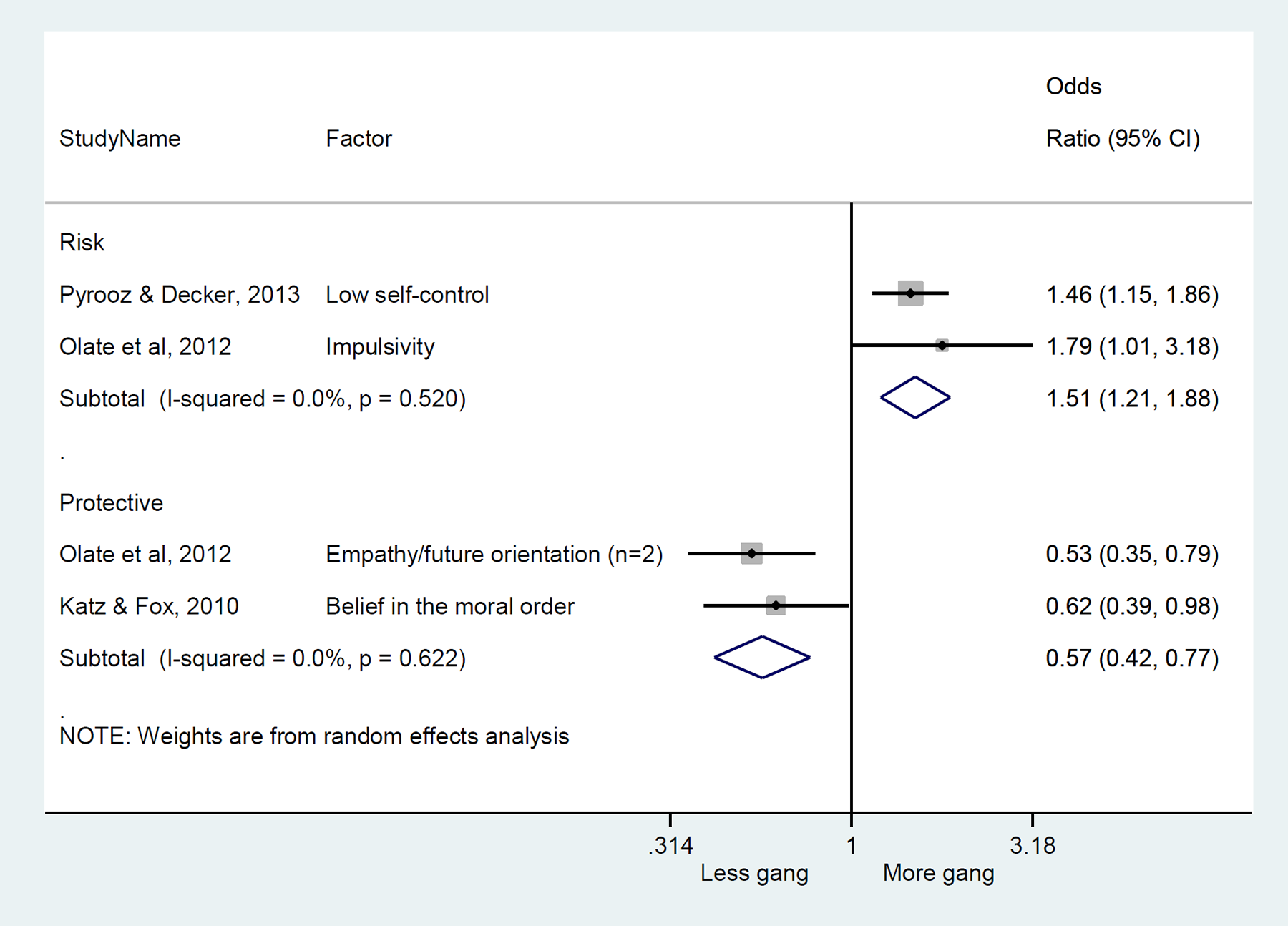
Psychological factors
Victimisation
One study (Webb et al., 2011) provided estimates of four different measures of victimization: robbery/extortion; bullying; theft; and assault. Once again, this factor is treated as a correlate as the studies do not explicitly measure victimization prior to onset of youth gang membership. Robbery/extortion victimisation showed a significant positive effect, theft and assault victimization showed a non-significant positive effect, and bullying victimisation showed no effect. Combining the estimates from this study suggests more than twice the odds of gang membership for those that report victimization, compared to those who do not (OR: 2.39, LCL: 1.00, UCL: 5.71). There was no significant heterogeneity amongst the effects (I2: 31.1%, p=0.226; τ2=0.248).
Sexual behaviour
There were two studies that provided a total of five estimates of association between different sexual behaviours and gang membership. We classify these as correlates, as there is no clear reporting of sexual behaviour prior to onset of youth gang membership. Three of these effects can be considered risk factors. Ohene et al. (2005) report two measures of sexual behaviour risk factors: early sexual initiation reported separately for males and females, both of which show a significant positive association with youth gang membership. Olate et al. (2011) report one measure: having engaged in sexual intercourse, which also shows a significant positive association. Overall, the risk factors show a significant relationship with gang membership, with the pooled effect suggesting sexual activity and early sexual initiation is associated with triple the odds of gang membership (OR: 3.29, LCL: 3.00, UCL: 3.62), with no significant heterogeneity between studies (I2: 18.5%, p=0.293; τ2=0.001).
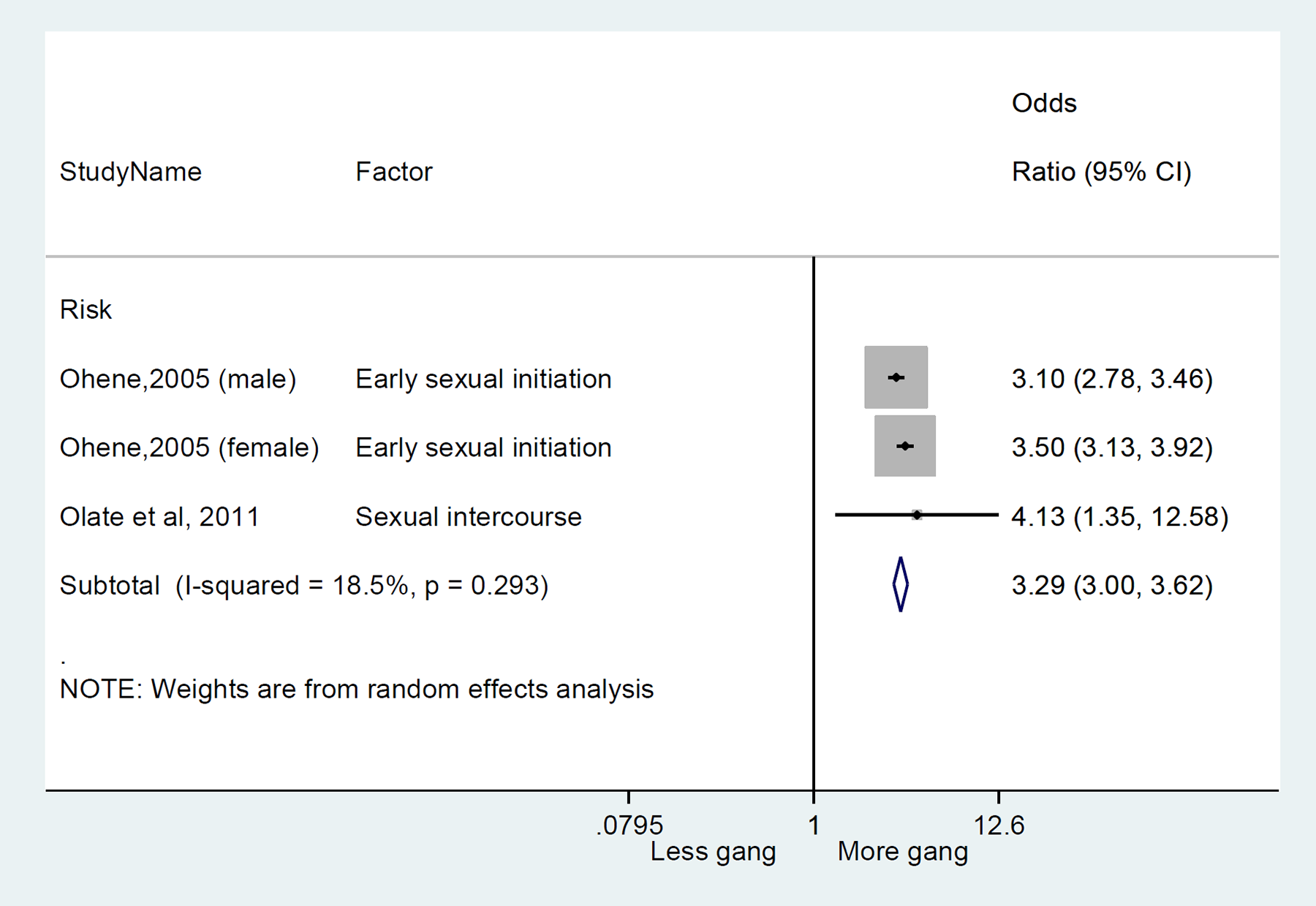
Sexual behaviour risk factors
Two sexual behaviour protective factors were reported by Olate et al. (2011): age at first sexual intercourse; and condom use. These measures are considered protective factors as they may be to be associated with less impulsivity. Age at first intercourse shows a significant negative relationship, whilst condom use shows no association. Combining these two estimates does not show an association with youth gang membership (OR: 0.67, LCL: 0.28, UCL: 1.60), although there is significant heterogeneity between these two measures (I2:80.2%, p=0.025; τ2=0.318).
Alcohol and soft drugs
Four studies provided data on the use of alcohol and soft drugs, all of which individually showed a significant positive association between the use of alcohol, marijuana and tobacco, and youth gang membership (Ohene, 2005 (data reported separately for males and females); Olate et al., 2011; Katz and Fox, 2010; Abramovay et al., 1999). The overall pooled effect suggests alcohol and soft drugs are associated with more than triple the odds of gang membership (OR: 3.23, LCL: 2.57, UCL: 4.07). There results of the studies are highly homogeneous (I2: 0.0%, p=0.735; τ2=0.000).
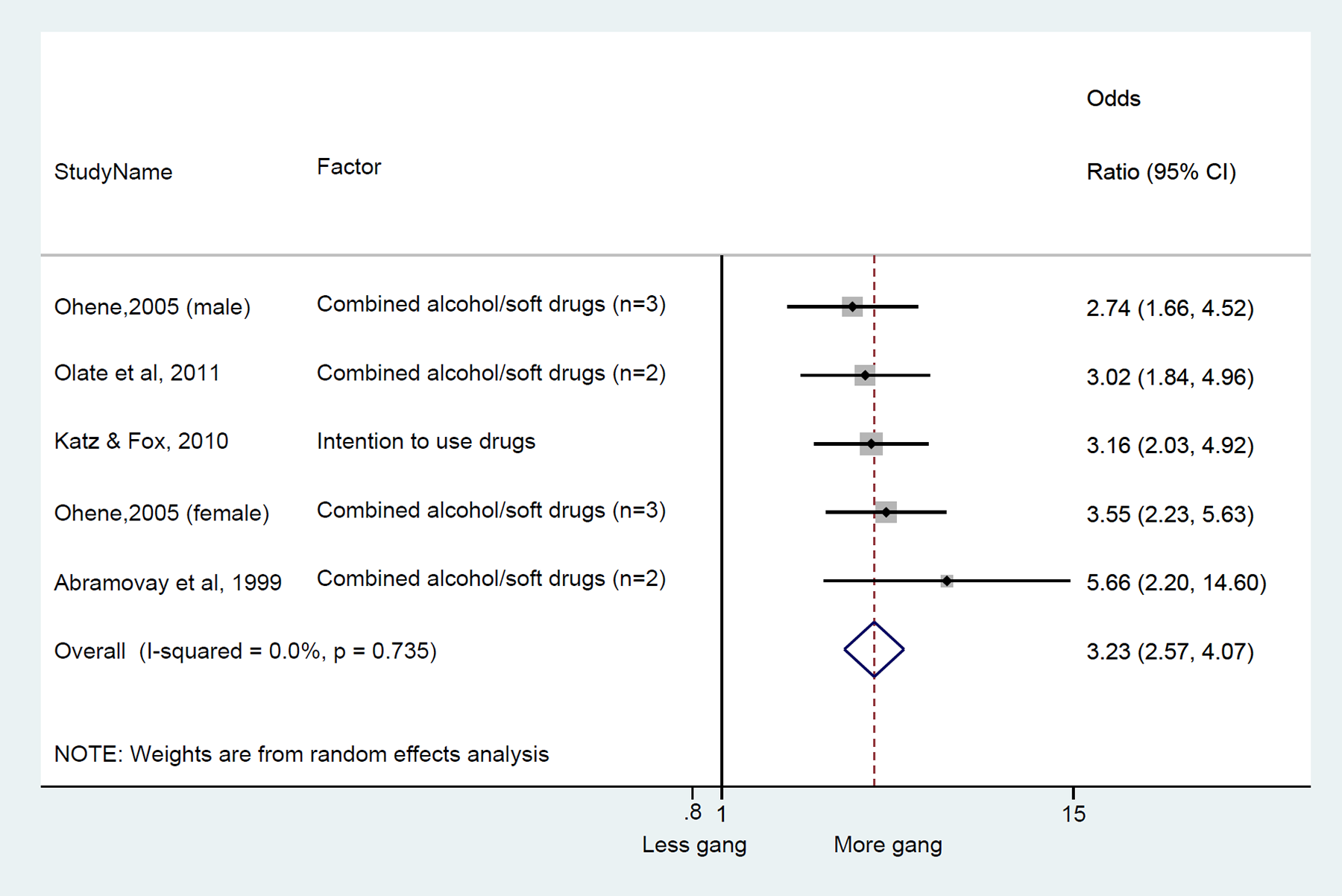
Alcohol and soft drugs
One study (Olate et al., 2011) reported two measures that could be considered protective: the age when the respondent first had five alcoholic drinks, and the age they first used marijuana. Both individual effects are negative, although only alcohol is significantly so, with youth gang members beginning to drink approximately eight months earlier than non-gang members. The pooled effect is a non-significant negative relationship (OR: 0.69, LCL: 0.42, UCL: 1.13). There results of the studies are heterogeneous (I2: 45%, p=0.178; τ2=0.057).
Hard drugs
One study (Abramovay et al., 1999) reported effect sizes for the relationship between youth gang membership and five types of hard drugs: crack, pills, glue, cocaine, and merla. Each drug had an individually positive relationship with gang membership, and for all except crack this was a significant association. The pooled effect is highly homogeneous (I2: 0.0%, p=0.659; τ2=0.000), showing that there was a consistent association across all surveyed drug types. The pooled effect is also stronger than that seen with alcohol and soft drugs, with hard drugs being associated with almost five times the odds of youth gang membership (OR: 4.80, LCL: 3.06, UCL: 7.52).
Peer correlates
Data were available for two constructs: delinquent peers and pro-social peers. Each of these factors were classified as correlates.
Delinquent peers
Three studies measured the delinquency of peers (Katz and Fox, 2010; Olate et al., 2012); Pyrooz and Decker, 2013).Katz and Fox (2010) reported three measures of peer delinquency: peer alcohol use, peer drug use, and peer antisocial behaviour. Peer alcohol use was positively, but not significantly, associated with youth gang membership, whilst peer drug use and antisocial behaviour were both positively and significantly associated with youth gang membership, as was the pooled effect from this study. Olate et al. (2012) and Pyrooz and Decker (2013) both reported general measures of peer delinquency, and both relationships were positive and statistically significant. Overall, association with delinquent peers corresponds to almost four times the odds of reporting youth gang membership (OR: 3.96, LCL: 1.19, UCL: 13.20). These estimates are also highly heterogeneous (I2: 96.3%, p<0.001; τ2=1.073).
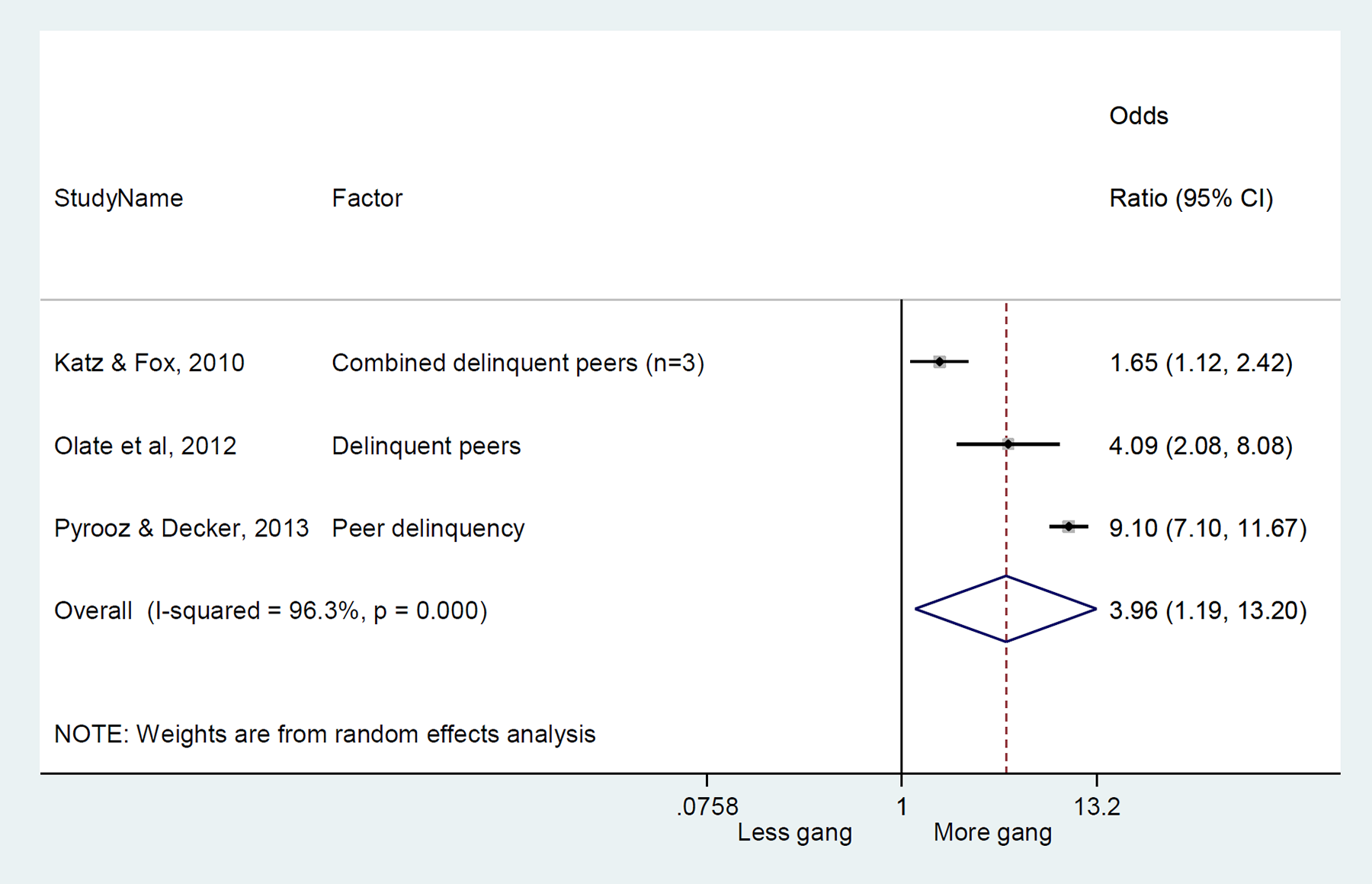
Delinquent peers
Prosocial peers
In contrast to the positive association between delinquent peers and youth gang membership, there is no significant protection offered by associating with prosocial peers. Katz and Fox (2010) examined two different measures of prosocial peers: interaction with prosocial peers, and peer reward for prosocial involvement. Neither measure showed an individually significant relationship with gang membership, nor was there any significant heterogeneity between their effects (I2: 0.0%, p=0.476; τ2=0.000). The pooled effect is also not significantly different from an odds ratio of 1 (OR: 1.05, LCL: 0.77, UCL: 1.44).
Family correlates
This section includes meta-analyses on the risk and protective factors relating to the family environment, family income, parental attitudes, parental education, and exposure to violence in the home. Each of these factors is classified as a correlate, as the studies measure the factors concurrently with youth gang membership. Whilst it may feel intuitive to assume that family factors precede a young person's gang membership, without at least retrospective reporting, it is not reasonable to assume that family factors are stable or time invariant. Indeed, it is quite possible that family factors may change as a response to youth gang onset, resulting in seemingly paradoxical effects; for example, a family may actively become more supportive after they notice a child getting in trouble with the law.
Family environment
Four studies provided information on the home environment and its association with youth gang membership (Olate et al., 2012; Katz and Fox, 2010; Pyrooz and Decker, 2013; Abramovay et al., 1999). These factors were classified into risk factors (for example, an unstable home, residential mobility, running away from home) and protective factors (living with both parents, opportunities for pro-social involvement in the family, and family attachment). Both risk and protective factors are associated with youth gang membership in the anticipated direction, although the estimates of the risk factors is more than twice that of the protective factors (Risk OR: 1.92, LCL: 1.33, UCL: 2.79; Protective OR: 0.76, LCL: 0.62, UCL: 0.93).
Five studies reported measures of home environment risk factors. Katz and Fox (2010) measure residential mobility (having moved home in the previous year), which showed no significant difference between youth gang members and non-gang youth. Pyrooz and Decker (2013) reported two measures of home environment risk: household strain, and a broken home. Both measures were associated with greater youth gang membership, but not significantly so, and the pooled estimate is also positive but not statistically significant. Olate et al. (2012) reported three measures of home environment risk: difficultly at home, an unstable home, and the young person having their own child at home. Whilst none of these three measures were individually significantly related to youth gang membership, the overall pooled estimate from this study was positive and statistically significant. Abramovay et al. (1999) reported one measure of violence in the family, which was significantly associated with increased odds of youth gang membership. Finally, Ohene et al. (2005) reported one measure of home environment risk, reported separately for males and females: the respondent had run away from home. Running away from home was significantly associated with increased odds of youth gang membership. Overall, the results of these five studies showed that a difficult home life was associated with nearly double the odds of youth gang membership (OR: 1.92, LCL: 1.33, UCL: 2.79), although there is significant heterogeneity between studies (I2: 94.5%, p=<0.001; τ2=0.187).
Three studies provided measures of a protective home environment (Abramovay et al., 1999; Katz and Fox, 2010; Pyrooz and Decker, 2013). Abramovay et al. (1999) showed that young people who lived with both parents were approximately half as likely to be youth gang members as those who did not. Katz and Fox (2010) and Pyrooz and Decker (2013) each reported one measure of protective family environment. Both opportunities for pro-social involvement within the family (Katz and Fox, 2010) and family attachment (Pyrooz and Decker, 2013) were associated with less youth gang membership, but these estimates were not individually statistically significant. Combining the estimates from these three studies showed that a positive family environment was approximately 25% lower odds of youth gang membership (OR: 0.76, LCL: 0.62, UCL: 0.93), and there was no significant heterogeneity amongst the studies (I2: 0.9%, p=0.364; τ2=0.000).
From these five studies, it appears that the association with a negative family environment is stronger than that of a supportive family, as a negative family environment is associated with a 92 per cent increase in the odds of youth gang membership, whilst a positive family environment is only associated with a 25 per cent decrease in the odds. Additionally, there is much more variability in the effects of the family risk factors (I2: 94.5%, p=<0.001; τ2=) while the effects of the family protective factors are highly homogeneous (I2: 0.9%, p=0.364; τ2=0.000).
Although the results of Moravcová (2012) could not be included in the analyses, their study shows no significant relationship between family structure (single parent status) and gang membership. There are somewhat mixed results for the relationship between family bonds and gang-membership: significantly weaker family bonds were seen in the Eurogang and Mokken groups compared to non-gang involved youth, but no significant difference was seen between self-identified gang members and non-gang involved youth.
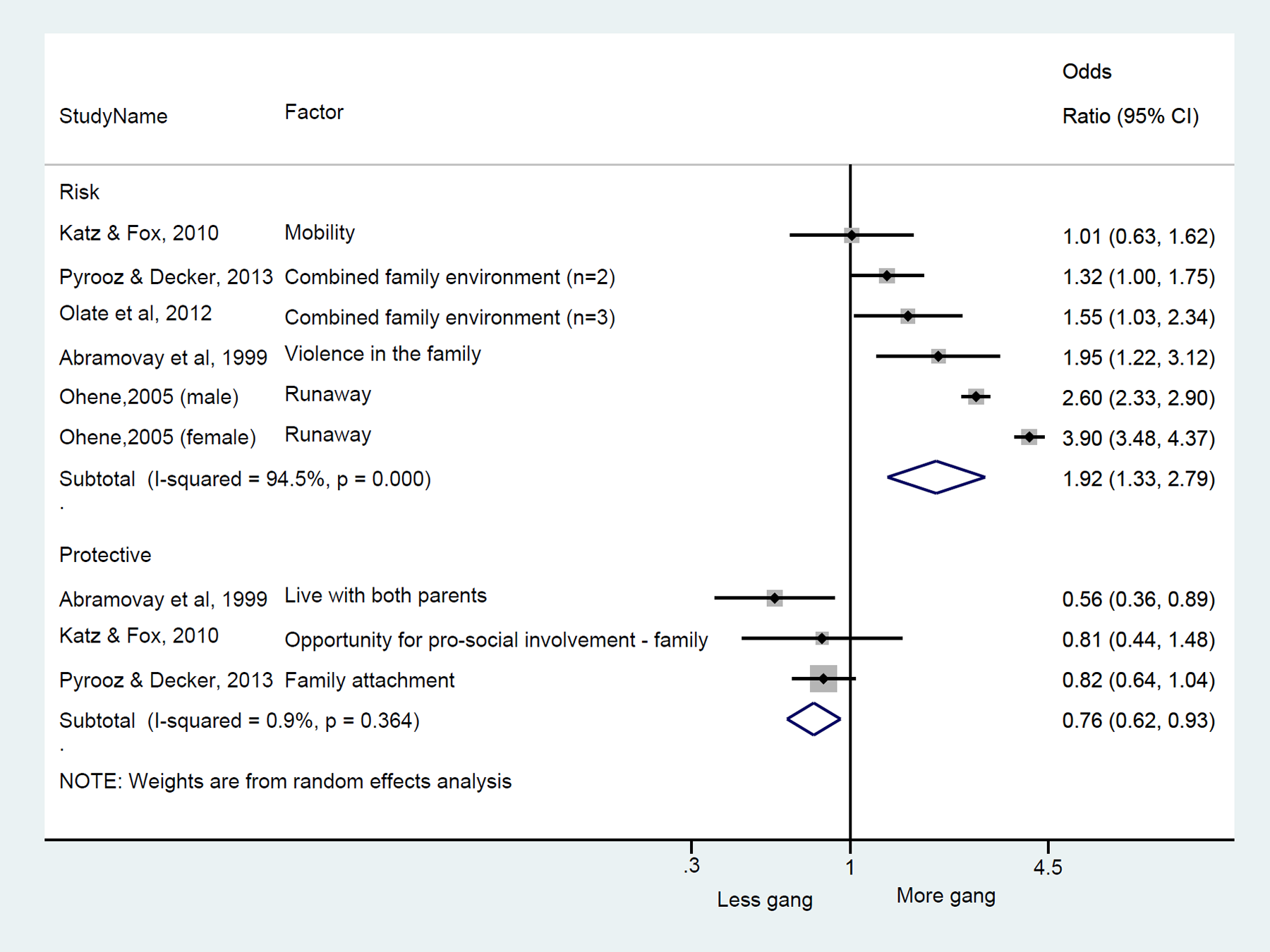
Family environment
Family income
Family income was measured concurrently with youth gang membership in one study (Celbis et al., 2012), which measured the frequency of gang membership across three measures of family income; low, medium and high. Family income is therefore treated as a correlate rather than a predictor. Middle income was significantly associated with less youth gang membership than either high family income (OR: 0.23, LCL: 0.12, UCL: 0.47)or low family income (OR: 0.35, LCL: 0.17, UCL: 0.73). There was no significant difference in the occurrence of youth gang membership between low or high family income groups (OR: 0.67, LCL: 0.28, UCL: 1.64).
Parental attitudes to antisocial behaviour
Katz and Fox (2010) provided one measure of parental attitudes favourable towards antisocial behaviour: a three item scale gauging youth's perception of their parents’ attitudes towards theft, graffiti and fighting. Higher scores indicated more favourable perceived attitudes, thus this measure was interpreted as a risk factor. There was no significant association between parental attitudes favourable to antisocial behaviour and youth gang membership (OR: 0.95, LCL: 0.59, UCL: 1.51).
Parental monitoring
Pyrooz and Decker (2013) provided one measure of parental monitoring: a four-point scale of the extent to which parents monitored the young person's activities or whereabouts. Higher scores on the four-point scale indicated higher levels of monitoring, thus this measure was interpreted as a protective factor. Parental monitoring was a significant correlate of youth gang membership (OR: 0.32, LCL: 0.26, UCL: 0.41). An increase of one unit on this scale of parental monitoring was associated with a 68 per cent reduction in the odds of youth gang membership.
Parental education
Two studies measured the relationship between parental education and youth gang membership (Celbis et al., 2012; Pyrooz and Decker, 2013). Whilst parental education may intuitively be expected to predate the onset of youth gang membership, this assumption may not hold for parents who go on to increase their educational attainment during their child's adolescence. As a result, this factor was classified as a correlate and was theorized to be a protective factor.
Pyrooz and Decker (2013) measured parental education on an ordinal scale from “grade school” to “graduate or professional school”. Celbis and colleagues (2012) measured mother's education as “incomplete”, “primary” or “secondary”. There was no statistically significant association with gang membership (OR: 1.10, LCL: 0.84, UCL: 1.44), and there was no significant heterogeneity between the studies (I2: 21.7%, p=0.258; τ2=0.011).
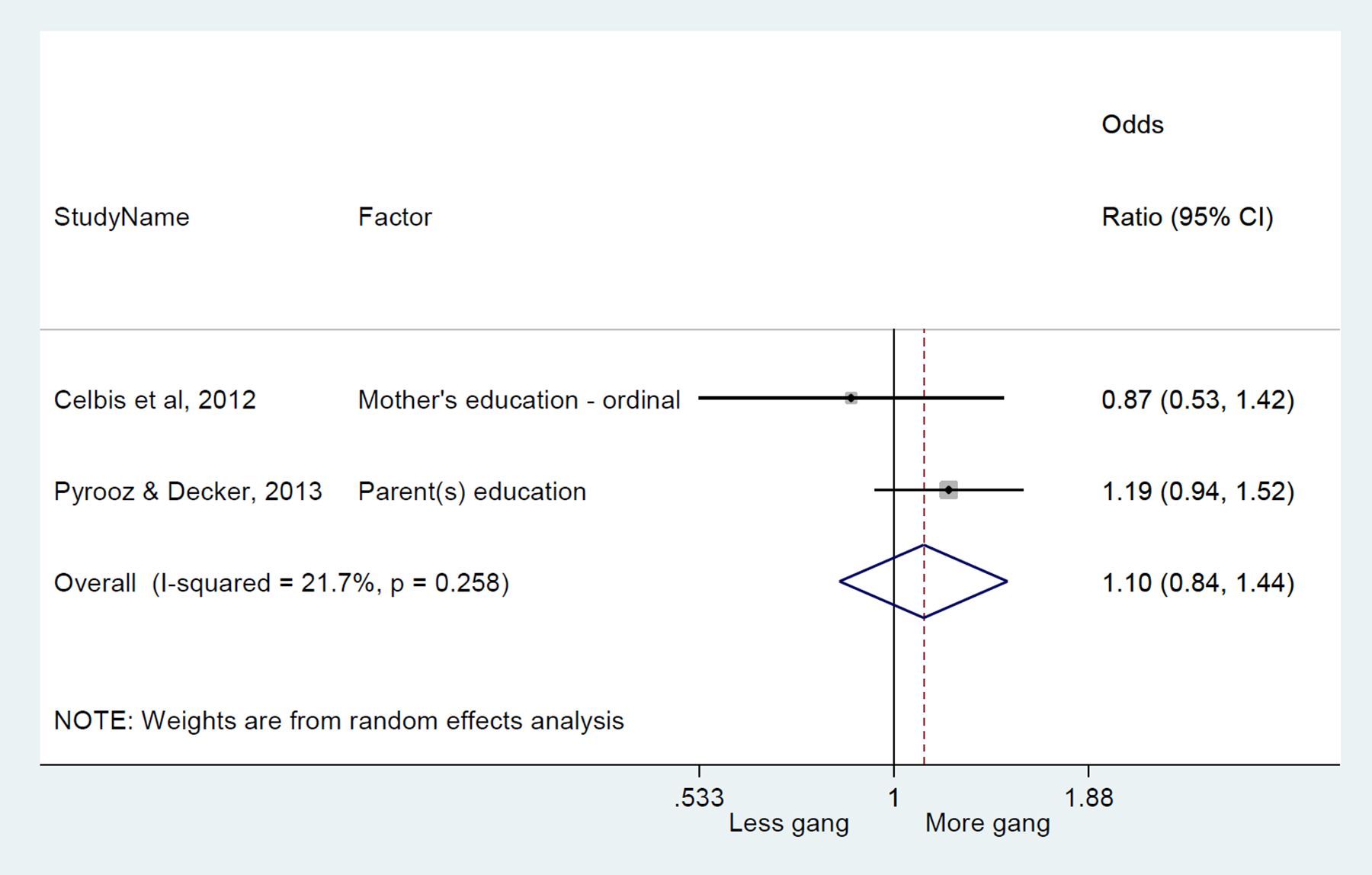
Parental education
Exposure to violence in the family
Celbis et al. (2012) measured the association between exposure to five different kinds of violence in the home and youth gang membership: emotional violence, physical violence, property stolen or damaged, threatened or injured with a weapon, and sexual violence. We find a positive association with youth gang membership for all measures; however, there is significant heterogeneity within this set of measures (I2: 62.1%, p=0.032; τ2=0.276).
Neither emotional nor physical violence in the home showed a significant association with youth gang membership, whilst property damage, weapon threats, and sexual violence in the home were each individually significantly associated with youth gang membership. Of the individual measures, the largest association is with exposure to sexual violence (OR: 6.49, LCL: 2.30, UCL: 18.29). Exposure to violence in the home is a significant risk factor overall when combining all measures, associated with a doubling of the odds of youth gang membership (OR: 2.17, LCL: 1.21, UCL: 3.91).
School correlates
The included studies contained data on measures across the following categories: level of education, exposure to violence at school, the school environment, individual school performance and attachment. Each of these factors is classified as a correlate as they are either measured concurrently with youth gang membership, or report the respondent's level of education but do not specifically report the link between the age leaving school and the age of onset of youth gang membership. The associations are presented below.
Level of education
Four studies reported on the relationship between a young person's current level of education and youth gang membership (Abramovay et al., 1999; Celbis et al., 2012; Olate et al., 2011; Webb et al., 2011). As with parental education, higher levels of youth education were categorized as a protective factor.
Olate et al. (2013) reported high school graduation as a binary variable. Abramovay et al. (1999), Celbis et al. (2012) and Webb et al. (2011) each reported the young person's educational grade, which was then converted to an ordinal effect. Three out of four of the measures were negatively associated with gang membership, but the only individually significant item was high school graduation, which was associated with a reduction in the odds of gang membership. The pooled effect was a non-significant relationship between higher levels of education and lower odds of youth gang membership, with no significant heterogeneity between studies (OR: 0.73, LCL: 0.46, UCL: 1.18; I2: 57.8%, p=0.068; τ2=0.139).
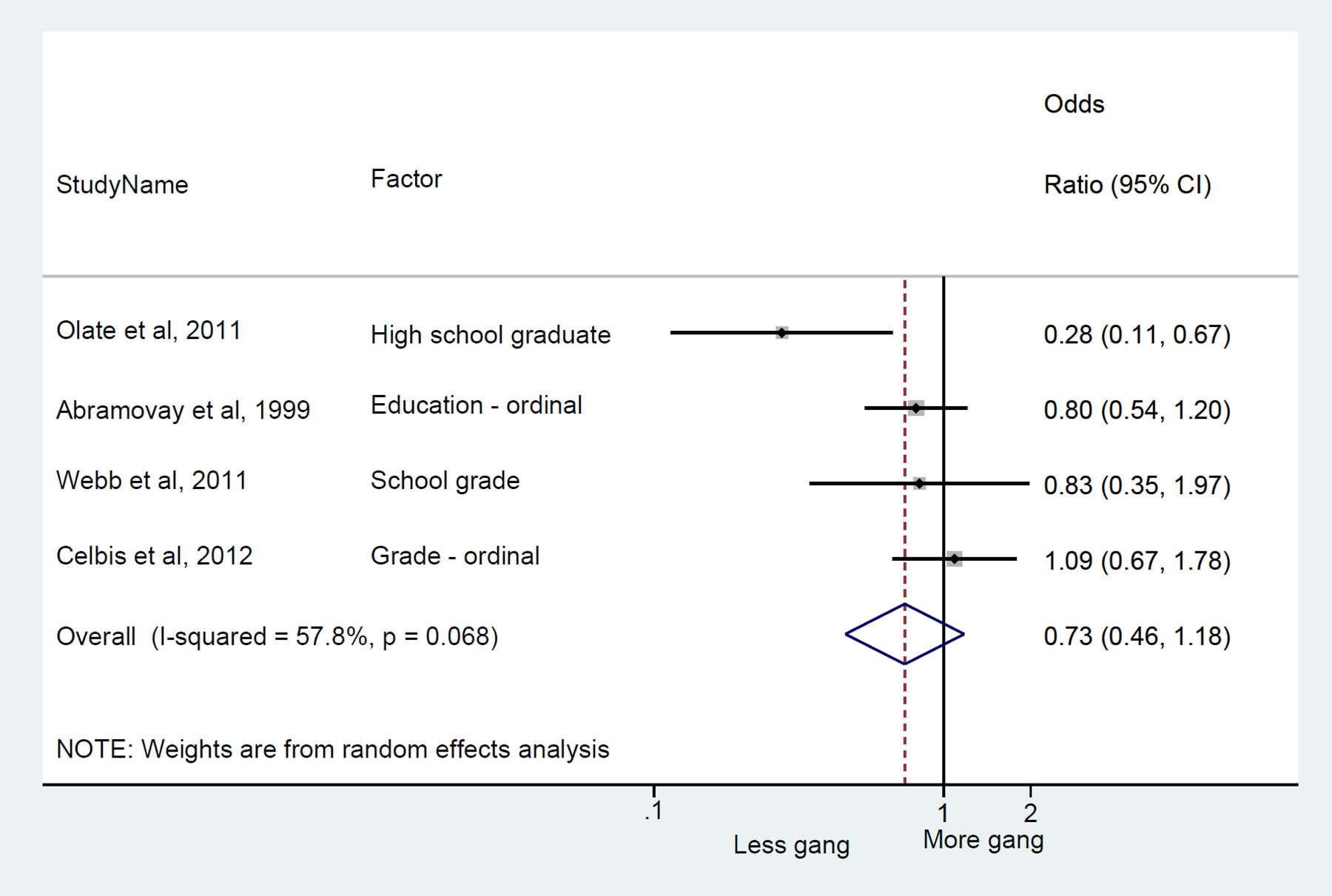
Level of education
Exposure to violence at school
As with exposure to violence in the family, these measures by Celbis and colleagues (2012) measured the association between exposure to five different kinds of violence at school and youth gang membership: emotional violence, physical violence, property stolen or damaged, threatened or injured with a weapon, and sexual violence. Each of the individual measures showed a significant positive association with youth gang membership. There is again significant heterogeneity within this set of items (I2: 69.2%, p=0.011; τ2=0.206), with property and emotional violence showing smaller associations than physical, sexual or weapon violence in the school. Overall, exposure to violence at school is a significant risk factor, associated with a trebling of the odds of youth gang membership (OR: 3.29, LCL: 2.04, UCL: 5.32).
School environment
Three studies included measures relating to the school environment, including the type of school (public, general, private, vocational or special) (Celbis et al., 2012; Webb et al., 2011) and a measure of opportunities for pro-social involvement at school (Katz and Fox, 2010). Public and general schools were characterized as a risk factor, whilst special, private and vocational schools were categorized as protective, largely due to their potential for more focused education. School type was dichotomized accordingly for this analysis. The pooled effect shows no significant association between public and general schools on gang membership (OR: 0.93, LCL: 0.59, UCL: 1.47). Overall, there is no measurable heterogeneity amongst between the studies (I2: 0.0%, p=0.832; τ2=0.000).
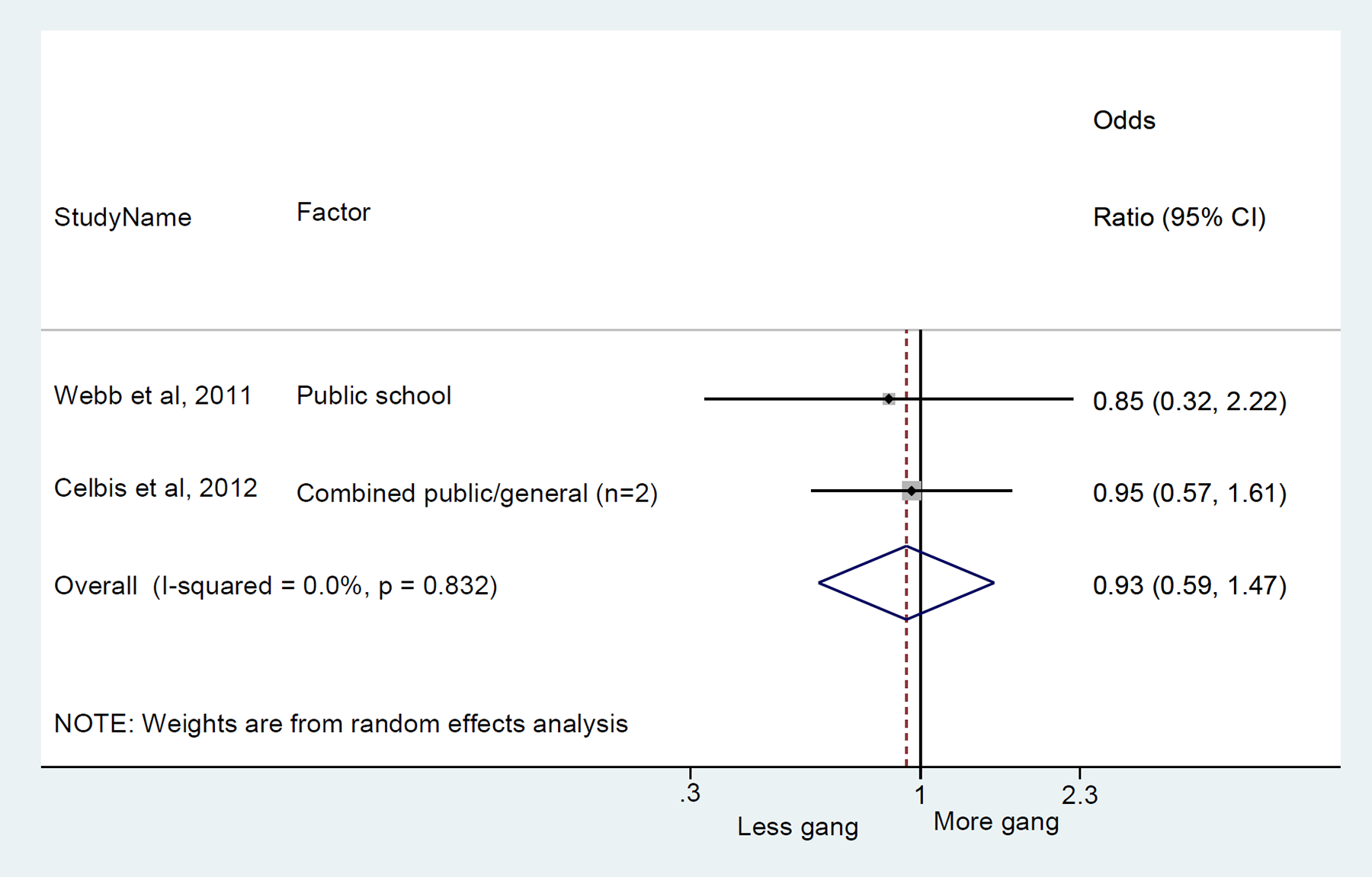
School environment
Katz and Fox (2010) provided a different measure of school environment: opportunity for prosocial involvement at school. Interestingly, and somewhat counterintuitively, this measure shows a significant positive relationship with youth gang membership, whereby young people who reported that their school provided opportunities for prosocial involvement had nearly twice the odds of being in a youth gang (OR: 1.92, LCL: 1.05, UCL: 3.51). This may result from a selection effect, and we hypothesize that proactive schools which note a growing problem with gang membership may be likely to counter with additional opportunities for students.
School performance
School performance was measured by three studies (Celbis et al., 2012; Olate et al., 2012; Pyrooz and Decker, 2013). Celbis et al. (2012) reported school performance on a three-point scale of “poor”, “average”, and “good” overall. Pyrooz and Decker (2013) report school performance as a self-reported grades in Chinese, Maths and English on a five-point scale from “poor” to “excellent”. Higher educational performance was categorized as a protective factor. Olate et al. (2012) reported “educational difficulty” as a dichotomous variable, and this was categorized as a risk factor. Educational difficulty was not reverse coded and included in the meta-analysis, as we hypothesized that a lack of educational difficulty did not necessarily equate to higher school performance.
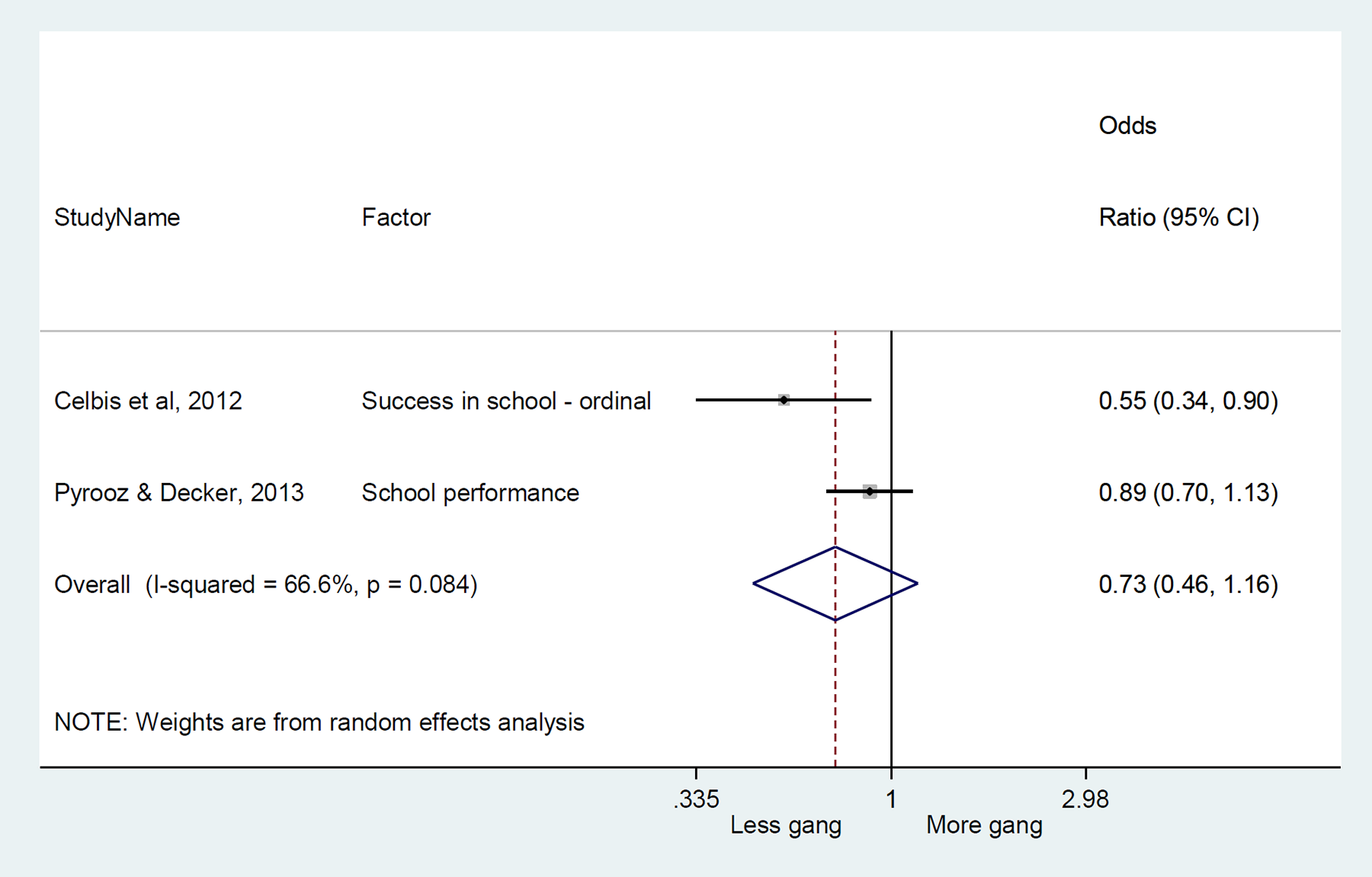
School performance
The pooled estimate of the two measures of success in school was negative but not significant (OR: 0.73, LCL: 0.46, UCL: 1.16) and there was no significant heterogeneity between studies (I2: 66.6%, p= 0.084; τ2=0.078). Conversely, educational difficulty showed a significant positive association with youth gang membership (OR: 2.37, LCL: 1.33, UCL: 4.23). This finding indicates that whilst educational difficulty is a risk factor, success in school is not directly protective.
Low school attachment
Five studies reported six independent measures for low school attachment (Abamovay et al., 1999; Katz and Fox, 2010; Ohene et al., 2005; Olate et al, 2011, 2012; Pyrooz and Decker, 2013). Abramovay et al. (1999) reported whether the young person was no longer attending school. Katz and Fox (2010) measured low commitment to school. Ohene et al. (2005) reported whether the young person skipped school, separately for males and females. Olate et al. (2011) reported school dropout and whether the young person was still attending school, and Olate et al. (2012) reported school expulsion. As these two papers analysed the same data, these three estimates were synthesized before they were included in the meta-analysis. Pyrooz and Decker (2013) reported a measure of school attachment, which was reverse coded for this analysis to represent low school attachment.
Similarly to school performance, the pooled risk factor items showed a positive association with youth gang membership whereby those youth with low attachment to school had just over twice the odds of gang membership as those who did not report low school attachment (OR: 2.05, LCL: 1.67, UCL: 2.53). Unlike school performance, there was significant variability amongst the measures (I2: 80%, p<=0.001; τ2=0.046).
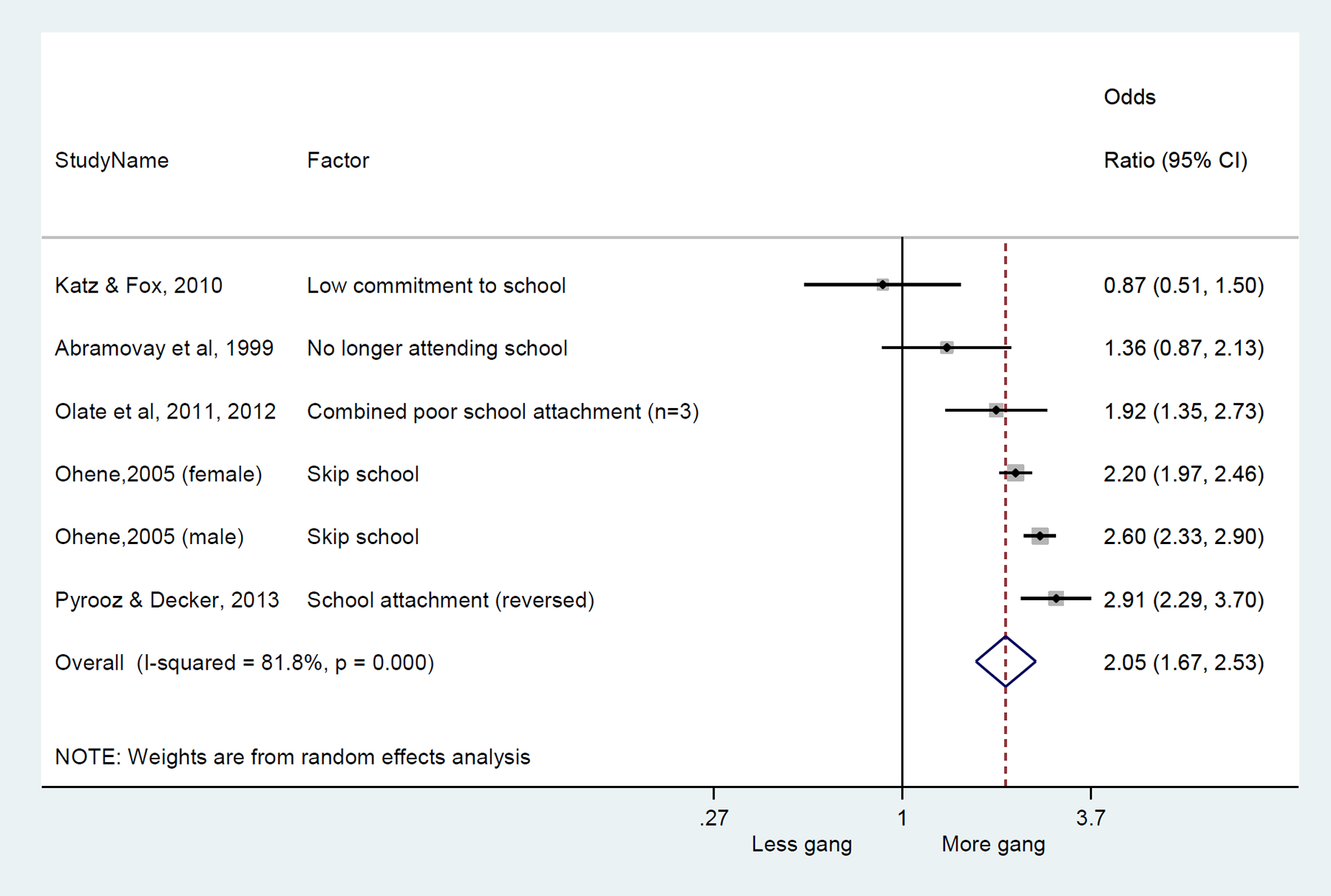
School attachment
Community correlates
The included studies provided measures characterising the community youth belong to, including neighbourhood environment, geography, and exposure to crime in the neighbourhood, which are discussed below. Each of these factors were measured concurrently with youth gang membership, and are therefore classified as correlates.
Neighbourhood environment
Two studies measured risk factors associated with disordered and disorganized communities, as well as measures associated with pro-social communities (Olate et al., 2012; Katz and Fox, 2010).
The measures categorized as risk factors were neighbourhood disorder (Olate et al., 2012) and perceived availability of handguns (Katz and Fox, 2010). Of the two risk factors, only perceived handgun availability had a significant relationship with youth gang membership. Young people who reported that they would be able to locate a weapon in their neighbourhood were significantly more likely to be in a youth gang. However, it may be that the gang membership was the cause of perceived gun availability, rather than gun availability being an indicator of a highly disordered community.
The measures categorized as protective factors were neighbourhood social support (Olate et al., 2012) and rewards for pro-social involvement in the community (Katz and Fox, 2010). Neither measure was individually significant.
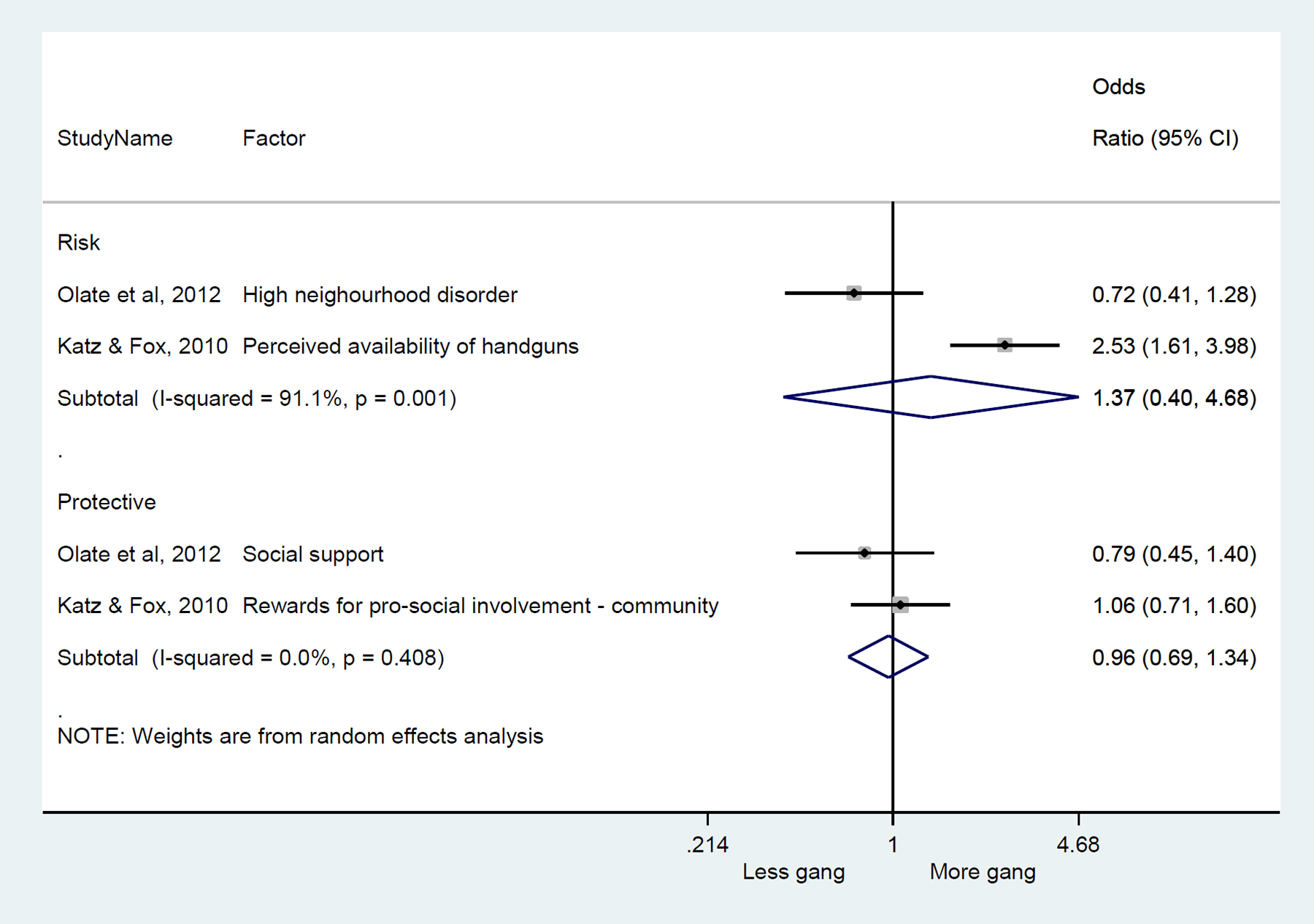
Neighbourhood environment
The overall estimates for both community risk factors and protective factors were not statistically significant (OR: 1.37, LCL: 0.40, UCL: 4.68 and OR: 0.96, LCL: 0.69, UCL: 1.34). For risk factors heterogeneity between studies was high (I2: 91.1%, p=0.001; τ2=0.716), whereas the results from the studies of protective factors were highly homogeneous (I2: 0%, p=4.08; τ2=0.000).
Geography
Two studies provided measures of geographic locality (Celbis et al., 2012; Pyrooz and Decker, 2013). These items measured whether the respondent's school was in a suburban (as compared to an urban) area (Celbis et al., 2012), and whether the respondent's residence was in a rural area (Pyrooz and Decker, 2013). These two measures were categorized as protective factors. Whilst these were highly homogeneous measures (I2: 0.0%, p=0.568; τ2=0.000), there was no significant association between the pooled effect of these geographic locations and the odds of youth gang membership (OR: 1.22, LCL: 0.93, UCL: 1.59).
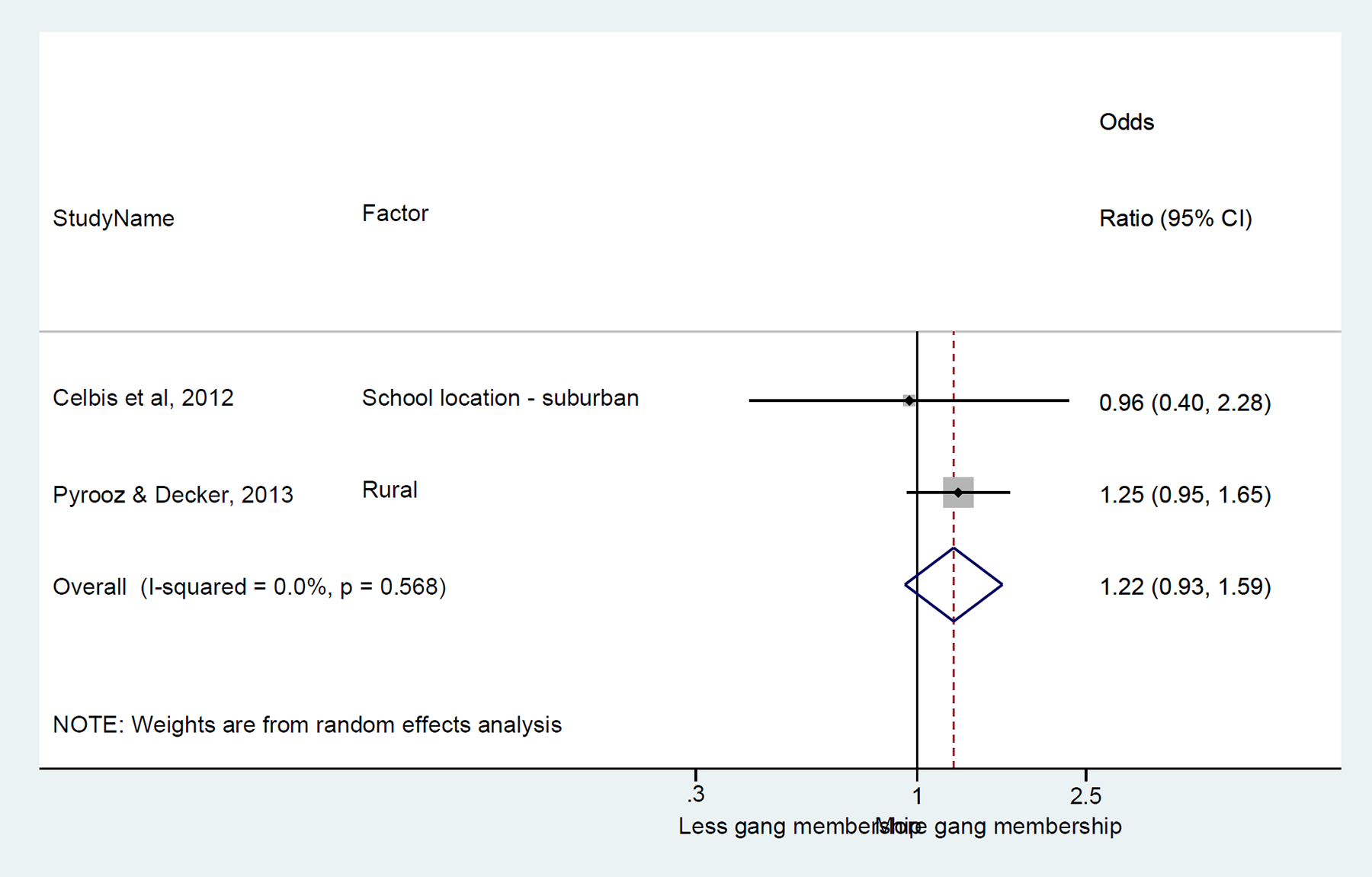
Geography
Exposure to violence in the community
Ohene et al. (2012) contributed five measures of exposure to violence in the community: emotional violence, physical violence, property stolen or damaged, threatened or injured with a weapon, and sexual violence. Each measure was individually significantly associated with increased odds of youth gang membership. As with both school and family environments, the pooled estimate of exposure to violence in the community was strongly associated with youth gang membership, with those youth who report exposure to violence in the community having on average over three times the odds of youth gang membership as those who do not(OR: 3.39, LCL: 2.07, UCL: 5.55). Again, these measures are heterogeneous (I2: 67.5%, p=0.015; τ2=0.213), with a smaller association for emotional and property damage, and larger association for sexual violence.
Discussion
Summary of main results
Overview
Table 8 presents a summary of odds ratios, confidence intervals and the number of independent estimates for each association. This table is sorted in descending order within domains by the amount of evidence that contributes to the overall measure and the size of this estimate. We now present a brief summary of the results, beginning with the areas in which the evidence is strongest.
Summary of results by domain and association
Significant heterogeneity (p<0.05)
Individual associations
This systematic review provided summary estimates for 15 associations between individual factors and youth gang membership. The strongest evidence is for the associations between youth gang membership and delinquency, the use of alcohol and soft drugs, male gender, and sexual behaviours. The results are summarized below, with the number of independent measures reported in parentheses to allow consideration of the amount of evidence contributing to the summary.
Delinquency was assessed across three categories. Youth who reported engaging in violent delinquency had nearly six times the odds of being a youth gang members as those that did not report violent delinquency (n=6) and non-violent delinquency was associated with over four times the odds of youth gang membership (n=3). Indeed, violent delinquency had both the strongest association with youth gang membership and was based on the largest number of studies among the results. General delinquency was associated with more than three and a half times the odds of youth gang membership (n=3); however, this finding was based on studies with a very high degree of variability in outcomes.
The use of alcohol and soft drugs (cigarettes and marijuana) was associated on average with over three times the odds of reporting youth gang membership (n=5). There was no significant association between later onset of alcohol and soft drug use and youth gang membership (n=1). Whilst hard drugs was associated with almost five times the odds of youth gang membership (n=1), this result is drawn from only one study so is a much less robust finding than that seen for alcohol and soft drugs.
There is relatively strong evidence for the association between male gender and youth gang membership, with males having twice the odds of youth gang membership than females (n=5); however, this finding relies on studies that have a high degree of variability in outcomes. There was no significant relationship seen between age and youth gang membership (n=4).
A very small number of studies reported on the association between sexual behaviours and youth gang membership. Sexual activity was associated with over three times the odds of youth gang membership (n=3); however there was no significant relationship with protective sexual behaviours such as delayed age of first intercourse and condom use (n=1).
There is weak evidence for the counterintuitive finding that employment is associated with nearly double the odds of youth gang membership (n=2), although employment need not be legitimate and this association may be related to increased opportunity for employment following school disengagement.
There is also weak evidence that psychological factors are associated with youth gang membership. Psychological risk factors (impulsivity and low self-control) are associated with 51 per cent greater odds of youth gang membership (n=2) whilst psychological protective factors are associated with 43 per cent lower odds (n=2).
Finally, youth who report victimisation had more than twice the odds of also reporting youth gang membership (n=1) and there was no significant association seen between youth gang membership and ethnic minority group membership (n=1). Given that both of these analyses relied on only one study each, this evidence is extremely limited.
Apart from gender and ethnicity, none of these relationships was time invariant or measured retrospectively. Therefore, at best, these studies report differences in the activities and behaviours between youth gang members and non-gang youth. Whilst these results do confirm higher risk taking behaviours and greater victimisation among gang involved youth, they do not provide insight into the individual predictors of youth gang membership.
Peer associations
There is a small amount of evidence that socialising with delinquent peers is associated with nearly four times the odds of youth gang membership (n=3); however, this finding was based on studies with a high degree of variability in outcomes. There is no significant relationship between socialising with pro-social peers and youth gang membership (n=1). Again, it must be noted that these findings are based on very limited evidence.
Family associations
Negative family environments are associated with nearly twice the odds of youth gang membership (n=6). Whilst this association is based on one of the largest sets of independent estimates in this review, it is important to note that it is also based on studies with a high degree of variability in outcomes. In contrast, a positive family environment is associated with approximately 25 per cent lower odds of gang membership (n=3), although there is less evidence contributing to this finding.
There was no significant relationship seen between parental education and youth gang membership (n=2), nor between parental attitudes to antisocial behaviour and youth gang membership (n=1); however parental monitoring was associated with reduced odds of youth gang membership (n=1). Finally, and again perhaps counterintuitively, youth from middle income families had greater odds of reporting youth gang membership than those from either high or low income families, which showed no significant differences to one another (n=1). Again, it is importance to recognize the limited evidence supporting these findings.
School associations
This review provided evidence for seven associations between school factors and youth gang membership. The strongest evidence is for the associations between youth gang membership and low school attachment. Youth who report lower attachment have twice the odds of also reporting gang membership (n=6); however, this result is based on findings with a high degree of variation in outcomes. There was no significant relationship seen between a young person's current level of education and youth gang membership (n=4).
There was no significant association between youth gang membership and public school environment (n=2), nor with a young person's performance at school (n=2). Limited evidence suggests that exposure to violence at school is associated with triple the odds of youth gang membership (n=1), and that both educational difficulty (n=1) and opportunities for prosocial involvement at school (n=1) are associated with approximately twice the odds of youth gang membership. These results come from one study only and are not the result of a meta-analytic synthesis of multiple studies.
Community associations
Finally, there is very limited evidence in relation to the association between community factors and youth gang membership in low- and middle-income countries. Neither neighbourhood risk factors (n=2), neighbourhood protective factors (n=2), nor geographic location (n=2) are significantly associated with youth gang membership. Youth exposed to violence in the neighbourhood have more than three times the odds of youth gang membership than non-exposed youth (n=1); however, this finding was based on only one study.
Experience across domains
As Table 8 shows, there were 37 total associations calculated from the included studies. The majority of associations were in the individual (15 of 37), family (9 of 37) and school (7 of 37) domains. Community and peer domains contributed only four and two associations respectively. Consequently, while we initially have a very small number of robust studies from which to draw conclusions, what small number of associations there are tend to concentrate in the individual, family and school domains, and there are considerably fewer in the peer and community domains.
This small amount of evidence in each domain is further weakened when we consider the small number of independent estimates that contribute to each analysis of associations. After accounting for dependencies from several measures that come from the same study, there were 85 independent estimates contributing to the final 37 analyses. We find the strongest evidence for the three analyses that synthesize six independent estimates: violent delinquency, school attachment, and negative family environment. Two analyses synthesize five independent measures: alcohol and drug use, and male gender. Two analyses synthesize four independent studies:age, and level of education. At the other extreme, for 16 different outcome variables we only identified one independent measure, nine are supported by only two independent measures, and five are supported by three independent measures. This dearth of evidence is most striking in the community and peer domains, where none of the four analyses of community factors contain more than two independent estimates, and the two analyses of peer factors contain no more than three independent estimates. This very small amount of evidence contributing to the analyses, limits any generalisations from these associations.
Overall completeness and applicability of evidence
This systematic search was conducted across a very broad range of databases, websites and grey literature sources in multiple languages, and we conducted reference harvesting and contact with key researchers to ensure completeness. The final set of eight eligible studies allowed an analysis of the associations between risk and protective factors across five key domains. The included studies were conducted in Turkey, Trinidad and Tobago, the Caribbean, El Salvador, China, and Brazil. The majority of studies examined individual risk and protective factors, although there was representation from the other key domains. We are confident that this set of studies represents a complete body of work that meets our methodological and substantive criteria.
It is important to recognize that, even though we are confident that we have found a complete reflection of the available evidence, the available body of evidence is very small, and by no means fully addresses the question of which factors predict youth gang membership in low- and middle-income countries. There are significant gaps in the literature, and many of the factors from the developmental model of gang membership are not represented in these studies. Very few studies analysed the same correlates in different geographic and socio-economic contexts, there is no representation of studies from Africa, and the majority of studies focus on individual factors. One of the major limitations is the lack of longitudinal studies, which could help identify predictive factors, and not just simply associations.
Quality of the evidence
None of the eight included studies was of poor quality. Indeed, in general, the authors were clear and expansive in their descriptions of their studies, with most facets being described in a manner that would allow some degree of accurate replication. The sample sizes were very large, and pooled to include the experiences of over 23,500 young people in low- and middle-income countries.
The included studies were generally conducted with methodological rigour, but we were largely only able to calculate effect sizes from bivariate associations. As a result, for the majority of estimates there was no statistical matching of the gang sample to the non-gang sample, so the effect sizes are largely calculated on an unmatched sample. This is not necessarily a reflection on the quality of the studies, as it must be noted that several of the studies were in fact focused on determining the correlates of other youth behaviours, and used appropriately advanced statistical models to do so. However, in order to extract useful data for this review, only the descriptive statistics could be employed, as the more advanced models did not report the necessary data to calculate effect sizes.
The core issue with the review is that none of the studies had the appropriate temporal ordering to enable causal inference. Each of the included studies used a cross-sectional design, and none applied a retrospective approach to any of the questions in their surveys. Therefore, at best, the review can show associations, but not causation, except in the case of time-invariant correlates.
Limitations and potential biases in the review process
As discussed, the main limitations are the small number of studies and the lack of a predictive analytic framework. However, the studies are largely comparable in many of the definitions, with a standardized approach in many instances. Standardisation is not necessarily the equivalent of validation, however, and whilst many items had been drawn from standardized instruments, these were not in the majority.
One definition that is not strictly comparable is the classification of youth into gang members or gang-involved youth. The definitions of gang members and gang-involved youth, whilst broadly conforming to the literature, varied in their exact application across the included studies. The term ‘gang’ was generally undefined in the surveys, which may lead to some lack of comparability across studies. Due to a small number of studies, analyses in this review were pooled for gang members and gang-involved youth, rather than being conducted separately. Whilst we acknowledge that this may introduce bias, the variation in definitions had already prevented a very precise delineation between current and former gang members.
There are some further limitations to consider, particularly in terms of generalizability from this review. The use of school samples in the majority of studies is a considerable limitation to the scope of this review. In the majority of the studies, only school-engaged adolescents were sampled, and it might reasonably be anticipated that school-engaged youth gang members may not be representative of youth gang members more broadly. Likewise, young adults in their 20s are only included in two of the study samples, as the school samples limit the upper age of participants to approximately 18 years old.
It is also important to note that by only having one author screen each document, rather than performing double screening, it is possible that some bias may have been introduced to the review.
Finally, whilst the studies were drawn from the Middle East, Latin America, the Caribbean and Asia, it was unfortunate that there was no representation of African nations. Of course, given the huge diversity of culture and context across low- and middle-income countries, such a small number of studies cannot be considered representative; rather, we hope that this review will highlight the lack of evidence and prove a useful starting point for future research.
Agreements and disagreements with other studies or reviews
There are no systematic reviews on the factors associated with youth gang membership in low- and middle-income countries to date. However, for the purposes of illustration, table 8 contains the summary of factors sourced from the Small Arms Survey (2010) which was presented in the Background section of this review. We have highlighted the similarities and contradictions with this body of work – bold type indicates some broadly defined areas where the present review found quantitative supporting evidence, bold italic indicates disagreement in findings or results that do not demonstrate a relationship. It is important to recognize that the current review was only able to examine a small number of these correlates, due to the limited number of included studies. The factors that are not marked in bold type illustrate the limits of the findings.
Factors associated with gang membership, cross-referenced to key findings of this review
Authors’ conclusions
Implications for practice and policy
In designing preventive interventions it is essential to understand the causal framework of the behaviour that is being exhibited. Whilst this review does not allow us to go this far, it provides some evidence of the importance of key correlates of youth gang membership, drawn from a small number robust empirical studies.
As with all systematic reviews that draw on few studies, we acknowledge that this is a very limited body of work from which to draw conclusions. The findings, however, do support previous narrative syntheses of the literature. Many of the findings are therefore intuitive and unsurprising; for example, from the literature on youth gangs it is to be expected that young gang members will have higher rates of substance use and delinquency, and will be much more likely to associate with delinquent peers. The value of drawing this evidence from methodologically robust studies is that these studies demonstrate that these are qualities that separate youth gang members from their non-gang peers.
While many of the individual and peer associations identified in this review (such as delinquency, drug use, and sexual risk factors) may be as a result of gang membership rather than its cause, our results suggest certain family, school, and community level factors associated with gang membership that could be addressed through targeted preventive interventions. In particular, we would highlight the associations between youth gang membership and family environment, parental monitoring, school attachment, educational difficulties, and exposure to violence in the home, at school, or in the community.
Policy-makers and practitioners can use this evidence, drawn from a small number of methodologically robust studies in low- and middle-income countries, to assist with frameworks for prevention. We suggest that the identified themes are starting off points, where the relative strength of the associations can be used to inform primary, secondary or tertiary gang prevention programs. The results from our systematic review on the impact of preventive youth gang interventions demonstrate that there is currently no robust evidence to indicate which interventions work in low- and middle-income countries (Higginson et al., 2015). The current study may suggest factors that may drive gang membership, and suggest areas where interventions may prove promising.
Implications for research
This systematic review highlights the small set of studies that can be used to make robust statements about the characteristics and experiences that differentiate youth gang members from non-gang members. It is our hope that this research continues to expand. Whilst there are only eight included studies, these studies represent the end result of examining over 50,000 documents in order to learn from the experiences of over 23,500 young people included in the pooled sample of this systematic review.
In terms of substantive focus, it appears that the influence of peers and communities in particular is underrepresented in our data. The greatest proportion of effect sizes in this review were for individual factors, yet there is strong theoretical work that hypothesizes an interconnection of individual, peers, family, school, and community factors. We would encourage research that expands to these other, potentially equally important domains, and ideally also tackles the methodological issues of clustered data that will inevitably be encountered when departing from the study of the individual.
Methodologically, we would particularly encourage researchers to develop longitudinal studies of youth delinquency in low- and middle-income countries so that some causal evidence on the predictors of youth gang membership can be forthcoming. Several of the studies included in this review utilize large survey instruments that would be greatly enhanced by repeated application over time, both for the current cohort and for future cohorts, in order to develop a longitudinal study of a very large sample of young people.
Failing a longitudinal approach, some evidence for predictors could come from studies that framed survey questions retrospectively, so that there was no ambiguity regarding the temporal stability of a correlate, or whether a correlate predates the onset of youth gang membership. Ideally, such future studies would also seek to use standardized measures so as to assist with replication and comparability of results. It is this kind of investment in research effort that will allow a true evaluation of the predictors of youth gang membership.
Footnotes
Information about this review
The Advisory Group was made up of scholars and policy-makers in the field. A full list of members can be found in the Title Registration document for this review (Higginson et al., 2013).