





Abstract
Findings indicate that patients with a lower level of consciousness had later onset of occupational therapy, suggesting an opportunity for NCCU occupational therapists to collaborate with physicians in the modification of sedation protocols.
Patients in the neurological critical care unit (NCCU) are typically being treated for severe brain injury, stroke, or brain tumors or are receiving monitoring after neurosurgery. They have complex needs that require multidisciplinary care by physicians, nurses, and rehabilitation professionals with expertise in the management of patients with neurological conditions (Suarez et al., 2004). Recently published NCCU standards from the Neurocritical Care Society identified occupational therapists as essential personnel in the NCCU (Moheet et al., 2018). The standards also specified that occupational therapists should be readily available, have expertise in neurocritical care, and have adequate response times. These standards align with a recent systematic review of 10 published studies on occupational therapy use in the medical intensive care unit (MICU), which found that a multidisciplinary approach including occupational therapy is important for delivering high-quality care with better outcomes (Eakin et al., 2015). Although the feasibility, safety, and efficacy of occupational therapy in the MICU has been established, limited research has focused on occupational therapy utilization in the NCCU.
Much of the available data regarding occupational therapy in the general intensive care unit (ICU) and MICU pertains to early mobilization interventions done by occupational therapy and physical therapy practitioners. However, the Occupational Therapy Practice Framework: Domain and Process (4th ed.; American Occupational Therapy Association, 2020) described a range of occupational therapy intervention types beyond mobilization (e.g., self-care and functional skills). Data on these other interventions in ICU and critical care units are lacking; studies to date have referred to occupational therapy services in global (yes–no) terms or have combined occupational therapy and physical therapy into a single rehabilitation service category (Titsworth et al., 2012). Thus, a need exists to identify the specific interventions occupational therapists perform across all types of ICUs (e.g., self-care, as in Figure 1) as well as patient and other factors related to the use of certain interventions.
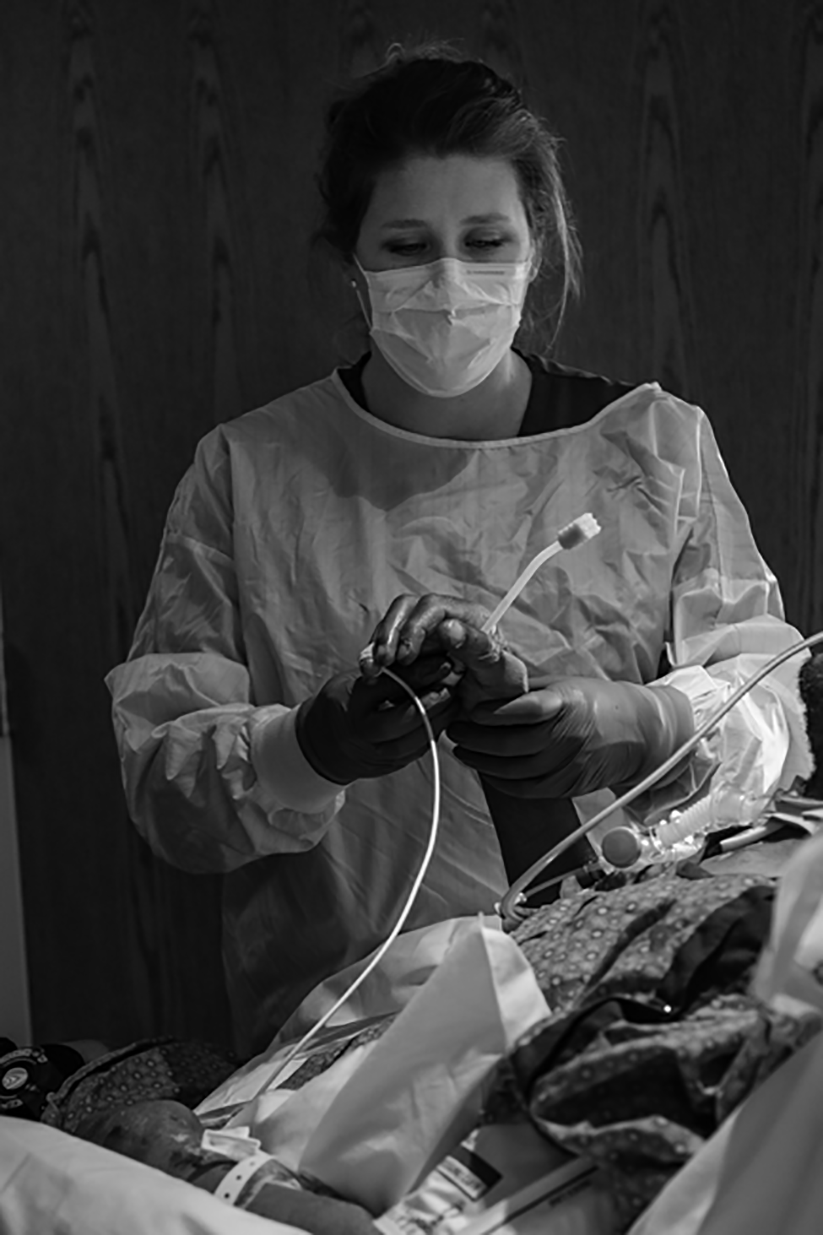
An occupational therapist facilitating self-care with a patient in the critical care unit.
The purpose of this study was to use electronic health records (EHRs) to thoroughly examine occupational therapy service utilization in a single hospital’s NCCU. We studied the relationships among patient characteristics, occupational therapy utilization, and intervention types. Our exploratory hypotheses were as follows: to determine the extent to which patient-related factors predict (1) receipt of occupational therapy in the NCCU; (2) the onset of occupational therapy (days from admission); and, along with quantity of occupational therapy (number of sessions), (3) the types of occupational therapy intervention patients receive.
Method
Design
We conducted a retrospective cross-sectional study of deidentified patient data to describe occupational therapy utilization and interventions in a NCCU at a large, urban academic hospital. The average daily census for this unit was 21.4 patients, with one full-time equivalent dedicated to occupational therapy services. Occupational therapy services were delivered each day of the week by rotating occupational therapists trained to work with critical care patients. Data were obtained from EHRs of adults (age ≥18 yr) admitted to the NCCU from May 2013 through September 30, 2015. The study was approved by the local institutional review board and applied Strengthening the Reporting of Observational Studies in Epidemiology (STROBE) reporting guidelines.
Data Collection and Variables of Interest
Administrative data and data from occupational therapist flow sheets were extracted, checked for completeness, and validated by a single person (Amy Nordon-Craft). We used the Behavioral Model of Health Services Use (Andersen, 1995) to guide selection of appropriate study variables. This model is widely used in health care research and emphasizes illness (e.g., comorbidities) and predisposing (e.g., gender, race, ethnicity) variables that may influence health care utilization. We determined the extent to which patient-related factors predicted receipt of occupational therapy in the NCCU (the dichotomous dependent variable; Hypothesis 1). The following patient-related predictors were entered as independent variables: length of stay (LOS), number of comorbidities, admission Glasgow Coma Scale (GCS) score, gender, age, and minority status.
Number of comorbidities was used as an indicator of overall health; previous research has established that a higher number of comorbidities is associated with decreased health (Moore et al., 2017). The GCS (Teasdale & Jennett, 1974) is the most common assessment of level of consciousness used with patients who have sustained acute brain injury. A recent systematic review (Reith et al., 2016) of high-quality studies examining the GCS’s psychometric properties demonstrated the measure’s high interrater reliability (intraclass correlation coefficients ranged from .94 to .96), and a study by Moore et al. (2006) found it to be a valid predictor of in-hospital mortality. We used total GCS score, which ranges from 3 to 15, with higher scores indicating a higher level of consciousness. Minority status was dichotomized as racial or ethnic minority or nonminority. Patients of either a minority race or Hispanic–Latino ethnicity were categorized as minority, and those of White race and non-Hispanic ethnicity were categorized as nonminority.
For patients who received NCCU occupational therapy services, we assessed how strongly these same independent variables predicted onset of those services (Hypothesis 2). Onset was recorded as the number of days from NCCU admission to the first occupational therapy encounter. To test Hypothesis 3, we added the number of NCCU occupational therapy sessions to our group of independent variables and assessed how strongly they predicted what occupational therapy interventions a patient received. We identified three primary intervention categories: self-care or home management (ADL–Home); functional activities or cognitive skills training (Func–Cog); and therapeutic exercise, sensorimotor, and modalities interventions (Ther-Ex). Each intervention category was handled as a separate dependent variable.
Statistical Analysis
Descriptive statistics were used to summarize patient characteristics and occupational therapy services provided in the NCCU, as well the most prevalent (applying to ≥5% of patients) diagnostic categories from the Clinical Classifications Software diagnosis categories (Elixhauser et al., 2014). We used either independent-samples t tests (for continuous data) or χ2 tests (for categorical data) to examine differences in these characteristics between patients who did and did not receive occupational therapy in the NCCU. We also used descriptive statistics to report the number of patients who were on mechanical ventilation, who had a tracheostomy tube in place, or who were being monitored for elevated intracranial pressure.
Appropriate linear models were used to examine the relationship between the independent variables and each dependent variable. Separate binary logistic regression models were used to identify predictors for each of the dichotomous dependent variables: receipt of NCCU occupational therapy or not (Hypothesis 1) and receipt of specific intervention category or not (Hypothesis 3). A linear regression model was used to identify predictors of occupational therapy onset (Hypothesis 2). All statistical analyses were conducted using IBM SPSS Statistics for Windows (Version 25) with α = .05. As part of the regression procedures, we calculated the variance inflation factor (VIF), which ascertains whether one independent variable has a strong linear relationship with other independent variables. Individual VIFs above 10.0 are indicative of bias due to multicollinearity (Myers, 1990).
Results
VIFs of independent variables in our analyses ranged from 1.0 to 1.5, which indicates weak relationships between independent variables and a low risk of multicollinearity.
Patient Characteristics and Occupational Therapy Delivery
During the study period, 1,134 patients were admitted to the NCCU, and 420 (37.0%) received at least one occupational therapy session. Six (1.4%) patients were on mechanical ventilation, 31 (7.4%) had a tracheostomy tube in place, and 52 (12.4%) were being monitored for elevated intracranial pressure. When comparing patients who were seen by occupational therapy with those who were not, gender and racial–ethnic minority distributions were similar, as were admission GCS scores (Table 1). Compared with non–occupational therapy recipients, occupational therapy recipients were significantly older (58.6 vs. 53.3 yr), t(1132) = 5.4, p < .001, d = 0.33; had more comorbidities (14.8 vs. 10.7), t(796.7) = 7.0, p < .001, d = 0.43; and had a longer NCCU stay (6.6 vs. 3.3 days), t(670.4) = 5.7, p < .001, d = 0.36. The overall distribution of diagnostic categories also differed significantly, χ2(6) = 26.1, p < .001, Cramer’s V = 0.20.
Characteristics of Patients in the NCCU Stratified by OT Utilization
Note. N = 1,134. Dashes indicate not applicable. CCS = Clinical Classifications Software; GCS = Glasgow Coma Scale; ICU = intensive care unit; LOS = length of stay; NCCU = neurological critical care unit; OT = occupational therapy.
p < .05.
Occupational therapists delivered a total of 850 sessions, and NCCU patients received an average of 1.7 (SD = 1.5) sessions. On average, the first occupational therapy session occurred 5.7 days (SD = 7.9) after NCCU admission. No occupational therapy sessions were stopped early because of a change in the patient’s condition. Of the three major intervention categories, Func–Cog (n = 388; 45.1%) and ADL–Home (n = 342; 39.8%) were billed most frequently; Ther-Ex was billed much less frequently (n = 130; 15.1%).
Receipt of Occupational Therapy in the Neurological Critical Care Unit
The full model with the dependent variable receipt of occupational therapy was significant, χ2(6) = 99.7, p < .001, and explained 11.8% (Nagelkerke R 2 ) of the variance (Table 2). The likelihood of receiving occupational therapy services in the NCCU increased by 5% with each 1-day increase in LOS (odds ratio [OR] = 1.05; 95% CI [1.02, 1.07]), increased by 4% with each additional comorbidity (OR = 1.04; 95% CI [1.02, 1.05]), and increased by 12% with each 1-point increase in admission GCS score (OR = 1.12; 95% CI [1.06, 1.18]). Increased age was very slightly associated with greater likelihood of receipt of occupational therapy (OR = 1.02; 95% CI [1.01, 1.03]). Female gender and race–ethnicity were not significant predictors.
Odds Ratios for Predictors of Receipt of Occupational Therapy
Note. CI = confidence interval; GCS = Glasgow Coma Scale; OR = odds ratio; OT = occupational therapy; ref. = reference.
p ≤ .001.
Onset of Occupational Therapy
The full model with the dependent variable occupational therapy onset was significant, F(6, 368) =125.7, p < .001, and explained 67.2% (R 2 ) of the variance (Table 3). One-unit increases in NCCU LOS and number of comorbidities were associated with 0.48 (95% CI [0.43, 0.52]) and 0.08 (95% CI [0.03, 0.13]) days later onset of occupational therapy, respectively. However, a 1-point increase in admission GCS score was associated with a quarter day earlier onset of occupational therapy in the NCCU (B = −0.26; 95% CI [−0.43, −0.09]). Gender, age, and race–ethnicity were not significant predictors of occupational therapy onset.
Regression Results of Predictors of Occupational Therapy and Receipt of Self-Care–Home Management; Functional Activities–Cognitive Skills; and Therapeutic Exercise, Sensorimotor, and Modalities Interventions
Note. CI = confidence interval; GCS = Glasgow Coma Scale; N/A= not applicable; OR = odds ratio; ref. = reference.
p < .05. **p ≤ .001
Type of Intervention
The full model with the dependent variable ADL–Home was significant, χ2(7) = 88.5, p < .001, and explained 26.1% (Nagelkerke R 2) of the variance (see Table 3). The likelihood of receiving ADL–Home decreased by 10% with each 1-day increase in LOS (OR = 0.90; 95% CI [0.86, 0.94]) but was 4 times greater with each additional occupational therapy session (OR = 4.19; 95% CI [2.75, 6.38]). The full model with dependent variable Func–Cog intervention was also significant, χ2(7) = 117.9, p < .001, and explained 33.6% (Nagelkerke R 2) of the variance (see Table 3). The likelihood of receiving Func–Cog interventions was 6 times greater with each additional occupational therapy session the patient received (OR = 5.98; 95% CI [3.65, 9.78]). Finally, the full model with dependent variable Ther-Ex interventions was significant, χ2(7) = 87.9, p < .001, and explained 30.8% (Nagelkerke R 2) of the variance (see Table 3). The likelihood of receiving Ther-Ex intervention decreased by 11% with each 1-point increase in admission GCS score (OR = 0.89; 95% CI 0.80–0.98) and was 2 times greater with each additional occupational therapy session (OR = 2.18; 95% CI [1.65, 2.88]).
Discussion
The current study illustrates the relationship between patient characteristics and occupational therapy service use in the NCCU. Our findings suggest that patients who have more comorbidities but who have a higher level of consciousness and who are in the NCCU for a longer time are more likely to receive occupational therapy services. The results confirm those of a study of critically ill survivors of traumatic brain injury (Chua et al., 2010), which found patients with a greater degree of illness were more likely to be seen by rehabilitation practitioners, were seen more frequently, and had a longer LOS. Previous clinical trials have shown no significant relationship between level of consciousness and rehabilitation potential (DeFina et al., 2010; Toschlog et al., 2003). These trials did not use decisions about which patients might have been the best candidates for rehabilitation on the basis of GCS score as part of their protocols—rather, all patients received services. In actual practice, as our study indicates, occupational therapists may need to make decisions about which patients to see in the NCCU on the basis of level of consciousness. Although it is not a sole determinant of rehabilitation use, NCCU occupational therapists likely consider level of consciousness, among other factors, when prioritizing patients for services.
Early onset of rehabilitation is generally associated with more favorable outcomes (Turon et al., 2018), as has been demonstrated by early mobilization (Fuest & Schaller, 2018) and neurocognitive protocols (Turon et al., 2018) implemented in critical care units. A higher level of consciousness was associated with earlier onset of occupational therapy—again, patients who are more alert will be able to participate in occupational therapy interventions sooner than those with a lower level of consciousness. Other research has supported this practical conclusion, showing that occupational therapy services were delayed for patients with reduced alertness secondary to sedation (Dinglas et al., 2013). A similar phenomenon may have occurred among some patients we studied, suggesting that NCCU occupational therapists and physicians collaborate to modify sedation protocols to enable earlier rehabilitation. Although in our model onset of occupational therapy was mainly a function of initial GCS, other important variables for which we were unable to account, such as severity of illness, may influence the timing of occupational therapy services and should be considered in future research.
Each additional day a patient spent in the NCCU was associated with a half-day later onset of occupational therapy services. Previous research has demonstrated that patients who are less healthy tend to be hospitalized longer (Howard et al., 2018). In a previous study, we found that physicians’ ratings of patients’ severity of illness were positively correlated with LOS and occupational therapy onset; that is, a greater level of illness was associated with greater NCCU LOS and longer occupational therapy onset (Malcolm et al., 2019). Extrapolating from the findings of our and others’ work, we believe that NCCU patients with greater severity of illness tend to be hospitalized longer and receive occupational therapy services later because they are unable to participate in therapy early in their NCCU stay.
Much attention has been paid to early mobility programs entailing in-bed exercises, standing, or walking (Corcoran et al., 2017), but little research about other occupational therapy interventions has been published. Underestimating a NCCU patient’s ability to participate in therapy might lead one to choose interventions in which the patient is passively engaged (i.e., passive range of motion, positioning). In fact, a study of physical therapy revealed the odds of receiving range-of-motion interventions in the NCCU was substantially higher than the odds of receiving other, more active interventions (Sottile et al., 2015). However, our findings reveal that passive interventions are the least billed category; instead, occupational therapists delivered significantly more interventions in the ADL–Home and Func–Cog intervention categories. Recent recognition that independence in functional activities, activities of daily living (ADLs), and instrumental activities of daily living (IADLs) are important outcomes suggests that occupational therapy interventions involving self-care and functional activities are necessary for critically ill patients (Weinreich et al., 2017).
Although our findings indicate that the likelihood of receiving ADL and IADL interventions increased with each additional occupational therapy session (as was true for all intervention categories), this likelihood decreased as LOS increased. Patients who stay in the NCCU longer—who are likely dealing with complex health issues (Howard et al., 2018)—may lack the necessary capacity to actively engage in ADL and IADL interventions. Alternatively, a clinician’s choice of intervention may be influenced by a perception that these patients are less able to actively engage in therapy sessions; prior research has suggested that severity of illness can affect occupational therapists’ clinical decision making in critical care (Dinglas et al., 2013). Related to this finding, receipt of passive therapeutic exercise interventions was more likely for patients who had a lower level of consciousness. Certainly, future research is needed to parse out the extent to which ADL and IADL interventions are possible in relation to NCCU patients’ LOS, health status, and level of consciousness.
Limitations
Our study had several limitations. Our findings come from a single NCCU at an academic hospital. Because wide variations exist in staffing and practices across critical care units, a future multisite study is needed to examine relationships between patient characteristics and occupational therapy use. Our analyses included number of comorbidities, but we were unable to account for the type and severity of comorbidities. Future research should include a comorbidity burden measure, such as the Elixhauser Comorbidity Index (Elixhauser et al., 1998), which provides a summary index score weighted by the severity of each comorbid condition (Moore et al., 2017). Some of our models—for example, the model predicting receipt of occupational therapy services—accounted for a modest amount of total variance.
Several important variables likely related to occupational therapy use were not available to us. For example, data on patients’ functional status, previous living situation, and other contextual and environmental factors may be important predictors of service provision in the NCCU. In addition, patients’ type of insurance was not available in our data. Although a 2006 study demonstrated differences in intensive care use related to insurance (Danis et al., 2006), more current research relating insurance and NCCU use is needed to account for shifting health care practices and policies, and other social determinants of health (e.g., socioeconomic status) should likewise be considered.
Both the receipt and onset of occupational therapy services may be influenced by referral processes, workflows, or other protocols physicians use in the NCCU. In our setting, variation exists in terms of the ordering of occupational therapy services. Certain diagnosis-specific order sets (e.g., with subarachnoid hemorrhage or any type of cerebrovascular accident) trigger an occupational therapy consult. Patients may otherwise receive occupational therapy services through recommendations that come from the multidisciplinary team during the provision of other services or from discussions occurring in multidisciplinary rounding of patients. Future research should consider administrative processes and physician preferences that influence whether and when occupational therapy services are initiated. We used billing data to ascertain broad categories of interventions delivered by occupational therapists. Because more granular intervention details are typically not mandatory fields in therapy flow sheets and are more commonly recorded in progress notes, future research may need to use natural-language processing techniques to obtain a more detailed picture of NCCU interventions. Finally, functional outcomes were not available for the patients in this study because documentation of therapy outcomes was primarily recorded in therapy progress notes.
Implications for Occupational Therapy Practice
This study has the following implications for occupational therapy practice and research:
Although a patient’s level of consciousness is clearly associated with occupational therapy utilization and hospital outcomes, it should not be the only factor occupational therapists consider when prioritizing patients for NCCU occupational therapy services.
Compared with patients who were more awake and alert, patients with a lower level of consciousness had a later onset of occupational therapy, which suggests an opportunity for NCCU occupational therapists to collaborate with physicians in the modification of sedation protocols to enable early rehabilitation.
Delivery of occupational therapy interventions focused on ADLs, function, and cognition is feasible in the NCCU, but it may also be influenced by patients’ level of consciousness and length of NCCU stay. These findings suggest an opportunity for occupational therapists to educate their multidisciplinary team members about the range of occupational therapy interventions possible in the NCCU.
Conclusion
This study helps to explain the relationships among patient factors, NCCU occupational therapy utilization, and occupational therapy interventions. Our findings suggest that the receipt and timing of occupational therapy in the NCCU depend on the patient’s comorbidities and level of consciousness. Prospective research is needed to tease out the influence of practitioner decision making regarding occupational therapy utilization and the types of interventions delivered to NCCU patients. As we consider the study findings within the context of the NCCU standards, we suggest that future research must refine these standards with respect to occupational therapy utilization and outcomes.
Footnotes
Acknowledgment
We thank Cori Herzberger for her contributions to the data processing in this study. This work was supported by a Health Services Research Grant (AOTFHSR19MALCOLM) from the American Occupational Therapy Foundation.