





Abstract
Participatory action research reveals occupational injustices that hinder parents’ engagement in caregiving for their CWD in a marginalized community
Children with disabilities (CWD) in low- and middle-income countries (LMICs) are one of the most marginalized groups in the world (UNICEF, 2020). Circumstances induced or exacerbated by poverty, and CWDs’ physical and social environments, often lead to poorer health-related, psychosocial, educational, and economic outcomes for CWD and their families (World Health Organization, 2011). Zambia, an LMIC, has infrastructural barriers, lack of governmental funding, limited resources, and cultural beliefs that can inhibit the enforcement of equal participation for all community members (Central Statistical Office of Zambia [CSOZ], 2018). This service gap provides an opportunity for occupational therapy practitioners to use the social model of disability to address participation barriers from a lens of occupational justice (Oliver, 1996). This model considers broader societal, political, environmental, and cultural influences on health and well-being and positions occupational therapists to work more effectively with marginalized families with a CWD through empowerment and advocacy strategies (Goering, 2015; Hammel et al., 2008).
Background
The concept of occupational justice, introduced by Townsend and Wilcock (2004), contends that social determinants influence a person’s engagement in meaningful and purposeful occupations. Linked to the idea that people have the right to “exercise their autonomy to participate in meaningful occupation” (Durocher et al., 2014, p. 432), occupational injustice can arise when circumstances related to structural factors become determinants of, and barriers to, participation in occupations that are meaningful, empowering, and necessary for well-being. Caregiving for a CWD in an LMIC can lead to occupational deprivation and imbalance through societal and community barriers (Hocking, 2017). Occupational injustice and marginalization further affect parents as they seek meaningful engagement in caring for their CWD.
The social model of disability contends that attitudinal barriers toward, and obstacles placed in the path of, people with a disability contribute to further disability (Goering, 2015). Attitudes, including self, affiliate, and public forms of stigma, can lead to caregiver isolation and segregation from the community as well as decreased self-esteem and self-efficacy (Werner & Shulman, 2015). Singogo et al. (2015) found that when fathers of CWD in Zambia abandoned their families, mothers experienced stigma in the form of negative attitudes from family and community members, resulting in feelings of shame and abandonment, which increased isolation and marginalization (Singogo et al., 2015; van der Mark et al., 2017). This can contribute to a cycle of continued isolation and unjust treatment of CWD and their caregivers.
Societal stigma and discrimination in LMICs are social problems for people with disabilities and their families, influencing the caregiving experience and often contributing to poorer outcomes in the families’ community participation (Singogo et al., 2015). These negative attitudes can come from family members, community members, and health care professionals (Singogo et al., 2015). Many perspectives on the cause of disability exist, including beliefs that disability is associated with witchcraft and curses or is a form of punishment of the mother. These beliefs further contribute to stigma and discrimination against both the caregivers and the CWD (Tilahun et al., 2016). The problem of stigma, along with other social determinants, contributes to occupational justice issues for both caregivers and CWD.
Stigmatizing attitudes toward people with disabilities often lead to acts of discrimination. In Zambia, discrimination against families with a CWD affects those families’ educational opportunities, access to health and rehabilitation services, financial support, social interactions, and ability to engage in economic activity (Chiluba & Moyo, 2017; Janardhana et al., 2015). CWD can require high levels of care and supervision, limiting caregivers’ ability to pursue economic opportunities to support basic care needs (Sandy et al., 2013). In addition, health care, rehabilitation services, and equipment for CWD are expensive and difficult to access; poverty levels in Zambia remain high (CSOZ, 2018). Discrimination also prevents CWD from accessing their community’s facilities and services, including schools, shops, sports centers, toilets, and bathing facilities in their home environment and community (CSOZ, 2018). Lack of participation in these meaningful occupations thus becomes an occupational justice issue whereby basic human rights are restricted (Gupta, 2016; Townsend & Wilcock, 2004).
Lack of community support further exacerbates the feeling of “being different” of caregivers who do not have willing neighbors, friends, or family members who can help care for CWD. This limited support can lead to psychological, physical, social, and financial challenges (Gona et al., 2011). The living conditions of poverty heighten feelings of burden, hopelessness, depression, anxiety, and stress as caregivers experience difficulty in meeting the child’s basic needs (van der Mark et al., 2017).
A paucity of research exists documenting the experiences of caring for a CWD in LMICs, in particular from the perspective of a social model of disability. Traditional qualitative research methods do not align well in marginalized communities, where culture, language, and education levels are often significantly different between the researcher and community (Wang & Burris, 1997). For this study, we turned to Photovoice, a form of participatory action research, which is a collaborative approach between researchers and the community to study and stimulate change in complex health and social problems (Corbett et al., 2007). Photovoice was developed by Wang and Burris (1997). In the Photovoice approach, cameras are placed into the hands of the participants; this empowers them to express issues that they feel should be addressed, making it an ideal method to use in LMICs (Hartman et al., 2011). This research is part of a larger study using Photovoice and photo-elicitation interviews to illuminate the lived experiences of people caring for a CWD in an urban subdistrict in Zambia and to empower them to speak about and advocate for changes in their community. Our two guiding research questions were as follows: (1) What messages do you want to convey to the community about CWD and (2) what are your preferences for change in your community?
Method
This study was situated within a larger grant-funded project focused on families with CWD, Kusamala+, which seeks to support caregivers of CWD and enhance community integration for CWD. It includes visits from a community health volunteer trained in providing supportive care to CWD and their families. As a community-based program, Kusamala+ is a partnership between faculty at a midwestern U.S. university and Catholic Medical Mission Board–Zambia. Ethical approval was obtained in 2018 through the University of Zambia’s Humanities and Social Science Research Ethics Committee. Institutional review board approval was obtained through the first and second authors’ institutional affiliations. Written consent was procured from each participant to use their chosen photographs in publication.
Participants
Participants were 10 parents of a CWD living in an urban subdistrict of Zambia. Recruitment occurred through the local partner community health care workers (CHWs) involved in the Kusamala+ project. Flyers were distributed by the CHWs who were already engaged with families in the larger project. The research team visited interested parents in their home, along with the CHWs, who served as translators to explain the project. Local translators accompanied the research team throughout the study.
Data Collection
Data collection occurred over the course of 15 consecutive days. During the 6-hr introductory workshop, interested participants learned more about the project, Photovoice, photography, and camera usage and care. Participants helped refine the research question and reached group consensus on the final question and the types of photographs they wanted to take. At the end of the workshop, participants signed consent forms that were first read aloud to them in their local language. They were then given cameras for 4 days to capture photographs related to their caregiving experiences with a CWD and messages of change they wanted their community to learn.
After the 4 days with the cameras, researchers conducted individual interviews (the data from which are being used in a different report), and on Day 8, the participants came back together for a final 6-hr focus group, facilitated by the researchers and local translators, to share and analyze their collective photographs and compile the group’s themes for their community exhibition. Each participant shared five photos from their individual interviews using the following three guiding questions:
What do we see in the picture?
What does this represent?
How does this answer the research question?
The session was audiotaped, translated into English, and then transcribed. Final data for analysis included the participants’ photographs, corresponding audiotaped verbal narratives shared with the group, and field notes from the research team on the group’s photograph analysis process.
Data Analysis
Collected data were analyzed using techniques from Wang and Burris’s (1997) original Photovoice method. This included selection of photographs by the participants that best represented the messages they wanted to share with the community regarding change they would like to see for CWD and their families, contextualization through the narrative stories told by the participants describing each photograph in detail, and the final categories and themes that the participants had collectively developed during the focus group (Wang & Burris, 1997). Participants worked together to sort, choose, and categorize their collective photographs into themes for their community. Local translators were present to help summarize the group’s process and outcomes. Nine initial categories were developed, which participants ultimately sorted into three themes, each with a key message and photographs from each participant. Theme names represent the group consensus. Rigor and trustworthiness were enhanced through triangulation, audit trails, reflexivity through journaling, and triangulation of multiple data types (Lincoln & Guba, 1985; Patton, 1999).
Results
Theme 1: Our Children With Disabilities Should Be Shown Love
In the first theme, parents expressed that everyone should treat CWD with equality and respect. They wanted the community to know that, irrespective of the child’s disability, they still deserved to be loved and cared for with the same dignity as other human beings. Many parents indicated that they often felt blamed for their child’s disability and shunned by the community, which led to them keeping their children indoors and away from other people, including peers and other children. Participant 5 wanted to convey the following message with one of her photographs:
I want to teach that children with disability need to be loved and taken good care of. Some disabled children are not loved[;] they are treated as if they are outcasts or like workers[;] only the able-bodied children are loved. Some parents do not want to tell people that they have a disabled child[;] they do not acknowledge that the disabled child is theirs.
Parents recognized the importance of love for all children, not just those without a disability. Participant 8 reflected, “The first change is the lesson that to begin with as a parent, you must show love by making a consideration that the child must not be left alone in the house.” Participant 7 shared a similar message when describing how her photograph could call attention to the stigma surrounding disability:
The benefit is that those people that laugh at me because I have a disabled child can be made aware that every person must love a child who is disabled because it is not the child’s fault that the child is disabled. It is required that members of the community love the child and the neighbors too must love the child.
Several parents indicated that other children in the community shunned CWD and explained how they wanted the community to learn that their child deserves friends as a way to be shown love. Participant 5 emphasized this fact in her photograph, titled “Playing With a Friend” (Figure 1):
This photo shows how my child loves to play with young children. She is scared of playing with her age mates because they reject her. This child that she is playing with is 4 years old yet my daughter is 13 years old. My child avoids her age mates because when they play they mock and insult her because of her disabled hand and leg. These very young children do not discriminate; they love my daughter as she is a human being.
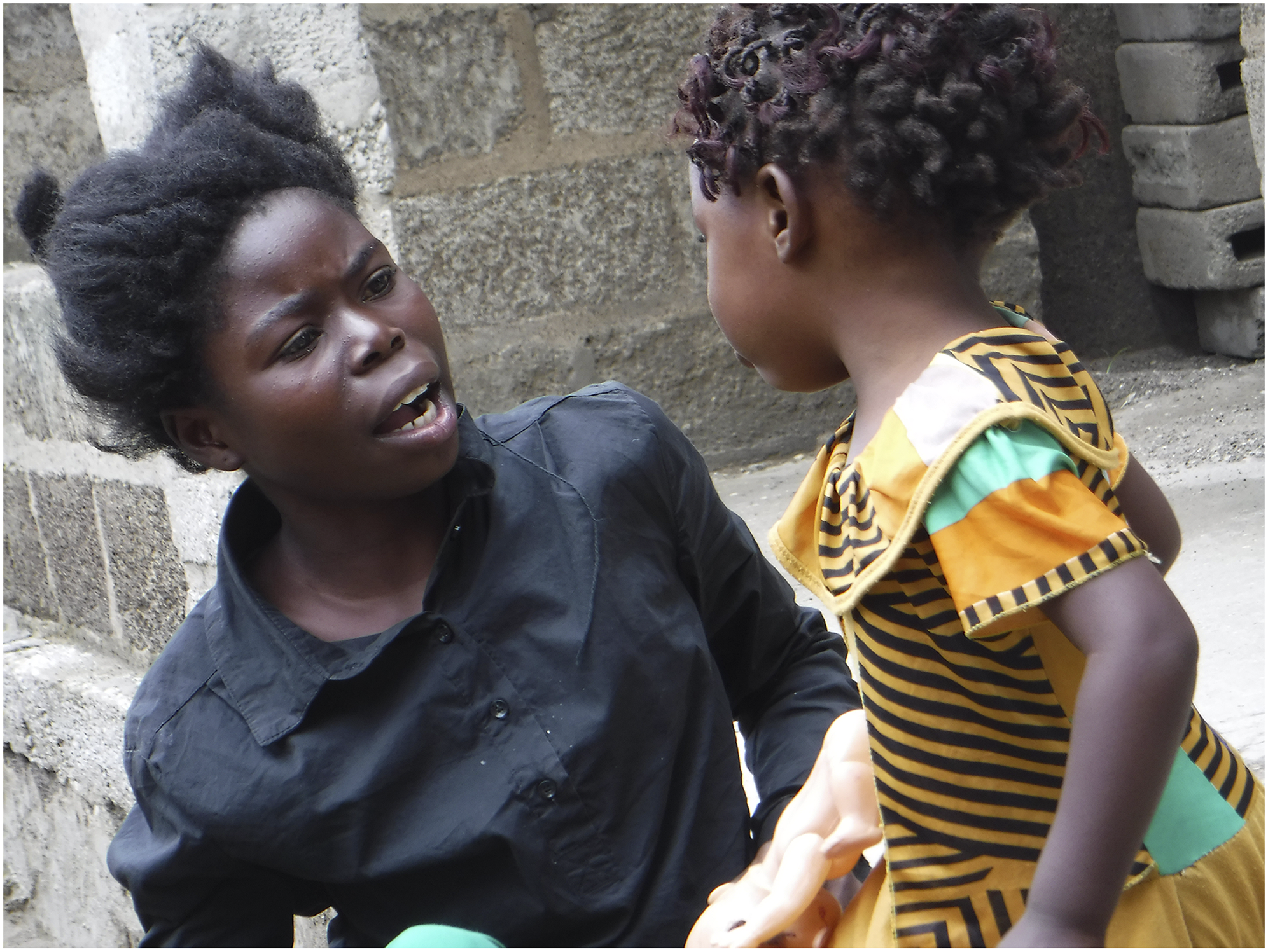
Playing with a friend.
Participant 3 also echoed the sentiment that her young daughter, who has cerebral palsy, needed to have friends to feel loved:
In many cases, the able-bodied children would be playing and leave the disabled child alone[,] crying out of loneliness. When her friends are playing, I take my disabled child there to play with them and she really enjoys playing with her friends.
Theme 2: Our Children With Disabilities Should Be Well Taken Care Of
In this theme, parents discussed the high level of care their CWD needed and the challenges this created in regard to engagement in the caregiving occupation. They emphasized how essential certain care tasks, such as eating, toileting, bathing, and dressing, are to their child’s basic human dignity and reflected on how other parents neglect and hide their CWD. Participant 1, a mother of a boy with severe cerebral palsy, stated,
Others are just leaving them. They do toilet in their nappies. It's not good. This picture is telling us that the child should bathe no matter the situation, whether the child can walk or cannot walk. [Even if] the child has got [a] disability . . . the child has to be clean.
Participant 5 added, “I want to educate the entire community that if you have a child like this one, it is important to love and take very good care of the child and not neglect them.”
Parents wanted the community to know about the barriers to helping their child complete necessary care tasks, including a lack of social support from family and community members, lack of access to clean water, and physical environmental factors. Participant 10 described her photograph, titled “Complaint” (Figure 2), in which her son was unable to use the community latrine by their house:
I was so happy to see him going towards the toilets and trying to use the toilet that other people use. But in the process, I stopped him[,] saying, “I will just give you the usual pot that you always use because you [can’t] use that toilet.” He tells me that “I’ve grown old, you shouldn’t be putting me on a pot, while the other children are around me.”
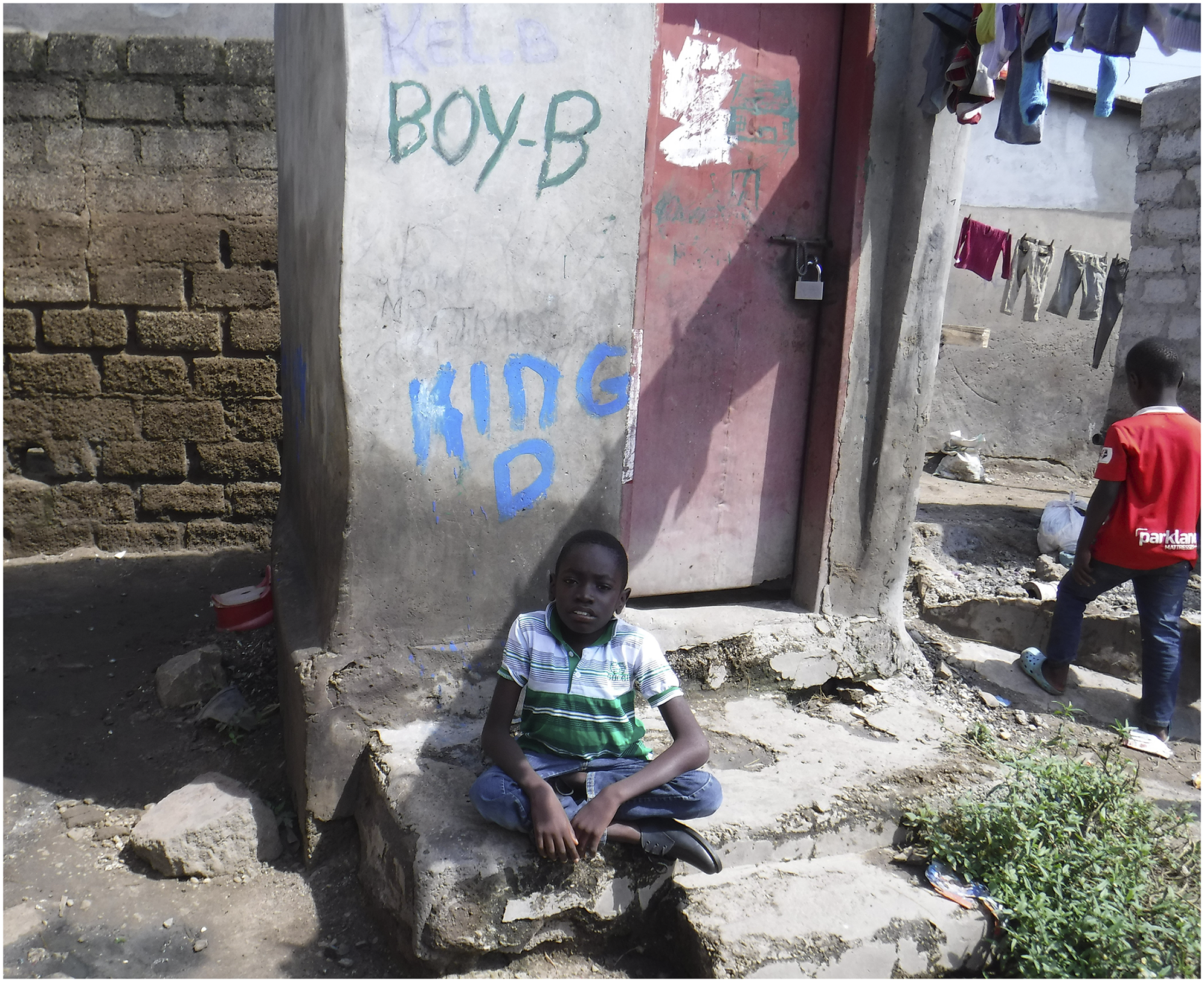
Complaint.
Another participant described challenges related to accessing clean water for the daily bathing and washing of clothes for her son, who was incontinent. She stated that the government often closes the well near her house because of contamination. If the well is closed, she needs to walk extra miles to find clean water:
In caring for [my son], I really depend on this well, okay. Because there are times when I’m busy, come late home, and find that the water is unavailable. I will not have to move, walk for long distance to go and look for water to bath or to wash him and to do these other daily activities. Life is simplified, made a little bit easier with the well around.
Part of this theme’s message was geared toward other parents in the community with a CWD. Participants wanted to role-model to other caregivers how CWD should be treated and loved. They talked about how important it was for the cultural beliefs to change so that parents did not need to feel shamed and shunned by others in their family or community. Participant 7 shared her photograph to advocate for better treatment of CWD within the community:
This photo is educative to the community. For example, there are people who do not have a disabled child who laugh at disabled children. We need to enlighten those people so that they are aware that it was not by choice that we have disabled children.
She stated that her photograph shares the message that it is time to stop stigmatizing people with a disability.
Theme 3: Our Children With Disabilities Need Help Because They Have Different Needs
In this final theme, participants described the need to advocate for and secure additional supports they believe their child deserves. Parents wanted the community to help advocate for these multiple needs, including access to health care and rehabilitation services, educational opportunities, transportation options, and the ability to generate income to support these extra needs. Participant 6 shared how important physiotherapy was for her young daughter and spoke of the difficulties in securing funds for transportation:
We are supposed to take our children who are disabled for physiotherapy so that their condition changes and improves from stage to stage starting with sitting. As women with children with disabilities, we need to be dedicated when it comes to our children. At times you might argue that you do not have transport[ation] money but God does provide. We need to save, no matter how little.
Other parents explained through their photographs that it was difficult to seek employment opportunities to cover additional costs because of a lack of support in caregiving. Participant 8 spoke passionately about her photograph, titled “Help” (Figure 3), and she described how important it was for her to have economic activity:
I took a photo of chikanda which I had just finished preparing. From this chikanda photo we can learn that even if you have a disabled child, you can still conduct business. Our children need attention so when I sell, I am able to attend to needs such as buying washing powder for the laundry of his things and I also buy food.

Help.
She indicated that, through this picture, she wanted to encourage change among other parents of CWD:
With this photo I want to encourage you fellow parents. This is because there are parents that believe that because they have a disabled child, they cannot conduct any business. If we just sit and do not do anything, life becomes hard.
Participants also wanted community members to advocate for education for CWD and encourage these children to attend school. Participant 5 wanted the community to understand the educational needs of her CWD:
[Parents of CWD] should come up with a mechanism of educating the child/sending the child to school. This is because if the child is sent to school, the child’s intellectual capacity will be developed.
Participant 10 described how important it is that her son have the opportunity to go to a regular school: “Even a child with a disability needs to go to school. We must not neglect our disabled children, just because[,] for instance[,] a child is unable to walk.” This participant was the only one in the group whose child was able to attend a school.
Discussion
Our findings indicate that using the social model of disability can capture a broader disability experience for parents of a CWD living in marginalized circumstances in LMICs. Occupational injustices occurring with CWD and their families, especially at the level of societal factors contributing to impairment, are often ignored in the traditional medical model of disability. In this study, we aimed to discover the lessons and messages that caregivers of CWD living in an impoverished community wanted to impart as they pertain to CWD’s rights in Zambia.
The use of Photovoice provided a means by which the parents could share their experiences and concerns. The resulting themes supported the broader societal beliefs surrounding disability in many LMICs noted in the literature (Tilahun et al., 2016). Participants described community stigmas that resulted in discrimination that affected the human rights and dignity of their CWD. This finding aligns with previous results indicating that caregivers, especially mothers, bear the brunt of the stigmatization, leading to a decreased ability to care for their CWD because of isolation and a lack of support (Singogo et al., 2015; van der Mark et al., 2017). This finding also supports previous research indicating that occupational participation and engagement are supported by social inclusion and that stigmatizing societal beliefs and attitudes creates an environment of occupational injustice (Gupta, 2016). Our participants recognized this problem in their community and sought to use their collective voice to advocate for an end to the stigma attached to CWD through use of their photographs and narratives.
Parents in this study also spoke about the poor treatment of CWD happening in their community by other families, but they emphasized how much they loved their CWD; this was a key advocacy message for their community exhibition. They spoke strongly about advocating for the dignified treatment of their CWD and the need to have resources to provide daily care routines in a personal way that was loving and respectful. This finding has not been documented in the previous literature on caring for CWD in an LMIC. Thus far, the data supporting positive aspects of caring for a CWD have come from high-income countries, such as the United States and Canada, as opposed to LMICs, suggesting that social factors affecting disability can pose considerable barriers to positive occupational engagement in caregiving for a CWD. Caregiving challenges related to keeping CWD clean and fed were often directly related to accessing clean water, having appropriate toileting facilities and equipment, and being able to engage in economic activities to support basic care for their child.
Finally, as a participant-driven research method, Photovoice provided an opportunity for the parents in our study to allow their voices to be heard. The social model of disability lens allowed for a broader view of how disability is constructed, particularly in an LMIC. When social contexts and systems are illuminated, occupational injustices can be brought to the forefront, further emphasizing how engagement in meaningful occupations, such as caregiving for a CWD, are influenced by societal beliefs, attitudes, and values (Gupta, 2016). In sharing the parents’ images, stories, and messages for the community, previously marginalized voices can be empowered to facilitate change at the systems level to achieve increased occupational potential.
Limitations
The setting for this research is one limitation. Had the participants lived in a rural area of Zambia, it is likely that their experiences would be considerably different, possibly with added challenges of traveling long distances to access medical care and rehabilitation services. Also, the parents were currently receiving support from the Kusamala+ project, and it is plausible that caregivers who were not a part of the project would have a substantively different experience. Other important limitations are the potential language barrier and the accuracy of local translators. These could have a bearing on the actual wording provided in the transcripts.
Implications for Occupational Therapy Practice
Critical reflection on the socially constructed experience of disability is needed to support full participation, enablement, and inclusion in one’s lived community (McCormack & Collins, 2010; Phelan, 2011). The social model of disability focuses on attitudinal obstacles that affect occupational participation for caregivers of CWD (Goering, 2015). In LMICs, this model also provides a powerful way to highlight occupational injustice, due to social exclusion, that limits occupational engagement at its fullest potential. The findings of this study have the following implications for occupational therapy practice that support the American Occupational Therapy Association’s (2019) Vision 2025:
Participatory action research, conducted in partnership with disability communities in LMICs, can advance occupational therapy professionals’ understanding of the social influences that affect occupational engagement for caregivers of CWD.
Visual mythologies such as photography can be a powerful advocacy tool to effect change in communities and countries in which language and cultural norms may be a barrier.
Occupational therapy professionals can use a social model of disability to critically analyze occupational justice issues and develop a more reflexive approach to practice.
Conclusion
At the root of occupational therapy intervention lie occupational participation and engagement. In this Photovoice study, we aimed to empower caregivers of CWD in a marginalized community in Lusaka, Zambia, to facilitate changes in the community regarding attitudes toward disability. This research adds to the limited body of knowledge about the caregiving experiences of CWD in an LMIC and the communication of messages of change at the community level. Photovoice proved to be an effective participatory action research method to allow parents of CWD to be a voice for change in a country where disability has historically been stigmatized and ignored.
Footnotes
Acknowledgments
Funding for this study was provided by the GHR Foundation, in the form of a GHR Innovative Scholarship Grant, and a University of St. Thomas Graduate Research Team grant.
We thank the Catholic Medical Mission Board of Zambia for their assistance with study implementation, participant recruitment, and translation services and acknowledge the dedicated involvement of each parent participant.