





Abstract
These Practice Guidelines provide a summary of evidence supporting interventions that address impairments resulting from traumatic brain injury (TBI) and the skills to improve occupational performance. Also included are case study examples and evidence graphics for practitioners to use in addressing the goals of adults with TBI as well as their caregiver’s needs.
Traumatic brain injury (TBI) is an injury causing neurological damage that affects normal functioning of the brain. It is commonly described as a chronic health condition because it frequently requires an extended recovery and has a prolonged impact on an individual’s participation in everyday activities. According to the Centers for Disease Control and Prevention (CDC; 2022b), TBI may be caused by blows, bumps, or jolts to the head. It may also be caused by penetrating injuries. TBI is one of the leading causes of death and disability in the United States, and it affects 2.9 million people each year. Of the approximately 2.5 million people who will visit an emergency room for a TBI each year, 61,000 will die and 224,000 will be hospitalized (CDC, 2021c). It is difficult to estimate the actual national incidence of TBI because there is no comprehensive surveillance system; in addition, TBI is often underreported and goes untreated (J. M. Bell et al., 2017). The leading causes of TBI are falls, firearms-related suicide attempts, motor vehicle accidents, and assaults. The leading causes of TBI-related hospitalization are unintentional falls, at 49.1% (highest among those age 75 yr and older), and motor vehicle accidents, at 24.5% (highest among those ages 15–24 yr and 25–34 yr; CDC, 2021c). TBI is not a selective disease; it can occur at any age throughout the lifespan, indicating a need for developmentally appropriate and specific prevention and management approaches (CDC, 2021c; Waltzman et al., 2022). In addition, men have a higher age-adjusted rate of TBI with all mechanisms of injury than women (CDC, 2021c). However, in comparisons based on biological sex, women report worse outcomes than men (Gupte et al., 2019). In addition, people in select categories have been identified as being at risk of experiencing disparities in health outcomes (e.g., likelihood of dying). Among them are racial and ethnic minorities, members of the military and veterans, people in the criminal justice system, those experiencing homelessness, and victims of intimate partner violence (CDC, 2022a).
The severity of TBI is classified as mild (e.g., concussion), moderate, or severe at the time of injury in relation to neurological impairment and clinical characteristics at the time of injury. Approximately 80% to 90% of all TBIs are considered mild, with an estimated annual incidence concussion rate of 1.2% of the population when using sampling methods (Langer et al., 2020). Clinical characteristics at the time of injury affect the severity classification but do not take into account the severity of deficits the individual will endure as a result of the TBI. TBI can be diagnosed in multiple ways: clinical presentation, diagnostic criteria, loss of consciousness, and responsiveness. The severity of injury after TBI can be assessed by emergency personnel using the Glasgow Coma Scale (GCS; Teasdale & Jennett, 1974) in the acute setting and clinical presentation at the time of injury. The GCS is a 15-point assessment that is based on responsiveness in the acute postinjury period. Scores based on eye, verbal, and motor responses are summed together to determine the level of severity of brain injury. In recent years, sports-related concussions (SRCs) have received much attention because of the large number of concussions reported annually and the potential long-term impact of concussive and subconcussive brain trauma. A mild TBI is considered a physiological disruption of brain function that clinically presents with at least one of the following criteria: loss of consciousness for ≤30 min, memory loss, disorientation or confusion, focal neurological deficit, GCS score of 13 to 15, and posttraumatic amnesia for <24 hr (Silverberg et al., 2021). Given the brain’s complexity and variation among individuals, it is difficult to predict the extent of functional impairment associated with severity and both the duration and the course of recovery. As a result, the recovery timeline for TBI-related outcomes and functional limitations can range from days or weeks to throughout one’s lifetime.
Signs and symptoms of TBI include impairments in cognition (e.g., memory, attention, self-awareness); motor performance (e.g., balance, strength, range of motion); vision (e.g., scanning, sensitivity); and emotional, behavioral, and psychosocial skills (e.g., depression, anxiety, anger) that can resolve over time, persist for an extended time, or not be observable until later in the recovery process. Thus, many people living with TBI have significant impairments that affect their participation in occupational performance, employment, and relationships postinjury (Acord-Vira et al., 2021; Lefkovits et al., 2021). Moderate to severe TBI is often a chronic condition that can have long-term negative effects. For those with moderate to severe TBI 5 yr postinjury, 20% will die from other medical causes, 57% are moderately to severely disabled, 55% are unemployed, 33% require assistance with everyday activities, 29% are not satisfied with life, and 29% use drugs and or alcohol (CDC, 2021a). In their study, Nelson et al. (2019) found that 53% of participants with mild TBI reported continued functional impairment 12 mo postinjury. In addition, there is a connection between athletes who sustain an SRC and long-term cognitive impairment, including executive function skills, memory, and psychomotor function (Cunningham et al., 2020; Gallo et al., 2020). Many variables affect recovery time and potential negative outcomes, including injury mechanism, severity, gender, age, education, posttraumatic amnesia, environment, personality, and caregiver support (Bivona et al., 2020; Elbourn et al., 2019; Haarbauer-Krupa et al., 2021; Kowalski et al., 2021).
Early treatment and engagement in rehabilitation therapy has been found to be an important contributor to enhanced cognitive and motor recovery (Zarshenas et al., 2019) and functional outcomes (Kowalski et al., 2021; Lefkovits et al., 2021; Williams et al., 2021). However, people with TBI often have difficulty accessing and receiving ongoing long-term services postinjury (Andelic et al., 2020; Lefkovits et al., 2021). Treatment goals may vary over the course of recovery, with the end goal of improving the occupational performance, participation, and quality of life of the person with TBI (Klepo et al., 2022). According to the American Occupational Therapy Association (AOTA; 2020), occupational therapy practitioners are uniquely qualified to “assess the client’s ability to engage in occupational performance” (p. 8) and provide interventions to address those limitations. Standard occupational therapy interventions to address limitations in occupational performance include the use of occupation-based goals, client-centered practice, interventions to support occupation, education, training, advocacy, group interventions, virtual service delivery, and therapeutic use of occupations and activities (e.g., contextualized therapy; AOTA, 2020; Bogner et al., 2019). Occupational therapy intervention approaches may shift throughout the recovery process, depending on the level of severity and recovery. Occupational therapy interventions may include establishing or restoring a skill or ability, compensating, adapting the context or activity, maintaining function with supports to preserve abilities, and preventing occupational performance limitations. In addition, many people with TBI will require support at different times throughout their recovery for varying reasons. It is also important to include the caregiver in the intervention implementation process to maximize the client’s potential outcomes. Caregivers’ psychological well-being is related to the functional outcomes of the person with TBI for whom they are providing care (Bivona et al., 2020).
The Practice Guidelines presented here are an update to the Occupational Therapy Practice Guidelines for Adults With Traumatic Brain Injury that were published in 2016 (Wheeler & Acord-Vira, 2016). The Practice Guidelines are a synthesis of the results of six systematic reviews. One systematic review question changed from the previous guidelines. The sixth question in the 2016 guidelines included interventions to address everyday activities and areas of occupation. The updated sixth question for the current guidelines addresses interventions for caregivers to facilitate participation in that role. Each of the current six questions includes the effectiveness of interventions to address an impairment for the purpose of improving occupational performance. The questions were chosen on the basis of the most common signs and symptoms that affect occupational performance after TBI (CDC, 2021b). The interventions presented in these updated Practice Guidelines build on the previous guidelines and reflect the most up-to-date evidence to support occupational therapy practitioners in providing interventions found to be effective in the treatment of adults with TBI and their caregivers.
Systematic Review Questions
These Practice Guidelines are based on the following six questions: What is the evidence for the effectiveness of interventions to improve arousal and awareness for persons in a disordered state of consciousness post-TBI? What is the evidence for the effectiveness of interventions that address motor and vestibular impairments and skills to improve occupational performance for people with TBI? What is the evidence for the effectiveness of cognitive processing, activity, and occupation-based interventions to improve participation for persons with TBI and cognitive impairments? What is the evidence for the effectiveness of interventions that address visual impairments and visual perception to improve occupational performance for people with TBI? What is the evidence for the effectiveness of interventions that address psychosocial, behavioral, and/or emotional skills to improve social participation and other everyday activities and occupations for persons with TBI? What is the evidence for the effectiveness of interventions for caregivers of persons with TBI that facilitate participation in the caregiver role?
Goals of These Practice Guidelines
Through these Practice Guidelines, AOTA aims to help occupational therapy practitioners, as well as the people who manage, reimburse, or set policy regarding occupational therapy services, understand occupational therapy’s contribution in providing services to people with TBI and their care partners. These guidelines can also serve as a reference for health care professionals, health care facility managers, education professionals, education and health care regulators, third-party payers, managed care organizations, and those who conduct research to advance care of people with TBI.
These Practice Guidelines were commissioned, edited, and endorsed by AOTA without external funding being sought or obtained. They were financially supported entirely by AOTA and developed without any involvement from industry. All authors of the systematic reviews completed conflict-of-interest disclosure forms, with no conflicts noted. AOTA reviews practice guidelines, and updates them as needed, every 5 yr to keep the recommendations on each topic current according to criteria established by ECRI (2020). Guideline topics are evaluated by a multidisciplinary advisory group consisting of AOTA members, nonmember content experts, and external stakeholders. These Practice Guidelines were reviewed and revised on the basis of feedback from a group of content experts on people with traumatic brain injury that included practitioners, researchers, educators, practitioners, and policy experts. Reviewers who agreed to be identified are listed in the Acknowledgments.
These Practice Guidelines report the findings from systematic reviews of published scientific research on focused topic-specific questions. The systematic reviews were conducted according to the Cochrane Collaboration methodology (Higgins et al., 2019) and are reported according to the Preferred Reporting Items for Systematic Reviews and Meta-Analyses (PRISMA) guidelines for conducting systematic reviews (Moher et al., 2009). The process included ▪ protocol and question development with input from a multidisciplinary advisory group that also included consumers and information end users, ▪ a literature search conducted by a medical research librarian, and ▪ team evaluation of the literature and a synthesis of the findings.
Interventions that were described in sources other than the published literature and that did not meet the inclusion criteria were excluded from the reviews.
Occupational therapy practitioners should not consider these Practice Guidelines to be a source of comprehensive information about TBI or about application of the occupational therapy process. The occupational therapy practitioner makes the ultimate clinical judgment regarding the appropriateness of a given intervention in light of a specific client’s or group’s circumstances, needs, and response to intervention, as well as the evidence available to support the intervention. Examples of how evidence can inform practice with people with TBI are included in the “Case Illustrations and Evigraphs” section. In addition, the Appendix provides practitioners with tools to translate this evidence to clinical practice.
AOTA supported the systematic reviews on the effectiveness of interventions within the scope of occupational therapy for people with TBI as part of its Evidence-Based Practice (EBP) Program. AOTA’s EBP Program is based on the principle that the evidence-based practice of occupational therapy relies on the integration of information from three sources: (1) clinical experience and reasoning, (2) preferences of clients and their families, and (3) findings from the best available research. The systematic reviews and these Practice Guidelines report the findings from the best available research.
Clinical Recommendations for Occupational Therapy Interventions for Adults With Traumatic Brain Injury
Clinical recommendations are the final phase of the synthesis of systematic review findings. The findings for each systematic review question are graded in terms of how confident a practitioner can feel that using the interventions presented in the evidence will improve the outcomes of interest to their clients. The grade is based on the specificity of the intervention, number of studies supporting the intervention, level of evidence of the studies, quality of the studies, and significance of the study findings. Interventions included in the clinical recommendations are specific to a population, and the articles that describe them provide sufficient detail for practitioners to understand the intervention and the outcomes of interest.
Describing the strength of clinical recommendations is an important part of communicating an intervention’s efficacy to practitioners and other users. The recommendations for these Practice Guidelines were evaluated and finalized by AOTA staff, the AOTA research methodologist, and the systematic review and practice guideline authors. AOTA uses the grading methodology provided by the U.S. Preventive Services Task Force (2018) for clinical recommendations. The clinical recommendations pertaining to each review, along with the studies’ level of evidence and supporting details, are presented in Tables 1 to 6.
Clinical Recommendations for Interventions to Improve Arousal and Awareness of Persons With DOC Post-TBI
Note. All studies had statistically significant positive outcomes related to the interventions discussed. DOC = disordered state of consciousness; GCS = Glasgow Coma Scale; ICU = intensive care unit; NR = not reported; PROM = passive range of motion; RCT = randomized controlled trial; TBI = traumatic brain injury.
Clinical Recommendations for Interventions That Address Motor and Vestibular Impairments and Skills to Improve Occupational Performance of People With TBI
Note. All studies had statistically significant positive outcomes related to the interventions discussed. NR = not reported. RCT = randomized controlled trial; TBI = traumatic brain injury.
Clinical Recommendations for Cognitive Processing, Activity, and Occupation-Based Interventions to Improve Participation of Persons With TBI and Cognitive Impairments
Note. All studies had statistically significant positive outcomes related to the interventions discussed. ABI = acquired brain injury; ADL = activities of daily living; CBT = cognitive–behavioral therapy; CO-OP = Cognitive Orientation to daily Occupational Performance; CR = cognitive rehabilitation; mTBI = mild traumatic brain injury; NR = not reported; RCT = randomized controlled trial; PTA = posttraumatic amnesia; TBI = traumatic brain injury; TC = Tai Chi; VR = virtual reality.
Clinical Recommendations for Interventions That Address Visual Impairments and Visual Perception to Improve Occupational Performance of People With TBI
Note. mTBI = mild traumatic brain injury; NR = not reported; RCT = randomized controlled trial; TBI = traumatic brain injury; VEP = visual evoked potential.
Clinical Recommendations for Interventions That Address Psychosocial, Behavioral, and Emotional Skills to Improve Social Participation and Other Everyday Activities and Occupations of Persons With TBI
Note. All studies had statistically significant positive outcomes related to the interventions discussed. CBT = cognitive–behavioral therapy; mTBI = mild traumatic brain injury; RCT = randomized controlled trial; RPM = rotations per minute; TBI = traumatic brain injury.
Clinical Recommendations for Interventions for Caregivers of Persons With TBI That Facilitate Participation in the Caregiver Role
Note. All studies had statistically significant positive outcomes related to the interventions discussed. ABI = acquired brain injury; CAPS = Counselor-Assisted Problem Solving; TBI = traumatic brain injury.
For the purposes of these Practice Guidelines, we report only recommendations graded A, B, and D, the grades that best support clinical decision-making: ▪ A: There is strong evidence that occupational therapy practitioners should routinely provide the intervention to eligible clients. Strong evidence was found that the intervention improves important outcomes and that benefits substantially outweigh harms. ▪ B: There is moderate evidence that occupational therapy practitioners could routinely provide the intervention to eligible clients. There is high certainty that the net benefit is moderate, or there is moderate certainty that the net benefit is moderate to substantial. ▪ D: It is recommended that occupational therapy practitioners not provide the intervention to eligible clients. At least fair evidence was found that the intervention is ineffective or that harms outweigh benefits. In these reviews, we did not find Grade D evidence.
These grades are reported in Tables 1 to 6 and designated with green, indicating should consider if appropriate (A), or yellow, indicating could consider if appropriate (B). None of the studies included in these reviews reported adverse events or harms related to the interventions evaluated.
The complete findings from the systematic reviews can be found in the Systematic Review Briefs on this topic published in the American Journal of Occupational Therapy (Acord-Vira et al., 2022a, 2022b, 2022c; Fields et al., 2022; Giles et al., 2022; Kaldenberg et al., 2022a, 2022b, 2022c, 2022d; Li et al., 2022; Radomski et al., 2022; Weaver et al., 2022a, 2022b, 2022c, 2022d; Wheeler et al., 2022a, 2022b, 2022c, 2022d, 2022e). As always, practitioners’ clinical decisions should be informed by the evidence presented in these Practice Guidelines, in combination with their clinical experience and the client’s particular goals.
Translating Clinical Recommendations Into Practice
Clinical Reasoning Considerations
Very rarely will practitioners find an evidence-based intervention that perfectly fits their clinical setting and the client’s specific needs. Occupational therapy practitioners need to consider several questions as they evaluate the research and consider whether they can use an intervention, or adapt it in a well-reasoned way, to meet the client’s exact needs (Highfield et al., 2015): Exactly what intervention do I need to provide? ▪ What types of client outcomes am I looking for? ▪ Do the studies I’ve located provide enough detail on the intervention so that I know what to do and how to do it? How well do the conditions in which I will provide the intervention match those in the studies? ▪ What are the demographic characteristics (e.g., age, gender, diagnosis, comorbidities) of the participants in the studies? ▪ In what setting (e.g., inpatient, home, community, school) did the studies take place? ▪ Do any contextual factors (e.g., resources or policies) that differ from those in the studies influence my ability to provide the intervention? How flexible is the intervention, and how much can I modify or adapt it? ▪ If my setting or client population differs from those of the studies, can I modify or adapt the intervention without changing its integrity? ▪ If I modify or adapt the intervention, what client characteristics (e.g., comorbidities) do I need to consider? ▪ Can I be proactive and plan how to modify or adapt the intervention before I start implementing it? ▪ Can I make minimal changes to the intervention, such as reordering the content of the sessions, or does the need for substantial changes indicate that I should select another intervention?
To modify or adapt evidence-based interventions in practice, practitioners must plan and proactively think through the changes they need to make to fit the intervention to the client and practice setting. In addition, they must document how and why they altered the researched intervention so others in their setting know how to implement the intervention and why the changes were made. If an intervention must be adapted extensively, it may not be the right fit for the situation. When practitioners adapt an intervention, it is no longer evidence based, but rather evidence informed. If extensive adaptations to the intervention are necessary, the intervention is probably not right for the client or setting. If the practitioner finds that the intervention does not suit the client, they should not use that intervention. Clinical interventions should be as similar as possible to the interventions used in the research.
Case Illustrations and Evigraphs
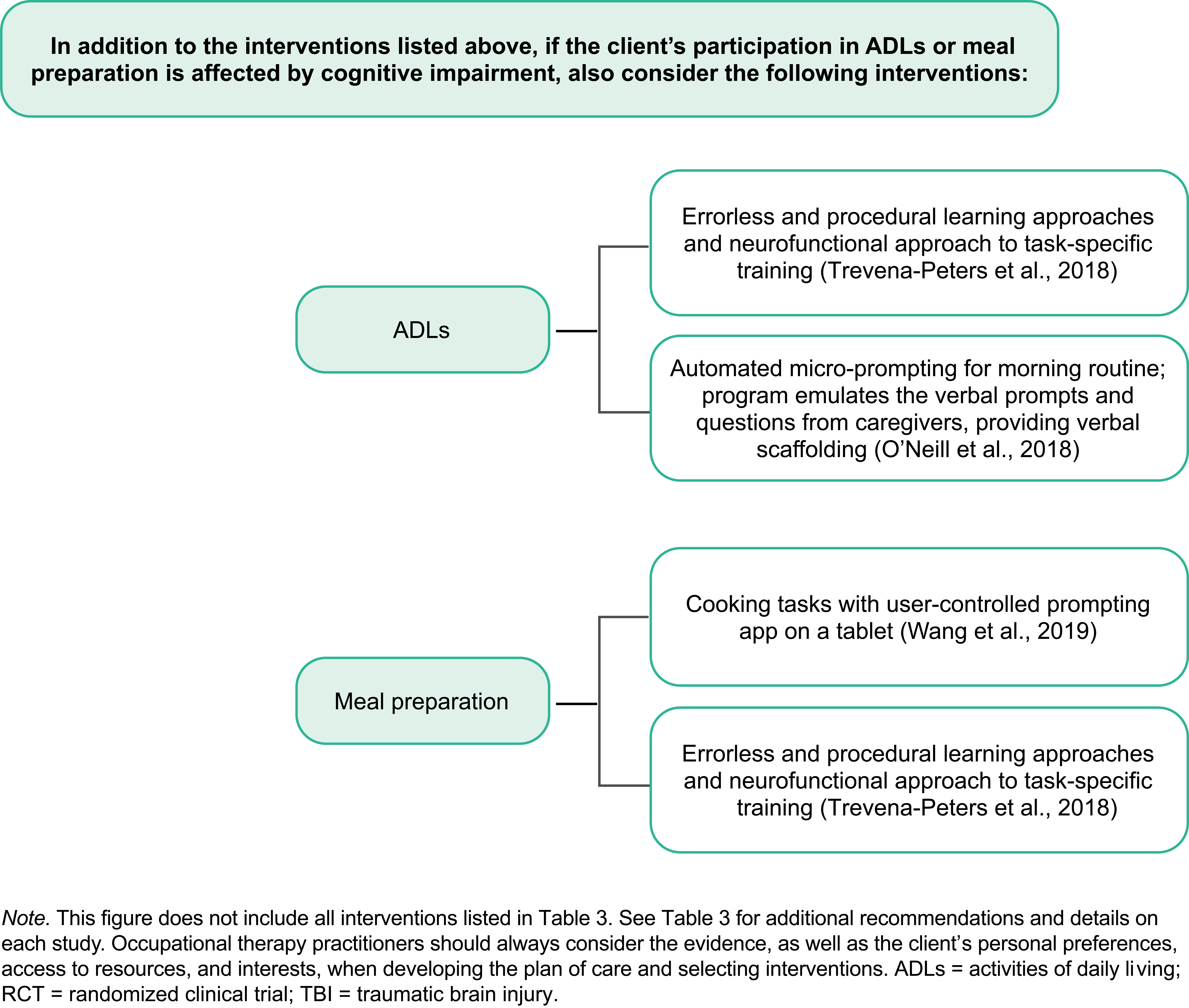
The case studies presented in these Practice Guidelines illustrate how occupational therapy practitioners can translate evidence from the systematic reviews to their professional practice when collaborating with people with TBI. Each case study highlights interventions that are supported by evidence and expert opinion. Included with the case studies are decision-making evidence graphics (evigraphs; Figures 1–4) developed by the authors and AOTA staff on the basis of the clinical recommendations; each evigraph includes decision points and actions for practitioners to take. Evigraphs are presented in relation to clinical recommendations for disordered state of consciousness interventions (Figure 1), motor and vestibular interventions (Figure 2), cognitive interventions (Figure 3), and psychosocial interventions (Figure 4).

Interventions to improve arousal and awareness for clients in a disordered state of consciousness.

Interventions to address motor and vestibular impairments and skills to improve occupational performance.

Interventions to address cognitive processing and activity to improve occupational performance.

Interventions to address psychosocial, behavioral, and emotional skills to improve social participation and occupational performance.
Practitioners must consider each potential intervention in relation to the client’s individual goals, interests, habits, routines, and environment and choose interventions that strongly align with or are supportive of these factors in the context of the client’s occupational profile. It is important to note that the evigraphs in these Practice Guidelines present simplified examples of the decision-making processes occupational therapy practitioners might use to address their specific clients’ goals.
Case Study 1: Derek
Because of his sedated, unresponsive state in the ICU, occupational therapy was unable to complete a comprehensive assessment. However, the occupational therapist encouraged family members to speak calmly to and touch Derek while sitting with him during the day and evening (Megha et al., 2013; Salmani et al., 2017). Derek’s mother read from his favorite books, and his father recounted sports scores and stories from the previous day. Family members also held Derek’s hand and caressed his hair. As Derek continued to show signs of improvement, he was transferred from the ICU to the facility’s inpatient rehabilitation unit, and an occupational therapy evaluation was initiated. At the time of his evaluation, it was determined that he was at a Level 6 (confused, appropriate responses) on the Rancho Los Amigos Scales of Cognitive Functioning (Hagen, 1998; Hagen et al., 1972).
Occupational Therapy Initial Evaluation and Findings
Using AOTA’s (2021) Occupational Profile Template as a guide, Derek’s occupational therapist conducted an initial evaluation, in the presence of his parents, which revealed the following: ▪ At the time of his initial occupational therapy evaluation, Derek had been recovering in bed for 16 days. Until Day 14, he had been heavily sedated, intubated, and in 5-point restraints because of agitation. ▪ Before his injury, Derek lived alone in a bachelor apartment and was independent in basic activities of daily living (ADLs) and all aspects of home management and community participation. Derek stated that he would like to return to his apartment after discharge from the hospital. ▪ Derek stated that, before his injury, he typically went to bed after midnight and slept approximately 9 hr/night. He began work in his part-time positions as a delivery driver and a golf course employee around 10:00 a.m. each day. ▪ Derek and his parents noted that he has a Bachelor of Fine Arts degree and is an aspiring actor. He has had previous roles in local theater productions and has been auditioning for television films and commercials. ▪ Derek enjoys sports, especially playing golf and attending various sporting events. He also enjoys classic movies. ▪ Derek is expressing considerable frustration with his hospitalization and inability to return to his apartment. He is unable to recall any details from his accident or his hospitalization, which, at the time of his occupational therapy evaluation, had lasted longer than 2 wk.
Additional findings from the evaluation are provided in Table 7.
Assessment Results for Derek
Note. ABS = Agitated Behavior Scale; AM-PAC = Activity Measure for Post-Acute Care; AOTA = American Occupational Therapy Association; COPM = Canadian Occupational Performance Measure; DLOTCA = Dynamic Lowenstein Occupational Therapy Cognitive Assessment; LE = lower extremities; UE = upper extremities.
Occupational Therapy Interventions
On the rehabilitation unit, Derek participated in two 45-min sessions of occupational therapy per day over a 4-wk period (totaling 40 sessions), including the initial evaluation and reevaluation at discharge. Goals included improved tolerance for activity; health management; and participation in leisure, social, and vocational activities. After the initial evaluation, the occupational therapist used the evigraphs displayed in Figures 2 and 3 to develop a plan that considered the diverse nature of Derek’s deficits and limited tolerance for physical and cognitive activity. As part of the ongoing evaluation process, the occupational therapist worked with Derek to determine his ability to safely participate in preferred, high-priority activities, such as driving and living alone. The sections that follow describe evidence-based interventions that could be implemented with Derek by either an occupational therapist or an occupational therapy assistant.
Education and Skills Training Intervention
One session per day for the first 3 wk of Derek’s inpatient rehabilitation program was dedicated to facilitating independence in basic and instrumental ADLs. An occupation-based approach was implemented using real-life contextualized tasks to support postdischarge community participation (Bogner et al., 2019). These occupation-based treatment activities progressed in terms of complexity and stamina requirements, beginning with dressing and grooming and then progressing to home management and community tasks. The occupational therapist used errorless learning approaches throughout the first week of intervention, limiting opportunities for error and frustration while building self-confidence during 1:1 task-specific training (Trevena-Peters et al., 2018). Derek’s early success in ADL performance created optimism for him and his family regarding his prognosis for recovery and functional goal attainment.
Tasks of increasing complexity were introduced in Week 2, such as cooking and laundry while using a walker. A neurofunctional approach (Trevena-Peters et al., 2018) was used that afforded Derek opportunities for problem solving and the development of self-awareness. The home management tasks integrated into occupational therapy sessions were those identified by Derek and his parents as necessary for attaining his goal to return to his apartment. At the beginning of Week 4, the occupational therapist completed a home assessment with Derek and his parents. His ability to safely manage in his apartment and exit in an emergency was observed. Derek was able to perform these tasks with minimal verbal cues.
High-Intensity Activity Intervention
Beginning in Week 3, with a walker no longer required for ambulation, occupational therapy and physical therapy collaborated on the implementation of treatment activities that addressed Derek’s desire to exercise, become physically stronger, and play golf. Three sessions were conducted, using a circuit involving a stationary bike for aerobic activity and a plastic golf ball set that Derek used to hit foam golf balls into the wall. Derek’s parents reported that the circuit was both motivating and mood enhancing for Derek (Rzezak et al., 2015; Weinstein et al., 2017). His cycling time had progressed from 8 min to nearly 20 min over the course of three sessions. In Week 4, occupational therapy received permission to set up a golf net in a field adjacent to the rehabilitation facility so Derek could participate in the contextualized intervention of carrying his golf bag up to 100 yards and using his actual golf clubs to practice (Bogner et al., 2019). Through physical exercise and golfing activities, the occupational therapist was able to address strength, endurance, balance, and coordination. Week 4 also included two sessions that were focused on the development of an individually tailored physical activity lifestyle program (Clanchy et al., 2016). The occupational therapist reviewed strategies to grade Derek’s exercise activities and to safely access the community.
Cognitive Interventions: Computer-Based and Virtual Reality
Two sessions per week focused on cognitive training, including computer-based cognitive tasks (four sessions), the use of the facility’s virtual reality driving simulator (two sessions), and role playing of acting auditions (two sessions). These tasks aligned with Derek’s comfort level with technology, his desire to resume driving, and his goal of a career in acting. The computer-based cognitive training addressed the domains of attention, memory, speed of processing, and executive functioning (Hwang et al., 2020). The driving simulator, used in Week 4, addressed selective attention, visual search, and working memory, in addition to driving skills (Ettenhofer et al., 2019). As part of each session, the occupational therapist discussed strengths and performance errors. It was explained to Derek and his parents that the driving simulator was not being used to evaluate and determine on-road driving ability. The cognitive rehabilitation activities addressed in occupational therapy complemented daily cognitive interventions addressed by the speech-language pathologist.
Outcomes
Derek met his goals after completing 4 wk of intensive interdisciplinary inpatient rehabilitation. By discharge, he was fully independent in basic ADLs and had demonstrated the ability to prepare a nutritious meal and complete laundry and cleaning tasks. He had also participated in a home visit and practiced leisure and vocational activities related to golfing and acting. Derek relied on the daily planner on his cell phone that included a schedule of home and community tasks, a list of upcoming appointments, and reminders to pay bills. Rest breaks were built into his daily routine to avoid the tendency to overexert while continuing to build strength and endurance.
Derek’s discharge scores were unchanged on the Canadian Occupational Performance Measure’s (COPM’s; Law et al., 2019) Performance scale at 8/10 but improved from 6/10 to 7/10 on the Satisfaction scale (Law et al., 2019). The occupational therapist attributed the limited change in scores to Derek’s insight. This was supported by changes in Derek’s level of demonstrated self-awareness on the Dynamic Lowenstein Occupational Therapy Cognitive Assessment (DLOTCA; Katz et al., 2012). Improvements on the DLOTCA were also noted for thinking operations and verbal mathematical operations at discharge. On the Activity Measure for Post-Acute Care (AM-PAC) “6 Clicks” Daily Activity form, Derek’s scores improved from 14/24 to 24/24, reflecting his full independence in basic ADLs (Jette et al., 2014), and his Berg Balance Scale score improved from 34 to 52, indicating that he was no longer a fall risk. Areas evaluated as impaired on the DLOTCA (Katz et al., 2012) were now intact or within normal limits. Grip strength improved from 44 pounds to 90 pounds for the right hand and from 39 pounds to 82 pounds for the left. Physical therapy indicated that Derek was independent with walking and stair climbing.
Despite his significant progress, it was difficult to fully anticipate challenges that might accompany Derek’s community reentry. He admitted that his strength and endurance were not back to normal, and it was difficult for the occupational therapist to fully simulate the physical and cognitive demands of a typical day outside the clinic setting. His home evaluation resulted in the recommendation that he return to his apartment with supervision. Derek’s parents and older sister, who were actively involved with his treatment program, agreed to collectively provide this supervision to observe independence and safety at home and in the community. To support his continued recovery at the community level, the rehabilitation team referred him for a formal driving evaluation and for outpatient occupational therapy, focusing on evaluation of work capacity and work hardening.
Case Study 2: Anita
Occupational Therapy Initial Evaluation and Findings
Using AOTA’s (2021) Occupational Profile Template as a guide, Anita’s occupational therapist conducted an initial evaluation, in the presence of her husband, which revealed the following: ▪ At the time of her initial occupational therapy evaluation, Anita had been recovering at home with her husband and two children for the past month. ▪ Before her injury, Anita lived with her husband and two children in a two-level home and was independent in basic ADLs, all aspects of home management, and community participation. Anita stated that she would like to return to her job as a high school teacher and be independent with home management, community participation, and parenting tasks. ▪ Before her injury, Anita’s job required that she stand for ≤8 hr/day, read and write lesson plans, complete grading, and manage the complexity of her and her students’ schedules. She has anxiety about the thought of returning to school because the incident occurred in front of her students, and she is afraid it could happen again. ▪ Anita stated that before her injury she typically went to bed at 9:00 p.m. and slept approximately 7 hr/night. She began work in her full-time position as a high school teacher at 7:00 a.m. and ended her day at the school around 3:00 p.m. After school, she picked up her children, attended their extracurricular activities, prepared dinner, and helped the children with their homework. ▪ Anita enjoys gardening, shopping, and attending her children’s sporting and band events. ▪ Anita expresses considerable frustration with her inability to return to work, manage the children and her schedule independently, drive, and participate in complex tasks because of memory issues, irritability, anxiety, fatigue, and persistent headaches. She also expresses frustration with her relationships with her husband and children. Her husband has taken on the primary role of caregiver for the children and is helping his wife manage everyday activities that she did independently before the concussion. She is easily fatigued and often misses social events with family and friends.
Additional findings from the evaluation are provided in Table 8.
Assessment Findings for Anita
Note. AOTA = American Occupational Therapy Association; COPM = Canadian Occupational Performance Measure; MFIS = Modified Fatigue Impact Scale; SWLS = Satisfaction With Life Scale; VOMS = Vestibular Ocular Motor Screening.
Occupational Therapy Interventions
During the outpatient therapy phase, Anita participated in three 60-min sessions of occupational therapy per week over a 12-wk period. Her husband drove her to the appointments and attended the sessions. Anita had hoped to return to her previous level of functioning within a few weeks after the fall and was discouraged because her symptoms were extending beyond the expected time for a full recovery. After the initial evaluation, the therapist developed an intervention plan that considered Anita’s deficits, limited tolerance for activity, and desired goals. This approach included cognitive and vision rehabilitation as well as interventions to address caregiving and relationships. Goals included improved tolerance for activity, health management, home management, and participation in social and vocational activities. As part of the ongoing evaluation process, occupational therapy would work with Anita to determine her ability to safely participate in preferred, high-priority activities, such as home management and work-related tasks and activities.
The sections that follow describe evidence-based interventions that could be implemented with Anita.
Cognitive Interventions: Strategy Training, Virtual Reality, and Telephone-Based Problem Solving
Cognitive dysfunction resulting from the concussion made it difficult for Anita to independently participate in everyday activities such as childcare, home management, community participation, and driving. She had difficulty remembering and problem-solving daily responsibilities, which was often worse on days she did not sleep well, resulting in cognitive, emotional, and fatigue symptoms. Anita participated in a variety of individualized and psychoeducation group interventions that focused on remediation and compensation strategies to facilitate independence and the process of return to work. These interventions were tailored to improve Anita’s symptoms (e.g., behavioral education, stress reduction, sleep hygiene), memory (e.g., calendars, to-do lists), attention and vigilance (e.g., conversational and task skills), learning and memory (e.g., encoding, retrieval strategies), and executive function skills (e.g., problem solving; Twamley et al., 2014, 2015; Vikane et al., 2017). Because of Anita’s sleep dysfunction, a sleep hygiene schedule and routine was established early, including supplemental educational brochures and biweekly phone sessions on problem solving (Vuletic et al., 2016). This resulted in a reduction in sleep dysfunction, allowing for increased overall participation and utilization of strategies learned during the individualized and group therapy sessions.
The use of technology was also incorporated into her intervention plan. Anita participated in a virtual reality group that focused on improving executive functioning skills through interactive virtual scenarios with sensory feedback, resulting in improved cognitive flexibility and shifting skills (De Luca et al., 2019). This included simulated work and home management tasks to practice implementing strategies and compensatory techniques. She also participated in a virtual reality driving simulation to practice the cognitive skills needed to return to the occupation of driving. As she participated in this intervention, her working memory, attention, and visual search skills improved (Ettenhofer et al., 2019). As Anita gained success in using strategies and compensation techniques with the driving simulation, its complexity was increased. Incorporating increasingly complex tasks provided opportunities for problem solving through simulated work tasks and home management tasks that were necessary for her to return to her previous roles and responsibilities.
Vision Therapy Interventions: Oculomotor Training
Vision deficits made it difficult for Anita to return to work, drive, and participate in social activities with her family and friends. During these activities, Anita was straining her eyes to participate, causing increased headaches and eye fatigue. Using the Vestibular Ocular Motor Screening (VOMS) assessment, the occupational therapist determined that Anita’s symptoms worsened when completing the convergence component of the assessment. Two 1-hr sessions per week focused on oculomotor training, including constant verbal and visual feedback, motivation, repetition, and active participation (Thiagarajan & Ciuffreda, 2013, 2014a, 2014b, 2014c, 2015; Thiagarajan et al., 2014). The sessions included 45 min of training and 15 min of rest. In total, Anita completed two phases of oculomotor training over 15 wk, with each phase including 6 wk of training. The training included an oculomotor component of version, vergence, and accommodation. These tasks aligned with her goals of returning to work, whichrequired her to be able to read and write for the majority of her workday. The occupational therapist reviewed strategies with Anita and her husband and encouraged her to use a log at home to track activities and symptoms to help monitor when rest breaks are needed.
Caregiver and Spouse Interventions: Therapeutic Couples Intervention
Anita was independent before the injury. Since the injury, she has experienced increased anxiousness, agitation, and fatigue. She becomes easily frustrated with the complexity of managing household tasks, parenting responsibilities, and her own health. Her relationship with her husband has been affected because her husband has taken on many of her roles and responsibilities within the family. Her husband is also feeling frustrated because his responsibilities within the family unit have doubled. To build and strengthen their relationship, Anita and her husband participate together in a therapeutic couple’s intervention (Kreutzer et al., 2020). These sessions lasted for 2 hr over 6 wk and included education, skill building, and psychosocial support (e.g., normalization, reframing, and empathic reflection). The purpose of these sessions was to improve relationship quality and stability by addressing issues and challenges commonly experienced by couples after brain injury instead of focusing on their individual experience. In addition, it was important to include individualized interventions for the caregiver, Anita’s husband, to address feelings of burden and stress because this can be problematic for the relationship (Brickell et al., 2021). The occupational therapist provided education on the Brain Injury Program, a self-directed website for caregivers that focuses on advocacy, communication, problem solving, stress, and finding support (McLaughlin et al., 2013).
Outcomes
Anita met her goals after completing 3 mo of therapy at the outpatient clinic. By discharge, her symptoms had improved, and she was fully independent in home management tasks, parenting responsibilities, and work-related tasks, using adaptive techniques and compensation strategies. Her relationship with her husband had also improved because she felt more confident and independent after resuming her roles and responsibilities. Her agitation and frustration with tasks improved and was limited to new tasks or complex stressful situations. Anita was back to driving her children and participating in her children’s extracurricular activities, making dinner because she enjoyed cooking and baking, and completing gardening tasks. She was able to return to work part time and worked up to full-time hours with the use of strategies (e.g., planner, reminders on phone) and accommodations (e.g., rest breaks during student down times, no bus or lunch duty).
Anita’s discharge score on the COPM Performance scale (Law et al., 2019) improved from 6/10 to 9/10, and her Satisfaction scale score improved from 5/10 to 8/10. The occupational therapist attributed the change to Anita’s improved management of symptoms and use of compensation strategies to address the related deficits at the time of her initial evaluation. On the Rivermead Postconcussion Symptoms Questionnaire (King et al., 1995), Anita’s symptom severity improved to no longer having a problem with headaches, nausea, sleep disturbance, fatigue, irritability, poor concentration, and blurred or double vision. Follow-up with the Satisfaction With Life Scale indicated an improvement from 14/35 to 30/35 (Diener et al., 1985), and Anita’s Modified Fatigue Impact Scale scores improved, with Physical, Cognitive, and Psychosocial subscale scores increasing from 20/36, 22/40, and 4/8 to 32/36, 38/40, and 8/8, respectively (Schiehser et al., 2015). Ocular motor impairment also improved, with 0/10 symptoms reported on the VOMS (Mucha et al., 2014).
Current Body of Evidence
The current body of evidence has strengths and limitations related to the systematic reviews that informed these Practice Guidelines. Systematic reviews address specific clinical questions that are guided by an a priori protocol for the question development and review process. No systematic review can address all aspects of a topic; the authors decide what to address before conducting the review. Additionally, no review is perfect, and even the most careful searches sometimes miss articles. The way to reduce these potential sources of bias is to conduct reviews using best-practice methodology.
Strengths
At every step of the process, the review authors followed best-practice methodology to the best of their ability, including getting input at all stages from practitioners, researchers, consumers, and experts in the areas included in the reviews. The review questions for the systematic reviews were developed with an intentional focus on occupation-based outcomes. Because the goal of occupational therapy is improvement in these outcomes, the systematic reviews targeted studies reporting occupation-based interventions and outcomes. Additionally, the guidelines provide materials to help practitioners see how the research findings might be translated to the practice setting.
Limitations: Gaps in the Evidence
Gaps in knowledge exist when there is insufficient, imprecise, inconsistent, or biased information in the literature about an intervention (Robinson et al., 2011). Gaps also exist when the literature is not sufficient to answer a clinical question.
Lack of research supporting particular interventions does not mean that practitioners should not use those interventions. In work with clients, practitioners considering specific interventions when there is not enough evidence to support evidence-based practice should use expert knowledge and their own training and experience to guide practice. In this section, we pinpoint important gaps in the evidence for interventions and approaches practitioners may consider using, as appropriate.
Occupational therapy practitioners need to think about the elements of evidence-based practice as they evaluate these guidelines, considering gaps in the literature related to their clinical practice. Practitioners should consider the following questions when they identify these gaps (Gutenbrunner & Nugraha, 2020): What evidence exists? ▪ What are the best practices associated with providing services to this client population? ▪ What interventions are contraindicated for this population? ▪ What outcomes am I hoping to achieve with this client? ▪ Does evidence exist in another field or discipline related to interventions and desired outcomes that are within the scope of occupational therapy practice? What are my client’s preferences and values? ▪ Does my client prefer one intervention over another? ▪ Are available resources, cost, or time influencing my client’s preference? ▪ How might the intervention I am considering affect my client’s performance patterns and roles? ▪ Does my client find the intervention I am considering meaningful? What experience and expertise do I have that can help guide my decisions? ▪ What types of interventions have I used previously that were effective with similar clients or populations? ▪ What types of interventions have I used previously that were ineffective with similar clients or populations? ▪ What potential risks does the intervention I am considering pose to my client or this client population? Will the health care system or organization be supportive of this intervention? ▪ How will I document this intervention? ▪ How will I document the outcomes associated with this intervention? ▪ Is it likely that this intervention will be reimbursed? ▪ Are there resources (e.g., equipment, supplies, expertise) in the practice setting to support this intervention?
The following sections present additional information and common occupational therapy interventions for people with TBI that are not addressed in these guidelines because of a lack of current relevant evidence. These sections are based on existing or emerging evidence, expert opinion, or both.
Prevention Approach
Much of the evidence in these Practice Guidelines has focused on interventions to address the impairments affecting occupational performance as a result of the current diagnosis. An important intervention consideration reflects the notion that once someone has sustained a TBI, they are more likely to sustain another. As a result, research is needed to investigate the effectiveness of prevention approaches. Multiple brain injuries may result in a poorer prognosis and decreased level of functioning compared with a single brain injury (Rabinowitz et al., 2020). Many risk factors are associated with sustaining a TBI, including gender, severity of injury, alcohol use, socioeconomic status, not seeking medical care, and history of TBI (Lasry et al., 2017). In addition, falls are one of the most common mechanisms of sustaining a TBI, and the incidence increases with age. Occupational therapy practitioners can and should intervene to provide education and training interventions that focus on prevention of TBI and age-related risk factors.
Sleep Hygiene
Sleep dysfunction is common after TBI and may affect an individual’s ability to cope with TBI symptoms, increase neuropsychiatric symptoms (e.g., depression, anxiety, and apathy) postinjury, affect health and well-being, and inhibit complete participation in rehabilitation and within the community. Occupational therapy practitioners should address with clients sleep dysfunction and its effect on an individual with TBI. Sleep hygiene interventions are effective at improving sleep dysfunction. Key principles of sleep hygiene interventions include the development of a sleep environment that is optimal for sleep management, minimizing bodily functions that affect sleep, restructuring daily activities (e.g., increased daytime activation, circadian stimuli, waking up each morning at the same time with consistent ADL routines), and limiting caffeine intake to before noon (Ho & Siu, 2018; Makley et al., 2020). Sleep hygiene interventions are also effective in combination with other interventions, such as cognitive–behavioral therapy, blue light therapy, problem-solving treatment, and some medications (Bogdanov et al., 2017; Makley et al., 2020; Sullivan et al., 2018).
Peer Mentoring
Occupational therapy practitioners may use peer mentoring interventions for individuals with TBI to enhance participation and improve overall quality of life. Previous studies have indicated that participants in peer support programs report positive outcomes, increased knowledge of TBI, enhanced overall quality of life, improved general outlook, improved behavioral control, and enhanced ability to cope with depression post-TBI (Kersten et al., 2018; Morris et al., 2017; Wheeler & Acord-Vira, 2016). A successful peer mentoring program should match the mentor and mentee, include knowledge and awareness training, and provide clear expectations and the requirements for the mentorship. In addition, both mentor and mentee must be ready and motivated to participate (Lau et al., 2021).
Caregiving and Supports
Caregivers are integral to TBI recovery and outcomes. The systematic reviews had a lack of quality studies that met the inclusion criteria and ultimately served as the basis for these Practice Guidelines. Many of the available studies on TBI caregiver interventions were qualitative studies, case studies, and exploratory studies that lacked a specific intervention. Additionally, much of the evidence in this systematic review did not specifically address the caregiver’s needs and the direct impact of the caregiver’s well-being on the recovery of the individual with TBI. Occupational therapy practitioners are uniquely qualified to assess caregiver needs and to provide support, training, and education to improve patient-centered outcomes (Kreitzer et al., 2020). Interventions may include education, home modifications, equipment training, training on handling techniques and self-care tasks, physical activity, leisure and social participation, health and well-being, and facilitation of occupational balance for both the client and the caregiver.
Postconcussion Return to Activity
Approximately 80% to 90% of all TBIs are considered mild, and the documented best approach to management of symptoms is a gradual return to activity after injury. Mild TBI should not be equated with mild limitations because postconcussion performance patterns and performance skills may significantly affect performance of everyday activities (Harris et al., 2019). These types of injuries can disrupt a person’s ability to participate in a variety of occupations, such as school, work, leisure activities, exercise, socialization, self-care tasks, and home management tasks. Of those, occupational therapy practitioners are particularly qualified as experts in occupation, activity analysis, and grading of activities to facilitate a gradual reengagement in everyday roles and occupations (Finn, 2019). In addition to grading activities to manage symptoms, occupational therapy practitioners use interventions such as compensation training, subsymptom threshold training, and impairment-based training. The desired outcome is to support the person to learn how to self-monitor symptoms and manage return to activity (Roelke et al., 2022).
Contextualized Therapy
Contextualized therapy focuses on improving participation in real-life activities that would normally be performed by a person with TBI as opposed to impairment-specific interventions or simulated tasks linked to motor, cognition, or vision deficits. Using this type of approach is holistic, is linked to the goals and interests of the client, and is consistent with an occupation-based perspective. Increased time spent doing contextualized activities during the inpatient rehabilitation process is associated with increased participation in the community 1 yr postinjury (Bogner et al., 2019). In addition, clients with increased acuity, and lower levels of functioning, had better outcomes with functional tasks such as self-care and mobility when contextualized therapy was used during the intervention plan rather than more skill- or simulation-based therapies. Occupational therapy practitioners can rely on instruments such as the occupational profile and COPM (Law et al., 2019) to identify the everyday activities that the client participated in before the injury.
Additional Implications for Occupational Therapy
To complement the intervention recommendations provided in Tables 1 to 6, the sections that follow describe general implications for occupational therapy with people with TBI and their care partners, based on TBI-related evidence and best-practice occupational therapy principles.
Complexity of Traumatic Brain Injury
The varying levels of severity and heterogeneity of symptoms that characterize TBI affect the generalizability of study findings. Persons with more complex impairments of greater severity may be excluded from studies. Additionally, to increase sample size, many studies chose to include participants with acquired brain injury (ABI), which includes diagnoses beyond TBI, such as stroke and other neurological conditions. Numerous studies were excluded from the systematic reviews leading to these Practice Guidelines because ABI was included and fewer than 50% of participants were people with TBI. In terms of injury severity, few studies that were included focused on interventions specific to severe TBI. Occupational therapy practitioners are often involved in the assessment and intervention planning for individuals with severe TBI and provide care during the early stages of recovery when acuity is particularly high. It is important to start occupational therapy services early in the recovery process because it can help to decrease length of stay and improve overall recovery (Alkhawaldeh et al., 2022).
Occupation-Based Performance Assessment and Outcomes
Many of the outcomes in the systematic reviews were based on studies from other disciplines that used self-report measures instead of performance-based assessments. Occupational therapists should use occupation-based performance assessments when working with individuals with TBI to support the profession’s role in working with this population and to better capture which interventions are most effective at improving occupational performance. Occupation-based performance assessments that could be used with this population include the Assessment of Motor and Process Skills (Fisher, 2006), the Complex Task Performance Assessment (Wolf et al., 2008), the Performance Assessment of Self-Care Skills (Holm & Rogers, 2008), and the Executive Function Performance Test (Baum et al., 2017). In addition, performance-based approaches, such as the Cognitive Orientation to daily Occupational Performance approach (Polatajko et al., 2001) and the Neurofunctional Approach (Giles, 2011), should be implemented in the intervention plan to facilitate acquisition of functional skills.
Conclusion
Occupational therapy practitioners are uniquely qualified to support the TBI recovery process. These Practice Guidelines summarize the available evidence regarding the effectiveness of interventions across the continuum of recovery for mild, moderate, and severe TBI as well as for caregivers. Clinical recommendations, based on the evidence, are provided to assist the clinical reasoning process, implementation of educational curricula, and future research. Translation to clinical practice is facilitated using case studies and evigraphs.
On the basis of the findings from the systematic reviews on which these Practice Guidelines are based, occupational therapy practitioners should carefully consider severity of injury, nature of symptoms, and stage of recovery when making clinical decisions. Evidence for interventions to address disordered states of consciousness; motor and vestibular impairments; cognitive functioning; vision-related impairments; and psychosocial, behavioral, and emotional skills for individuals with TBI is summarized and organized on the basis of the strength of the findings. Given the important role that caregivers often play in the recovery process, evidence is also provided for caregiver-focused interventions. Comprehensive evaluation, using standardized, performance-based assessments, client and caregiver self-report, and clinical observation, are essential to determining not only intervention approaches but also whether to use them in an individual or group context.
Gaps in the evidence for applicable occupational therapy interventions, such as sleep hygiene, peer mentoring, contextualized treatment, and caregiver- focused interventions, are identified in these Practice Guidelines, highlighting areas that should be considered when working with persons with TBI and their caregivers. Future research in occupational therapy should be guided by these gaps because there is a tremendous need to increase occupation-based research in TBI. Studies included in these Practice Guidelines were selected on the basis of intervention methods and outcomes considered within occupational therapy’s scope of practice. However, the majority of this research was conducted by individuals outside the occupational therapy profession.
The diverse and complex nature of TBI recovery aligns with client-centered occupational therapy evaluation and intervention. Occupational therapy practitioners are trained to work with people with neurological conditions of varying severity in hospital, home, and community settings. These Practice Guidelines equip clinicians with information and translation strategies to support implementation of interventions to optimize community participation and life satisfaction.
Footnotes
*
Indicates articles included in the systematic reviews.
Acknowledgments
The authors acknowledge and thank the following individuals for their participation in the content review and development of this publication:
Susan Cahill, PhD, OTR/L, FAOTA, Director of Evidence-Based Practice, American Occupational Therapy Association, North Bethesda, MD
Deborah Lieberman, MHSA, OTR/L, FAOTA, Former Vice President, Practice Improvement, American Occupational Therapy Association, North Bethesda, MD
Elizabeth G. Hunter, PhD, OTR/L, Assistant Professor, Graduate Center for Gerontology, College of Public Health, University of Kentucky, Lexington
Hillary Richardson, MOT, OTR/L, AOTA Practice Manager, Knowledge Translation, Evidence-Based Practice and Practice Improvement, American Occupational Therapy Association, North Bethesda, MD.
Mattie Anheluk, OTR/L, MOT; Alissa Cannoy, OTD, OTR/L, CBIS, AIB-VRC; Alison M. Cogan, PhD, OTR/L; Gordon Muir Giles, PhD, OTR/L, FAOTA; Jennifer Kaldenberg, DrPH, MSA, OTR, SCLV, FAOTA; Adam R. Kinney, PhD, OTR/L; Amanda Luper, MOT, OTR, CBIS; Taylor Rayne Turco, LCSW; Kelsey Watters, CScD, OTR/L, BCPR, CBIS; Jennifer A. Weaver, PhD, OTR/L, CBIS; Joe Yunek, OTR/L
The authors acknowledge the following individuals for their contributions to the evidence-based systematic reviews: Mattie Anheluk, MAOT, OTR/L; Jamie Basch, DHSc, OTR/L; Emily Boyd, OTS; Ginger Carroll, MS, OT/L, CPPM; Alison M. Cogan, PhD, OTR/L; Olivia Condon, OTS; Diana Davis, PhD, OTR/L; Beth Fields, PhD, OTR/L, BCG; Gordon Muir Giles, PhD, OTR/L, FAOTA; Gracie James, OTS; Christine Jimenez, OTS; Jennifer Kaldenberg, DrPH, MSA, OTR/L, SCLV, FAOTA; Adam R. Kinney, PhD, OTR/L; Brionna Lehman, OTS; Kitsum Li, OTD, OTR/L, CSRS; Robin Newman, OTD, MA, OTR/L, CLT, FAOTA; Mary Vining Radomski, PhD, OTR/L, FAOTA; Emilio Villavicencio, OTR/L, CNS; Mary Walker, OTS; Kelsey Watters, CScD, OTR/L, BCPR, CBIS; Jennifer A. Weaver, PhD, OTR/L, CBIS; Joe Yunek, MS, OTR/L.
Appendix: Overview of the Systematic Review Methods and Findings
The systematic reviews completed for these Practice Guidelines were conducted according to the Cochrane Collaboration methodology (Higgins et al., 2019) and are reported in a manner consistent with the Preferred Reporting Items for Systematic Reviews and Meta-Analyses (PRISMA) guidelines (Moher et al., 2009).