





Abstract
This review describes the process and experiences of engaging Hispanic and Latino stakeholders in occupational therapy research.
Autism spectrum disorder is a lifelong neurological disorder characterized by differences in social communication and patterns of restricted and repetitive behaviors and sensory differences (Kirby et al., 2022; Watson et al., 2011) that affect daily functioning and quality of life (Ben-Sasson et al., 2019; Schaaf et al., 2011). Occupational therapy is a frequently used and valued autism intervention that often addresses many of these sensory differences and assists in improving independence in daily living skills and participation in everyday activities (Monz et al., 2019). Thus, access to and utilization of occupational therapy are important for autistic children.
Racially and ethnically minoritized families with an autistic child experience significant delays in accessing and initiating autism intervention, including occupational therapy, compared with White families with an autistic child. These disparities contribute to delays in development, decreased quality of life, increased caregiver stress, and economic burden (Smith et al., 2020). Furthermore, minoritized families of autistic children often struggle to find evidence-based interventions that are culturally sensitive to their unique needs (Stahmer et al., 2019). Hispanics and Latinos currently represent the largest ethnic minority group in the United States (Motel & Patten, 2012) and comprise one of the fastest-growing groups of diagnosed autistic children (Magaña et al., 2013). Compared with White children, Hispanic and Latino children are diagnosed on average 2.5 yr later (Zuckerman et al., 2017) and receive fewer therapeutic services, experience a lower quality of care, and have difficulty gaining access to school-based autism services, including occupational therapy (Magaña et al., 2013; Stahmer et al., 2019). Hispanic and Latino families often interact with health care providers who disregard their concerns or lack training in family and cultural values. Furthermore, when their children receive an autism diagnosis, the parents often lack access to educational materials in their native language that align with their culture, including language preference (Blanche et al., 2015).
Hispanic and Latino families of autistic individuals are also underrepresented in autism intervention research and rarely included in research studies; these families report feeling their concerns are invalidated and that they must strongly advocate for inclusion and competent care (Dallman et al., 2021; Magaña et al., 2013). The lack of inclusion and diversity in studies limits the effectiveness of autism interventions for diverse populations (Davenport et al., 2018). Studies suggest that cultural adaptations are essential to increase the use and effectiveness of autism interventions for minoritized groups (Smith et al., 2020).
One strategy to improve the cultural relevance of interventions and participation in research is stakeholder engagement (Parikh et al., 2019), a collaborative partnership between families, health providers, and health care systems (Carman et al., 2013; Chu & O’Brien, 2013). Stakeholder engagement in the research process can improve utilization and acceptability, increase adherence, improve outcomes, and empower parents and caregivers toward greater participation in research and evidence-based interventions (Kim et al., 2018). Engaging diverse stakeholders is essential for developing effective interventions and research success, because it also contributes to the enrollment and retention of study participants (Forsythe et al., 2019).
To meet the needs of culturally and racially diverse autistic persons and families, occupational therapy interventions must be culturally adapted to ensure they are relevant, accessible, and acceptable. These cultural adaptations must be informed by the communities they serve. The National Standards for Culturally and Linguistically Appropriate Services (CLAS) in Health and Health Care, developed by the U.S. Department of Health and Human Services Office of Minority Health, promotes healthcare practices that address disparities and meet the needs of diverse populations. CLAS encourages community partnerships to design, implement, and evaluate culturally and linguistically appropriate practices (U.S. Department of Health and Human Services, n.d.).
Thus, the purpose of this article is to describe the process used to engage diverse stakeholders in a research project designed to improve access and utilization of occupational therapy services for Hispanic and Latino autistic persons. Specifically, we focused on an occupational therapy intervention called Occupational Therapy Using Ayres Sensory Integration® (OT-ASI), which is an evidence-based intervention for autistic children (Hume et al., 2021; Omairi et al., 2022; Schaaf et al., 2014; Schoen et al., 2019; Steinbrenner et al., 2020). Although OT-ASI is an evidence-based intervention shown to be effective at improving function and participation for autistic individuals, it has not been culturally adapted to improve access for minoritized populations.
This article reports on the stakeholder engagement process from a larger study designed to test two methods of Hispanic and Latino stakeholder engagement in research. We define stakeholders, as listed by the Patient-Centered Outcomes Research Institute (PCORI; 2024), as a diverse group of individuals and organizations that have an interest in health care research, including patients and their caregivers with lived experiences, clinicians, researchers, health care purchasers, payers, industry representatives, hospitals, policymakers, and training institutions. In this article, we embrace PCORI’s (2024) definition of stakeholders, adopting an inclusive approach and ensuring that individuals’ unique contributions are recognized and valued throughout the research process. This article will specifically report on the process used to create stakeholder advisory boards and to engage Hispanic and Latino stakeholders.
Method
Study Design
This project used a mixed-methods prospective design to identify and engage stakeholders. We present the processes of stakeholder engagement, which include planning for collaboration, preparing team and stakeholders for engagement, and evaluating the initial engagement of a diverse group of stakeholders following the PCORI (2024) engagement principles. We used the Acceptability of Intervention Measure (AIM; Weiner et al., 2017) to assess stakeholders’ perceptions of training modules. We also developed two surveys to measure accessibility of and satisfaction with the modules. These surveys were administered together, along with three open-ended questions. We also share the experiences of an initial engagement session with the stakeholder groups. The study received approval by the institutional review board of Thomas Jefferson University.
Participants
Recruitment of Stakeholders
Following the aims and with a diversity and inclusion lens, we recruited stakeholders via convenience and snowball sampling through networking in the tristate area of Delaware, New Jersey, and Pennsylvania. We met with interested individuals via Zoom to review the eligibility criteria and the project. Parents and caregivers were eligible to join the team if they were Hispanic or Latino, had a child of any age with an autism diagnosis, experienced challenges in the access and use of therapy services, and were willing to participate from conceptualization to dissemination. Autistic adults over the age of 18 who are diagnosed with autism, received therapy services, and identified as Hispanic and Latino were invited. Occupational therapists with experience serving the Hispanic and Latino autistic populations, autism experts with health care backgrounds, and teachers with experience with these communities were invited. In addition, professionals who identified as Hispanic or Latino and had expertise in Hispanic and Latino cultures were invited as cultural experts. The team and the participants completed a memorandum of understanding for a mutual understanding of the partnership. The participants then became “stakeholder partners.”
Recruitment of Interpreters
We recruited interpreters through purposeful sampling by consulting the Thomas Jefferson University hospital’s patient services department, which recommended a licensed company with expertise in patient interpretation. However, this initial group of interpreters lacked the skills necessary for group interpretation needed for the stakeholder advisory board meetings. Consequently, based on a referral from a collective of providers linked to various Latino organizations, a second group of interpreters was recruited. This group consisted of licensed professionals with prior experience in group interpretation and advocates of language justice. All interpreters were required to be licensed.
Procedures
We followed PCORI’s (2024) recommended principles for stakeholder engagement to guide this aspect of the project. These included reciprocal relationships, which involved genuine inclusion of stakeholders in defining roles and how decisions will be made; partnerships, which included fair compensation of stakeholders and the research team’s commitment to a diverse and humble experience; colearning, which provided stakeholders with learning opportunities about the research process and key project concepts; and transparency, which entailed open and honest communication and collaborative decision-making. Stakeholders were considered partners, and engagement with them was implemented in three phases: (1) planning for collaboration, (2) preparing team and stakeholders for engagement, and (3) evaluating initial engagement (PCORI, 2024), as shown in Figure 1 and described in more detail later.
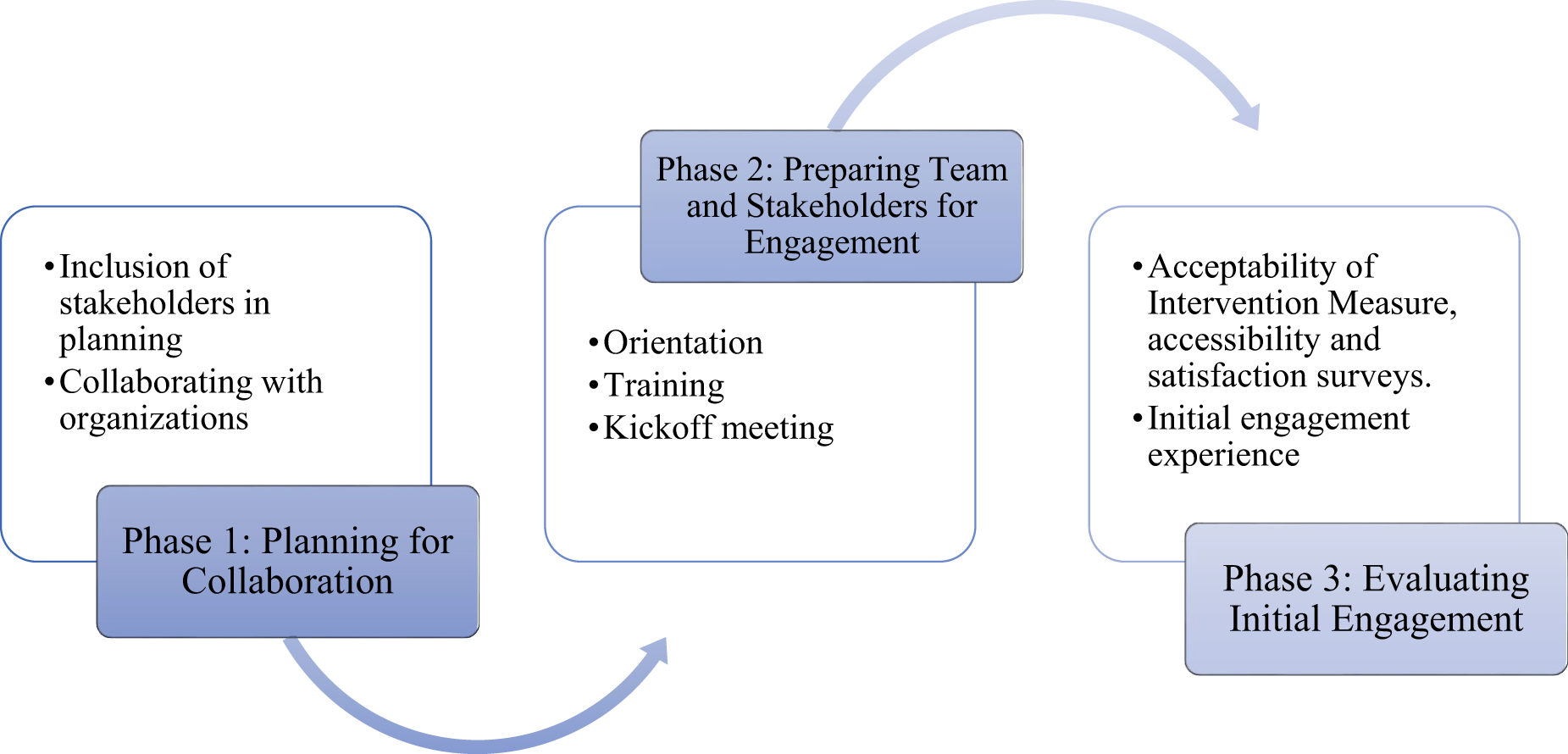
Stakeholder engagement phases.
Phase 1: Planning for Collaboration
Inclusion of Stakeholders in Planning
We engaged stakeholders during the project’s conceptualization so that we could identify, understand, and involve the intended population in prioritizing needs. For instance, we consulted and collaborated with parents, caregivers, and team members to identify and decide on strategies to support the active involvement of culturally diverse and Spanish-speaking stakeholders on the boards. We also discussed the importance of building trust with the community and strategies to provide stakeholder support throughout the project. In addition, we identified strategies to engage stakeholders at a high level, from conceptualization to dissemination, such as frequent project updates and inclusion in decision-making.
Collaborating With Organizations
To ensure a successful and diverse stakeholder engagement experience, we partnered with organizations in the tristate area of Delaware, New Jersey, and Pennsylvania. Collaborators included three large children’s health networks and several community organizations.
Phase 2: Preparing Team and Stakeholders for Engagement
In this phase, we focused on preparing for the engagement experience between the research team and the stakeholder partners. Engagement required team preparation for the successful inclusion of diverse stakeholder groups. This included creating orientation materials in both Spanish and English, assuring that language nuances for interpretation and translation were considered for effective inclusion, and hosting a kickoff meeting to review and define roles and outline the partnership experience. Furthermore, the stakeholder partners determined that bimonthly advisory board meetings would support the project; these meetings were planned for the entirety of the project.
Project Orientation
We developed orientation materials for the stakeholder partners to facilitate optimal participation. They included details about the project, participation in the advisory board, and roles and responsibilities. The materials outlined meeting expectations, the reimbursement process, and contact information. The information was developed using lay language and was reviewed by multiple team members. Technical information was added, including a user-friendly guide for navigating virtual platforms and accessing online documents. To reinforce our commitment to collaboration, we maintained open lines of communication with each stakeholder partner through follow-up phone calls, Zoom meetings, text messaging, or WhatsApp as needed. This approach fostered a sense of community and support among the stakeholder partners involved.
Training and Education
Training stakeholder partners in project-related concepts was a priority to facilitate participation and genuine stakeholder engagement. Integrating input from the stakeholder partners and the research team, we identified key concepts to enrich stakeholder partners’ understanding of the project and its goals. We aimed not only to equip stakeholder partners with essential knowledge but also to empower them to apply this knowledge in their daily lives. We developed eight training modules in English and Spanish covering the following topics: research fundamentals, stakeholder engagement in research, focus groups, design thinking, occupational therapy, sensory integration, autism essentials, and cultural humility and bias. To accommodate diverse literacy levels, we designed modules to facilitate an easy understanding of the information presented. We based the materials on topic-specific literature, which was reviewed by experts in their respective fields. One stakeholder partner for each advisory board reviewed the modules. In addition, we provided short videos that synthesized key information.
Kickoff Meeting
We organized a kickoff meeting to welcome all the stakeholder partners and review important logistical information. To foster a sense of community, we included a warm-up activity during the meeting. Simultaneous interpretation was planned and scheduled to effectively include Spanish-speaking stakeholder partners.
Phase 3: Evaluating Initial Engagement
Acceptability of Intervention Measure (AIM), Accessibility and Satisfaction Surveys
We used the AIM (Weiner et al., 2017) to measure the acceptability of the training modules. The AIM shows strong psychometrics with an intraclass correlation coefficient of 0.82 (95% confidence interval [0.63–0.94]) and internal consistency of α = .89. In addition, we developed two surveys to evaluate the accessibility and satisfaction of the training modules. These surveys, administered together, included 13 questions using a 5-point Likert scale ranging from 1 = strongly disagree to 5 = strongly agree. The surveys were designed for various literacy levels and involved consultation with a bilingual literacy expert. See the Supplemental Material, available online with this article at https://research.aota.org/ajot, for the survey questions.
Qualitative Data
Three open-ended questions were incorporated at the end of the surveys to gather insights on the training modules. These questions assessed perceptions of the modules, value, and potential areas for improvement.
Data Analysis
We used descriptive statistics to report on the stakeholder advisory board demographics and describe findings from the AIM and the accessibility and satisfaction surveys. Qualitative responses were reviewed and synthesized and are presented as descriptive summaries.
Results
Stakeholder Advisory Boards
As shown in Figure 2, three stakeholder advisory boards were formed with a total of 22 partnerships. Stakeholders included Hispanic and Latino parents and caregivers of an autistic individual (n = 7), autistic individuals (n = 3), Hispanic and Latino cultural experts (n = 3), occupational therapists (n = 3), autism experts (n = 3), and teachers (n = 3). Each partner was assigned to a specific board (described below), and each board had specific foci and responsibilities. The Stakeholder Research Steering Committee focused on planning and guiding the project’s direction from conceptualization to dissemination, surveilling the project’s data monitoring and safety plan, and ensuring cultural sensitivity. The Stakeholder Advisory Board supported the project by consulting and collaborating on the project implementation, providing feedback on the engagement sessions, and collaborating with recruitment and retention. The Evaluation/Dissemination Stakeholder Advisory Board’s focus was to inform and advise on dissemination methods throughout the project, examine findings from the engagement methods, prepare dissemination materials to assure cultural sensitivity, and identify unique opportunities for dissemination. Following PCORI’s commitment to equitable partnerships and fair compensation, a rate of $50 per hour was established for the stakeholder partners in all stakeholder advisory boards.
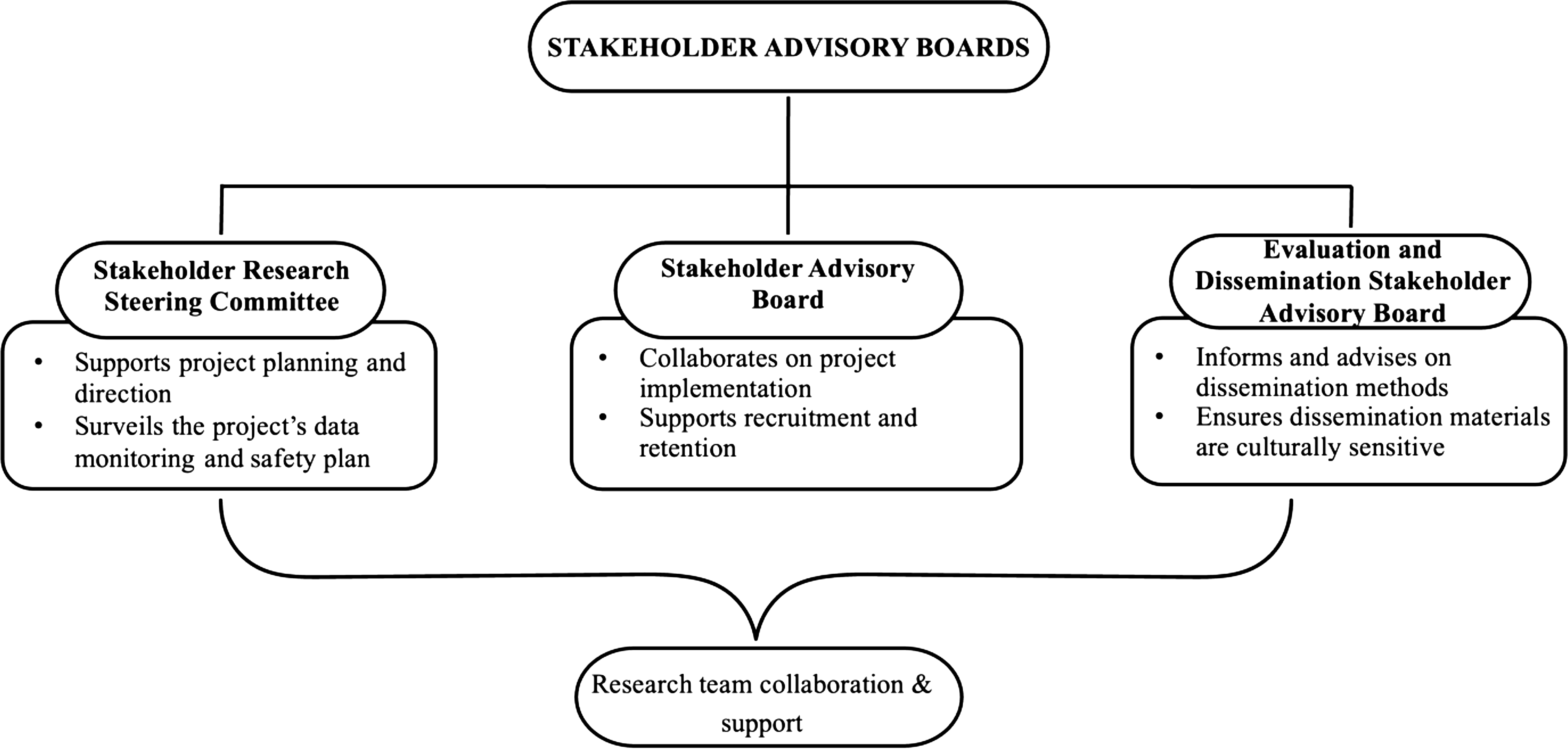
Stakeholder advisory boards.
Each advisory board consisted of two to three parents or caregivers, one cultural expert, one autism expert, one occupational therapist, and one teacher. Additionally, a diversity and inclusion expert from the university collaborated closely with the team and advisory boards to ensure culturally responsive activities. As shown in Table 1, each board was highly diverse. Stakeholders spanned a wide age range and varying educational levels, with the highest proportion holding a master’s degree (23.8%) and some college education (23.8%). There was also racial and ethnic diversity, with 76% of the stakeholders of Hispanic or Latino origin. Most identified as Mexican, Mexican American, or other Central American (38.1%), followed by Puerto Rican (19.1%). All stakeholder partners agreed to support the team until its completion.
Demographic Information for Stakeholder Advisory Boards (N = 22)
Kickoff Meeting
Thirty-two people participated in the kickoff meeting: 22 stakeholder partners, 8 team members, and 2 interpreters. Simultaneous interpretation was provided. The meeting began with a warm-up activity in which partners shared their motivation for joining the project. As parents and caregivers shared their personal reasons for joining, others were encouraged to similarly reflect on their experiences. This created a meaningful conversation, setting a foundation for long-term trust and genuine engagement.
Some parents and caregivers shared about their challenges in accessing diagnostic and treatment services for their children, whereas others shared about their experiences receiving less competent care because of race and language barriers. A common motivation was the desire for change, including better access to occupational therapy and other services regardless of culture, language, or immigration status. One parent became emotional while sharing her hopes for better care and inclusion for her child. Overall, parents and caregivers reflected a strong commitment to advocacy and hope for positive change.
Autistic partners shared that their motivation was a desire to improve inclusion for autistic individuals. One partner described his involvement in a support group and the creation of an organization to support peers and their families to address the lack of resources and support.
Cultural experts shared personal experiences as their motivation, with some describing their challenges of having a child with special needs and navigating a system with barriers. All shared their hopes for more collaborative research and improved future outcomes. Health care providers emphasized their desire to improve communication, adopt culturally sensitive practices, and have greater inclusion of diverse communities in research.
Although simultaneous interpretation was provided by the first group of interpreters during the kickoff meeting, challenges were experienced. The interpreters were not adequately prepared or skilled in delivering interpretation in a group interactive format. They were unfamiliar with how to set up or use the interpretation channels on Zoom and lacked experience in group settings. One interpreter mentioned having experience with only one-on-one settings. To address the challenge, the project’s co–principal investigator, Lady Rios-Vega, who is fluent in Spanish, provided consecutive interpretation and continued to foster an inclusive and productive meeting. Communication among stakeholders was soon reestablished. Of note, a new interpretation group was used for subsequent meetings.
Acceptability, Accessibility, and Satisfaction of Training Modules
As shown in Figure 3, stakeholder partners expressed high levels of satisfaction with the accessibility of the training modules, highlighting their ease of access using different devices, availability in preferred languages, and flexibility in terms of timing. They also found the content of the modules to be easy to read, visually appealing, and aligned with their learning preferences. The inclusion of multimedia elements, particularly videos, was well received. In addition, they appreciated the timely dissemination of the modules before advisory board meetings to ensure adequate preparation and participation.
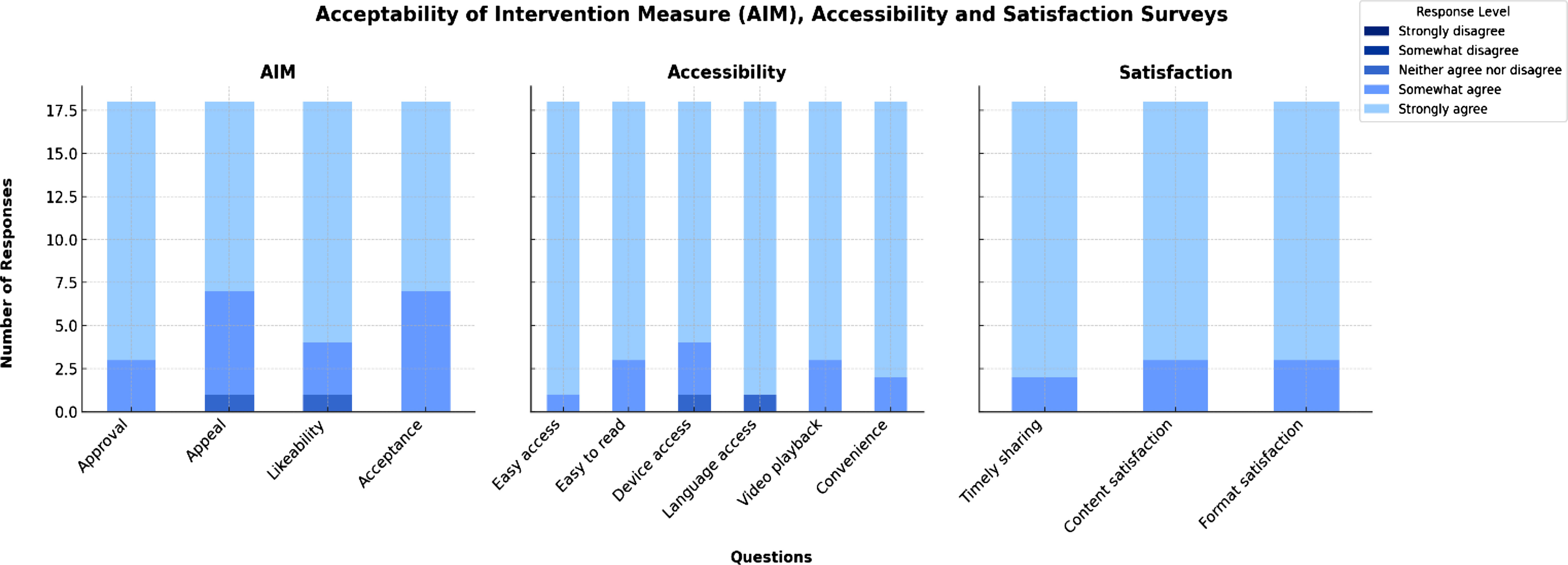
Acceptability, accessibility, and satisfaction of training modules.
Qualitative Data
Stakeholder partners showed strong approval and satisfaction with the training modules as an effective learning strategy. In response to the open-ended questions, many expressed that the modules were acceptable and instrumental in understanding essential project-related concepts. Specifically, stakeholder partners identified research fundamentals, design thinking, cultural humility and bias, and autism essentials as the most innovative learning modules. Feedback included insights such as “Cultural humility contained the most new and informative information for me.” One partner remarked on the value of the modules: “They allowed me to understand the project.” Others shared their positive experiences: “All the modules were very good,” “I really appreciated the simple videos explaining Autism and OT [occupational therapy],” “En realidad todo son muy buenos porque traen mucha información que uno necesita” (which translates to “Actually, they are all very good because they provide a lot of information that one needs”). Partners valued the flexibility of the modules, with one sharing, “I could complete at my own pace.” One partner found the modules helpful in learning more about autism: “I valued the fact that I was able to learn a little more about the condition I and others out there have.” One partner shared that they would like to see an expansion of the cultural humility and bias module and its application to diverse cultural backgrounds. These findings offered valuable insights for developing and refining training modules to enrich stakeholder partners’ knowledge and engagement throughout the project.
Discussion
Stakeholder engagement is an approach that promotes collaboration between the community, users, patients, providers, and researchers to maximize outcomes and assure that research is relevant and useful to the persons it serves (Cottrell et al., 2014). In this article, we report on the engagement process used to support a project designed to improve access to occupational therapy services for Hispanic and Latino autistic children and families. Three stakeholder advisory boards were created to support the project goals and represented a diverse group of stakeholder partners. We provided training materials to all stakeholder partners before the kickoff meeting. Findings showed that stakeholder partners reported that their participation in the learning process was highly acceptable, accessible, and satisfying.
Engaging culturally diverse stakeholders requires education, collaboration, and willingness to engage in culturally humble practices. Stahmer et al. (2019) stressed the importance of engaging parents and caregivers from diverse racial and ethnic groups in the research process and creating partnerships; they also highlighted a need for culturally humble practices and the importance of a multicultural team for effective outcomes. One important consideration is ensuring all stakeholder partners can communicate easily, comfortably, and in their own language. We found it important to give adequate attention to interpretation services to ensure that all stakeholder partners could communicate effectively. We realized that the hired interpreters lacked experience in simultaneous interpretation for a virtual group setting. This experience taught us to be more thorough when soliciting interpretation and translation services. We recommend a detailed consultation with an interpretation organization experienced in delivering services in various settings, as well as a practice session. These strategies were implemented with high success in our subsequent meetings.
Creating a community is an important aspect of stakeholder engagement. Orellano-Colón et al. (2020) followed a community engagement approach to engage low-income Hispanic and Latino adults with disabilities in assistive technology research. Her team identified that distinct practices to build trust and relationships with the community, including establishing and maintaining their presence in the community, having a shared language, and adapting to the community’s needs, are successful strategies for genuine community engagement. Similarly, we formed stakeholder groups following the PCORI principles of reciprocal partnerships, colearning, partnerships, and transparency to effectively develop, engage, and maintain meaningful stakeholder partner relationships throughout the project. Although we were able to identify some literature to help guide this process, we note that there are significant limitations to literature guiding stakeholder engagement with culturally diverse and multilingual populations in research, especially in occupational therapy.
Parents and caregivers shared their experiences accessing and using therapy services, including occupational therapy, as the motivators for participation. These are consistent with the extensive literature identifying the challenges Hispanic and Latino autistic families experience in accessing occupational therapy and other related health services. Stahmer et al. (2019) identified delays in therapy access and use because of racial bias, lack of cultural humility practices, and lack of applicability of interventions. The findings from this project underscore the need to consider strategies to reduce bias and improve cultural humility.
Limitations
This study had several limitations. Stakeholder recruitment through snowball sampling may be subject to biases by relying on existing networks and relationships to identify participants. Although this method enhanced participant engagement, it may compromise the generalizability of results by limiting the diversity of perspectives and experiences represented in the study.
Engaging stakeholder partners from these communities involved logistical and linguistic challenges that extended beyond providing interpretation services. It also involved establishing trust and rapport with members of these marginalized communities. We engaged in frequent conversations with our stakeholder partners and engaged in a cultural humility process to assure we were listening and responding to their feedback and needs. We were fortunate to collaborate with dedicated stakeholder partners in communities with a Hispanic and Latino population. Future studies must prioritize access to stakeholder partners who represent the communities studied, ensuring that interactions are approached with respect and humility.
Finally, we acknowledge computer and language literacy levels as factors that influenced engagement, including technology literacy such as the use of online platforms, email, and shared e-documents for obtaining signatures or feedback. Ensuring that all documents are presented in an accessible and understandable way is crucial. Many parent partners and caregivers may have limited access to computers, which can restrict their ability to participate in meetings. Providing simple technology assistance and meeting partners at their technology use level can be a strategy. We offered partners guidance on using their phones to obtain information, sign documents, and participate in meetings. In addition, effective logistics and team communication rely on bilingual personnel who possess the skills and commitment necessary to ensure all partners can access and understand the information.
Implications for Occupational Therapy Practice
Stakeholder engagement can improve access to and utilization of occupational therapy interventions for diverse populations and improve outcomes for minoritized autistic communities. It can also empower clients to shape research and develop client-centered interventions aligning with occupational therapy principles. This study has the following implications for occupational therapy practice: ▪ Engagement in research: Occupational therapy practitioners should engage stakeholders in all phases of the research process. Genuine engagement leads to improved outcomes. Clinicians can refine their approach by accessing resources and mentorship on effective engagement. ▪ Diversity in advisory boards: Including diverse communities in advisory and leadership roles strengthens occupational therapy practice globally. Practitioners also benefit from engaging in cultural humility to understand and appreciate the diverse backgrounds and experiences of others, aligning with occupational therapy and diversity, equity, inclusion, justice, and accessibility principles. ▪ Logistical considerations: To engage stakeholders, especially those with limited English proficiency, occupational therapy practitioners must collaborate with the community to ensure reliable interpretation and meaningful participation.
Conclusion
Engaging culturally diverse populations is necessary for inclusive and equitable occupational therapy research. Successful engagement enhances the development of culturally sensitive practices in a global community and supports client-centered practice. This article described the process and efforts to engage culturally diverse and Spanish-speaking stakeholders in a larger project to improve access to and utilization of occupational therapy services. Future research will focus on the implementation of stakeholder input and the cultural adaptations to an evidence-based occupational therapy intervention.
Supplemental Material
Supplementary material for Engaging Diverse Stakeholders to Improve Therapy Access for Hispanic and Latino Autistic Individuals and Families
Supplementary material, sj-pdf-1-aot-10.5014_ajot.2025.050942.pdf for Engaging Diverse Stakeholders to Improve Therapy Access for Hispanic and Latino Autistic Individuals and Families by Lady Rios-Vega, Kristin Rising, Matthew Fields, Brian Freedman, Nicola Toole, Julian Ramos and Roseann Schaaf in The American Journal of Occupational Therapy
Footnotes
Acknowledgments
This work was supported by the Patient-Centered Outcomes Research Institute (PCORI) Science of Engagement Award (SOE-2022C2-28939). All statements in this report, including its findings and conclusions, are solely those of the authors and do not necessarily represent the views of the PCORI, its Board of Governors, or its Methodology Committee. We thank the individuals who are part of our stakeholder engagement boards.
References
Supplementary Material
Please find the following supplemental material available below.
For Open Access articles published under a Creative Commons License, all supplemental material carries the same license as the article it is associated with.
For non-Open Access articles published, all supplemental material carries a non-exclusive license, and permission requests for re-use of supplemental material or any part of supplemental material shall be sent directly to the copyright owner as specified in the copyright notice associated with the article.
