





Abstract
This study reviewed existing evidence about the role of occupational therapy in the rehabilitation of adults with persistent postconcussion symptoms (PPCS).
Mild traumatic brain injury (mTBI) is the most frequently occurring form of traumatic brain injury (TBI) worldwide (Möller et al., 2021). Recent consensus work suggested that the terms mTBI and concussion are synonymous if neuroimaging is normal or clinically not indicated (Silverberg et al., 2023); thus, we use the term concussion in the current study. Concussion injuries can result from any external force to the head or body and include sport-related incidents or injuries, road traffic collisions, falls, and assaults (Katz et al., 2015; Lefevre-Dognin et al., 2021). Persistent postconcussion symptoms (PPCS) can be significant and may include headache, fatigue, vestibular dysfunction, cognitive problems such as memory and concentration difficulties, neuropsychiatric sequelae such as emotional or behavioral changes, and sleep or visual disturbances (Harmon et al., 2019; Kamins et al., 2017; Permenter et al., 2023). Recent concussion guidelines defined PPCS as symptoms that remain unresolved after 4 wk postinjury across all age groups (Patricios et al., 2023). It is estimated that 15% to 30% of people with concussion experience PPCS, with this figure deemed an underestimation of true prevalence (Möller et al., 2021; Patricios et al., 2023; Permenter et al., 2023). Recent literature has highlighted the need for greater knowledge and understanding of PPCS, including the opportunities for rehabilitation and recovery (Cancelliere et al., 2023).
Rehabilitation of PPCS necessitates provision of individually tailored rehabilitation programs that target specific symptoms and functional goals (Chesnutt, 2021; Wright & Sohlberg, 2021). Persons with PPCS may require access to a range of health care professionals during rehabilitation to address the specific symptoms and associated functional difficulties that result following injury (Jennings & Islam, 2023). Despite limited evidence about PPCS treatments, literature points to the use of multidisciplinary approaches to address the complexities often present during rehabilitation. Such approaches can include the use of motor, sensory, neuropsychological, and psychosocial assessments and treatment methods that target specific symptoms (including cognitive, vestibular, and visual dysfunction). A graded approach to the resumption of everyday activities is a cornerstone of recovery (Kamins et al., 2017; Patricios et al., 2023; Roelke et al., 2022). Multidisciplinary teams may offer a wide range of assessments and interventions to support recovery from PPCS and include rehabilitation physicians, psychologists, neuropsychologists, social workers, physical therapists, speech pathologists, dietitians, and occupational therapists (Chesnutt, 2021; Jennings & Islam, 2023; Lew & Waskiewicz, 2020).
Occupational therapy has a unique role in understanding the dynamic interactions that occur between a person, their environments, and meaningful activities. In the context of injury and illness, occupational therapists consider the facilitators and barriers to a person’s functional participation, with the aim to optimize their participation using therapeutic approaches in a considered and meaningful way (World Federation of Occupational Therapists [WFOT], 2023). The profession has an identified broad scope of practice in PPCS rehabilitation (Canadian Association of Occupational Therapists [CAOT], n.d.). Occupational therapy has been recommended in PPCS rehabilitation to assess the functional impact of PPCS and provide interventions to support graded return to daily activities (Cooksley et al., 2018; Finn, 2019; Harris et al., 2019; Roelke et al., 2022). The provision of assessment and intervention strategies may be used to identify, compensate for or manage, and help to address PPCS, with a focus on optimizing occupational performance (Tan, 2017; Wheeler & Acord-Vira, 2023). The principles of task grading or adaptation to optimize activity participation while managing PPCS symptoms are well aligned with the core domains of occupational therapy practice (WFOT, 2023), further highlighting the occupational therapy role in PPCS rehabilitation programs.
During concussion rehabilitation, occupational therapists work collaboratively with people to identify their therapy goals. Goals may include returning to preinjury levels of functioning while utilizing clinically indicated assessment and intervention strategies to assist symptom management and goal attainment (Bonn et al., 2023; Wheeler & Acord-Vira, 2023). Through such work, occupational therapists “address performance skills and patterns to promote return to engagement in meaningful and purposeful activities” (Brayton-Chung et al., 2016, p. 9). During rehabilitation, achieving person-centered occupational participation within subsymptom thresholds is key to minimizing the likelihood of symptom exacerbation while enabling optimal recovery outcomes (Brayton-Chung et al., 2016; Finn, 2019; Roelke et al., 2022).
With increased focus on concussion management worldwide (Patricios et al., 2023), enhancing the understanding of the potential long-term effects concussion can have on a person’s ability to participate in their chosen life roles, activities, and routines is needed (Brayton-Chung et al., 2016; Cooksley et al., 2018). In turn, opportunities for occupational therapists to support the recovery of adults with PPCS may evolve, highlighting the benefits of their expertise within this area of neurological rehabilitation. Understanding the role of occupational therapy in the context of the World Health Organization’s International Classification of Function, Disability and Health (WHO ICF)—including the items specified in the One-Level Classification—can be beneficial in understanding the profession’s role in addressing the biopsychosocial issues that may result from PPCS using universally recognized terminology (Laxe et al., 2014; World Health Organization [WHO], 2001). Furthermore, this approach aids communication of the role of occupational therapy within health care systems, including concussion-specific rehabilitation services (Licciardi et al., 2024; Prodinger et al., 2015; Strate & Ullucci, 2023). Understanding the role of occupational therapy in PPCS rehabilitation is important in addressing the potentially adverse effects persistent symptoms can have on a person’s life and their participation in preferred activities and roles (Cooksley et al., 2018; Roelke et al., 2022).
Despite growing evidence of the contribution of occupational therapy in multidisciplinary concussion rehabilitation teams (DeMatteo et al., 2017; Erez et al., 2009; Finn, 2019; Postma et al., 2022), further research to inform practice—including specific assessment and intervention methods—of occupational therapists in the rehabilitation of adults experiencing PPCS is needed (Acord-Vira & Davis, 2020; Finn, 2019; Jaber et al., 2019; Jackson et al., 2024; Postma et al., 2022; Roelke et al., 2022). Furthermore, a greater understanding of the functional outcomes and rehabilitation needs of the adult PPCS population, including how occupational therapy can support their recovery, is warranted. Given the evidence gap that exists, this study aimed to identify and categorize (using WHO ICF One-Level Classification) existing literature that describes occupational therapy practice (including assessments and interventions) in the rehabilitation of adults with PPCS. We posed two research questions: 1. What are the practice approaches (including assessments and interventions) provided by occupational therapists in the rehabilitation of adults experiencing PPCS following concussion? 2. How do the occupational therapy practice approaches identified in the literature map to the ICF One-Level Classification?
Method
Design
A preliminary search of PROSPERO, Ovid MEDLINE, and JBI Evidence Synthesis was conducted by Lisa Licciardi, and no current or in-progress literature reviews on the topic were identified. We selected a scoping review methodology for this study. This approach enables researchers to examine existing literature on an emerging topic of research, serving to provide an overview and highlight gaps that exist (McGowan et al., 2020; Tricco et al., 2016). This methodology was therefore deemed appropriate to address the study aim and research questions and to inform future research in the field of occupational therapy.
This scoping review follows the prospectively registered (Open Science Framework registration: osf.io/qxgzj) and published, peer-reviewed a priori protocol (see Licciardi et al., 2024). We used the Preferred Reporting Items for Systematic reviews and Meta-Analyses extension for Scoping Reviews (PRISMA-ScR; Tricco et al., 2018) publication and checklist to guide reporting of results. Aligned with JBI scoping review methodology guidelines (Tricco et al., 2016) and American Journal of Occupational Therapy guidelines (American Occupational Therapy Association, 2021), a critique of source quality was not undertaken.
Search Strategy and Data Sources
The search strategy (see Table A.1 in the Supplemental Material, available online with this article at https://research.aota.org/ajot) was developed a priori using iterative consultation with a university liaison librarian and field experts, then underwent blinded peer review prior to protocol publication (see Licciardi et al., 2024). Five electronic databases were searched as of October 2023: MEDLINE (Ovid), Embase (Ovid), Emcare (Ovid), PsycINFO (Ovid), and CINAHL Complete (EBSCO). Searches were limited to English sources published between 2013 and 2023. Gray literature searches—including Google Advanced (first 20 results included for each .gov, .edu, and .org search), CPG Infobase (Clinical Practice Guidelines), and ProQuest Dissertations and Theses Global—using search terms persistent postconcussion symptoms and occupational therapy were also conducted. Reference lists of included publications were screened for additional sources (Licciardi et al., 2024). Search yields were exported to Covidence (Veritas Health Innovation, Melbourne, Australia) for review against inclusion criteria. Gray literature files that could not be exported to Covidence were documented using Microsoft Excel, enabling us to systematically assess sources against inclusion criteria.
Inclusion and Exclusion Criteria
We included literature sources that described occupational therapy practice, including assessments and interventions provided by an occupational therapist, within concussion rehabilitation programs for adults (ages 18 to 65 yr) with PPCS. We excluded studies with participants under age 18 yr or over 65 yr, acute concussion populations (<4 wk since injury), adults with nonpersistent symptoms, and studies undertaken in acute health care settings. Gray literature from civil society or disabled persons organizations, or other representative bodies in the field of brain injury, was also excluded. See Licciardi et al. (2024) for further details about study criteria.
Screening of Sources
Two reviewers (Licciardi and Aislinn Lalor) independently screened retrieved sources by title and abstract using Covidence and Microsoft Excel. They discussed any conflicts identified during screening, with those unable to be resolved included in full-text review. Sources identified with the same participant sample were merged as connected studies. The reviewers independently completed full-text review using Covidence and Microsoft Excel. A third reviewer (Libby Callaway) was included to address remaining conflicts (Licciardi et al., 2024).
Data Extraction
A pilot data extraction table was developed, tested, and finalized following the study protocol (Licciardi et al., 2024). Using citation details, two reviewers (Licciardi and Lalor) independently completed data extraction for 10% of full-text sources (n = 2), followed by joint crosschecking to ensure consistency of extracted data; no discrepancies were found. Licciardi completed data extraction for the remaining full-text sources included in the review. Data extracted related to source details, methods, and findings; occupational therapy assessments and interventions reported; and mapping of assessments and interventions to the WHO ICF One-Level Classification (WHO, 2001). Authors of some eligible sources were contacted to clarify reported data. Licciardi mapped extracted data to ICF One-Level Classification through iterative revision of the domain and chapter definitions. We discussed and checked questions during mapping against the ICF One-Level Classification definitions. Microsoft Excel spreadsheets were used to organize extracted data. See Licciardi et al. (2024) for further details about the data extraction instrument.
Data Synthesis
Because of the heterogeneity of source types included in this review, we used narrative synthesis and data tabulation to report results (Ryan & Cochrane Consumers and Communication Review Group, 2013). Connected studies underwent data extraction for each pair of sources, with results synthesized to represent the one study. Mapping of the data to the ICF One-Level Classification was completed via iterative review of extracted data. This process enabled development of a summary table that authentically represented the data collected, including the reported occupational therapy assessments and interventions used (mapped to the ICF). These methods—as specified in the a priori protocol (Licciardi et al., 2024)—were selected to ensure alignment with study objective and research questions.
Results
Figure 1 depicts the source selection process guided by the PRISMA-ScR guidelines (Tricco et al., 2018) for this scoping review. An initial 804 sources were retrieved. After 296 duplicates were removed, 508 sources were screened by title and abstract. Gray literature sources were reviewed in full. Of these sources, 60 were included for full-text review, and 19 publications from 16 sources met inclusion criteria and underwent data extraction. Table A.2 in the Supplemental Material outlines details of the 19 articles stemming from 16 unique studies or other sources, with a summary provided below.
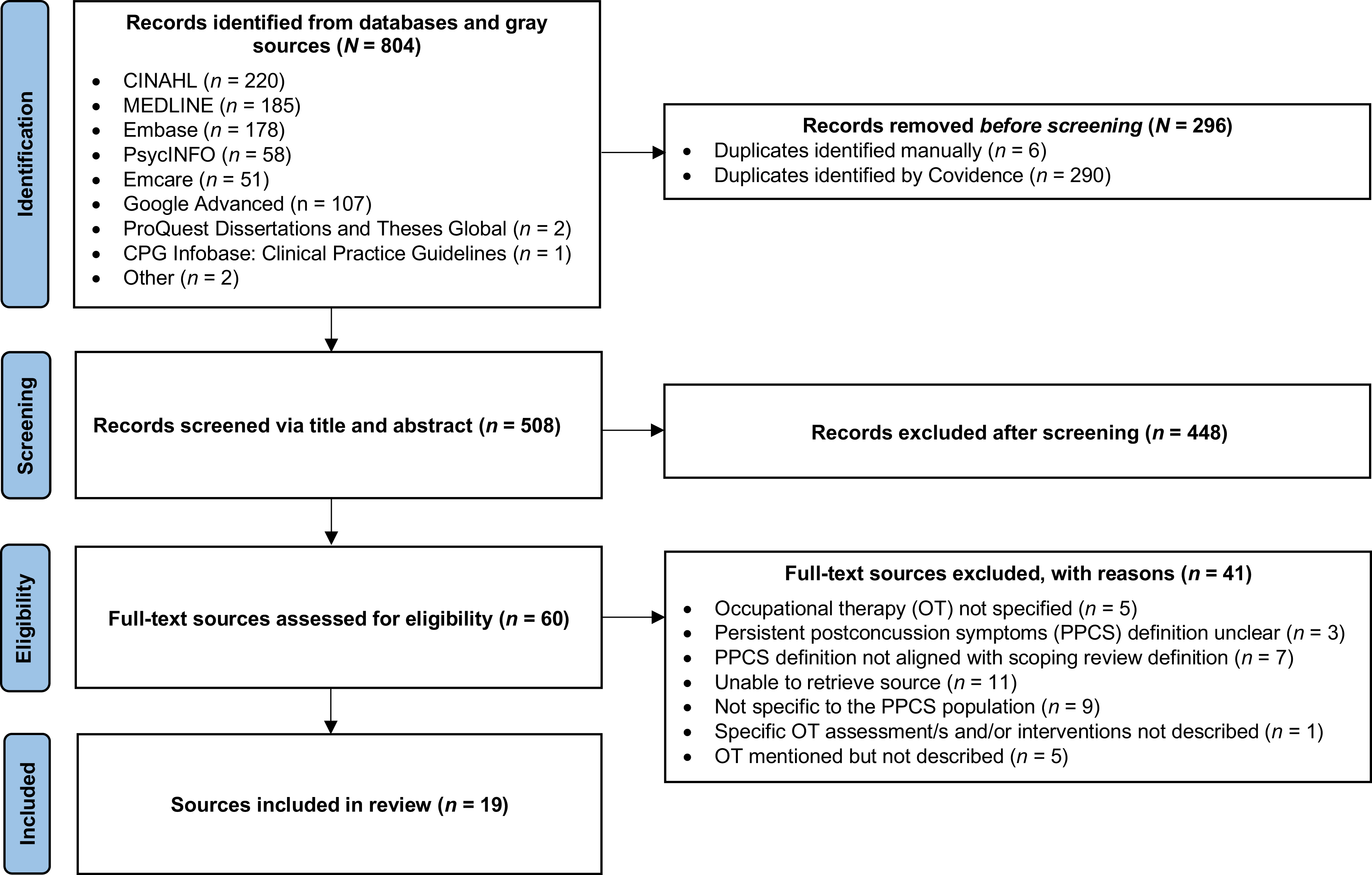
Flowchart of the source review and selection process undertaken for the scoping review.
Type of Source
Of the 19 articles included in this review (of which 3 were connected studies, i.e., reporting on the same participant sample, thus related to 16 unique published works), most (n = 13) were peer-reviewed publications. Source types consisted of quantitative studies (n = 6); case studies, series, or reports (n = 3); qualitative studies (n = 2); systematic or scoping literature reviews (n = 2); and gray literature (n = 3).
Origin of Source and Study Participant Data
The origin of eligible sources (n = 16) spanned four countries: the United States (n = 10), Denmark (n = 3), Canada (n = 2), and Norway (n = 1). Of the 10-yr publication range, most sources were published in 2019 (n = 6), followed by 2023 (n = 4). Participant numbers (in the nine prospective cohort studies) ranged from 6 to 217 adults, with a mean age of 31 yr. Case numbers reported for the case studies, series, or reports ranged between 1 and 3 persons.
Quantitative Studies
Quantitative studies (n = 6) sought to examine topics including goal setting (Bonn et al., 2023; Wallace et al., 2022), cognitive performance (Jones et al., 2019), postconcussion symptoms and quality of life outcomes (Thastum et al., 2017, 2018, 2019), and multidisciplinary rehabilitation services (Vikane et al., 2017). Key research findings are detailed in Table A.2 in the Supplemental Material.
Case Studies, Series, or Reports
Case studies, series, or reports (n = 3) detailed clinical cases that received occupational therapy during their concussion rehabilitation programs in the United States. One case—which focused on optometry and occupational therapy treatment of accommodative dysfunction—was found to have no impact on the alteration of PPCS following occupational therapy interventions (Houston et al., 2021). Another case report—which detailed occupational therapy assessment, intervention, and evaluation processes for a 20-yr-old with PPCS—reported global improvements across all assessed domains on discharge; furthermore, the person achieved their functional goals upon completion of their occupational therapy program (Li, 2023). The third source reported on two (of four) cases that included occupational therapy within a transdisciplinary PPCS neurorehabilitation program, with desirable outcomes found at program completion (Pundlik et al., 2020).
Qualitative Studies
Qualitative studies (n = 2) sought to explore the experiences of military service members in the United States who had (1) functional needs that would align with occupational therapy practice (Cogan, Haines, et al., 2019; Cogan et al., 2016), or (2) perspectives about the occupational therapy input they received (Cogan, Huang, & Philip, 2019). Researchers recommended the need to consider all areas of occupation during occupational therapy service provision for military service members. Furthermore, service members with PPCS were reported to value the occupational therapy experience (including therapeutic relationship) and have identified needs across all aspects of occupational therapy practice (Cogan, Haines, et al., 2019; Cogan, Huang, & Philip, 2019; Cogan et al., 2016).
Literature Reviews
Two review articles met eligibility: a systematic review on interventions (including occupational therapy, allied health, and other) for adults with PPCS from the United States (Jaber et al., 2019) and a scoping review on PPCS treatment modalities provided by occupational therapists and physical therapists from Denmark (Marwaa et al., 2023). These articles described evidence to support the use of various multidisciplinary interventions, including occupational therapy, for adults with PPCS.
The systematic review included 10 studies, one of which included occupational therapy assessment and interventions (Elgmark Andersson et al., 2007, as cited in Jaber et al., 2019). This article reported inconclusive results regarding the use of individualized rehabilitation programs for adults with PPCS. In addition, authors of the review described various practice implications to guide the occupational therapy role in multidisciplinary rehabilitation teams (Jaber et al., 2019).
The scoping review identified 2 (of 10) articles that included occupational therapy. These 2 articles (Thastum et al., 2019; Vikane et al., 2017) were also included as eligible sources in the present scoping review. Marwaa et al. (2023) described roles for occupational therapy, including assessment, goal setting, training, and support. Authors reported limited involvement of occupational therapists within interdisciplinary rehabilitation teams. Practice implications included a future emphasis on return-to-work and social participatory goals within occupational therapy (Marwaa et al., 2023). Both reviews identified the need for further research on the occupational therapy role, highlighting the limited representation of occupational therapy (including clear descriptions of occupational therapy interventions provided during rehabilitation) within the studies included in the respective reviews (Jaber et al., 2019; Marwaa et al., 2023).
Gray Literature
Gray literature sources (n = 3; including a PhD dissertation, online blog, and occupational therapy magazine article, all from the United States) included information about occupational therapy in the context of PPCS rehabilitation. The PhD dissertation examined the topic of sensory processing dysfunction (Van Lew, 2019; Van Lew & Finn, 2022). The online blog and article described the profession’s contribution in helping adults with PPCS return to functional activities and daily routines (Akinbobuyi, 2023; Brayton-Chung et al., 2016). Sources reported that (1) assessment of sensory dysfunction for adults with PPCS can inform targeted rehabilitation programs to support the management of sensory deficits (Van Lew, 2019; Van Lew & Finn, 2022), and (2) occupational therapists have a discrete role in concussion rehabilitation teams in addressing a person’s performance skills and patterns to optimize functional participation while managing PPCS (Akinbobuyi, 2023; Brayton-Chung et al., 2016).
Therapy Assessments and Interventions, Mapped to ICF One-Level Classification
Occupational Therapy Assessments
A total of 49 assessments were reported to be used by occupational therapists across the 16 included sources. Most frequently reported assessments included the Rivermead Post-Concussion Symptoms Questionnaire (RPQ; n = 6), Quality of Life after Brain Injury (QOLIBRI; n = 3), Ohio State University Traumatic Brain Injury Identification Method (n = 2), and the Canadian Occupational Performance Measure (COPM; n = 2). A majority of sources reported the use of standardized measures (Akinbobuyi, 2023; Bonn et al., 2023; Brayton-Chung et al., 2016; Cogan, Haines, et al., 2019; Cogan, Huang, & Philip, 2019; Cogan et al., 2016; Houston et al., 2021; Jaber et al., 2019; Jones et al., 2019; Li, 2023; Marwaa et al., 2023; Pundlik et al., 2020; Thastum et al., 2017, 2018, 2019; Van Lew, 2019; Van Lew & Finn, 2022; Vikane et al., 2017; Wallace et al., 2022), with limited reporting of functional nonstandardized assessment methods (Wallace et al., 2022). Table A.2 details the assessments and application of use (at baseline and/or as an outcome measurement) within included studies. Table A.3 details the reported assessments, mapped to the ICF One-Level Classification. Table A.4 provides a list of assessments, including original citations.
Occupational Therapy Interventions
A total of 42 intervention types were reported across the 16 sources included in the review. Most frequently reported occupational therapy interventions included education on topics such as concussion or PPCS, symptom management, cognitive functions, and goal setting (n = 4); graded return to activities (n = 4); oculomotor and visual perception training (n = 3); relaxation techniques (n = 3); and symptom monitoring, pacing, and self-management strategies (n = 3). Table A.3 details the reported interventions, mapped to the ICF One-Level Classification.
Mapping Occupational Therapy Assessments and Interventions to the ICF
Occupational therapy assessments and interventions mapped across 27 of the 30 ICF One-Level Classifications (WHO, 2001). Occupational therapy assessments or interventions mapped to all ICF One-Level Classification chapters, except for body functions and body structures (Chapter 6: genitourinary and reproductive structures; genitourinary and reproductive systems) and environmental factors (Chapter 5: services, systems, and policies). Use of both vision and cognitive assessments and interventions mapped to ICF domains of Body Functions (Mental Functions; Sensory Functions and Pain) and Body Structures (Structures of the Nervous System; The Eye, Ear, and Related Structures). Other occupational therapy assessments and interventions mapped to ICF domains of Activities and Participation (including Learning and Applying Knowledge; General Tasks and Demands; Self-Care; Major Life Areas; Community, Social, and Civic Life) and Environmental Factors (including Products and Technology; Natural Environment and Human-Made Changes to Environment). See Table A.3 for full details.
Discussion
This is the first review internationally to identify and categorize (using the WHO ICF One-Level Classification) existing literature that describes occupational therapy practice (including both assessments and interventions) in the rehabilitation of adults with PPCS. This is a significant opportunity to enhance the understanding of occupational therapy practice approaches used by therapists treating adults with PPCS against the ICF domains, helping to communicate their role to other health professionals working in this field of neurological rehabilitation. Of the 19 eligible publications from 16 unique sources included in this review, most were published in the past 5 yr, showing an increased focus on occupational therapy and its role within concussion rehabilitation. Evidence was varied across both assessment and intervention types (mapped to the ICF One-Level Classification) demonstrating breadth of the occupational therapy role. This review also identified that sources were published from middle-high income countries in the northern hemisphere. Although the profession has previously had an identified broad scope of practice in PPCS rehabilitation (CAOT, n.d.), review findings support the need for further research into occupational therapy service provision and the development of discipline-specific clinical practice guidelines that assist the rehabilitation of adults with PPCS across all global regions. The implications of these findings will now be discussed with respect to occupational therapy practice, research, and policy.
Implications for Occupational Therapy Practice
Despite the small yield identified, some valuable insights into occupational therapy practice—including assessments and interventions used with adults experiencing PPCS—were found. The review highlighted that in the published evidence that exists, occupational therapy assessments and interventions are more often reported to the body structures and body functions level, with a focus on remediation of PPCS symptoms. Less focus is given to the use of assessments and interventions that impact activities and participation domains, as well as environmental factors to address participation restrictions (e.g., return-to-work and study). Research that targets these fundamental areas of occupational therapy practice is needed to grow an evidence base that aligns with the profession’s practice, while ensuring holistic, person-centered treatment of PPCS is achieved (Boone et al., 2024; Permenter et al., 2023; WFOT, 2023).
Despite evidence supporting the benefits of occupational therapy over physician assessment alone (Harris et al., 2019), this review highlighted limited contemporary evidence to substantiate the occupational therapy role in adult PPCS rehabilitative care. Although various eligible studies (Jaber et al., 2019; Marwaa et al., 2023; Pundlik et al., 2020; Wallace et al., 2022) did report the inclusion of occupational therapy within concussion rehabilitation teams, studies highlighted its limited representation and/or a lack of specific outcome-related information from occupational therapy interventions. One systematic review (Marwaa et al., 2023) mentioned the inclusion of occupational therapy in rehabilitation programs with limited findings (one of the 10 included publications in the review). These findings highlight the need to further establish the role of occupational therapy (including outcomes) in PPCS rehabilitation (Jaber et al., 2019; Wheeler & Acord-Vira, 2023). Without published research about the specific offerings and outcomes of adults who receive occupational therapy during PPCS rehabilitation programs, practice guidance on the role the profession will remain sparse. This in turn has limitations on defining and substantiating—particularly within an evidence-based practice lens—the capacity and unique expertise that occupational therapy can offer concussion rehabilitation teams (Strate & Ullucci, 2023).
Previous research (Jackson et al., 2024; Jennings & Islam, 2023; Tan, 2017) reported the most used assessments by occupational therapists are the RPQ and/or COPM. Both assessments, in addition to the QOLIBRI, were most frequently reported within eligible sources in the current review (Bonn et al., 2023; Jones et al., 2019; Li, 2023; Thastum et al., 2017, 2018, 2019; Vikane et al., 2017). Assessments reported primarily mapped to the ICF domains of Body Functions and Body Structures, showing a weighting toward assessments that focused on PPCS symptom or impairment identification. A small proportion of assessments mapped to Activities and Participation (e.g., COPM). Functional nonstandardized assessments was reported in one source (Wallace et al., 2022). These findings are significant as they demonstrate limited use of occupation-focused assessment and nonstandardized measures (that therapists typically use in clinical practice) within published evidence that may inform occupational therapy practice. This finding aligns with recent calls for increased use of performance-based assessments to ensure measurement of occupational therapy interventions and associated occupational performance outcomes (Wheeler & Acord-Vira, 2023). Other literature has also suggested the use of both standardized and nonstandardized assessments during occupational therapy practice (CAOT, n.d.; Tan, 2017). Thus, an important direction for future research includes establishing consensus on occupational therapy assessment processes in PPCS rehabilitation, which can help define the occupational therapy role. This consensus work should also examine the use of standardized assessments and performance-based/nonstandardized assessments in the treatment of adults with PPCS.
Mapping of interventions to the chapter level of ICF One-Level Classification demonstrated the occupational therapy role can be wide-ranging, evidencing the need for clinical practice guidance for occupational therapy practice in the rehabilitation of adults with PPCS. Mapping interventions to the ICF demonstrated the use of vision and visual perceptual assessments, and interventions were reported across various sources (Akinbobuyi, 2023; Bonn et al., 2023; Brayton-Chung et al., 2016; Houston et al., 2021; Li, 2023; Pundlik et al., 2020; Wallace et al., 2022). This highlighted the role of occupational therapists in visual perceptual assessments and interventions in PPCS rehabilitation. These findings align with other published literature that describes the role of occupational therapists in the assessment and treatment of vision and visual perceptual impairments following traumatic brain injury (Aravich & Troxell, 2021; Jackson et al., 2024; Mills et al., 2024; Schurr et al., 2024).
Although clinical practice guidelines do exist, they tend to provide broad information about the role of occupational therapy in the acute and postacute management of concussion and PPCS (Centers for Disease Control and Prevention, 2024; Marshall et al., 2015; Ontario Neurotrauma Foundation, 2018; Tan, 2017). Some clinical guidelines focus on moderate-severe TBI management (Bayley et al., 2023) or the broad categories of the TBI population (Wheeler & Acord-Vira, 2023). Others focus specifically on an area of practice (Aravich & Troxell, 2021). Thus, evidence-based holistic resources that inform the implementation of specific occupational therapy assessments and interventions during adult PPCS rehabilitation are needed (Finn, 2019; Lew & Waskiewicz, 2020; Roelke et al., 2022).
Implications for Research
Although findings indicate a recent growth of interest in research about adults experiencing PPCS, published literature about the efficacy of occupational therapy offerings in concussion management is sparse; especially PPCS in adults (Finn, 2019; Jaber et al., 2019; Jennings & Islam, 2023; Marwaa et al., 2023; Roelke et al., 2022; Wheeler & Acord-Vira, 2023). The heterogeneity of sources found in the current review emphasizes the need for future consensus work that focuses on the use and efficacy of occupational therapy assessments and interventions that can evidence-inform occupational therapy practice (Jackson et al., 2024).
Health care teams consisting of medical and allied health professionals—including rehabilitation physicians, physical therapists, and occupational therapists—play an important role in PPCS rehabilitation (Mills et al., 2024). Although research points to benefits of an interdisciplinary approach to the treatment of adults with PPCS (Jennings & Islam, 2023), the current scoping review has further demonstrated evidence gaps remain on discipline-specific evidence, including for occupational therapists (Jaber et al., 2019). The two review articles included in this study highlight limited published research about the role of occupational therapy and that the profession is not always included in adult PPCS rehabilitation teams (Jaber et al., 2019; Marwaa et al., 2023).
The geographical locations of included sources—United States of America, Denmark, Canada, and Norway—highlight that recent research has occurred in middle-high income countries in the northern hemisphere. This finding is consistent with other literature, which points to research gaps in low-middle income countries and southern global regions (Jackson et al., 2024). Although clinicians can draw upon insights and learnings provided in this international literature—including practice resources reported by Li (2023)—it is important to note the inherent differences across global regions and health care systems (Schütte et al., 2018).
Implications for Policy
Given the growing global incidence of concussion, it is highly likely the proportion of adults who experience PPCS—and thus health care investment—will increase (Möller et al., 2021). It is therefore important that concussion rehabilitation services are available and accessible to those who need them (CAOT, n.d.). Rehabilitation services also need to comprise various health disciplines to provide services that can meet the heterogeneous needs of the adult PPCS population (Möller et al., 2021; Wheeler & Acord-Vira, 2023). This includes one-to-one and group-based interventions, depending on a person’s goals and needs (Wheeler & Acord-Vira, 2023). Findings from included sources reported the use of both individual and group-based interventions (Bonn et al., 2023; Jones et al., 2019; Li, 2023; Wallace et al., 2022). Due consideration regarding structure and delivery of individual versus group-based occupational therapy services is needed when developing adult PPCS rehabilitation services.
Finally, although the current scoping review methodically documented occupational therapy practice reported in the literature, it has also demonstrated the need for increased education and advocacy regarding the occupational therapy role—including screening, assessment and participation-based interventions—within concussion rehabilitation programs (Marwaa et al., 2023; Strate & Ullucci, 2023). Without this, health care teams and funders may overlook the inclusion of, or referral to, an occupational therapist, as recent research suggested difficulty with health professionals identifying the profession’s possible value or contribution to concussion care (Strate & Ullucci, 2023).
Limitations
There are limitations in the current review. Sources were limited to English and published within a 10-yr period (2013–2023). Despite justifying these parameters—including cost- and time-related considerations and ensuring selection of contemporary literature—non-English sources beyond the 10-yr range may provide relevant information.
The PPCS inclusion criteria for this study of 4+ weeks postinjury is a potential limitation. Given the variance across PPCS definitions within the literature, criteria set for this review may have resulted in exclusion of some publications. Notably, recent updates of the PPCS definition within concussion guidelines to include all age groups from four-weeks postinjury (Patricios et al., 2023) align the PPCS inclusion criteria with contemporary literature.
Authors of this review worked diligently to identify and categorize existing literature using the WHO ICF One-Level Classification. Although mapping to Second- or Third-Level categories would have provided more detail for the reader, the mapping process was reliant on the level of detail reported within each source and thus was not possible beyond One-Level Classification. When coupled with heterogeneity of the data, this poses a limitation previously identified by other researchers (Marwaa et al., 2023).
Implications for Occupational Therapy Practice
This scoping review has the following implications for occupational therapy practice: ▪ Occupational therapists can assist adults with their recovery from PPCS in concussion rehabilitation programs via structured assessments and targeted interventions across all domains of the ICF. ▪ The ICF is a universally recognized framework that can be used to map the practice approaches used by occupational therapists to treat adults with PPCS, offering an opportunity to enhance recognition and visibility of the profession in the field of concussion rehabilitation. ▪ There is some existing evidence to guide the role of occupational therapy in multidisciplinary teams. The use of education-based interventions and a focus on graded return to a person’s preferred activities are the primary practice domains of occupational therapists when working with adults with PPCS. ▪ Further research is required to evidence-inform occupational therapy clinical practice guidelines and evaluate outcomes of interventions provided.
Conclusion
The objective of this scoping review was to identify and categorize existing literature (using the WHO ICF One-Level Classification) describing occupational therapy practice in the rehabilitation of adults with PPCS after concussion. Important insights were gained through this review, including the identification and reporting of a range of assessments and interventions used by occupational therapists to support people in their recovery from PPCS. This review highlights that, of the evidence examined, the role of occupational therapy in adult PPCS rehabilitation is broad and includes supporting the return to everyday activities. With the increase in PPCS internationally, future work to establish evidence-informed clinical practice guidelines for occupational therapists working with adults with PPCS as part of multidisciplinary teams is warranted and will offer practice guidance to achieve meaningful rehabilitation outcomes.
Supplemental Material
Supplementary material for Occupational Therapy Practice in Adult Rehabilitation of Persistent Postconcussion Symptoms: A Scoping Review
Supplementary material, sj-pdf-1-aot-10.5014_ajot.2025.051001.pdf for Occupational Therapy Practice in Adult Rehabilitation of Persistent Postconcussion Symptoms: A Scoping Review by Lisa Licciardi, Aislinn Lalor, John Olver and Libby Callaway in The American Journal of Occupational Therapy
Footnotes
*
Indicates studies included in the scoping review.
Acknowledgments
We thank the Monash University Liaison Librarian, Ms. Paula Todd, for her assistance during the development of the search strategy used in this review.
References
Supplementary Material
Please find the following supplemental material available below.
For Open Access articles published under a Creative Commons License, all supplemental material carries the same license as the article it is associated with.
For non-Open Access articles published, all supplemental material carries a non-exclusive license, and permission requests for re-use of supplemental material or any part of supplemental material shall be sent directly to the copyright owner as specified in the copyright notice associated with the article.
