





Abstract
In her lecture for the inaugural Dr. Lela A. Llorens Award of Excellence for Diversity, Equity, and Inclusion, Dr. Shirley A. Wells acknowledges the growing importance of creating more inclusive and equitable environments across all aspects of health care, with occupational therapy being no exception. Inclusion and integration are fundamental values that should be woven into every part of the practice of occupational therapy. It is not enough to be aware of these concepts; occupational therapists must actively engage in Acts of Inclusion and Integration in their delivery of care, collaboration with clients and colleagues, and shaping of the future of the field. Dr. Wells highlights examples of how occupational therapists can break down barriers to create spaces where everyone feels valued and supported.
In her lecture for the inaugural Dr. Lela A. Llorens Award of Excellence for Diversity, Equity, and Inclusion, Dr. Shirley A. Wells highlights examples of how occupational therapists can break down barriers to create spaces where everyone feels valued and supported.
In recent years, there has been growing recognition of the importance of creating more inclusive and equitable environments across all aspects of health care, and occupational therapy is no exception. Inclusion and integration are not just buzzwords but fundamental values that should be woven into every part of our practice. However, it is not enough to be aware of these concepts; we must actively integrate them into how we deliver care, collaborate with clients and colleagues, and shape the future of our field.
Today, we will explore how we can move from awareness to action, from understanding to integration, in ways that benefit our clients and colleagues and foster a more inclusive and empowering profession. We will discuss the significance of inclusion and integration in occupational therapy, share strategies for meaningful integration, and highlight examples of how we can break down barriers to create a space where everyone feels valued and supported.
As we navigate this journey together, I invite you to reflect on how you can contribute to a more equitable and inclusive future for occupational therapy that will ultimately benefit the communities we serve.
Let’s Unpack the Journey
Occupational therapy cannot be effective unless it integrates inclusivity and adaptability into the diverse needs of all populations. The first step in promoting change within occupational therapy involves acknowledging clients’ diverse needs, including cultural, socioeconomic, and ability-related factors. Integrated practices lead to better client outcomes, more holistic and culturally effective care, and enhanced professional practice. The goal is to ensure that occupational therapists create environments where all clients and occupational therapy practitioners can thrive, regardless of their background, identity, or circumstances (Figure 1). This is essential for ethical and inclusive practice.
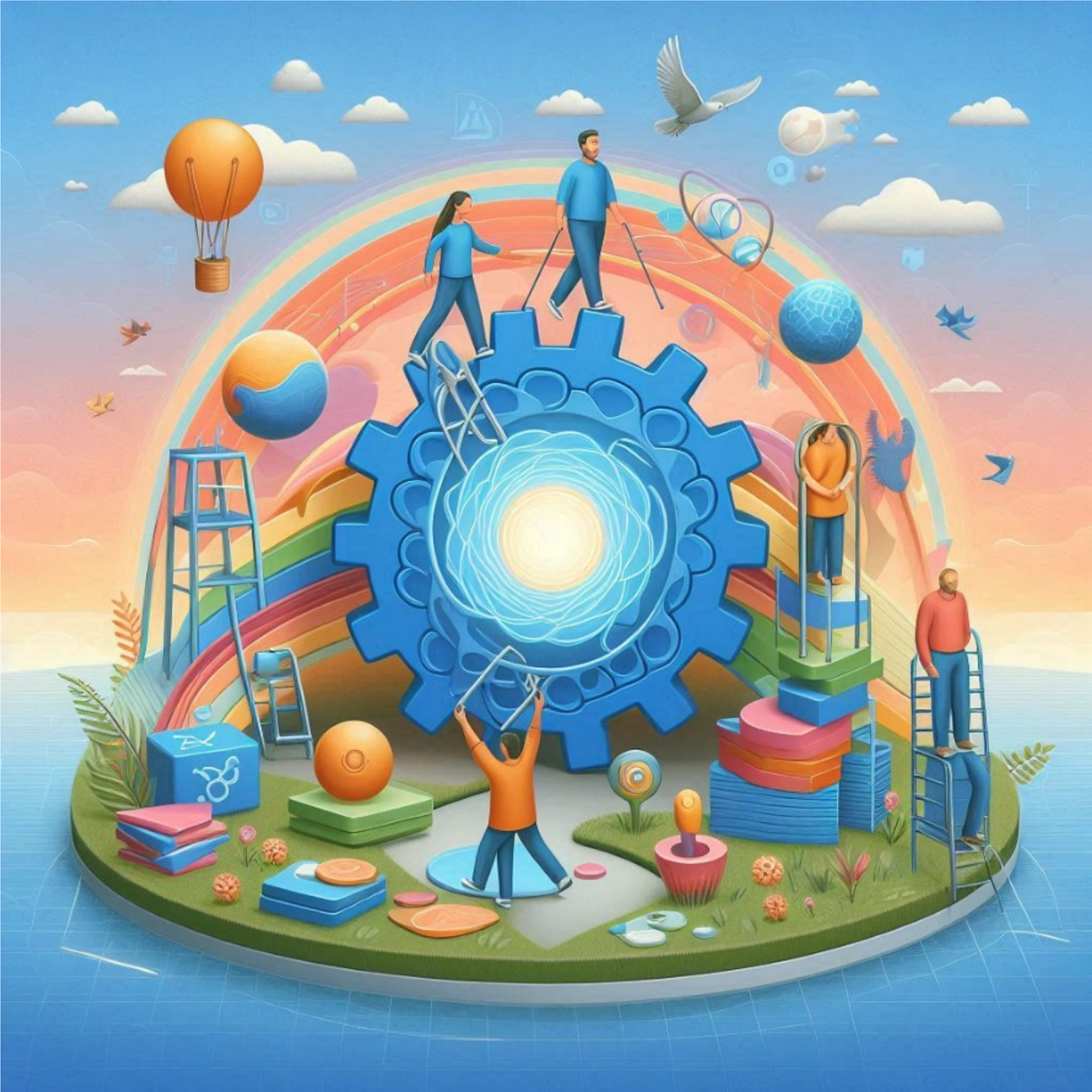
From awareness to integration. Note. Image generated by Microsoft Designer in response to the prompt “From awareness to integration: Elevating DEI in occupational therapy.” DEI = diversity, equity, and inclusion.
The Foundation
The importance of inclusion and integration cannot be overstated: Both play crucial roles in fostering equity, diversity, and a sense of belonging. They are essential in creating environments where all individuals can thrive and make meaningful contributions.
Terms and Principles
Inclusive practices challenge stereotypes and prejudices by fostering interactions between individuals with different backgrounds. Over time, this can reduce bias, discrimination, and stigmatization, leading to more inclusive societies. Inclusion is built on principles intended to create environments where all individuals, regardless of their background, abilities, or identity, feel valued, respected, and able to participate fully (American Academy of Physical Medicine and Rehabilitation, 2025; Tan, 2019; Table 1). Conversely, integration is the process of bringing individuals or groups into an existing system or structure. The focus is on accommodating individuals within mainstream settings, but it may not always extend to creating an inclusive culture (Dempsey, 2001; Table 2). There are two key differences between inclusion and integration:
Inclusion
Integration
Inclusion creates environments where all individuals feel valued and respected and can participate fully.
Integration incorporates individuals into existing systems and structures, with the assumption that they will adjust or be supported to participate.
Together, inclusion and integration create environments that advance human rights by promoting human dignity and equality; boost economic participation by ensuring that everyone has the tools and opportunities to contribute (societies benefit from the skills and potential of a broader group of people); enhance cultural richness through cultural exchange, tolerance, and mutual understanding; and build stronger, more cohesive societies.
Inclusion and integration are vital for creating fair, just, and thriving societies. They ensure that all individuals can participate, contribute, and succeed, leading to better social, emotional, economic, and cultural outcomes.
Theoretical Framework: Awareness to Integration
The Awareness to Integration framework (hereafter AIT) underpins inclusion and integration by outlining a process in which individuals move from self-awareness— recognizing their thoughts, emotions, and behaviors—to actively integrating those insights for personal growth and harmony. Central to AIT is the idea that intentional practice can direct neuroplasticity, fostering cognitive and emotional transformation (Zeine et al., 2024). AIT describes how we progress from simply recognizing or noticing something (being aware of it) to actively incorporating it into our understanding, behavior, or overall self; making it a part of ourselves; and applying the knowledge gained from that awareness in a meaningful way.
AIT involves shifting from passive recognition to active assimilation, thereby improving mental and emotional well-being by unifying diverse experiences into a cohesive understanding of oneself. Self-awareness enhances the brain’s innate ability to adapt to change through neuroplasticity and self-directed clarity while improving neural network pathways to restructure cognitive and emotional pathways and link them to behavioral pathways. This approach enhances brain connectivity by restructuring cognitive, emotional, and behavioral pathways, promoting clarity and self-directed growth (Zeine & Jafari, 2024). AIT and inclusion/integration share core elements: awareness of self and others, to enhance emotional intelligence and reduce bias empathy, both inward and outward, to connect with internal states and others’ experiences integration, to create unity within individuals and communities for collective growth.
Mutual benefits occur when personal development supports inclusive practices and environments, reinforcing AIT principles.
In occupational therapy, inclusion and integration empower clients by promoting self-awareness and holistic, culturally responsive care. Practitioners must engage in reflection and skill development to effectively support diverse populations, thereby fostering environments that encourage growth, empathy, and unity. To provide culturally effective care, practitioners must invest in open-mindedness and curiosity. By engaging in self-exploration, they can develop knowledge, skills, and reflection, which enable them to practice in multicultural environments that acknowledge, respect, and integrate differences (Wells et al., 2016).
The Journey
The journey to inclusion and integration begins with a willingness to learn, take risks, explore, and change. These qualities are essential for fostering growth, adaptability, and meaningful connections in diverse environments. They empower individuals and organizations to do many things: Foster adaptability: Adjust to new situations and find creative solutions to meet the diverse needs of individuals Challenge the status quo: Confront exclusionary norms and promote fairness in inclusive and integrated environments Promote continuous growth: Embrace lifelong learning, evolving social awareness, and long-term success in creating inclusive and integrated spaces Build bridges between people: Connect across differences to strengthen communities and relationships
The willingness to engage with diverse perspectives, take risks to involve others, and change how systems function encourages connections between people who might otherwise remain isolated or segregated.
Willingness to Learn: Self-Exploration
The journey begins with being: developing self-awareness, identity, and a sense of belonging. Knowing oneself provides the foundation for empathy, learning, and meaningful engagement with others. A strong sense of being enables individuals to form healthy relationships, navigate life’s challenges, and contribute to inclusive environments where everyone is valued.
Inclusion and integration start from within—knowing who you are and choosing to grow. Learning is fundamental to understanding and appreciating the diversity of human experiences. It begins with being and self-exploration. Knowing who you are demands that you realize your foundation, values, attitudes, and behaviors. I am part of the fifth generation of descendants of Sally (on my father’s side) and Jemma (on my mother’s side). Sally was one of three daughters of a Native American mother and a Scottish slave owner. Upon emancipation, Sally married a free slave and headed west. Half of the family moved to Oklahoma, while the other half moved to Texas. Both families migrated from North Carolina and settled in central Texas. In 1910, the census taker changed the family name from Wills to Wells. The relocation allowed for the union of Wells–Polk. From this union came seven children. I was one of the last three girls, making me a middle child. Today, only three children are alive. However, there are four grandchildren (sixth generation) and three great-grandchildren (seventh generation). The family continues.
Our culture, upbringing, and environment shape us. The Black culture is a dynamic, evolving force rooted in African traditions and shaped by the history of enslavement, resistance, and resilience. It is expressed through strong family and community ties, oral traditions, spirituality, art, language, and food. Despite systemic barriers and mistrust rooted in historical injustice, the Black culture remains vibrant and influential, offering valuable lessons in identity, joy, and perseverance (IvyPanda, 2022; Niemiec, 2020). The Black culture is distinct and integral to the American culture, encompassing diverse experiences across African-American communities, Black immigrants, and people of African descent. It has an explicit ethnic identity. It continues to evolve, through fashion, media, and social movements, while maintaining a deep sense of pride and ethnic identity. Understand the joy that Black people derive from being Black (Dope Black, 2023; Kennedy et al., 2007). I am the product of a Texas culture, specifically, the Dallas Black community. It is a community with role models, a rich history, elders, local newspapers, and other notable features. It was a village where everyone belonged. I am a Black Texan.
In contrast, American institutions often reflect a dominant White, middle-class culture that sets the societal norm, one that is rarely questioned but widely internalized. The key values of Western culture include freedom, individualism, and hard work (Potapchuk, 2012).
Learning to navigate between these cultural worlds, as many Black Americans do, fosters resilience, self-awareness, and the ability to engage with diverse communities. Understanding your cultural identity and life experiences deepens empathy and strengthens the ability to support inclusion and integration, creating space for acceptance, belonging, and collective growth. I grew up living between these two worlds, learning to navigate both, learning to appreciate both, and learning to know the differences between them.
We are products of our neighborhoods, cities, states, and country. Learning about who you are, and the experiences and moments that have shaped your foundation and self-identity, helps you understand how to support individuals with different abilities or backgrounds. It helps build new neural pathways for acceptance and integration.
Sandy’s Journey: Disability Rights
I am honored to be a part of this historic inaugural lecture. My journey is rooted in family, community, advocacy, leadership, challenges, and change. I have been guided by the foundations and beliefs I learned through my life experiences and those of the people around me. I know that one person can make a difference and catalyze changes in individual lives, communities, and societies. We can move beyond awareness to inclusion and integration through our authentic commitment, action, and respect. My birthright was to beat the odds; this has been a driving force in my life.
When I was born, my parents were told I would not walk and would have delays. Not only did I walk, but I also became an elite athlete and honor student from childhood and through college and beyond. As a child, I learned how to be successful and to be the only one like me. I was in college when life took a significant detour. Along with my brother, who had brain and spinal tumors, I became paralyzed. The two of us were in rehab. Our therapists became our friends. During this event, I adopted a new motto: “Celebrate life.”
I was introduced to sports for persons with disabilities and met wheelchair athletes. I had a community again and a familiar life as an athlete. I won Paralympic medals, set national records, and won national and world championships for Team USA. I worked as a peer support staff member to help kids and other rehab patients adjust after illness and injuries. The patients, therapists, and manufacturers demonstrated to me the value of lived experience. During these activities, therapists encouraged me to go to occupational therapy school. Because this was before the Americans With Disabilities Act of 1990 (Pub. L. 101-336) it took me 10 years to achieve the milestone of becoming an occupational therapist.
As a student, I attended the Denver American Occupational Therapy Association (AOTA) conference. While heading to a session, this woman told me to participate in a meeting about starting a group for disabled occupational therapists. Later, I learned about opportunities to do fieldwork at AOTA’s national office. I got a fantastic chance—with my service dog, Jazz—to work under Shirley Wells, who at that time headed AOTA’s Multicultural Affairs Program. She was the woman I had run into in Denver. My focus at AOTA was to develop diverse groups and a coalition of leaders and to promote occupational therapy. I’m proud to celebrate the 30th anniversary of the Network of Occupational Therapy Practitioners with Disabilities and Their Supporters and the Multicultural, Diversity, and Inclusion Network this year.
I learned, risked, and explored Acts of Inclusion and Integration. We advised AOTA’s Representative Assembly, created policies, produced publications, did presentations, and made changes to conference offerings and accessibility, and the opportunities continued. I met the most remarkable leaders, mentors, and friends. I’ve had an incredible occupational therapy career, including supporting thousands of disabled occupational therapy students and professionals in the United States and abroad; facilitating changes in organizations, educators, and employers to be inclusive and integrative; and helping make communities and systems accessible and inclusive. I have brought my experience and networks to create inclusive and integrated opportunities for the profession. Awareness, inclusion, and integration are my life. Occupational therapy is what we do. Each of you is a catalyst for the future. Never give up.
My name is Sandy Hanebrink. Let’s make history together, again!
Willingness to Take Risks: Knowledge
The journey into the future begins not only with being but also with becoming: mastering social skills, developing lifelong learning habits, cultivating a sense of curiosity and exploration, envisioning a future with opportunities, acquiring skills to participate in the economy, and fostering respect for diversity. Becoming entails acquiring knowledge, broadening understanding, nurturing relationships, and developing skills. Becoming is achieving your personal goals, hopes, and aspirations. Becoming requires stepping out of your comfort zone and challenging the status quo.
A willingness to take risks means that individuals and organizations are ready to take bold actions that promote diversity and equity, even if these actions might be uncomfortable or met with resistance. Becoming involves taking risks, particularly when creating spaces that bring traditionally marginalized or excluded individuals into mainstream settings. I attended an all-Black grade and high school. During my final year of high school, I had the opportunity to participate in an advanced city-wide science class offered by the City of Dallas at the Museum of Natural History. The class consisted of 21 students: 20 White and one Black. This set the stage for my future learning and work environments of “being the only one.” My brother introduced me to occupational therapy when he was in medical school: “There is a health care profession that does those craft things that you do.” Once I was accepted, he bought my first book, Willard and Spackman, fourth edition (Willard & Spackman, 1971). My class had 37 students; again, I was “the only one.” It set the stage for lifelong friendships and the beginning of a sense of belonging.
Willingness to Explore: Skills
Connection goes beyond surface-level interactions; it requires a willingness to explore unfamiliar perspectives and environments. Connection demands curiosity and openness, and it happens when people are seen, heard, and understood for precisely who they are (and for who they are not). It encourages individuals to venture beyond their comfort zones to understand others’ lived experiences. Connection is built through real-world engagement: shared experiences that develop emotional intelligence, empathy, and a deeper understanding of identity. As people connect with diverse individuals and communities they gain a deeper understanding of their own identities and those of others. This growth strengthens empathy, builds resilience, and enhances one’s ability to function effectively in integrated settings. Occupational therapy has allowed me to connect and interact with a variety of people. It has given me a place to explore and learn new skills. Occupational therapy has facilitated my interaction with occupational therapists around the world. I have attended the past seven World Federation of Occupational Therapists congresses. Occupational therapy has allowed me to shape a profession I love through presentations, writings, and research. As an occupational therapist, I have engaged and shaped my community through volunteering and community organizations. I cofounded a nonprofit dog rescue group, which permits me to promote occupational therapy to community members.
Exploration lays the foundation for connection through learning new communication styles, engaging with cultural practices different from one’s own, or rethinking traditional structures to make them more inclusive. Exploration dismantles assumptions and biases, creating room for authentic relationships and collaborative problem-solving. Exploration drives curiosity and innovation in creating equal opportunities and inclusive systems. When individuals are willing to explore unfamiliar spaces—both physically and intellectually—they unlock the ability to build meaningful and equitable relationships. Together, exploration and connection foster deeper integration and inclusivity.
John’s Journey: A Tejano Heritage
All journeys begin somewhere. They are woven into a larger story, shaped by connections, challenges, and opportunities. When we explore and recognize our strengths and the strengths of those around us, we unlock the potential to create positive change. My journey is part of a broader story of Mexican Americans settling in south Texas. It is a story of gratitude for opportunities and an unwavering work ethic that drove me to pursue them.
From barbers, administrative assistants, homemakers, and administrators in 1950s San Antonio to ministers and educators in San Benito in the 1980s, my family has embraced roles that connect them to their community. Their success was built not only on their efforts but also on the efforts of the individuals who supported them and the obstacles they overcame.
For me, a culture of service and a connection to my community led me toward a health care career. But occupational therapy wasn’t even on my map yet. I was drawn into occupational therapy when I encountered two fieldwork students while performing observations in preparation for my application to an occupational therapy program. Their energy, confidence, and passion for the profession were inspiring. My inclusion and integration journey has been inspired by educators, fieldwork instructors, colleagues, clients, and students—individuals who integrated their culture, values, and beliefs to take the extra step for those around them. Inspiration is all around us. Inspiration can illuminate our paths and give us the courage to move forward. Every interaction is an opportunity to inspire. The more we explore the diversity of connections around us, the stronger our profession becomes.
Sometimes, along our journey, it becomes our turn to help light the path for others, to lead. If you had told me 22 years ago—when I was changing lightbulbs at my first job while building my caseload—that I would one day become a faculty member at the university I graduated from, travel across the country to learn from industry leaders and help treat my clients back home, be elected president of my state occupational therapy association, and even stand before thousands of colleagues to deliver part of this inaugural lecture today, I wouldn’t have believed you.
The thought of changing my perspective (at the time) to one of leadership was terrifying, but leadership is not about grand displays of power. As Drew Dudley (2020) described, leadership is about “moments of powerful interpersonal impact.” By that definition, we are all leaders. Suddenly, my journey was no longer about fear but about taking action and moving forward toward a shared vision. It was about not taking the interactions and connections I shared with others for granted. It was about not looking past each person’s unique culture and skills but integrating them into the vision. That is the magic of our profession. The possibilities are endless when we know ourselves, seek to understand others, and share our knowledge and skills toward a common goal.
Our stories and journeys bring unique strengths, perspectives, and skills to the field of occupational therapy. We must celebrate those stories. When opportunities to explore connections arise, take them. Your journey can inspire and illuminate the path for others and, as part of a larger story, help create positive changes in our profession, facilitate personal growth, and enable us to lead changes in our communities.
My name is John Luna, and I want to thank you for letting me share some of my journey with you today.
Willingness to Change
Reflection is an essential practice for anyone committed to inclusion and integration. It requires a willingness to change—to grow beyond what is familiar or comfortable. Critical reflection bridges learning, risk-taking, exploration, and evolution. Reflective practice allows higher levels of thinking processes. It reveals the learner’s capabilities to change their neural pathways and enables them to reflect. Through reflection, individuals become aware of unconscious biases, privileges, and behaviors that may unintentionally exclude or harm others. Reflection encourages continuous learning, adaptation, and improvement.
Change can be uncomfortable. Willingness to change is what turns reflection into action. It is the difference between recognizing a bias and actively working to unlearn it, understand exclusion, and take steps to build inclusion. A willingness to change means individuals and organizations are open to evolving their mindsets, policies, and practices to create more inclusive environments. It is about continually assessing how well everyone is included and being ready to adjust where necessary. Reflection and change build more than personal insight; they strengthen communities, workplaces, and systems by fostering cultures of humility, compassion, and shared responsibility. By embracing reflection, we open the door to meaningful and lasting change.
Belonging
Belonging goes beyond physical presence. It is the experience of psychological safety, affirmation, and mutual respect. People feel a sense of belonging when they can show up authentically, express their identity without fear, and know their voice matters. This state enhances confidence, motivation, creativity, and collaboration. Belonging refers to finding your place in the world, and it recognizes a person’s fit with their environment (physical, social, community). It is understood that you are part of a group, part of a family, and linked with others, experiencing essential relationships.
Belonging is a fundamental human need—a deep sense of being seen, valued, and accepted for who we are. It is the emotional outcome of effective inclusion and integration. Whereas inclusion involves inviting diverse individuals into spaces, integration focuses on their active participation and representation, and belonging ensures that those individuals feel they truly matter. Inclusion and integration are the strategies; belonging is the goal. When people have a sense of belonging, they are more confident, feel more secure, and are more likely to be creative and explore the world. We must be inclusive and available to all who join us and wish to belong. We must value who we are—our past and foundation. We must value the diversity that we are.
Call to Action
Creating inclusive and integrated environments requires intentional strategies to address systemic barriers and foster a culture where everyone feels valued and empowered. This journey begins with strong leadership committed to inclusion, diversity, and engagement in Acts of Inclusion.
Practice Acts of Inclusion
The power of practicing Acts of Inclusion creates a real, lasting impact by turning inclusive values into meaningful actions. These big and small acts serve as powerful catalysts for fostering environments of equality, belonging, and mutual respect. They move us beyond theoretical concepts of inclusion and make it tangible, affecting people honestly and positively (Muragishi et al., 2024b). Key impacts of inclusive acts include the following: Fostering belonging: Acts of Inclusion make people feel seen, heard, and valued. They provide a sense of belonging, which is essential for mental well-being and self-esteem. Simple gestures, such as conversations or invitations, boost well-being and connection. Reducing bias: Acts of Inclusion challenge stereotypes and promote empathy. These acts help break down biases and prejudices by allowing people to experience diversity firsthand, enabling them to move beyond surface-level understanding and recognize the unique qualities and experiences that each person brings to the table. Building trust: Acts of Inclusion validate respect and acknowledge each person’s inherent worth. Listening attentively to someone who might otherwise be ignored or overlooked, such as a quieter colleague, fosters trust and deepens interpersonal relationships. Empowering individuals: Acts of Inclusion allow people to participate and contribute, reinforcing that their voices matter. Acts empower individuals. Driving systematic change: Acts of Inclusion can spark broader shifts—like policy updates or inclusive practices—that benefit marginalized groups. Inclusive actions can bring attention to inequities within systems and structures. Promoting social justice: Acts of Inclusion contribute to the dismantling of systemic inequality, laying the foundation for a fairer society. Supporting mental health: Acts of Inclusion can reduce isolation and create emotional safety, improving overall well-being. These acts create safe environments where individuals can be themselves without fear of judgment or discrimination, allowing people to express themselves freely and authentically.
The power of Acts of Inclusion is transformative. They change individuals, relationships, and entire communities. Whether these acts are simple gestures, such as offering a smile to someone new, or more structured actions, such as advocating for policy change, they all work to break down barriers, challenge stereotypes, and create spaces where everyone can belong (Muragishi et al., 2024a). These acts can shape a more just, equitable, and harmonious world. You do not need permission to engage in Acts of Inclusion.
Have you engaged in an Act of Inclusion today?
Leading Change
Leading change in occupational therapy requires a commitment to continuous improvement, collaboration, and advocacy. To move forward, we must ensure the following: Leadership commitment: Champion inclusion from the top, with leaders actively setting the tone and prioritizing equity. Supportive structures and policies: Implement equitable policies and ensure that resources—such as mentorship, accommodation, and technology—are accessible to all. Representation and participation: Elevate underrepresented voices through mentorship, decision-making roles, and leadership opportunities, thereby supporting their personal and professional growth. Inclusive design: Create accessible physical and digital spaces that enable full participation regardless of ability. A culture of belonging: Foster emotional safety and connection through trust, relationships, and community-building. Create spaces where individuals from all backgrounds can interact, share experiences, and build relationships. Continuous learning: Regularly reflect, adapt, and evolve practices to stay responsive to diverse needs.
This journey requires a collective effort: leaders, organizations, and communities working together to build inclusive environments. The path forward necessitates a comprehensive approach that involves leadership, education, policy changes, cultural shifts, and accountability. By fostering a culture of openness, learning, and mutual respect, we can create environments where everyone can thrive, contribute, and feel genuinely valued.
Occupational therapy practices must be fully integrated with inclusivity, cultural sensitivity, and a focus on equitable access. Moving to action involves proactive strategies, policy advocacy, and personalized care. Moving from awareness to inclusion and integration entails several things: having a vision for change where diversity, inclusion, and integration are seamlessly incorporated into practice, policy, and research; recognizing the gaps and creating a plan to address them; overcoming barriers to integration by changing policies, procedures, and processes; and advocating for a greater diversity of practitioners and a culture of inclusion within the profession.
Understanding clients’ and members’ diverse needs is the first step in promoting inclusivity in occupational therapy. We were the leaders in this area in the past. We can be the leaders again.
Conclusion
So, to move beyond awareness, you must be your true self; have a strong sense of identity; navigate the journey through learning, taking risks, exploring new perspectives, and embracing change; engage in personal reflection and be aware of personal change; belong where you are accepted and supported (occupational therapy profession); and practice acceptance and Acts of Inclusion.
My journey continues. Being: I am a vintage occupational therapist. Becoming: I am a stay-at-home dog mom. Belonging: Anywhere I can change lives as an occupational therapist
Come to the occupational therapy party (Figure 2) and sit at the table, where you will find the following:
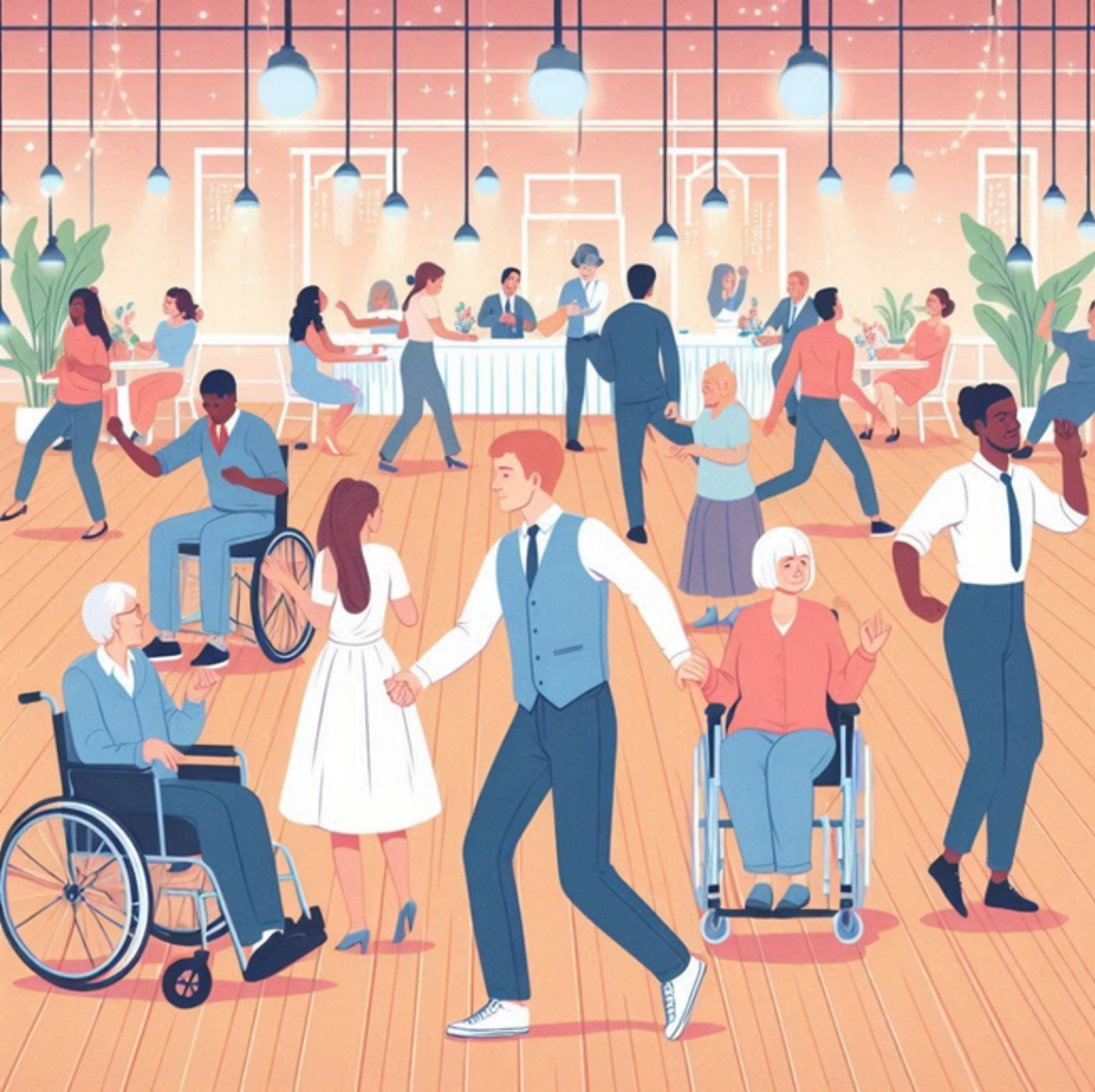
Occupational therapy party. Note. Image generated by Microsoft Designer in response to the prompt “Dance floor with diverse individuals and people with disabilities.”
Diversity: Everyone is invited to the party.
Equity: Everyone gets to contribute to the playlist.
Inclusion: Everyone has the opportunity to dance.
Justice: Everyone works to prepare and maintain the dance floor.
Accessibility: Everyone has access to the dance floor.
Belonging: Everyone is being seen and feels wanted at the party.
Let’s lead with compassion, advocate for equity, and integrate diversity into our organizations and practices to create a more inclusive and integrated future for occupational therapy. May your journey to inclusion and integration be adventurous, challenging, rewarding, and, most of all, fun.
Footnotes
Acknowledgments
I want to express my sincere appreciation to all who have been instrumental in my journey, especially the many occupational therapists who have contributed. Thank you for your wisdom, guidance, and belief in my vision of an inclusive, integrated, and diverse profession. I extend special thanks to Sandy Hanebrink, John Luna, Leslie Jackson, Chi-Kwan Shea, and Jessica Nakos, who enhanced the preparation and delivery of this presentation. I would like to extend my sincere gratitude to Lela A. Llorens, for being my inspiration and nominating me as the first recipient of the Dr. Lela A. Llorens Award of Excellence for Diversity, Equity, and Inclusion. Thank you all for making this experience and journey both meaningful and impactful.