





Abstract
Importance:
Strength-based interventions can be an effective tool in promoting parental well-being in acting as change agents in their child’s early development. Play is central to early childhood and skill development. However, research rarely examines play-based interventions specifically addressing parent and child play.
Objective:
To assess the effectiveness of a Tier 1 strength-based play program on parents’ ability to support their child’s play and build parental sense of competence.
Design:
A pilot, mixed-methods group, pre–post study.
Setting:
Virtual.
Participants:
Forty-six parents were recruited through convenience sampling methods, and 12 were assigned to either an intervention group delivered online or a control waitlist group.
Intervention:
Tier 1 Promoting Family Resilience program.
Outcomes and Measures:
Parents completed a demographic questionnaire, the Parent/Caregiver’s View of Supporting Children’s Play and Playfulness, and the Parenting Sense of Competence Revised Scale. Open-ended pre- and postprogram questions were used to examine parents’ expectations and gains.
Results:
For parents’ sense of competence, no significant differences were found between the two groups. However, a trend for significance was found for parents’ perception of their ability to support the child’s play, U = 6.00, p = .05. Parents in the experimental group reported a decrease in self-efficacy, Z = .00, p < .05. Parents’ expectations aligned with the postprogram responses emphasizing capacity building.
Conclusions and Relevance:
Among the Tier 1 program benefits are capacity building and increased support for play. Limitations include a small sample size and difficulty retaining participants. Results highlight the potential of Tier 1 strength-based programs to support parents in promoting their children’s development through play education.
Plain-Language Summary
Play is central to early childhood and skill development. Strength-based interventions can be an effective tool in promoting parental well-being and their child’s early development, especially if they focus on play. This pilot study assessed the effectiveness of a strength-based play program on parents’ ability to support their child’s play and build parental sense of competence. Twelve eligible parents agreed to participate in this study and were assigned to either an intervention group delivered online or a control waitlist group. We did not find differences between study groups in the parents’ sense of competence, but parents who attended the strength-based program reported an increase in their ability to support their child’s play. Parents also felt that the program met their expectations and supported capacity building. Parents benefited from the provision of educational tools to support their child’s development through play as well as ways to reduce parental stress.
This pilot study assessed the effectiveness of a strength-based play program on parents’ ability to support their child’s play and build parental sense of competence.
Play as a developmental concept involves structured or spontaneous engagement, whereas playfulness is the behavioral manifestation that allows children and adults to approach challenges with resilience. Strength-based parenting interventions can be an effective tool in promoting parental well-being while educating and empowering parents to act as change agents in their child’s early development (Waters & Sun, 2016). Current interventions frequently overlook the potential of strength-based approaches that guide how parents perceive and engage with play, empowering them to challenge negative self-beliefs and enhance their parenting practices (Wilson, 2022). In this pilot study, we sought to investigate how a play-focused, strength-based intervention can enhance a parent’s ability to support and engage with their child’s play and build parental confidence and competency, thereby positively influencing child development.
Importance of Play
As a core daily occupation for children, time spent in play becomes essential for optimizing developmental benefits and promoting equitable outcomes. Playfulness is intrinsically motivated and freely chosen and can involve exploration, humor, risk-taking, contests, and celebrations (Bundy & Kuhaneck, 2024). Play facilitates physical, psychological, cognitive, and social skills that compound into the development of a child’s biological, physical, mental, and social development (Romli & Wan Yunus, 2020). For instance, children who choose active and outdoor play are able to self-regulate, solve problems, and build resilience; and, eventually, they are more likely to choose other healthy behaviors (Kuhaneck et al., 2024). Perhaps most important, play provides valuable opportunities early in life for parents to playfully connect with their child and learn what motivates them and what they enjoy, strengthening the parent–child relationship and potentially disrupting intergenerational cycles of disadvantage.
Family Resilience
Parent–child relationships are an essential part of a child’s psychosocial development. Early parent–child relationships have been shown to have a positive association with children’s long-term emotional well-being, social competence, school readiness, and success (Waters & Sun, 2016). As parents play with their children, they nurture and enhance the parent–child relationship (Román-Oyola et al., 2023). Research consistently shows a significant decline in children’s unstructured play over recent decades, and, according to a survey from the U.S. Bureau of Labor Statistics (2024), parents report playing with their children less than 1 hr/day. Parents’ knowledge about play, including understanding developmental stages and appropriate toys, influences the quality of play experiences. Knowledgeable parents are more likely to engage their children in higher levels of play and playfulness behavior (Dhas et al., 2022).
Parental stress is a well-documented factor that negatively affects parental competency, the parent–child relationship, and the amount of time parents spend playing with their children. It is estimated that parental stress affects 36% to 50% of parents with concerns on topics such as parenting practices, child behavior, or child development (Fang et al., 2024). High parenting stress is strongly associated with lower maternal confidence. Mothers experiencing high stress often feel inadequate in their ability to care for their child, which undermines their sense of competence as parents. Social support can buffer this effect, but when stress is high and support is lacking, confidence and perceived competence decline further (Huang et al., 2022). Additionally, parenting stress is a significant negative predictor of the quality of parent–child relationships, particularly in low-income families. Studies show that higher stress is linked to more negative perceptions of children, less warmth, and more harsh or authoritarian parenting practices (Albanese et al., 2019; Dhas et al., 2022; Duch et al., 2019; Tehrani et al., 2024). The relationship between parental stress and time spent in play is more complex. Some research suggests that parent stress does not necessarily reduce the time spent with children in play and that higher parental engagement in play can reduce parent stress (Khalsa et al., 2024). Socioeconomic or financial pressures, along with family or marital conflicts, can create a cycle of increasing parental stress, which may lead to less time spent engaging in play with children, and this lack of interaction during the early years can significantly affect a child’s development.
Theoretical Framework
Family systems theory defines families as complex and interconnected systems in which each family member or caregiver influences others (Johnson & Ray, 2016). The strength-based practice model complements family systems theory by focusing on strengthening parent–child relationships through positive and playful interactions. The unique strengths and challenges of each child and family are considered to honor families’ capabilities and build the capacity for resilience (Maurović et al., 2020). Within this theoretical framework, parental education emerges as a critical intervention strategy that aligns with these foundational concepts. Parent education programs improve caregivers’ confidence and skills, reduce parent stress, and foster measurable gains across child developmental domains (Pujadas et al., 2016; Tehrani et al., 2024). Research indicates that greater knowledge of child development enables parents to create nurturing environments that foster positive child outcomes, whereas parents with less developmental knowledge demonstrate lower parental competency and higher rates of child developmental delays and behavioral issues (Pujadas et al., 2016). Furthermore, increasing parental awareness of child development during play activities helps reduce anxiety related to parenting, leading to more effective interactions with children (Fabrizi & Tilman, 2024). By equipping parents with tools to understand and respond to their children’s needs through play, we enhance family resilience and child development.
Interventions
Interventions aimed at promoting child development through play or other means can take various forms, with and without parental involvement. A multitiered approach in parent education programs uses leveled support to promote child development through play, tailored to family needs: Tier 1 is a universal basic education and resources on child development and play, Tier 2 is targeted for families that need more guidance and support, and Tier 3 is an individualized intensive intervention with direct instruction for families with significant challenges (McIntyre & Phaneuf, 2008). A systematic review of parenting interventions targeting child development revealed a predominance of studies using Tier 2 programs, suggesting a significant gap in the use of Tier 1 approaches that could benefit broader populations of children and families (Jeong et al., 2021). Therefore, we selected a Tier 1 strength-based approach for this study, because, unlike most existing research, it provides generalized information that reaches broader populations of parents, offering cost-effective, scalable support that can be integrated into existing environments.
Play-based interventions are widely recognized for their positive impact on cognitive, emotional, and social development (Gibson et al., 2021). Although studies describe play-based interventions, much of the literature on parent education focuses mainly on parenting, child development, or both, without incorporating play (O’Connor et al., 2013; Ziv et al., 2016). In parent-based interventions, parents are actively engaged in their child’s development by participating in play activities and learning strategies to support their child’s growth (Fabrizi & Tilman, 2024; Jeong et al., 2021). There is very limited research on play-based interventions that selectively addresses play and even less that focuses on parenting and on play as it relates to parental competency (Esdaile, 1996; Waldman-Levi & Weintraub, 2015; Wright, 2015). Currently, strength-based interventions that provide tools to help parents become change agents in their child’s development through playful opportunities are lacking. The limited literature has shown promising results with improvements in children’s well-being, increase in parental self-efficacy and positive emotions (Imhof et al., 2023; Waters & Sun, 2016). By involving parents in structured play activities, we aim in these programs to enhance parents’ confidence in their caregiving abilities and help them recognize the developmental benefits of play.
Present Study
The Tier 1 program, Promoting Family Resilience, was developed to share information with parents on the value of play, to provide strategies on effective parenting, and to educate families about how opportunities to play enhances child development in everyday life. The design of this informational program was based on a valid and reliable Tier 2 program (Halperin & Waldman-Levi, 2023).
Two questions drove the research: ▪ In what ways does Tier 1, strengths-based educational training enhances parents’ ability to support and engage with their child’s play? and ▪ How does Tier 1, strengths-based educational training influence parents’ sense of competency?
For the qualitative question we asked, What were the benefits that parents attributed to their attendance in the Tier 1 program?
Method
We conducted a mixed-methods, two-group, nonrandomized, pilot study that was approved by the Florida Gulf Coast University Institutional Review Board (Protocol ID No. 2024-85) and registered with ClinicalTrials.gov (Registration No. NCT06625255).
Participants
Parents of neurotypical and neurodiverse children ages 2 to 5 yr were recruited by means of convenience and snowball sampling methods through the distribution of flyers in day care centers, community centers, pediatric schools, and community outreach, both in person and online. Interested parents were screened for eligibility if they were able to commit to participate in two online sessions, if they had a device with a stable Internet connection, and if they demonstrated competency with high school–level English. Parents were excluded if they reported having behavioral or sensory differences.
Measures
We collected quantitative data using a standardized, valid, and reliable questionnaire; and we gathered qualitative data through a set of three open-ended questions presented to parents before and after the start of the program.
Background Questionnaire
We used a background questionnaire to collect information on participants’ demographic information such as age, marital status, gender, education level, preferred language, and race, as well as on child development and any services they may receive.
Parent/Caregiver’s View of Supporting Children’s Play and Playfulness
We used the Parent/Caregiver’s View of Supporting Children’s Play and Playfulness (PC–VSCP; Doerler, 2024) to assess parents’ and caregivers’ perceptions of their role in fostering their child’s play and playfulness. Based on the Parent/Caregiver Support of Children Playfulness criterion-referenced measure (Waldman-Levi & Bundy 2023), the PC–VSCP consists of 15 items that explore various dimensions of play support, such as providing resources, facilitating play opportunities, and encouraging playful behaviors. Participants rate each item on a Likert-type scale ranging from 1 (strongly disagree) to 5 (strongly agree), with higher scores reflecting a more positive perception of their ability to support their child’s playfulness. The total score is obtained by averaging the individual item ratings. In previous studies, the PC–VSCP had satisfactory internal consistency (α), ranging from .79 to .94, as it did in the present study, where preintervention α = .79 and postintervention α = .82.
Parenting Sense of Competence Revised Scale
The Parenting Sense of Competence Revised Scale (PSOC–R; Gilmore & Cuskelly, 2024) is a self-report questionnaire that measures a parent’s self-efficacy and their feelings of competence (Items 1, 3, 5–11, and 14) and satisfaction in parenting roles (Items 2, 4, 12, 13, 15, and 16). The 17 items are rated on a Likert-type scale ranging from 1 (strongly disagree) to 5 (strongly agree), and the scores for eight items (Items 1, 6, 7, 10, 11, 13, 15, and 17) are reversed so that high scores indicate positive parental self-efficacy, satisfaction, or overall competence. The total score is calculated by averaging the individual item scores, with higher scores indicating greater parental sense of competence. The psychometric properties of the PSOC have demonstrated strong internal consistency as well as construct validity and criterion validity correlating positively with established measures of parenting and child outcomes. In the present study, the internal consistency was found satisfactory at preintervention (self-efficacy, α = .81; satisfaction, α = .83; and competence, α = .73) and postintervention (self-efficacy, α = .70; satisfaction, α = 94; and competence, α = .81).
Qualitative Pre- and Posttest Open-Ended Questions
These questions were designed to explore the parents’ perception of their role in supporting their child’s play and their overall parenting experience and experience with the study (shown later in Table 1). Responses were submitted through the Qualtrics XM online platform.
Grounded-Theory Coding Progression for Pre- and Posttest Questions
Note. Q = question.
Procedure
Personnel
The study team consisted of two primary investigators, both certified and licensed occupational therapists with expertise in pediatric research, early intervention, and parent–child interaction, as well as play and playfulness. Additionally, there were two clinical doctoral students and one master’s-level student in occupational therapy. All three graduate occupational therapy students received 2 mo of training in study procedures, which included reviewing materials and then recording their role playing to demonstrate competency. Each of the three graduate occupational therapy students had an assigned role and received further training with respect to their assigned tasks. Next, one occupational therapy doctoral student was responsible for delivering the online sessions; the second occupational therapy doctoral student provided technical support (e.g., managed the chat) during sessions and tracked attendance. Additionally, the team held weekly sessions and maintained regular correspondence with the research leads to ensure alignment and clarity.
Recruitment
Graduate occupational therapy students distributed flyers, and after the eligibility of interested parents was confirmed through a Qualtrics XM survey, those parents were contacted by phone or email to receive another Qualtrics XM link containing the study consent form, pretest measures, and open-ended questions. To maintain participant anonymity and connect their pre- and posttest data, graduate occupational therapy students provided a unique code for the parents to use in completing their pre- and posttest surveys. After participants completed the pretest phase, they were assigned to either the experimental or the control–waitlist group, maintaining a 1:1 ratio in an order alternate to that in which they completed the Qualtrics pretest survey. Parents who were assigned to the intervention group were contacted to schedule their attendance of the program sessions, whereas parents who were assigned to the control group were monitored until 2 wk after their completion of the pretest survey to complete the posttest survey.
Intervention and Control Groups
The experimental group received the Promoting Family and Children’s Resilience through Play program, which consisted of two 30-min, online educational sessions using a standardized PowerPoint slideshow followed by 10 min of questions and answers. The program was adapted from a standardized five-session parent–caregiver group program (Halperin & Waldman-Levi, 2023). On the basis of expert panel feedback and prior research on parent engagement, it was shortened to two online sessions. Previous recruitment efforts and a needs assessment indicated that parents are interested in learning how to support their child’s development through play, but extended time commitments are a barrier (Azizi & Waldman-Levi, 2025). After the needs assessment, two core themes from the original five topics were selected: play and playfulness in children’s development and parental stress. Parents expressed a desire for access to support services and tools to help their children, so resources and strategies were incorporated into discussions on parental stress (Azizi & Waldman-Levi, 2025).
The program’s first session included the importance of play for children’s development and ways to promote play. The second session addressed effective parenting, advocacy in case parents suspect that their child needs services, and parental stress management techniques. In addition to the information, each slideshow included two case examples demonstrating knowledge of application in real-time family situations with suggestions. The two sessions were audio recorded on Zoom and transcribed to monitor fidelity. The control group were waitlisted for 2 wk and then were asked to complete the posttest measures on the Qualtrics platform.
Experimental group sessions were conducted on a rolling basis and began when there were at least 5 participants but not more than 15 who had consented and completed the pretest phase. Graduate occupational therapist students contacted families by email with optional dates for the sessions, and after availability was confirmed, they sent out a Zoom link 1 wk in advance, followed by reminders leading to the day of each session. At the end of the second session, the link to the posttest Qualtrics survey was shared with each participant through a private chat message, along with their personal code to enter. Parents for whom 2 wk had passed since their pretest were invited to complete the posttest Qualtrics survey using their personal code as well. They were then invited to participate in the program. All participants who completed the posttest phase received a $40 gift card delivered by land mail.
Fidelity
The Promoting Family and Children’s Resilience through Play program was delivered through a standardized PowerPoint slideshow with script notes. Fidelity was assessed by the second author (Amiya Waldman-Levi), who observed the recording and read the transcripts for adherence to the slides’ content and script notes.
Data Analysis
Quantitative Data Analysis
We imported the demographic data, as well as the pre- and posttest responses to the PSOC and PC–VSCP questionnaires, from Qualtrics XM to IBM SPSS Statistics (Version 28). First, we calculated the scores from the PSOC scales measuring self-efficacy and satisfaction as well as the competency total score and the PC–VSCP total score. Next, we performed normality tests for skewness and kurtosis followed by descriptive statistics. We used nonparametric tests (Mann–Whitney or Wilcoxon) to test the research questions because of the small sample size, with the level of significance set at p < .05.
Qualitative Data Analysis
The research team used a grounded-theory approach (Creswell & Plano-Clark, 2018) to systematically analyze qualitative data from the parent participants’ pre- and posttest responses. This iterative methodology involved open, axial, and selective coding to identify emergent themes and develop a conceptual framework that reflects participant experience before and after the program. Participant responses were organized in a spreadsheet for systematic analysis by the research team. Data analysis followed a three-stage, grounded-theory process. In the open coding phase, two reviewers (Zoe Hill and Sarah Fabrizi) independently analyzed responses, question by question, to maintain focus on specific constructs, generating initial codes to capture concepts using the participants’ exact words. In the axial coding phase, the reviewers linked categories to subcategories, exploring relationships between the codes. Finally, in selective coding, a core theme was identified to integrate the findings and reflect the overarching narrative of parents’ perspectives.
To ensure trustworthiness, a third reviewer on the research team reviewed the codes and resolved discrepancies to ensure consensus. Two reviewers established agreement through independent coding, followed by consensus discussions with a third reviewer to ensure rigor. An audit trail of coding decisions and reflexive memos was maintained to enhance credibility and transparency. The coding progression is summarized in Table 1.
Results
The sample consisted of a total of 12 parents. Participant retention throughout each phase of the procedure is illustrated in Figure 1, which documents the progression from the initial 46 participants to the final sample of 12. Parents were predominantly Caucasian (n = 6; 50%) and married (n = 9; 75%), with the majority between the ages of 21 and 29 yr (n = 5; 41.7%), whose preferred language is English (n = 10; 76.9%). There was a wide range of education levels, with the majority having a 4-yr college degree (n = 4; 33.3%), followed by master’s or doctorate degree (n = 3; 25.0%), high school degree (n = 2; 16.7%), some college (n = 2; 16.7%), and other (n = 1; 8.3%). The average household income was $100,000 or more (n = 5; 41.7%), with most participants never having experienced any significant life events (n = 8; 61.5%). The children consisted of 7 boys (58.3%) and 5 girls (41.7%). Of those, the majority received no services (46.2%), whereas the remaining noted occupational therapy, physical therapy, or speech-language pathology (7.7%); Head Start (7.7%); or other service (30.8%). (See Table 2.)
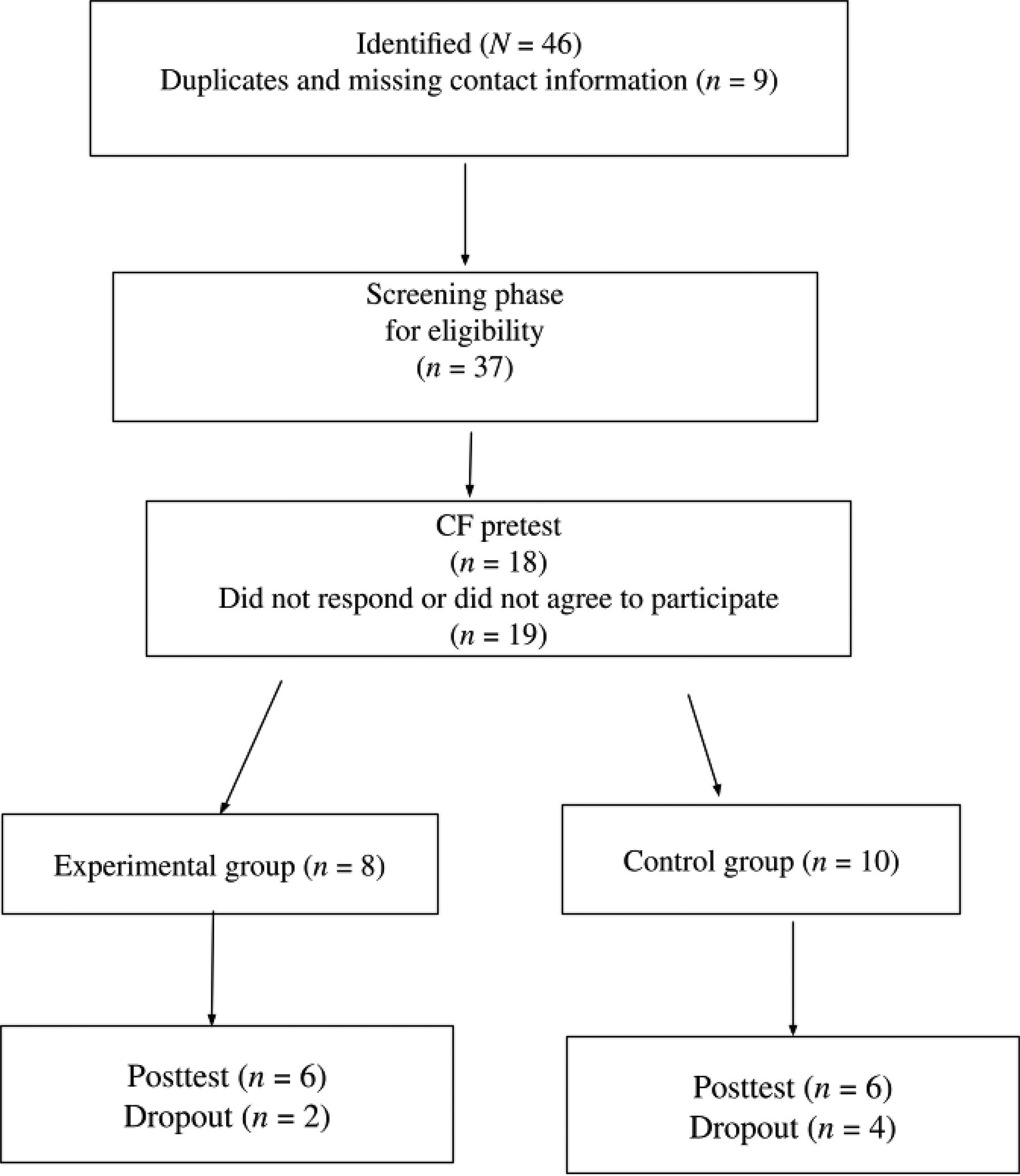
Flow chart.
Sociodemographic Characteristics of Participants
Note. Life events: 8, 9, 10 = losing a parent or primary caregiver, prolonged hospitalization, prolonged hospitalization of an immediate family member; 1, 2 = unemployment, divorce. Child services: 1, 3 = occupational therapy, speech therapy. GED = general equivalency diploma.
The program was delivered with high fidelity to 6 parents over three separate occasions. A close examination of all session recordings and transcripts showcased a complete adherence to the PowerPoint slideshow and script notes.
Program Effectiveness
Parents who attended our program reported an increase in their perception of their ability to support their child’s play and playfulness behavior with a trend for significance (U = 6.00, p = .065). Differences in parental sense of competence (U = 21.50, p > .05), parental self-efficacy (U = 26.00, p > .05), and parental satisfaction (U = 15.00, p > .05) did not reach statistical difference (see Table 3).
Pre- and Posttest Outcomes Distribution in Study Groups
Note. PSOC = Parenting Sense of Competence.
There were no significant within-groups differences in parents’ perception of their ability to support their child’s play and playfulness behavior (experimental Z = 6.00, p > .05; control Z = 6.00, p > .05), their sense of competence (experimental Z = 2.00, p > .05; control Z = 6.00, p > .05), or their satisfaction (experimental Z = 6.00, p > .05; control Z = 11.00, p > .05). The experimental group self-efficacy scores decreased from pretest to posttest, reaching significance (Z = 0.00, p < .05), whereas no differences were found for the control group (Z = 10.00, p > .05).
Benefits Associated With Promoting Family and Children’s Resilience Through Play
The grounded-theory analysis revealed distinct themes for pre- and postintervention parent responses, with shifts in parents’ perspectives on postintervention. The conceptual framework integrating pre- and posttest findings is depicted in Figure 2. The lower number of posttest responses (pretest, n = 20–22; posttest, n = 9) was accounted for by robust coding of available responses, ensuring findings remained grounded in participants’ perceptions. However, it may limit the generalizability of pilot data posttest insights.
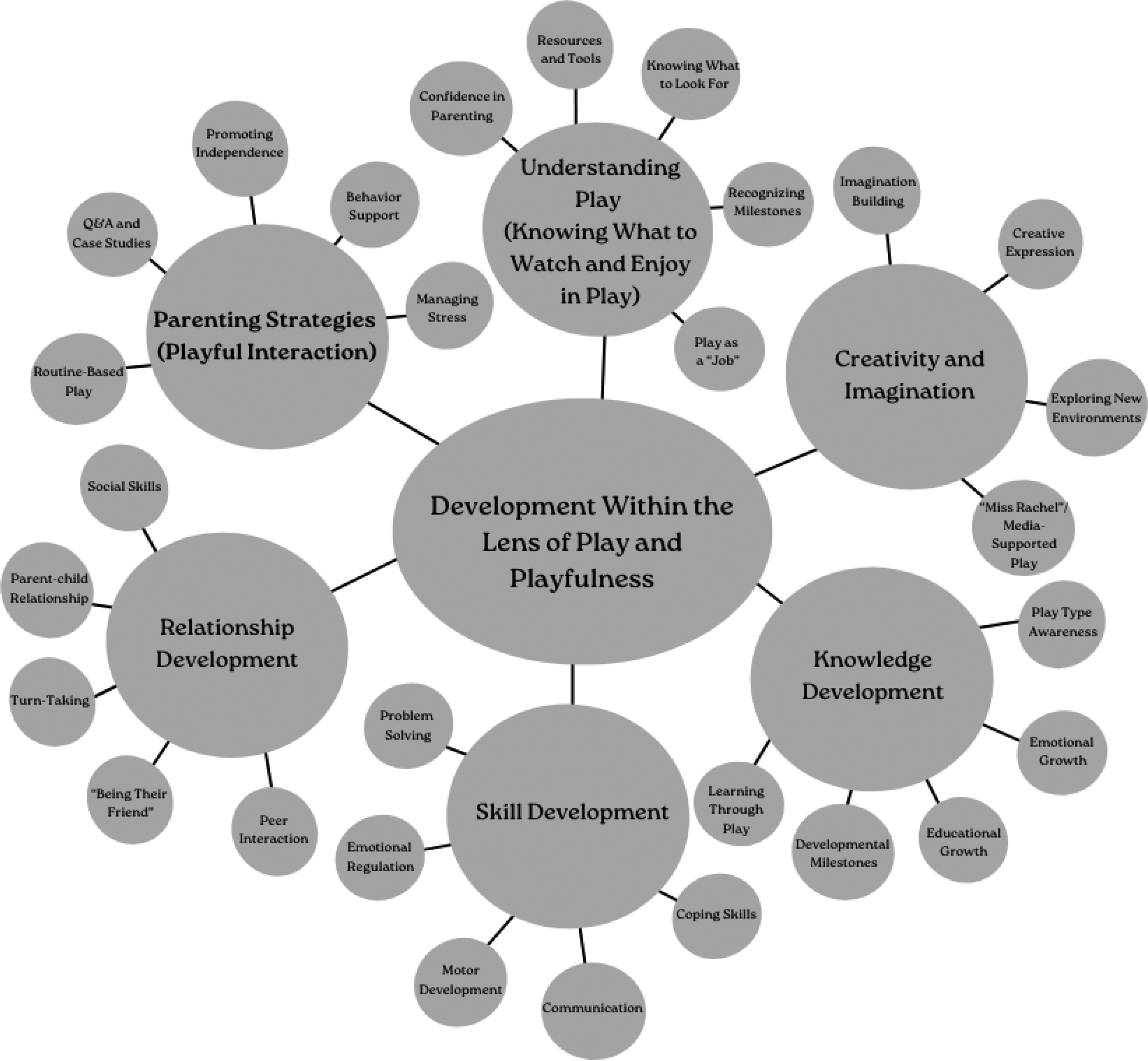
Bubble cluster.
Parents’ initial perceptions of play as a multifaceted contributor to child development include social–emotional, cognitive, and behavioral dimensions. For example, play has a role in “control(ling) emotions” and “learning through play,” and it “helps with socialization when playing with other children and playing in different environments” and “happiness and intelligence.” These codes were grouped during axial coding into categories including skill development, relationship development, knowledge development, creativity, environmental exploration, relational–virtual development, and communication. Parents viewed play as a structured mechanism and an intrinsic quality that drives children’s social, cognitive, and emotional growth; one parent noted that “playing is their job,” which helps to “build strong bonds with parents” along with “creativity and imagination,” supporting them as they “grow and understand the world.”
Parents shared their expectations of gaining practical strategies, emotional insights, and knowledge to enhance their parenting practices and child development through play. Axial coding organized these into categories of parenting strategies, play strategies, and parent–child relationships, highlighting parents’ expectations of acquiring practical tools and enhancing relational dynamics through the sessions. Selective coding identified playful interaction as the core theme, emphasizing parents’ expectations of fostering dynamic, play-based engagement with their children to enhance developmental outcomes and relational bonds. For example, parents expected to “have a reference point as a parent” while gaining “parent strategies to maximize playtime” and “knowledge on play time and types of play based on age.” Parents also expected that information sessions would help to “improve parent child bond, see my children socially and emotionally confident” while also promoting “more joy and respect toward themselves and others.”
In response to the postprogram questions, comments in the open-coding phase included that the group training was helpful “especially for children with disabilities.” Axial coding organized parents’ comments into knowledge about play for children of all abilities; case studies (“It was great to see some case studies”); resources (“the additional resource links provided will be very useful”); and knowledge about play and development, with the selective theme of knowing what to watch and enjoy in play, emphasizing parents’ appreciation of play’s observable developmental benefits postintervention. (e.g., “having children play helps them learn and teaches them independence and problem solving” and “I now understand how to help my child more in playtime, play is important for mental and physical growth”).
Compared with parent responses on the pretest and a broad developmental focus, posttest responses emphasized practical tools (case study examples, resources, information) and inclusivity, aligning with capacity building. Figure 2 illustrates the grounded-theory framework that integrates parent responses under the overarching concept of parent perspectives on play-driven development. The bubble diagram in Figure 2 represents parent perspectives converging on development through the lens of play and playfulness. The conceptual model begins at the top of Figure 2, with “Understanding Play (Knowing What to Watch for and Enjoy in Play)” and moves clockwise to “Creativity and Imagination.” “Knowledge Development” aligns with “Skill Development” and reflects parents’ initial views of play’s structured and intrinsic roles; “Relationship Development” highlighted the expected gains in “Parenting Strategies (enacted in Playful Interaction).”
Discussion
Parenting interventions, including those delivered in multitiered formats, consistently improve early child cognitive, language, motor, and socioemotional development, as well as attachment and behavior. These interventions also improve parenting knowledge, practices, and parent–child interactions. Programs that include content on parenting and play—such as encouraging child-led play, collaborative play, and providing information about the developmental role of play—have greater positive effects on both parenting practices and child outcomes. Early interventions have significant potential to reshape children’s developmental trajectories, creating positive long-term outcomes against the multiple risk factors commonly associated with socioeconomic inequities (Doyle et al., 2009). Studies focused on play have found positive feedback from parents in better understanding play (Esdaile, 1996; Halperin & Waldman-Levi, 2023) but faced challenges in translating this understanding into consistent engagement because of factors such as time constraints, lack of confidence in facilitating play, and competing parenting demands (Jeong et al., 2021; Wright, 2015). The present study investigated how a Tier 1 strength-based program affects parents and their ability to support their child’s development through play. The findings suggest that, although the intervention may not have significantly altered overall parental satisfaction or efficacy, it may have specifically influenced how parents perceive their ability to support child development through play. The grounded-theory analysis revealed a nuanced evolution in parents’ perspectives on play. Preprogram responses framed play as both a structured developmental tool and an intrinsic quality fostering creativity, consistent with the literature on play’s role in cognitive and social–emotional growth (Bundy & Kuhaneck, 2024; Kuhaneck et al., 2024). Preprogram parent expectations of the program revealed anticipation of practical strategies and relational gains.
The trend toward significance in supporting child play and playfulness is particularly noteworthy, given the small sample size. As indicated by the asymptotic approximation, a larger sample would likely yield statistically significant results. A multistrategy intervention aimed at improving parents’ knowledge, confidence, and play practices with a larger sample size supports our assumption, with significant results that increased parents’ self-reported knowledge and confidence, leading to playful interactions (Lane et al., 2022). Notably, the educational component of the study may have enhanced parents’ intentions to seek play opportunities, like findings from another study where community playgroup participation provided parents with peer support and increased their confidence in facilitating their children’s play (Fabrizi et al., 2016). The program’s components specifically targeting play facilitation skills likely influenced parents’ perceptions of their ability to support their child’s play. Supporting this observation, parents in the CARING preschool program reported not only an increased understanding of their children’s needs but also an enhanced ability to apply skills learned during the intervention at home, resulting in improved parent–child communication (Duch et al., 2019). Collectively, these findings suggest that targeted interventions enhancing parents’ knowledge and confidence in facilitating play can lead to meaningful improvements in parent–child relations, even when initial statistical significance is constrained by sample size limitation.
The lack of significant differences in satisfaction and efficacy may be attributed to several factors. The observed marginal decrease in parental efficacy scores may be attributed to heightened awareness of play development and resources to advocate for their child, potentially leading participants to apply more stringent self-evaluation criteria in their postintervention assessments. Previous research has identified a conceptual challenge wherein the construct of parental efficacy is frequently mislabeled as parental confidence, competence, or self-esteem, potentially complicating measurement and interpretation (Albanese et al., 2019). This conceptual ambiguity may explain why participants reported lower efficacy measures, suggesting that the intervention increased parental self-awareness rather than diminishing actual competence. Research examining strength-based parenting interventions with a larger sample size has documented increases in parental self-efficacy that have been attributed to participants’ enhanced recognition of effective skills that they were already using in their parenting roles (Waters & Sun, 2016). These findings have important implications for practice. The educational components that focus specifically on play facilitation appear to enhance parents’ ability to support their children’s developmental needs through play. Resources and guidance that help parents understand the value and power of play in development are central in effective multitiered models. Tier 1 interventions can target specific domains of parental competency rather than attempting to improve general parental satisfaction. This supports occupational therapy’s role in designing programs that equip parents with concrete strategies to overcome barriers to engagement, potentially addressing developmental inequities through accessible, strength-based approaches that promote play as a critical occupation of childhood.
Limitations and Recommendation for Future Research
Our small sample size reduced statistical power, potentially obscuring meaningful effects. We also faced challenges in retaining participants. Additionally, the reliance on self-report measures may not fully capture actual changes in parental behavior or child outcomes. To address these challenges, we recommend increasing the number of program sessions offered throughout the week and simplifying the process for parents to select a time slot immediately after completing the pretest survey.
Implications for Occupational Therapy Clinical Practice
The study results have the following clinical implications for occupational therapy practice: ▪ Occupational therapists can use these study findings to enhance parents’ perceived ability to support their child’s developmental needs through play interactions. ▪ Occupational therapists should educate parents on recognizing and enjoying play while teaching practical, play-based strategies embedded in everyday routines to enhance child development and strengthen parenting practices. ▪ Play-based strategies should integrate creativity, imagination, and relationship-building within play to align with parents’ expectations for emotional insights and structured approaches that support both developmental and relational outcomes.
Conclusion
In conclusion, although the Tier 1 strength-based program designed to educate parents about play and child development did not significantly affect overall parental satisfaction or efficacy, the trending positive effect on parents’ perceptions of supporting play suggests the potential for more targeted interventions to enhance specific domains of parental competency. The results demonstrate that providing parents with a Tier 1 strengths-based program can change their perception of their ability to support their child’s play. These study findings suggest that developmental education programming coupled with actionable steps to overcome barriers in parents’ ability to support their child’s development can support their self-efficacy. Additionally, our findings highlight the need to further explore the capacity of Tier 1 programs and programmatic design that can support parents in their role. By focusing on capacity building to enhance self-efficacy, practitioners can provide concrete play facilitation strategies that parents can apply to their family’s routines.
Footnotes
Acknowledgments
We express our sincere appreciation to the study participants for their time and support of this project.