Putting it into Practice [1] : Using Feminist Fractured Foundationalism in Researching Children in the Concentration Camps of the South African War [2]
Available accessResearch articleFirst published online April, 2006
Putting it into Practice [1] : Using Feminist Fractured Foundationalism in Researching Children in the Concentration Camps of the South African War [2]
Feminist fractured foundationalism has been developed over a series of
collaborative writings as a combined epistemology and methodology, although it
has mainly been discussed in epistemological terms. It was operationalised as a
methodology in a joint research project in South Africa concerned with
investigating two important ways that the experiences of children in the South
African War 1899-1902, in particular in the concentration camps established
during its commando and ‘scorched earth’ phase, were represented
contemporaneously: in the official records, and in photography. The details of
the research and writing process involved are provided around discussion of the
nine strategies that compose feminist fractured foundationalism and its
strengths and limitations in methodological terms are reviewed.
1.1 As part of a longstanding collaborative project concerned with
feminist methodology and epistemology,[3] we have formulated a framework for a grounded research
practice termed ‘feminist fractured foundationalism’.[4] In company with others, we have
contributed to the development of a feminist sociology (S. Jackson, 1999, 2000), in
our case involving rejecting the ‘cultural v. material’ binary in favour of an
approach that includes both.[5] Feminist fractured foundationalism also eschews ‘Theory’ in
favour of what Mary Maynard has called feminist middle order theories (Maynard,
1995) and is concerned with social investigations which will produce what Stevi
Jackson (1999: 4.2) refers to as “grounded generalisations… more easily integrated
with empirical research”.[6]
1.2 There is, however, an impasse in much present thinking about
feminist social science research (Wise & Stanley, 2005): epistemological
discussions have become bogged down in reformulations of abstract debates of a
‘realism v. idealism’ kind, rather than rethinking the binary; and there has been
relatively little attention to new developments in research practice and an
over-emphasis on repeated discoveries of gender patterns and inequalities in social
life.[7] The
development of feminist fractured foundationalism (FFF) has been a direct response
to these problems, an attempt to find a constructive resolution by tackling the
epistemological division head-on while being as concerned with grounded research
practice as with theoretical conceptualisations. As a consequence, FFF was
formulated to recognise both the materiality of social life and reality and its
socially interpreted and culturally constructed aspects, as well as an
epistemological position which rejects the tired old realism/idealism binary as a
misconceived simplification. In doing so, we have drawn on longstanding traditions
in sociology (including symbolic interactionism, sociological phenomenology and
cultural Marxism) that have, in our view sensibly, wanted to ‘have it all’ and to
emphasise that it is not a matter of either/or but rather both when it comes to
realism and idealism. Following this, and in keeping with the above discussions by
Maynard and Jackson, we became interested in configuring FFF as a methodology to be
used in grounded social research practice, rather than it remaining an epistemology
to be theoretically elaborated (Wise & Stanley, 2005; Stanley & Wise 2006).
It was in this regard that we used the FFF framework in a project conducted in South
Africa during 2004, with the focus being how FFF shaped up when used, reviewing its
possibilities and limitations in grounded research of the kind we carried out.
1.3 For many academic feminists, feminist research is conceived in
specific terms as the empirical and theoretical investigation of a range of topics
and issues cohering around notions of sexual difference. A signal difference between
this and feminist sociology as we conceive and champion it is that feminist
sociology ‘wants it all’. Feminist sociology is not a ‘specialism’, like
sociological work on the body or indeed on gender, but is rather a way of rethinking
and reconfiguring the whole of the discipline in feminist terms. Consequently the
kind of feminist sociology we align ourselves with refuses to ‘know its place’, the
place of sexual difference and ‘suitable’ topics associated with women and gender.
The whole of sociology is its province.
1.4 ‘Fractured foundationalism’ is our characterisation of social life,
the fundamental ‘it’ that sociological researchers grapple with understanding:
social life is both founded in a material factual reality and also involves
disagreements and disjunctures between people's views of ‘the facts’. The term thus
recognises both that there is a materially grounded social world that is real in its
consequences (foundationalism), and insists that differently-situated groups develop
often different views of the realities involved (fractured). For us, the resultant
complexities of interpretation have to be responded to in ways that do not position
feminist researchers as a priori overriding the understandings of ‘the researched’,
and therefore FFF involves eschewing assumptions of epistemic privilege. However,
researchers who reject a normative or realist epistemology (a conventional form of
foundationalism), as we do, still need to have a reasoned grounding for their
alternative epistemological position. In our view, fractured foundationalism
provides such grounding and also recognises social constructionism.
1.5 FFF is organised around making transparent the practices and
understandings of feminist sociological research. However, FFF is not a method (a
technique for gathering research data) and can be utilised in feminist survey
research as much as feminist interviewing, ethnography, and feminist historiography.
Neither is it straight-forwardly an epistemology because, although having
epistemological underpinnings, it contains broad precepts for operationalising
feminist research in practice. It is instead a methodology, a set of procedural
strategies which enable conceptualisation, grounded research practices, writing
about data, and theorising from these, to be brought together and thought about as a
coherent whole. And, in keeping with our earlier comments about feminist sociology,
it is a methodology that can be used in investigating any aspect of social life, any
and all of sociology's domain concerns, and is certainly not confined to sexual
difference topics.
1.6 From the outset we recognised that, other than ‘being a woman who is
a feminist’, there was nothing about FFF that male social scientists could not do or
use (Stanley & Wise, 1990, 1992). Nonetheless, when FFF was first formulated in
the early 1990s we proposed that few would do so because its emphasis on analytical
reflexivity, moral knowledge and use of retrievable data cut across, indeed more
strongly challenged, sociological scientism. However, the last decade has witnessed
a significant narrative turn in sociology and a renewed sociological interest in
notions of reflexivity; and approaches premised around analytical reflexivity, like
FFF, have gained greater acceptability as a consequence. FFF is a feminist
epistemology and methodology because it involves research carried out by feminist
practitioners explicitly putting ‘feminism into practice’ in their research
practices, with FFF organised around a number of principles or strategies which make
feminist researchers more accountable, including analytical reflexivity and the use
of retrievable data. But at the same time, there is nothing to prevent any
interested male sociologist making use of the fractured foundationalist framework
and the strategies that compose it, with these strategies being used to structure
the following account of our South African research project.
1.7 The immediate backcloth to this research involves the South African
War 1899-1902, particularly its ‘scorched earth’ phase when the British military
burned many Boer[8] farms,
and women, children and elderly people were removed to camps of tents, situated
along railway-lines so that they could be provisioned.[9] Over 4,000 women and 22,000 children
died[10] when a
succession of major epidemics – particularly measles, diarrhoea, enteritis, typhoid
and pneumonia - occurred, spread when people were moved from one concentration
camp[11] to
another, to be closer to their original homes. These events, together with how they
were remembered and used within the development of Afrikaner nationalism and racial
segregation in South Africa, have been the subject of Liz's recent
research.[12] The
other part of the backcloth is formed by Sue's long-standing research and writing on
feminist social work, and her interest in social justice regarding the treatment and
welfare of children, around rejecting ‘adultist’ preconceptions of childhood and
recognising the grounded nature of children's lives.[13]
1.8 When we decided to ‘test’ FFF in grounded research practice, these
respective sets of interests were pooled in designing a small project focusing on
the experiences of children in the concentration camps of the South African War, for
two linked reasons. Firstly, children ‘bore the brunt’ of the war, while adults were
not willing to stop fighting without capitulation from the other side.[14] And secondly, previous
research has looked at the war and the camps from the perspective of adults, even
though the overwhelming majority of those who died were children.[15] Discussion of our camp
children project within the FFF framework begins with the research labour process.
The project combined working on archival collections of photographs and of
organisational records, as outlined below.
FFF proceeds from the fractured ontological nature of social life. Feminism
as a politics centres a radical social ethics; for FFF, this necessitates
producing feminist knowledge in an open, accountable and defensible way.
Doing this starts with the research labour process. In particular, FFF is
concerned with analytical processes concerning how knowledge is produced and
the claims made for it. For FFF, method in the narrow sense is unimportant
and what matters is why and how they are used and for what purpose. FFF is
instead concerned with analytical reflexivity and using retrievable data:
providing evidence as well as the interpretation based on this means readers
can reach their own conclusions.
2.1 Britain provoked the South African War (1899-1902) against the
two Boer Republics of the Orange Free State and South African Republic and
annexed these as the Orange River (ORC) and Transvaal Colonies. The war,
however, did not end there. Boer commandos continued fighting; the British
‘scorched earth’ policy was a response, as was the institution of direct British
rule in the former Republics. Our camp children project was designed with two
inter-related components, concerned with exploring the two main ways that
experiences of children were represented following the removals of Boer people
to the concentration camps during the war. One is the official record, the other
involves photograph collections.
2.2 The official records were kept by British administrators at
local level in the approximately forty Boer concentration camps, and also in the
headquarters of each Colony.[17] These were records of an organisational apparatus
concerned with maintaining and regulating the ‘removed’ populations, with
accountability ultimately held by the British government in Whitehall, but
beneath this by the colony governments[18] and their chief administrators of
the camps, and then beneath this by the superintendents or administrators of
each individual camp. There are many extant records – ‘returns’ of information
and also summarising registers.[19]
2.3 The first component of our research involved picking one element
of these records, in one of the annexed colonies, for detailed investigation:
this was the ‘minutes’ or files of inquiries between the Chief Superintendent of
Refugee Camps (SRC), and the superintendents in charge of the Orange River
Colony's (ORC) eleven camps. In the SRC archive collection, there are nearly
11,000 such inquiries, some of which are specifically concerned with children's
lives, illnesses or deaths.[20] Accountability for the concentration system was
grounded in bureaucratic record-keeping and meticulousness in following agreed
procedures; and the fullness of the official records, originating in many
different local sites, is striking. So too is the emphasis on following
laid-down procedures, like those instituted to bring the epidemics under
control, with the inquiries indicating that officials could be so concerned with
following procedures that they were unable to ‘see’ the emotional and political
impact that these were likely to have on camp inhabitants. In addition, there
was a high level of official inquiry and intervention concerning safeguarding
the welfare of children:[21] there are many examples of cutting-edge good professional
practice, for instance regarding likely cases of infanticide and child
maltreatment by children's carers.
2.4 The second component of the research involves our investigation
of the archive collections of photographs of the South African War, specifically
a sub-set of the concentration camps in one particular collection, that in the
Free State Archives Depot.[22] These were taken primarily by professional
photographers, who travelled to war locations and routinely visited the camps,
selling their photographs to newspapers world-wide, and to British soldiers and
Boer commandos and people living in the camps. A minority were taken by people
employed in the camps, as administrators, doctors, teachers, nurses and so on,
using one of the Kodak/Eastman cameras available from 1898 on. Many of the
professionally-taken camp photographs were ‘views’ and general pictures sold to
newspapers or in local shops; others were taken ‘to order’ and are ‘scenes with
people’ or posed individuals and groups, which would have been bought by camp
inhabitants as mementoes or posted to absent relatives on commando.[23]
2.5 There are three main collections of South African War
photographs in South Africa holding around 80,000 photographs.[24] The collection held
by the Free State Archives Depot in Bloemfontein (VAB) covers the same camps as
the SRC records of inquiries and therefore became the focus of our investigation
because of this. These photographs throw a different light on the concentration
camps from the official records, the inquiries concerning children in
particular, because they feature a much wider range of children's presence and
activities. This is absolutely not to suggest that the photographs are more
‘real’ than the official records (or vice versa). But it is to emphasise that
the two sources have different origins and purposes, and that the photographs
involve camp inhabitants being more active in choosing how they were represented
and also in keeping some of these as mementos post-war.
2.6 In what follows, ‘retrievable data’[25] are used to tie the discussion as
closely as possible to key documents (both written and photographic) that ‘stand
for’ or exemplify wider aspects of our research and interpretations of it, so
that readers can evaluate arguments against their own. We do not claim
referentiality for these texts, including the photographic ones. They are not
directly reflective of ‘the real happenings’ that gave rise to them, and nor are
they the total evidence drawn on. However, providing them shows something of the
evidential base being worked from and enables a more informed readerly
evaluation of interpretations and conclusions. This claim is returned to and
discussed in the last section of the article, where we comment on the FFF
process as a whole and our use of retrievable data within it.
(ii) Grounding feminist knowledge
While FFF may advance preferential knowledge-claims on various grounds, it
rejects epistemological privilege, proposing that all knowledge-claims
should be evaluated on their specific merits. Consequently the
knowledge-claims made by FFF should concern specific examples and be
grounded in particular evidence and interpretations. And whether the
feminist researcher ‘knows’ in an authoritative sense depends on the
sufficiency of evidence for the conclusions drawn, the plausibility of
interpretations and conclusions, and the reception by readers.
2.7 We start with some more information about the research process
and why the particular inquiries and photographs that were selected were decided
upon, beginning with the SRC inquiries. Many of the total set of SRC inquiries
cover matters including or of relevance to children, who composed the large
majority of the populations of all the camps. However, our interest was in those
where children were the specific focus, so we worked through detailed notes on
all the SRC inquiries to identify this smaller group, using Liz's previous
research on the collection as a basis. Then the inquiry papers for each of the
children's inquiries were read in detail (using other SRC records to generate
additional information where available[26]), with Table 1 summarising the concerns of these.
These 49 inquiries were examined in detail, including in relation to wider
aspects of the war and the camps. From this, seven inquiries were selected,
discussion of which would enable covering the broad distribution of inquiries in
Table 1.[28] The retrievable data
for each is provided in Appendices 1 to 7, and will be referred to in the
discussion which follows through hypertext links in the text at appropriate
points.
2.8 A similar procedure was adopted regarding the VAB photograph
collection, which neither of us had worked on before. The result was
identification of 116 concentration camp photographs, in 61 of which children
appeared, with classification of them shown in Table 2.
The decision to use retrievable data meant considerable discussion of the
photographs with children in them, including in relationship to the SRC
inquiries being worked on. As with the inquiries, photographs were selected to
broadly reflect the distribution of subjects across the whole set, resulting in
the eight photographs shown in Appendices 8 to 15.[32] These too will be referred to in
the discussion which follows through hypertext links.
2.9 Finally, back in the UK and during the initial work on writing
up the research, we focused down on three inquiries and three photographs around
which to discuss putting FFF into practice, a small enough number we thought at
the time to provide readers with specific examples and also the interpretations
based on these. However, we rapidly realised this was too many when working
within constrained word limits.[33] The result in our very first published account of the
research was a decision to focus mainly on one inquiry and one photograph, but
still to provide the retrievable data for the more representative group of seven
inquiries and eight photographs, enabling readers to place the two cases
discussed in a broader context. The inquiry was selected first, on the basis
that it raised the widest range of issues. This was the Swart[34] case, with the
retrievable data here a letter from Harrismith's superintendent, Arthur Bradley,
written on 25 December 1901 to the ORC's Chief Superintendent, Captain Trollope,
and is provided as Appendix 3. Then the photograph was selected, to raise some
different issues about a different camp. This is a photograph from Kroonstad,
provided as Appendix 10. The wider group of retrievable documents are referred
to through hyperlinks in the following discussion which direct readers to the
original documents, and also notes containing summary interpretations of these.
Active readership of these by readers is required in two respects. Firstly, the
whole set of retrievable documents provides a broader informational context for
readers to locate the Swart case and the Kroonstad photograph in; and so all of
these need reading (the inquiries) and looking at (the photographs) in detail.
And secondly, the accompanying summarising interpretations of these need to be
evaluated against reading the retrievable documents themselves.
(iii) Unalienated knowledge
Bracketing or cancelling out the act of knowing is highly consequential in
feminist terms: it renders invisible the indexical properties of knowledge
within a false ‘universalism’, and by denying the labour involved it
alienates this as a devalued commodity. Important dimensions of an
unalienated feminist knowledge include grounding the feminist researcher and
her research as an actual person at work in a concrete setting; recognising
that understanding and theorising are material activities which can be
accounted for; and linking the ‘act of knowing’ (research process) with
claims about ‘what is known’ (research product).
2.10 We start with a methodological conundrum. Superintendent
Bradley's letter in Appendix 3 provides a retrievable document which sets out
many of ‘the events’ concerning the death of a young girl, Christina Swart, that
came under inquiry in late December 1901 and it can be read and understood as a
self-contained text. At the same time, the inquiry went from SRC to Colonial
Secretary levels and generated two linked inquiries involving 27 individual
records and more words than this entire article, and fully understanding any one
of these documents would necessarily draw on wider research on the concentration
records as well as ‘what came after’ in the history of South Africa. Some of the
inquiries are even more fully documented; and it is also worth noting that even
those which are composed solely by the retrievable document provided, such as
Superintendent Shutte's letter about purchasing things for the people affected
by the marquee burning in Appendix 1, still require such background knowledge to
make full interpretive sense of them. Three examples of interpretive work on
Bradley's letter requiring this background knowledge are as follows.
2.11 Firstly, it is highly likely that the heart-wrenching death of
Christina Swart was the origin of the repeated refrain of ‘sick children
seemingly routinely torn from of their mothers’ arms to die en route to
hospital’ that appears in the (proto-) nationalist-orchestrated women's
testimonies which were published post-war.[35] Secondly, this is absolutely not
to deny that what happened to Christina was appalling and inhumane, but instead
to emphasise that the fierce political divisions of the war impacted on people's
understandings of ‘the facts’ and the intentions and meanings they ascribed to
these, the source of the disputes commented on in Bradley's letter and across
all the Swart inquiry documents. It is also important to contemplate what the
seven retrievable documents in Appendices 1 to 7 and the photographs in
Appendices 8 to 15 demonstrate concerning what has been ‘forgotten’ from
received or canonical knowledge about the South African War concentration camps:
the many accidental deaths brought about by parental tiredness or carelessness
(see Appendix 1), cases of infanticide and also murders (see Appendices 2 and
4), the presence of large numbers of sometimes powerful men in the camps (see
Appendices 2 and 3), internal disputes and differences among officials (see
Appendix 5), organisational requirements and reprimands, the detailed recording
of black people's lives and deaths and overall presence (see Appendix 6), and
the need to ‘do something’ about orphans along with the political context this
was perceived within (see Appendix 7). And thirdly, some of these complexities
are brought into sight by reading Bradley's letter from different viewpoints.
Thus the dispute ‘on the day’ involved Superintendent Bradley, doctors Rossiter
and Ralston, Christina's mother Martina Johanna Swart, Resident Magistrate
Arthur Leary, and also the civil surgeon carrying out the post-mortem, William
Beor,[36] with
statements of their various positions appearing in the full set of inquiry
documents; and we take ‘recovering’ and attempting to understand the grounding
of these disputing viewpoints to be crucial to the FFF labour process.
The knowing subject
At an epistemological level, FFF involves a double-take on what ‘knowledge’
consists of: knowledge is what is constituted as such within everyday
knowledge practices, and it is also what feminist researchers make of this
(and these may conflict, of course). All society members are engaged in such
activities, because all of social life revolves around practical knowledge
matters. However, while researchers engaged in social inquiry will usually
do this in a more structured and formal way, FFF does not see these
activities as different in kind from everyday practices. FFF resists seeing
people as immersed in the local and unable to discern the wider relations
and structures of ruling, and rejects epistemological privilege for feminist
research.
2.12 From Superintendent Bradley's letter, it is clear that
Trollope, the doctors and the superintendent were all aware of wider ‘non-local’
issues of different kinds. Similarly, Parry Edwards, as the Orange River Station
medical officer, was clearly aware of overlaps but also differences between
overlaying, infanticide and murder, in Appendix 2; while Major Wilkins – who
replaced Captain Trollope as ORC Chief Superintendent in early 1902 - in the
adoption inquiry in Appendix 7 has an eye on the legalities as well as on
finances and wanting orphans removed from ‘the books’ where possible. Returning
to Bradley's letter, in it Trollope is positioned around notions of
accountability within an organisational hierarchy, the doctors as focused
narrowly on the epidemics and deaths and their status in this hierarchy, while
the superintendent presents himself as concerned with both humanitarian matters
and with issues concerning the Swart ‘clan’. In addition, Bradley's letter
clearly implies that the Swart men were capable of acting as a power bloc in the
camp at the present-time (not just concerning the future ‘settlement of the
colony’) and could influence people back into their ‘old discontented state’,
with one of its sub-texts being how the Swart men would react to Christina's
death and its possible political reverberations. The ‘absent presence’ of Klass
Saaiman's father in Appendix 2 raises similar questions about the presence and
power of men in the Orange River Station camp, too.
2.13 However, while the Swart men are presented as wealthy and
influential, there is no document on file providing their actual viewpoint: this
is assumed and invoked, but not presented in its own right. By contrast, Mrs
Swart was the determined and active agent whose response to her daughter's
illness, and then the circumstances of Christina's death, forced the inquiry to
happen; and she and others testify under oath about this. Without her insistence
that a post-mortem by an independent person should be carried out, this would
have remained an unseemly dispute between adults around a dying child, rather
than erupting into organisational sight at a high level. Mrs Swart's insistence
then required the Resident Magistrate to write a report concerning the
post-mortem and the inquest following, at which the key parties all made sworn
statements; and in this, the Magistrate went out of his way to punitively
conclude that Christina's death was due to ‘improper mutrition [sic] and bad
treatment by parents’ (because Christina's intestines were full of food, whereas
typhoid patients had to be starved to have a chance of survival).
2.14 Another factor requiring contemplation here is that Christina's
parents failed to report her typhoid for two to three weeks, with what they
thought were her best interests at heart.[37] As other filed documentation
shows, they had deliberately hidden Christina from the daily ‘sick call’ carried
out by Boer probationer nurses[38] and secretly buried her lethally-infected faeces.
Also, while the post-mortem shows that Christina had been fed on solids, her
mother's sworn statement mentions feeding liquids but not solid food:[39] it seems Mrs Swart
was aware of the strict advice to starve typhoid patients, but her wish to do
her best for her daughter had over-ridden this and she thought that the doctors
attempt to take Christina to hospital, rather than her feeding solids to her
daughter, had killed Christina.
The fractured ontological base
FFF is predicated on the ontological position that social life is
inter-subjectively constructed around ideas and practices concerning
structures understood as ‘social facts’ which are external to and
constraining upon society members. Social life is at one and the same time
experienced as independent of social construction, but is actually
constituted by this. Knowledge necessarily has an ontological basis: there
is always a knower situated in time and place with others, going about the
business of knowing the social world. Because different collectivities of
people understand realities and facts from where (geographically, socially,
politically) they are situated, everyday fractures of understanding and
meaning - reality disjunctures - frequently arise; however, these are
negotiated (sometimes successfully, sometimes with remaining disagreements)
around the shared premise that there is real meaning, facts and truth – a
social reality - to be arrived at.
2.15 There are complications surrounding ‘the facts’ in the Swart
case, something which also comes across concerning Parry Edward's attempt ‘to
know’ about the death of Klass Saaiman in Appendix 2, with his classification of
possible causes of death, reasons why he made the post-mortem, and his careful
conclusion. Superintendent Bradley's letter conveys that his response to the
doctors was a humanitarian one about Christina Swart, echoed in the comment
written in an accompanying document by the ORC Governor, that ‘undoubtedly the
mother is to blame; yet it seems strange that the child would be removed when
actually dying’. However, the superintendent had other motives too, for the
implication of his remarks (corroborated in other documents) is that he actually
intervened because of the importance of Christina's uncles in the camp. Also,
while his letter stresses the ‘future settlement of the colony’ (a political and
imperialist reason he perhaps thought would ‘go down well’ with Trollope and the
latter's political superiors), it also indicates that his pressing practical
concern was ‘managing’ the men in the camp and preventing their ‘discontent’. In
addition, other filed documents show him ‘covering his back’ by masking the fact
that Mrs Swart had reported Christina's sickness to him before the doctors found
out about it.
2.16 Further complexity can be added to this ‘mixed motives’ reading
of the superintendent's role by taking the best possible view of why doctors
Ralston and Rossiter acted as they did (it is easy to think the worst because of
the effects on Christina Swart, but it should be recognised that they were
working in an extreme situation). There are various letters and sworn statements
from both doctors on file and, among other matters, these propose the
superintendent's sympathies had led him to neglect his duties in the extreme
medical emergency that Harrismith was experiencing, while the Resident
Magistrate, arriving in camp for the post-mortem, put on record that he had
witnessed Bradley appeasing another family who were resisting their child ill
with typhoid going into hospital. There had been a large rise in the camp's
death rate from November on. The doctors also comment that the Swarts had buried
Christina's typhoid-infected faeces in the immediate vicinity; not explicitly
stated, because for the doctors self-evident, was that consequently the Swarts
were likely to have been responsible for part of Harrismith's hugely-increased
death rate in December and January, shown with devastating clarity in Table 3.
Harrismith deaths and death rates, May 1901 – March 1902[40]
The response of FFF to the question of who can be a ‘knower’ (in the ‘having
authority’ sense) is that this all depends on where people are situated
within the relations of ruling[42] and the operations of power/knowledge in
particular contexts. Certainly subjugated knowledges can be given greater or
even privileged status, as feminism has accorded to the category ‘women’.
However, while FFF involves re-evaluating the perspectives and knowledges of
subjugated and dominant groups, those of particular women or men are not
necessarily viewed as preferential or devalued: this will depend on persons
and circumstances. FFF considers competing knowledge-claims around the
context or situation, the people involved, how ‘the facts’ are represented,
and who sees these as convincing or flawed.
2.17 Reading the full documentation of the Swart inquiry, what comes
across is that all the adults involved had good (but different) moral reasons
for acting as they did; however, their same actions can also all be seen as
morally wrong when looked at from a different angle. The superintendent had good
humanitarian reasons for resisting the doctors’ decision – but he only acted on
his sympathetic response because Christina's uncles were powerful in the camp.
The doctors were battling with rampant typhoid and bringing the death rates down
– but they wanted to be top dogs in the official hierarchy, despised the peasant
medical beliefs of Boer farming people, and forced the removal of Christina even
though she was dying. Mrs Swart comes across as a woman of considerable
determination and it is impossible not to feel sympathy for both Swart parents
in wanting to protect their daughter – but they probably killed dozens of other
people in the process, while Christina might have survived had she gone into
hospital (political rumour had it that children were deliberately killed in the
hospitals, while the actuality is that survival rates in hospitals were many
times better than when people stayed in their tents[43]).
2.18 We have found it impossible (and nor do we want) to adjudicate
in the Swart case, in the sense of deciding ‘who knew’ and whose ‘the facts’
should prevail: we recognise the different viewpoints involved and we agree and
disagree with them all and at the same time. And something similar arises
concerning Magdalena Saaiman in Orange River Station camp in Appendix 2: for the
doctor in the case, Parry Edwards, there was a difference between ‘genuine’
overlaying and overlaying linked to infanticide, although in practice he knew
that no ‘charge of criminal intention’ would be brought in relation to either.
Its challenging complexity is precisely the reason we selected the Swart case
from among the range of possibilities: it raises not only the intricacies of
moral or ethical positioning, but also the difficulties in getting a firm
purchase on ‘the facts’. Another example of this is that, while in one sense
‘the facts’ are very clear concerning Katit's death and her Death Notice in
Appendix 6, the moral dispute here arises concerning ‘canonical knowledge’ about
the concentration camps of the South African War, which ‘forgot’ the presence of
black people in all the ‘white’ camps, and also ‘forgot’ that the organisational
record system applied as fully to black people as to whites. In a sense, the
facts in the Swart case are also completely certain; but also it has to be
recognised that the disjunctures and disputes arose because what was important
for the adults concerned were their competing interpretations of intention and
meaning, which rewrote how they understood these facts.[44]
2.19 One of the features of historical research is that in a sense
such disputes are “over” now, and so the temptation to take sides is less than
in present-time research. That is, there is no possibility here of the
researcher ‘intervening’ other than by suggesting interpretational
possibilities. Also, in the South African case, this ‘after’ involved rapid
political control by the Afrikaners and the institution of segregation and then
later apartheid. Taking E.P. Thompson's (1963) injunction for historical
research to avoid ‘the enormous condescension of posterity’ seriously, it has to
be recognised that the Boer Republics before annexation, then South Africa after
Union and Afrikaner political control, were predicated on a highly racialised
form of (proto-) nationalism, and the Swarts and many other people like them
were a part of this. This is certainly not to deny the sufferings of Boer people
during the South African War – but it is to insist that politics greatly
impacted on how wartime events were remembered, and to emphasise that
politically-motivated interpretations of intention and meaning really did
imbricate ‘the facts’ both during and post-war (Stanley, 2006).
(vii) Moral epistemology
Epistemology always has a ‘moral’ or ethical dimension: claims to know are
made against or over others, not everyone is deemed a competent knower and
so on. ‘Moral knowledge’ is knowledge that is transparent, produced through
non-exploitative means, makes defensible knowledge-claims, produces open
accounts of ‘findings’ and conclusions, and is fundamental to FFF. Also FFF
involves a feminist, rather than women's, standpoint, organised around
ensuring transparent and accountable good practice for feminist social
research concerning the activities involved and the knowledge-claims and the
written or other knowledge products that result.
2.20 Evidence from other camps where records about where people died
– their own tents or hospital - are extant shows that children survived much
better in the hospitals.[45] Clearly, there was something else at work that led to
powerful fears about the camp hospitals from women like Mrs Swart. Certainly
implicit in the Swart case is a ‘clash of medical cultures’, the peasant one of
Boer farming people and the European-educated doctors, nurses and
administrators.[46] In addition, even commentators most sympathetic to the
Boer cause and way of life, like Emily Hobhouse,[47] noted the preoccupation with fatty
meat and fat in other forms, with rations of lean meat interpreted as deliberate
starvation. Alongside this, the standard contemporary treatment for typhoid and
all forms of diarrhoea was no food at all. Rations of lower-fat meat, and
starvation as standard medical treatment of diarrhoea conditions, underpinned
the fears of even well-off farming people like the Swarts that the intention was
to starve them to death, so that like Mrs Swart they resisted hospitalisation
for what seemed good knowledge-based reasons.
2.21 Does considering ‘moral knowledge’ in a more direct sense add
to comprehension of the Swart case? This might, for instance, involve exploring
more about Mrs Swart's agentic and precipitating role in events, by looking
closer at how she appears in the range of inquiry documents, and also exploring
other SRC records for Harrismith to find further information about
her.[48] And a
somewhat different take on moral knowledge in this project concerns our
determination not to repeat the ‘forgetting’ of black people that marks
canonical knowledge about the South African War concentration camps, and thus
our determination to include in our inquiry selections Katit's death notice in
Appendix 6, and also the photograph of the smiling young girl in Appendix
11.
2.22 However, FFF is a political and analytical position, rather
than a representation of the world according to women, and we are interested in
the dimensions of ‘moral knowledge’ around the most vulnerable and least
powerful person involved: the dying Christina Swart, who appears in the inquiry
documents only in extremis, with other children in extremis in the retrievable
documents being Jacob du Preez (Appendix 1), Klass Saaiman (Appendix 2) and the
baby daughter of Miss De Klerk (Appendix 4), for none of them have or can be
provided with a narrative voice within the confines of the existing documents
and existing ideas of what ‘narrative’ is composed by.[49] Christina is a cipher in the Swart
inquiry documents, an ‘absent presence’ at the heart of events - that is, she
appears only insofar as adults, particularly her parents, attribute feelings and
motives to her and not ‘in her own right’, a clear case of ‘adultism’.[50] So, might it be
possible to read the inquiry documents to bring Christina into view? We
concluded it was not and that this requires consideration of other situations
where children became the focus to understand more of the dynamics at work.
2.23 A less fully-documented but more notorious case of a child
whose death was disputed between adults exists and involves Lizzie van Zyl, a
young girl from Bloemfontein camp. There is a much re-published photograph of a
skeletal Lizzie, with her appearance almost automatically assumed to ‘show
starvation’ by adults on all sides.[51] Initially, her mother removed her from hospital
following typhoid, because of the starvation diet she was placed on. Then people
in neighbouring tents suspected that none of the food visibly present in her
family tent was being given to Lizzie. And once the photograph was sent by
Hobhouse to the international press, ‘the British’ were blamed for starving
Lizzie, while the British response claimed that she had come into the camp
looking as she did and her mother must be responsible. Thus Lizzie van Zyl's
illness and death became caught up in a two-sided propaganda battle, as well as
occasioning major disputes about ‘the facts’ during the events of her long
illness and then death in Bloemfontein camp itself.
2.24 Like Christina Swart, Lizzie van Zyl has ‘vanished’ in these
disputes between adults, except that her pitiful photograph remains (and is
still used, in both main senses of the word).[52] Even when children were the focus,
we conclude this was still overwhelmingly as they were seen and positioned (and
‘voiced’) by adults. Across the entirety of the concentration records, there are
very few exceptions to this. One partial exception involves official records in
which the clerks or other adults concerned have written things on behalf of
orphaned children. The other exception is equally but differently problematic
and is provided by a collection of reminiscences by elderly adults of their
experiences as kampkinders, camp children, testimonies which were solicited,
edited and published, as well as told, through a nationalist political lens some
seventy years after the event.[53]
(viii) Analytical reflexivity
The knowledge practices and products of FFF reflect a specifically feminist
politics and ethics, with analytical reflexivity key to ensuring
transparency and accountability. Analytical reflexivity focuses on the acts
of knowing and what goes into this, looking in detail at the analytical
processes involved and the evidences supporting these. Analytical
reflexivity also entails writing an open research text that: adduces
evidence in retrievable form that is appropriate and sufficient for the
argument being made and it provides sufficient detail for readers to be able
to make their own interpretations and so evaluate conclusions and
claims.
2.25 Unless the focus of a research project is based entirely on
retrievable documentary sources, it is really not possible to provide readers
with all of the relevant evidence.[54] Even a small and limited archive project such as
ours, and even focusing on just one case within it as we have done, generates
more documentation than can be made available; and anyway many of its arguments
and interpretations depend upon knowledge gained from a wider research context,
as we have repeatedly commented. It is therefore useful to explore the process
of ‘knowing’ around an archive source which we know no more about than readers.
This is a photograph which archive information states was taken in Kroonstad
camp and is provided in Appendix 10.[55] Our research project combined researching all three
of the main archival collections of photographs from the South African War as
well as the concentration camp written records, and an earlier version of this
article discussed a group of photographs selected by similar means to the
inquiries we have focused on. However, because of space reasons, we have
abandoned discussing all of these at equal length, although we have provided all
the initially selected photographs as appendices to which our discussion of the
particular photograph selected is hypertext-linked at appropriate points.
2.26 As a letter written by a young woman, Lottie Roussouw, to her
friend Lottie Theron in Harrismith camp, suggests, professional photographers
visited and photographed the inhabitants of Kroonstad camp:
“Thank you too for going to send us the photo you mention. Having ourselves
taken in ‘Camp Style’ is a great wish of mine, but owing to shortness of
cash I do not like to plague ⁁Papa⁁.[56] If I had a small income of my
own I would think the money well spent.”[57]
Lottie Roussouw's letter to Lottie Theron links Harrismith, the camp the Swarts
were living in, with the very different Kroonstad camp. This was much bigger and
had many extremely poor Boer people living in it;[58] consequently, using a retrievable
document concerning Kroonstad provides a means of recognising the experiences of
Boer people living very differently from the Swarts (and see the photograph in
Appendix 14, showing a family of comparable status to the Roussouws and the
Swarts, and also those in Appendixes 13 and 15, featuring people like most of
Kroonstad's inhabitants).
2.27 The mundane content of this photograph from Kroonstad (Appendix
10) - distributing wood and people queuing for this[59] - provides a direct contrast to
the dramatic and upsetting events of the Swart inquiry and enables some of the
more everyday and routine aspects of camp life to be – literally – seen. We
start with what can be seen when looking closely at this photograph; then
consider some of the things not actually ‘in it’ but which can be ‘seen’ when it
is looked at with knowledge of the wider context.
2.28 Amongst other things, this Kroonstad photograph illustrates the
orderliness and routinisation which characterised much, indeed most, of camp
life. Many of the ‘views with people’ across the three archive collections are
of this kind and suggest, firstly, that ‘ordinary life’ continued, because
cooking, eating and, in South Africa's extremes of weather, keeping warm and
dry, remained priority activities; and secondly, that concentration introduced
new levels of regulation (e.g. rationing food and firewood) and routinisation
(e.g. organising set times and places for their distribution) to ensure
this.[60] Also
like other ‘views with people’ in the collections, this photograph witnesses the
significant presence of able-bodied men, whereas received wisdom is that the
camps were composed of women and children and very elderly people, with all Boer
men supposedly loyalists on commando. It also shows the highly gendered division
of labour at an everyday level - men and older boys in the foreground are
sorting and apportioning the firewood, while women, girls and younger children
in the background are queuing and waiting to be given the appropriate
ration.
2.29 This Kroonstad photograph was taken by a professional
photographer who would have sold the image on – a printed caption appears at the
bottom, as does its number in a sequence. It is a ‘new photograph’, in the sense
that its subject departs significantly from both studio portraiture and the more
usual ‘views’ without people on sale in this period…. And it was taken for sale
to people, in South Africa and elsewhere, wanting informative photographs
showing ‘what was going on’ in the war and the camps (indeed, apart from the
photograph of the Venter children in Appendix 8, all the photographs in the
Appendices come under this heading). Other archived photographs in this
particular Kroonstad sequence are also ‘views with people’, including more
firewood distribution photographs, the camp mortuary with coffins outside, and
burning infected cattle in an area close to the camp, with both the latter being
‘sensitive’ subjects because raised as part of contemporary criticisms of
conditions in this camp.[61]
2.30 There are two further matters worth commenting on, neither
‘there’ in the photograph itself but important to interpreting it. The first
concerns the women and children standing in line and queuing. This of course can
be seen - but what is not visible is what this meant for the camp inhabitants.
Queuing was a raced activity in the Boer Republics, with such ‘lowly’ tasks done
by black people, not whites, and was a highly resented aspect of life in all the
camps because it indicated Boers not being treated as ‘superior’ in race terms.
Queuing was understood as part of the inexplicable and unforgivable
‘topsy-turvy’ features of the war in overturning the assumed natural order, with
other resonant examples of this being the children fetching water in Appendix 9,
Boer women washing clothes in Appendix 11, and cooking and cleaning in Appendix
15.
2.31 The second is what this and other photographs by professional
photographers indicate about the openness of the camps to people from ‘outside’.
As noted above, many ‘sensitive’ subjects were photographed. However, there is
little sense that photographing in the camps was subject to any very stringent
controls. Thus, looking at photographs in this Kroonstad sequence (some of which
are numbered), it is clear the photographer in question was walking about the
camp, taking photographs as different activities and ‘scenes’ met his eye (all
the known professional photographers who worked in the ORC camps were male). The
travelling photographers would have needed permission from the camp
superintendent to carry out their activities. However, many of them would have
been English-speakers, perhaps the source of their ‘freedom to roam’, as well as
of the averted gaze of the little girl shown in Appendix 9. And the
photographers were by no means the only visitors: most camps were routinely
visited by journalists, ‘do-gooders’ from abroad, shop-keepers and peddlers, as
well as members of the local Relief Committees noted earlier.
2.32 The photographs we have alluded to, the mundane everyday
activity of queuing for firewood in Kroonstad and the equally mundane
photographs from the other camps, and also our research on the wider number from
which these were selected, are absolutely not to be seen as optional extras to
our research on the concentration camp records. Inevitably, given their part in
establishing and confirming bureaucratic and governmental notions of
responsibility and accountability, the written organisational records focus on
specific areas of camp life – population size and turn-over in relation to
rations-provision, illnesses and hospital attendances, deaths and burials,
school attendances and similar matters. Equally so, the extant photographs bear
the marks of their ad hoc origins and equally ad hoc survival in the post-war
period and concern a diverse array of subjects, from views to persons to peak
events like sports days and confirmation classes and including deaths and
burials in the camp cemeteries. Each throws interesting and important light upon
the others and both are needed to gain some perspective on ‘what it was
like’.
In Conclusion - A Modest ‘Internalist’ Approach to Feminist Knowledge
Production[62]
While many feminist approaches see the grounding for feminist knowledge-claims as
possession of ‘the facts’, indeed better or best facts, for FFF the grounding
lies in ‘moral knowledge’, that is, accountable knowledge produced by the
‘knowing subject’. Rather than macro-level societal change ‘out there’ and how
to change oppressive circumstances by producing better or hegemonic feminist
facts, which is the ‘externalist’ concern of much feminist research, FFF has a
modest ‘internalist’ concern with academic feminism's prime task of crafting
knowledge in a feminist form.
3.1 Operationalising the FFF framework has made us think very carefully
about the ‘how’ of presenting our camp children project for an audience. That is,
its exposition had to be provided within the structure of the terms set by this
framework, so that readers are able to assess what is written about against the
strategic components of FFF. Having readers in mind in this way certainly provided a
powerful incentive to make what we were doing as accountable as possible. As part of
this, we were very methodical about the selections of inquiries and photographs made
and how these would ‘fit’ the specifications of the FFF framework, and in fact
changed these selections many times as a consequence. In relation to these various
matters, we concluded that FFF was useful to think with, promoted a structured and
methodical set of working practices, encouraged accountability and constrained
carefulness in fulfilling the requirements of the framework.
3.2 However, as we have operationalised it (and we recognise there are
other ways of doing so), the FFF framework shapes up most powerfully as a way of
rethinking who and what the feminist social research process is concerned with
representing. We are interested in FFF as a means of bringing into focus the most
vulnerable and least powerful, and in the project reported on here this is children
rather than women. One of the consequences of knowing ‘what came after’ in the South
African case is that it becomes difficult, indeed impossible, to see Boer women as
straight-forwardly heroines or victims; and it was children who bore the brunt of
politically and morally objectionable conduct by adults, women as well as men, on
both sides. This focus on children was a very powerful aspect of the process and one
we welcomed – it certainly made us very aware of ‘adultism’ both in the contemporary
documents (including the photographic sources, although to a perhaps lesser extent
than written documentation) and in the assumptions and focuses of researchers,
ourselves included.
3.3 Using the FFF framework with its emphasis on the multifaceted
character of social life made us closely attend to reality-claims and to the
complexities, fractures and disjunctures that surround these. It is one thing to say
that social life is both materially-grounded and socially constructed. It is quite
another to grasp the nettle of this; and working within the FFF framework really did
enable us to discern how complicated reality issues and truth-claims were, even
within the context of their representation in the organisational documents we were
working with. In addition, this emphasis on fractures and disjunctures, as well as
‘the facts’ that produced and succeeded these, was coupled with analytical
reflexivity and an attention to providing details of the whys and wherefores of the
interpretations and conclusions we wanted to make. Again, these are all things we
welcomed about our experience of putting FFF into practice.
3.4 It has been put to us that we present this research as an
intellectual/moral/political endeavour, while it ought to be presented as an
intellectual/moral/emotional/political one and that we should reflect on our
emotional engagement with the research process and the relationship between this
engagement and the product of the research. Certainly we have no objections to and
much support for doing this where relevant and appropriate. Indeed, we first argued
this about emotion as a component of all social research over twenty-five years ago
(Stanley & Wise 1979) and have consistently supported this position ever since.
However, the key words are ‘where relevant and appropriate’, and we do not accept
that either apply with regard to this specific research at this particular stage in
what has been a long engagement with the South African War for one of us (Liz) and a
much longer engagement with unnecessary child deaths for the other (Sue).[63] That is, close
familiarity, and also time and its passing, both take the edge off what would be for
newcomers and in relation to present-day child deaths a much more emotional
experience. Under such circumstances, the analytical dimensions of emotion certainly
should be included within research writing when putting FFF into practice – but we
must stress analytical dimensions here, not just wallowing or describing emotion for
the sake of moral credentialism. This is not to say that neither of us had no
emotional responses to the specific details of what we were researching; but it is
to emphasise that these were very much background to the analytic tasks in hand, and
this account of the research is concerned with presenting the process and product of
these.
3.5Before moving on to discuss some of the other issues that arise, we
want to comment about ethical issues in relation to what has become the now usual,
indeed almost obligatory, social science practice of anonymising ‘subjects’
(regardless of whether these people want anonymity or not). Regarding our research,
state and nationalist commemoration of the concentration camps and their dead have
ensured that the names of the people who died are present in public places across
South Africa. These names are ‘there’, typically inscribed onto huge blocks of
marble, across the concentration begraafsplase (cemeteries) and Gedenktuine (Gardens
of Remembrance) and are a matter of emphatic public statement as well as of public
record. In addition, over a now lengthy period of time Afrikaner historians have
published translated compilations of ‘official records’ from a range of the camps,
and more recently some books of photographs have been published, with the result
that the names of people who lived and died in the camps are present in widely
available publications. Indeed, it is not too strong a statement to say that the
‘point’ of commemoration has been to ensure that all these names do indeed have
public presence. Consequently, the research we have done, separately and together,
about the concentration camps of the South African War has had to take this public
visibility into account, and not least so as respect the insistent wish not ‘to
forget’ the specific lives and deaths of the people concerned.[64] The result is that,
contrary to standard practice, we have necessarily retained the actual names of the
people we discuss. Christine Swart's name along with the names of many of the people
we have mentioned in this article are publicly present in commemorative space and
place, so changing the names present in archival documents would not only ‘offend’
the wish for public visibility, but also make it impossible for other researchers to
explore the complex and important relationship between the archival record and the
commemorative one.
3.6 The doctoral research process requires the basis of knowledge and
the methodological and other competences underpinning this to be fully demonstrated
- having to be accountable about such matters because they will be interrogated as
part of the oral examination of the eventuating thesis. However, it is salutary to
note that, the more experienced researchers are, the more readers are expected to
take research and writing practices on trust and to bracket many of the things that
‘expert readers’ (like PhD thesis examiners) would expect to be fully accounted for.
Therefore another useful feature of the FFF framework is that it requires
researchers to be more fully accountable for our research practices because of
having to demonstrate the basis of knowledge-claims made.
3.7 One aspect of this that deserves separate mention concerns readers.
We see FFF as a process concerned with accountability as part of evening up the
ordinarily sharp power imbalances between writers and readers, in which readers are
given knowledge products, the production of which they are required to take on
trust. FFF provides something - albeit not all - of the research and
knowledge-production process. In addition, knowing that readers can read at least
some of the same documents as we means that readers are kept in mind throughout the
processes of operationalising FFF and definitely made us attentive to what readers
would need to know in order to actively read the retrievable documents we selected.
It also led us to find ways of weaning readers away from the usual ‘take it on
trust, or reject it out of hand’ way of reading academic work, to find ways of
constraining readers to be active and inquiring and to think precisely about what
they are reading. While FFF requires active and accountable writing, it also
requires active reading. Moral epistemology cuts both ways.
3.8 However, there were also times when we experienced the FFF framework
as imposing constraints and inflexible boundaries, rather than providing a flexible
means of reporting on a process. Operationalising FFF considerably shaped what and
how we wrote about what we have, so much so that at the end of the process we were –
and still are - left wondering whether the most important things about the research
had been written about or not. The Introduction commented that FFF is a means of
producing middle range ‘grounded generalisation’ that are integrated with empirical
research. In a sense, this is so; but the kind of generalisations involved are most
definitely shaped and organised in ways they would not otherwise have taken, while
other possibilities lie outside of FFF concerns and never come into analytical
sight. However, while recognising this, we do not wish to lose sight of the fact
that this also brought with it some important analytical gains, as already
noted.
3.9 At the end of the process, we concluded that using the FFF approach
certainly evens up things for the reader, particularly by providing retrievable data
and endeavouring to work this in analytically reflexive ways, and we are interested
in how present readers understand this and see its pros and cons. It does so by
putting the spotlight on the researcher and their research practices and making
researchers be much more accountable. However, does it do this at the expense of
sidelining attention to the analysis of the research data? Certainly using FFF made
us contemplate and write about things we would not have ordinarily done. With regard
to children and the ‘narratively dispossessed’ more generally, we think this has
been worth the constraints involved. But we are also aware there are important
aspects of both the inquiries and the photographs that have not even been mentioned
in passing and regret this. So is it simply a matter of gaining on the swings but
losing on the roundabouts? For us, ‘the jury is still out’ here.
3.10 There are also issues concerning the use of retrievable data within
the FFF framework. Initially we thought there was a problem in using retrievable
data, that this was suitable only for discussing technical matters which are
entirely recoverable from within a single document or other data source. In contrast
to this, all the time we felt the need to adduce wider knowledge to understand what
was readable or observable ‘in’ these written and visual documents. However, further
reflection suggested that the problem is actually much more simple and concerns word
constraints. That is, it would be relatively easy to write a book around a
collection of retrievable data, in relation to which readers really would be active
agents with regard to the researcher's arguments and interpretations. But in the
short length of an article or chapter, it is necessary to explain the background
because it is not possible to provide a succession of retrievable documents around
which explication of their contents would supply such background information. At the
same time, it is worth making a caveat here. Having initially considered that there
are special requirements in this respect concerning historical research, dealing as
it does with the ‘long ago and far away’, and that research on the shared ‘here and
now’ could trade on common knowledge, we now think it is mistaken to assume that
‘everyone knows’, not least because potential readers come from many different
cultures and different parts of the world. That is, we think exactly the same issues
arise with using present-day documents, and that assumptions of ‘common’ knowledge
actually ignore the fact that many or even most readers will not share this.
3.11 Finally, we know that a variety of people in a range of projects –
in China, Australia, Canada and Eastern Europe - have used the FFF framework in
their own grounded research practices. We would be interested in hearing about their
and other people's experiences of doing so, and what kind of conclusions they have
come to. We are also curious about how people respond to and make use of the ideas
we have put forward in this present discussion, and we look forward to commentary
and debate on this.
Footnotes
1
Many thanks to the three anonymous referees who provided helpful comments.
2
Our sincere gratitude to the always helpful and knowledgeable staff of the Free
State Archives Depot, one of our world-favourite places to carry out research.
The transcribed documents and photographs in Appendices 1 to 14 appear with the
kind permission of the Free State Archives Depot, Bloemfontein, South
Africa.
3
Including Stanley & Wise, 1979, 1983a, 1983b, 1990, 1992, 1993, 2000.
4
Including Stanley & Wise, 1993, 2000; Wise & Stanley, 2003, 2005.
5
We are persuaded of the importance of ‘words’ (and texts) and reject a denuded
concept of ‘things’, thinking about this within a feminist sociological rather
than a cultural studies framework.
6
As argued in Wise & Stanley, 2003.
7
This is certainly not to suggest that uncovering and pinpointing inequalities is
unimportant – the emphasis in our comment is on what is ‘repeated’, on
confirming things already well-known.
8
Literally, farmer; by the 1890s these people, later known as Afrikaners, also
included an urban educated class.
9
Useful reading includes Cuthbertson et al, 2002; Hanekom & Wessels, 2000; T.
Jackson, 1999; Nasson 1999; Pretorius 2001; Spies 1977.
10
Post-war, information about male death rates in the camps was in effect
suppressed, because of the political mythology that all Boer men were loyalists
on commando.
11
Although now it is almost impossible not to read the term through knowledge of
the Nazi work and death camps, it is important to keep in mind, firstly, that
the term had no such meanings at the time; and, secondly, that Goebbels
deliberately labelled the Nazi camps as he did as part of anti-British
propaganda, of a ‘they had concentration camps too, how dare they criticise us
for having them’ kind.
12
See Stanley, 2002a, 2002b, 2002c, 2004, 2005a, 2005b, 2006; Stanley &
Dampier, 2005; Dampier & Stanley, 2005.
13
See Wise 1990, 1991, 1995, 1999.
14
This applied to women too: indeed, contemporaries saw Boer women as more militant
than their menfolk; ‘The Brunt of the War and Where It Fell’ is the title of a
1902-published book by Emily Hobhouse.
15
Interesting reading which departs from the usual ‘adultist’ concerns with
childhood includes all the contributions to Christensen & James, 2000; also
Ferguson, 2004, James & Prout, 1990; James et al, 1998; Qvortrup et al,
1994; Strange, 2002.
16
Here we use the titles and descriptions of the nine strategies composing FFF as
they were originally formulated; obviously male sociologists wanting to put FFF
into practice will need to reformulate them as appropriate. The descriptions
starting each sub-section are summaries from previous more detailed
discussions.
17
Some were informal while others were started but then moved, so tracking the
exact number is complicated, not least because some records were lost en route
to being archived post-war. The key collections are the Director of Burgher
Camps Collection, Transvaal Archives Depot, Pretoria; and Superintendent of
Burgher Camps Collection, Free State Archives Depot, Bloemfontein; both are in
South Africa. Helpful reading on imperial and other archives includes: Bartel,
1996; Cohn, 1990, 1996; Crais, 2002; McEwan, 2003; Richards, 1993; Rose, 2000;
Starn, 2002.
18
Following annexation, these were mixed military and civil governments.
19
These concern sicknesses and deaths, rations distribution, supplies arriving,
people (often black) employed to provide services needed to run the camps,
passes to work in local towns or visit husbands at the front, the array of goods
for sale in camp shops, camp schools, and more.
20
We could have also included Transvaal inquiries, of which there are a number of
interesting examples, but excluded these because of word length
considerations.
21
The camp populations were indeed concentrated ones, making things visible that
would not have been in ordinary circumstances, and there were many newly-trained
professionals working in wartime South Africa. For informative accounts of child
welfare practices in the UK, where many of the personnel came from, see
Ferguson, 2004 and Hendrick, 1994.
A postal service was maintained by both sides and with traffic in both
directions, albeit involving censorship.
24
These are: Fotosversameling, Transvaal Archives Depot, Pretoria;
Fotosversameling, Free State Archives Depot, Bloemfontein; Fotosversameling, War
Museum of the Boer Republics, Bloemfontein; all in South Africa.
25
By which we mean the provision of a transcript of an original (in this case
written or photographic) document.
26
Some records were lost en route to being archived post-war.
27
The majority of the inquiries about orphans date from after peace was declared,
on 1 June 1902.
28
In relation to , these
are: one inquiry concerning adoption of an orphan, one concerning mortality
rates, two formal inquiries regarding suspected unlawful killings, one
administrative inquiry about mis-recording, one regarding non-routine events and
expenditure, and one inquiry around a major dispute – the Swart inquiry - which
enables many of these concerns and also important issues for FFF to be
raised.
29
As this camp was close to the town, a local Relief Committee played a
high-profile role in organising funding for and the distribution of ‘extras’ to
rations.
30
This was done by camp authorities, concerned that the individualised approach to
cooking and eating in most camps led to many children being inadequately
fed.
31
Celebrations were held in all camps after peace was declared on 1 June 1902.
32
In relation to , these
are a posed group, doing domestic chores, distributing firewood, a young African
servant washing clothes, inside a camp school, soup distribution, a wealthy
family group, and a ‘view with people’.
33
See Stanley, & Wise, 2006; this is a commentary on the conclusions of the
research, rather than an engagement with the process, which is what we are
concerned with providing here.
34
The name appears variously, mainly as Swartz, but was actually Swart.
35
This frequently involved ‘working up’ a specific event as though something
general, indeed ubiquitous. For detailed discussions, see Stanley, 2002a;
Stanley & Wise, 2006; Dampier, 2005a, 2005b; Dampier & Stanley,
2005.
36
Beor had in fact been the camp MO before Dr Rossiter arrived.
37
As happened with either the De Klerk family concealing Miss de Klerk's pregnancy,
or perhaps just Miss De Klerk herself concealing it.
38
Actually, more akin to health visitors.
39
Including chalk (for the severe diarrhoea involved), brandy and water, and also
dog's blood, the latter given to Christina and other people who died from
typhoid by a Mrs Fourie.
40
From Hobhouse, 1902: pp.341-4; the information is taken from the UK Government
‘Blue Books’ or Command Reports.
41
These death rates are per 1,000 population and are annual rates: if deaths
continued at this level, in the course of a year 761 people out of each 1000
would die. In some camps death rates at the peak of the epidemics were extremely
high, and in Kroonstad (referred to later) reached over 1100 per 1000 per
annum.
42
Here we are indebted to the work of Dorothy Smith; see Smith 1974, 1987, 1990a,
1990b, 1999, 2005.
43
See Stanley, 2006, Chapter Six.
44
A different version of this arises concerning the tent burning and death of
Jacobus Du Preez in Appendix 1: the disjunctures here are between what is in
Schutte's letter and his evident concern for ‘the sufferers’, with no mention of
reprimand for such a serious order having not been followed with such terrible
result, and received or canonical knowledge which states as certain fact that
all British administrators were officious brutes. What is interesting regarding
Griet making her mark in Appendix 7 is that there is the absence of any dispute
regarding her authority to do so, indeed rather the reverse: she was asked or
required to sign, even though there was no organisational requirement for
this.
45
See Stanley, 2006, Chapters Six and Seven.
46
See Van Heyningen, 1999, 2001. Research has, however, avoided more ethically
‘awkward’ matters such as infanticide (as possibly in Appendix 2) and certainly
concerning Miss De Klerk in Appendix 4).
47
Relevant publications are Hobhouse, 1901, 1902, 1923, 1927.
48
Doing this, due to gaps in the extant registers and returns we found only basic
information about her household and those of the other Swarts in Harrismith,
including Christina's five uncles, who were indeed demonstrably wealthy men. It
is also instructive to do this regarding Mrs Du Preez in Appendix 1) for her own
death from pneumonia followed these events within two weeks and it is possible
that she too suffered burns.
49
On the ‘narratively dispossessed’ and methodological strategies for circumventing
this, see Baldwin, 2005.
50
For an interesting discussion of how children are denied their own ‘voice’ in the
making of history, see Hendrick, 2000.
51
Such children were a considerable moral as well as epidemiological problem: why
did they ‘fade away’ and who was responsible? The basic problem was probably the
ubiquitous prevalence of enteritis, dysentery and other diseases involving
diarrhoea, noted by some medical officers including in the black camps
immediately after civil control was instituted in late February 1901.
52
This is why we resisted using this as one of our selected cases and why her
photograph is not used here. That is, the photograph, and through it Lizzie van
Zyl's sad death, has been co-opted onto different sides in propaganda battles
and in battles over knowledge-claims over the last hundred years.
53
Van Schoor 1970.
54
Use of retrievable data was pioneered by conversational analysis, focusing on
technical matters concerning the structural aspects of transcribed talk and
written documents, with content mainly a background matter. We are interested in
using it in contexts where content is of the essence, thus the problem.
55
More detailed discussions of our research on the photograph collections are in
progress. Elizabeth Chaplin's (2005) interesting discussion of analysing
photographs makes a distinction between photographic realism or using captions
and other information in a social constructionist way. As the following
discussion indicates, a photographic realist take on them requires researchers
to have entirely ‘empty heads’ and in practice tacit background knowledge is
repeatedly drawn on even in ‘describing’ basic things ‘in’ this and the other
photographs.
56
The ⁁word⁁ symbols indicate a word that the original writer added to the
sentence.
57
Lottie Roussouw, Kroonstad, to Lottie Theron, Harrismith, 7 May 1902; War Museum
of the Boer Republics, Bloemfontein, 6344/59. Lottie Roussouw's mother Johanna
in 1903 wrote a testimony published later in Hobhouse 1927; Johanna was keenly
republican and involved in women's proto-nationalist networks, while Mr Roussouw
was a Free State official of considerable means and while in camp the family
employed a number of servants.
58
As Lottie Russouw complained to her friend. It also had a phenomenally high death
rate (from measles in particular) from June 1901 to January 1902, reaching 1173
per thousand per annum in August 1901.
59
We note that even ‘describing’ this much about the photograph actually trades on
tacit knowledge about the organisation of the camps, how cooking was arranged,
and ways of distributing rations.
60
Shown also in the photographs of soup distribution in Appendix 13, a camp school
in Appendix 12, and cooking in Appendix 15.
61
See here the reports on Kronstad following visits from the ‘Ladies Committee of
Inquiry, the so-called Ladies Commission; see Command 893 (1902).
62
‘A modest ‘internalist’ approach to feminist knowledge production’ is one of the
nine strategies that compose FFF; it is usefully drawn on to overview the FFF
process.
63
For a detailed engagement with the complex analytical dimensions of emotion
around notions of vengeance and the mis/representation of the past in relation
to the South African War concentration camp deaths, see Stanley, 2006.
64
And relatedly, African people were ‘forgotten’ during this commemorative process
– they were ‘vanished’; their lives, their names, removed from visible
existence. So here there was an important ethical concern to ensure that the
lives and names of these people, the repressed and oppressed, ‘returned’ to a
respectful acknowledgement whenever we wrote about them.
Appendices
All excisions and ⁁insertions⁁ are in the original documents
References
1.
BaldwinClive
(2005). ‘The narratively dispossessed: lessons for
narrative theory and methods’. 5th Conference on ‘Narrative, Memory
& Knowledge’, University of Huddersfield,
April 2005.
2.
BanksMarcus
(2001) Visual Methods in Social ResearchLondon: Sage
Publications.
3.
BartelDiane
(1996) Historic Preservation: Collective Memory and
Historical Identity.New Brunswick, USA: Rutgers
University Press.
4.
BrinkCornelia
(2000) ‘Secular icons: looking at photographs
from Nazi concentration camps’, History and
Memory12: 135–50.
ChristensenPia,
and JamesAllison eds.
(2000) Research With Children: Perspectives and
Practices.London: Falmer
Press.
8.
CohnBernard
(1990) An Anthropologist Among the Historians and Other
Essays.Delhi: Oxford University
Press.
9.
CohnBernard
(1996) Colonialism and Its Forms of Knowledge: The
British in India.Princeton: Princeton University
Press.
10.
CraisClifton
(2002) The Politics of Evil: Magic, State Power, and
the Political Imagination in South Africa.Cambridge: Cambridge University
Press.
11.
CuthbertsonGreg,
GrundlinghAlbert,
and SuttieMary-Lynn
eds. (2002) Writing A Wider War: Rethinking Gender, Race,
and Identity in the South African War, 1899-1902.Cape Town: David Philip
Publisher.
12.
DampierHelen
(2005a). ‘Women's Personal Testimonies of the South
African War Concentration Camps, 1899-1902 and After’.PhD thesis, University of
Newcastle,
UK.
13.
DampierHelen
(2005b). “Everyday Life’ in Boer Women's
Testimonies of the Concentration Camps of the South African War,
1899-1902”, in
DunstallGraeme,
and GodfreyBarry,
eds. Crime and Empire 1840-1940: Criminal Justice in Local and Global
Context, pp. 202–23.
Cullompton, UK: Willan
Publishing.
14.
DampierHelen,
and StanleyLiz
(2005). ‘Simulacrum diaries: knowledge, the “moment of
writing” and the diaries of Johanna Brandt-Van Warmelo’. 5th
Conference on ‘Narrative, Memory & Knowledge’, University of
Huddersfield, April 2005.
15.
FergusonHarry
(2004) Protecting Children in Time: Child Abuse, Child
Protection and the Consequences of Modernity.Basingstoke, UK: Palgrave
Macmillan.
16.
HanekomLeandré,
and WesselsElria
(2000) Valour, Thy Name Is Woman: An Overview of the
Role of Afrikaner Women and Children Inside and Outside Anglo-Boer War
Concentration Camps 1899-1902.Bloemfontein, South Africa: War
Museum of the Boer Republics.
HendrickHarry
(2000). ‘The child as social actor in historical
sources: problems of identification and interpretation’, in
ChristensenPia,
and JamesAllison
(eds.) Research With Children: Perspectives and Practices, pp.
36–61. London:
Falmer Press.
19.
HobhouseEmily
(1901). ‘Report to the Committee of the Distress Fund
for South African Women and Children’.London: South African
Conciliation Committee Distress Fund, reprinted in A.W.G.
Raath (1999) ed. The British Concentration Camps of the Anglo-Boer War
1899-1902: Reports on the Camps, pp. 35-117. Bloemfontein, South
Africa: War Museum of the Boer Republics.
20.
HobhouseEmily
(1902) The Brunt of the War and Where It Fell.London: Methuen &
Co.
21.
HobhouseEmily
(1923) Tant’ Alie of the Transvaal, Her Diary
1880-1902.London: Allen &
Unwin.
22.
HobhouseEmily
(1927) War Without Glamour. Women's War Experiences
Written By Themselves, 1899-1902.Bloemfontein, South Africa:
Nasionale Pers Beperk.
23.
JacksonStevi
(1999) ‘Feminist sociology and sociological
feminism: recovering the social in feminist thought’Sociological Research Online4, 3: http://www.socresonline.org.uk/4/3/jackson.html
24.
JacksonTabitha
(1999) The Boer War.London: Channel 4
Books.
25.
JamesAllison,
JenksChris,
and ProutAlan
(1998) Theorizing Childhood.Cambridge: Polity
Press.
26.
JamesAllison,
and ProutAlan eds.
(1990) Constructing and Reconstructing
Childhood.London: Falmer
Press.
27.
McewanCheryl
(2003) ‘Building a postcolonial archive? Gender,
collective memory and citizenship in post-apartheid South
Africa’, Journal of Southern African
Studies29: 739–57.
28.
MaynardMary
(1995) ‘Beyond the “big three”: the development
of feminist theory in the 1990s’Women's History Review4, 3, pp.
259–81.
29.
NassonBill
(1999) The South African War 1899-1902.London:
Arnold.
PolsRobert
(2002) Family Photographs 1860-1945.Richmond, UK: Public Record
Office Publications.
32.
PretoriusFransjohan
ed. (2001) Scorched Earth.Cape Town: Human &
Rousseau.
33.
QvortrupJens,
BardyM,
SgrittaG, and
WintersbergerH
eds. (1994) Childhood Matters: Social Theory, Practice and
Politics.Aldershot:
Avebury.
34.
RichardsThomas
(1993) The Imperial Archive: Knowledge and the Fantasy
of Empire.London:
Verso.
35.
RichesGordon,
and DawsonPamela
(1998) ‘Lost children, living memories: the role
of photographs in processes of grief and adjustment among bereaved
parents’, Death Studies22: 121–40.
36.
RoseGillian
(2000) ‘Practising photography: an archive, a
study, some photographs and a researcher’, Journal
of Historical Geography24: 555–71.
SontagSusan
(1977) On Photography.Harmondsworth:
Penguin.
39.
SontagSusan
(2003) Regarding the Pain of Others.New York:
Picador.
40.
SpiesS.B.
(1977) Methods of Barbarism: Roberts, Kitchener and
Civilians in the Boer Republics January 1900-May 1902.Kaapstad, South Africa: Human and
Rousseau.
41.
SmithDorothy
(1974). ‘Women's perspective as a radical
critique of sociology’Sociological Quarterly44: 7–13.
42.
SmithDorothy
(1987). The Everyday World As Problematic: A Feminist
Sociology.Buckingham: Open University
Press.
43.
SmithDorothy
(1990a). The Conceptual Practices of Power: A Feminist
Sociology of Knowledge.Boston: Northeastern University
Press.
44.
SmithDorothy
(1990b). Texts, Facts and Femininity: Exploring the
Relations of Ruling.London:
Routledge.
45.
SmithDorothy
(1999). Writing the Social: Critique, Theory, and
Investigations.Toronto: University of Toronto
Press.
46.
SmithDorothy
(2005). Institutional Ethnography: A Sociology for
People.California: AltaMira
Press.
47.
StanleyLiz
(2002a) ‘Women's South African War testimonies:
remembering, forgetting and forgiving in Should We Forget?’Tydskrif vir Nederlands en Afrikaans (TN&A)9: 93–118.
48.
StanleyLiz
(2002b) ‘A “secret history” of local mourning:
the South African War, the Vrouemonument and state commemoration’ Society in
Transition:Journal of the South African Sociological Association19: 1–22.
49.
StanleyLiz
(2002c) ‘Mourning becomes…: the work of feminism
in the spaces between lives lived and lives written’Women's Studies International Forum25: 1–17.
50.
StanleyLiz
(2004) ‘Black labour and the concentration
system of the South African War’Joernaal vir Eietdse Geskiedenis/Journal of Contemporary
History28: 190–213.
51.
StanleyLiz
(2005a). ‘Emily Hobhouse, moral life and the
concentration camps of the South African War, 1899-1902’South African Historical Journal.52: 60–81.
52.
StanleyLiz
(2005b, in press) ‘Looking at the taciturn
exterior: On legendary topography, the meta-narrative of commemoration and
palimpsest monuments of the concentration camps of the South African
War’Journal of Visual Culture.
53.
StanleyLiz
(2006, in press) Mourning Becomes… Post/Memory and the
Concentration Camps of the South African War.Manchester: Manchester University
Press; New Brunswick, USA: Rutgers University
Press.
54.
StanleyLiz,
and DampierHelen
(2005) ‘Aftermaths: Post/memory, commemoration
and the concentration camps of the South African War
1899-1902’European Review of History, 12:
89–113.
55.
StanleyLiz,
and WiseSue
(1979) ‘Feminist research, feminist
consciousness and experiences of sexism’, Women's
Studies International Quarterly, 2:
259–74.
56.
StanleyLiz,
and WiseSue
(1983a) Breaking Out: Feminist Consciousness and
Feminist Research.London:
Routledge.
57.
StanleyLiz,
and WiseSue
(1983b). ‘Back into the personal, our attempt to
construct feminist research’ in
BowlesGloria,
& KleinRenate
Duelli, eds. Theories of Women's
Studies, pp. 192–209.
London:
Routledge.
58.
StanleyLiz,
and WiseSue
(1990). ‘Method, methodology and epistemology in
feminist research processes’, in
StanleyLiz,
ed. Feminist Praxis: Research, Theory and Epistemology in Feminist
Sociology, pp. 20–60.
London:
Routledge.
59.
StanleyLiz,
and WiseSue
(1992) ‘Feminist epistemology and
ontology’, Indian Journal of Social Work53: 343–65.
60.
StanleyLiz,
and WiseSue
(1993) Breaking Out Again: Feminist Ontology and
Epistemology.London:
Routledge.
61.
StanleyLiz,
and WiseSue
(2000) ‘But the Empress has no clothes! Some
awkward questions about the “missing revolution” in feminist
theory’, Feminist Theory1: 261–88.
62.
StanleyLiz,
and WiseSue
(2006, in press) ‘Commentary on putting feminist
fractured foundationalism into practice in researching children in the
concentration camps of the South African War’ in (ed)
Sharlene Hesse-Biber Sage Handbook on Feminist Research
MethodologyThousand Oaks, USA: Sage
Publications.
63.
StarnRandolph
(2002) ‘Truths in archives’.
Common Knowledge8: 387–401.
64.
StrangeJulie-Marie
(2002) ‘“She cried very little”: death, grief
and mourning in working-class culture, c. 1880-1914’,
Social History27: 143–61.
65.
ThompsonEdward
Palmer (1963) The Making of
the English Working Class.London:
Gollantz.
66.
Van
HeyningenElizabeth
(1999) ‘The voices of women in the South African
War’, South African Historical Journal41: 22–43.
67.
Van
HeyningenElizabeth
(2001). ‘British doctors versus Boer women:
clash of medical cultures’ in
PretoriusFransjohan,
ed. Scorched Earth, pp. 178–97.
Cape Town: Human &
Rousseau.
68.
Van
SchoorM.C.E.
(1970). Kampkinders Bloemfontein,
South Africa: Oorlogsmuseum
van die Boerrepublieke.
69.
WalkerAndre,
and MoultonRosalind
(1989) ‘Photo albums: images of time and
reflections of self’, Qualitative Sociology12: 155–82.
70.
WiseSue
(1990). ‘Becoming a feminist social
worker’, in
StanleyLiz,
ed. Feminist Praxis: Research, Theory and Epistemology in Feminist
Sociology, pp. 236–49.
London:
Routledge.
71.
WiseSue
(1991) ‘Child abuse: the NSPCC
version’, Feminist Praxis32, University of Manchester,
UK.
72.
WiseSue
(1995). ‘Feminist ethics in
practice’, in
HugmanRichard,
and SmithDavid, eds.
Ethical Issues in Social Work, pp.
104–19, London:
Routledge.
WiseSue, and
StanleyLiz
(2003) ‘Looking back and looking forward: some
recent feminist sociology reviewed’, Sociological
Research Online8: <http://www.socresonline.org.uk/8/3/wise.html>
75.
WiseSue, and
StanleyLiz
(2005, in press) ‘Having it all: feminist
fractured foundationalism’ in Kathy Davis, Mary Evans and
Judith Lorber, eds. Handbook of Gender and Women's Studies.London: Sage
Publications.







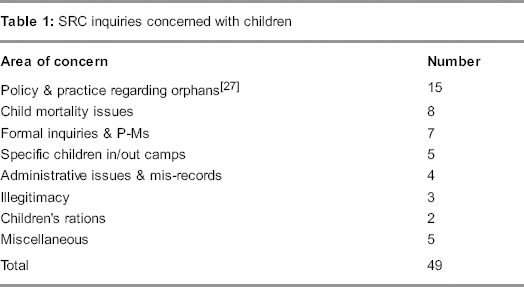
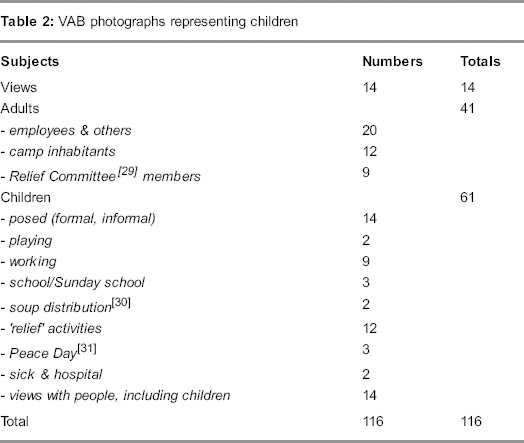
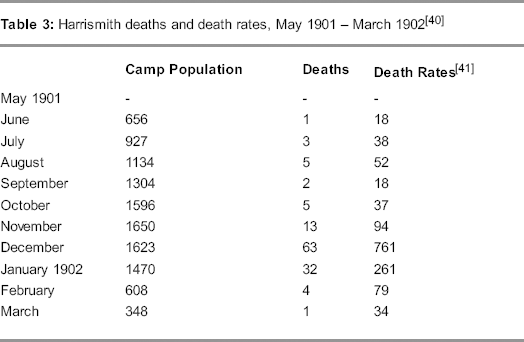
 , these
are: one inquiry concerning adoption of an orphan, one concerning mortality
rates, two formal inquiries regarding suspected unlawful killings, one
administrative inquiry about mis-recording, one regarding non-routine events and
expenditure, and one inquiry around a major dispute – the Swart inquiry - which
enables many of these concerns and also important issues for FFF to be
raised.
, these
are: one inquiry concerning adoption of an orphan, one concerning mortality
rates, two formal inquiries regarding suspected unlawful killings, one
administrative inquiry about mis-recording, one regarding non-routine events and
expenditure, and one inquiry around a major dispute – the Swart inquiry - which
enables many of these concerns and also important issues for FFF to be
raised.