






Abstract

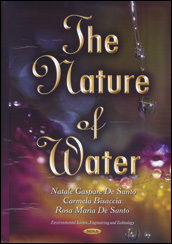
This book was inspired by Five Easy Pieces, the 1963 transcript of the lectures given to freshmen and sophomores at Caltech by Richard N. Feynman, the physicist who three years later was awarded the Nobel Prize. It provides a compelling view of the most plentiful substance in our body, a tangible trace of the primordial sea out of which life originated: water, as depicted in Botticelli's The Birth of Venus, Velazquez's Waterseller, and Aristophanes’ chant in The Clouds – a substance connected with medicine from time immemorial.
The book describes water accompanying humankind from its origins, from its first appearance in Sumerian, Babylonian, and Egyptian cosmology, to Greek thought and the Biblical Scriptures. Archimedes’ “Eureka!” marks the birth of modern science with its chance discovery of the hydrostatic principle – an answer to King Hiero's suspicion about the presence of silver in his crown that he had given to the goldsmith in the form of pure gold. Water is investigated from many perspectives. Exciting chapters are devoted to the water scientists of the first and second millennium AD and to its value in psychology, music, and art. The book explores the symbolism of water and its appearances in proverbs, which are seen as pieces of wisdom, the fruit of popular experience. The end of water is also revealed in a chapter where the fears for this imminent risk are laid out in sound, scientific terms.
The kidneys are viewed as a water factory, where these small organs – less than 1/200 of the weight of the whole body – are described as cells filtering nearly 200 kg of water every day and reabsorbing it almost completely, with a modest outlay of energy. When the kidneys are no longer kidneys and cause end-stage renal disease, water is turned into a drug (pharmakon in the Greek root) prepared from good tap water and administered under the supervision of a nephrologist. Being a drug, this particular type of water is produced using medical devices.
The chapters devoted to the memory of water, to polywater, to the presence of water in space, and to its importance for human space conquest are especially captivating. We are presented with Paul Coelho's “Water Exercise,” guiding us to the “Arousal of Intuition,” an exercise in stopping the mind, one that is difficult to give up, and an exercise to establish close contact with the Milky Way. Another exercise is described immediately after the inscription on the unnamed tomb in the Protestant Cemetery in Rome: “Here Lies One Whose Name Was Written In Water,” at the grave of the poet John Keats. This is a book that enchants, that puts us into a state of mind such as to produce knowledge, as in Gregory of Nyssa's concept of intuition. It will appeal to nephrologists (viewed as those who know water) as well as to psychologists and colleagues in philosophy and biotechnology. In a word, this is a book for all those who care to defend the principle that water is a resource belonging to all, as Justinian I (483-565 AD) intended when he wrote that “air, fresh water, the sea and the sea shores belong to the whole of humankind.”
We should take note of the fact that a big debate is underway regarding the property, the protection, and the distribution of water, whether it should be in state or private hands. A passionate bill of rights has been developed to govern the democratic use of water in the United States. The Nature of Water concludes with the observation that “Sacred waters drive us beyond the market, in a world rich with myths and legends, with faiths and devotions, with culture and celebration. These worlds will provide us with ability to save and share water and to turn scarcity into abundance.”
I recommend this book to nephrologists (those who know water), to beginners in medicine and philosophy, and to senior high school students. It is a book that has a place in the library of any physician. Having known the senior author through his contributions to nephrology since 1964 did not influence my opinion of this work.