






Abstract
Purpose:
There are many risk factors for postoperative acute kidney injury in liver transplantation. The aim of this study is to investigate the risk factors for postoperative acute kidney injury in living donor liver transplantation recipients.
Methods:
220 living donor liver transplantation recipients were retrospectively evaluated in the study. According to the Kidney Disease Improving Global Outcomes Guidelines, acute kidney injury in postoperative day 7 was investigated for all patients. The patient’s demographic data, preoperative and intraoperative parameters, and outcomes were recorded.
Results:
Acute kidney injury was found in 27 (12.3%) recipients. In recipients with acute kidney injury, female population, model for end-stage liver disease score, norepinephrine requirement, duration of mean arterial pressure less than 60 mmHg, the usage of gelatin and erythrocyte suspension and blood loss were significantly higher than recipients with nonacute kidney injury (for all p<0.05). In multivariate analyses, the likelihood of acute kidney injury on postoperative day 7 were increased 2.8-fold (1.1-7.0), 2.7-fold (1.02-7.3), 3.4-fold (1.2-9.9) and 5.1-fold (1.7-15.0) by postoperative day 7, serum tacrolimus level ≥10.2 ng dL−1, intraoperative blood loss ≥14.5 mL kg−1, the usage of gelatin >5 mL kg−1 and duration of MAP less than 60 mmHg ≥5.5 minutes respectively (for all p<0.05).
Conclusions:
In living donor liver transplantation recipients, serum tacrolimus levels, intraoperative blood loss, hypotension period and the usage of gelatin may be risk factors for acute kidney injury in the early postoperative period.
Introduction
Postoperative acute kidney injury (AKI) is frequently seen in liver transplantation recipients and it is associated with increased mortality, prolonged length of intensive care unit (ICU) stay, and increased infection risk and costs (1, 2). In liver transplantation recipients, ischemia and immunosuppressive drug toxicity are the principal causes of early postoperative AKI, while infection is the most common etiology for the late postoperative AKI (3, 4). Baseline creatinine ≥1.5 mg dl−1, model for end-stage liver disease (MELD) score ≥21, ICU admission prior to liver transplantation, duration of surgery, total clamping time, hemodynamic instability, intraoperative blood product requirement, intravenous contrast agent use, infection, immunosuppression and reoperation have been defined as risk factors for AKI (5-10). Recently, important studies have also demonstrated the correlation between the amount of intravenous (IV) fluid administered and AKI in critically ill patients (11-14). Even though there are some studies indicating that gelatin has fewer renal side effects than hydroxyethyl starch (HES), it was demonstrated that chloride-rich fluids, HES, gelatin and low-molecular-weight artificial colloid solutions can lead to postoperative AKI in liver transplantation recipients (15, 16). In the literature, postoperative AKI was usually investigated in deceased donor liver transplantation (DDLT) recipients. Yet, it is known that incidence of AKI was lower in living donor liver transplantation (LDLT) recipients than DDLT recipients (17). Hence, in this study, we investigated risk factors for postoperative AKI in LDLT recipients.
Methods
Ethics committee approval was received from Acıbadem University Medical Faculty Medical Research Council for the present study. This was a retrospective study of LDLT recipients carried out at a tertiary care, private hospital over a 31-month period between September 2011 and March 2014. A total of 246 consecutive adult LDLT recipients within the specified study period were evaluated. Among these, 220 patients who were over 18 years old, living donor liver transplantation recipients, received standard general anesthesia and surgery protocol, under immunosuppressive drug (tacrolimus) and prophylactic antibiotherapy were included in this study. The recipients who were under 18 years old, transplanted from cadaveric donors and needed preoperative renal replacement therapy were excluded (Fig. 1). Graft weight:recipient weight (GW:RW) ratios were ≥0.8% for all recipients.
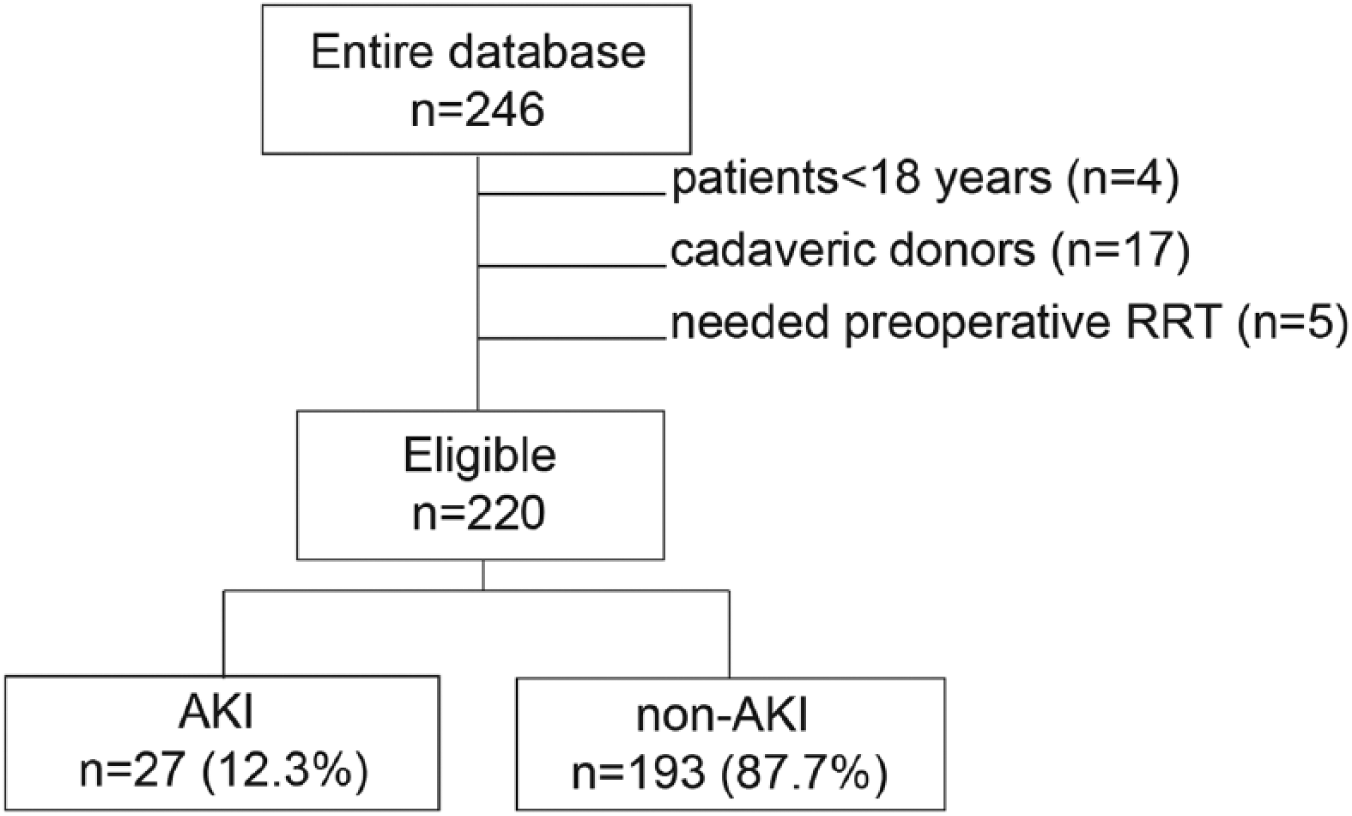
Study flowchart. AKI = acute kidney injury; RRT = renal replacement therapy.
Postoperative day 7 AKI was defined by using 2012 Kidney Diseases Improving Global Outcomes (KDIGO) Clinical Practice Guideline (18). They were categorized as patients with AKI or not (Tab. I).
Staging of AKI
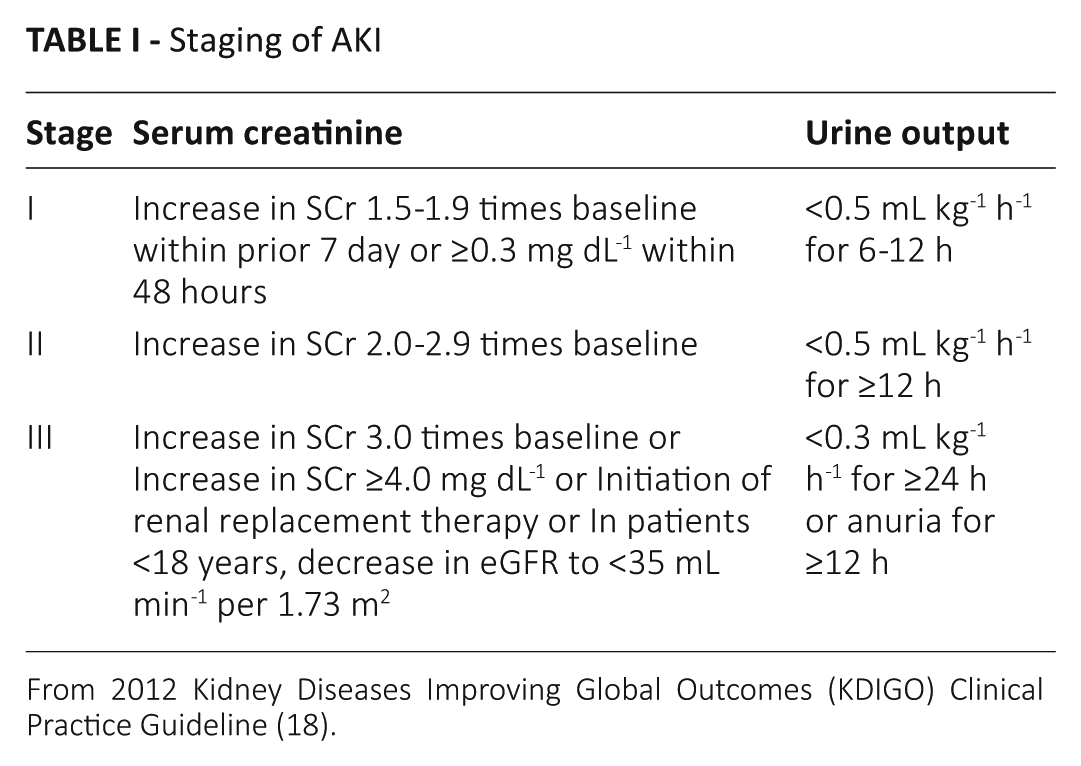
From 2012 Kidney Diseases Improving Global Outcomes (KDIGO) Clinical Practice Guideline (18).
The recipients’s age, gender, actual body weight (ABW), etiology, Charlson Comorbidity Index (CCI), MELD score (the patients diagnosed with cirrhosis and hepatocellular carcinoma who were accepted as suitable for liver transplantation in accordance with Milan Criteria had a MELD score of 24 points) (19), duration of operation (hours), clamping time (minutes), intraoperative norepinephrine requirement (µg kg−1 min−1), duration of mean arterial pressure (MAP) less than 60 mmHg (minutes), the usage of crystalloid (mL kg−1 h−1) (Isolyte-S; Na: 141 mmol L−1, Cl: 98 mmol L−1 and 5% dextrose manufactured by Baxter Healthcare), the usage of gelatin (mL kg−1) (4% gelatin; NaCl; Na:154mmol L−1, Cl:120 mmol L−1), the usage of 20% albumin (mL kg−1) (behring low salt albumin Na:125 mmol L−1, Cl:100 mmol L−1), intraoperative fluid balance, intraoperative and total clamping diuresis, blood loss (mL kg−1), amount of ascites (mL), increase in creatinine on days 1, 2, 4 and 7, serum tacrolimus level at postoperative day 7 (ng dL−1), renal replacement therapy (RRT) requirement, length of ICU and hospital stay, hospital and first year mortality rate were recorded.
Increase in creatinine (Cr) on days 1, 2, 4 and 7 were calculated as Cr1st day/Crpreop ; Cr2nd day/Crpreop ; Cr4th day/Crpreop ; Crday 7/Crpreop.
Serum creatinine was measured using the COBAS Integra Creatinine plus version 2 assay (Roche Diagnostics Corp). This is an enzymatic method based on the determination of hydrogen peroxide after conversion of creatinine with the aid of creatininase, creatinase, and sarcosine oxidase.
Recipient data required for the study was extracted by the research team from the patient’s anesthesia chart, electronic medical records and laboratory-computerized results.
Statistical analysis methodology
The characteristics of patients were summarized with median (interquartile); whereas categorical variables were summarized with count and percentage. Pearson Correlation tests were used for correlations. Effects of parameters to estimate day 7 total AKI were evaluated with multivariate logistic regression models. Multivariate analyses included gender (female), MELD score (≥22), blood loss (≥14.5 mL kg−1), noradrenalin requirement (≥0.08 mcg kg−1 min−1), the usage of gelatin (>5 mL kg−1), duration of MAP less than 60 mmHg (≥5.5 minutes), postoperative day 7 serum tacrolimus level (≥10.2 ng dL−1). Analyses were performed on Wizard Pro Version 1.7.18.
Results
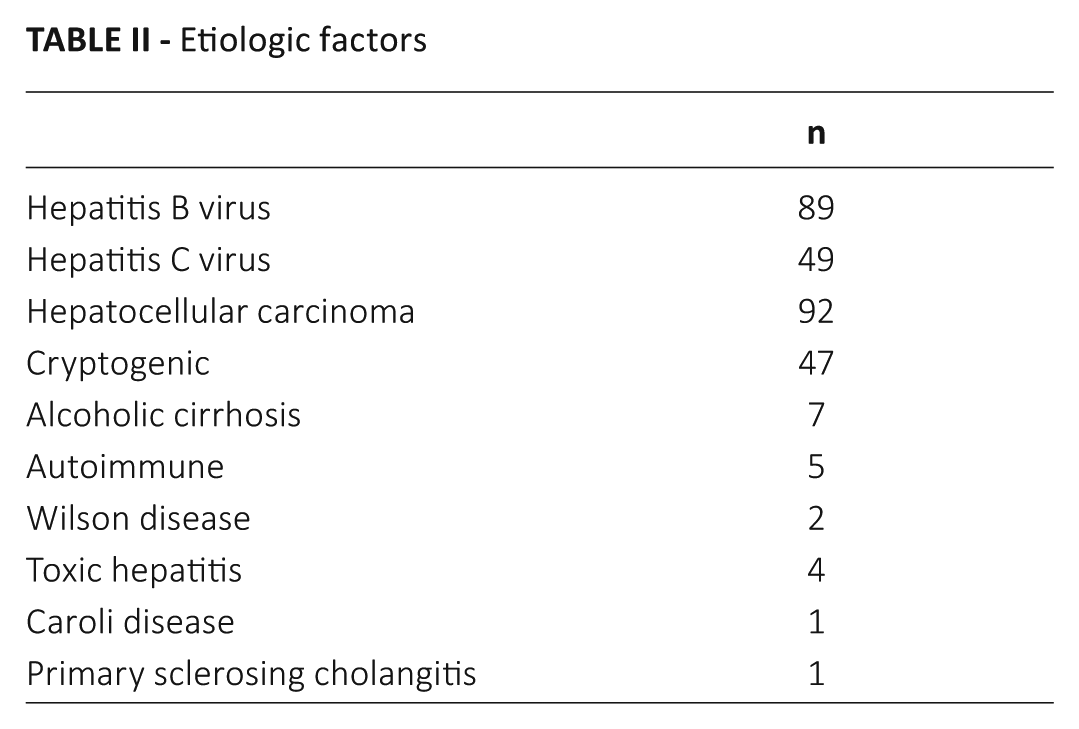
Two hundred and twenty LDLT recipients were included in the study. Hepatocellular carcinoma (HCC) was the most common etiologic factor (Tab. II). Recipients with postoperative AKI were 12.3% (n = 27) (Fig. 1). The first-year recipient and graft survival were 89.5% and 98.6% respectively. There were 3 graft losses due to hepatic artery thrombosis in 1 recipient and acute rejection in 2 recipients. AKI was observed in all 3 and they were lost due to multi-organ failure and acute hepatic failure. The causes of first-year mortality were sepsis and multiple organ failure (4 patients with AKI and 12 patients with non-AKI), acute hepatic failure (1 patient with AKI and 2 patients with non-AKI), metastasis of HCC (1 patient with AKI and 1 patient with non-AKI), cardiac failure (1 patient with non-AKI) and disseminated intravascular coagulopathy (1 patient with non-AKI).
Etiologic factors
In recipients with postoperative AKI, female population, MELD score, norepinephrine requirement, duration of MAP less than 60 mmHg, the usage of gelatin, the usage of erythrocyte suspension, blood loss, first-year mortality and RRT requirement were significantly higher than recipients with postoperative non-AKI (p = 0.019, p = 0.002, p = 0.021, p<0.001, p = 0.009, p = 0.014, p = 0.002, p = 0.033 and p<0.001 for others, respectively) (Tabs. III and IV). There were poor positive correlations between increase in creatinine on postoperative day 7 and duration of MAP less than 60 mmHg, MELD score and the usage of gelatin (r2 = 0.12, p<0.001; r2 = 0.04, p = 0.005, r2 = 0.02, p = 0.045, respectively).
Demographic data and preoperative parameters

ABW = actual body weight; AKI = acute kidney injury; GW:RW = graft weight:recipient weight; MELD = model for end-stage liver disease. Results are given as median (interquartile).
Intraoperative parameters and outcomes
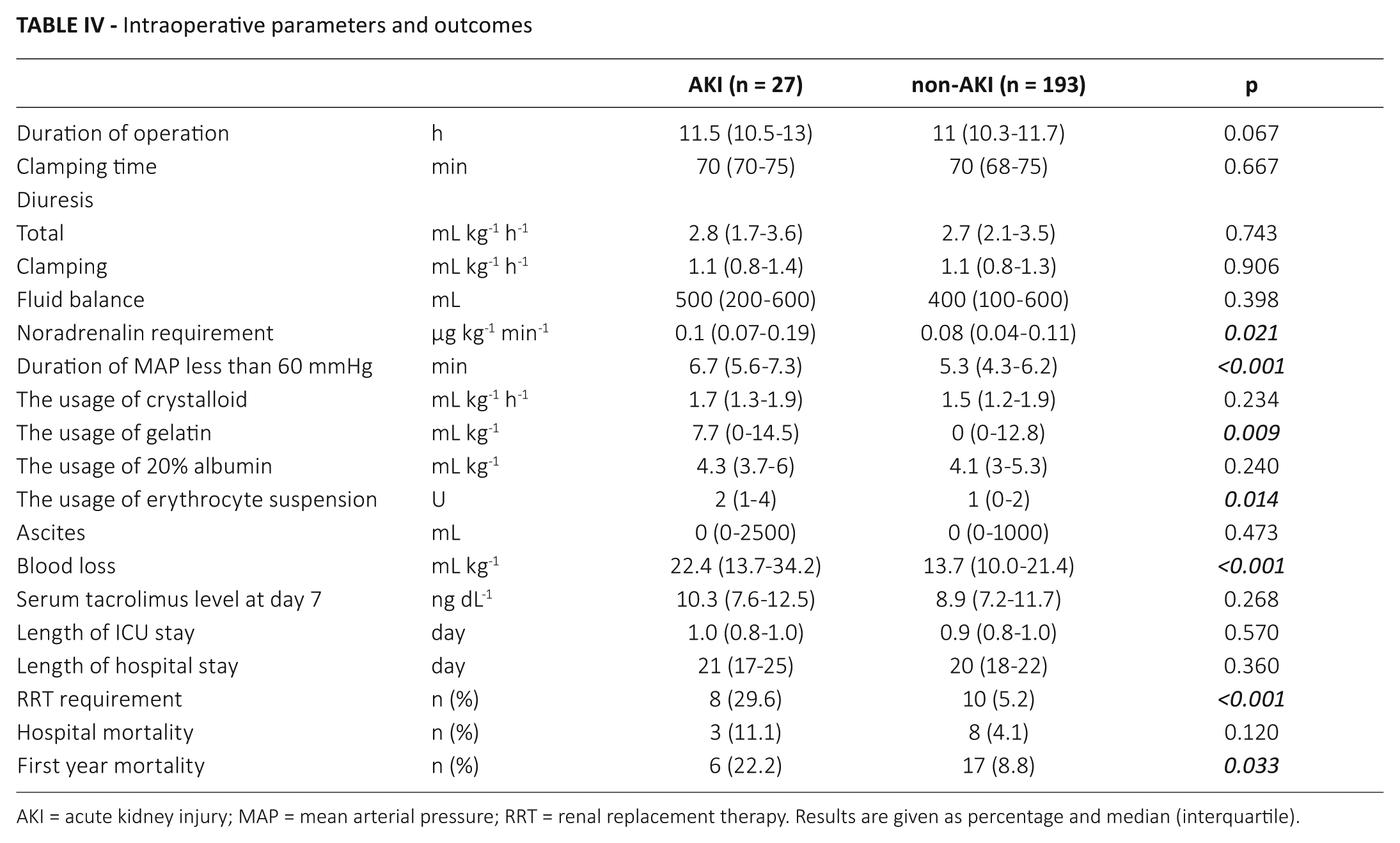
AKI = acute kidney injury; MAP = mean arterial pressure; RRT = renal replacement therapy. Results are given as percentage and median (interquartile).
In multivariate analyses, the likelihood of postoperative day 7 AKI were increased 2.8-fold (1.1-7.0), 2.7-fold (1.02-7.3), 3.4-fold (1.2-9.9) and 5.1-fold (1.7-15.0) by postoperative day 7 serum tacrolimus level ≥10.2 ng dL−1, intraoperative blood loss ≥14.5 mL kg−1, the usage of gelatin >5 mL kg−1 and duration of MAP less than 60 mmHg ≥5.5 minutes respectively (p = 0.031, p = 0.033, p = 0.024, p = 0.003, respectively) (Tab. V).
Multivariate logistic regression model for postoperative day 7 AKI
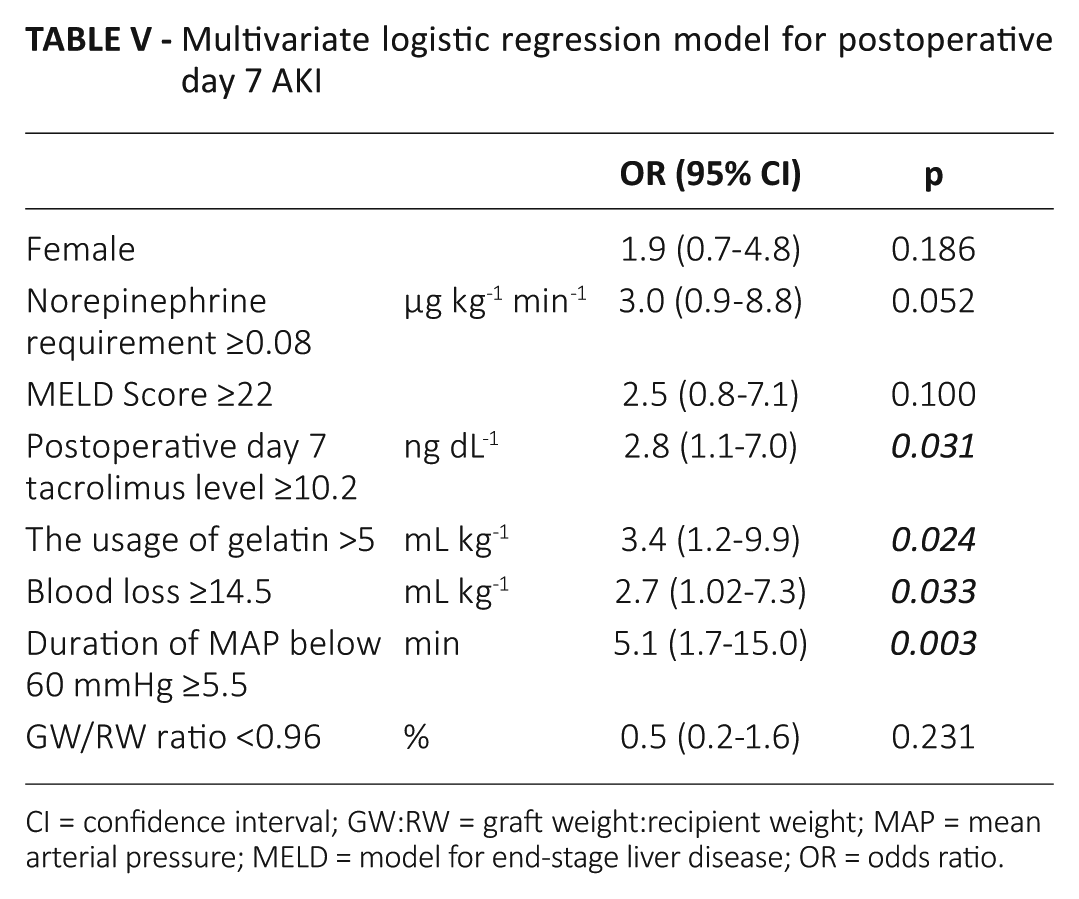
CI = confidence interval; GW:RW = graft weight:recipient weight; MAP = mean arterial pressure; MELD = model for end-stage liver disease; OR = odds ratio.
Conclusions
The present study showed that postoperative serum tacrolimus level, intraoperative amount of blood loss, prolonged hypotension period and the usage of gelatin were associated with postoperative day 7 AKI in our LDLT recipients.
In this study, postoperative AKI was discussed via preoperative, intraoperative and postoperative reasons. Hilmi et al claimed that incidence of postoperative AKI was lower in LDLT recipients than DDLT recipients because of LDLT recipients who were young and had a decreased MELD score, preoperative creatinine level, cold ischemia time and postreperfusion syndrome (17). In many studies, in which their data were about DDLT recipients, the most important preoperative risk factors for postoperative AKI were etiology of liver disease, preoperative albumin and creatinine levels and increased MELD score (7, 20-23). Nadeem et al, whose 65.8% of evaluated patients were LDLT recipients, demonstrated that increased MELD score was a decisive factor for postoperative AKI (16). However, they did not evaluate the relationship between preoperative MELD score and postoperative AKI only in LDLT recipients. Lee et al also claimed that small-for-size (SFS) syndrome, MELD score and pretransplant renal function were risk factors for postoperative AKI in LDLT recipients (24). Yet, according to some studies, MELD score was not a risk factor for postoperative AKI in LDLT recipients (17, 25). In our study, there was no SFS syndrome because GW:RW ratios were over 0.8%. Even though 41.8% of etiology of all recipients was HCC, the median MELD score was 20. We found that the MELD score was higher in recipients with postoperative AKI but, on the other hand, there was a poor positive correlation between the MELD score and an increase in serum creatinine level on postoperative day 7 (r2 = 0.04, p = 0.005). Additionally, we did not find any relationship between the MELD score and postoperative day 7 AKI in multivariate analysis (Tab. V). Furthermore, the etiology of liver disease, preoperative albumin and creatinine levels were similar in both groups and there was no correlation between all of them and postoperative AKI. In our opinion, the reason our LDLT recipients had a better clinical status before liver transplantation is that they did not have end-stage liver disease or hepatorenal syndrome. Therefore, we can argue that preoperative features may not relate to postoperative AKI in our LDLT recipients.
In recent studies, duration of operation and clamping, amount of blood loss, increased norepinephrine requirement, prolonged hypotension period and the usage of chloride-rich fluid were defined as intraoperative risk factors for postoperative AKI (5, 9, 10, 16, 26-31). Sun et al demonstrated that exposure to MAP less than 60 mmHg for 11 to 20 minutes was associated with postoperative AKI (10). Lankadeva et al also claimed that renal medullar hypoxia was increased by resuscitation of blood pressure with norepinephrine (26). Schortgen et al also showed that 20% albumin might be associated with acute renal injury (32). They have explained this result with increased intracapillary oncotic pressure and decreased glomerular filtration pressure.
It is also known that HES is related to proximal tubular injury (15, 28-32). Lira et al emphasized that there was no sufficient evidence supporting that the usage of gelatin on shock was a good option and they did not recommend the usage of gelatin (30). Besides, it was also stated that 4% gelatin was an independent risk factor in terms of AKI development (15, 31).
Recently, intraoperative hypotension was found to be a decisive factor for postoperative AKI in LDLT recipients too (17, 33). We also found that the amount of blood loss, duration of hypotension, norepinephrine requirement and the usage of gelatin were higher in recipients with AKI (Tab. IV). Moreover, all of them except norepinephrine requirement were an independent risk factor for postoperative AKI in accordance with multivariate analysis (Tab. V). In this study, blood loss could have resulted in a prolonged hypotension period, increased norepinephrine requirement and the usage of gelatin. Gelatin should also be closely monitored because it may lead to proximal tubular injury alike to HES effects on kidney.
Serum tacrolimus level and sepsis are postoperative risk factors for postoperative AKI (7, 34) Cosner et al demonstrated that proximal tubular injury may occur due to acute tacrolimus nephrotoxicity (34). In their experimental study, the mean serum tacrolimus level was found to be 10.85 ng dL−1 in patients with renal medullary injury. We did not observe sepsis in any patients in the early postoperative period. However, postoperative day 7, serum tacrolimus level ≥10.2 ng dL−1 was related with postoperative AKI (Tab. V). For this reason, we think that the balance between infection and immunosuppression therapy should be carefully adjusted in LDLT recipients.
As a result, the incidence of postoperative AKI is lower in LDLT recipients. However, the serum tacrolimus level and intraoperative amount of blood loss, the usage of gelatin and prolonged hypotension period can be considered perioperative risk factors for postoperative AKI. These variables, which could possibly be the reason for postoperative AKI, are important because they can be managed during intraoperative and postoperative periods. Therefore, more studies are needed for a better understanding of the pathophysiology of postoperative AKI development in LDLT recipients.
Footnotes
Acknowledgements
The authors thank Dr. Mehmet Berktas from Yeditepe University for his support in statistical analysis.
Disclosures
Financial support: No grants or funding have been received for this study.
Conflict of interest: None of the authors has financial interest related to this study to disclose.